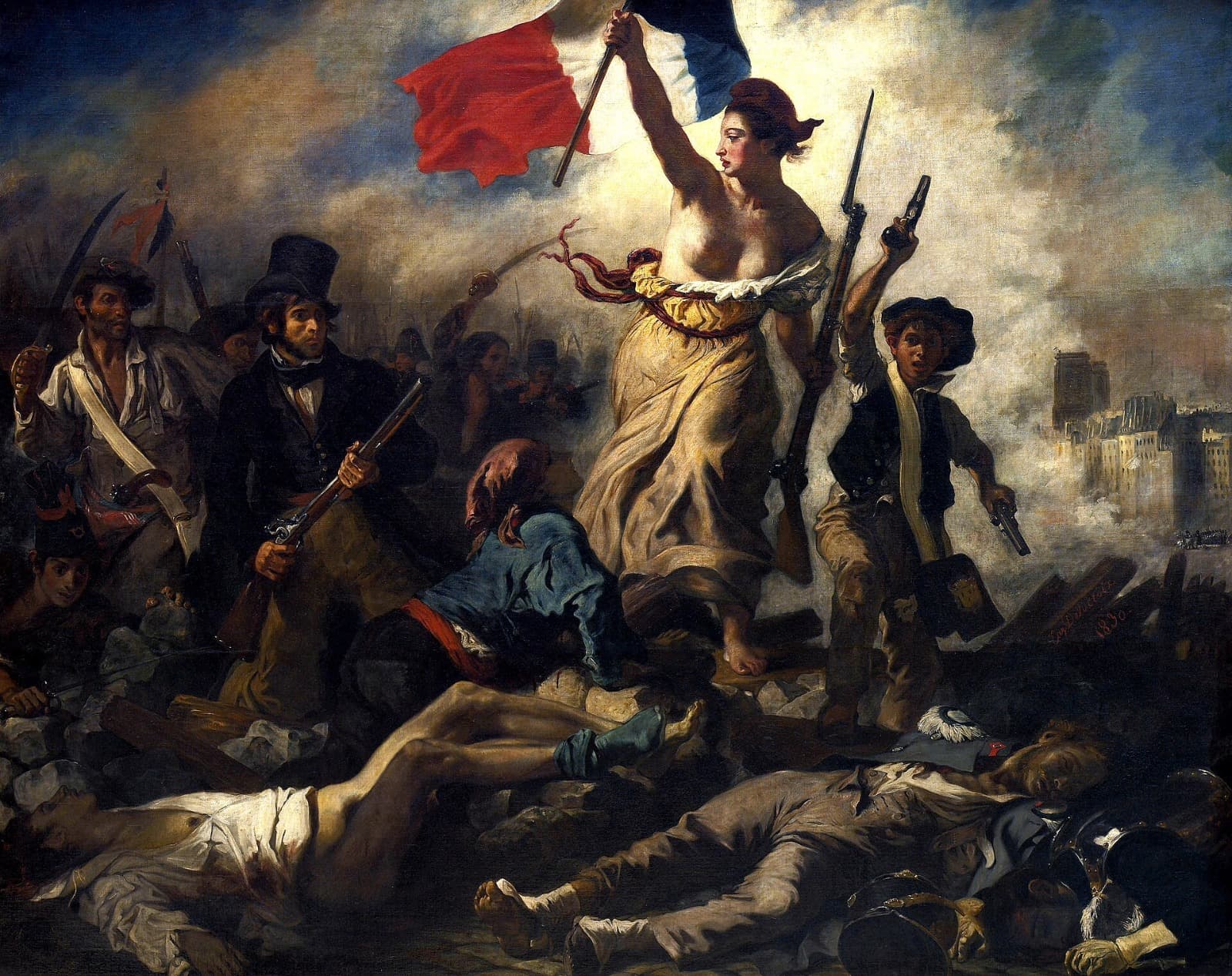
Liberty Leading the People
1830 · Louvre, Paris
Liberty carries the tricolor over the barricade with a boy waving pistols beside her, painted within months of the revolution it shows.
★ 9.4
 skopia
Liberty carries the tricolor over the barricade with a boy waving pistols beside her, painted within months of the revolution it shows.

A lantern lights a man in a white shirt throwing his arms wide before the firing squad. Goya painted it six years later.
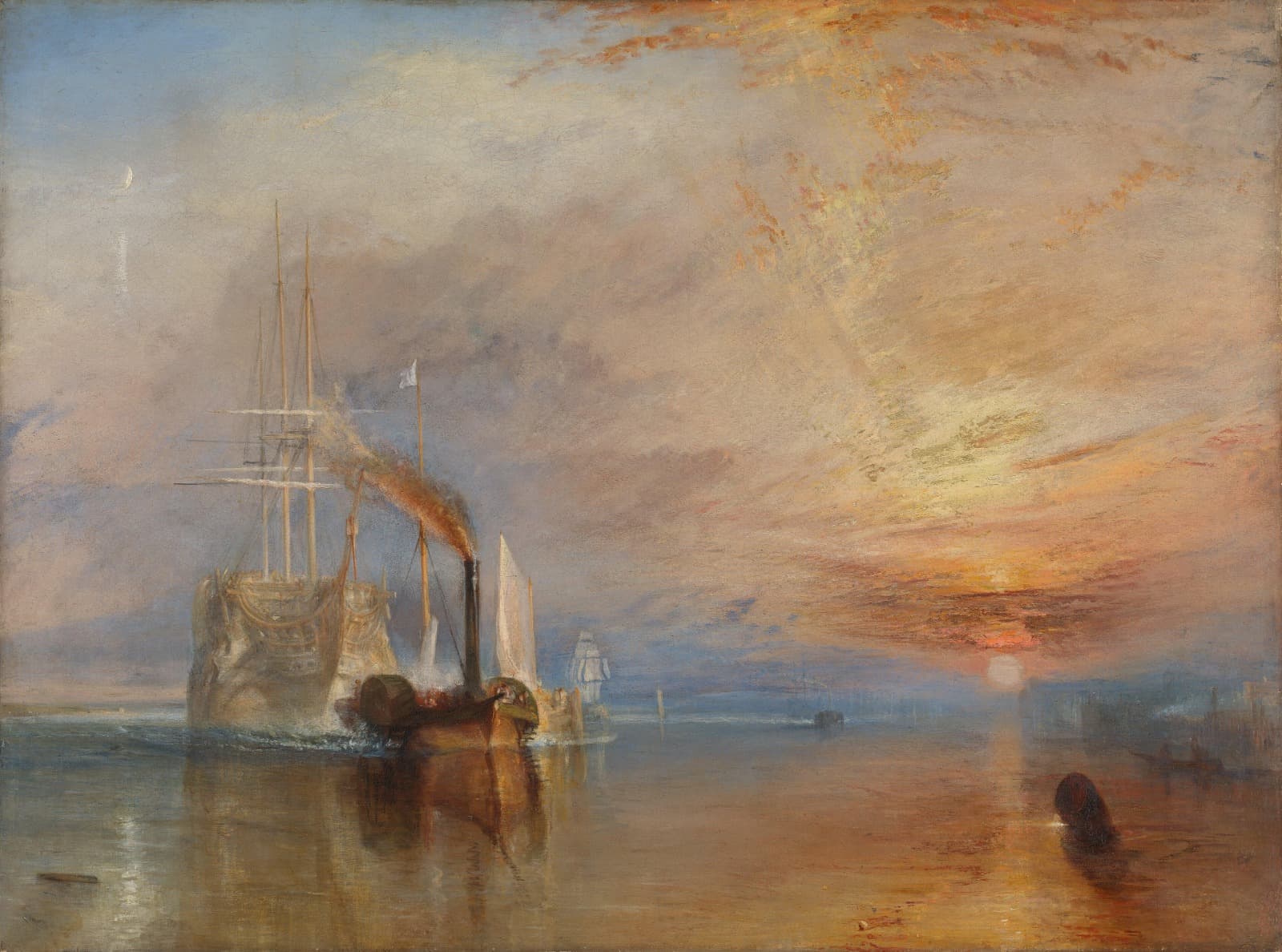
A steam tug hauls a Trafalgar warship off to be broken up. Turner refused to sell the picture and left it to the nation.

Survivors of a real shipwreck pile toward a speck of sail on the horizon. Géricault studied corpses and asylum patients before he began.
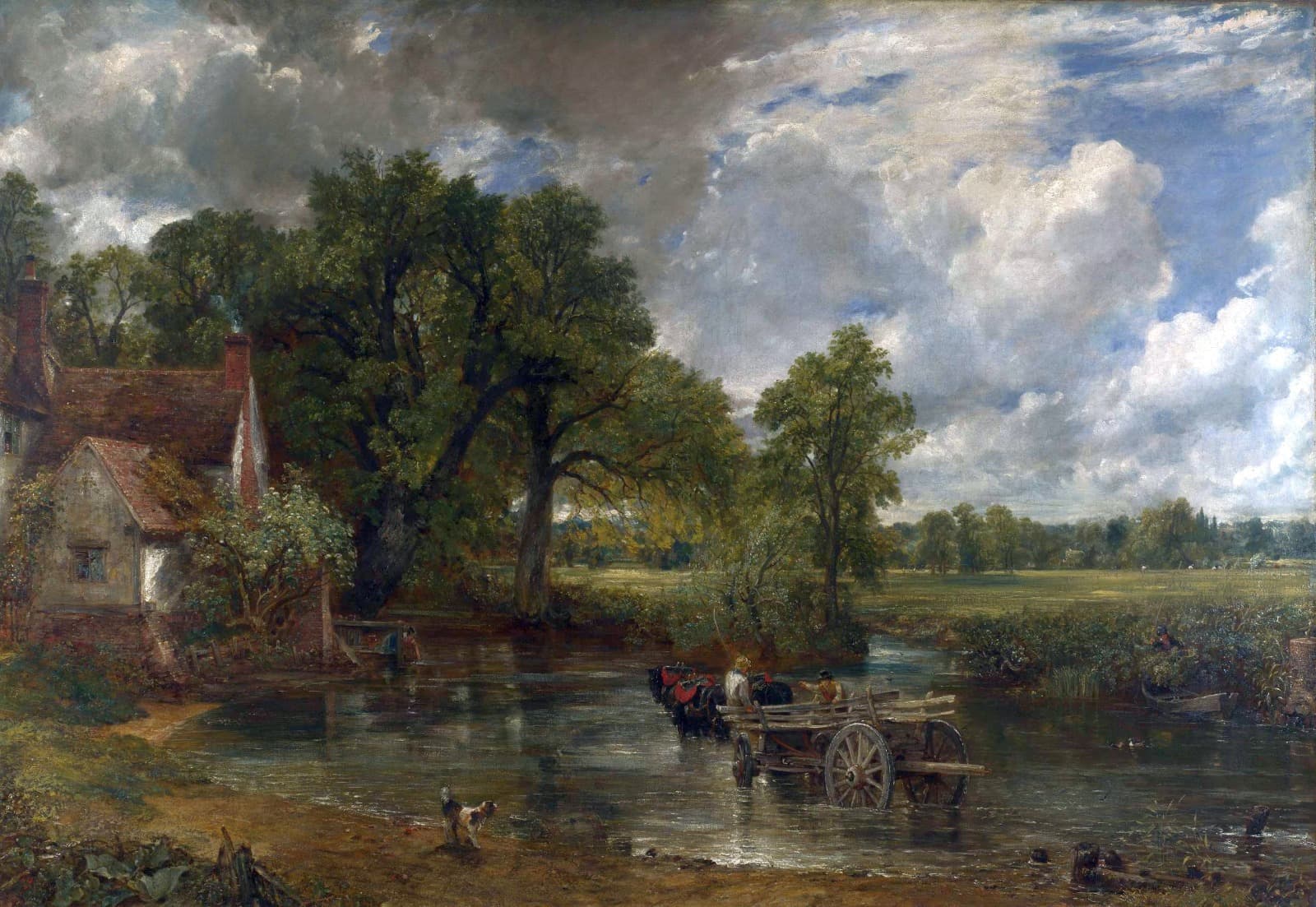
England ignored it, but the Paris Salon awarded it a gold medal in 1824 and sent Delacroix back to rework his own canvases.

A man stands on a summit with his back to us, looking out over fog, so that we end up looking at what he sees.

Goya painted this straight onto the wall of his own house in his last bitter years and never meant anyone else to see it.
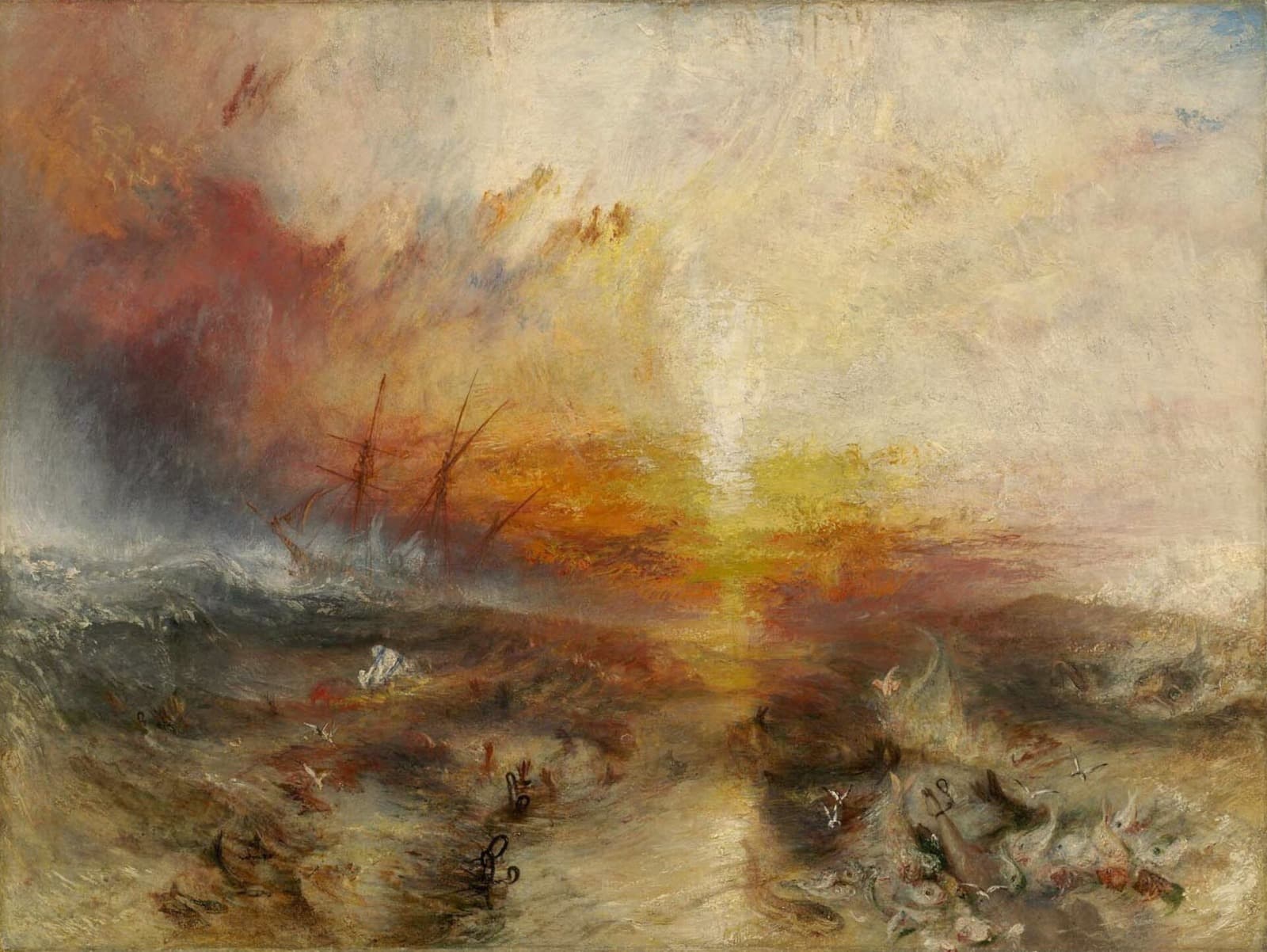
Turner took the Zong case, where a slaver threw its human cargo overboard for the insurance money, and set it under his most beautiful sunset.
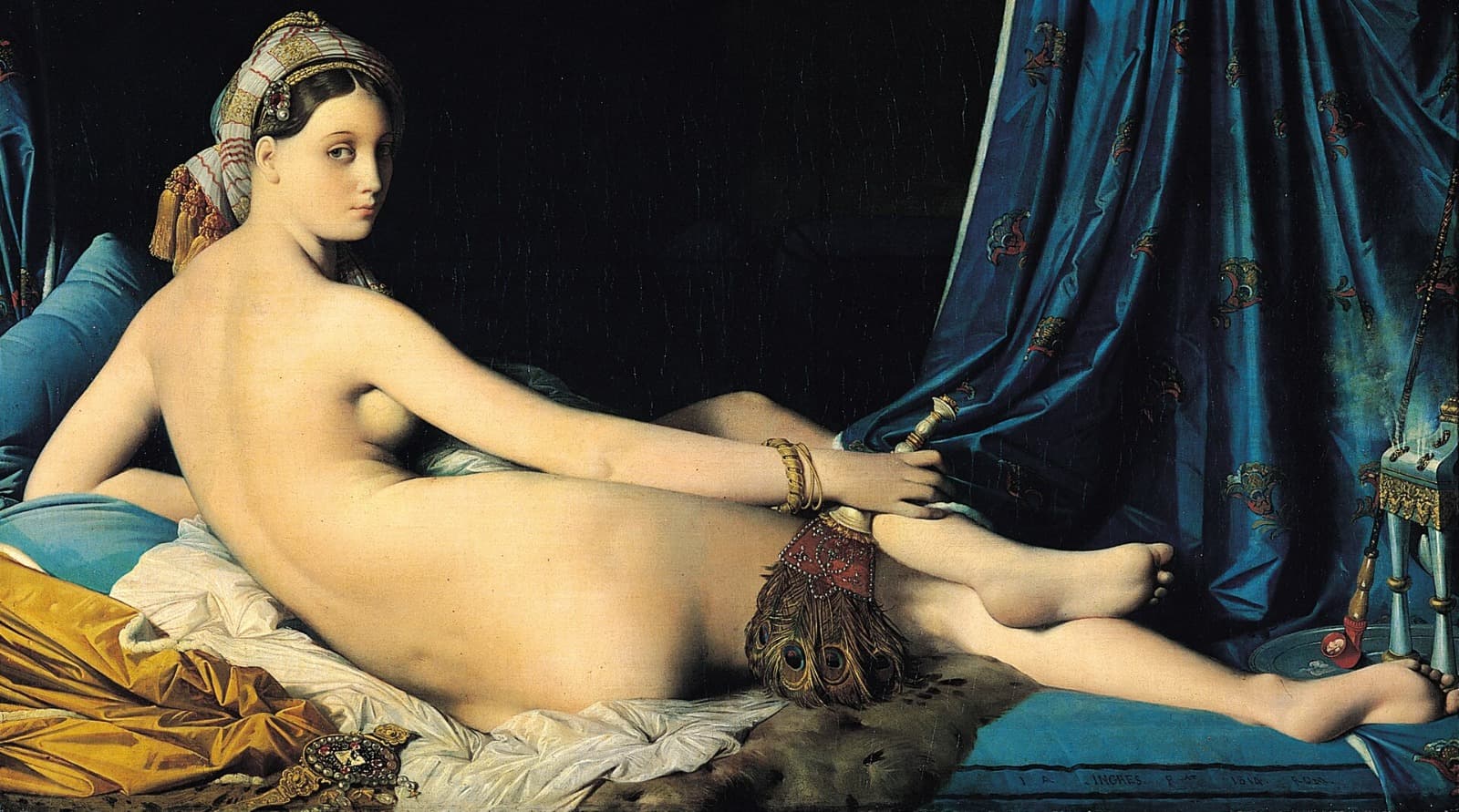
Ingres stretched her spine past anything anatomy allows, and critics joked she had three vertebrae too many. He was chasing line, not truth.

The king watches from his red bed while everything he owns is killed in front of him, on his own orders, before the pyre.
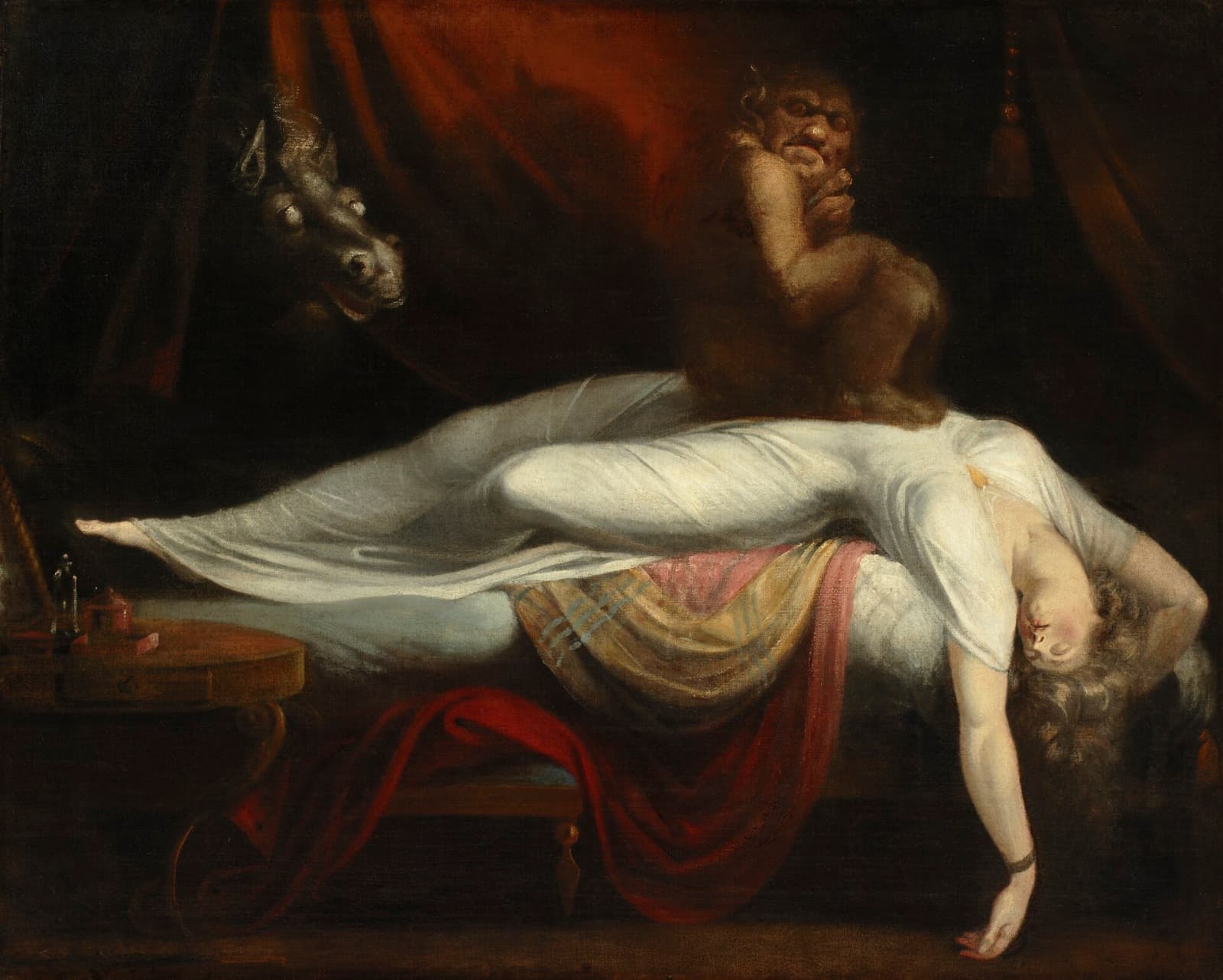
An incubus squats on a sleeping woman's chest while a wild-eyed horse pushes through the curtains. It made Fuseli famous immediately.

Not a goddess but a real woman looking straight back, which is why the Inquisition took an interest. Goya painted a clothed version too.

Delacroix saw a room like this once, on a trip to North Africa, and painted it from memory. Picasso later made fifteen variations on it.

Almost every detail is wrong, including the flag and the boat, and Leutze painted it in Germany seventy-five years after the fact.
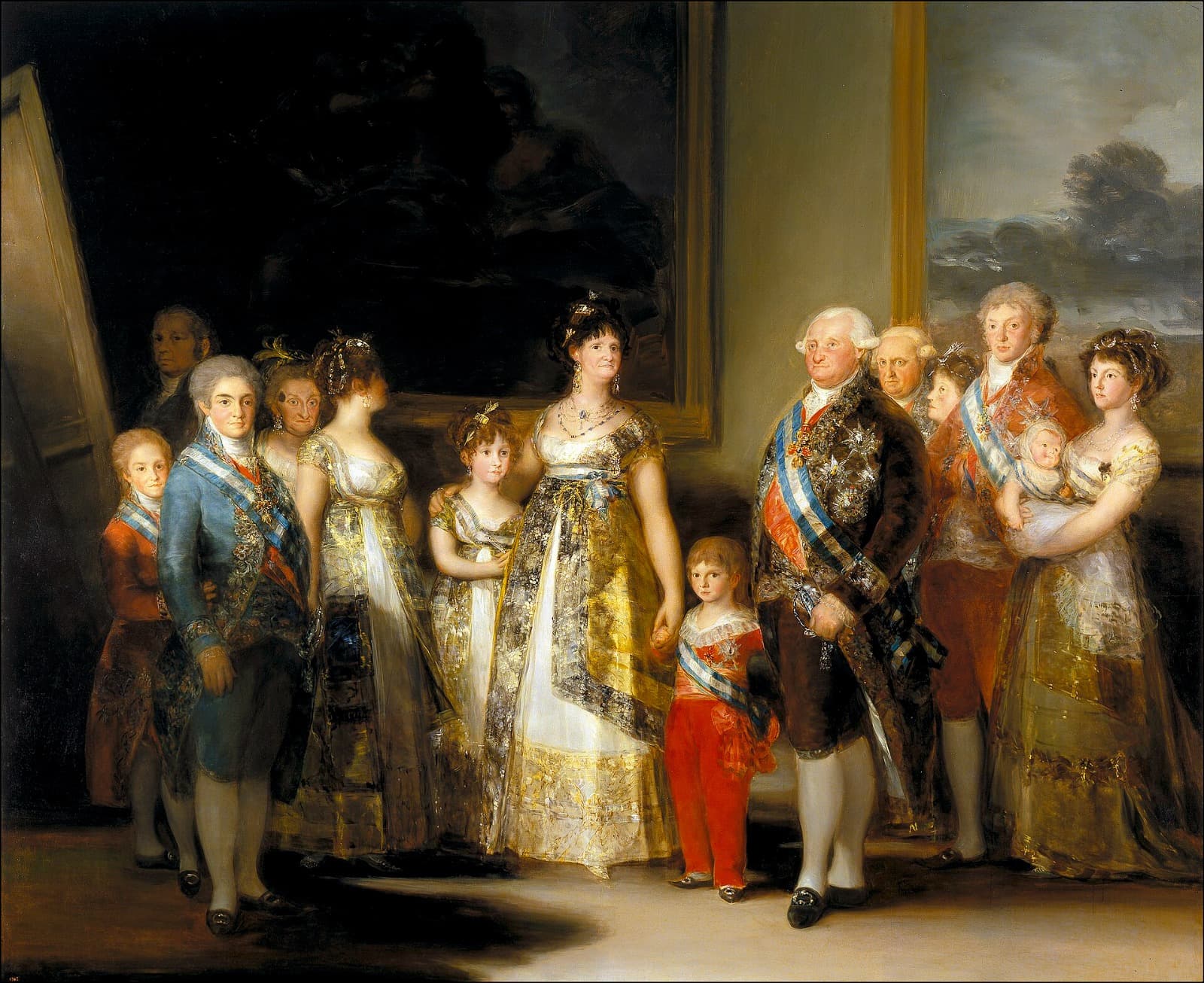
Goya put himself at an easel in the shadows, as Velázquez had, and painted the royal family looking vacant, pompous or merely plain.

Brook Watson really did lose a leg to a shark in Havana harbor, and Copley put a Black sailor at the top of the rescue.

Blake's Urizen leans out of the sun with a golden compass to measure the void, and Blake was not sure whether to admire him.

Three figures at the lip of a white chalk drop, painted around the time of his marriage, the eye pulled out to sea and straight down.

The same woman, same cushions, same pose, now dressed. It is thought to have hung in front of the nude and slid aside.
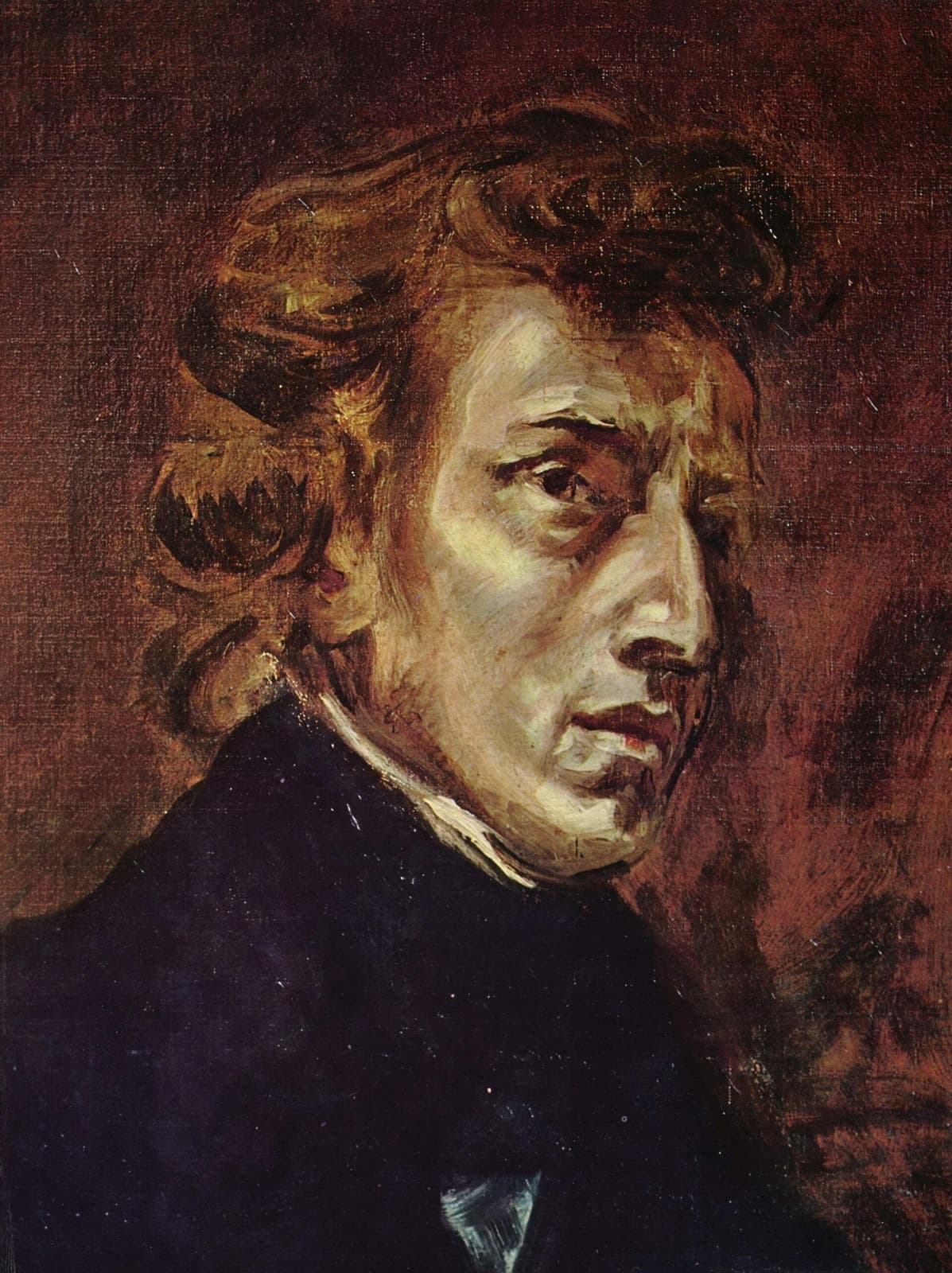
It was half of a double portrait with George Sand listening at the piano, until somebody cut the canvas in two.
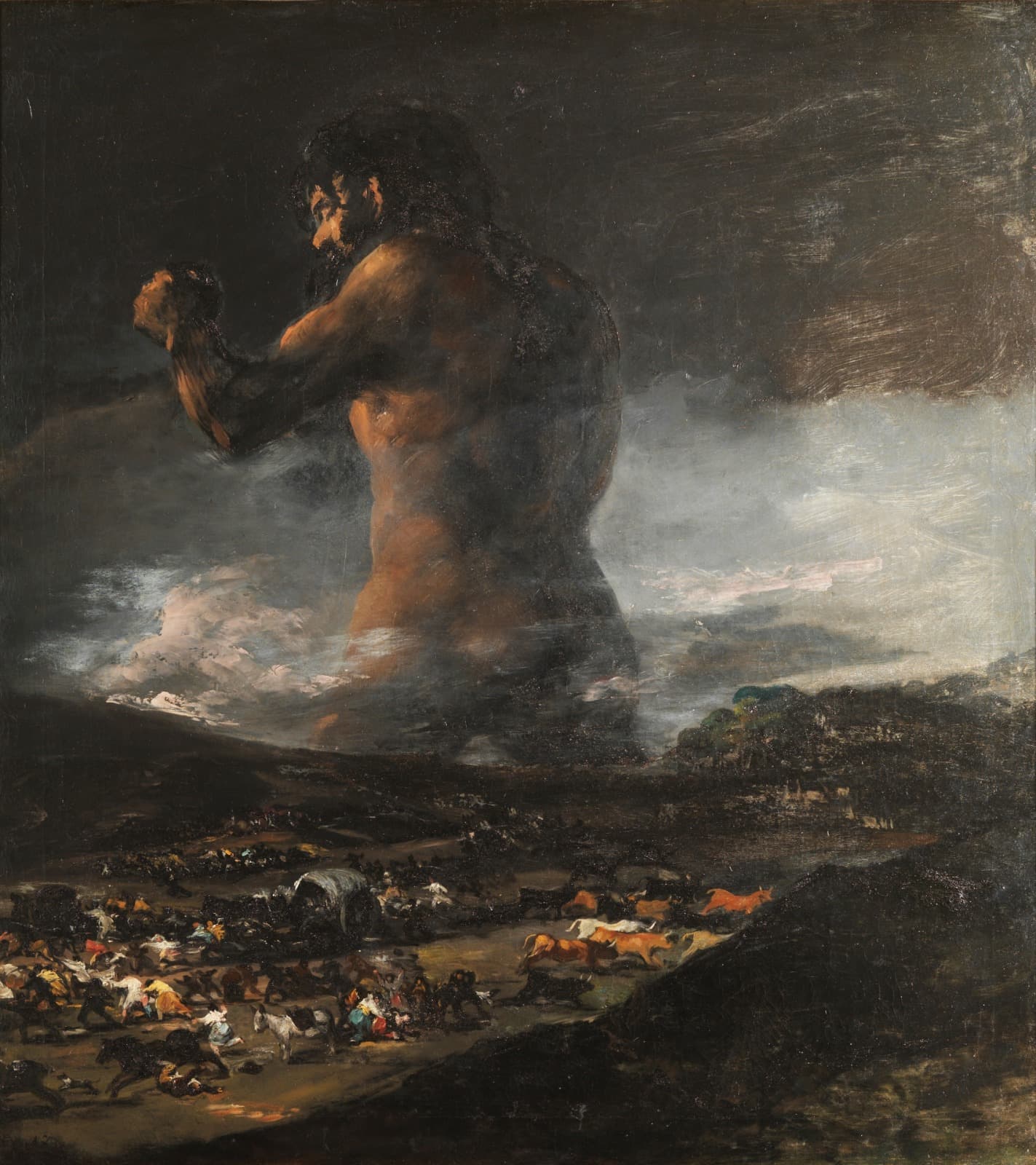
A giant stands with his head in the clouds while everything below scatters. Whether Goya actually painted it is now disputed.

Delacroix's debut, and the damned are biting the hull. Romanticism announced itself with churning water and bodies learned from Rubens.

Two women in white smile out from the railing while two men in dark cloaks stand behind them in the shadow, watching.

Courbet at twenty-six, lunging at the viewer with both hands in his hair and his eyes wide. Half self-portrait, half performance.
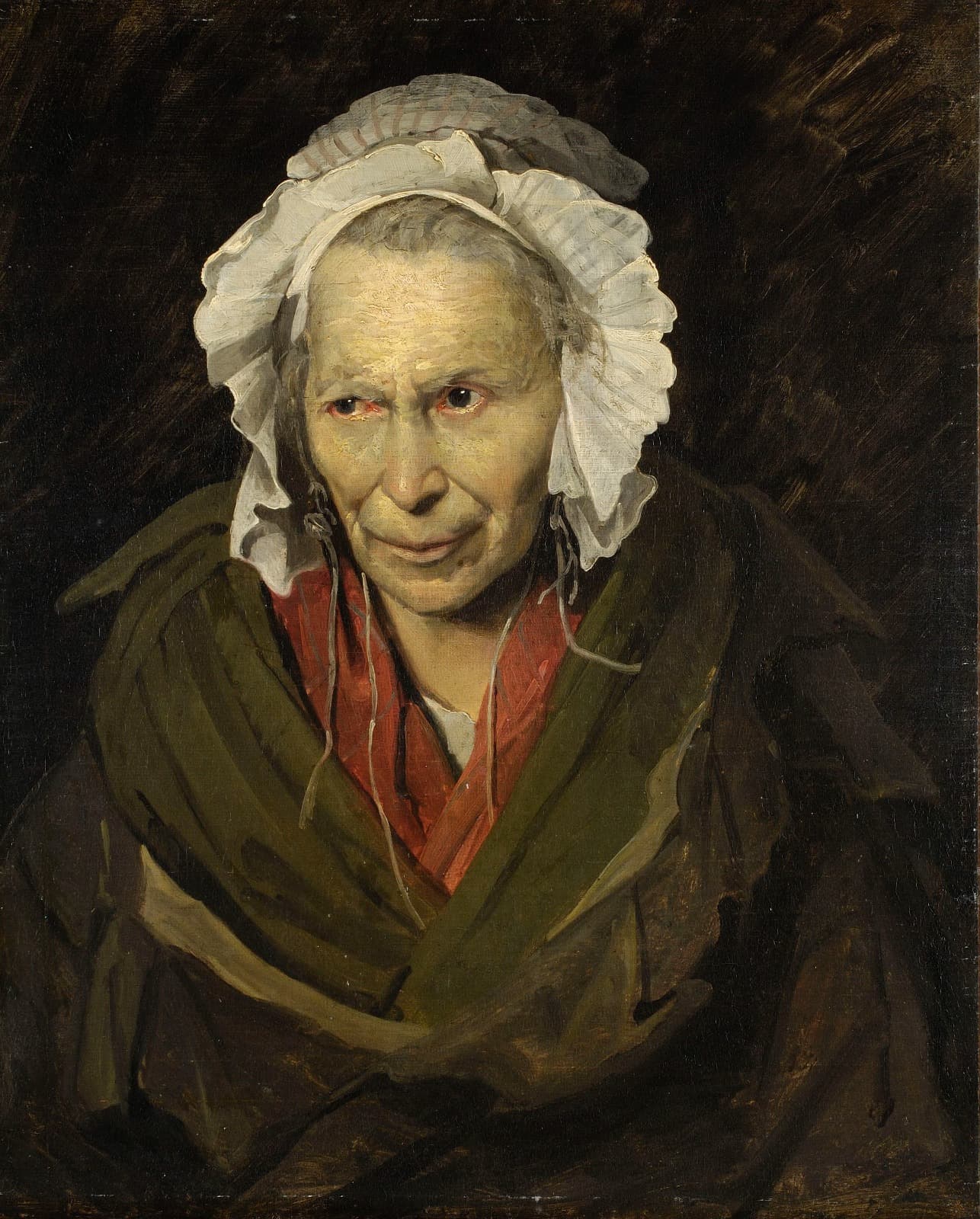
One of a series Géricault painted of asylum patients for a doctor studying obsession, and he gave her the seriousness of a commissioned portrait.

The Roman Forum was a cattle pasture when Turner painted it, and he let the columns of empire evaporate into gold air.

A packet boat comes in at evening and Turner dissolves the city, the passengers and the river into a single sheet of gold.

An artist weeps beside a colossal marble foot and a pointing hand, defeated by the size of what antiquity had already managed.
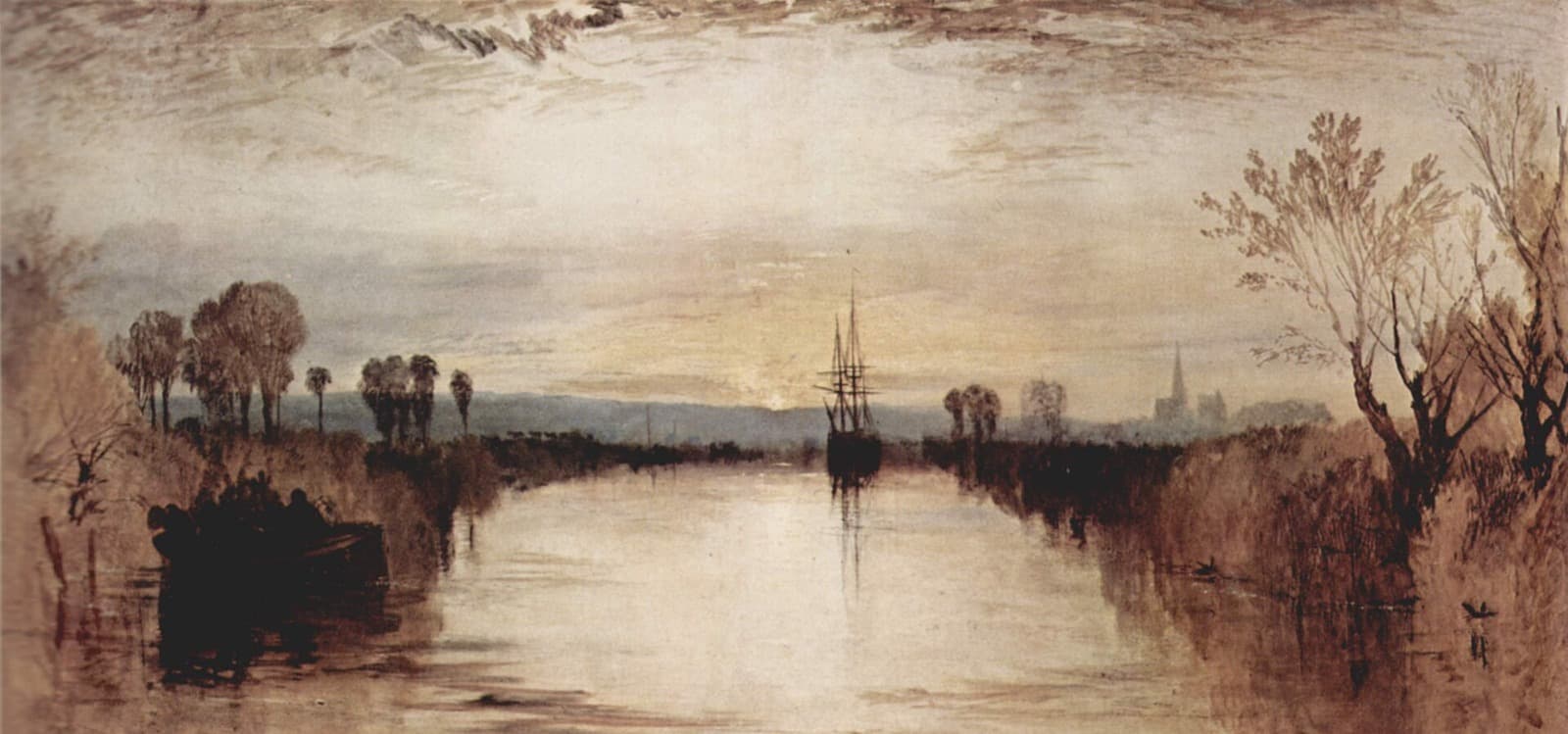
Masts stand black against a sky going from gold to soft blue, and almost nothing else in the picture is solid.
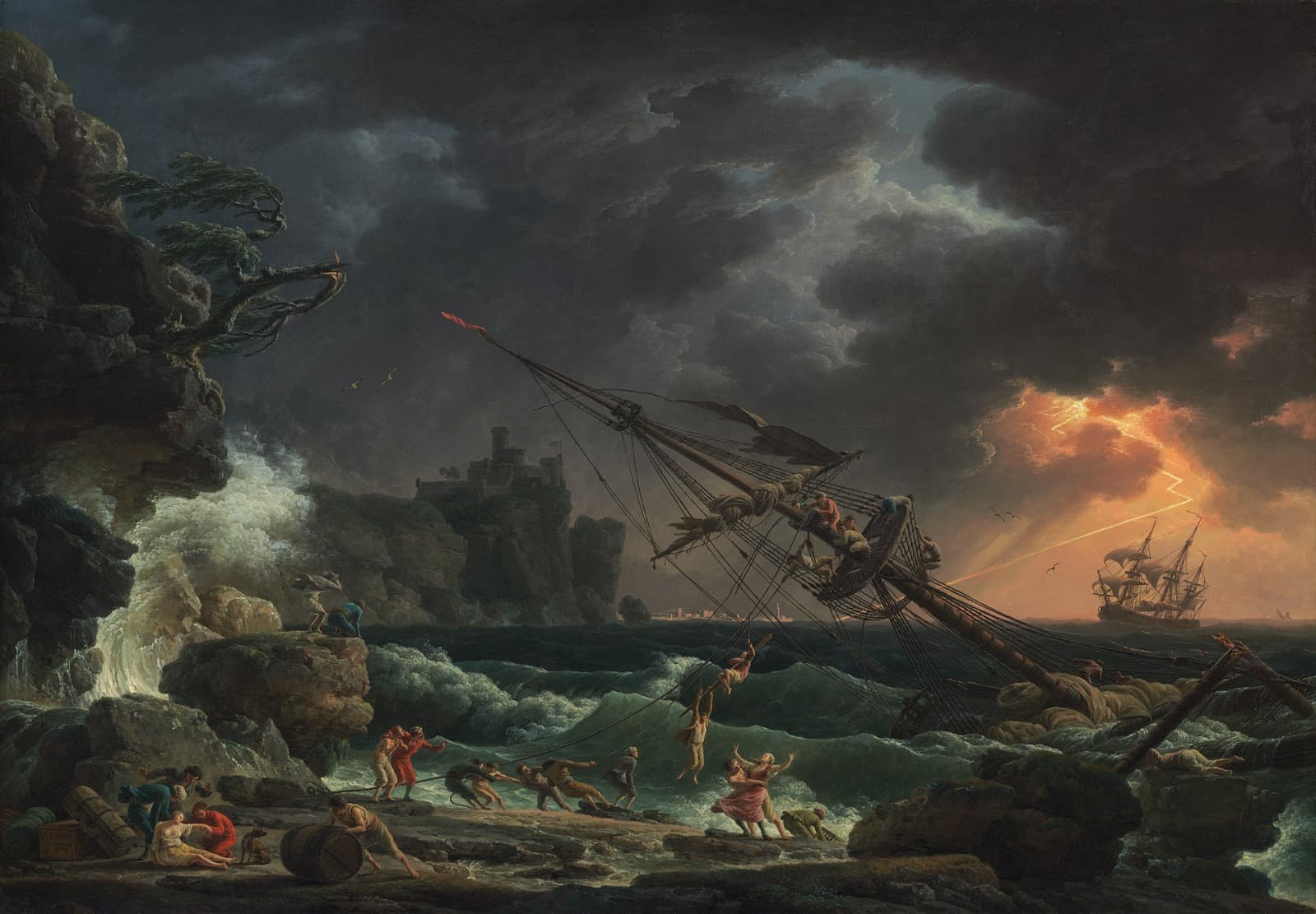
Masts splintering, survivors in the surf, and the whole thing arranged for people who wanted to feel terror from a safe distance.
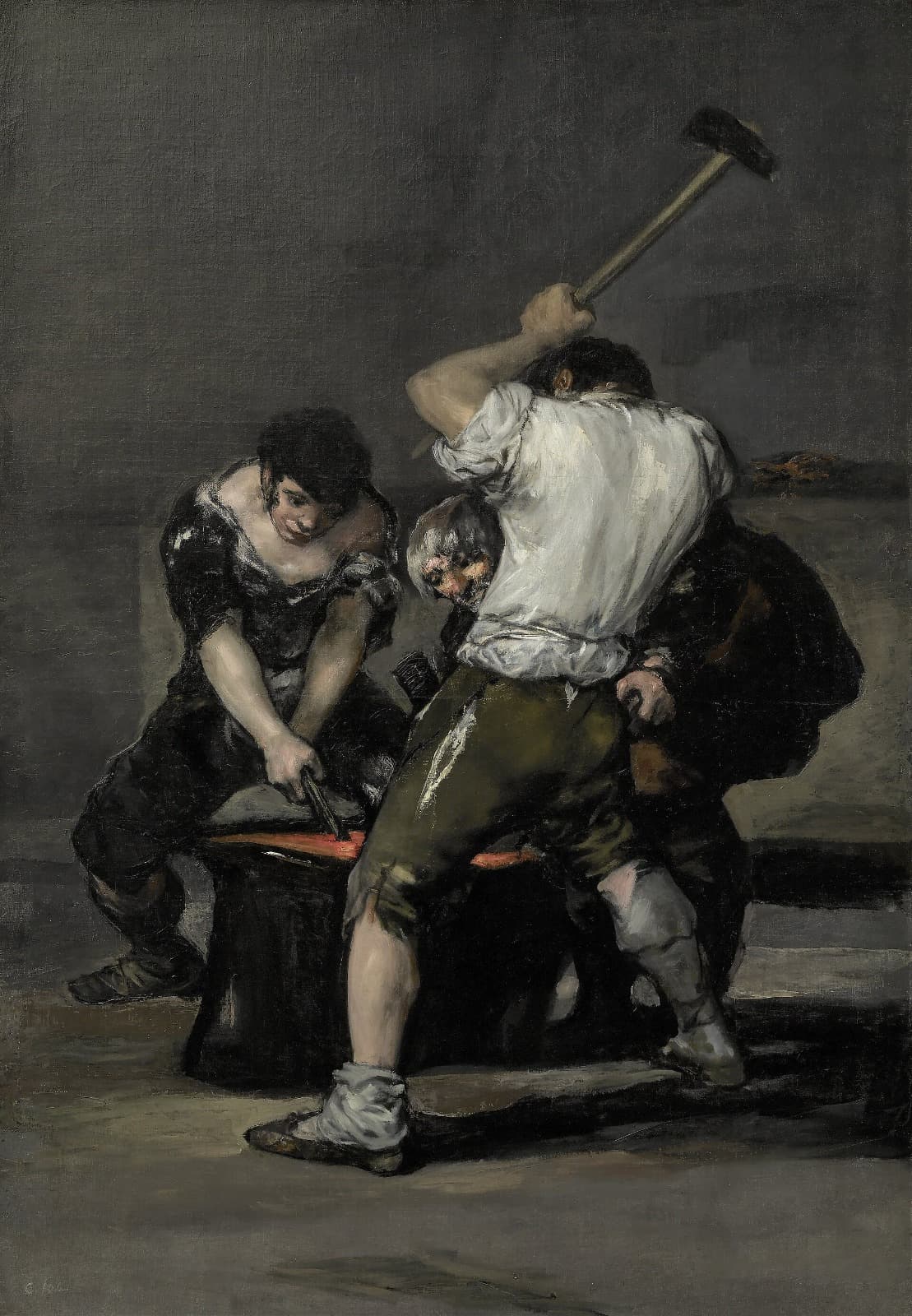
Three smiths at a forge, one hammer at the top of its swing. Goya gave laboring men the scale usually kept for gods and kings.

Eden on one side of the rock arch, blasted wilderness on the other, and Cole lets the landscape carry the entire moral argument.

An old man on two sticks, with Aun aprendo written underneath. Goya drew it in exile and failing health, near the end.

Overbeck and the Nazarenes lived almost as monks in Rome and painted deliberately like the Italians before Raphael. This is the program.