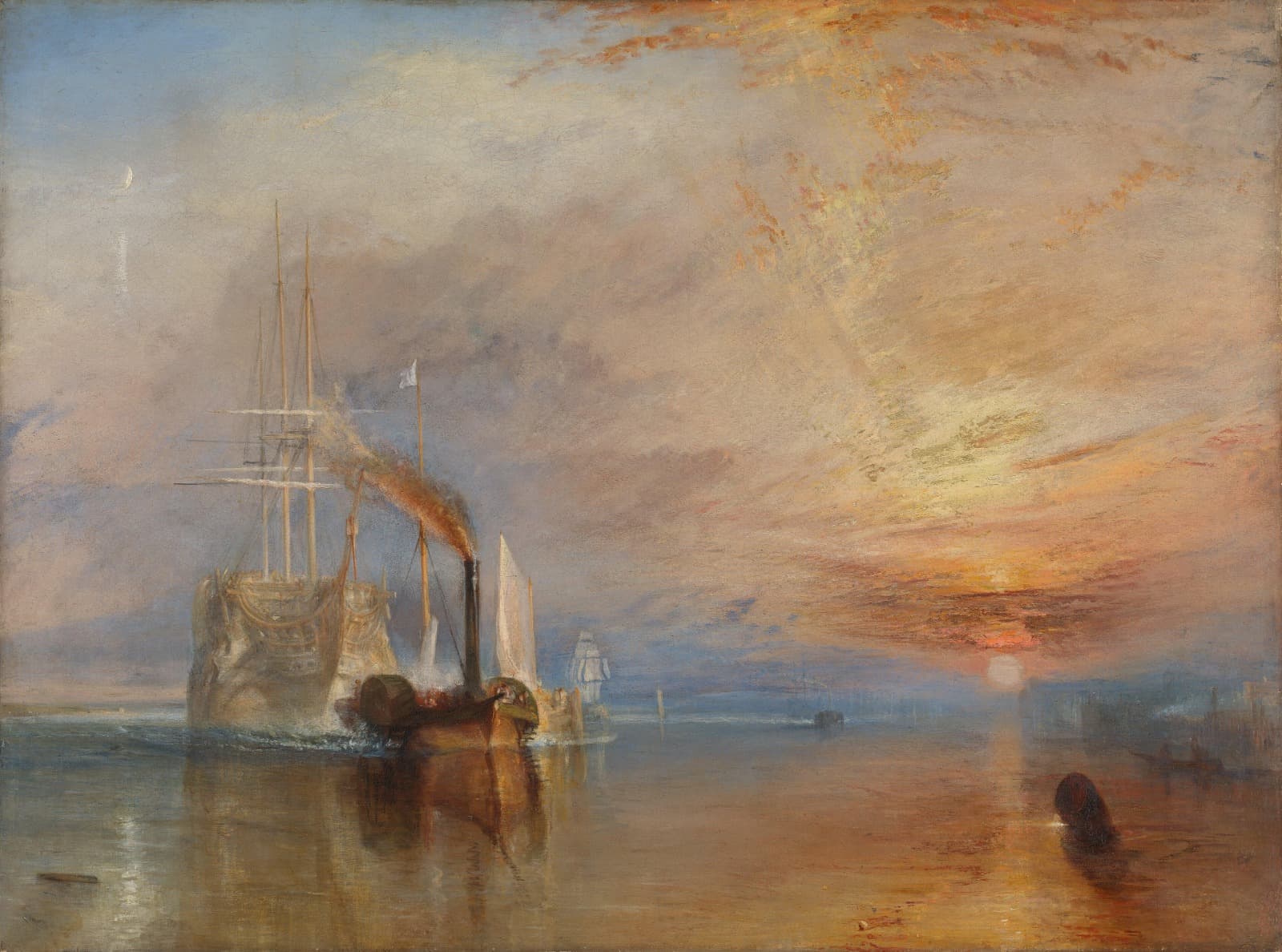
The Fighting Temeraire
1839 · National Gallery, London
A steam tug hauls a Trafalgar warship off to be broken up. Turner refused to sell the picture and left it to the nation.
★ 9.1
 skopia
A steam tug hauls a Trafalgar warship off to be broken up. Turner refused to sell the picture and left it to the nation.
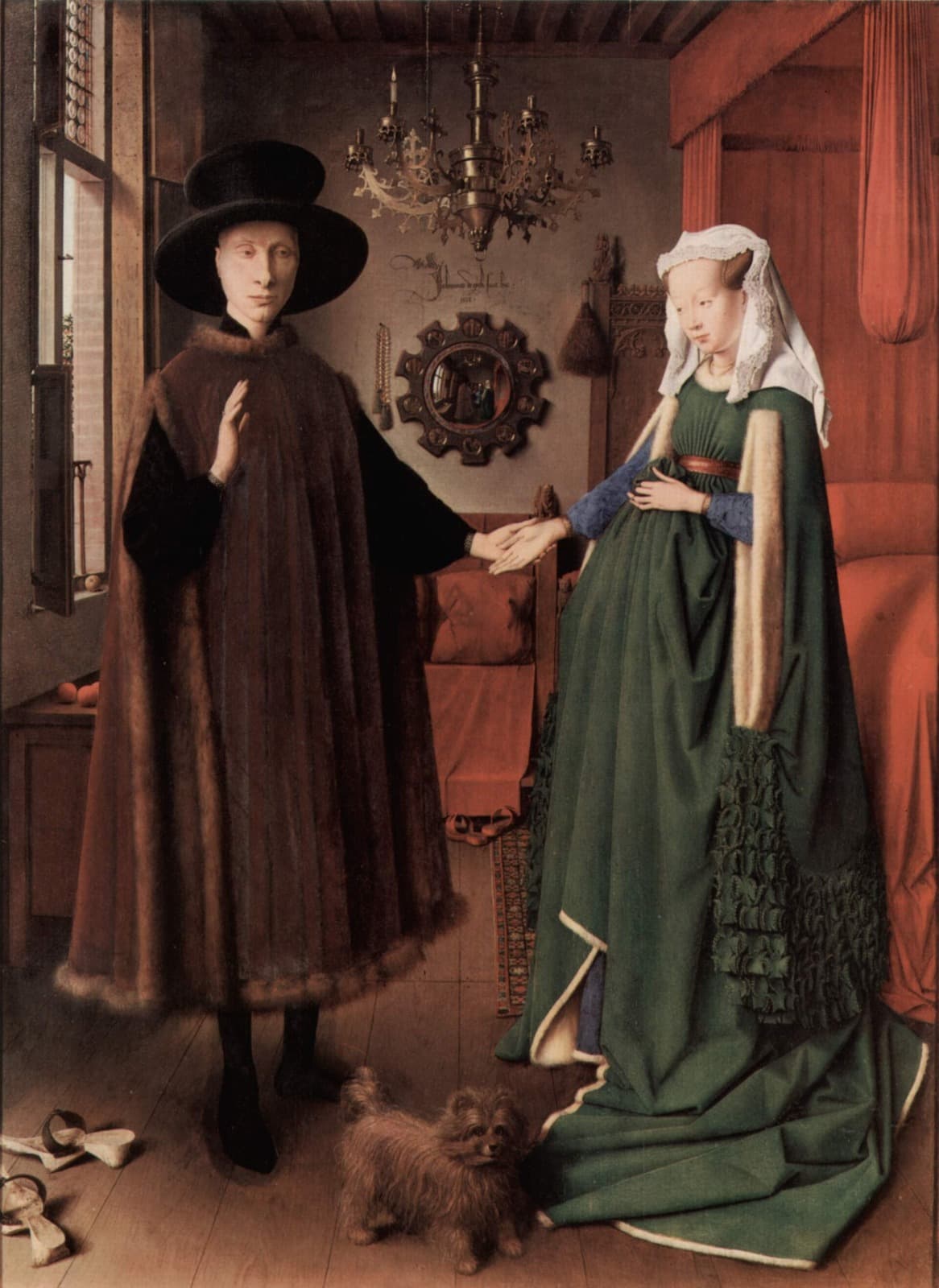
A couple joins hands in a Bruges bedroom, and the mirror behind them catches two visitors at the door. Van Eyck signed the wall above it.
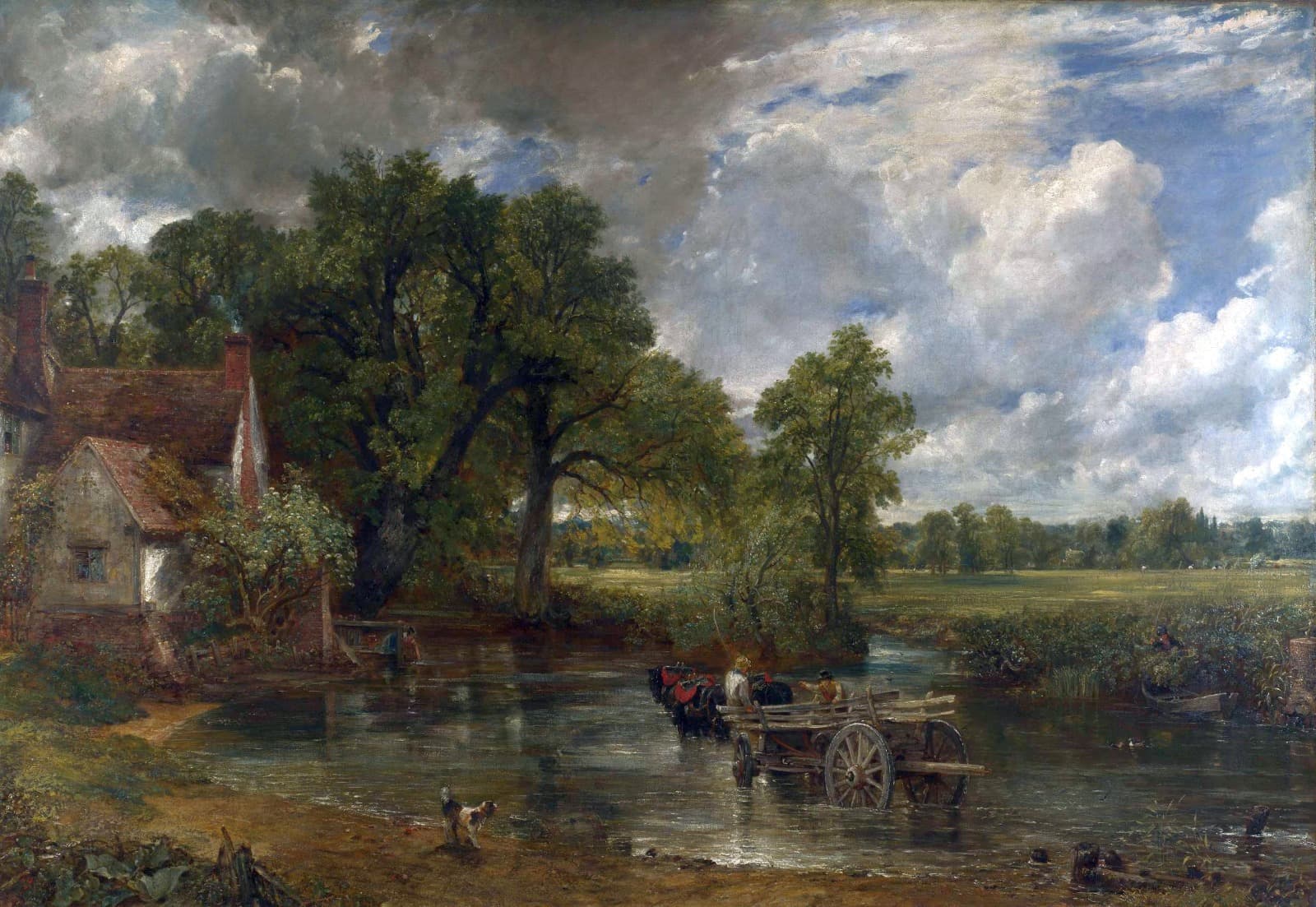
England ignored it, but the Paris Salon awarded it a gold medal in 1824 and sent Delacroix back to rework his own canvases.
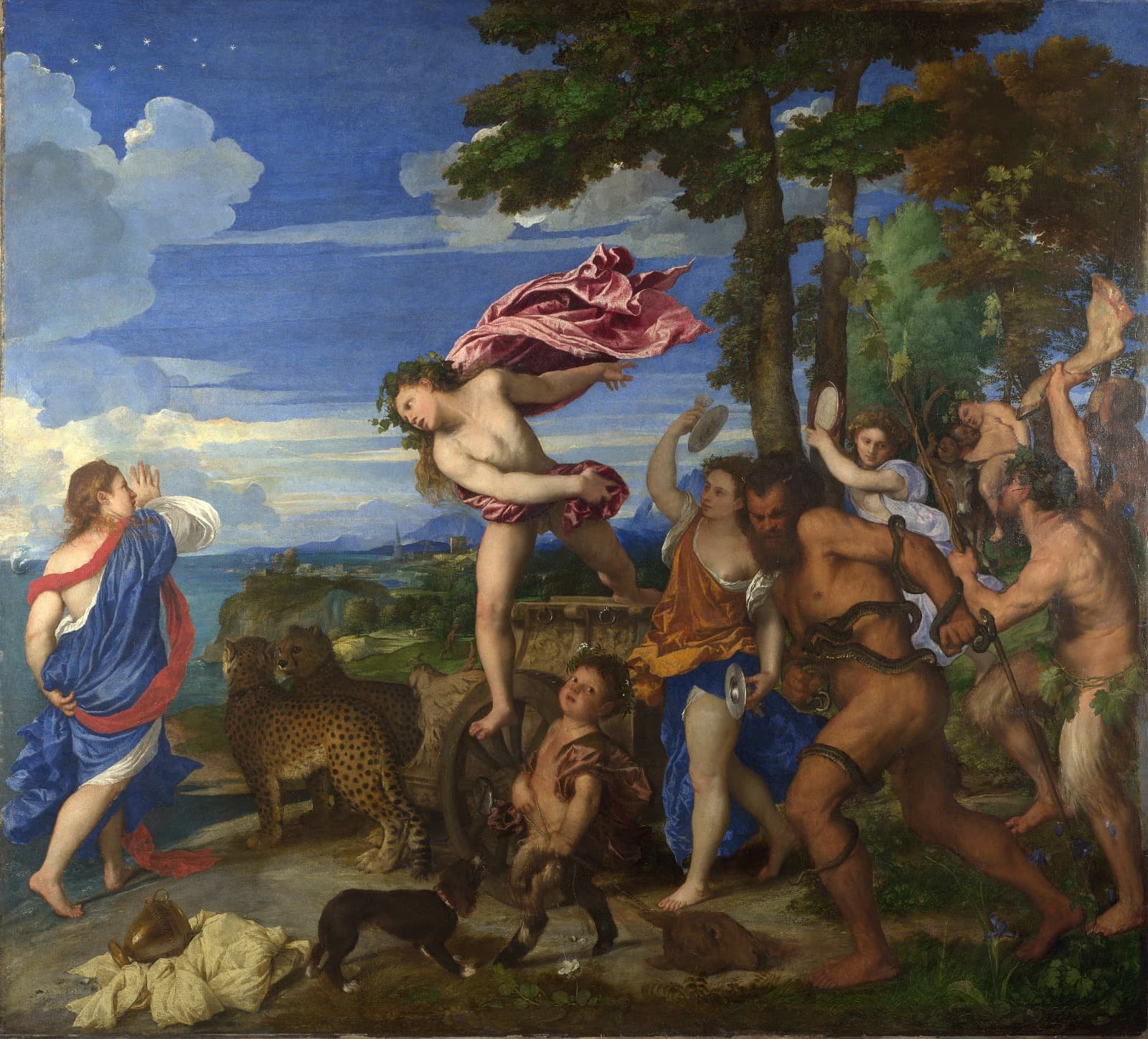
Bacchus leaps from his chariot toward Ariadne while Theseus's ship slips off the horizon, painted for a duke's private chamber in Ferrara.

Two men pose with globes, sundials and a lute with a broken string, and a smear on the floor turns into a skull from the side.
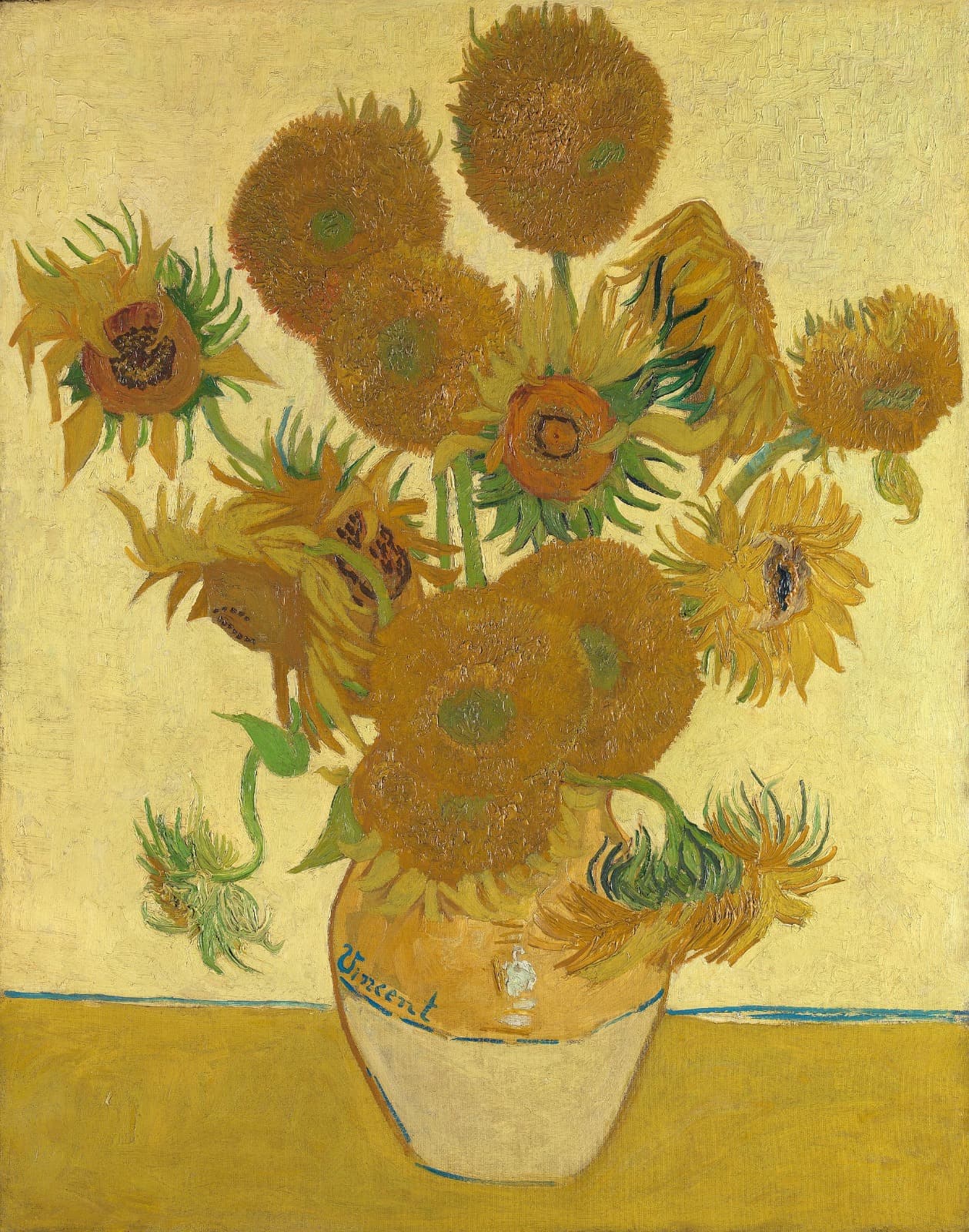
Some blooms burst with petals and others have gone to seed, all yellow on yellow, painted to decorate the house where Gauguin was to come.
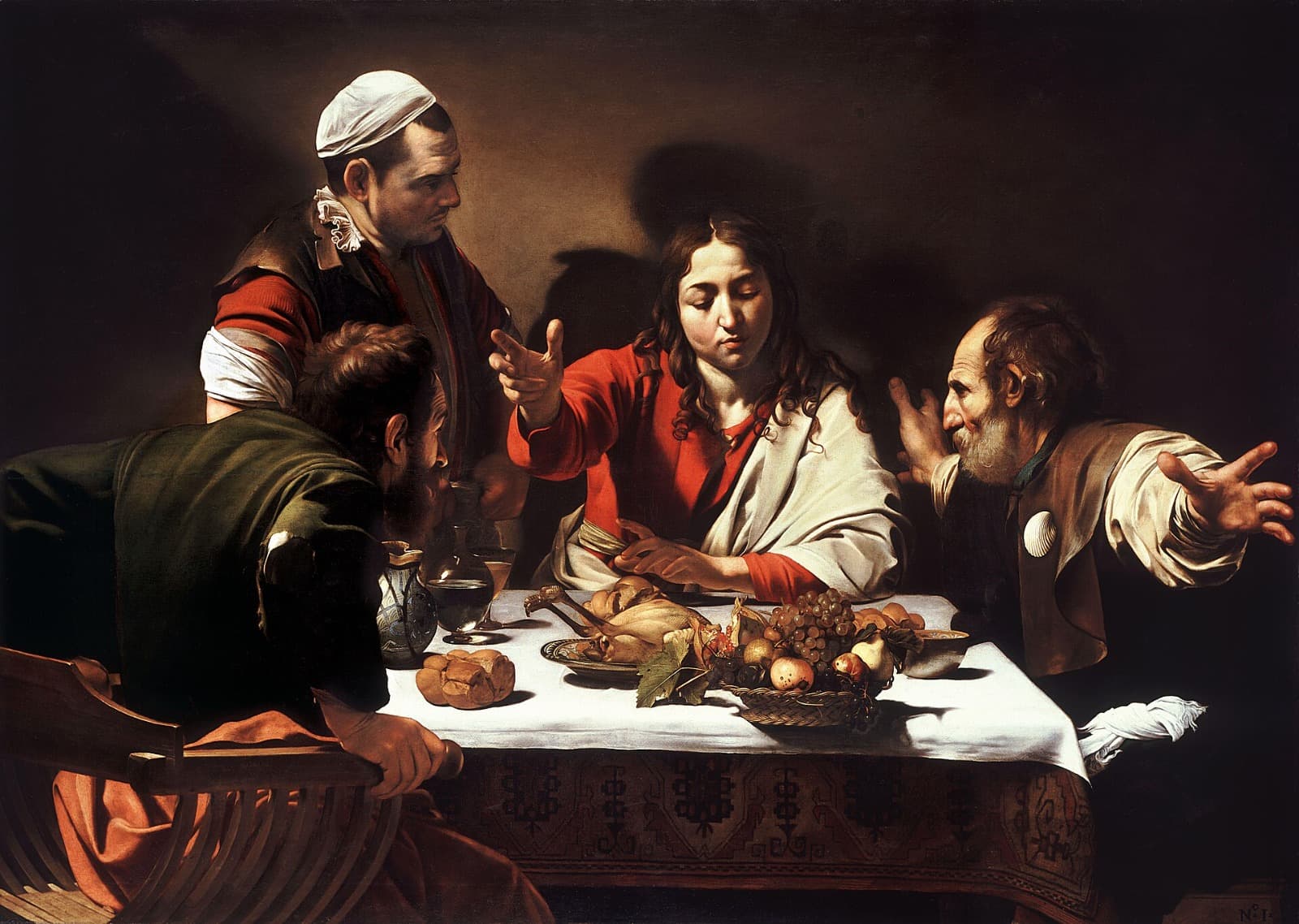
One disciple grips his chair to stand and the other throws his arms wide, while a fruit basket teeters off the edge toward us.
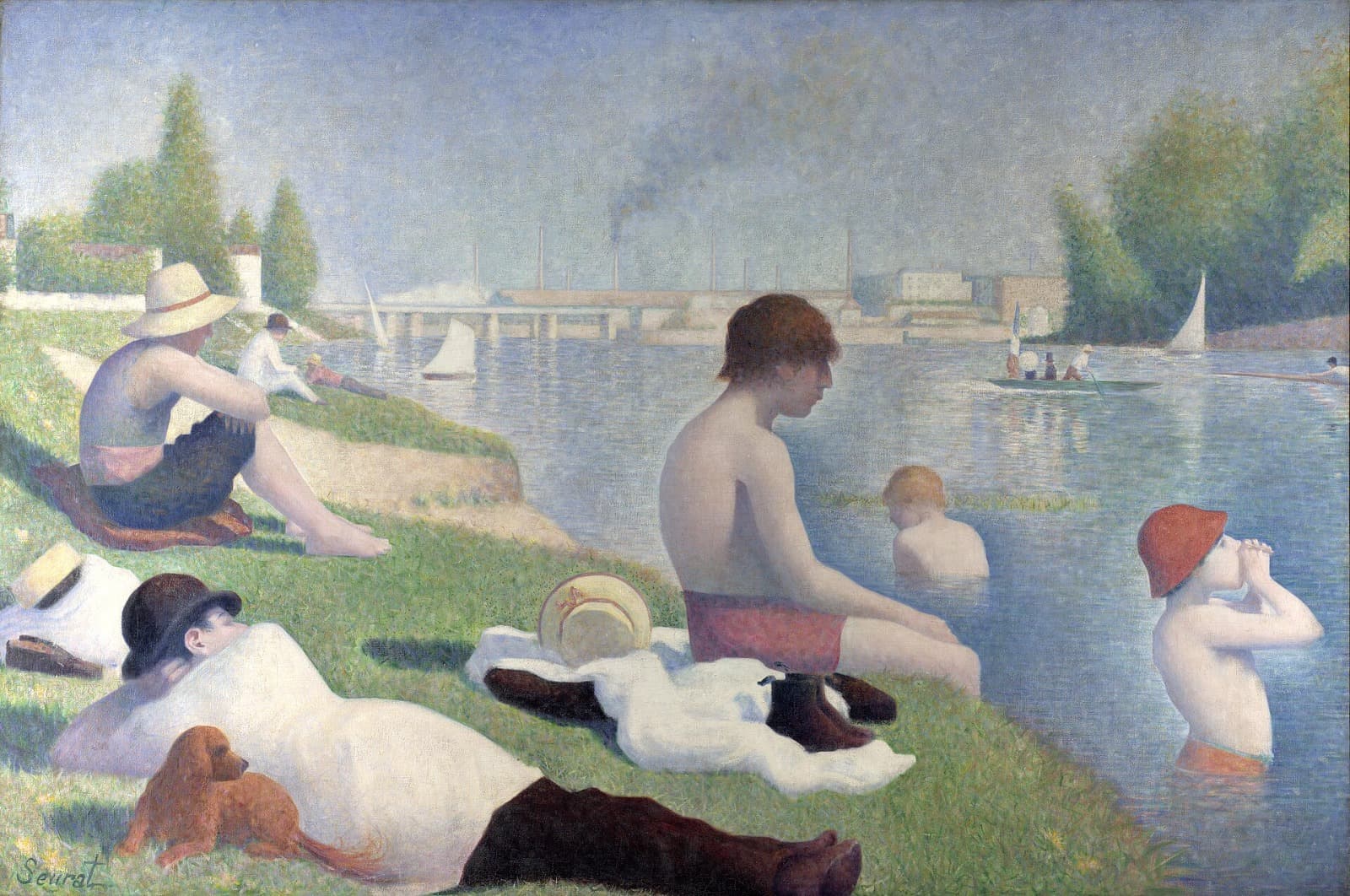
Working men bathe on the bank while factory chimneys smoke across the river, the figures given the weight of a classical frieze.

A girl with a reptile's body offers a honeycomb and Time pulls back a curtain. The cold puzzle was probably a gift for the French king.

The wary, straight-on gaze is what a painter sees in a mirror, which is why this is probably van Eyck looking at himself.

Bellini painted the brocade thread by thread and turned the official portrait from a profile on a coin into a man met face to face.

Erasmus rests his hands on a book whose edge is inscribed The Labors of Hercules, his own joke about how much scholarship costs.
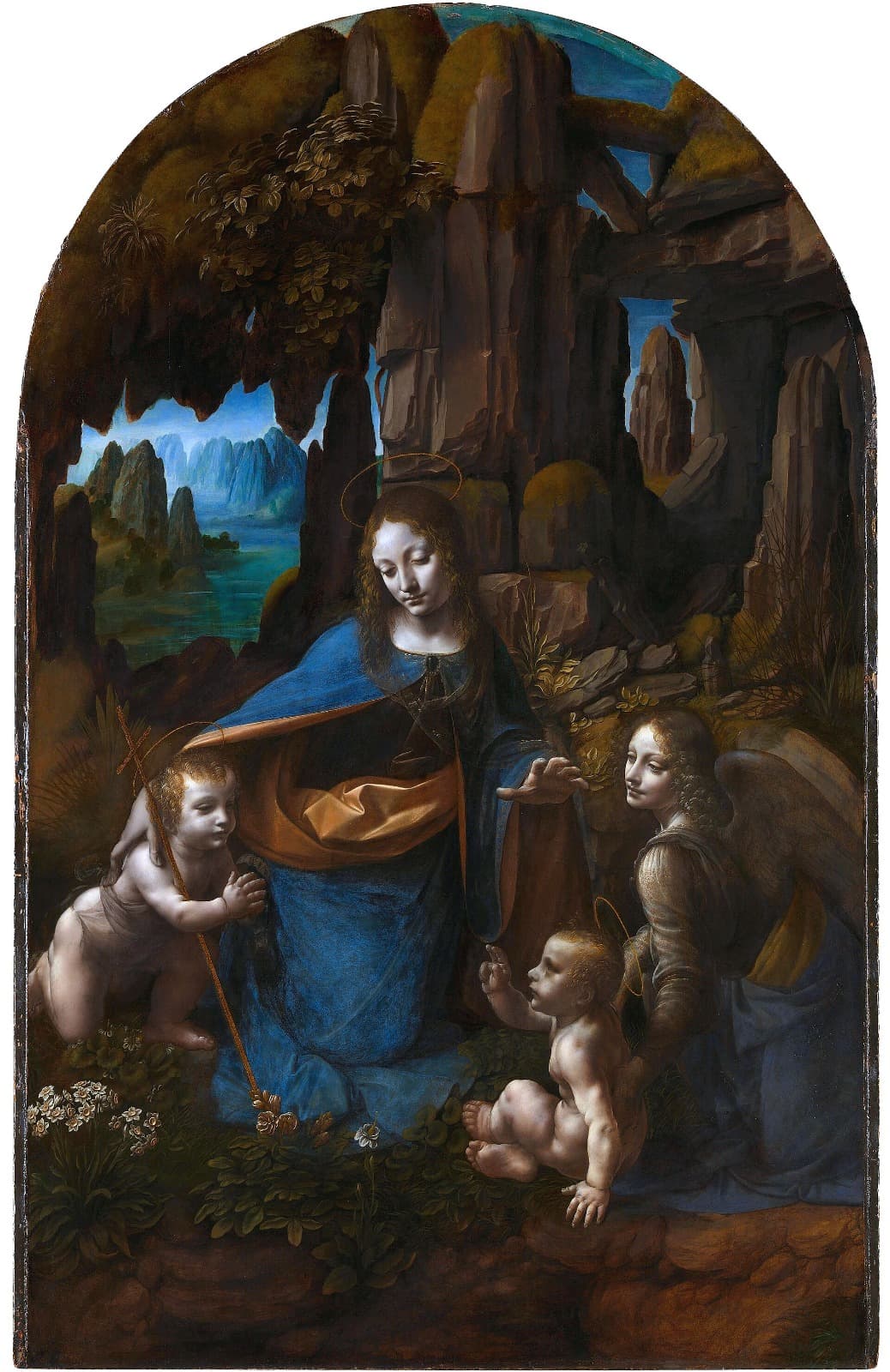
The second version, painted to settle a long quarrel with the confraternity. Everyone now has a halo and the angel has stopped pointing.

Saint Ursula is on the quay somewhere, but the real subject is the light coming up the water between the palaces at dawn.

The sun sits low over a glassy harbor and floods everything. Turner admired it so much he insisted his own work hang beside it.
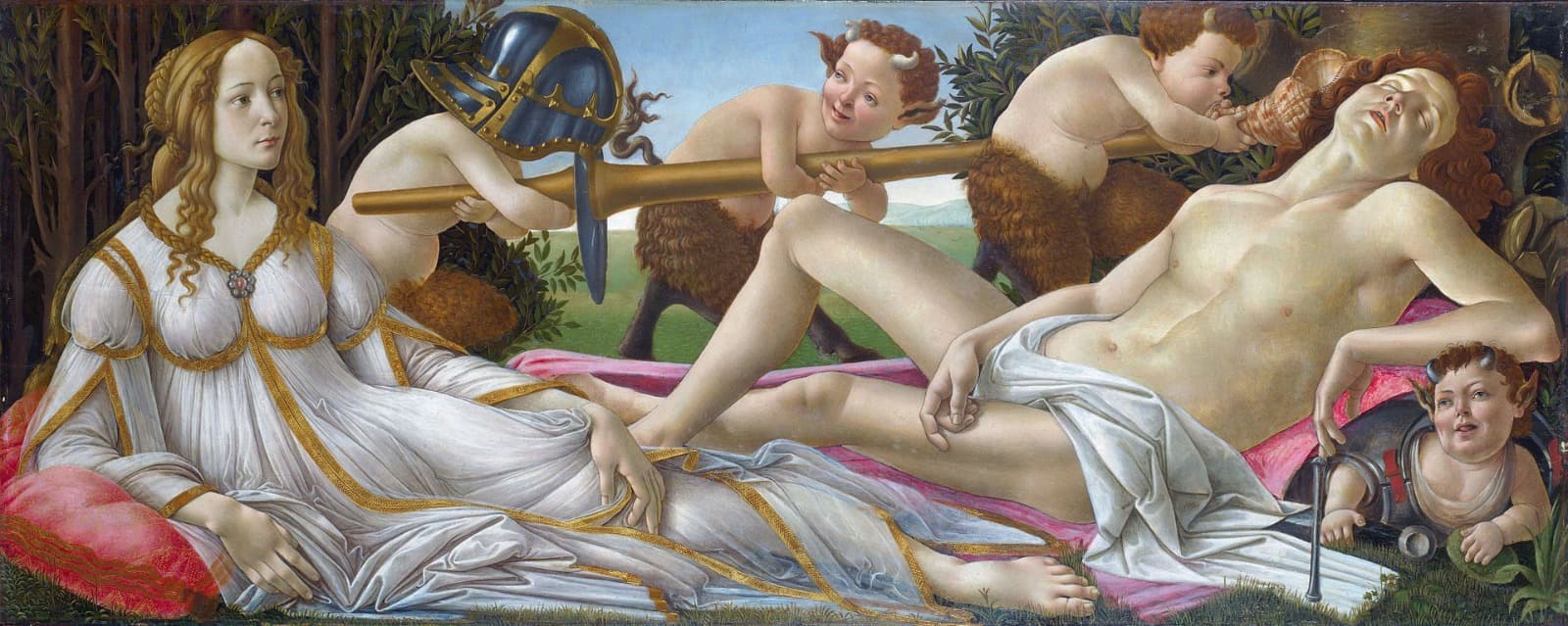
Mars sleeps the sleep of the spent lover while satyrs make off with his lance, one blowing a conch in his ear without waking him.

Pissarro painted these boulevards from a hotel window over and over, but only once after dark, the gaslight smeared across wet pavement.

The princess has the dragon on a leash made from her own belt, and a spiral storm cloud winds up behind the saint.

Lazarus heaves upright still wrapped in his shroud while the crowd recoils from the smell. Michelangelo supplied drawings to help beat Raphael.

Mantegna carved the rock like an engraver while Judas already leads the soldiers down the road. His brother-in-law Bellini painted the same scene, softer.

A red cap, a parapet, and a gaze that meets yours. Antonello brought the Netherlandish portrait into Italy and killed off the profile.

A satyr kneels and touches the dead woman with extraordinary gentleness while her dog keeps watch and wading birds stand along the shore.
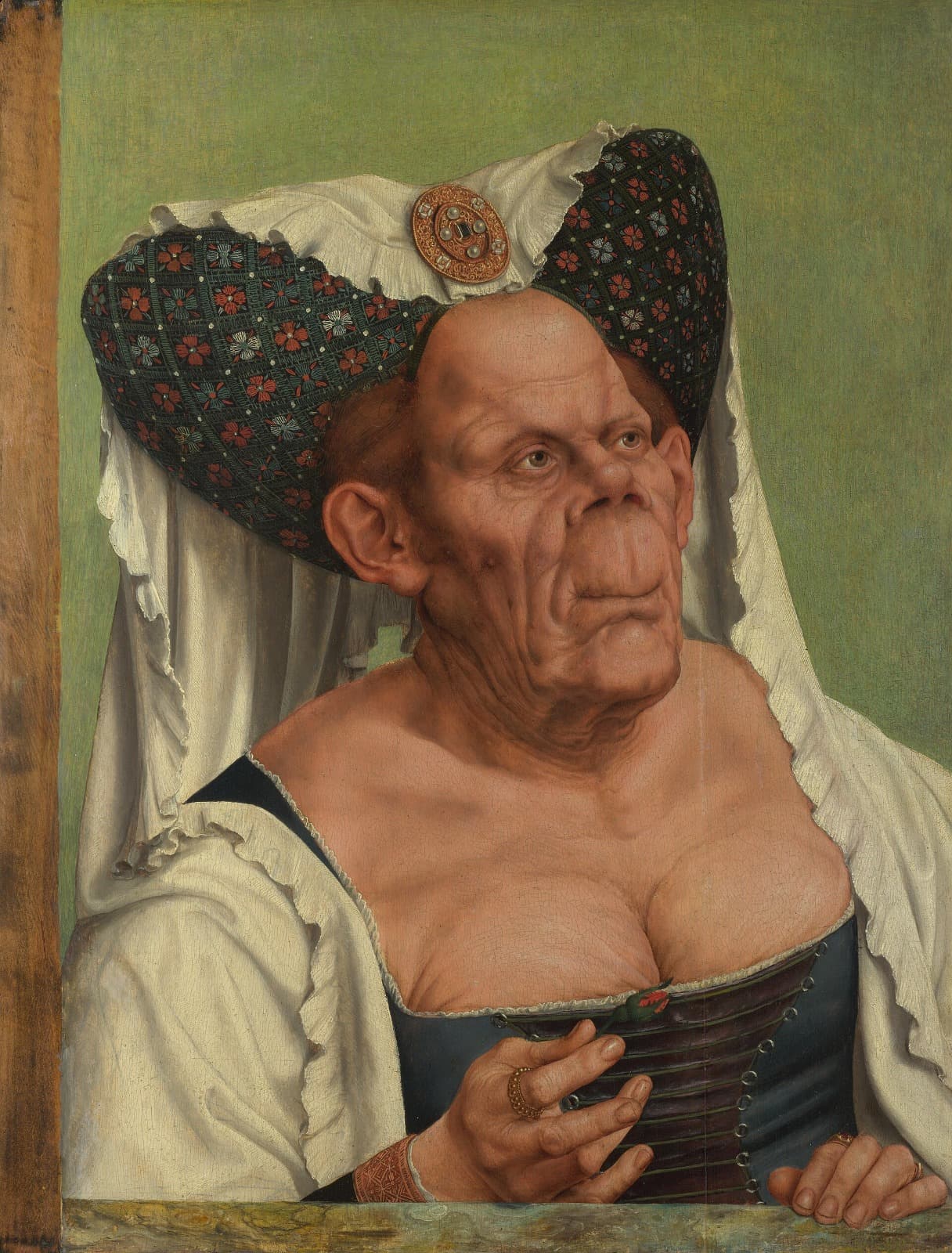
Satire on old age aping youth, in a headdress two generations out of date. Tenniel used her for the Duchess in Alice in Wonderland.
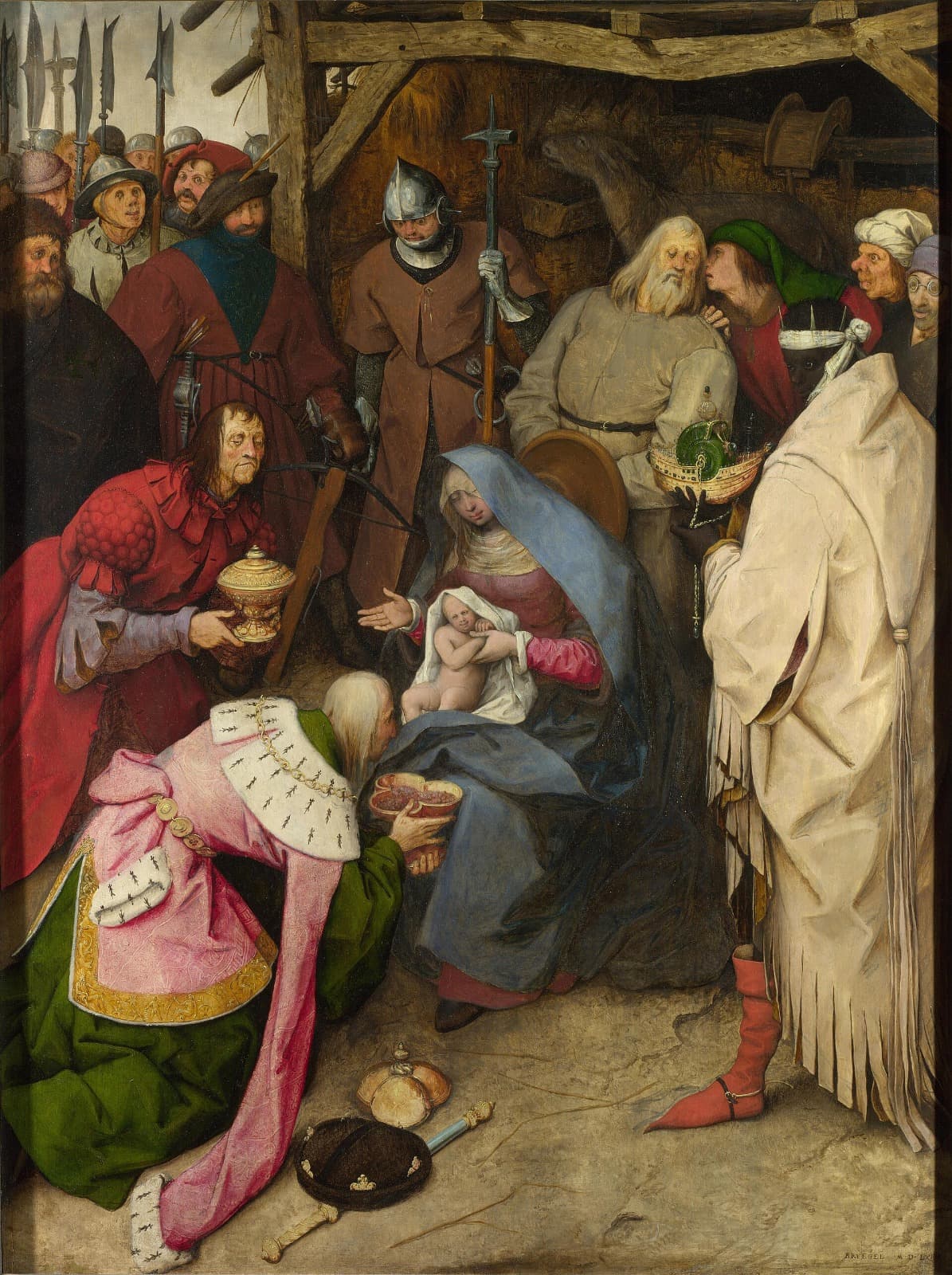
Bruegel gives the holy figures plain faces and surrounds them with gawkers and whisperers, which makes reverence hard to come by.

Richelieu appears three times on one canvas so that a sculptor in Rome could carve a bust without ever meeting him.

He swivels over his shoulder to look at you, holding a block that nobody can identify, and his name has been lost entirely.

Spartan girls taunt the boys into wrestling, and Degas made the bodies awkward rather than ideal, which is not how history painting was done.

Bare priming still shows where the Virgin was meant to sit. Michelangelo probably set it aside to go back to Florence and carve the David.

The episode appears in no Gospel at all, and Altdorfer nearly buries the figures under a forest of enormous trees and luminous sky.