
The Garden of Earthly Delights
1505 · El Prado, Madrid
Three panels run from Eden to hell, with a whole naked humanity climbing into giant fruit in between. Nobody has settled what it means.
★ 10.0
 skopia
Three panels run from Eden to hell, with a whole naked humanity climbing into giant fruit in between. Nobody has settled what it means.

Saints and pilgrims stream toward a bleeding Lamb across a dozen hinged panels. One of them was stolen in 1934 and has never been found.

Christ has just said one of them will betray him, and the shock rolls down the table. Leonardo's experimental paint began flaking in his lifetime.
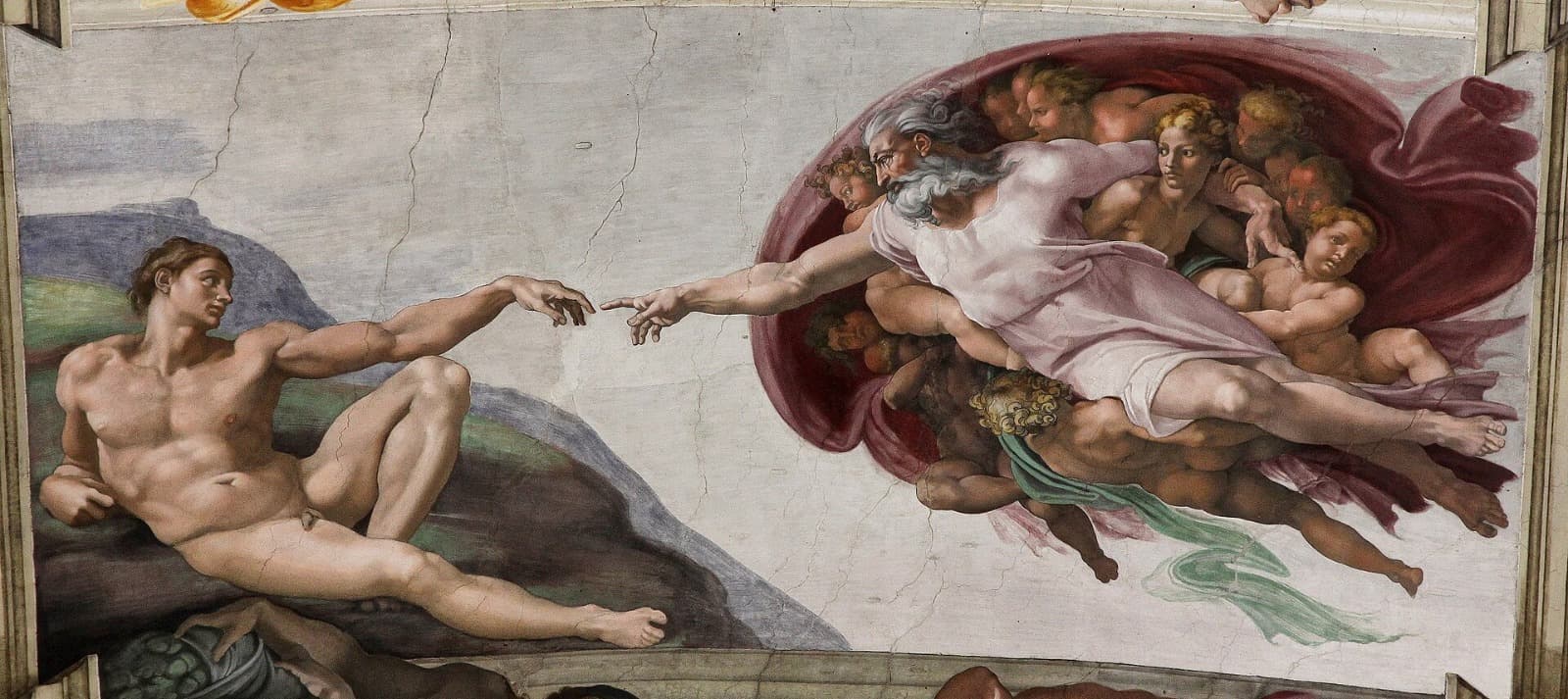
God surges out of a red cloak full of angels, and Michelangelo leaves the fingers not quite touching. The gap does the work.

Christ's body hangs green and pocked with sores, painted for a hospital whose patients saw their own ravaged flesh.

The fainting Virgin curves in an exact echo of her dead son, the stroke that made van der Weyden the most copied painter in the north.

Light follows Christ's pointing hand across a dim counting-room to Matthew, who gestures at himself in disbelief. The picture made Caravaggio famous overnight.
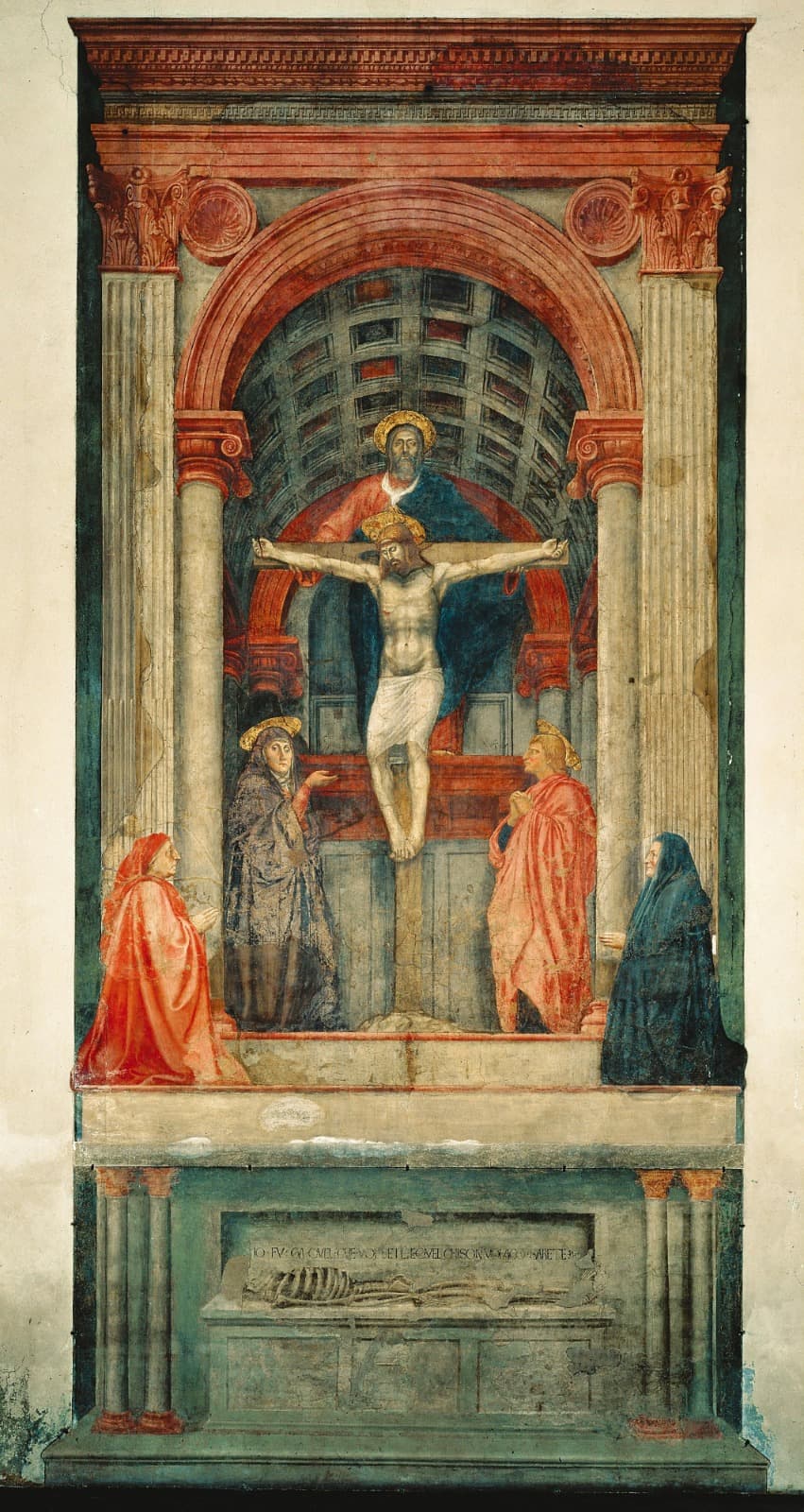
The earliest surviving painting built on a single vanishing point, worked out on a wall of Santa Maria Novella with Brunelleschi's help.
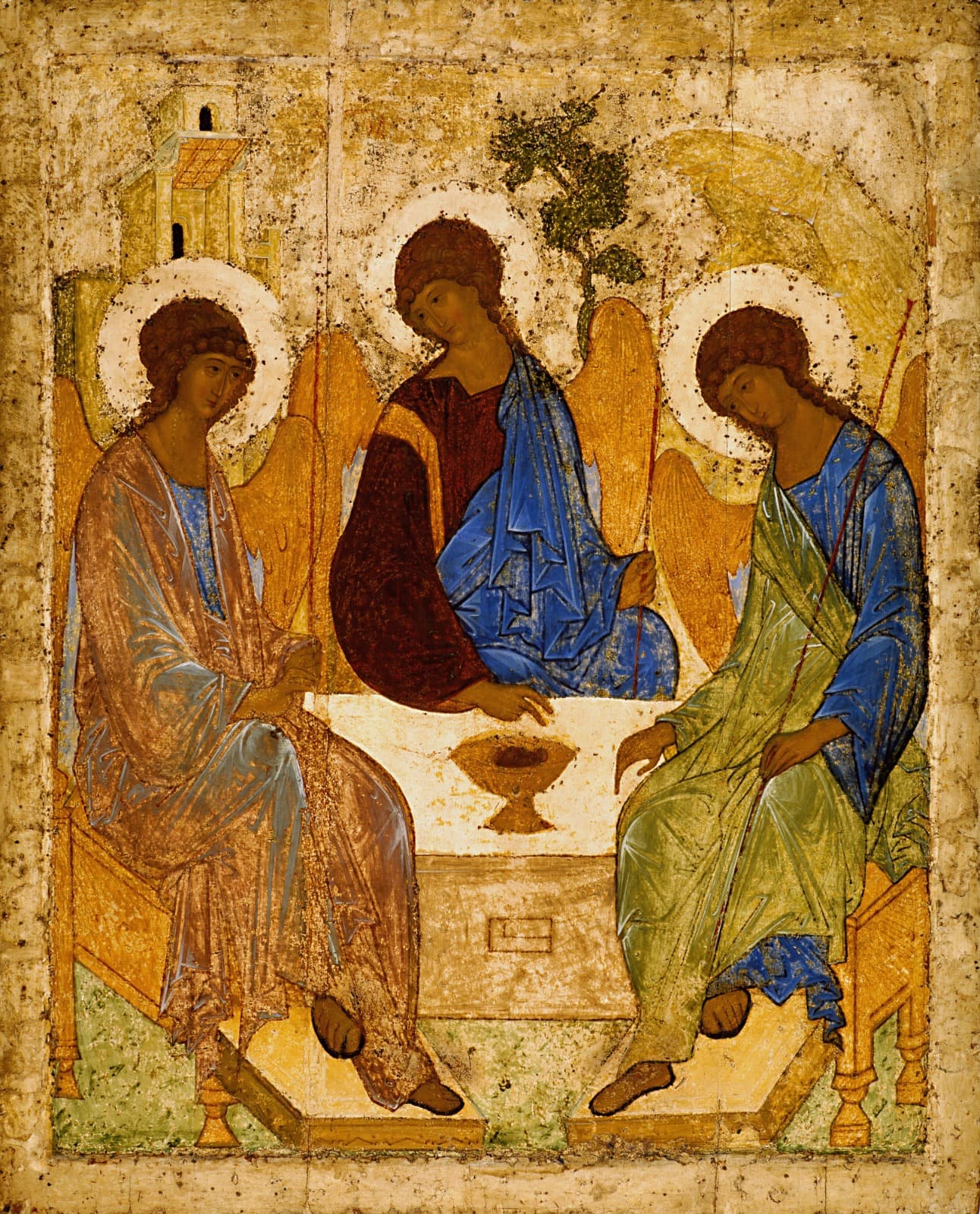
Three angels bend into a closed circle around a single cup. In 2024 the icon left the Tretyakov for a monastery, over conservators' objections.

Bartholomew holds his own flayed skin, and the sagging face on it is Michelangelo's. The nudes offended enough critics that drapery was added later.

Judith and her maid hold Holofernes down together and work the blade through his throat. Artemisia painted it a decade after her rape trial.
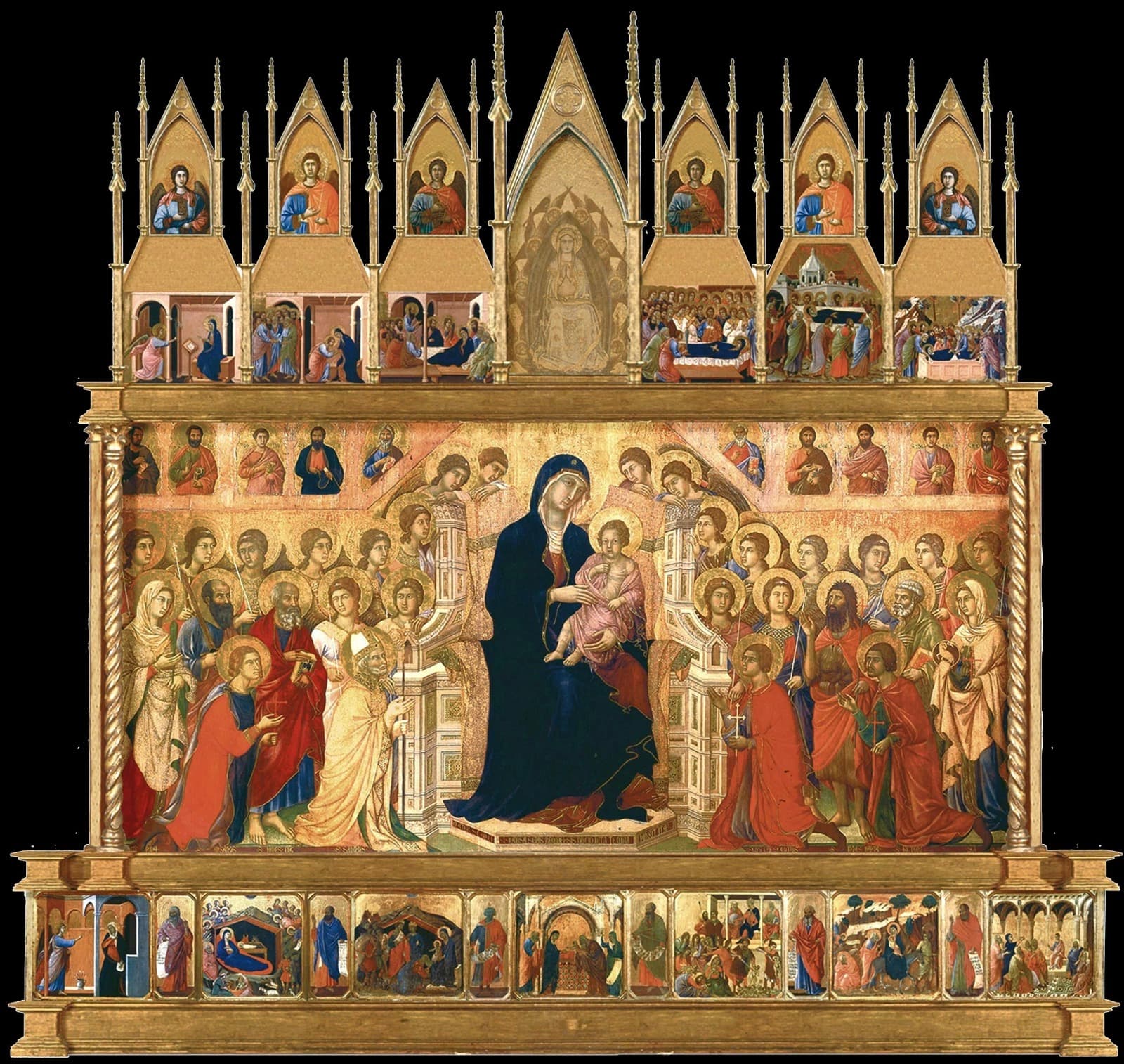
When Duccio finished it in 1311 the whole of Siena walked it to the cathedral in procession, with the bells going the entire way.
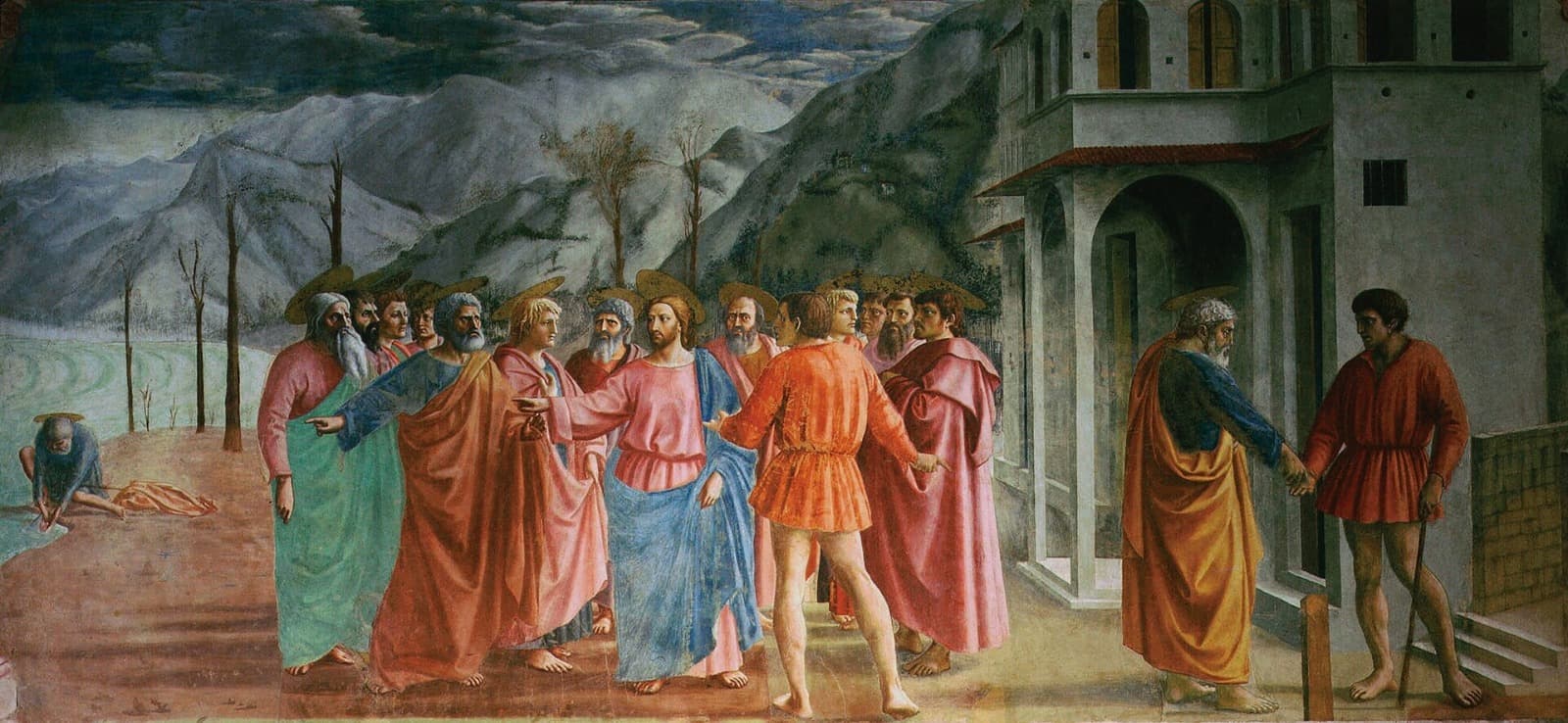
Three moments run in a single frame: the tax demanded, Peter pulling the coin from a fish, and Peter paying up at the right.
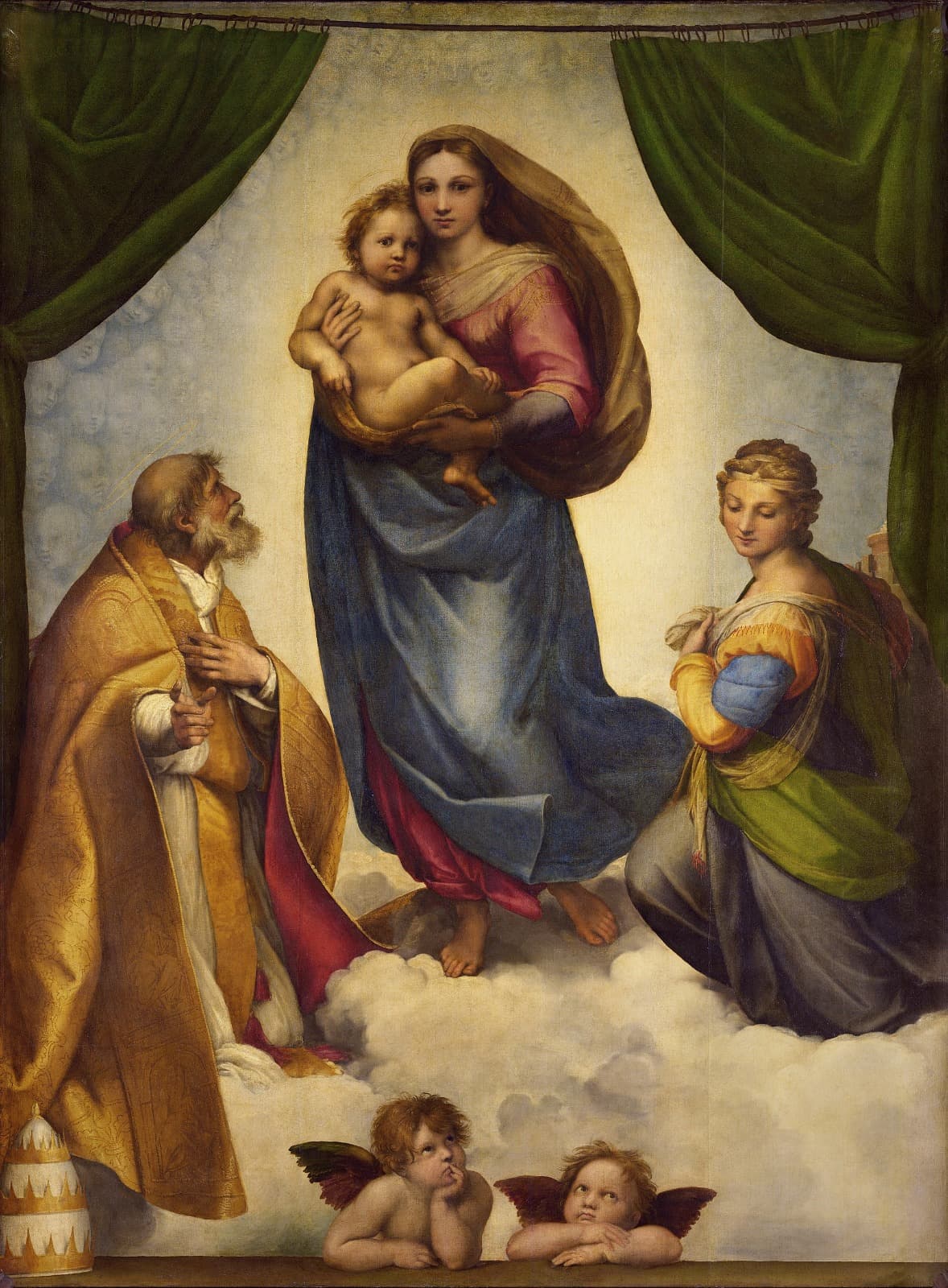
Two bored cherubs lean on the frame at the bottom, and they floated free of the altarpiece long ago onto everything else.

The son kneels with his shorn head against his father's chest and the old man's hands come down on his back. Rembrandt painted it near death.

Eve throws back her head and howls while Adam hides his face, the bodies heavy and casting real shadows. Michelangelo came to study it.

Christ's body slides down one long diagonal onto a white shroud. It still stands on the altar in Antwerp Cathedral that Rubens painted it for.
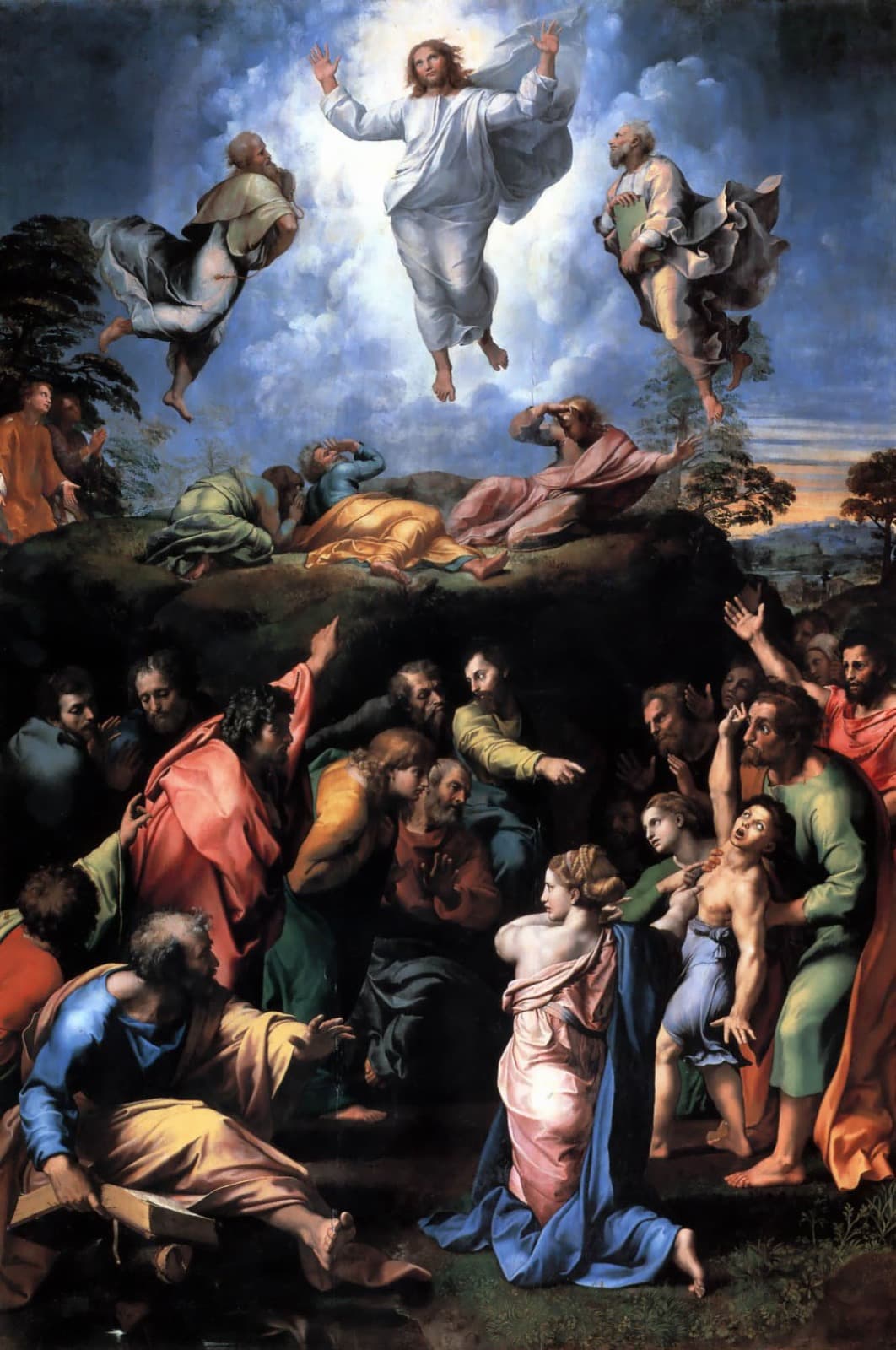
Raphael left it unfinished when he died in 1520, and it was hung above his body while he lay in state.
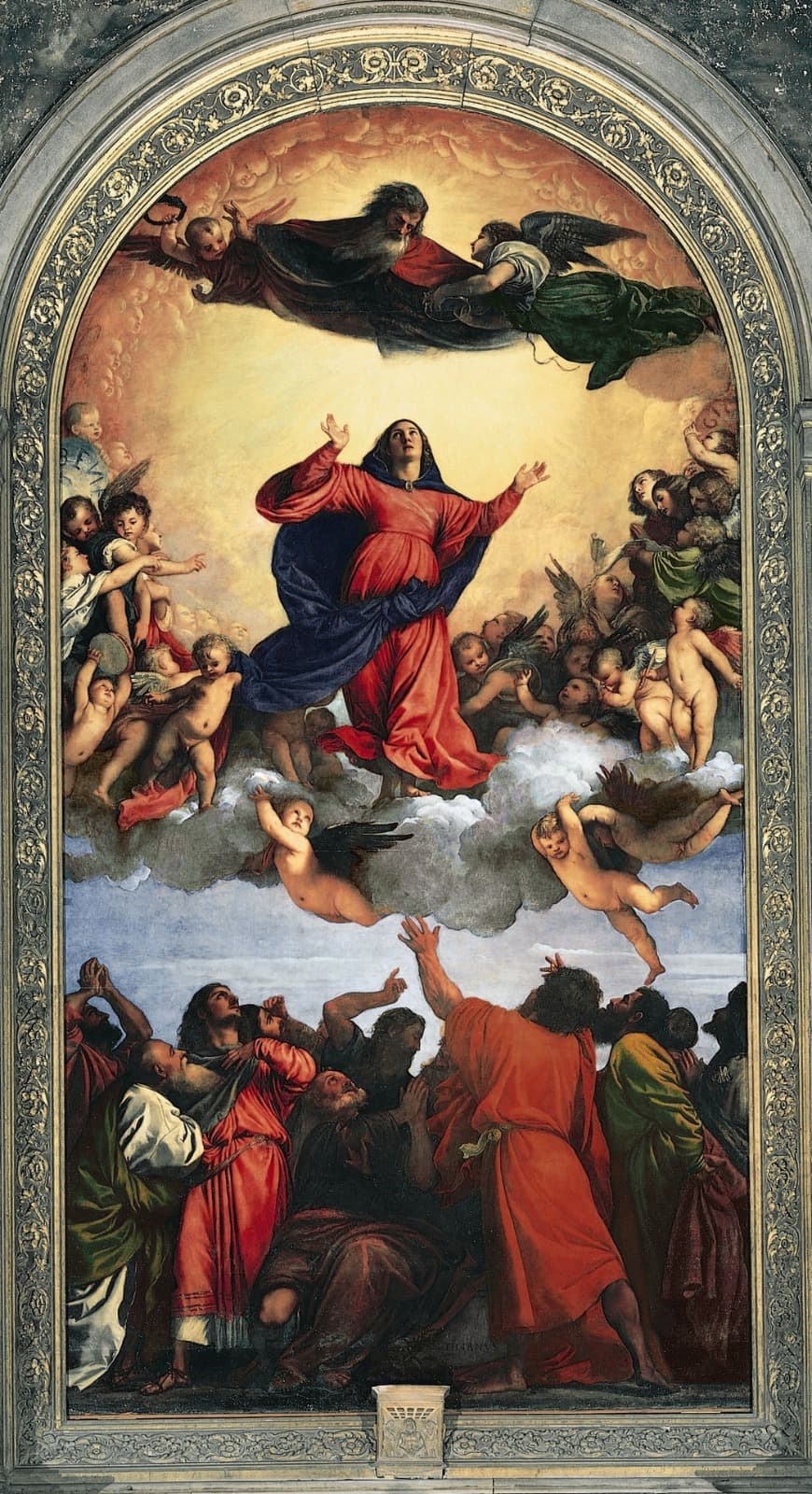
Titian was barely thirty when Venice saw this go up over the Frari altar, the Virgin swept into a storm of red and blue.
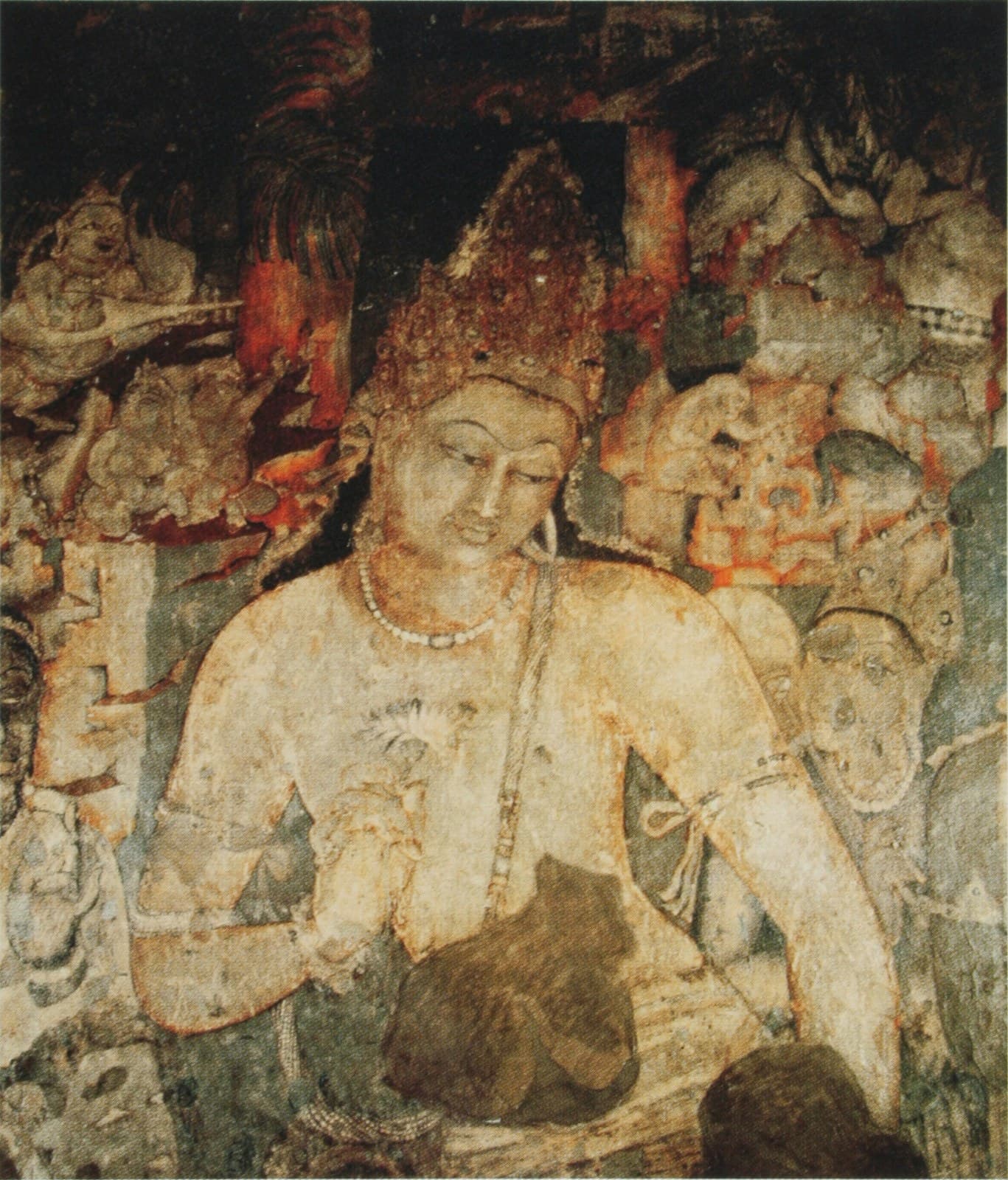
The bodhisattva lowers his eyes with a blue lotus in his hand, painted into living rock at Ajanta and lost to the jungle for centuries.

The only canvas Caravaggio ever signed, and he signed it in the blood running from the saint's throat, for the knights of Malta.

Caravaggio's first attempt at the subject, turned down by the patron, before he threw out the angels and left one man, one horse and the light.
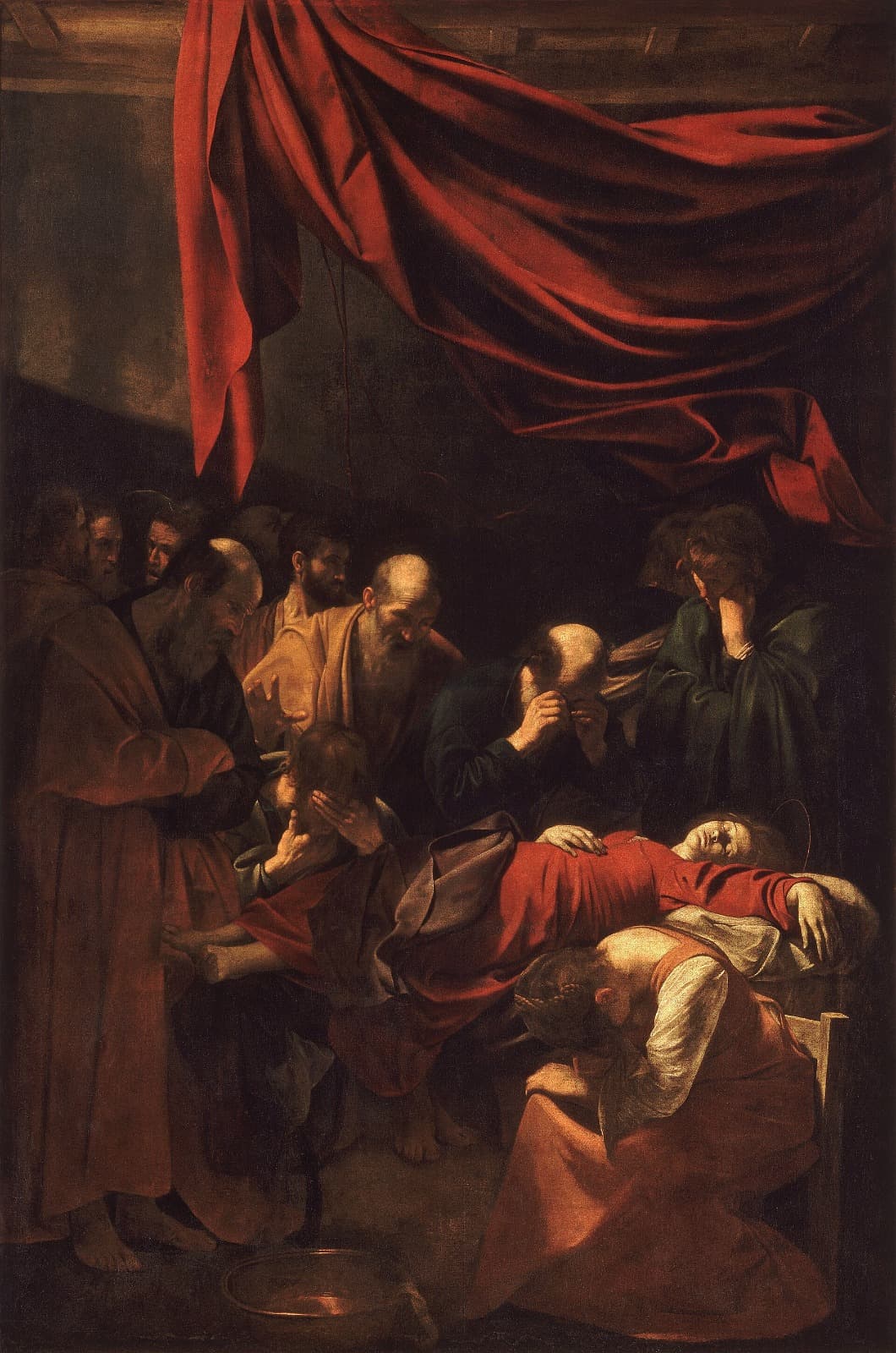
The Virgin lies barefoot and swollen like any corpse. The church that ordered it refused delivery, and Rubens told his duke to buy it.
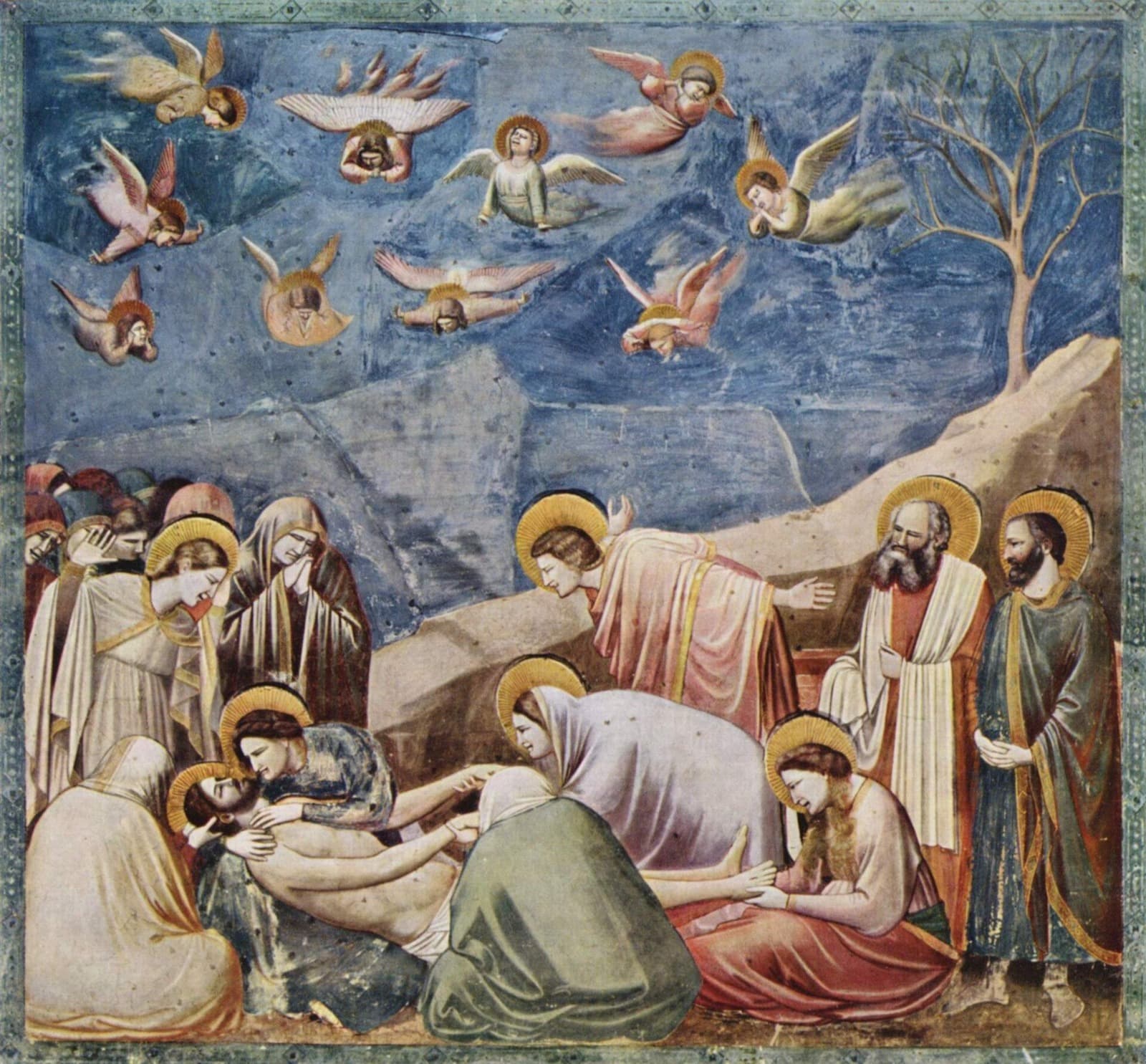
Two mourners sit with their backs turned to pull us in, and the angels overhead double over. Giotto frescoed it in the Arena Chapel at Padua.
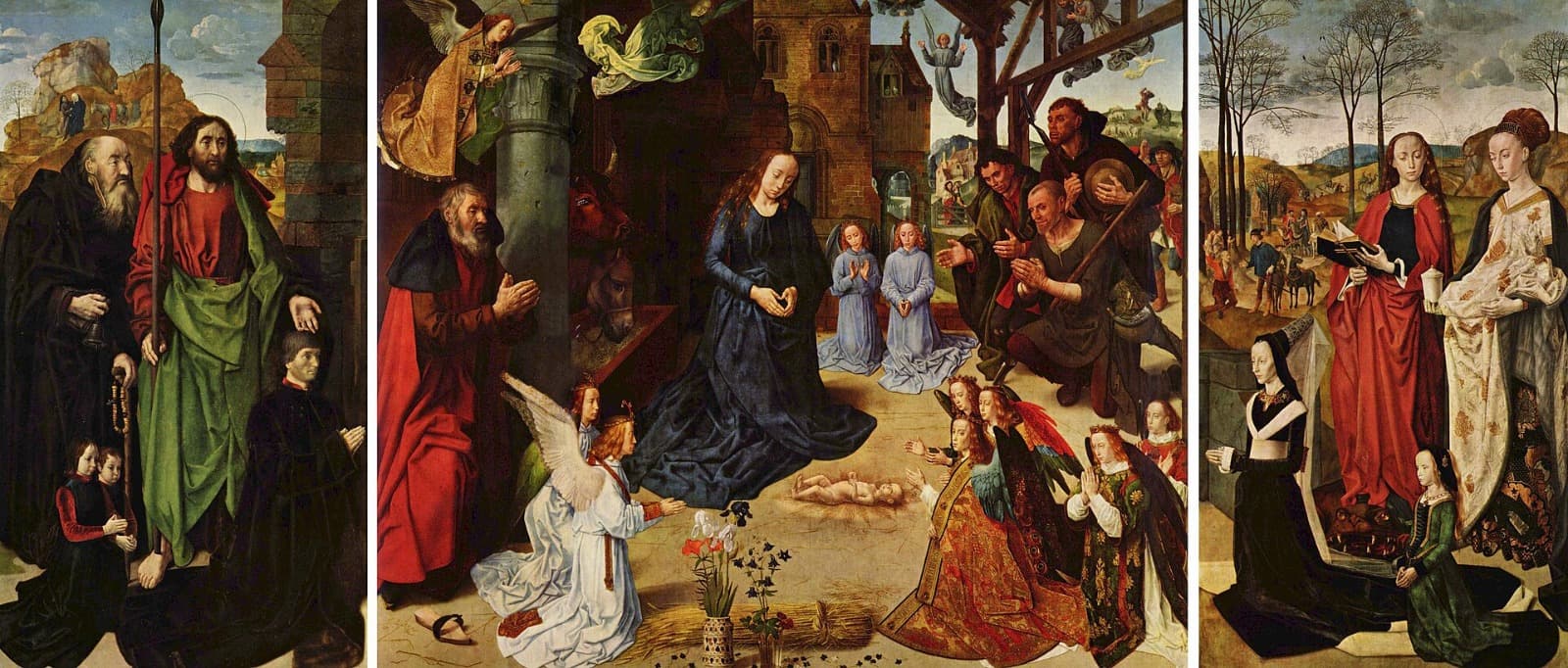
Three weathered shepherds crowd in to look at the newborn, and when the triptych reached Florence from Bruges the local painters took note.

Christ is scourged in the middle distance while three men talk in the foreground, indifferent. Nobody has settled who they are or why.

The trees behind Christ turn from bare to leafing across the panel. In 1944 a British officer held his guns rather than shell the town.

A hundred and thirty guests feast while Christ works his first miracle almost unnoticed at the table. Napoleon's troops took it to Paris in 1797.
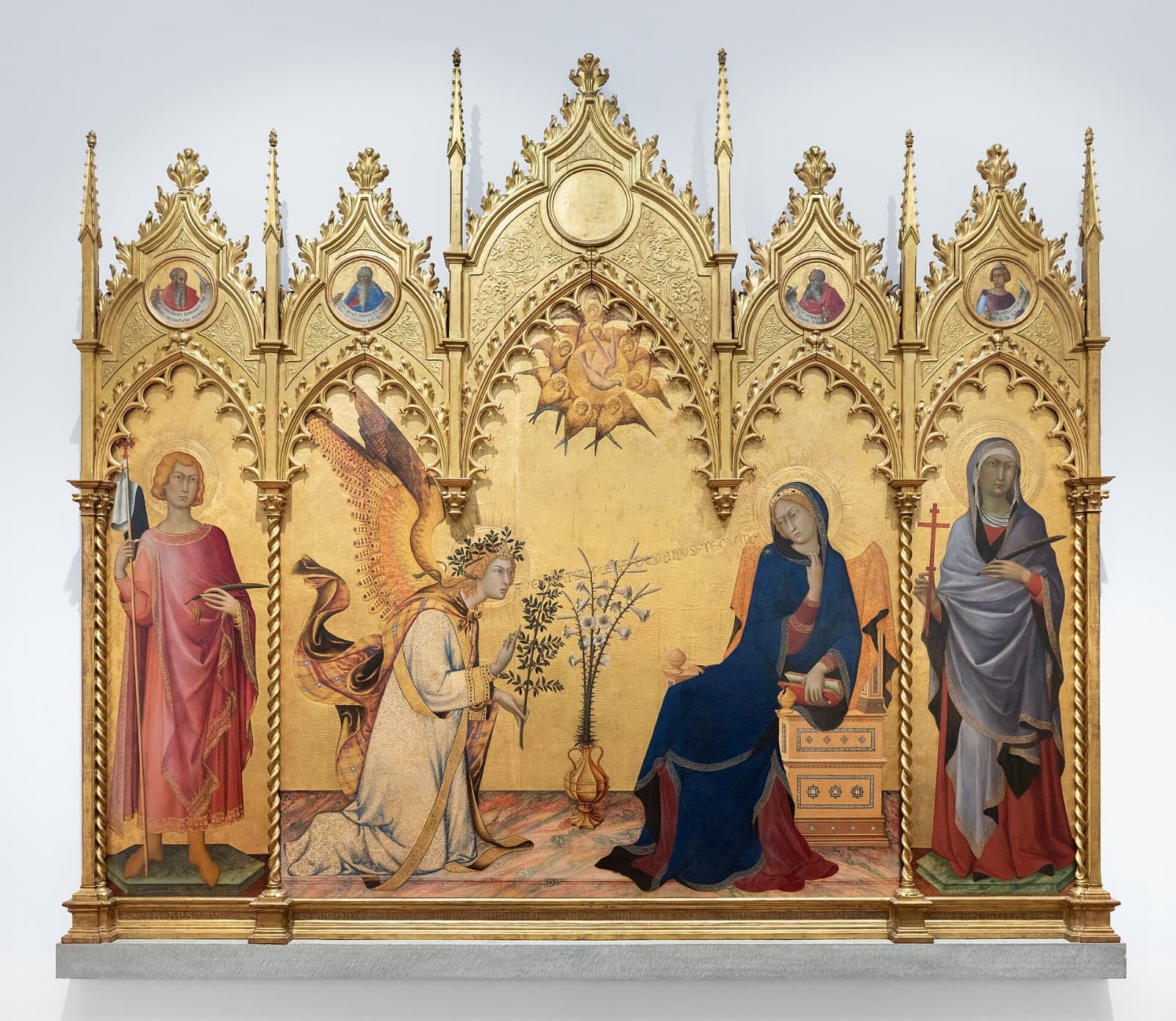
Gabriel's greeting runs toward Mary in raised gold letters and she twists away from it, her thumb still caught in her book.
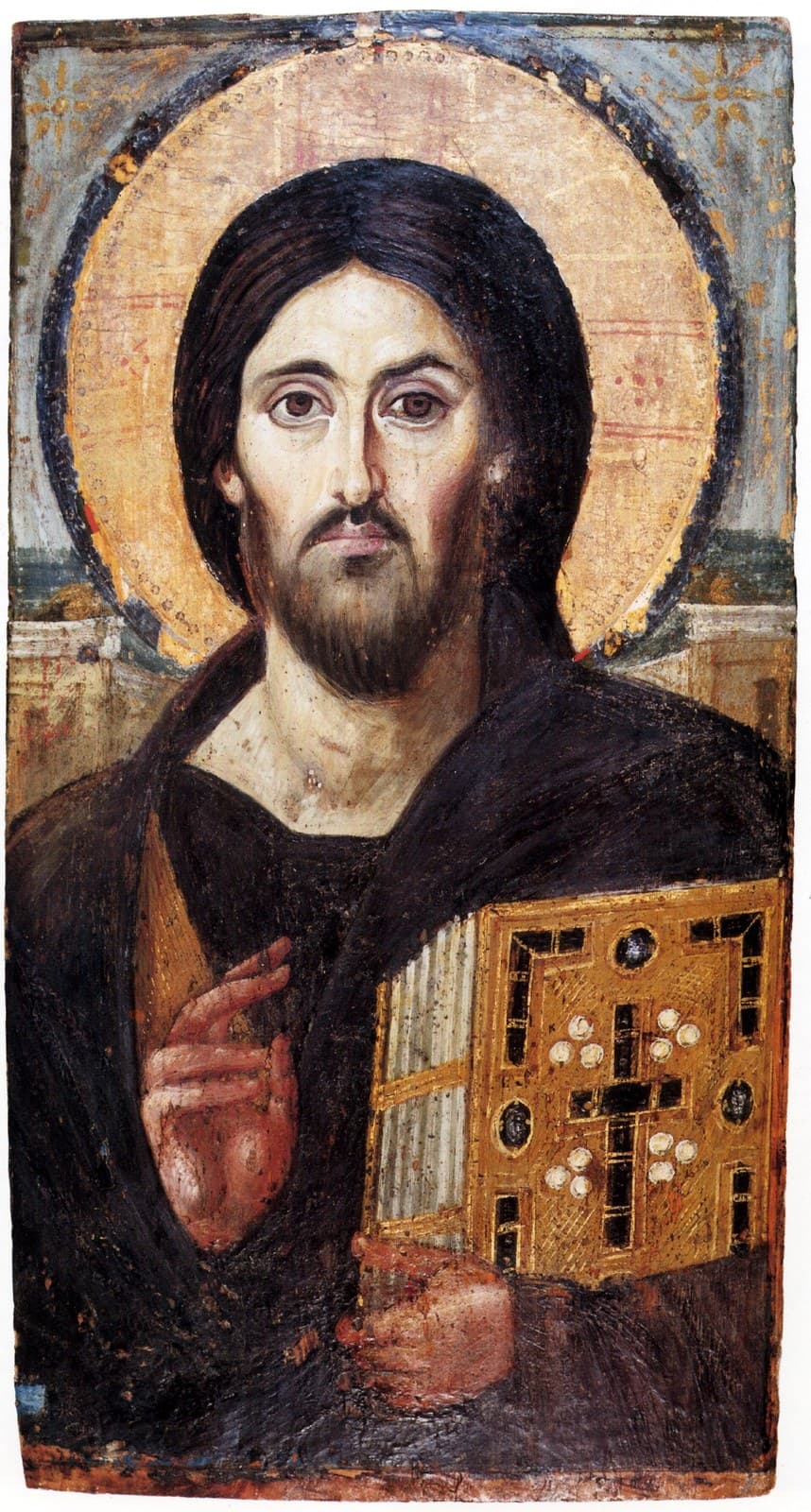
Cover one half of the face, then the other, and two expressions emerge, merciful and severe. Sinai was too remote for the iconoclasts to reach.

The two gods hurtle in from opposite edges and Sotatsu leaves the whole middle empty, so the bare gold reads as sky.

Life-size figures act out an initiation into the cult of Dionysus around three walls, buried by Vesuvius and dug out nearly intact.

Fra Angelico frescoed it at the top of the dormitory stairs, so the friars met it every time they climbed to their cells.
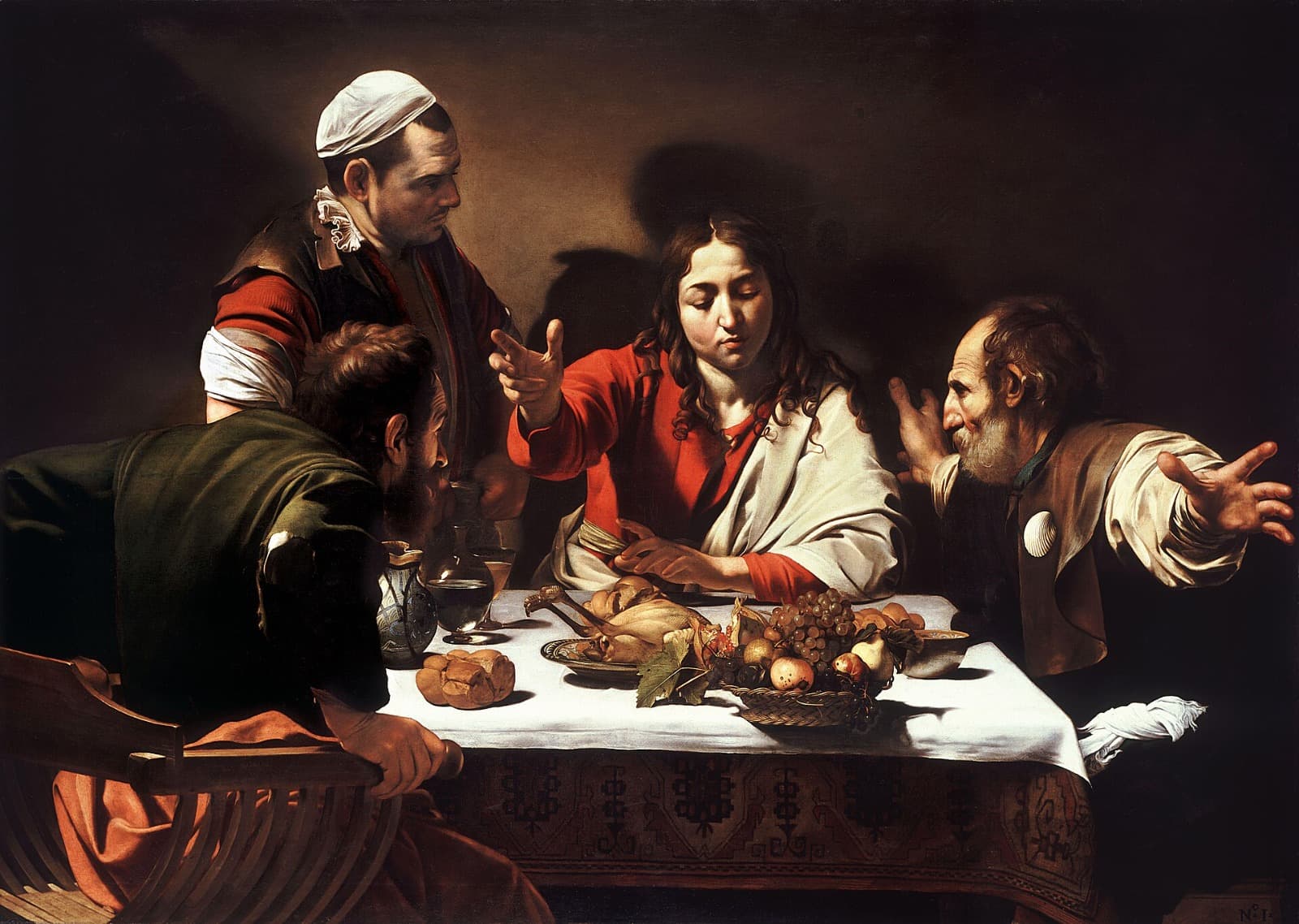
One disciple grips his chair to stand and the other throws his arms wide, while a fruit basket teeters off the edge toward us.

The kings arrive with a retinue of horses, hounds and a leopard, every surface tooled in gold for one of Florence's richest families.

Francis steps barefoot from his hermitage into a light coming from the left, and Bellini gives him no seraph and barely any wounds.

Three flayed creatures crane and scream on orange grounds. Shown as the war ended in 1945, they made Bacon's reputation overnight.
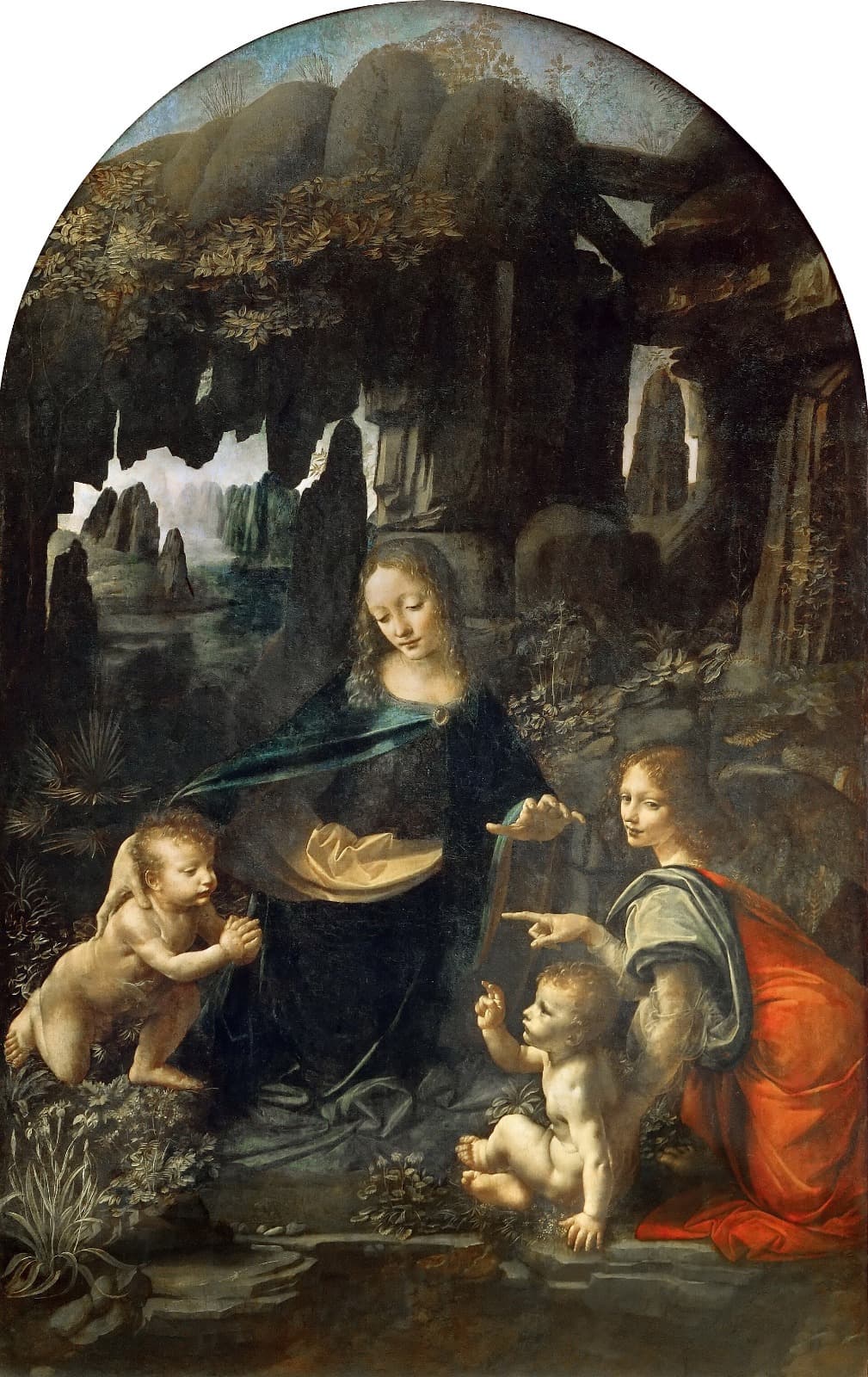
Leonardo painted this cave twice after falling out with the patrons. This is the earlier version, the one that stayed in France.

No cross, no ground, no sky, just a spiral of mourners in acid pink and sea-green. Florentine Mannerism starts here.
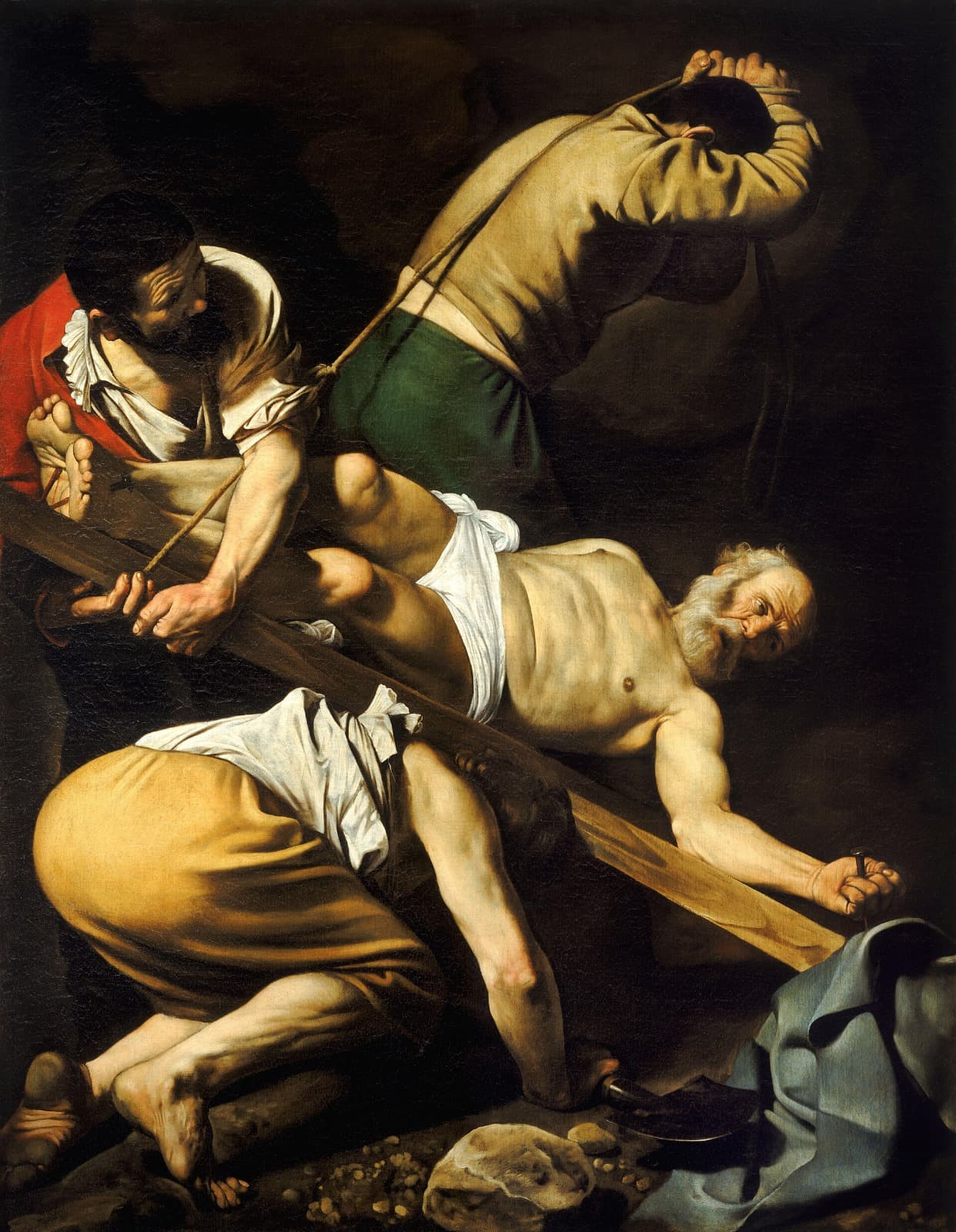
Three laborers strain to lever the cross upright with Peter nailed to it upside down. No crowd, no glory, just heavy work in the dark.