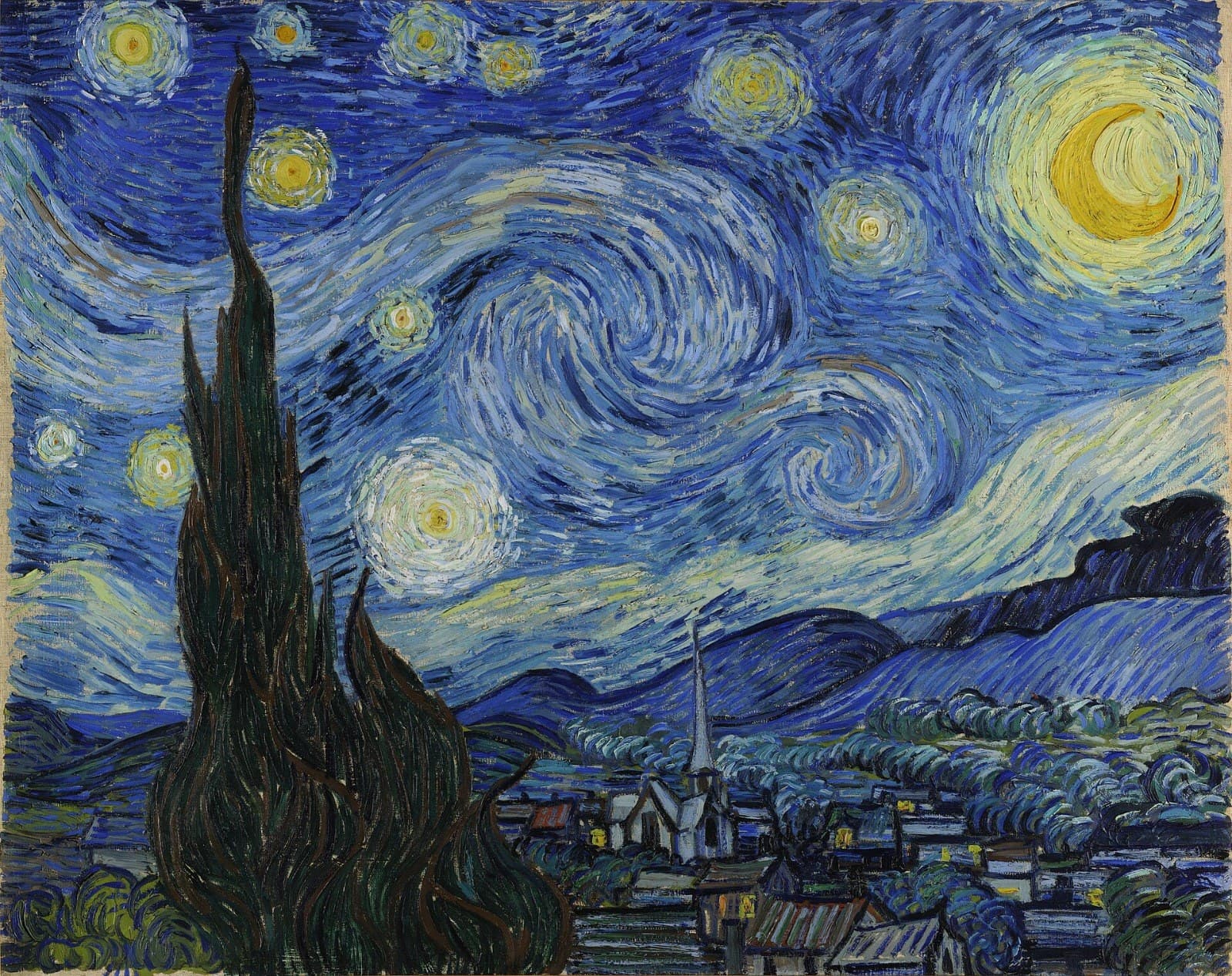
Starry Night
1889 · Museum of Modern Art, New York City
Van Gogh painted the churning sky and its eleven stars from a window of the asylum at Saint-Rémy, partly from memory.
★ 9.6
 skopia
Van Gogh painted the churning sky and its eleven stars from a window of the asylum at Saint-Rémy, partly from memory.
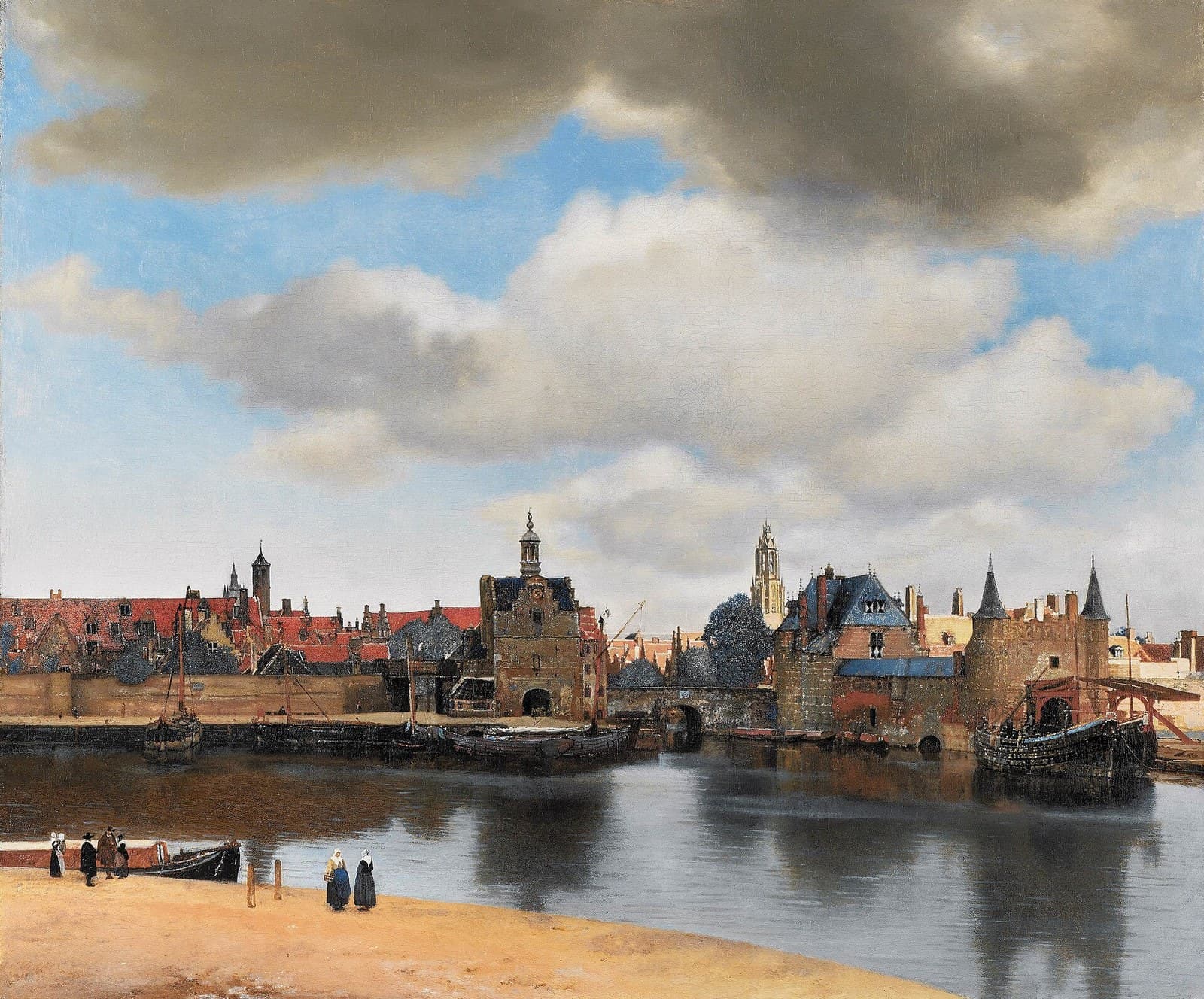
Vermeer painted his own city from across the harbor, almost his only townscape. Proust called it the most beautiful painting in the world.
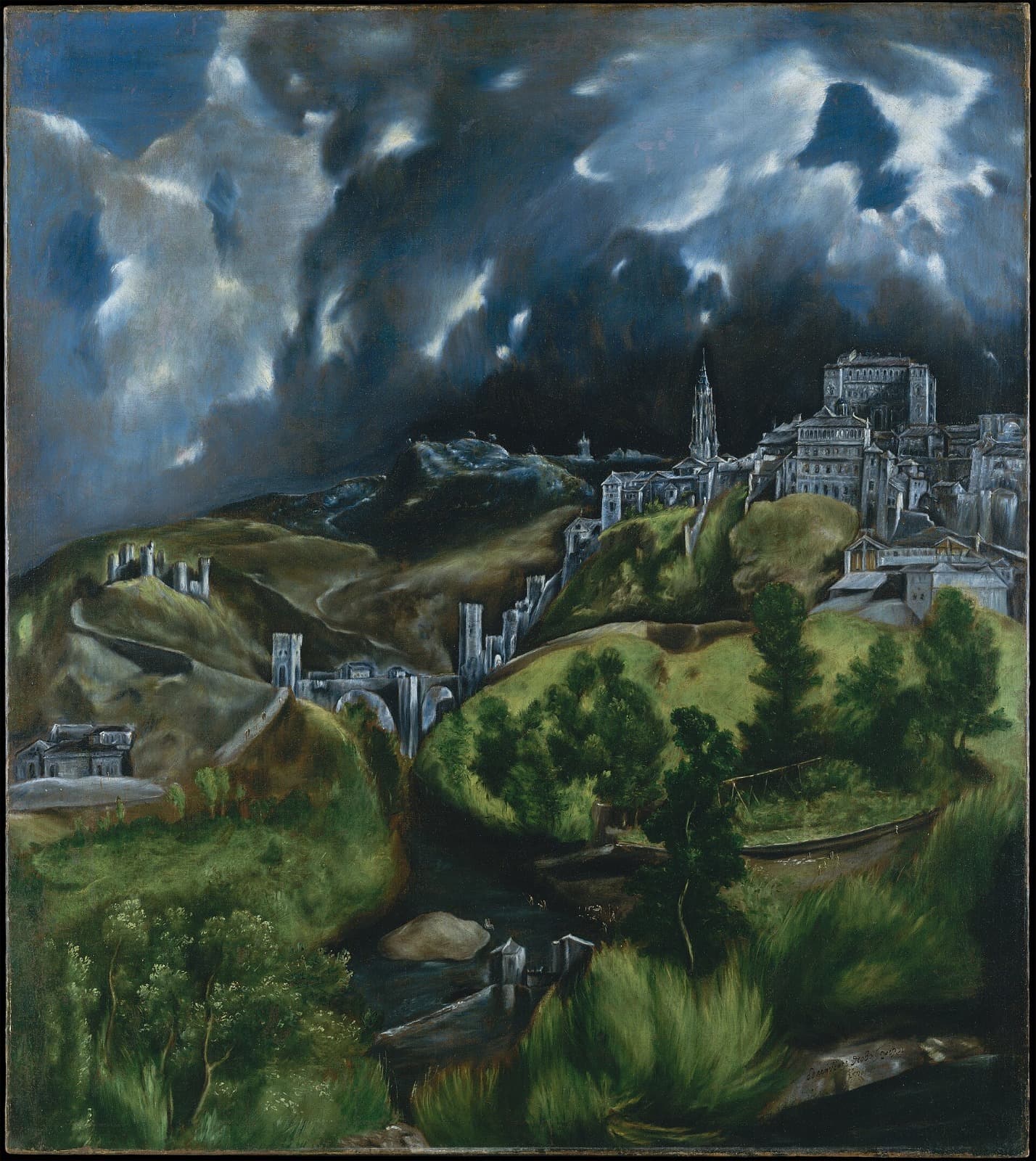
El Greco moved the cathedral tower off its real site for the sake of the composition and lit the whole city with a green storm.

Gaslights along the Arles quay drop long quivering reflections into the water, the Great Bear overhead, a couple walking arm in arm below.

A man bangs his head on a brick wall, another casts roses before swine, and over a hundred proverbs are acted out literally in one village.

Pissarro painted these boulevards from a hotel window over and over, but only once after dark, the gaslight smeared across wet pavement.
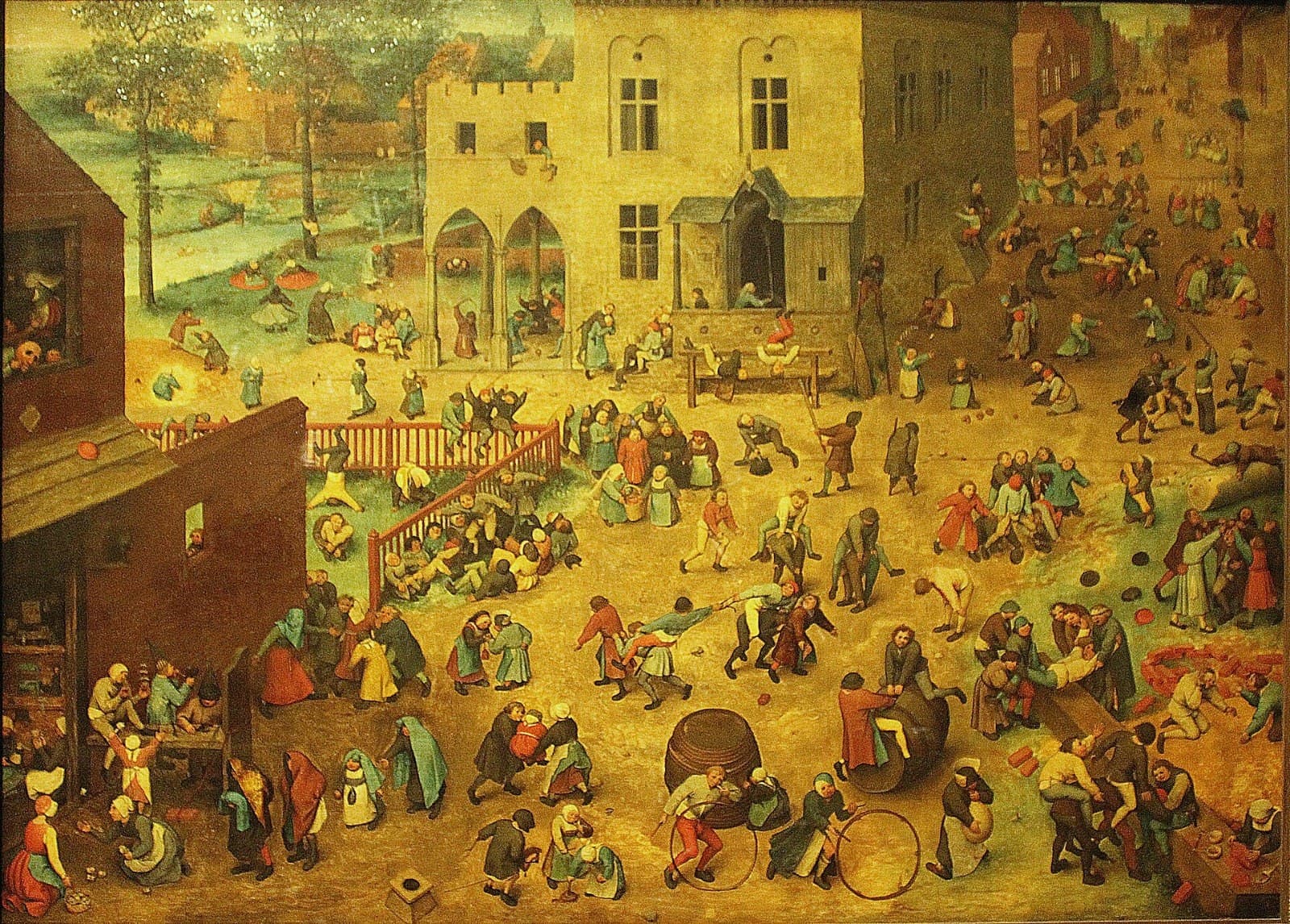
Around two hundred children playing some eighty different games, no adults anywhere, and no particular place for the eye to start.

Her male colleagues doubted a woman could paint the city, so O'Keeffe painted the city, with a moon caught between two dark buildings.

The Roman Forum was a cattle pasture when Turner painted it, and he let the columns of empire evaporate into gold air.

A train crosses the sky upside down, a man drifts past on a parachute, and the cat on the sill has a human face.

Notre-Dame across the Seine in a few dark summary strokes, painted before Matisse's color went off and Fauvism happened.