
The Parable of the Wise and Foolish Virgins
1825 · Yale Center for British Art, New Haven
Five have kept their lamps lit and five have not, and the ones who have not are pleading. An avenging angel waits above.
★ 4.4
 skopia
Five have kept their lamps lit and five have not, and the ones who have not are pleading. An avenging angel waits above.

Provençal women at a hilltop well above a blue bay, the dots loosening into curves and the science giving way to pleasure.

Oi was Hokusai's daughter and studio collaborator, and her handling of lantern light against darkness beats anything else in the ukiyo-e of her time.
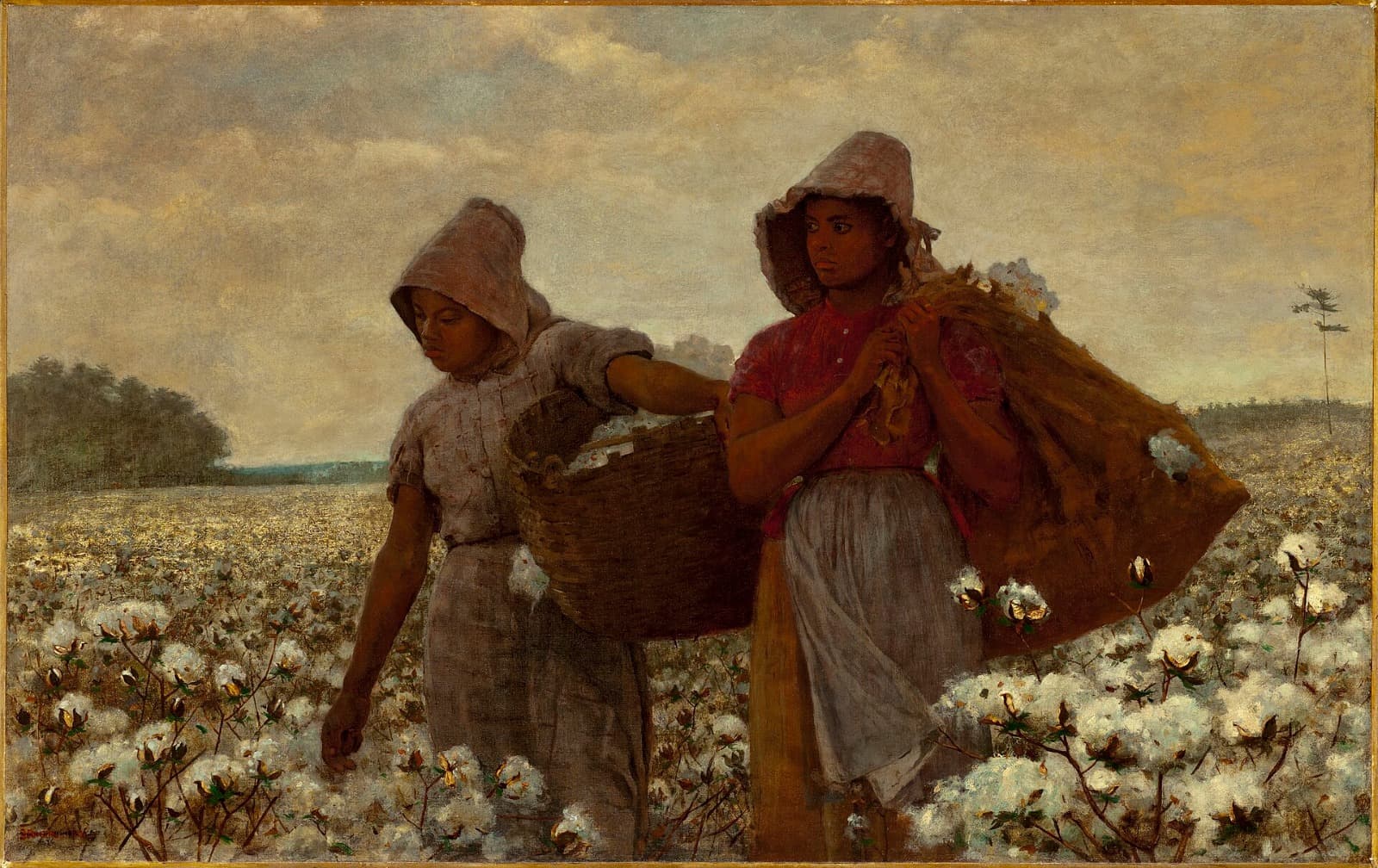
Two young Black women in a cotton field a decade after emancipation, given a gravity American painting had not extended to field labor.

Two women in white smile out from the railing while two men in dark cloaks stand behind them in the shadow, watching.

Hersilia throws herself between the two armies with her arms out. David painted it after the Terror, arguing for reconciliation instead of oaths.
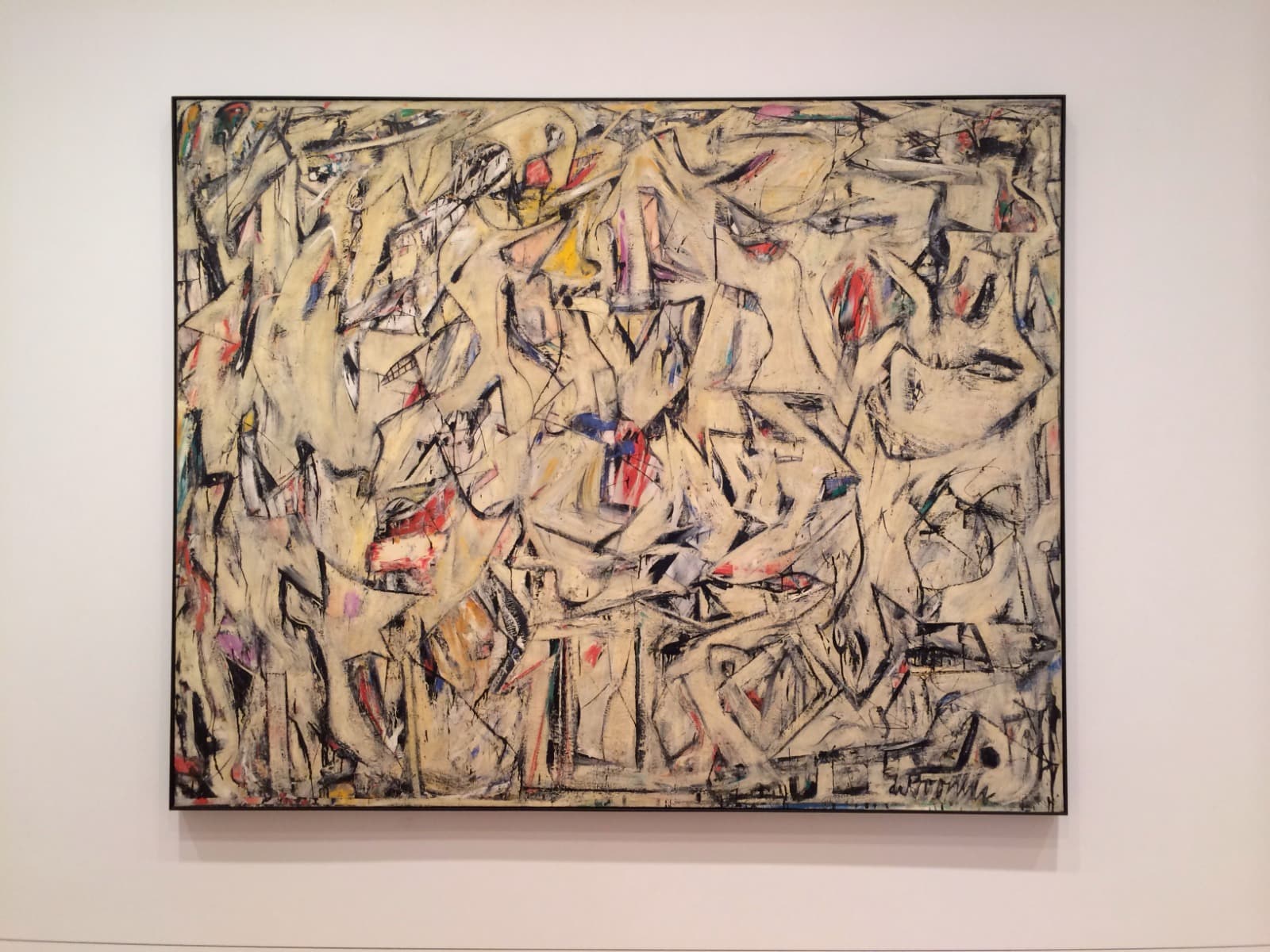
Hooks and curves fill the canvas edge to edge with no center to rest on, and teeth and jaws keep surfacing out of the mass.

Delacroix saw a room like this once, on a trip to North Africa, and painted it from memory. Picasso later made fifteen variations on it.

Three famous women of 1790s Edo on mica ground, their faces nearly identical, so you have to read them from the tilt of an eye.

Life-size figures act out an initiation into the cult of Dionysus around three walls, buried by Vesuvius and dug out nearly intact.

Gauguin thought he was dying and meant this to be his last work, reading right to left from a sleeping infant to an old woman.

Judith and her maid hold Holofernes down together and work the blade through his throat. Artemisia painted it a decade after her rape trial.

A court lady steps between a lunging bear and the emperor. What survives is a later copy, crowded with the seals of everyone who owned it.