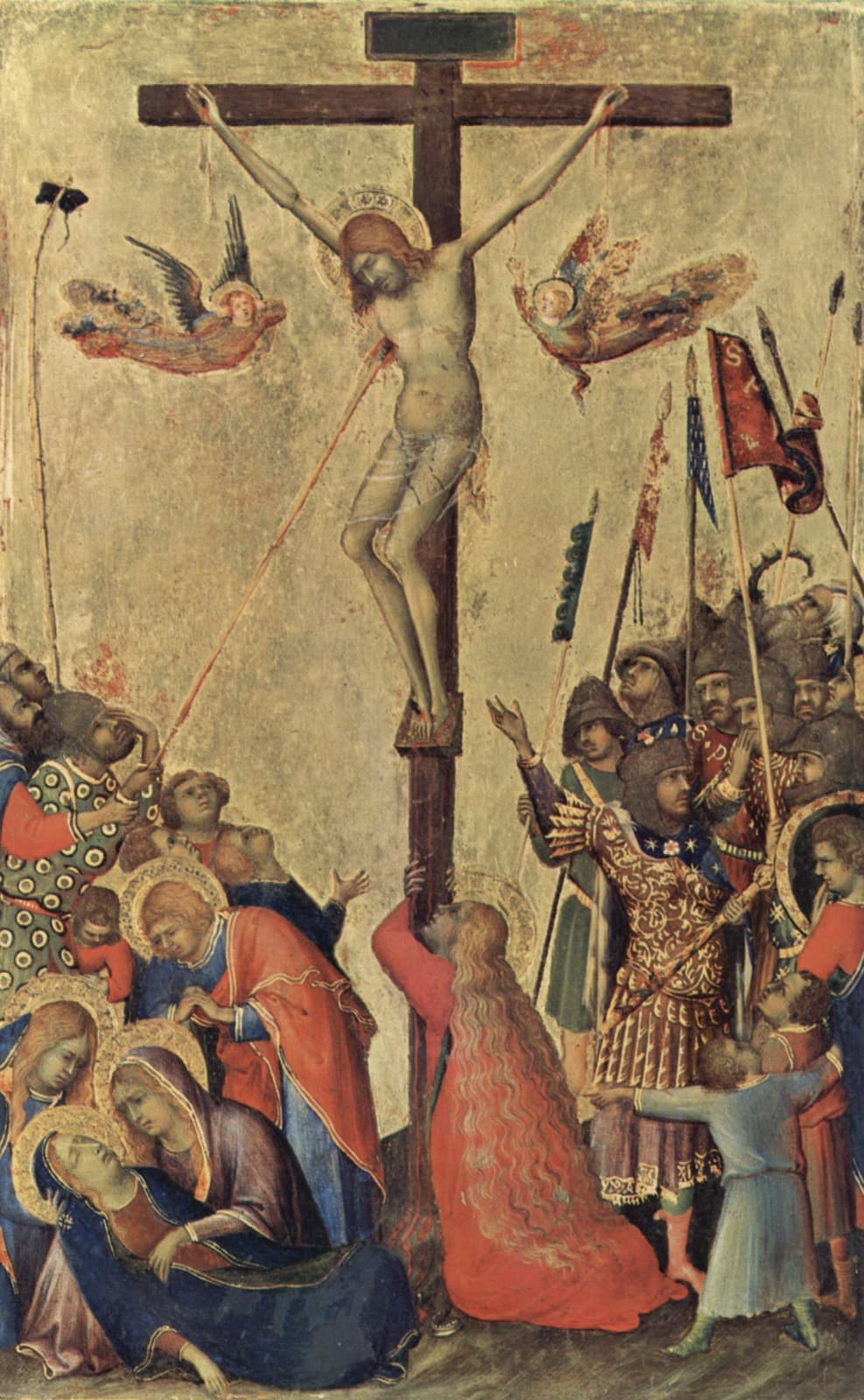
The Crucifixion
1333 · Royal Museum of Fine Arts, Antwerp
Angels dart and grieve around the cross while the Magdalene, hair loose, kneels to embrace its foot. A leaf from a travelling altarpiece.
★ 4.8
 skopia
Angels dart and grieve around the cross while the Magdalene, hair loose, kneels to embrace its foot. A leaf from a travelling altarpiece.
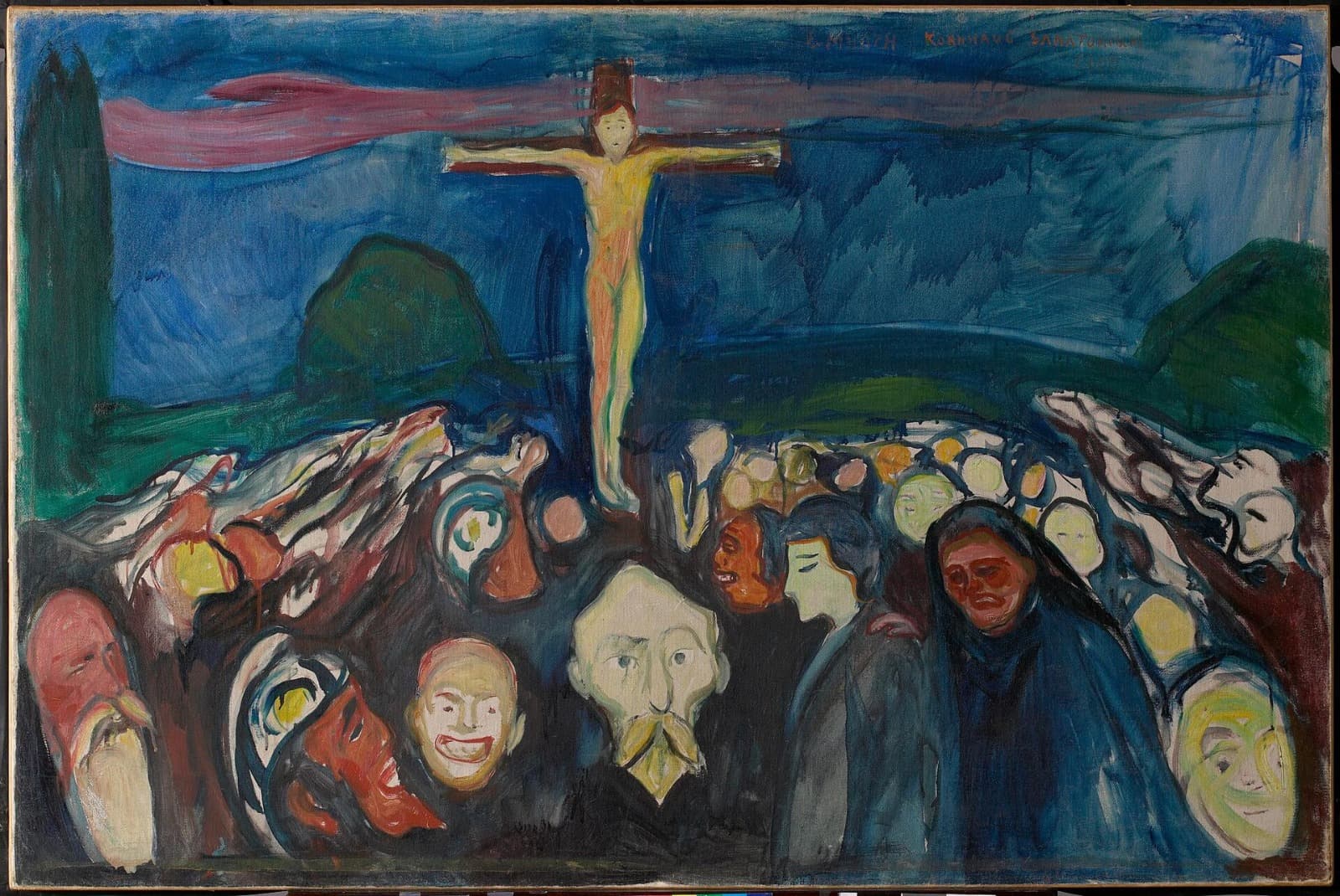
Munch painted this while under treatment in a clinic, and the crucified figure hemmed in by leering faces is not hard to read.
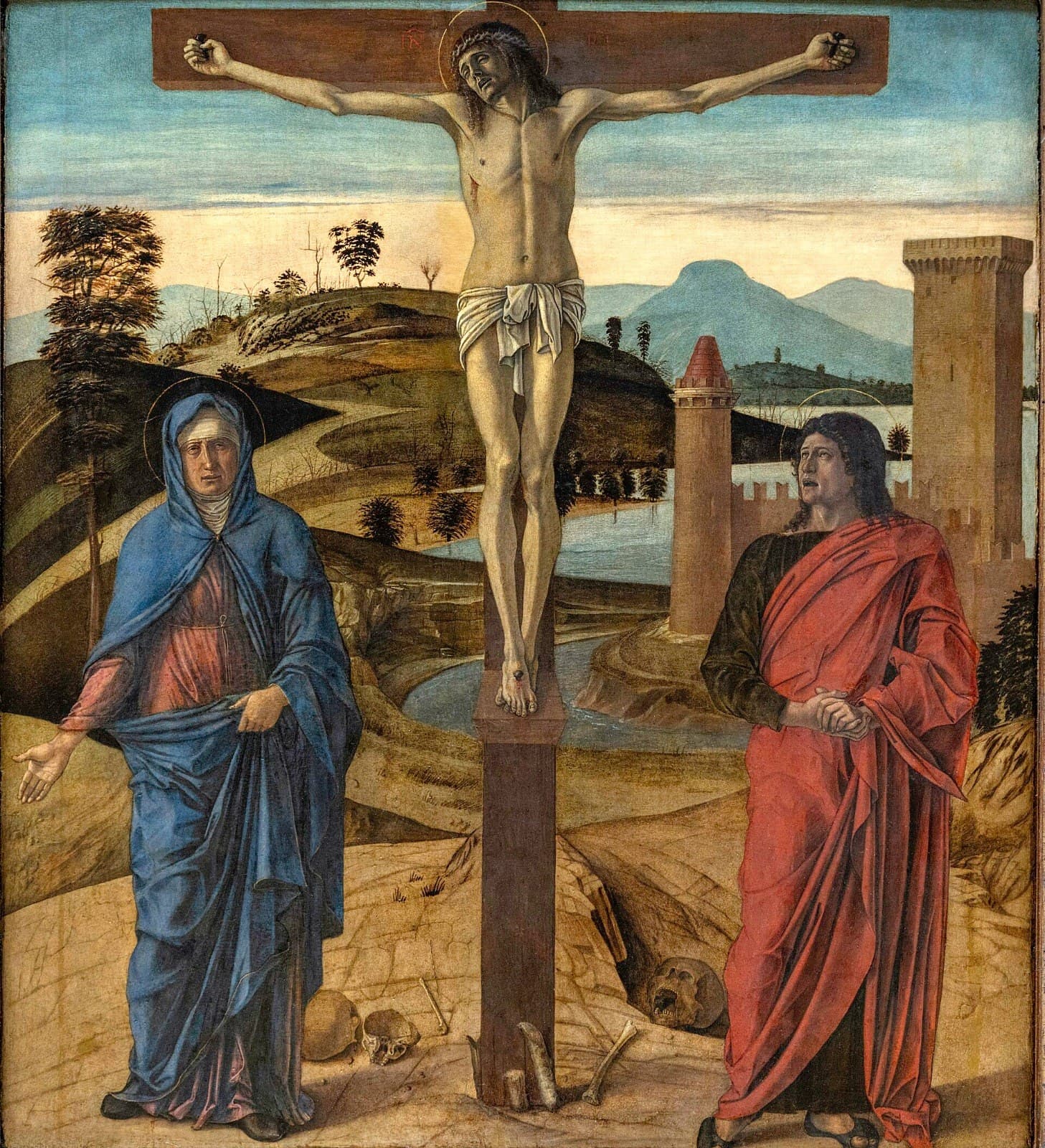
Only the Virgin and Saint John below the cross, and a river winding past a walled town. Early Bellini, carrying feeling in the light.

Antonello carried the Netherlandish oil technique south to Venice, and Giovanni Bellini responded with a Crucifixion almost identical to this one.
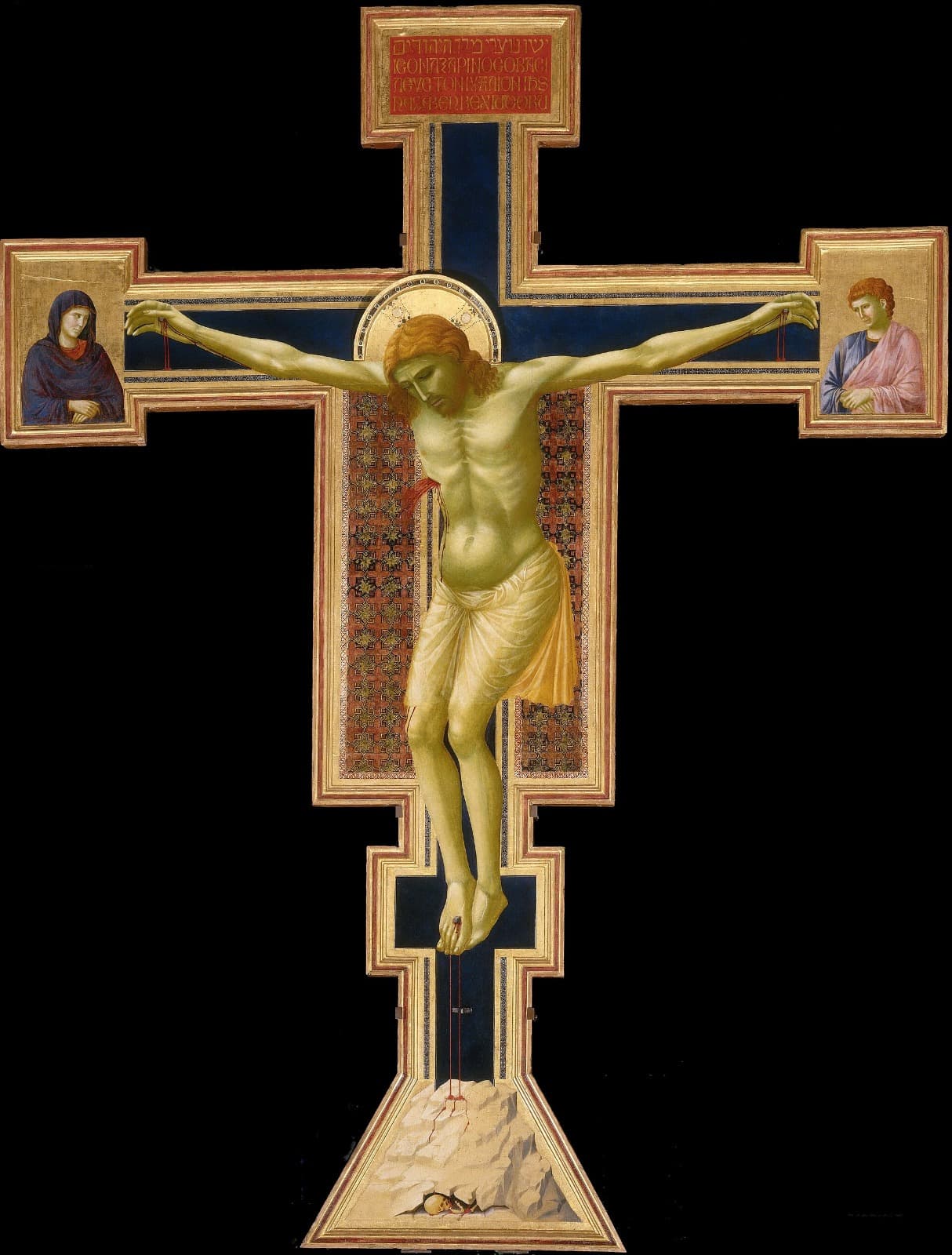
Where Cimabue's Christ swings in an elegant curve, Giotto's hangs straight down under his own weight, belly sagging, head on his chest.
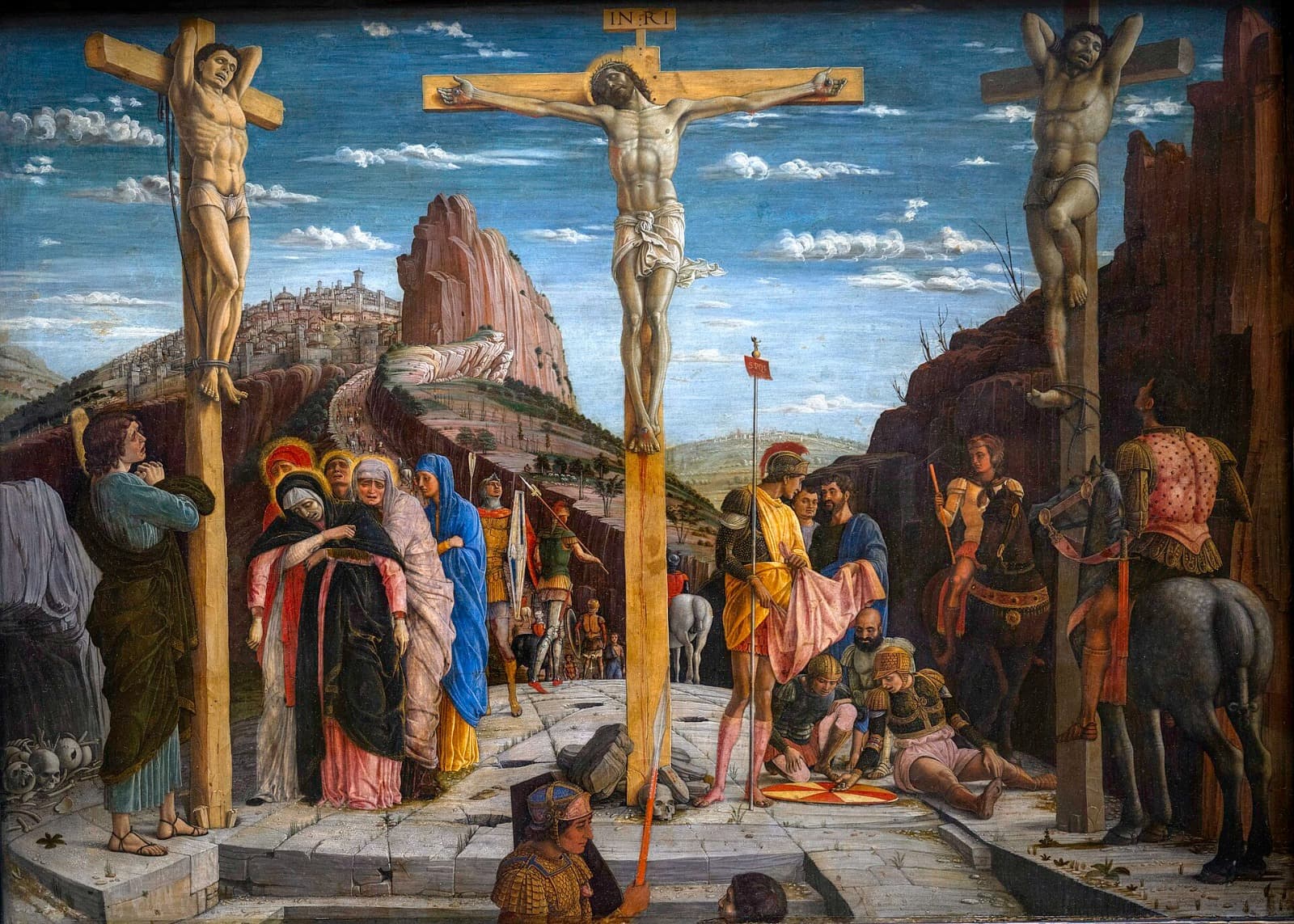
Soldiers throw dice for Christ's robe on a paved Golgotha. This panel was sawn off an altarpiece by Napoleon's looters and never returned.
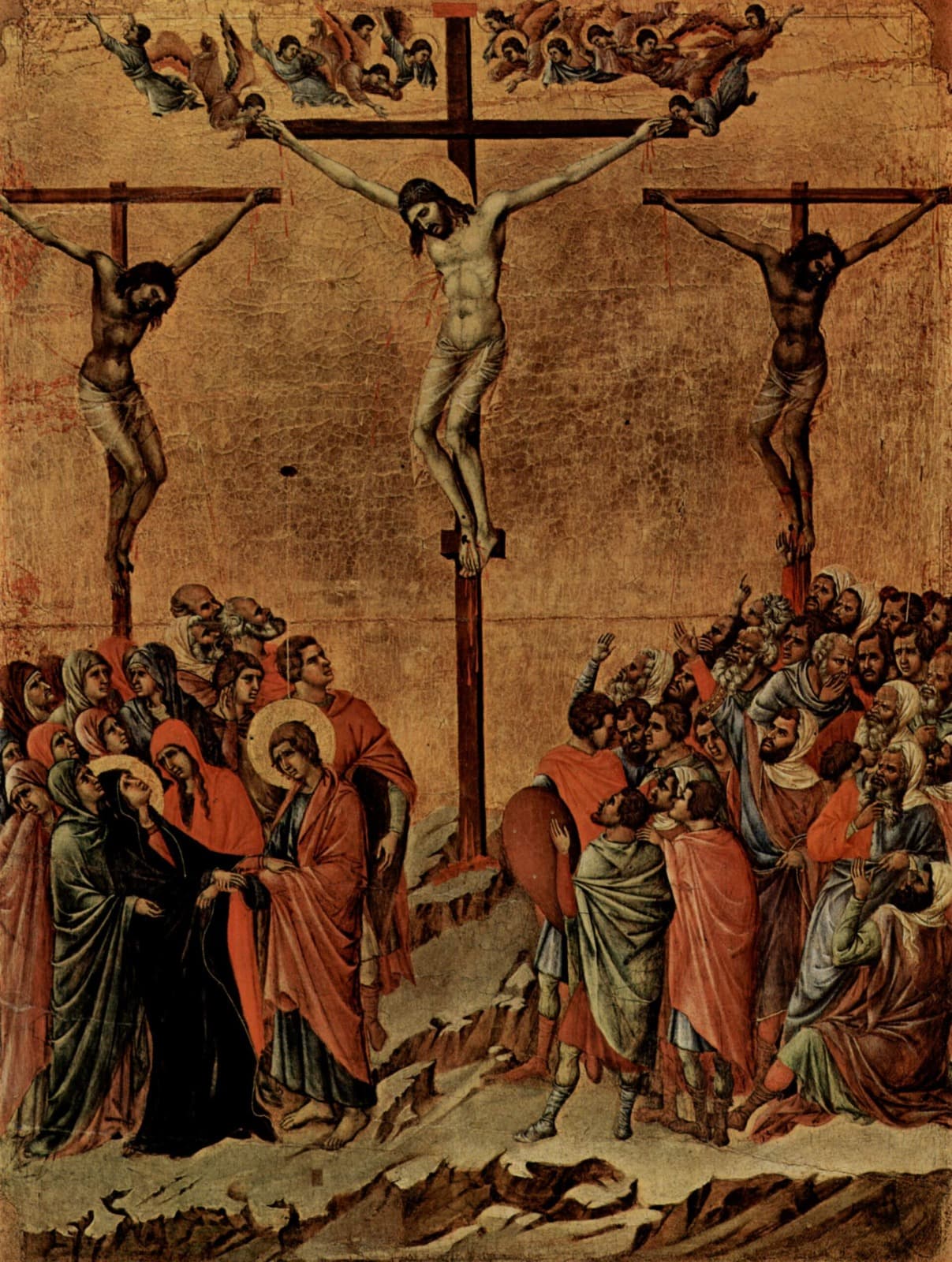
This is the largest scene on the back of the Maesta, the Virgin fainting on one side and the crowd arguing on the other.
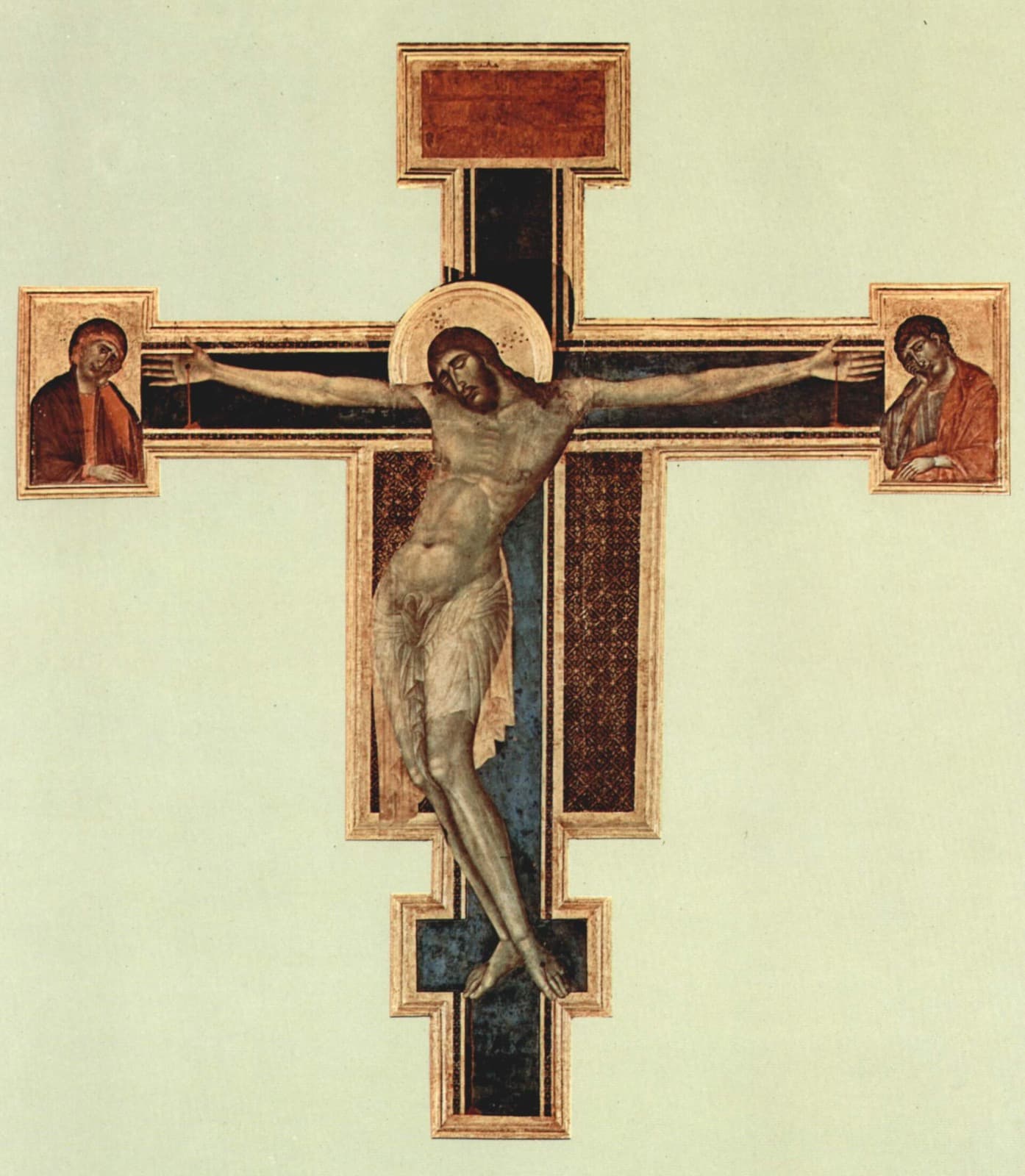
The Arno flood of 1966 stripped most of the paint off it, and the ruined cross became the emblem of the whole disaster.

All seven sacraments happen at once inside one Gothic church, with the Crucifixion looming over the nave to show where they get their power.
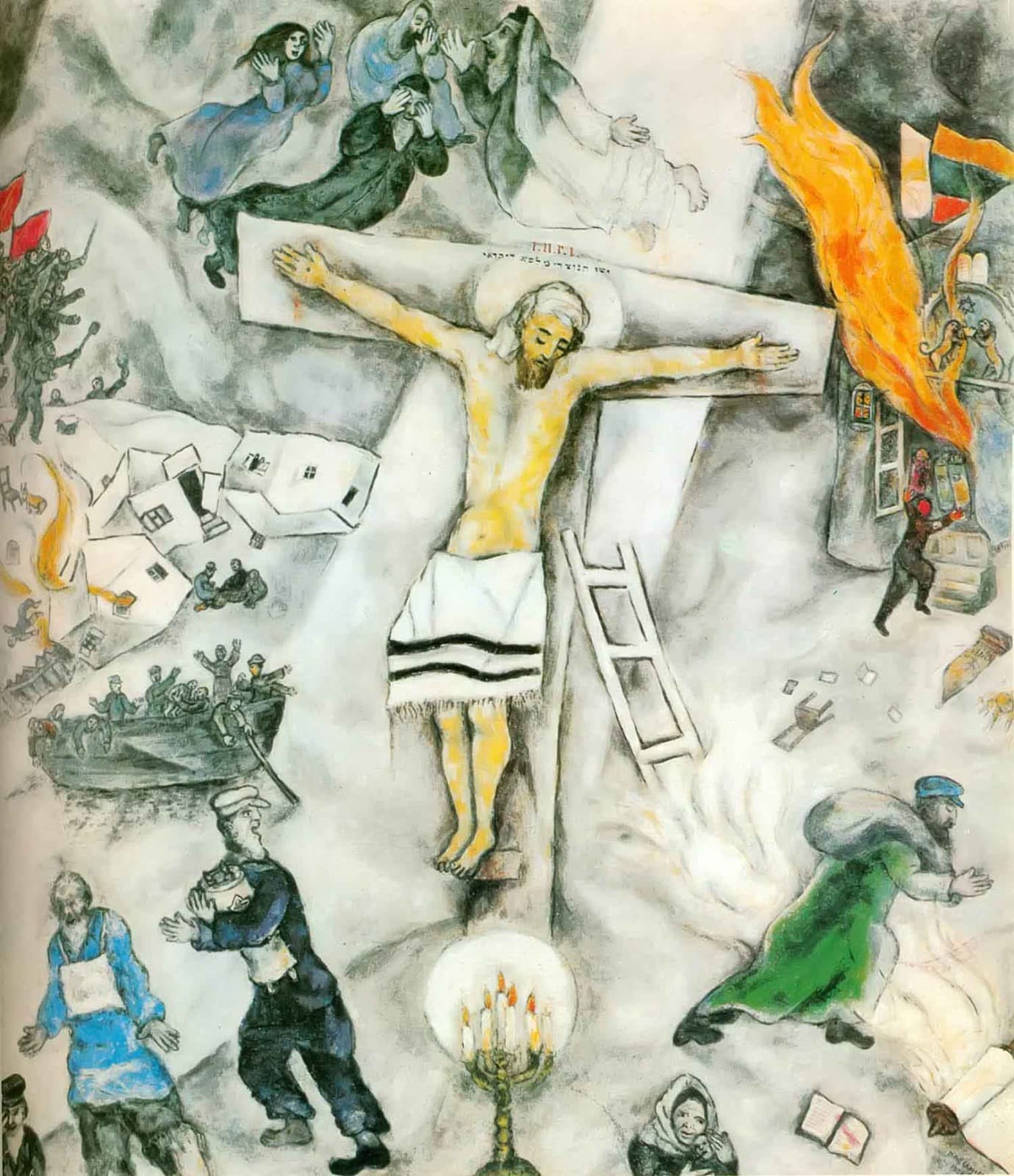
Christ wears a Jewish prayer shawl while a synagogue burns and refugees flee by boat. Chagall painted it in 1938, watching what was coming.
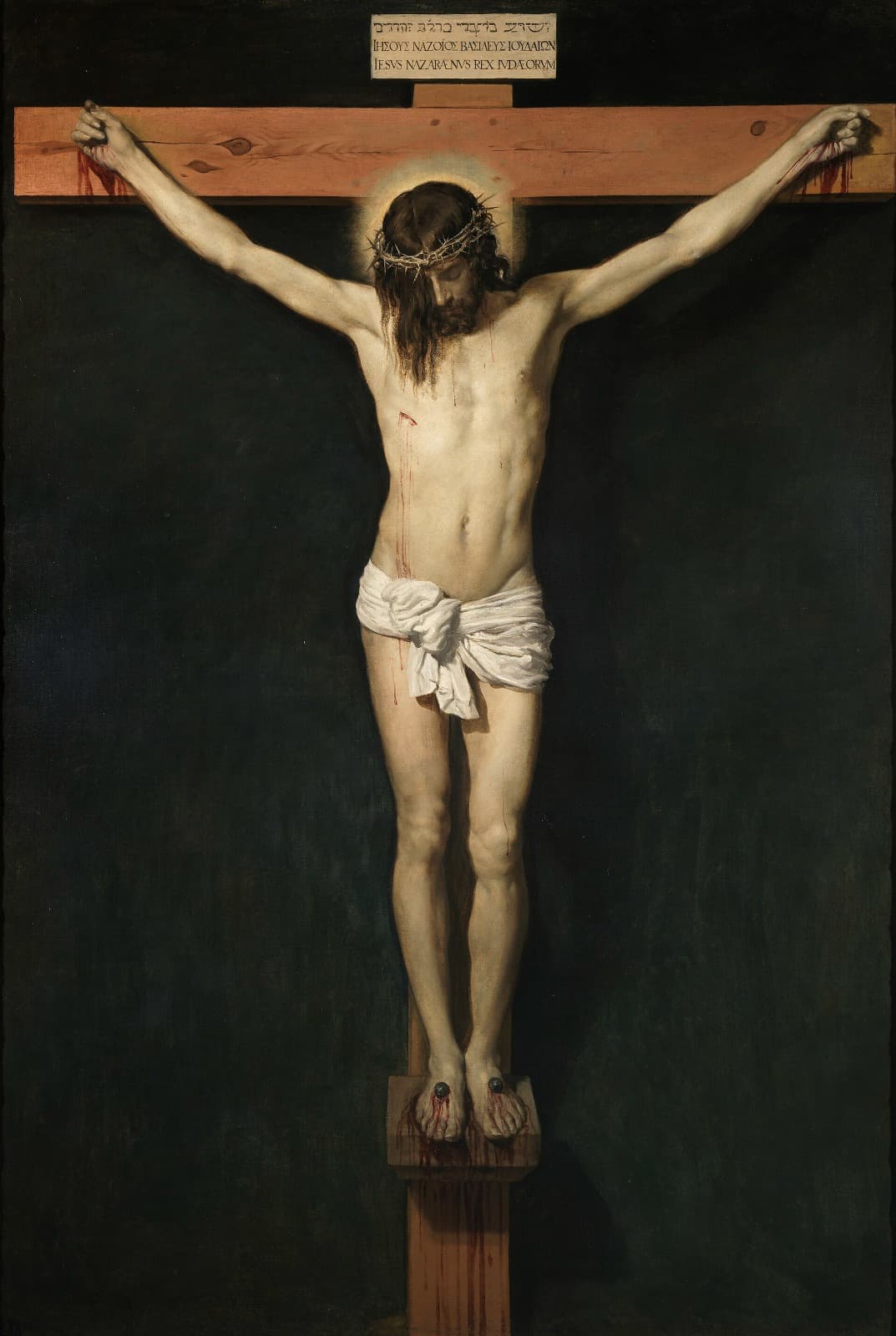
No crowd, no landscape, nothing but the body against black, with the hair fallen forward to half-cover the face. Made for private prayer.

Twelve meters of wall where the whole business of execution goes on at once, one thief still being hauled upright at the side.
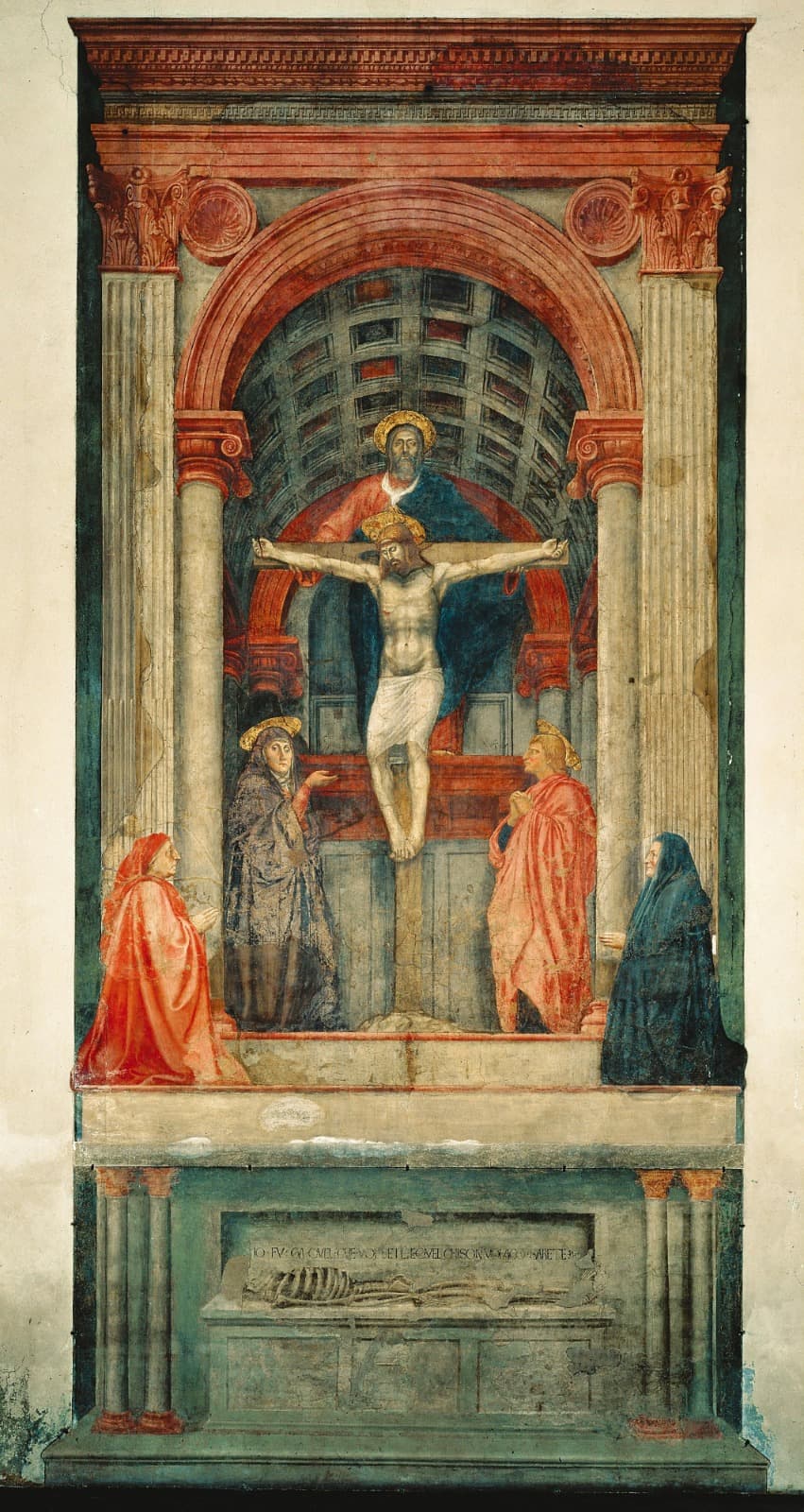
The earliest surviving painting built on a single vanishing point, worked out on a wall of Santa Maria Novella with Brunelleschi's help.

Christ's body hangs green and pocked with sores, painted for a hospital whose patients saw their own ravaged flesh.