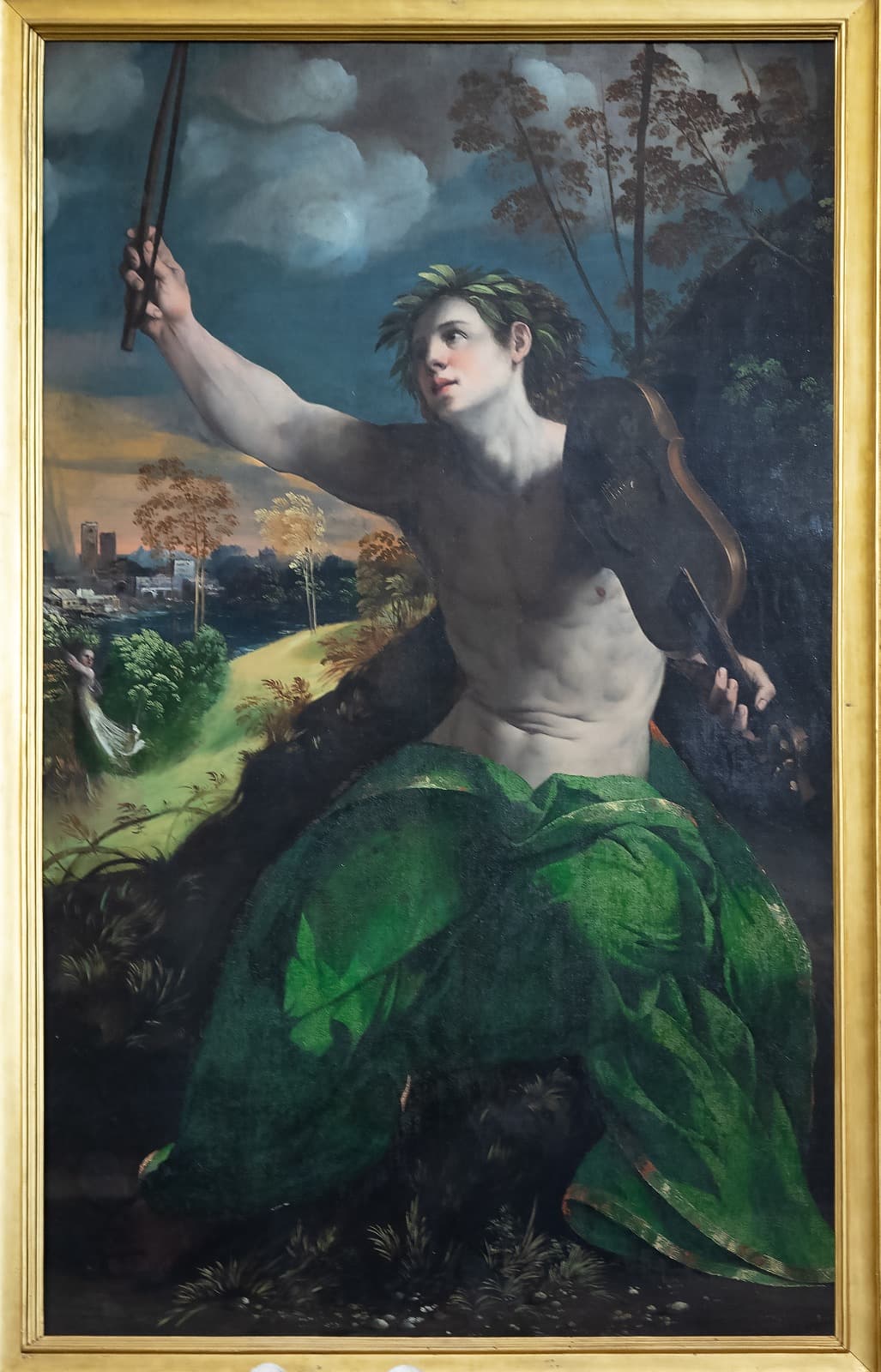
Apollo and Daphne
1525 · Galleria Borghese, Rome
Dossi swapped Apollo's ancient lyre for a modern viol, and Daphne is already sprouting into laurel in the far distance.
★ 4.8
 skopia
Dossi swapped Apollo's ancient lyre for a modern viol, and Daphne is already sprouting into laurel in the far distance.

The shepherd carries the twins home to his wife with the she-wolf still nearby. Rome's founding myth as a foundling story.
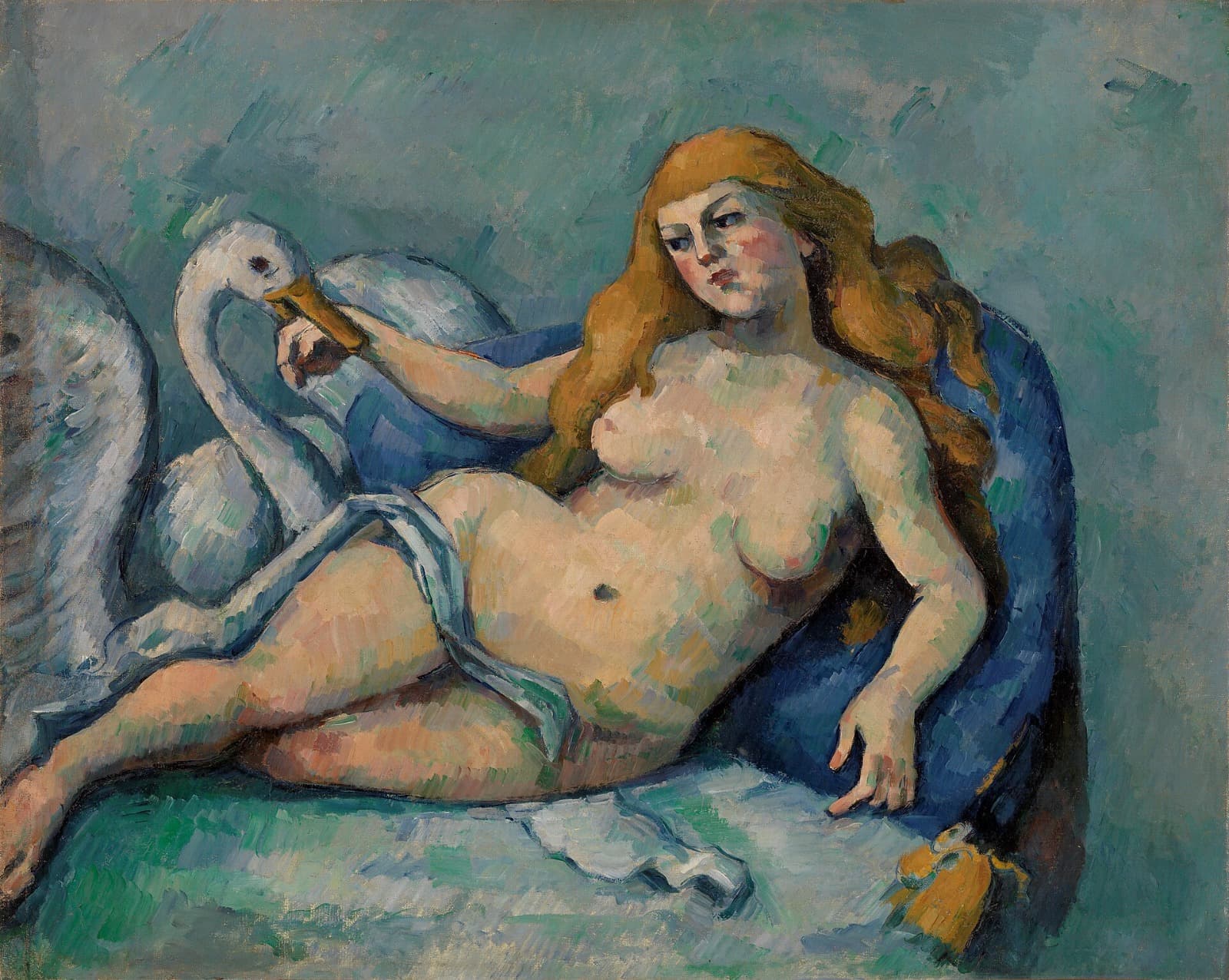
The swan nips her hand and Leda barely reacts. Cézanne cared about the planes of the body, not the story.

Venus in a pearly sea with nymphs, tritons and putti all around, made entirely to delight and not at all to instruct.
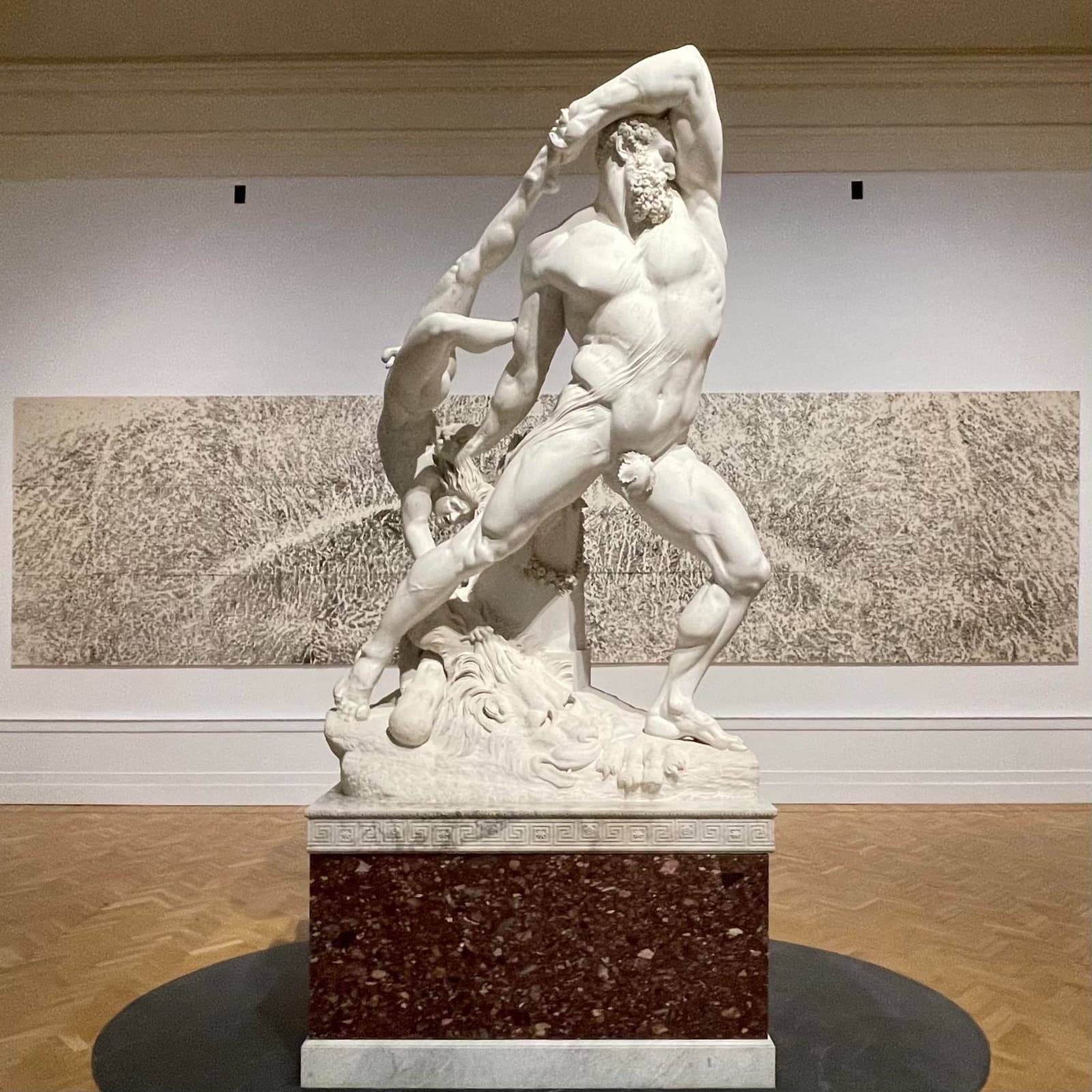
Hercules, poisoned and raving, grabs the boy by the hair and one leg and throws him. Canova almost never carved anything this violent.

Neptune drives his trident down to still the waters. It was made for a fountain, so real water once finished the sculpture.
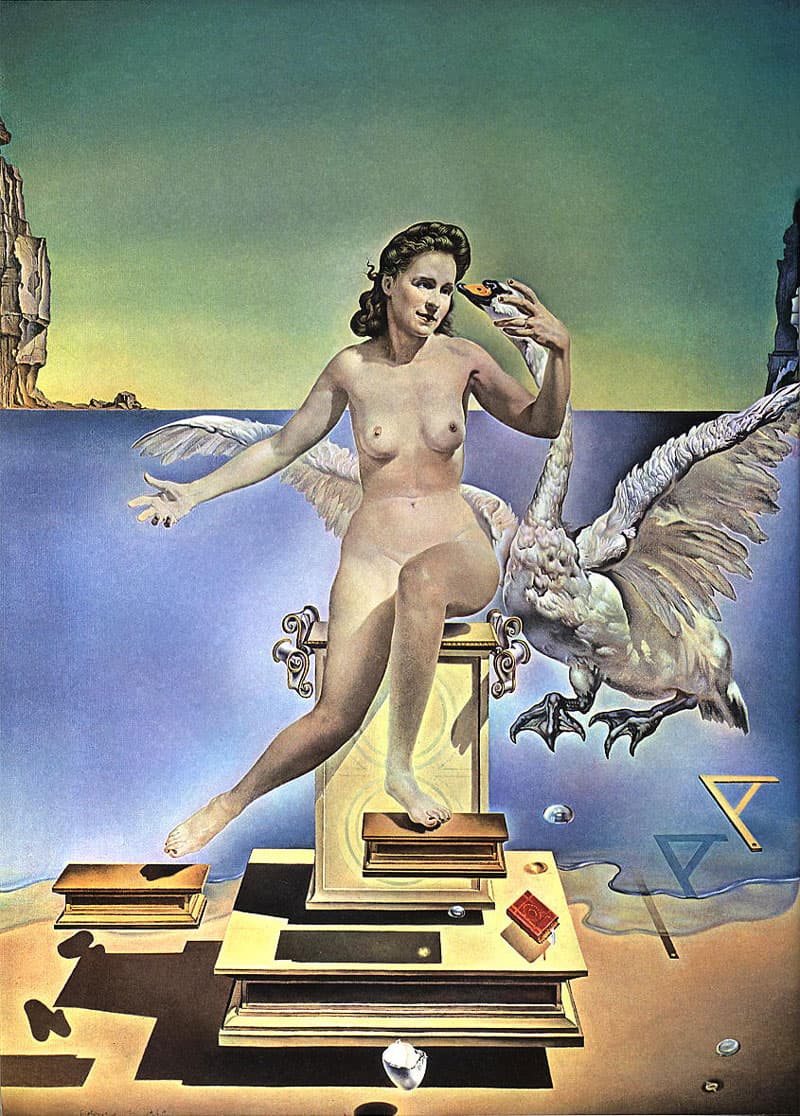
Nothing in the picture touches anything else. Dalí built it on the physics of the atom, where matter is mostly empty space.
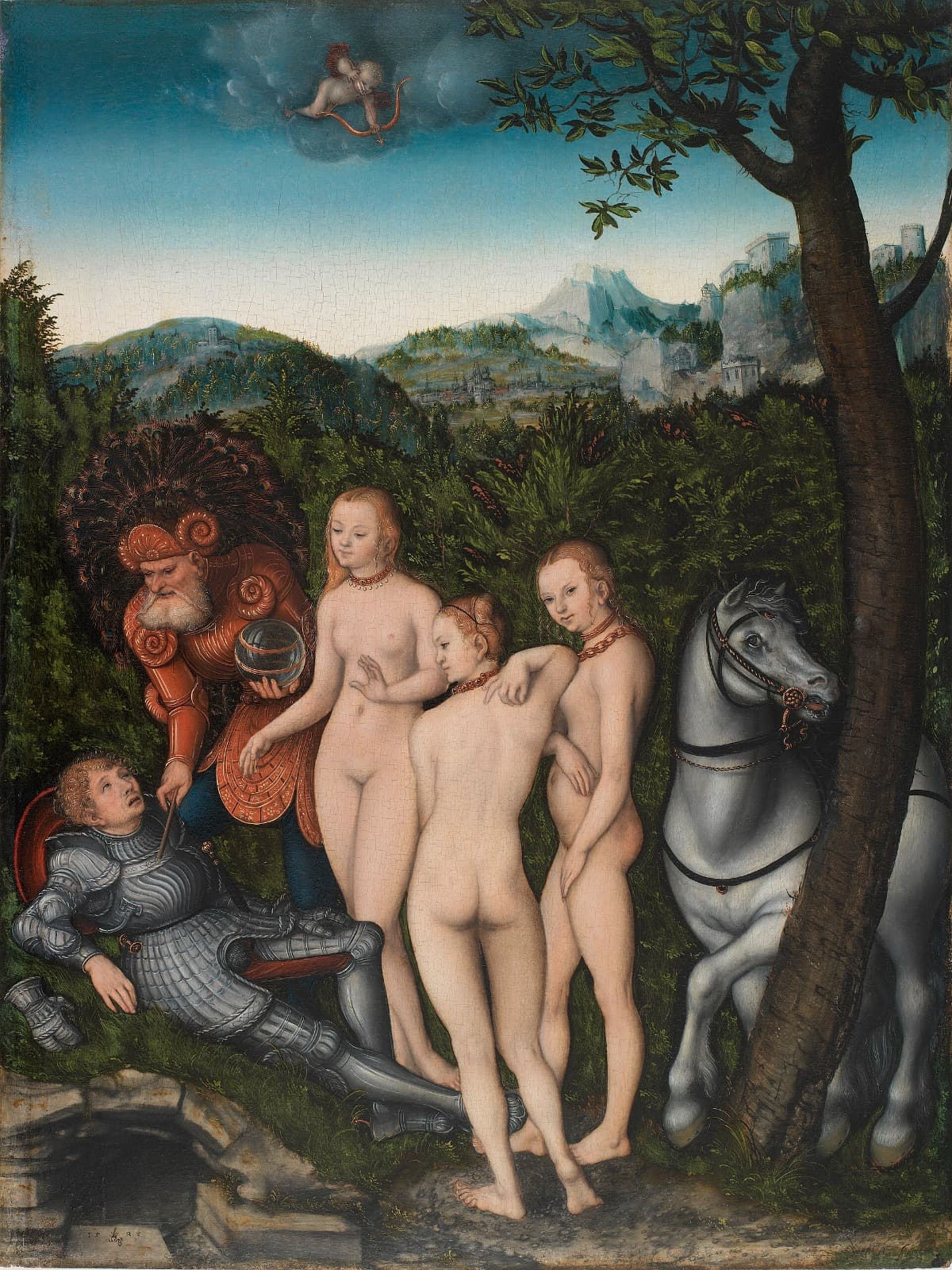
Paris turns up as a German knight in plate armor and the three goddesses wear nothing but jewels and improbable hats.

An enchantress sits in a wood ringed by deer, dogs, owls and a stork, which may be men she has transformed. Dossi leaves it unresolved.

The story runs across the canvas in stages, arrival to departure. A later owner cut Leda's head out in disgust and it was repainted.

Ascanius draws his bow on a tame stag, the shot that starts a war in the Aeneid, and Claude paints it as a calm golden evening.

Hercules bolts from Vice toward Virtue and gashes his leg on the thorns of the harder road as he goes.
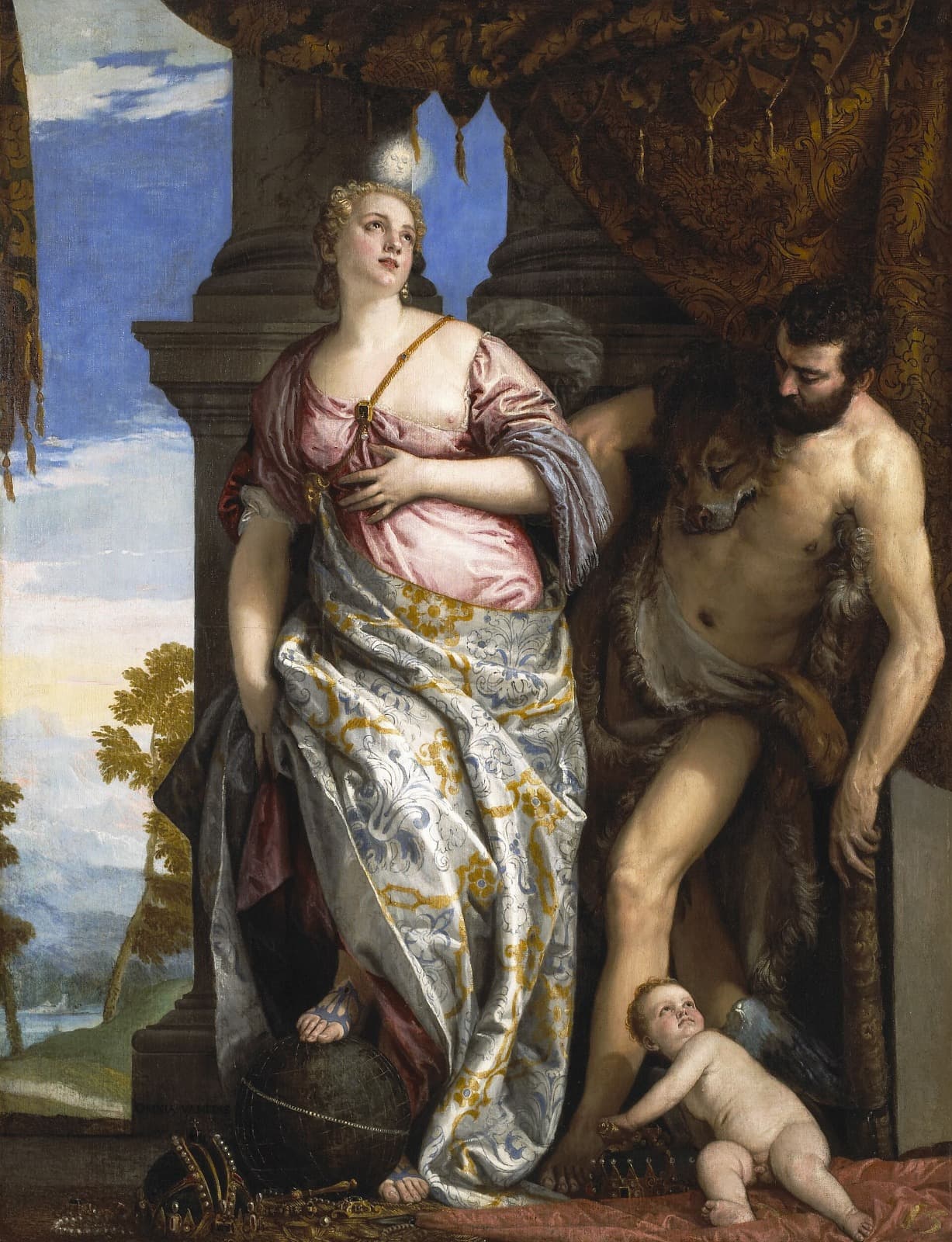
Divine Wisdom looks up and Hercules looks down at a scatter of crowns and jewels, which is the entire argument of the picture.
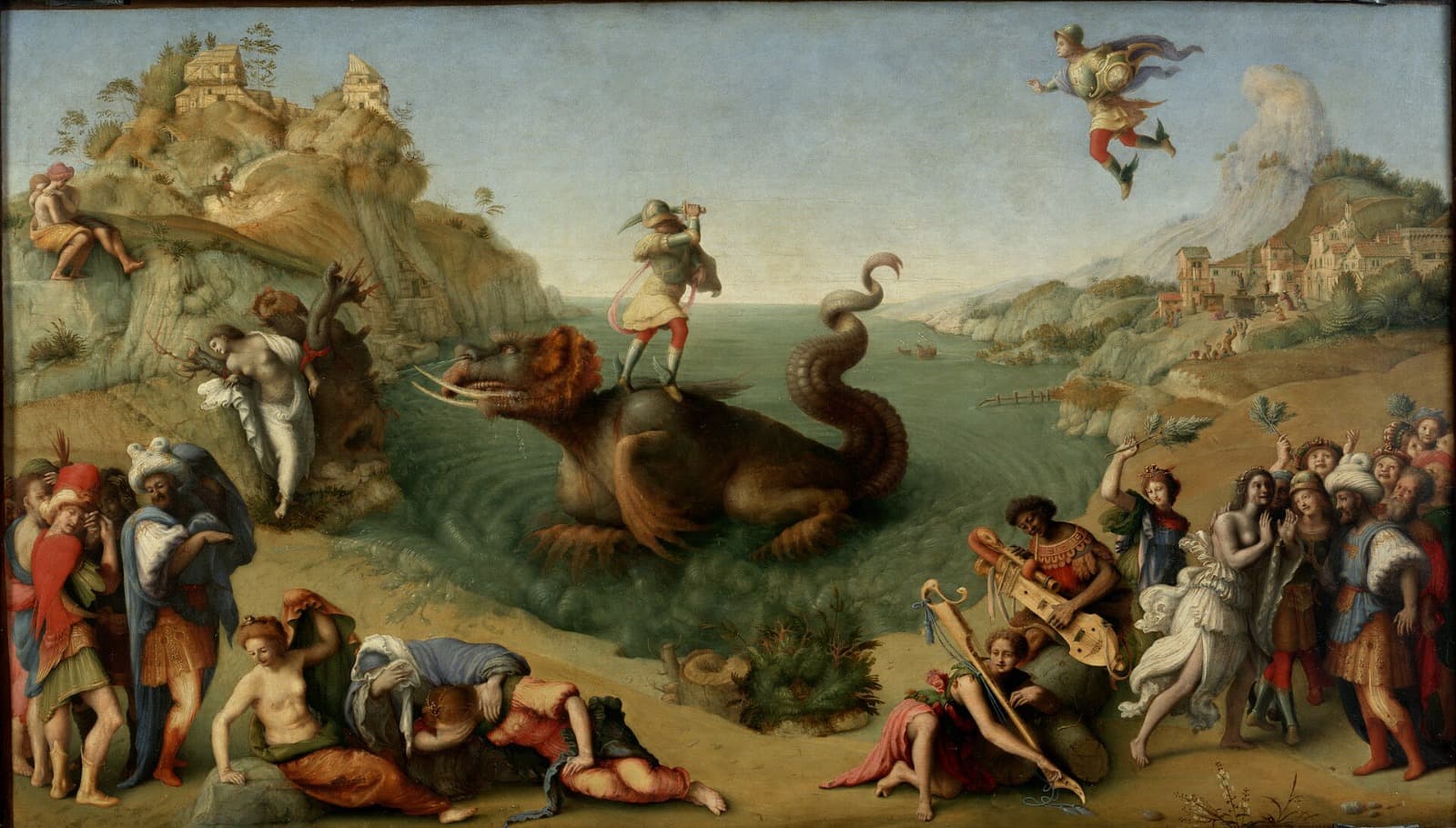
The sea-monster is part fish and part beast and thoroughly invented, and some of the onlookers on the shore have started playing music.
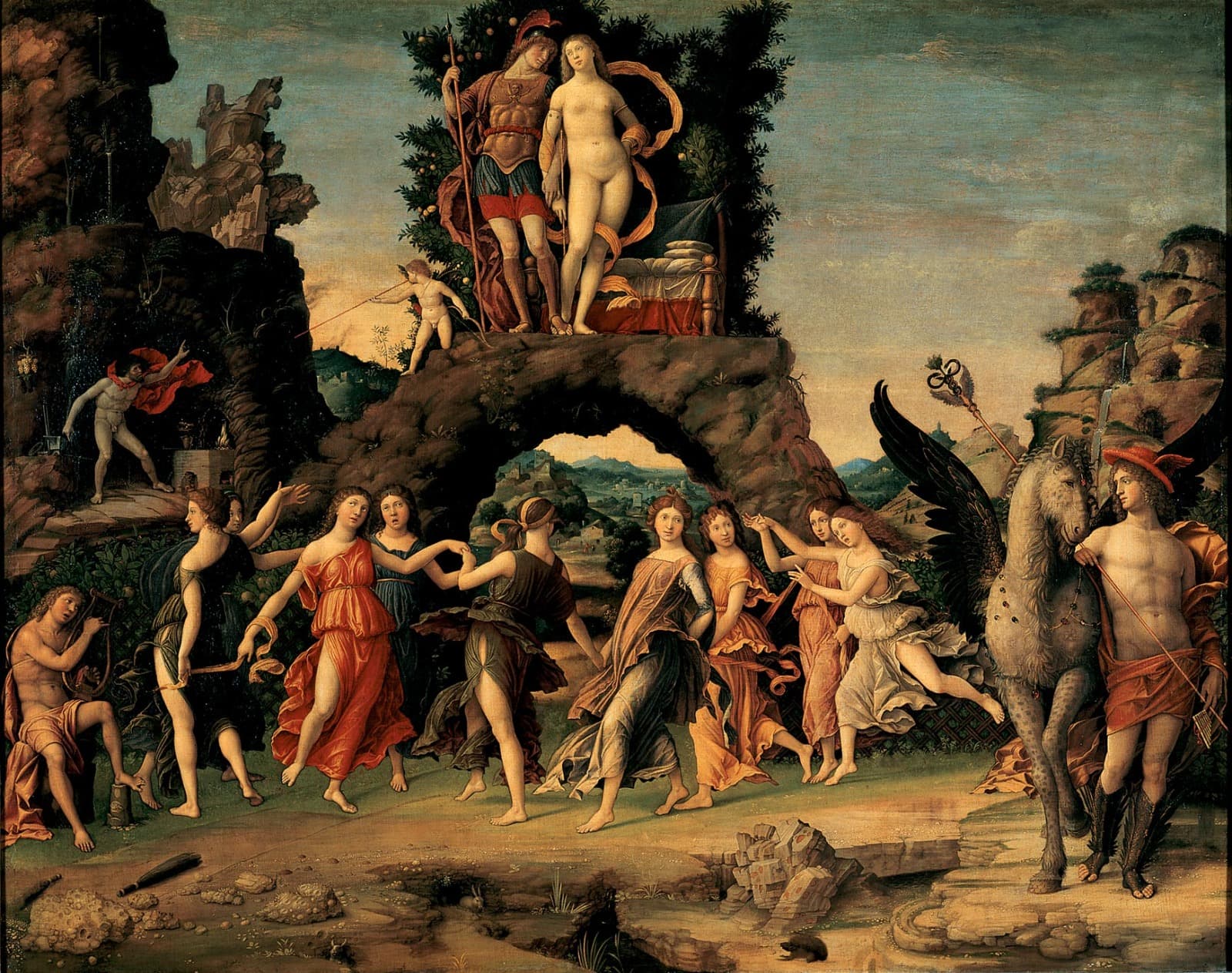
The Muses dance to Apollo's lyre while Venus's cuckolded husband fumes at his forge off to the left. Painted for Isabella d'Este's study.

Saturn bites into his own infant to stop the prophecy, the star of Saturn overhead. Goya would take the same subject somewhere much worse.
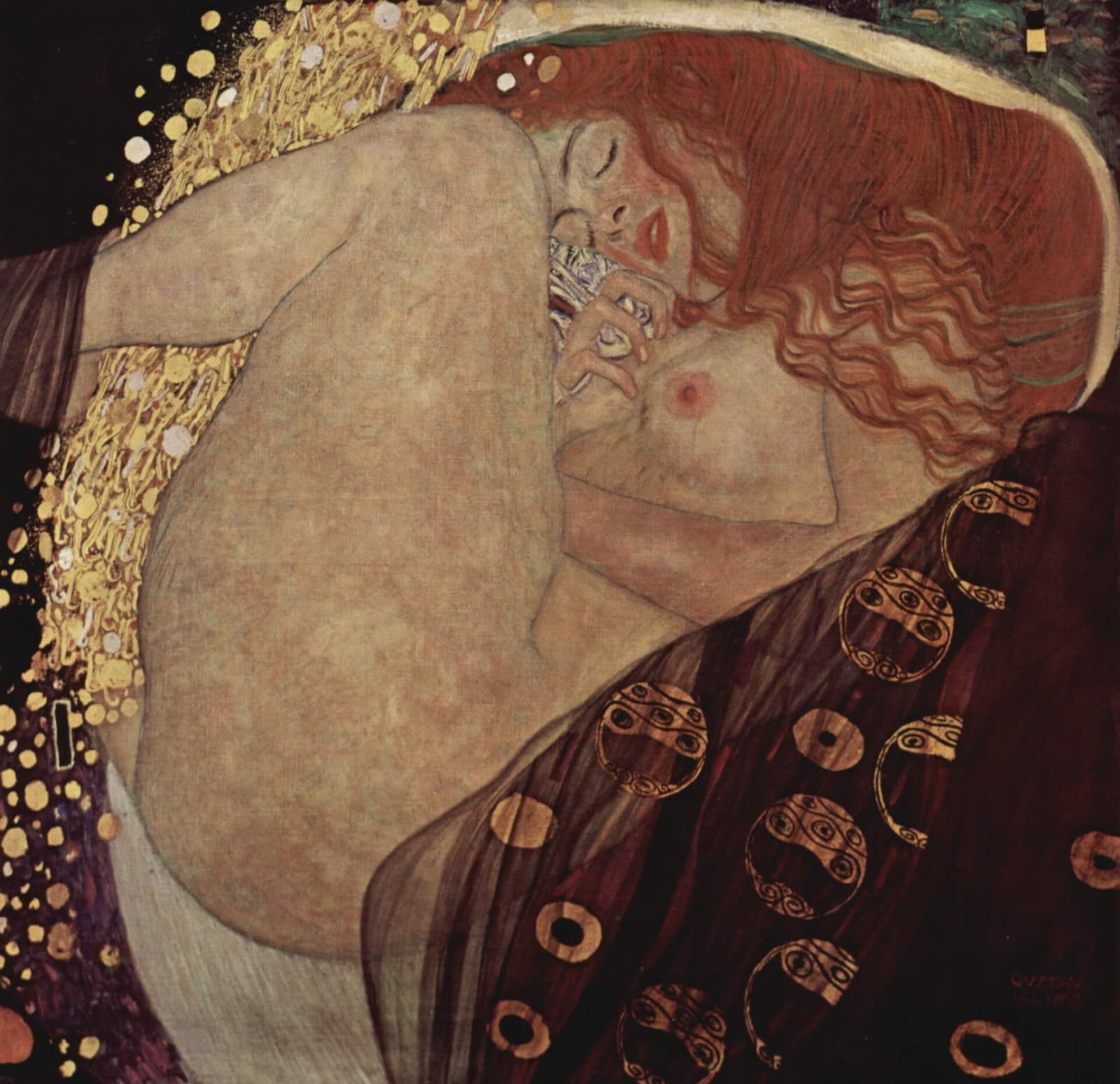
Zeus arrives as a stream of gold coins and ornament between her thighs, and Klimt makes no attempt to be subtle about it.

Oedipus leans in close to answer the riddle, and a previous contestant's foot is lying at the bottom edge as a warning.
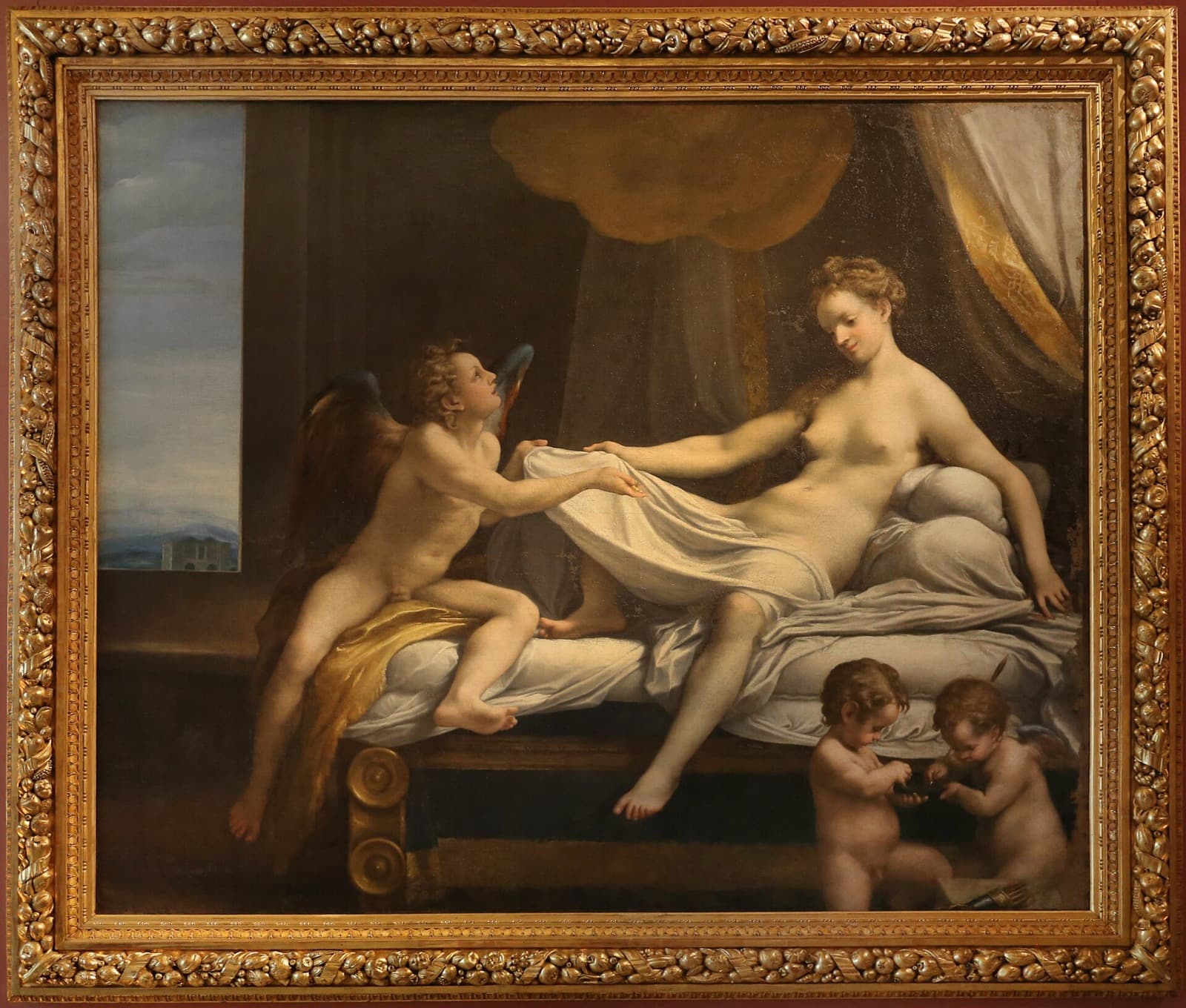
Cupid pulls back the sheet while two putti sharpen their arrows on a whetstone at the foot of the bed. Painted for the Duke of Mantua.
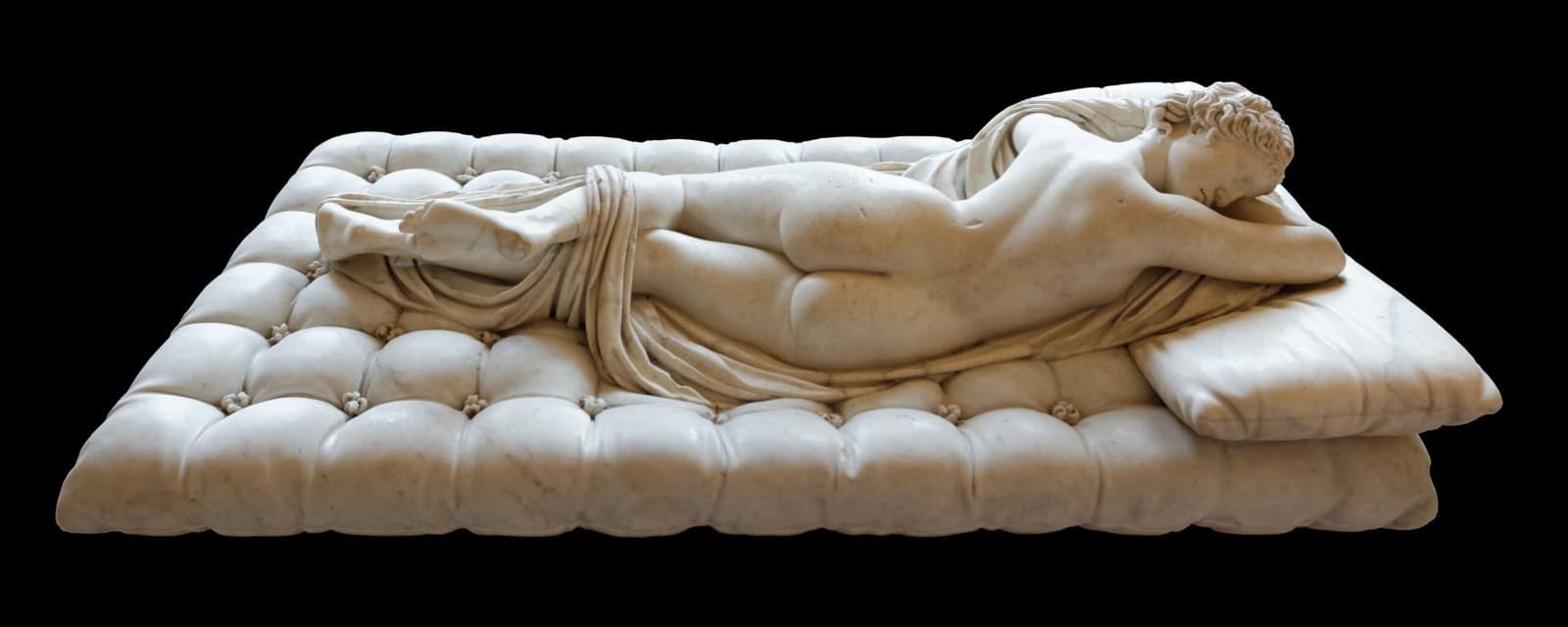
You see a sleeping woman until you walk around to the other side. Bernini added the mattress, folds and all, in 1620.