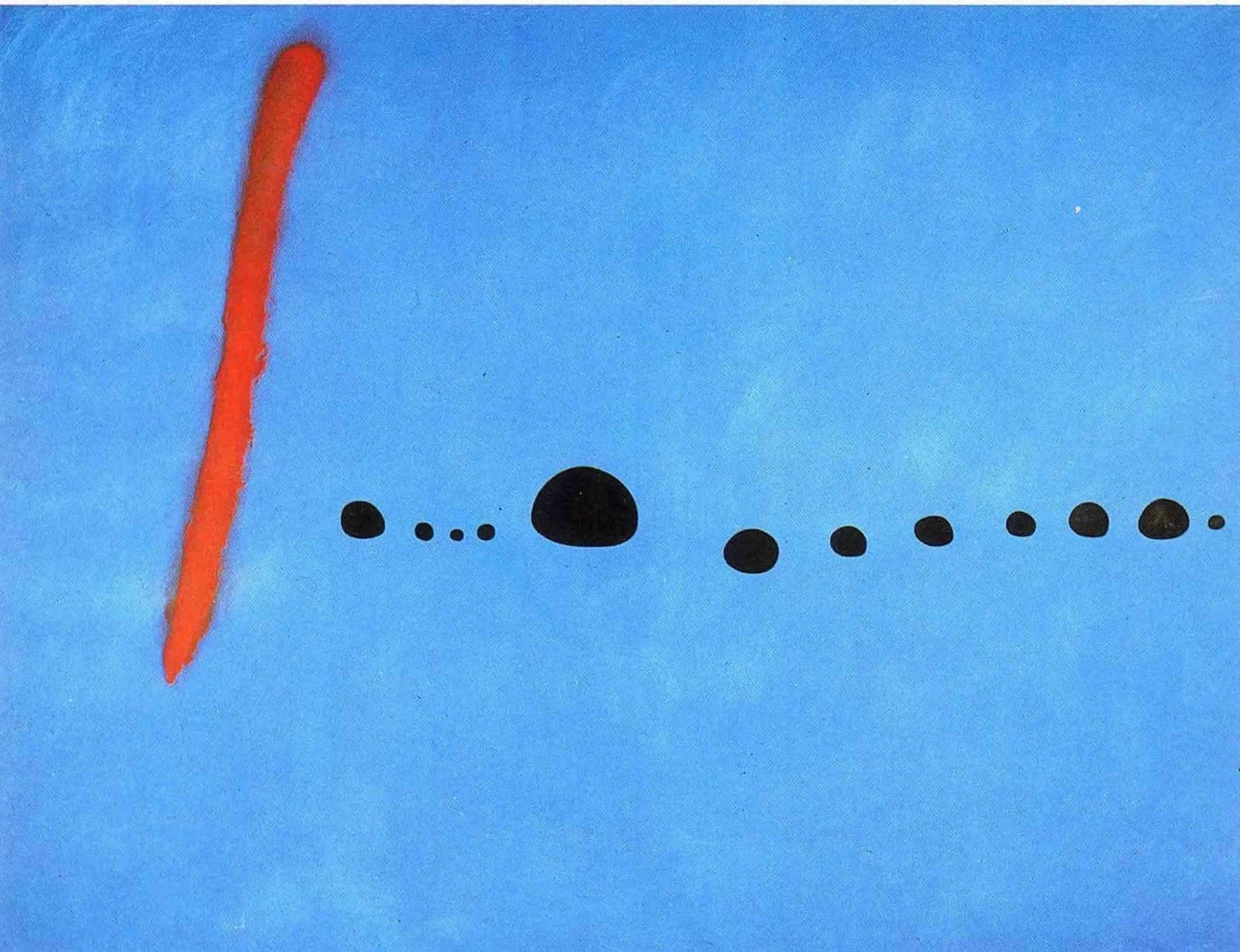
Blue II
1961 · Centre Pompidou, Paris
Pure blue interrupted by a line of black dots and one short red bar. Miró late in life, having thrown almost everything out.
★ 6.5
 skopia
Pure blue interrupted by a line of black dots and one short red bar. Miró late in life, having thrown almost everything out.
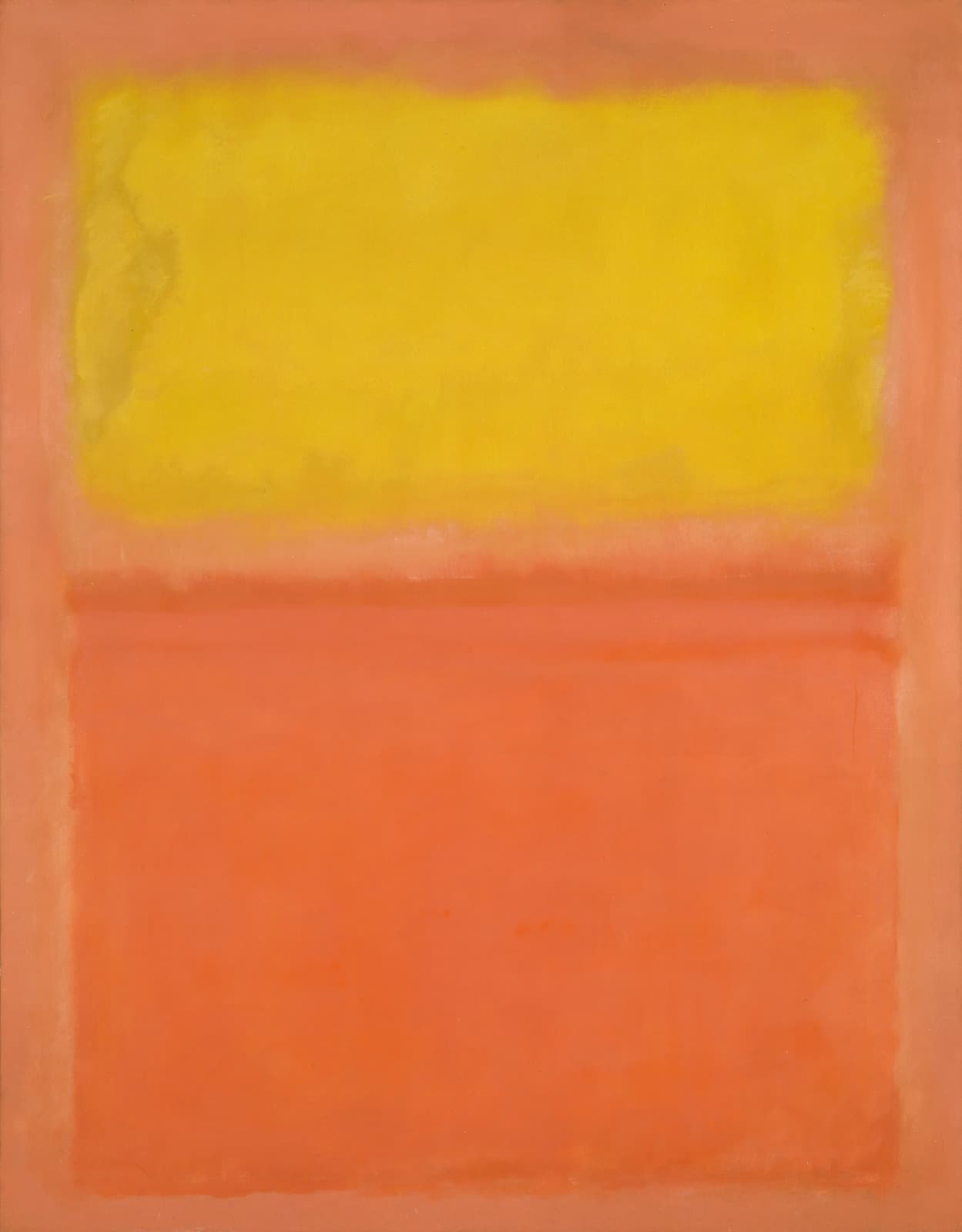
Two rectangles with feathered edges, built from thin washes so the color seems lit from behind rather than laid on.

Soft-edged bands of color stacked one above another, hovering slightly off the surface. Rothko wanted you to stand close and stay a while.

Black lines, white ground, three primary colors and nothing else. Mondrian spent decades taking painting down to this and called it Neo-Plasticism.

Mondrian broke his own grid into blinking squares after moving to New York, where he loved the traffic and the jazz.
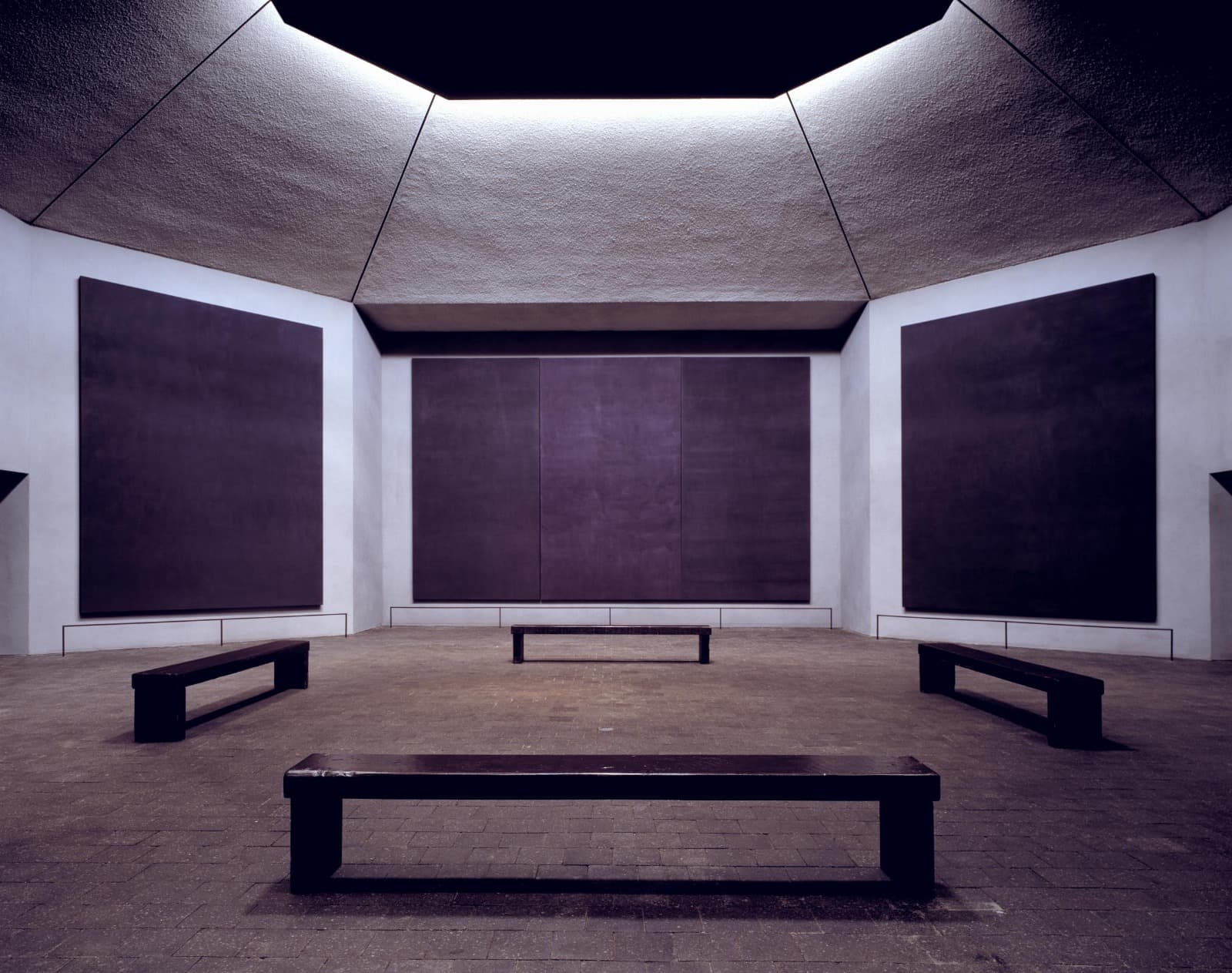
Fourteen near-black panels in an octagonal room, where your eyes adjusting to the dark is the point. Rothko died before it opened.
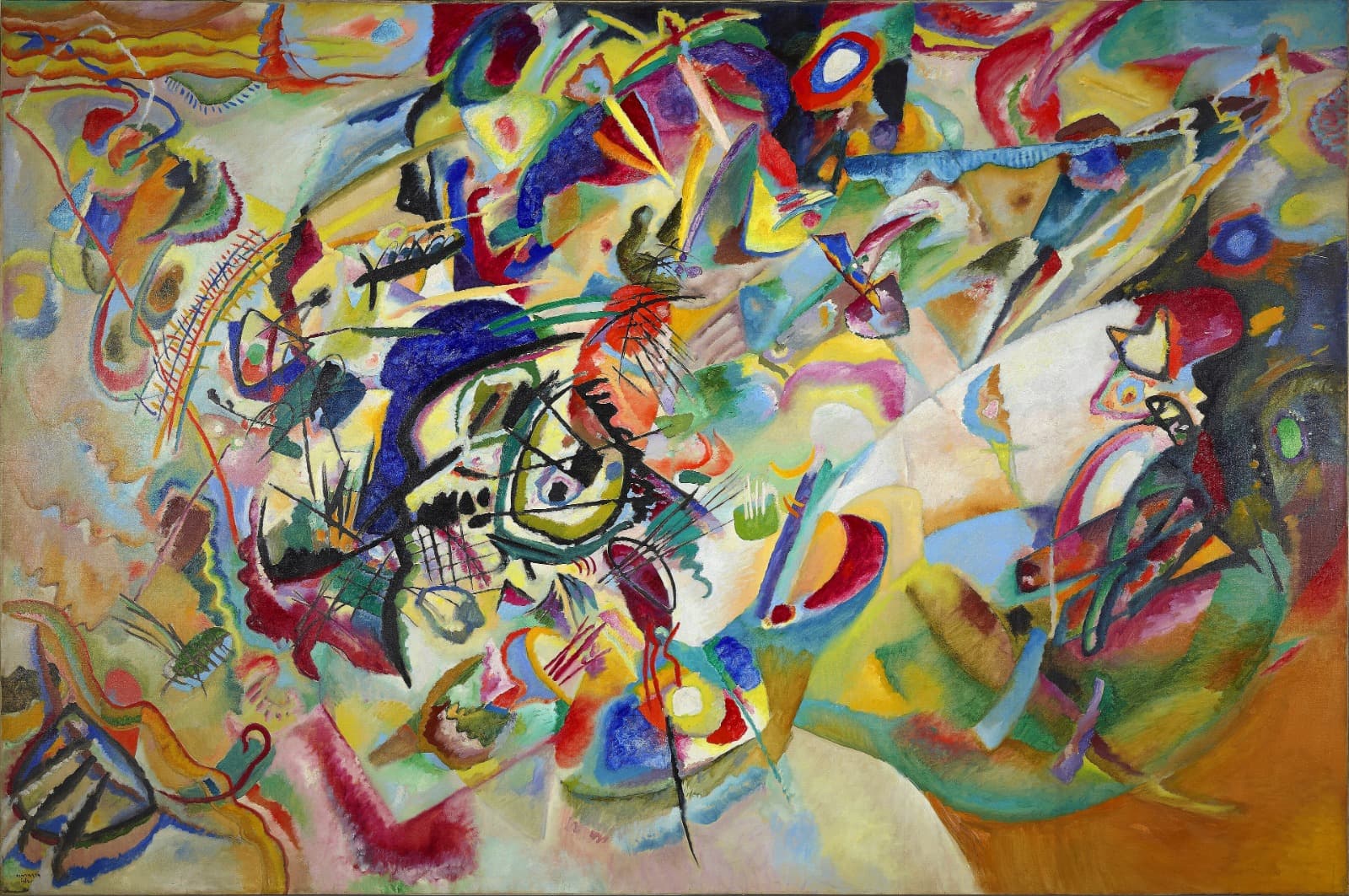
Kandinsky made more than thirty studies for this and then painted the four-meter canvas in three days, apocalypse dissolved past recognition.
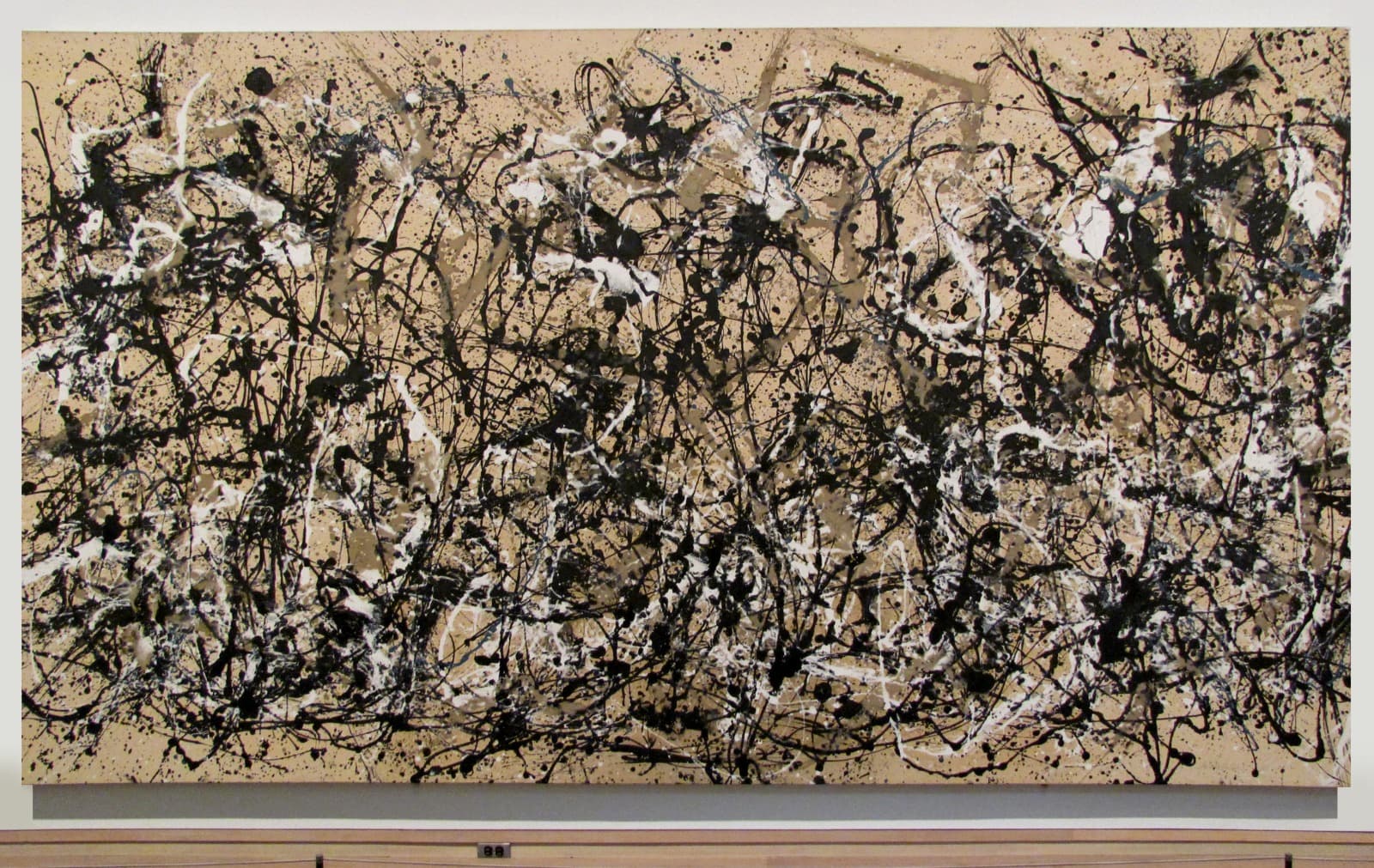
Pollock worked on the floor and moved around the canvas instead of standing at an easel, laying black enamel across raw cotton in 1950.