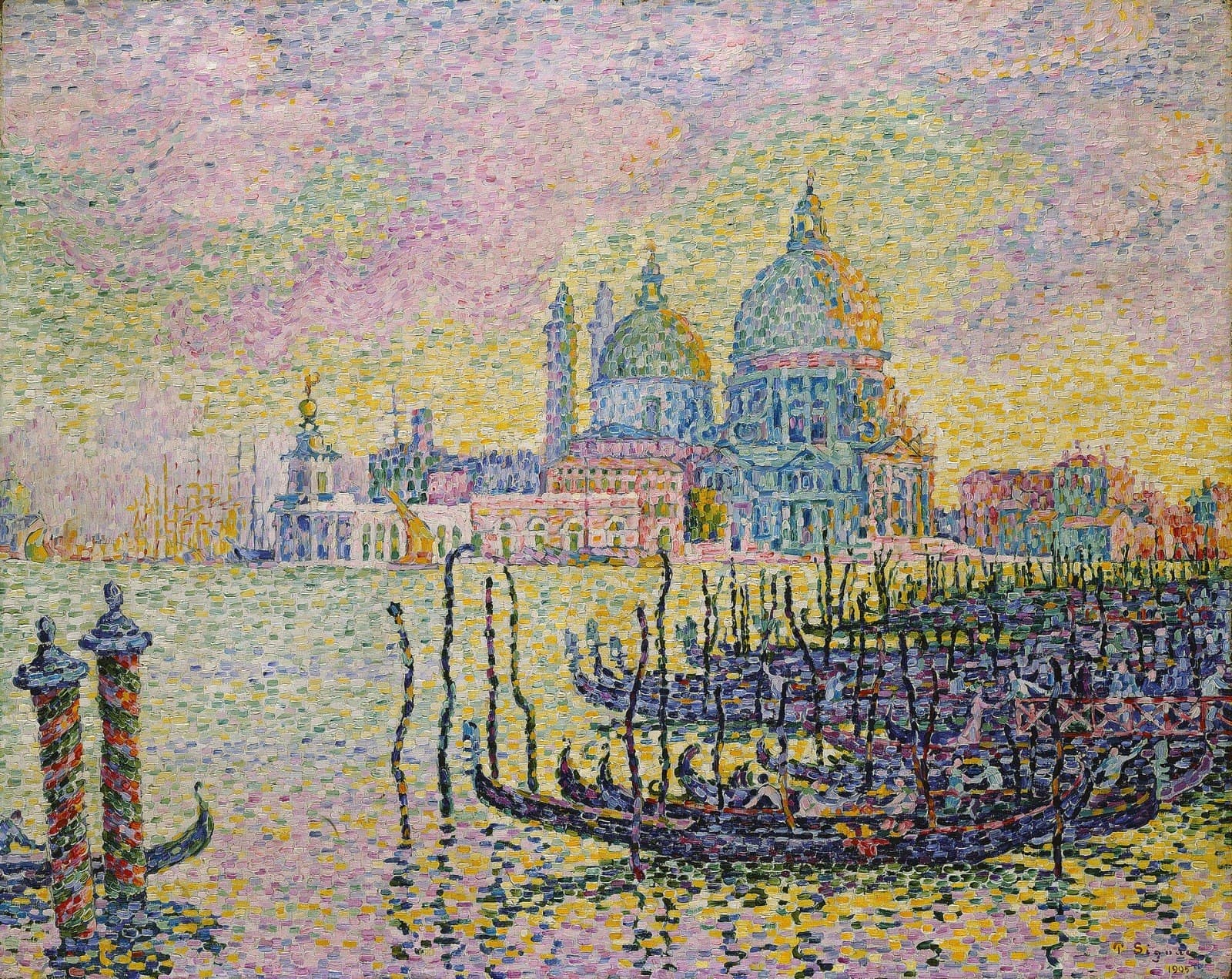
Grand Canal Venice
1905 · Toledo Museum of Art, Toledo, Ohio
Gondolas on water that has shattered into pink, blue and gold. Signac took the divisionist dot to the most painted view in Europe.
★ 4.8
 skopia
Gondolas on water that has shattered into pink, blue and gold. Signac took the divisionist dot to the most painted view in Europe.

Boats and masts broken into tilting green and brown planes, painted while Braque and Picasso were building Cubism out of Cézanne.

Rivermen break off work for a card game on a flatboat, arranged with a stillness that lifts the scene toward history painting.

Signac moved to Saint-Tropez and pulled the rest of the Neo-Impressionists south. Seurat's tight dots have loosened into bigger, brighter tiles.
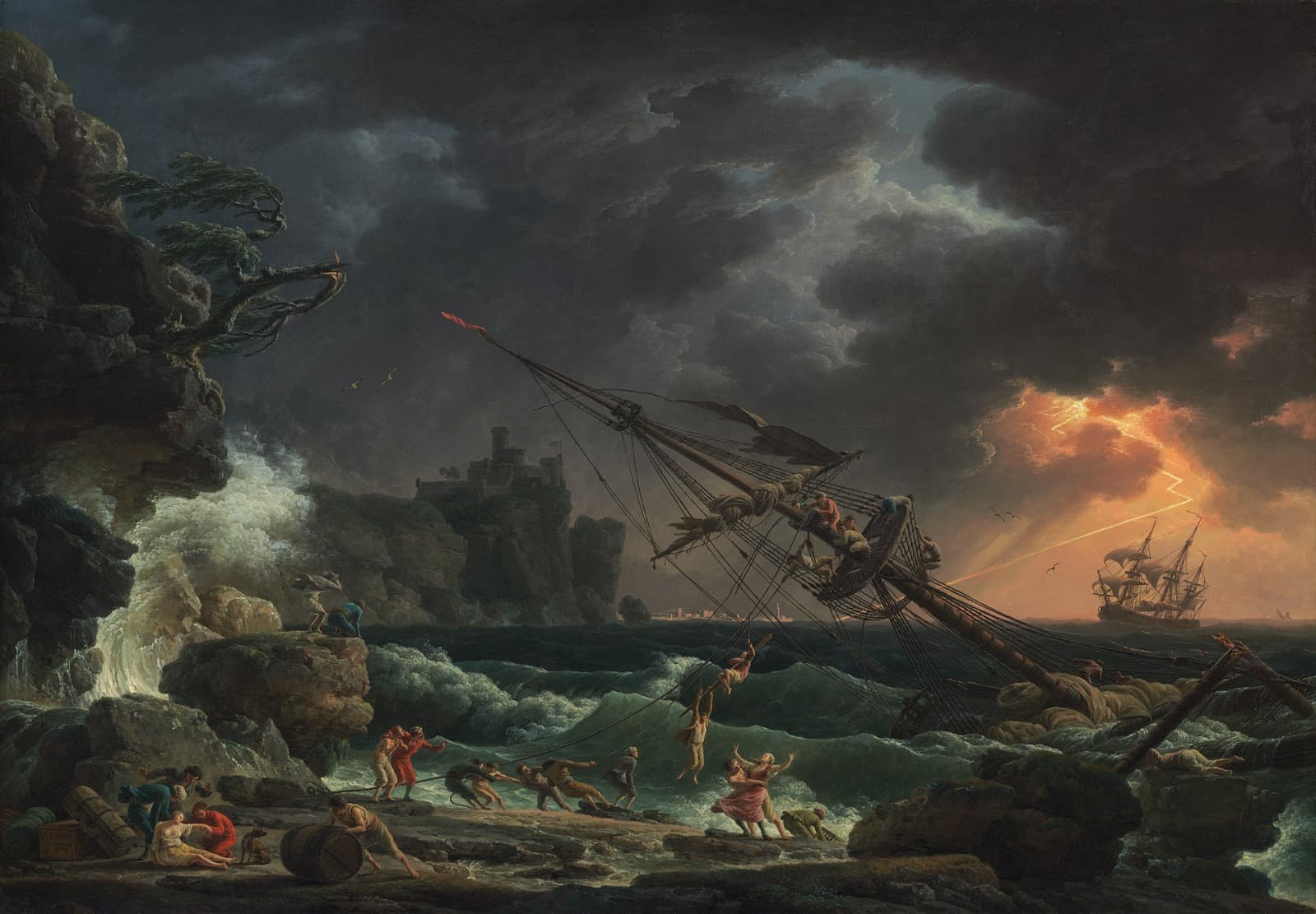
Masts splintering, survivors in the surf, and the whole thing arranged for people who wanted to feel terror from a safe distance.

A packet boat comes in at evening and Turner dissolves the city, the passengers and the river into a single sheet of gold.
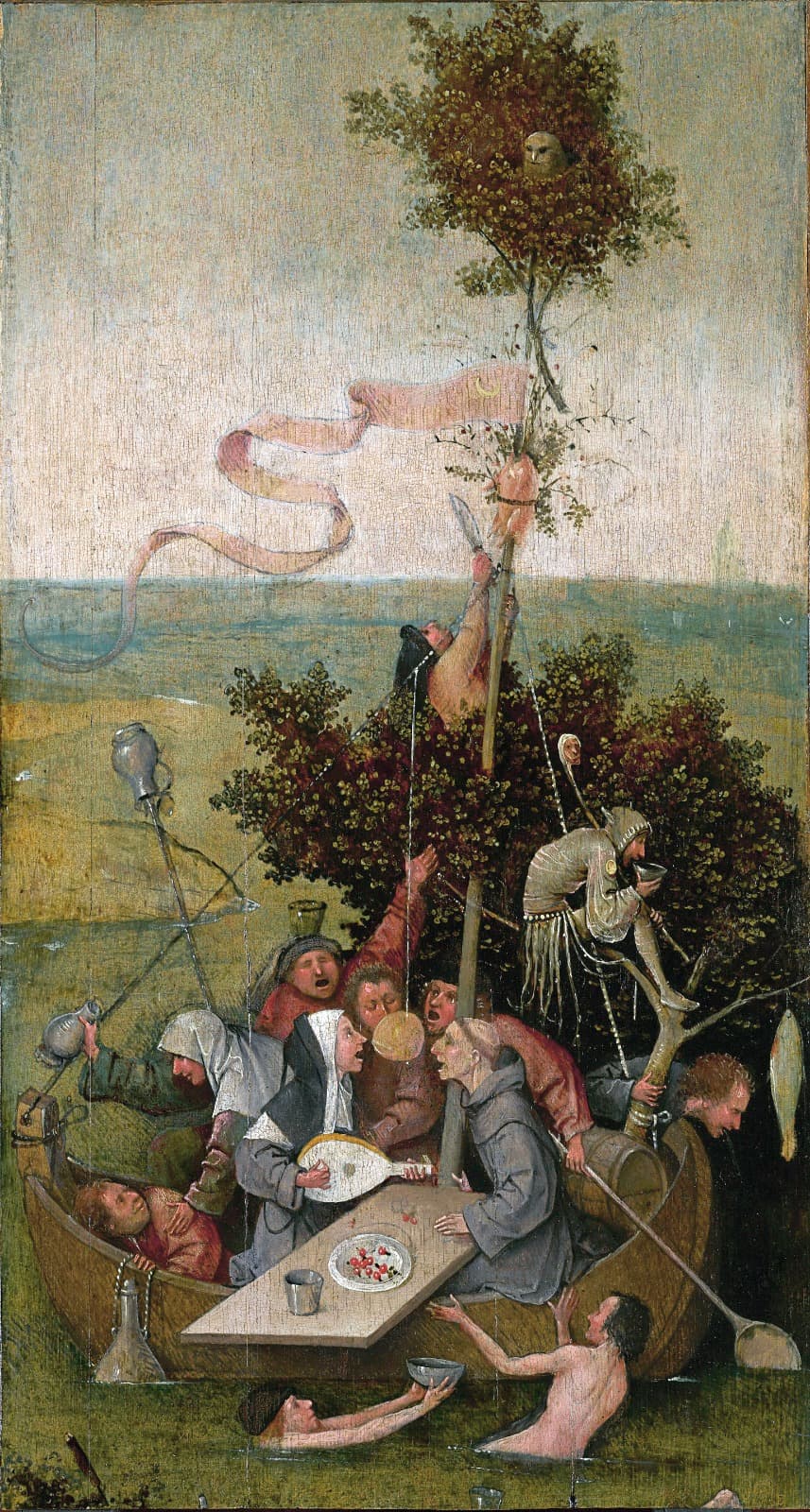
A monk and a nun bawl a song over a lute while somebody vomits over the side. The boat has no rudder, which is the point.
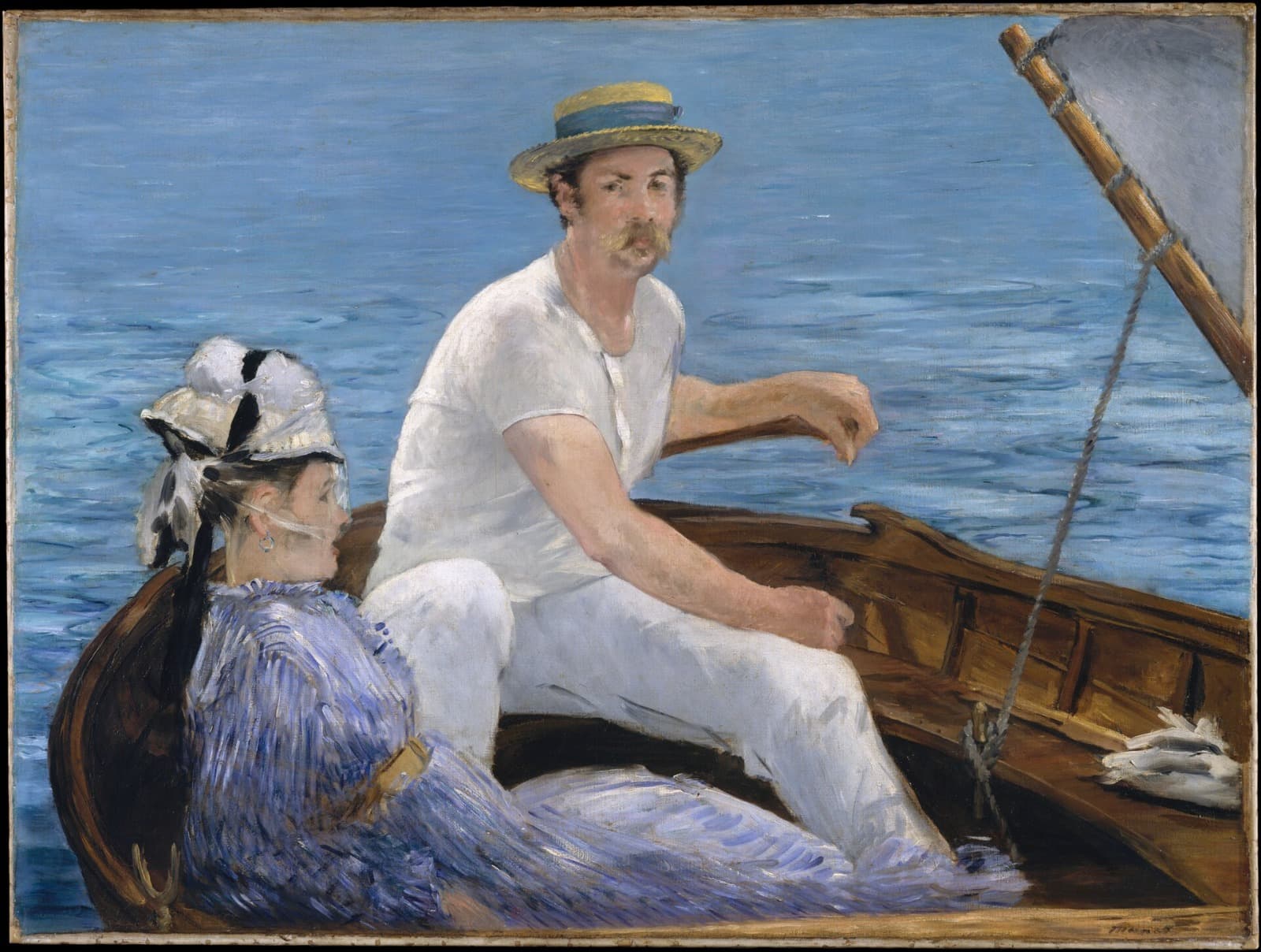
Manet painted this beside Monet at Argenteuil and let the blue water climb all the way to the top edge of the canvas.
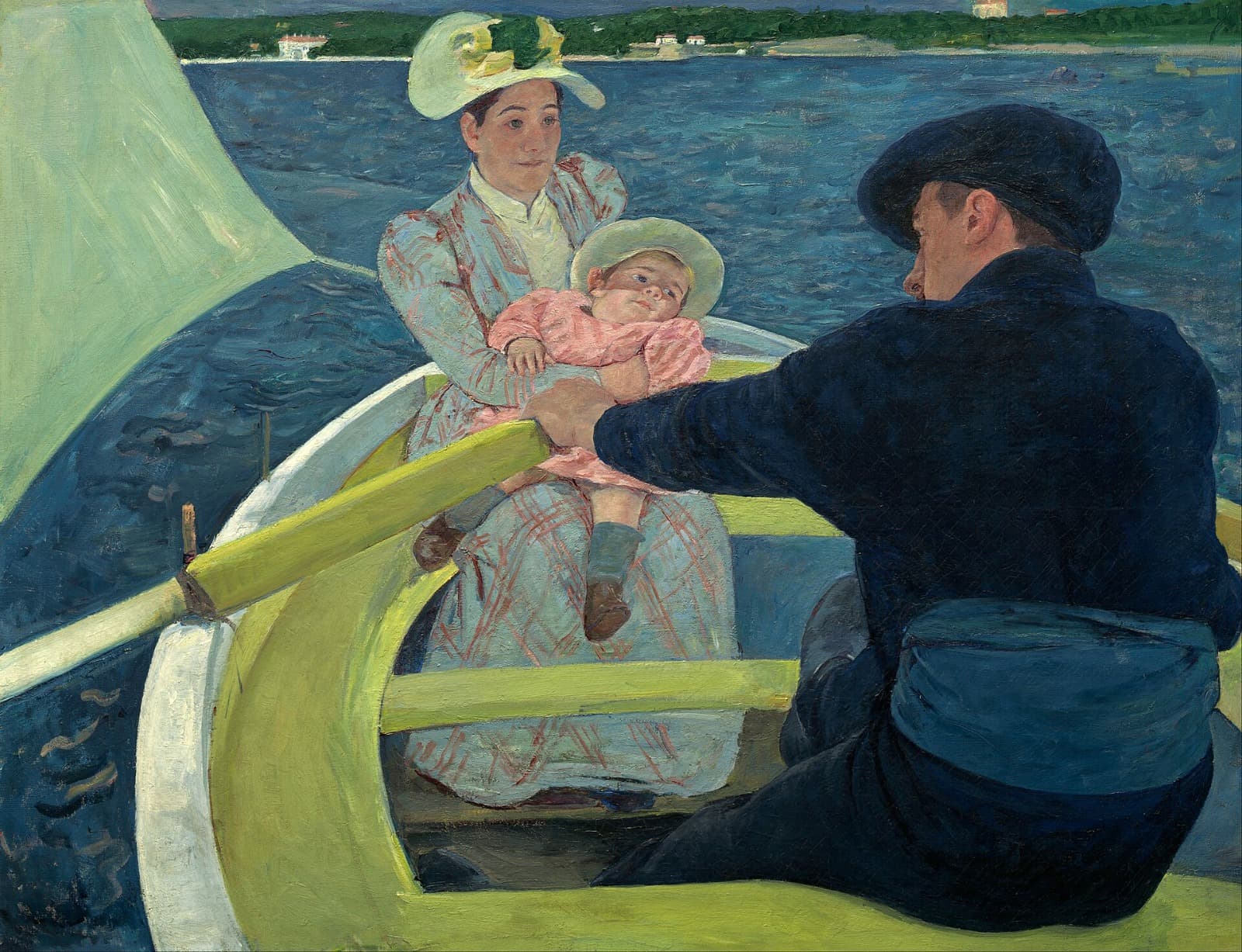
A dark-suited oarsman fills the foreground with his back while the water rises behind with no horizon, a design taken from Japanese prints.

Delacroix's debut, and the damned are biting the hull. Romanticism announced itself with churning water and bodies learned from Rubens.

Two pale legs disappear into the sea in the corner while the ploughman keeps ploughing. Auden wrote a poem about exactly that indifference.

A man and three boys heel a catboat over into open water, painted in the centennial year and read ever since as the country's optimism.

Rembrandt's only seascape, and one disciple is being sick over the side. Stolen from the Gardner Museum in 1990 and never recovered.

Brook Watson really did lose a leg to a shark in Havana harbor, and Copley put a Black sailor at the top of the rescue.

A trapper and his son drift downriver at first light with a chained animal at the prow, the water so still it doubles them.

Almost every detail is wrong, including the flag and the boat, and Leutze painted it in Germany seventy-five years after the fact.

Saint Ursula is on the quay somewhere, but the real subject is the light coming up the water between the palaces at dawn.

Monet and Renoir set up side by side at this riverside resort and worked out the quick broken stroke that became Impressionism.
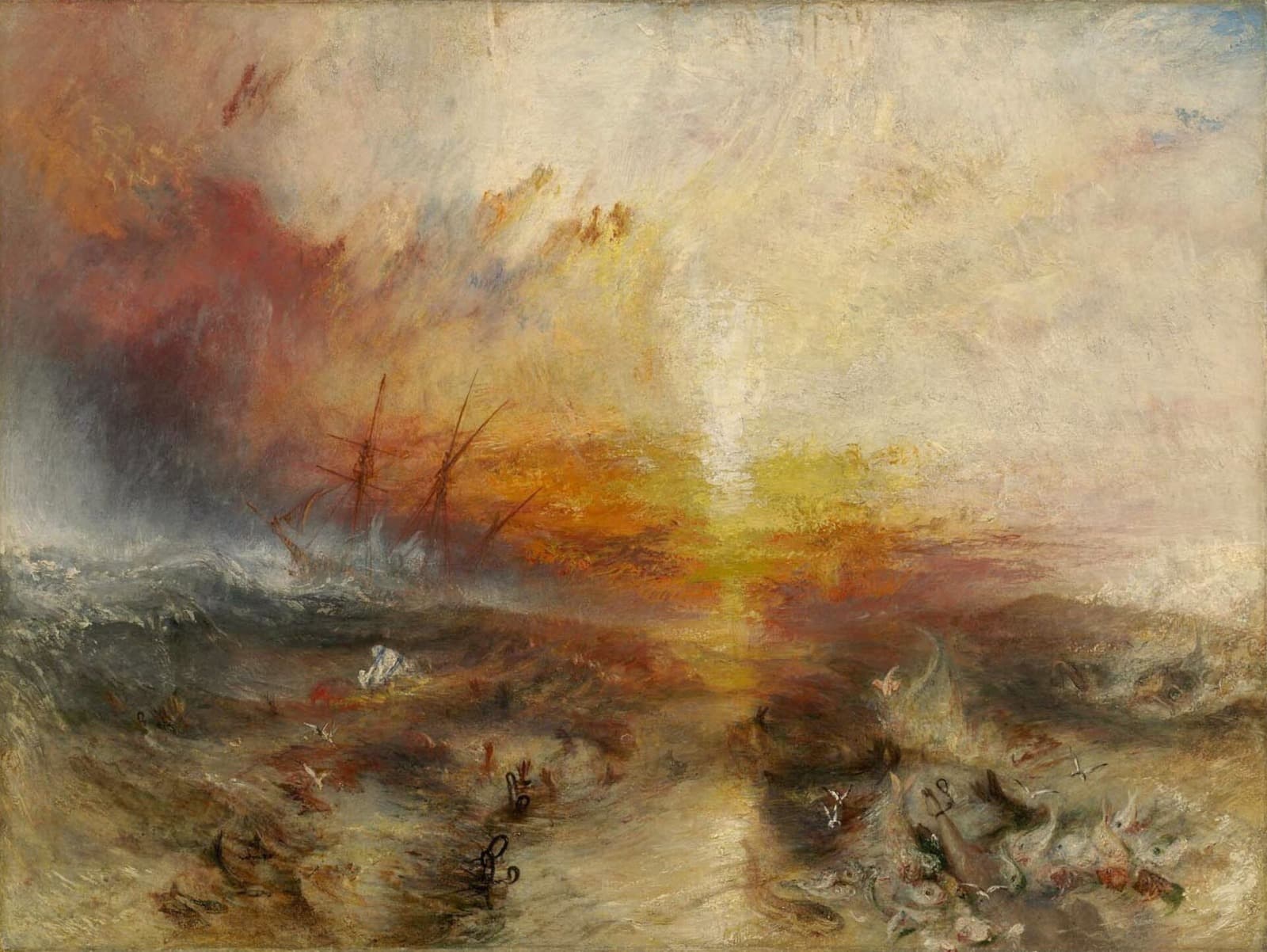
Turner took the Zong case, where a slaver threw its human cargo overboard for the insurance money, and set it under his most beautiful sunset.
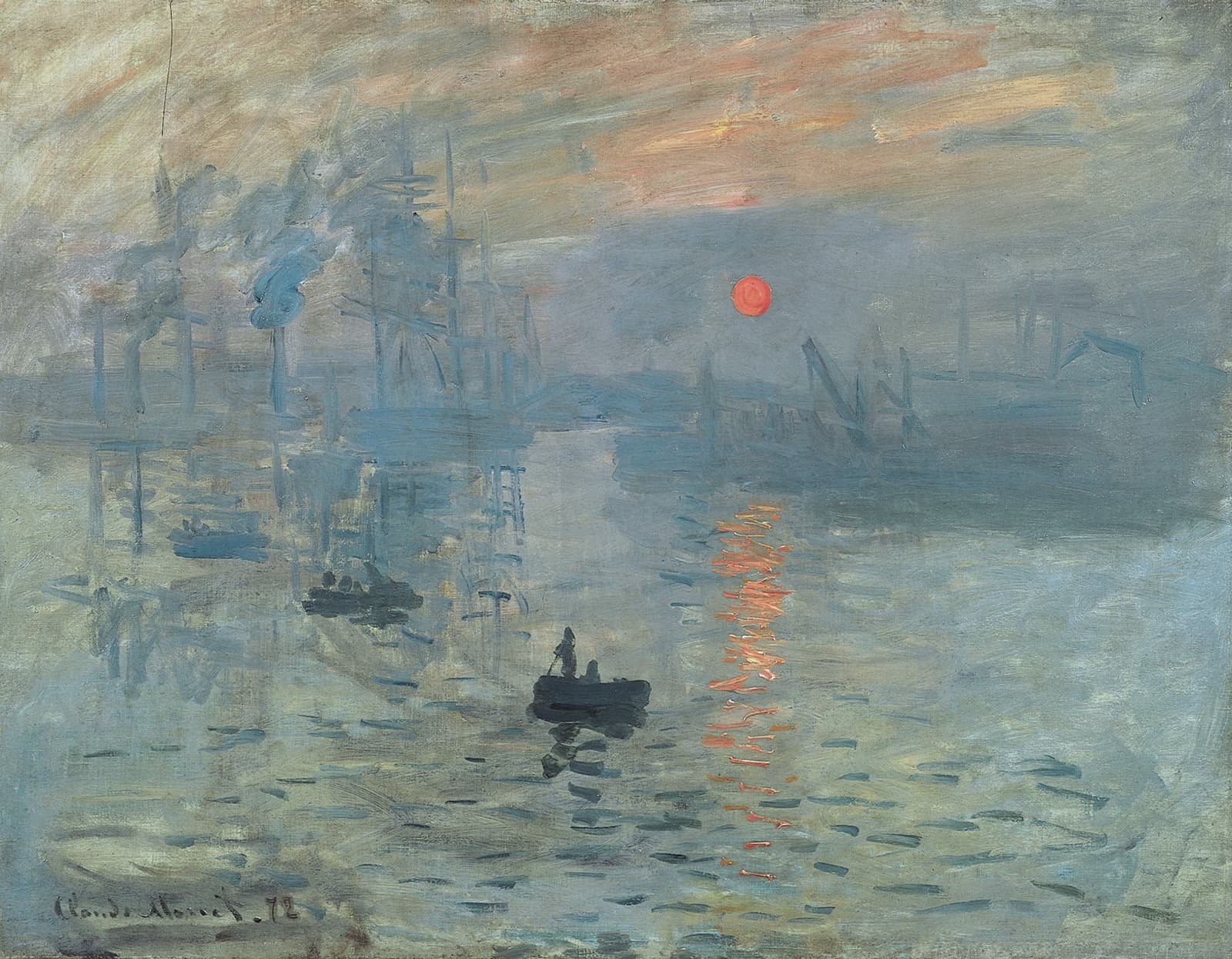
A critic seized on the word in the title to mock the whole group, and the insult ended up naming the movement.