
Christ Bearing the Cross, with a Dominican Friar
1360 · The Frick Collection, New York City
Christ looks back over the cross at a tiny Dominican friar kneeling in the corner, the patron drawn into the road to Calvary.
★ 3.2
 skopia
Christ looks back over the cross at a tiny Dominican friar kneeling in the corner, the patron drawn into the road to Calvary.

No bigger than a page, and one of very few works securely given to Cimabue, whom Dante named the best painter of his day.

The light in the darkened room seems to be coming off Christ himself, painted when religious art had largely gone out of fashion.

Overbeck and the Nazarenes lived almost as monks in Rome and painted deliberately like the Italians before Raphael. This is the program.
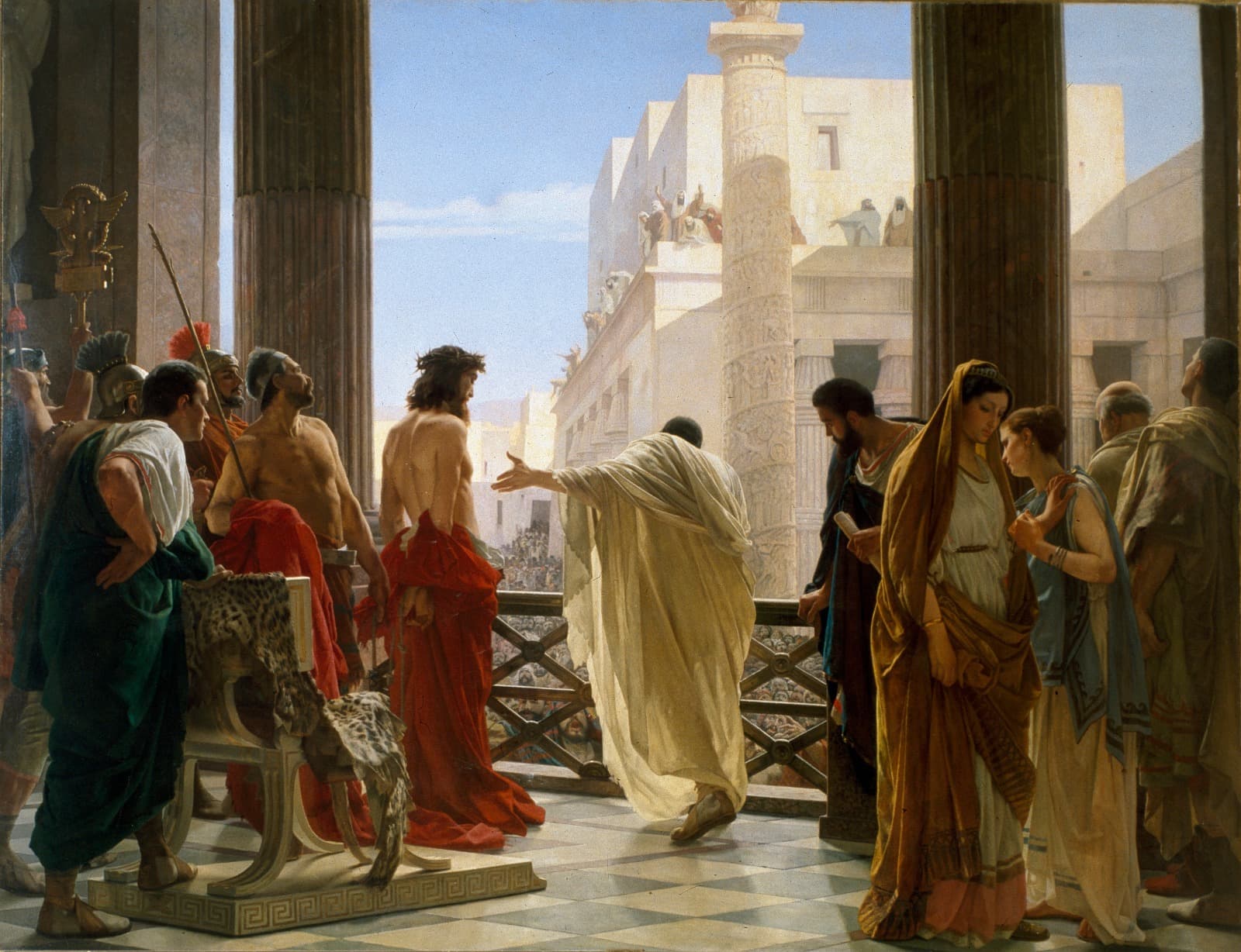
We are standing behind Pilate, looking out over his shoulder at the crowd, which puts us among the officials rather than the mob.
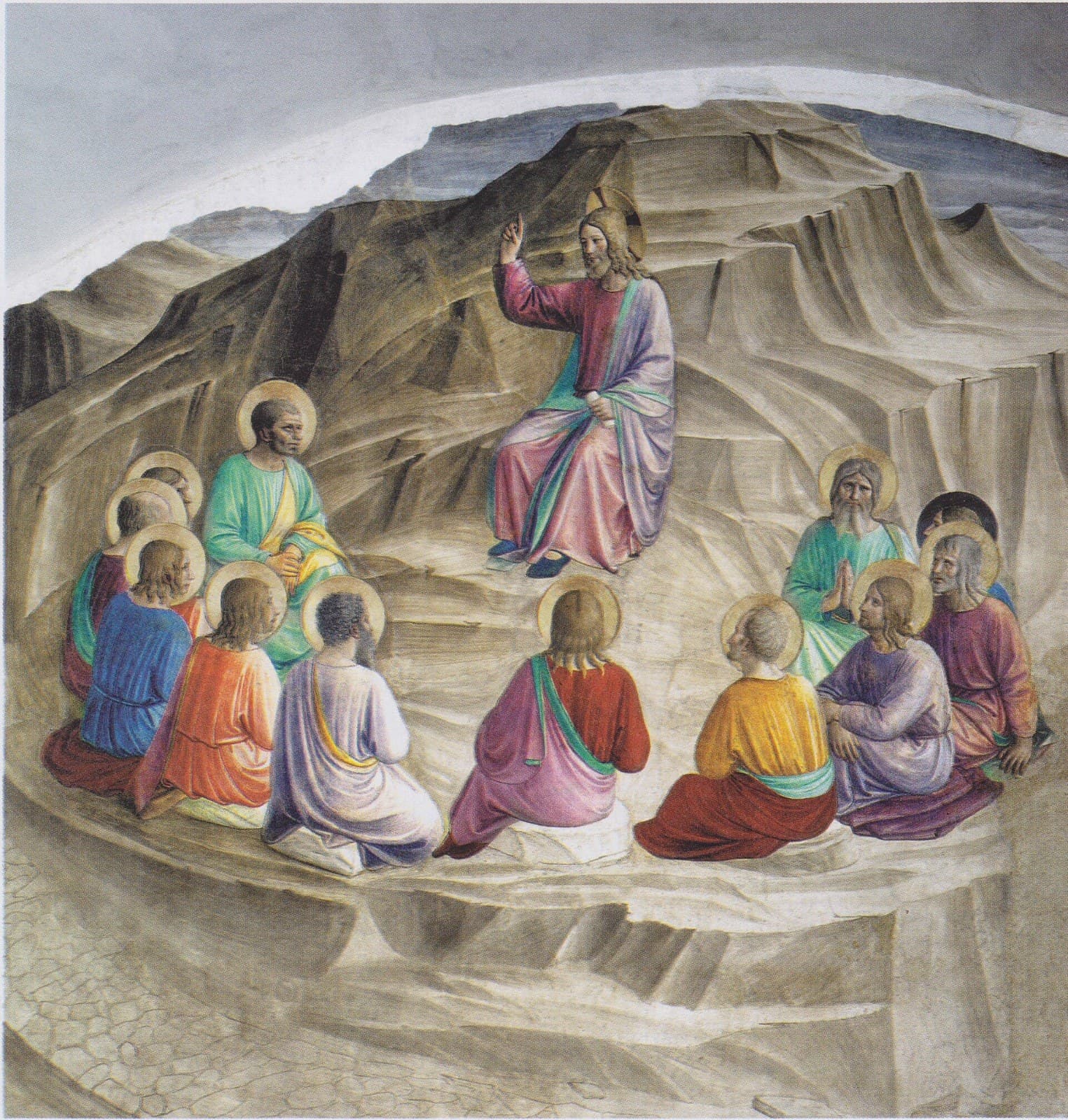
Painted on the wall of a friar's cell at San Marco, stripped of gold and ornament so that it settles the mind rather than dazzles.
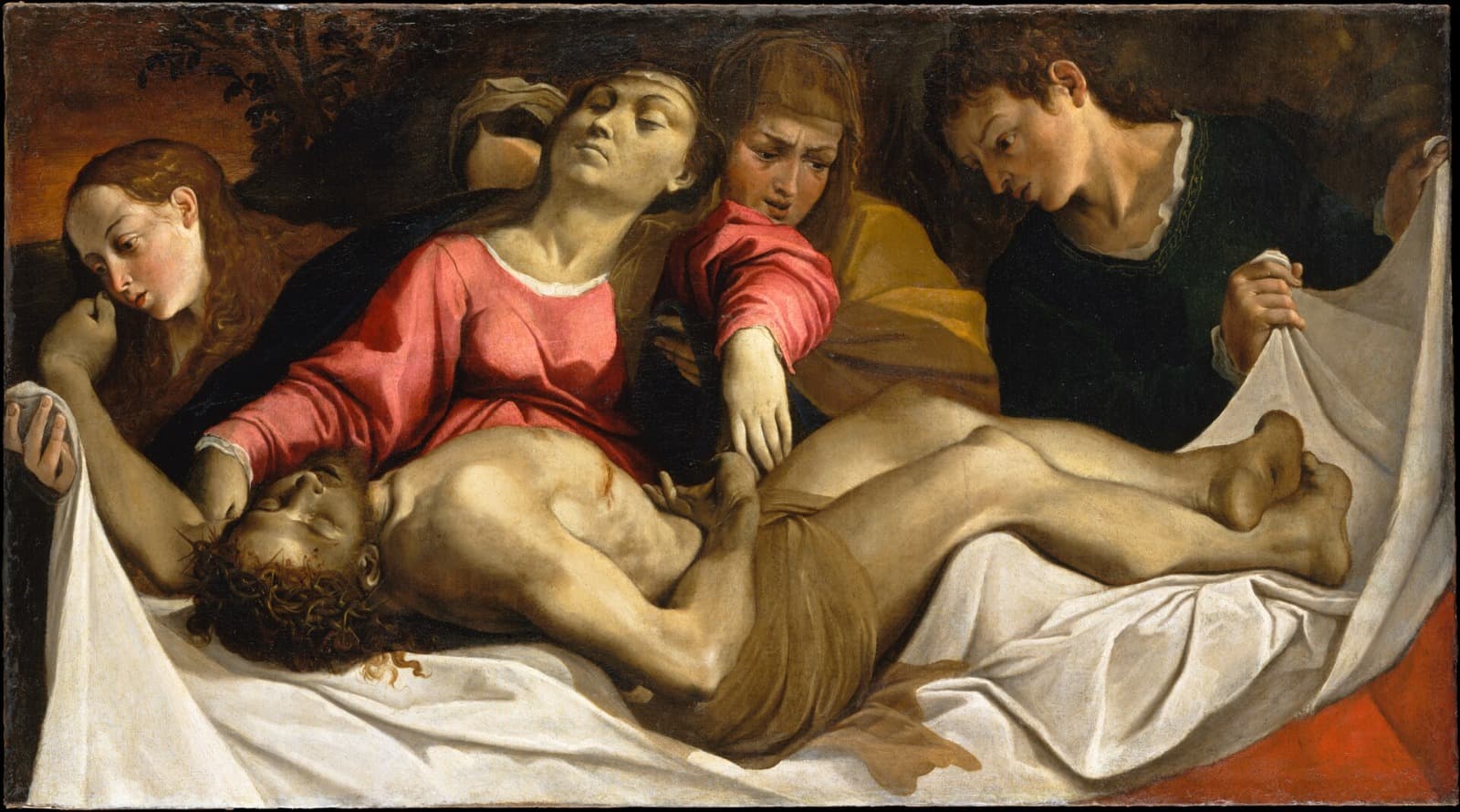
The body pushed close to the viewer and lit in sharp pools. The Carracci taught a generation to weld grandeur to direct feeling.
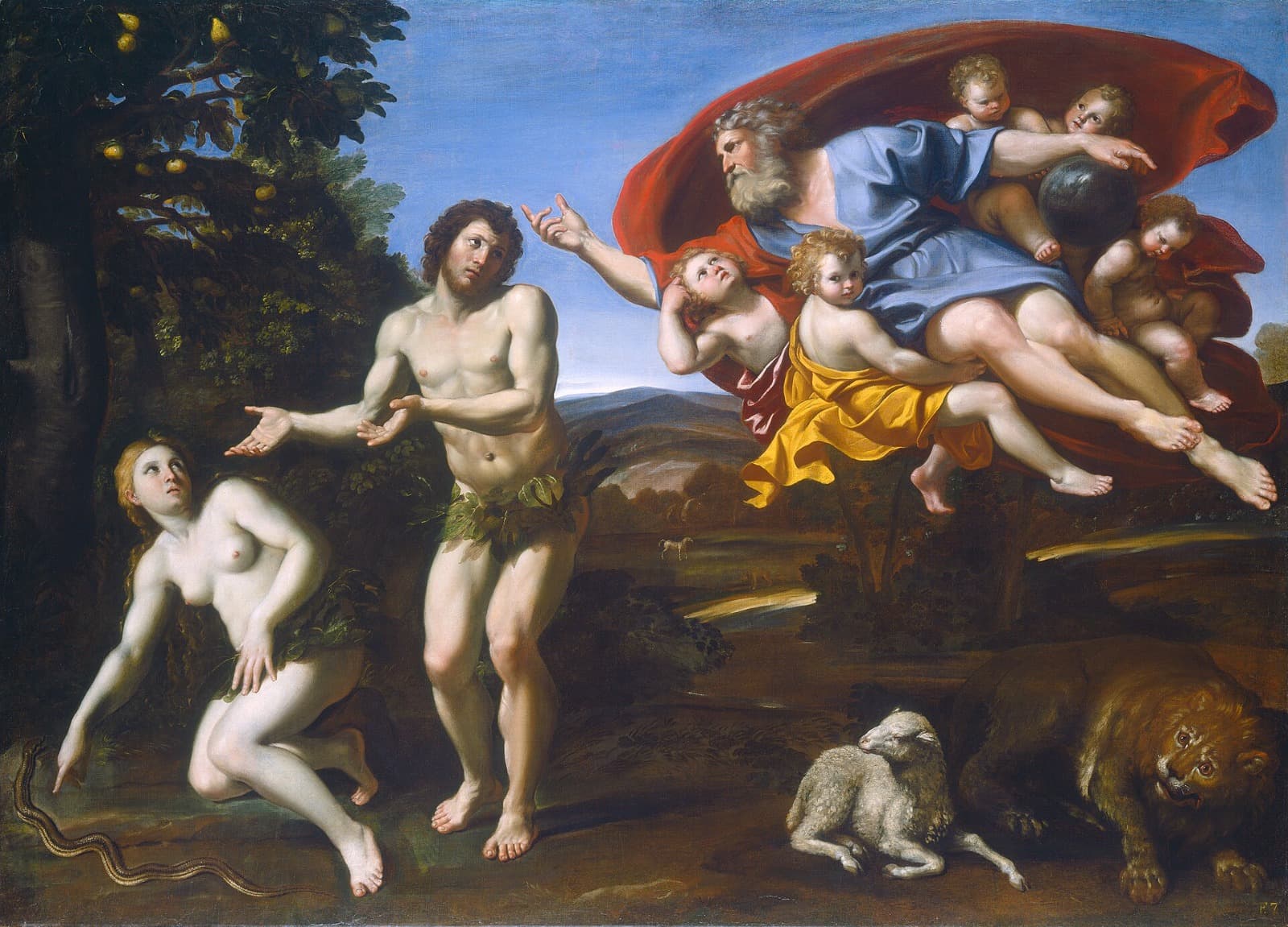
Adam points at Eve, Eve points at the serpent, and the first sin turns into an ordinary comedy of passing the blame.
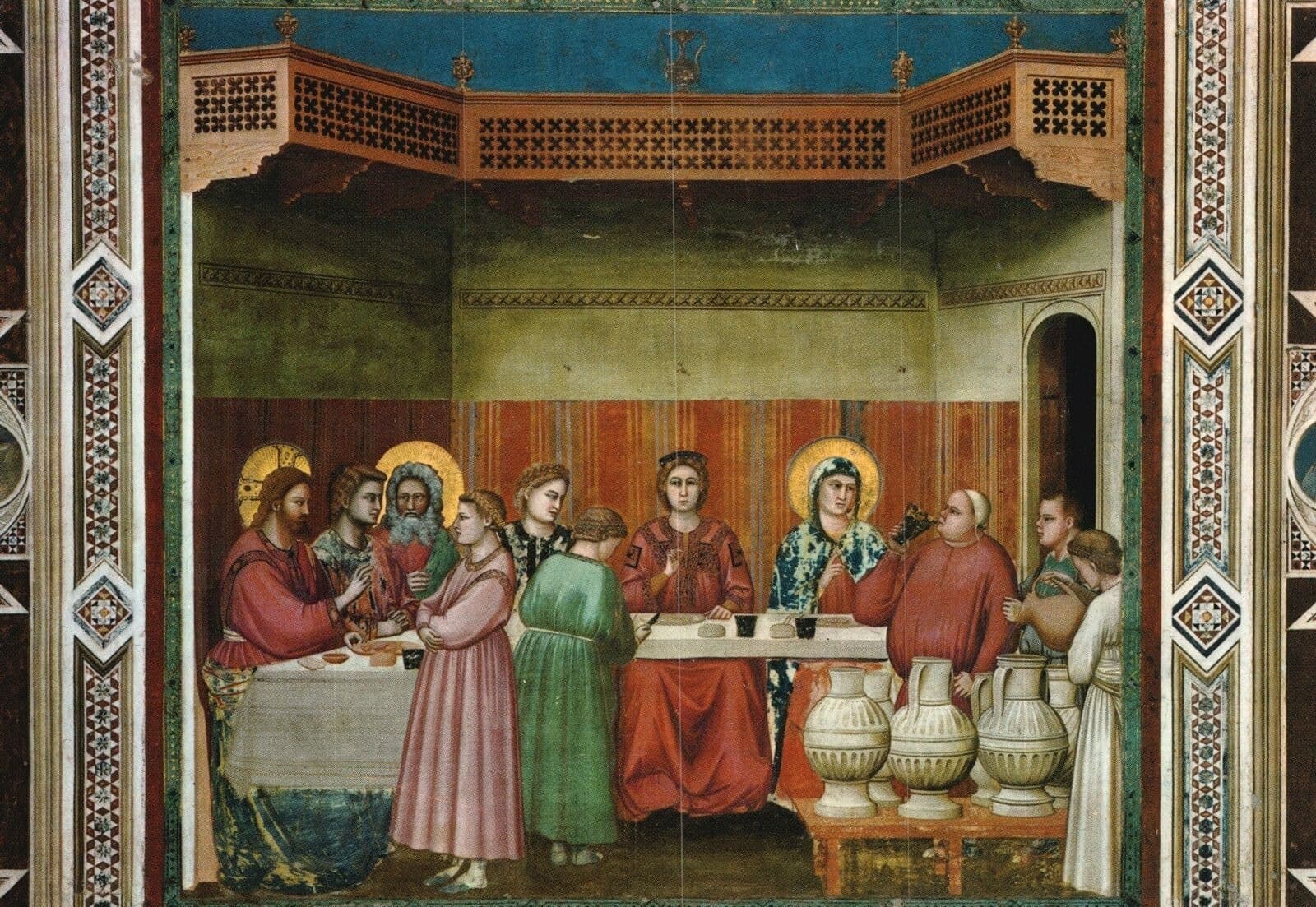
A steward tastes from a bowl and a portly servant tends the jars, and the miracle goes by almost without anyone noticing.
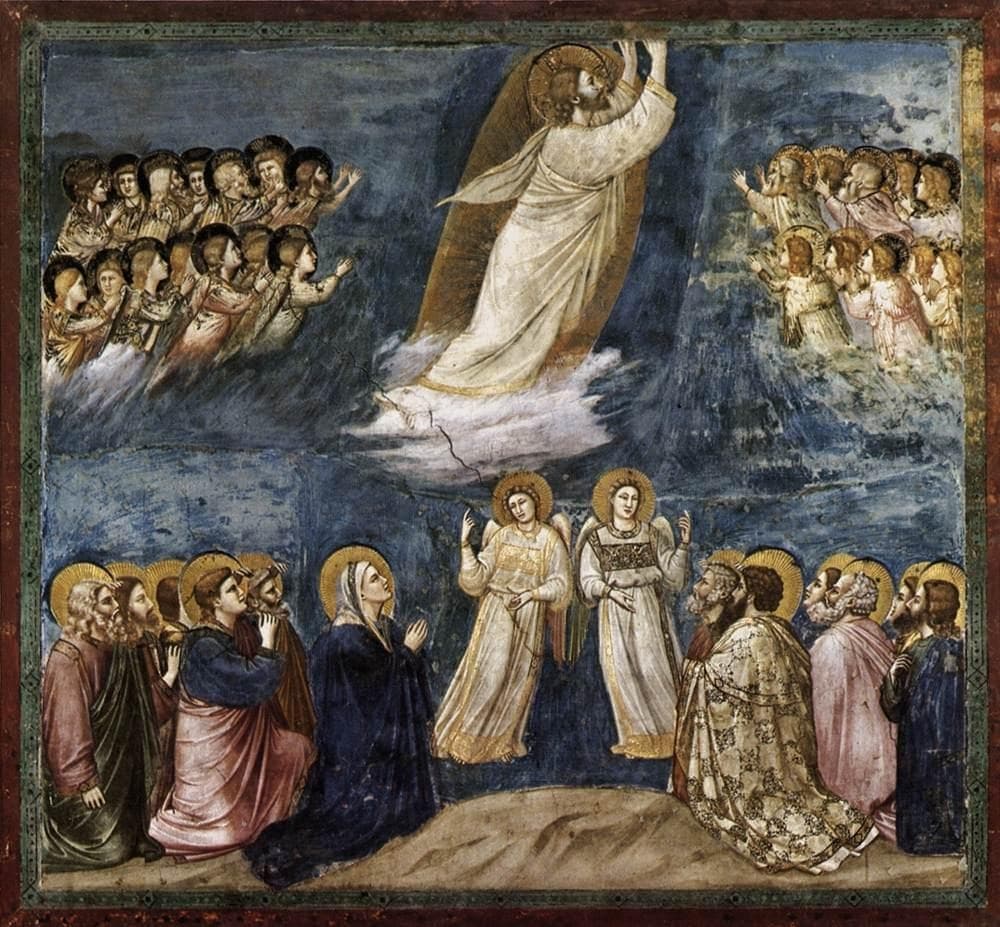
Christ's fingertips cross out of the human part of the picture and blur into light, which is the whole event in one detail.

Christ turns up dressed as a pilgrim with a staff and a traveler's pouch, and the two disciples still have no idea who he is.

Christ stands to place the host on each tongue exactly as a priest does at Mass, in a bare cell-like room with stools.
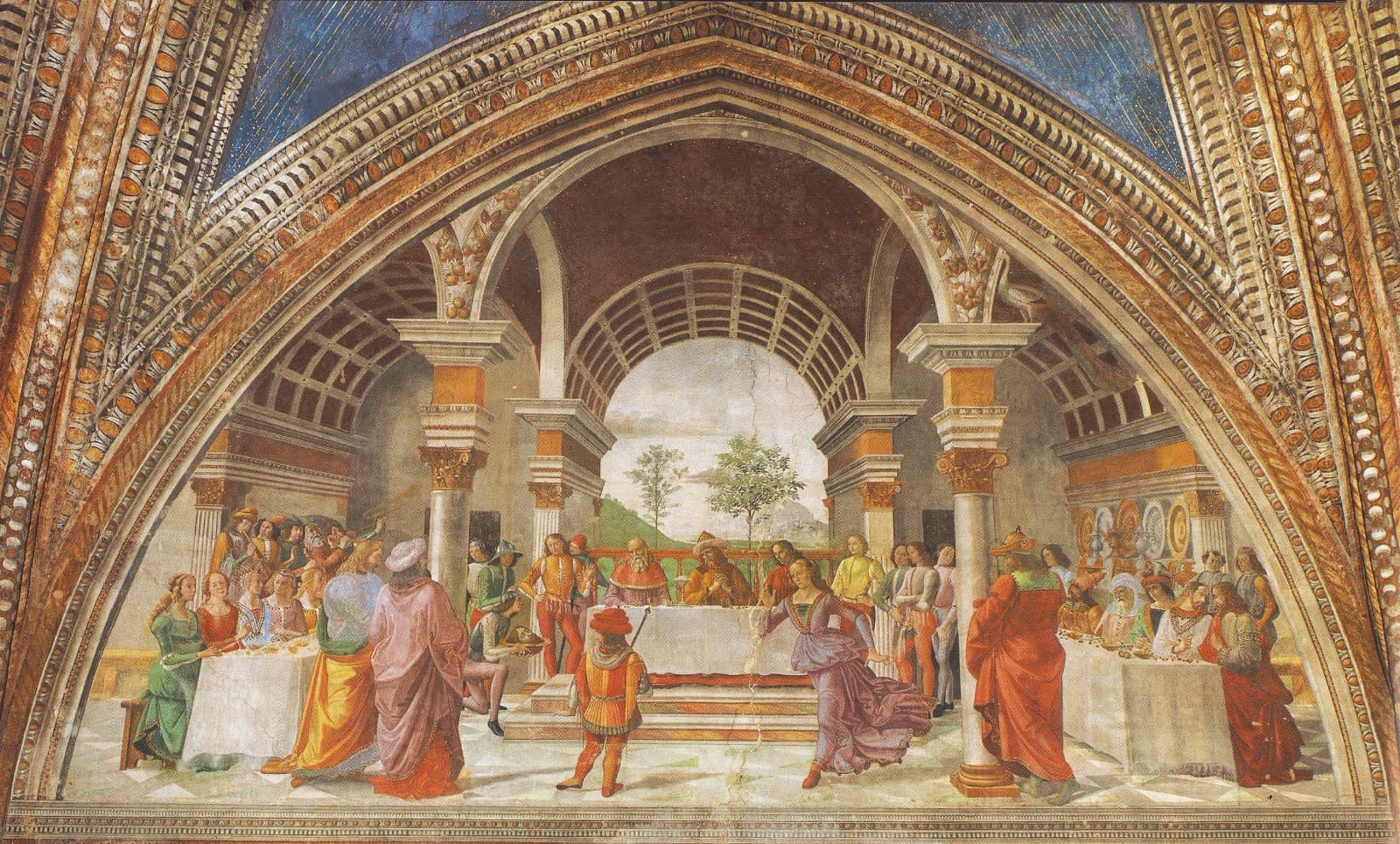
The head arrives on a platter inside a serene sunlit loggia full of well-dressed Florentines, many of them the family who paid.
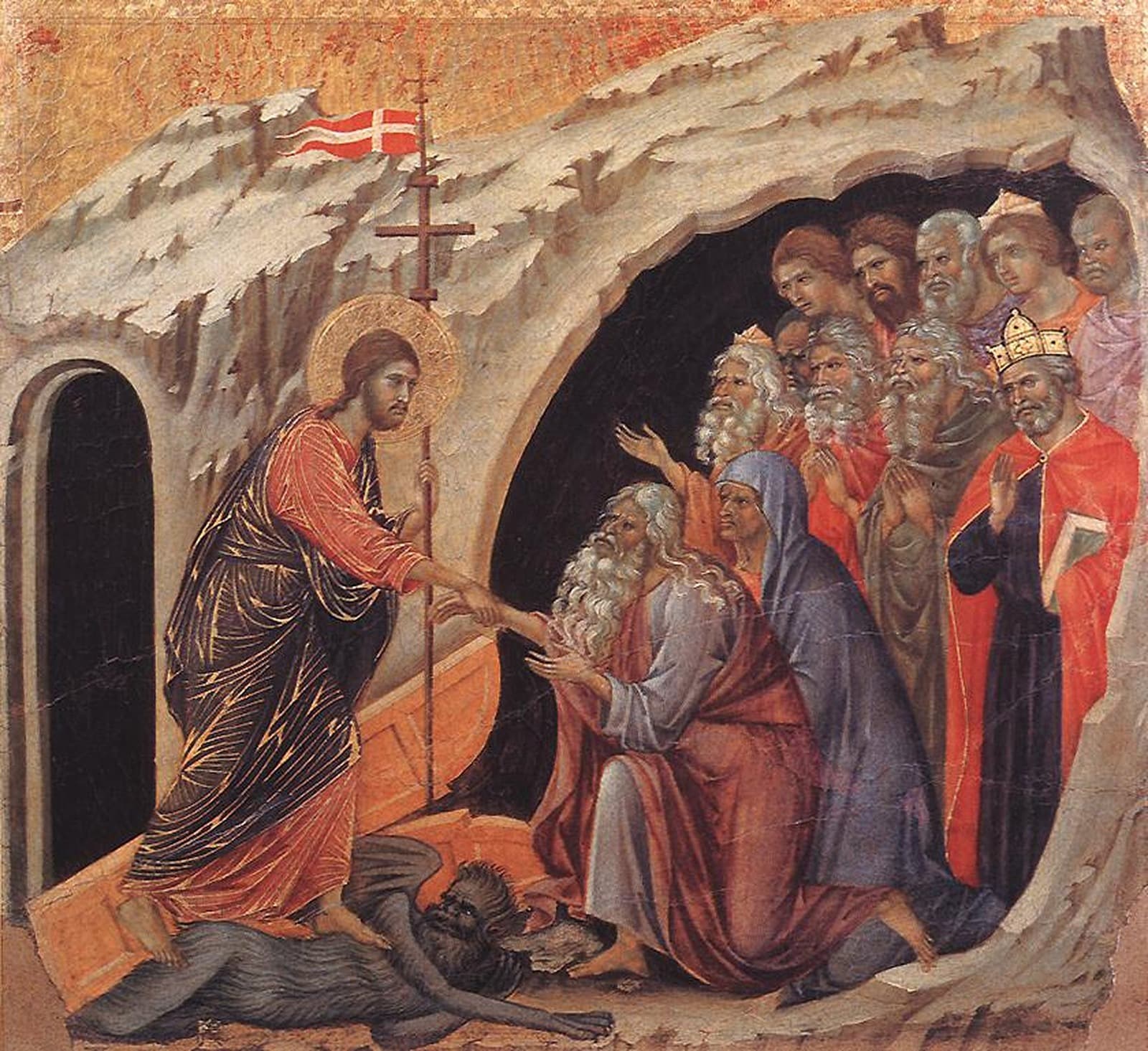
Christ strides into the cave to pull Adam out by the hand, treading on a chained Satan as he goes.
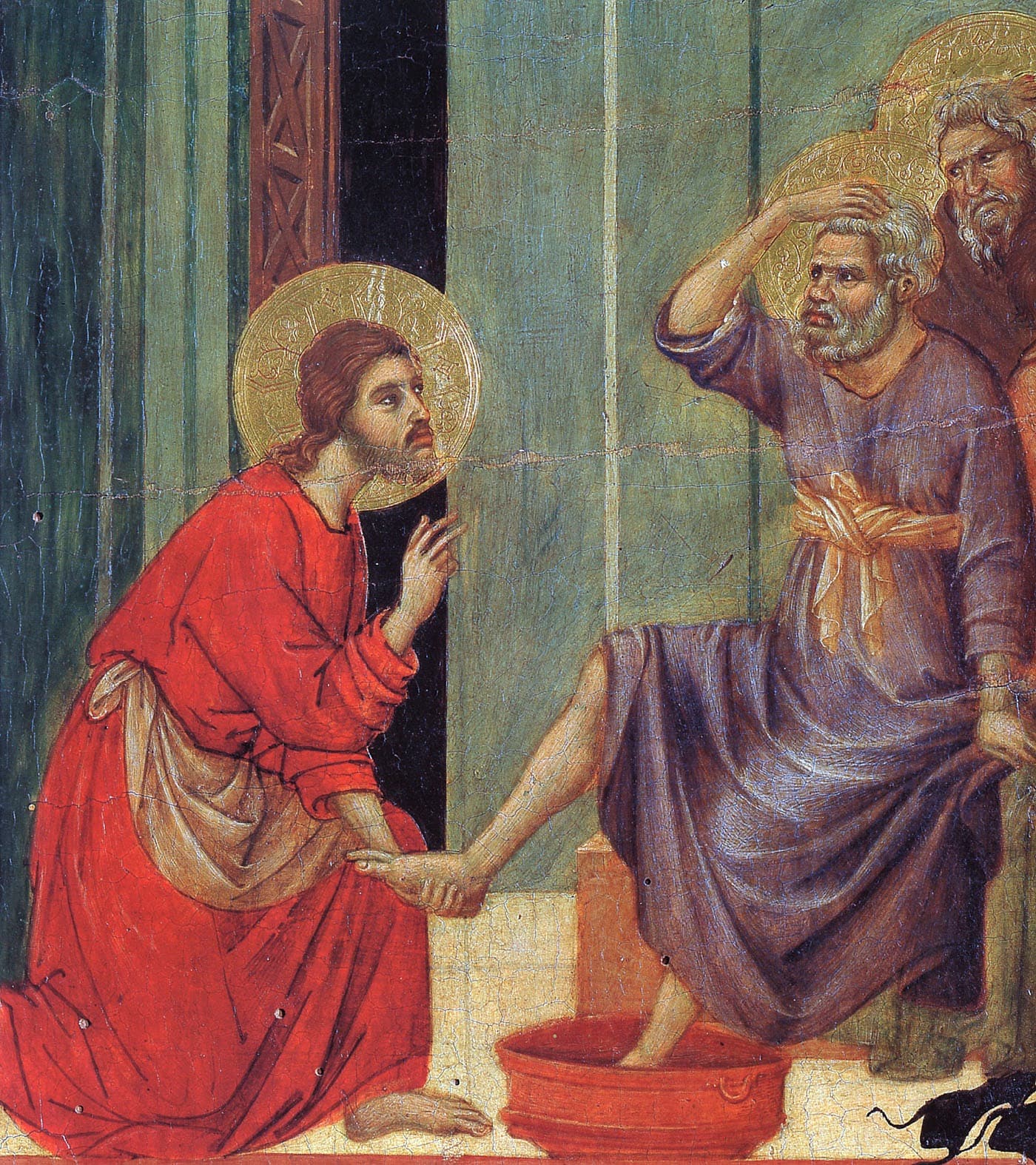
Christ kneels with the basin and Peter, flustered, raises a hand to his own head. Some of the others are already loosening their sandals.
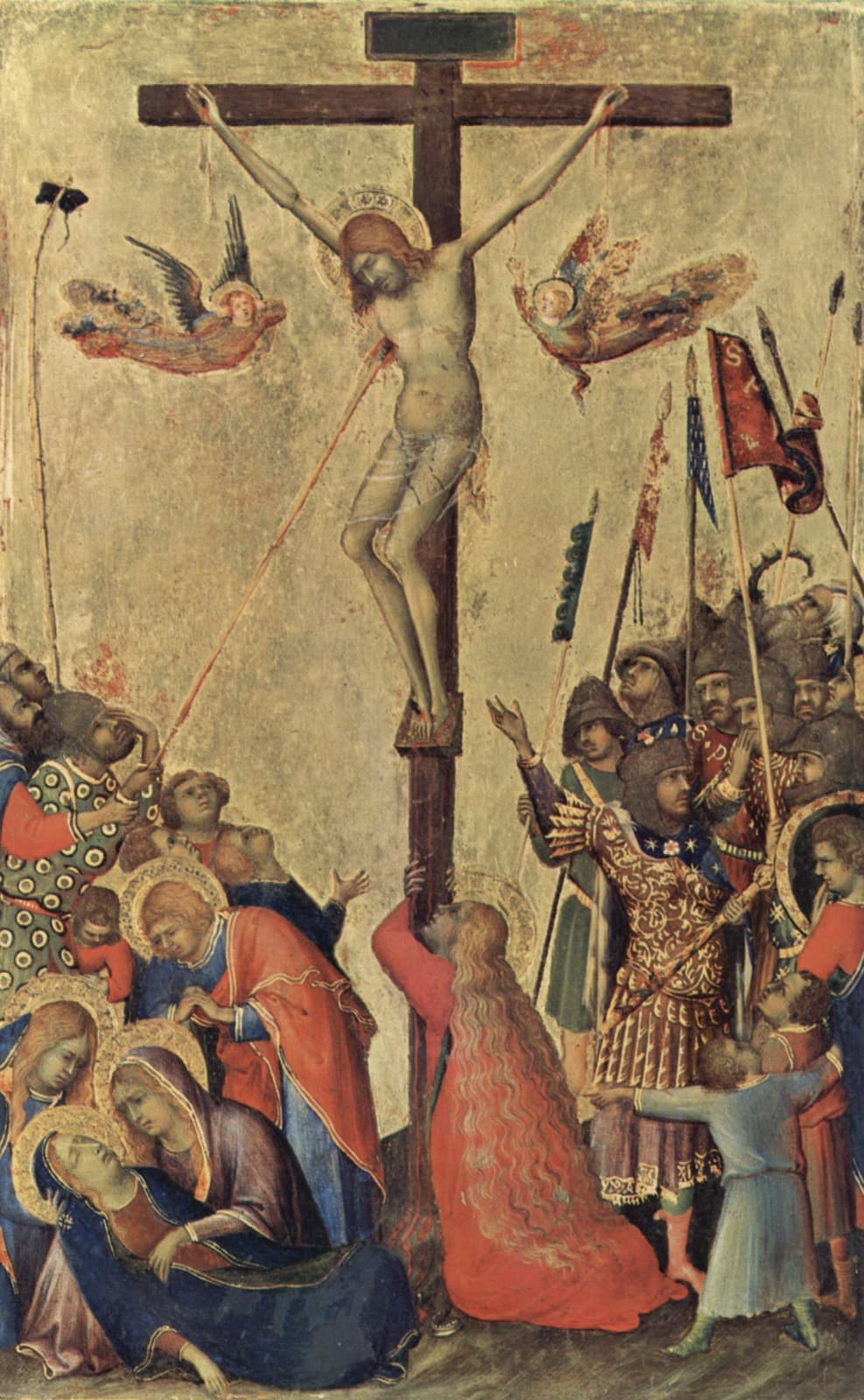
Angels dart and grieve around the cross while the Magdalene, hair loose, kneels to embrace its foot. A leaf from a travelling altarpiece.
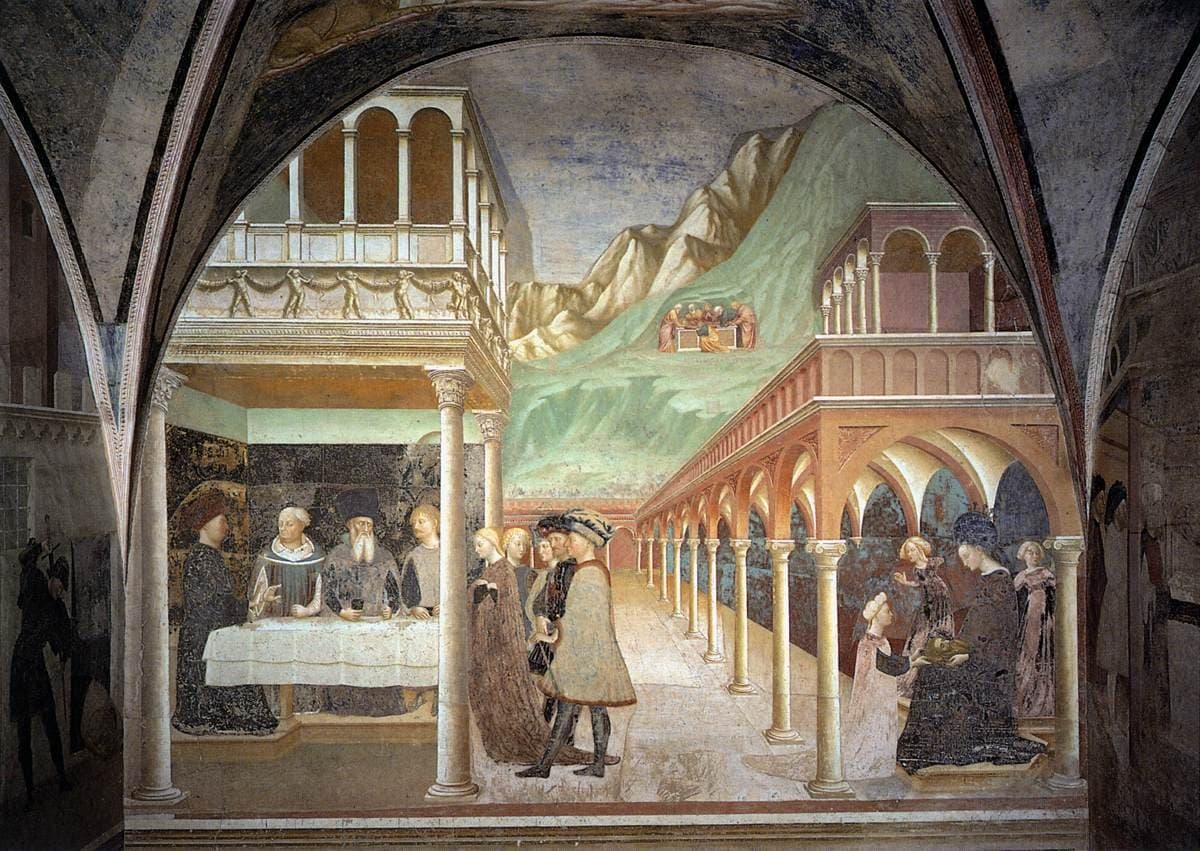
The feast on the left, the severed head delivered on the right, both staged in a colonnade built with Masaccio's new perspective.

Elizabeth sinks down and clasps the pregnant Mary. Ghirlandaio ran the busiest workshop in Florence, and a boy named Michelangelo apprenticed there.

The tiny kneeling figures in the corners are the Nuremberg family who paid for it, inserted so they could share in the grief.
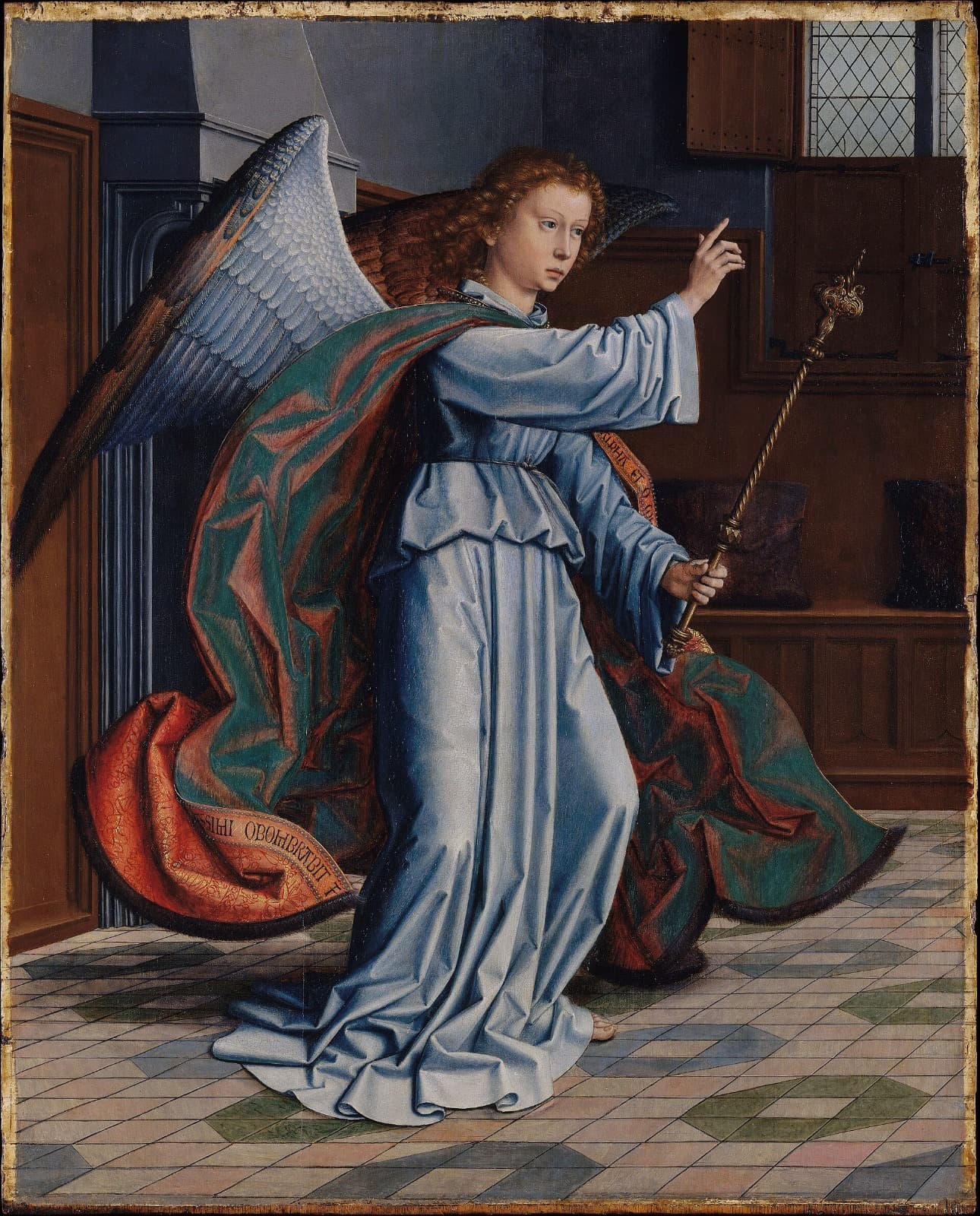
This is only the angel. Mary received the message on a companion panel, and the two now hang together as a pair.