
The Virgin and Child (Ugolino)
1312 · Louvre, Paris
The Child reaches up to grasp the edge of his mother's veil. Ugolino followed Duccio more closely than anyone else did.
★ 3.6
 skopia
The Child reaches up to grasp the edge of his mother's veil. Ugolino followed Duccio more closely than anyone else did.

Overbeck and the Nazarenes lived almost as monks in Rome and painted deliberately like the Italians before Raphael. This is the program.

Late Botticelli, with the early lightness gone tense. He had fallen under Savonarola's spell and his religious pictures never relaxed again.
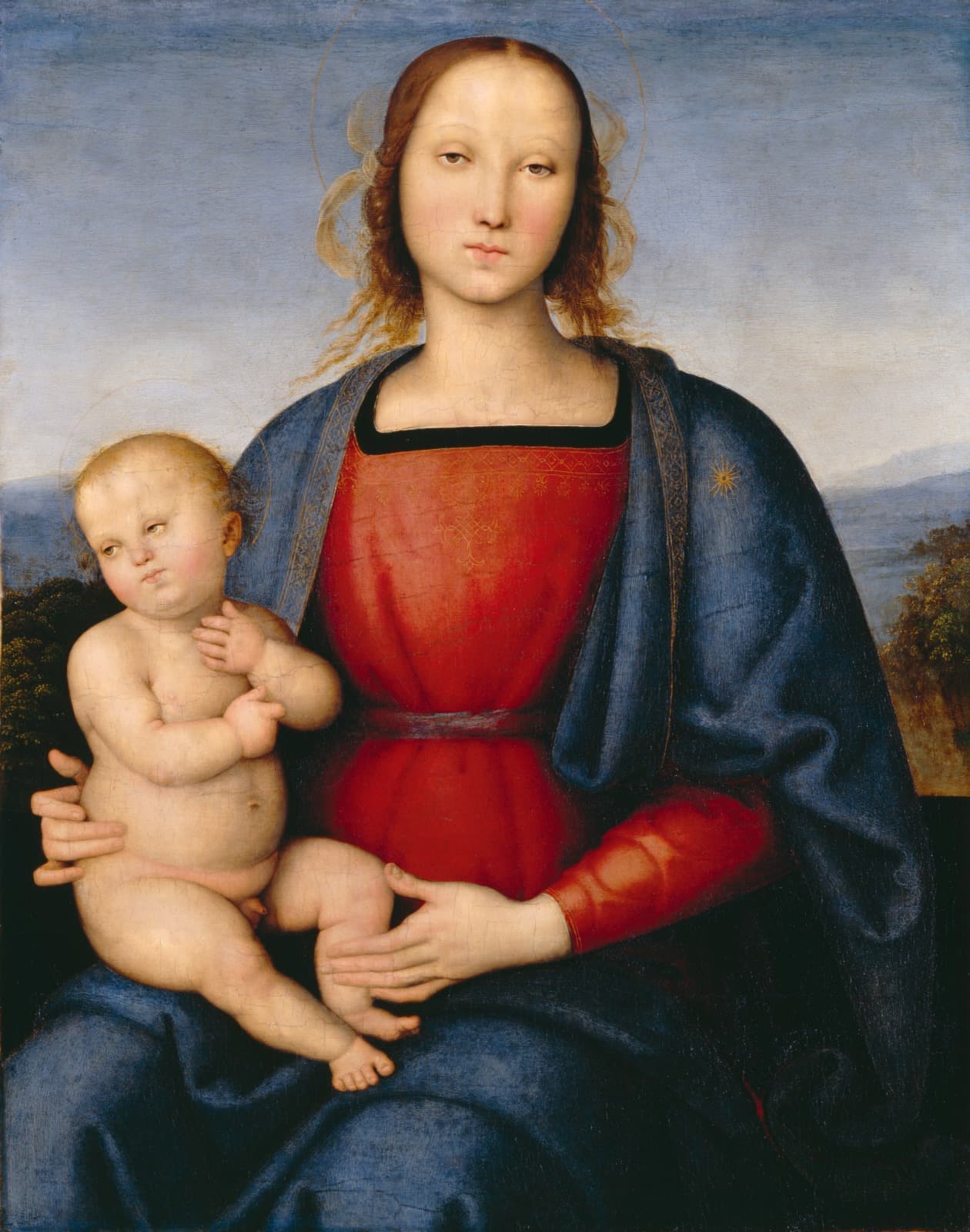
The oval face, the lowered eyes, the Umbrian distance melting into air. Raphael took all of it and then went past it.

Six angels lean in along the throne with their heads tilted, which turns a rigid Byzantine formula into something nearly intimate.
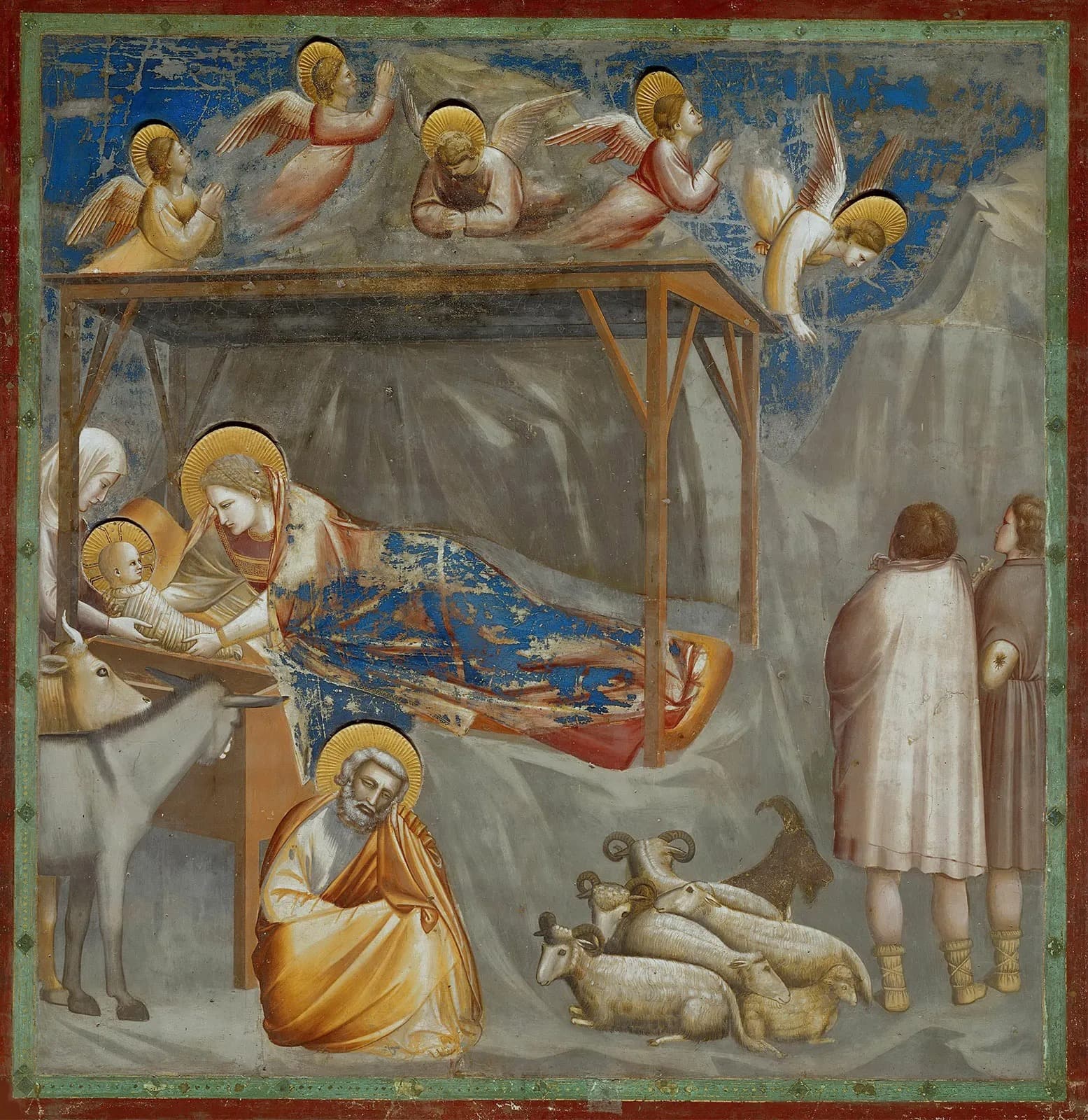
The Virgin lies on the hillside and turns to lay her son in the manger, looking at his face. No gold, just a cold blue sky.

The Child lies on the ground giving off his own light across the straw and his mother's face. One of the first paintings lit from inside.

Joseph reaches up to pull down dates from a palm while Saint Francis kneels at the side, added for the chapel that ordered it.

The Child sits astride a lamb, which is the sacrifice, and Raphael took the interlocking group straight out of Leonardo.
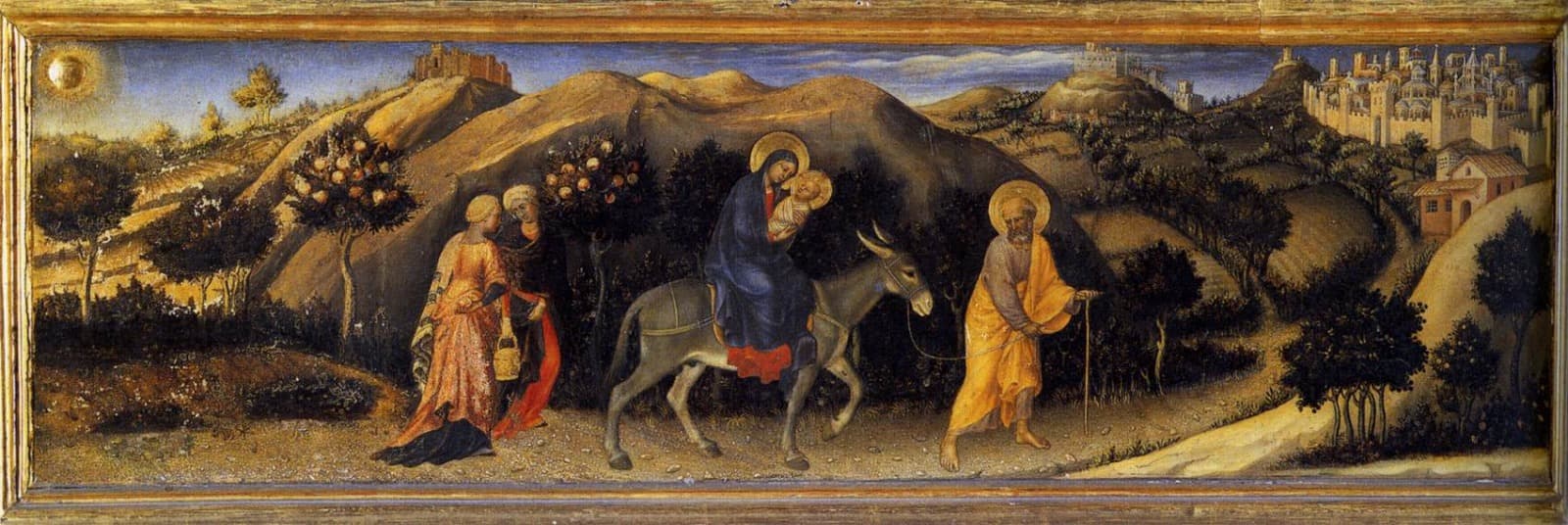
A gilded low sun hangs over the road and the orange trees are heavy with fruit, an early attempt at real morning light across a landscape.

The Virgin offers the Child a bunch of grapes, which stand for the wine of his death, in an exactly observed Flemish wood.
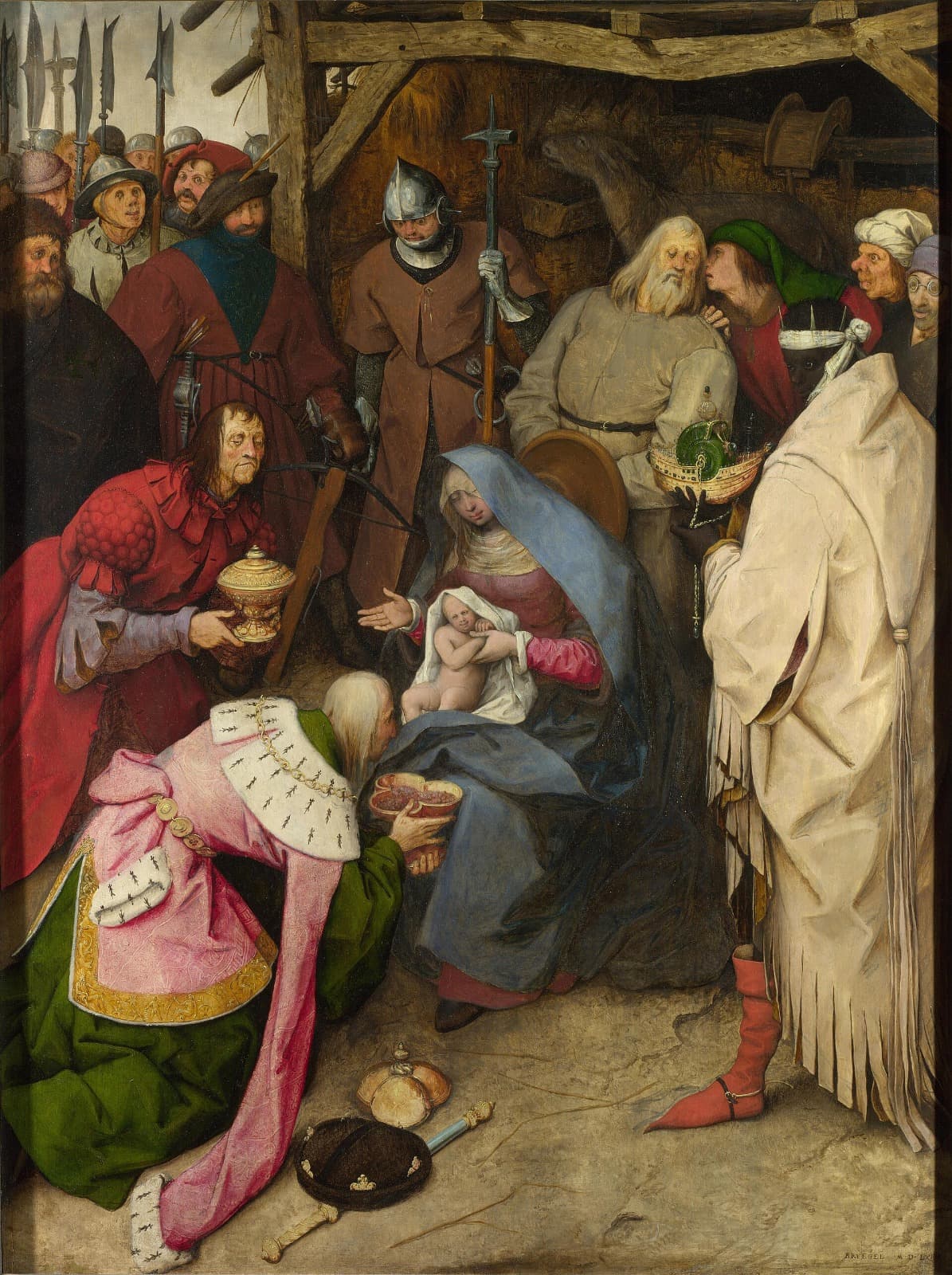
Bruegel gives the holy figures plain faces and surrounds them with gawkers and whisperers, which makes reverence hard to come by.

Giotto had watched Halley's Comet in 1301 and painted the Star of Bethlehem as a comet, apparently the first artist to do it.

The angels crowd in like inquisitive children. One of the first paintings to put the Virgin and saints in a single shared space.
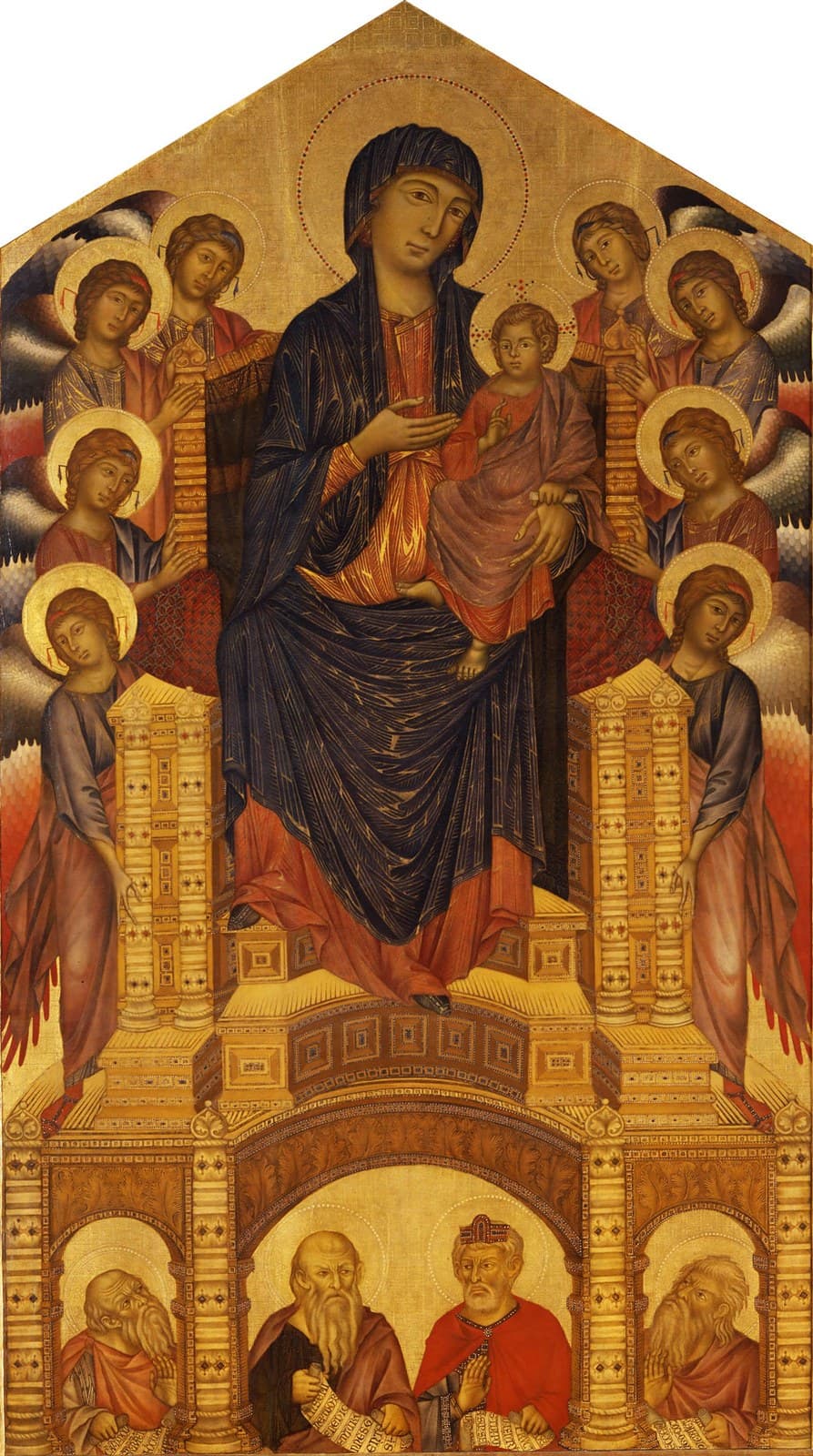
Four prophets peer from arches under the throne holding scrolls that foretell the Virgin Birth, and the throne is angled to suggest depth.

Dürer painted it in Venice to prove a German could beat the Venetians at color, and wrote on it that it took five months.

Luke was the patron saint of painters, and van der Weyden ran the Brussels painters' guild, so this is a tribute to the trade.
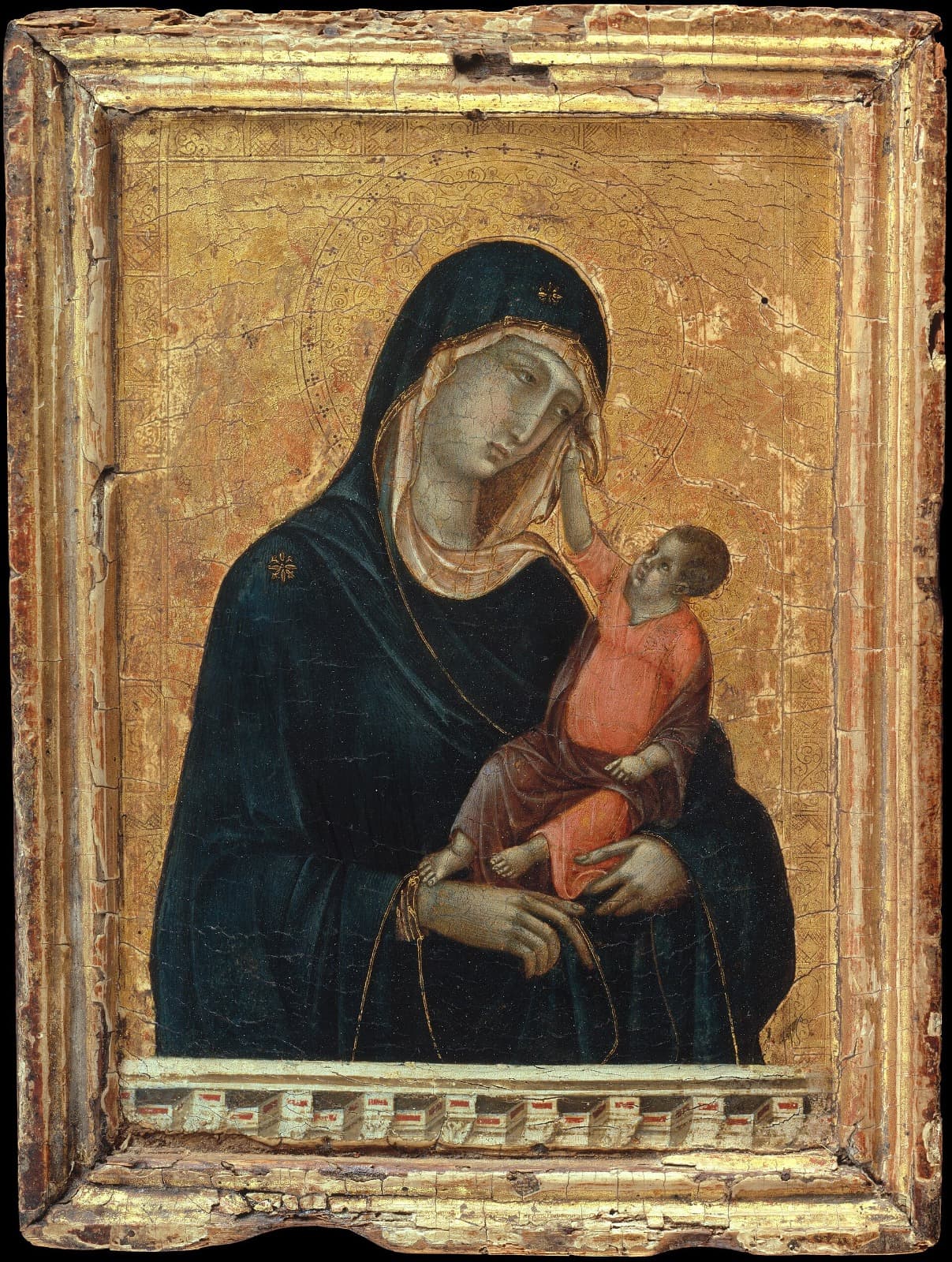
Christ reaches up to push his mother's veil aside. Scorch marks on the original frame record centuries of candles set before it.

The three kings are Medici, and the young man in the saffron cloak at the right, looking straight out at us, is Botticelli.

The little demons carved on the pedestal were taken for harpies and gave the picture its name. Del Sarto was called the faultless painter.