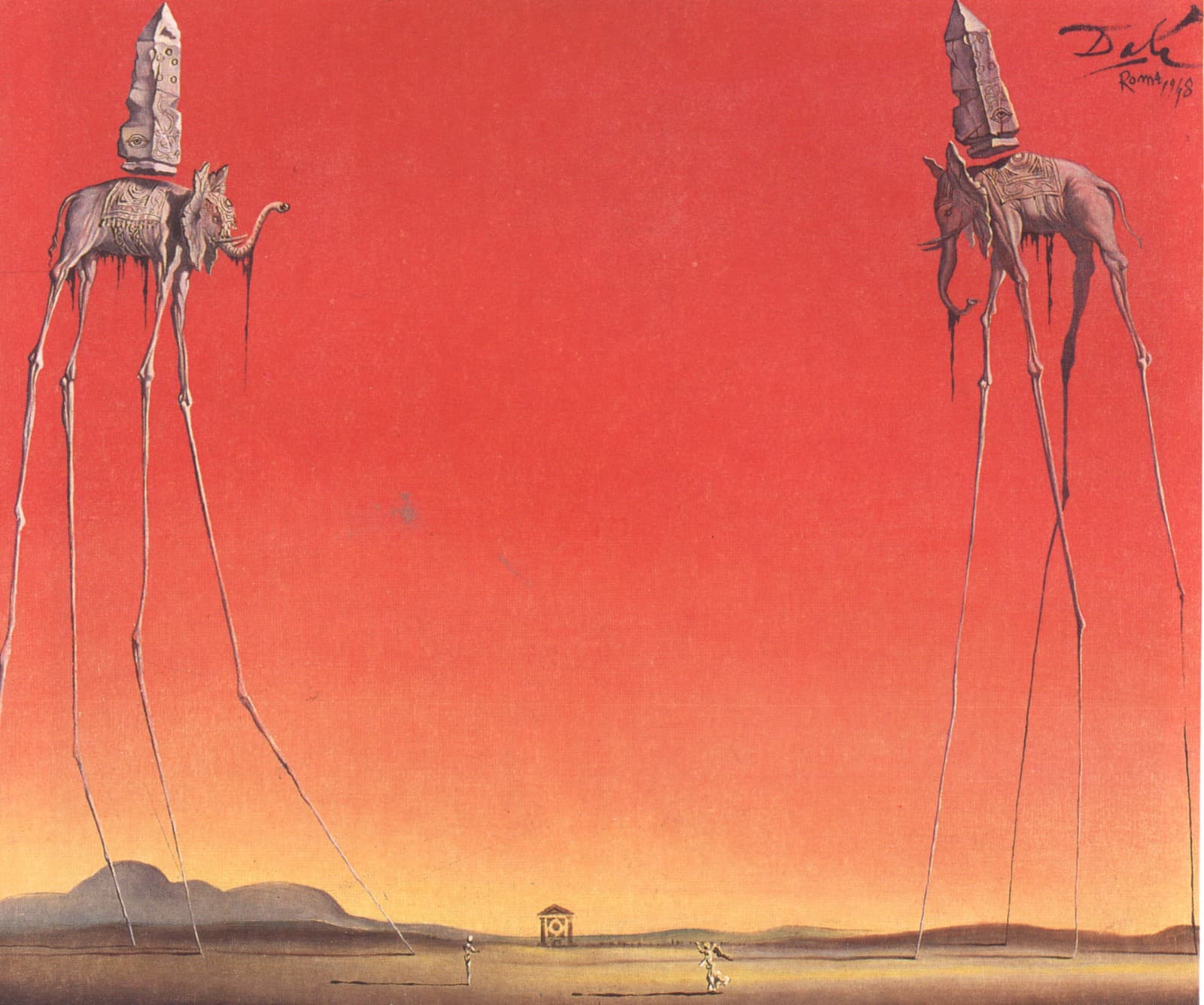
The Elephants
1948 · Private collection
Two elephants carrying obelisks on legs far too spindly to hold them, which is the entire effect and it works.
★ 4.8
 skopia
Two elephants carrying obelisks on legs far too spindly to hold them, which is the entire effect and it works.

Bacon used the shape of the cross as an armature for meat rather than religion, with a snarling animal fixed on top.
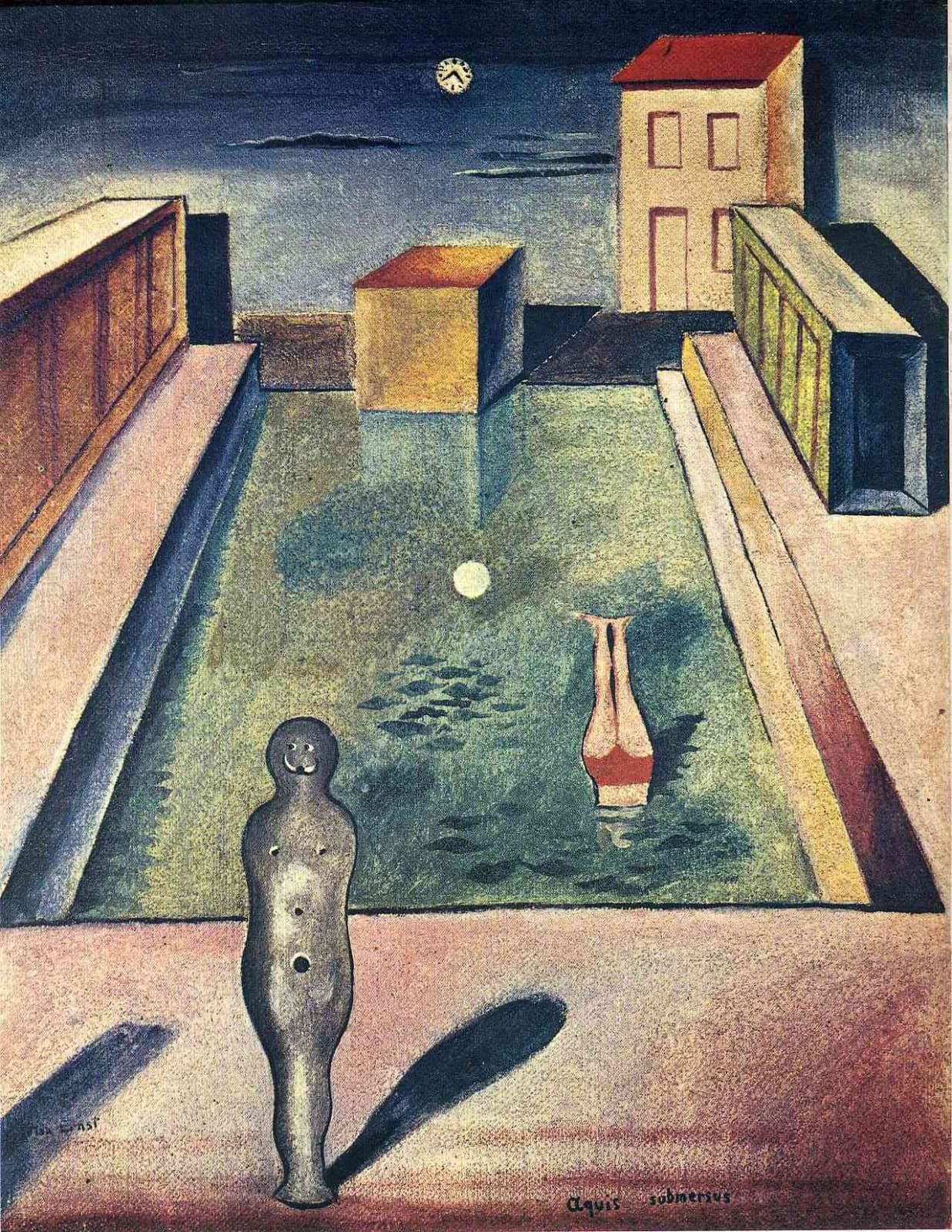
A doll-like figure by a still pool under a tower with a clock face. Ernst had been looking hard at de Chirico's empty squares.
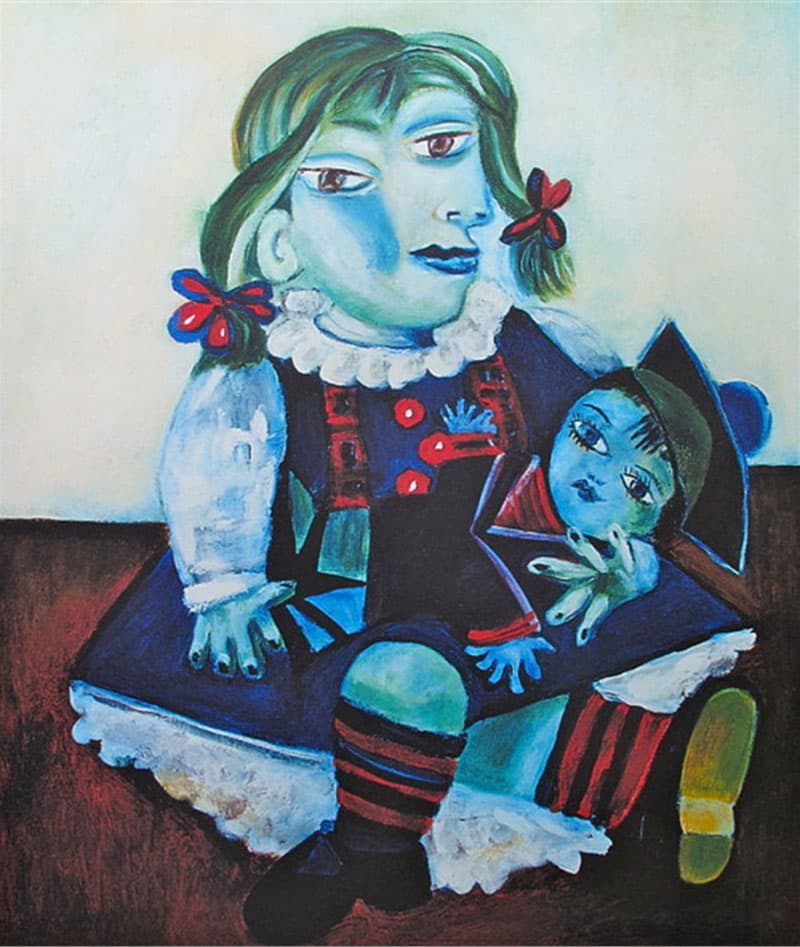
His daughter Maya holding her doll, her face split front and profile at once, the Cubist trick turned warm for once.

Bacon started from a snapshot of a friend dozing in a park and then removed the head, the identity and the ease.

Dalí went back to his own melting watches and broke the ground beneath them into floating bricks, for the atomic age.
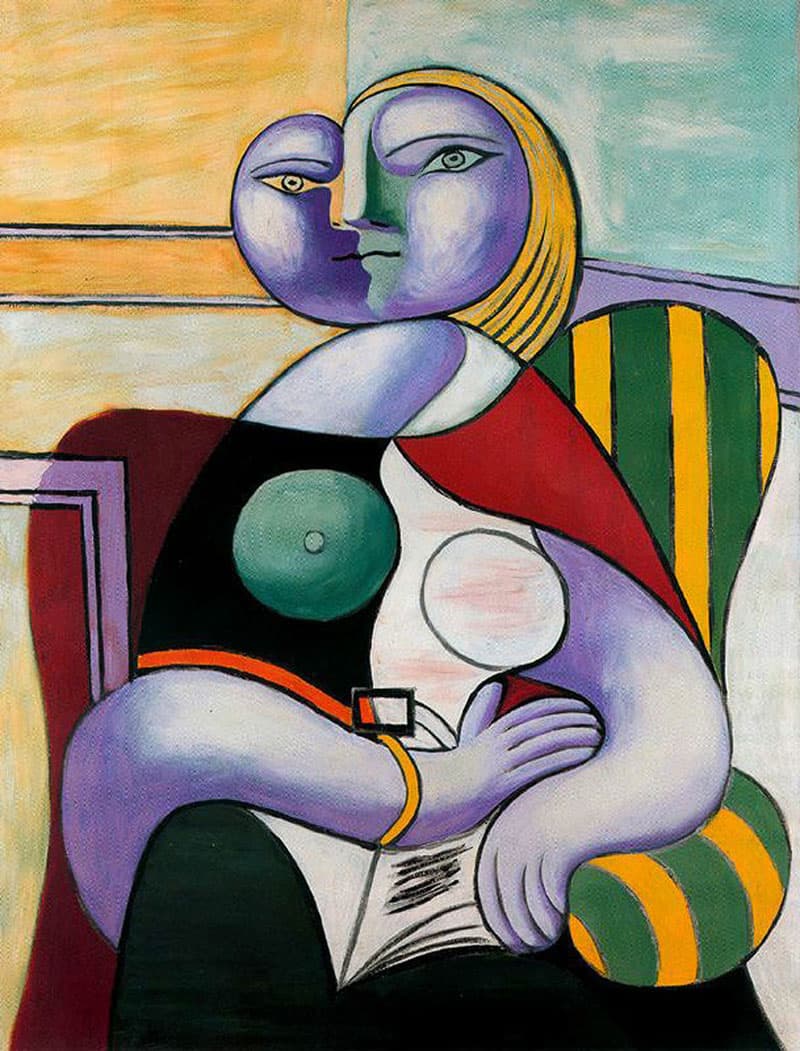
Marie-Thérèse has fallen asleep over her book with her head on her arms, from the year Picasso painted her over and over.
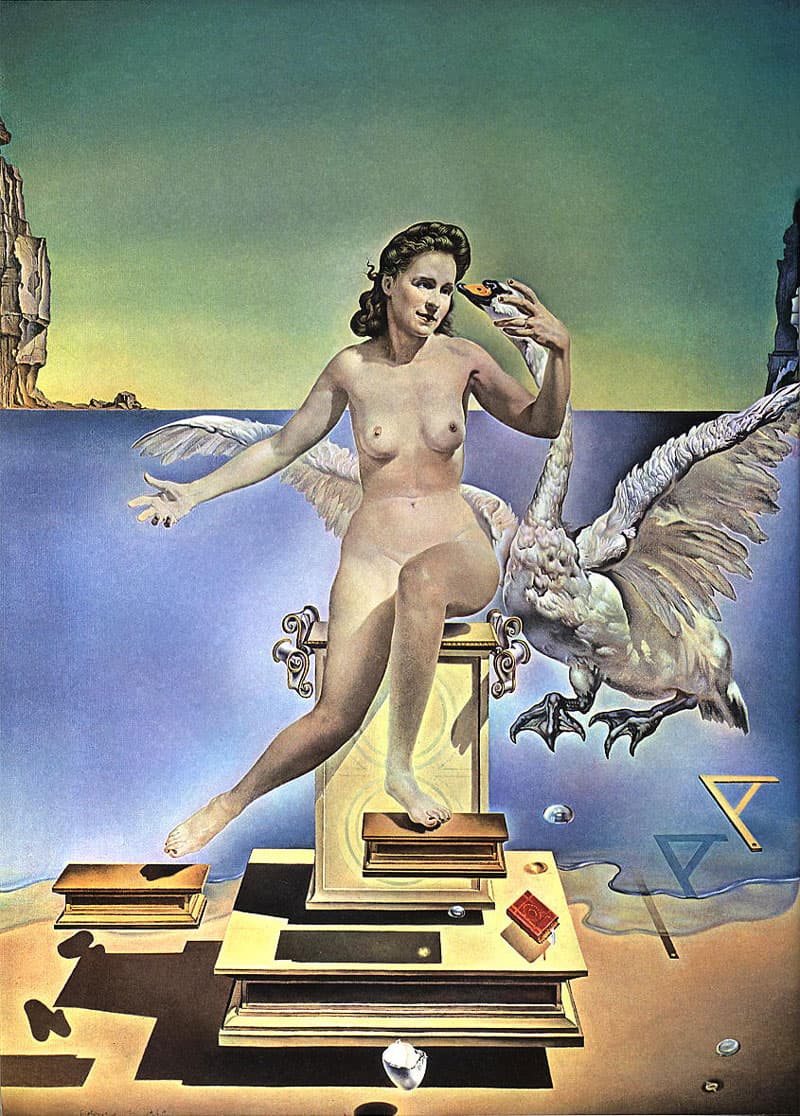
Nothing in the picture touches anything else. Dalí built it on the physics of the atom, where matter is mostly empty space.

A cannon points across a room whose walls are panelled with samples of the world: sky, wood grain, fire, bells, a woman's torso.

Three swans on a lake, and in the reflection the necks have become trunks and the trees have become legs.
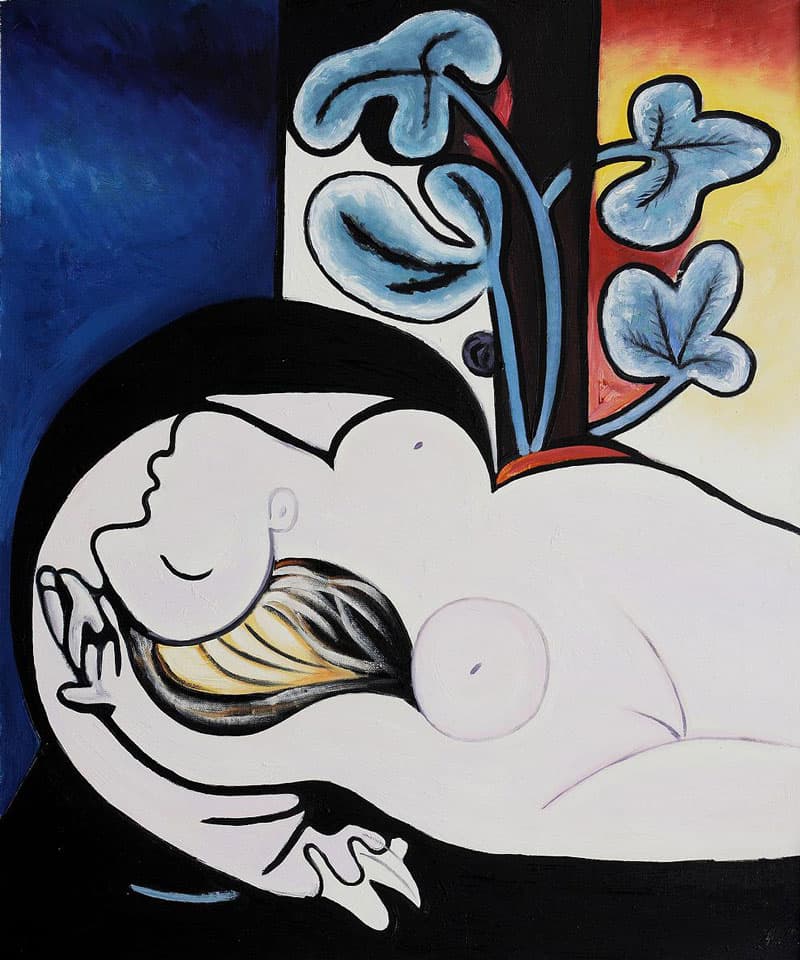
The dark chair throws the body forward, all lilac and rose curves, a plant arching over the sleeper from behind.
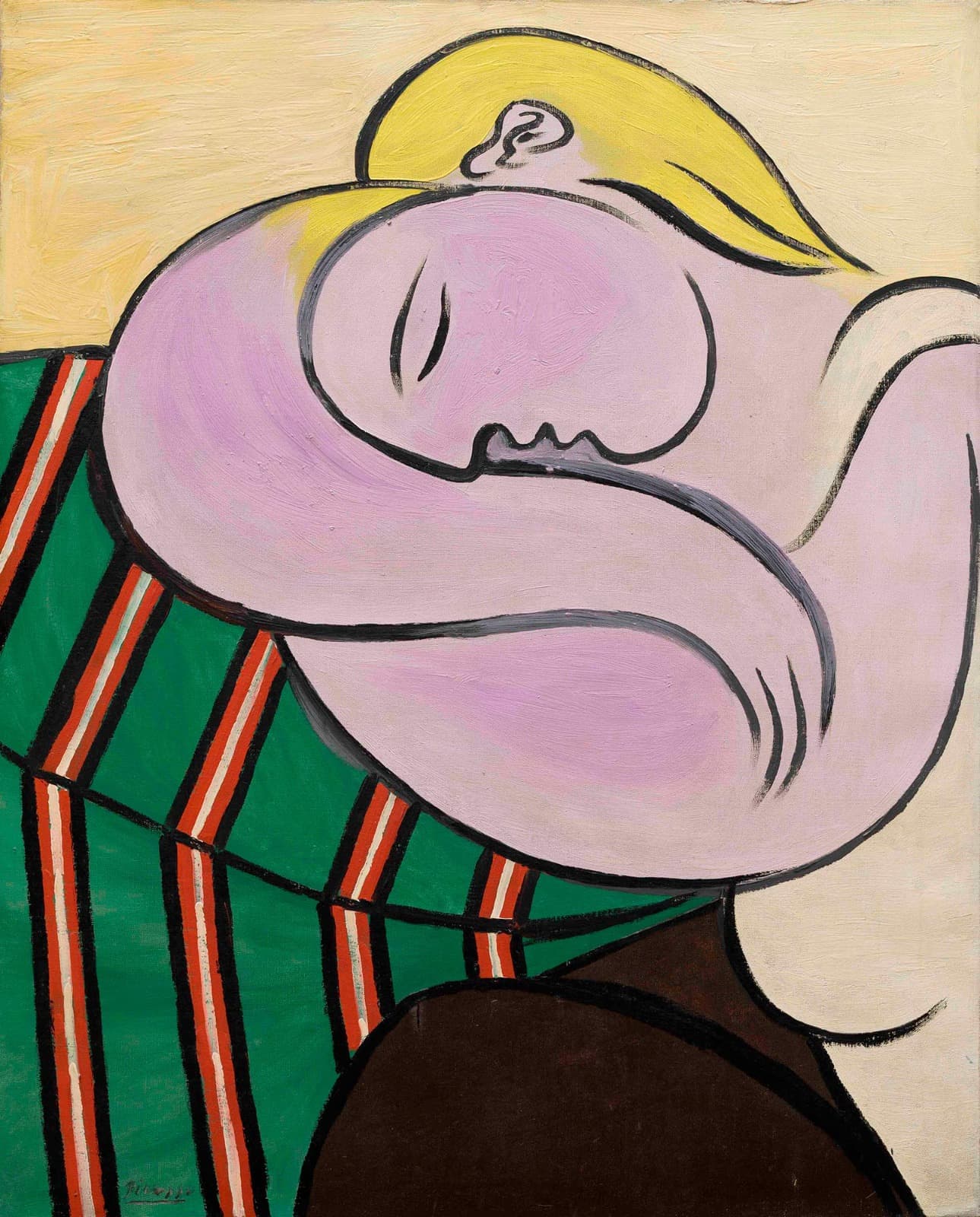
Marie-Thérèse asleep with her head on her arms, the angular violence of Cubism gone soft and curved for a few years.

A bride in red floats through the blue night with a goat playing a cello beside her. Many people know it from a film.

Elephants on impossibly long insect legs carry obelisks and naked women across the plain while the saint holds up a makeshift cross.
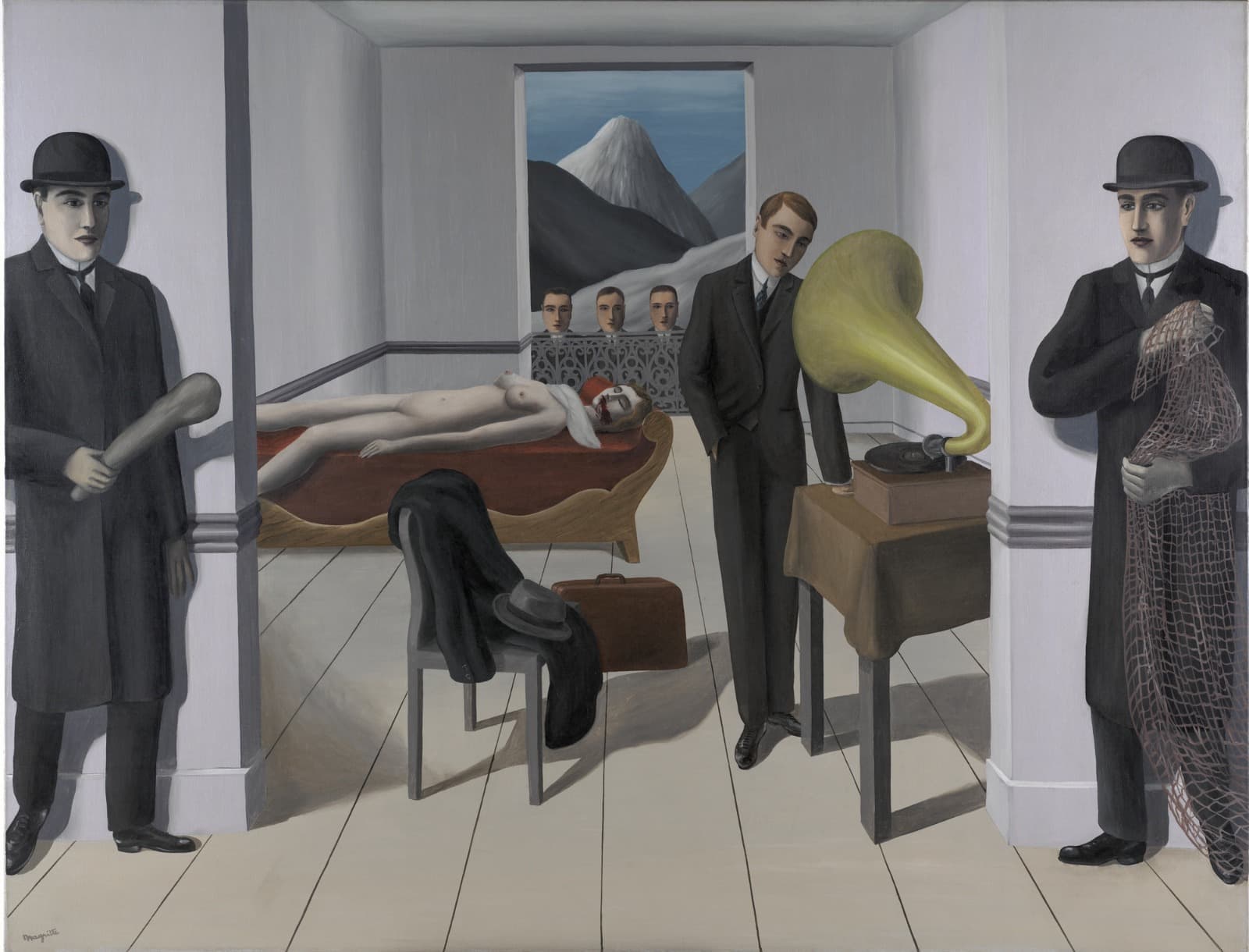
A murdered woman on a divan, a calm man listening to a gramophone, and two men with a club and a net waiting outside the door.

Splintered stumps and shell craters under a cold sun, and Nash gave it that title on purpose, as an official British war artist.

The room is a twelve-sided glass chamber and a torso hovers over the table. Dalí called this sort of thing nuclear mysticism.

Ernst made the eaten-away textures by pressing and lifting paint, working on it while fleeing occupied Europe for America.

Marie-Thérèse asleep in a red armchair, her face split into curves. Picasso is said to have done it in a single afternoon.

The kneeling figure on the left is the same shape as the stone hand on the right, holding an egg with a flower coming out.