
The Adoration of the Magi
1813 · Kunsthalle, Hamburg
Overbeck and the Nazarenes lived almost as monks in Rome and painted deliberately like the Italians before Raphael. This is the program.
★ 4.2
 skopia
Overbeck and the Nazarenes lived almost as monks in Rome and painted deliberately like the Italians before Raphael. This is the program.

An old man on two sticks, with Aun aprendo written underneath. Goya drew it in exile and failing health, near the end.

Eden on one side of the rock arch, blasted wilderness on the other, and Cole lets the landscape carry the entire moral argument.
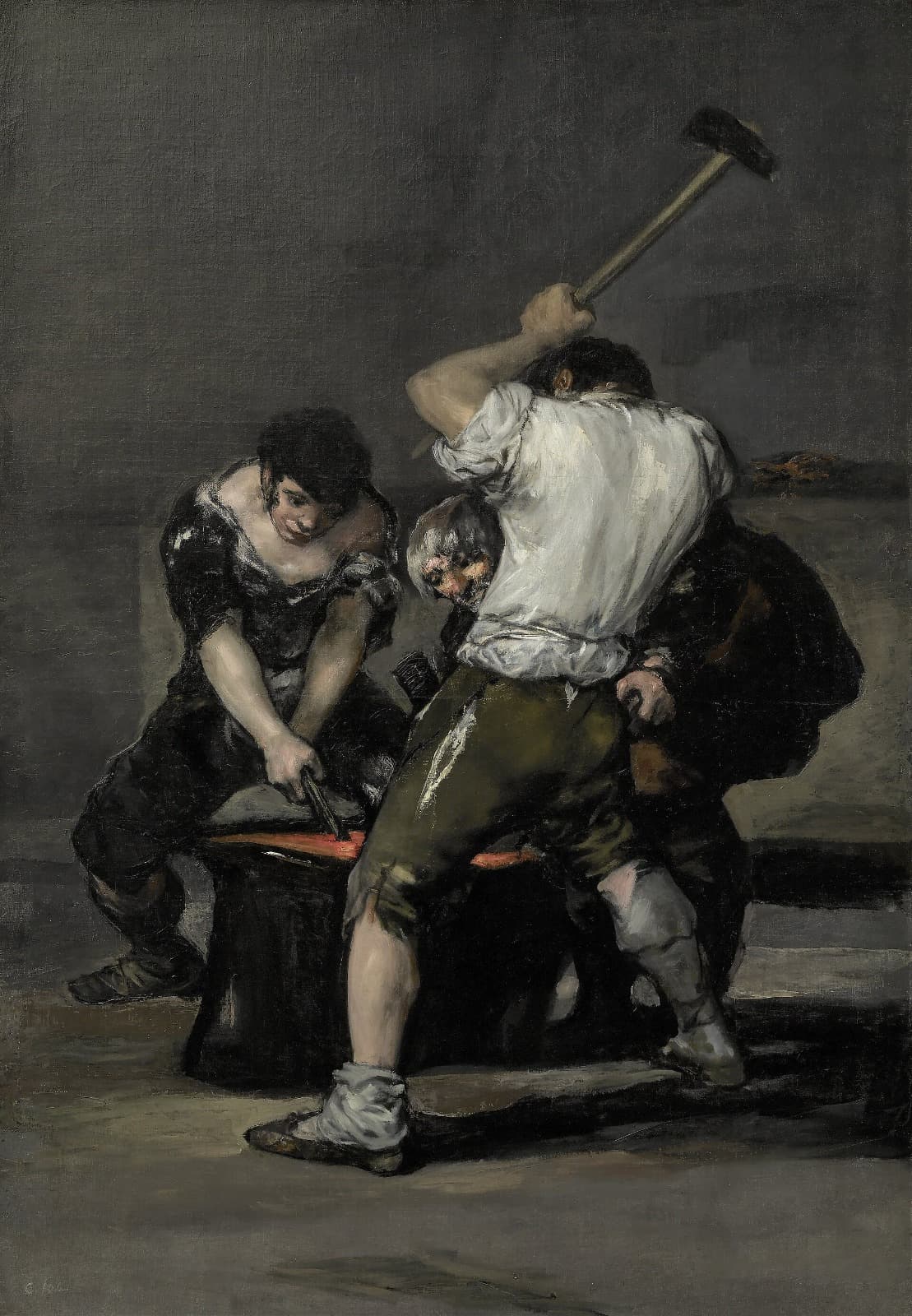
Three smiths at a forge, one hammer at the top of its swing. Goya gave laboring men the scale usually kept for gods and kings.
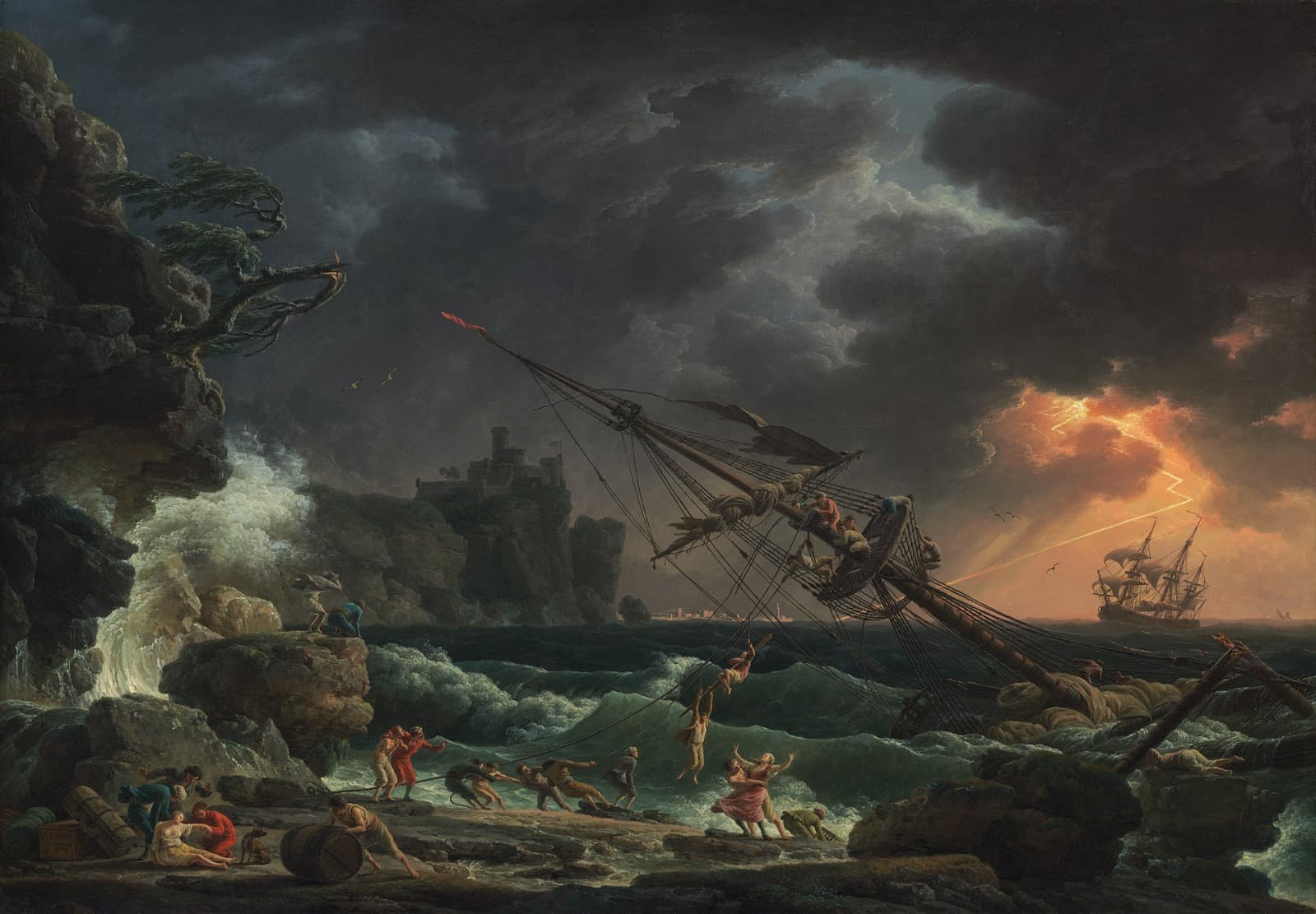
Masts splintering, survivors in the surf, and the whole thing arranged for people who wanted to feel terror from a safe distance.
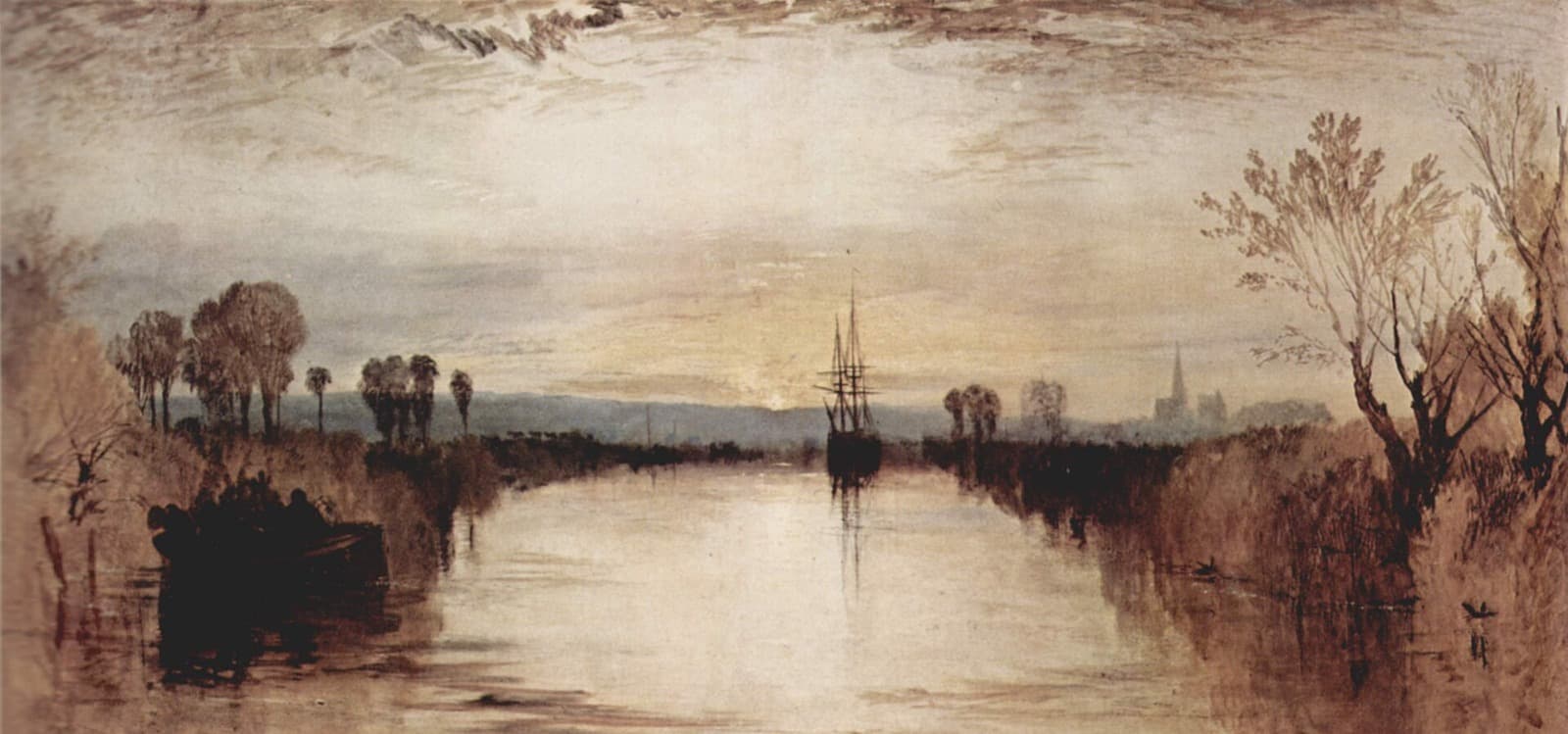
Masts stand black against a sky going from gold to soft blue, and almost nothing else in the picture is solid.

An artist weeps beside a colossal marble foot and a pointing hand, defeated by the size of what antiquity had already managed.

A packet boat comes in at evening and Turner dissolves the city, the passengers and the river into a single sheet of gold.

The Roman Forum was a cattle pasture when Turner painted it, and he let the columns of empire evaporate into gold air.
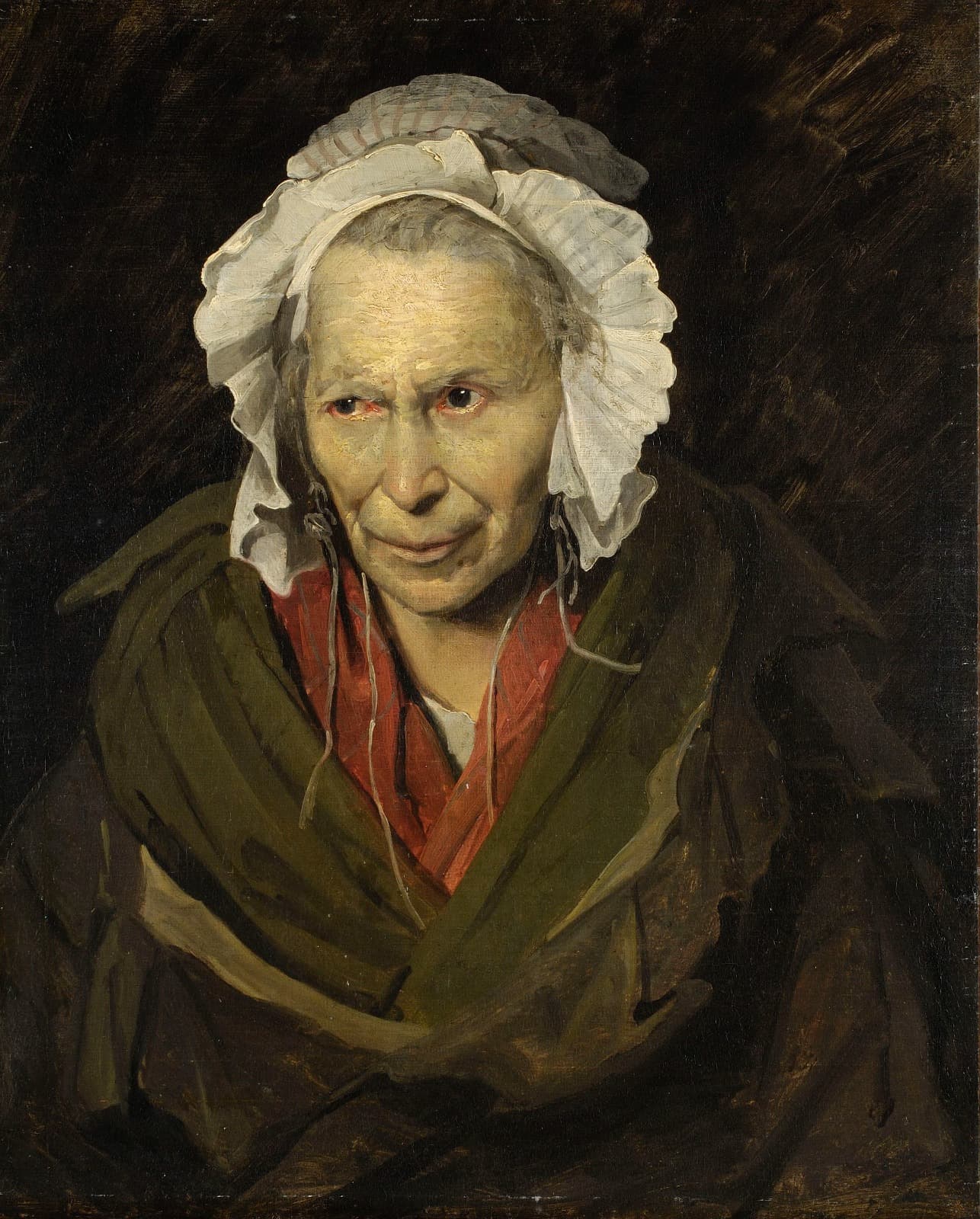
One of a series Géricault painted of asylum patients for a doctor studying obsession, and he gave her the seriousness of a commissioned portrait.

Courbet at twenty-six, lunging at the viewer with both hands in his hair and his eyes wide. Half self-portrait, half performance.

Two women in white smile out from the railing while two men in dark cloaks stand behind them in the shadow, watching.
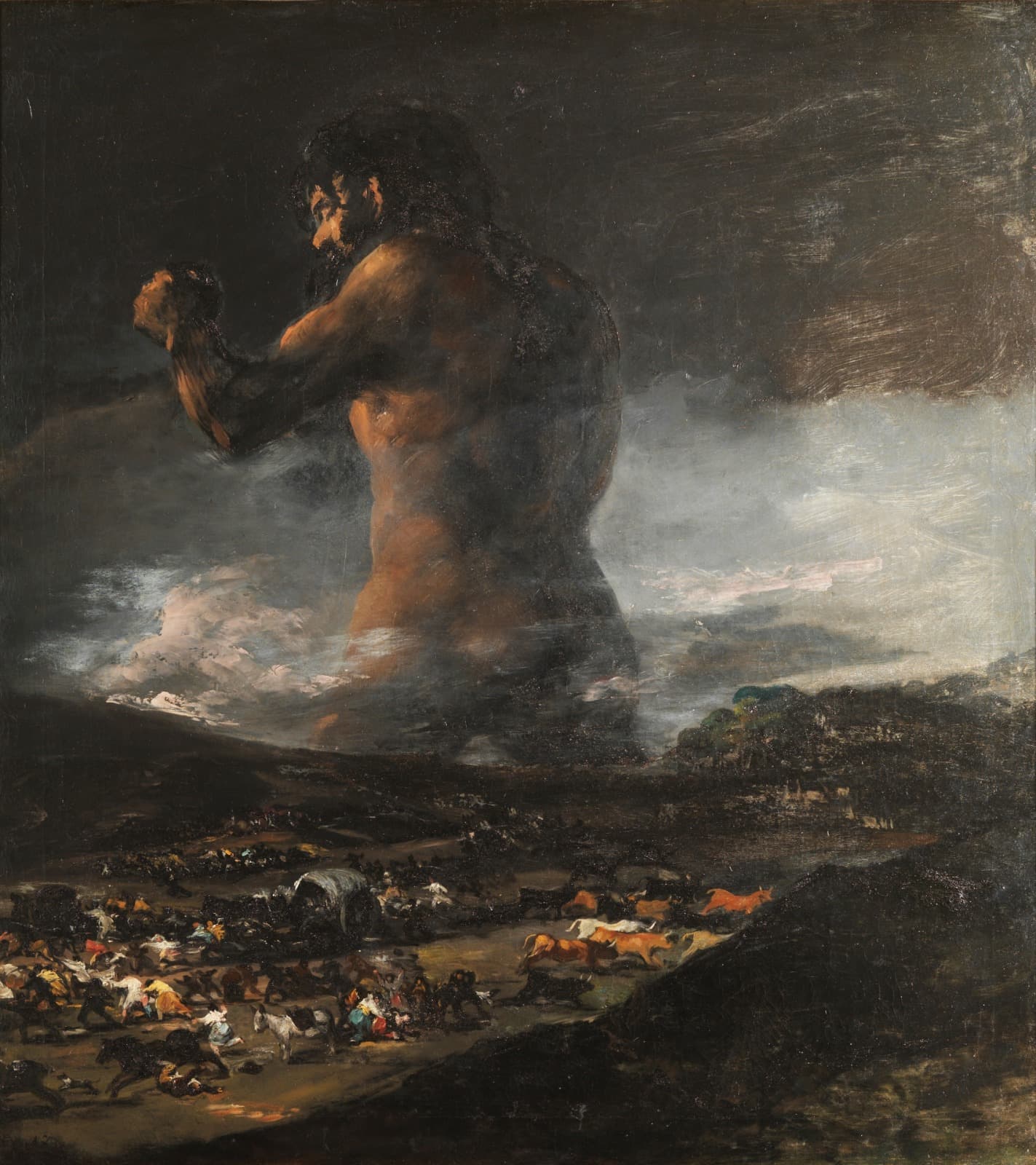
A giant stands with his head in the clouds while everything below scatters. Whether Goya actually painted it is now disputed.

Delacroix's debut, and the damned are biting the hull. Romanticism announced itself with churning water and bodies learned from Rubens.
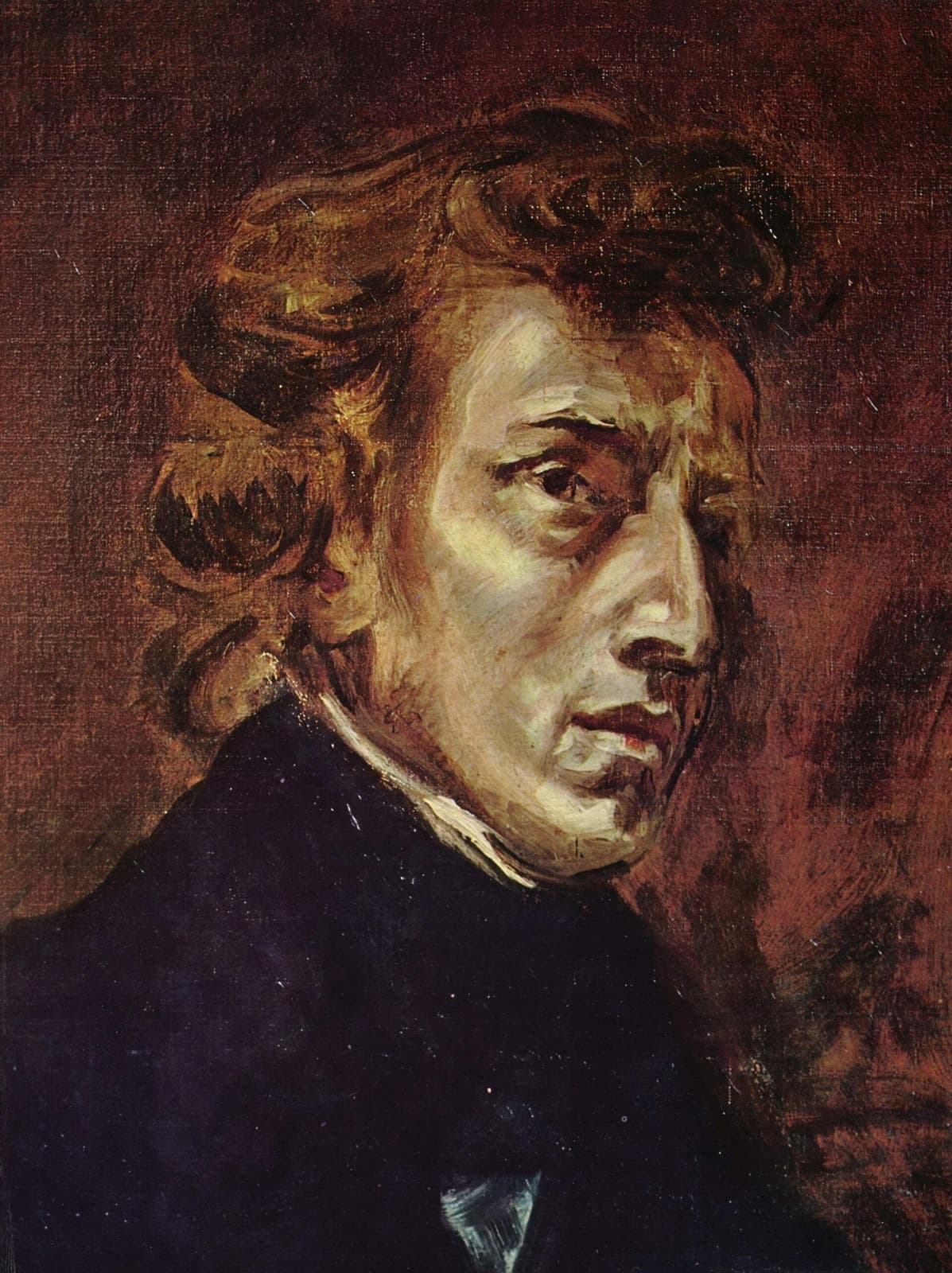
It was half of a double portrait with George Sand listening at the piano, until somebody cut the canvas in two.

The same woman, same cushions, same pose, now dressed. It is thought to have hung in front of the nude and slid aside.

Three figures at the lip of a white chalk drop, painted around the time of his marriage, the eye pulled out to sea and straight down.

Blake's Urizen leans out of the sun with a golden compass to measure the void, and Blake was not sure whether to admire him.

Brook Watson really did lose a leg to a shark in Havana harbor, and Copley put a Black sailor at the top of the rescue.
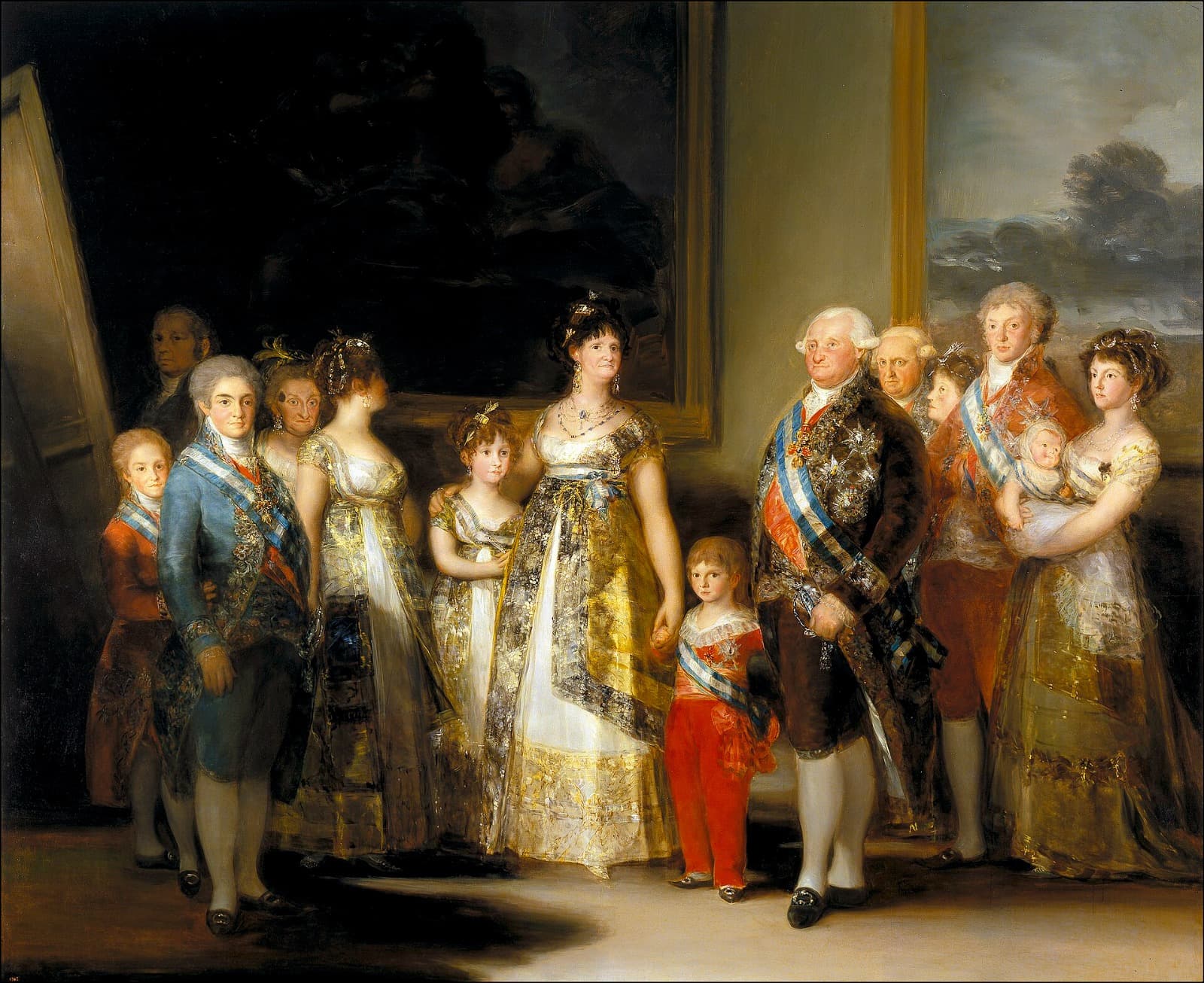
Goya put himself at an easel in the shadows, as Velázquez had, and painted the royal family looking vacant, pompous or merely plain.