
Woman Bathing Her Feet in a Brook
1895 · Art Institute of Chicago, Chicago
A woman sits on the bank and puts her bare feet in the water, the whole stream broken into flickering touches of color.
★ 5.2
 skopia
A woman sits on the bank and puts her bare feet in the water, the whole stream broken into flickering touches of color.

Boats and masts broken into tilting green and brown planes, painted while Braque and Picasso were building Cubism out of Cézanne.

Red New Mexico hills roll across the canvas with a few flowers brought right up close, the vast and the fragile in one frame.
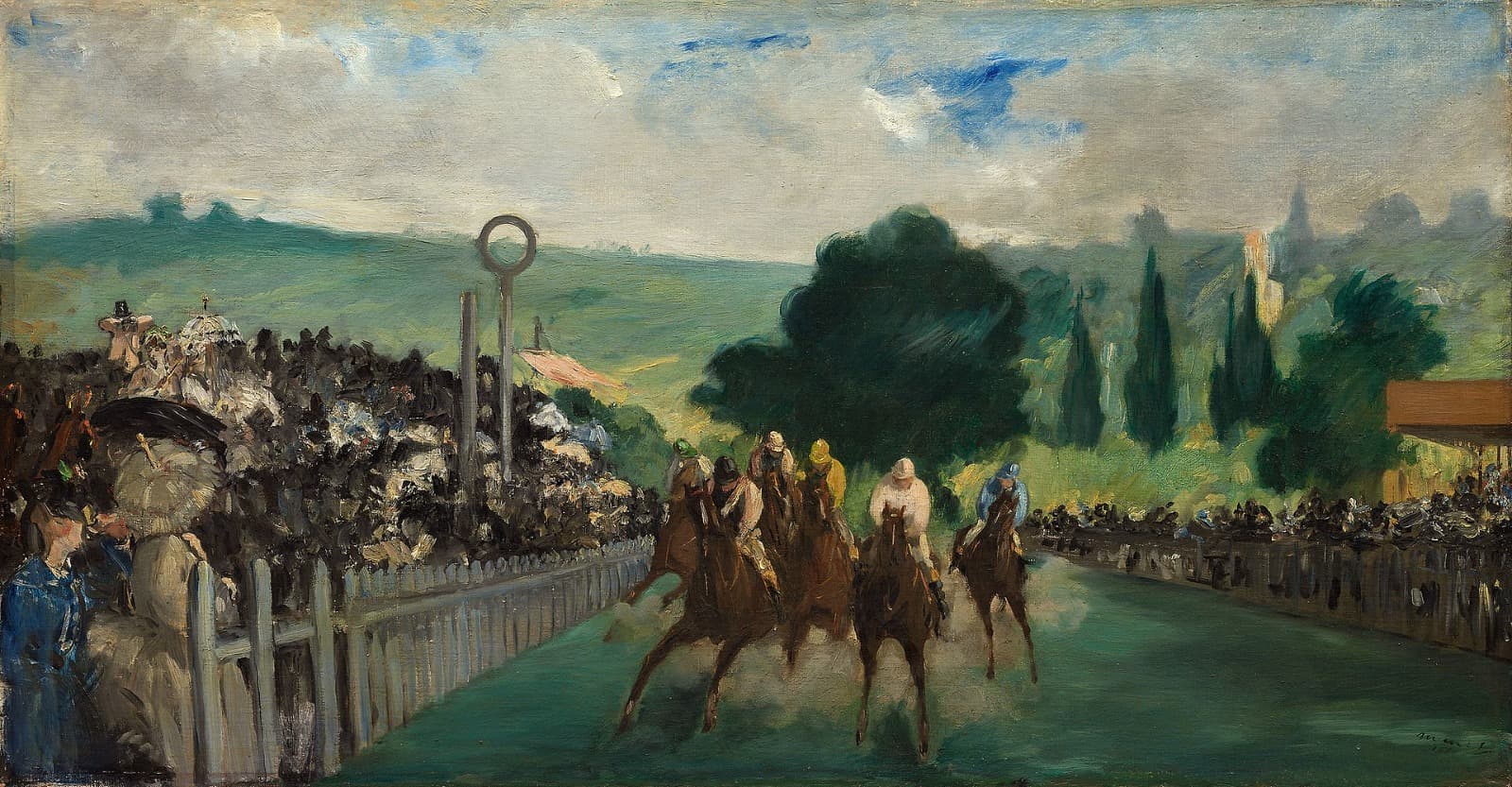
The horses come straight at you instead of across the frame, which nobody painting racehorses had bothered to try.

A cannon points across a room whose walls are panelled with samples of the world: sky, wood grain, fire, bells, a woman's torso.

Goyo oversaw every stage of his prints himself and finished only a handful before dying young. This is the one everyone knows.

Two women with parasols on a clifftop in Normandy, the grass and their dresses going the same direction as the wind.
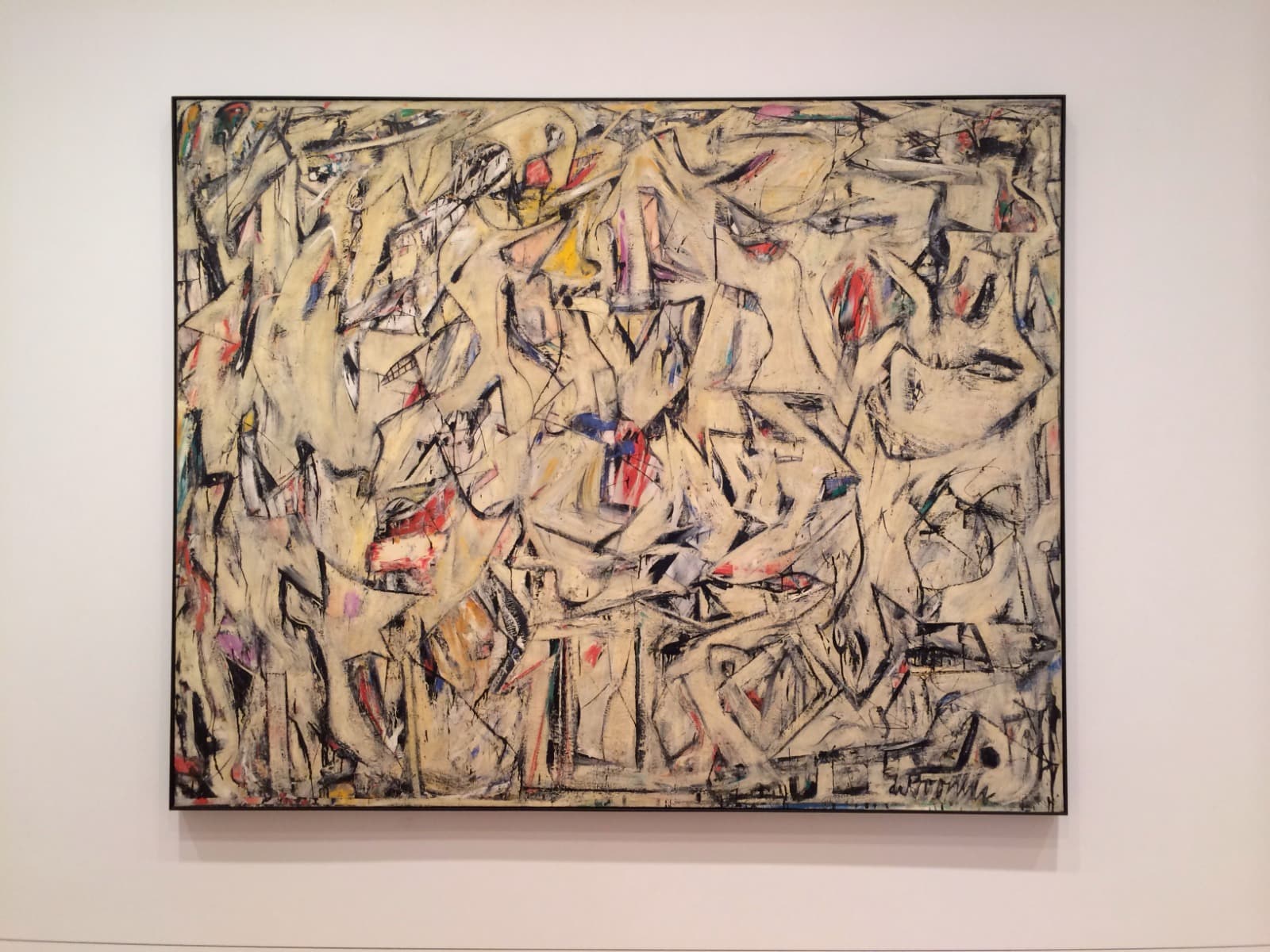
Hooks and curves fill the canvas edge to edge with no center to rest on, and teeth and jaws keep surfacing out of the mass.

A basket of colored wool sits in the front, the Seine glitters behind, and the whole thing is about how good an afternoon can be.
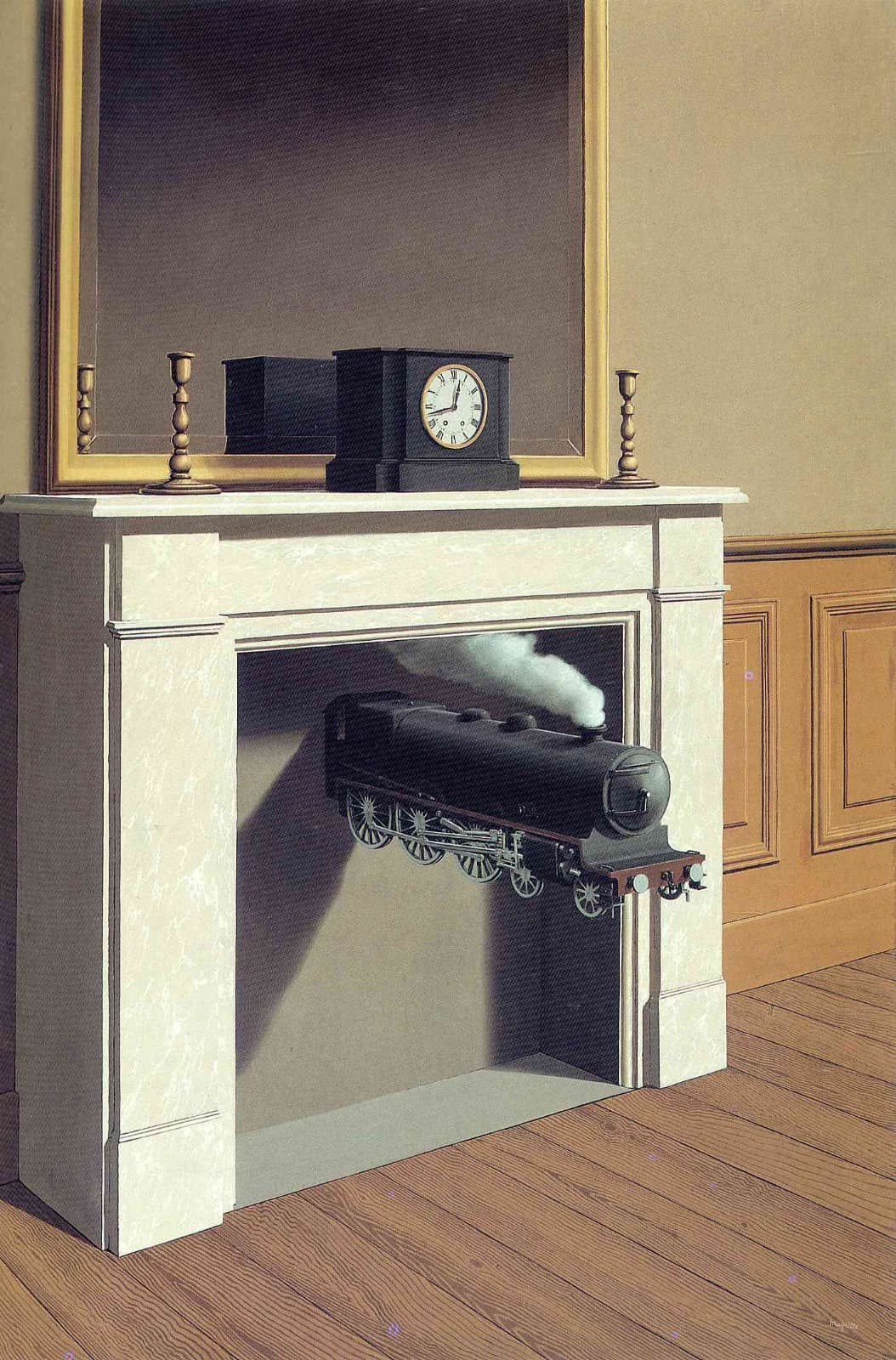
A small steam locomotive comes out of a fireplace under the mantel clock, and the room around it is otherwise entirely ordinary.

A woman washes a child's feet in a basin, seen from above, the wallpaper and rug pushing everything flat as a Japanese print.
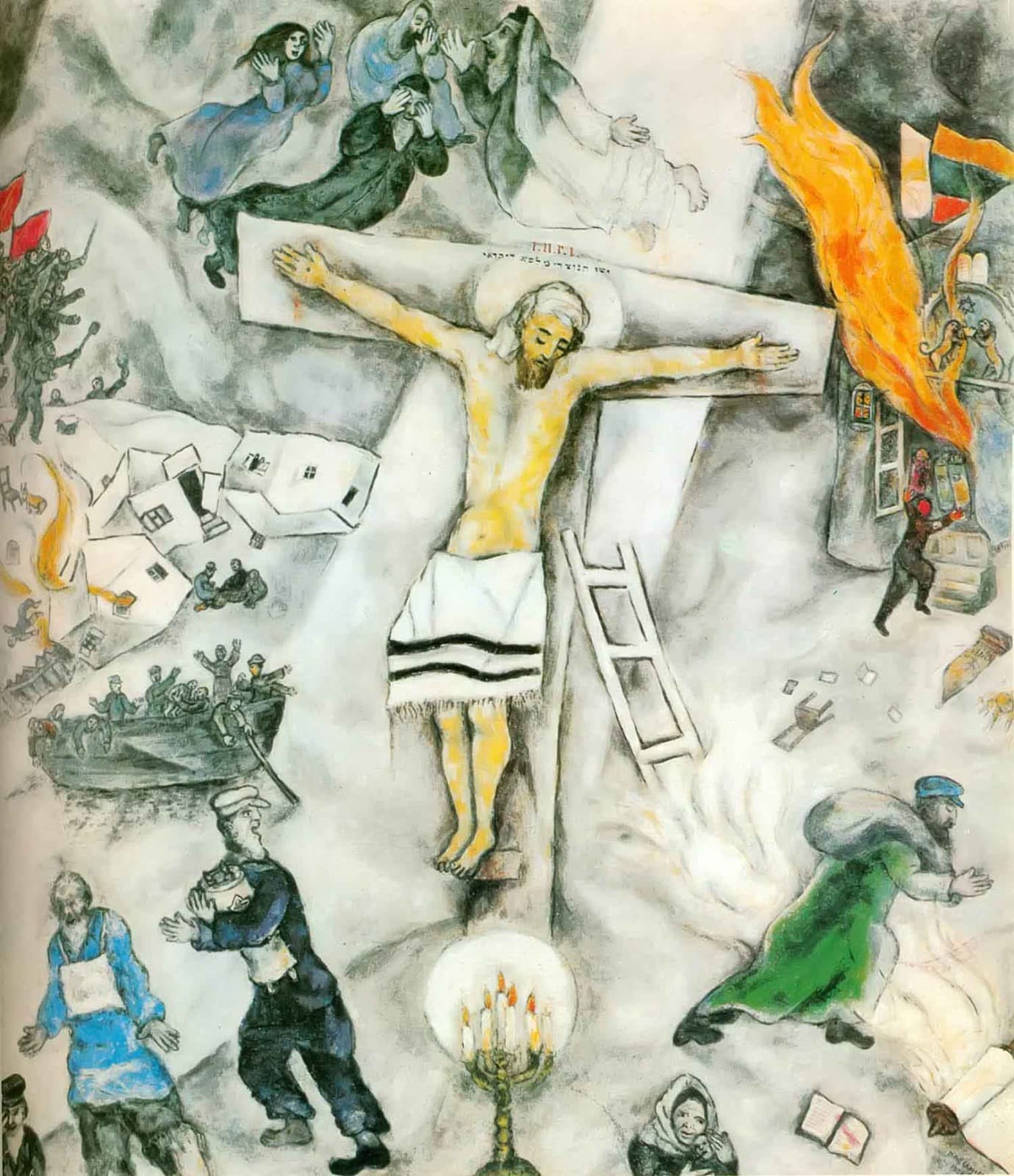
Christ wears a Jewish prayer shawl while a synagogue burns and refugees flee by boat. Chagall painted it in 1938, watching what was coming.

Monet painted the same stacks near his house at every hour and season, so that what changes from canvas to canvas is only the light.

Umbrellas cross the wet cobbles of Haussmann's new boulevards, composed with a photographic exactness his Impressionist friends had no use for.
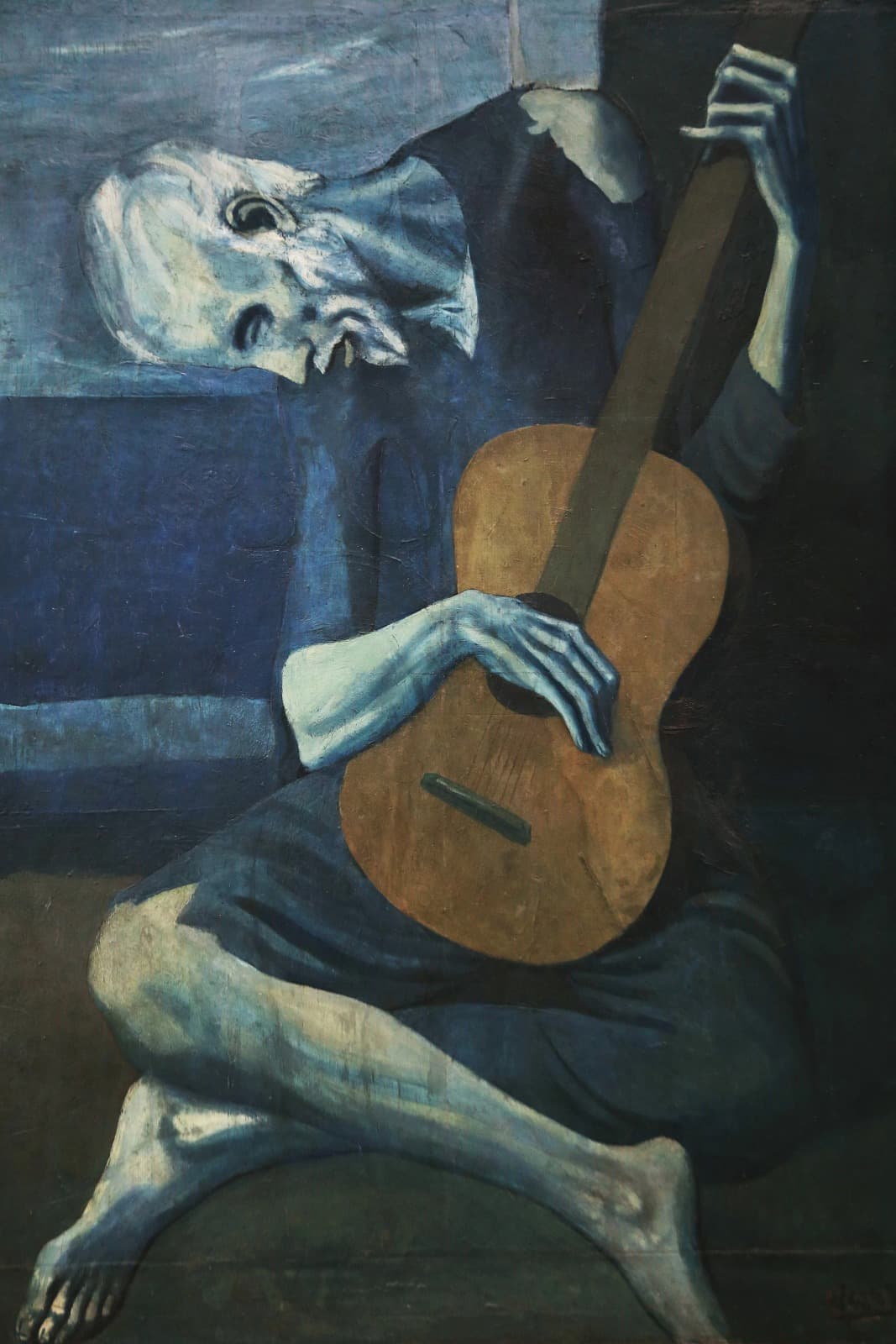
The guitar is the only warm note in the picture. Picasso painted it in his Blue Period, poor himself and living on very little.
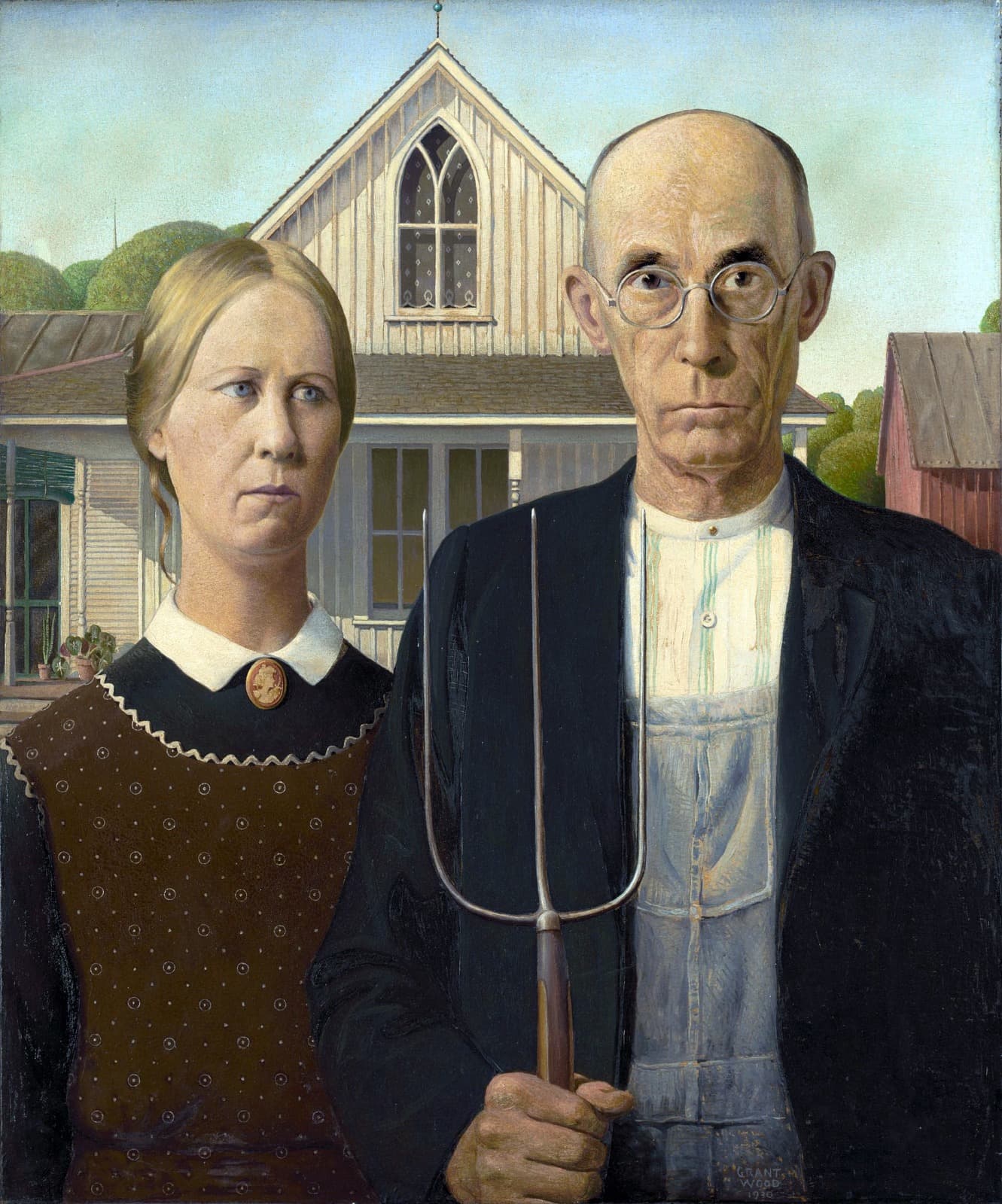
Wood posed his sister and his dentist in front of a farmhouse window, and people have argued ever since whether he meant tribute or mockery.
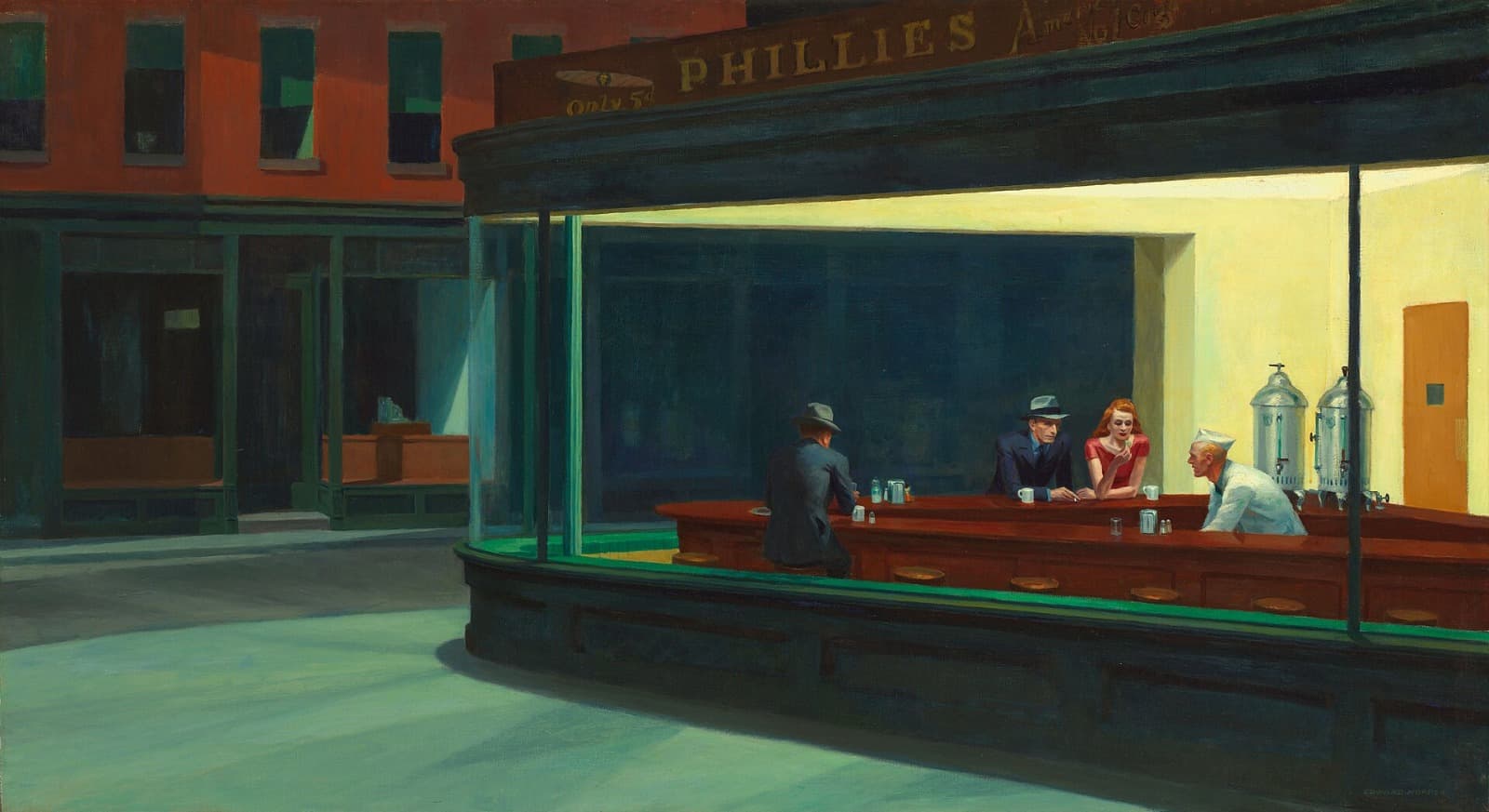
Four people sit under fluorescent light behind a curved sheet of glass, and Hopper gave the diner no door in or out.
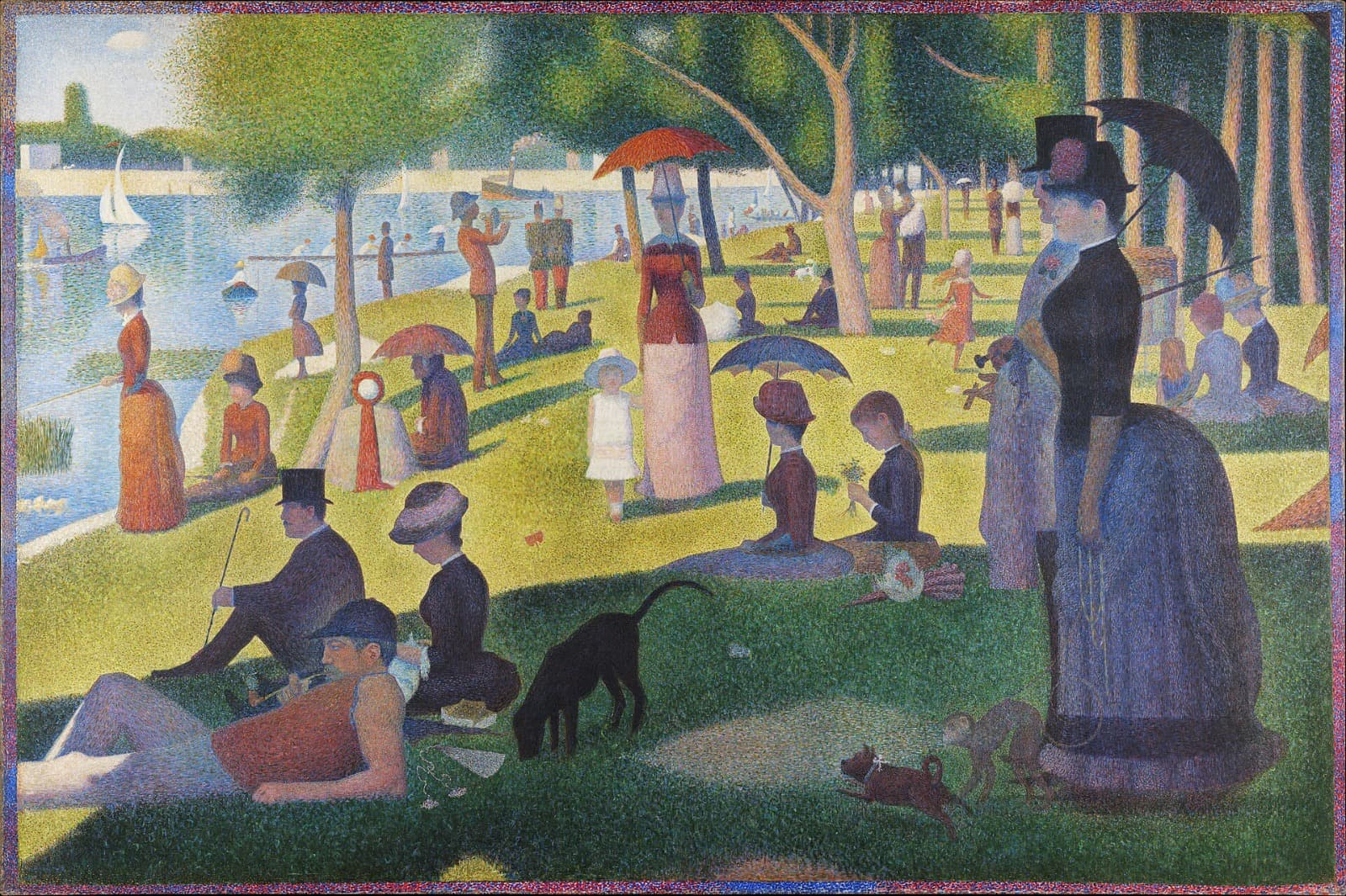
Seurat spent two years building this riverbank out of tiny dots of unmixed color, applying optical theory to a crowd standing oddly still.