
The Last Supper (de Juanes)
1562 · El Prado, Madrid
Every apostle is named in gold and Judas sits apart with a darkened halo, which makes the panel a teaching aid as much as a picture.
★ 4.8
 skopia
Every apostle is named in gold and Judas sits apart with a darkened halo, which makes the panel a teaching aid as much as a picture.

An old man on two sticks, with Aun aprendo written underneath. Goya drew it in exile and failing health, near the end.

The Child sits astride a lamb, which is the sacrifice, and Raphael took the interlocking group straight out of Leonardo.
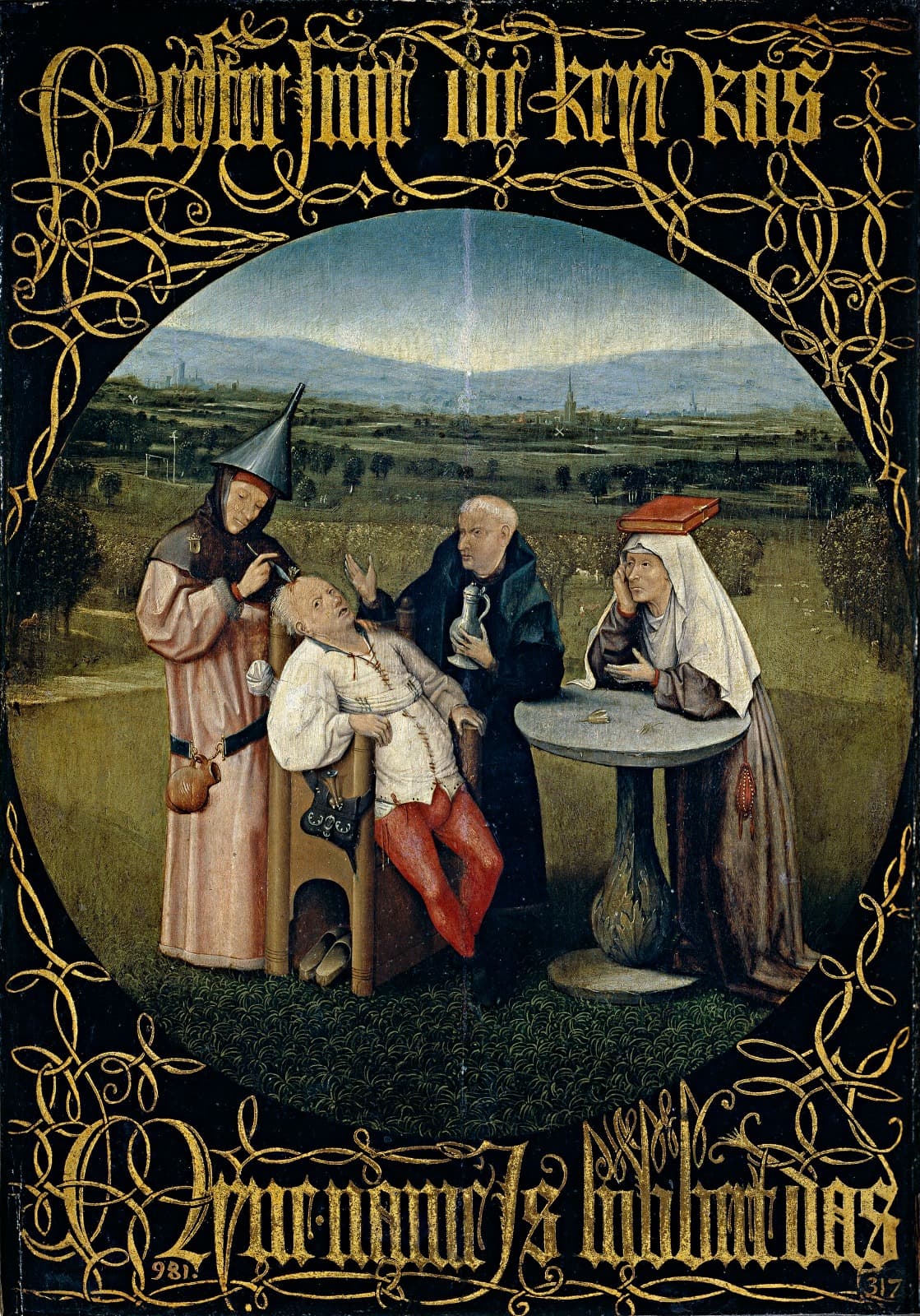
A quack in a funnel hat cuts the stone of madness out of a man's head, and what comes out is a flower.
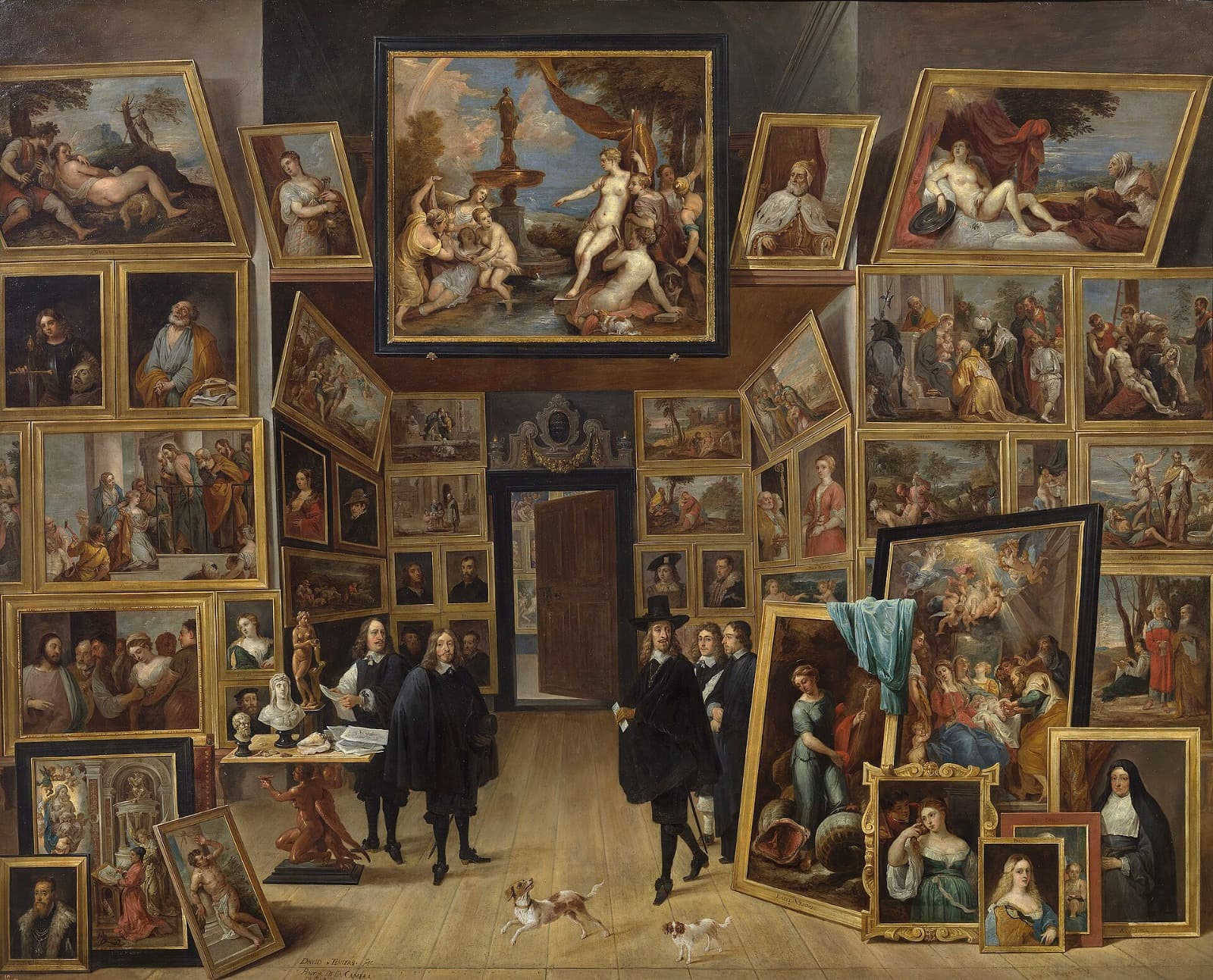
Teniers was the archduke's curator, and he painted the walls tiled with identifiable Titians and Giorgiones as a kind of catalogue.
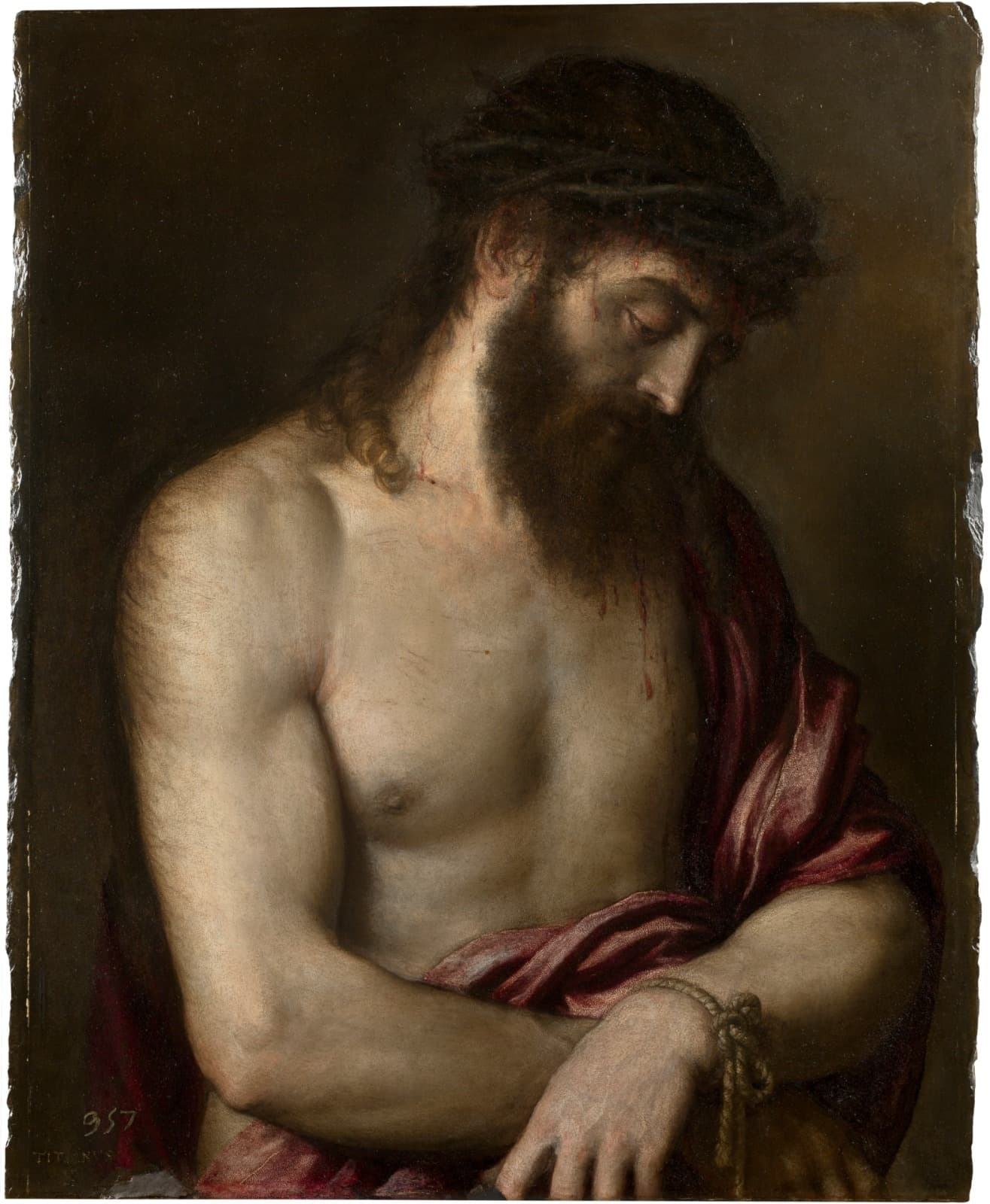
Behold the man, said Pilate. Titian strips out the crowd and leaves the scourged Christ half-length, close enough to pray to.

Christ turns back toward his mother as she swoons, and legend has it the painting was nearly lost in a shipwreck on its way to Palermo.

Saturn bites into his own infant to stop the prophecy, the star of Saturn overhead. Goya would take the same subject somewhere much worse.

Father and Son lower the crown together while the group curves into a soft heart shape. Painted for the Spanish queen's private oratory.

The whole panel is a giant eye, with Christ in the pupil and the words Beware, beware, God sees. It was made for a tabletop.
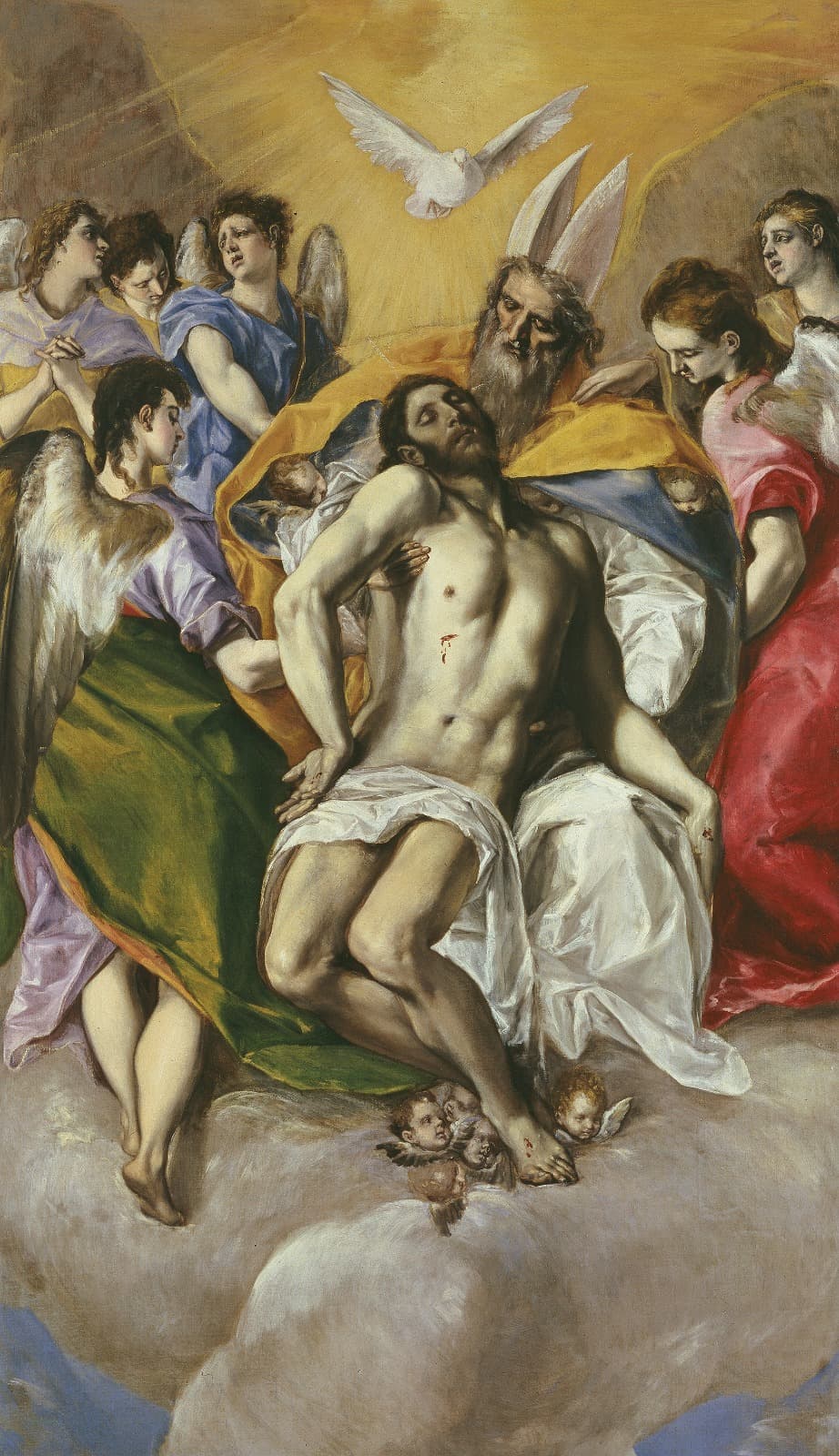
God the Father holds his dead son across his knees, the body marble-pale against blue and acid yellow. El Greco's first Spanish commission.
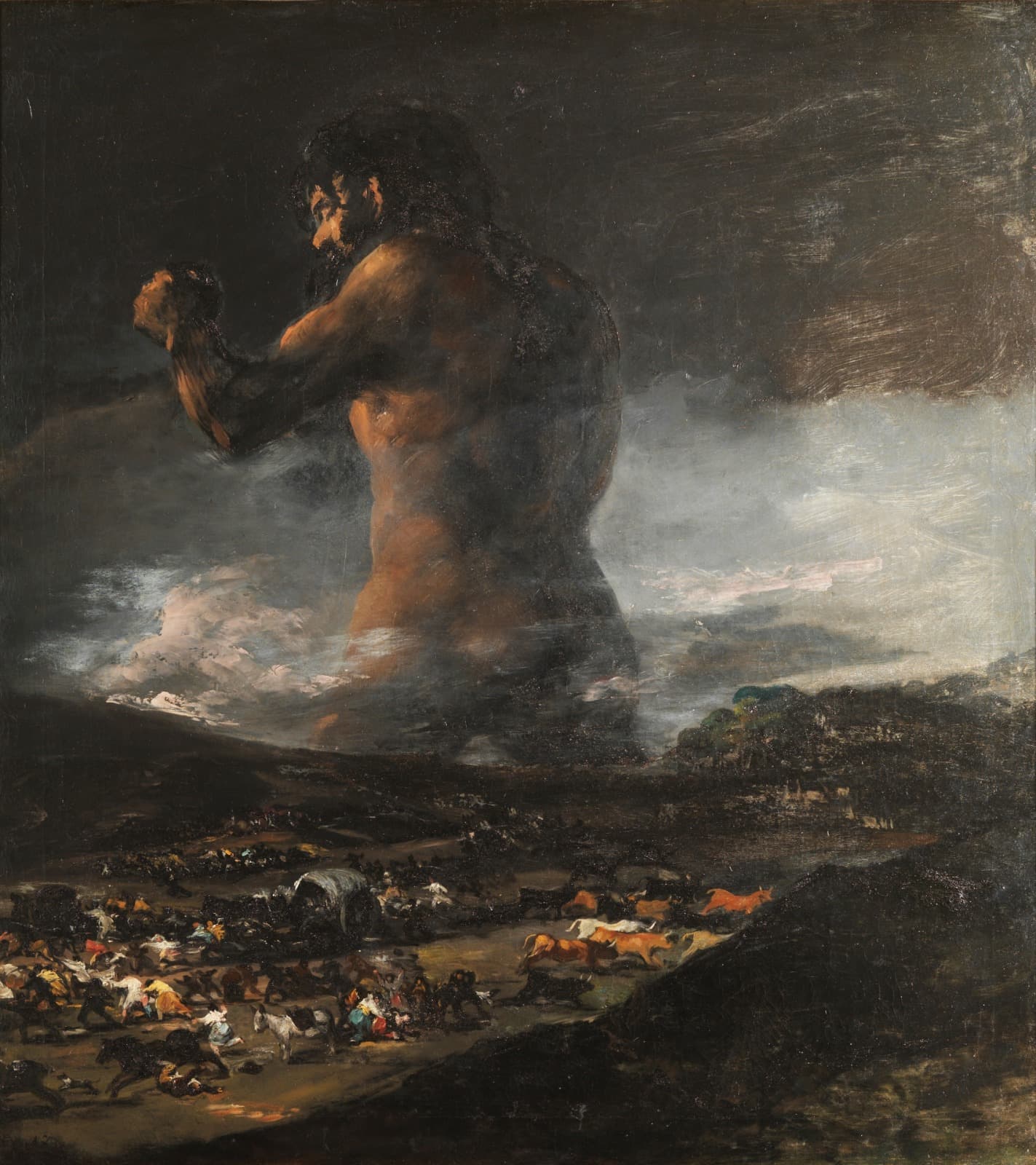
A giant stands with his head in the clouds while everything below scatters. Whether Goya actually painted it is now disputed.
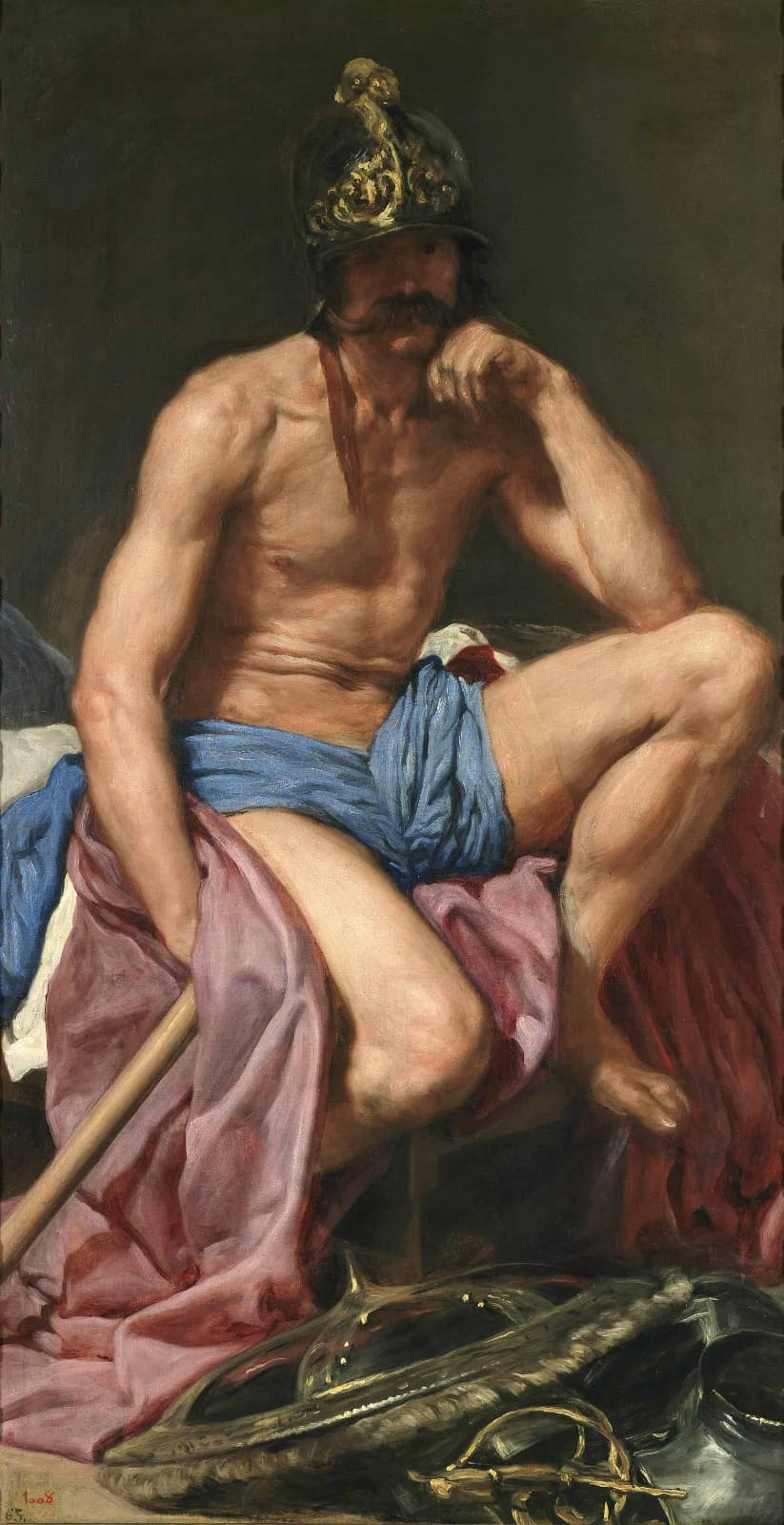
Mars sits naked and deflated in a plumed helmet with his armor on the floor, looking more like a tired old soldier.

The same woman, same cushions, same pose, now dressed. It is thought to have hung in front of the nude and slid aside.
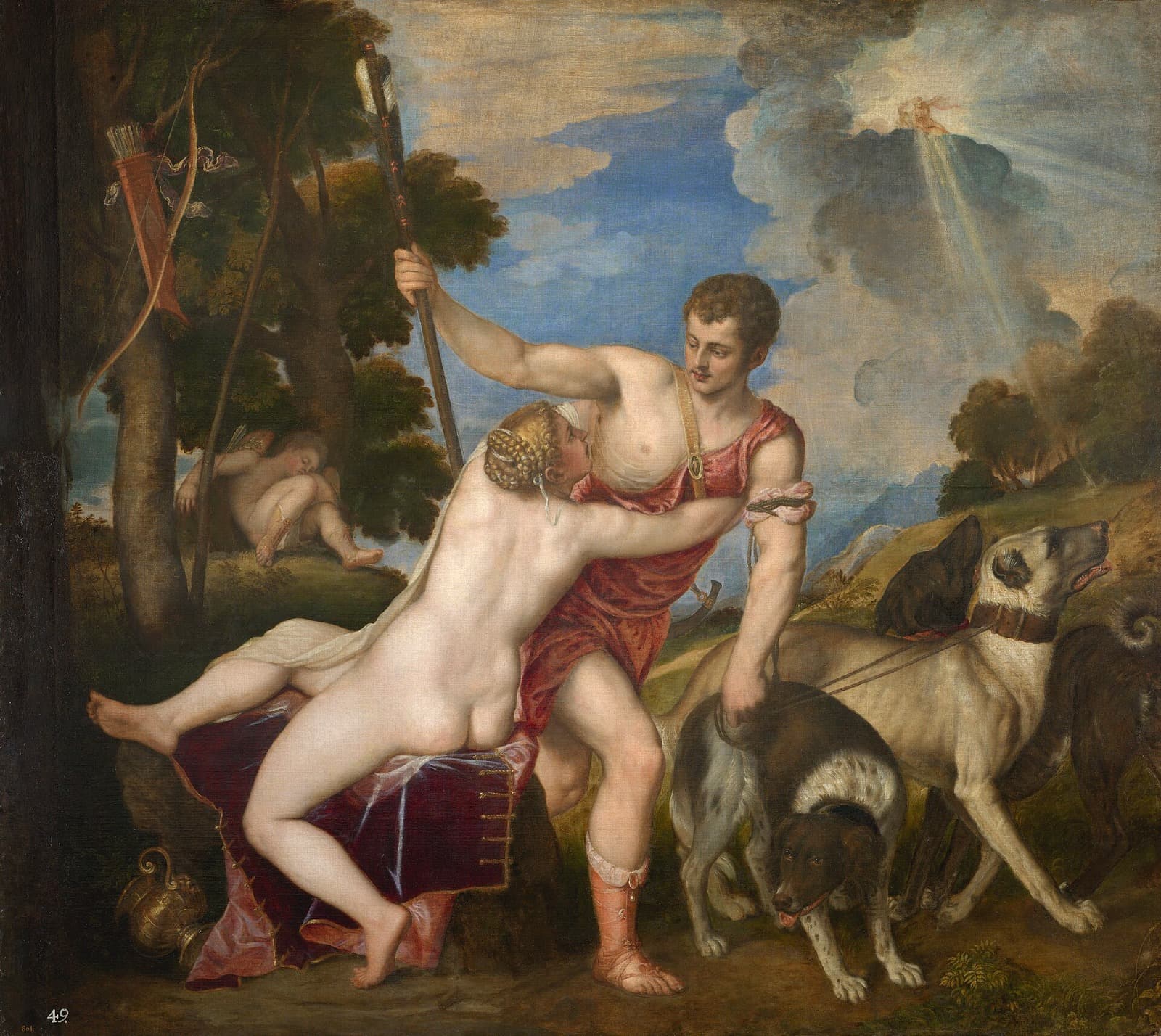
Venus twists round to hold him back and he pulls away toward the hunt that will kill him. Cupid sleeps in the shade, useless.
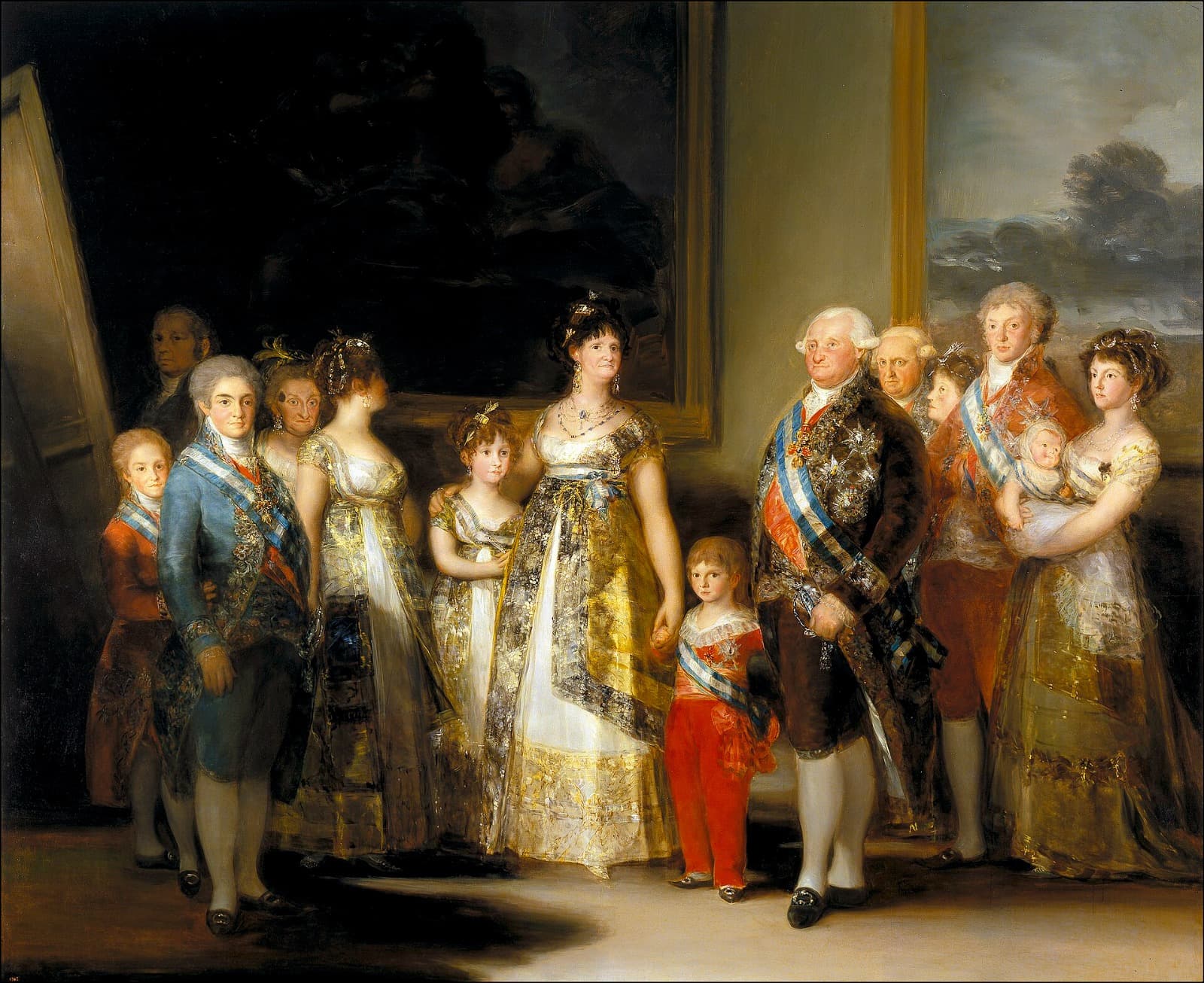
Goya put himself at an easel in the shadows, as Velázquez had, and painted the royal family looking vacant, pompous or merely plain.
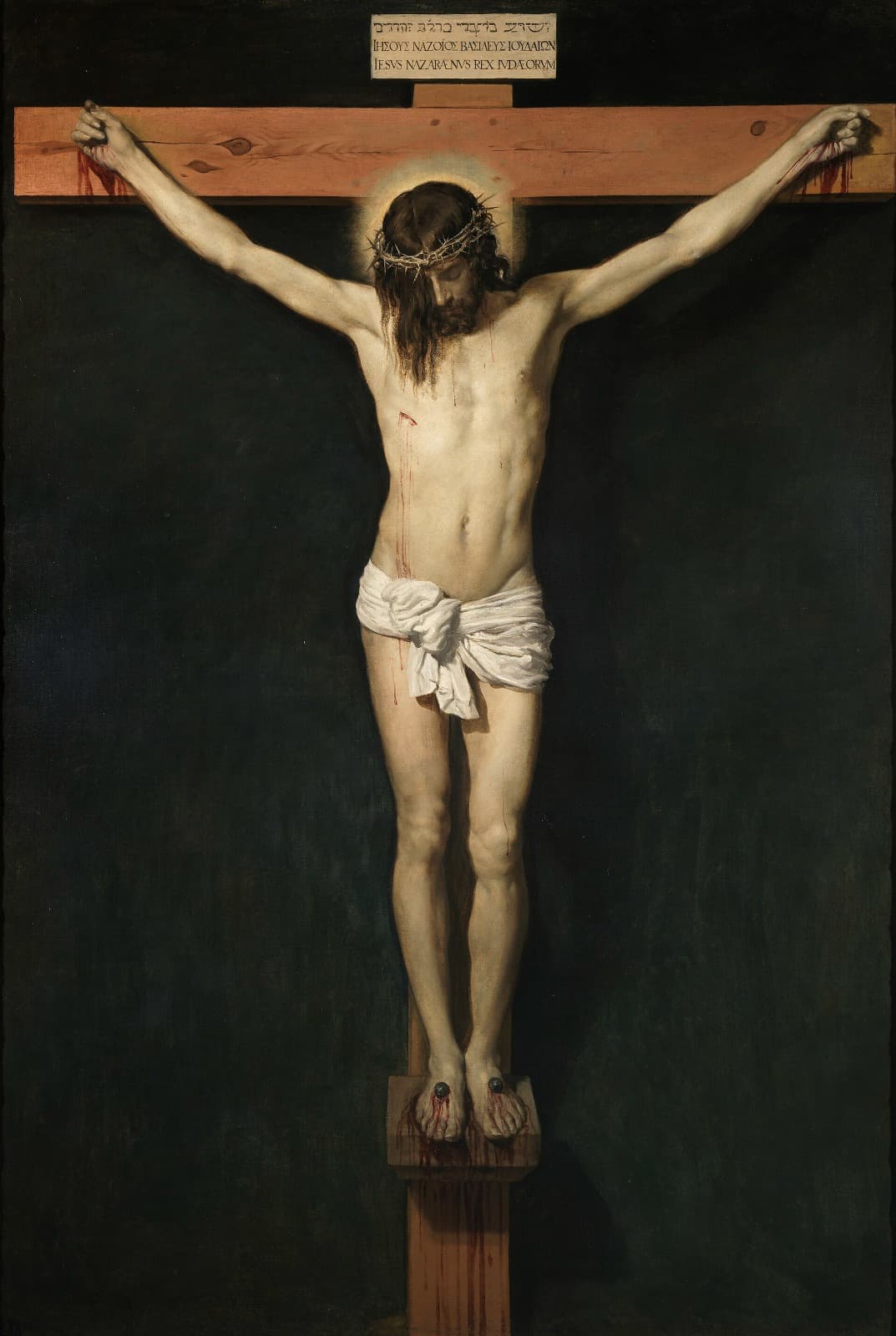
No crowd, no landscape, nothing but the body against black, with the hair fallen forward to half-cover the face. Made for private prayer.

Not a goddess but a real woman looking straight back, which is why the Inquisition took an interest. Goya painted a clothed version too.

Gabriel bows to Mary under the loggia while Adam and Eve are driven out of the garden at the left, the sin this undoes.

Skeletons herd the living into a coffin-trap while a king clutches his gold and two lovers play music at the corner, not yet looking up.