
Great Fish Market
1603 · Alte Pinakothek, Munich
Hundreds of minutely painted fish, baskets and hagglers. They called him Velvet Bruegel for exactly this kind of finish.
★ 4.8
 skopia
Hundreds of minutely painted fish, baskets and hagglers. They called him Velvet Bruegel for exactly this kind of finish.

Beckmann painted the disaster a year after it happened, borrowing Géricault's raft, and it now reads as a rehearsal for the war.
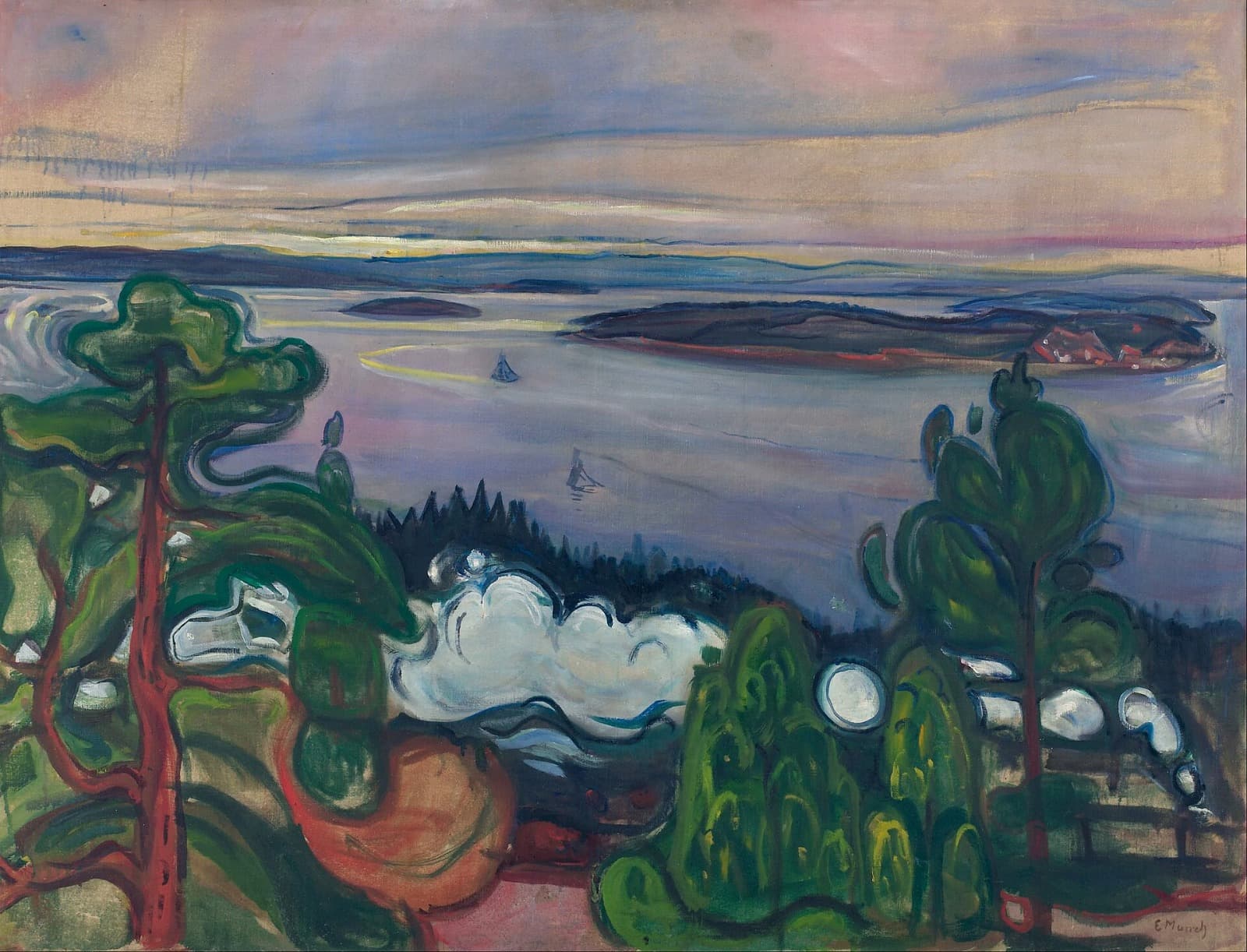
One puff of steam drifts across a curving shoreline, the modern world putting a small mark on a landscape that had none.

Rivermen break off work for a card game on a flatboat, arranged with a stillness that lifts the scene toward history painting.

Notre-Dame across the Seine in a few dark summary strokes, painted before Matisse's color went off and Fauvism happened.
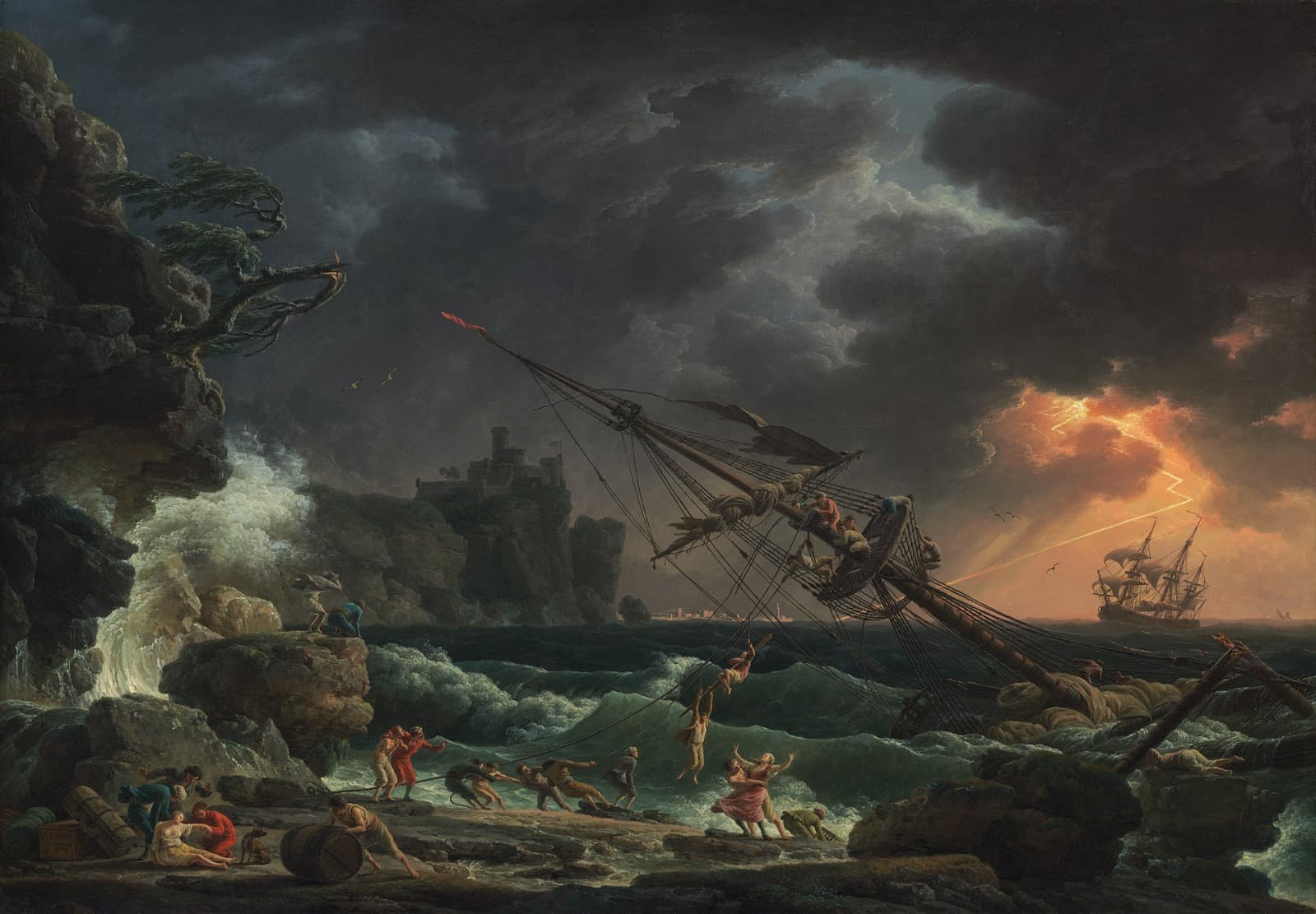
Masts splintering, survivors in the surf, and the whole thing arranged for people who wanted to feel terror from a safe distance.
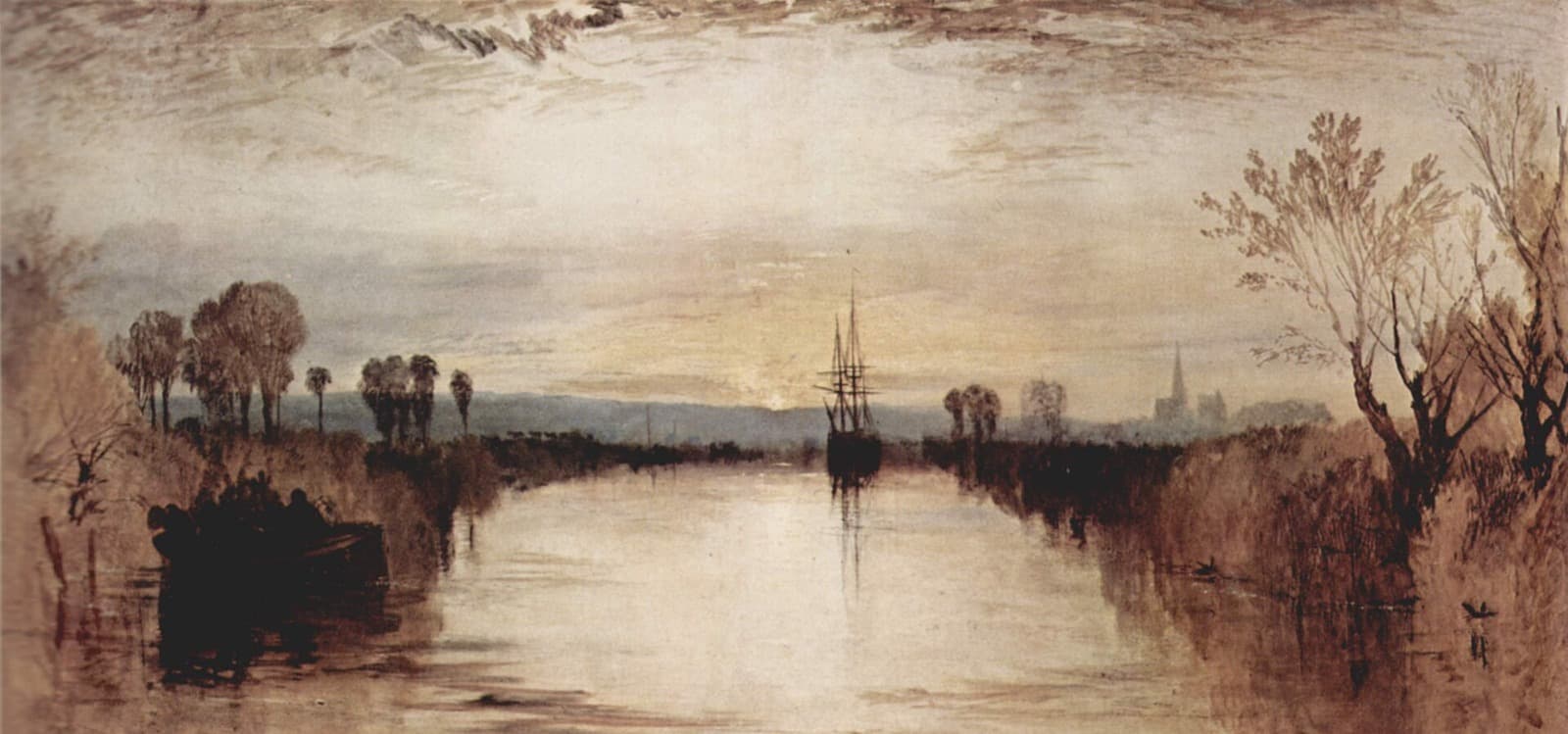
Masts stand black against a sky going from gold to soft blue, and almost nothing else in the picture is solid.

A packet boat comes in at evening and Turner dissolves the city, the passengers and the river into a single sheet of gold.
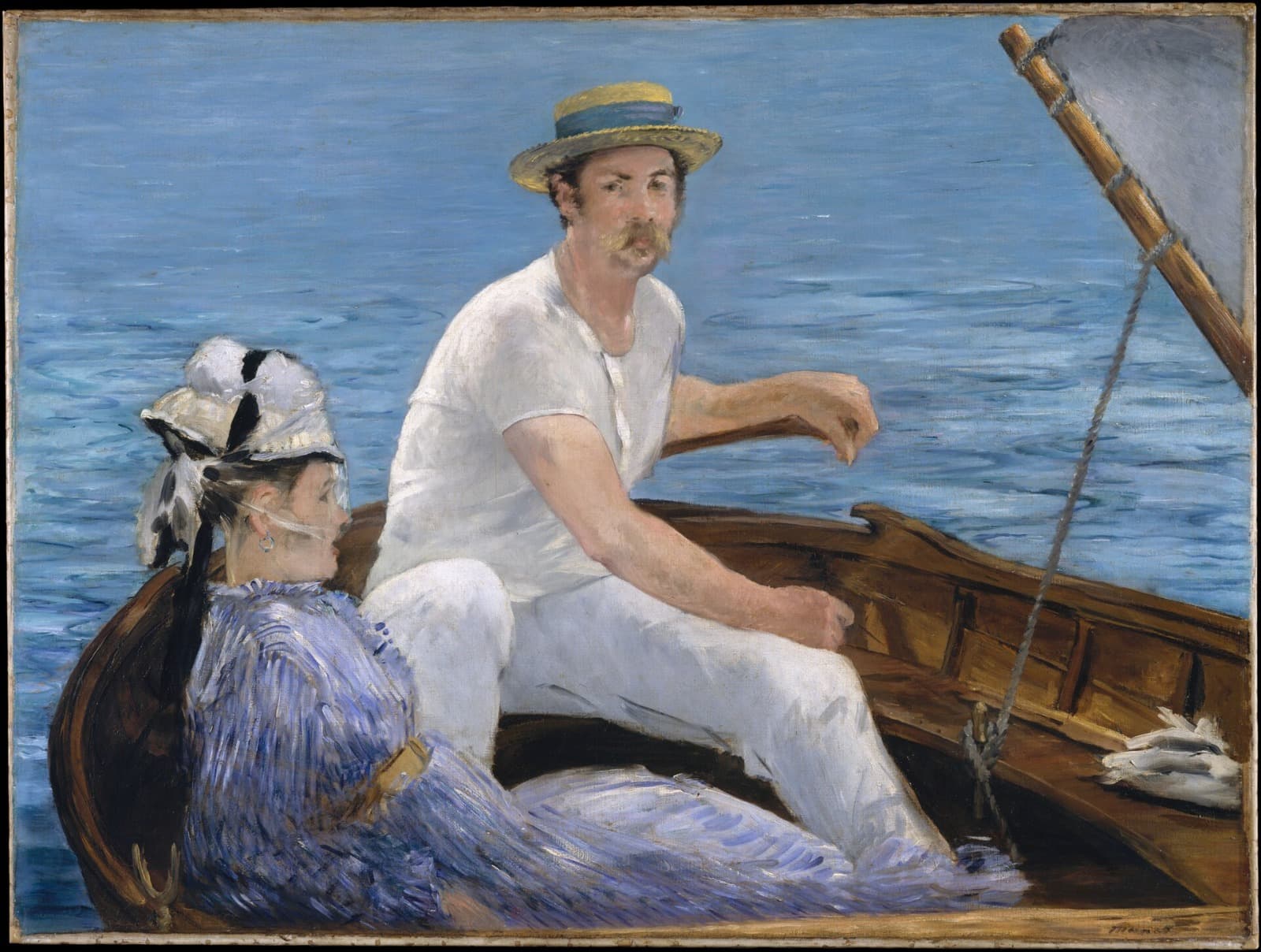
Manet painted this beside Monet at Argenteuil and let the blue water climb all the way to the top edge of the canvas.

Monet went to Venice late and found a city already doing what he had spent fifty years trying to paint.

A door opens straight onto the water with no shore in between, and the only other thing in the picture is sunlight on a wall.

Monet's own father sits among the gladioli on a terrace, and the young painter tips the space up in flat bands like a Japanese print.

Monet painted Westminster across the river again and again because what he actually wanted was the fog, not the building.
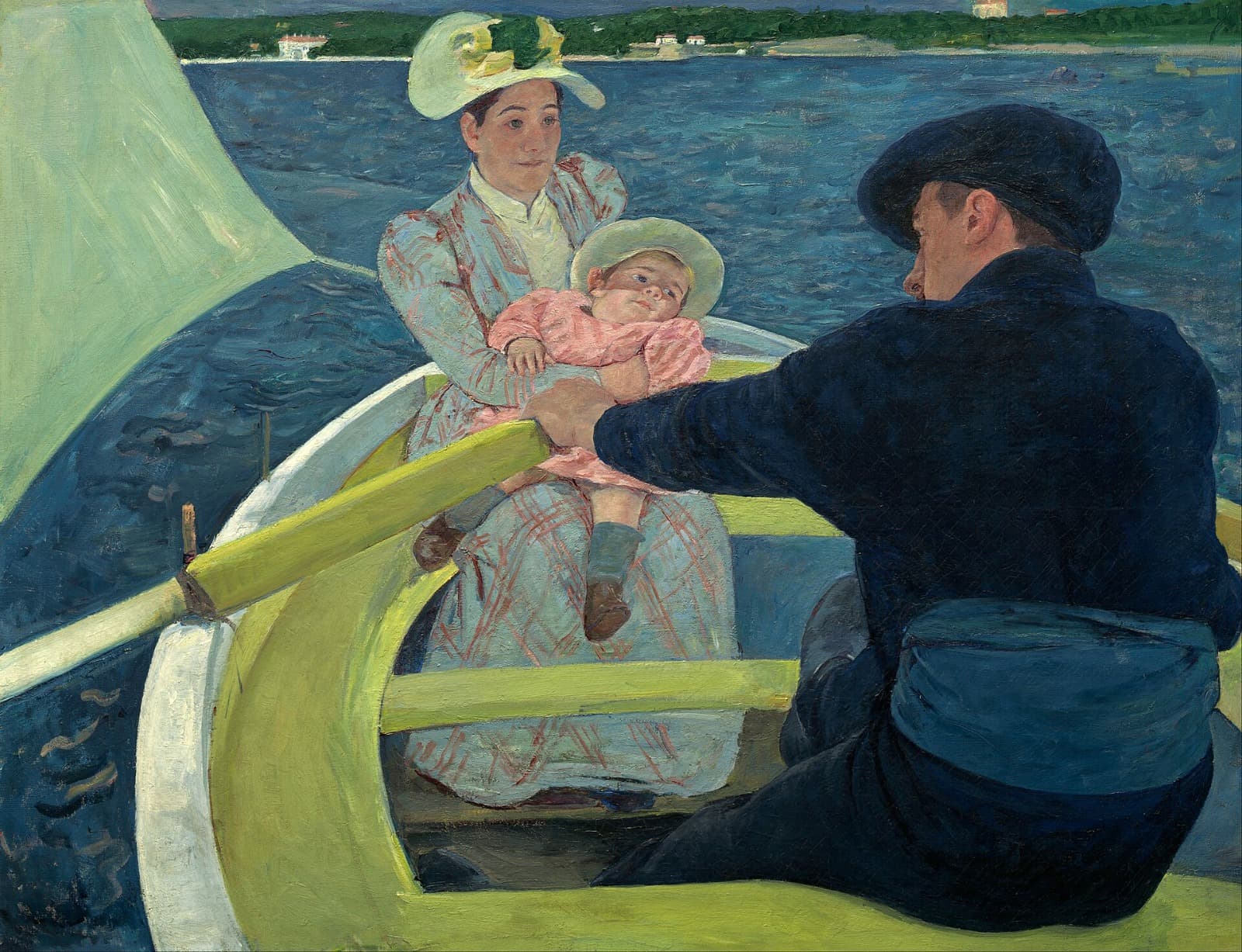
A dark-suited oarsman fills the foreground with his back while the water rises behind with no horizon, a design taken from Japanese prints.

Two pale legs disappear into the sea in the corner while the ploughman keeps ploughing. Auden wrote a poem about exactly that indifference.

A man and three boys heel a catboat over into open water, painted in the centennial year and read ever since as the country's optimism.
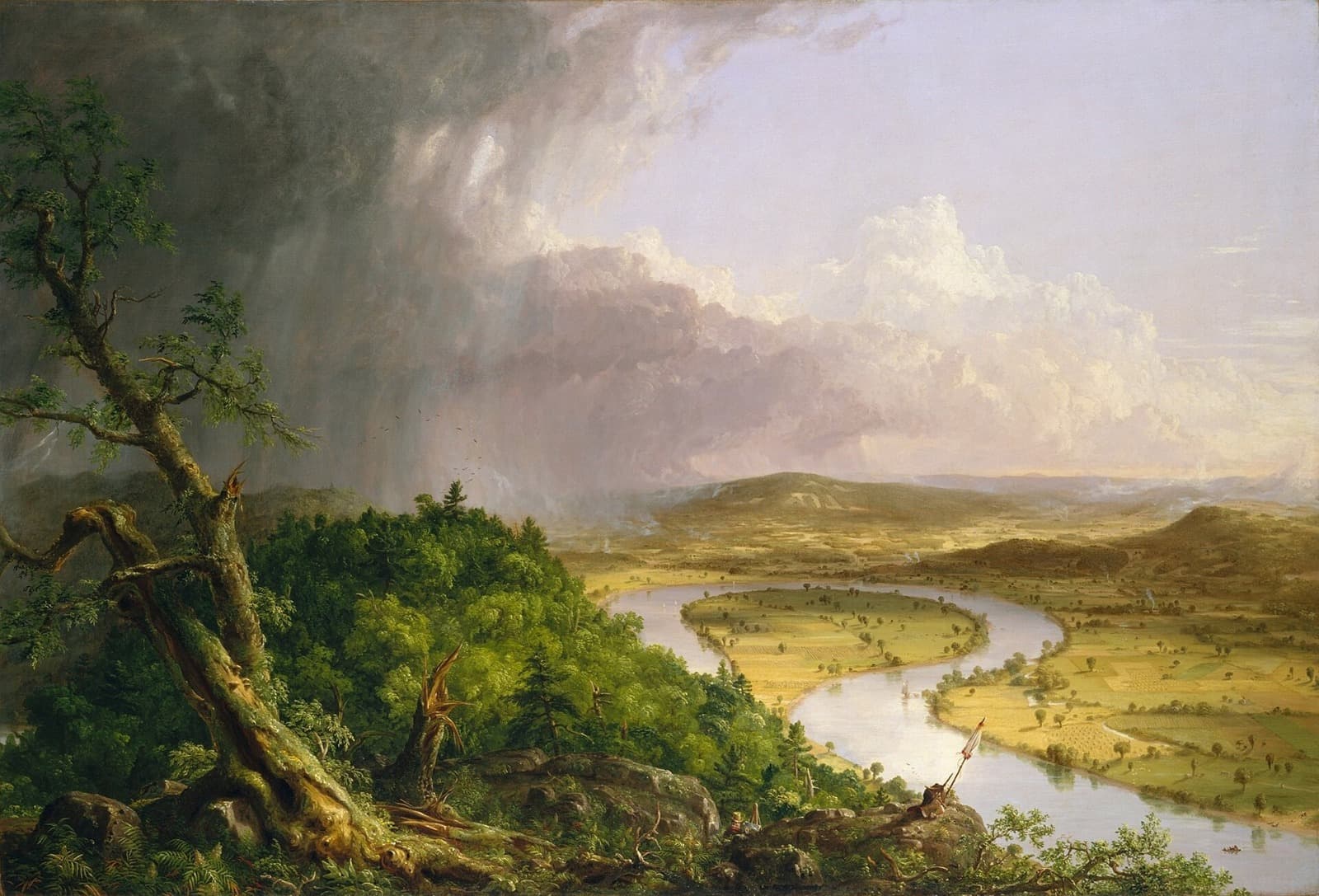
Wilderness under storm on the left, farmland in sunshine on the right, and Cole himself down in the middle, tiny, looking up from his easel.

Gaslights along the Arles quay drop long quivering reflections into the water, the Great Bear overhead, a couple walking arm in arm below.

Rembrandt's only seascape, and one disciple is being sick over the side. Stolen from the Gardner Museum in 1990 and never recovered.

Brook Watson really did lose a leg to a shark in Havana harbor, and Copley put a Black sailor at the top of the rescue.