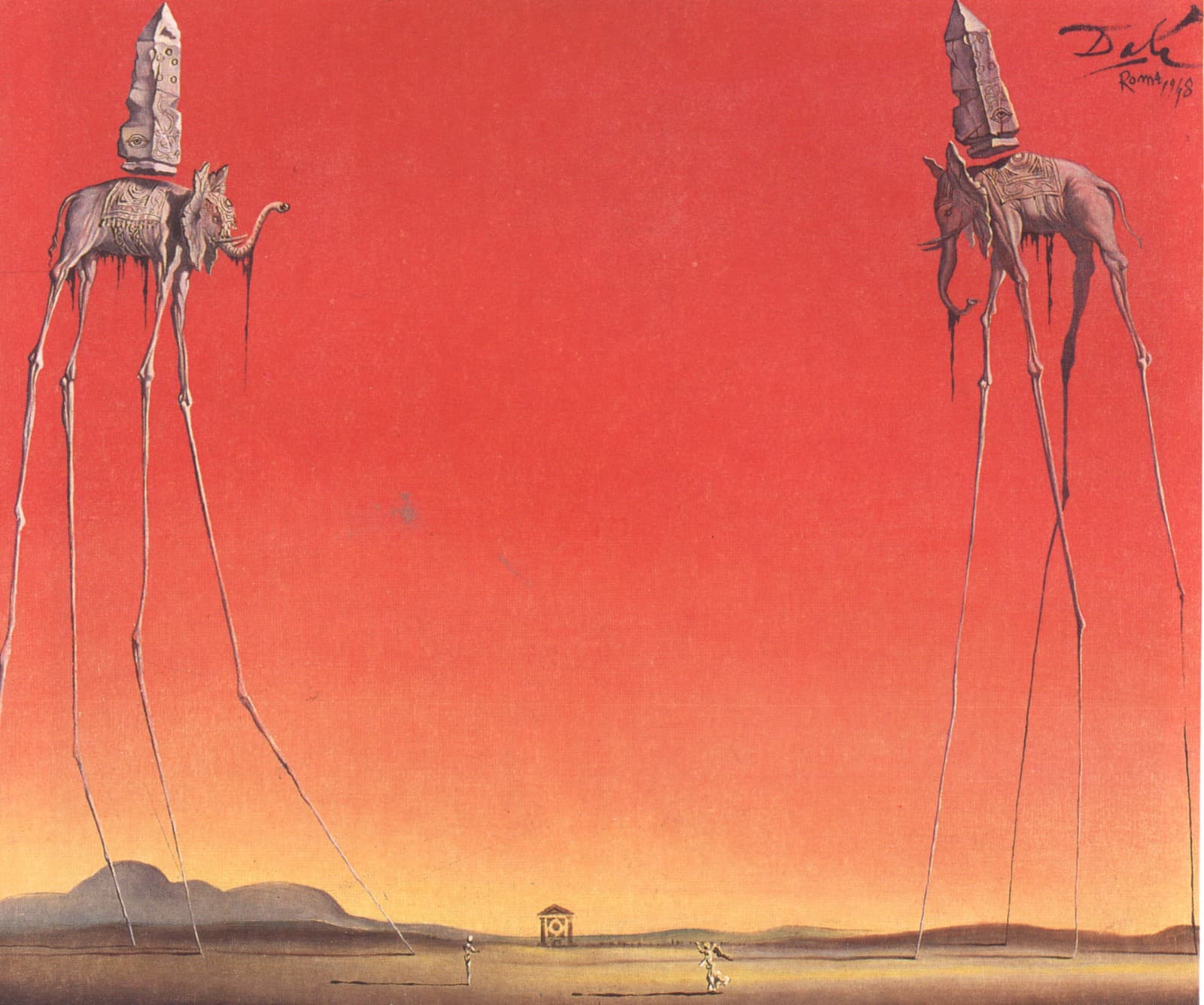
The Elephants
1948 · Private collection
Two elephants carrying obelisks on legs far too spindly to hold them, which is the entire effect and it works.
★ 4.8
 skopia
Two elephants carrying obelisks on legs far too spindly to hold them, which is the entire effect and it works.

Bacon used the shape of the cross as an armature for meat rather than religion, with a snarling animal fixed on top.
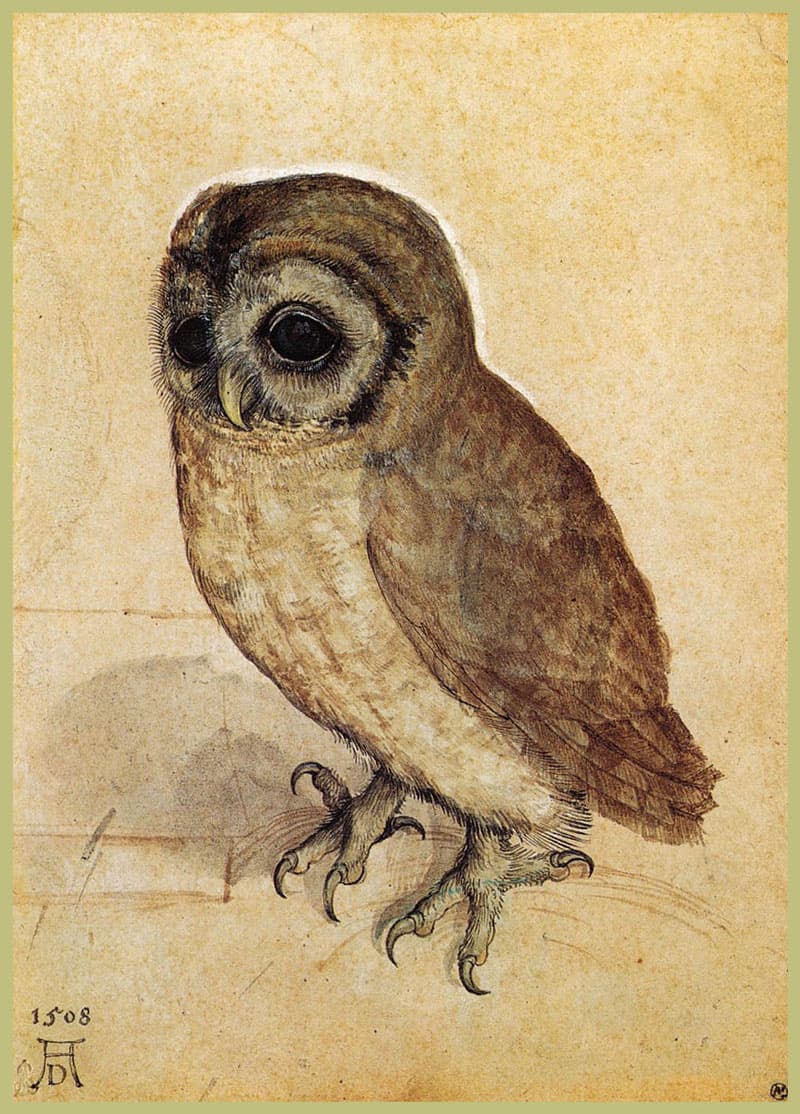
Owls carried centuries of symbolism in the north, but Dürer's is mostly just an owl, looking back at you with its talons over a ledge.
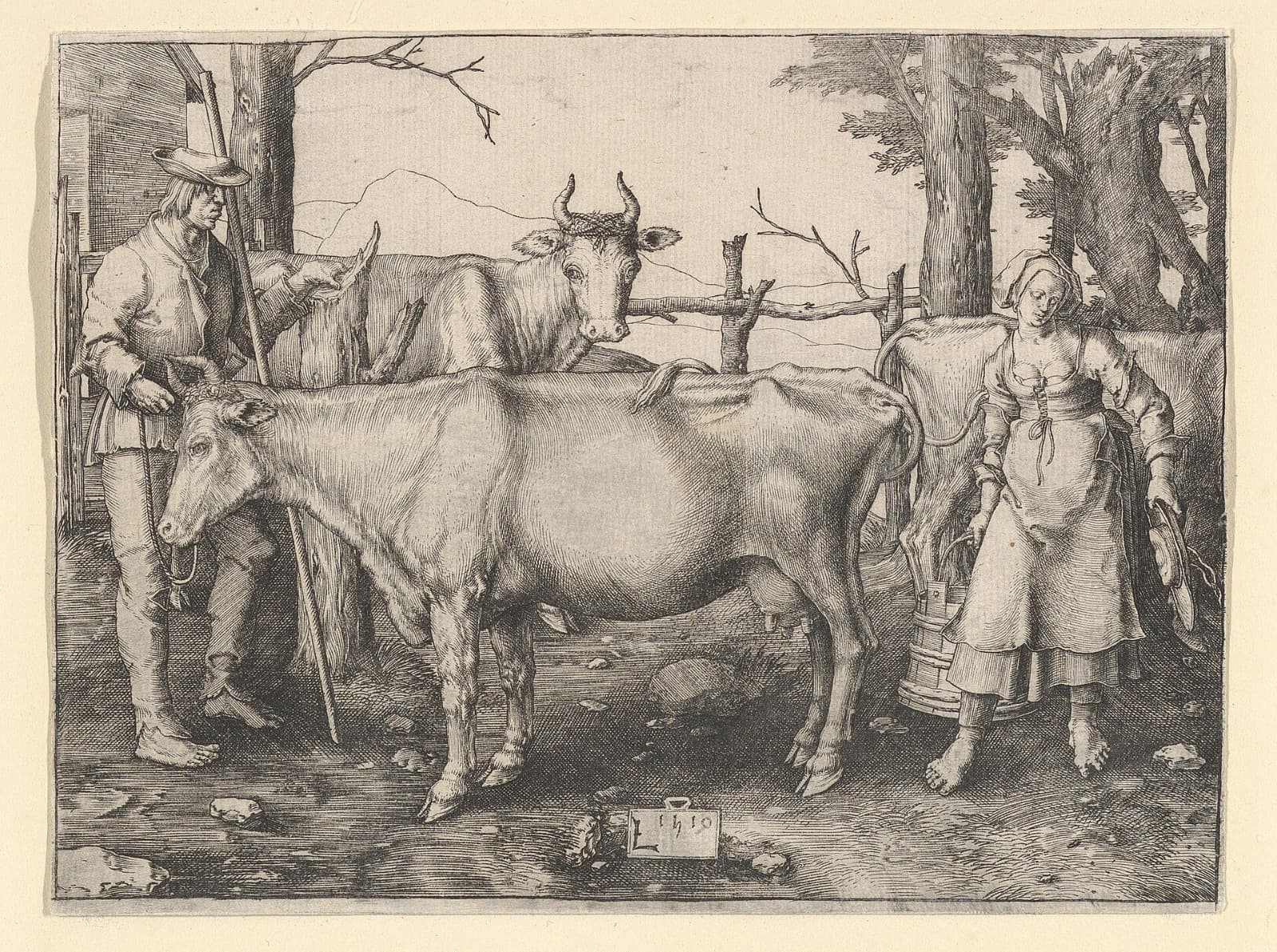
A milkmaid, a herdsman and two cows, and almost nothing happening. One of the first prints to take peasants as a subject worth the burin.

A man and a white horse in a Tahitian grove, painted on Gauguin's first stay, flat and warm and looking for a paradise.

The deer have almost dissolved into the crystalline planes of the wood, which is exactly what Marc was after.
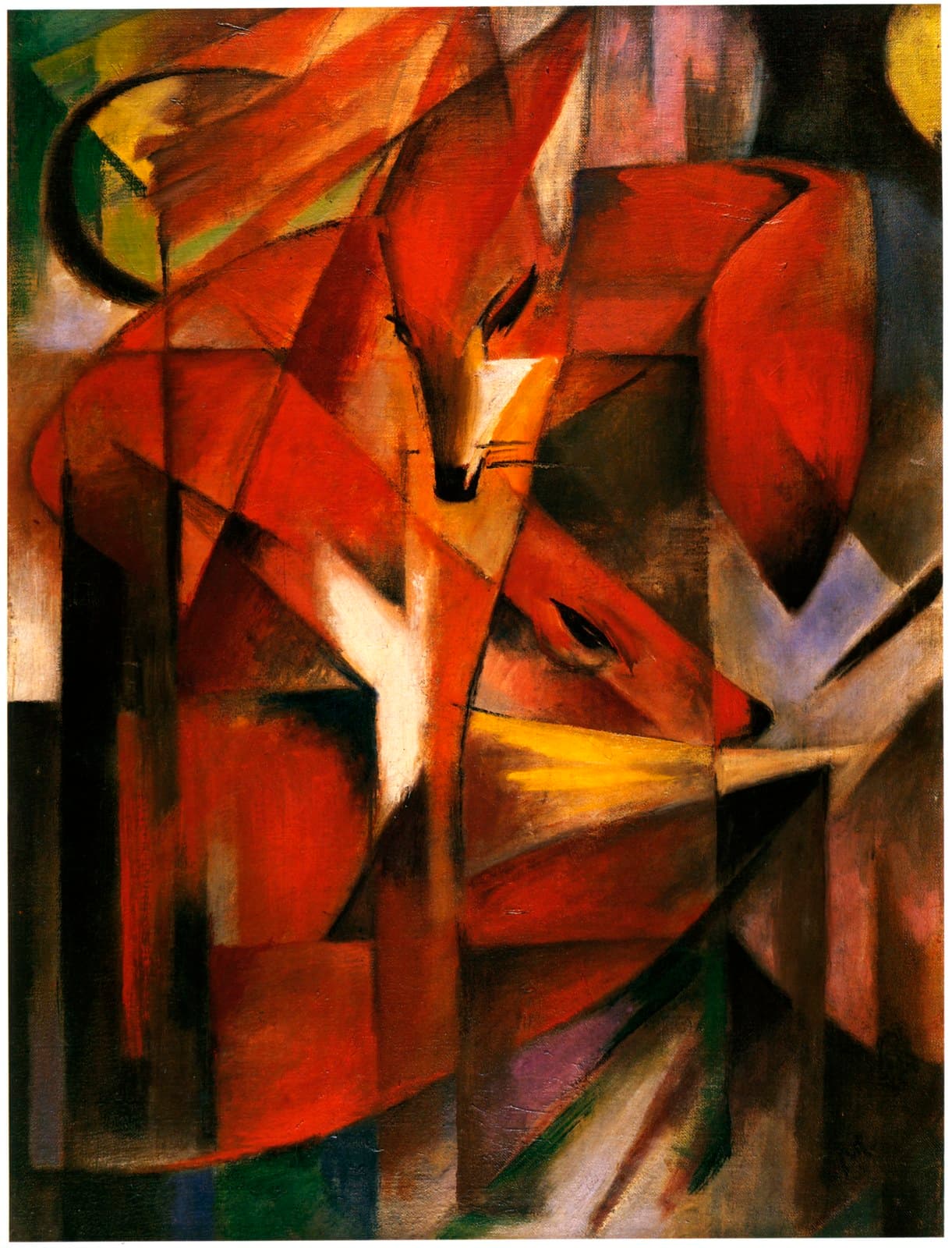
Foxes curled together and assembled out of shards of grey, blue and rust. Marc was killed at Verdun three years after painting it.

The horse and the groom take up most of the canvas and neither notices anything. The miracle happens entirely inside the man on the ground.
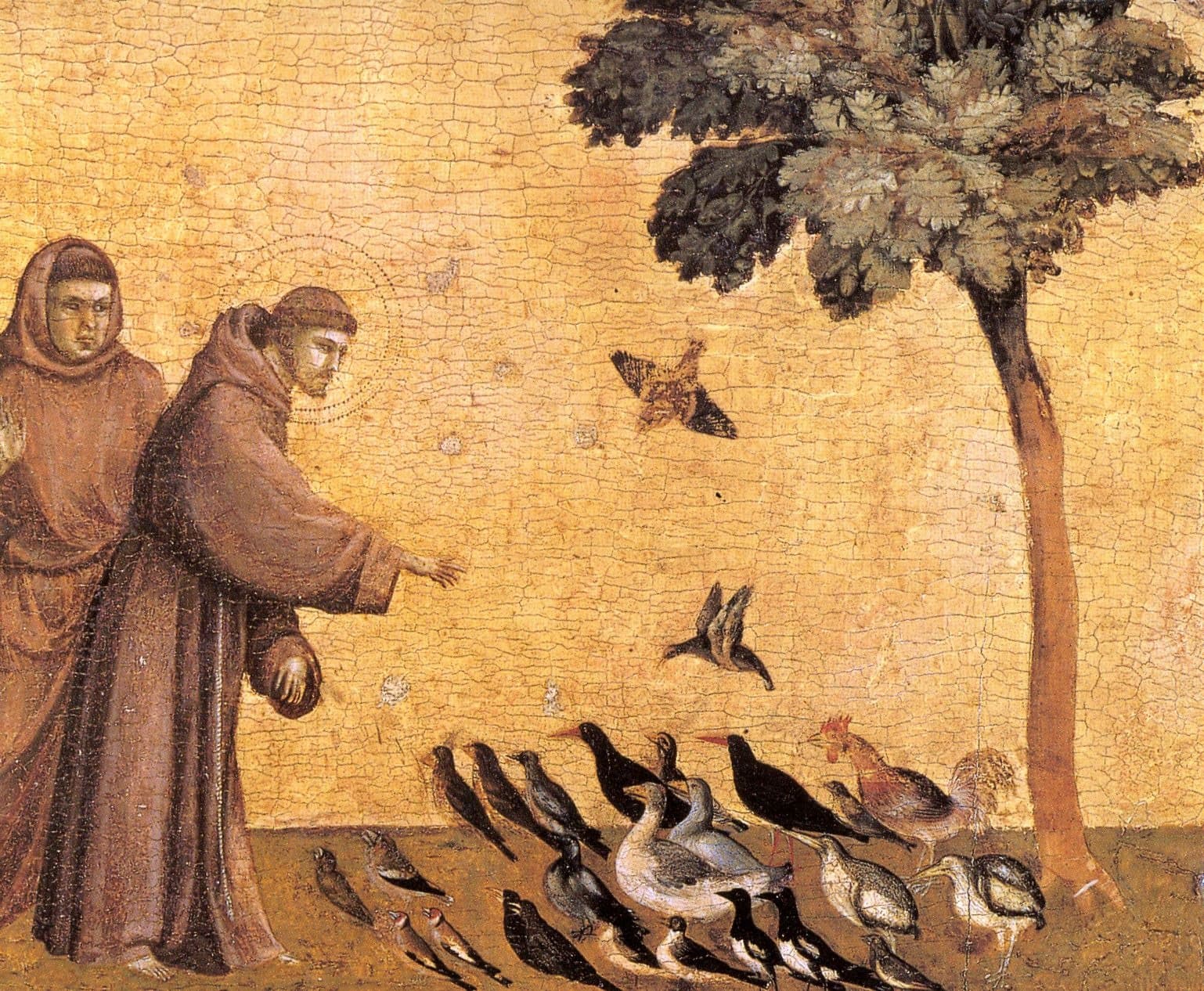
The same story at miniature scale, squeezed into a predella panel, and Giotto loses none of the plainness that made it convincing.

An enchantress sits in a wood ringed by deer, dogs, owls and a stork, which may be men she has transformed. Dossi leaves it unresolved.
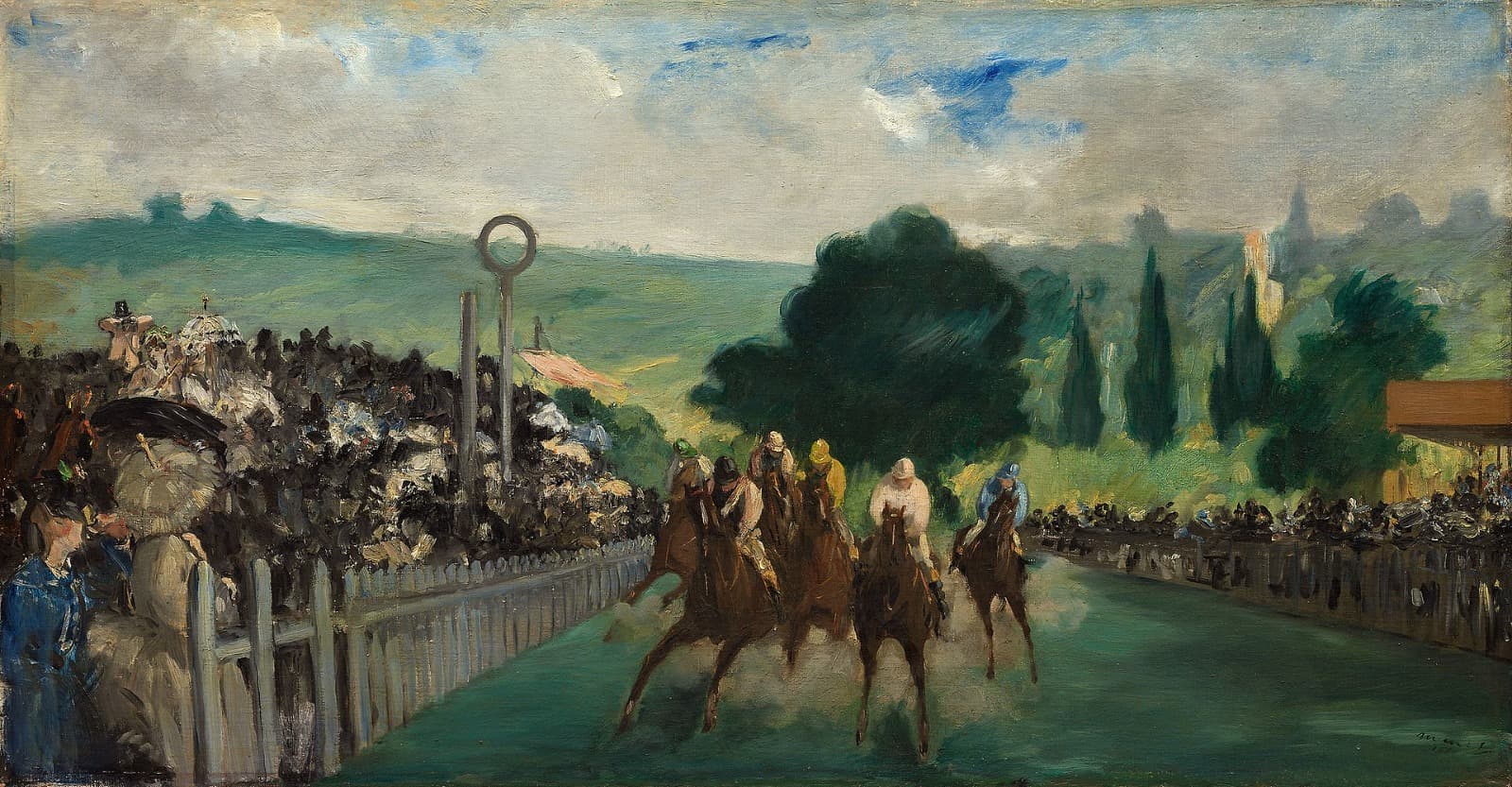
The horses come straight at you instead of across the frame, which nobody painting racehorses had bothered to try.

The story runs across the canvas in stages, arrival to departure. A later owner cut Leda's head out in disgust and it was repainted.

Saul sprawls on the ground with his arm up while the white horse rears above him with something close to ballet in it.

A train crosses the sky upside down, a man drifts past on a parachute, and the cat on the sill has a human face.

A bride in red floats through the blue night with a goat playing a cello beside her. Many people know it from a film.
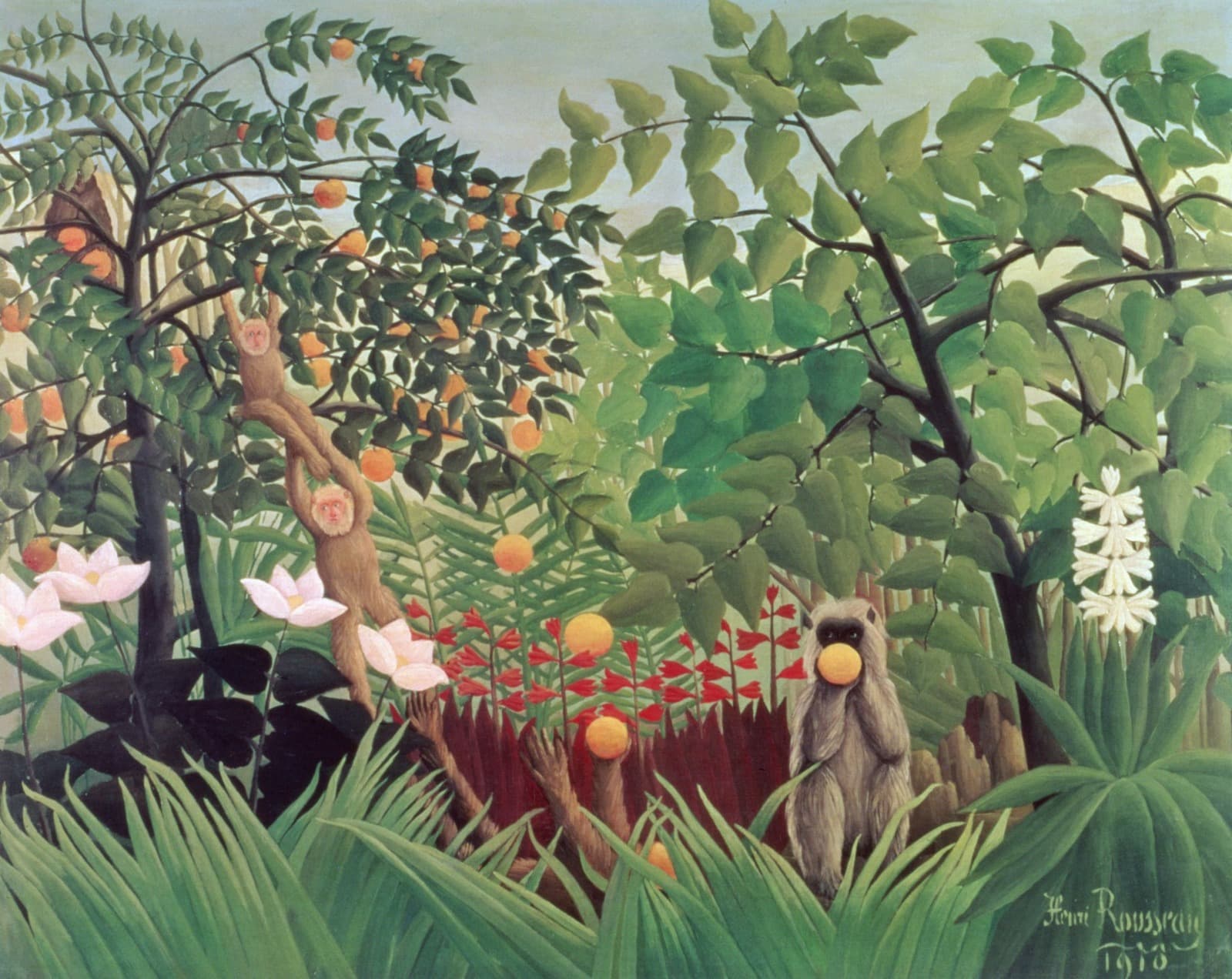
Monkeys look out from between giant leaves in a jungle Rousseau assembled from the Paris botanical gardens, the zoo, and illustrated books.

A headless official takes advice from an industrialist, a blinkered donkey listens above, and a dollar sign has blotted out the sun.
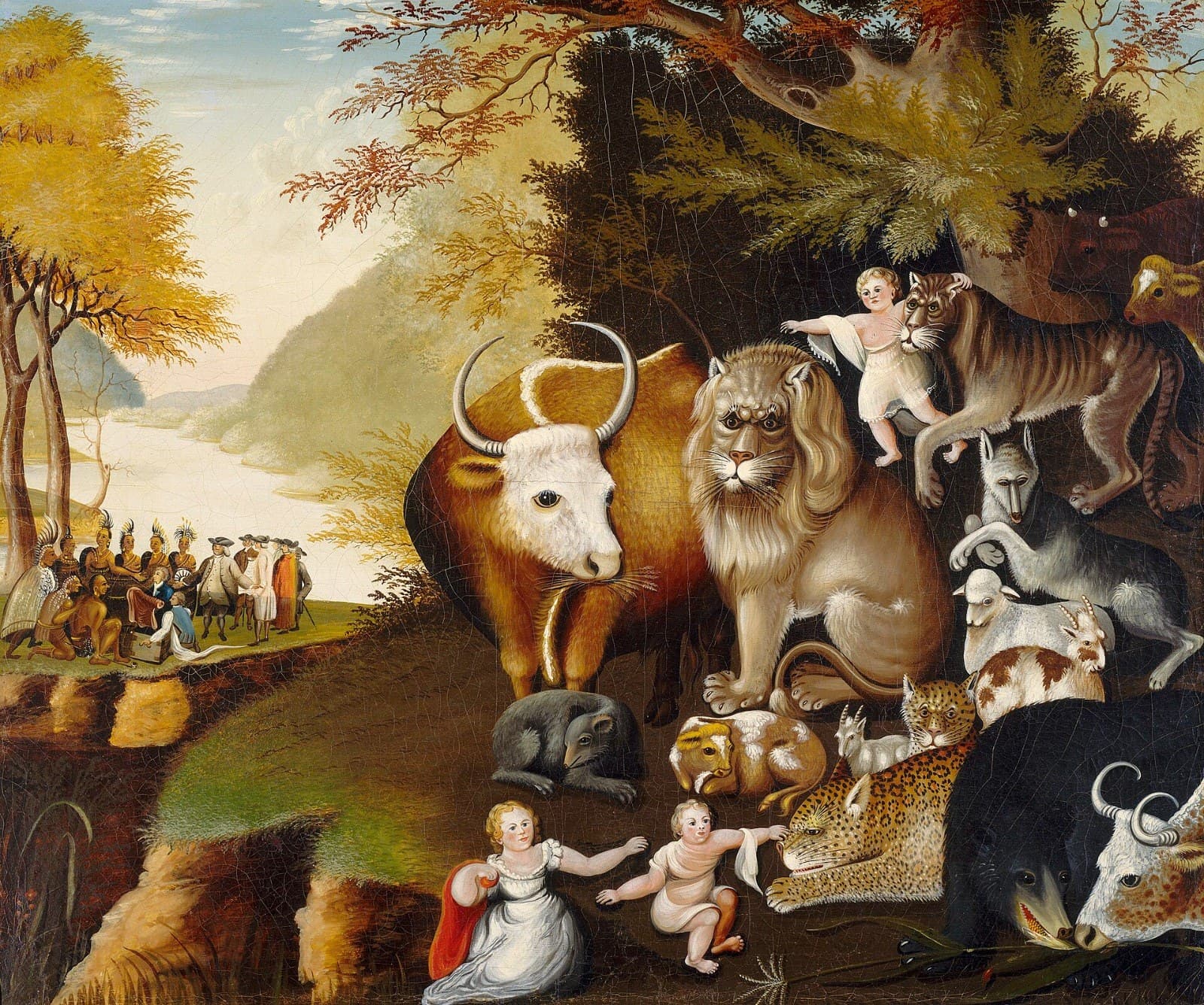
Hicks was a Quaker preacher and sign-painter who returned to Isaiah's prophecy about sixty times. Penn signs his treaty in the background.
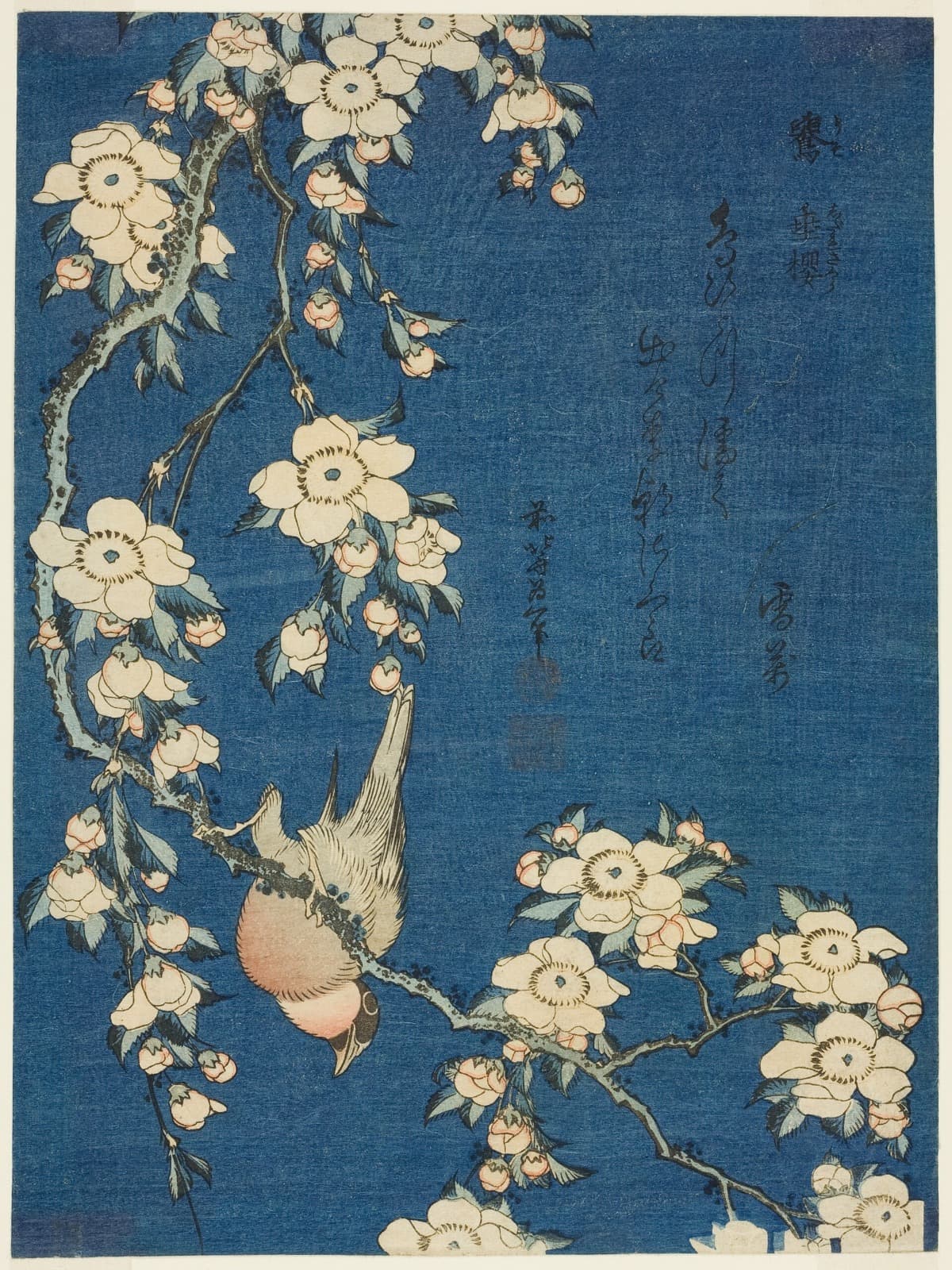
One plump bullfinch on a cherry sprig, a poem written beside it. The other Hokusai, quiet and exact, nothing like the wave.
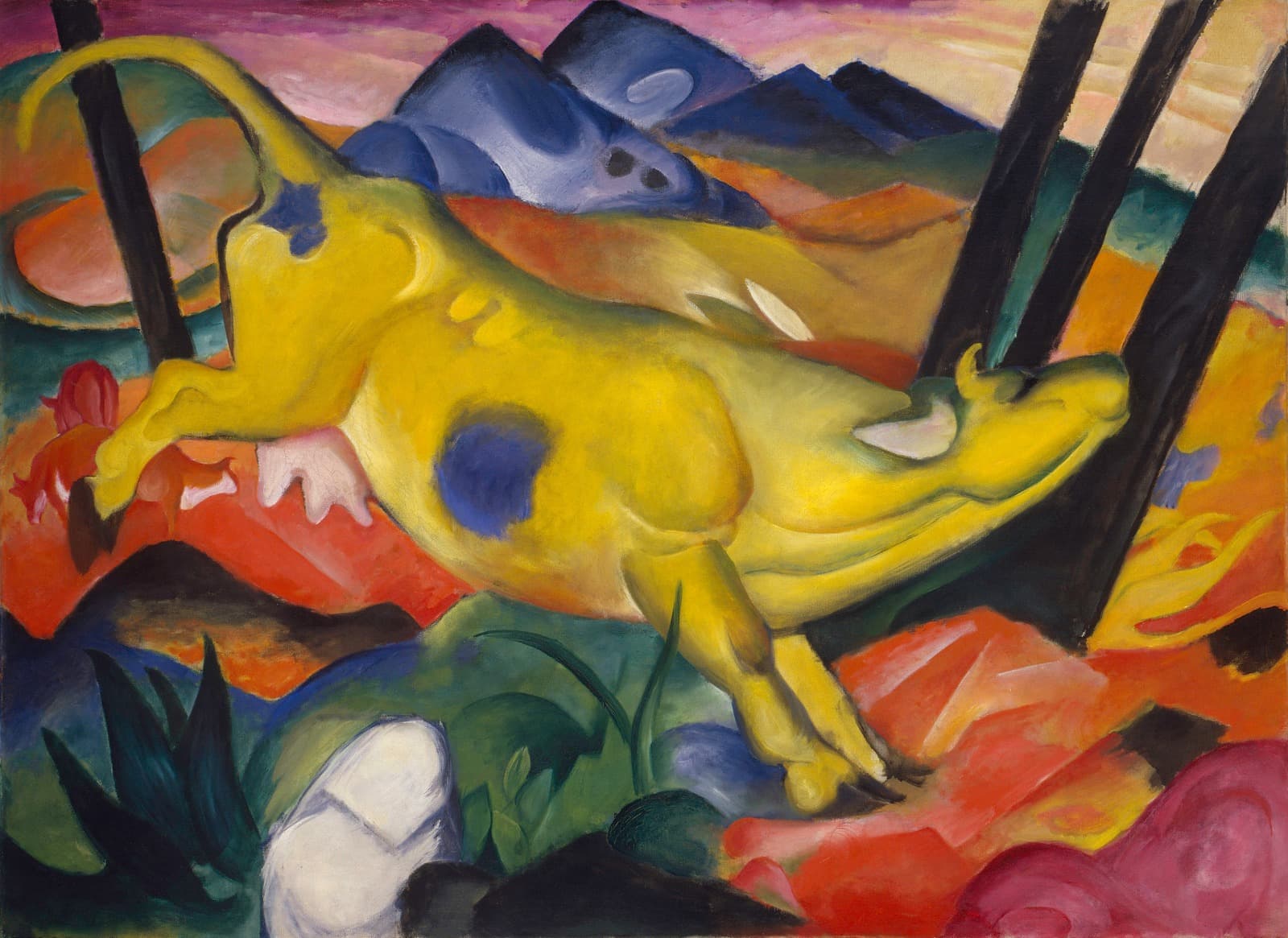
Marc used yellow for whatever was gentle and joyful, and this cow is kicking its legs out across the hills for the pleasure of it.