
The Virgin and Child (Ugolino)
1312 · Louvre, Paris
The Child reaches up to grasp the edge of his mother's veil. Ugolino followed Duccio more closely than anyone else did.
★ 3.6
 skopia
The Child reaches up to grasp the edge of his mother's veil. Ugolino followed Duccio more closely than anyone else did.

One of the Impressionist canvases he owned hangs on the wall behind him. Caillebotte's money and his bequest kept the movement alive.

Elizabeth sinks down and clasps the pregnant Mary. Ghirlandaio ran the busiest workshop in Florence, and a boy named Michelangelo apprenticed there.

The shepherd carries the twins home to his wife with the she-wolf still nearby. Rome's founding myth as a foundling story.

Christ in vivid red is hauled by a rope through the gate of a white, many-towered Jerusalem while children scamper at the edge.
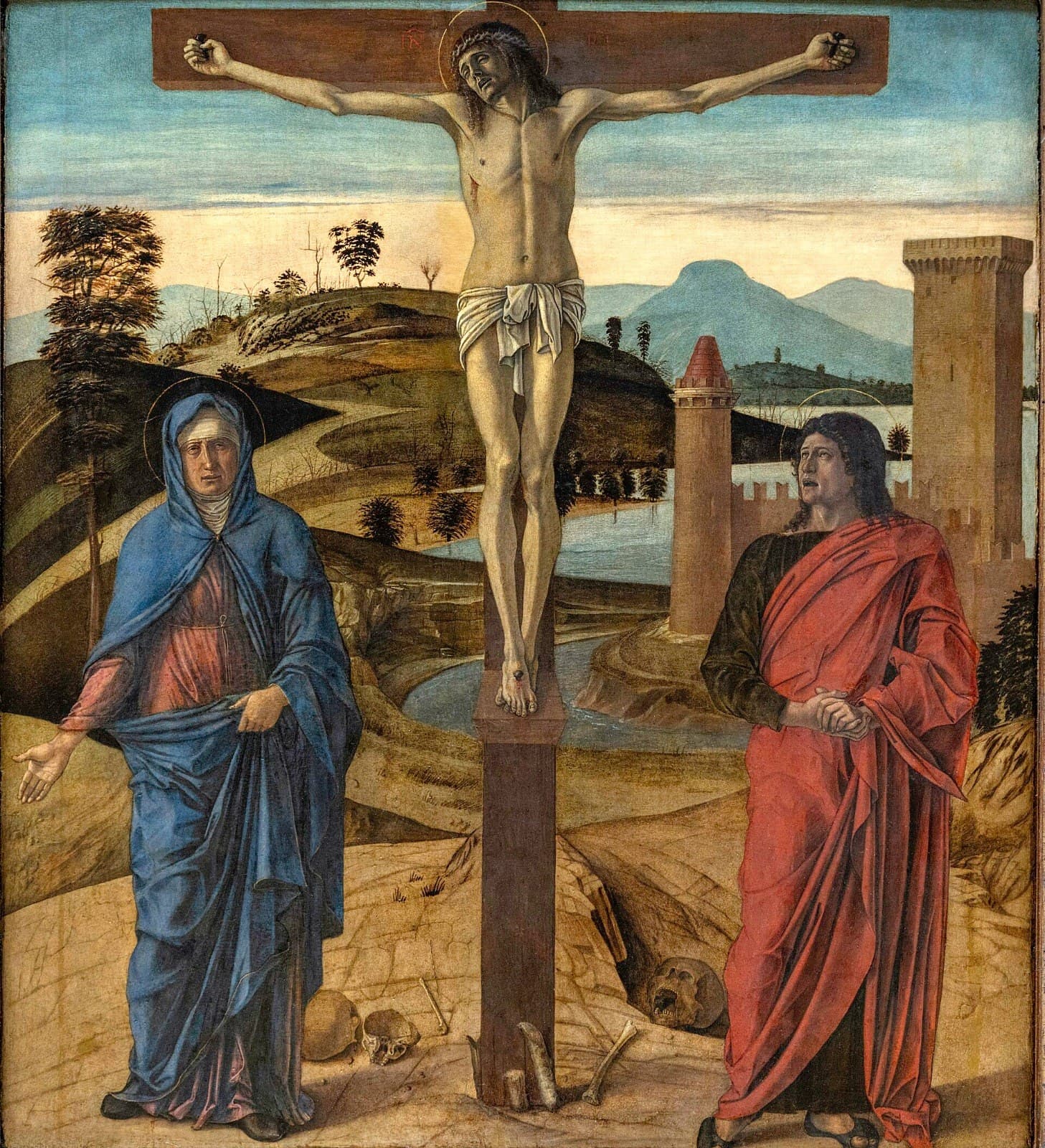
Only the Virgin and Saint John below the cross, and a river winding past a walled town. Early Bellini, carrying feeling in the light.
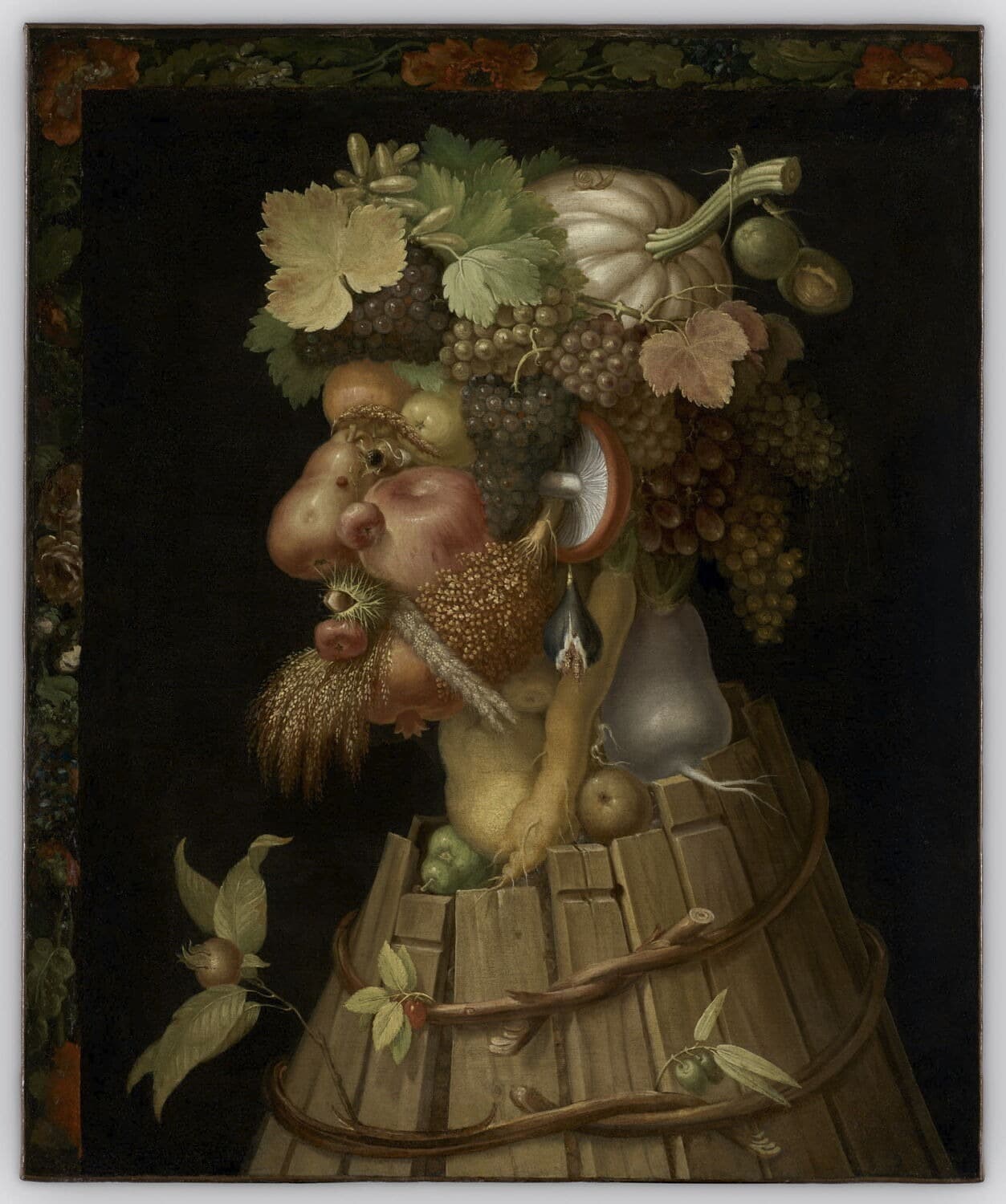
A head of pears and pomegranates crowned with grapes, sitting in a split wooden barrel bound with willow hoops. The season of the wine harvest.
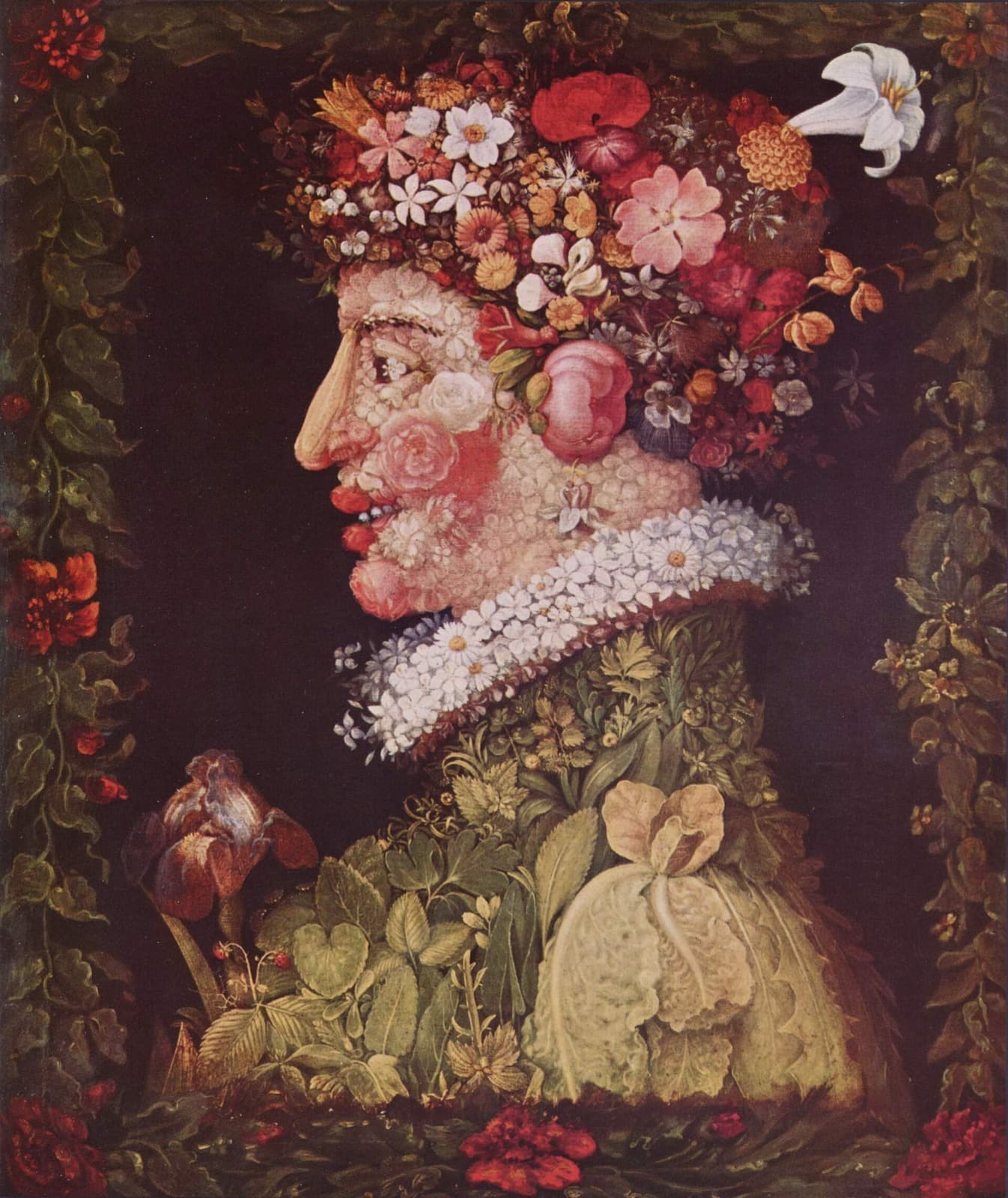
Rosebud lips, a lily for a nose, and hair made of tulips and peonies. The freshest and most delicate of the four seasons.

Degas turned from dancers to financiers, catching heads bent close over documents in the crush of the Paris exchange.

Provençal women at a hilltop well above a blue bay, the dots loosening into curves and the science giving way to pleasure.
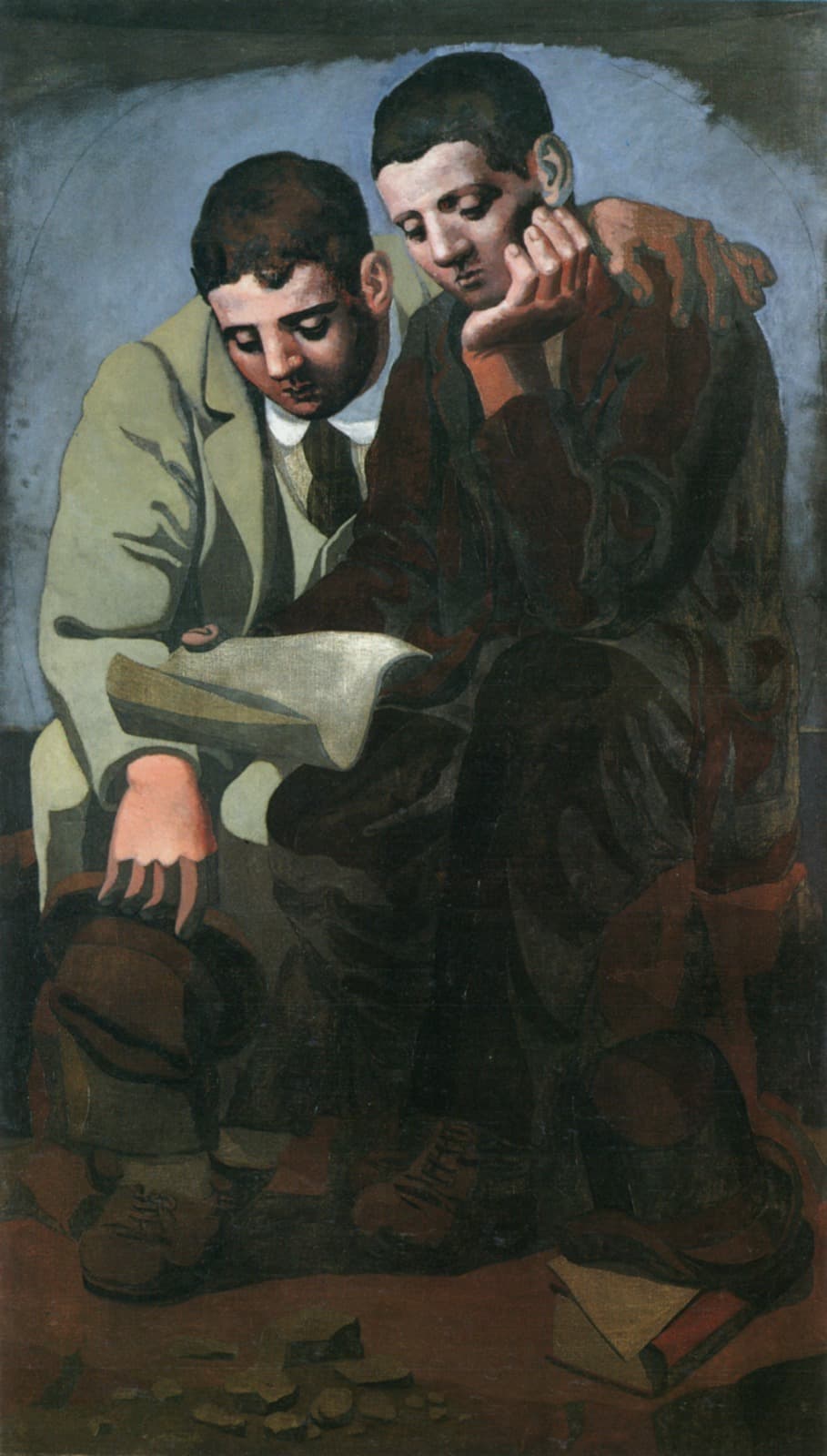
Two heavy young men press close together over a letter, and the intimacy is usually read as a memorial to Apollinaire.

Lotto crops the Passion down to one tear-streaked head at the surface, with soldiers' hands coming in from the edges of the frame.
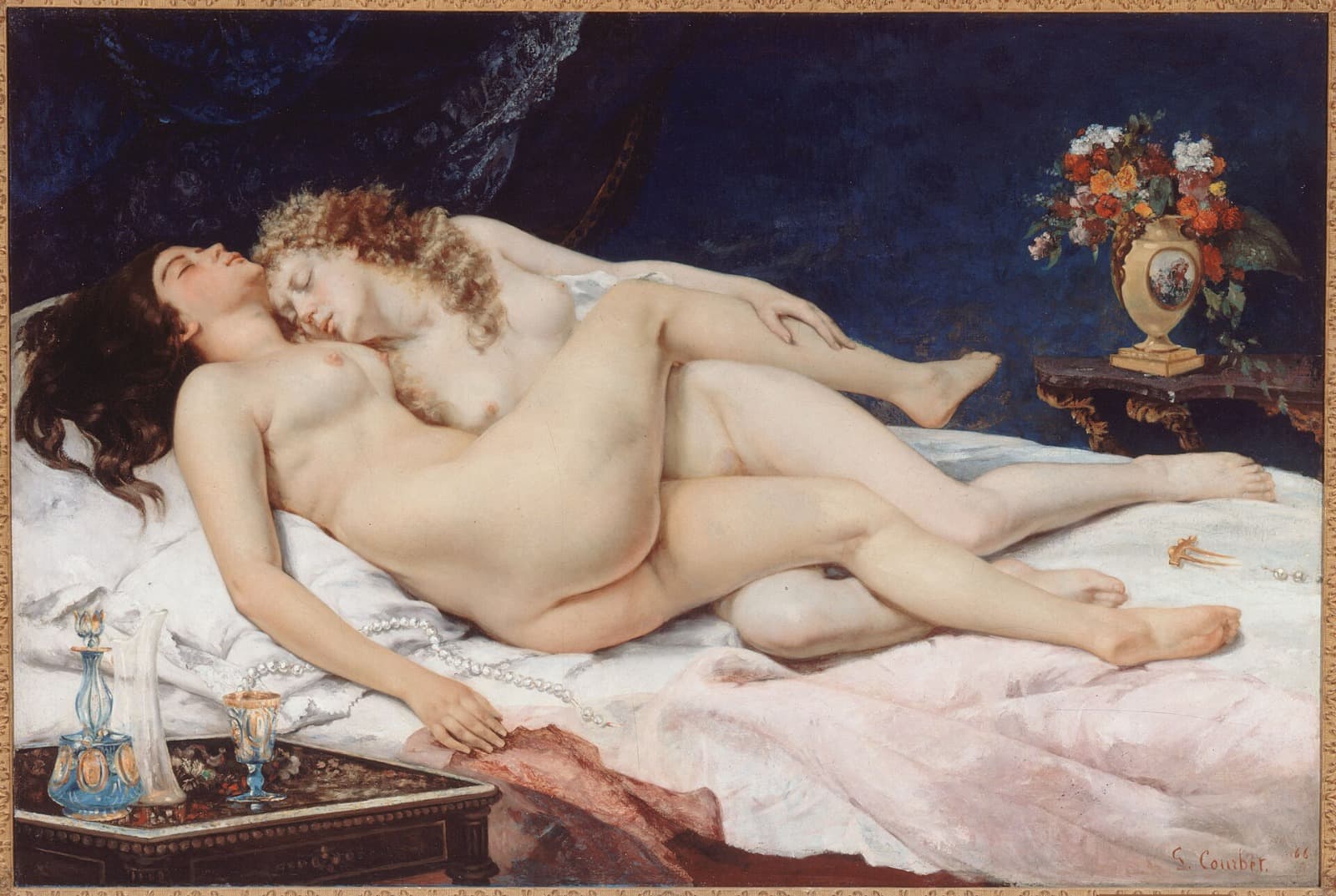
Two women asleep and entwined, painted on private commission and therefore out of reach of the Salon and its proprieties.
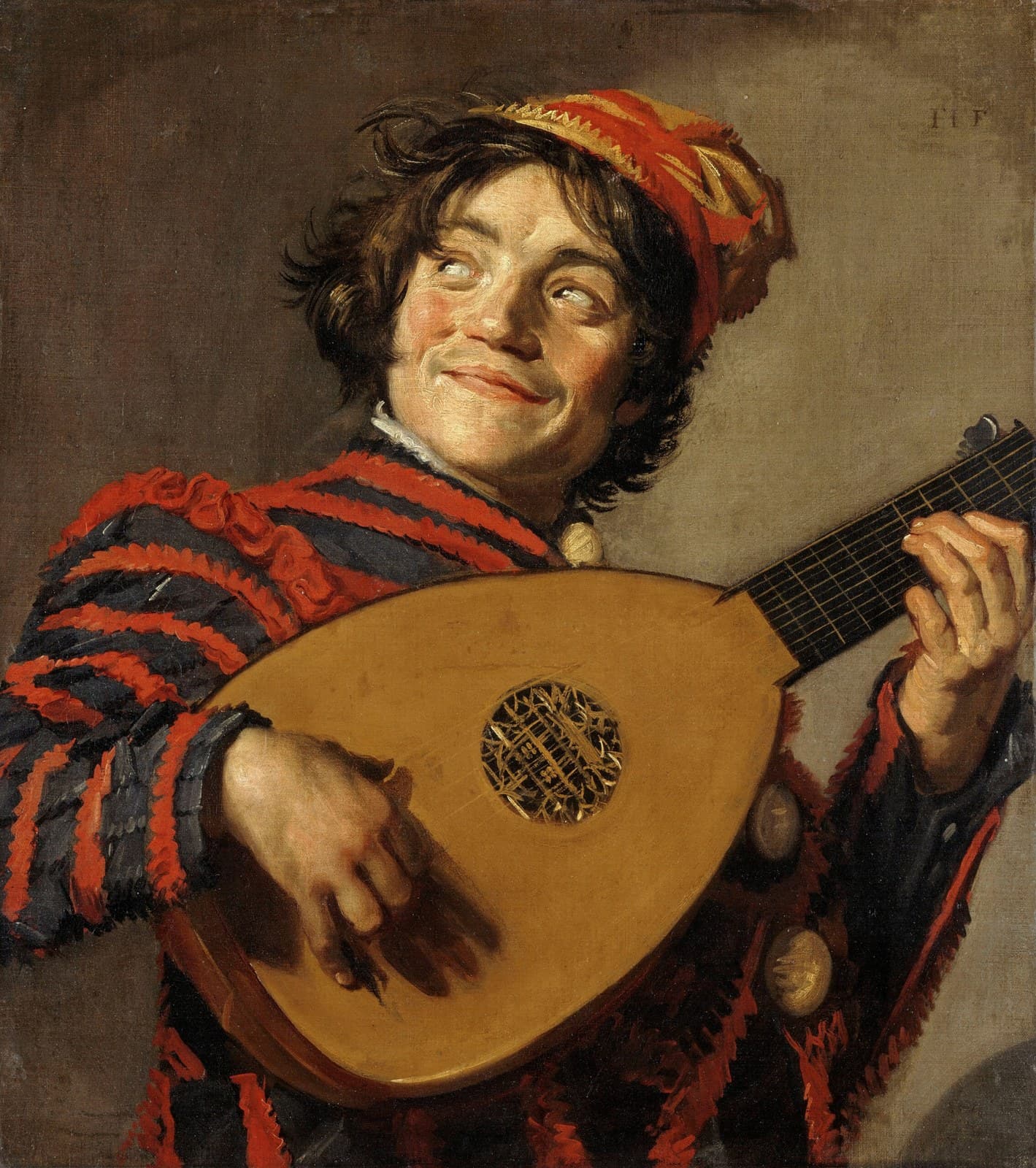
Caught mid-strum with his cap askew and his mouth open, painted so fast the brushstrokes still seem to be moving.
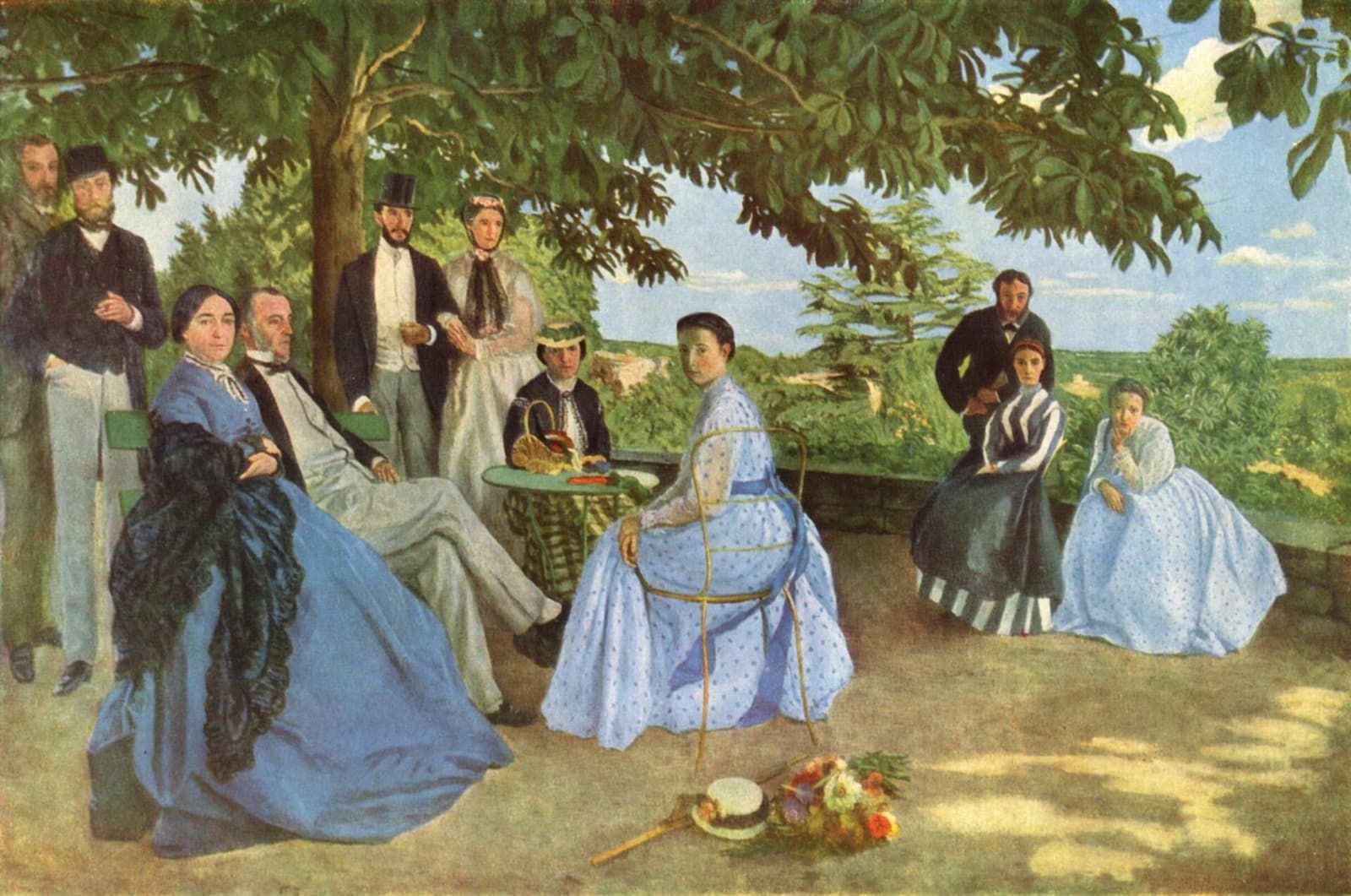
Eleven of the painter's family on a shaded terrace near Montpellier. Bazille was killed in the Franco-Prussian War at twenty-eight.
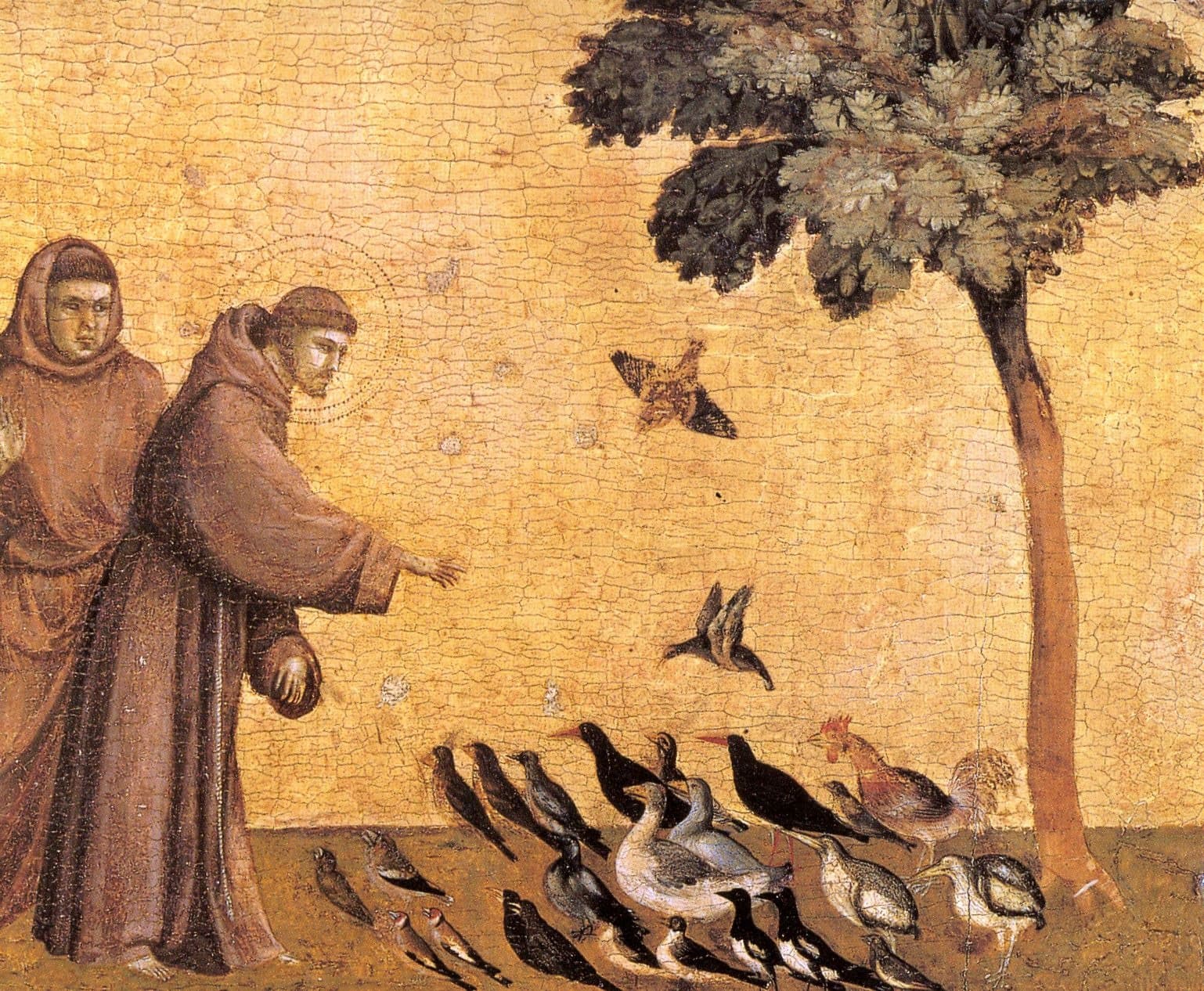
The same story at miniature scale, squeezed into a predella panel, and Giotto loses none of the plainness that made it convincing.

Every hair, every glassy tear, every bead of blood, pushed hard against the front of the picture and made to carry feeling rather than skill.

She reads his palm and takes the ring off his finger while she does it, and he is too busy looking at her to notice.
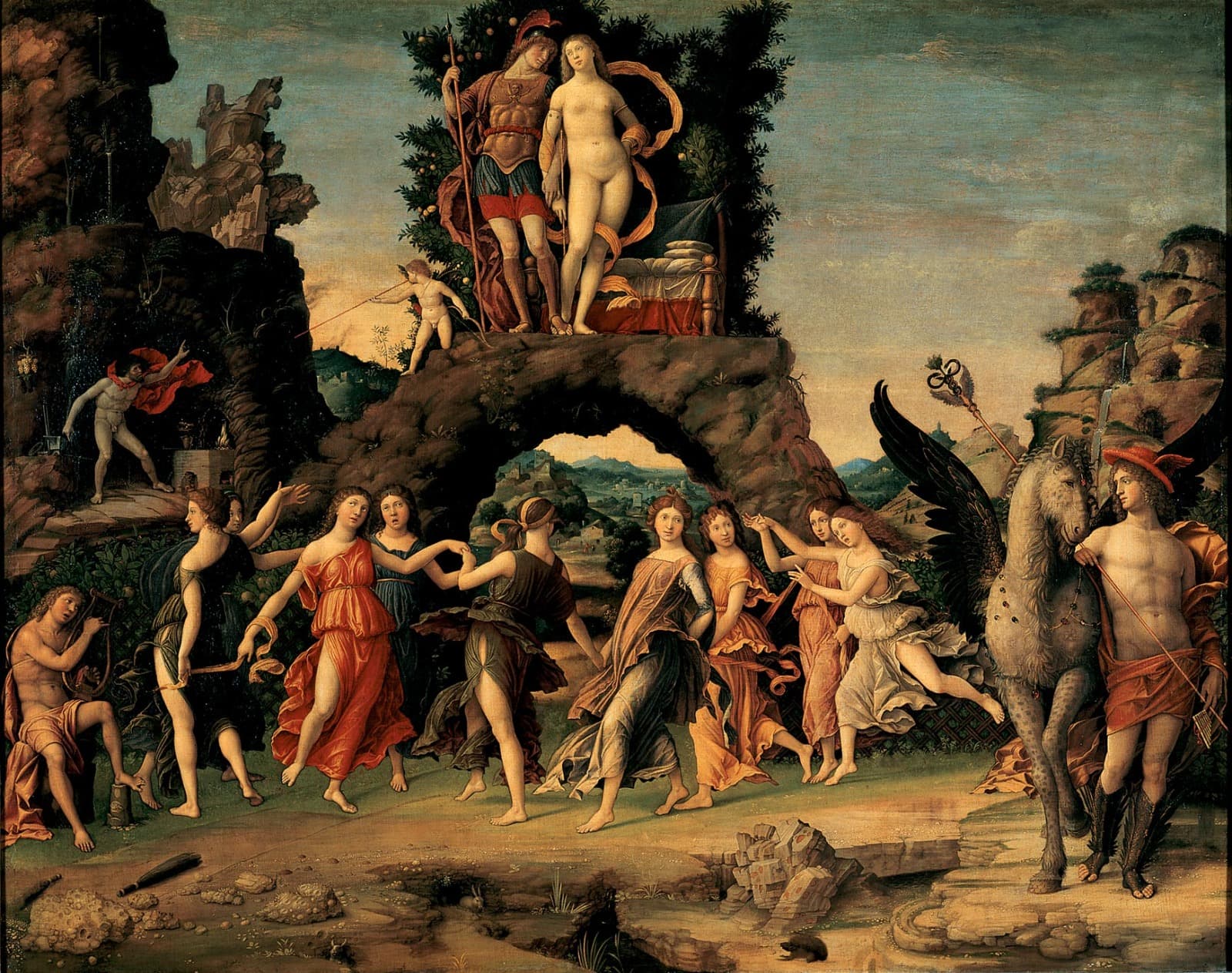
The Muses dance to Apollo's lyre while Venus's cuckolded husband fumes at his forge off to the left. Painted for Isabella d'Este's study.
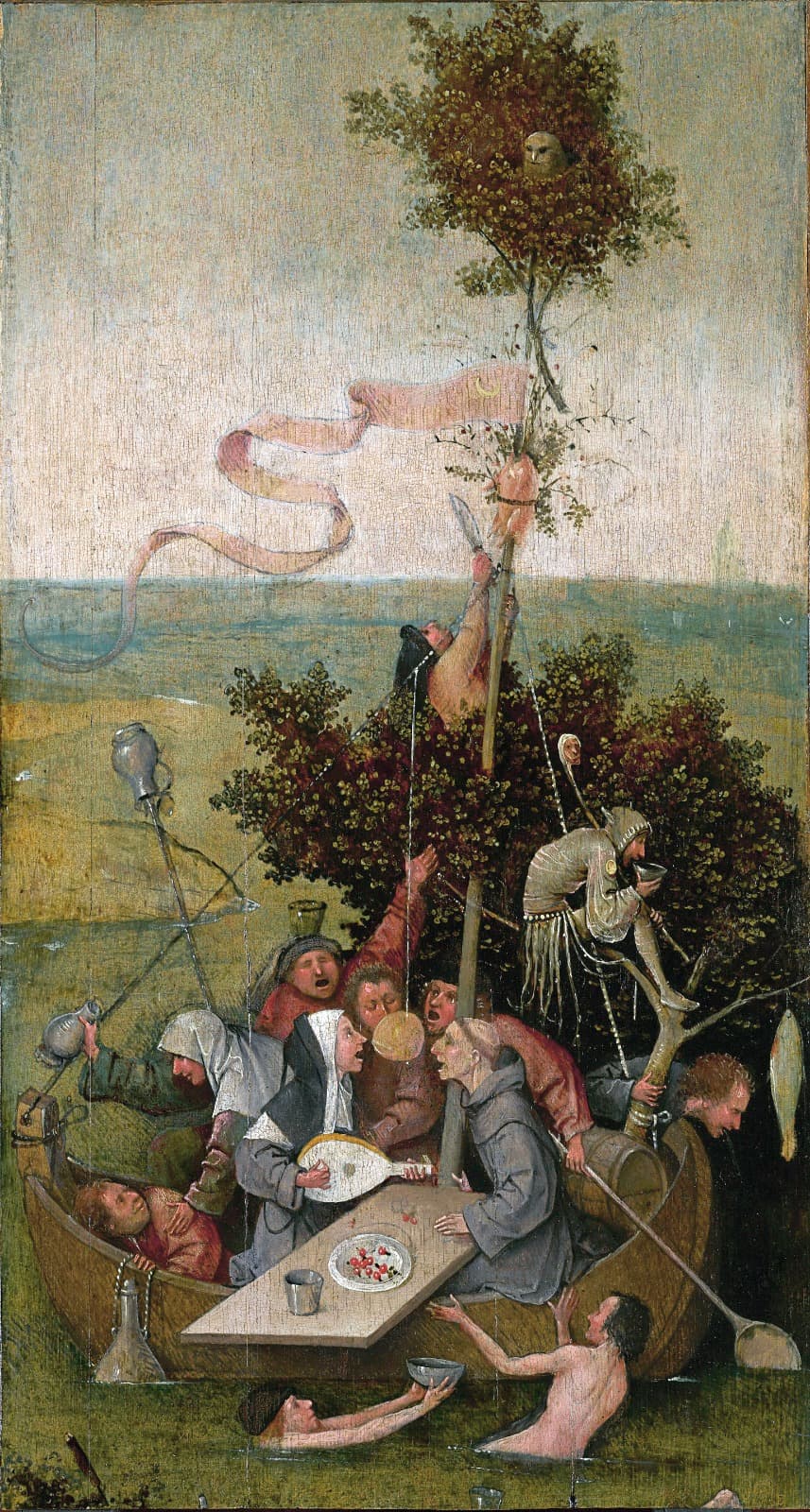
A monk and a nun bawl a song over a lute while somebody vomits over the side. The boat has no rudder, which is the point.

The angels crowd in like inquisitive children. One of the first paintings to put the Virgin and saints in a single shared space.
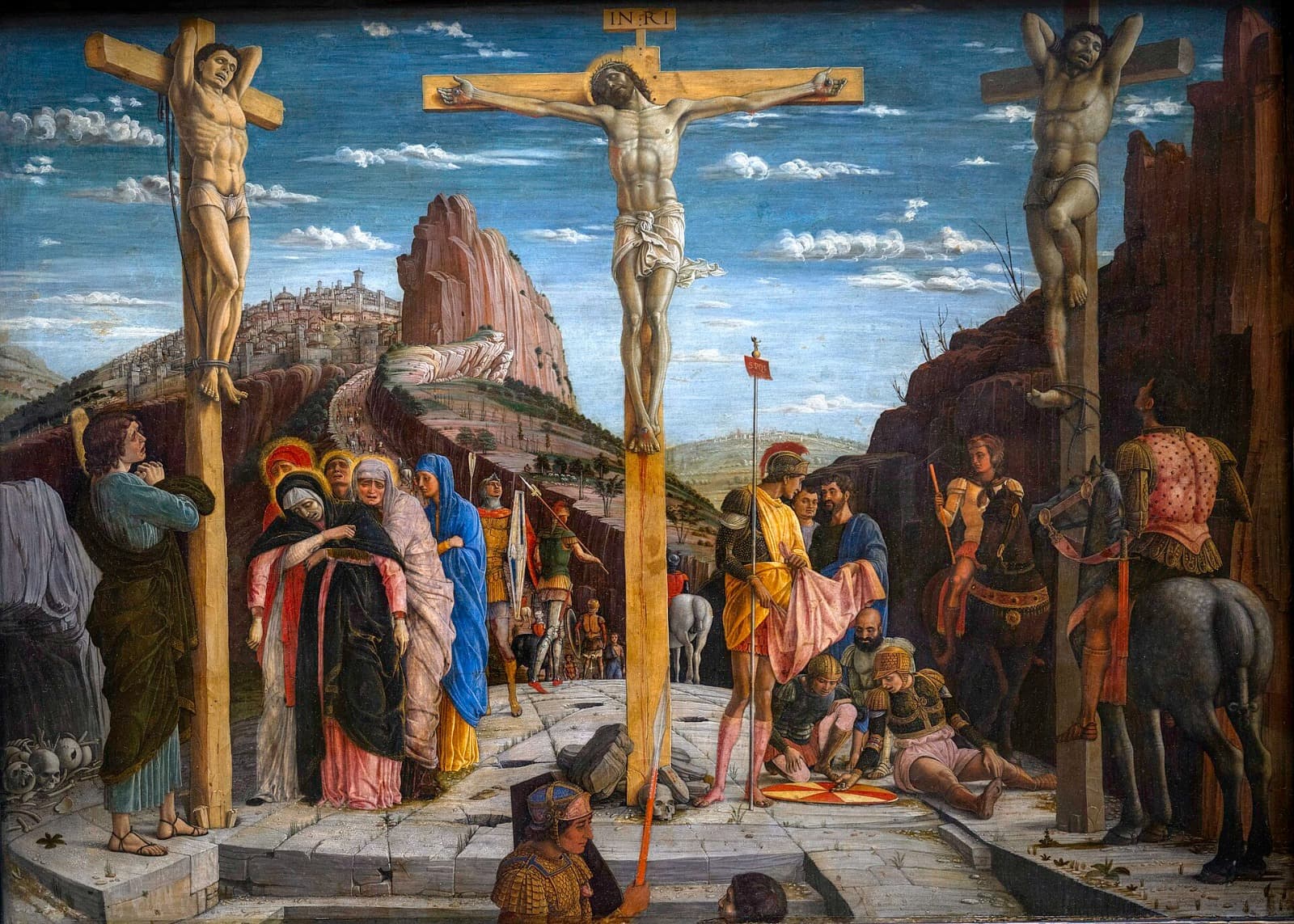
Soldiers throw dice for Christ's robe on a paved Golgotha. This panel was sawn off an altarpiece by Napoleon's looters and never returned.

She sits in profile against a hedge of carnations with butterflies going past, a sprig of juniper on her sleeve punning on her name.
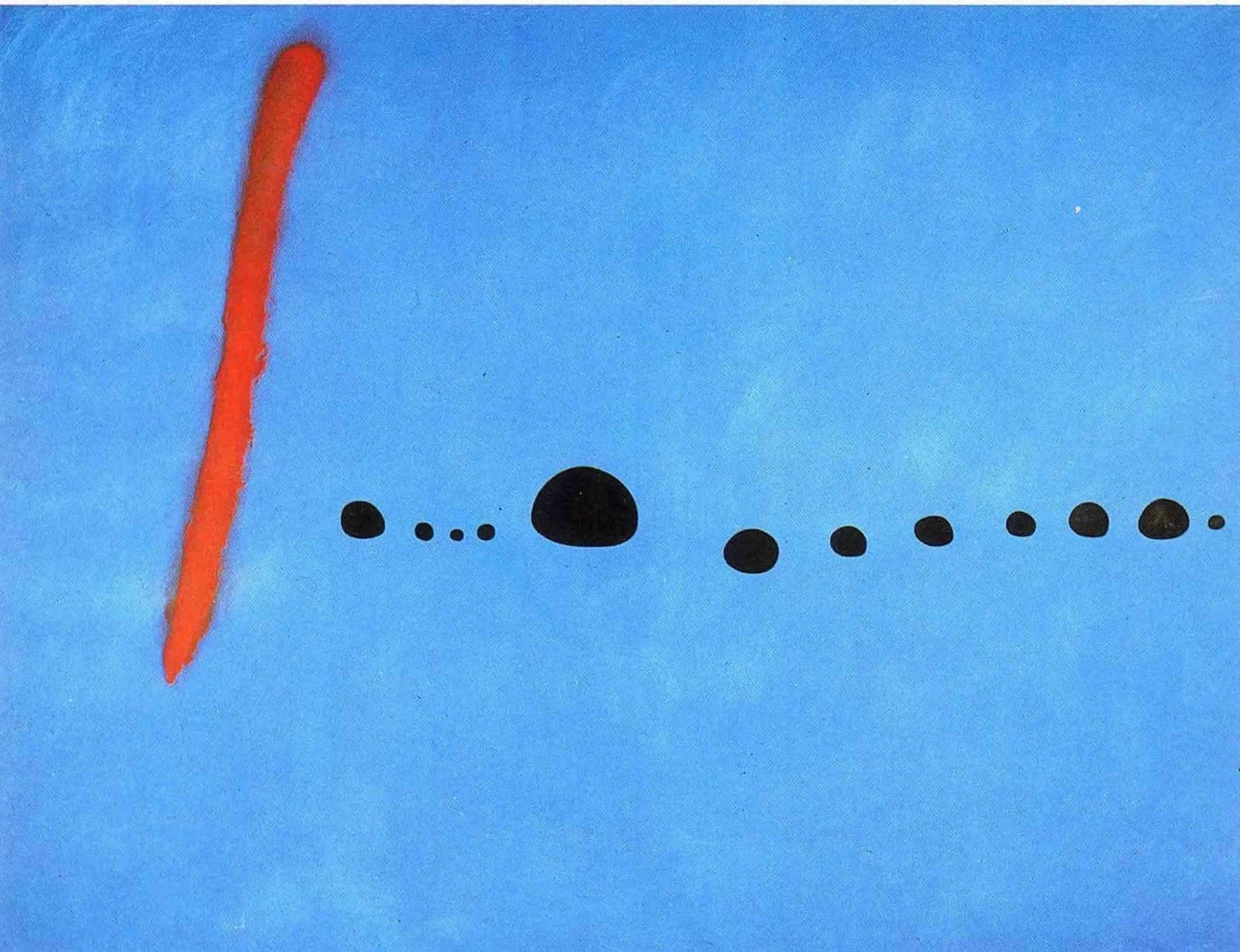
Pure blue interrupted by a line of black dots and one short red bar. Miró late in life, having thrown almost everything out.

Oedipus leans in close to answer the riddle, and a previous contestant's foot is lying at the bottom edge as a warning.

Golden rays come off a winged crucified figure in the sky and strike Francis in the hands, feet and side. Giotto signed this one.

Christ crowns his mother at the top of a flight of steps that recede convincingly into depth, which is the new thing here.

Christ as a boy holds a candle for his father and the flame glows red through his fingers, which is the whole subject.
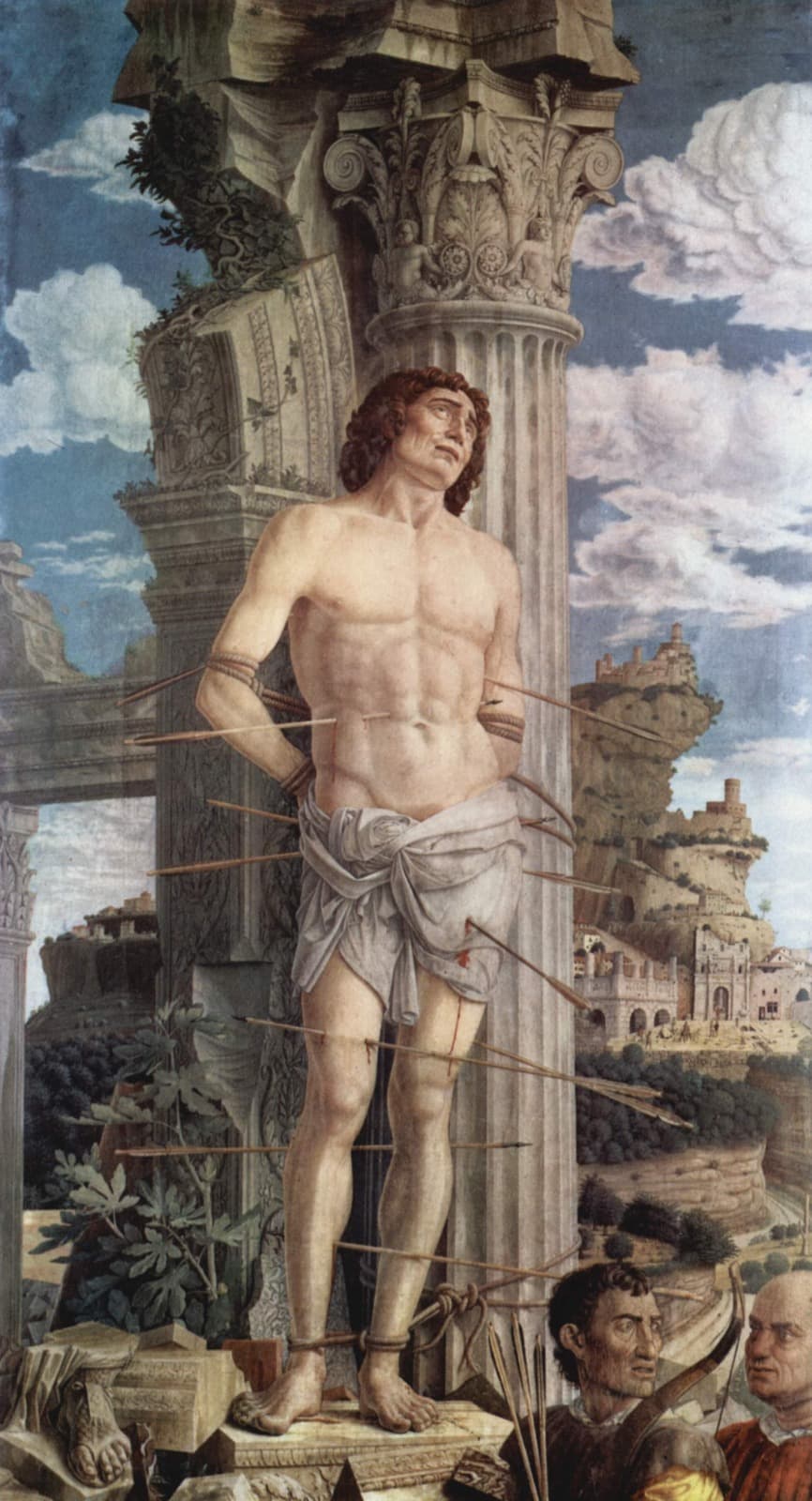
Sebastian takes his arrows with the composure of a statue, tied to a Roman column in a field of accurately ruined antiquity.
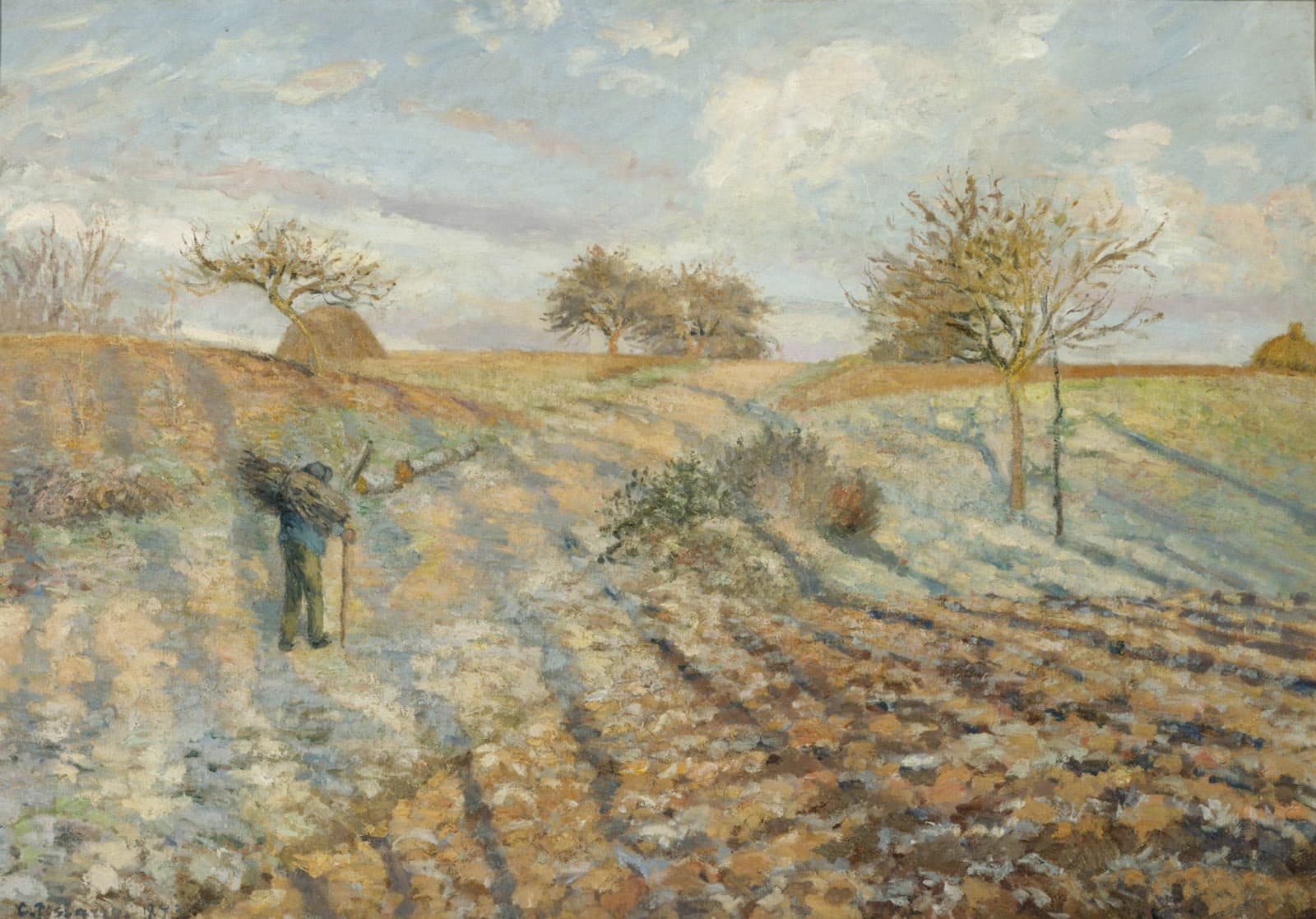
Critics at the first Impressionist show in 1874 said it looked like palette scrapings. The furrows are streaked with blue, violet and gold.
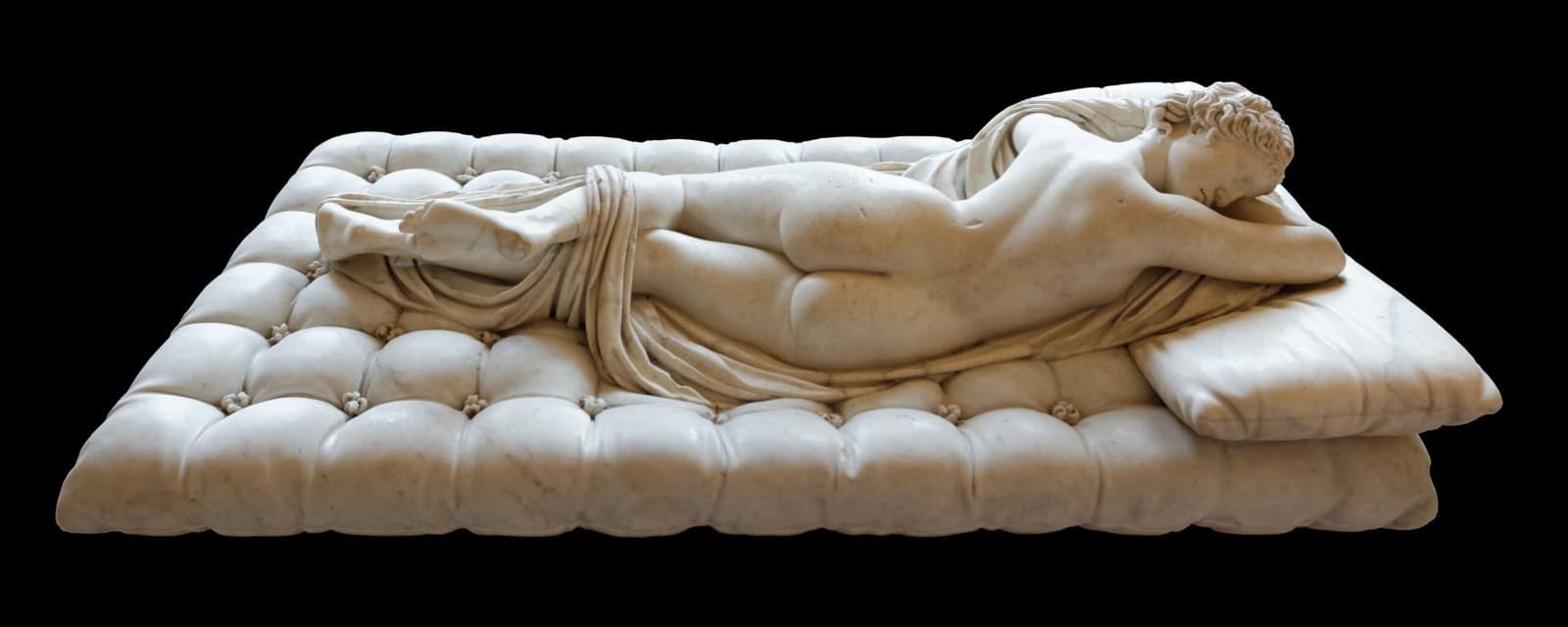
You see a sleeping woman until you walk around to the other side. Bernini added the mattress, folds and all, in 1620.

He weighs gold on a fine balance and her eyes drift off the prayer book toward the coins. A small mirror catches the room.
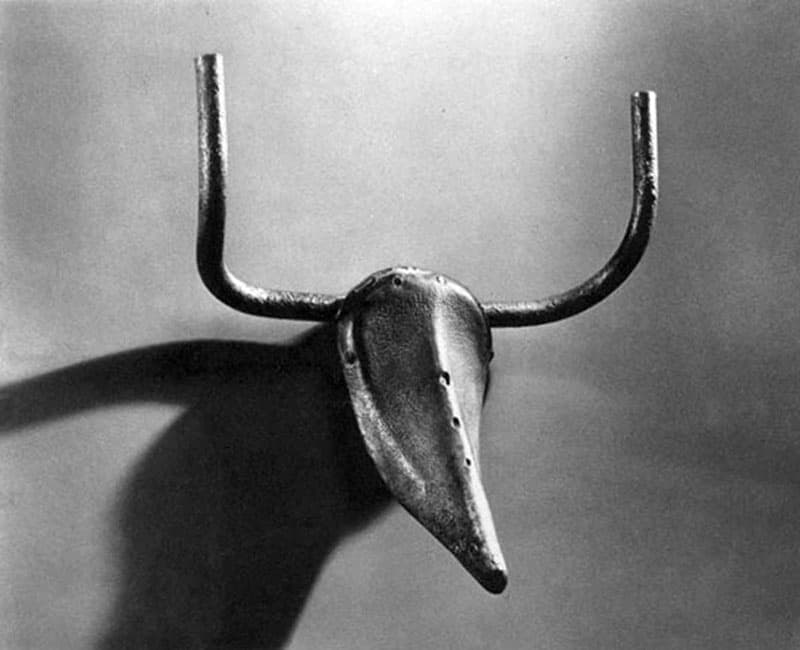
A bicycle saddle and a set of handlebars, joined. Picasso joked that someone might one day turn it back into a bicycle.
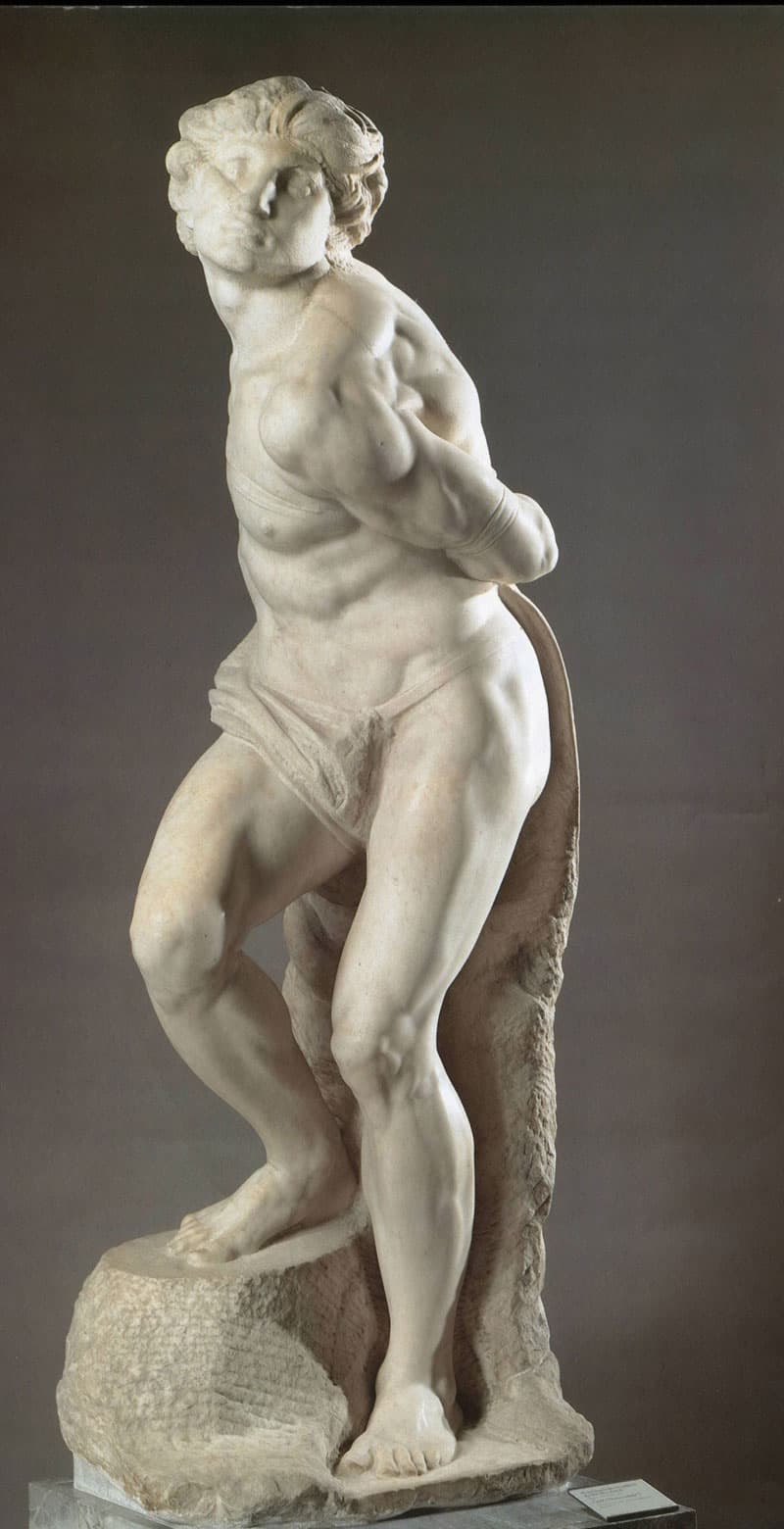
Carved for a papal tomb that kept shrinking until it was abandoned. What the bonds mean is still argued, but the strain is unmistakable.

Poussin laid the crowd out like a relief so each gesture reads separately, one woman so hungry she nurses her own mother.
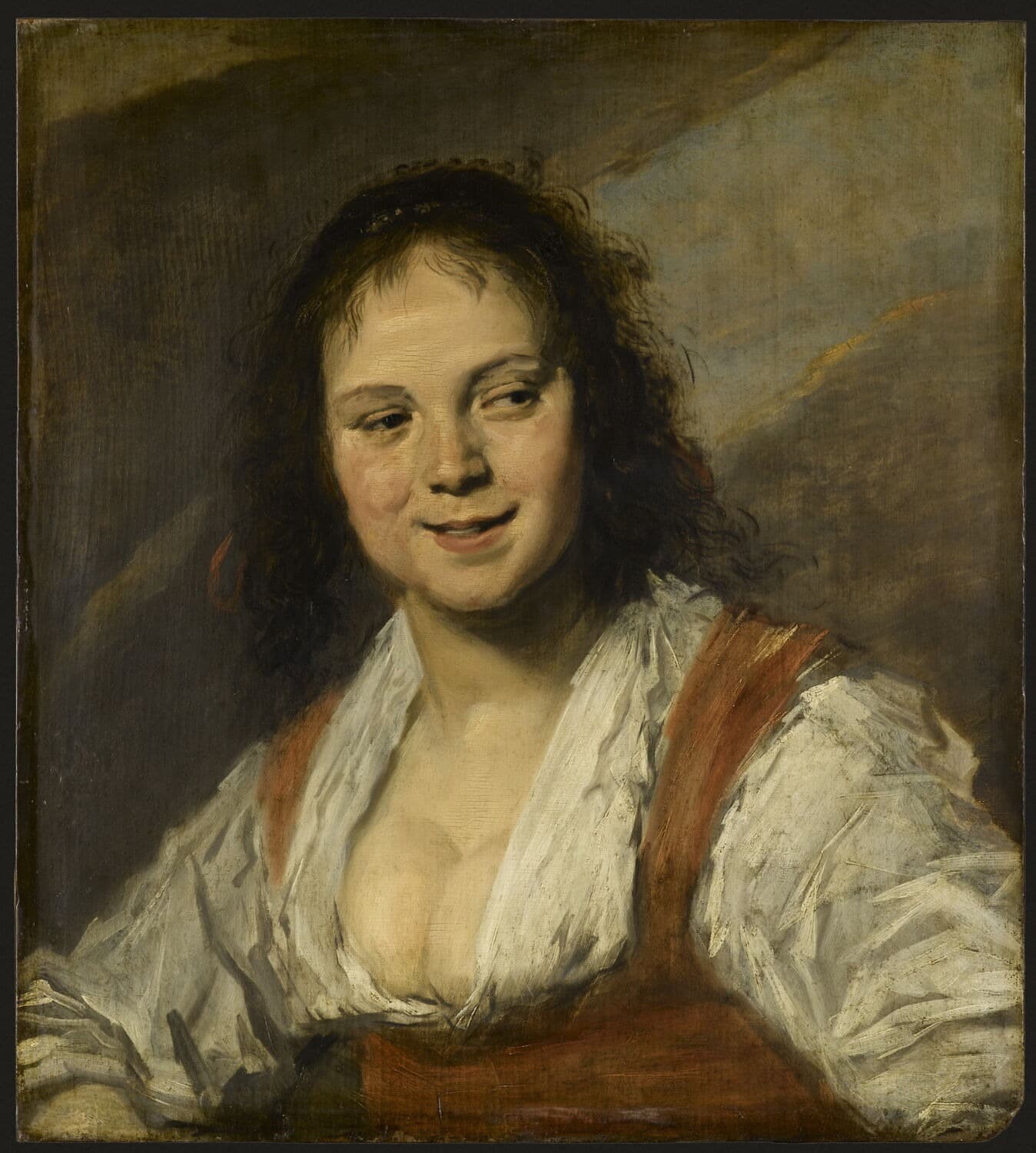
Not a commission but a tronie, a character study made to show off. Hals catches her half-laugh before it has finished.

Delacroix's debut, and the damned are biting the hull. Romanticism announced itself with churning water and bodies learned from Rubens.
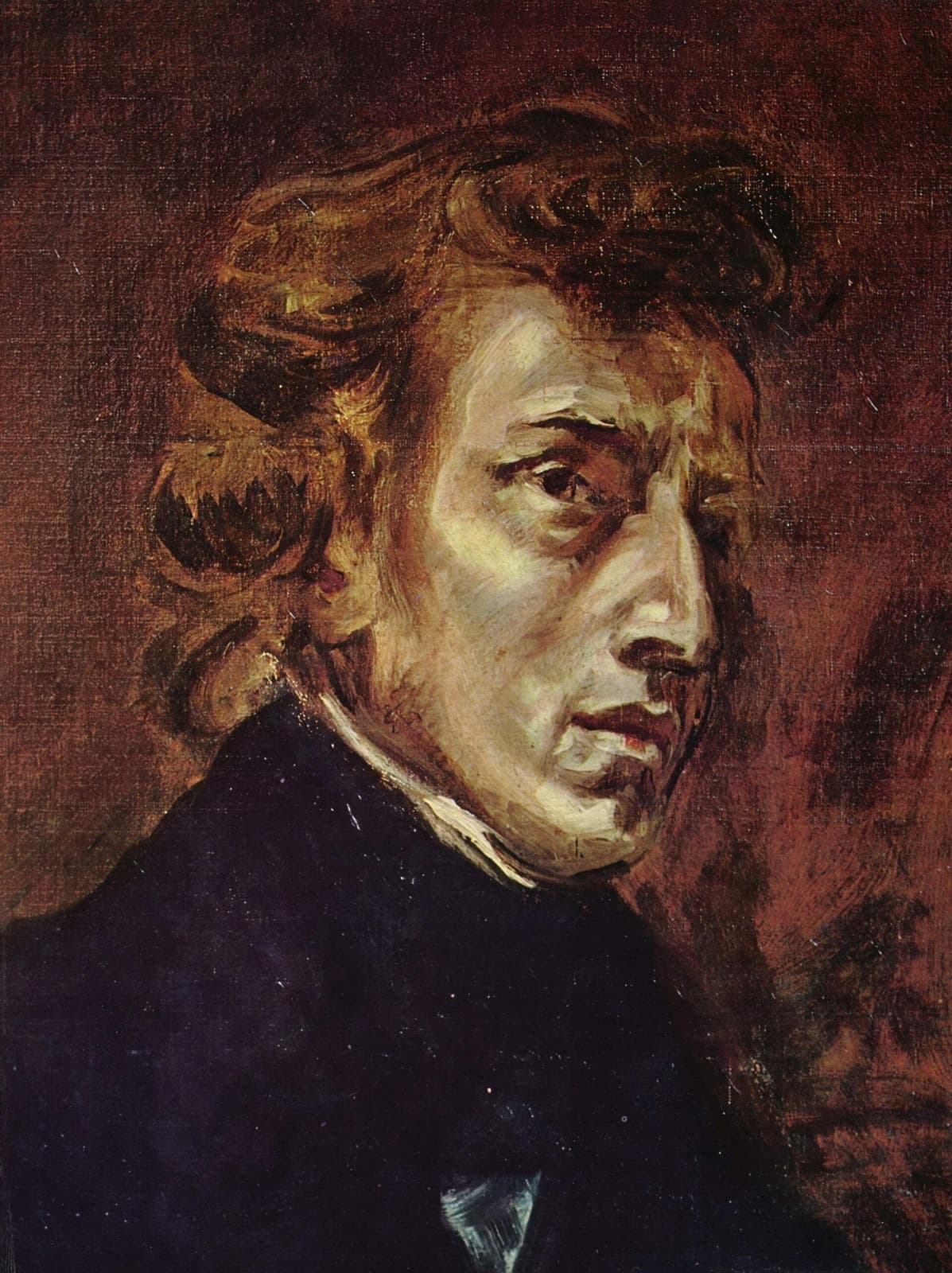
It was half of a double portrait with George Sand listening at the piano, until somebody cut the canvas in two.
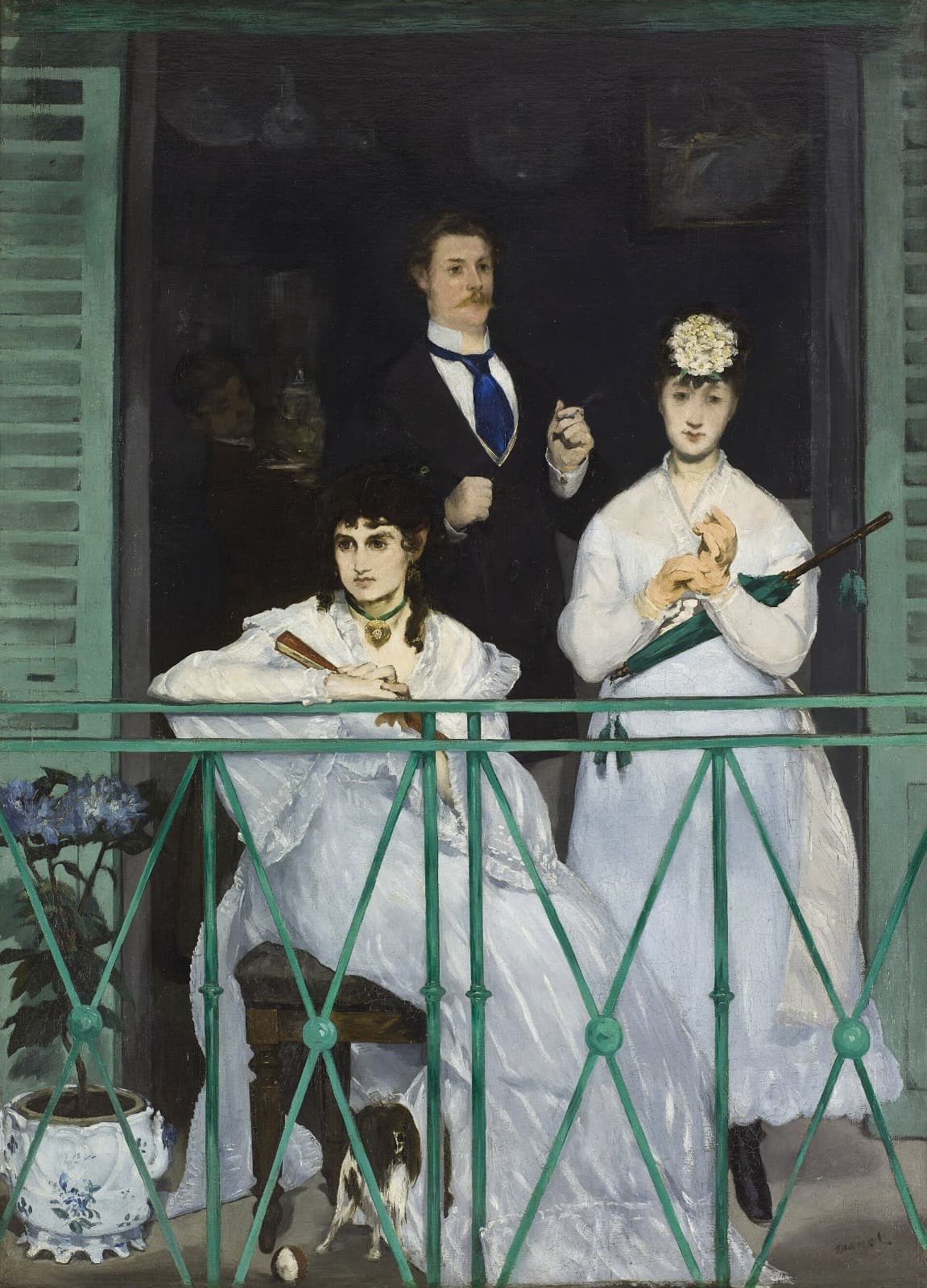
Three people at a green railing all looking different ways and none at each other. Berthe Morisot is the one seated and dreaming.

Daylight from a window, firelight from a hearth, and a great spiral staircase winding up into the dark between them.

Too explicit to exhibit for over a century, it stayed in private hands behind curtains and screens. No myth, no excuse, just the body.

One oil lamp, one skull in her lap, and a flame she does not take her eyes off. Everything else is dark.

Hersilia throws herself between the two armies with her arms out. David painted it after the Terror, arguing for reconciliation instead of oaths.
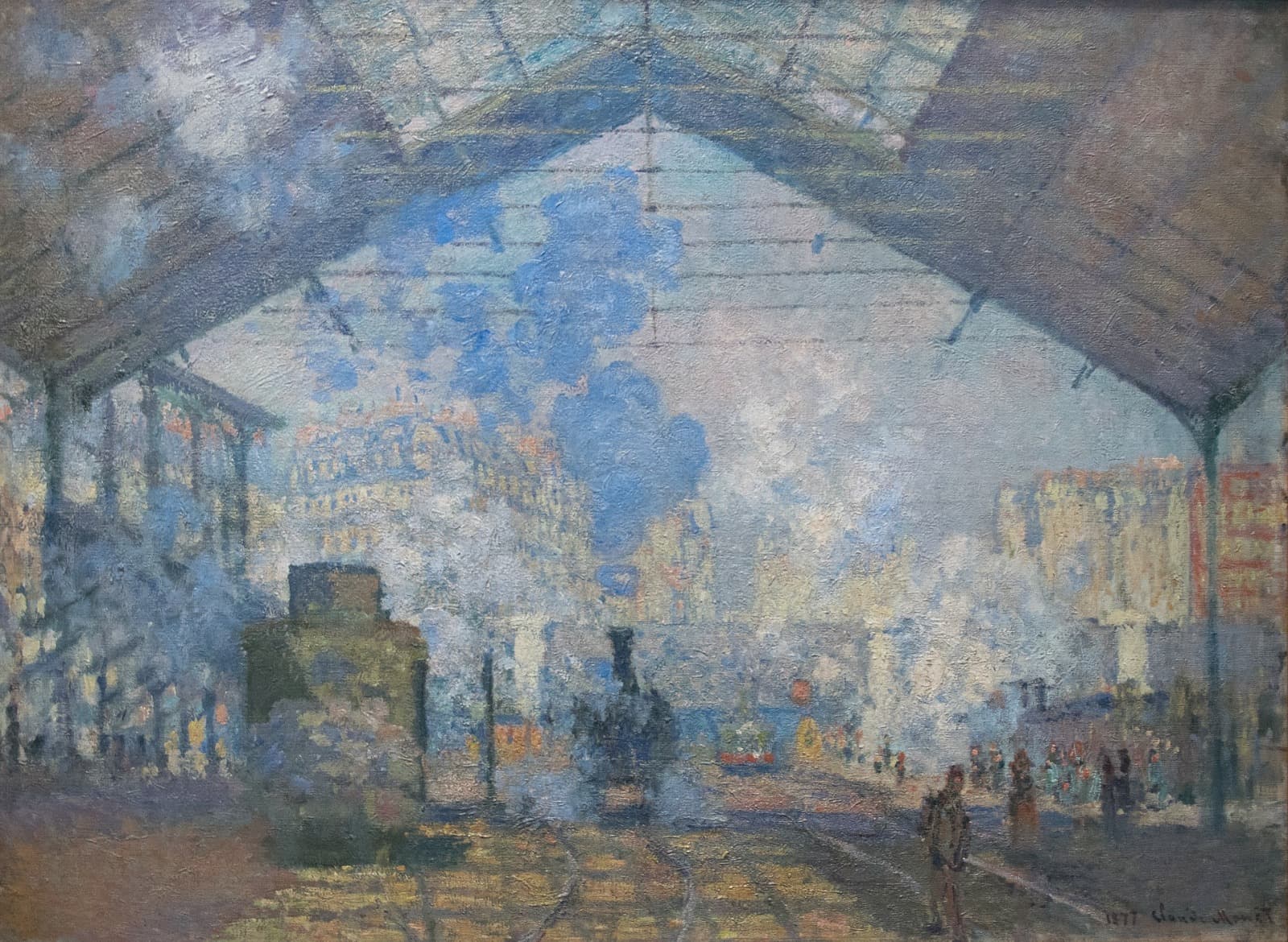
Monet set his easel up inside the station and painted the steam until the roof and the city beyond it had dissolved into it.

The title comes from Baudelaire and the technique from Seurat, but the color is already heading somewhere neither of them went.
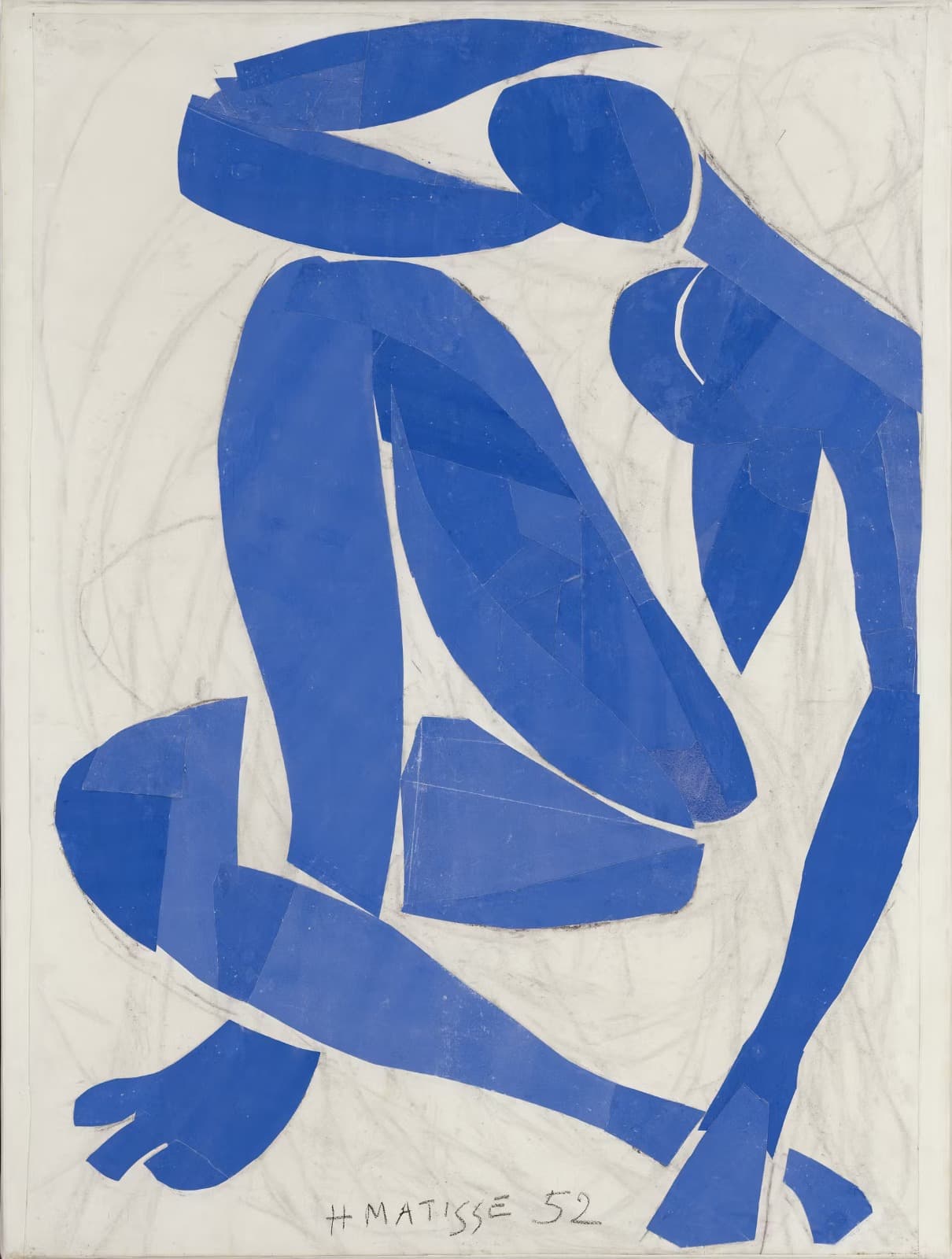
Matisse was too ill to stand at an easel, so he cut the figure out of painted paper and called it drawing with scissors.

Gaslights along the Arles quay drop long quivering reflections into the water, the Great Bear overhead, a couple walking arm in arm below.

Broken lances lie along the receding lines of a perspective grid. Vasari said Uccello sat up all night muttering about how sweet it was.

Erasmus is caught mid-sentence with the pen still moving. He sent portraits like this across Europe as a kind of intellectual calling card.
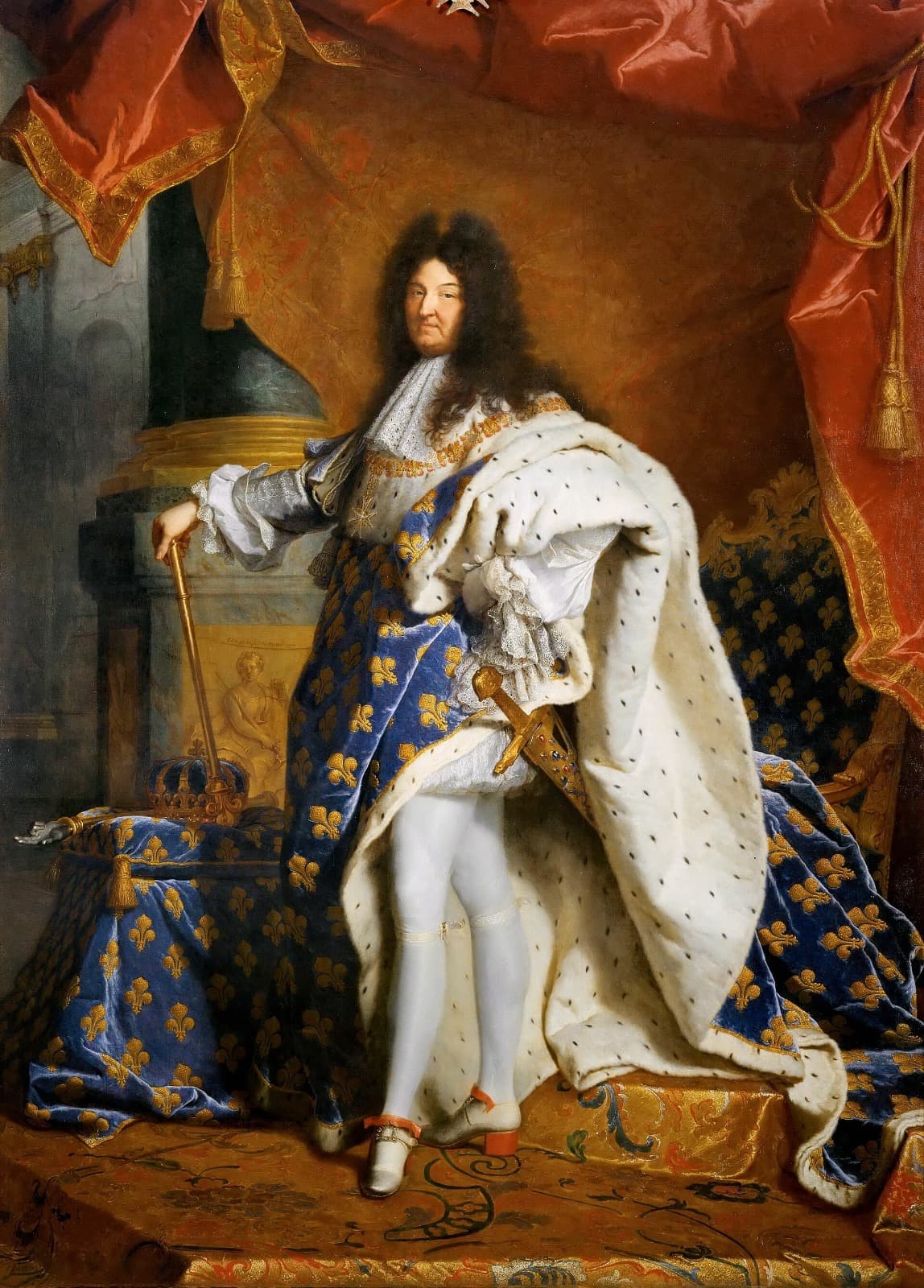
At sixty-three the king still turns out one leg to show the dancer's calf he was proud of, under a cascade of ermine and fleurs-de-lis.

Napoleon has already crowned himself and is now crowning Josephine, with the pope seated behind him and reduced to a spectator.

A bare back seen from behind under even light, with a striped turban wound round the head. Ingres returned to this view all his life.

Delacroix saw a room like this once, on a trip to North Africa, and painted it from memory. Picasso later made fifteen variations on it.
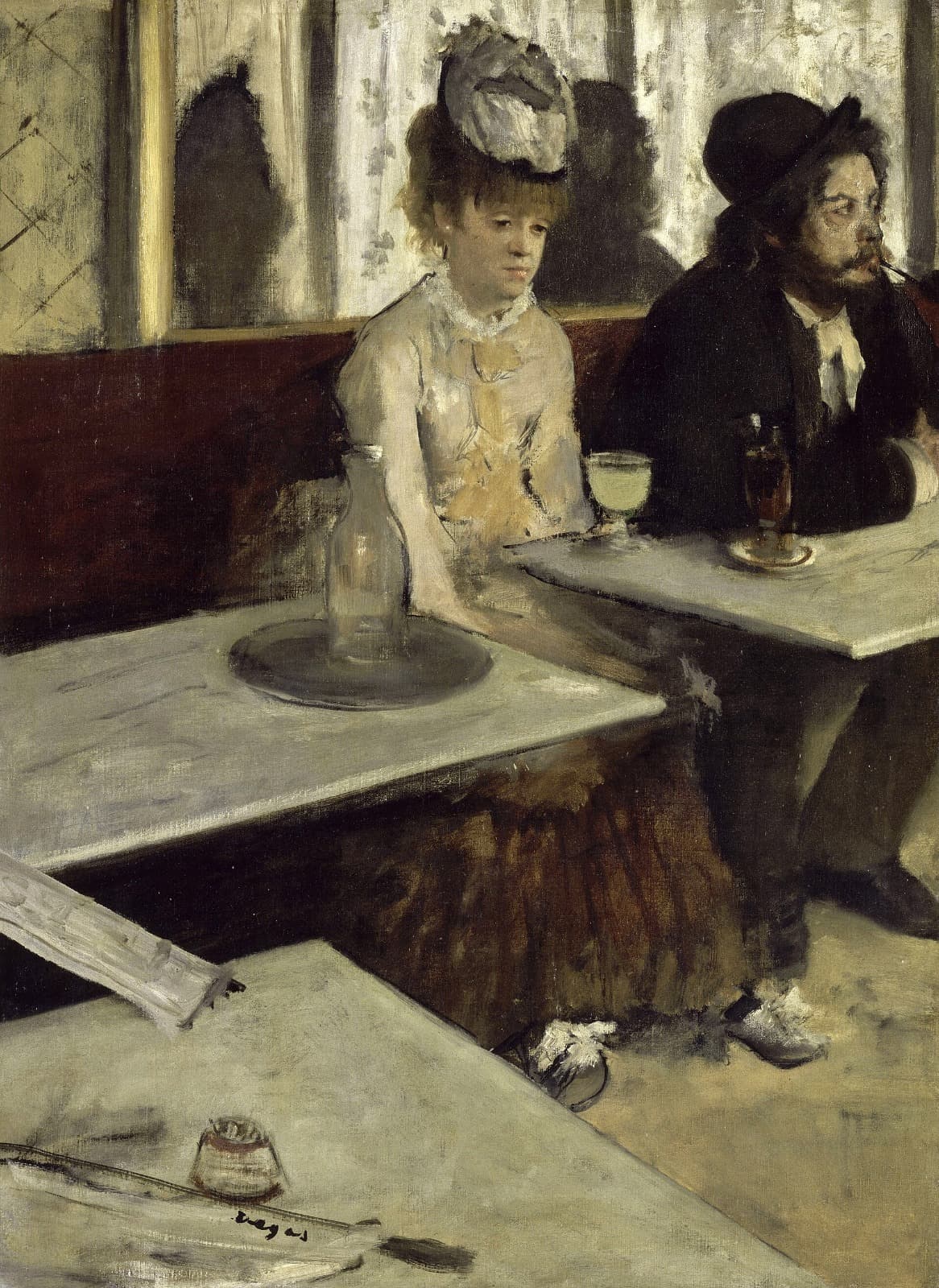
Two people sit shoulder to shoulder at a cafe table staring at nothing, pushed off to one side behind a run of empty tables.

The old man's nose is swollen and ruined by disease, and the boy looks up at him without noticing it at all.
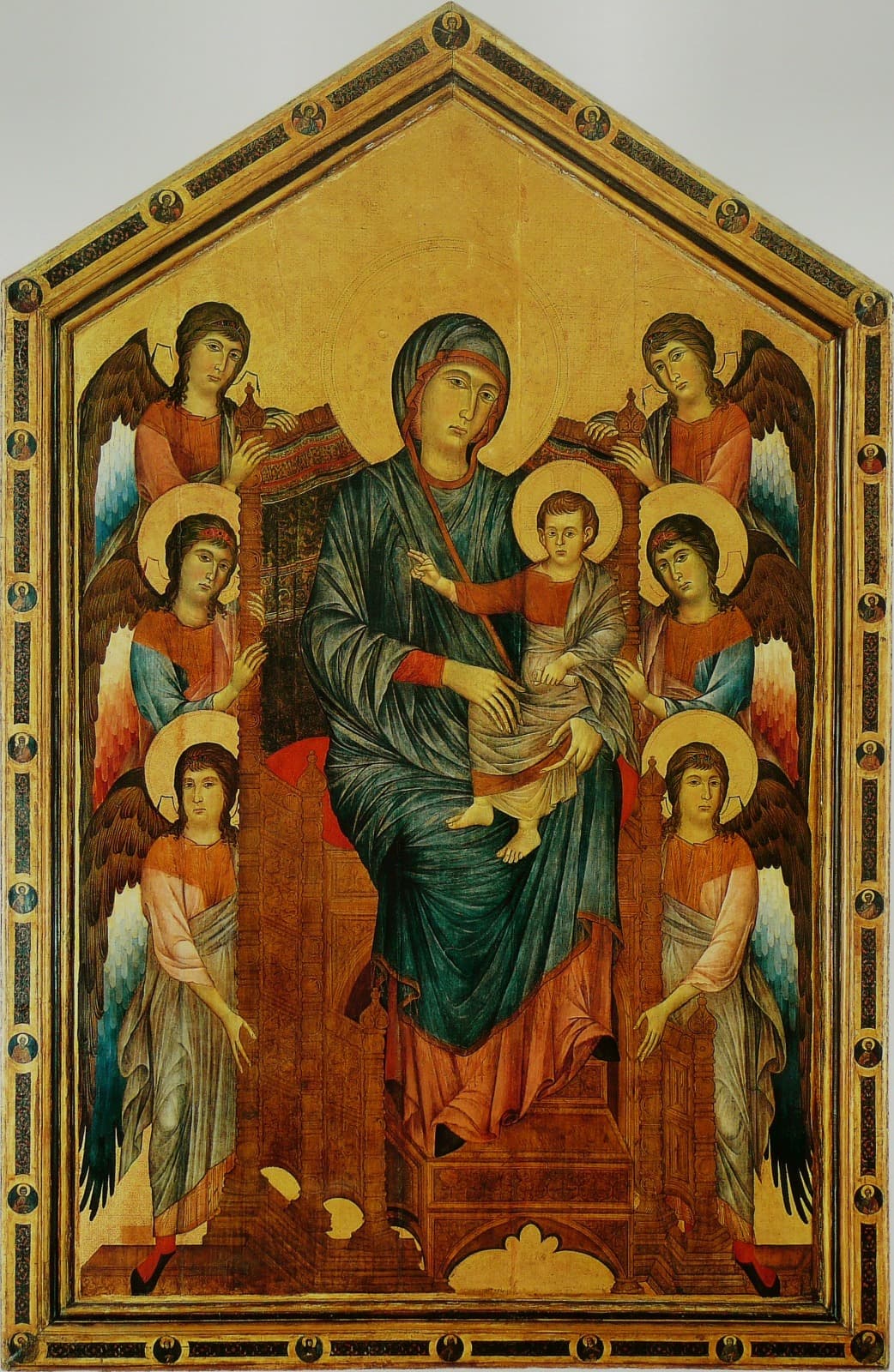
Six angels stack up the sides of the throne against gold. Cimabue taught Giotto, and the throne here is just beginning to recede into space.
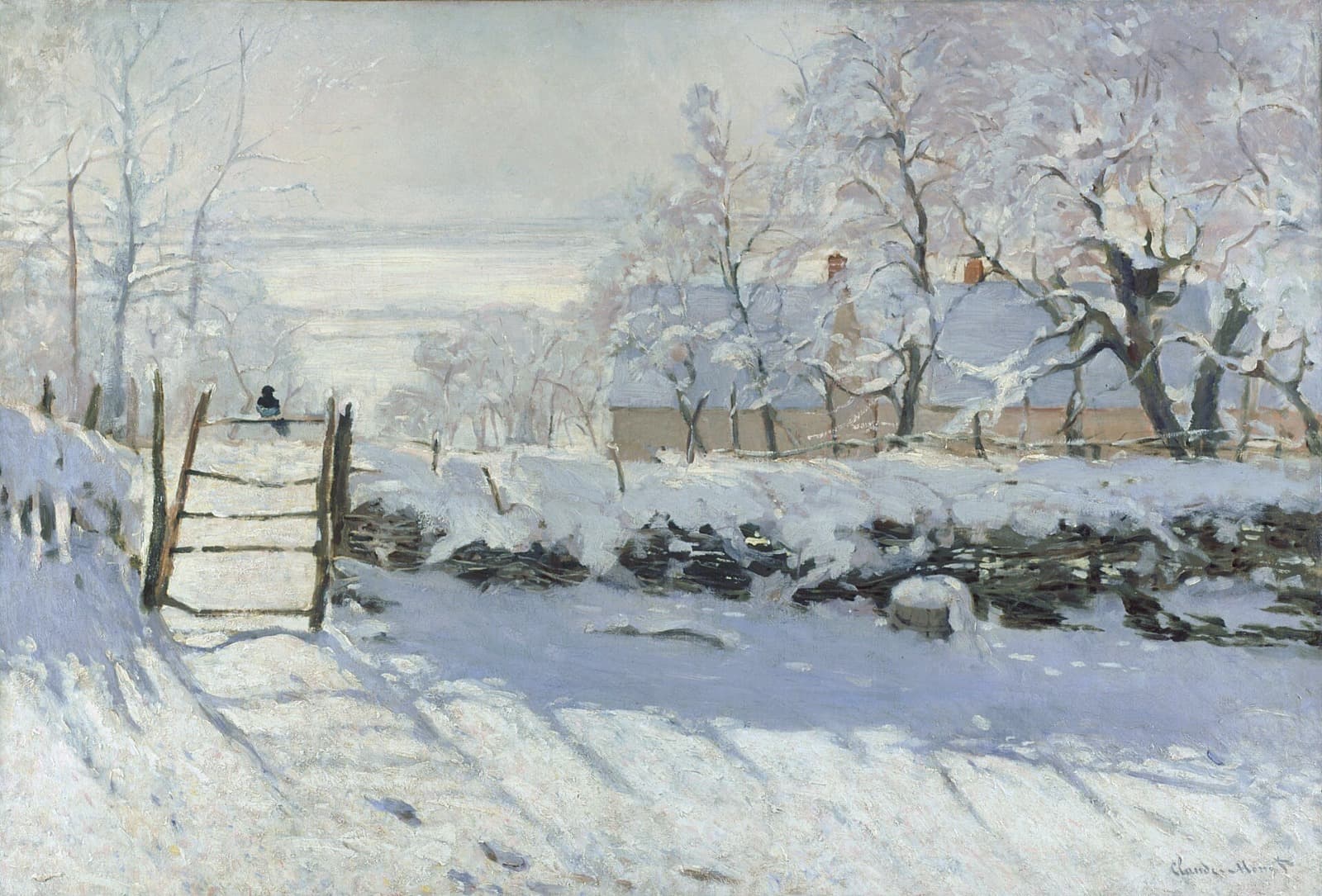
A single magpie on a gate in deep snow, the shadows tinged blue and violet rather than grey. The Salon turned it down.

The newspaper magnate leans forward gripping both knees, and the picture became the face of the commercial class that ran nineteenth-century France.

Shepherds trace the carved words on a tomb, Even in Arcadia I am here, and Poussin lets death speak without raising its voice.

A clown in white satin stands alone at full length with his arms hanging useless, given the scale of a grand portrait.