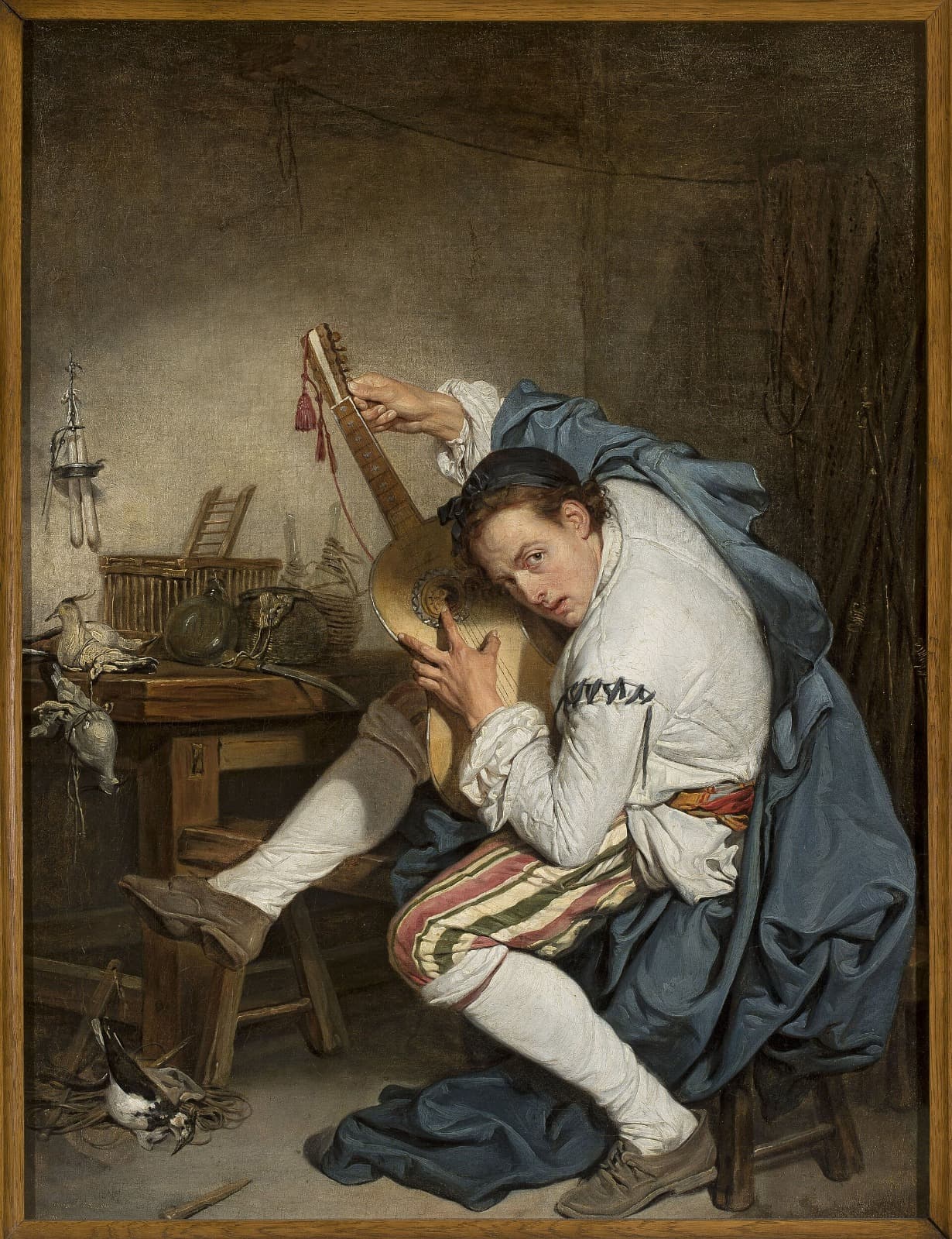
The Guitarist
1755 · Musee d'Arts Nantes, Nantes
A young man glances up from his guitar mid-song. Greuze usually painted tearful moral lessons, and here he simply does not.
★ 4.2
 skopia
A young man glances up from his guitar mid-song. Greuze usually painted tearful moral lessons, and here he simply does not.

John stands lost in his book, wrapped in red cloth massed like masonry. One wing of an altarpiece now scattered across five cities.

One of the Impressionist canvases he owned hangs on the wall behind him. Caillebotte's money and his bequest kept the movement alive.
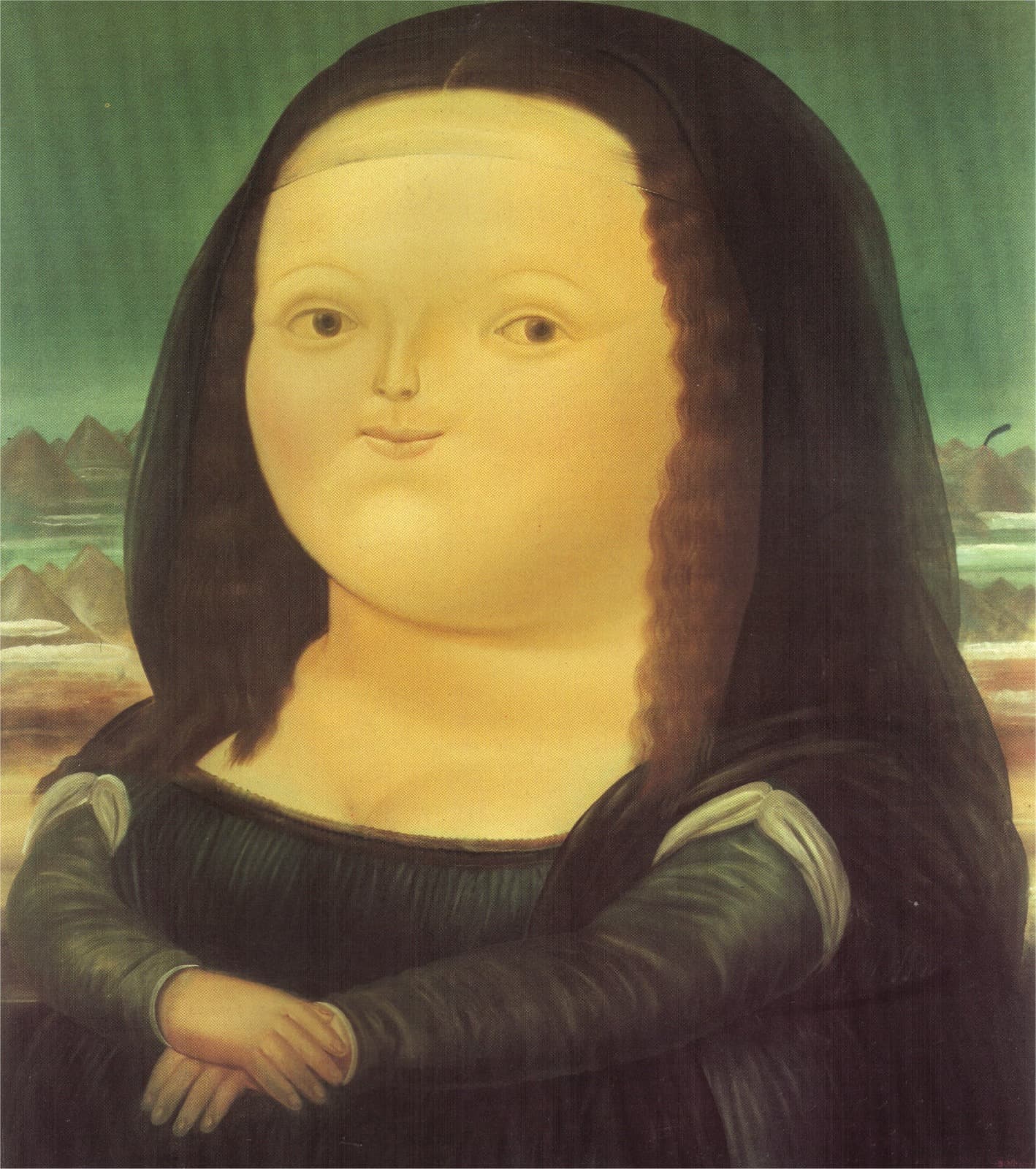
Botero inflated the most famous face in the world until the little mouth vanished into acres of cheek. Affectionate rather than cruel.
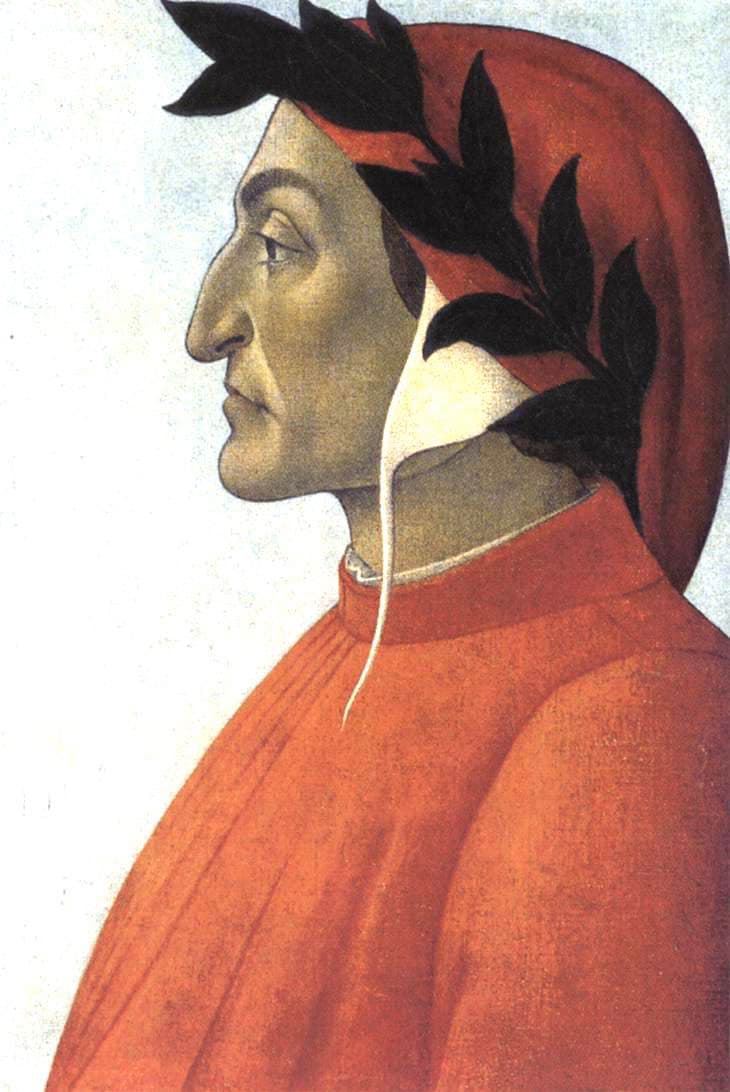
Dante had been dead nearly two centuries, so this is not a likeness but a verdict, struck in profile like a coin.

An inscription gives his age as ninety-three. Dürer drew him in Antwerp and used the head soon after for a Saint Jerome.
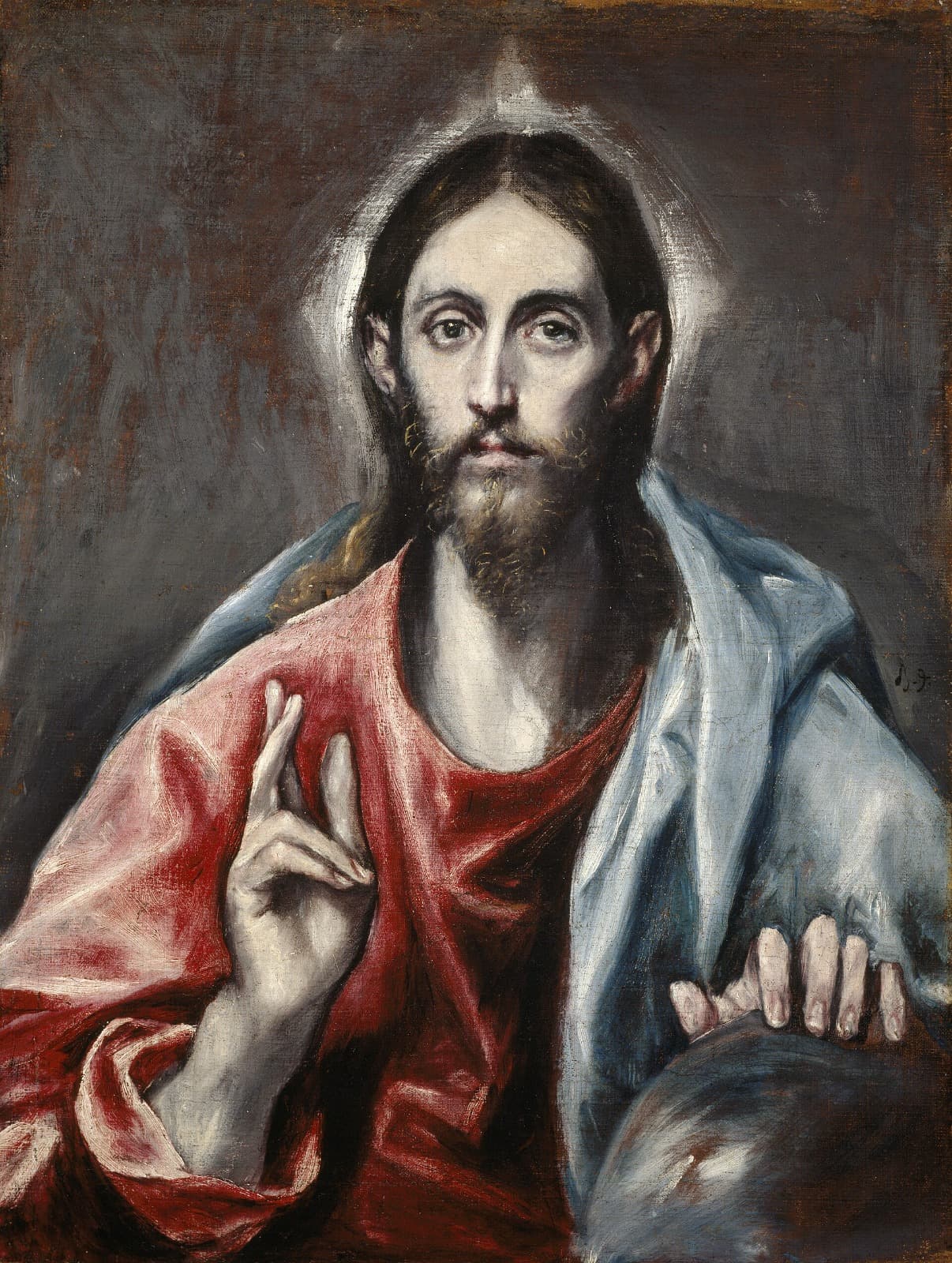
Two fingers raised in a gesture reaching back to Byzantium, one hand on a crystal orb, the face long and sorrowful and unmistakably his.

A few sweeps of brush and brown ink, most of the paper left bare, and the whole weight of a sleeping head is there.

Washington leans on a cannon with captured flags at his feet. Peale knew him and served in the war, so this is the man.

They shared a Barcelona studio, and Soto was known as a hard drinker, but Picasso painted him sober and sad in blue.
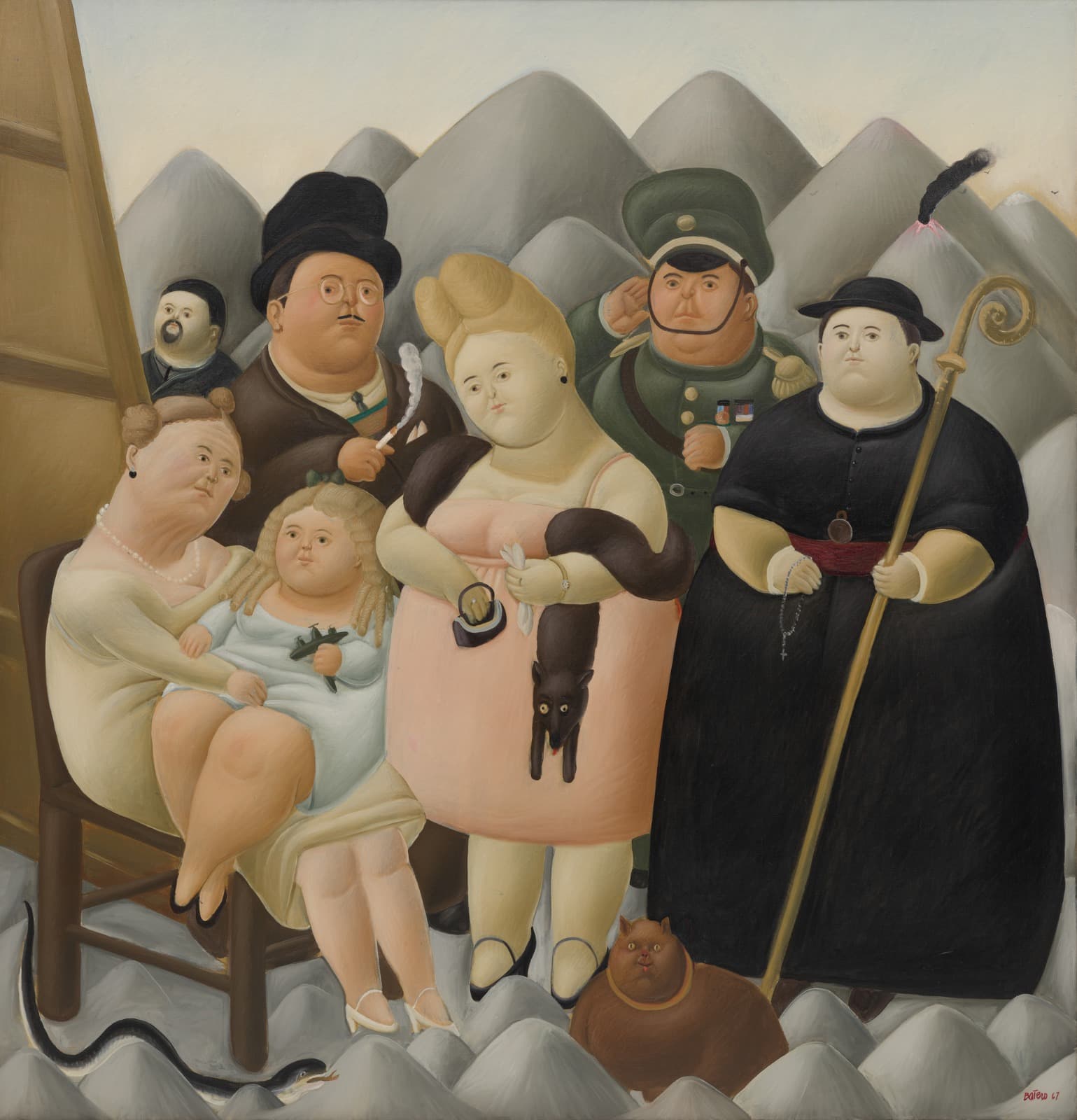
President, wife, child, bishop and general, all inflated into balloons and posed with great solemnity in front of a volcano.
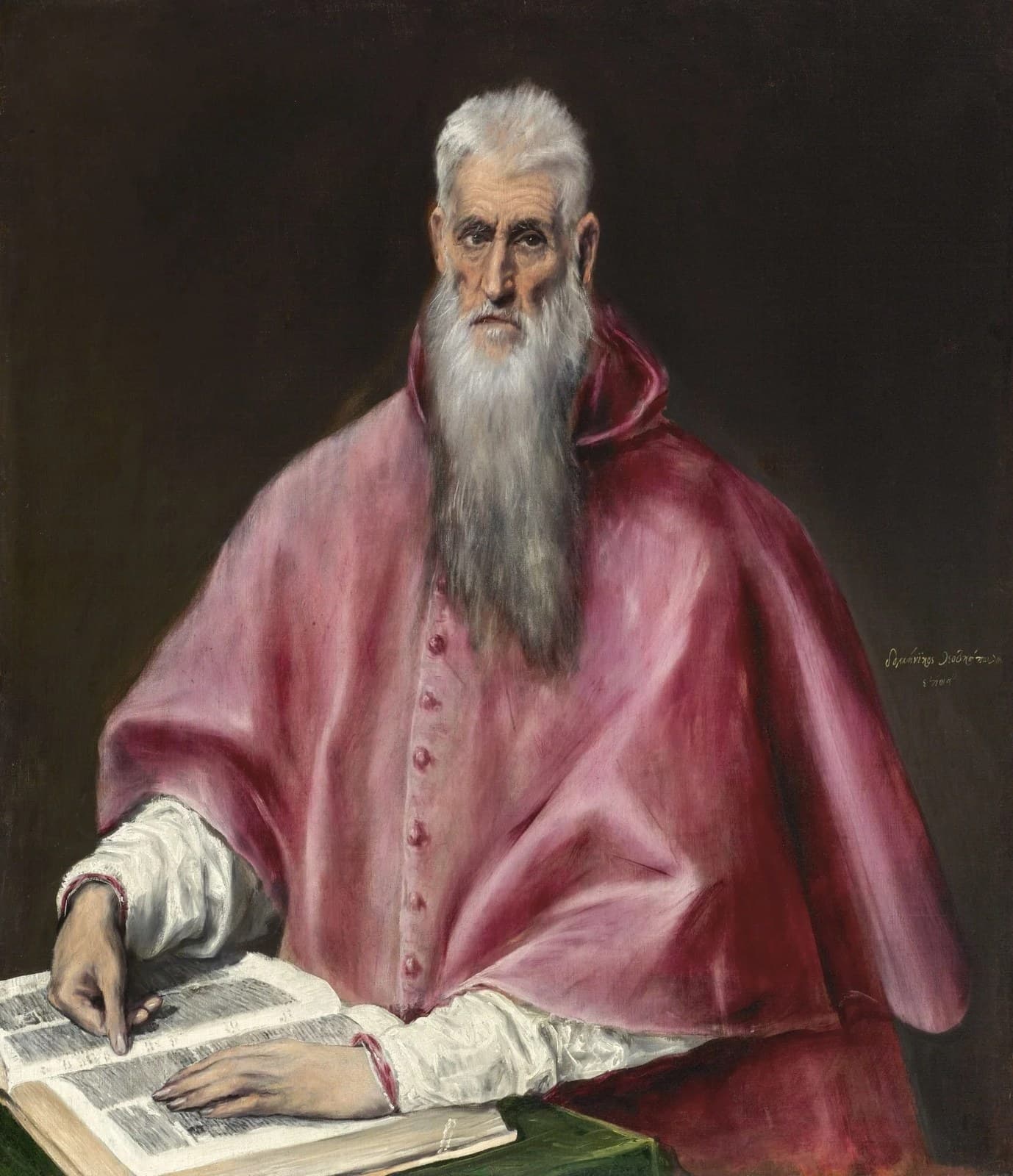
Not the desert hermit but the Doctor of the Church, in cardinal's red with one long hand resting on his own translation of the Bible.
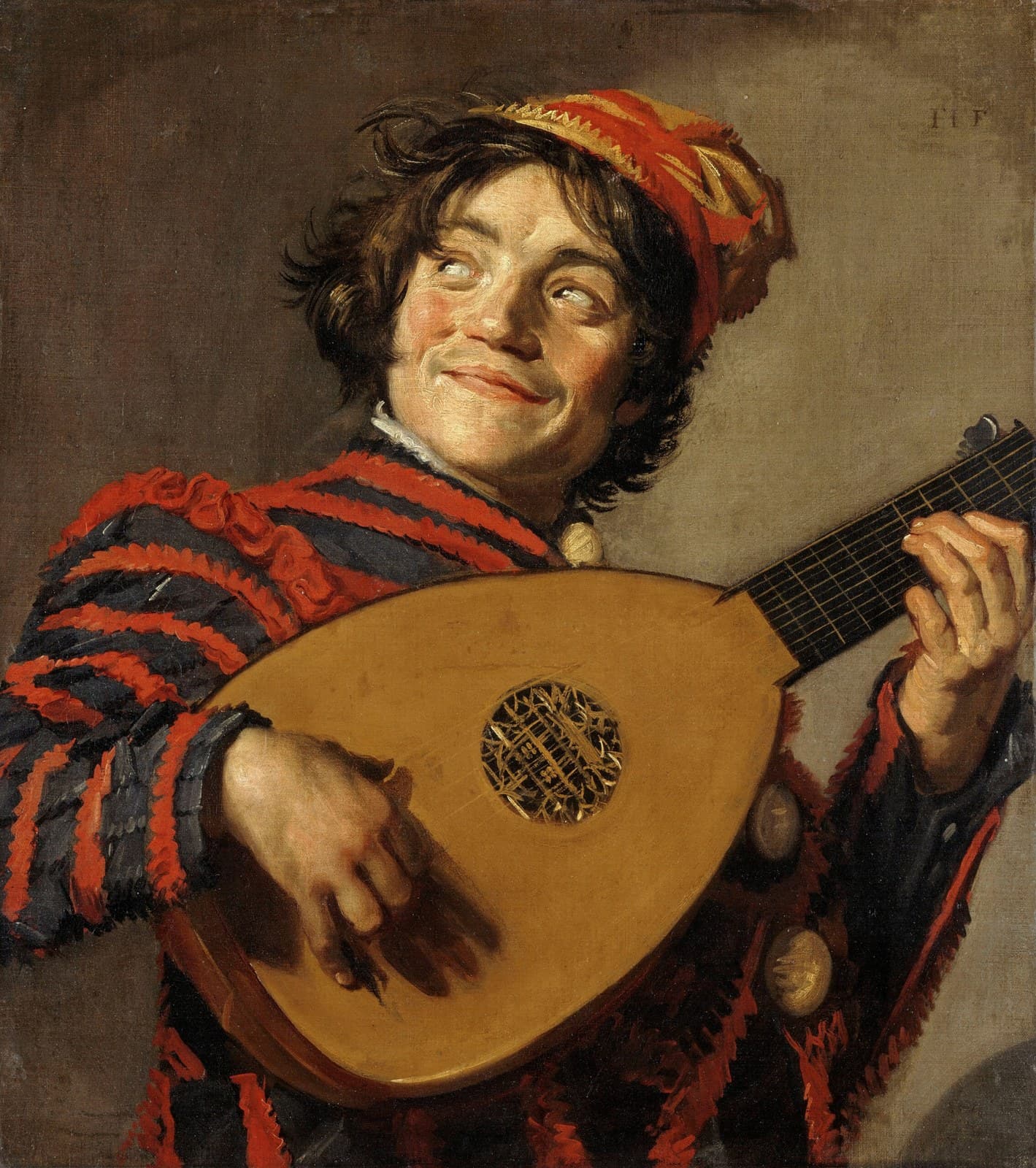
Caught mid-strum with his cap askew and his mouth open, painted so fast the brushstrokes still seem to be moving.
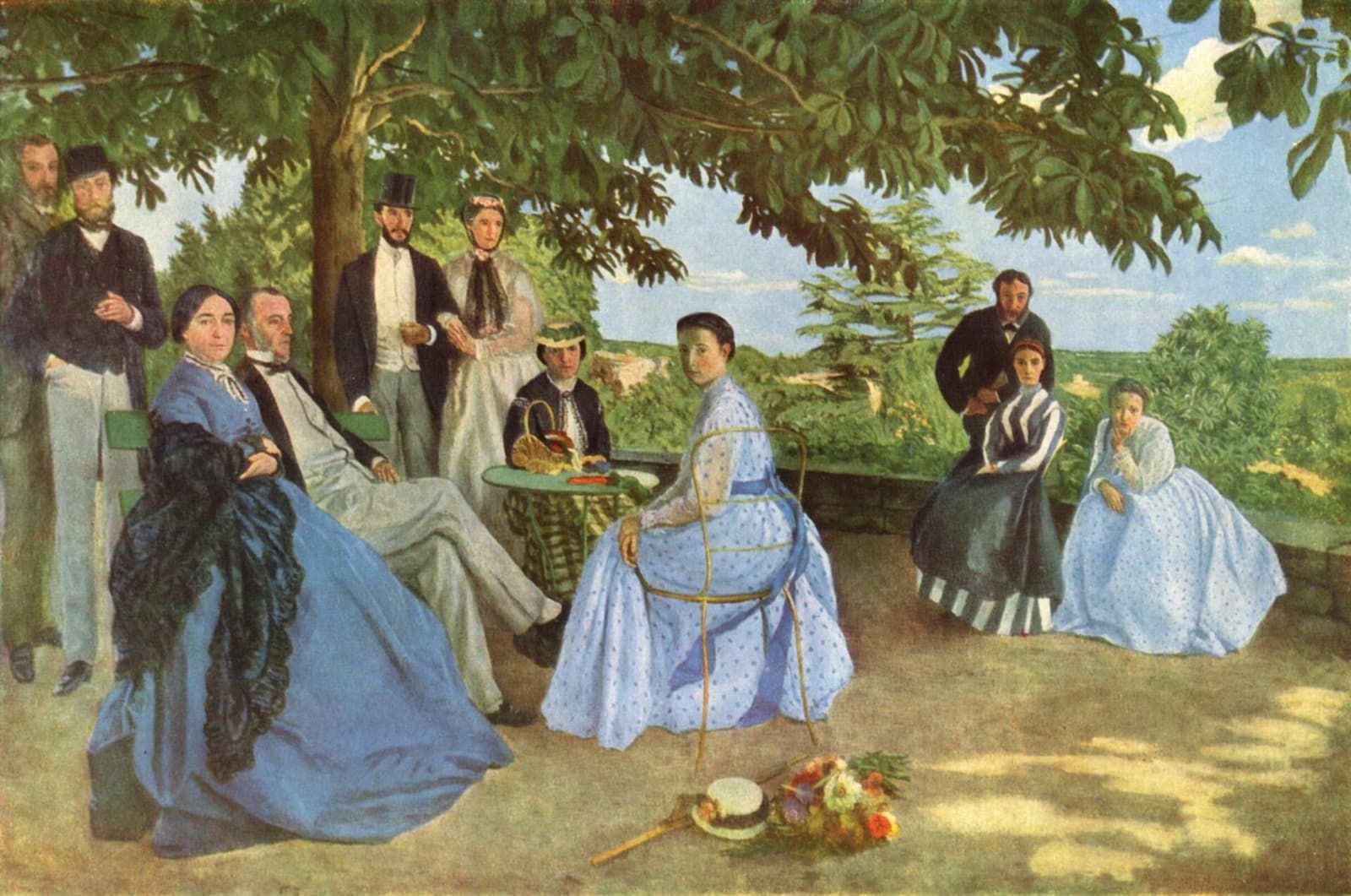
Eleven of the painter's family on a shaded terrace near Montpellier. Bazille was killed in the Franco-Prussian War at twenty-eight.

Cocteau sits stiffly upright with his neck drawn long, one of the sharpest personalities in Paris turned into an elegant mask.

Only the mouth and chin survive, in honey-yellow jasper, and the break seems to concentrate the thing rather than diminish it.
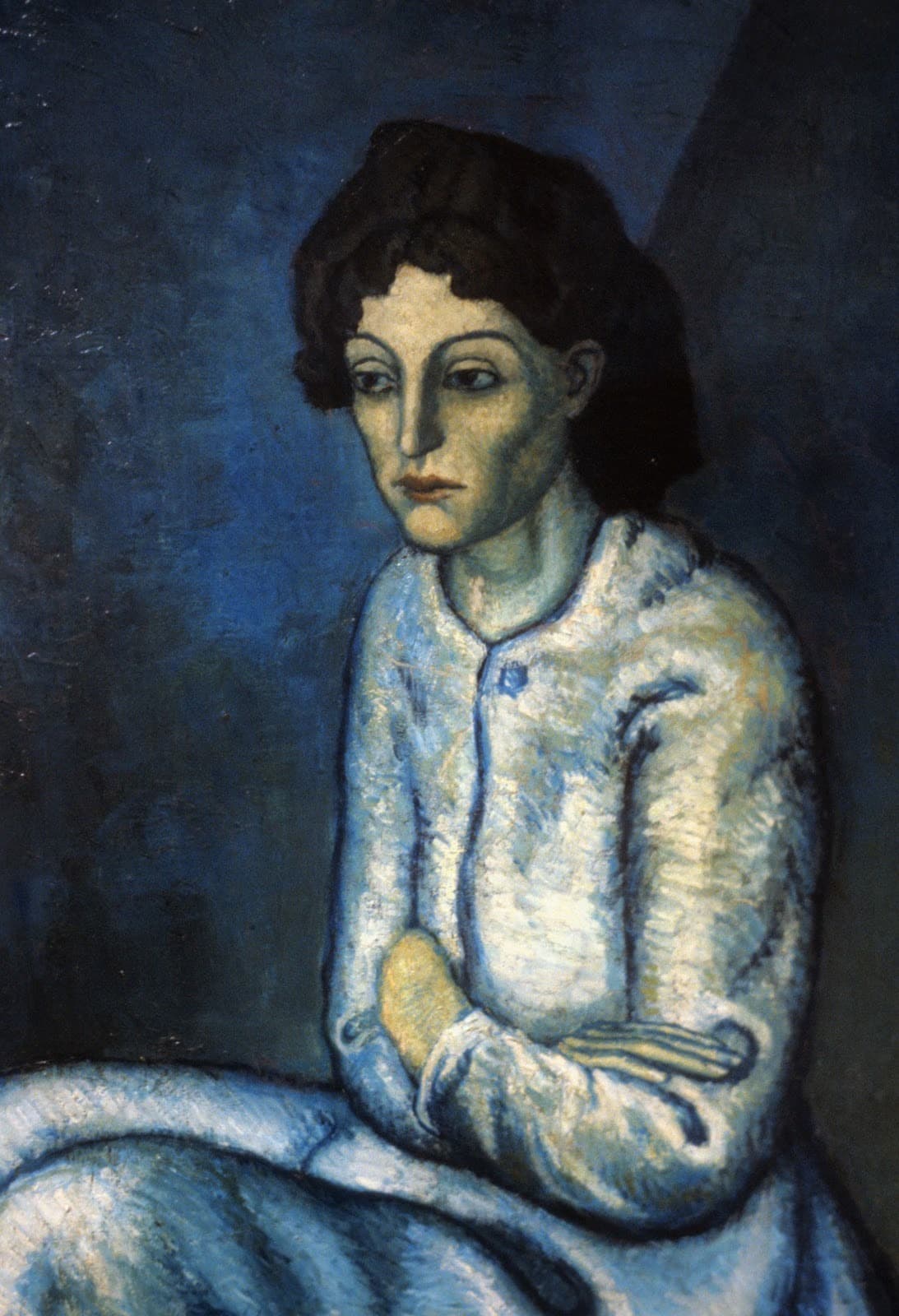
Her crossed arms are a wall against the world, and the blue does the rest. Picasso was painting the outcast and the destitute.

Beckmann had spent the war as a medical orderly, and he looks out of the shadows here like a man finished being surprised.
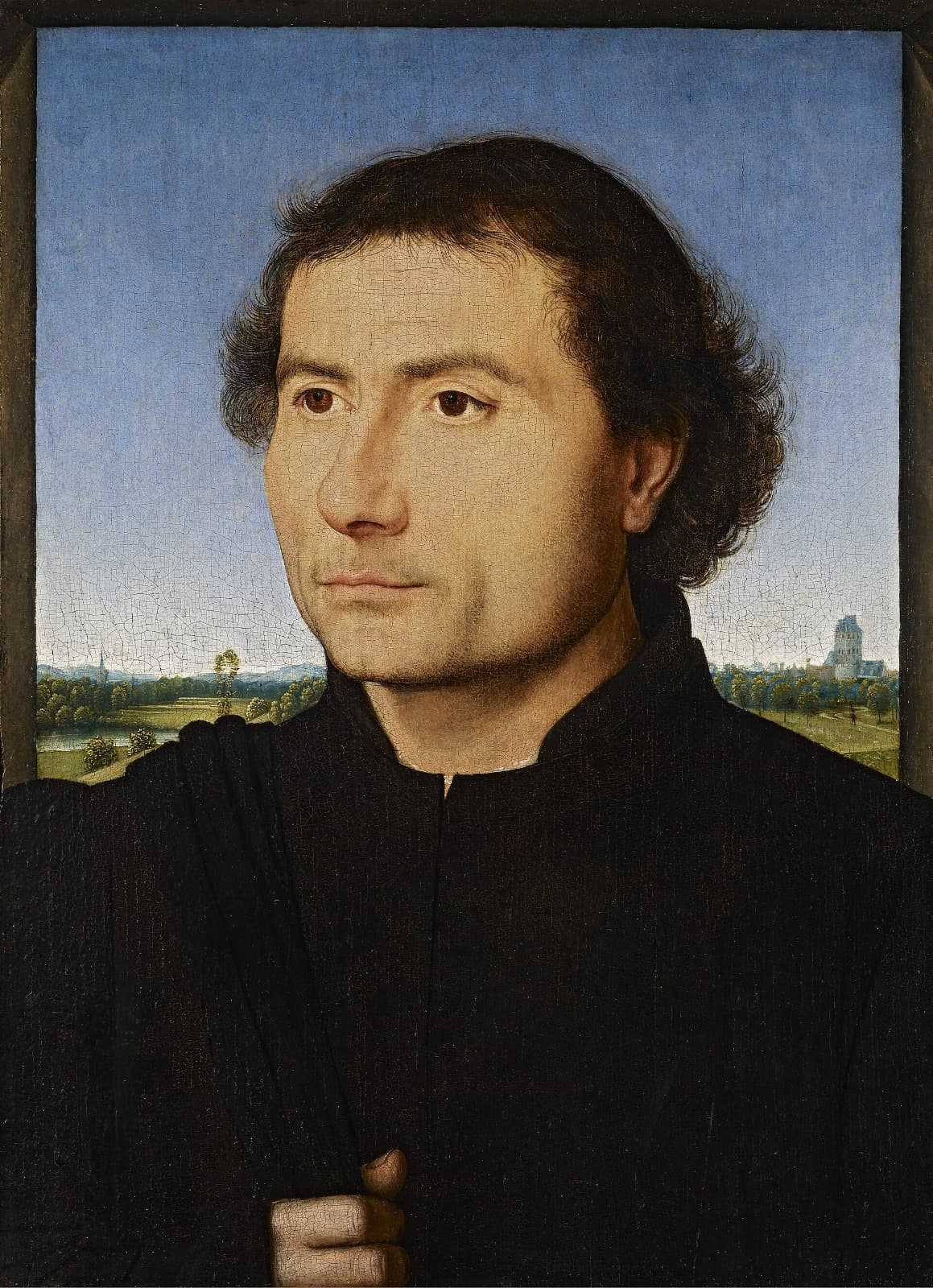
Memling put his sitters in front of open countryside instead of a dark ground, an idea that traveled to Italy and came back changed.

Painted in hot colored beeswax and bound over the face of a mummy. The strokes are still visible and the eyes startlingly present.
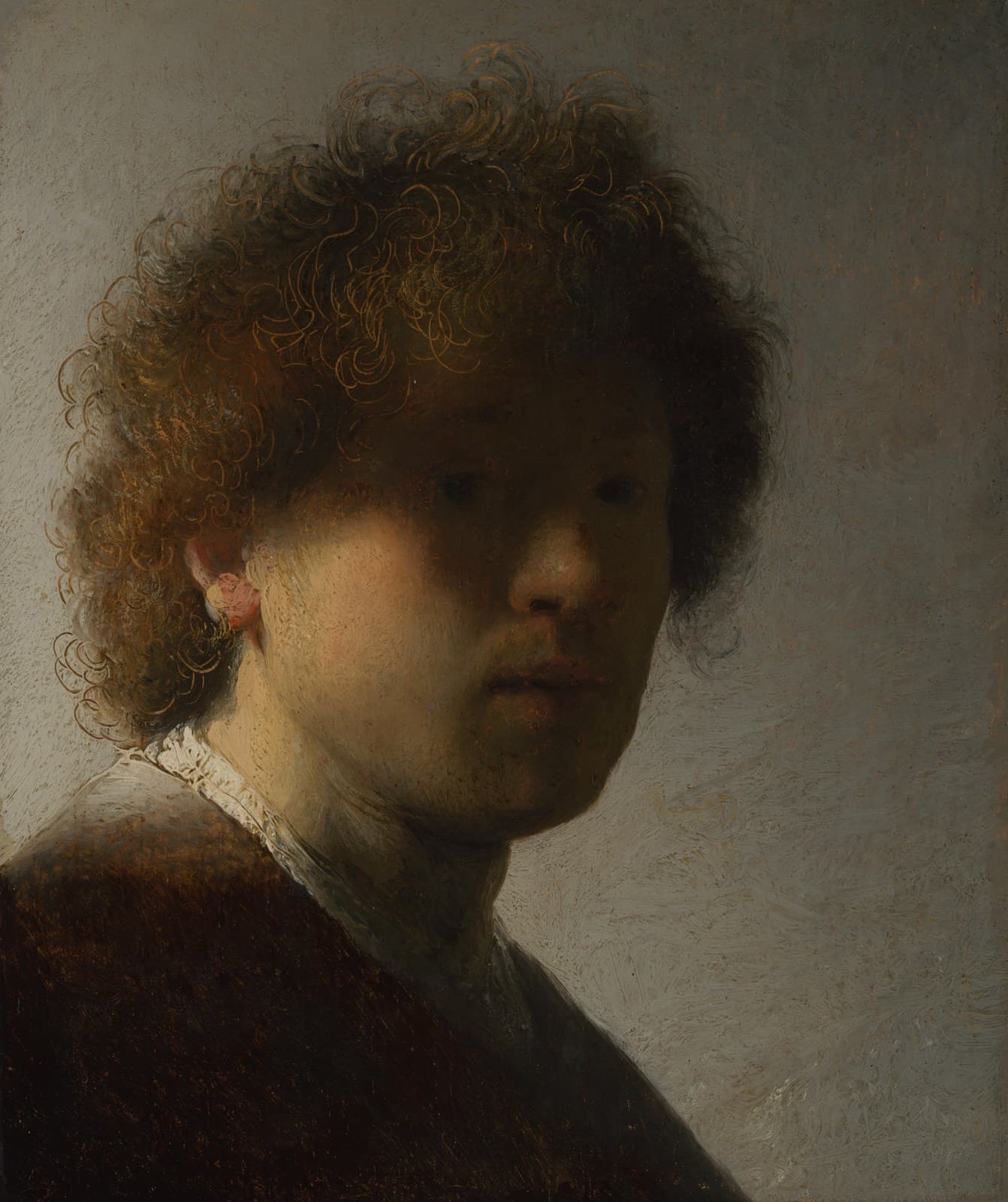
Rembrandt was barely in his twenties and using his own face as a laboratory for light. Dozens more would follow over forty years.

Cézanne cared less who the man was than whether the head would hold together as structure, and the slight asymmetries keep it alive.

He swivels over his shoulder to look at you, holding a block that nobody can identify, and his name has been lost entirely.

Richelieu appears three times on one canvas so that a sculptor in Rome could carve a bust without ever meeting him.
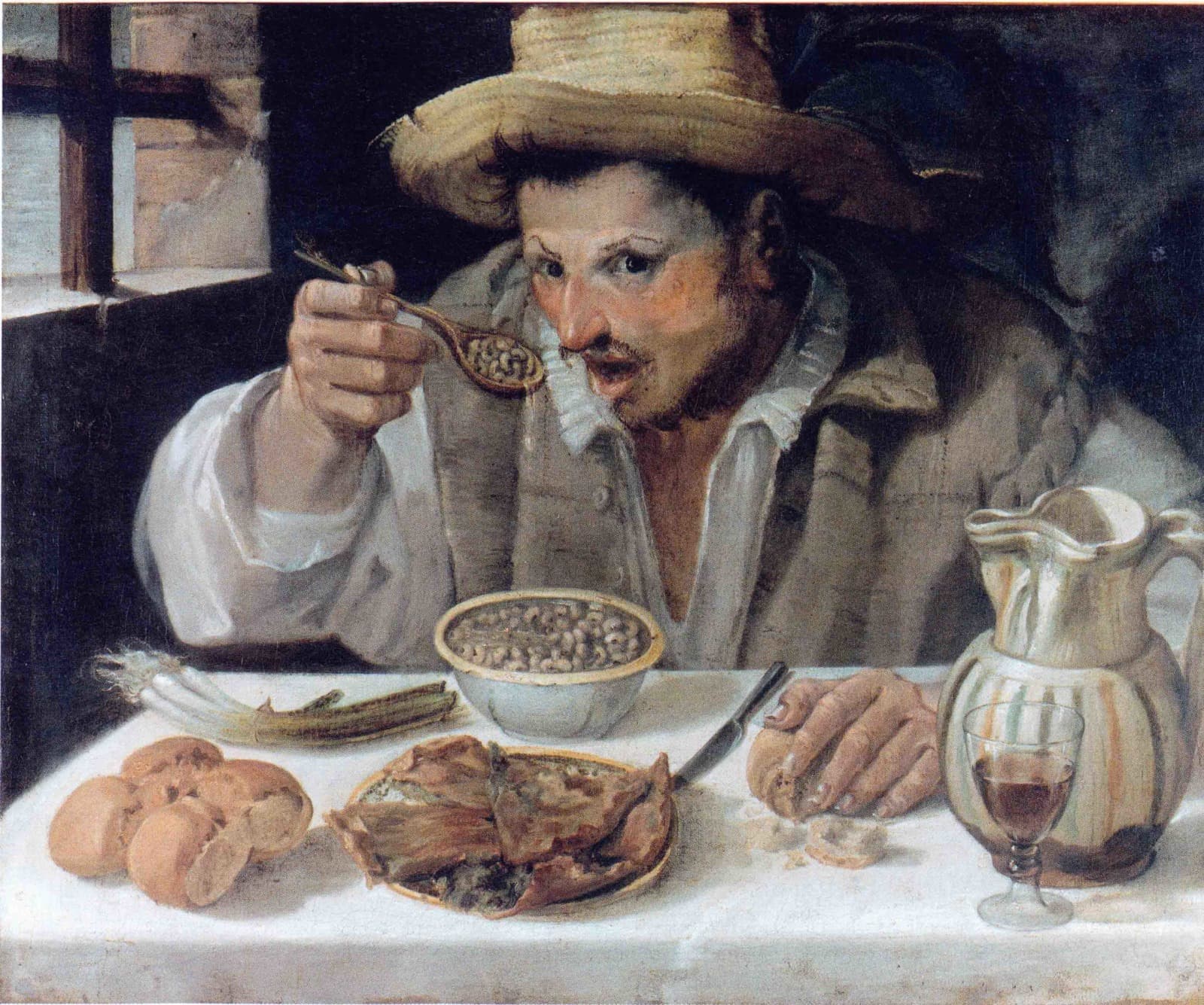
A peasant looks up from his beans as though caught, spoon halfway to his mouth. Painted decades before Caravaggio's followers made a career of this.

She sits in profile against a hedge of carnations with butterflies going past, a sprig of juniper on her sleeve punning on her name.
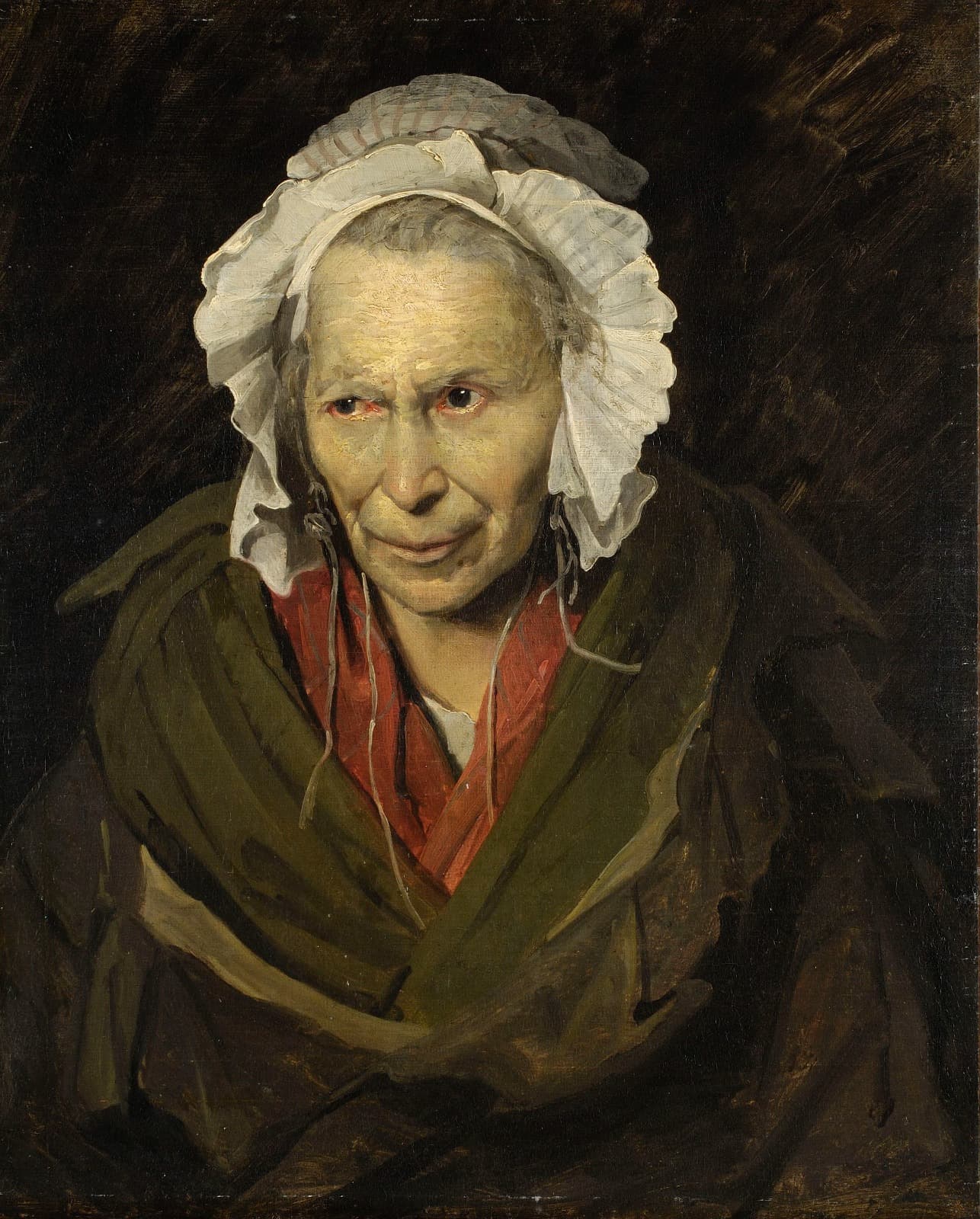
One of a series Géricault painted of asylum patients for a doctor studying obsession, and he gave her the seriousness of a commissioned portrait.

Her face is finished and breathing while the hair around it stays loose scribble, and nobody knows whether Leonardo considered it done.
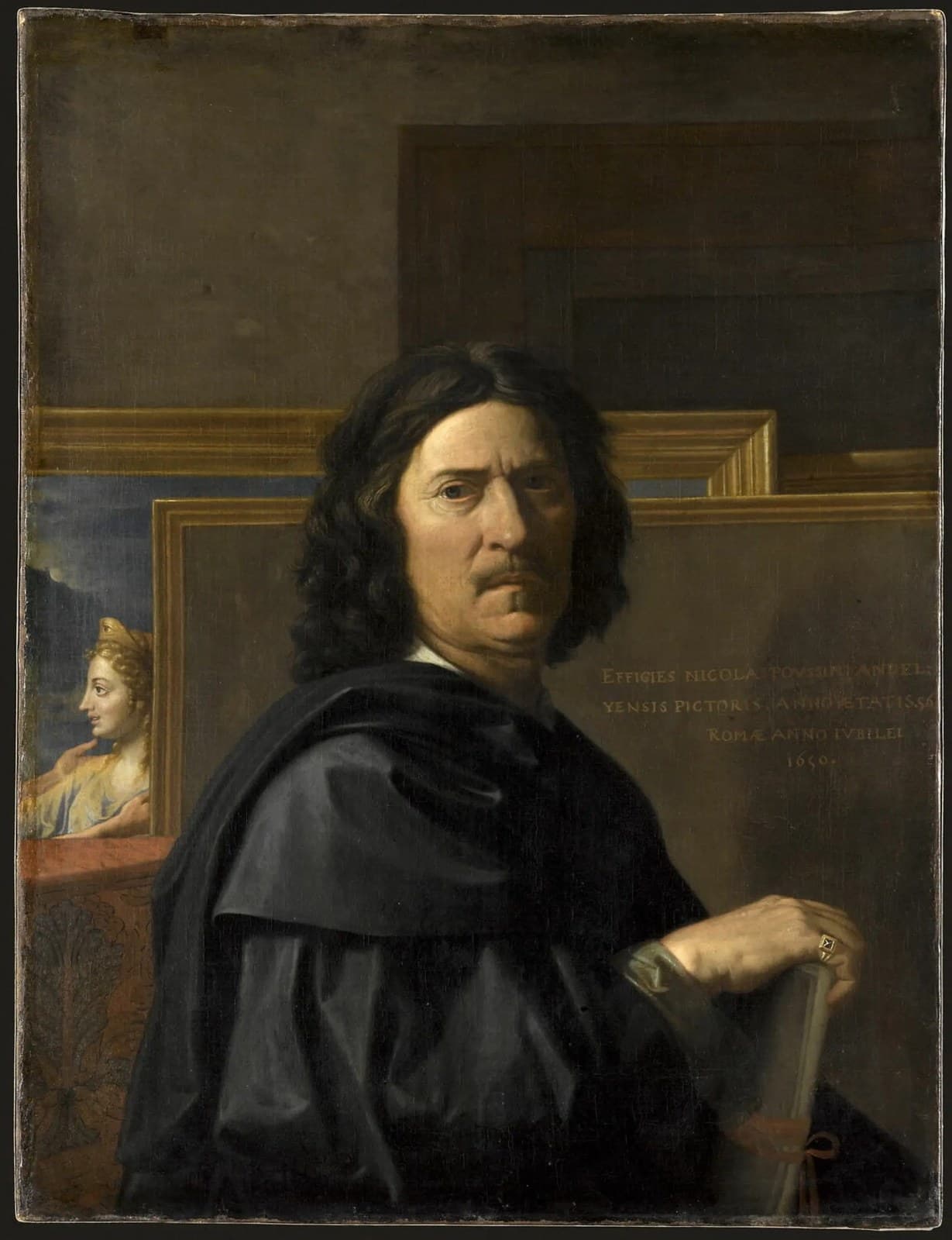
Poussin stands in front of his own blank stretched canvases with a portfolio under his arm, presenting himself as a thinker rather than a craftsman.
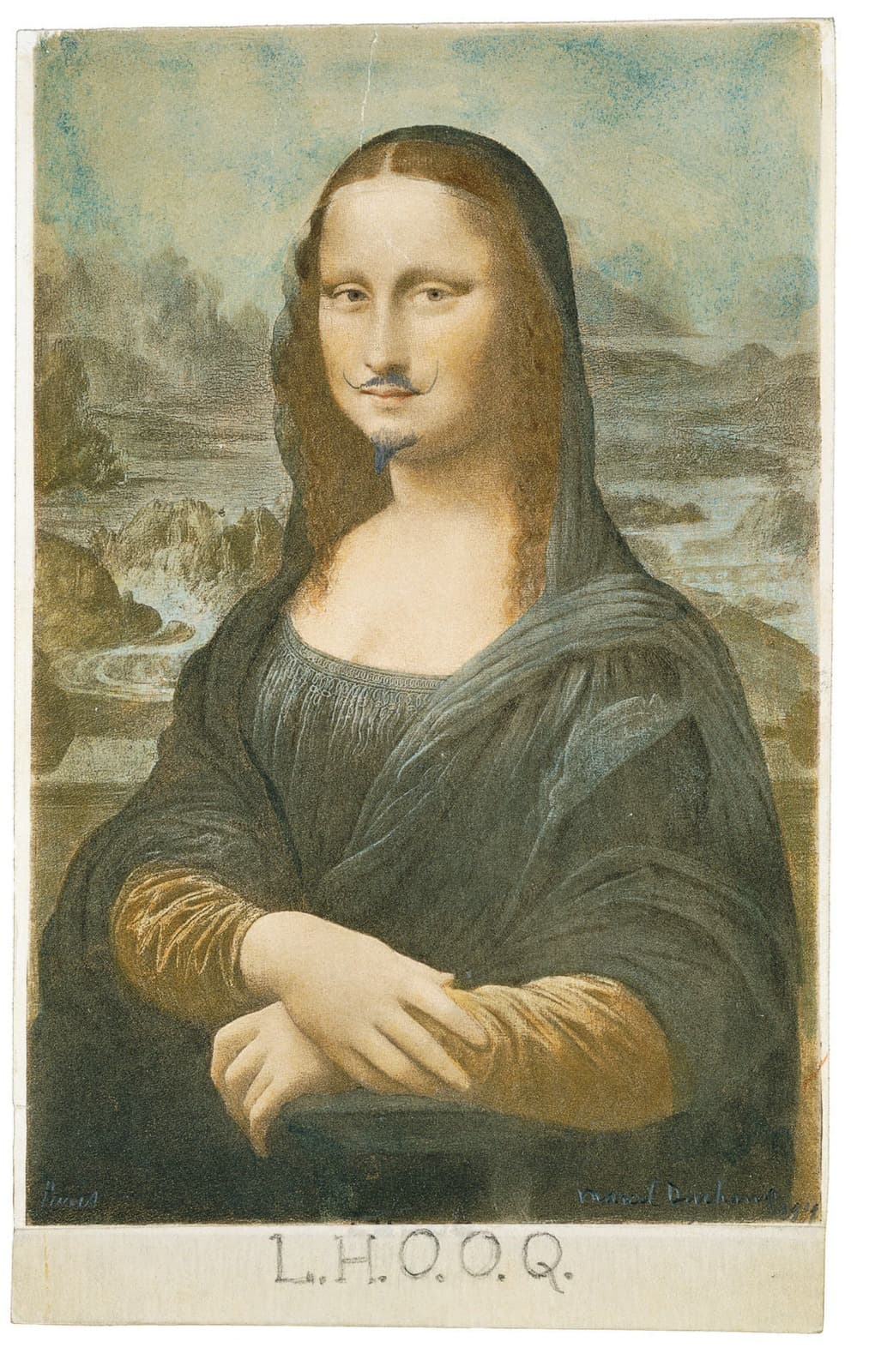
Duchamp bought a postcard of the Mona Lisa, drew a moustache on it, and added five letters that make a crude joke in French.
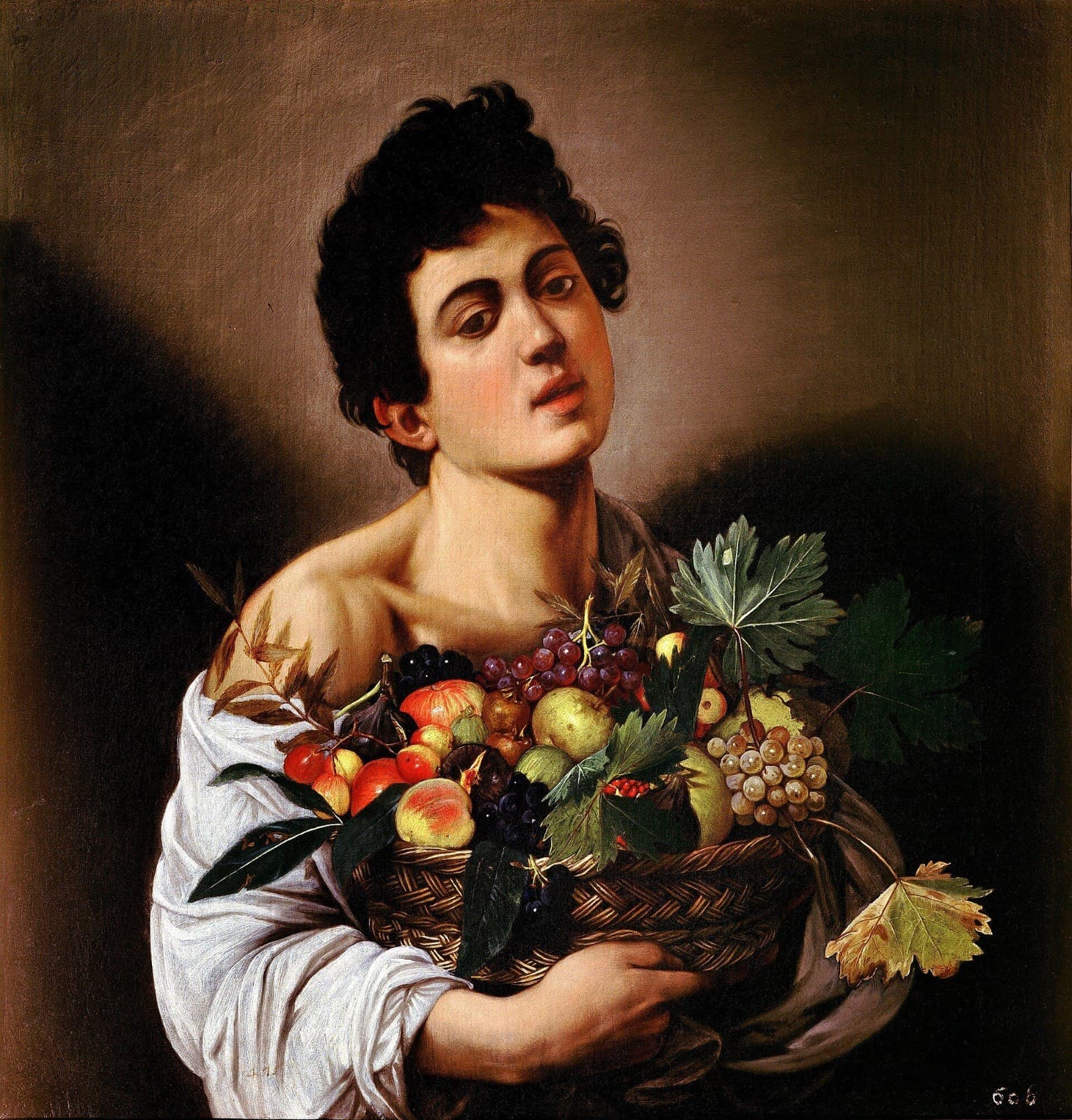
Fruit already spotting toward rot, painted with the same attention as the boy holding it. An early statement of what Caravaggio intended.

She painted herself at the wheel in leather helmet and gloves for a German fashion magazine, and invented the look of the Jazz Age.
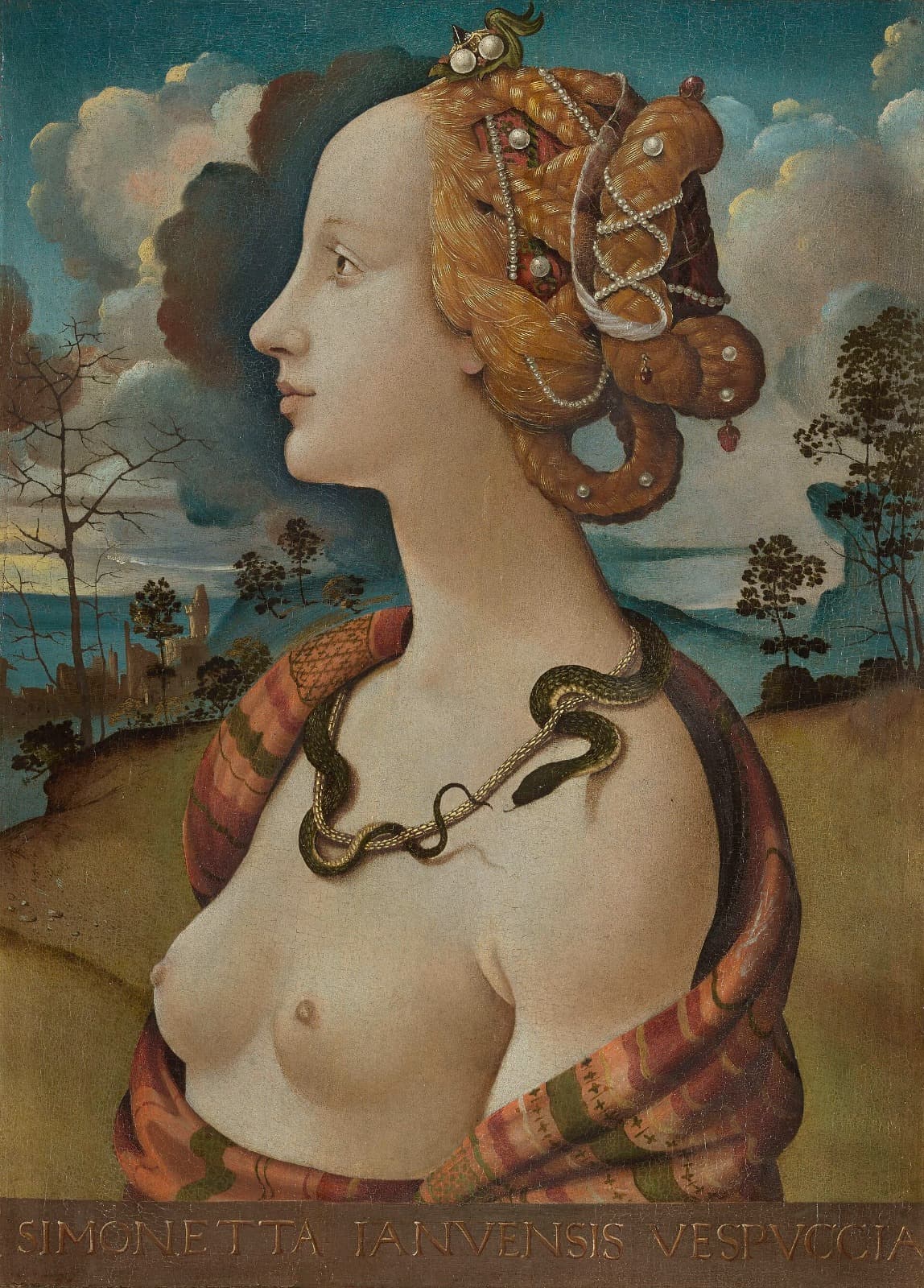
She had been dead for years when this was painted, and the asp at her throat turns her into Cleopatra.
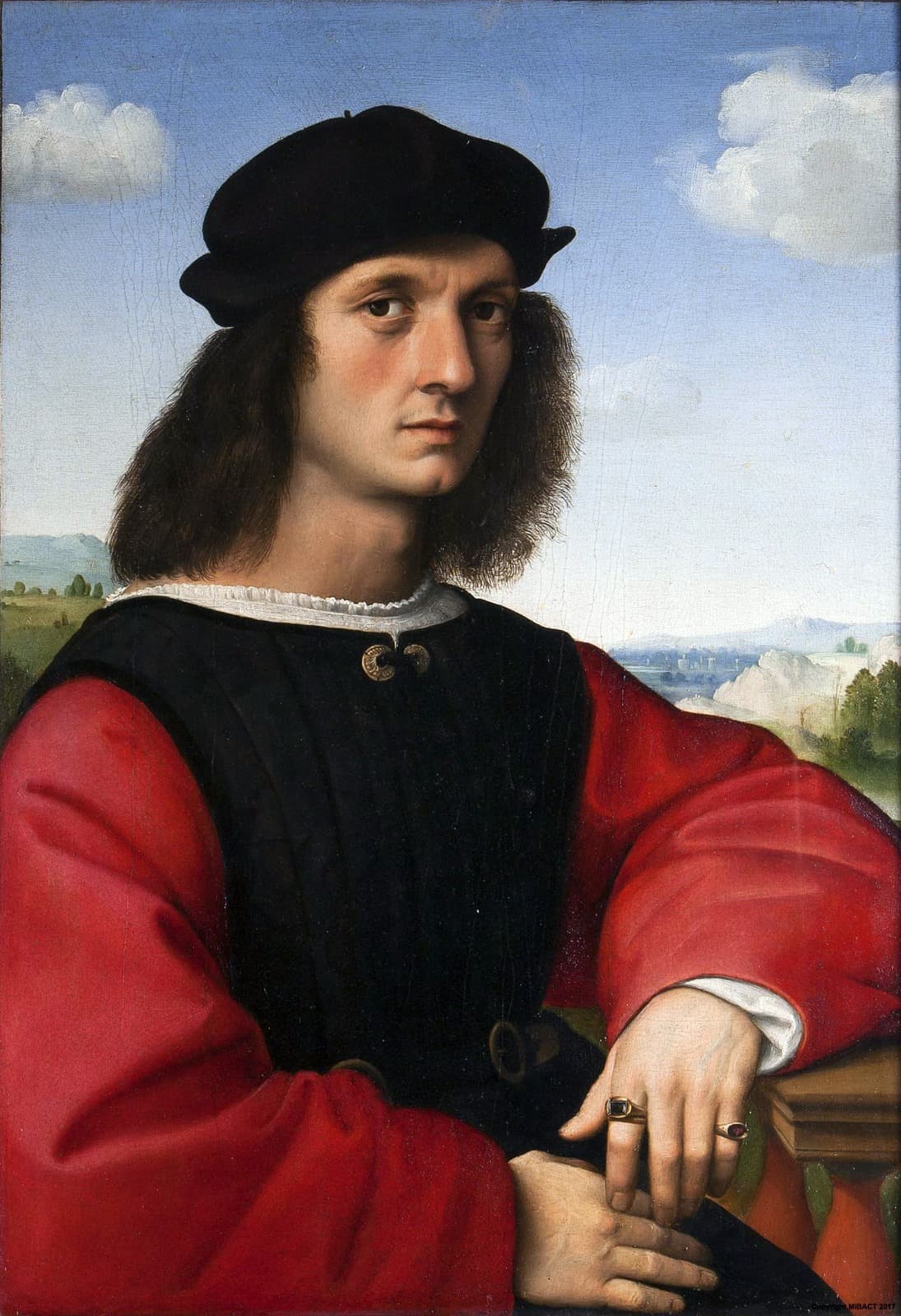
Raphael had just arrived in Florence and studied the Mona Lisa hard, then did the same pose in clear light instead of smoke.
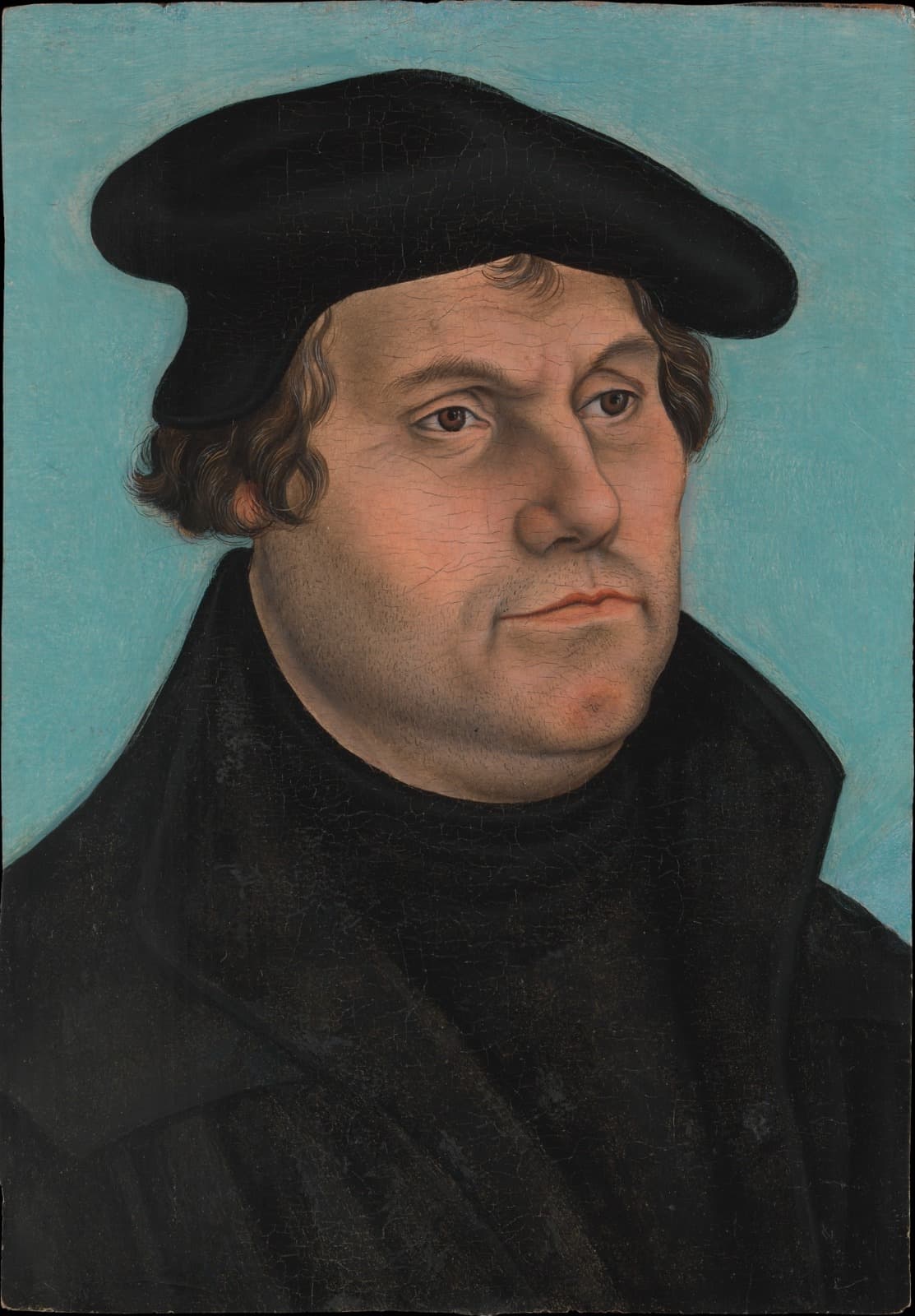
Cranach was Luther's friend and godfather to his children, and his workshop turned out this face by the score for Protestant Germany.

A married couple sitting on the grass, leaning into each other and visibly amused, which is not how marriage portraits were done.
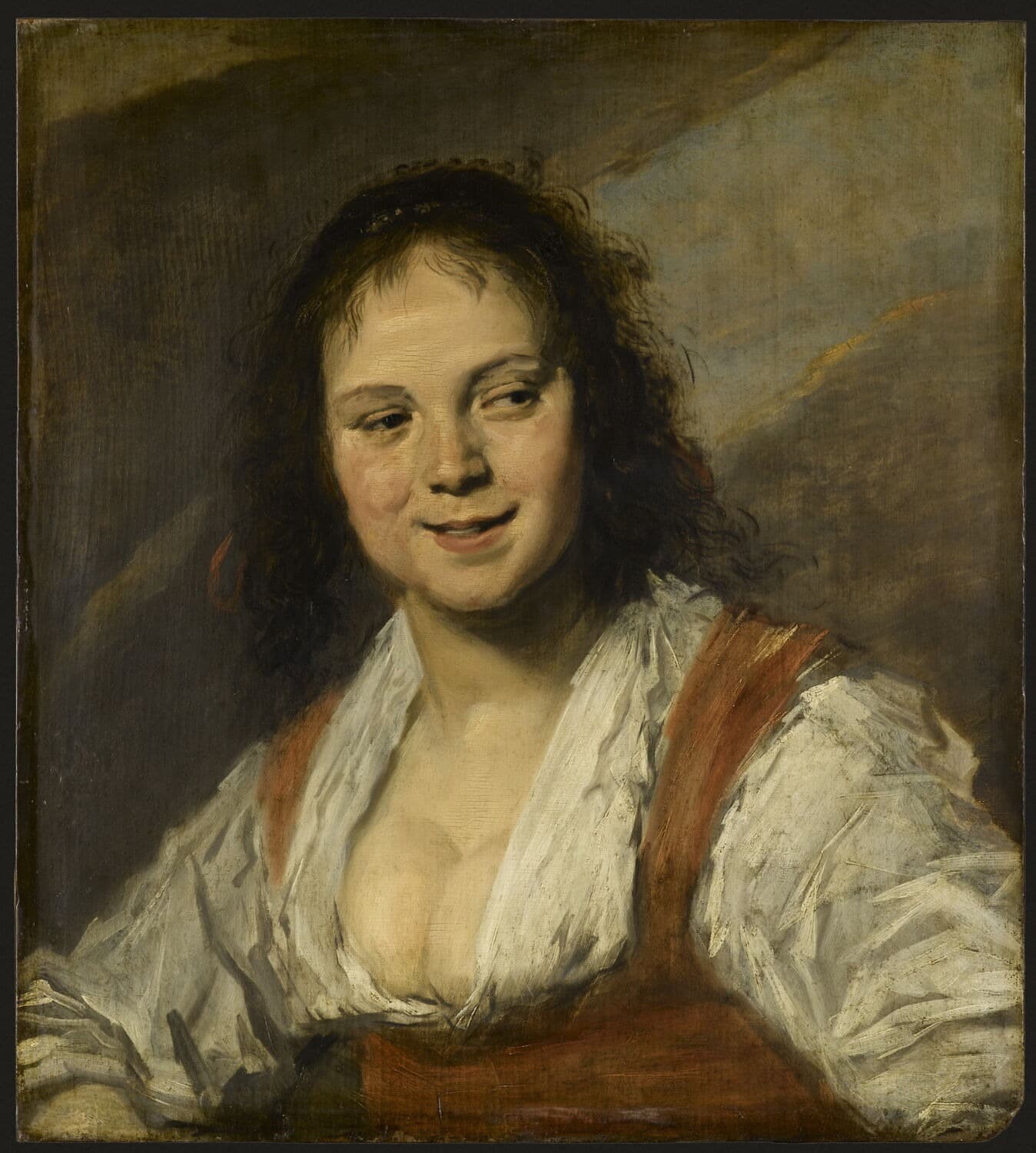
Not a commission but a tronie, a character study made to show off. Hals catches her half-laugh before it has finished.
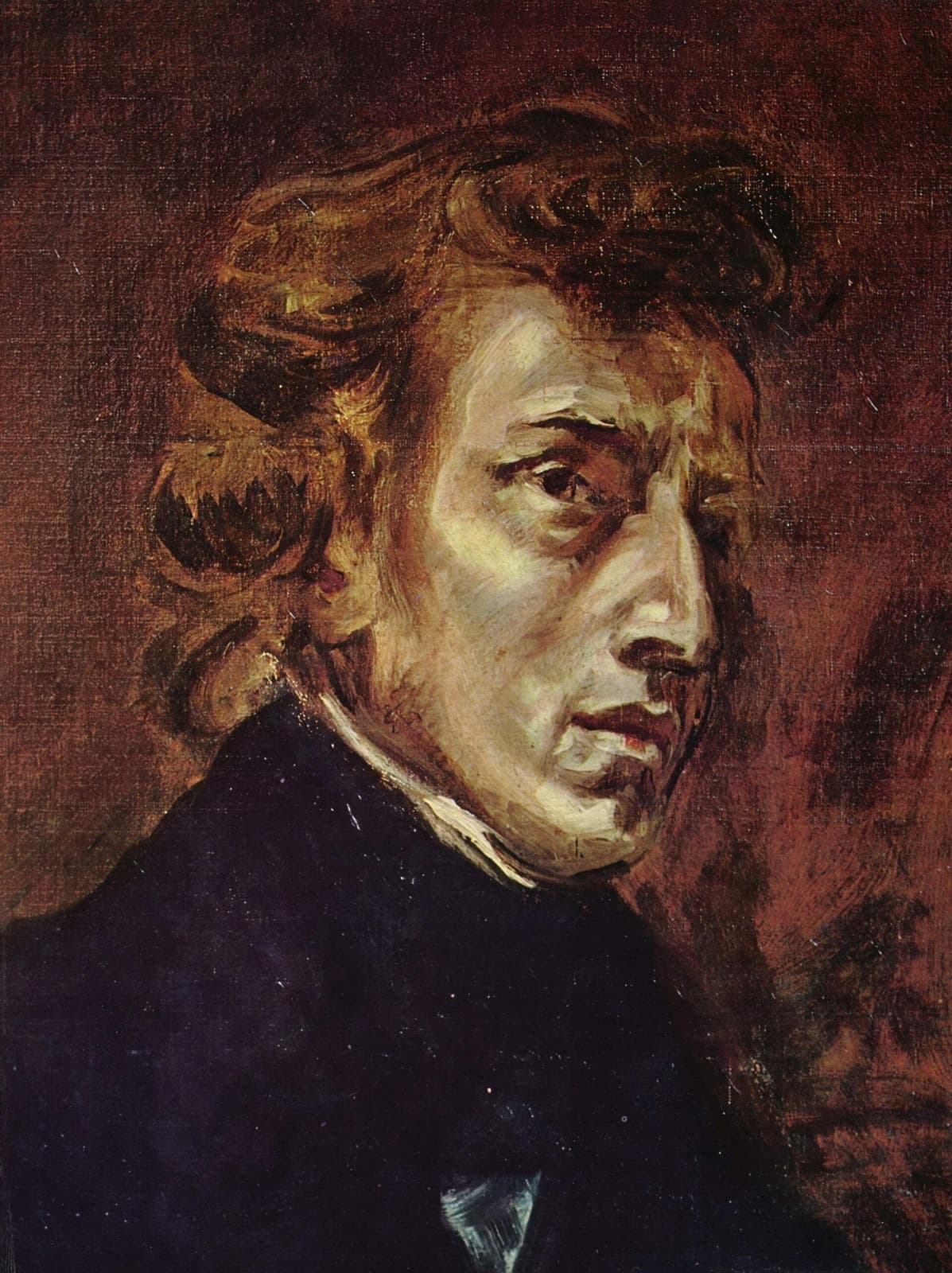
It was half of a double portrait with George Sand listening at the piano, until somebody cut the canvas in two.
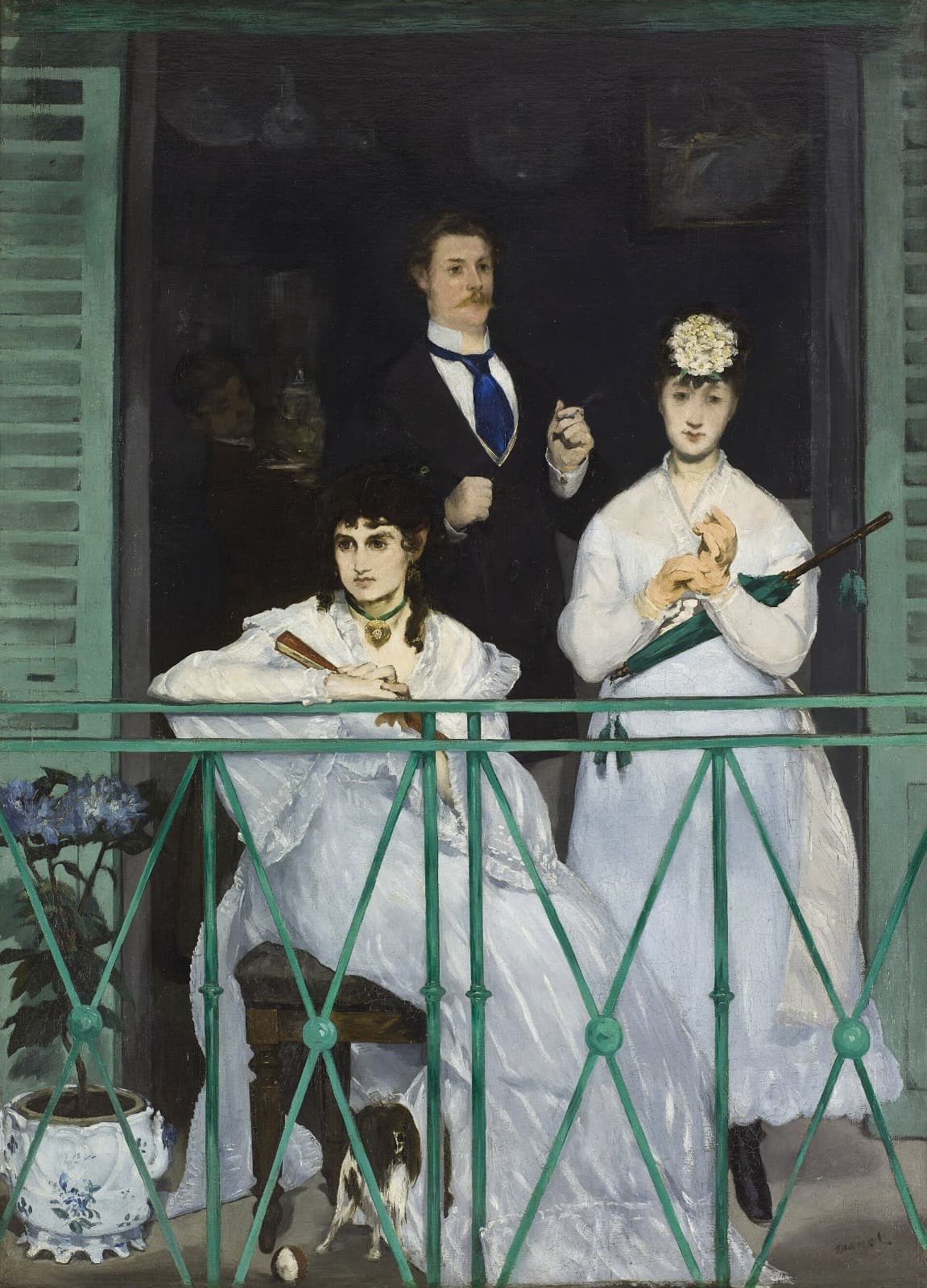
Three people at a green railing all looking different ways and none at each other. Berthe Morisot is the one seated and dreaming.

A red cap, a parapet, and a gaze that meets yours. Antonello brought the Netherlandish portrait into Italy and killed off the profile.