
The Virgin and Child (Ugolino)
1312 · Louvre, Paris
The Child reaches up to grasp the edge of his mother's veil. Ugolino followed Duccio more closely than anyone else did.
★ 3.6
 skopia
The Child reaches up to grasp the edge of his mother's veil. Ugolino followed Duccio more closely than anyone else did.
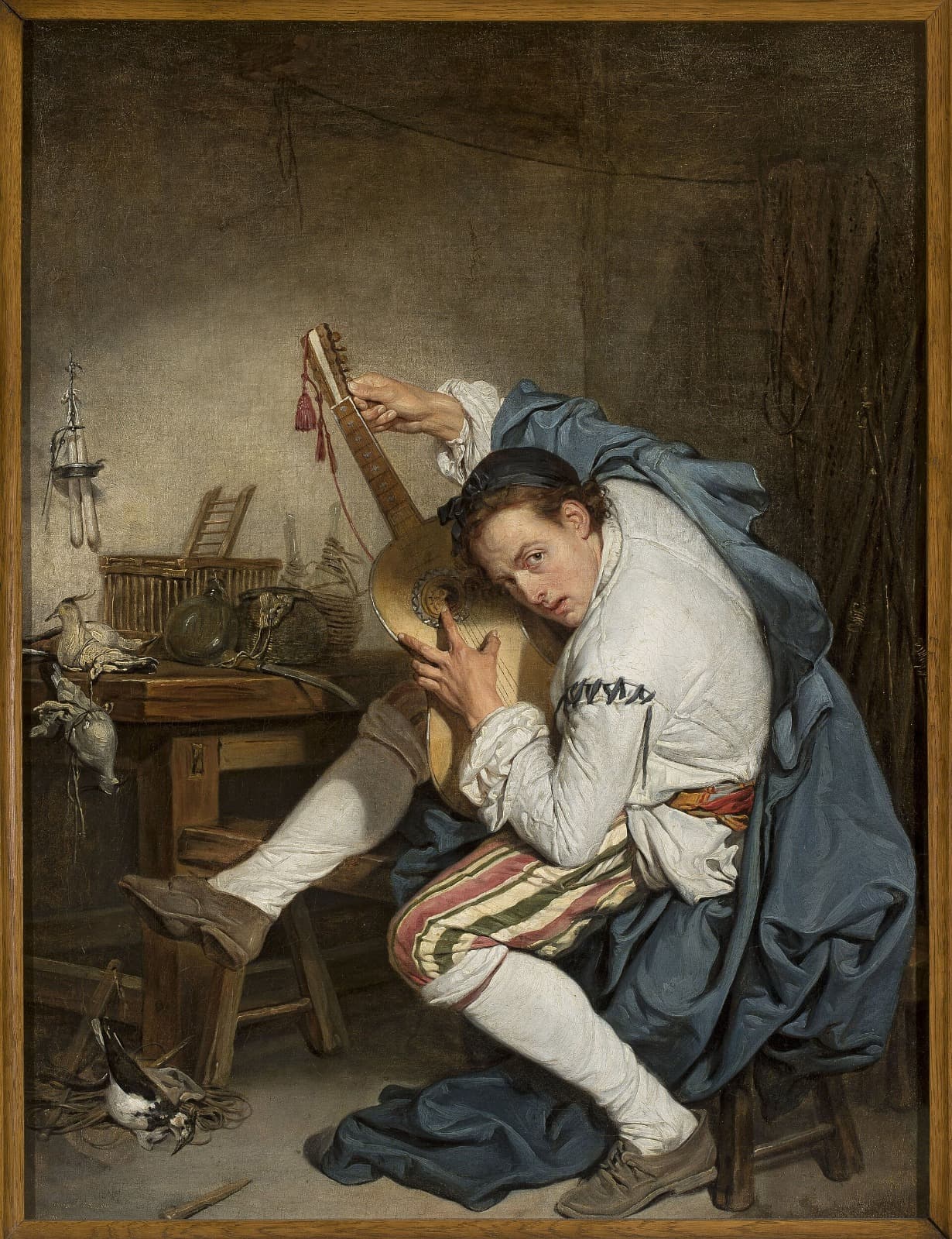
A young man glances up from his guitar mid-song. Greuze usually painted tearful moral lessons, and here he simply does not.

One of the Impressionist canvases he owned hangs on the wall behind him. Caillebotte's money and his bequest kept the movement alive.

Elizabeth sinks down and clasps the pregnant Mary. Ghirlandaio ran the busiest workshop in Florence, and a boy named Michelangelo apprenticed there.

The shepherd carries the twins home to his wife with the she-wolf still nearby. Rome's founding myth as a foundling story.

The angel comes down to stop the knife, in the deep reds and blues Chagall used for his late cycle of biblical paintings.

Christ in vivid red is hauled by a rope through the gate of a white, many-towered Jerusalem while children scamper at the edge.
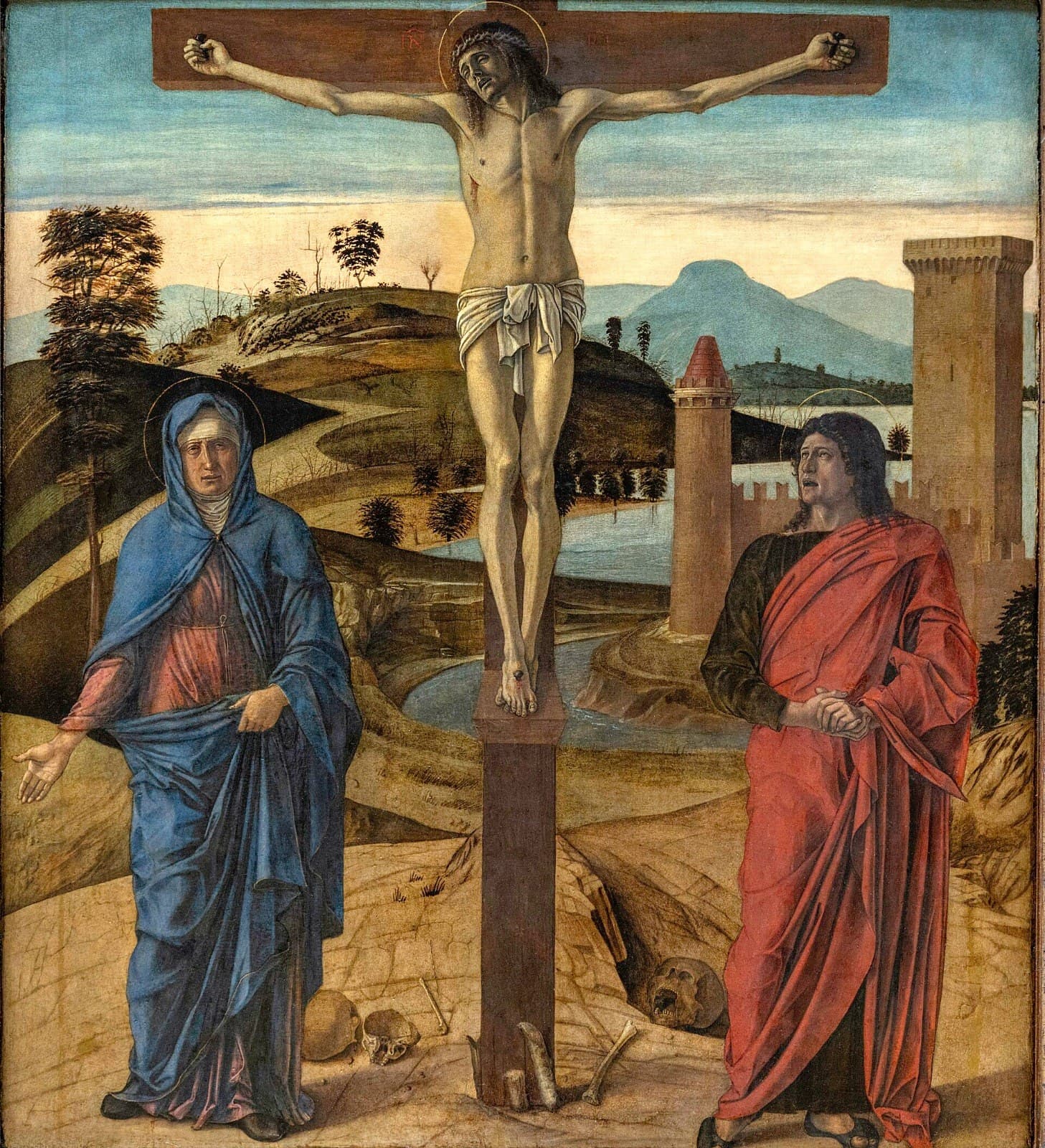
Only the Virgin and Saint John below the cross, and a river winding past a walled town. Early Bellini, carrying feeling in the light.
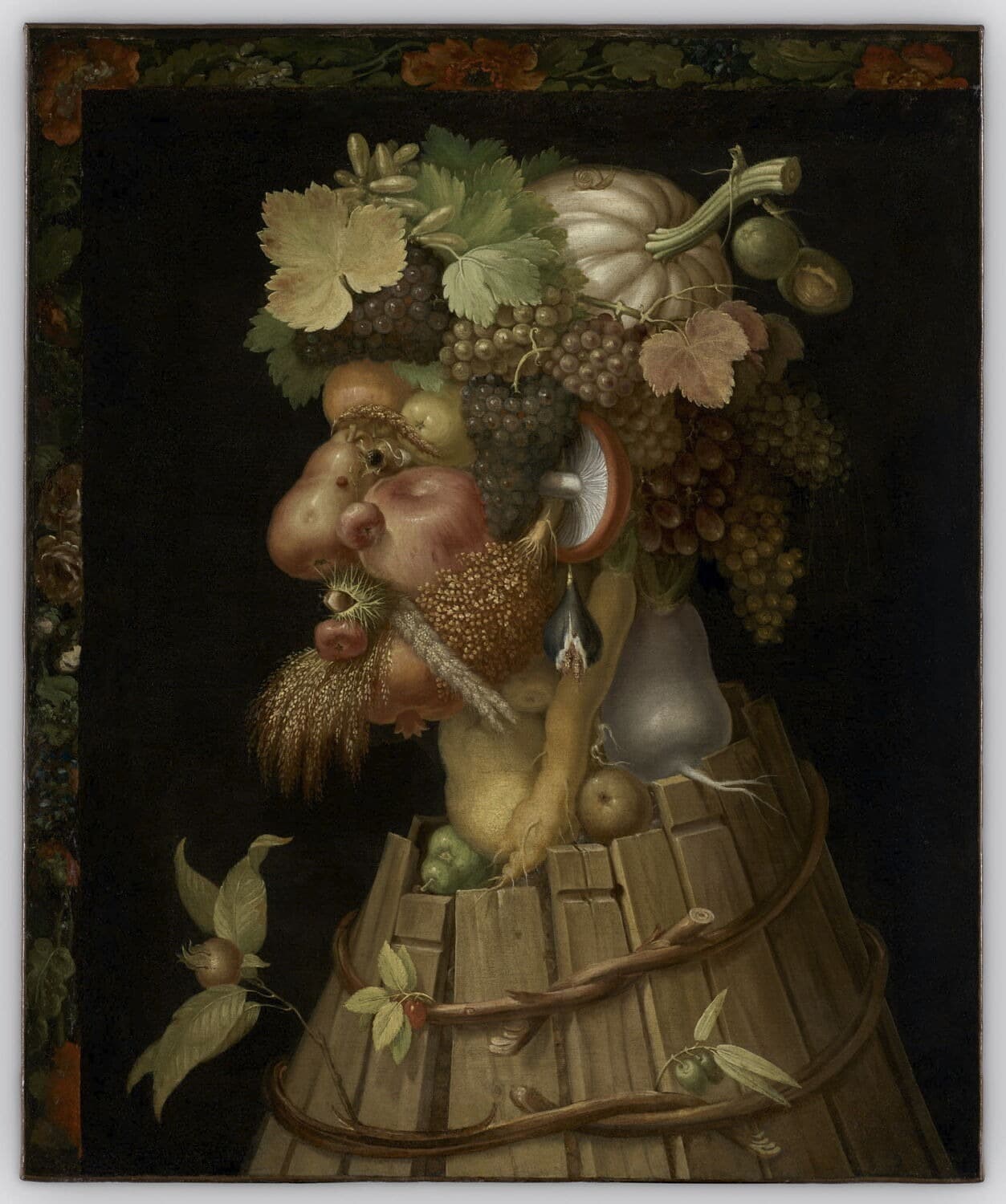
A head of pears and pomegranates crowned with grapes, sitting in a split wooden barrel bound with willow hoops. The season of the wine harvest.
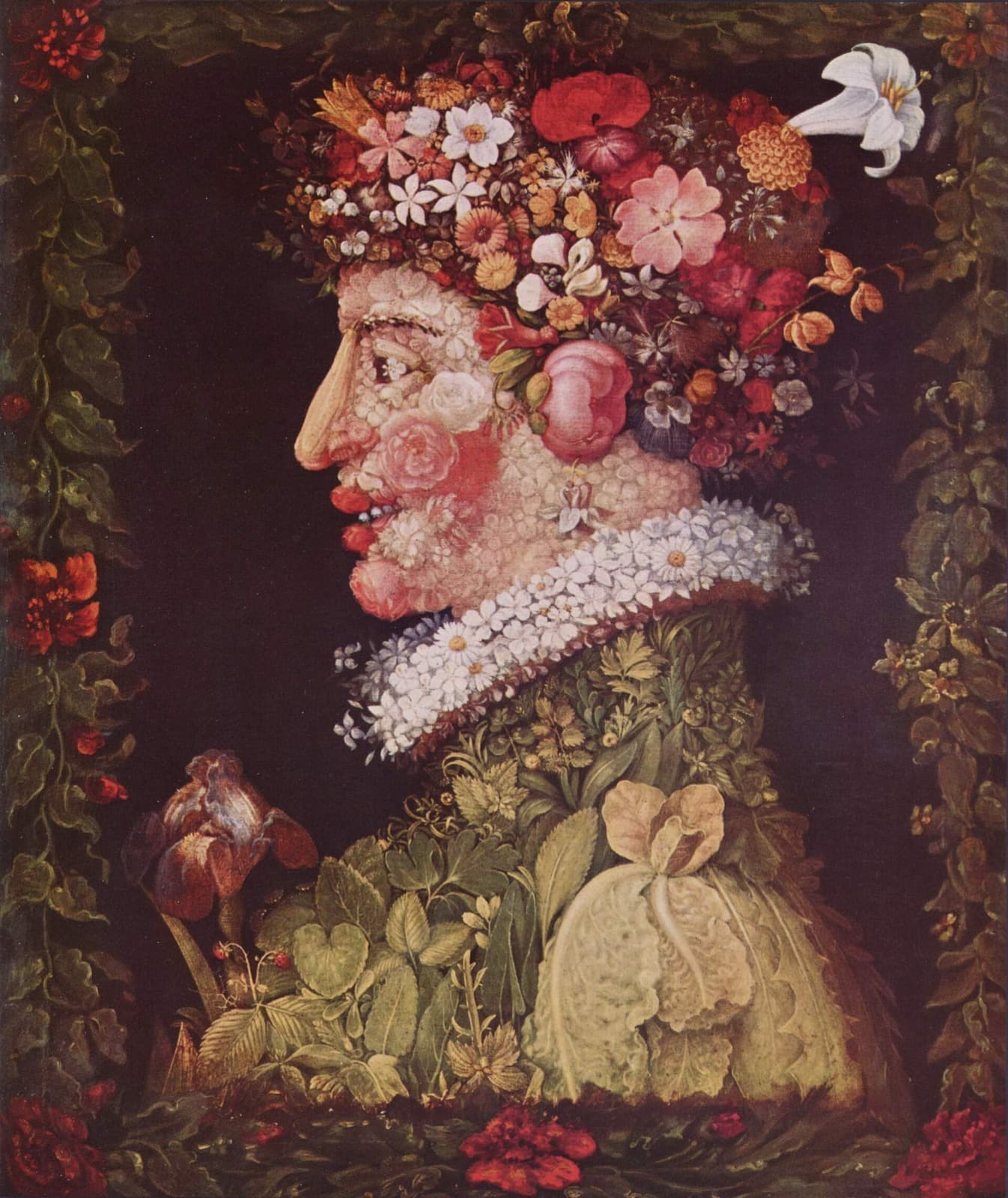
Rosebud lips, a lily for a nose, and hair made of tulips and peonies. The freshest and most delicate of the four seasons.

Degas turned from dancers to financiers, catching heads bent close over documents in the crush of the Paris exchange.

Provençal women at a hilltop well above a blue bay, the dots loosening into curves and the science giving way to pleasure.
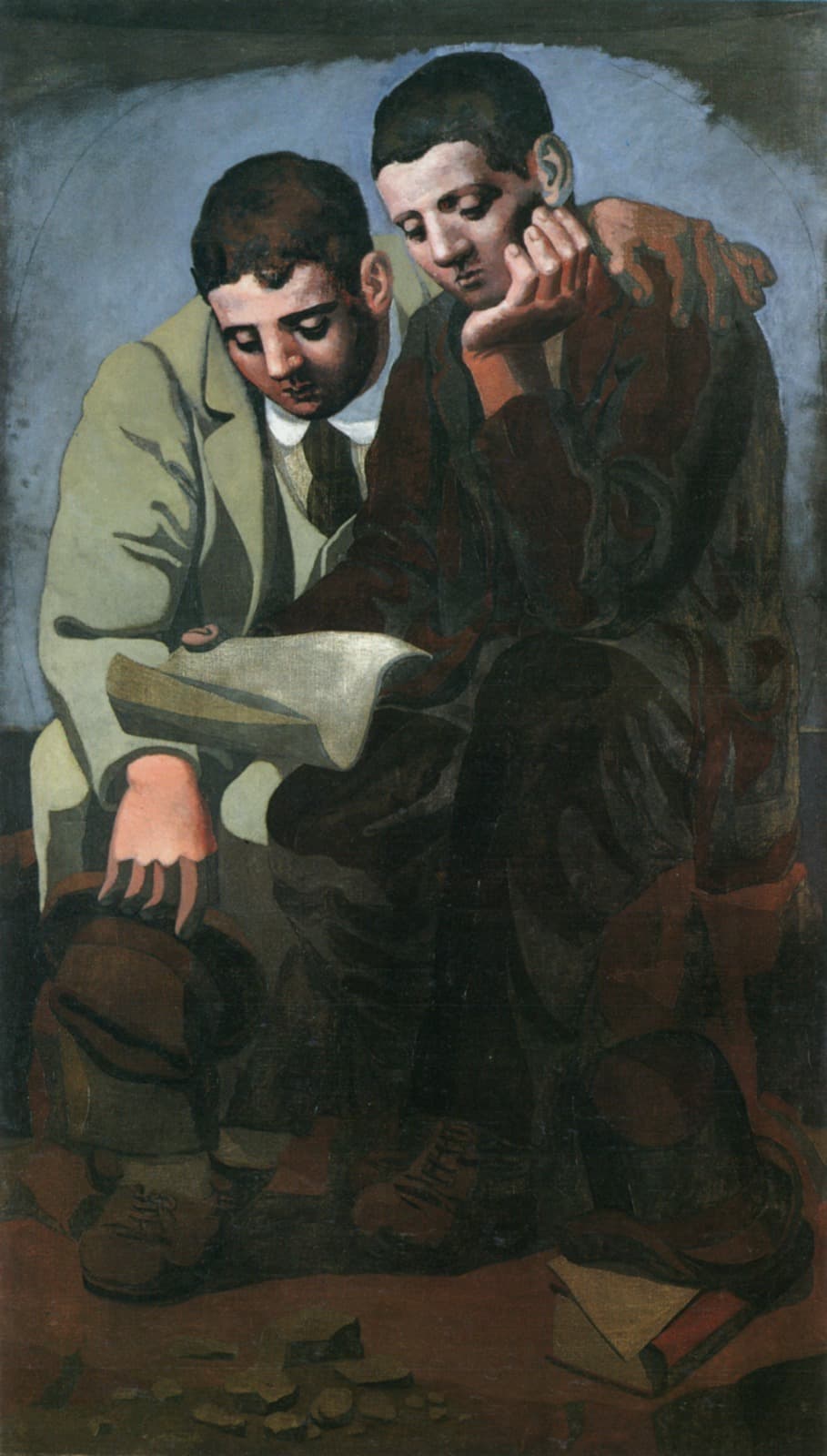
Two heavy young men press close together over a letter, and the intimacy is usually read as a memorial to Apollinaire.

Lotto crops the Passion down to one tear-streaked head at the surface, with soldiers' hands coming in from the edges of the frame.
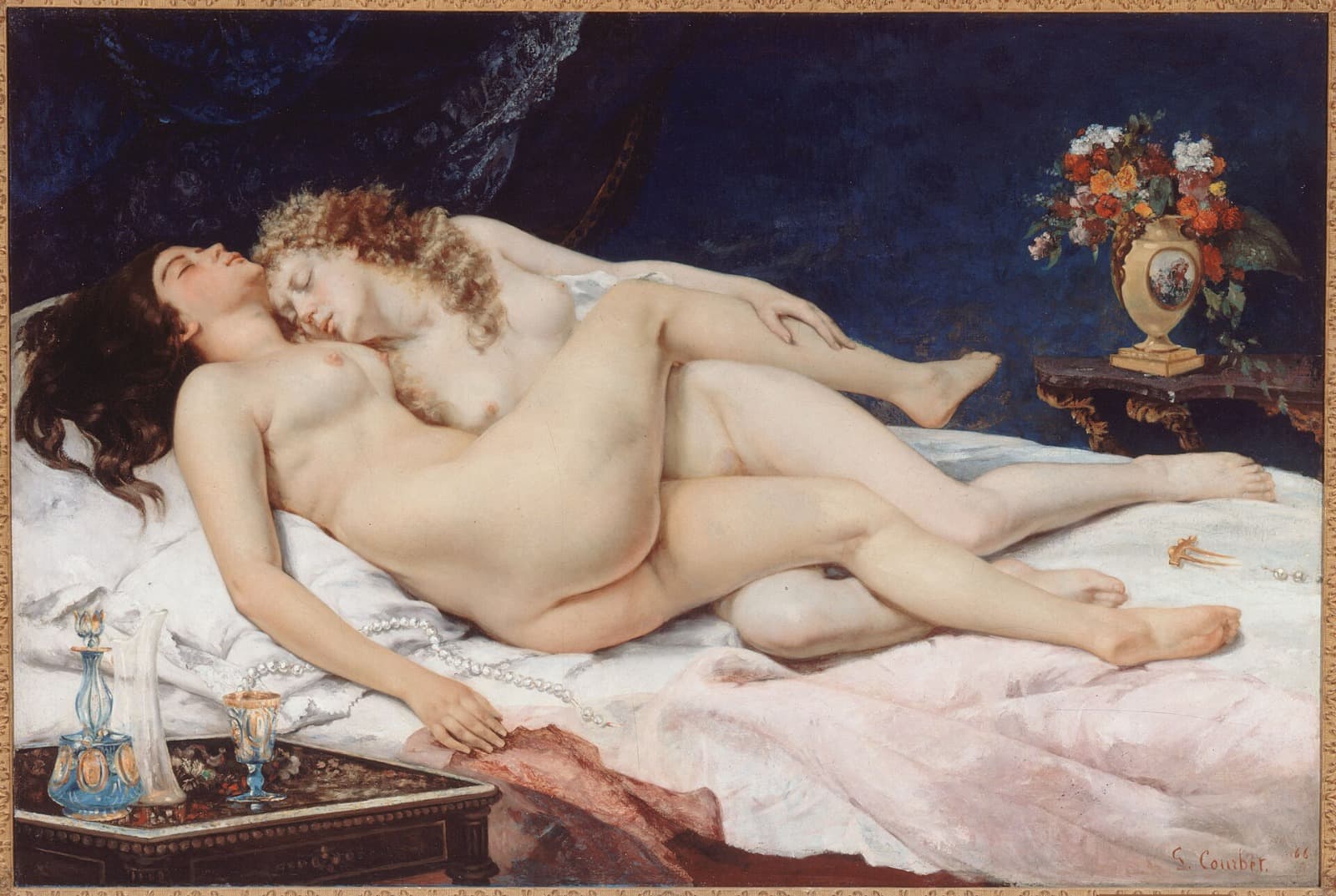
Two women asleep and entwined, painted on private commission and therefore out of reach of the Salon and its proprieties.
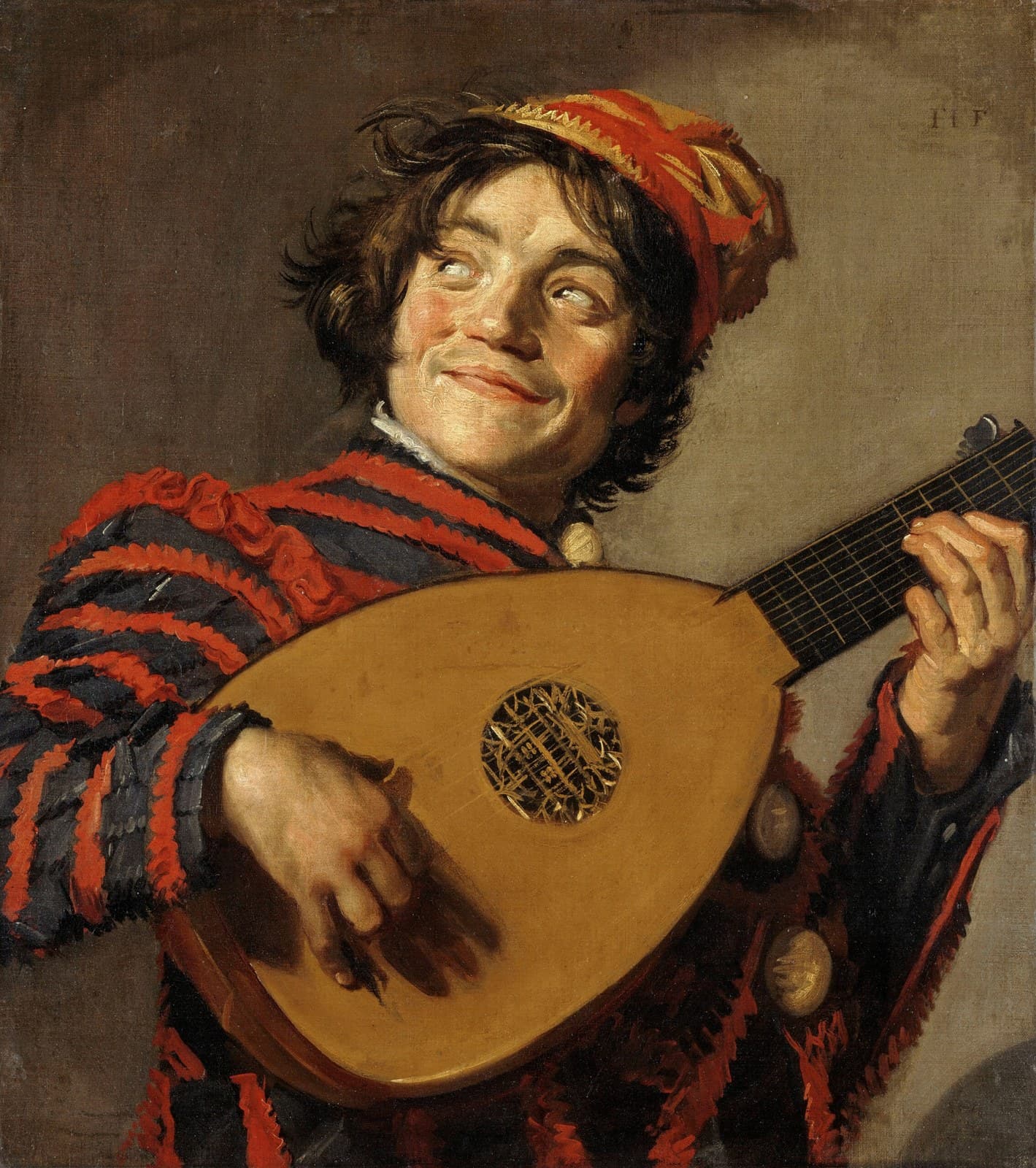
Caught mid-strum with his cap askew and his mouth open, painted so fast the brushstrokes still seem to be moving.
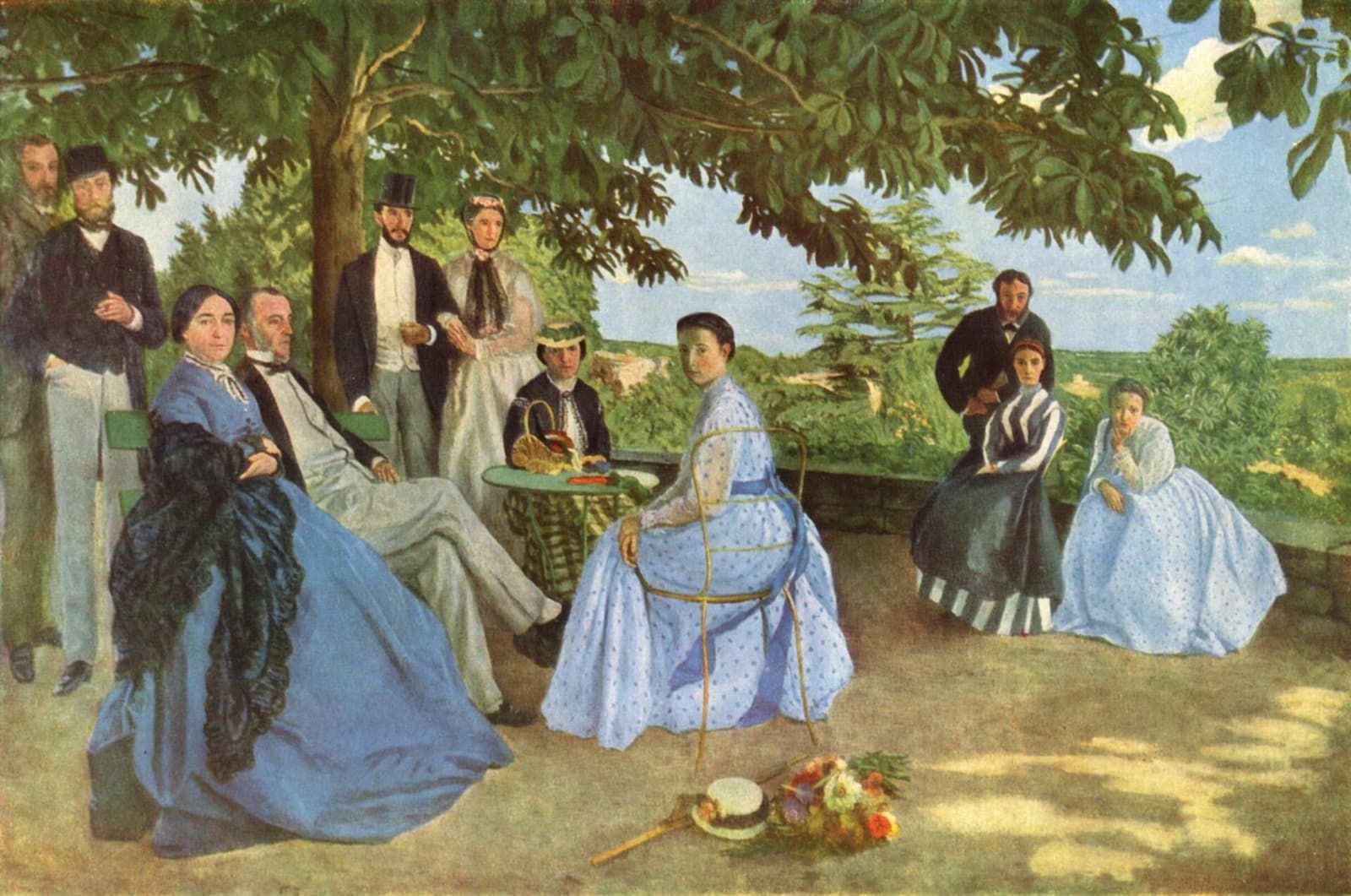
Eleven of the painter's family on a shaded terrace near Montpellier. Bazille was killed in the Franco-Prussian War at twenty-eight.

Where his teacher Pontormo made the subject swirl with anxiety, Bronzino polishes it: jewel-bright blues and pinks, grief made elegant.

Rubens painted this descent years after the Antwerp one, and the two together show him reworking the same falling body across a career.
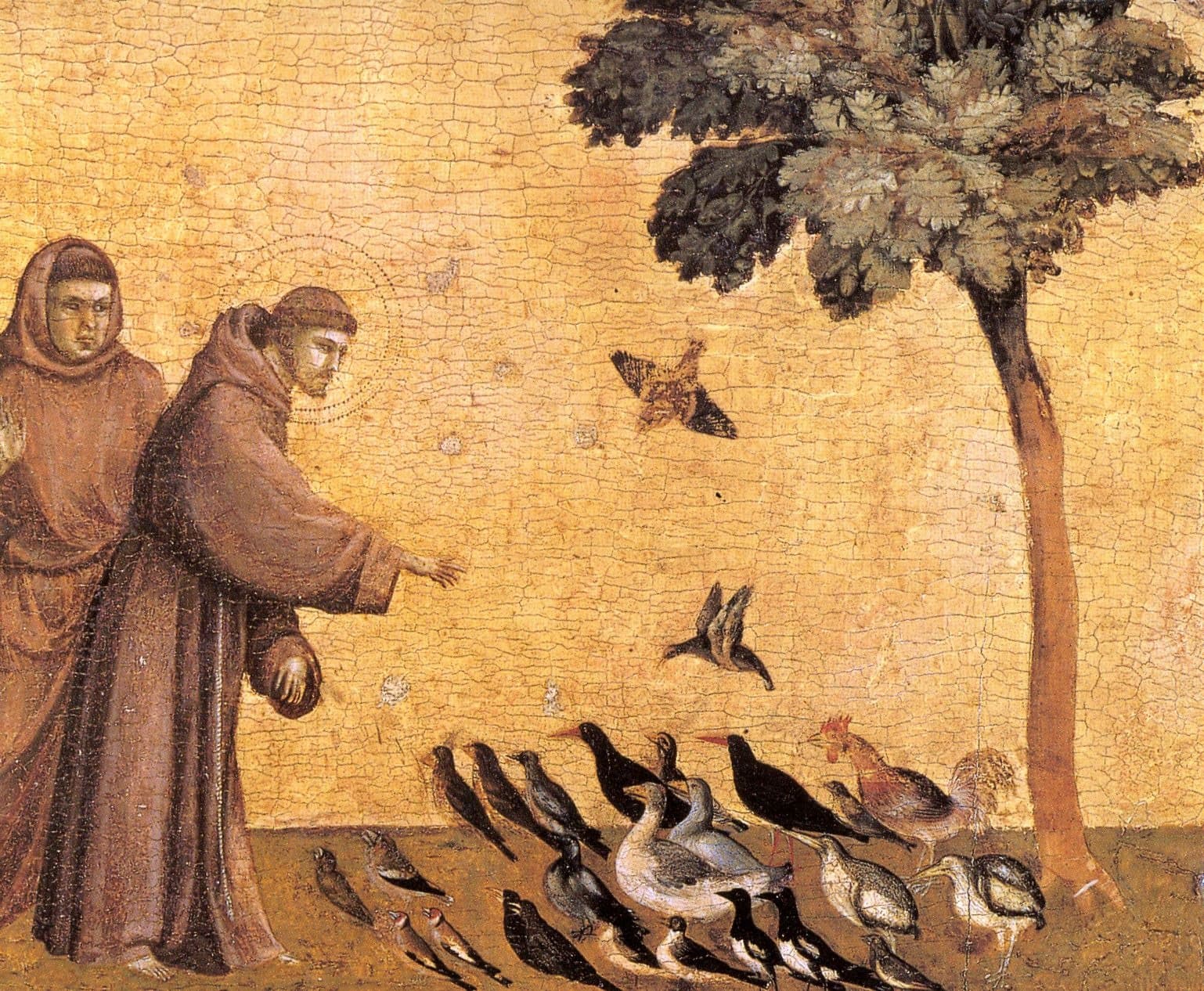
The same story at miniature scale, squeezed into a predella panel, and Giotto loses none of the plainness that made it convincing.

Every hair, every glassy tear, every bead of blood, pushed hard against the front of the picture and made to carry feeling rather than skill.

A child-angel leans toward the sleeping old man, its small fingers glowing translucent where they pass in front of the candle flame.

She reads his palm and takes the ring off his finger while she does it, and he is too busy looking at her to notice.
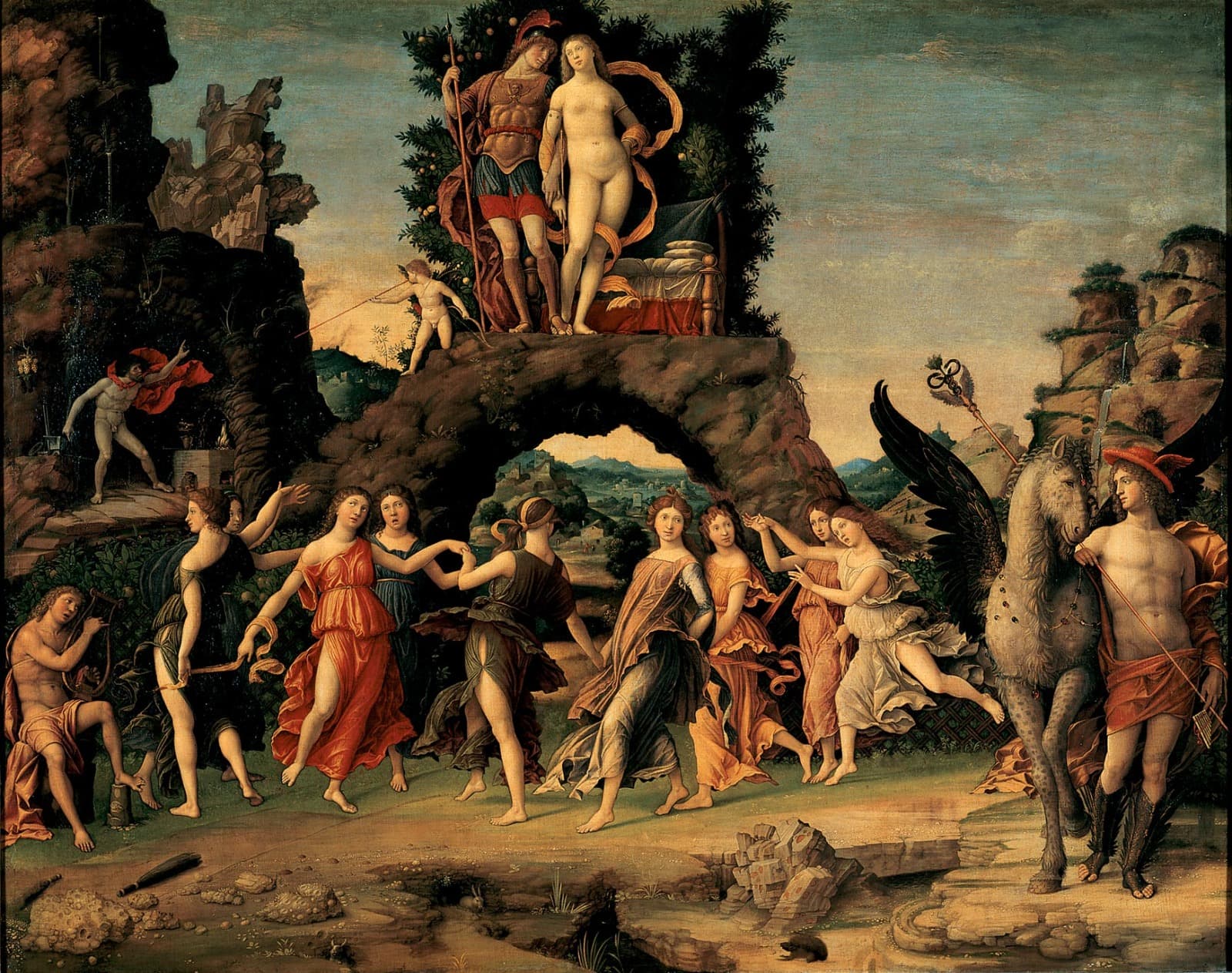
The Muses dance to Apollo's lyre while Venus's cuckolded husband fumes at his forge off to the left. Painted for Isabella d'Este's study.
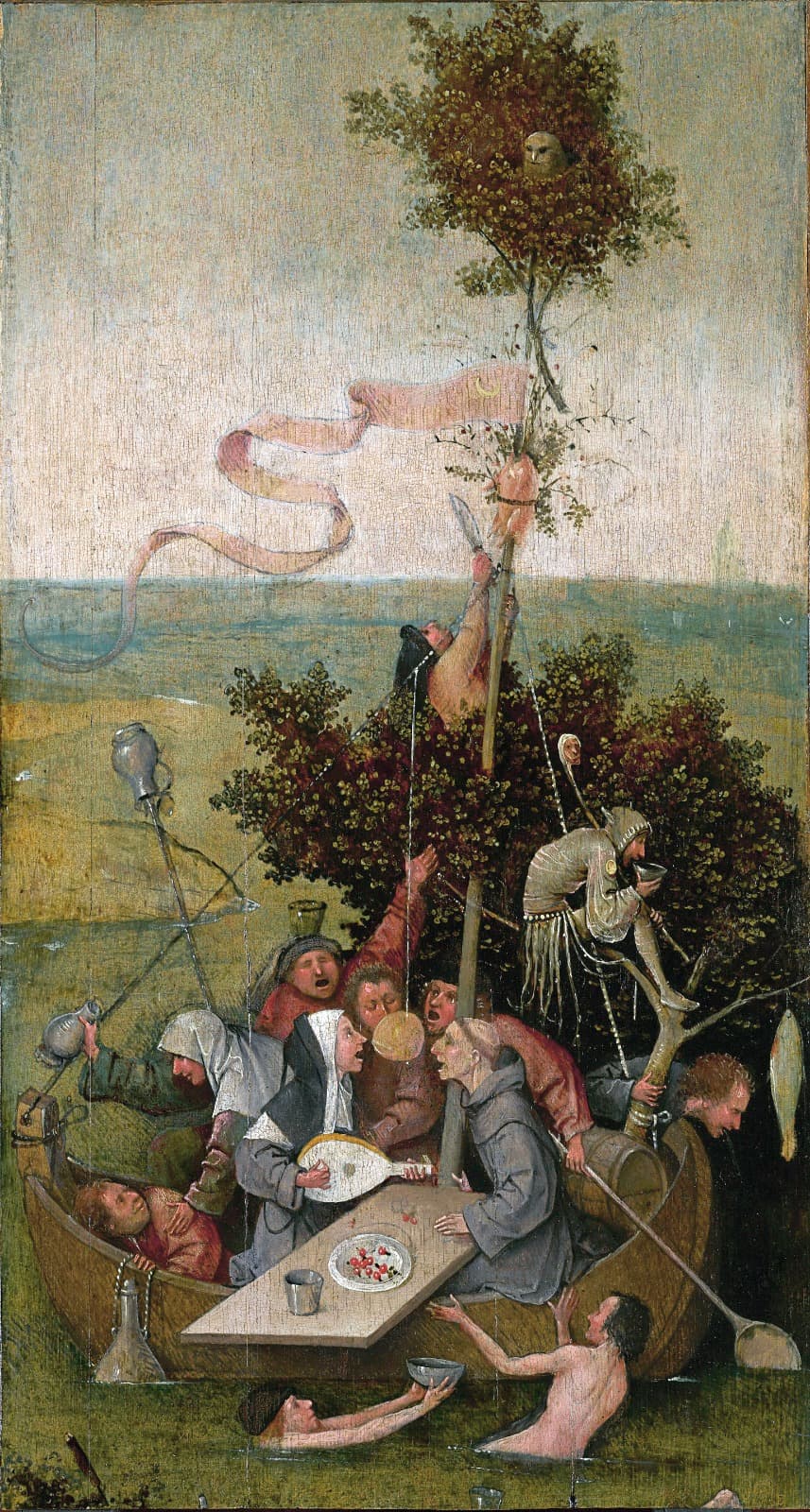
A monk and a nun bawl a song over a lute while somebody vomits over the side. The boat has no rudder, which is the point.

The angels crowd in like inquisitive children. One of the first paintings to put the Virgin and saints in a single shared space.
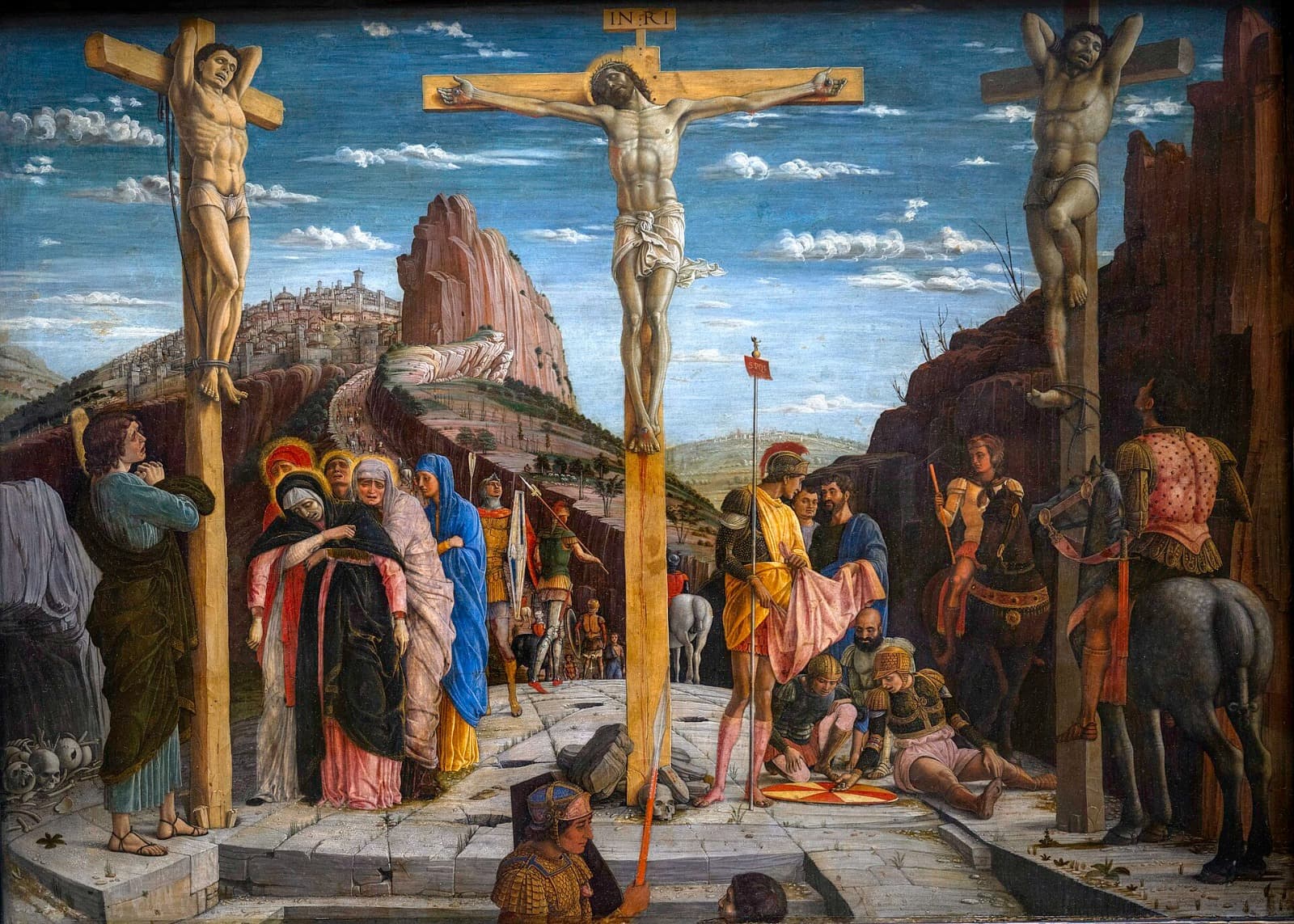
Soldiers throw dice for Christ's robe on a paved Golgotha. This panel was sawn off an altarpiece by Napoleon's looters and never returned.

She sits in profile against a hedge of carnations with butterflies going past, a sprig of juniper on her sleeve punning on her name.
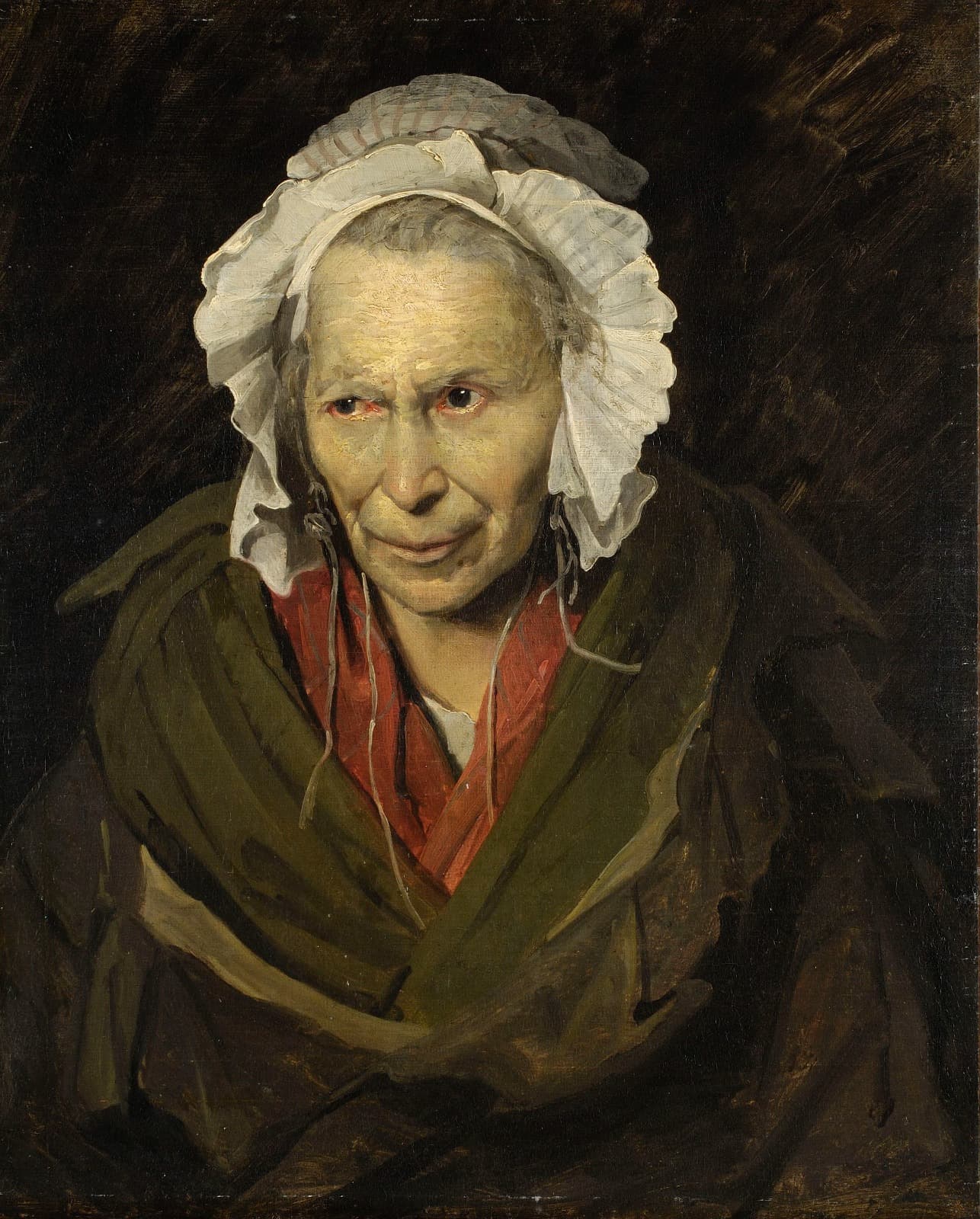
One of a series Géricault painted of asylum patients for a doctor studying obsession, and he gave her the seriousness of a commissioned portrait.
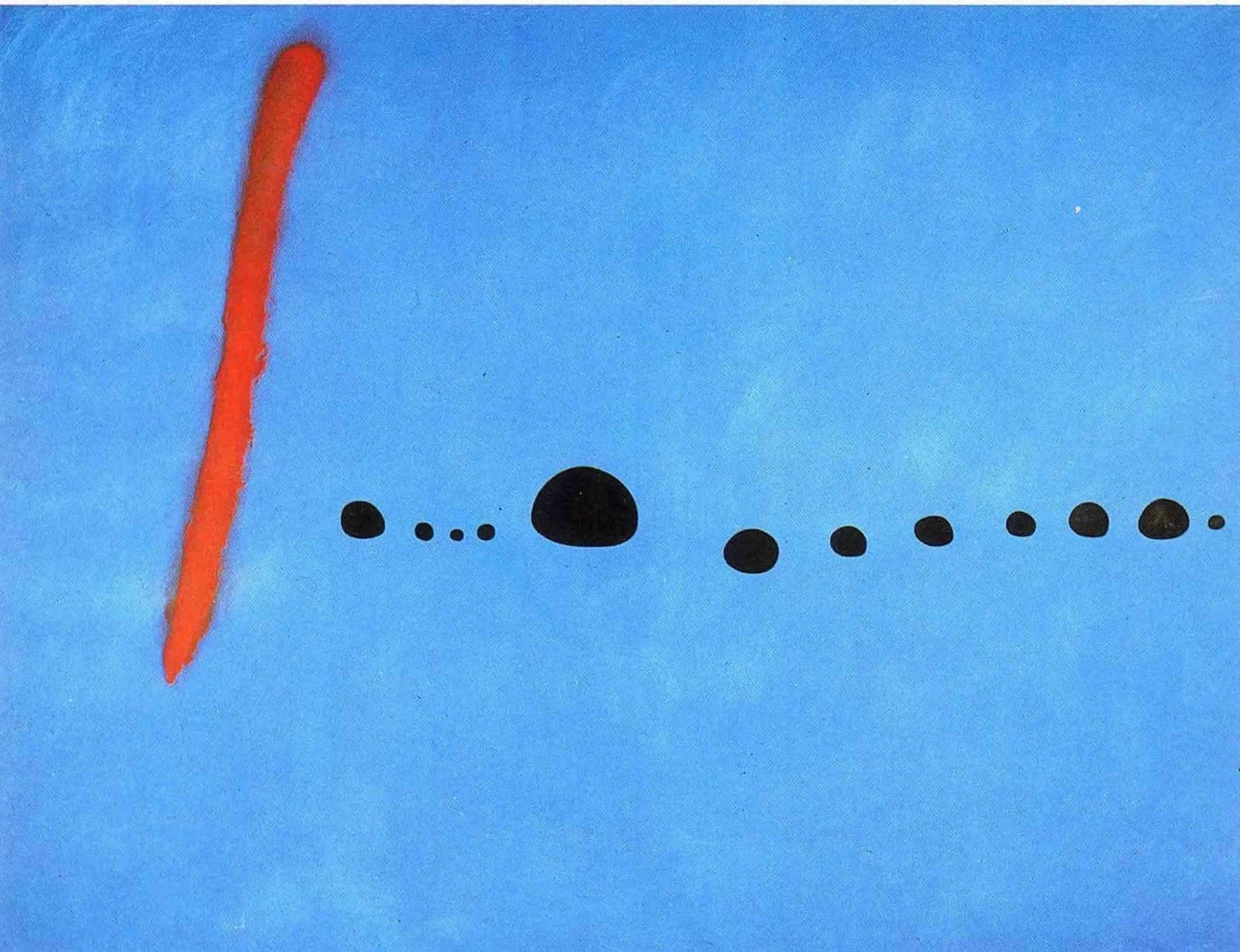
Pure blue interrupted by a line of black dots and one short red bar. Miró late in life, having thrown almost everything out.

Oedipus leans in close to answer the riddle, and a previous contestant's foot is lying at the bottom edge as a warning.

Golden rays come off a winged crucified figure in the sky and strike Francis in the hands, feet and side. Giotto signed this one.

Christ crowns his mother at the top of a flight of steps that recede convincingly into depth, which is the new thing here.

Christ as a boy holds a candle for his father and the flame glows red through his fingers, which is the whole subject.
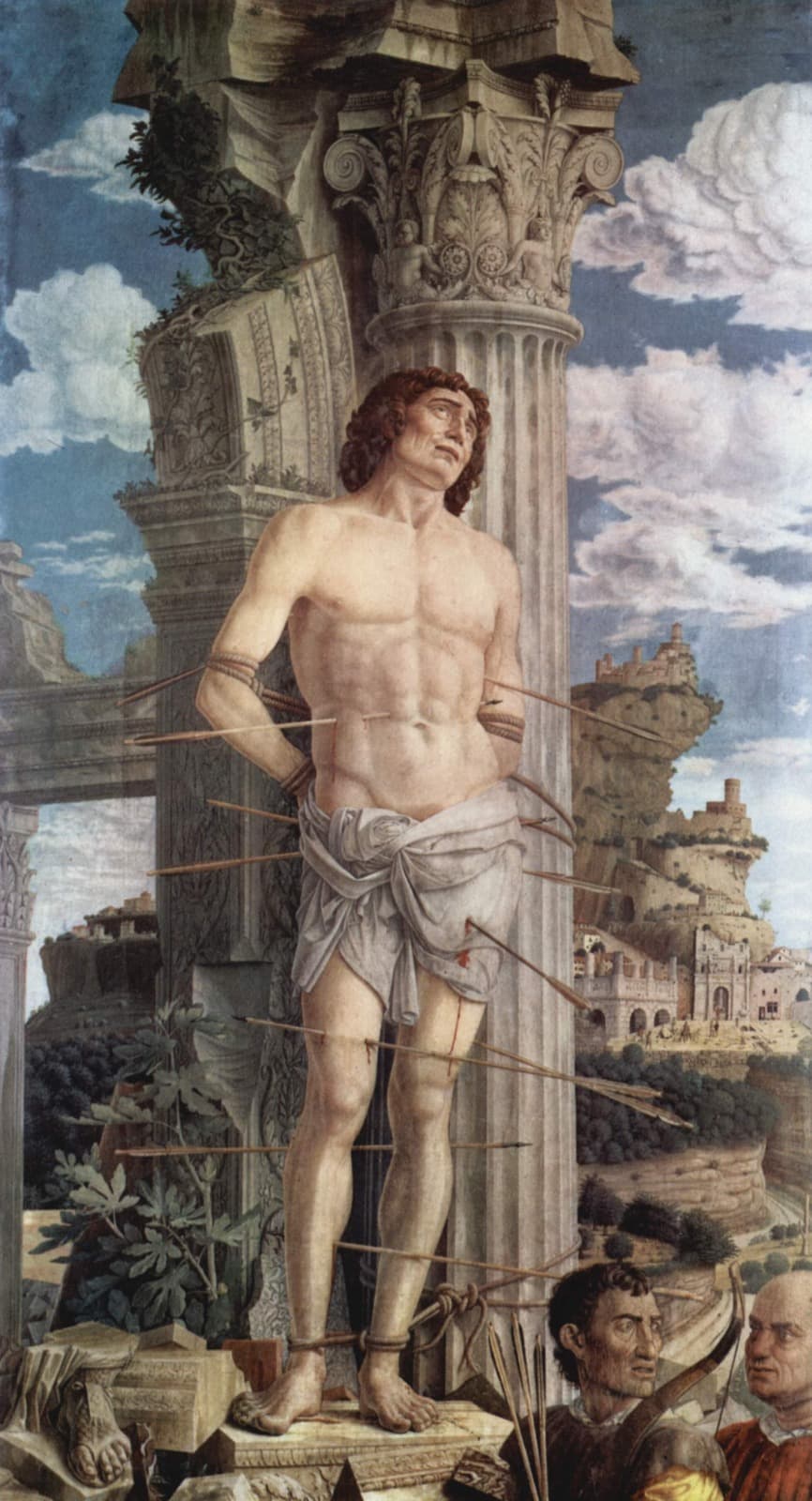
Sebastian takes his arrows with the composure of a statue, tied to a Roman column in a field of accurately ruined antiquity.
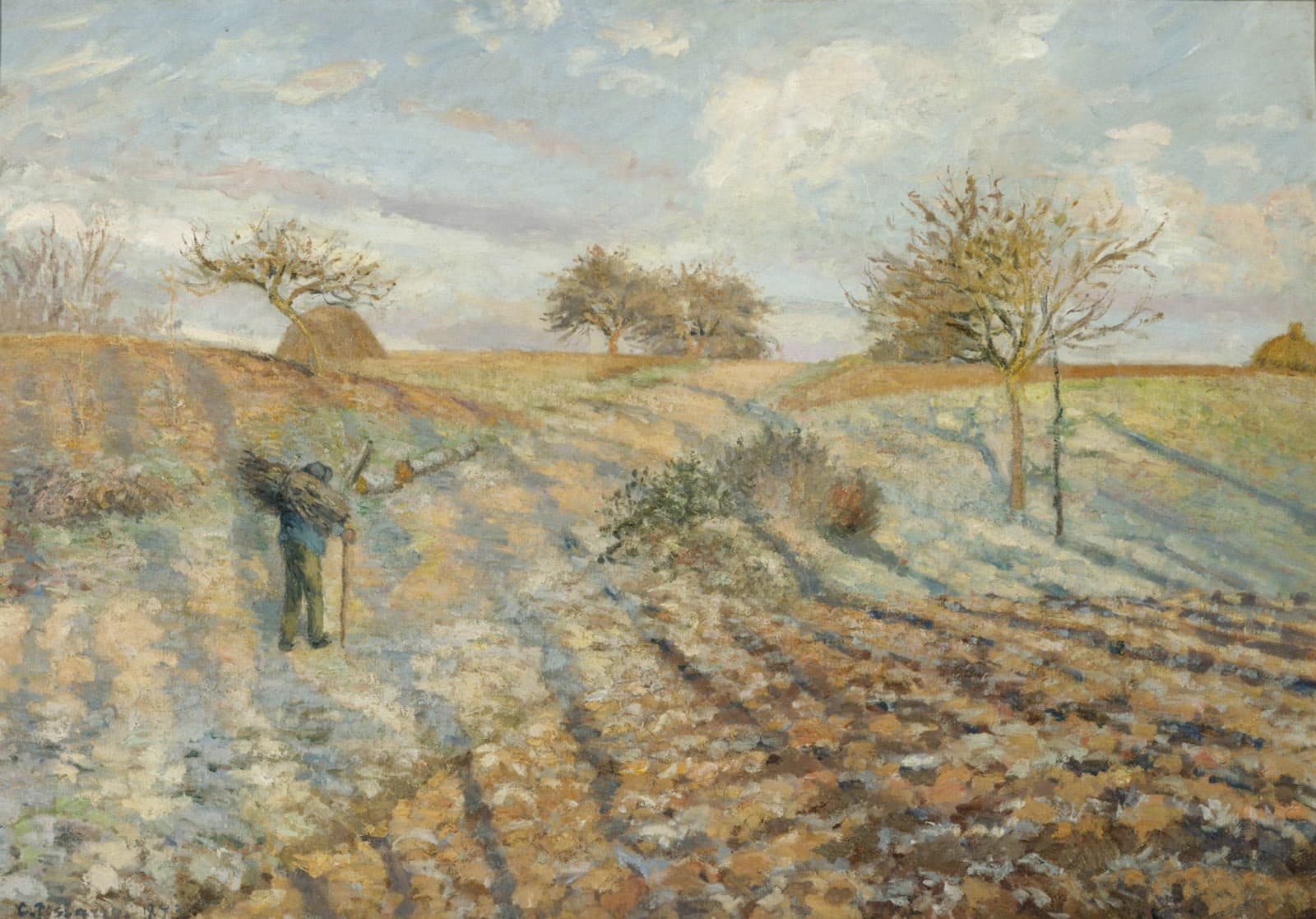
Critics at the first Impressionist show in 1874 said it looked like palette scrapings. The furrows are streaked with blue, violet and gold.
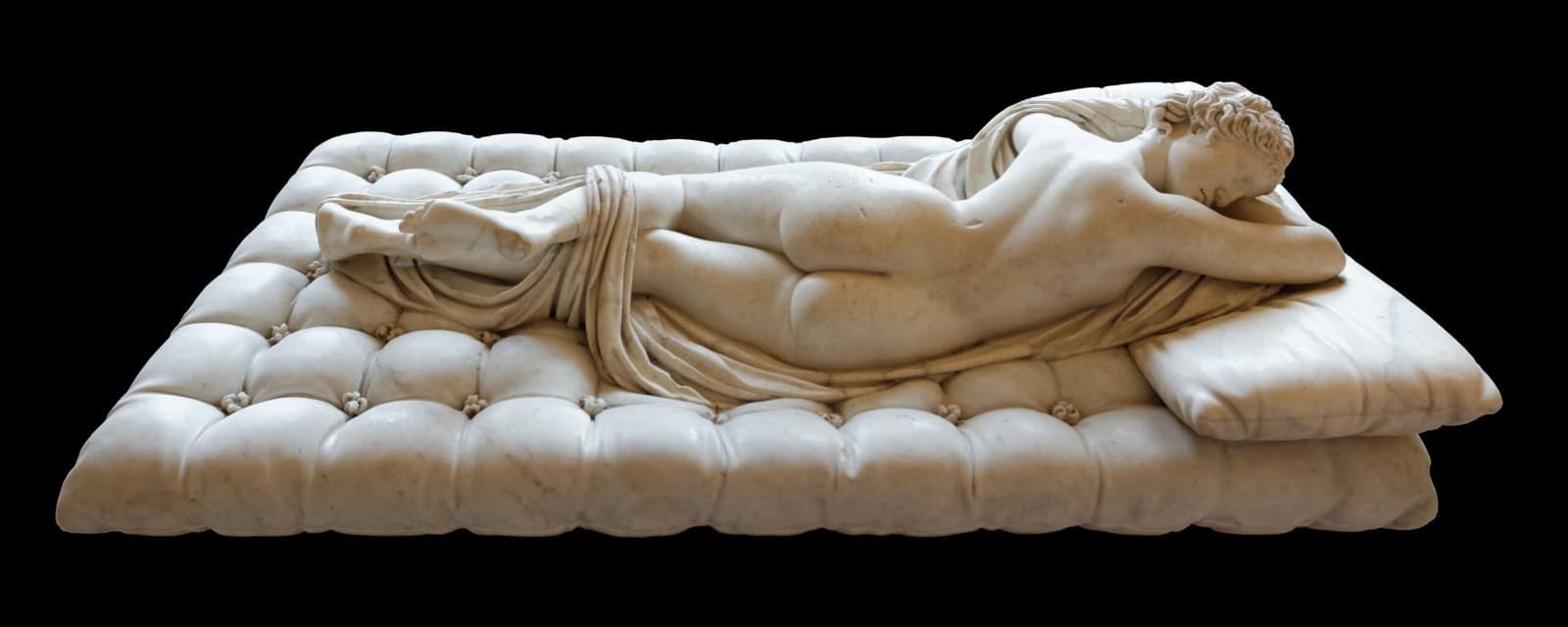
You see a sleeping woman until you walk around to the other side. Bernini added the mattress, folds and all, in 1620.
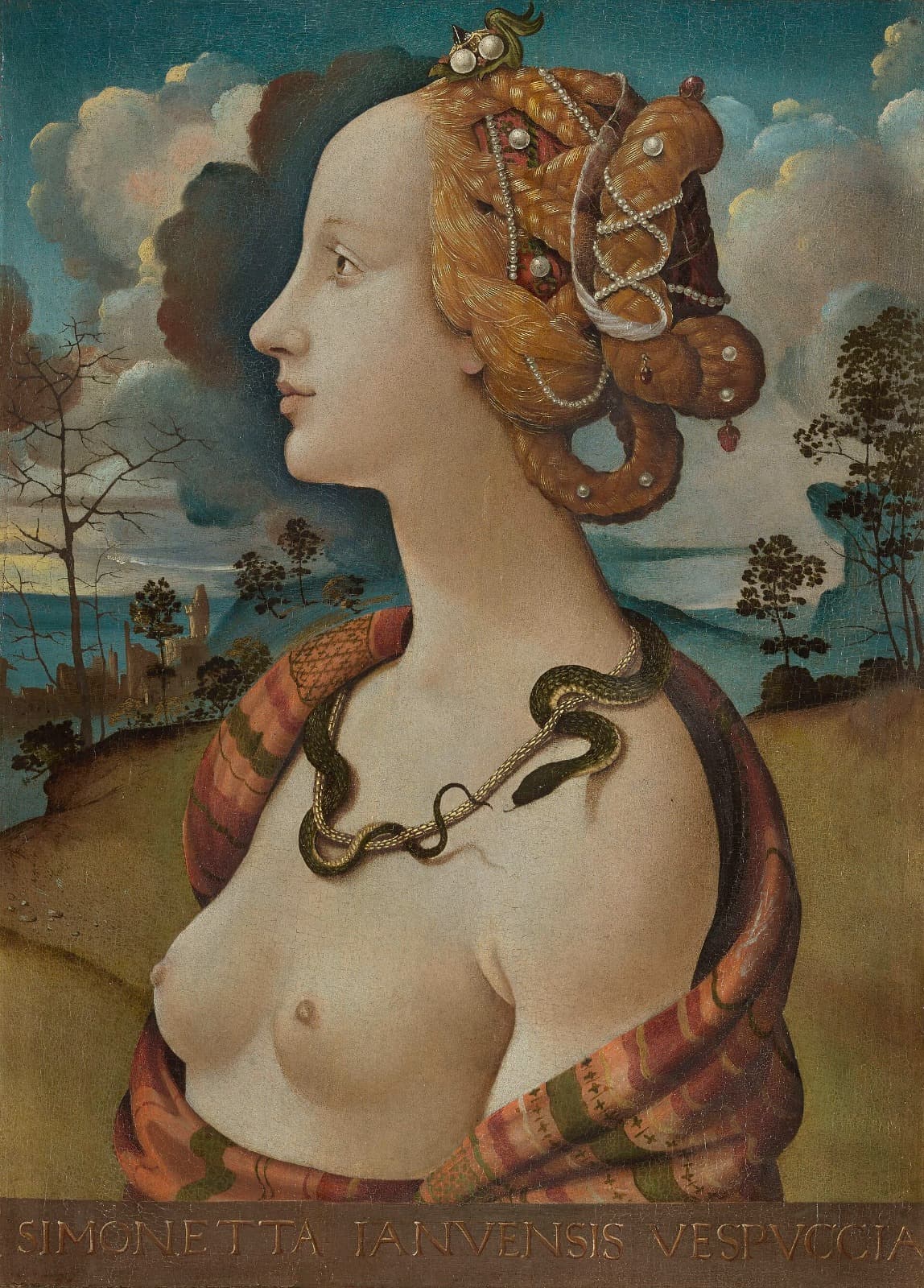
She had been dead for years when this was painted, and the asp at her throat turns her into Cleopatra.

He weighs gold on a fine balance and her eyes drift off the prayer book toward the coins. A small mirror catches the room.
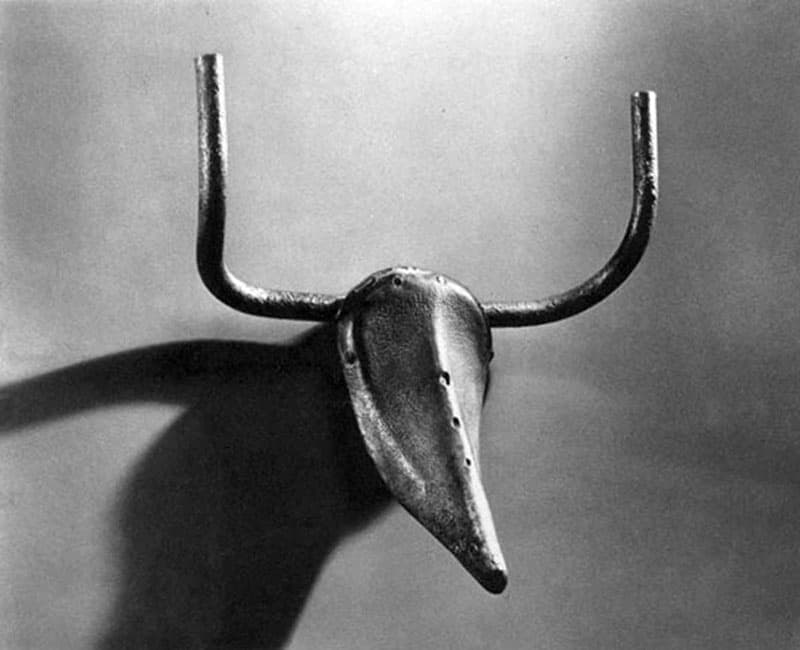
A bicycle saddle and a set of handlebars, joined. Picasso joked that someone might one day turn it back into a bicycle.