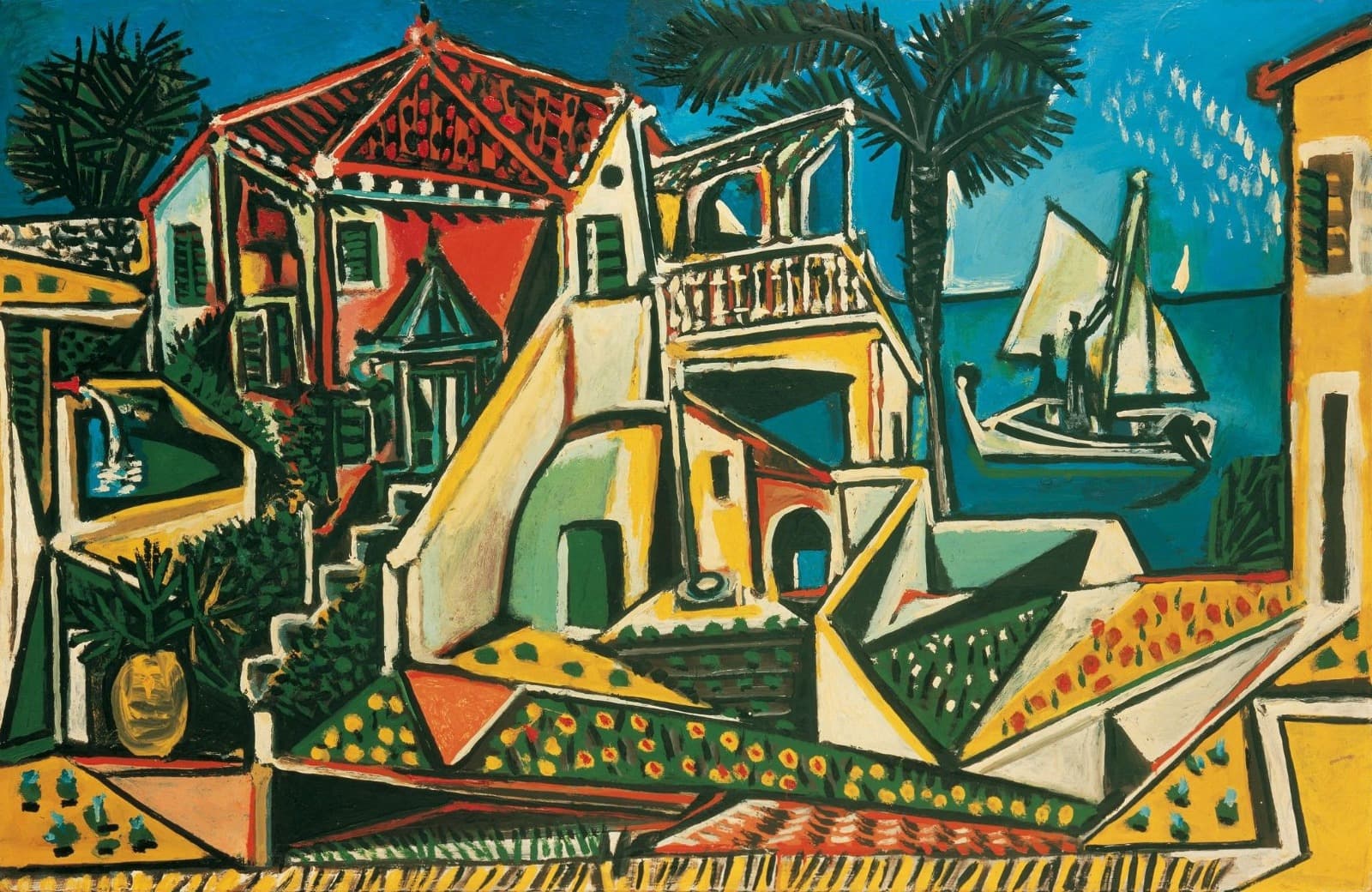
Mediterranean Landscape
1952 · Albertina, Vienna
The whole coast reduced to a few flat zones of color and some quick line. Picasso old, settled in the south, and enjoying himself.
★ 4.4
 skopia
The whole coast reduced to a few flat zones of color and some quick line. Picasso old, settled in the south, and enjoying himself.

A child holding a white dove with a colored ball at its feet, painted just as Picasso's palette was cooling toward blue.

They shared a Barcelona studio, and Soto was known as a hard drinker, but Picasso painted him sober and sad in blue.
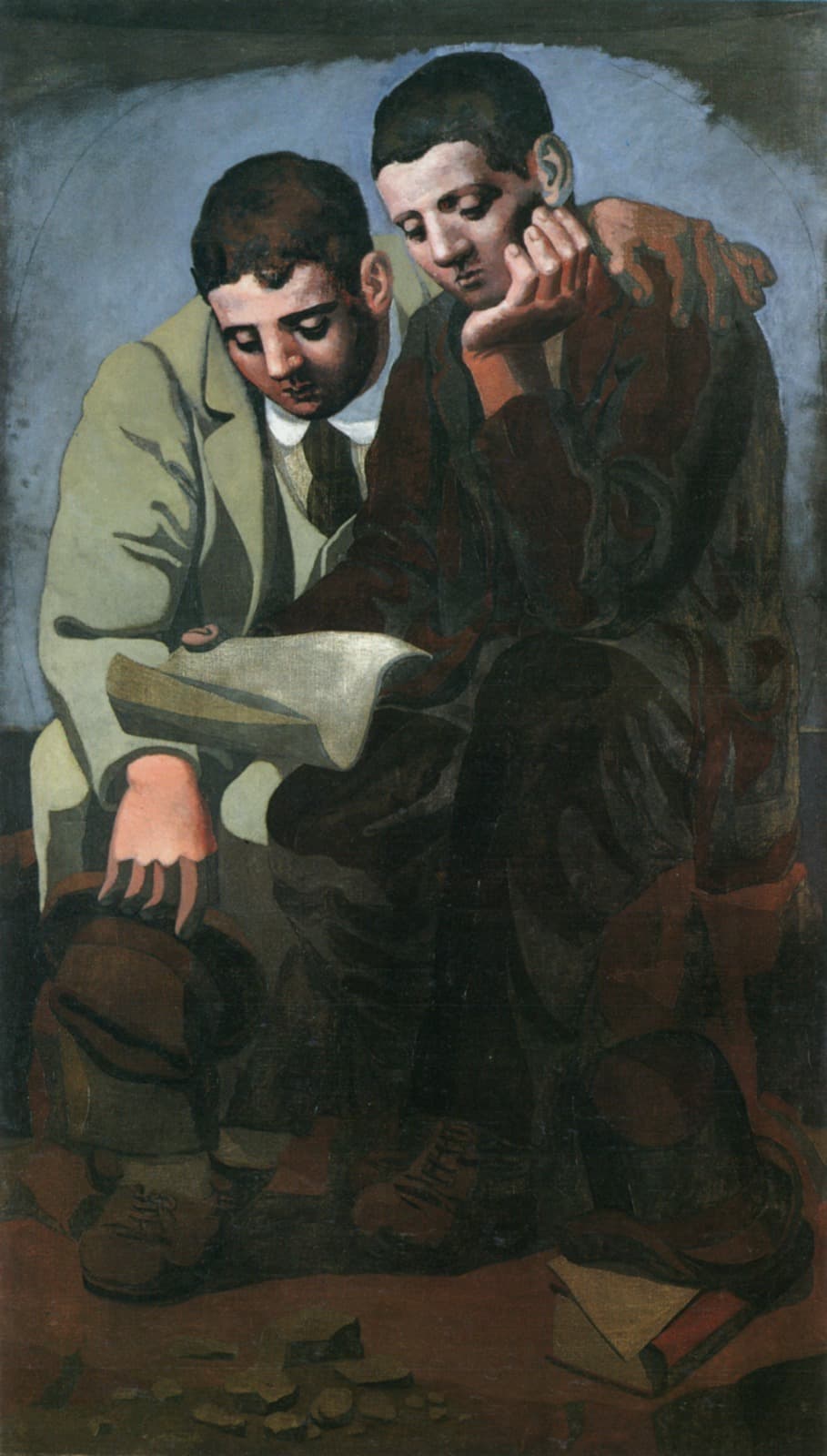
Two heavy young men press close together over a letter, and the intimacy is usually read as a memorial to Apollinaire.
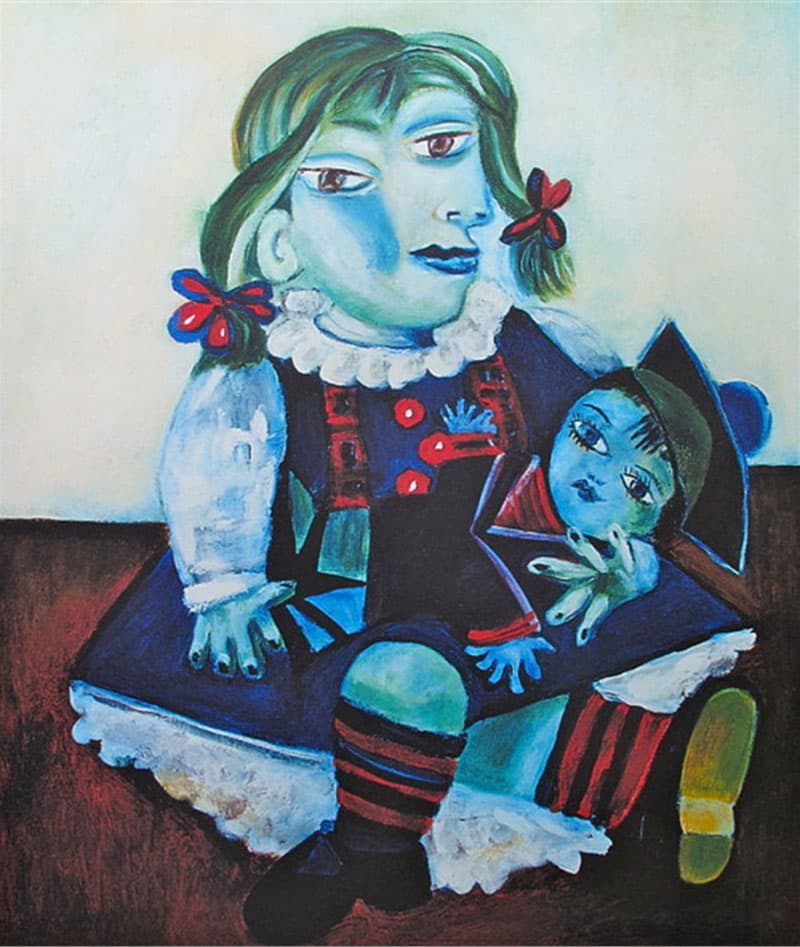
His daughter Maya holding her doll, her face split front and profile at once, the Cubist trick turned warm for once.
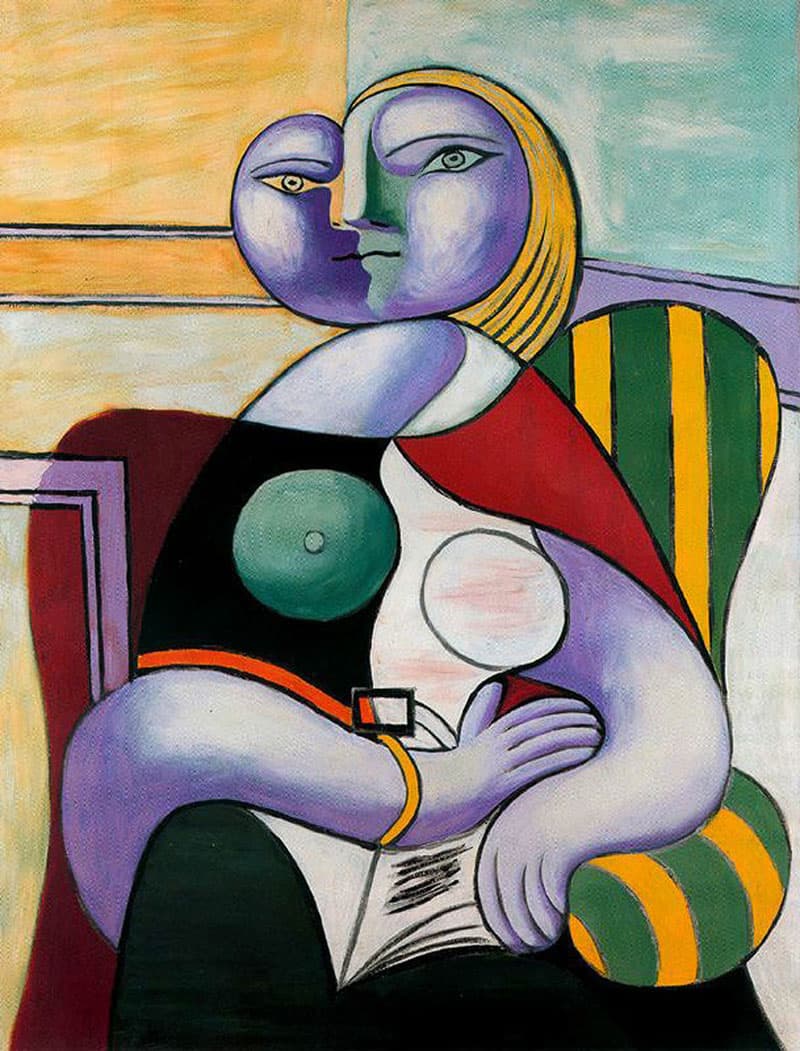
Marie-Thérèse has fallen asleep over her book with her head on her arms, from the year Picasso painted her over and over.
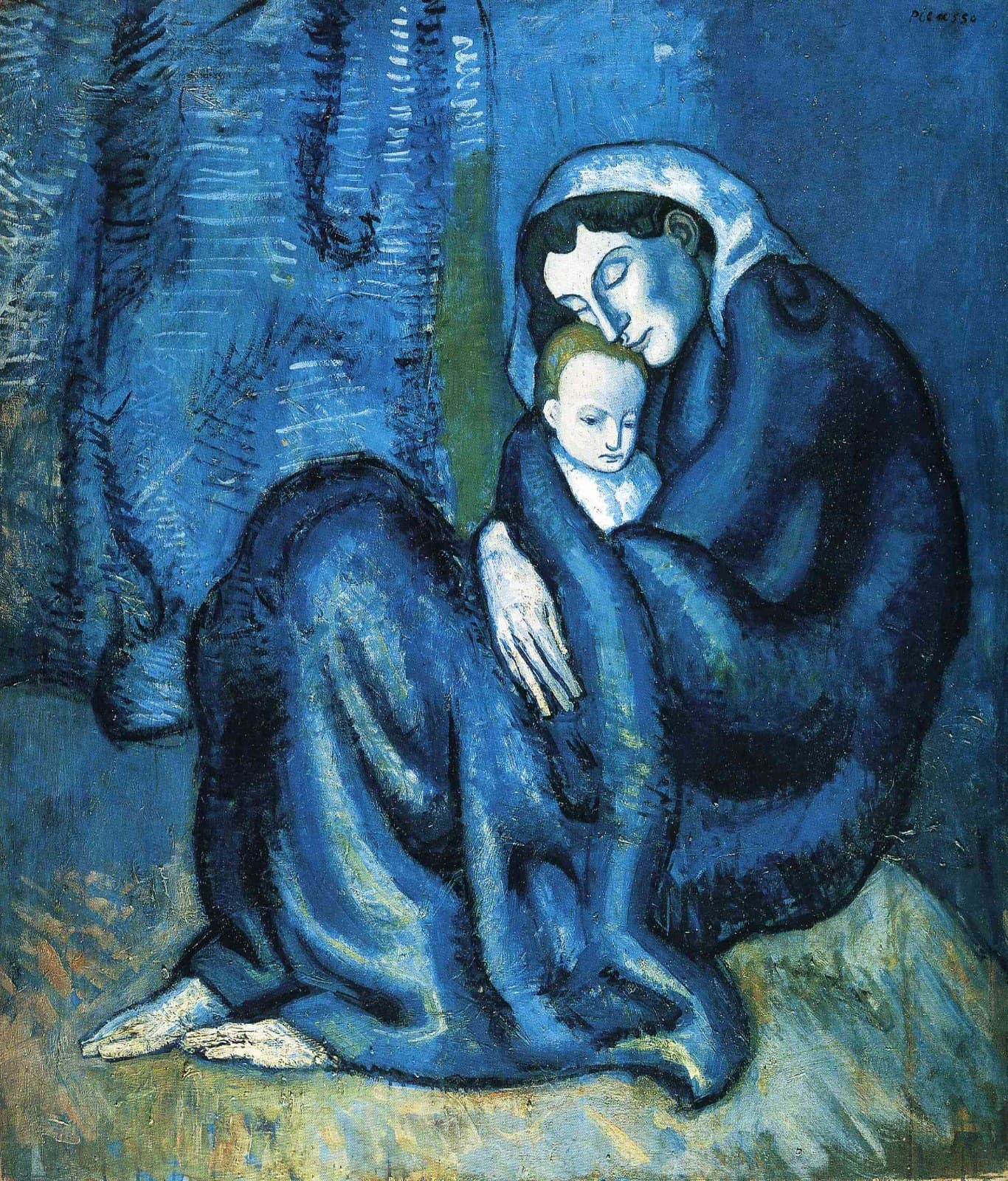
A mother holding her child, in the blue Picasso used for everything during the years he was poor in Paris and Barcelona.
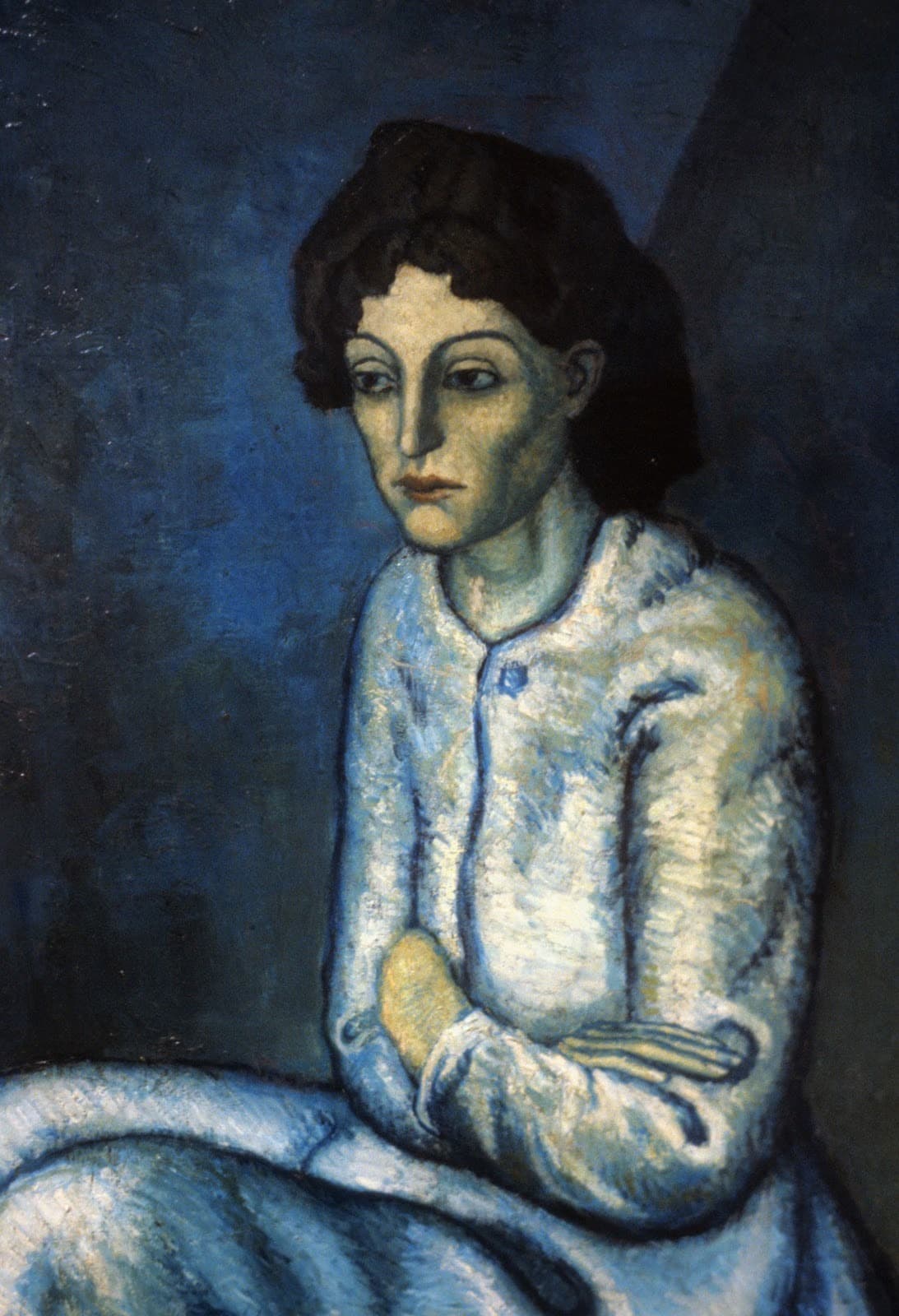
Her crossed arms are a wall against the world, and the blue does the rest. Picasso was painting the outcast and the destitute.
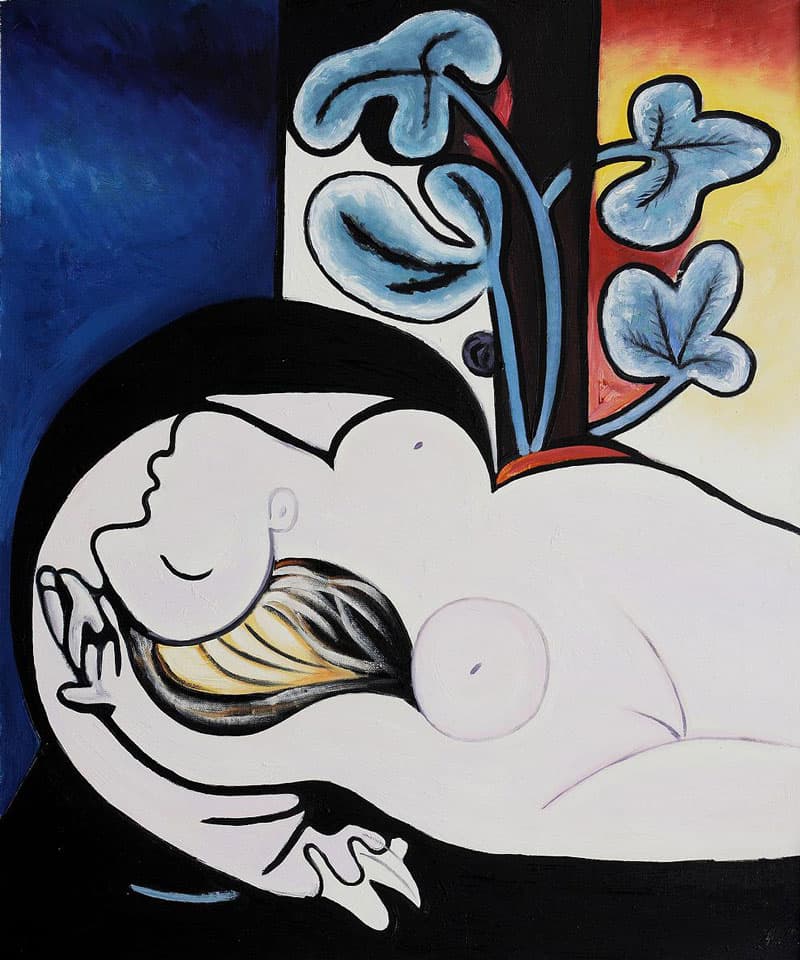
The dark chair throws the body forward, all lilac and rose curves, a plant arching over the sleeper from behind.
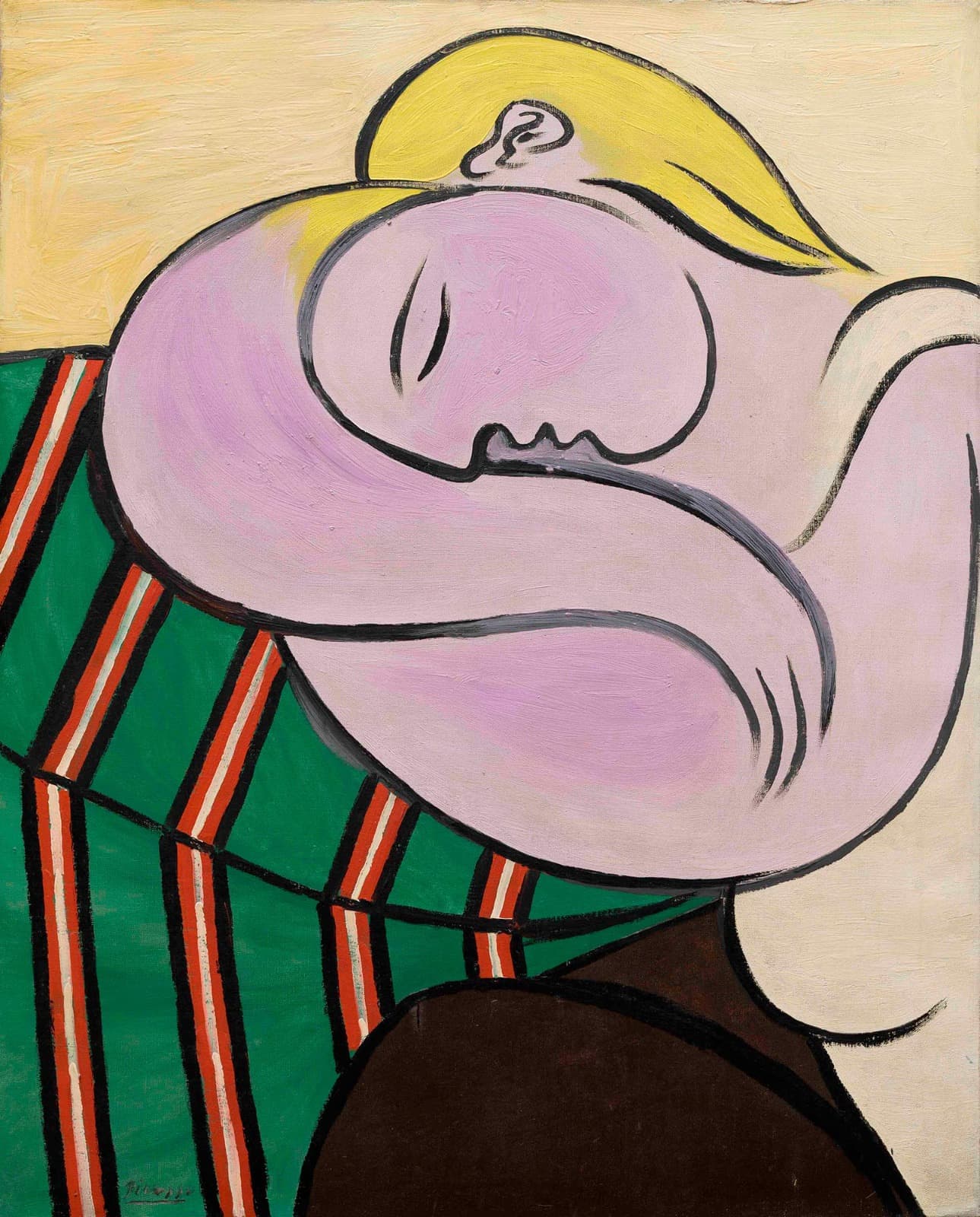
Marie-Thérèse asleep with her head on her arms, the angular violence of Cubism gone soft and curved for a few years.
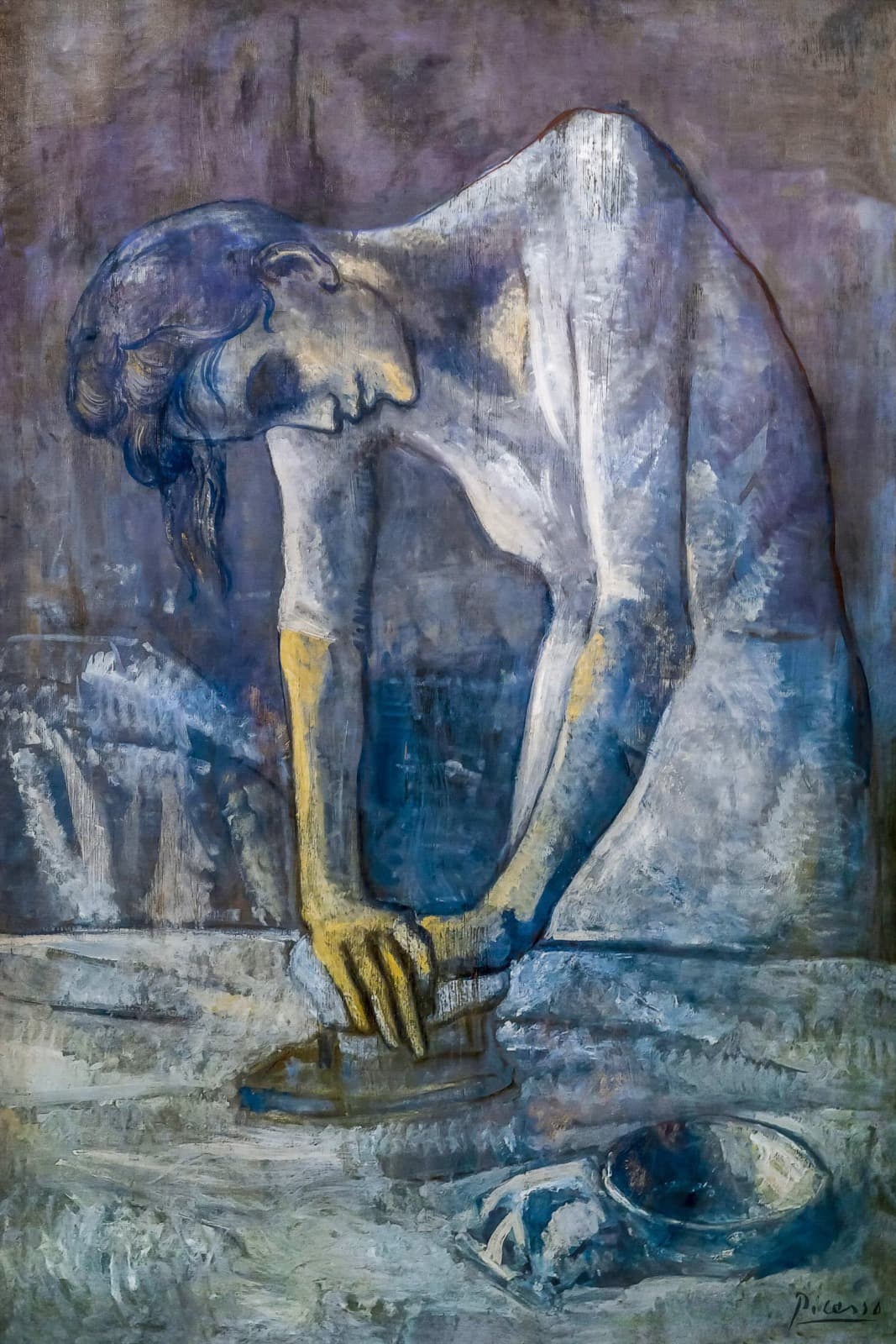
The laundress bears down on her iron with her shoulders up and her head sunk, all in the cold blue of Picasso's poorest years.

Stolen from the Musée d'Art Moderne in Paris in 2010 and never recovered, so it survives here only as a photograph.
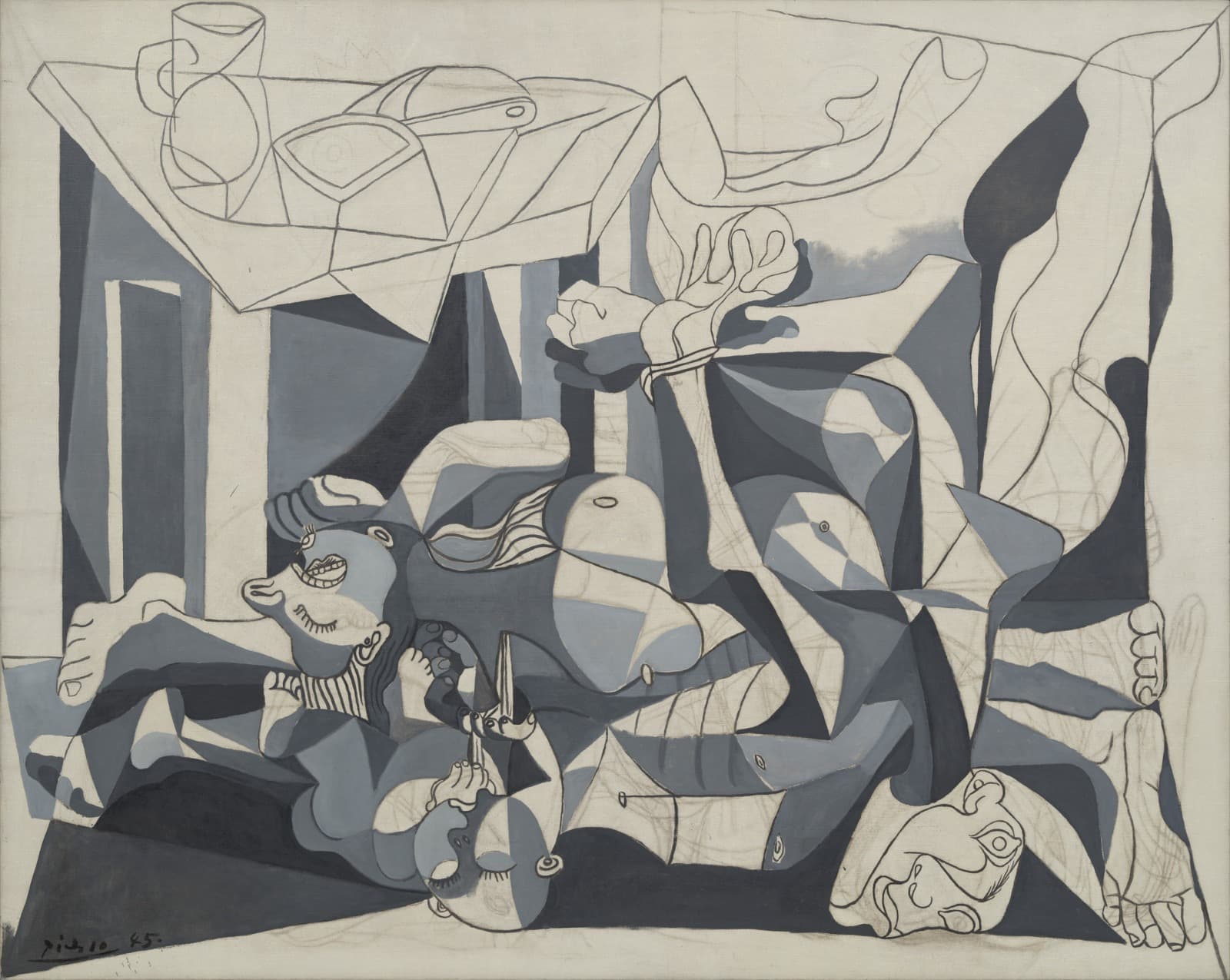
Bodies lie heaped and bound under a kitchen table, in grey. Picasso left it unfinished, painted after the camps were opened.

The Rose Period cooling off into something graver and more archaic, the boy and horse built like figures off a Greek relief.

Marie-Thérèse asleep in a red armchair, her face split into curves. Picasso is said to have done it in a single afternoon.
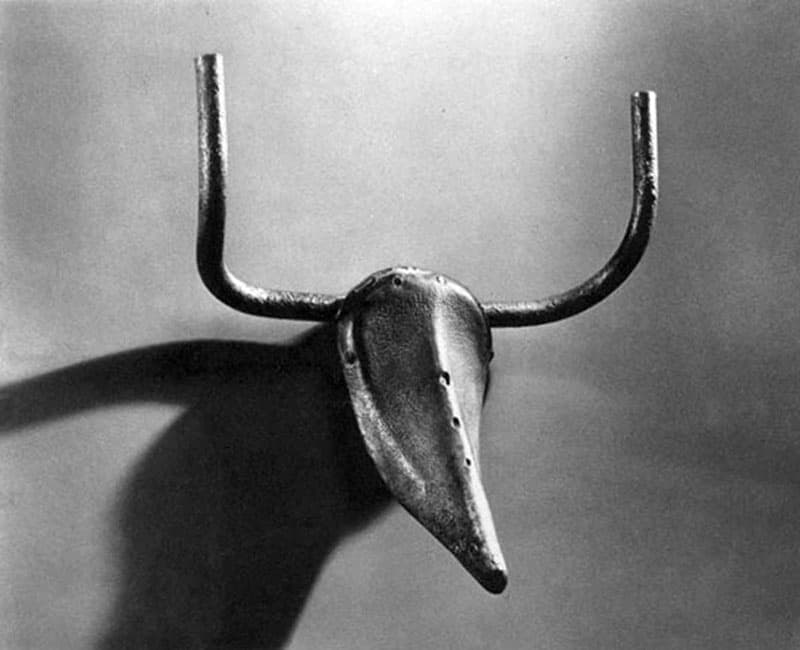
A bicycle saddle and a set of handlebars, joined. Picasso joked that someone might one day turn it back into a bicycle.
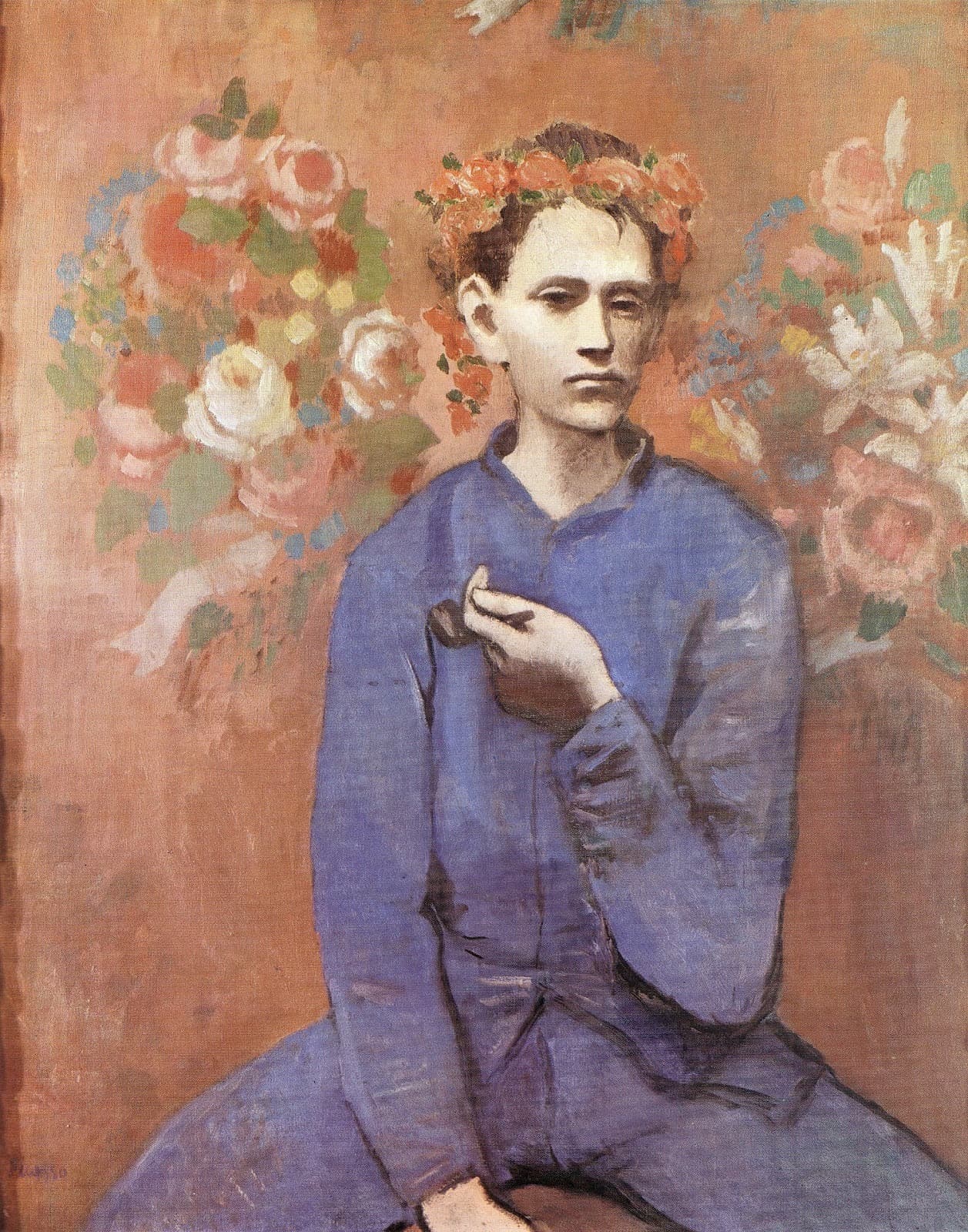
A boy from the street in a crown of roses, painted the year Picasso's blue gloom warmed into rose.

Marie-Thérèse asleep beside a sculpture of her own head and a philodendron, from the year Picasso could seemingly do nothing wrong.
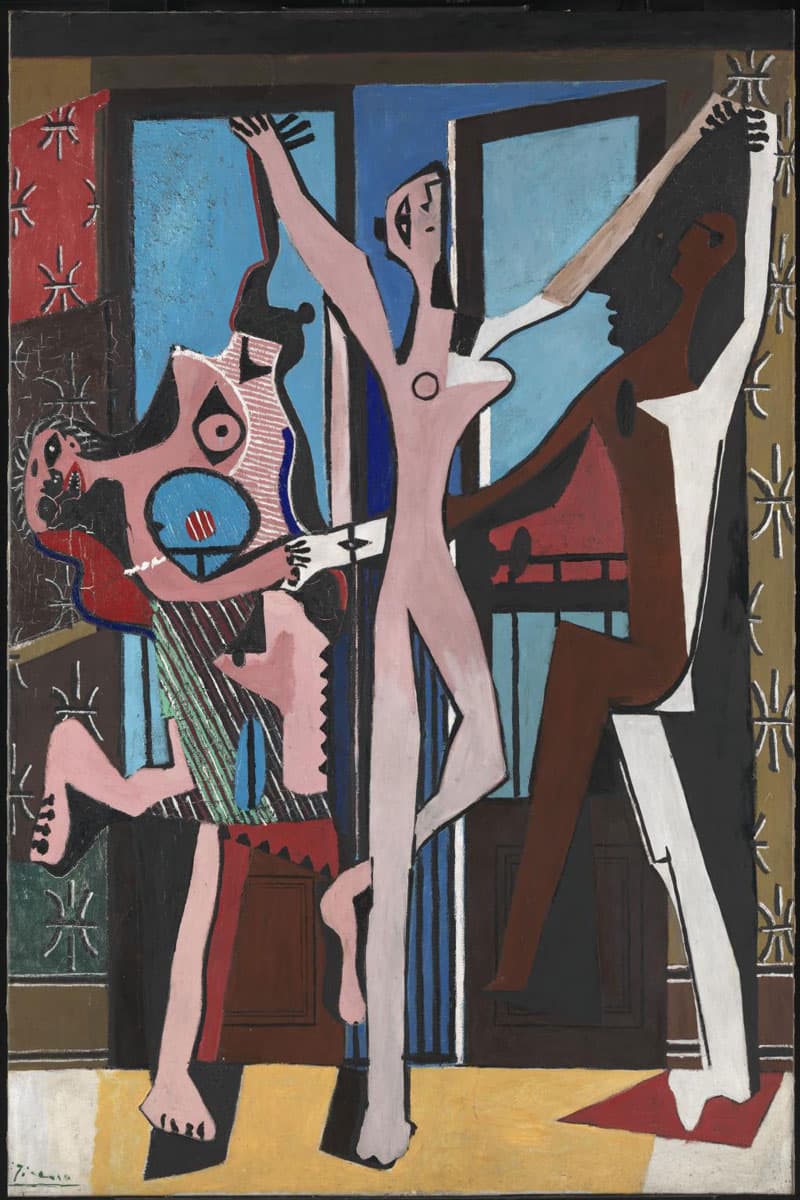
Picasso's classical calm breaks here into something jagged and violent, the limbs flung out almost crucified, set off by the death of an old friend.
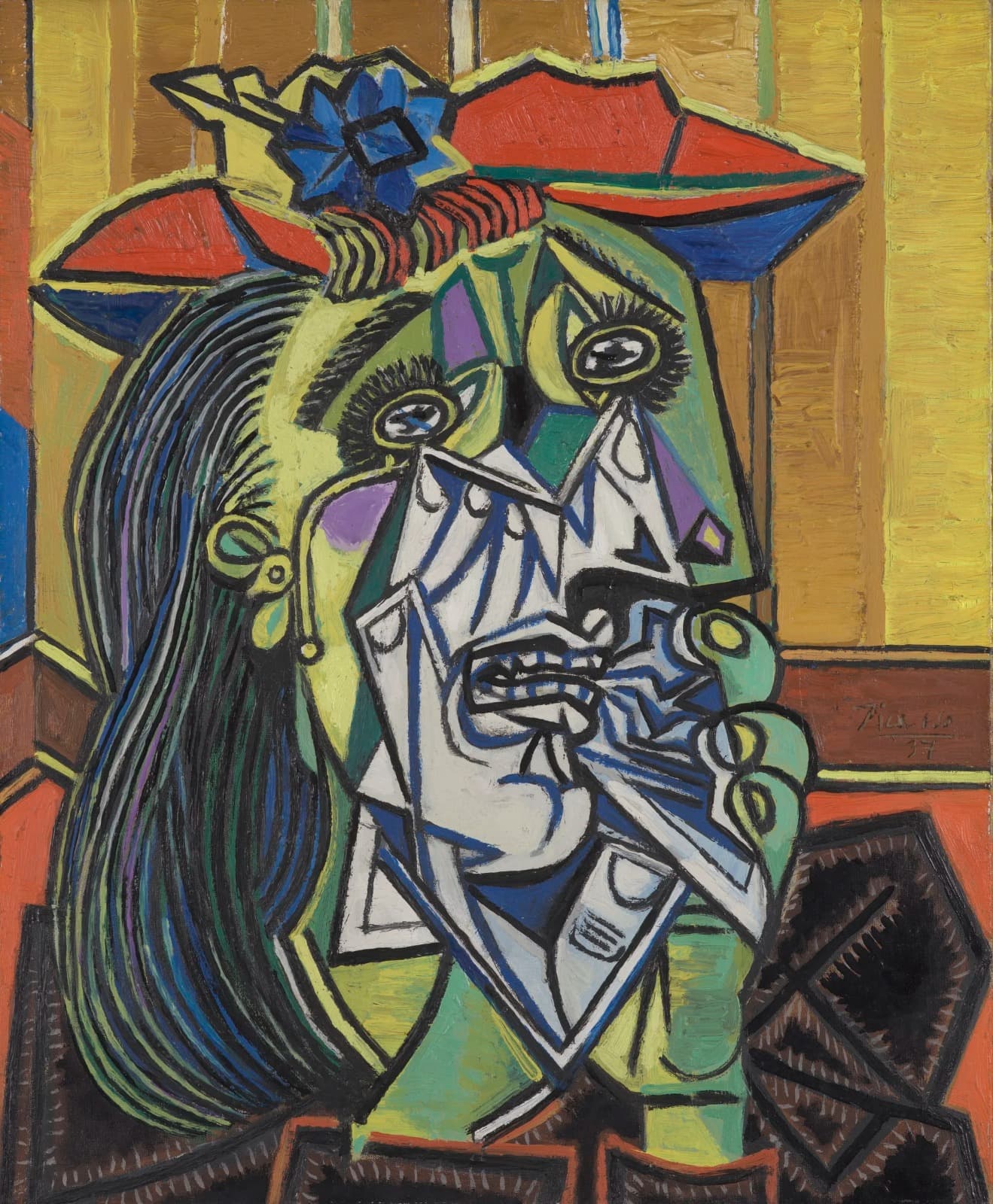
Picasso pulled her out of the screaming mother in Guernica and gave her the face of Dora Maar, his lover and a photographer.

Circus people stand together in an empty landscape without looking at each other. The Rose Period at its largest and most wistful.
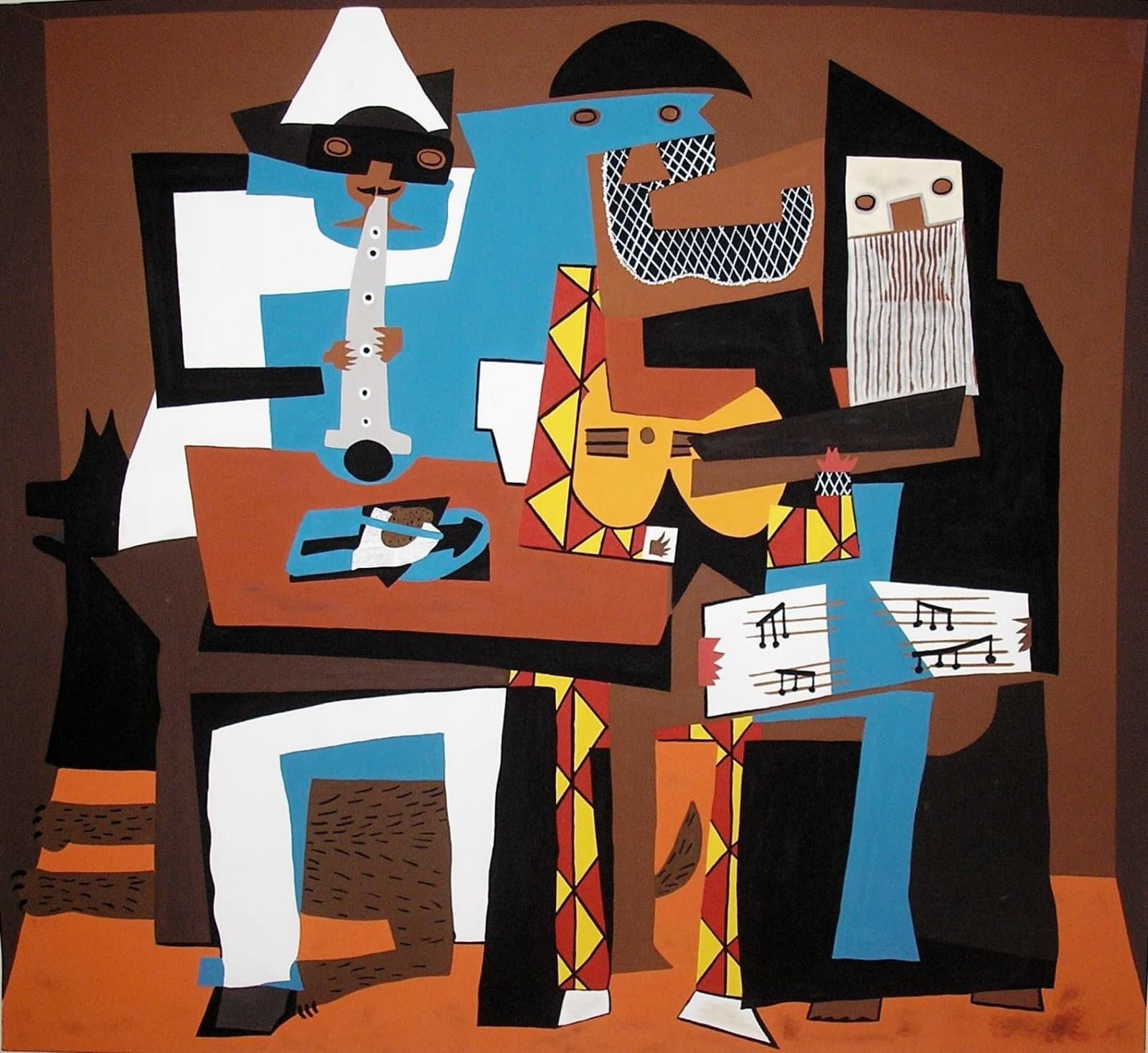
A harlequin, a Pierrot and a monk in flat interlocking shapes that look cut from paper. Synthetic Cubism at its grandest and most deadpan.
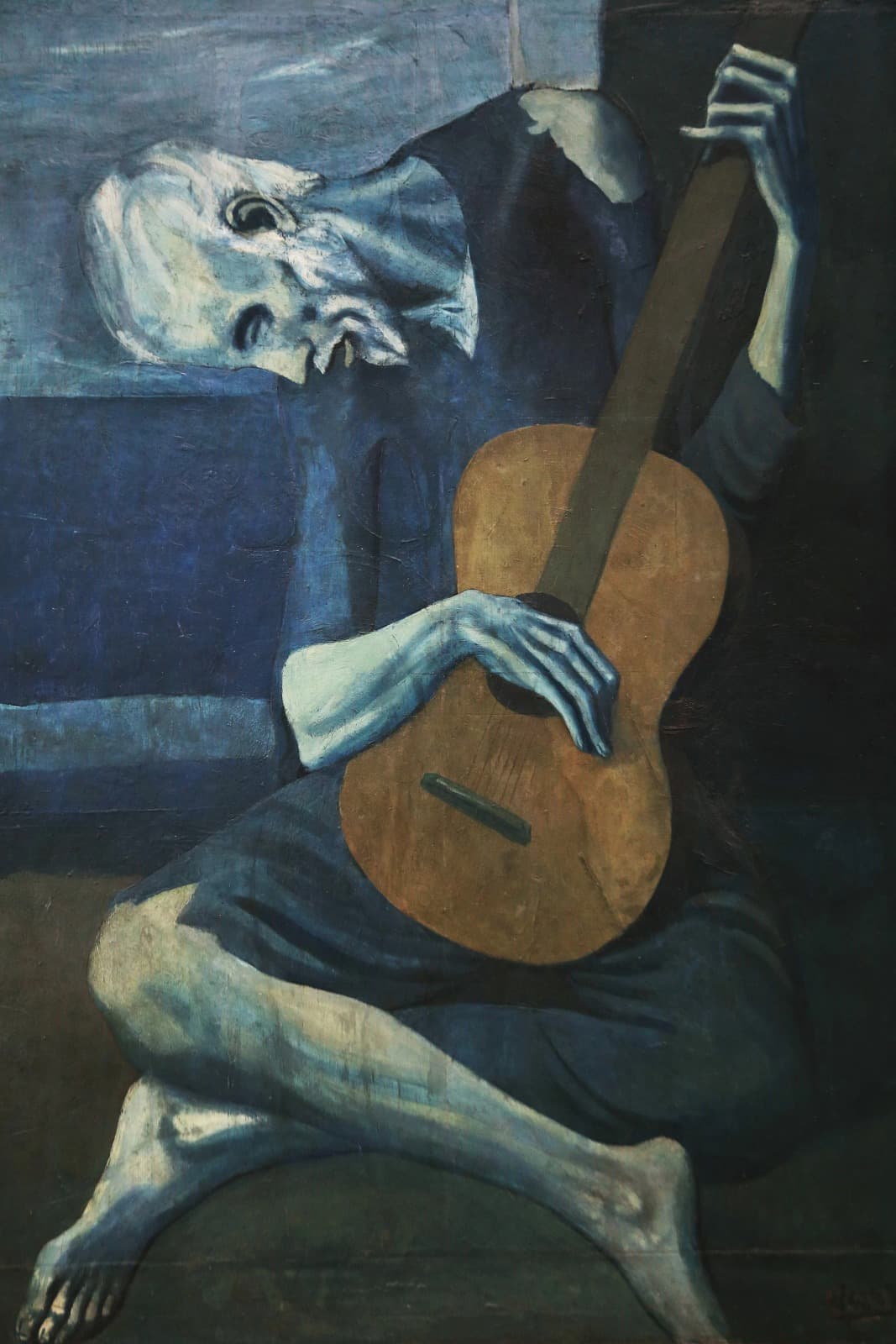
The guitar is the only warm note in the picture. Picasso painted it in his Blue Period, poor himself and living on very little.

Five nude women stare out with their faces turned into masks, and Picasso kept the canvas rolled up in his studio for years.
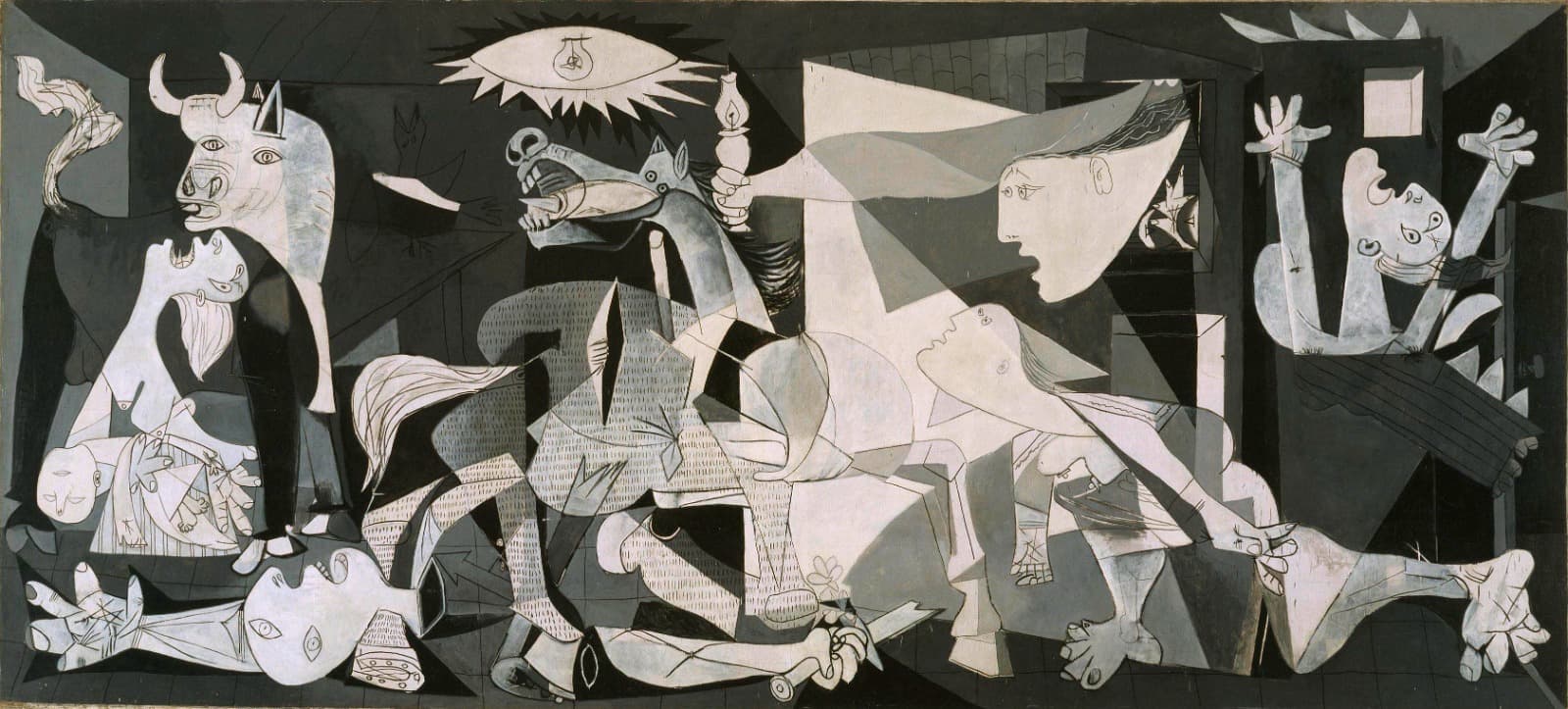
A screaming horse, a mother with her dead child, all in grey. Picasso painted it in weeks after German bombers leveled a Basque town.