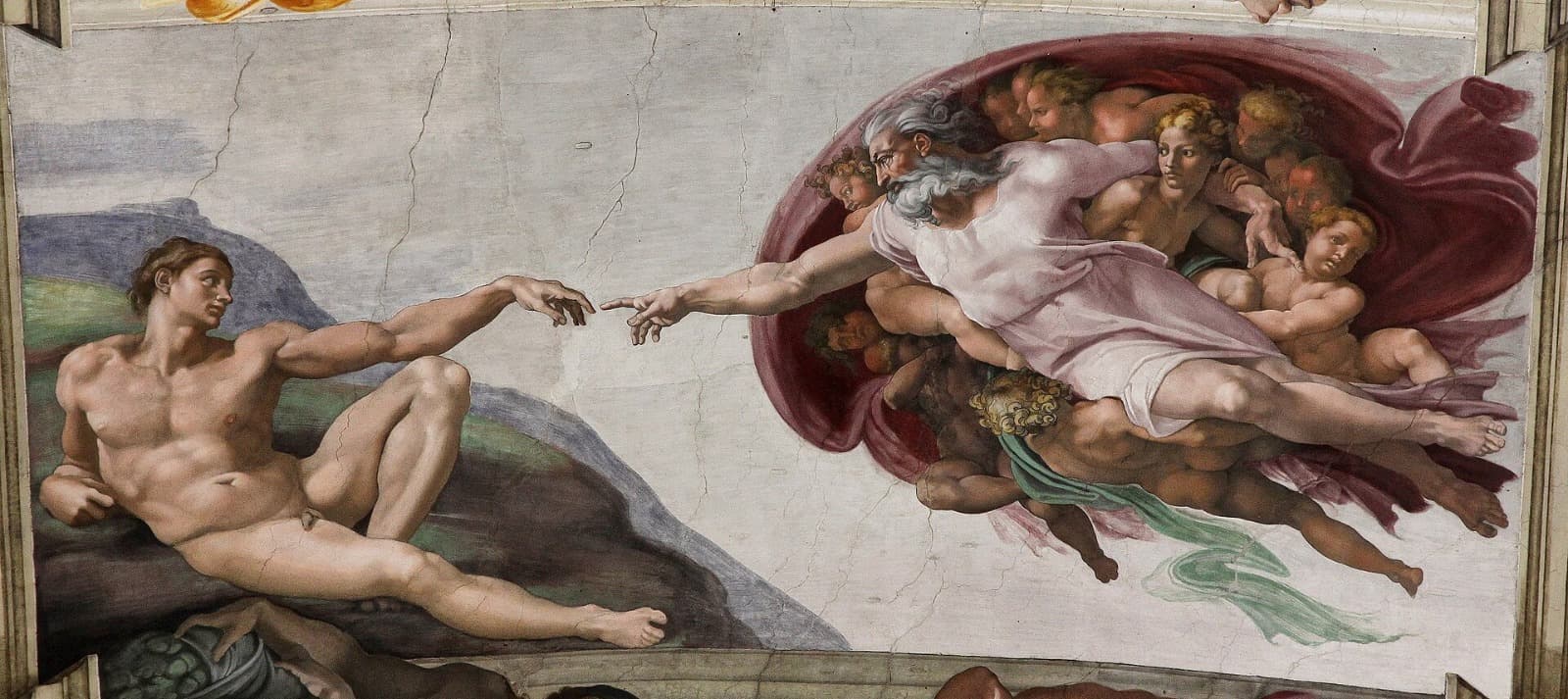
Creation of Adam
1512 · Vatican Museums, Rome
God surges out of a red cloak full of angels, and Michelangelo leaves the fingers not quite touching. The gap does the work.
★ 9.7
 skopia
God surges out of a red cloak full of angels, and Michelangelo leaves the fingers not quite touching. The gap does the work.
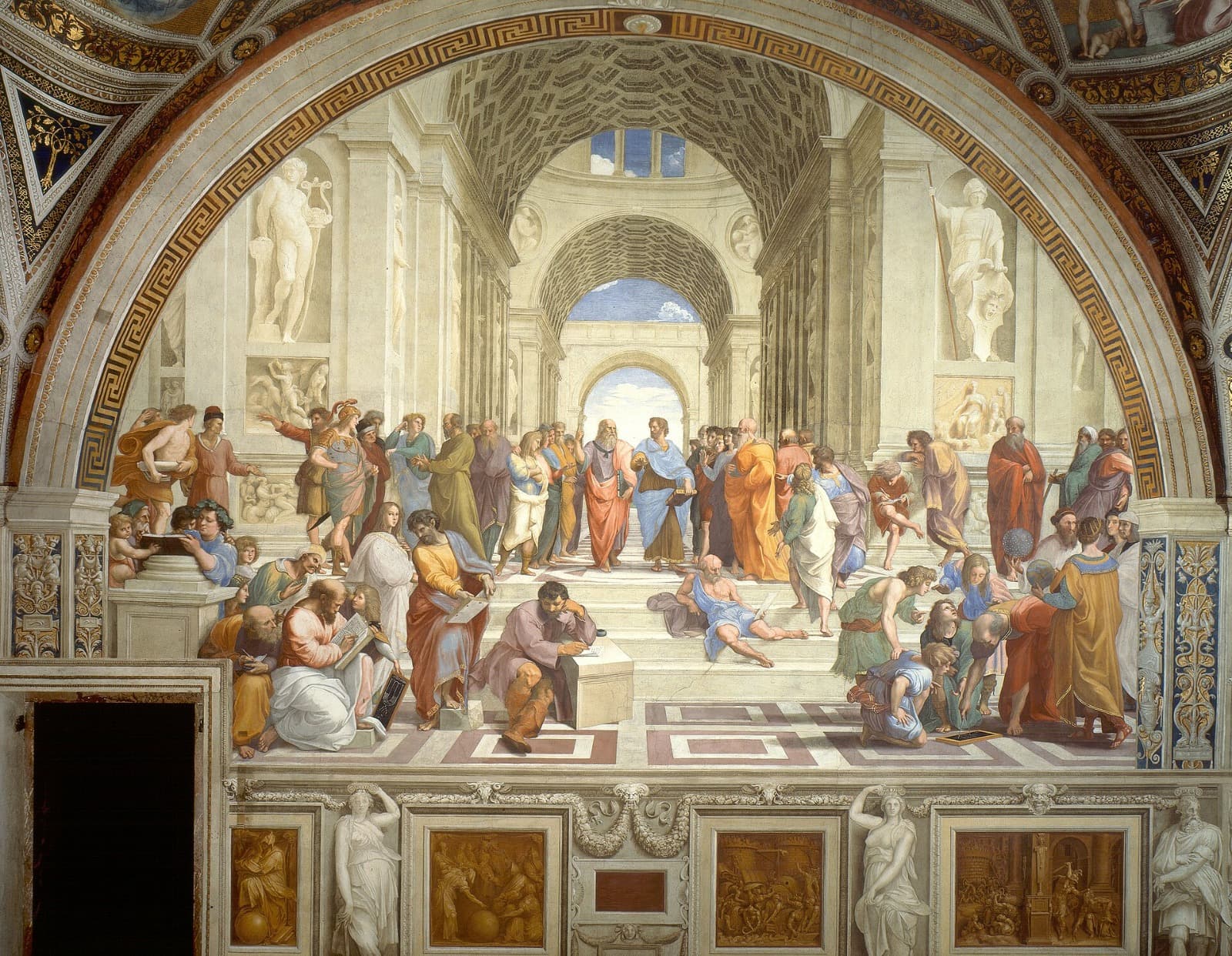
Plato and Aristotle argue at the center of a hall where Raphael gave the philosophers the faces of Leonardo, Michelangelo and Bramante.

Christ's body hangs green and pocked with sores, painted for a hospital whose patients saw their own ravaged flesh.
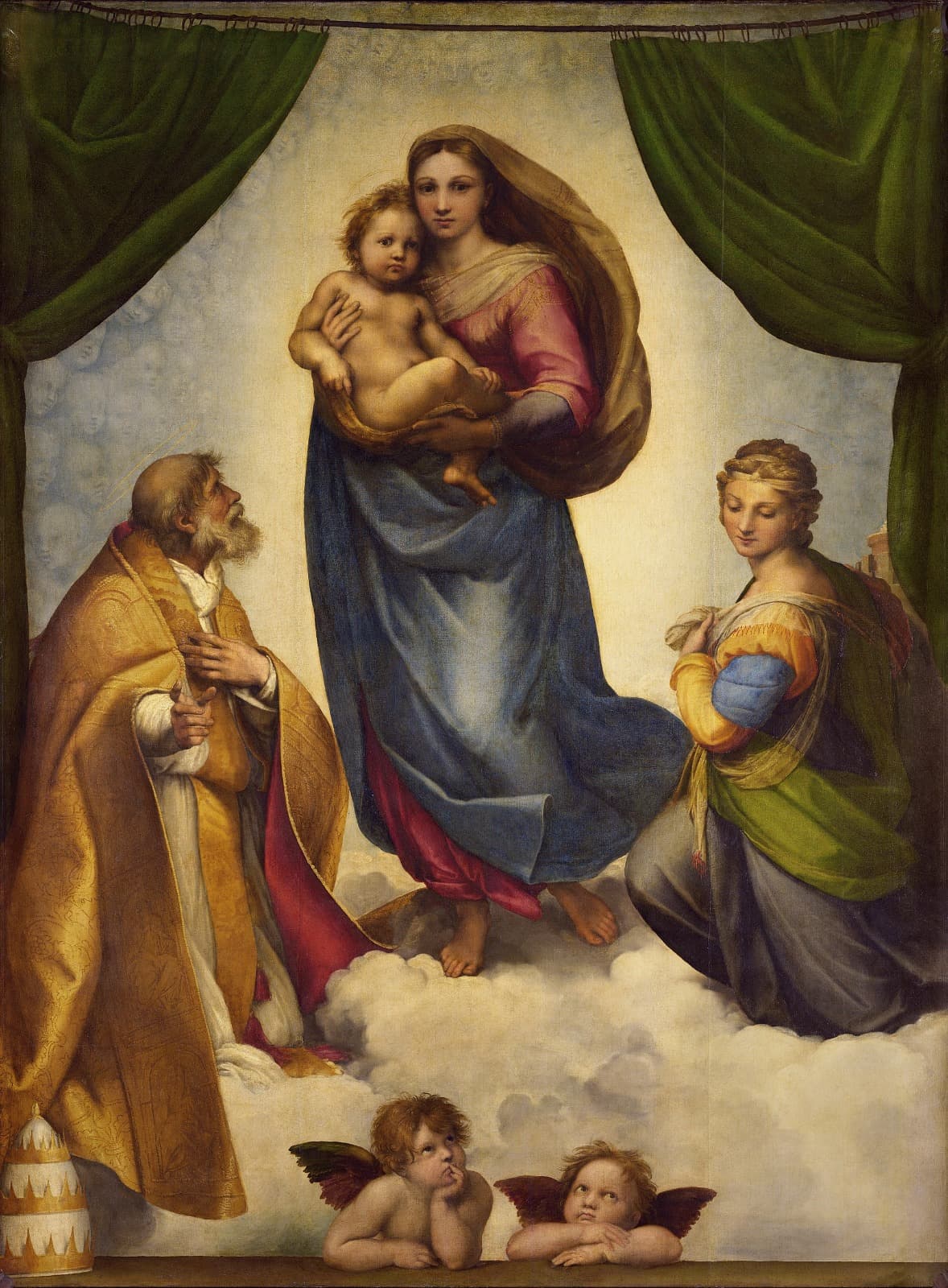
Two bored cherubs lean on the frame at the bottom, and they floated free of the altarpiece long ago onto everything else.
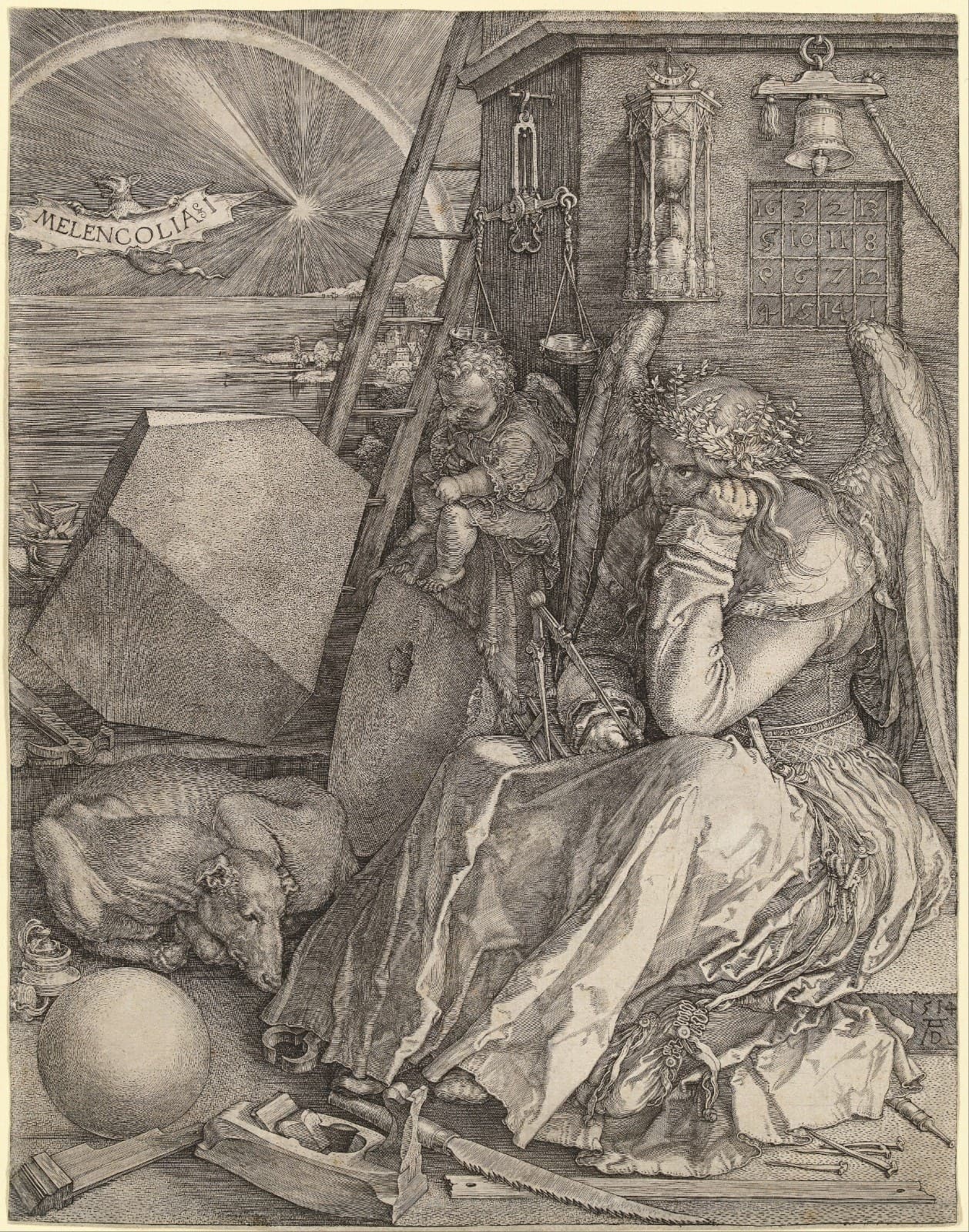
A winged figure sits with her compass idle among abandoned tools, and no print in history has drawn more scholarly argument.
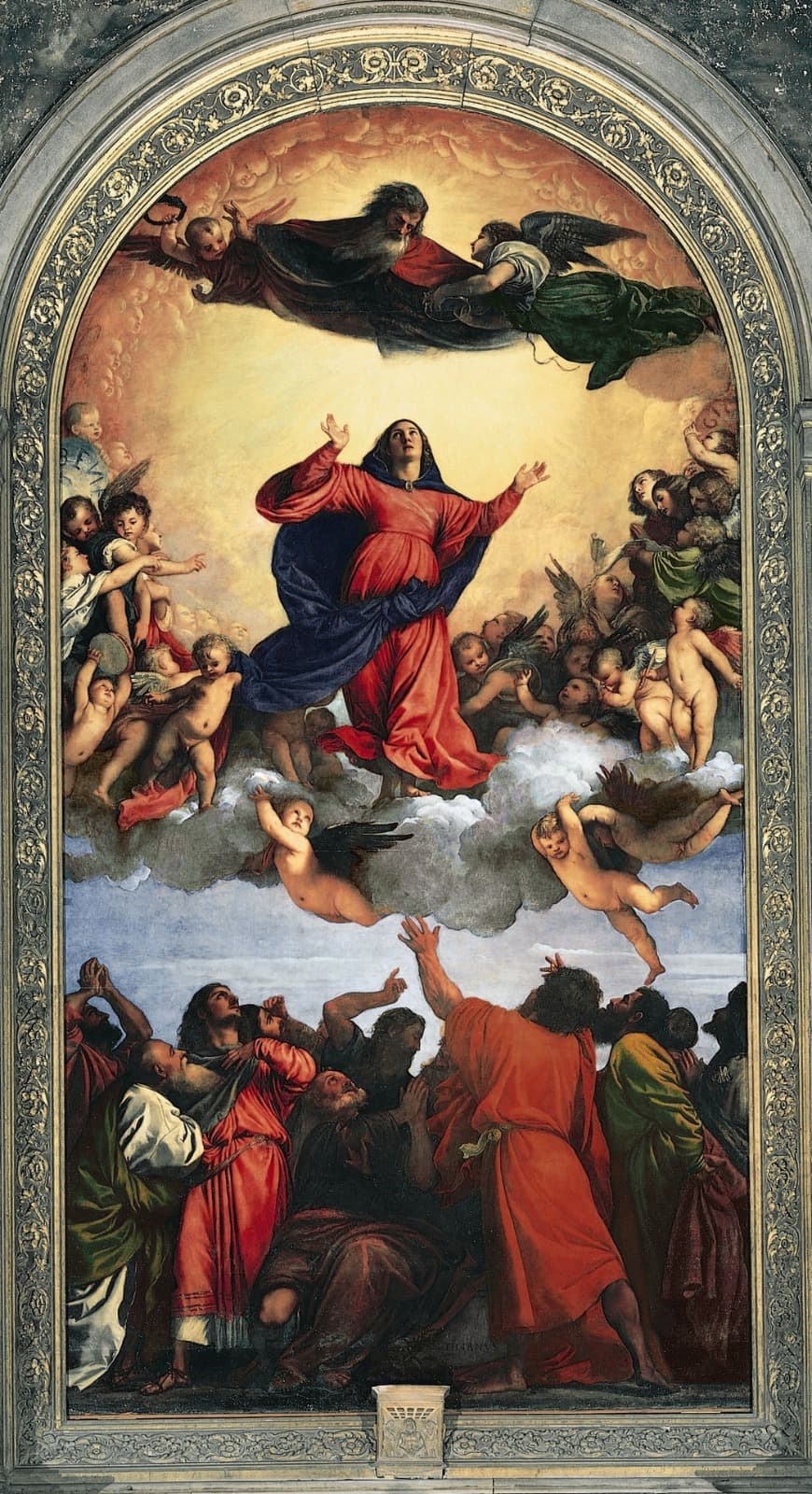
Titian was barely thirty when Venice saw this go up over the Frari altar, the Virgin swept into a storm of red and blue.

Four meters of basalt buried after the conquest and dug up in Mexico City in 1790. Despite the nickname it is not a working calendar.
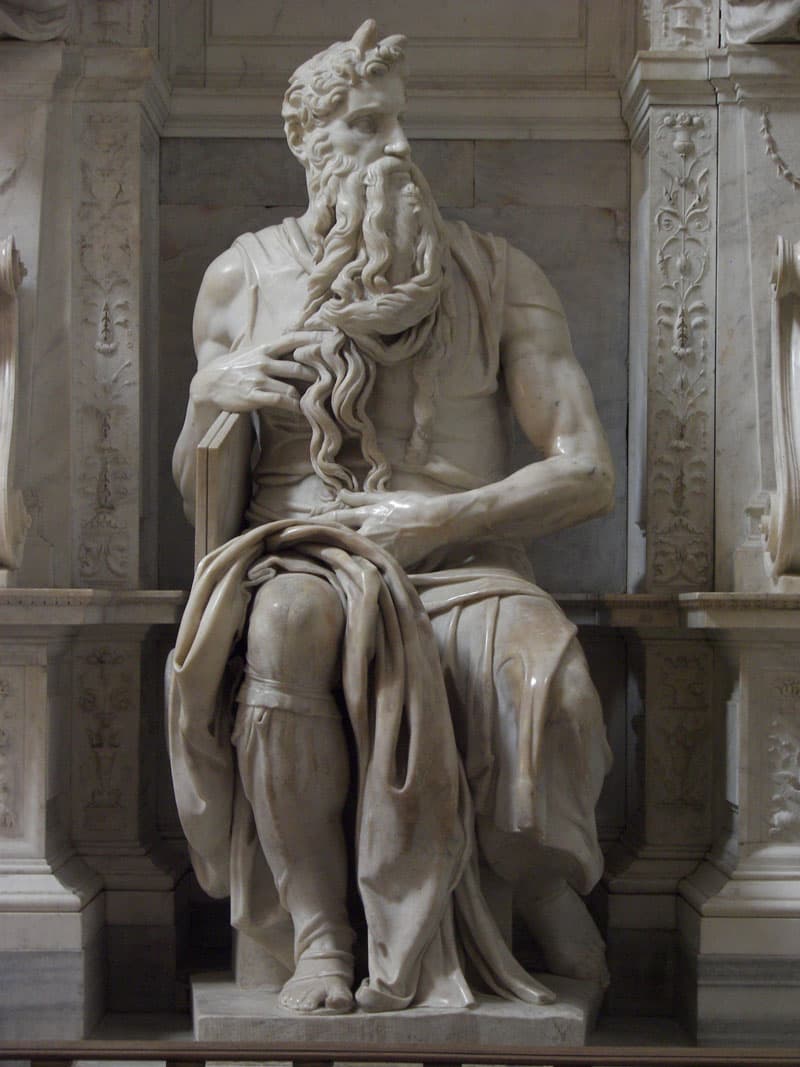
The horns come from an old mistranslation of the Hebrew for rays of light. He was meant as one figure among many on a papal tomb.
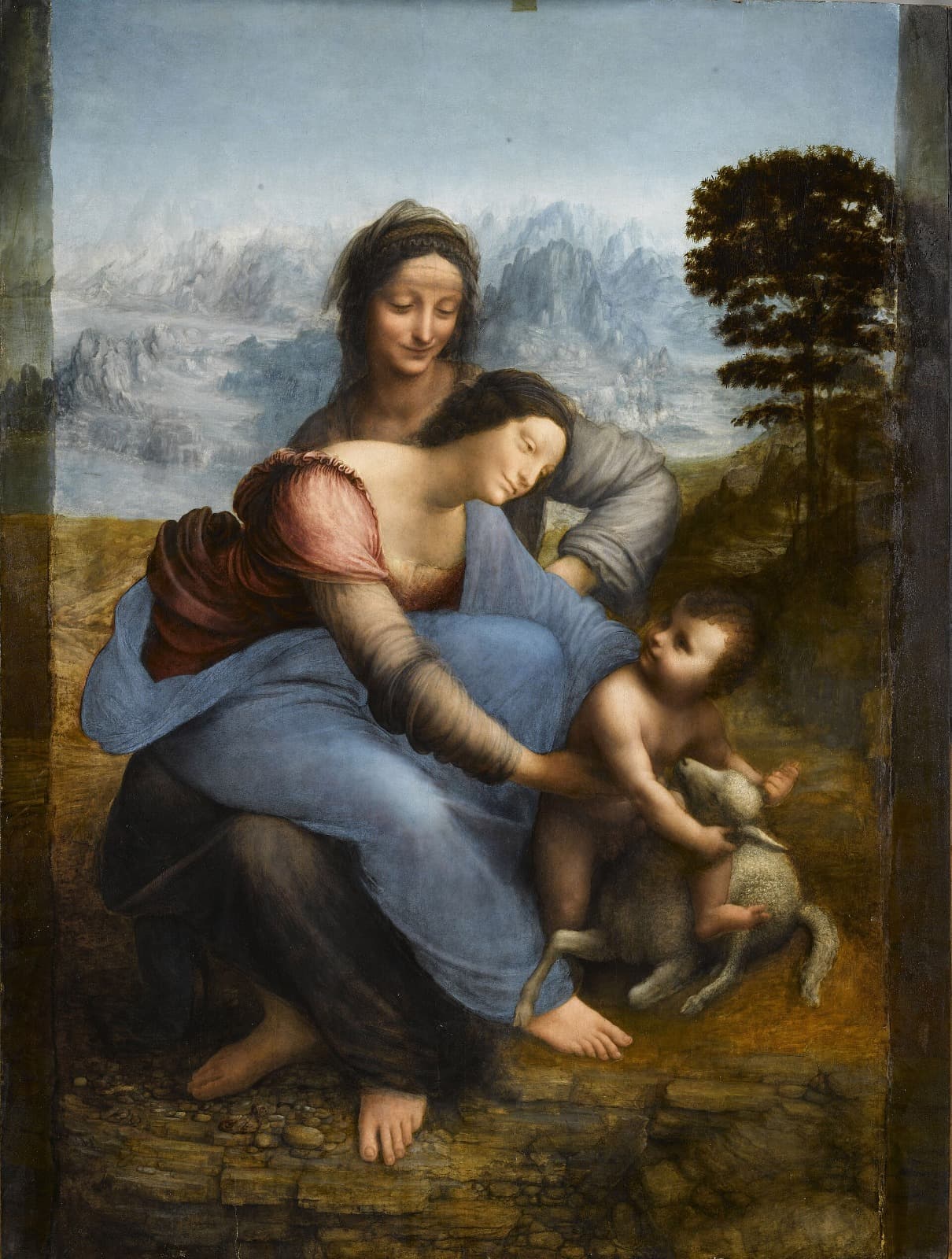
Three generations nest into one shifting pyramid, and Leonardo kept reworking it for years without ever calling it finished.
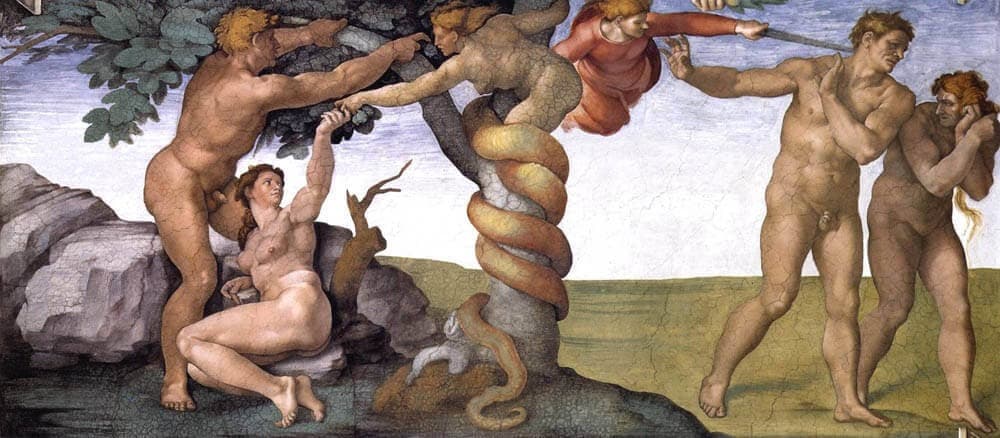
Two moments in one field: Adam and Eve reaching for the fruit, then driven out, suddenly old. The serpent has a woman's torso.
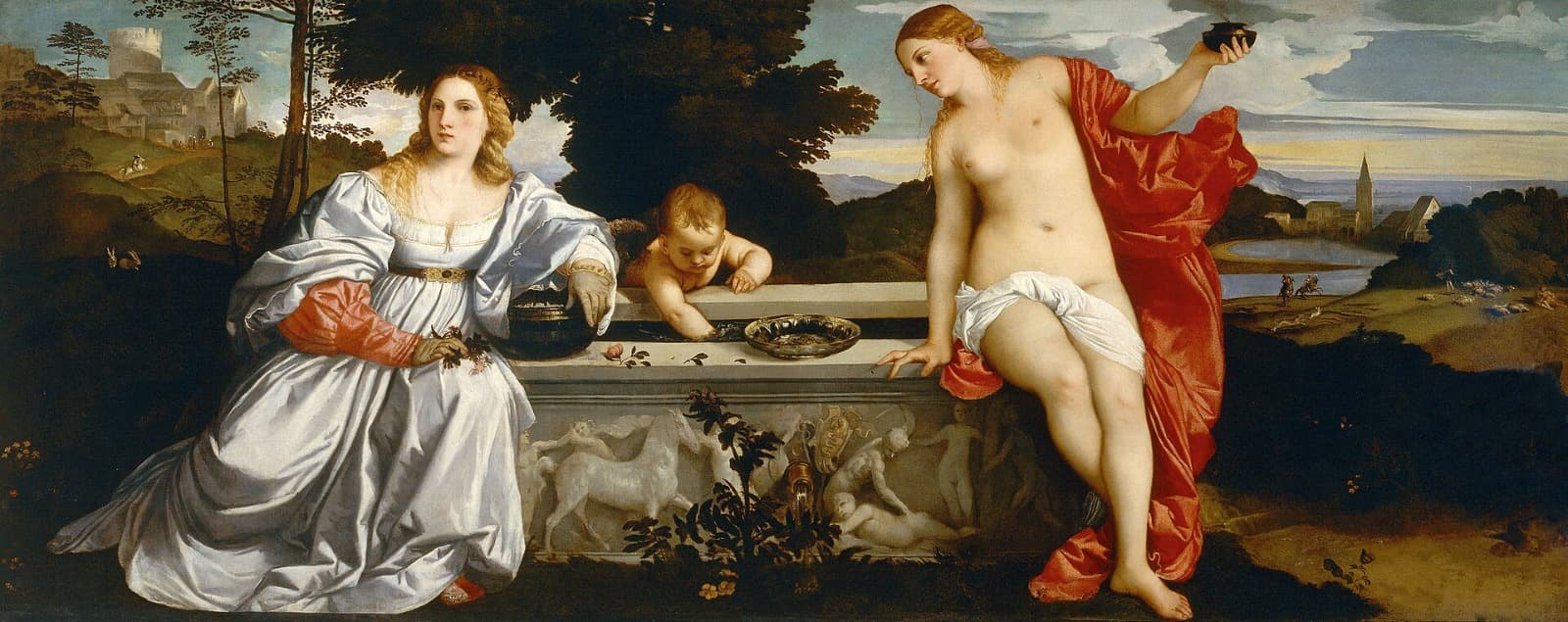
Two women sit at either end of a sarcophagus full of water, and it is the naked one who stands for sacred love.
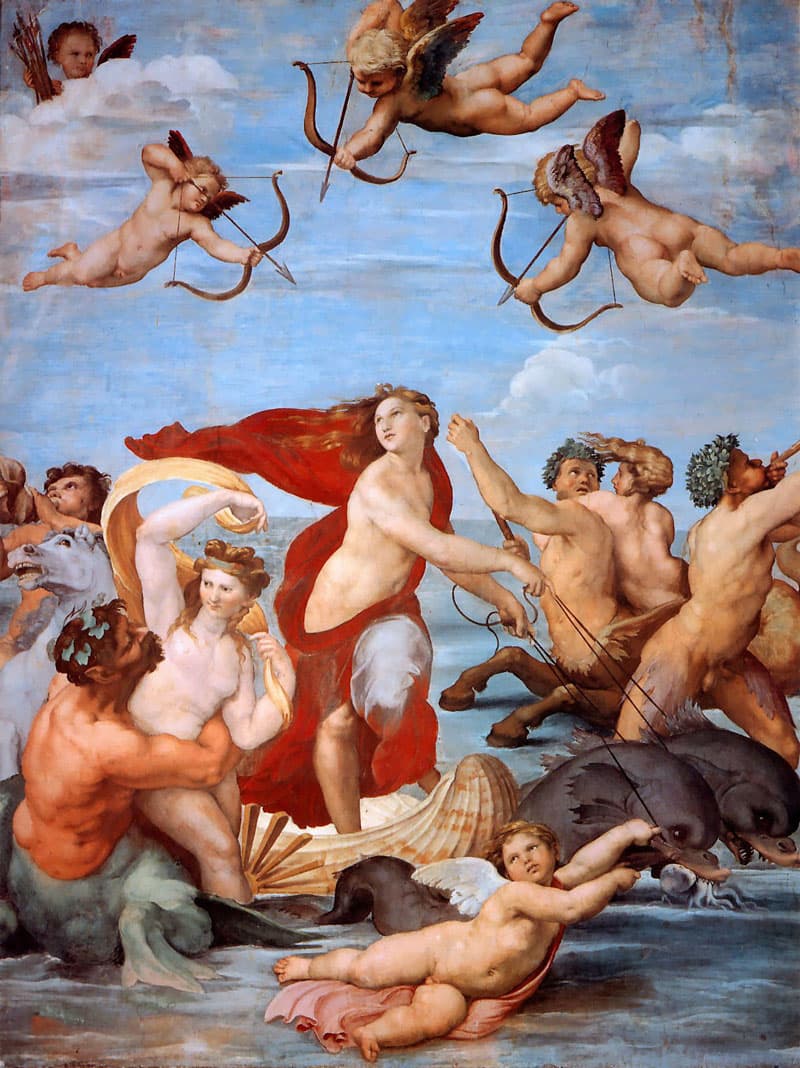
Asked where he found so beautiful a model, Raphael said he worked instead from a certain idea of beauty he carried in his head.

The little demons carved on the pedestal were taken for harpies and gave the picture its name. Del Sarto was called the faultless painter.

Lazarus heaves upright still wrapped in his shroud while the crowd recoils from the smell. Michelangelo supplied drawings to help beat Raphael.

A crush of leering faces fills every inch, and Christ moves through the middle of it with his eyes shut.
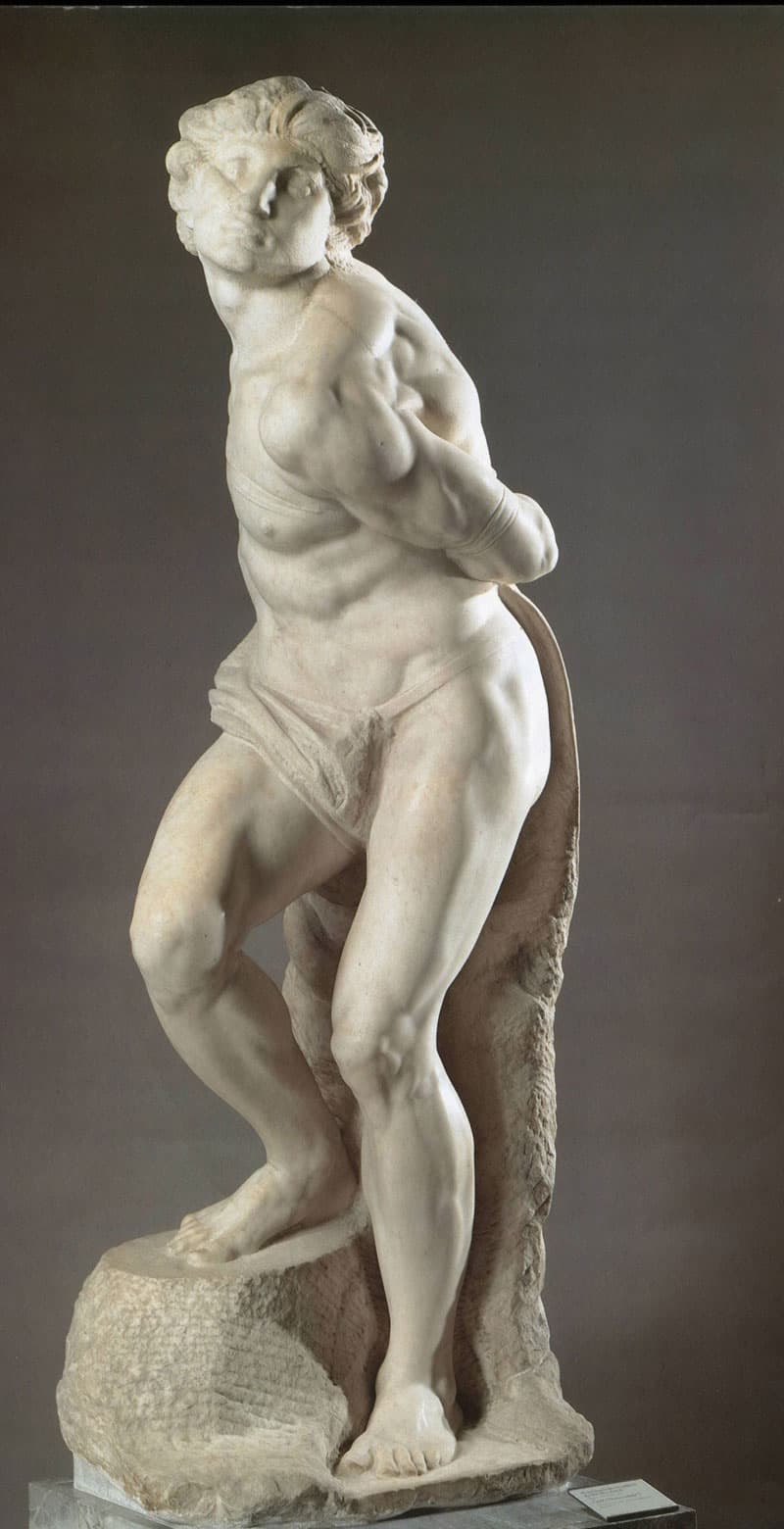
Carved for a papal tomb that kept shrinking until it was abandoned. What the bonds mean is still argued, but the strain is unmistakable.

He weighs gold on a fine balance and her eyes drift off the prayer book toward the coins. A small mirror catches the room.
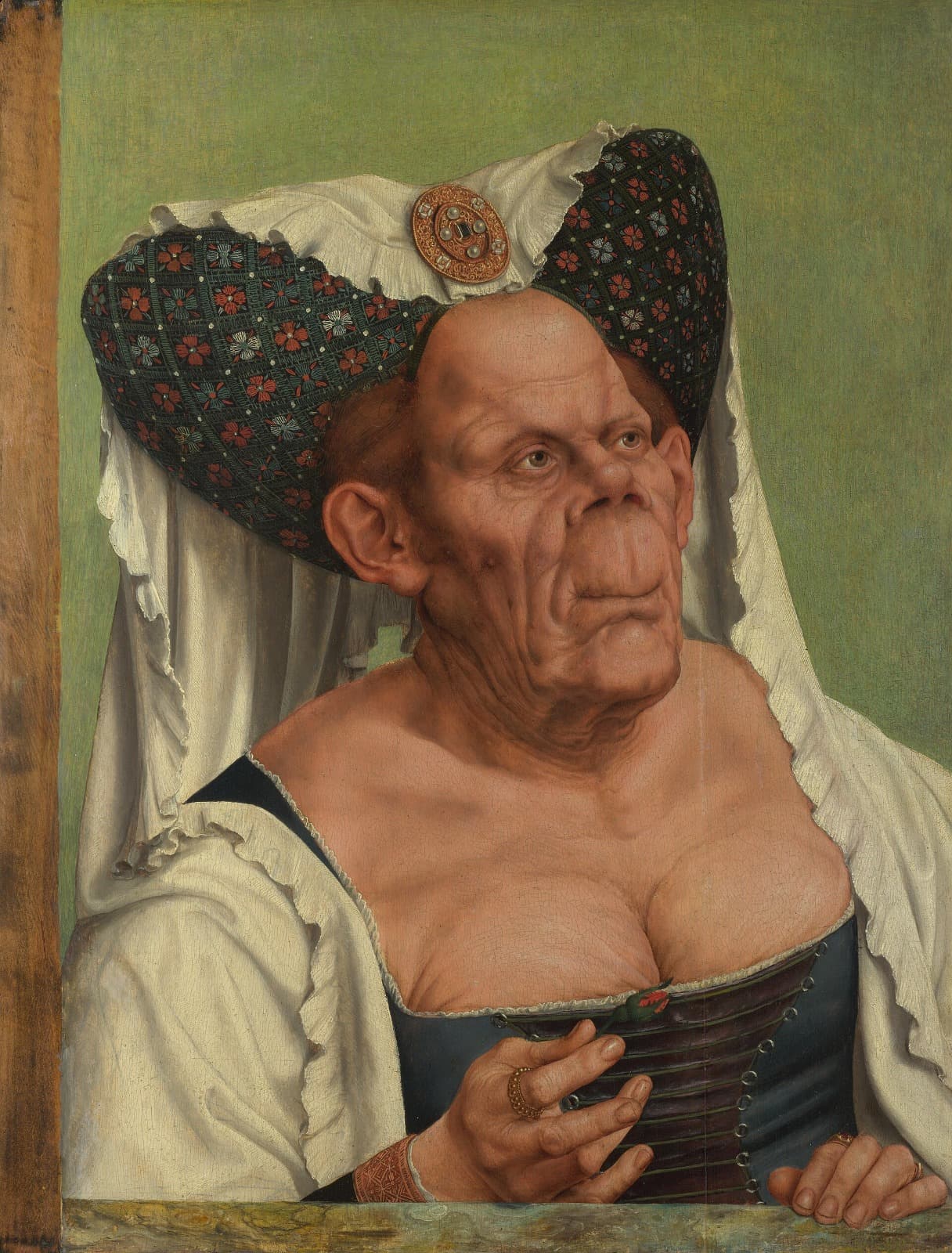
Satire on old age aping youth, in a headdress two generations out of date. Tenniel used her for the Duchess in Alice in Wonderland.

Christ turns back toward his mother as she swoons, and legend has it the painting was nearly lost in a shipwreck on its way to Palermo.

He swivels over his shoulder to look at you, holding a block that nobody can identify, and his name has been lost entirely.

The Virgin offers the Child a bunch of grapes, which stand for the wine of his death, in an exactly observed Flemish wood.

A single thread of gauze links the baby, the beauty, the crone and Death holding an hourglass. Baldung was Dürer's pupil, with darker interests.
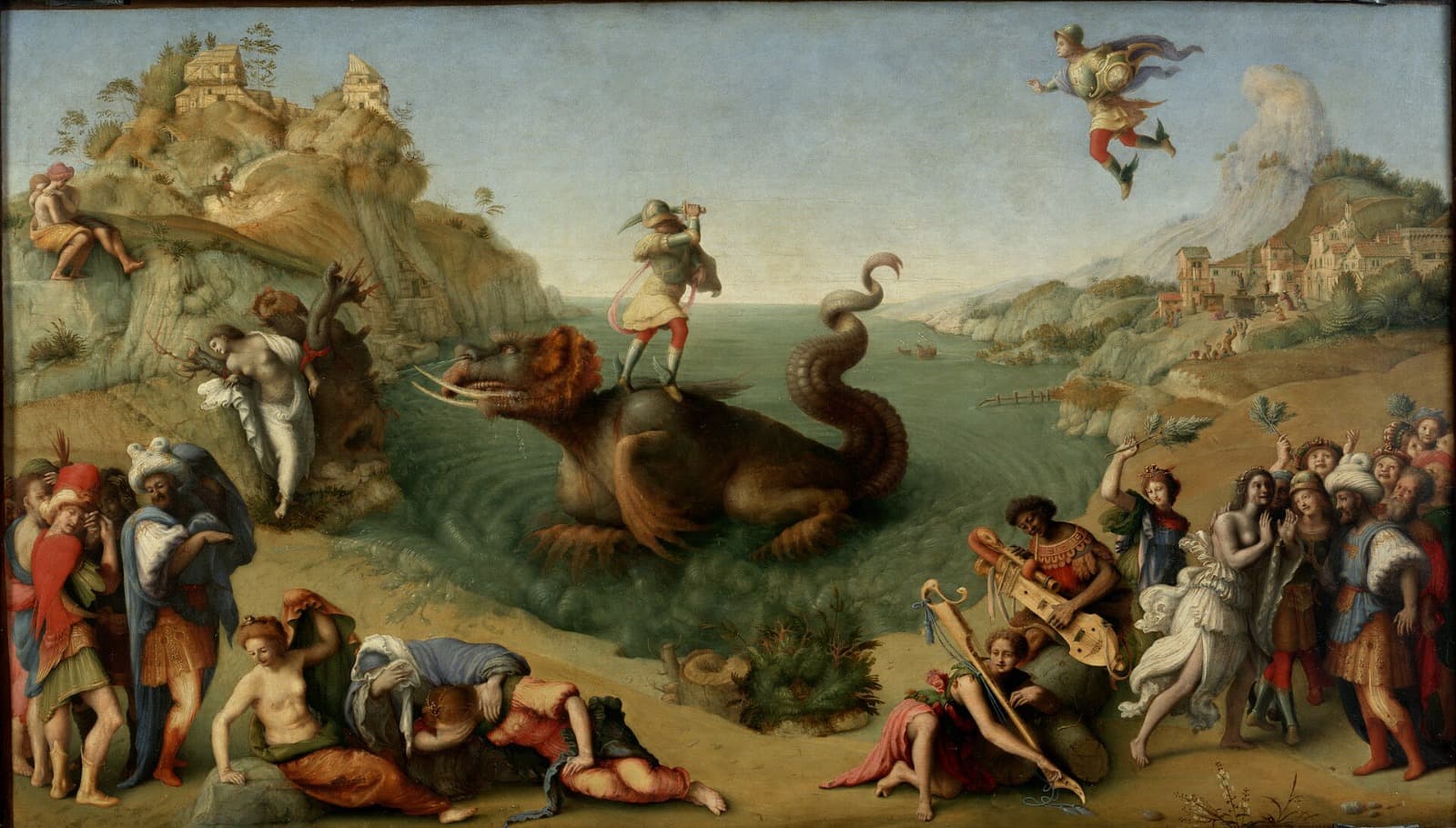
The sea-monster is part fish and part beast and thoroughly invented, and some of the onlookers on the shore have started playing music.
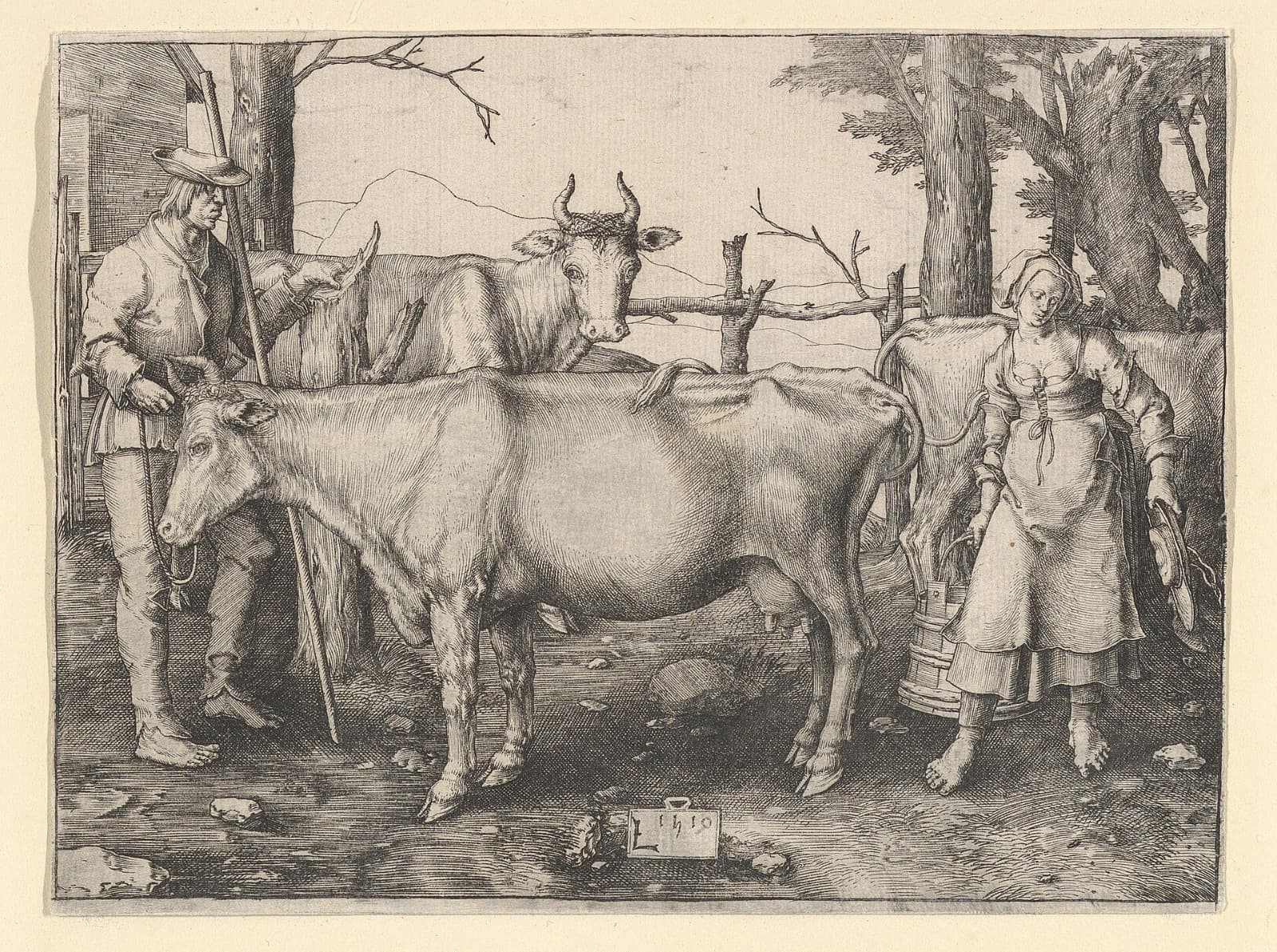
A milkmaid, a herdsman and two cows, and almost nothing happening. One of the first prints to take peasants as a subject worth the burin.

Gabriel kneels at the right and points across at a Virgin drawing back in surprise, with a stretch of classical ruin between them.
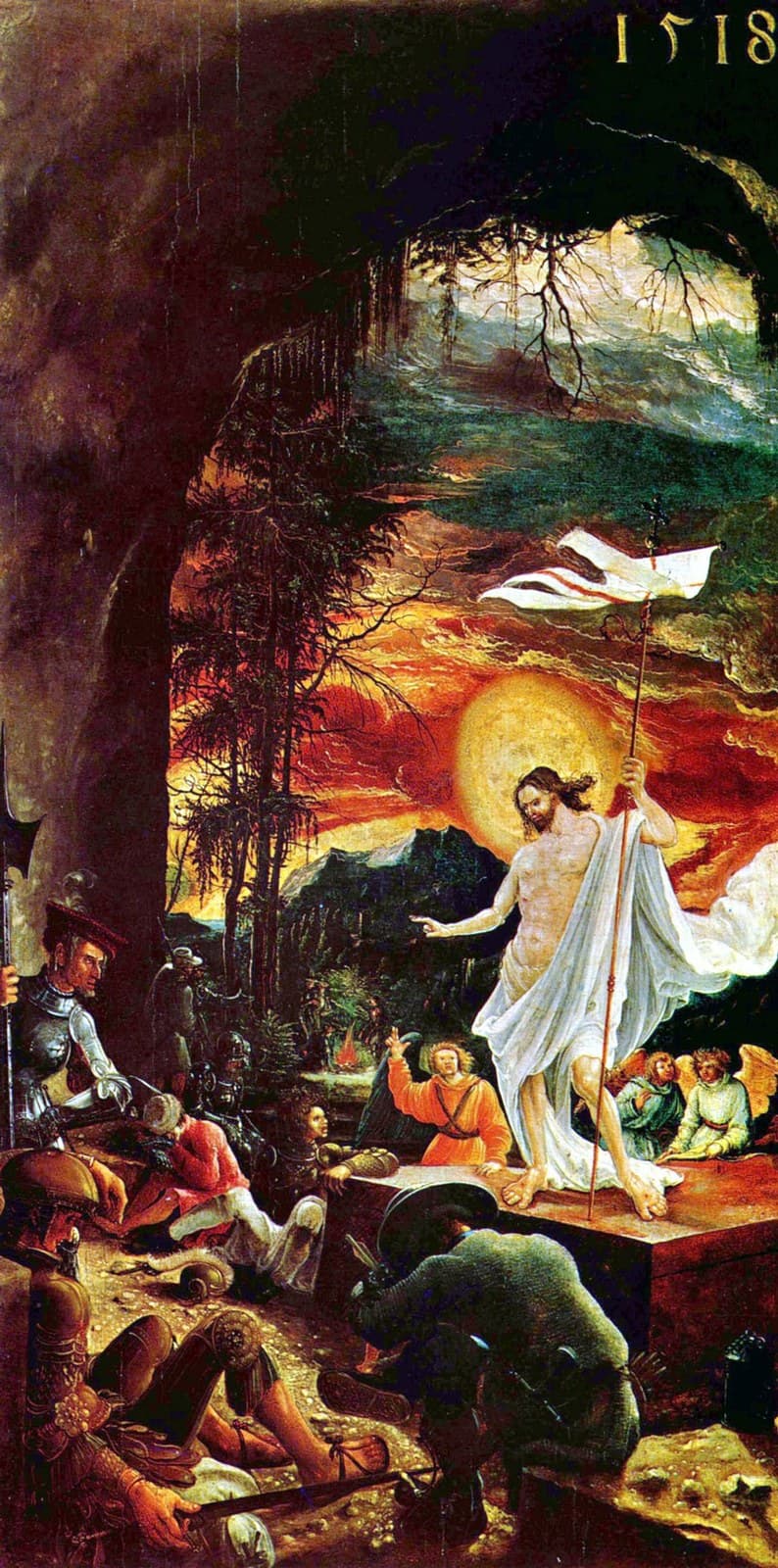
Christ rises with his banner while an unearthly dawn detonates behind him in bands of orange and scarlet over black crags.

Coins and cards on the table and a great deal of sidelong glancing. Somebody is being cheated, and the intrigue may not be financial.