
The Wealth of Nations
1776 · 537 pages
Wealth is not gold in a vault but what a country produces, and specialization multiplies it. Smith begins with ten men making pins and every economic argument since descends from him.
★ 8.2
 skopia
Wealth is not gold in a vault but what a country produces, and specialization multiplies it. Smith begins with ten men making pins and every economic argument since descends from him.
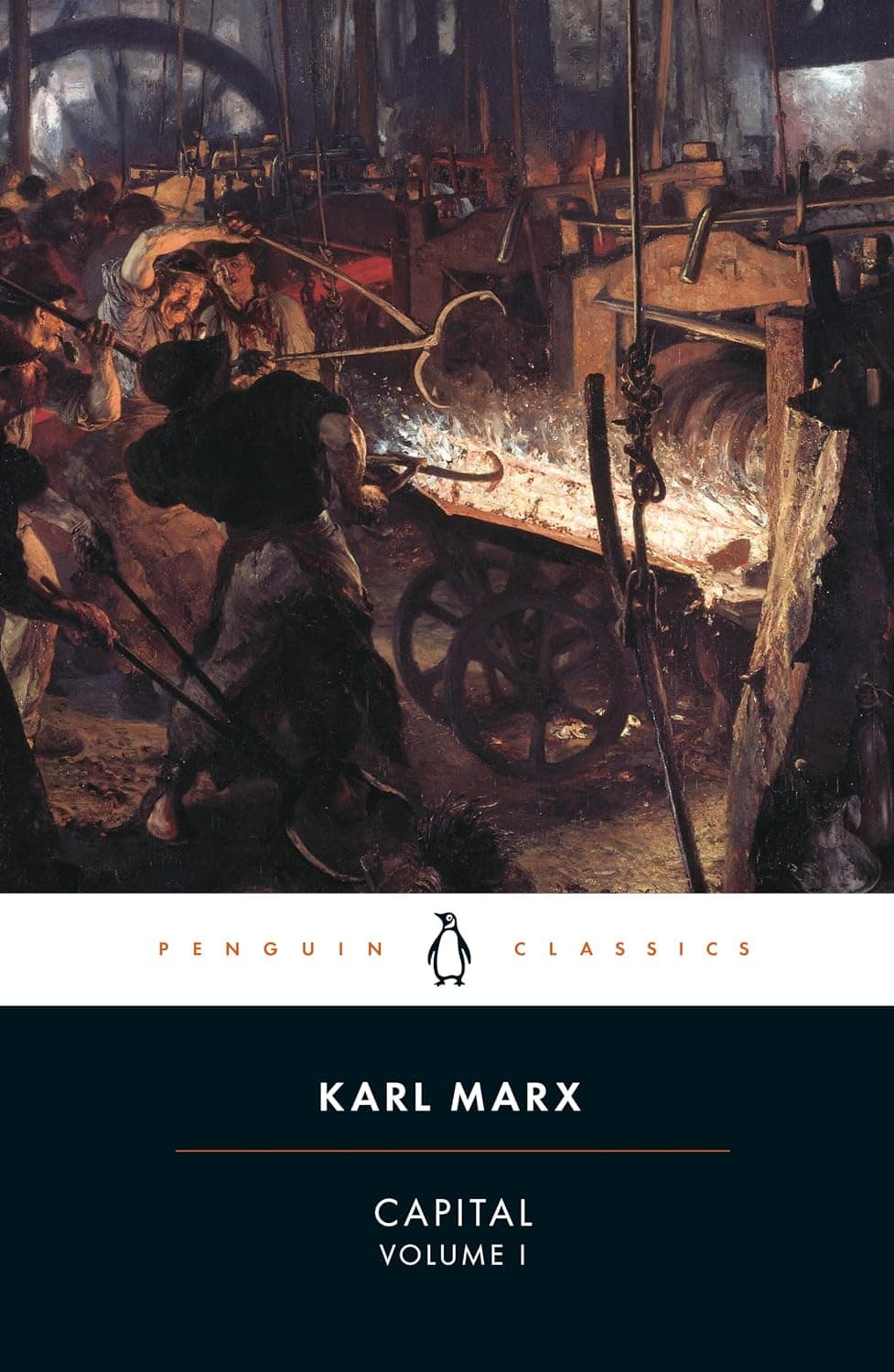
Workers create more value than their wages return, Marx argues, and that gap is profit. No economic book has reshaped politics more, and the chapter on the working day still burns.

Keynes argues that an economy can sit at mass unemployment indefinitely because nobody is spending, and that governments must spend instead. Every recession since has been argued in the terms he set.

Hand economic decisions to planners and you lose political freedom too, because someone must decide whose purposes count. Hayek published it in 1944, and it became the founding text of the postwar right.

Veblen argued that the rich buy expensive things to prove they can afford waste, and that idleness is itself a display. He named it conspicuous consumption, and nobody has improved on the term.
Piketty mined two centuries of tax records for the engine of inequality: capital grows faster than the economy, so fortunes pull away from wages. It made inequality the West's central political question.

Smith, Malthus, Marx, Veblen and Keynes written as characters, obsessions and bad ideas intact. Nearly four million copies have sold, and generations took their economics from this rather than a textbook.

Galbraith looked at postwar America and saw private opulence beside public squalor, with production manufacturing the wants it satisfies. Two generations of arguments over taxes and public spending have run in his channel.

Two countries gain by trading even when one makes everything more cheaply. Ricardo's proof turned free trade from a preference into a theorem, and no tariff debate has escaped it.
Every economic law follows from one fact, Mises argues: people act to relieve uneasiness. Planners without market prices are blind, and three generations of the libertarian right have drawn their economics from him.