
The Last Supper (da Vinci)
1495 · Santa Maria delle Grazie, Milan, Italy
Christ has just said one of them will betray him, and the shock rolls down the table. Leonardo's experimental paint began flaking in his lifetime.
★ 9.7
 skopia
Christ has just said one of them will betray him, and the shock rolls down the table. Leonardo's experimental paint began flaking in his lifetime.
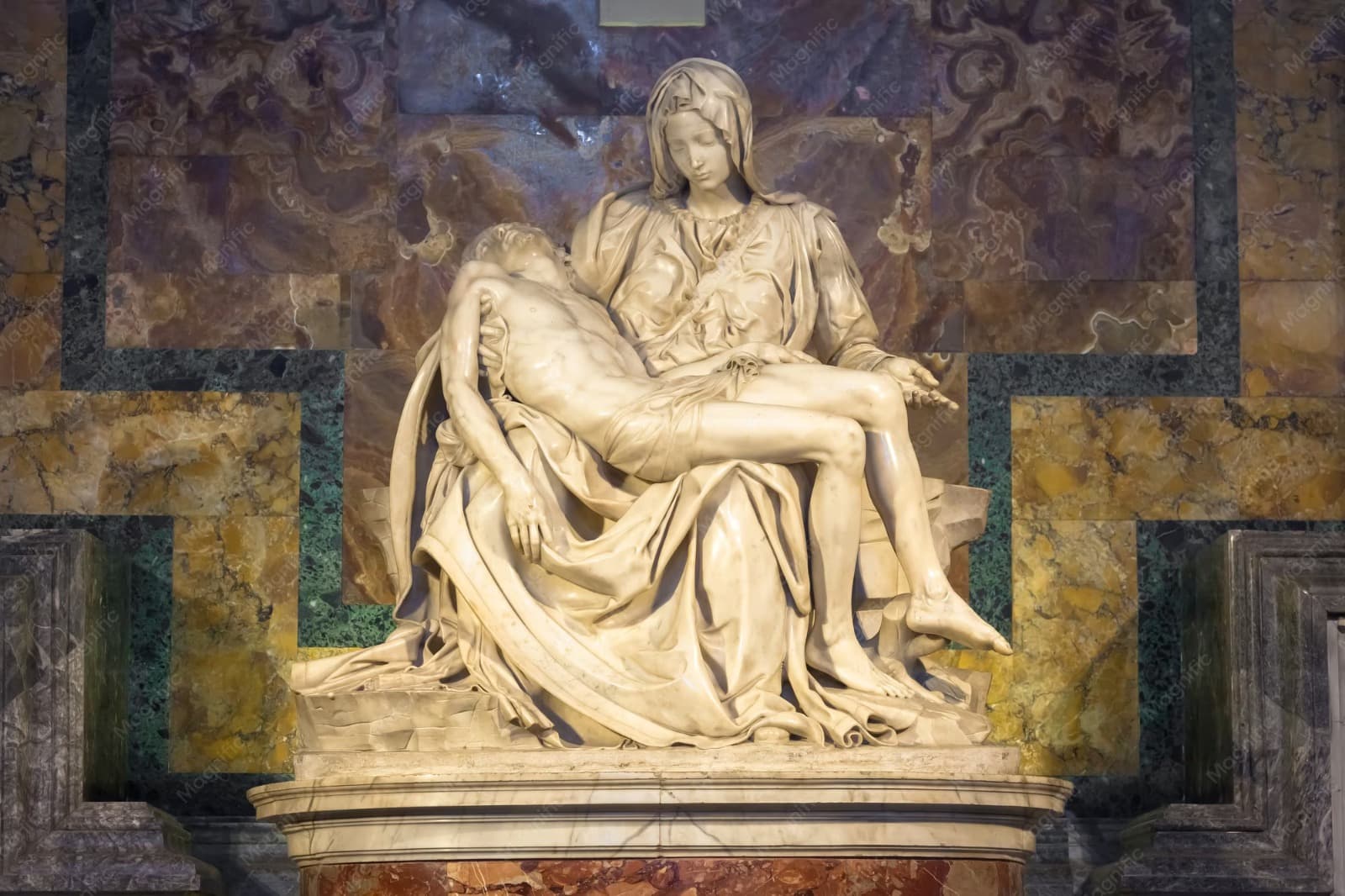
The dead Christ lies across his mother's lap. Michelangelo was twenty-four, and signed the sash after hearing it credited to someone else.

The fainting Virgin curves in an exact echo of her dead son, the stroke that made van der Weyden the most copied painter in the north.

Light follows Christ's pointing hand across a dim counting-room to Matthew, who gestures at himself in disbelief. The picture made Caravaggio famous overnight.
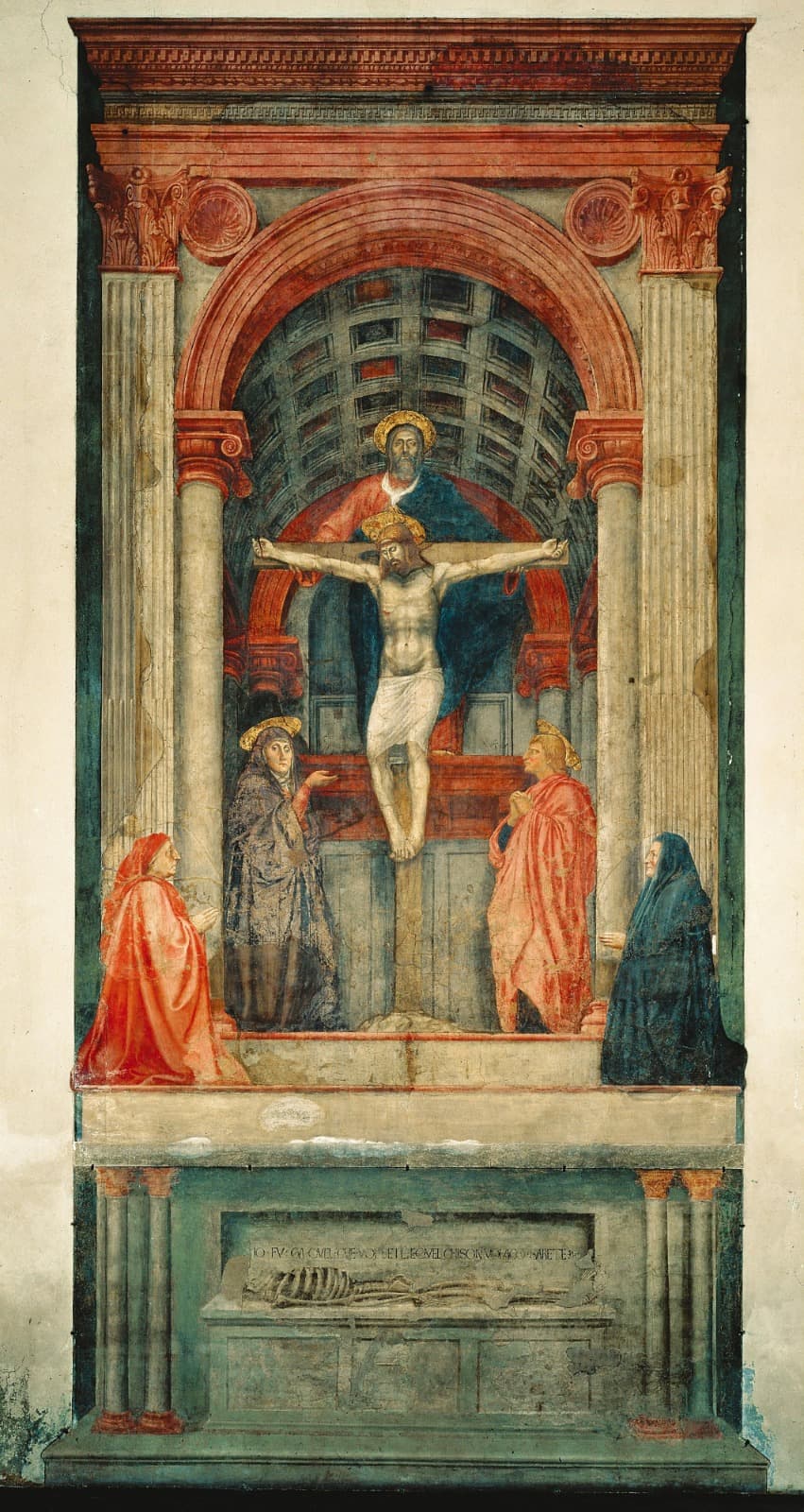
The earliest surviving painting built on a single vanishing point, worked out on a wall of Santa Maria Novella with Brunelleschi's help.
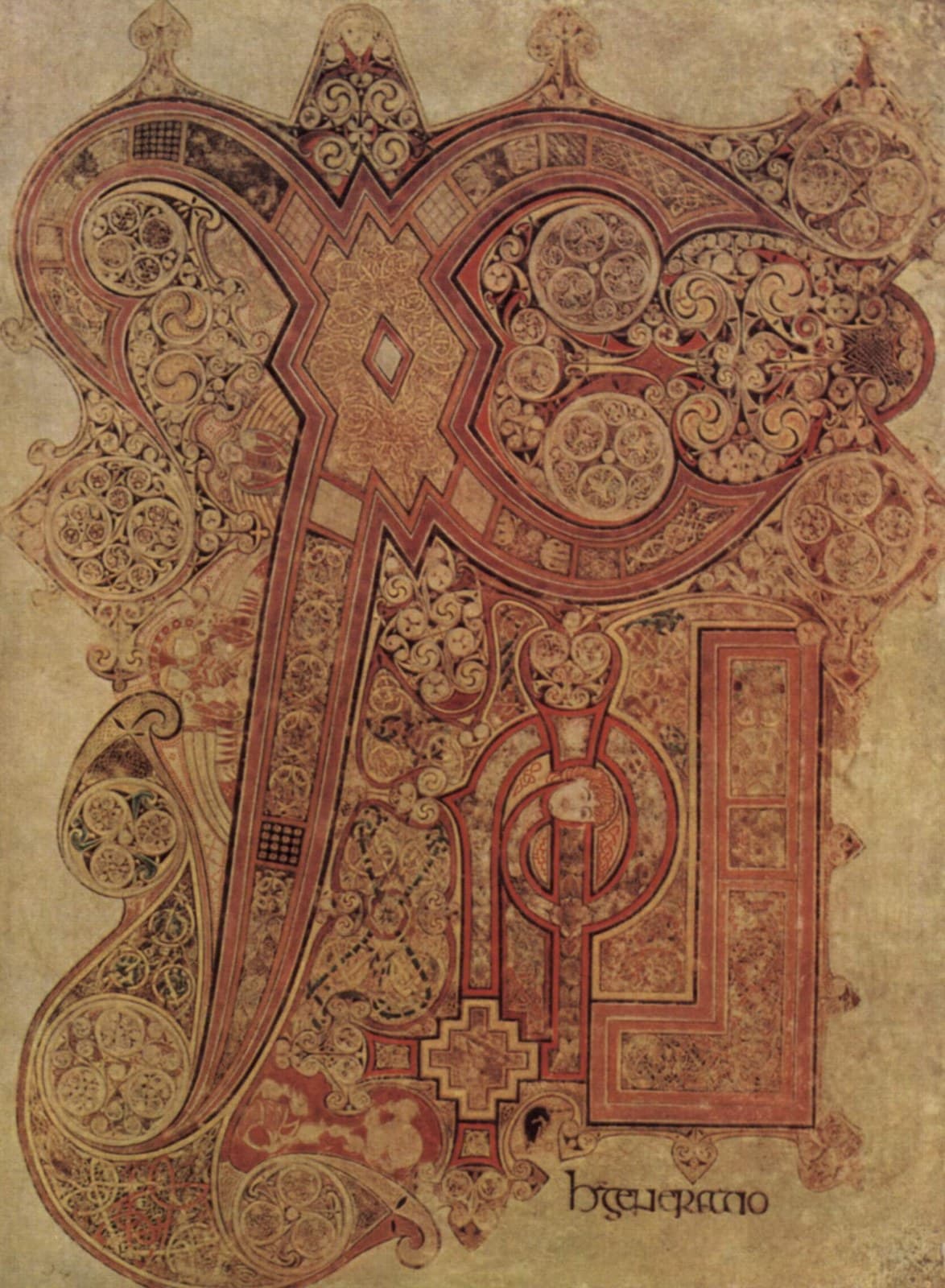
The monogram of Christ swells until it fills the page, and among the spirals hide cats, mice, an otter with a fish, and a moth.
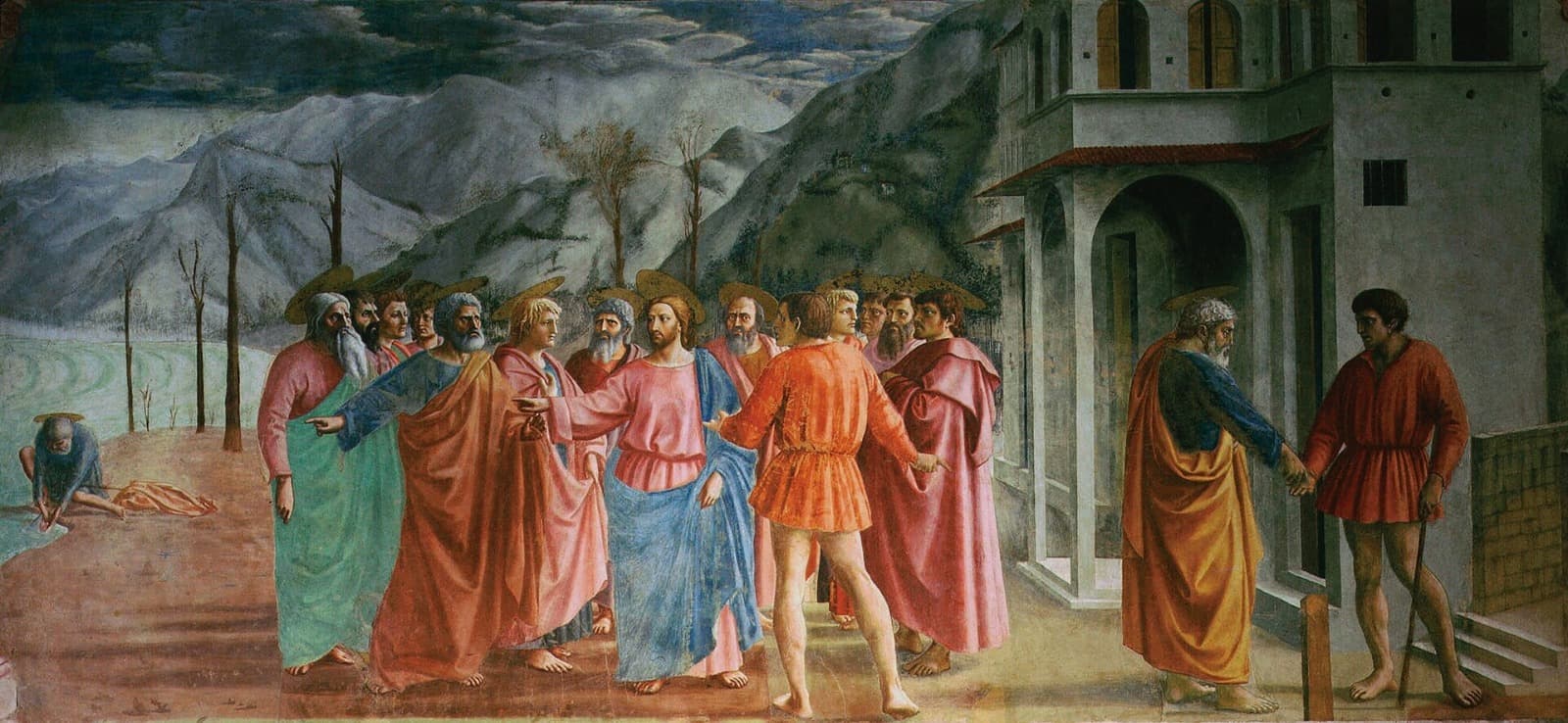
Three moments run in a single frame: the tax demanded, Peter pulling the coin from a fish, and Peter paying up at the right.

Christ's body slides down one long diagonal onto a white shroud. It still stands on the altar in Antwerp Cathedral that Rubens painted it for.
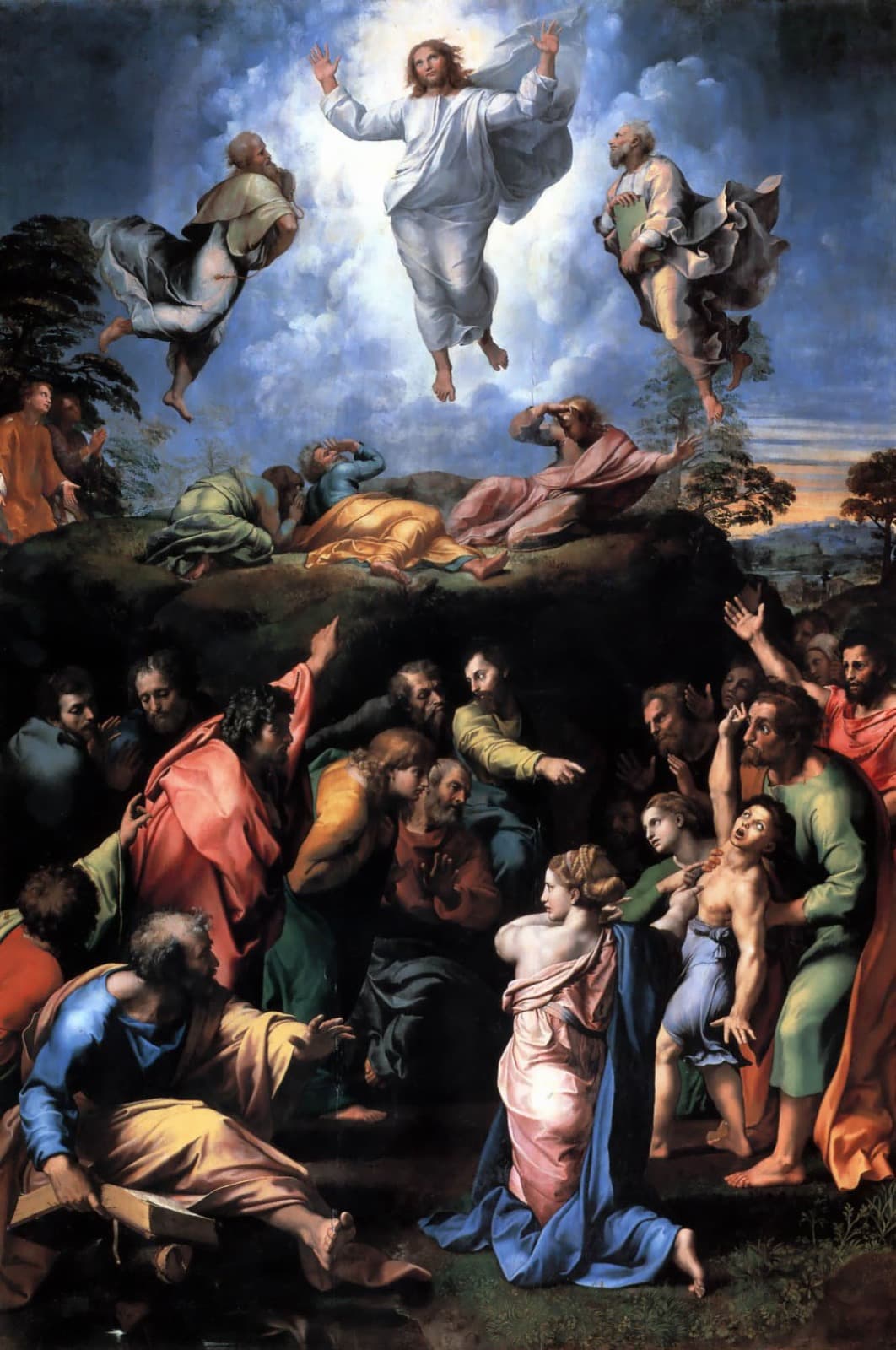
Raphael left it unfinished when he died in 1520, and it was hung above his body while he lay in state.
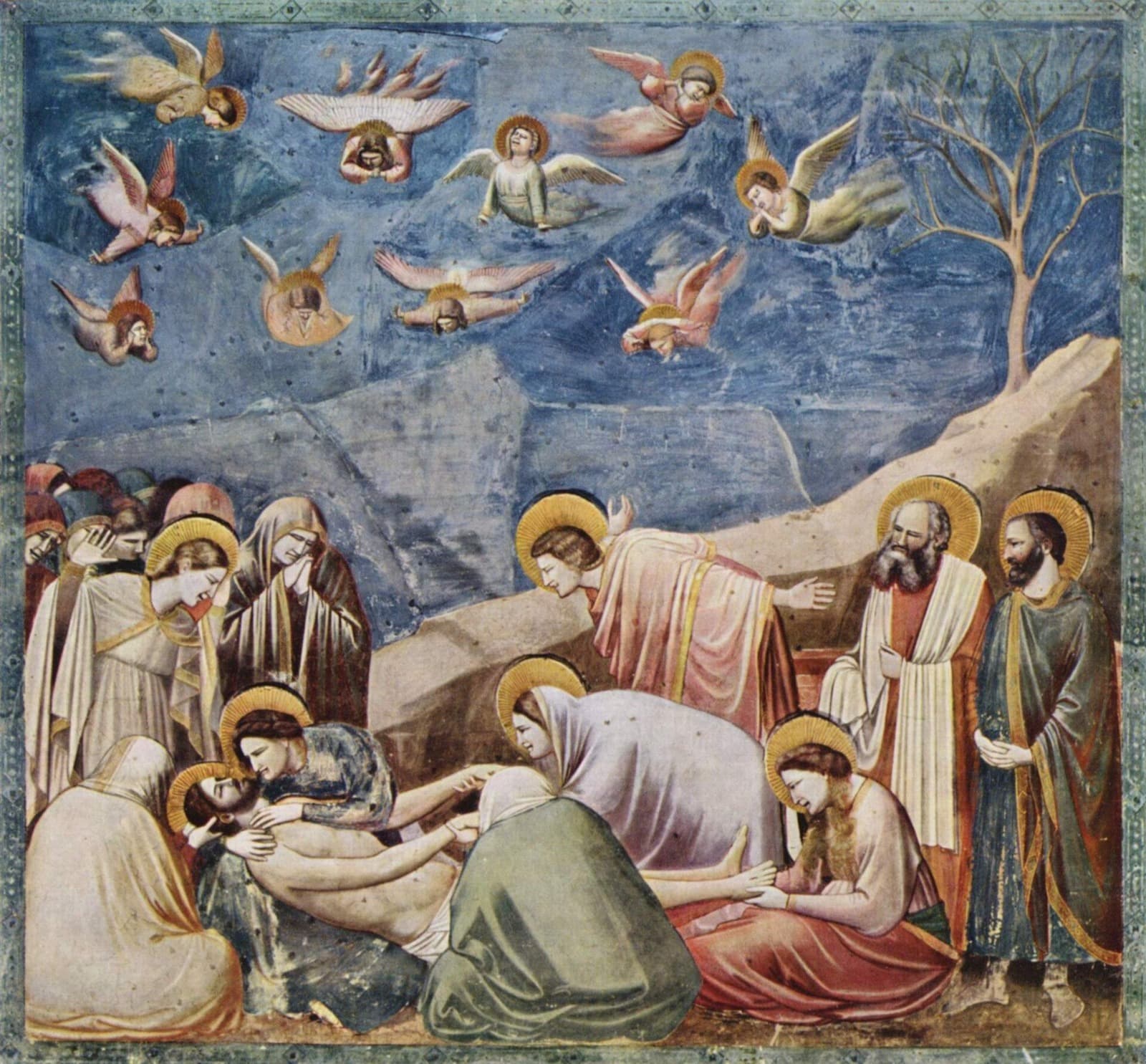
Two mourners sit with their backs turned to pull us in, and the angels overhead double over. Giotto frescoed it in the Arena Chapel at Padua.

A hundred and thirty guests feast while Christ works his first miracle almost unnoticed at the table. Napoleon's troops took it to Paris in 1797.
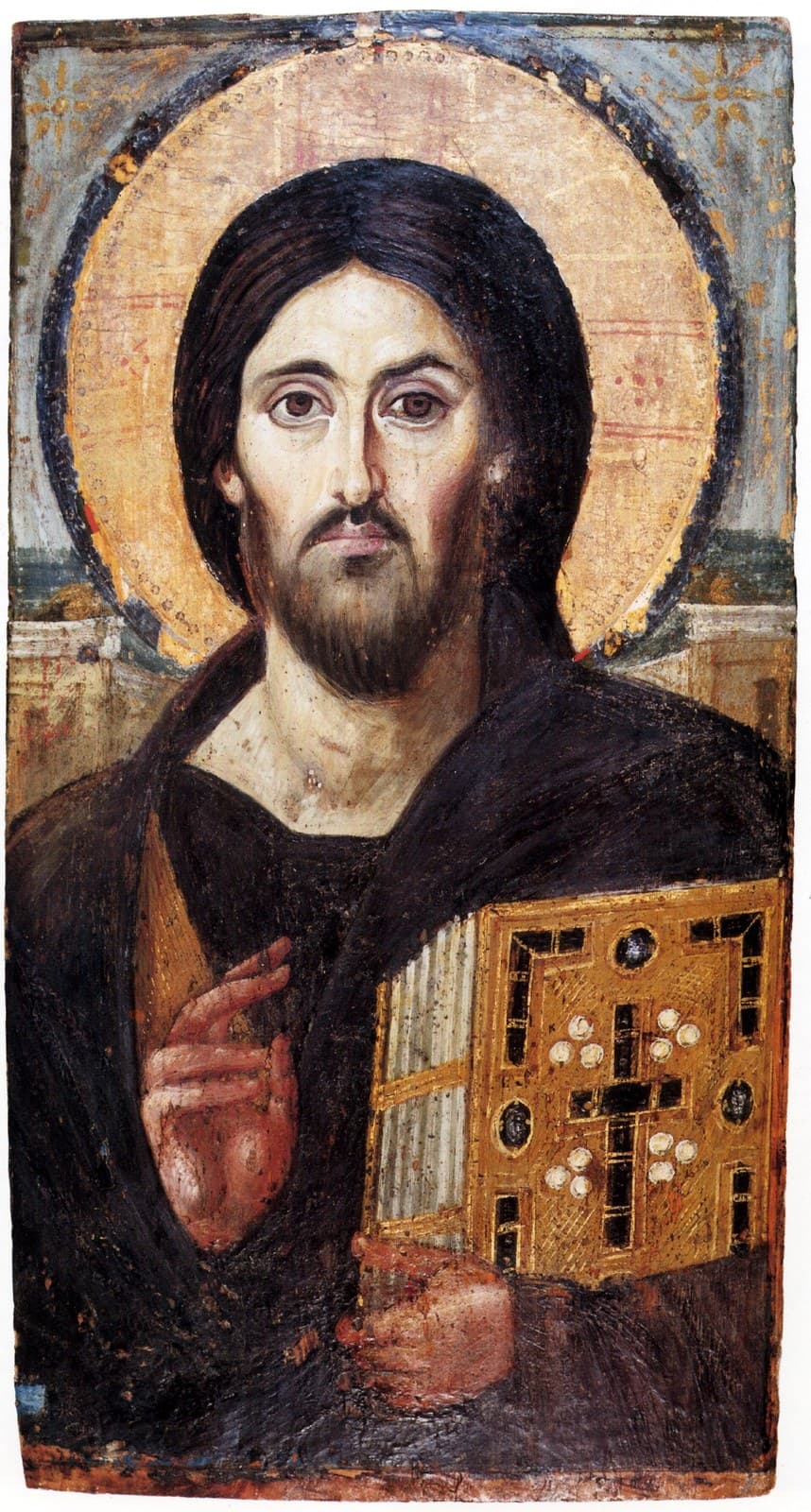
Cover one half of the face, then the other, and two expressions emerge, merciful and severe. Sinai was too remote for the iconoclasts to reach.
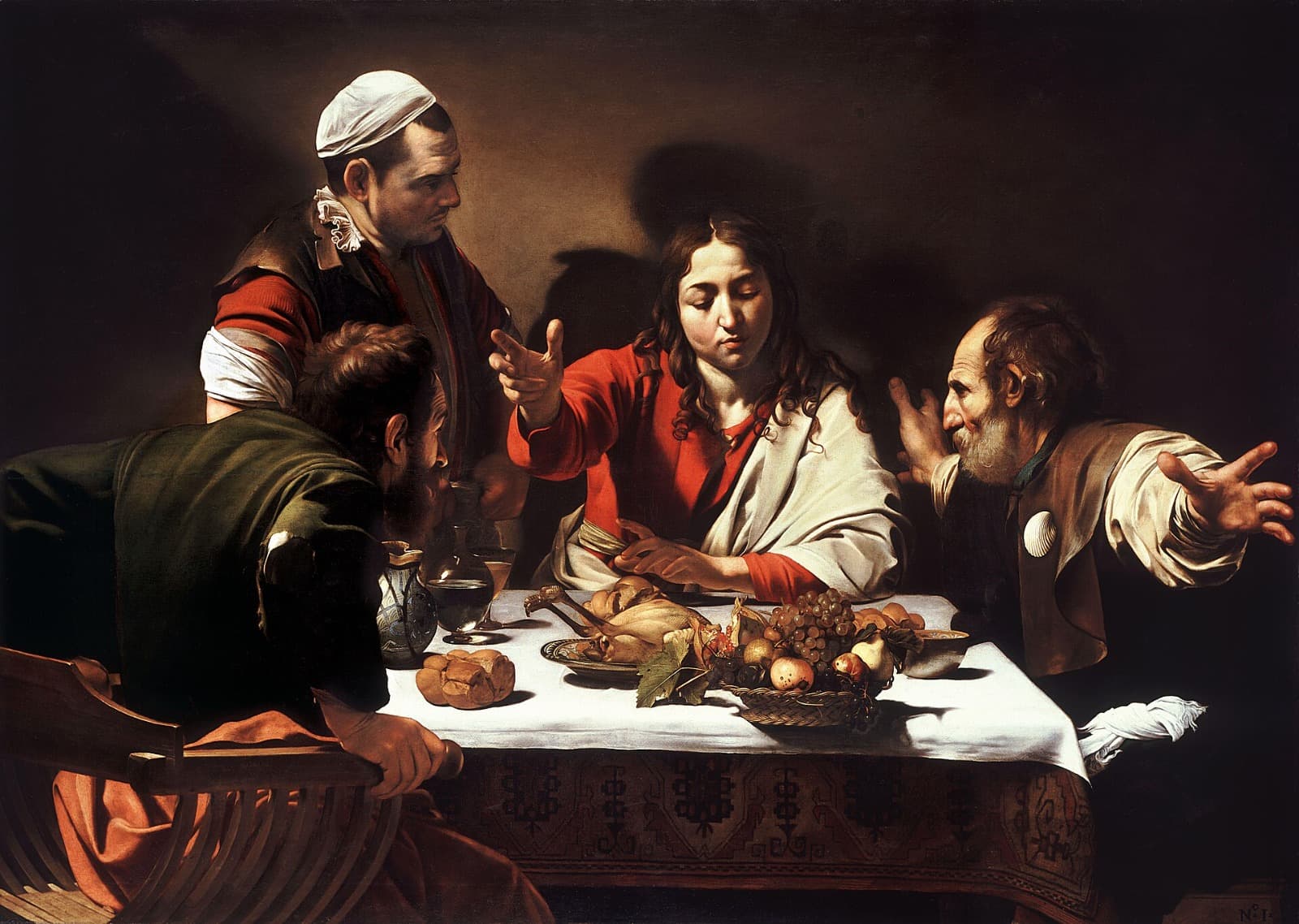
One disciple grips his chair to stand and the other throws his arms wide, while a fruit basket teeters off the edge toward us.

No cross, no ground, no sky, just a spiral of mourners in acid pink and sea-green. Florentine Mannerism starts here.

The corner of the stone slab juts out of the picture so the body looks about to be laid down in the room with you.

Twelve meters of wall where the whole business of execution goes on at once, one thief still being hauled upright at the side.

Thomas pushes his finger into the wound and two apostles lean in to watch, brows knotted, close enough to crowd the frame.

Torches and spears bristle against the sky, and at the still center Judas wraps Christ in his yellow cloak and meets his eye.

The table runs off on a steep diagonal into a smoky hall where servants clear plates and the lamp smoke thickens into angels.

A corpse in a box barely wider than itself, with no hint of resurrection. Dostoevsky saw it in Basel and said it could destroy faith.