
The Garden of Earthly Delights
1505 · El Prado, Madrid
Three panels run from Eden to hell, with a whole naked humanity climbing into giant fruit in between. Nobody has settled what it means.
★ 10.0
 skopia
Three panels run from Eden to hell, with a whole naked humanity climbing into giant fruit in between. Nobody has settled what it means.
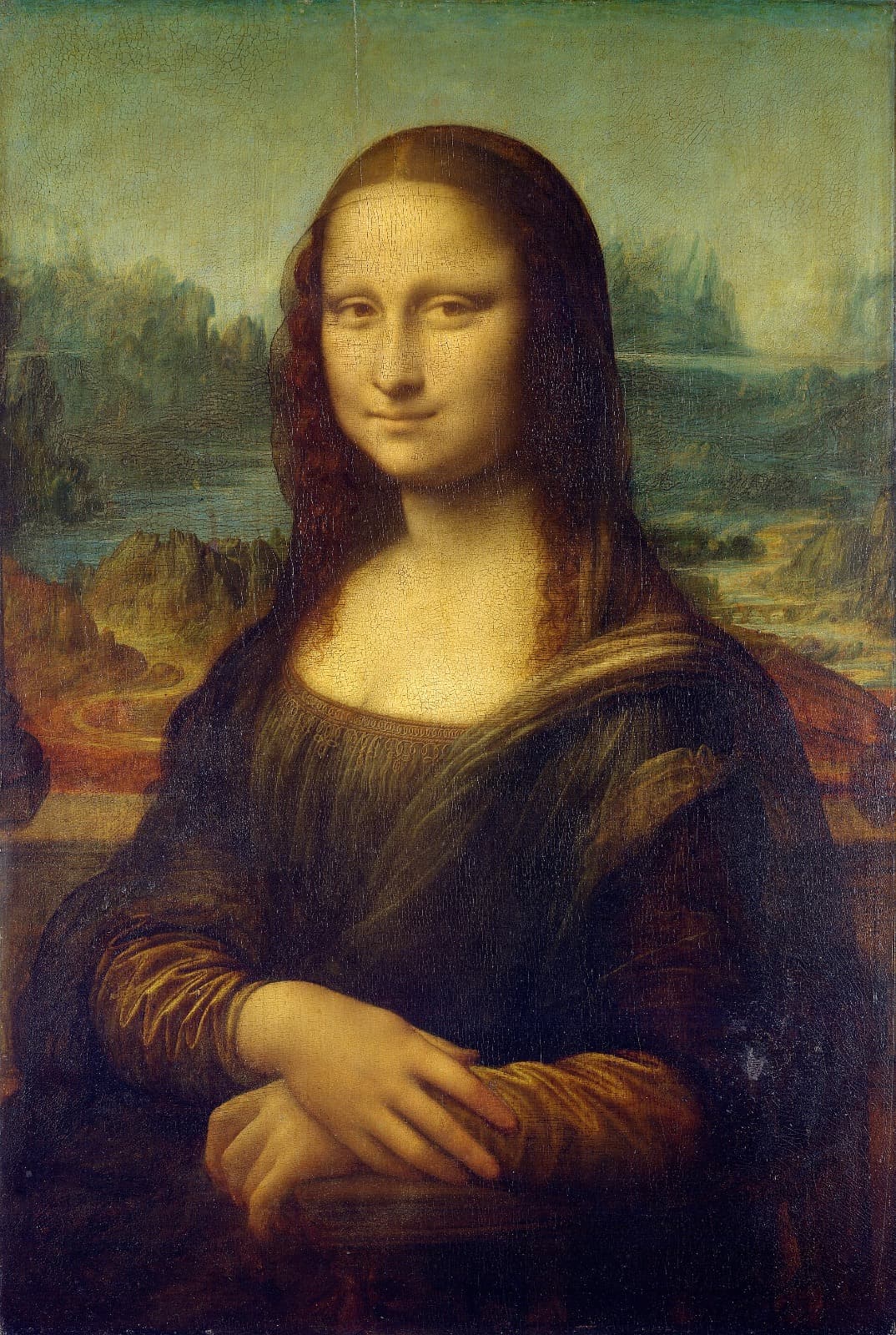
She was probably Lisa Gherardini, a merchant's wife, and Leonardo kept reworking her for years and never handed the portrait over.
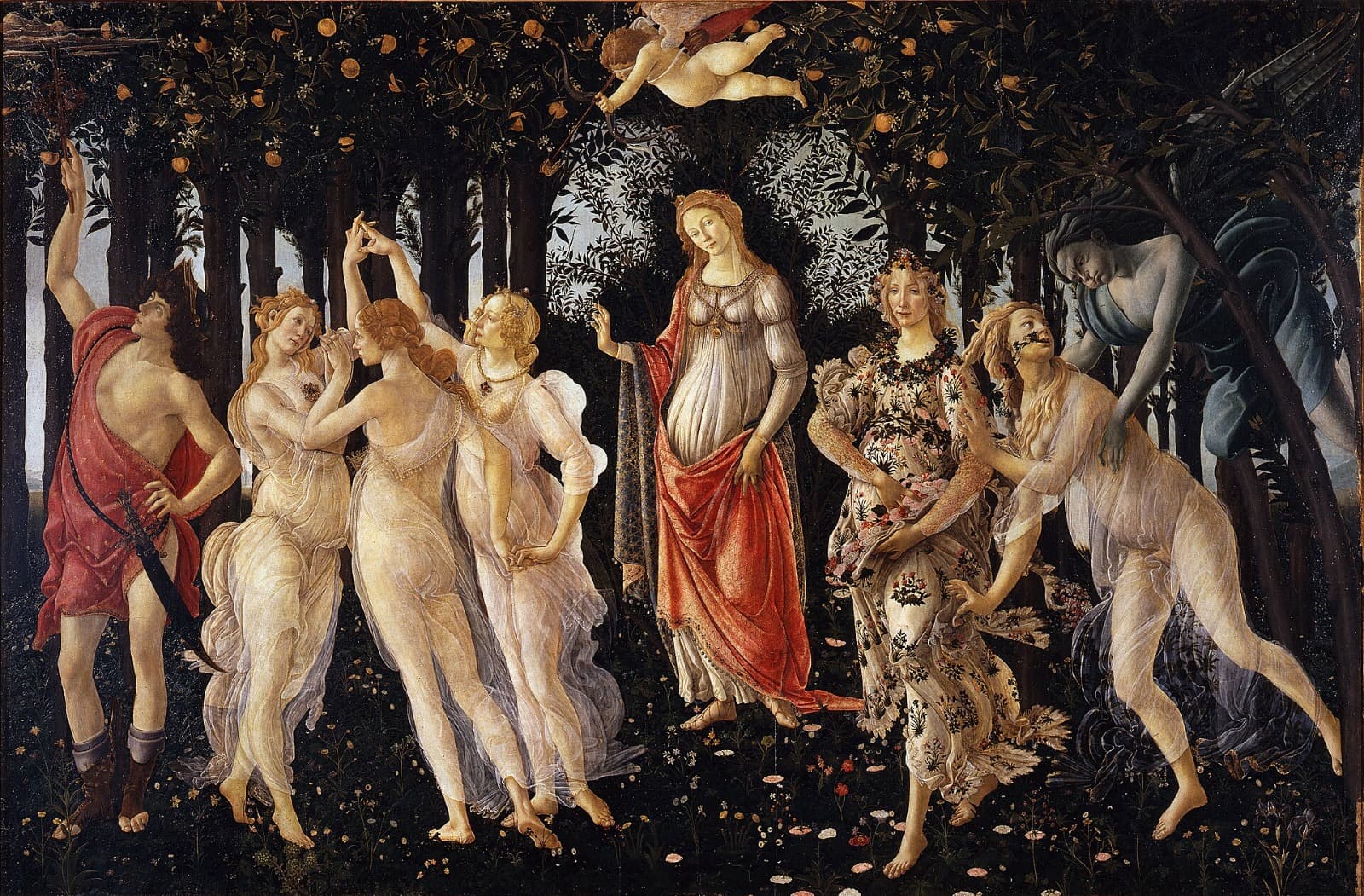
Venus stands in an orange grove while the Graces dance and spring arrives at her right. The meadow holds hundreds of identifiable plants.

Saints and pilgrims stream toward a bleeding Lamb across a dozen hinged panels. One of them was stolen in 1934 and has never been found.

Christ has just said one of them will betray him, and the shock rolls down the table. Leonardo's experimental paint began flaking in his lifetime.

Venus arrives on a scallop shell in a fall of roses, painted on canvas at a time when almost everyone still worked on panel.
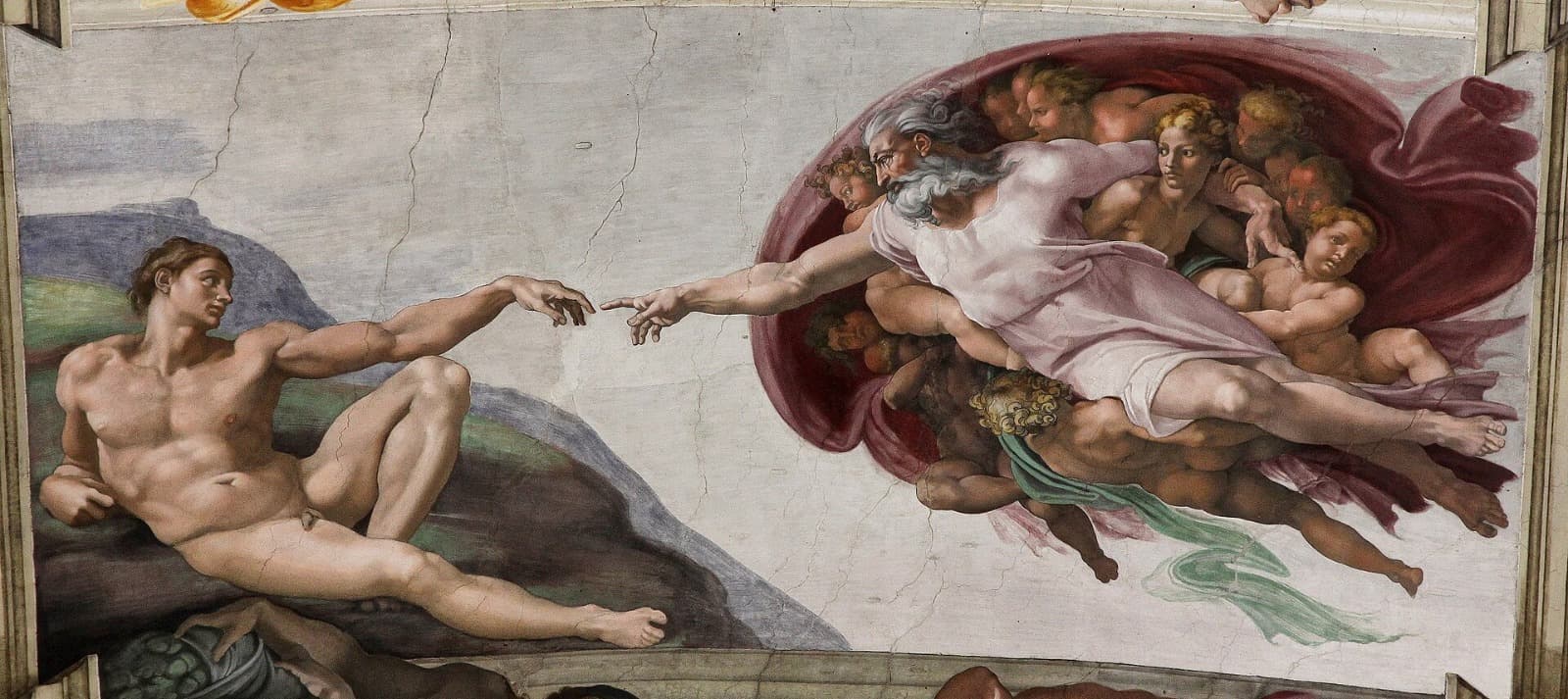
God surges out of a red cloak full of angels, and Michelangelo leaves the fingers not quite touching. The gap does the work.
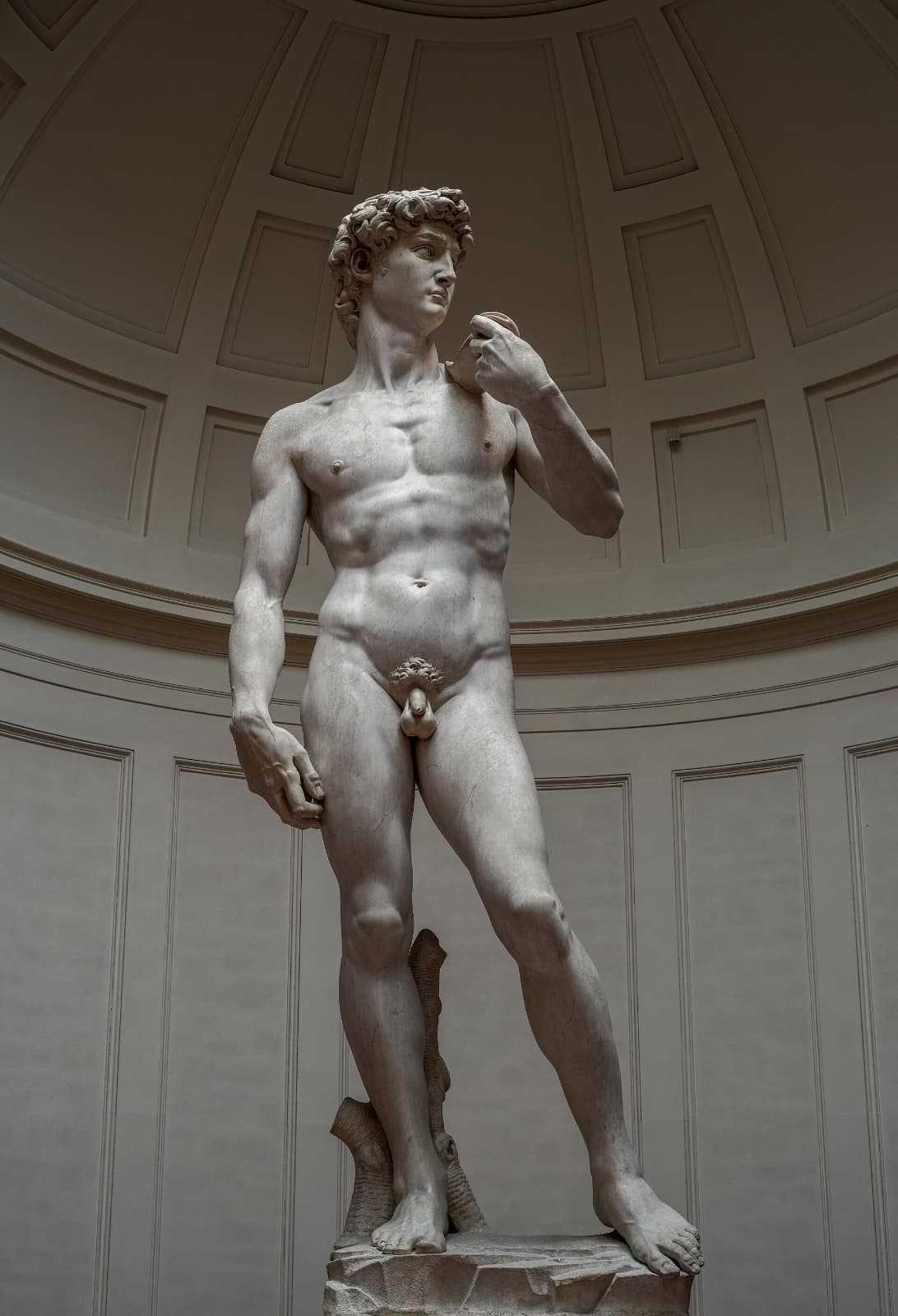
The marble block had been abandoned as flawed before Michelangelo took it, and he carved a boy who is watching Goliath, not beating him.
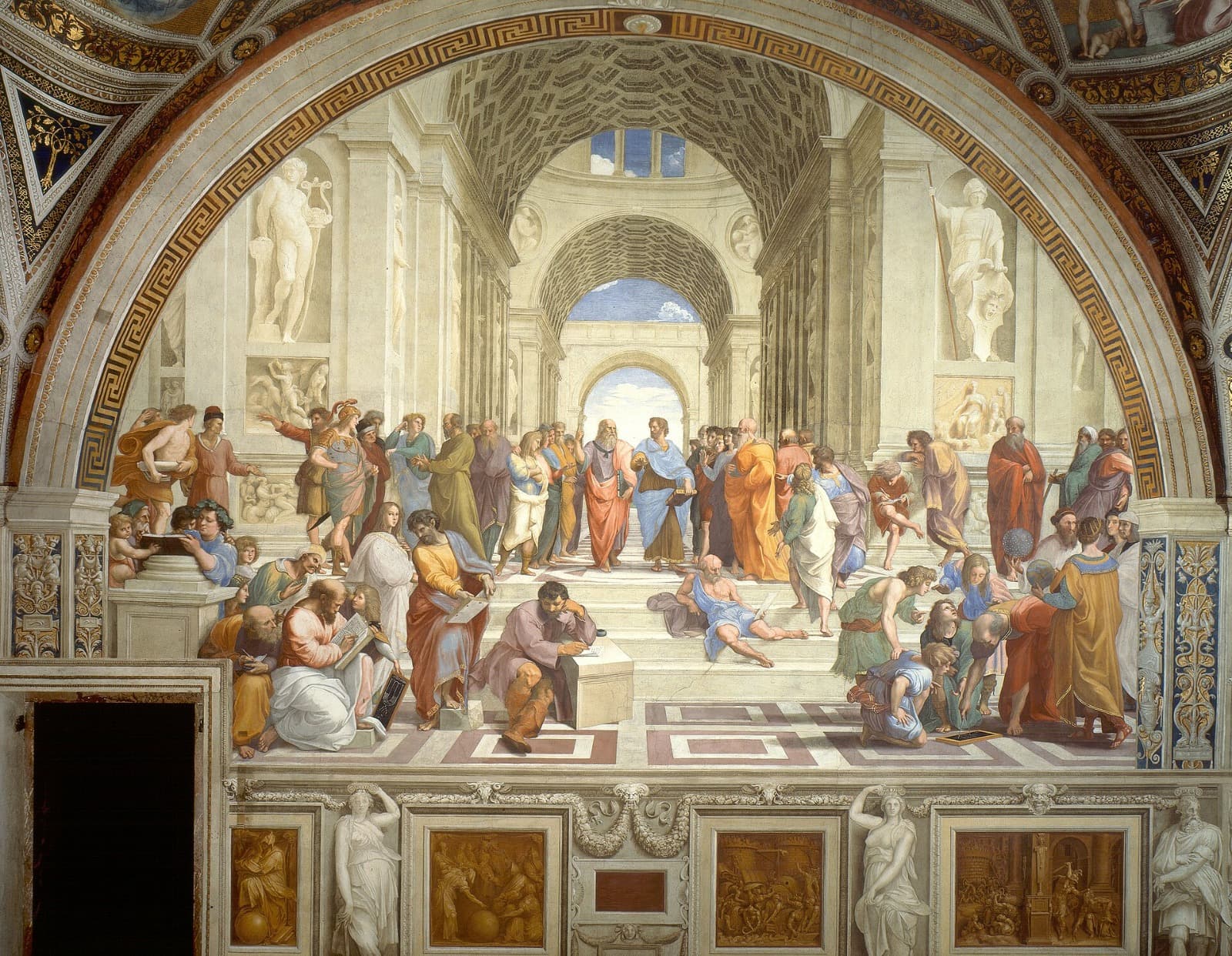
Plato and Aristotle argue at the center of a hall where Raphael gave the philosophers the faces of Leonardo, Michelangelo and Bramante.

Three hunters come home over the hill with one thin catch while villagers skate below. Bruegel painted it for a series on the months.

Christ's body hangs green and pocked with sores, painted for a hospital whose patients saw their own ravaged flesh.
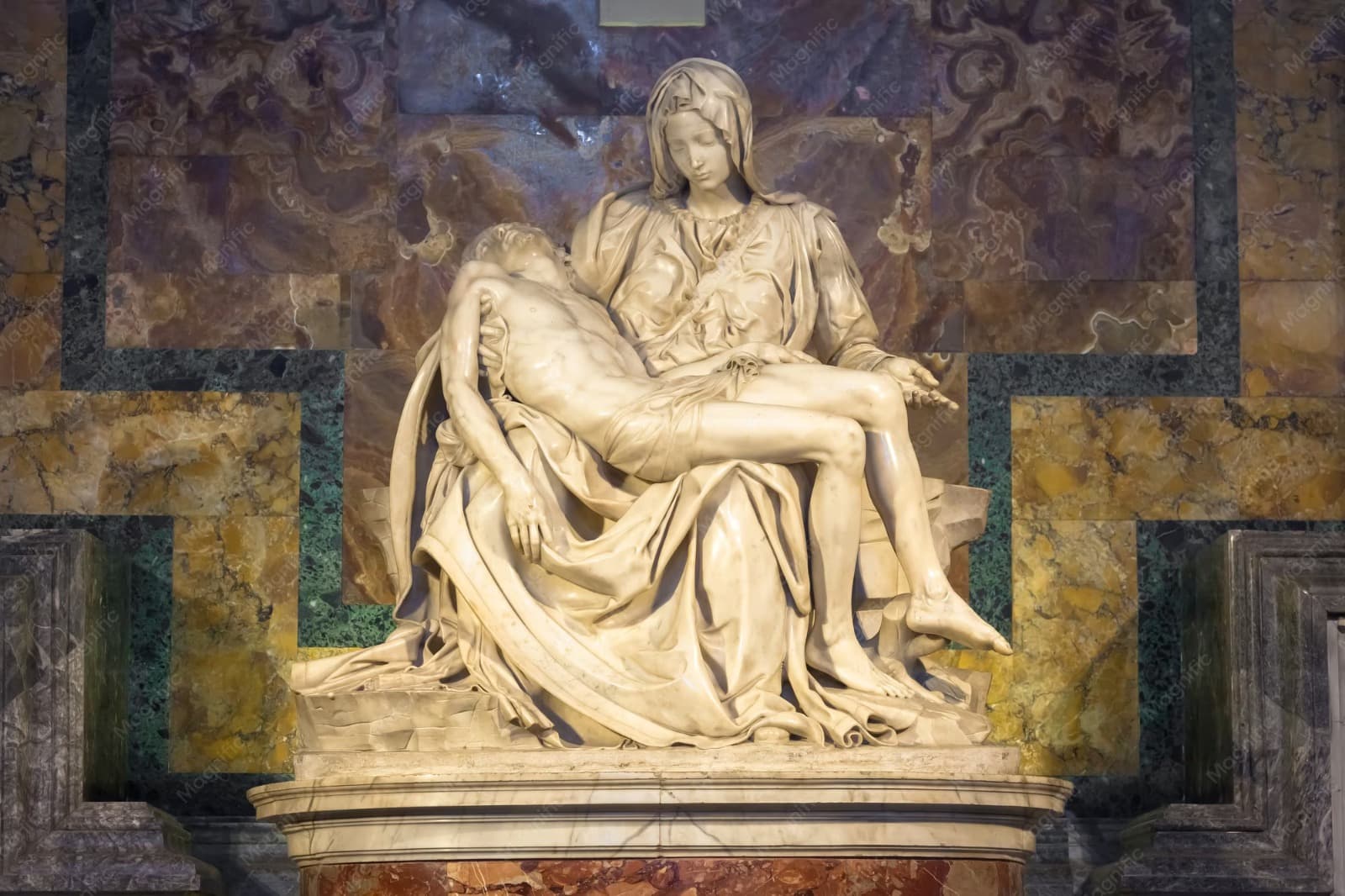
The dead Christ lies across his mother's lap. Michelangelo was twenty-four, and signed the sash after hearing it credited to someone else.
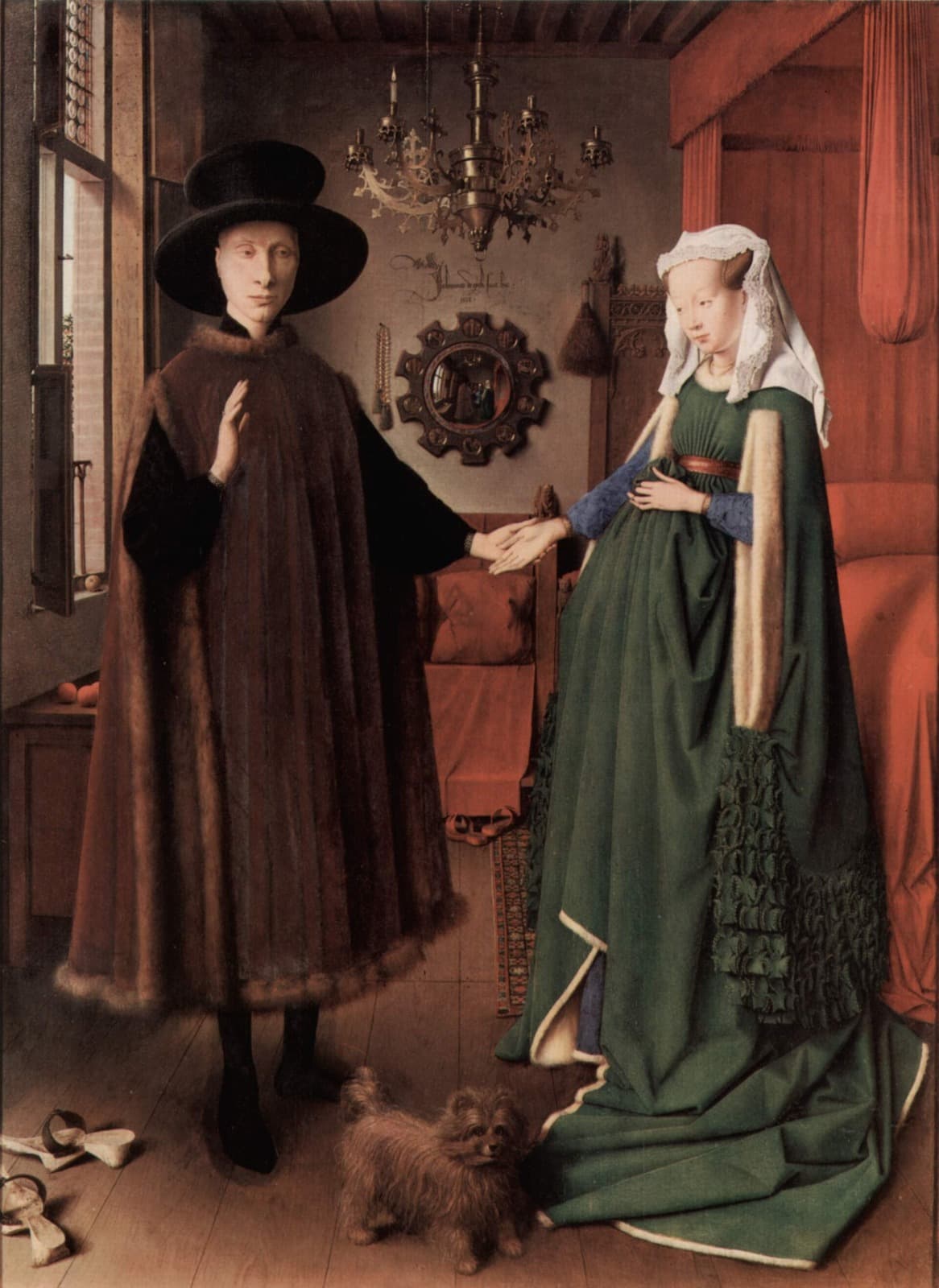
A couple joins hands in a Bruges bedroom, and the mirror behind them catches two visitors at the door. Van Eyck signed the wall above it.

The fainting Virgin curves in an exact echo of her dead son, the stroke that made van der Weyden the most copied painter in the north.
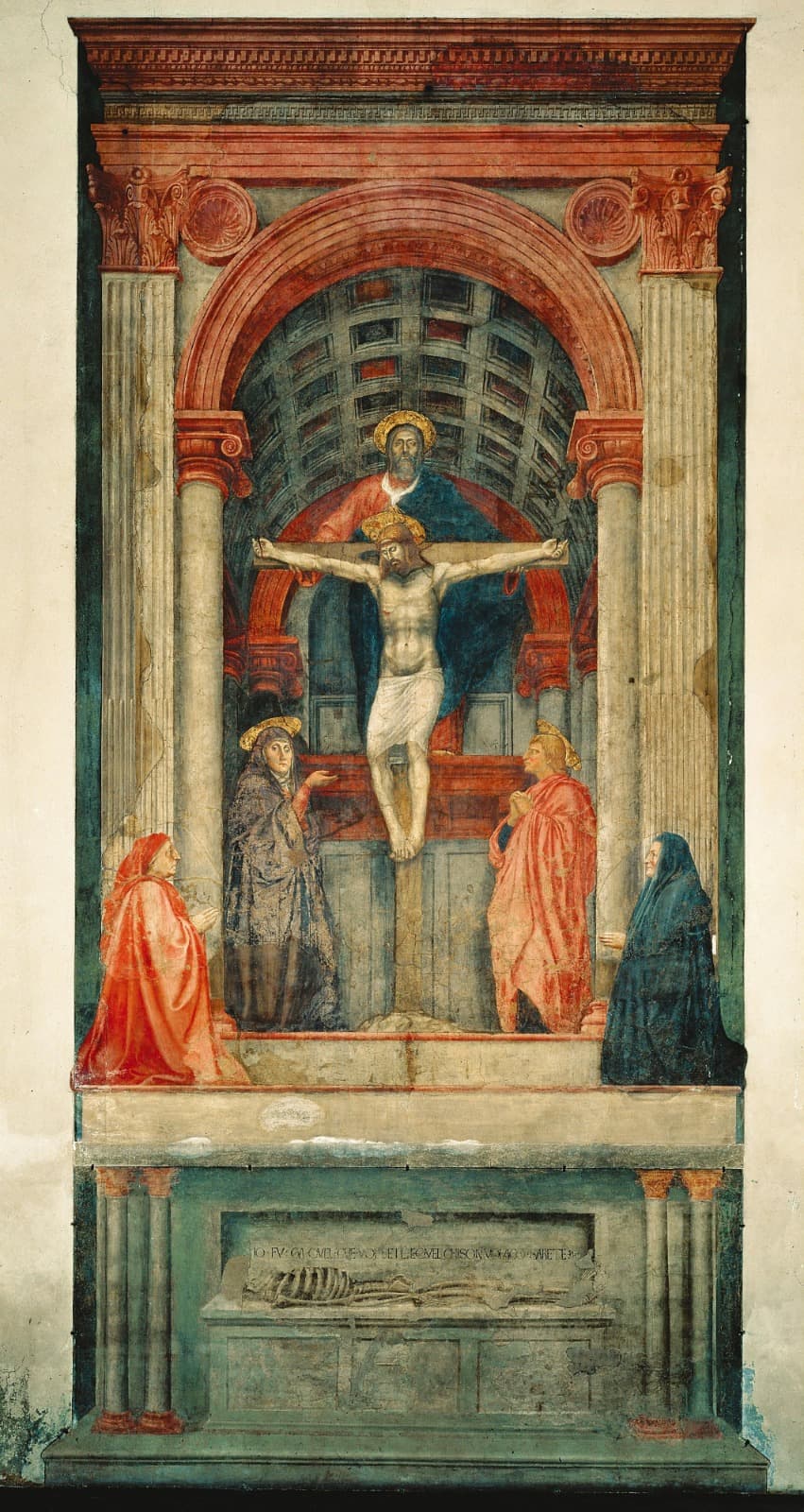
The earliest surviving painting built on a single vanishing point, worked out on a wall of Santa Maria Novella with Brunelleschi's help.
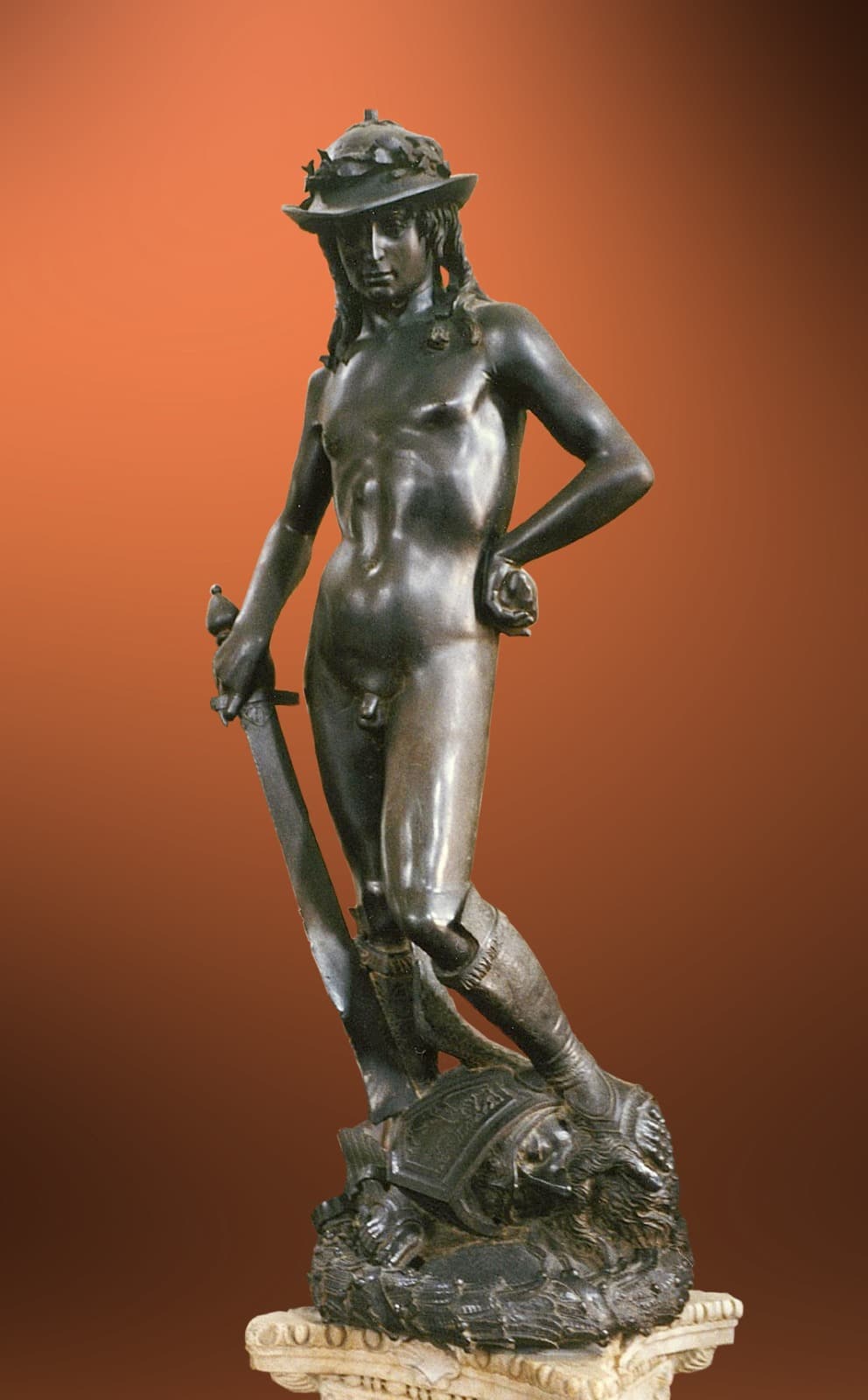
A naked boy in boots and a laurel hat rests one foot on Goliath's head, the first freestanding bronze nude since antiquity.
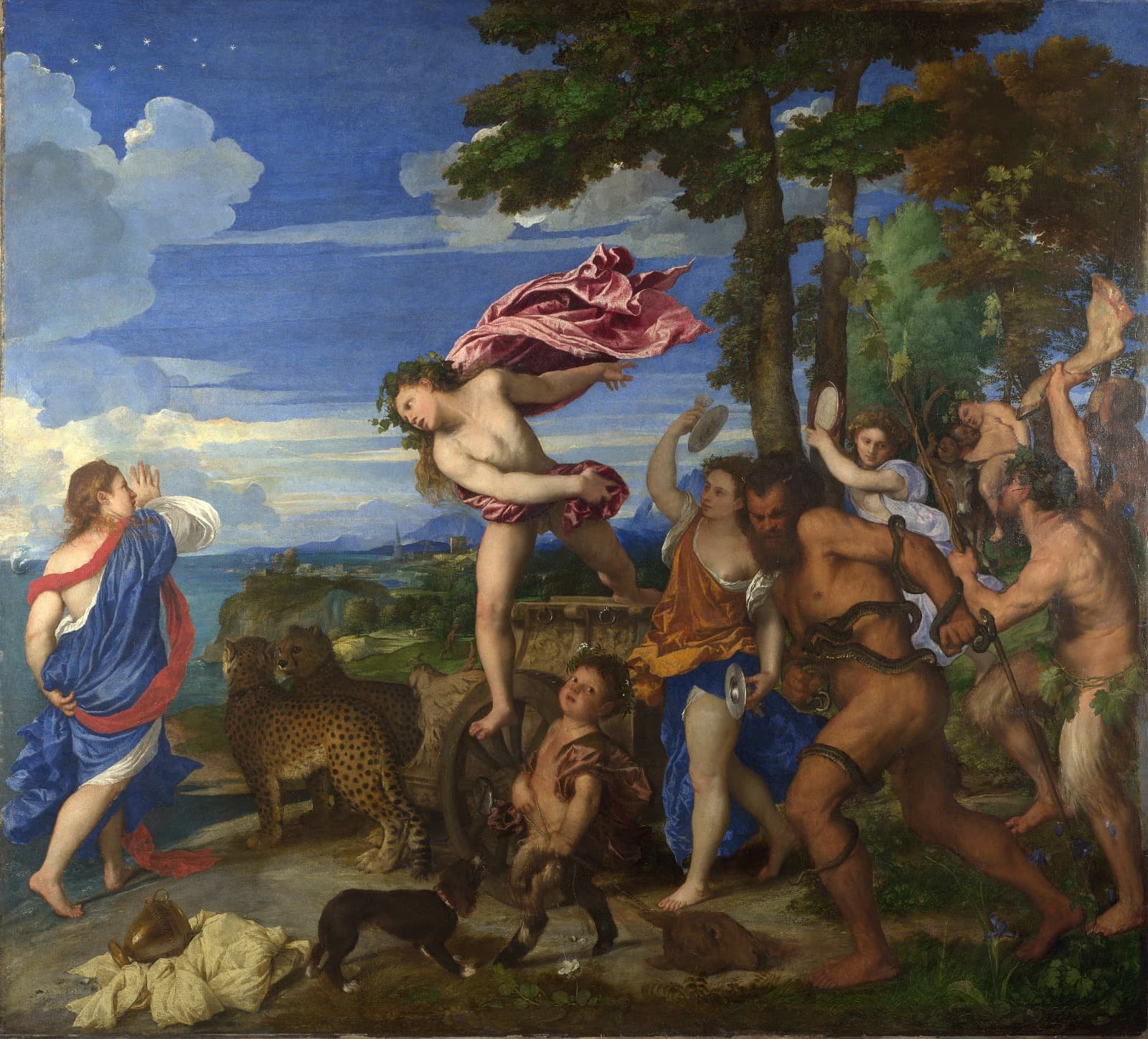
Bacchus leaps from his chariot toward Ariadne while Theseus's ship slips off the horizon, painted for a duke's private chamber in Ferrara.

Bartholomew holds his own flayed skin, and the sagging face on it is Michelangelo's. The nudes offended enough critics that drapery was added later.

Two saints lower a nobleman into his grave while his soul slips through a tear in the sky. The mourners are El Greco's own neighbors.
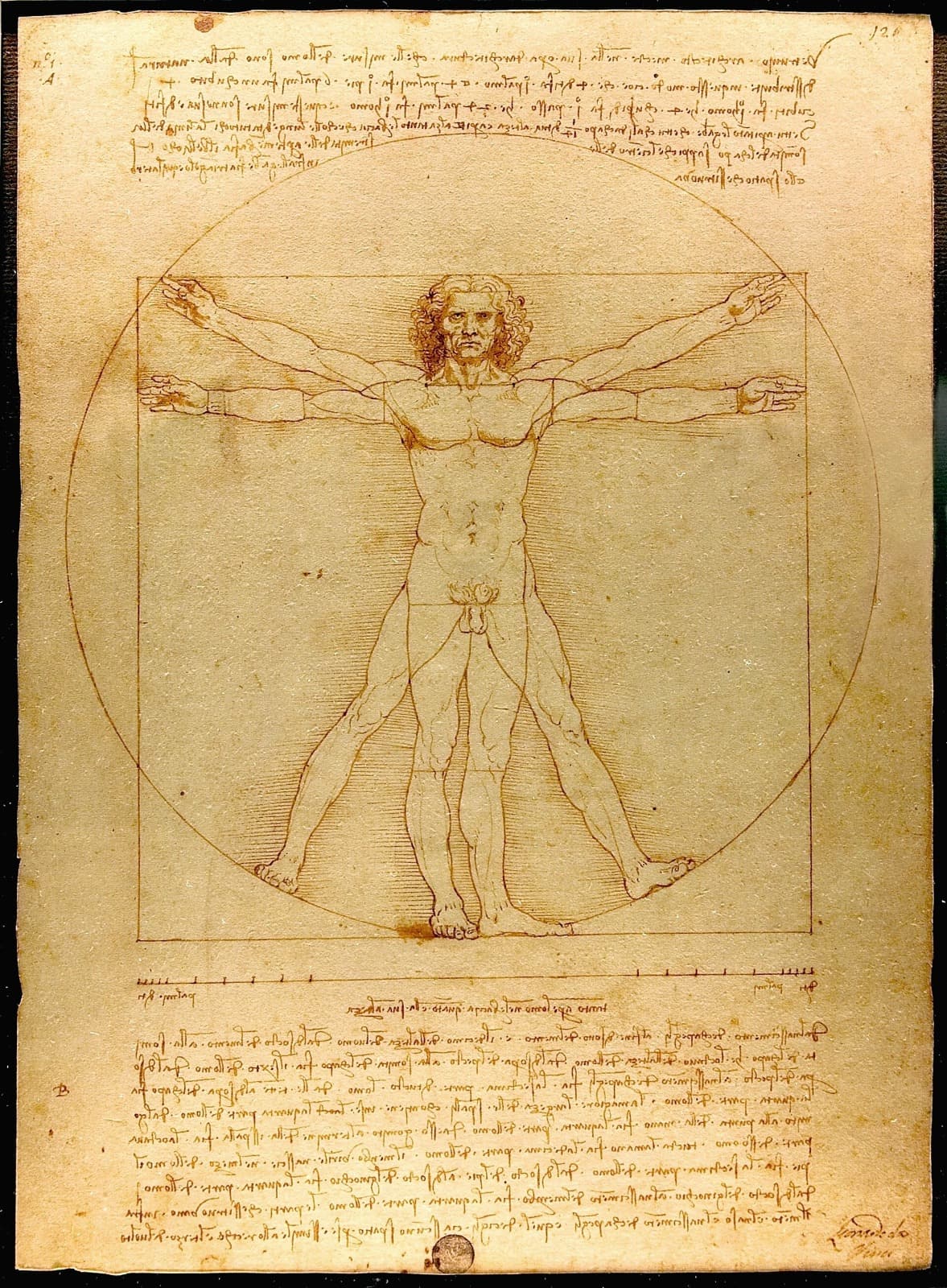
Leonardo fixed Vitruvius's old problem by moving the centers, so that the navel governs the circle and the groin governs the square.
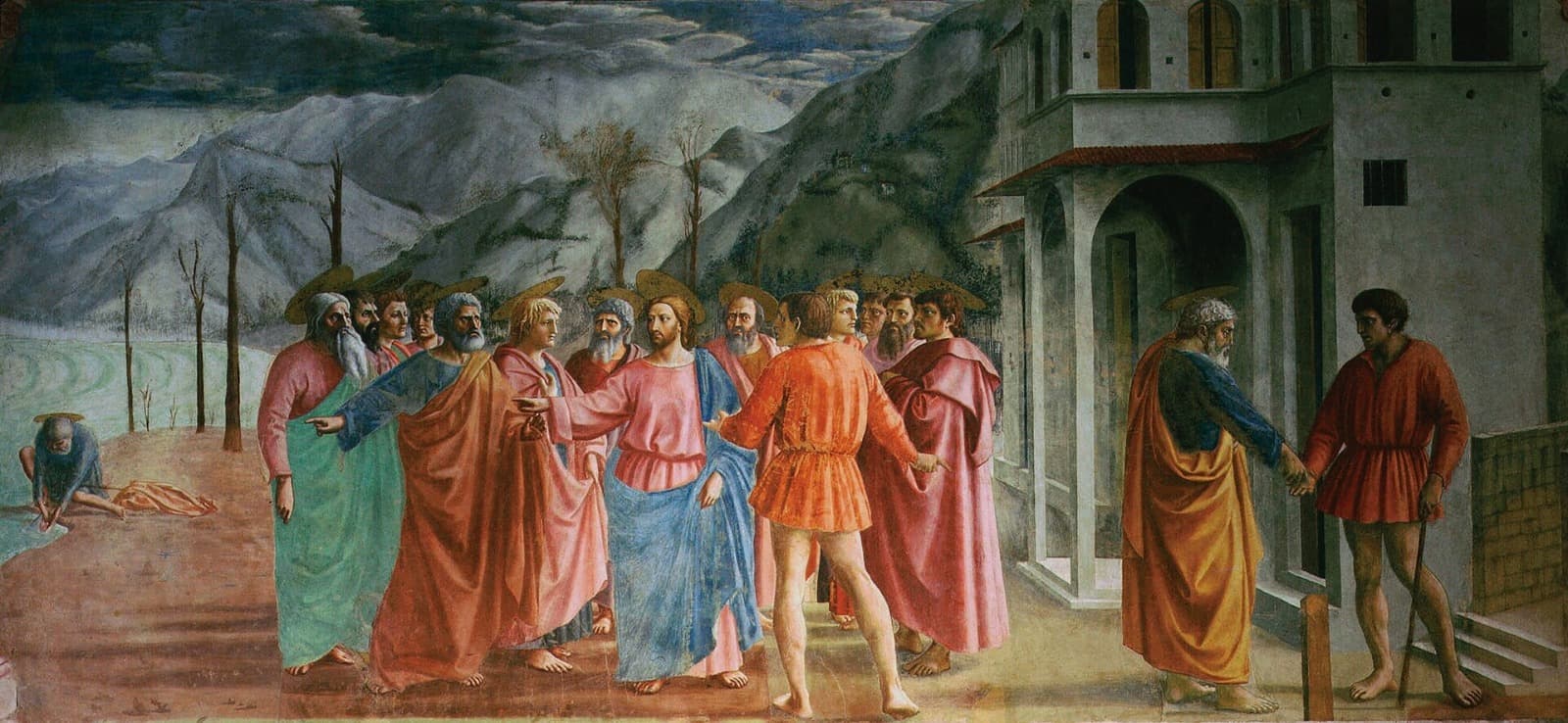
Three moments run in a single frame: the tax demanded, Peter pulling the coin from a fish, and Peter paying up at the right.
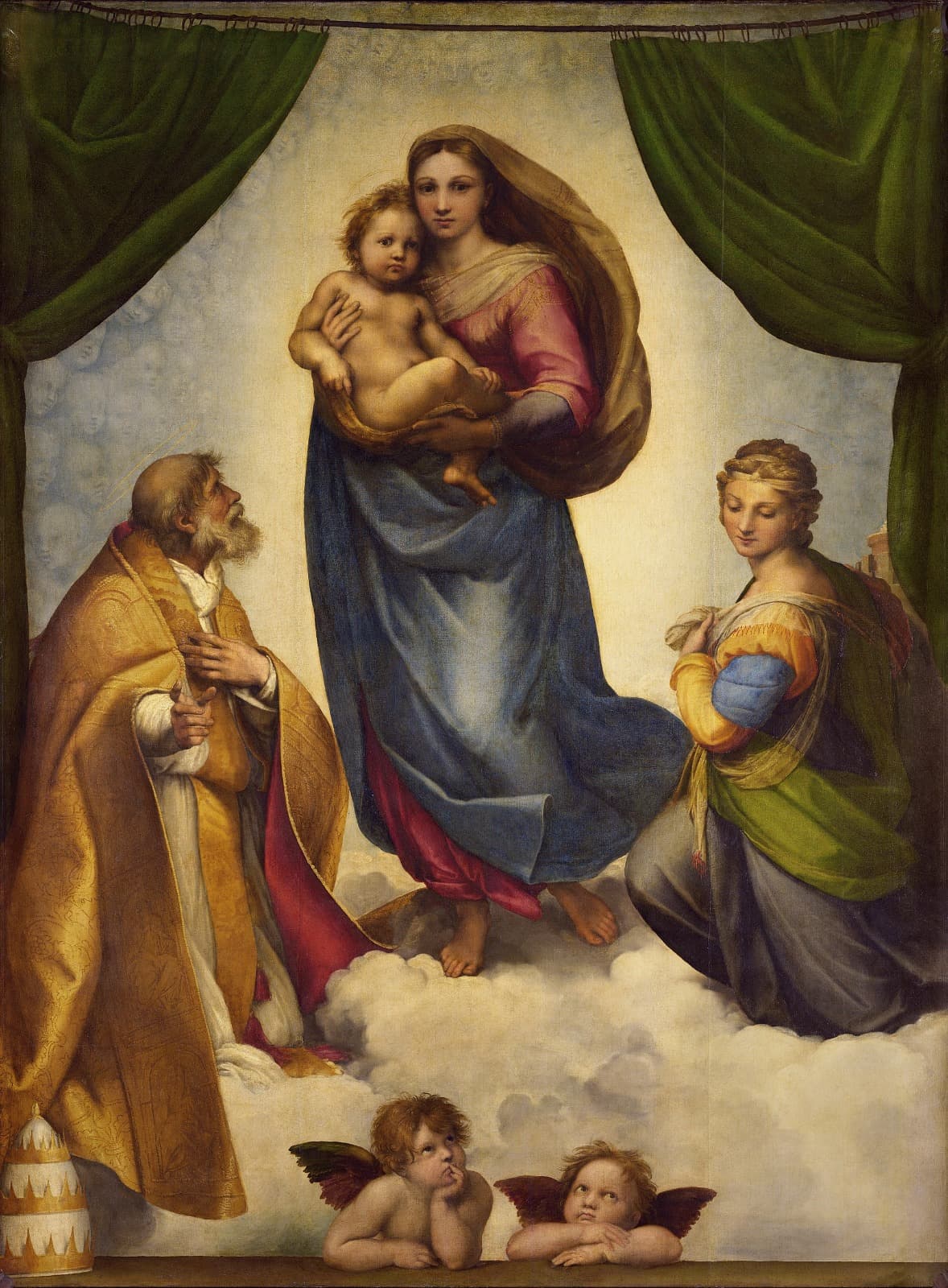
Two bored cherubs lean on the frame at the bottom, and they floated free of the altarpiece long ago onto everything else.
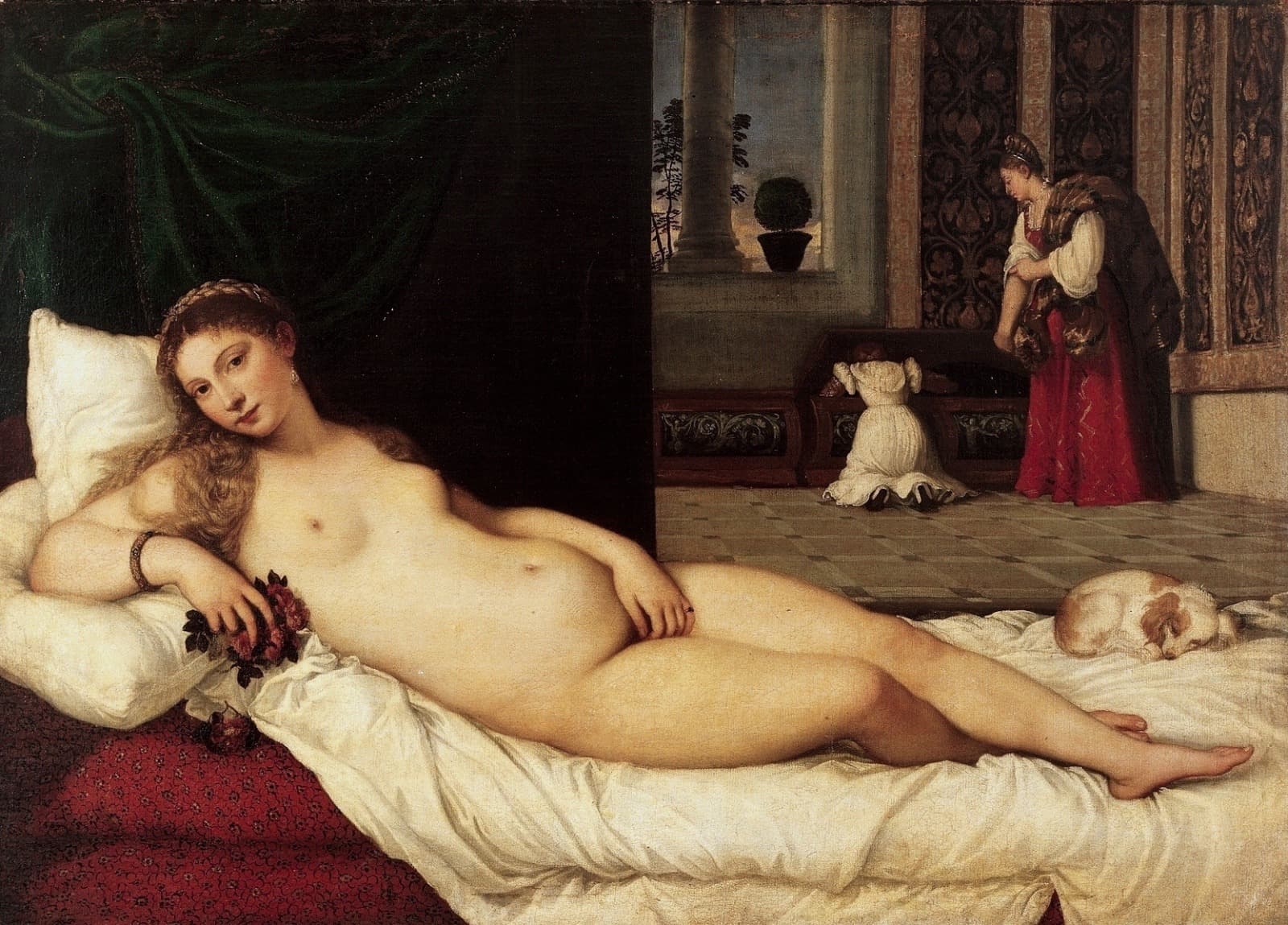
Titian woke Giorgione's sleeping Venus, brought her indoors, and had her look straight at us, probably to mark a wedding in Urbino.
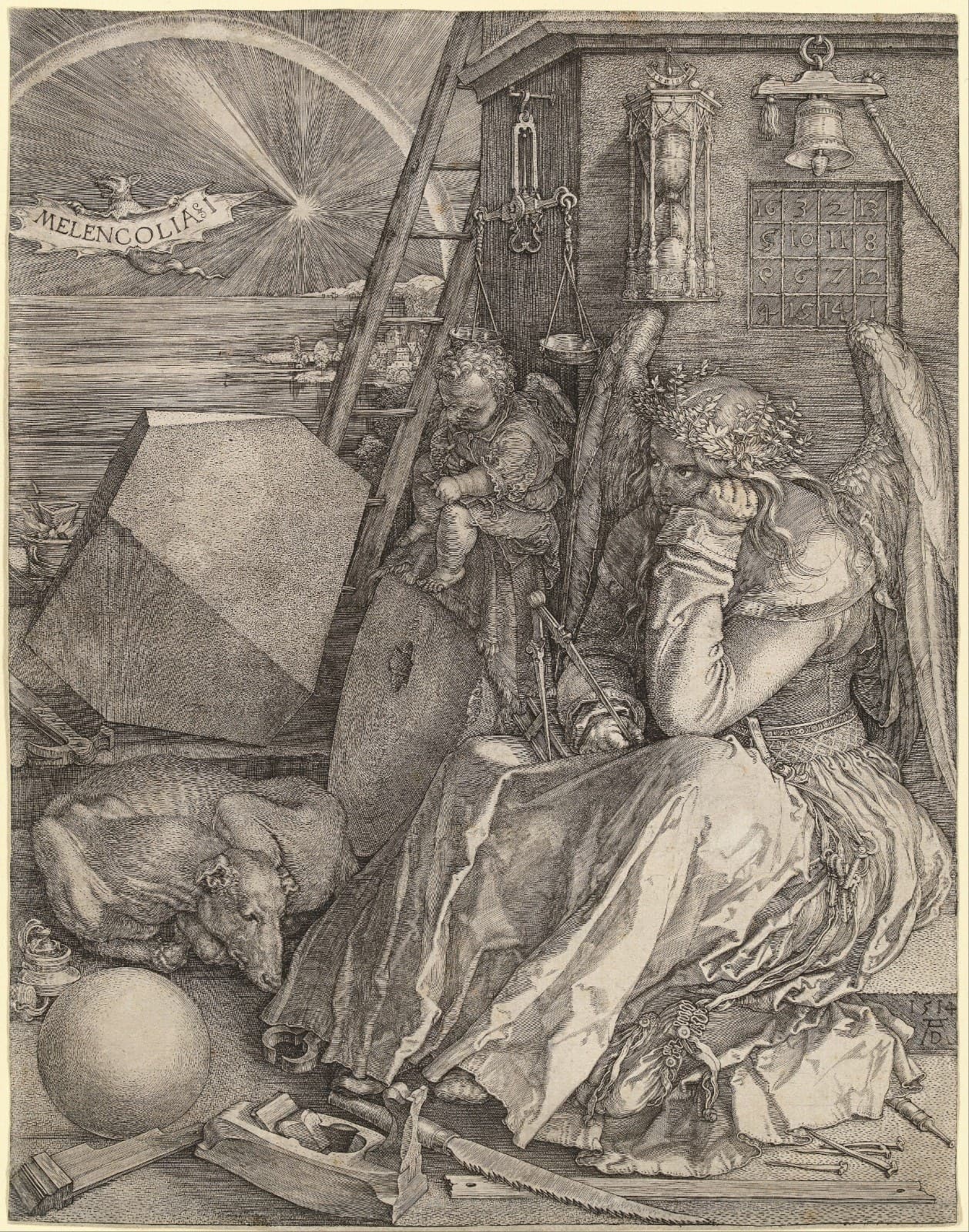
A winged figure sits with her compass idle among abandoned tools, and no print in history has drawn more scholarly argument.
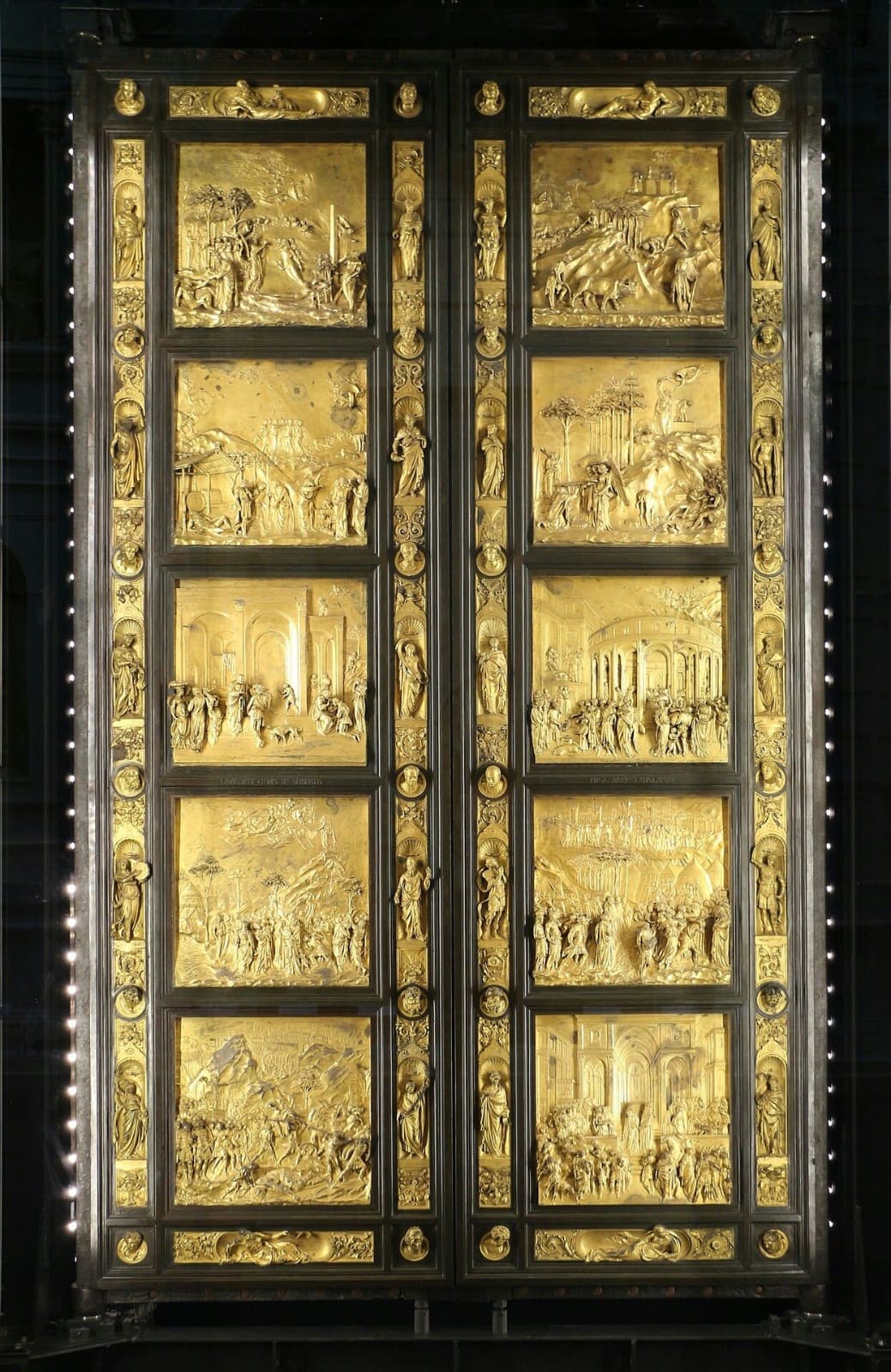
Ghiberti gave twenty-seven years to these doors, and the name comes from Michelangelo, who is supposed to have said they were fit for paradise.

Two men pose with globes, sundials and a lute with a broken string, and a smear on the floor turns into a skull from the side.

Eve throws back her head and howls while Adam hides his face, the bodies heavy and casting real shadows. Michelangelo came to study it.
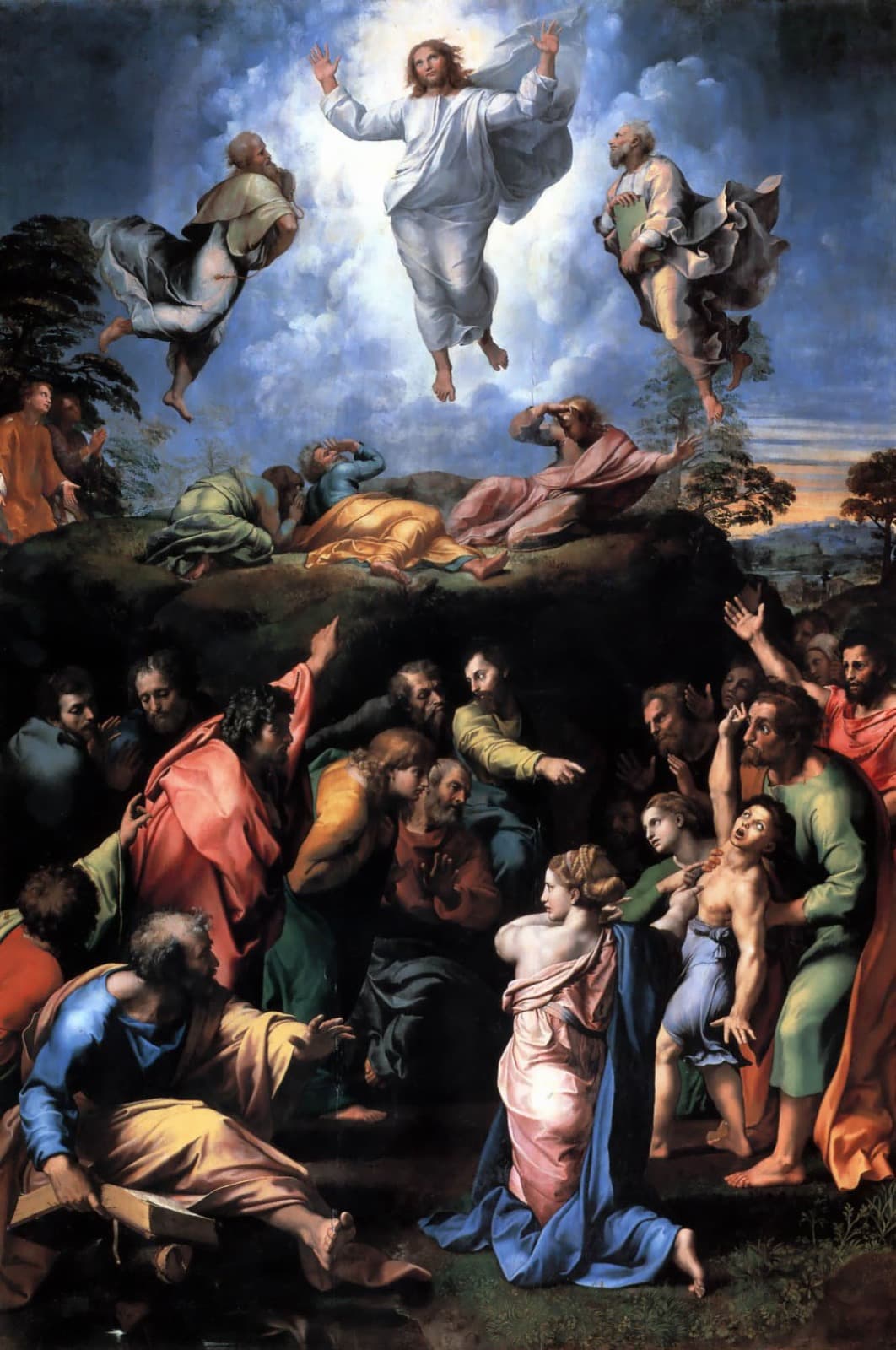
Raphael left it unfinished when he died in 1520, and it was hung above his body while he lay in state.
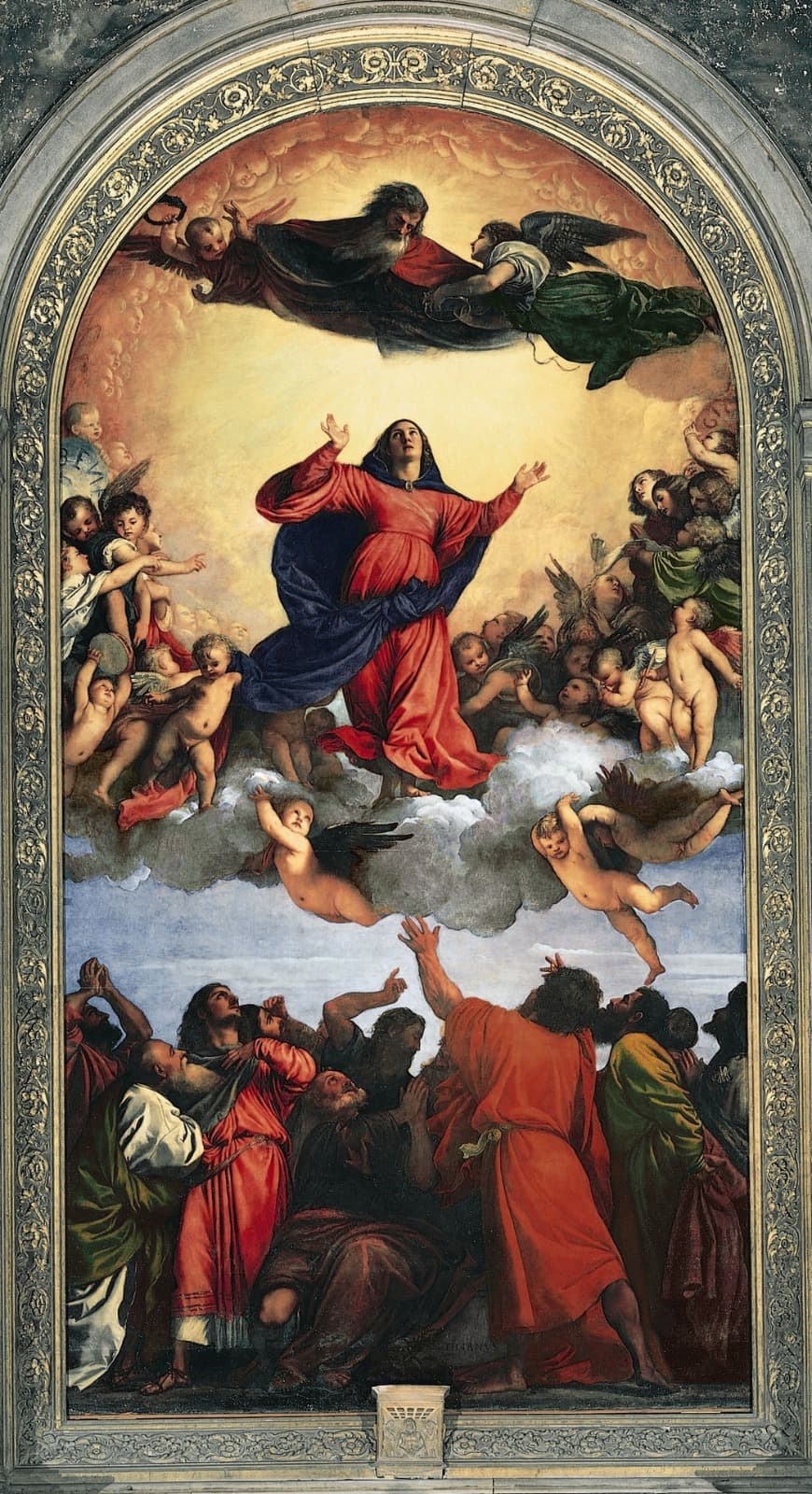
Titian was barely thirty when Venice saw this go up over the Frari altar, the Virgin swept into a storm of red and blue.
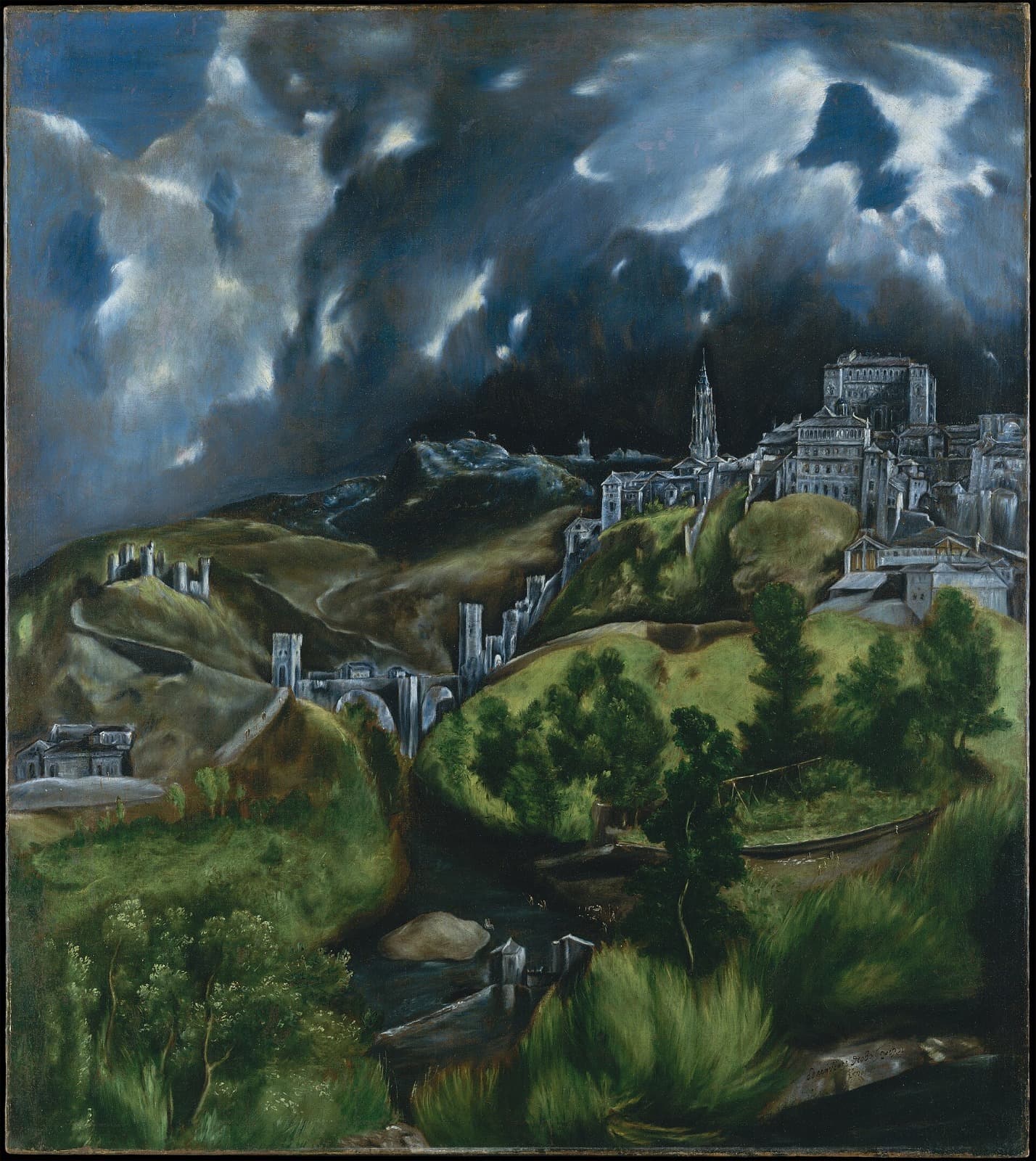
El Greco moved the cathedral tower off its real site for the sake of the composition and lit the whole city with a green storm.
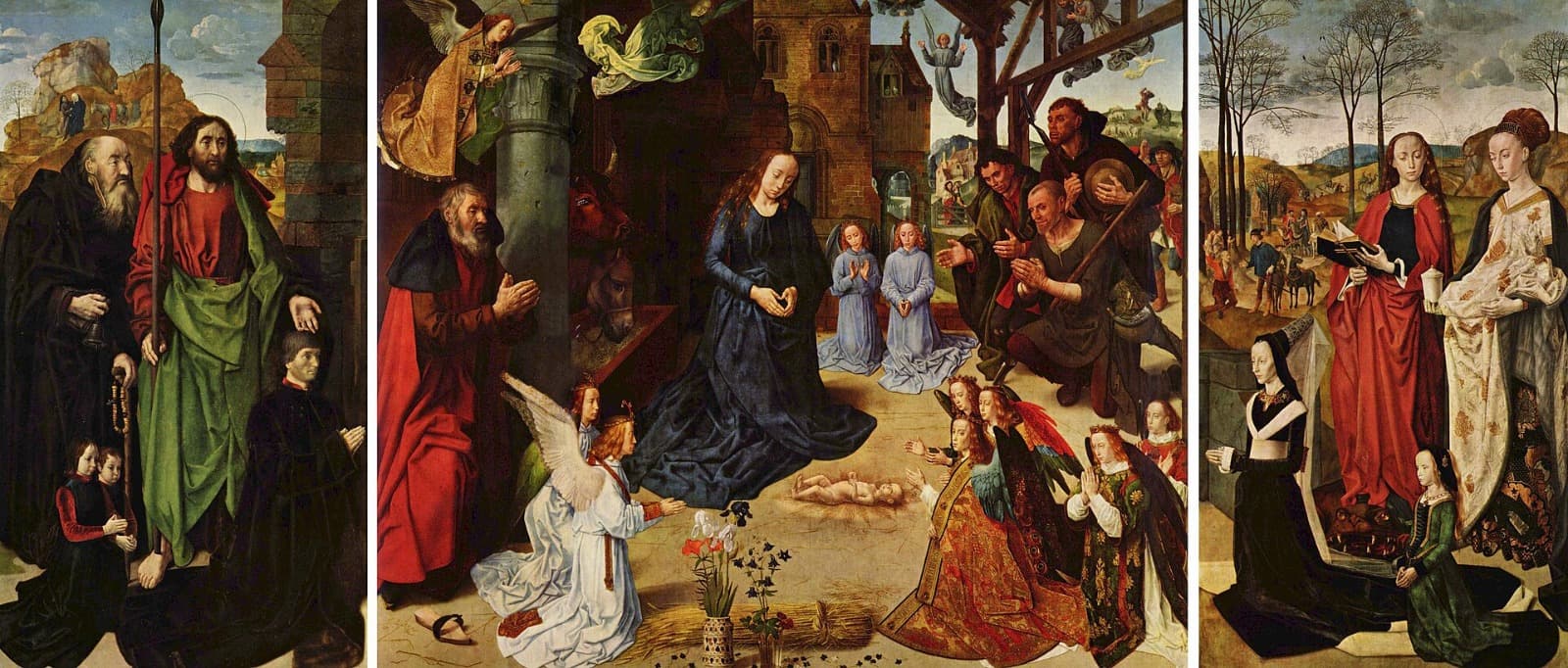
Three weathered shepherds crowd in to look at the newborn, and when the triptych reached Florence from Bruges the local painters took note.

Cecilia Gallerani turns as if someone has come in, and the ermine turns with her. It was her patron's emblem and a pun on her name.

Christ is scourged in the middle distance while three men talk in the foreground, indifferent. Nobody has settled who they are or why.

The trees behind Christ turn from bare to leafing across the panel. In 1944 a British officer held his guns rather than shell the town.

A hundred and thirty guests feast while Christ works his first miracle almost unnoticed at the table. Napoleon's troops took it to Paris in 1797.
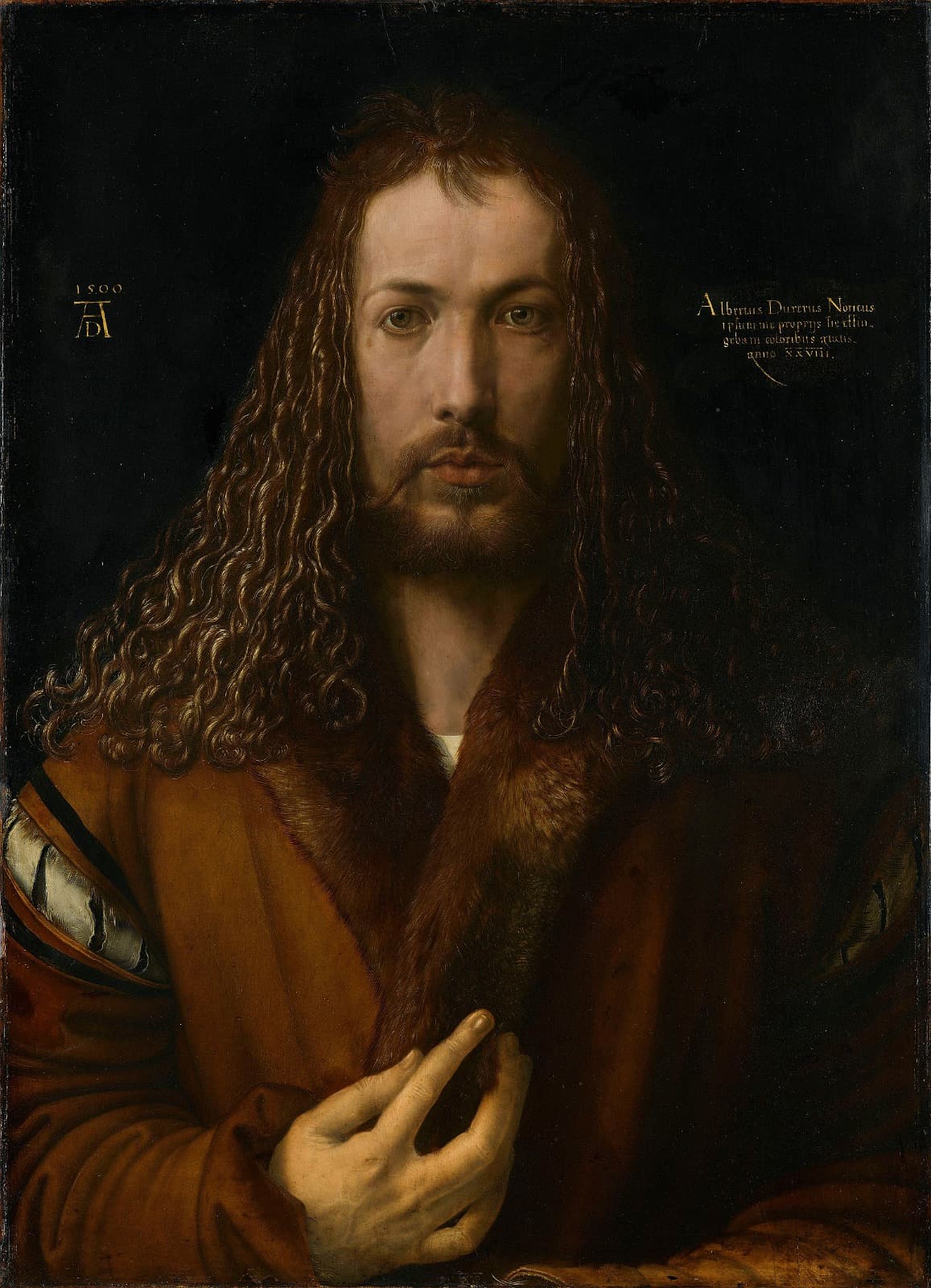
Dürer faced himself head-on in a pose reserved for images of Christ, and wrote across the panel that he had painted it at twenty-eight.

Tens of thousands of tiny soldiers fight under a sky that curves like the whole earth. Painted while the Ottomans were pressing on Vienna.

Fra Angelico frescoed it at the top of the dormitory stairs, so the friars met it every time they climbed to their cells.

Francis steps barefoot from his hermitage into a light coming from the left, and Bellini gives him no seraph and barely any wounds.
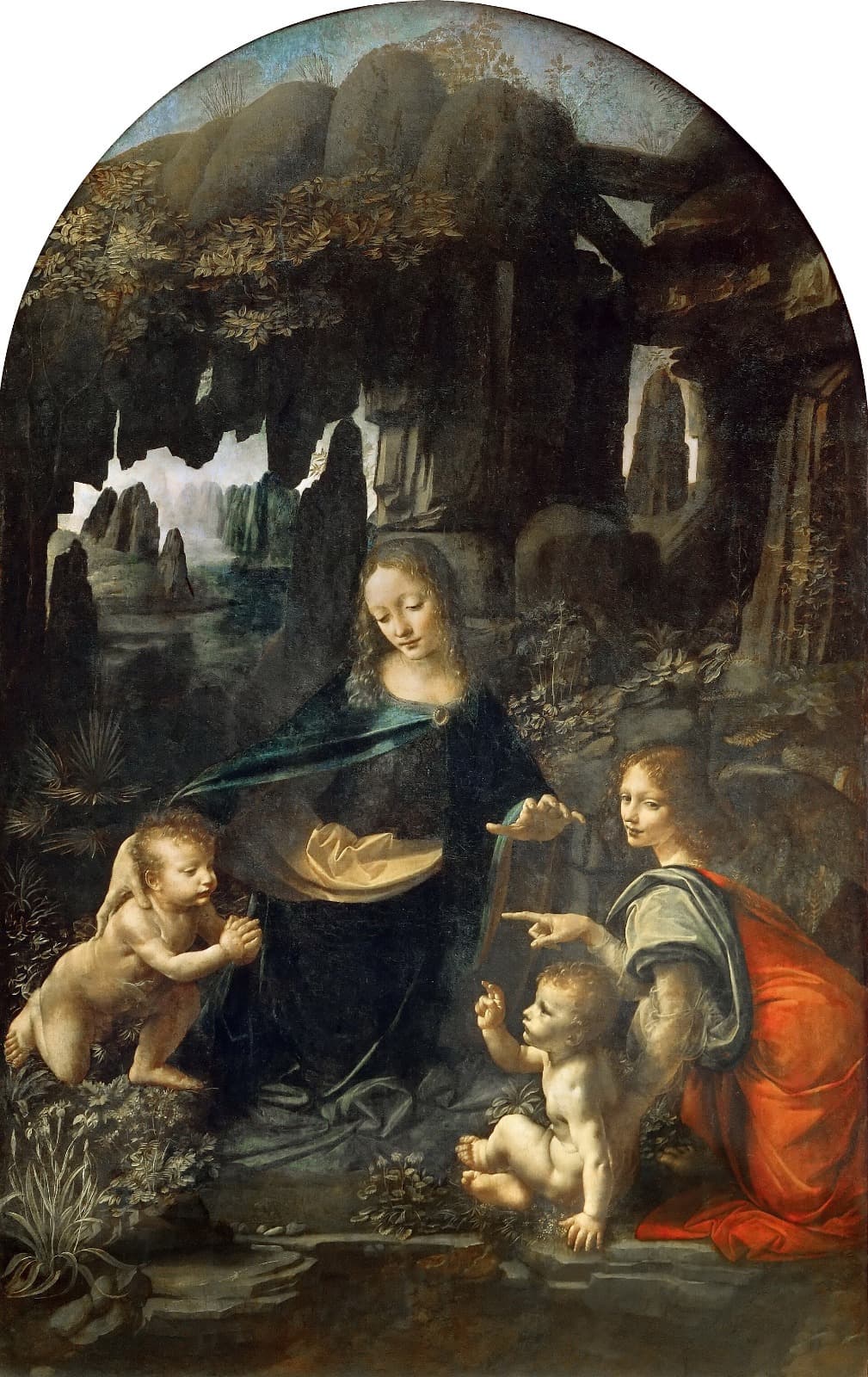
Leonardo painted this cave twice after falling out with the patrons. This is the earlier version, the one that stayed in France.
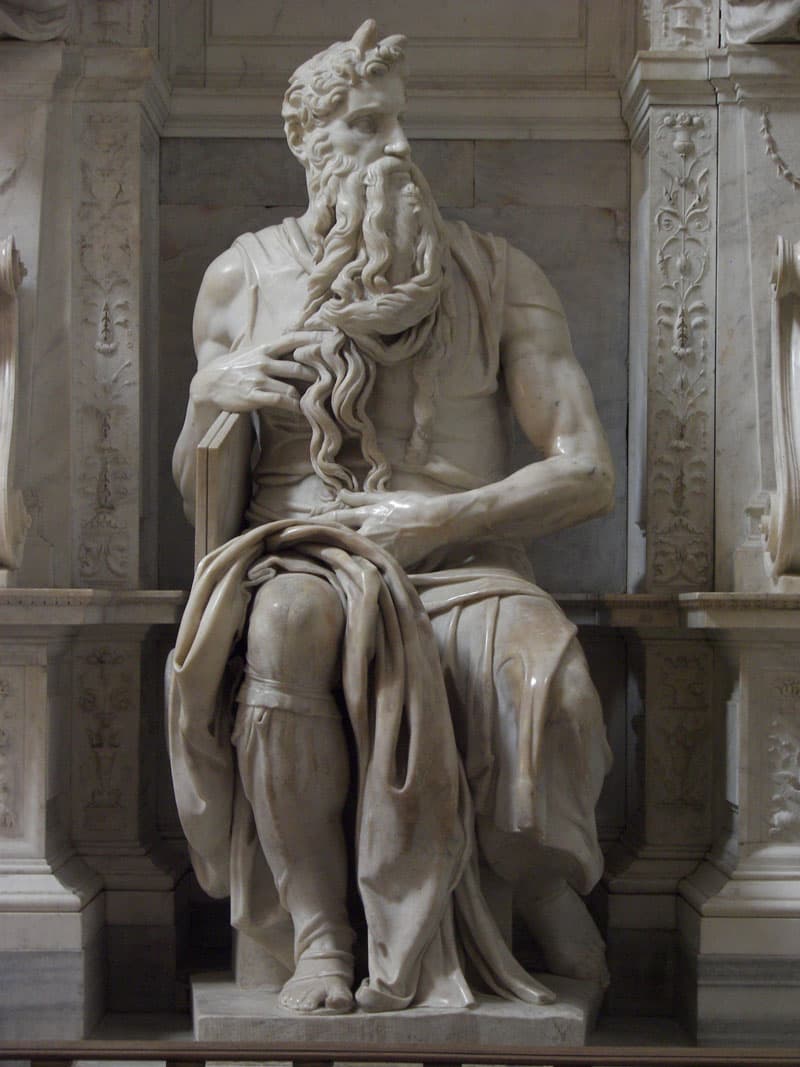
The horns come from an old mistranslation of the Hebrew for rays of light. He was meant as one figure among many on a papal tomb.

Skeletons herd the living into a coffin-trap while a king clutches his gold and two lovers play music at the corner, not yet looking up.

No cross, no ground, no sky, just a spiral of mourners in acid pink and sea-green. Florentine Mannerism starts here.

Van Eyck spared the old canon nothing: the stubble, the swollen hands, the spectacles. His armored saint mirrors the whole room in miniature.

Twelve meters of wall where the whole business of execution goes on at once, one thief still being hauled upright at the side.
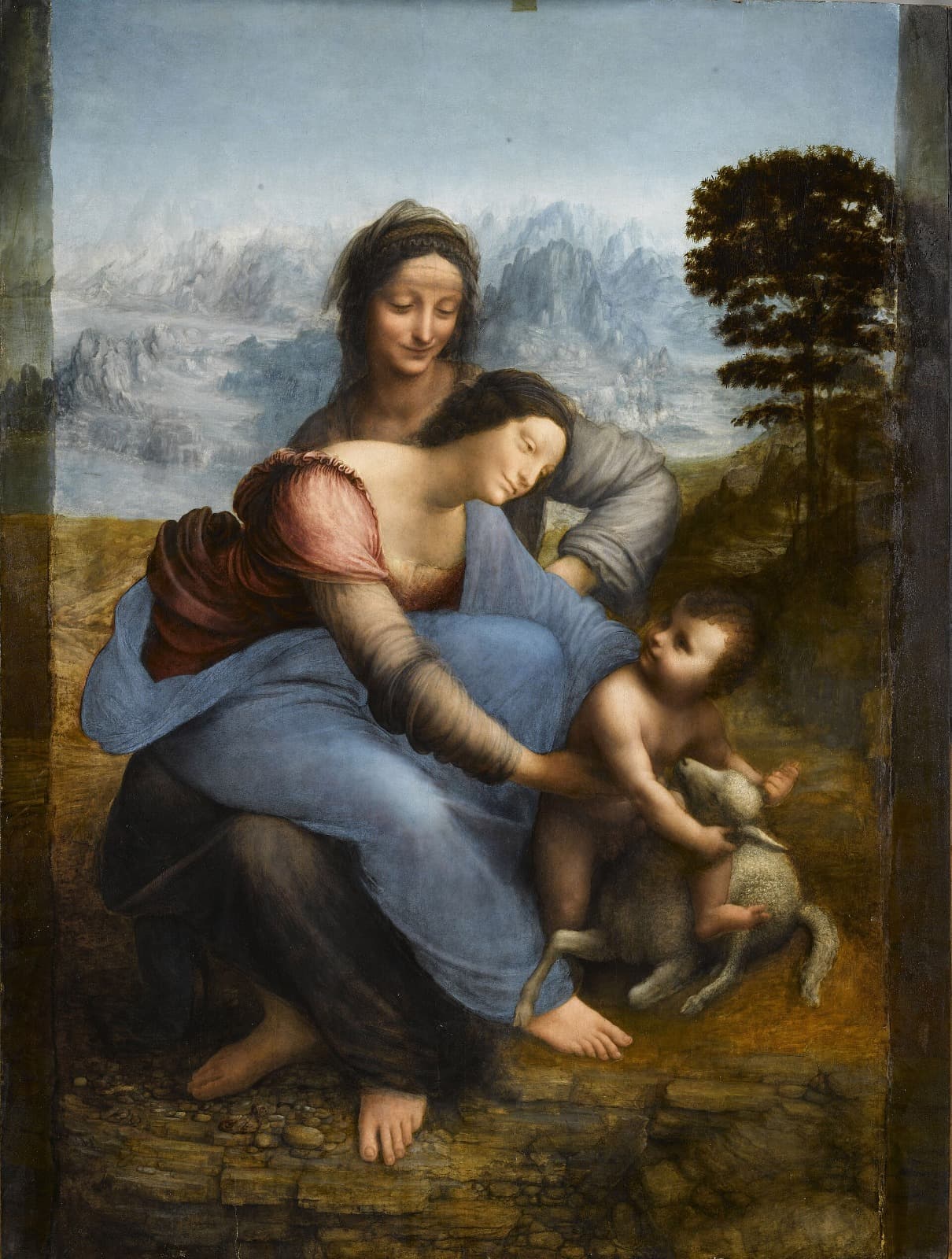
Three generations nest into one shifting pyramid, and Leonardo kept reworking it for years without ever calling it finished.
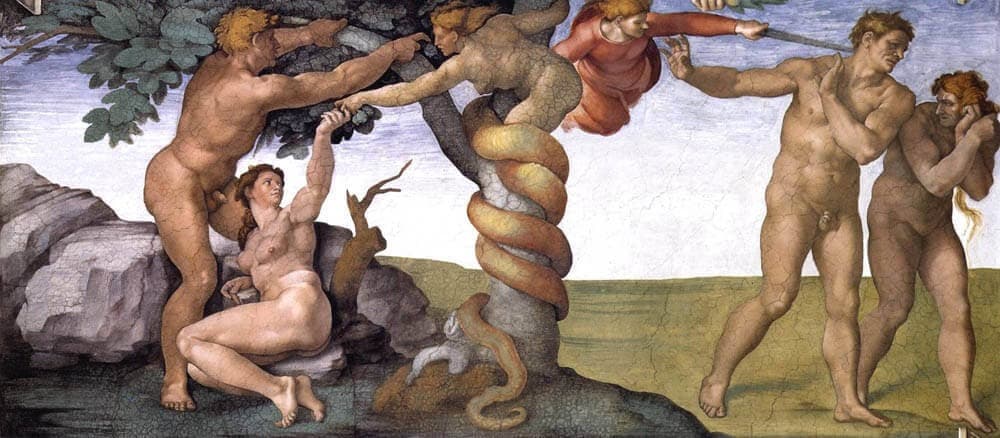
Two moments in one field: Adam and Eve reaching for the fruit, then driven out, suddenly old. The serpent has a woman's torso.
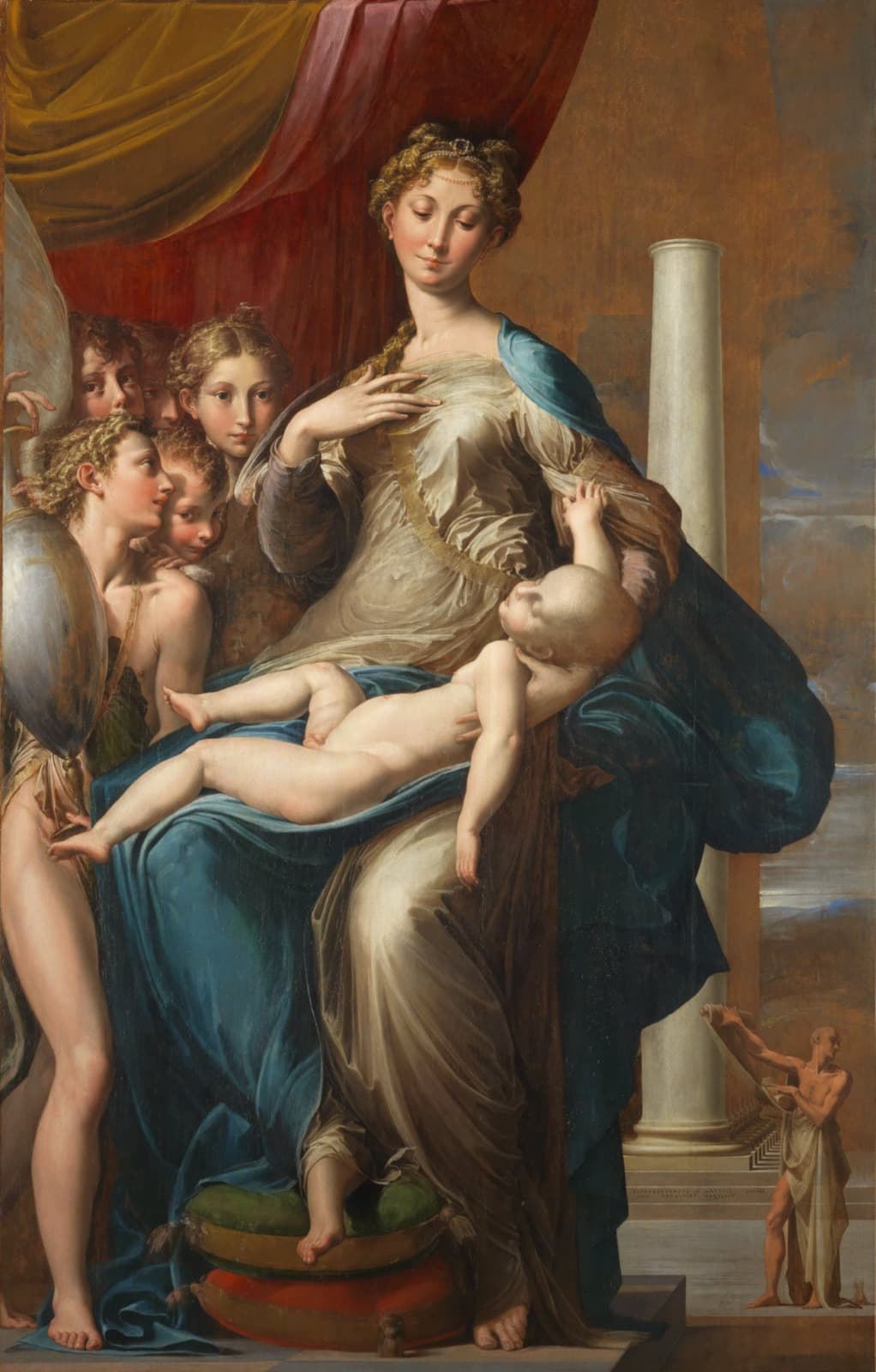
Every proportion is wrong on purpose, and a single outsized column rises behind for no reason. Parmigianino died before finishing it.

An ostrich egg hangs from the vault and pulls every sightline down. Federico is shown from the left because a tournament took his right eye.
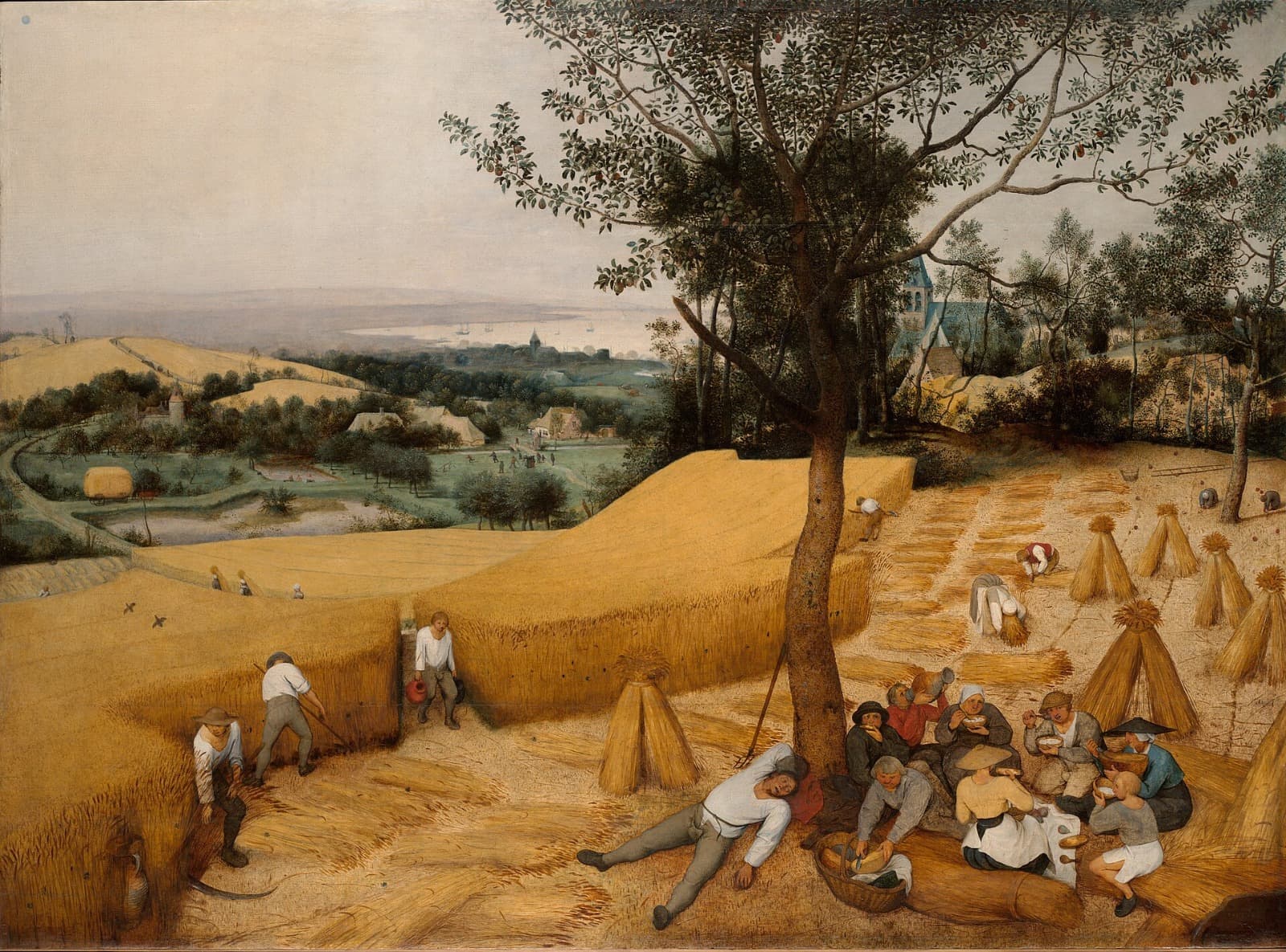
One man lies flat on his back with his mouth open while the others cut wheat. Late summer, from the same series of months.

A girl with a reptile's body offers a honeycomb and Time pulls back a curtain. The cold puzzle was probably a gift for the French king.

Gabriel bows to Mary under the loggia while Adam and Eve are driven out of the garden at the left, the sin this undoes.

The saints share one continuous space instead of separate compartments, and the two kneeling physicians are the name-saints of the Medici who paid.

The wary, straight-on gaze is what a painter sees in a mirror, which is why this is probably van Eyck looking at himself.

The table runs off on a steep diagonal into a smoky hall where servants clear plates and the lamp smoke thickens into angels.

The tower is already leaning as it goes up, and Bruegel drew the cranes and ramps in enough detail that you could nearly build it.
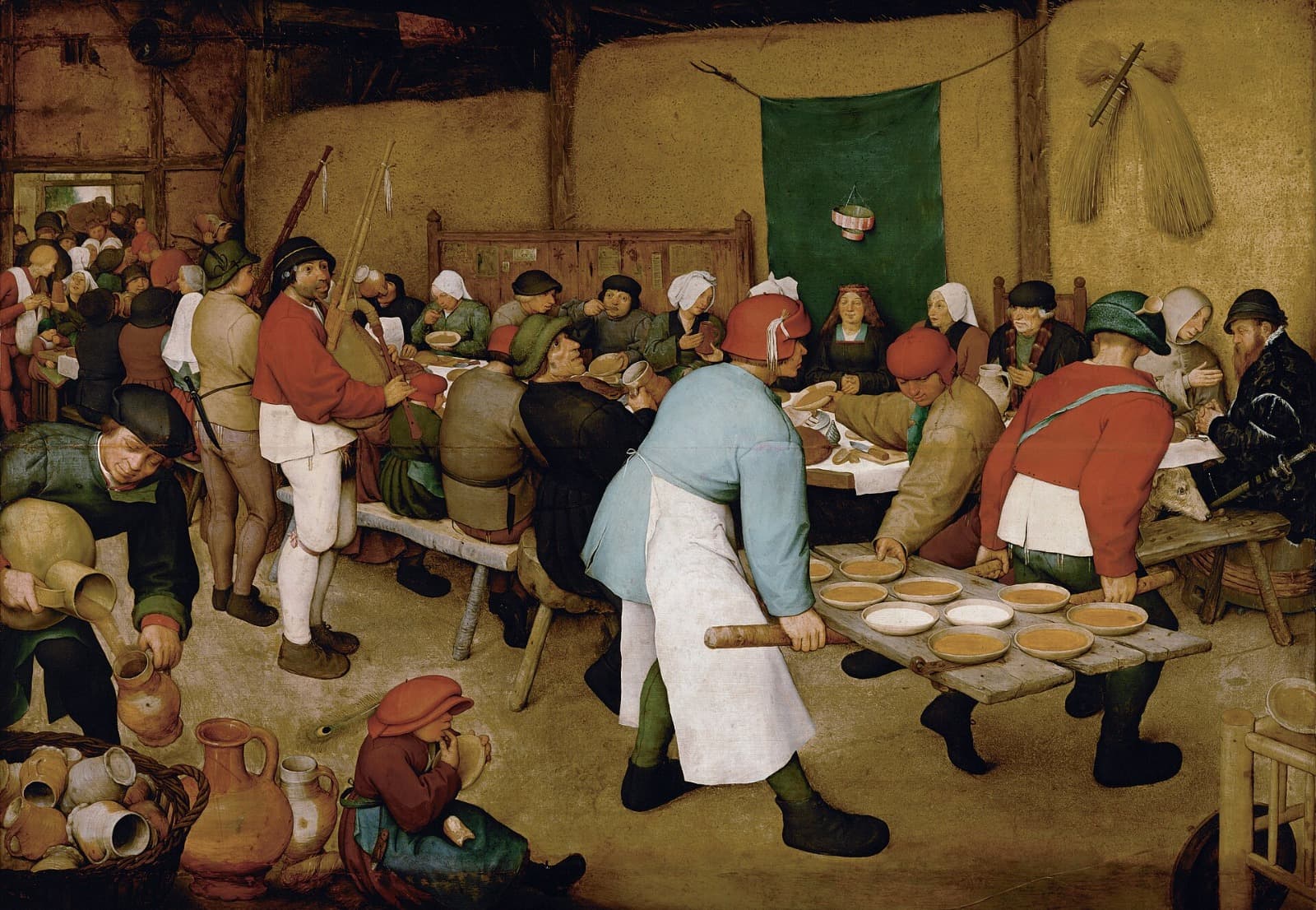
Two men carry the porridge in on an unhinged door, the bagpiper eyes it hungrily, and the bride sits idle under her paper crown.
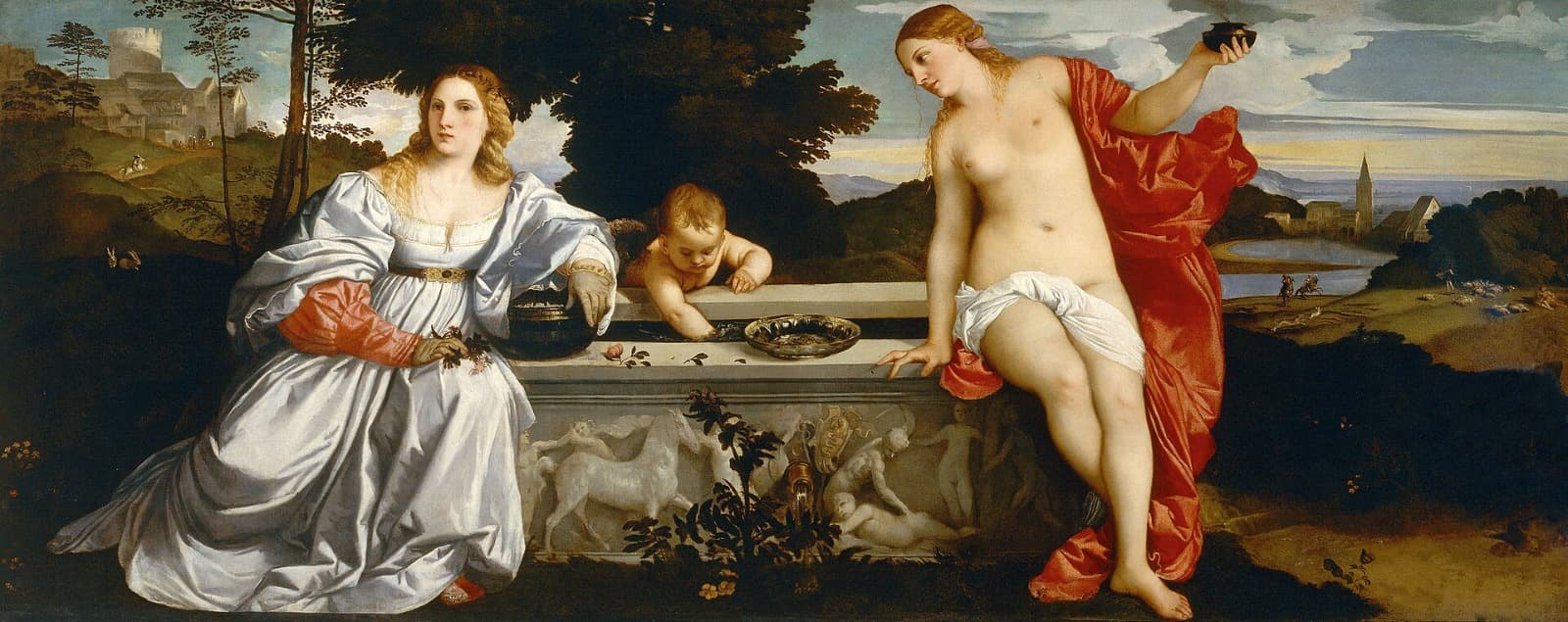
Two women sit at either end of a sarcophagus full of water, and it is the naked one who stands for sacred love.

Bellini painted the brocade thread by thread and turned the official portrait from a profile on a coin into a man met face to face.

A corpse in a box barely wider than itself, with no hint of resurrection. Dostoevsky saw it in Basel and said it could destroy faith.