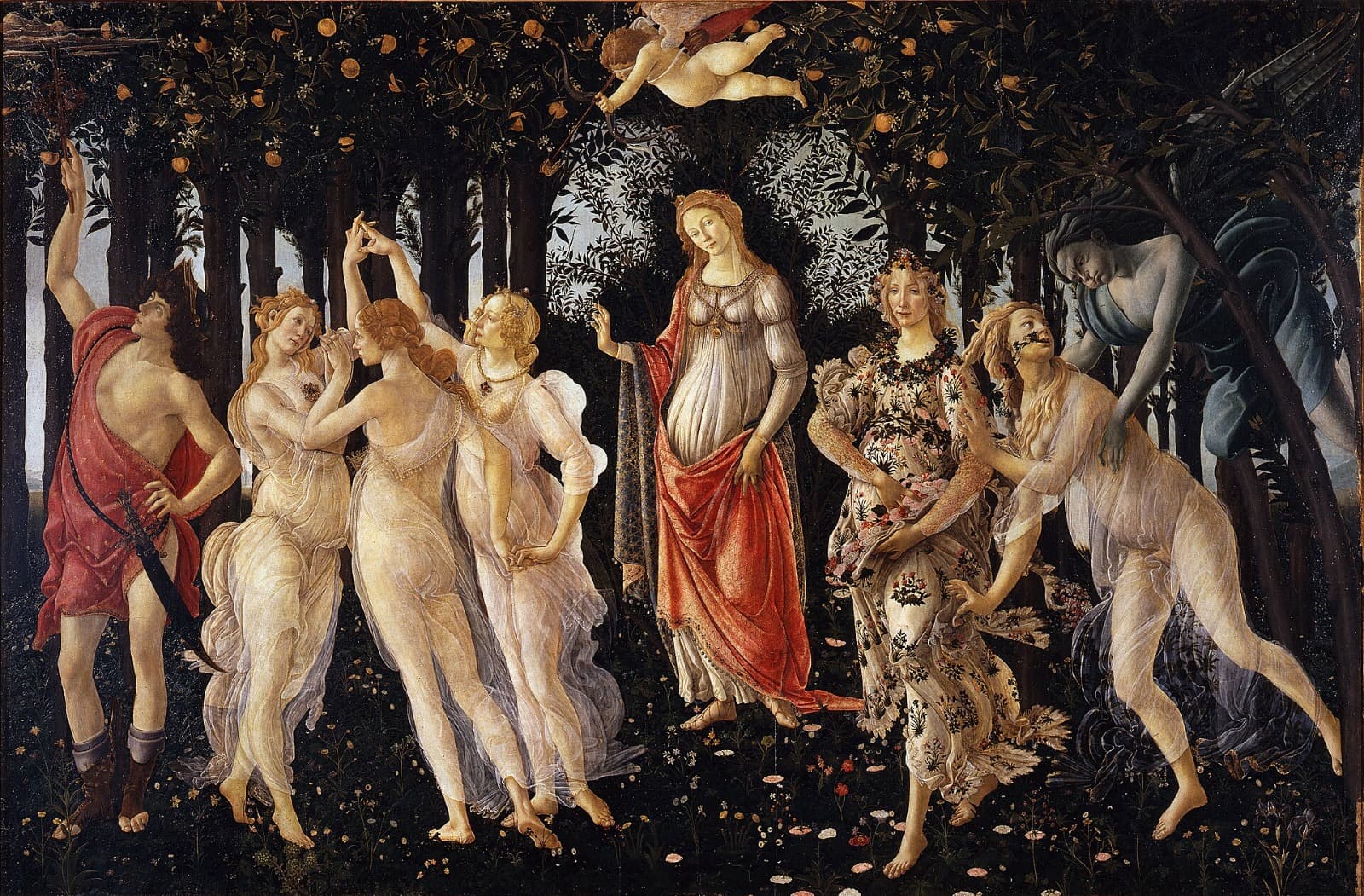
Primavera
1482 · Uffizi Gallery, Florence
Venus stands in an orange grove while the Graces dance and spring arrives at her right. The meadow holds hundreds of identifiable plants.
★ 9.8
 skopia
Venus stands in an orange grove while the Graces dance and spring arrives at her right. The meadow holds hundreds of identifiable plants.

Venus arrives on a scallop shell in a fall of roses, painted on canvas at a time when almost everyone still worked on panel.
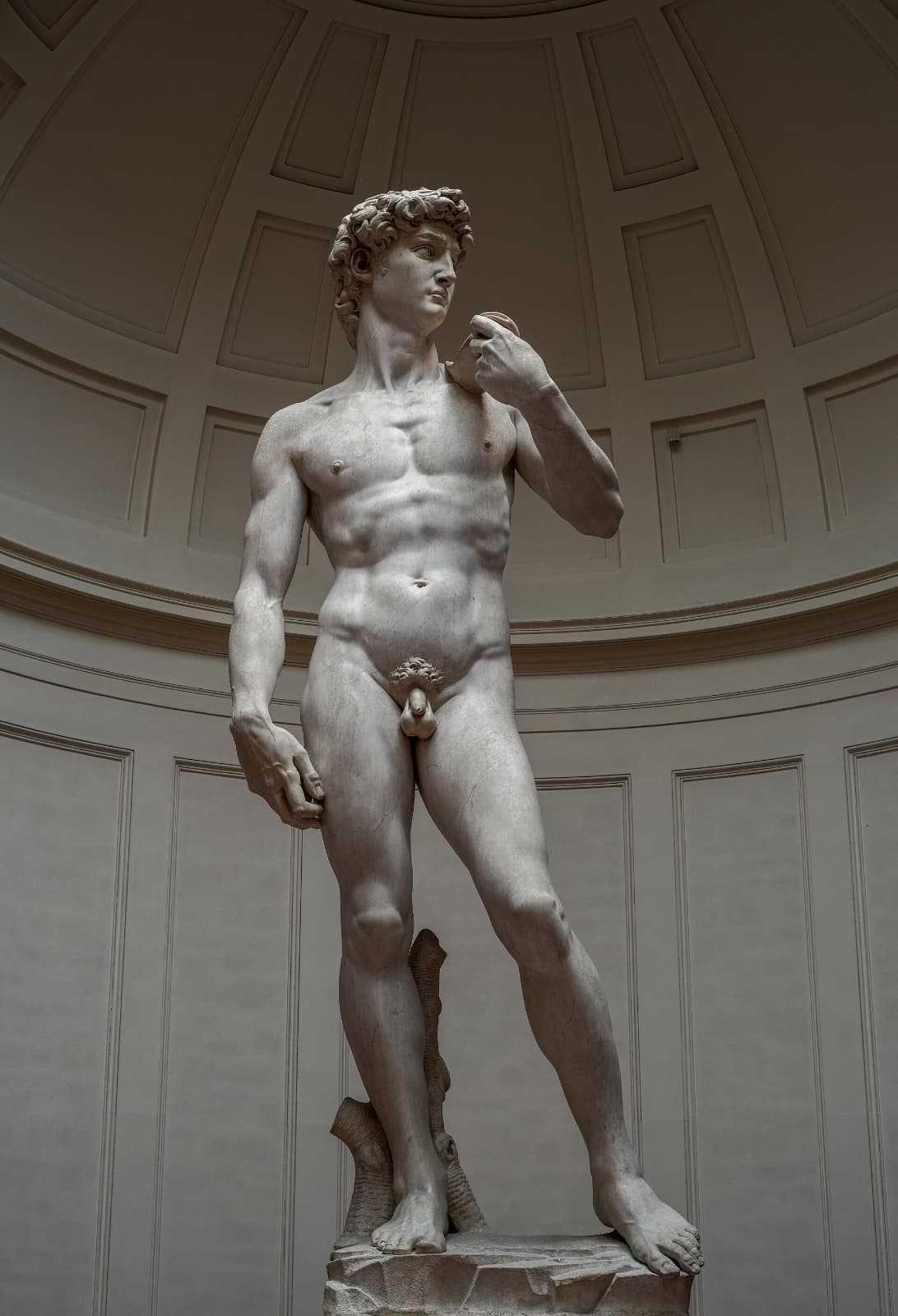
The marble block had been abandoned as flawed before Michelangelo took it, and he carved a boy who is watching Goliath, not beating him.
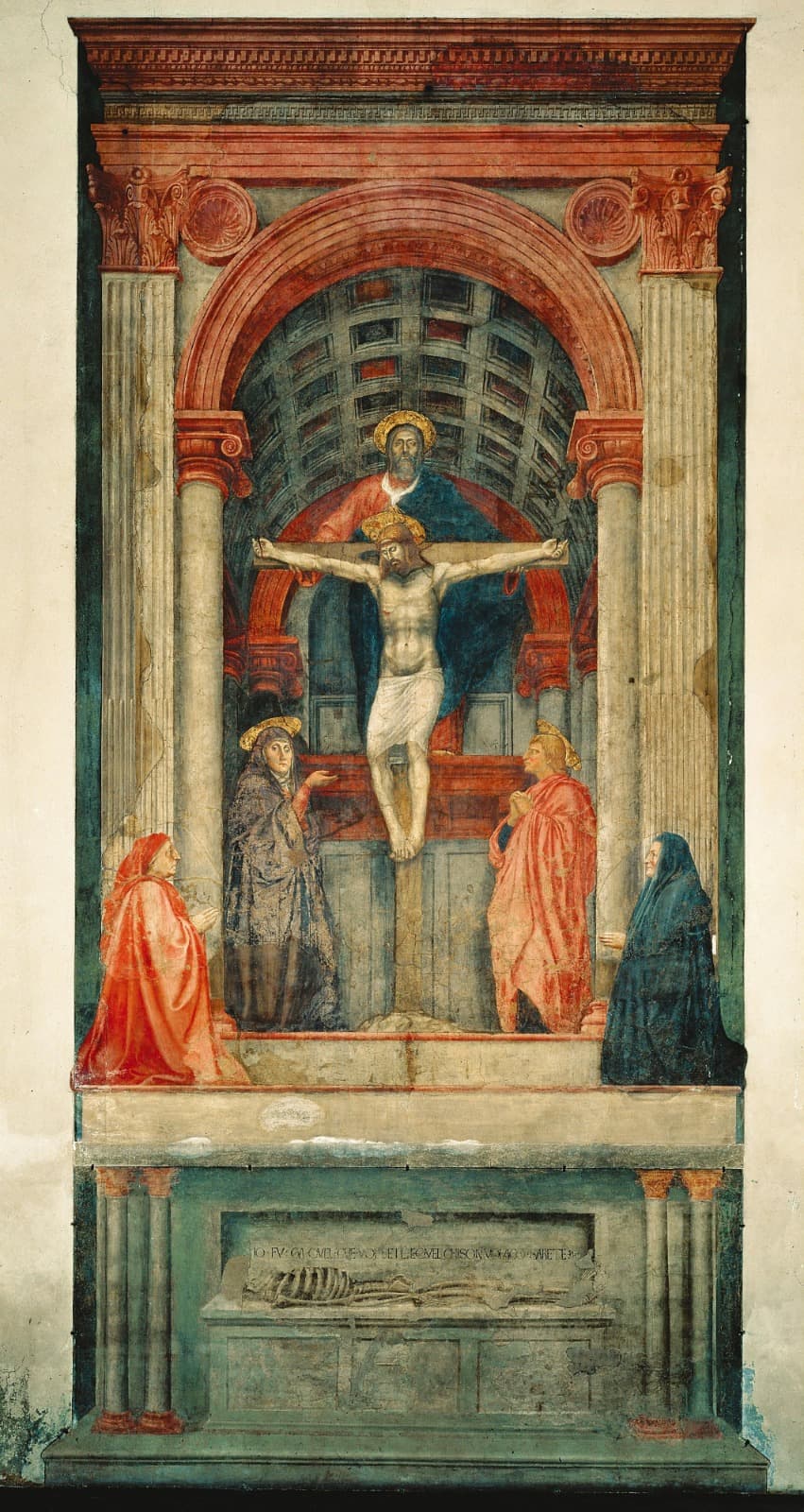
The earliest surviving painting built on a single vanishing point, worked out on a wall of Santa Maria Novella with Brunelleschi's help.
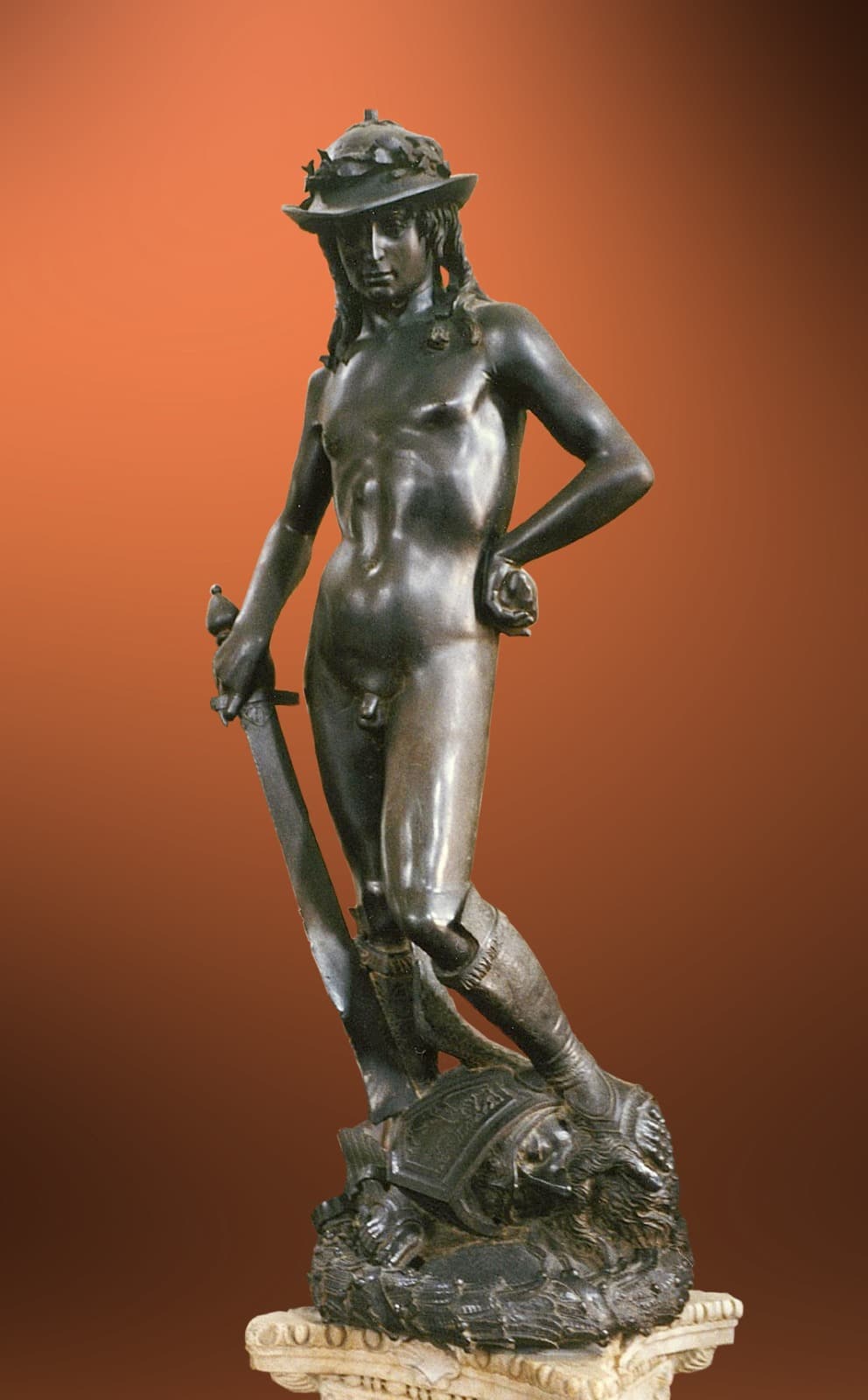
A naked boy in boots and a laurel hat rests one foot on Goliath's head, the first freestanding bronze nude since antiquity.

Judith and her maid hold Holofernes down together and work the blade through his throat. Artemisia painted it a decade after her rape trial.
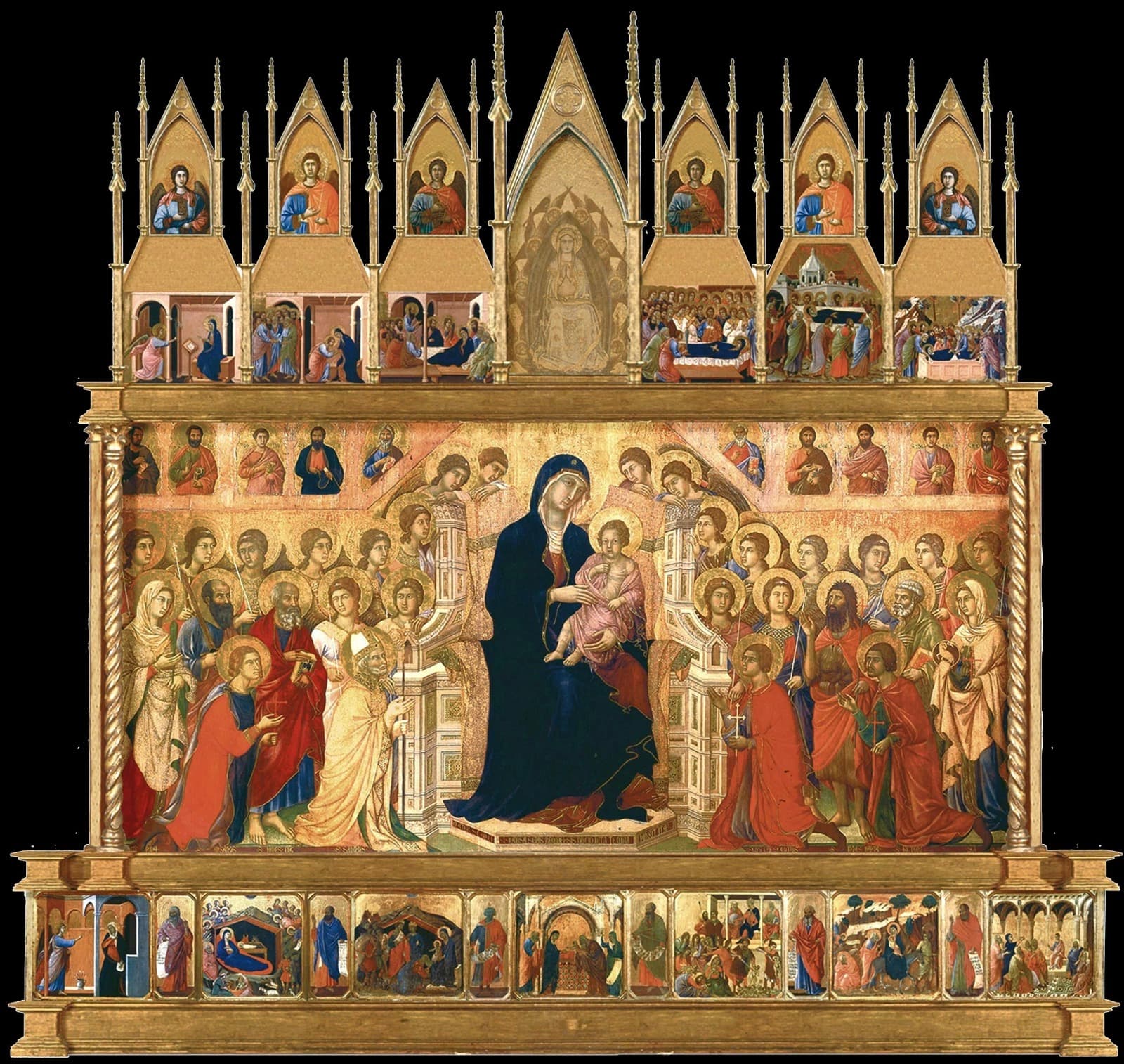
When Duccio finished it in 1311 the whole of Siena walked it to the cathedral in procession, with the bells going the entire way.
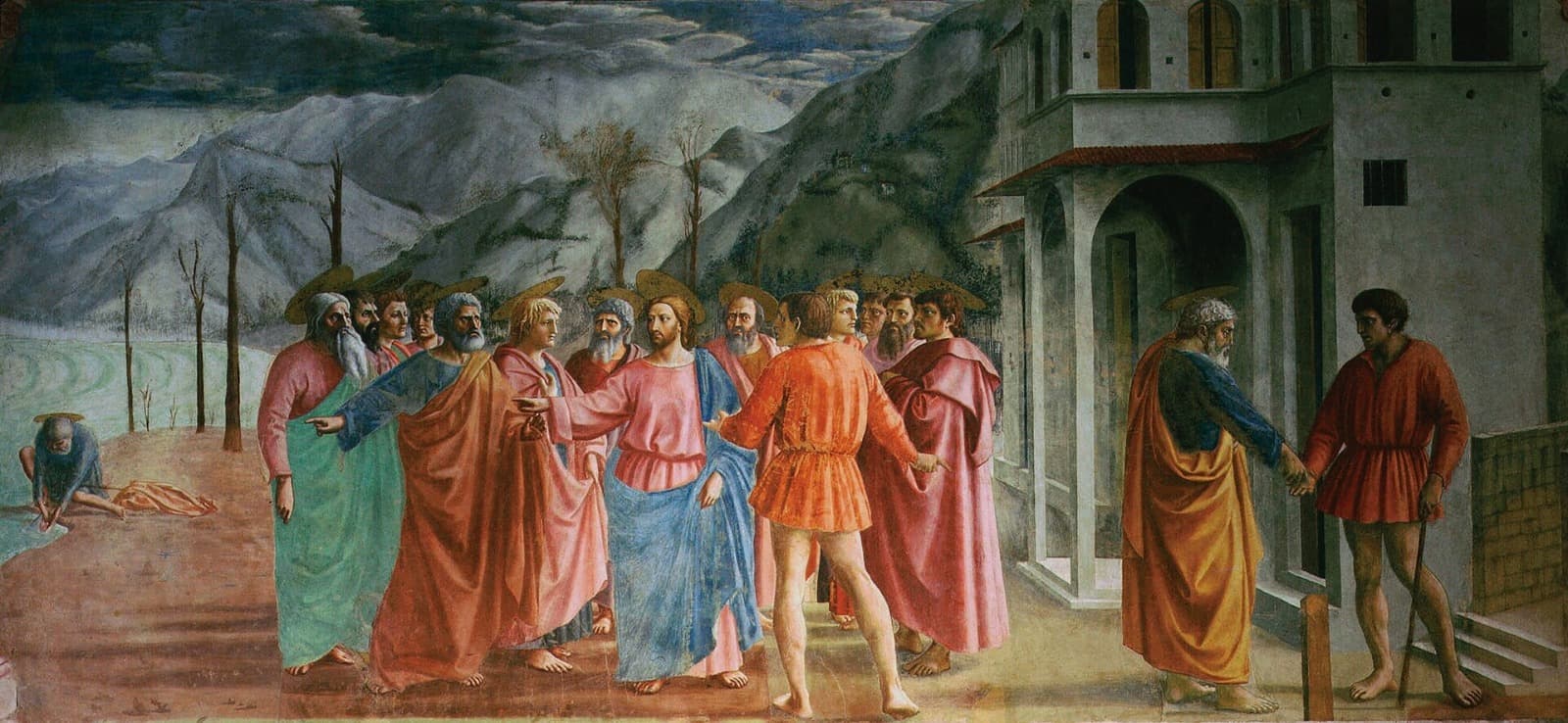
Three moments run in a single frame: the tax demanded, Peter pulling the coin from a fish, and Peter paying up at the right.
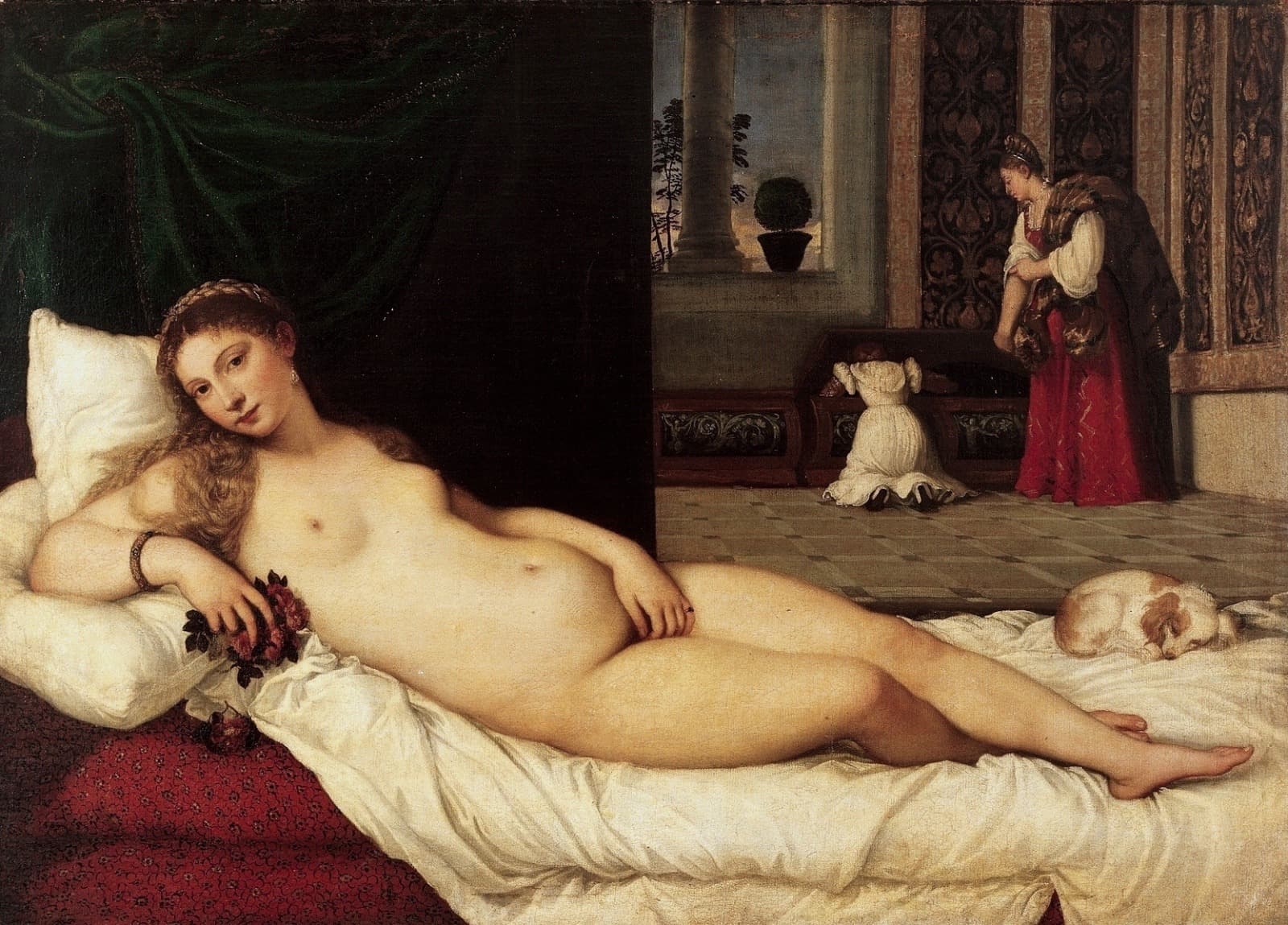
Titian woke Giorgione's sleeping Venus, brought her indoors, and had her look straight at us, probably to mark a wedding in Urbino.
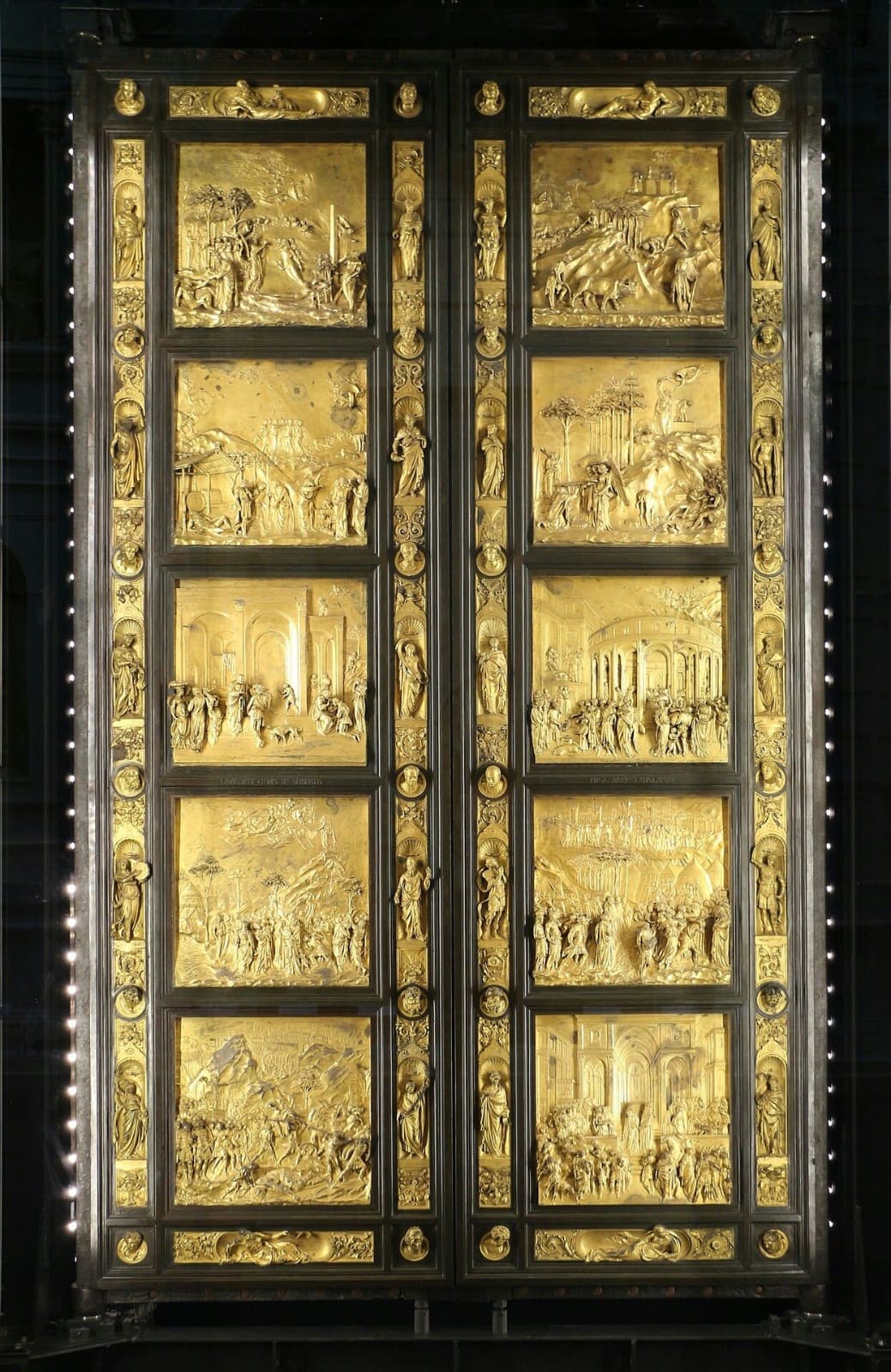
Ghiberti gave twenty-seven years to these doors, and the name comes from Michelangelo, who is supposed to have said they were fit for paradise.

Eve throws back her head and howls while Adam hides his face, the bodies heavy and casting real shadows. Michelangelo came to study it.
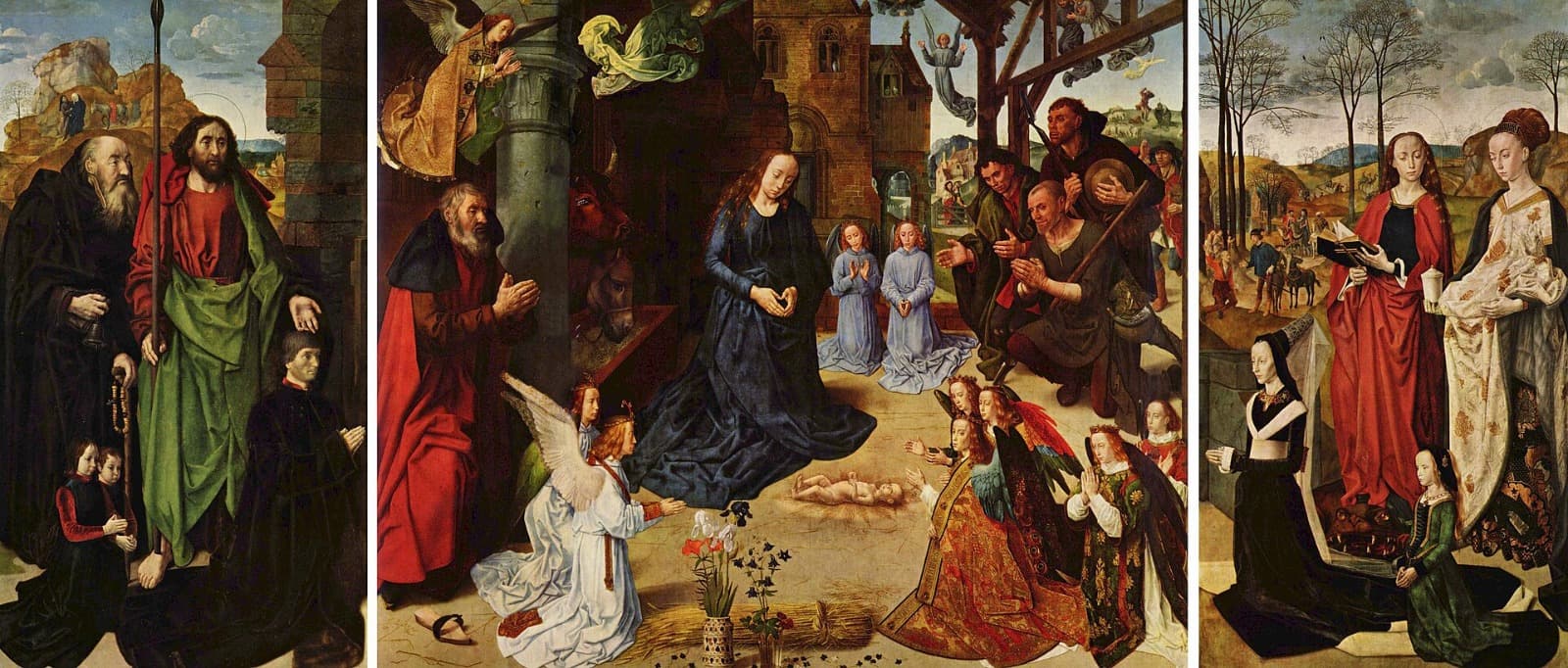
Three weathered shepherds crowd in to look at the newborn, and when the triptych reached Florence from Bruges the local painters took note.

The trees behind Christ turn from bare to leafing across the panel. In 1944 a British officer held his guns rather than shell the town.
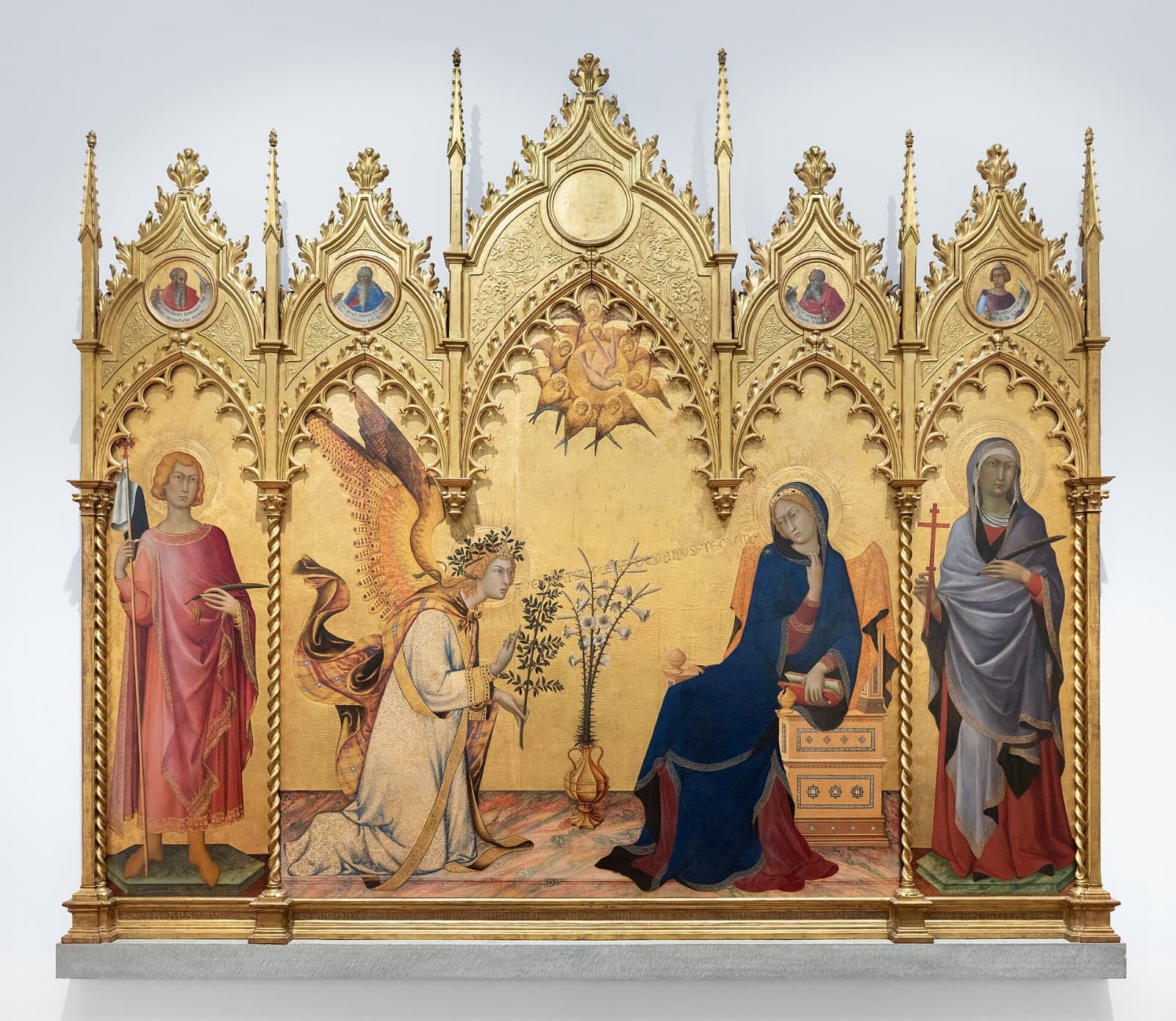
Gabriel's greeting runs toward Mary in raised gold letters and she twists away from it, her thumb still caught in her book.

Fra Angelico frescoed it at the top of the dormitory stairs, so the friars met it every time they climbed to their cells.

The kings arrive with a retinue of horses, hounds and a leopard, every surface tooled in gold for one of Florence's richest families.

No cross, no ground, no sky, just a spiral of mourners in acid pink and sea-green. Florentine Mannerism starts here.
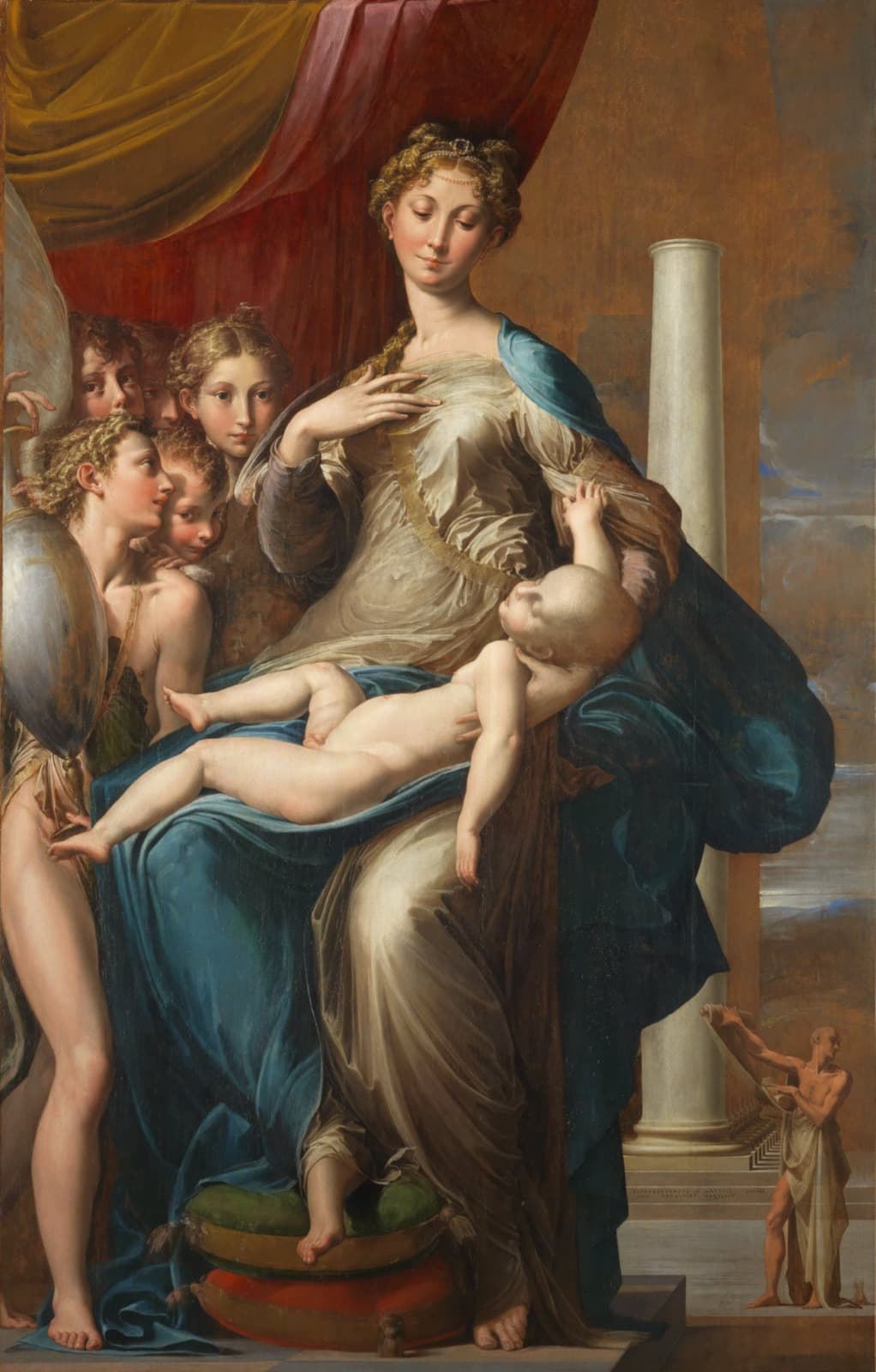
Every proportion is wrong on purpose, and a single outsized column rises behind for no reason. Parmigianino died before finishing it.
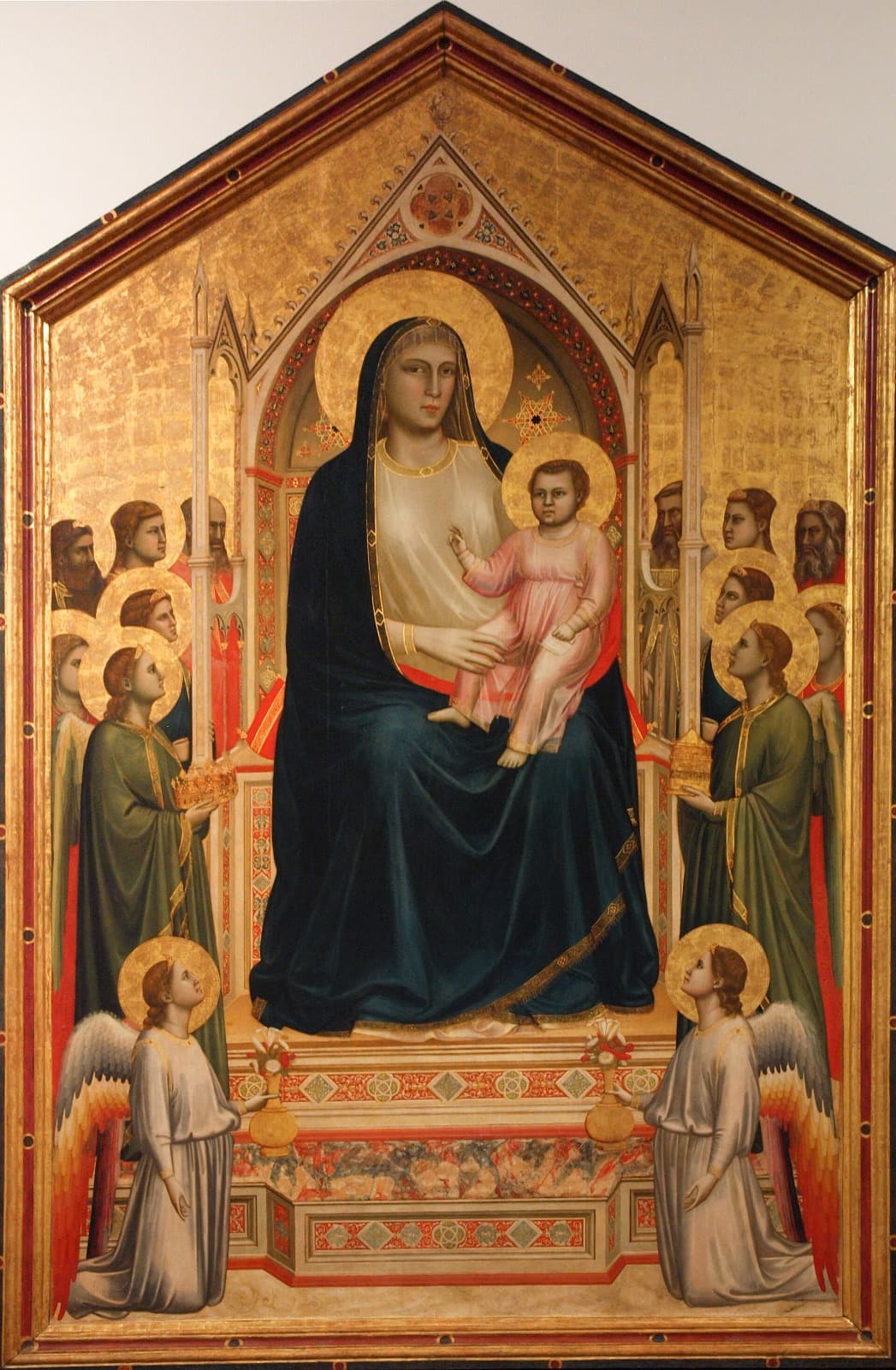
Where Cimabue and Duccio floated their Madonnas on gold, Giotto gave his weight, a real throne, and a body that presses through the cloth.

The saints share one continuous space instead of separate compartments, and the two kneeling physicians are the name-saints of the Medici who paid.
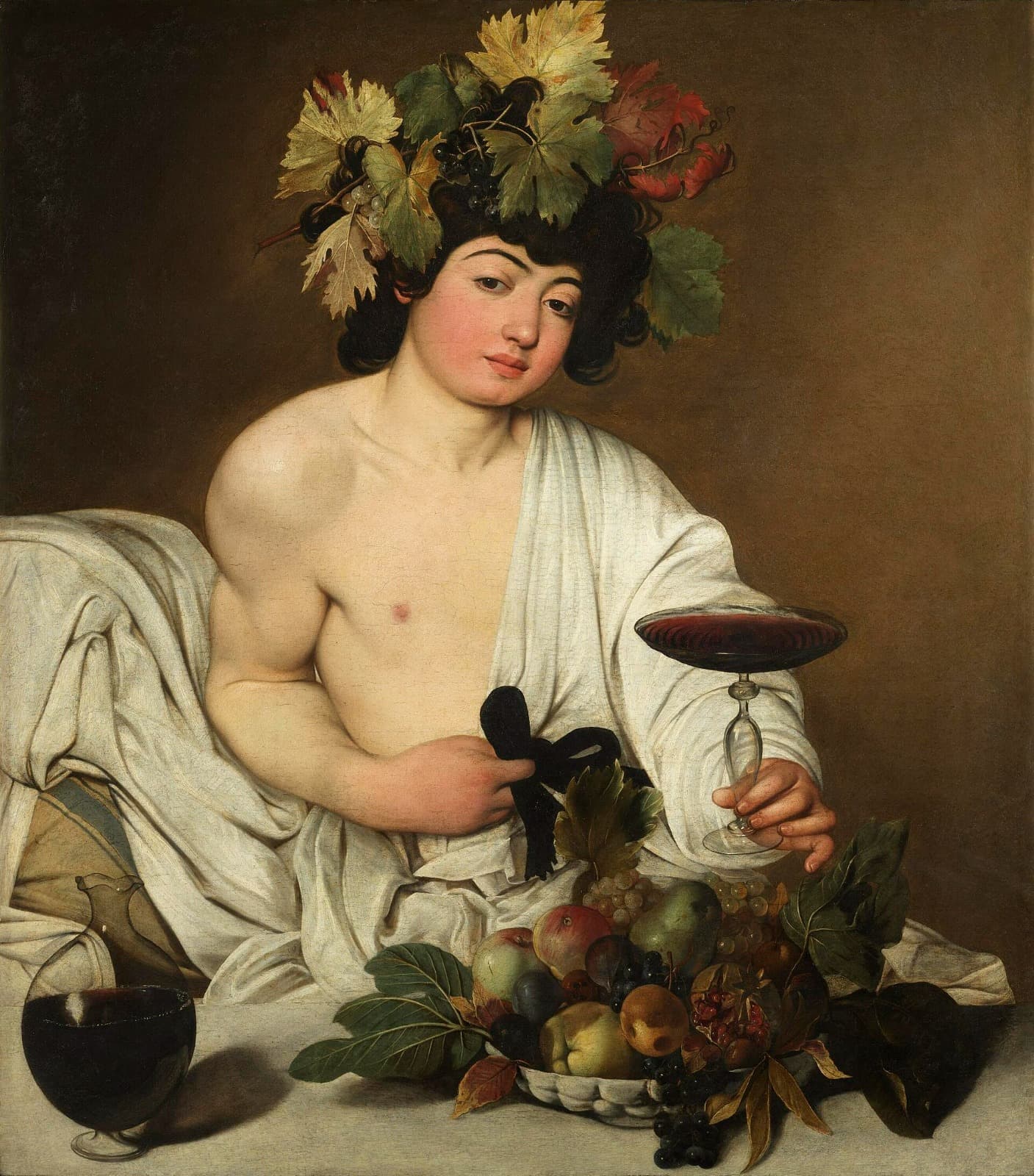
A real Roman boy dressed up as the wine god, heavy-lidded and slightly flushed, holding out a glass while the fruit beside him bruises.
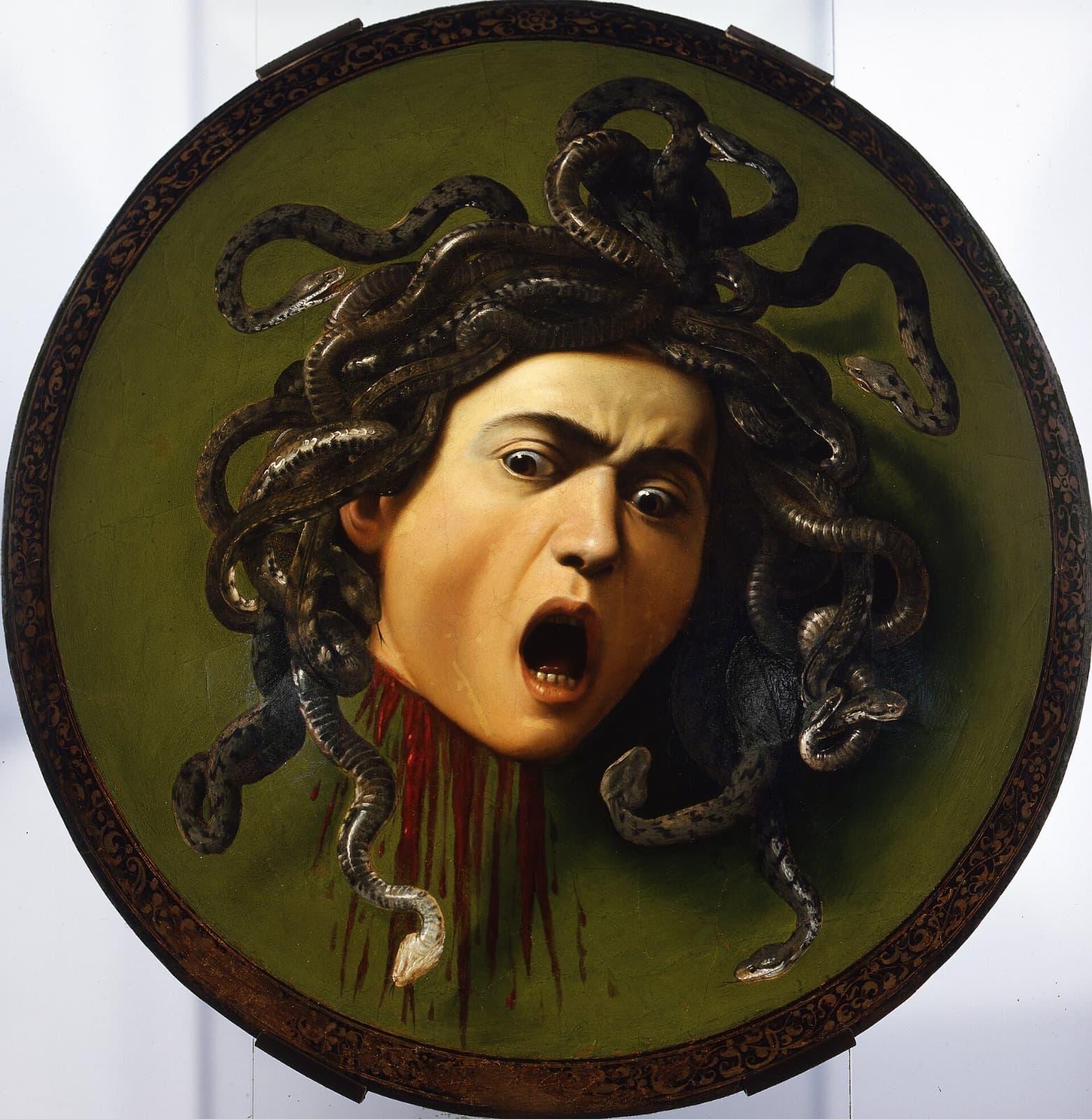
Painted on a convex parade shield, so the head bulges toward you at the exact instant of the scream. A showpiece gift for the Medici.
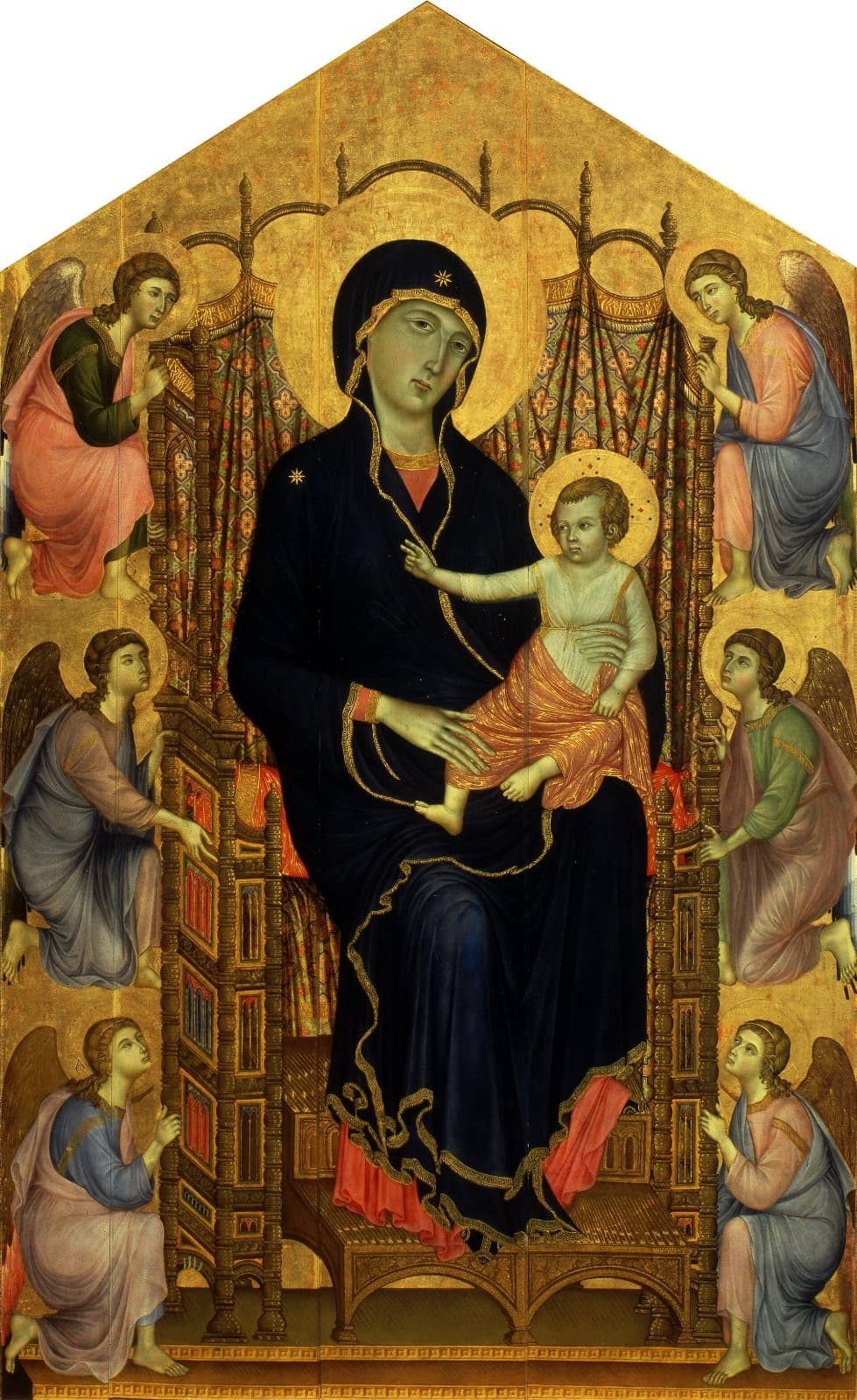
Four and a half meters tall, the largest panel painted in its century, with six angels kneeling to steady a throne that seems to float.
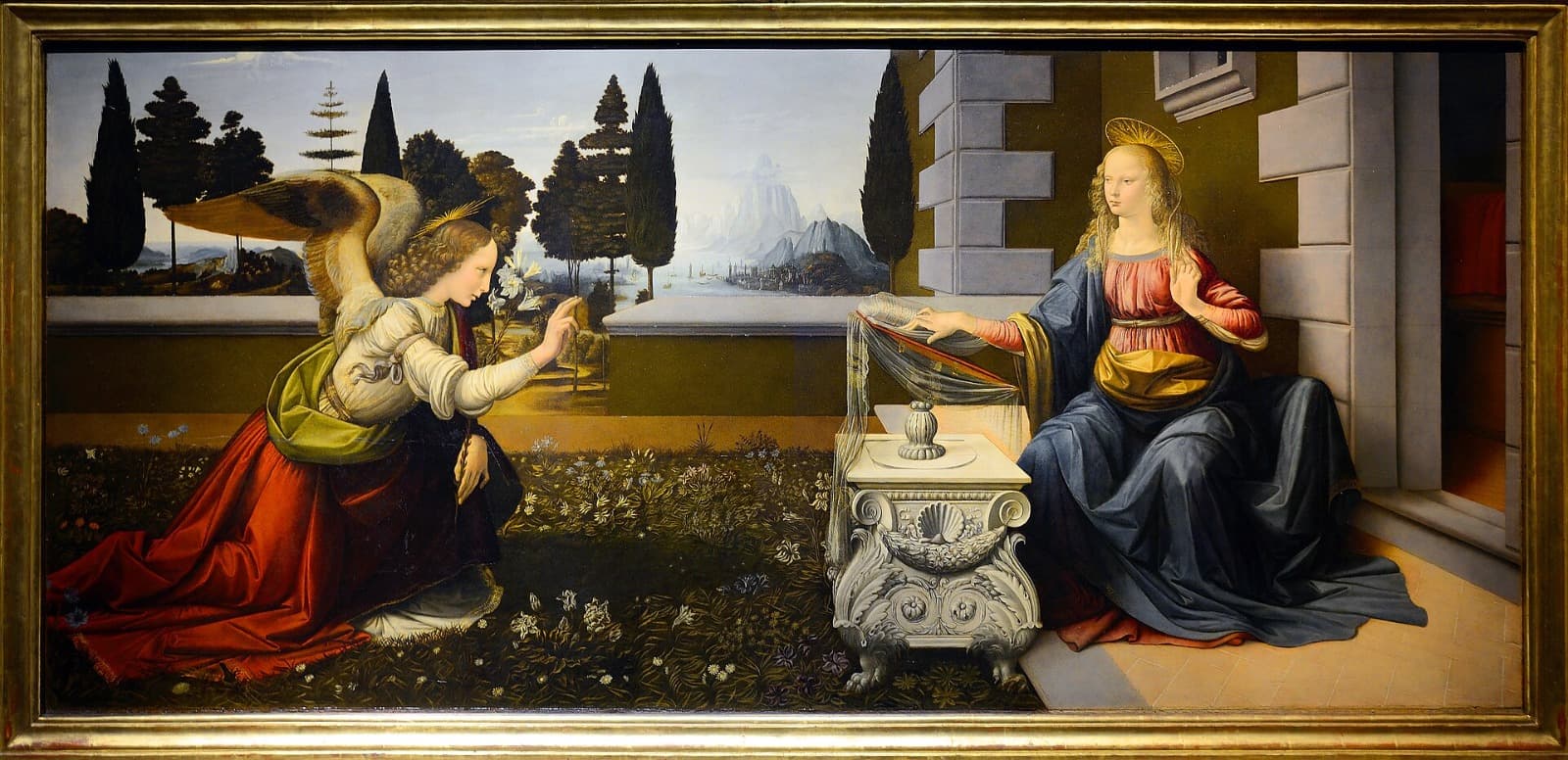
An early work, and Mary's right arm reaches further than an arm can. Gabriel's wings were studied from a real bird.

The central panel of three, with the Florentine commander charging in a gold-and-scarlet hat on a horse turned like a carousel figure.

An angel drops steeply from the corner and its light is the only light in the tent. One of the first true night scenes in painting.

The little demons carved on the pedestal were taken for harpies and gave the picture its name. Del Sarto was called the faultless painter.

The three kings are Medici, and the young man in the saffron cloak at the right, looking straight out at us, is Botticelli.

Michelangelo carved it for his own tomb, gave Nicodemus his own face, then took a hammer to it and broke off Christ's leg.
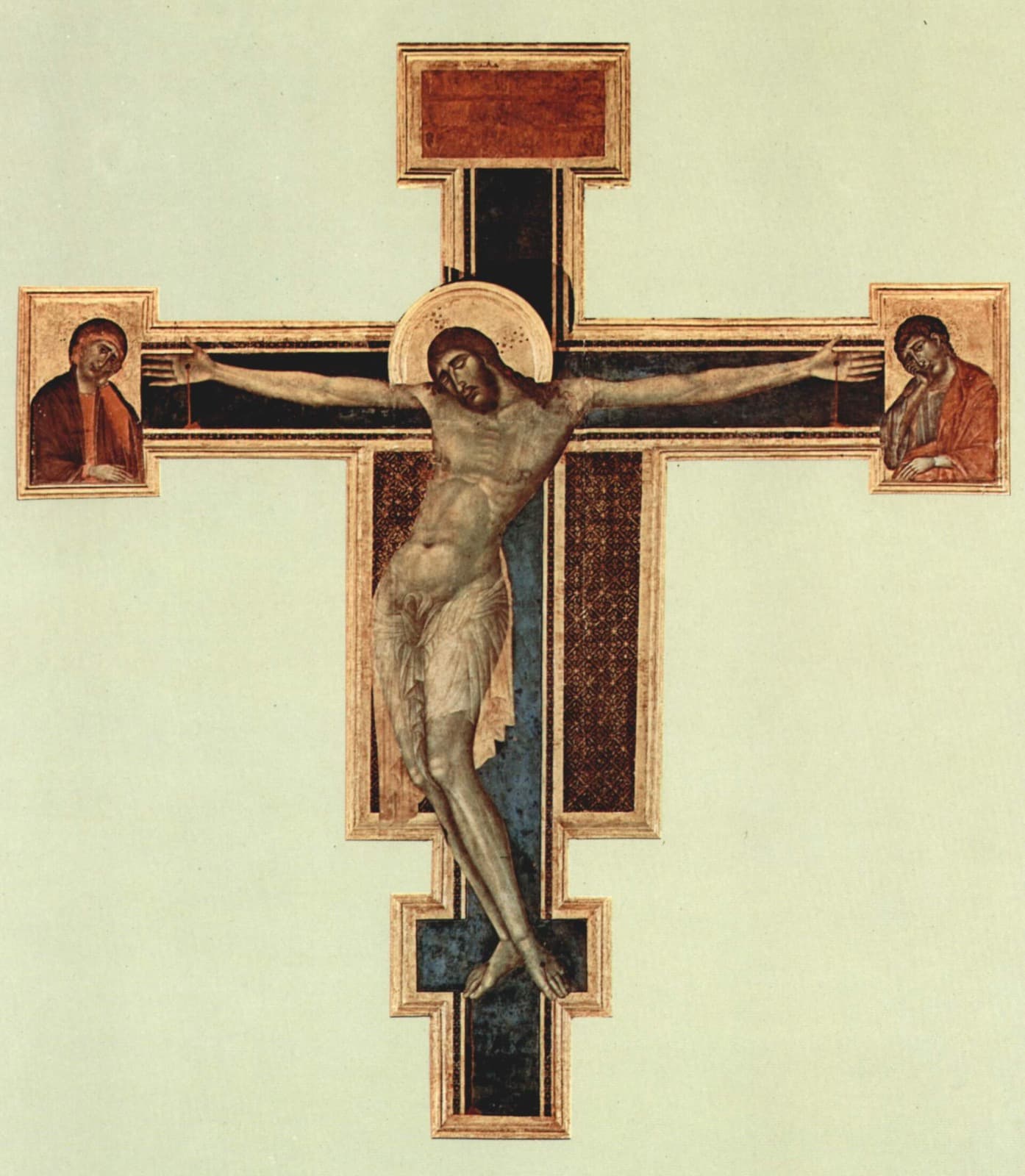
The Arno flood of 1966 stripped most of the paint off it, and the ruined cross became the emblem of the whole disaster.
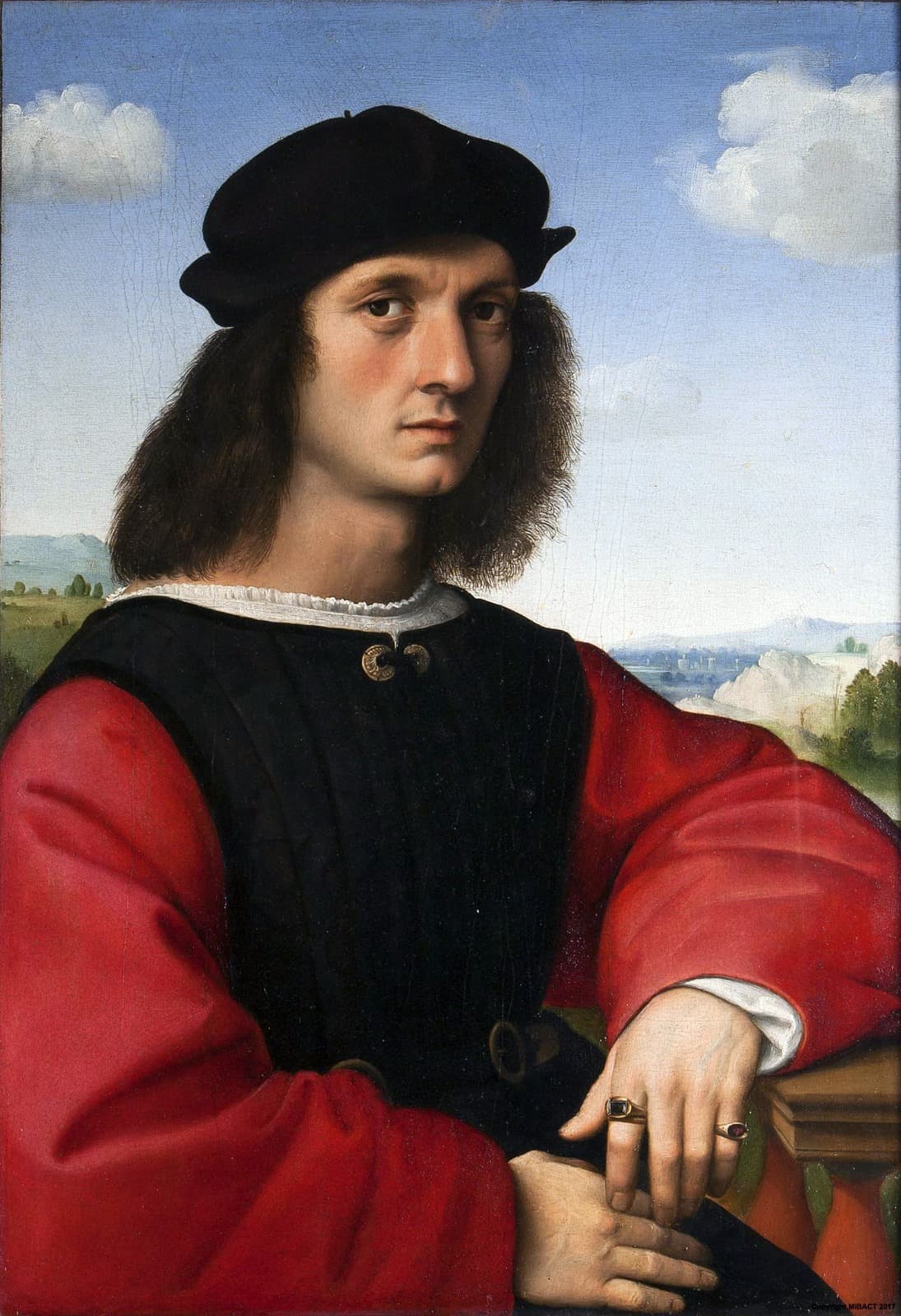
Raphael had just arrived in Florence and studied the Mona Lisa hard, then did the same pose in clear light instead of smoke.
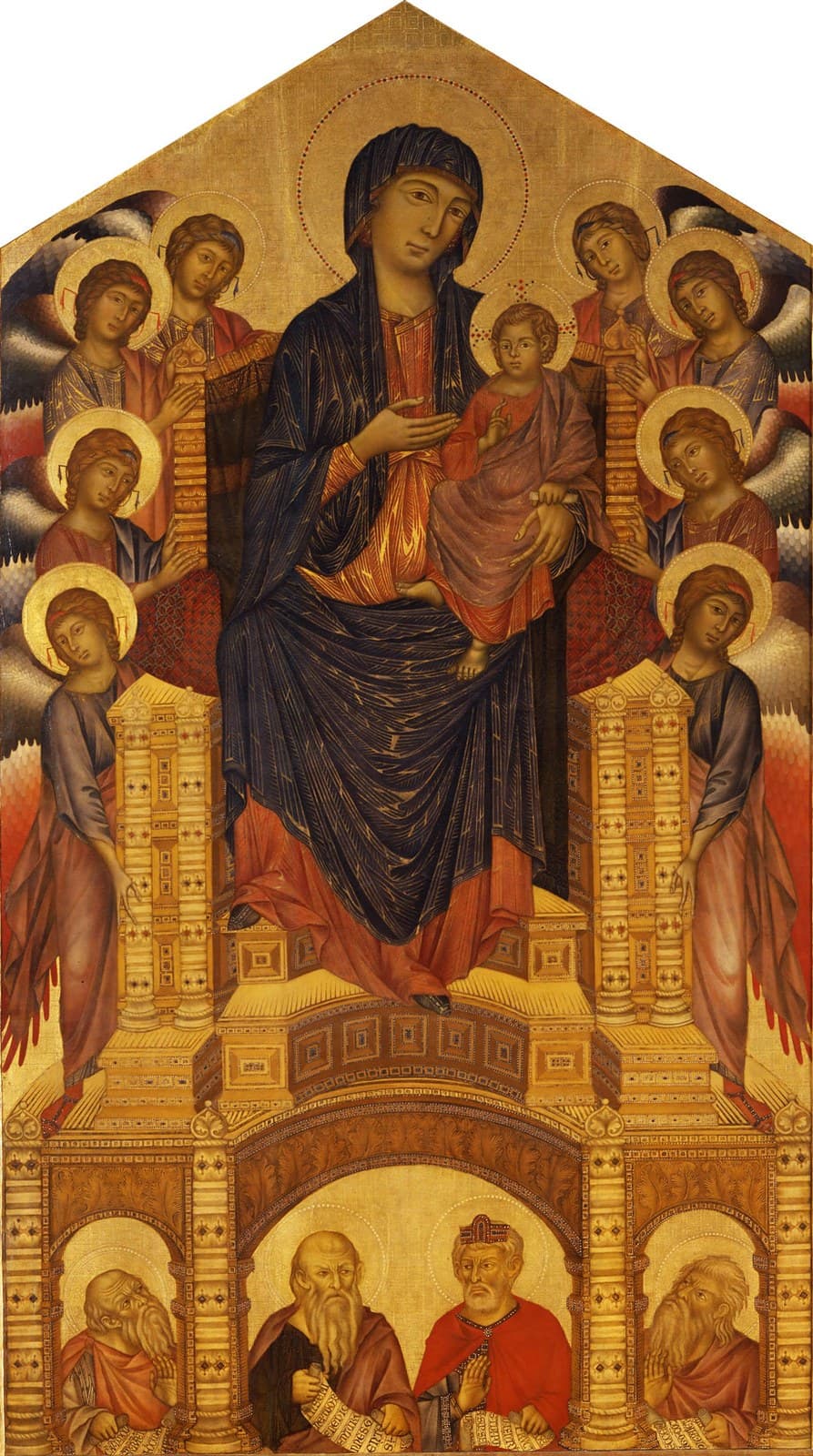
Four prophets peer from arches under the throne holding scrolls that foretell the Virgin Birth, and the throne is angled to suggest depth.
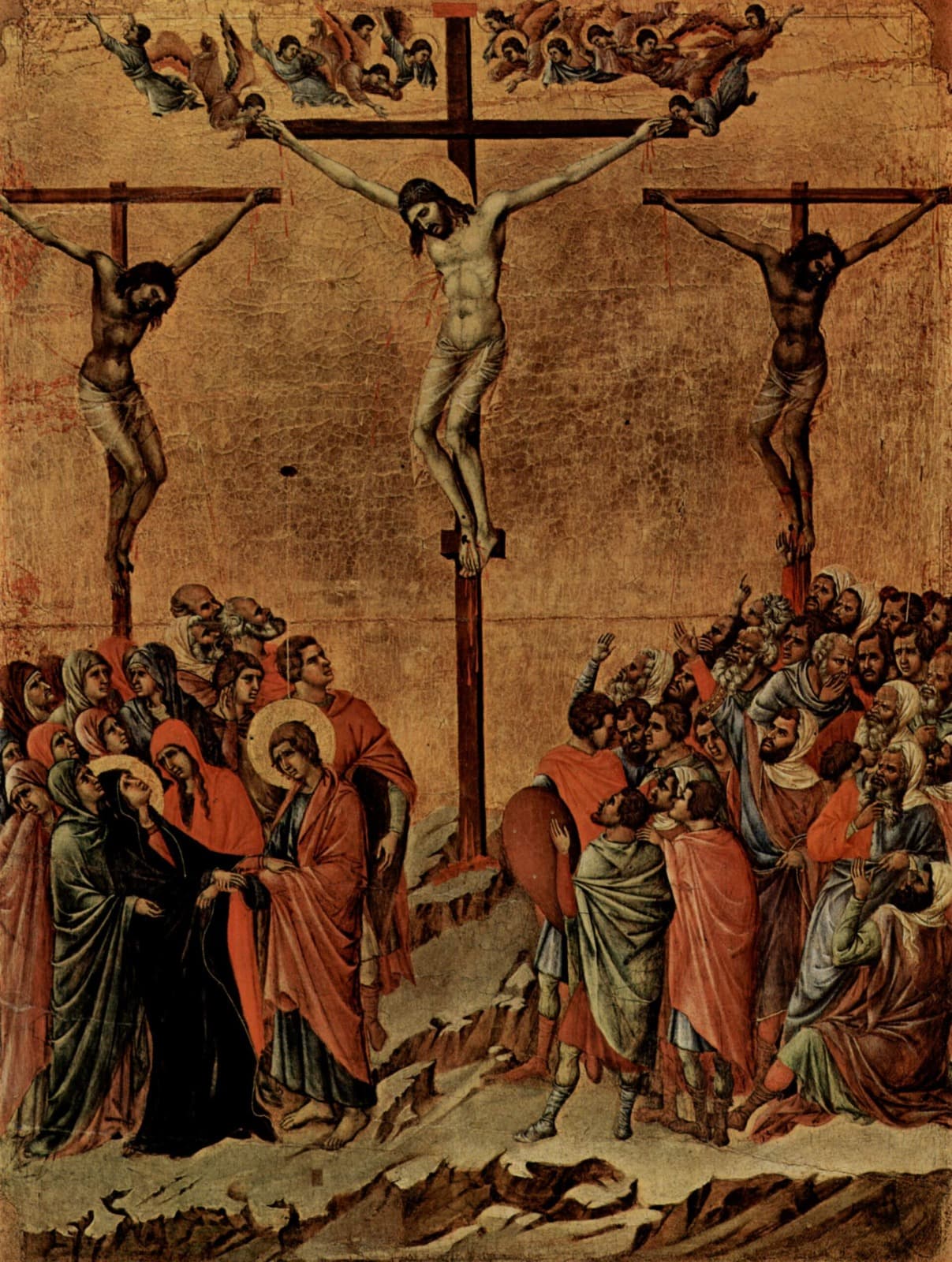
This is the largest scene on the back of the Maesta, the Virgin fainting on one side and the crowd arguing on the other.

Moses wades into a heap of falling nudes to drive off the shepherds, the limbs knotted almost into abstraction under a harsh light.
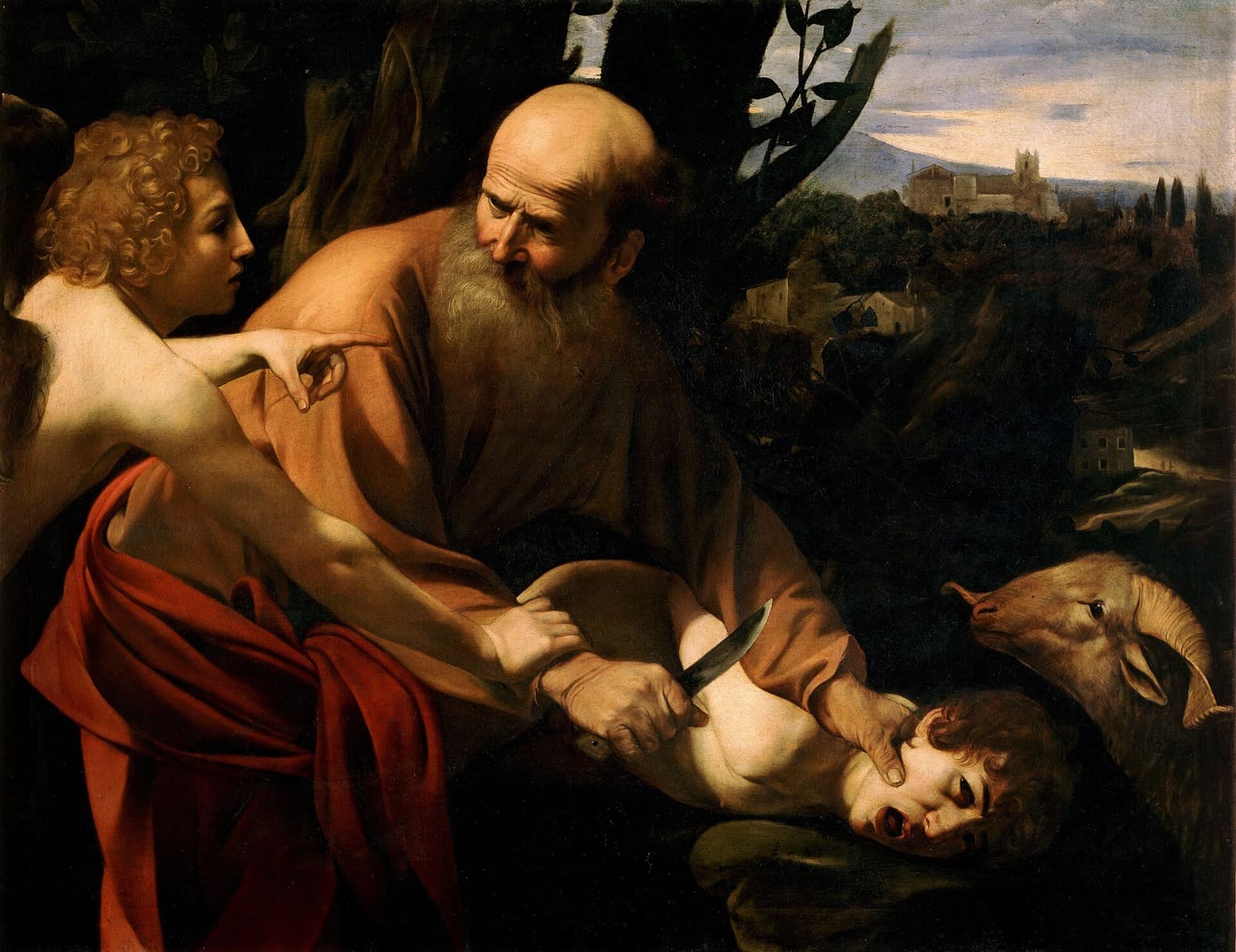
Isaac is shouting under his father's hand and the ram has already arrived at the right. Caravaggio gives the scene no ceremony whatsoever.
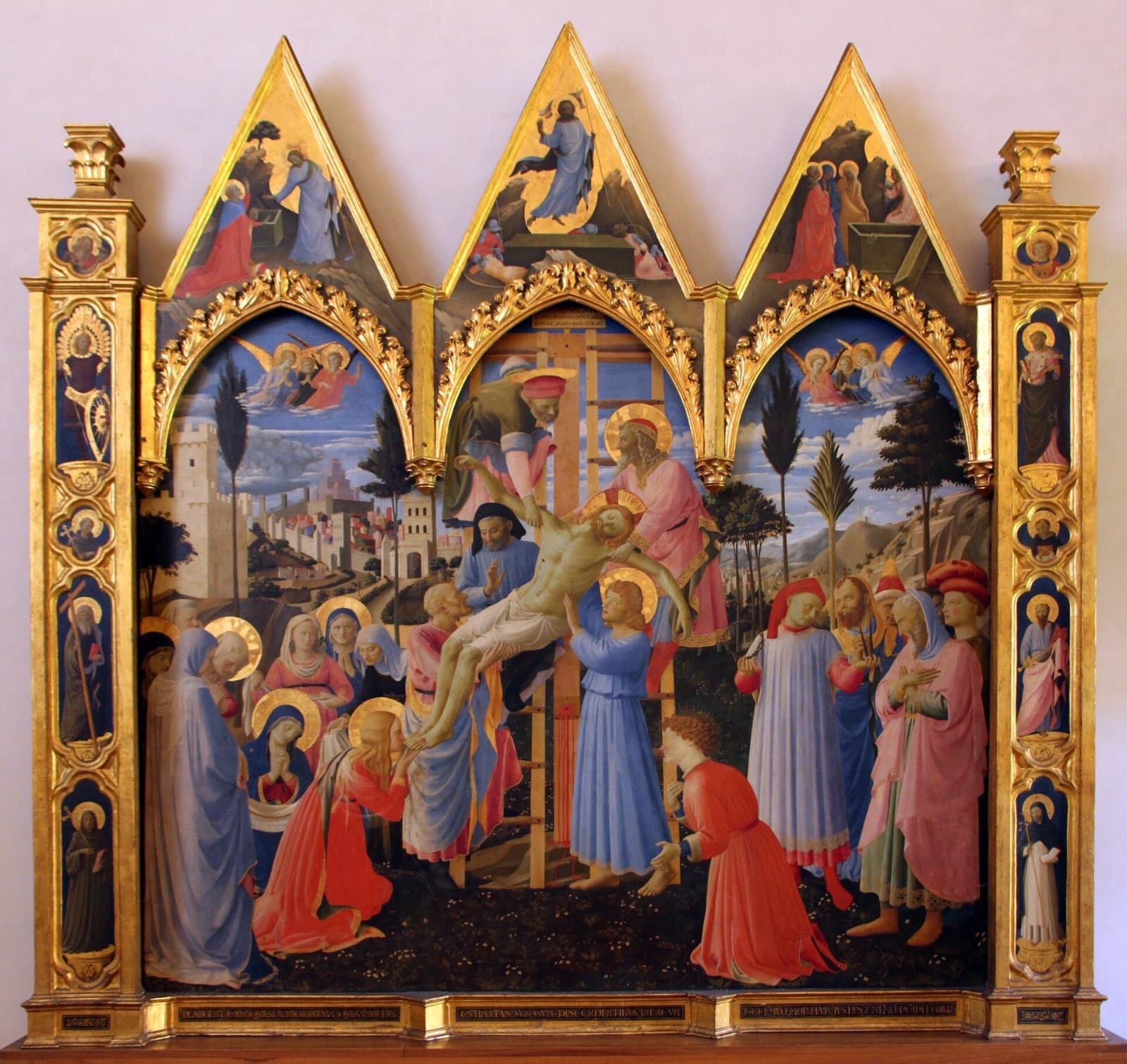
Fra Angelico inherited a Gothic frame begun years earlier and filled it with deep sunlit space instead of gold, which is the whole story.
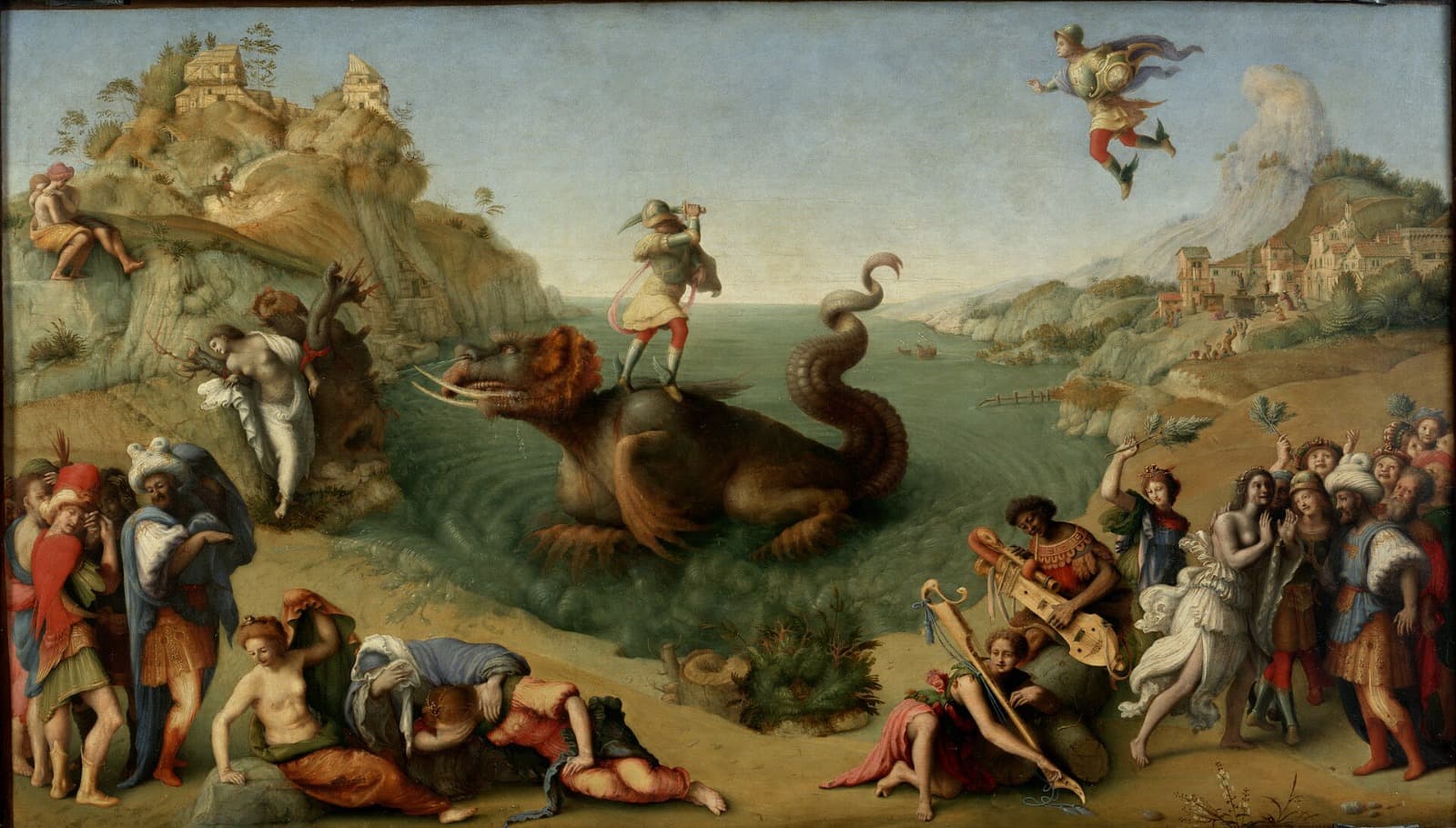
The sea-monster is part fish and part beast and thoroughly invented, and some of the onlookers on the shore have started playing music.

A shepherd twists onto his back and throws up a hand against the glare. One of the first real night scenes in Western art.

Duccio and Giotto painted this same entry within a year of each other. Duccio's is the crowded one, full of towers, incident and color.
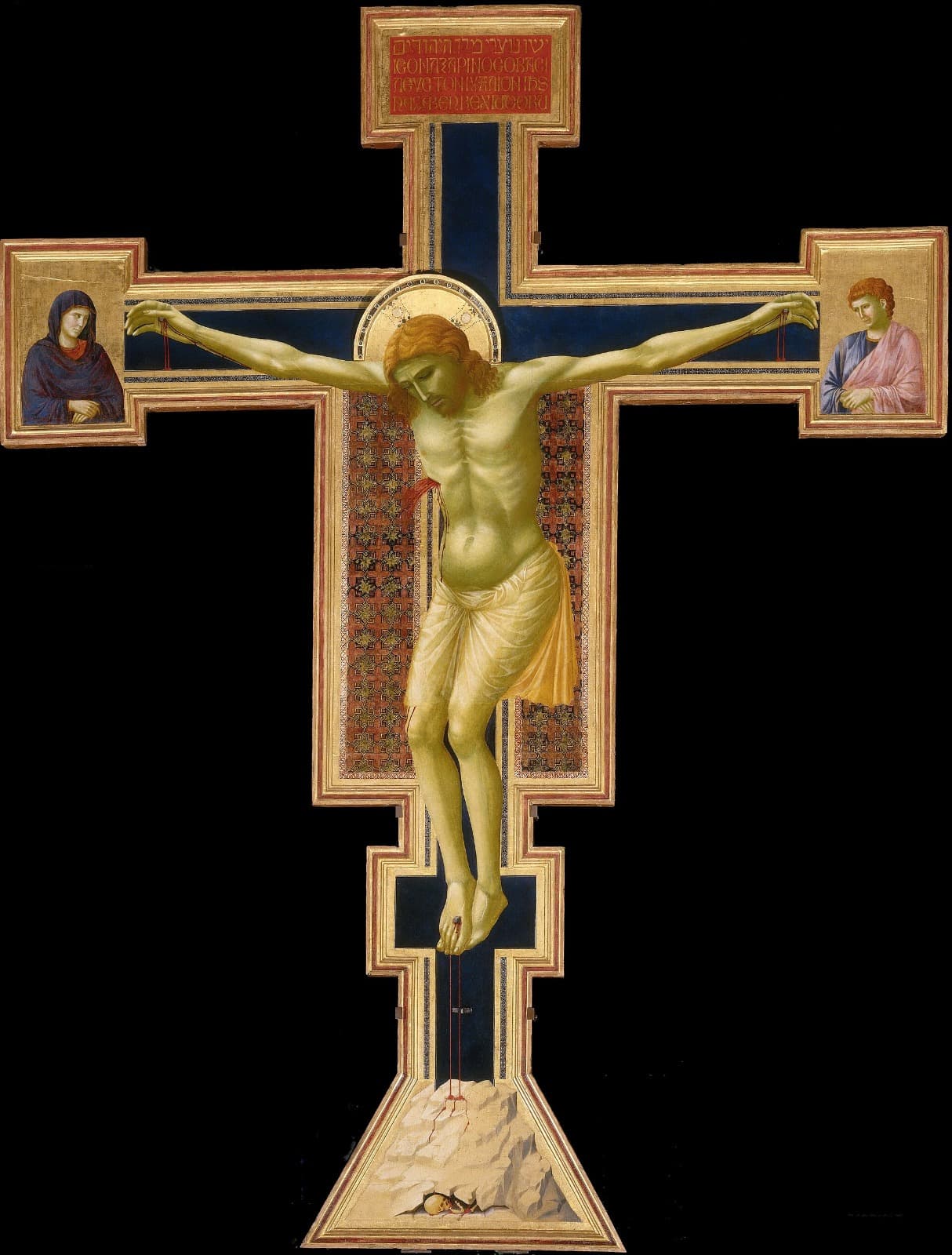
Where Cimabue's Christ swings in an elegant curve, Giotto's hangs straight down under his own weight, belly sagging, head on his chest.
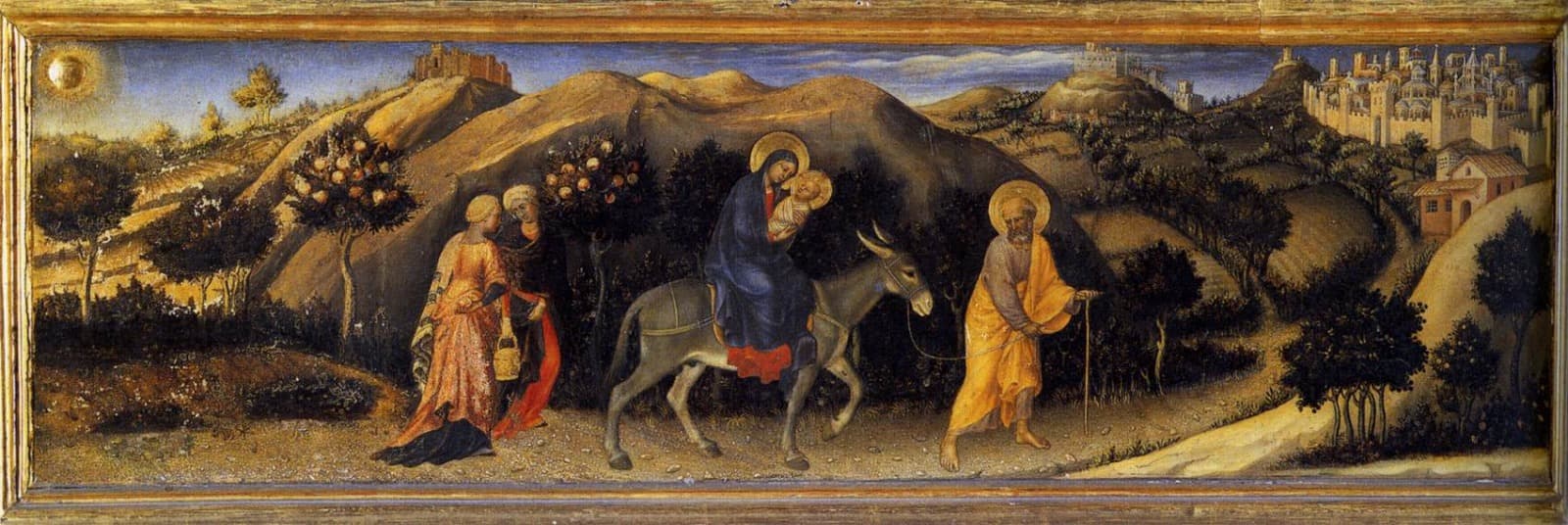
A gilded low sun hangs over the road and the orange trees are heavy with fruit, an early attempt at real morning light across a landscape.

A corridor of opened graves runs down the middle, the saved dancing into a garden on the left, the damned driven into fire on the right.

The Child lies on the ground giving off his own light across the straw and his mother's face. One of the first paintings lit from inside.

Serene, elegant nudes about to ruin everything. It faces Masaccio's Expulsion across the same chapel, calm before the Fall against anguish after.

Painted on a refectory wall so the monks dined at the end of the same table. Leonardo would blow the arrangement apart a few years later.

Gabriel kneels at the right and points across at a Virgin drawing back in surprise, with a stretch of classical ruin between them.

Joseph reaches up to pull down dates from a palm while Saint Francis kneels at the side, added for the chapel that ordered it.

A soldier drags Christ out through the city gate by his robe, the diagonal of the cross cutting against a bristling line of lances.

Servants stoop over the great stone jars in the foreground to draw out wine that was water a moment ago.
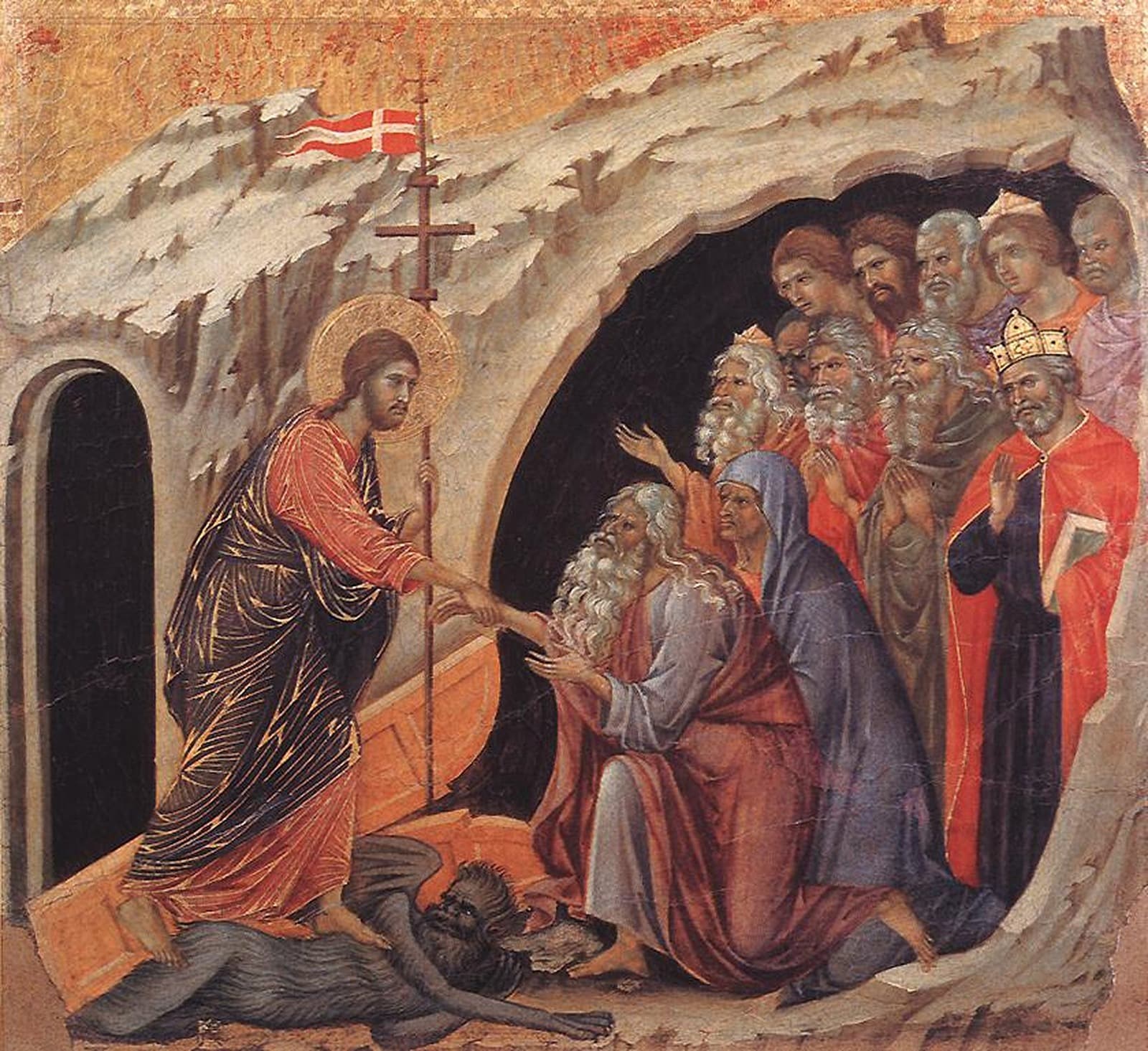
Christ strides into the cave to pull Adam out by the hand, treading on a chained Satan as he goes.
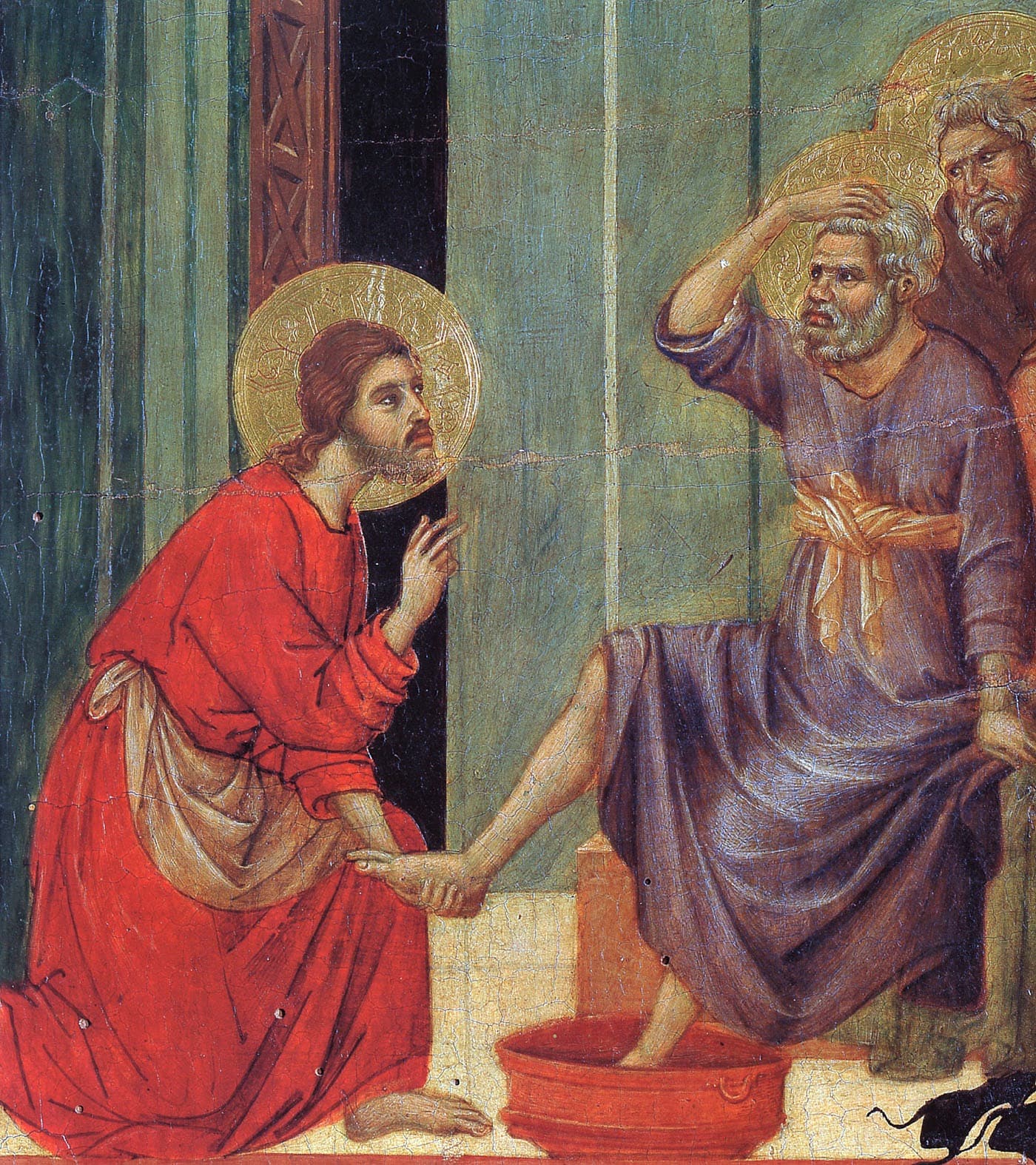
Christ kneels with the basin and Peter, flustered, raises a hand to his own head. Some of the others are already loosening their sandals.

Christ turns up dressed as a pilgrim with a staff and a traveler's pouch, and the two disciples still have no idea who he is.

Christ stands to place the host on each tongue exactly as a priest does at Mass, in a bare cell-like room with stools.
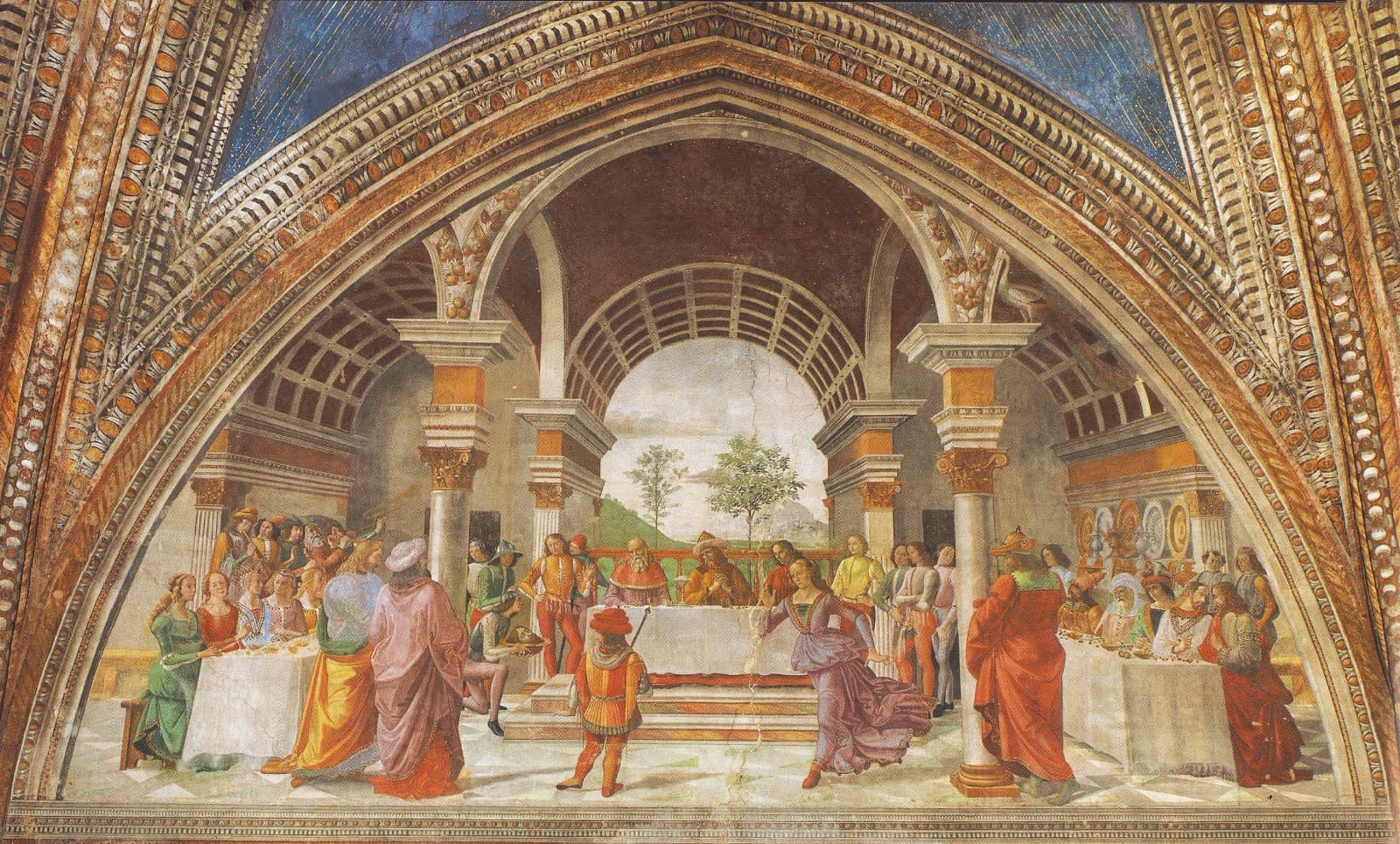
The head arrives on a platter inside a serene sunlit loggia full of well-dressed Florentines, many of them the family who paid.

Late Botticelli, with the early lightness gone tense. He had fallen under Savonarola's spell and his religious pictures never relaxed again.
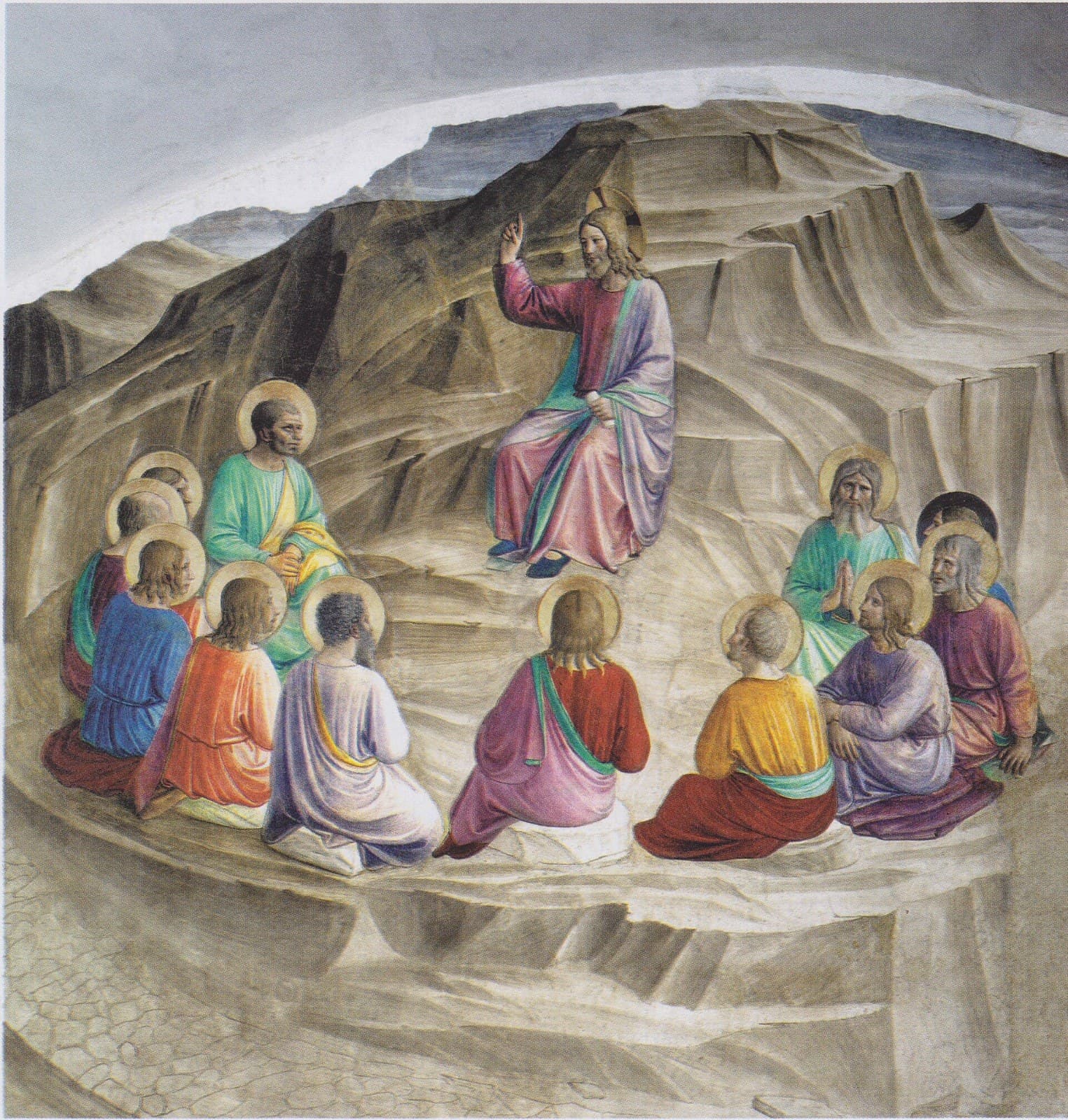
Painted on the wall of a friar's cell at San Marco, stripped of gold and ornament so that it settles the mind rather than dazzles.