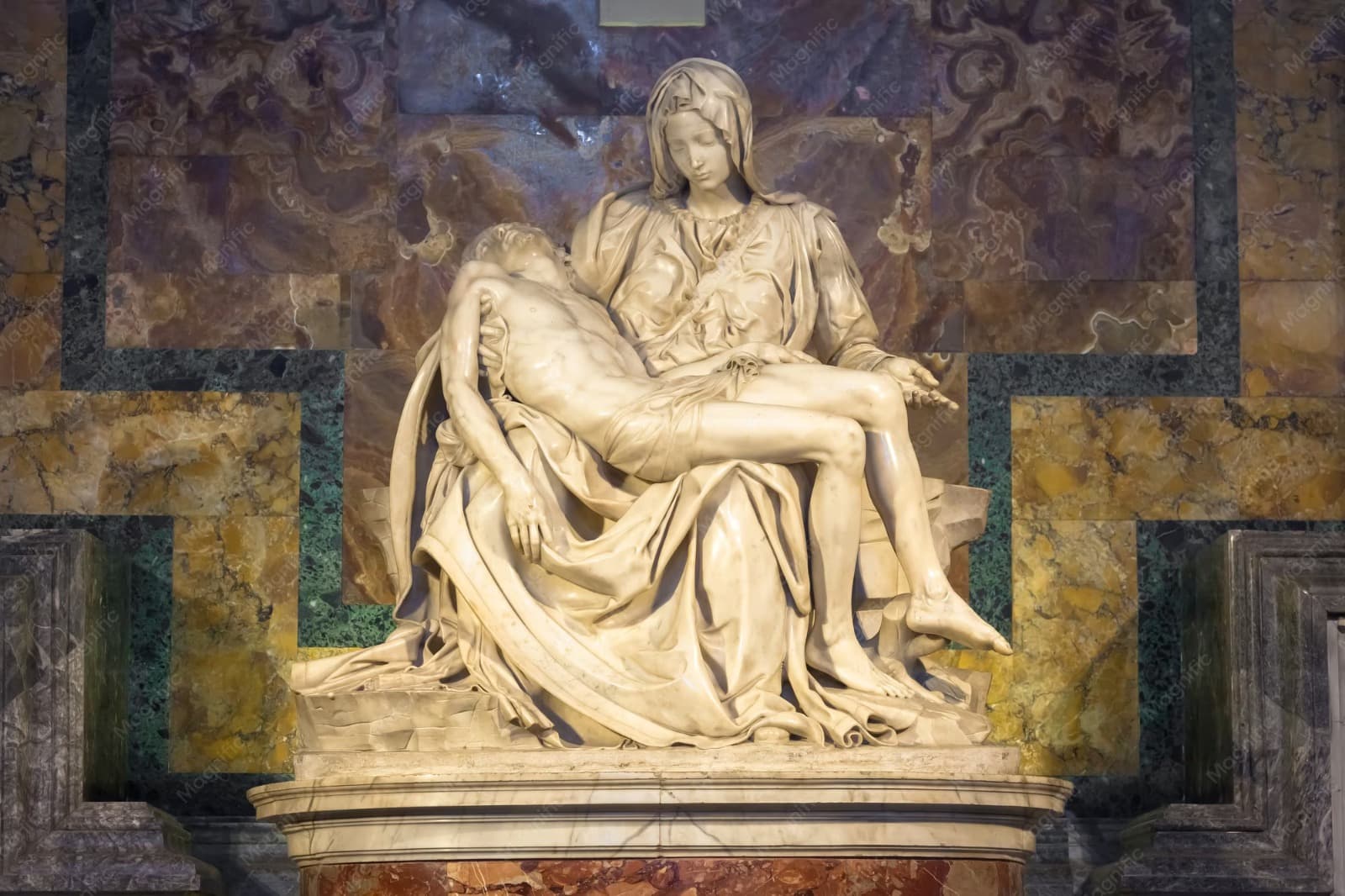
Pieta (Michelangelo)
1499 · Vatican Museums, Rome
The dead Christ lies across his mother's lap. Michelangelo was twenty-four, and signed the sash after hearing it credited to someone else.
★ 9.3
 skopia
The dead Christ lies across his mother's lap. Michelangelo was twenty-four, and signed the sash after hearing it credited to someone else.
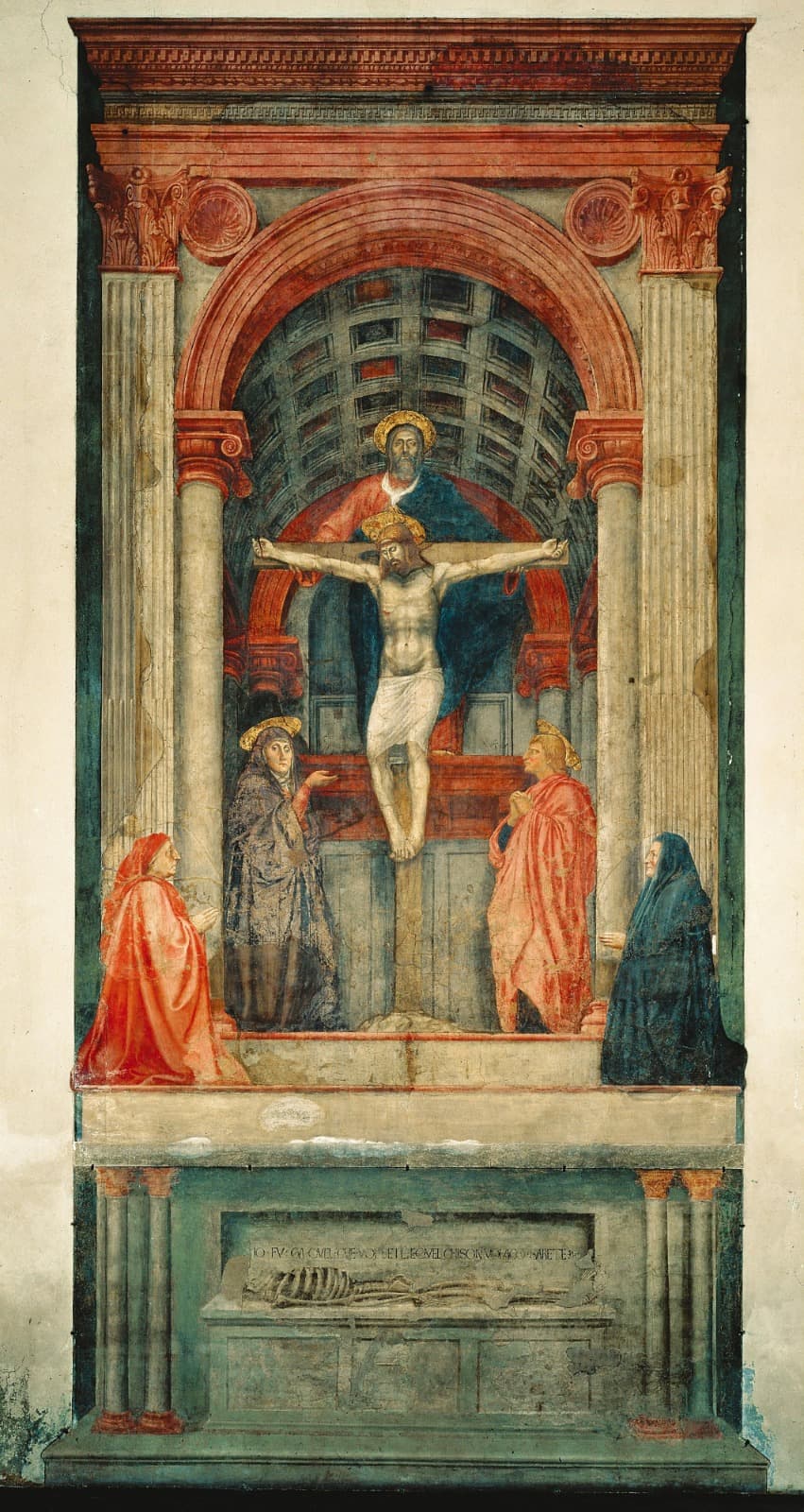
The earliest surviving painting built on a single vanishing point, worked out on a wall of Santa Maria Novella with Brunelleschi's help.
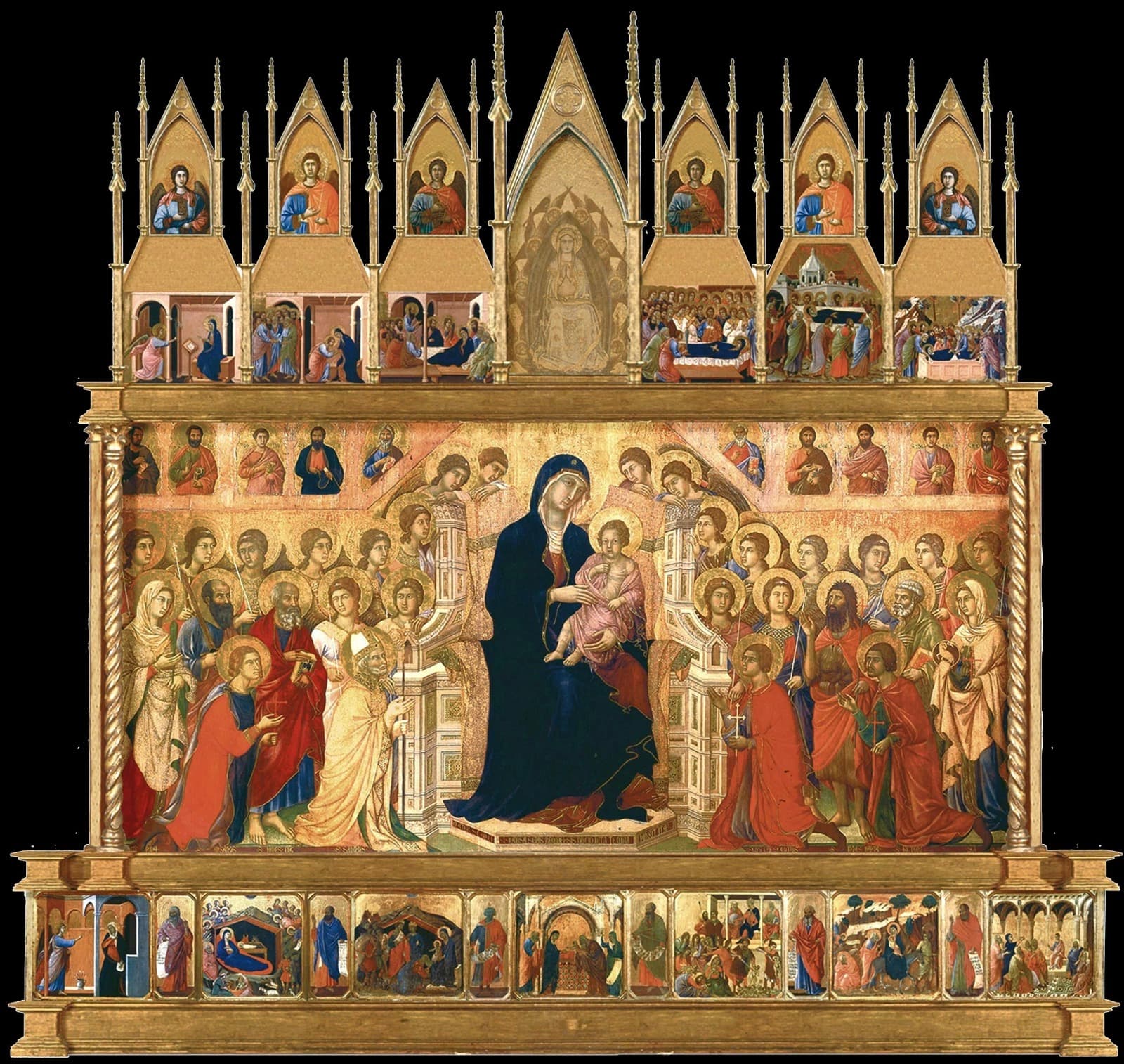
When Duccio finished it in 1311 the whole of Siena walked it to the cathedral in procession, with the bells going the entire way.
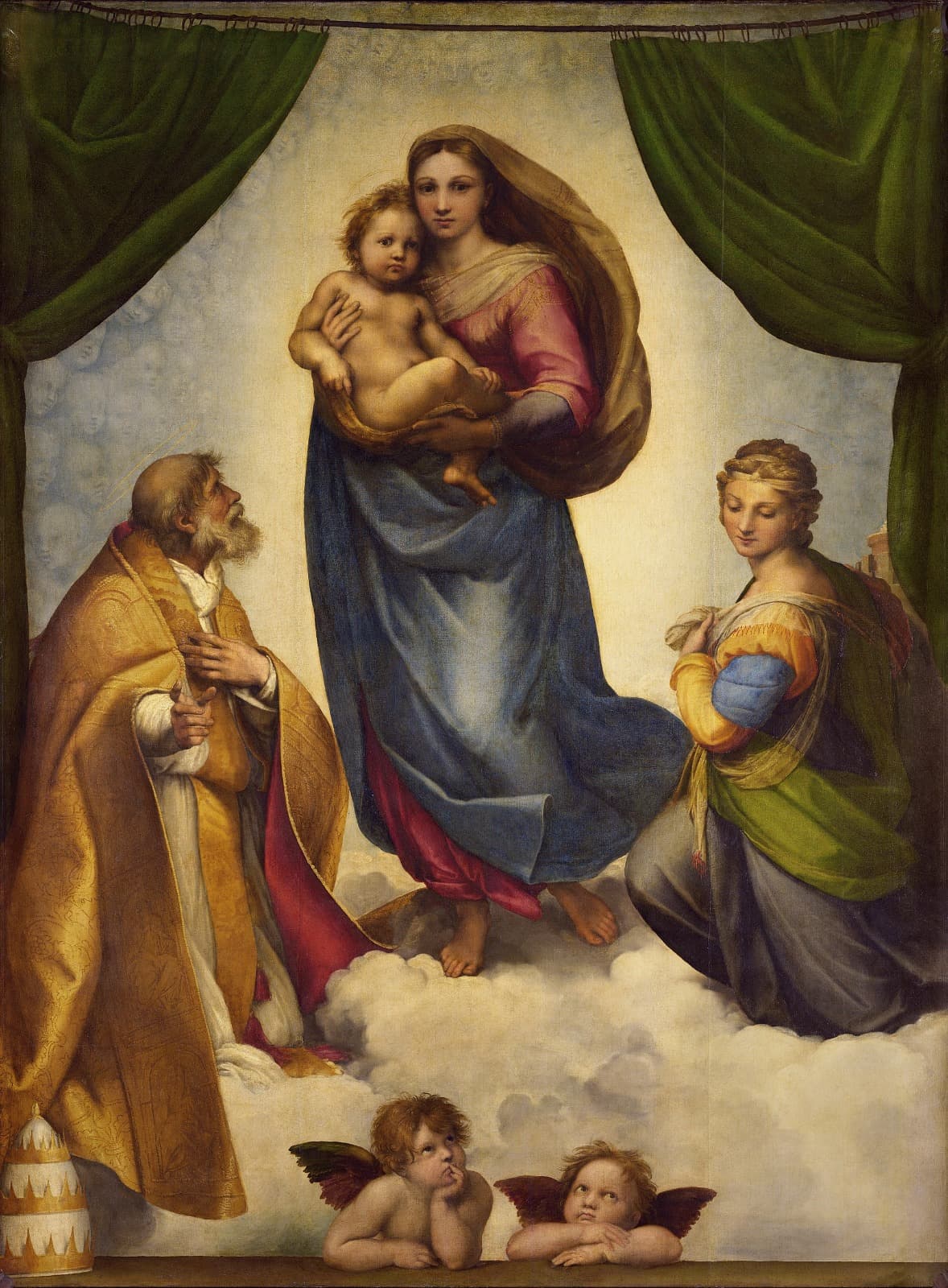
Two bored cherubs lean on the frame at the bottom, and they floated free of the altarpiece long ago onto everything else.
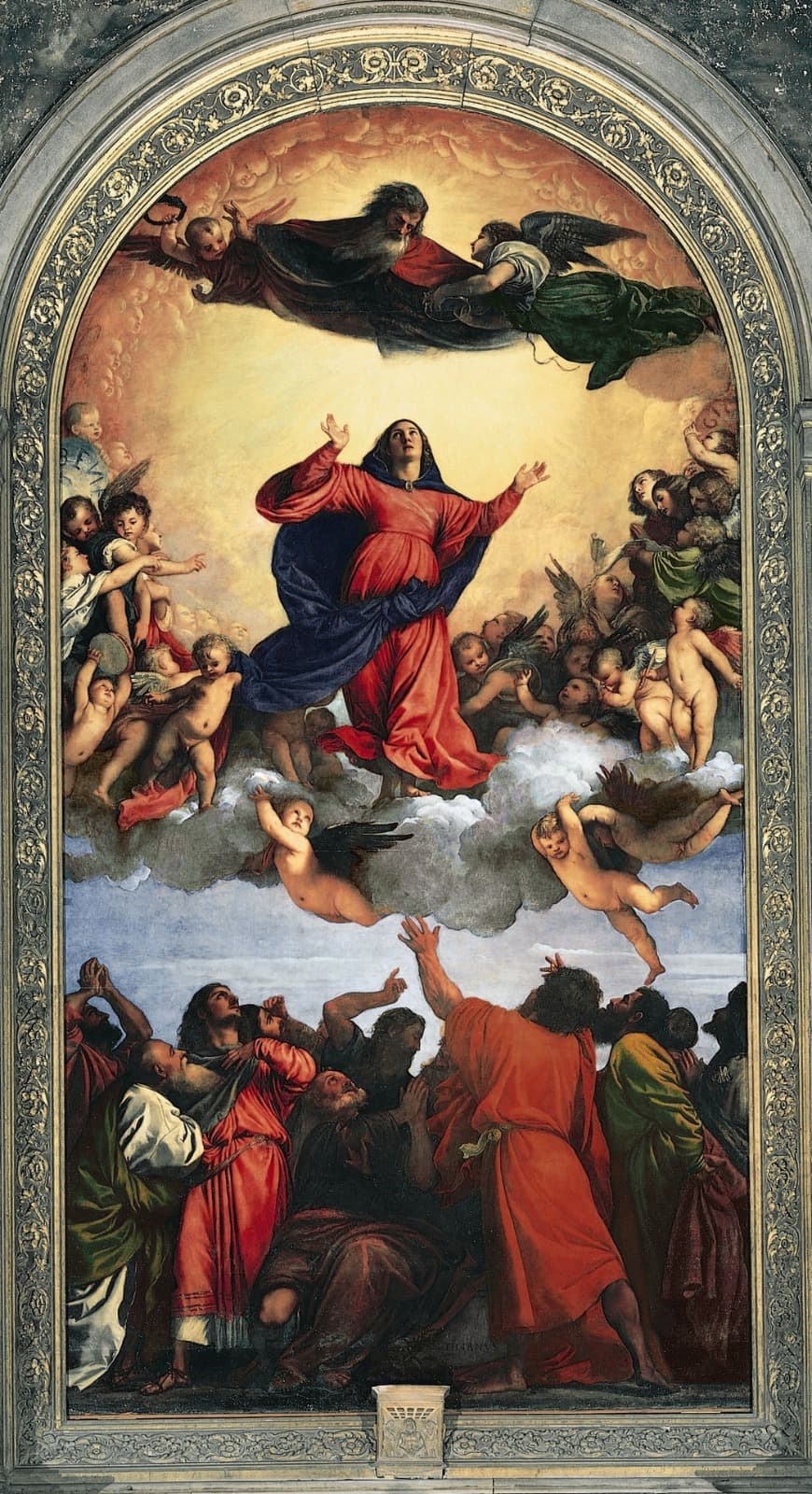
Titian was barely thirty when Venice saw this go up over the Frari altar, the Virgin swept into a storm of red and blue.
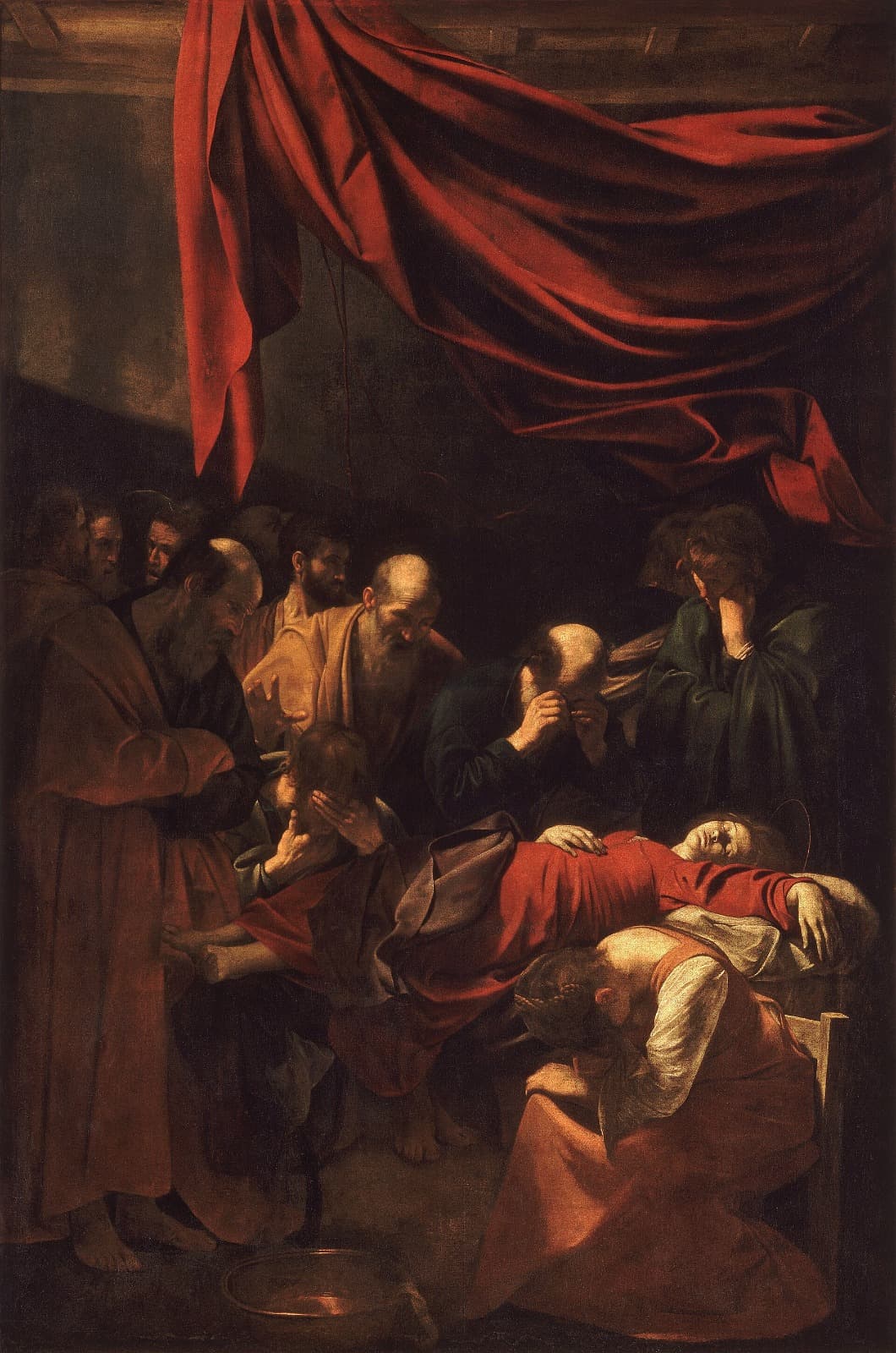
The Virgin lies barefoot and swollen like any corpse. The church that ordered it refused delivery, and Rubens told his duke to buy it.
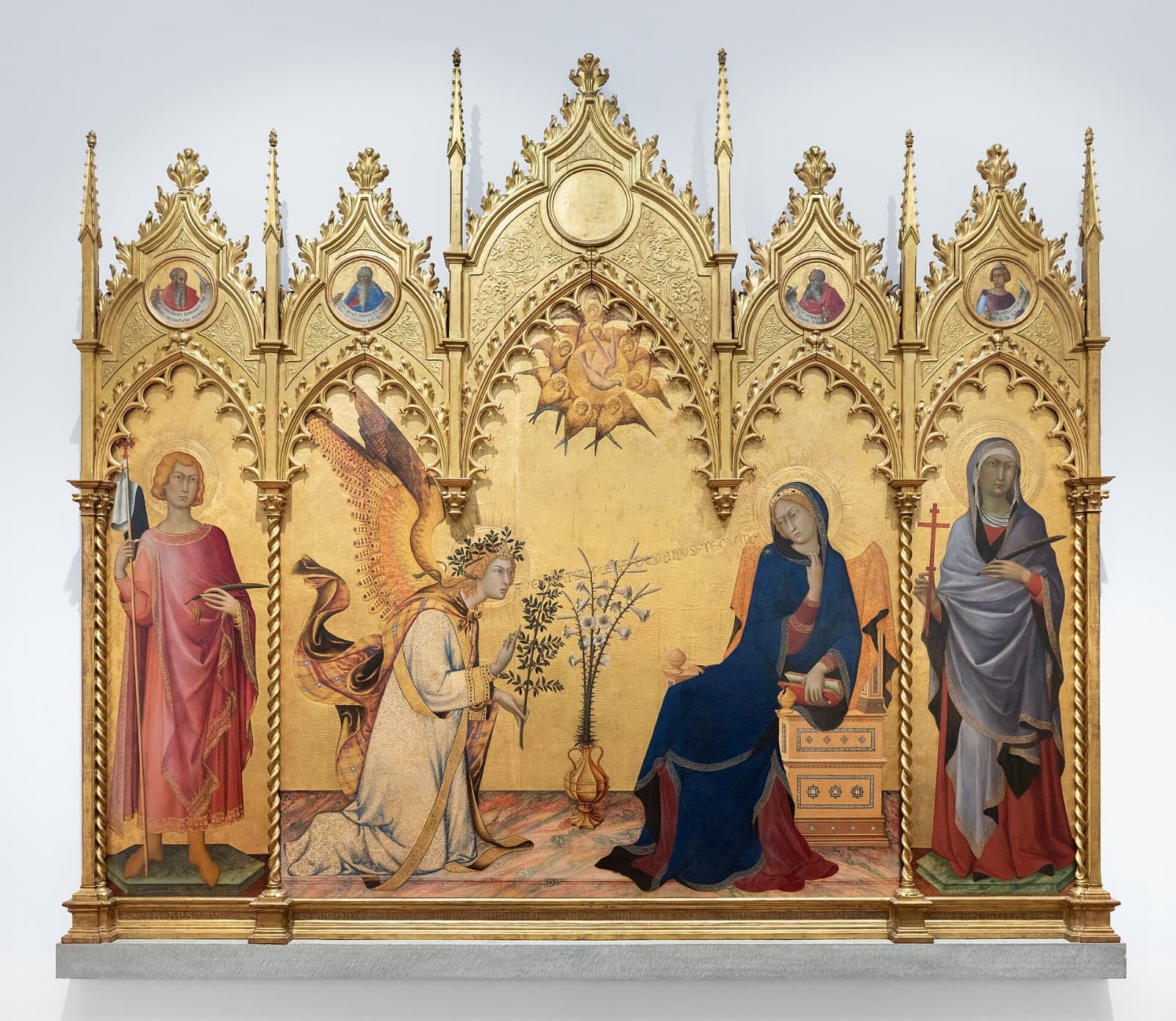
Gabriel's greeting runs toward Mary in raised gold letters and she twists away from it, her thumb still caught in her book.

Fra Angelico frescoed it at the top of the dormitory stairs, so the friars met it every time they climbed to their cells.
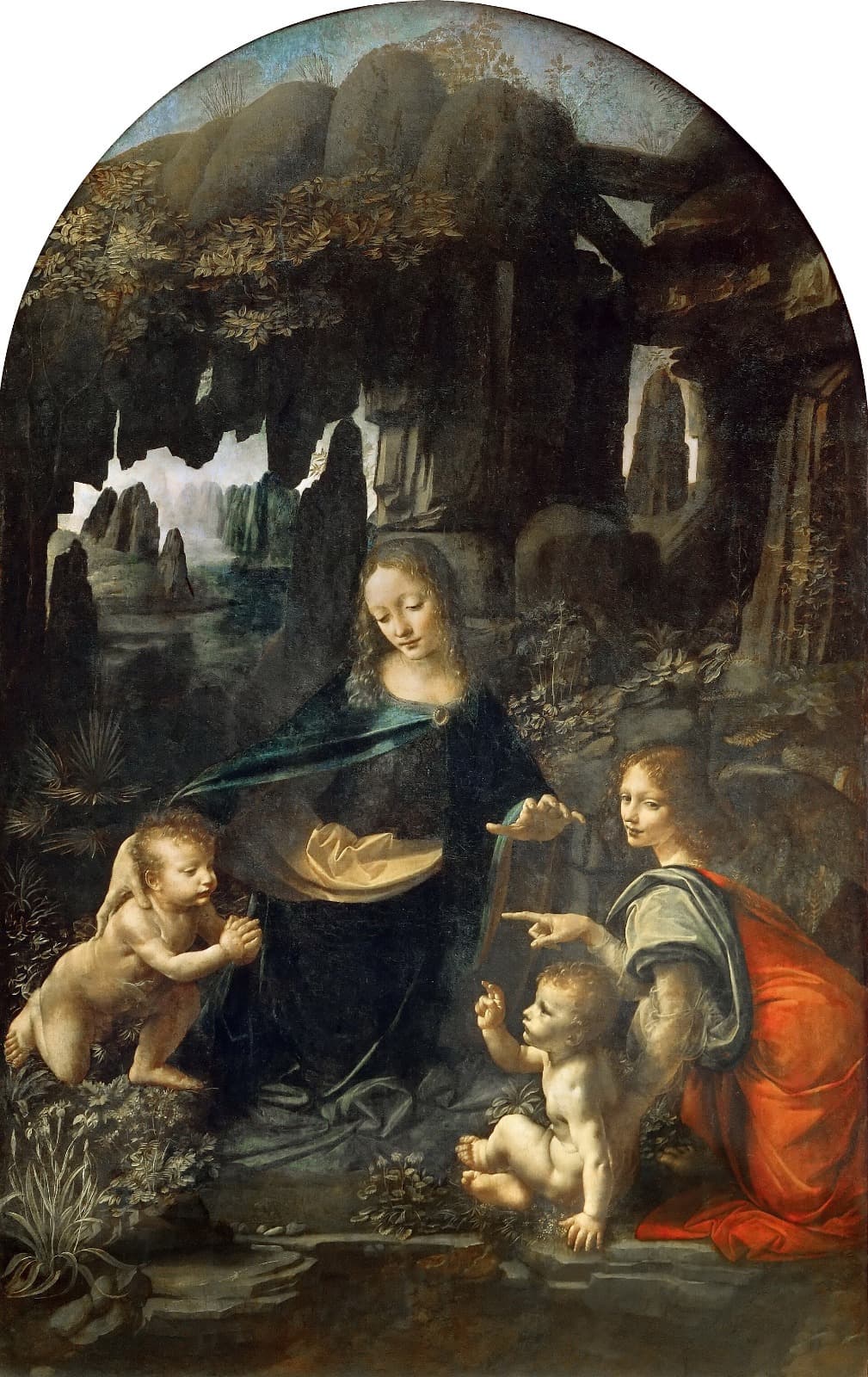
Leonardo painted this cave twice after falling out with the patrons. This is the earlier version, the one that stayed in France.

Van Eyck spared the old canon nothing: the stubble, the swollen hands, the spectacles. His armored saint mirrors the whole room in miniature.
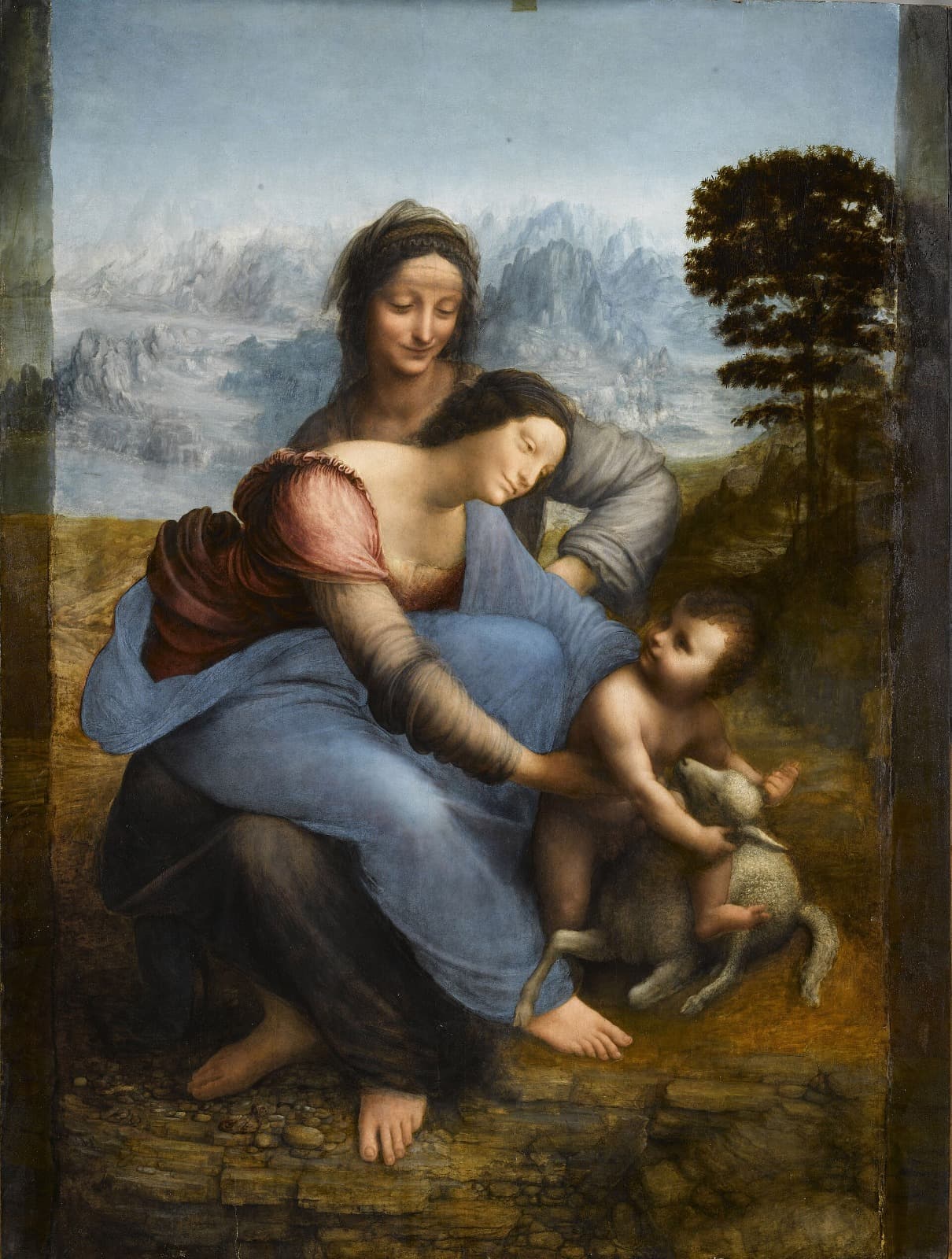
Three generations nest into one shifting pyramid, and Leonardo kept reworking it for years without ever calling it finished.

An ostrich egg hangs from the vault and pulls every sightline down. Federico is shown from the left because a tournament took his right eye.

Gabriel bows to Mary under the loggia while Adam and Eve are driven out of the garden at the left, the sin this undoes.
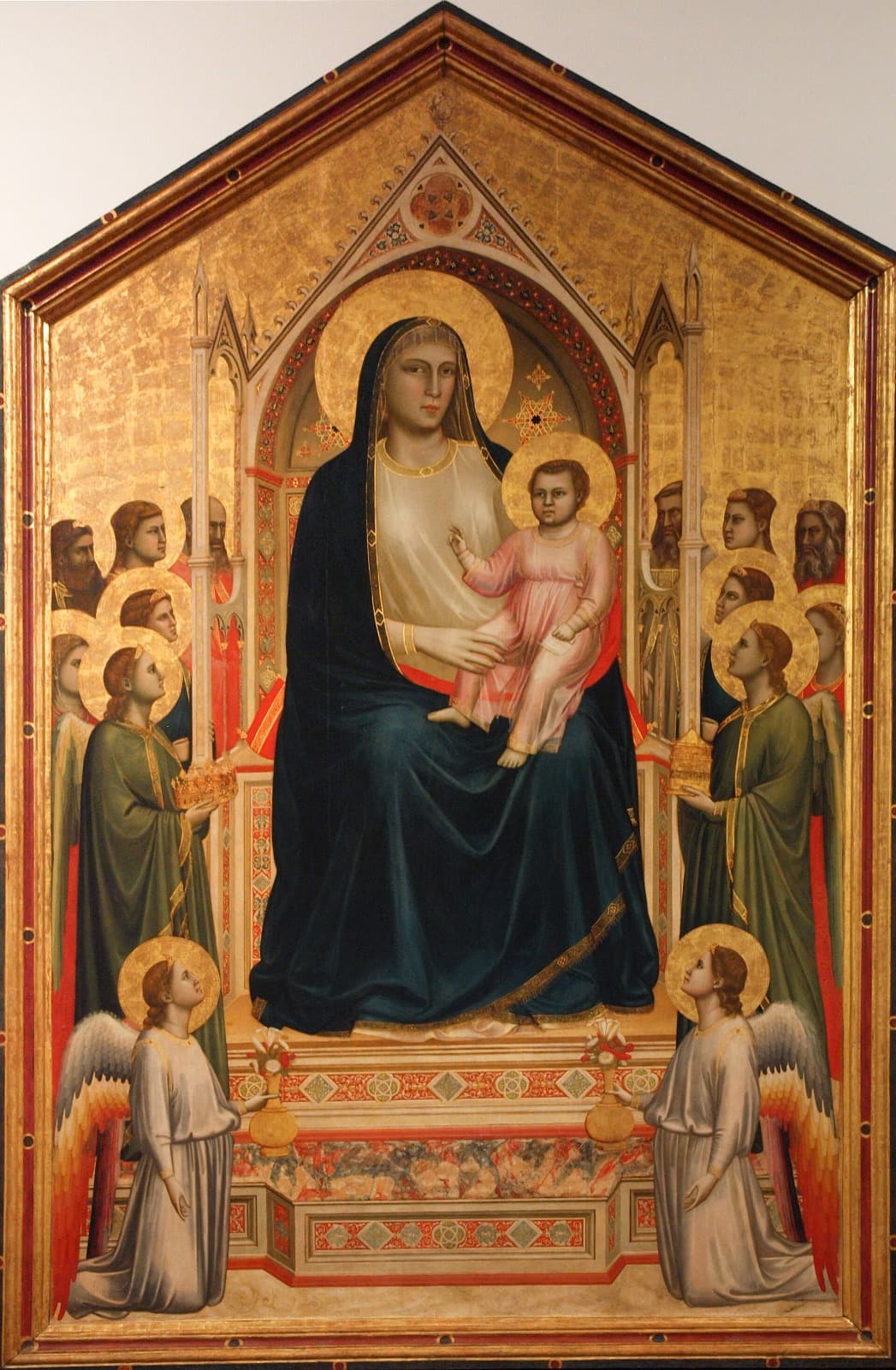
Where Cimabue and Duccio floated their Madonnas on gold, Giotto gave his weight, a real throne, and a body that presses through the cloth.

The saints share one continuous space instead of separate compartments, and the two kneeling physicians are the name-saints of the Medici who paid.

No halo, no manger, just a candle shielded by a hand and a swaddled baby, and it still reads as a nativity.
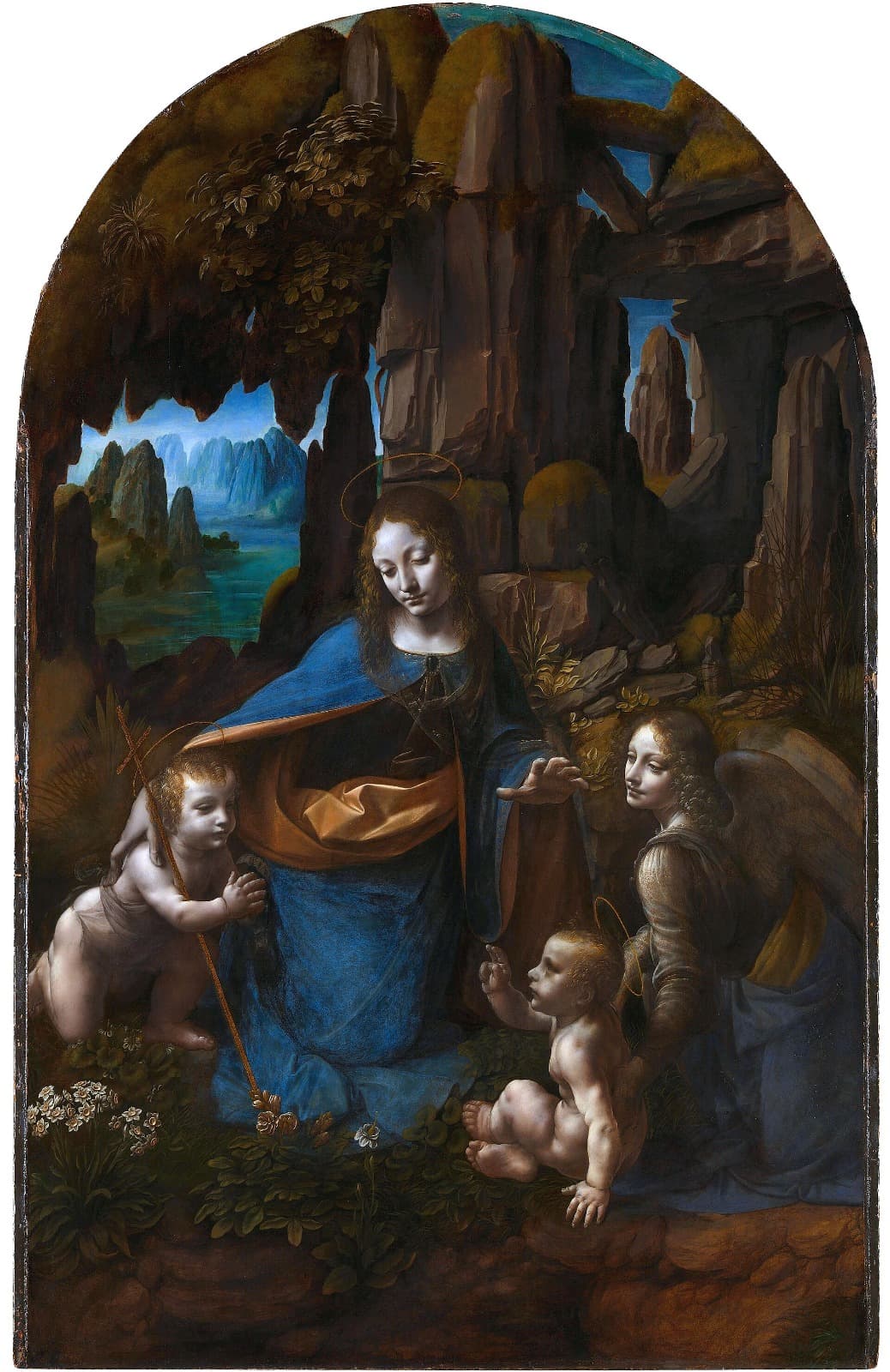
The second version, painted to settle a long quarrel with the confraternity. Everyone now has a halo and the angel has stopped pointing.

No angel, no dove, no lily. Mary looks up from her book straight at us, because we are standing where Gabriel ought to be.
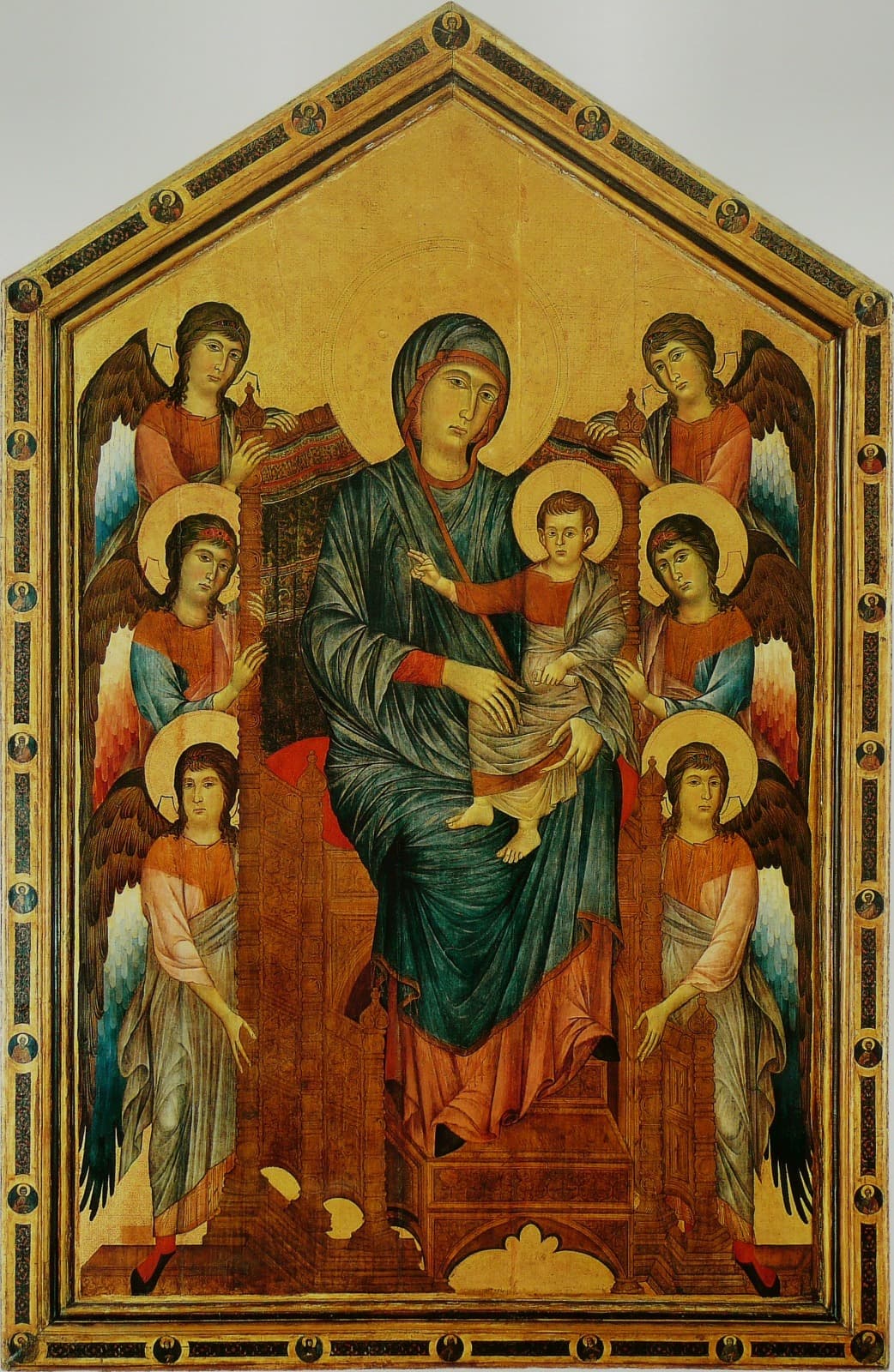
Six angels stack up the sides of the throne against gold. Cimabue taught Giotto, and the throne here is just beginning to recede into space.
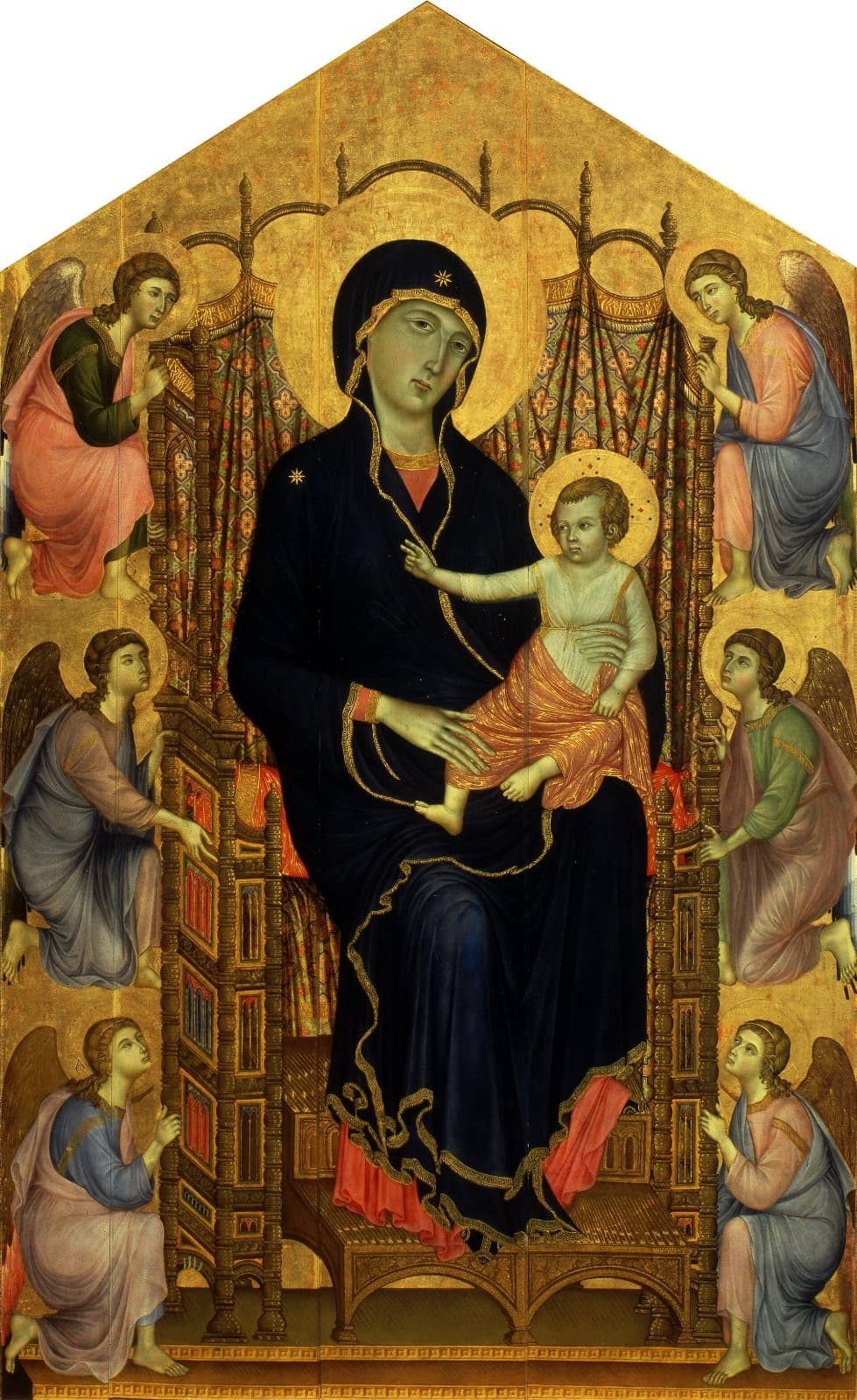
Four and a half meters tall, the largest panel painted in its century, with six angels kneeling to steady a throne that seems to float.

The Virgin is far too big for the cathedral because she stands for the Church itself, and real sunlight falls in patches across the floor.
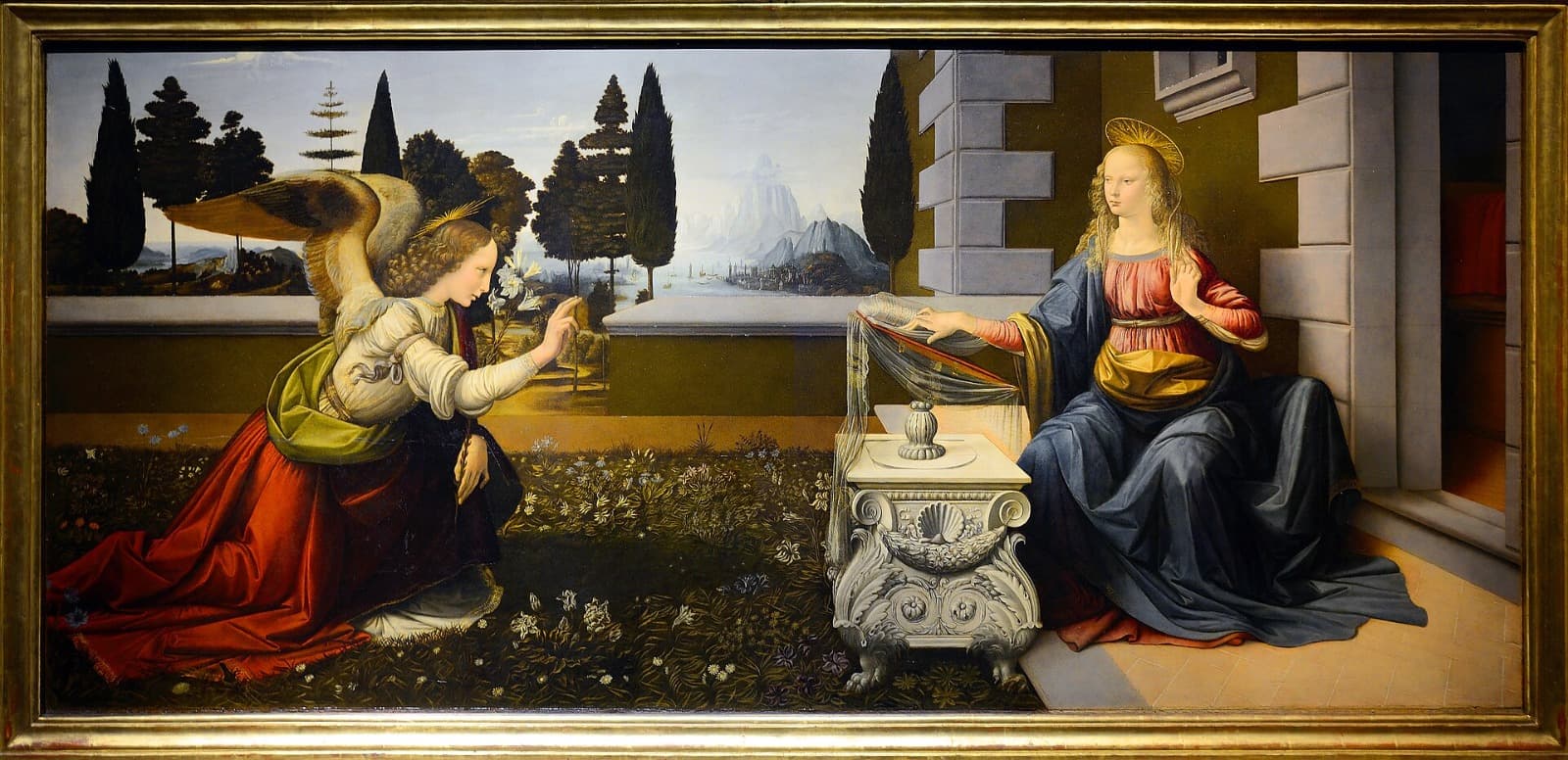
An early work, and Mary's right arm reaches further than an arm can. Gabriel's wings were studied from a real bird.

The little demons carved on the pedestal were taken for harpies and gave the picture its name. Del Sarto was called the faultless painter.
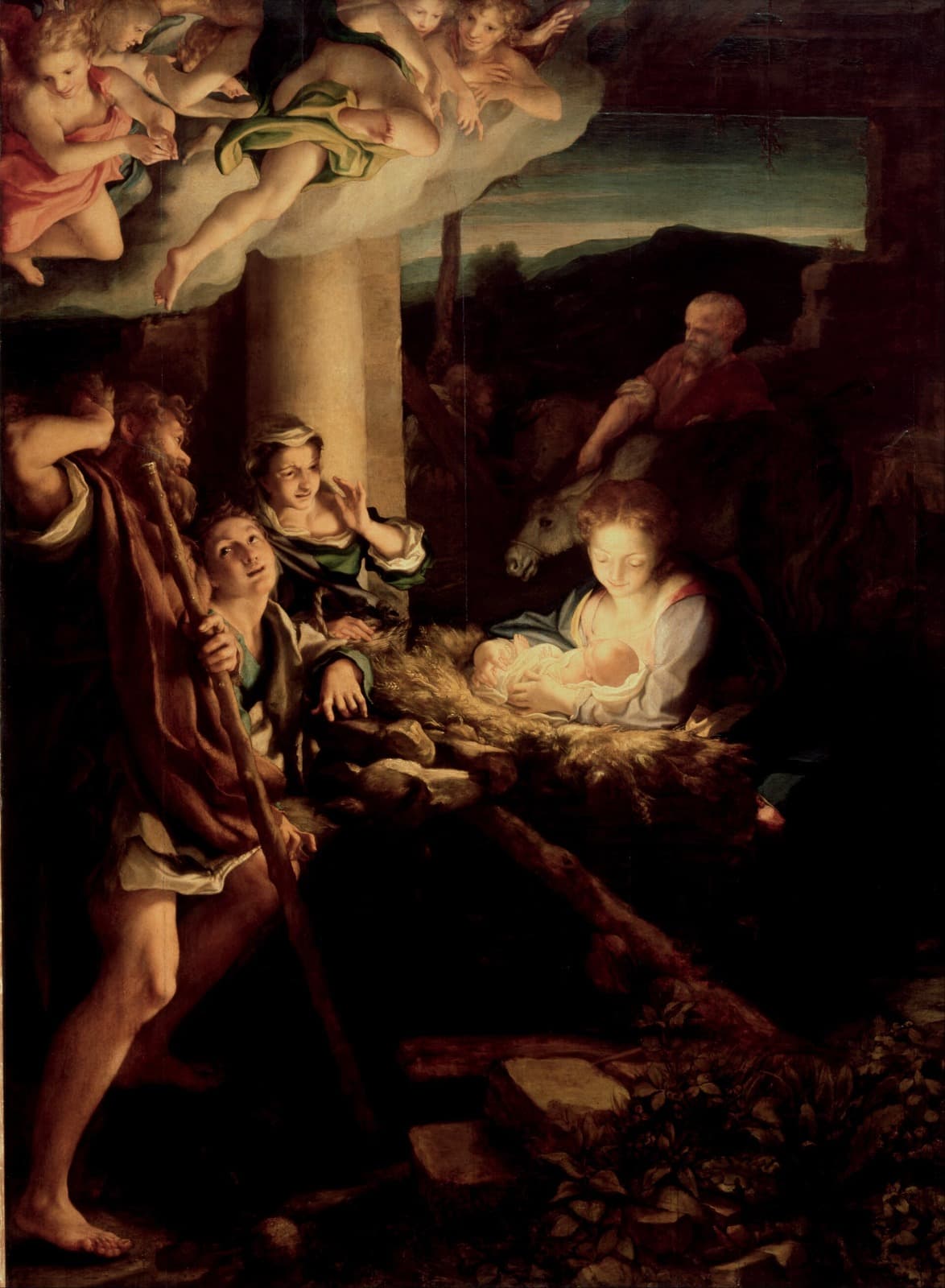
All the light in the picture comes off the newborn child, and one shepherd throws up a hand against the glare.

The holy family is tiny and the landscape does everything, which is the arrangement Poussin and Claude would build whole careers on.
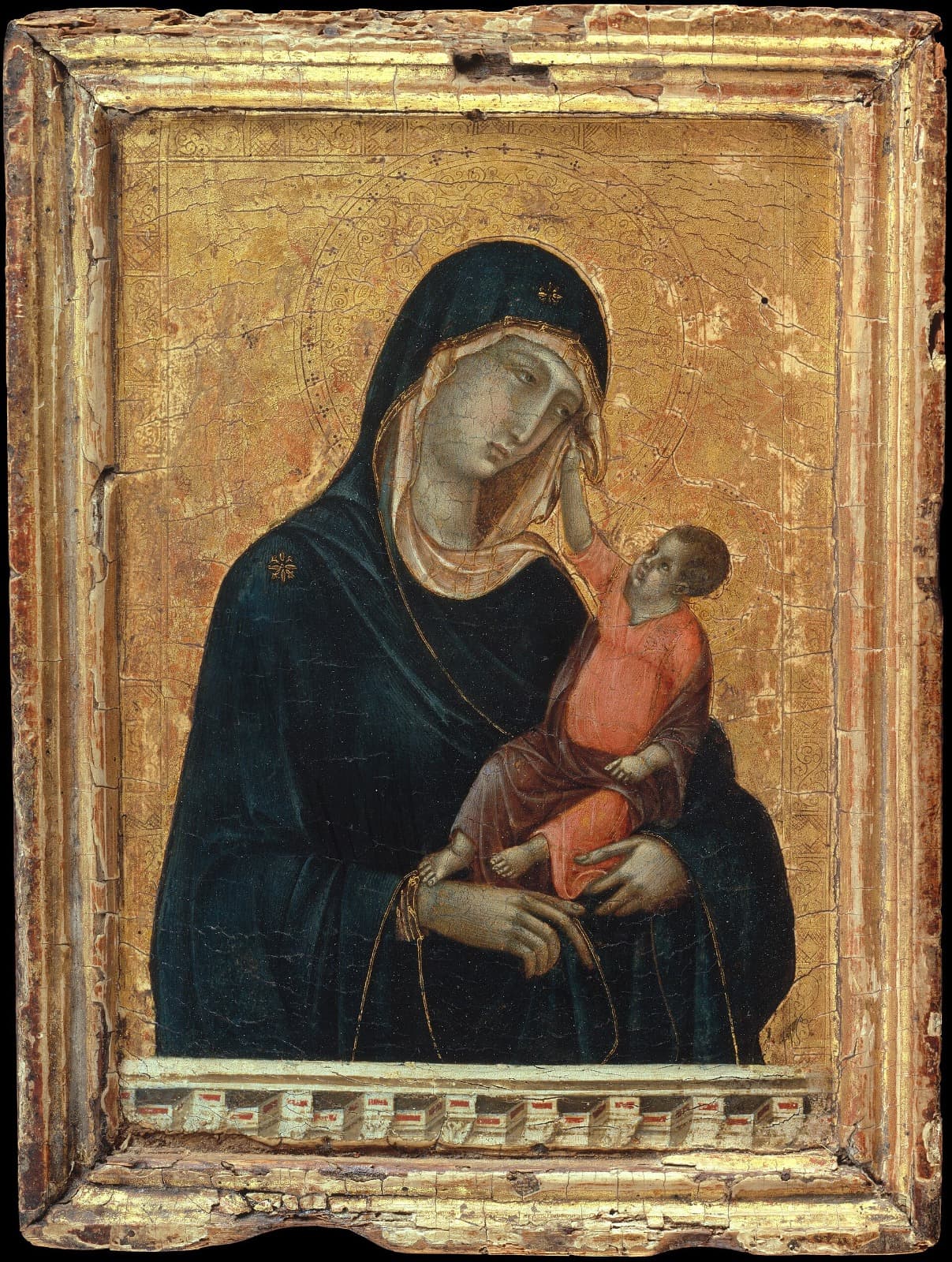
Christ reaches up to push his mother's veil aside. Scorch marks on the original frame record centuries of candles set before it.
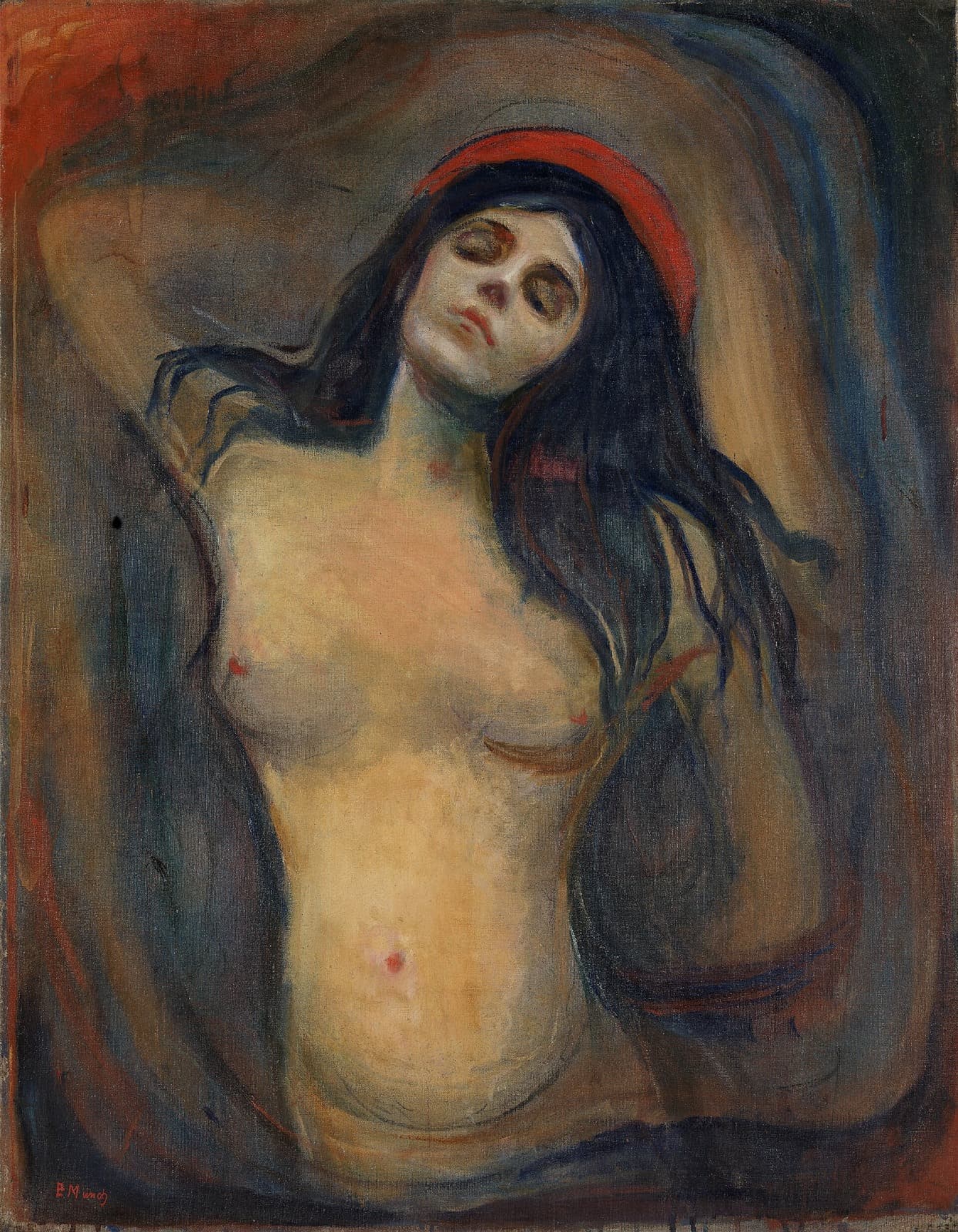
Munch gave the Madonna a red halo, closed eyes and parted lips, and made desire and death the same subject.

Dürer painted it in Venice to prove a German could beat the Venetians at color, and wrote on it that it took five months.
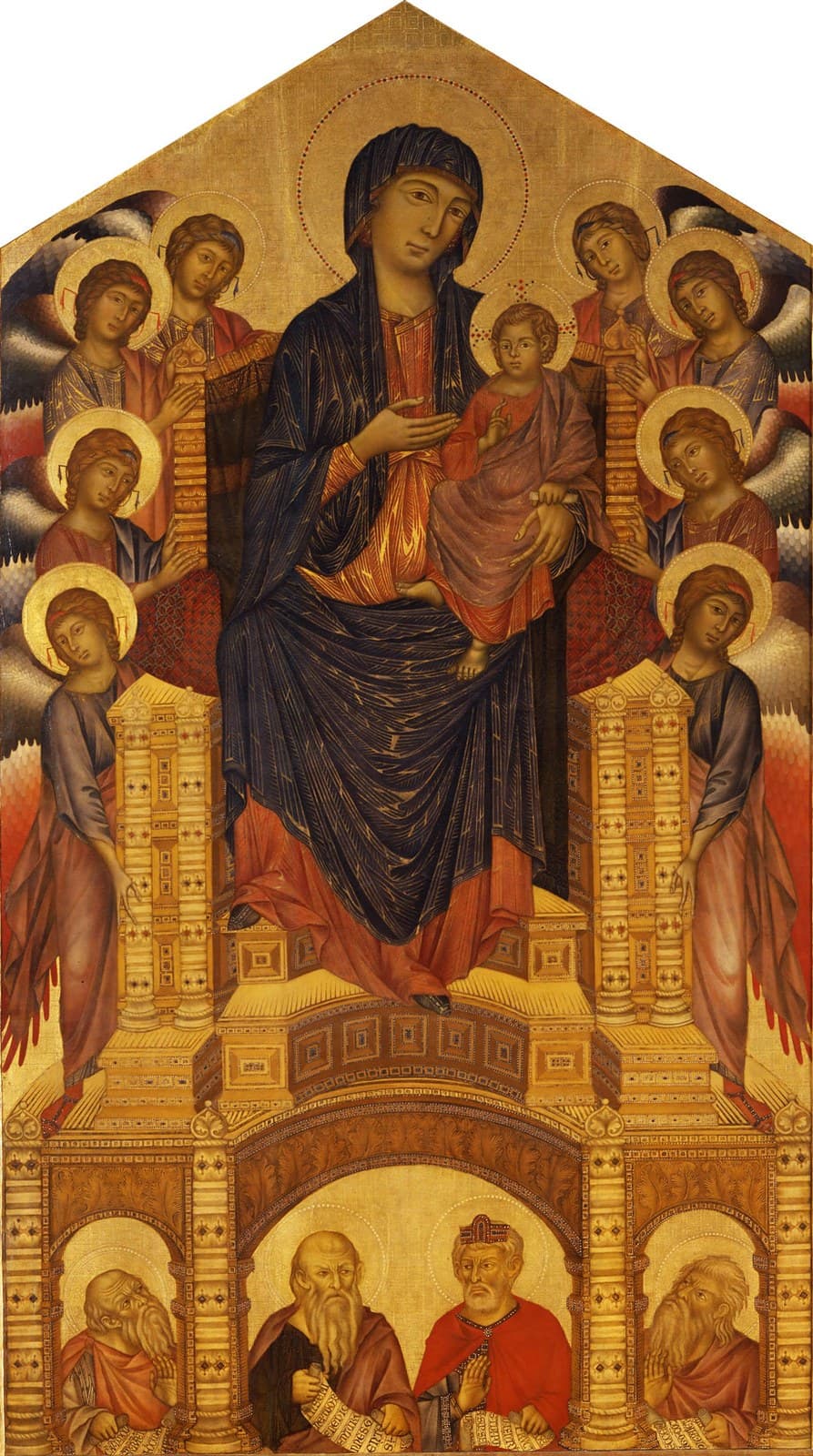
Four prophets peer from arches under the throne holding scrolls that foretell the Virgin Birth, and the throne is angled to suggest depth.

Christ crowns his mother at the top of a flight of steps that recede convincingly into depth, which is the new thing here.

Father and Son lower the crown together while the group curves into a soft heart shape. Painted for the Spanish queen's private oratory.

The angels crowd in like inquisitive children. One of the first paintings to put the Virgin and saints in a single shared space.

The Virgin offers the Child a bunch of grapes, which stand for the wine of his death, in an exactly observed Flemish wood.
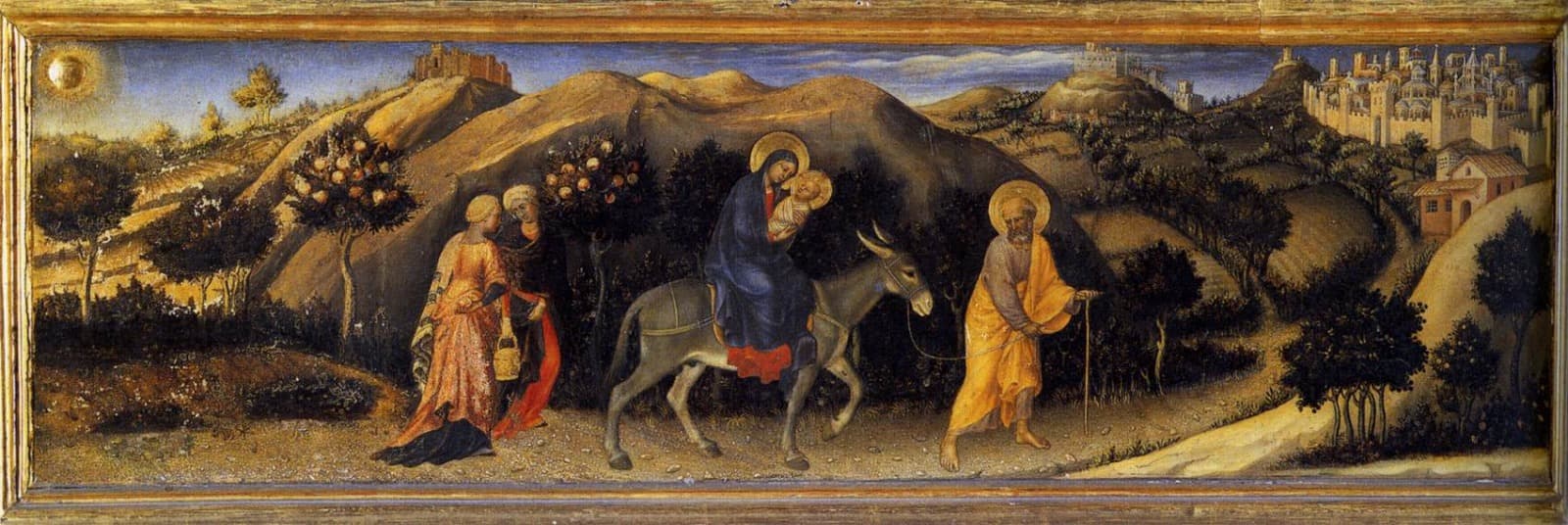
A gilded low sun hangs over the road and the orange trees are heavy with fruit, an early attempt at real morning light across a landscape.

The episode appears in no Gospel at all, and Altdorfer nearly buries the figures under a forest of enormous trees and luminous sky.

Six angels lean in along the throne with their heads tilted, which turns a rigid Byzantine formula into something nearly intimate.

Gilded hems, fluttering wings, a walled garden behind. Lippi was a friar with a worldly streak and it shows in the ornament.
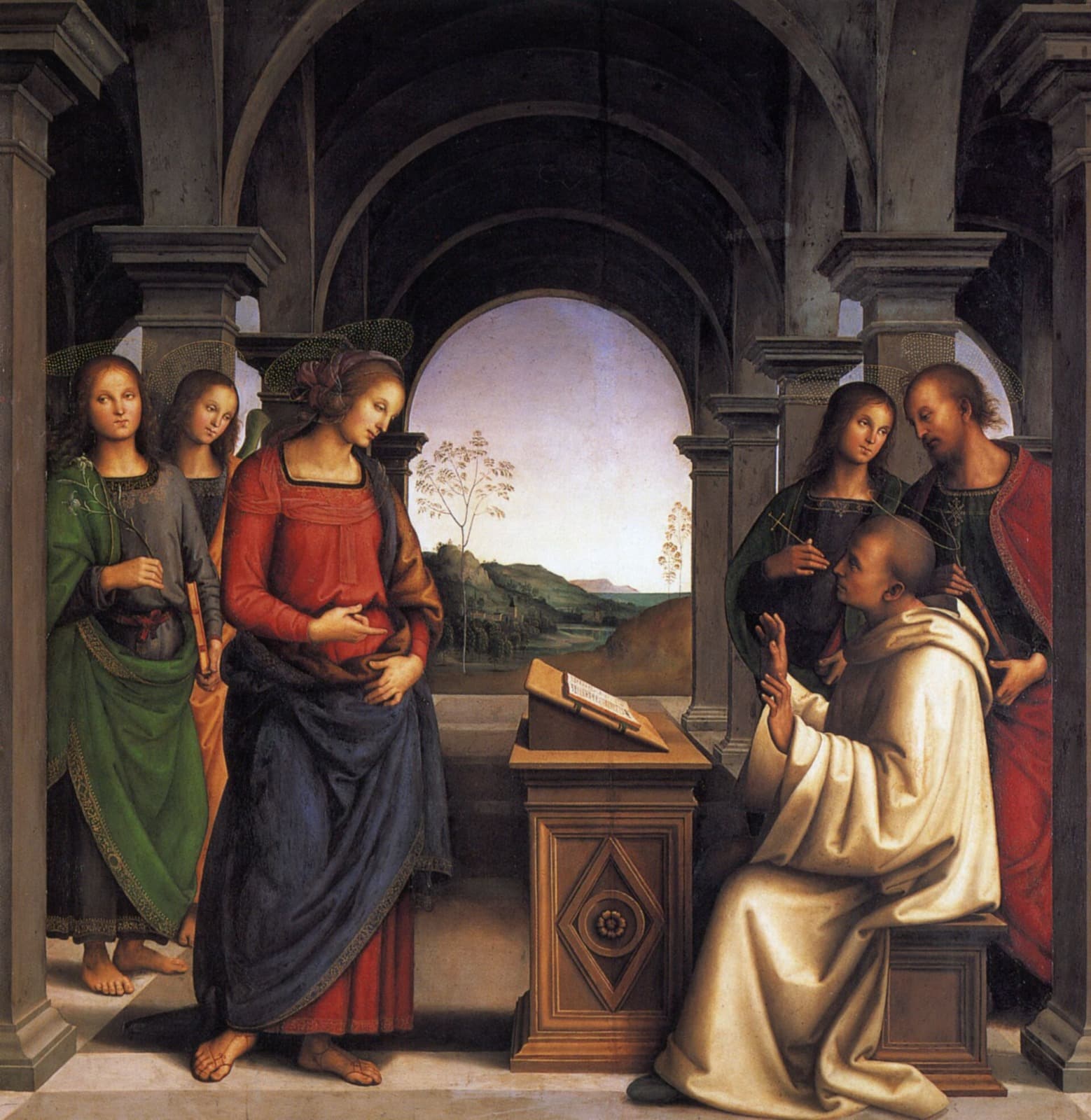
Perugino taught Raphael, and the poise, the airy arcade and the soft Umbrian valley here pass almost unchanged into the pupil's work.

Gabriel kneels at the right and points across at a Virgin drawing back in surprise, with a stretch of classical ruin between them.

Joseph reaches up to pull down dates from a palm while Saint Francis kneels at the side, added for the chapel that ordered it.

Elizabeth sinks down and clasps the pregnant Mary. Ghirlandaio ran the busiest workshop in Florence, and a boy named Michelangelo apprenticed there.

Late Botticelli, with the early lightness gone tense. He had fallen under Savonarola's spell and his religious pictures never relaxed again.