
The Garden of Earthly Delights
1505 · El Prado, Madrid
Three panels run from Eden to hell, with a whole naked humanity climbing into giant fruit in between. Nobody has settled what it means.
★ 10.0
 skopia
Three panels run from Eden to hell, with a whole naked humanity climbing into giant fruit in between. Nobody has settled what it means.

Saints and pilgrims stream toward a bleeding Lamb across a dozen hinged panels. One of them was stolen in 1934 and has never been found.

Three hunters come home over the hill with one thin catch while villagers skate below. Bruegel painted it for a series on the months.

Christ's body hangs green and pocked with sores, painted for a hospital whose patients saw their own ravaged flesh.
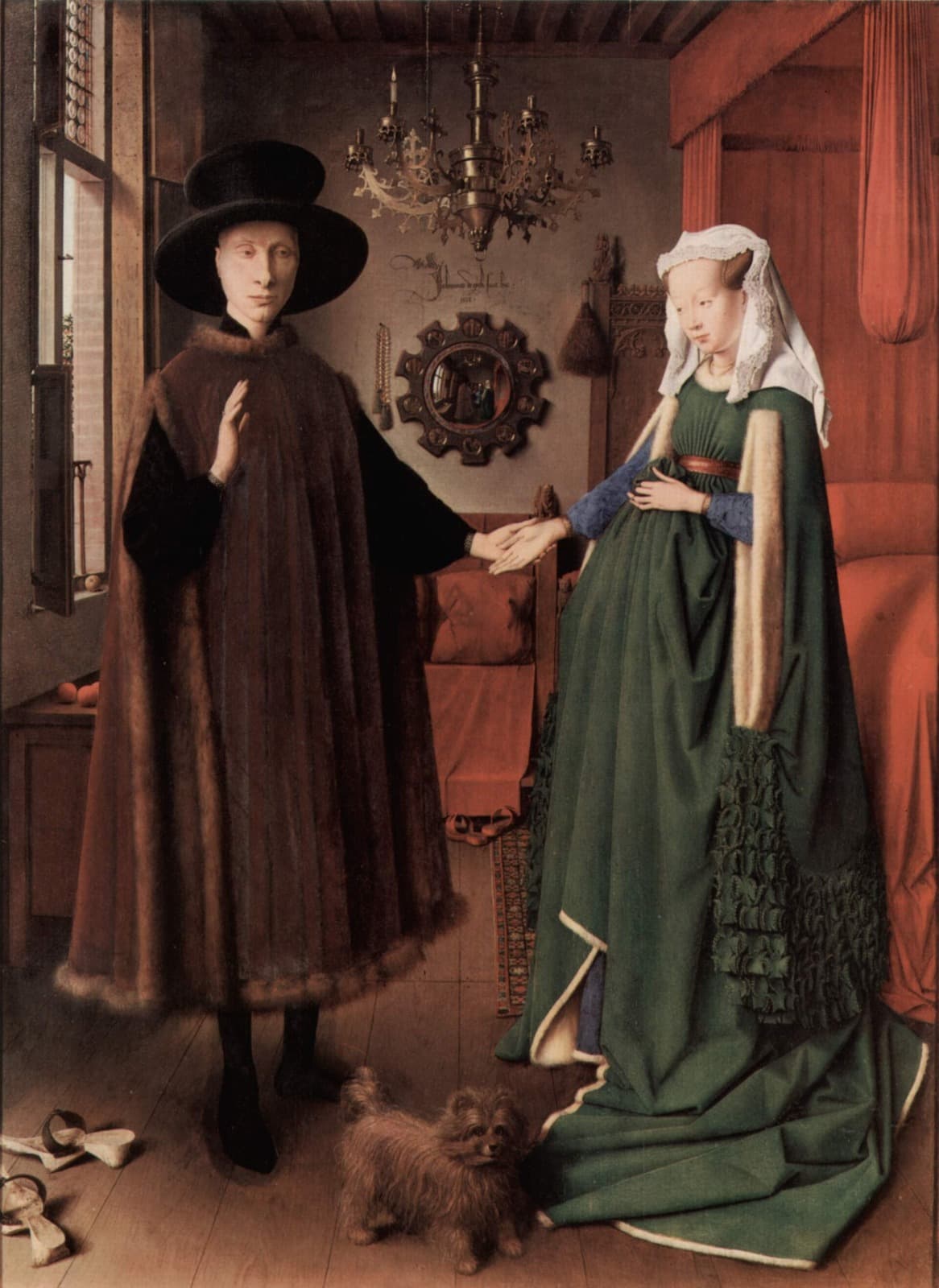
A couple joins hands in a Bruges bedroom, and the mirror behind them catches two visitors at the door. Van Eyck signed the wall above it.

The fainting Virgin curves in an exact echo of her dead son, the stroke that made van der Weyden the most copied painter in the north.
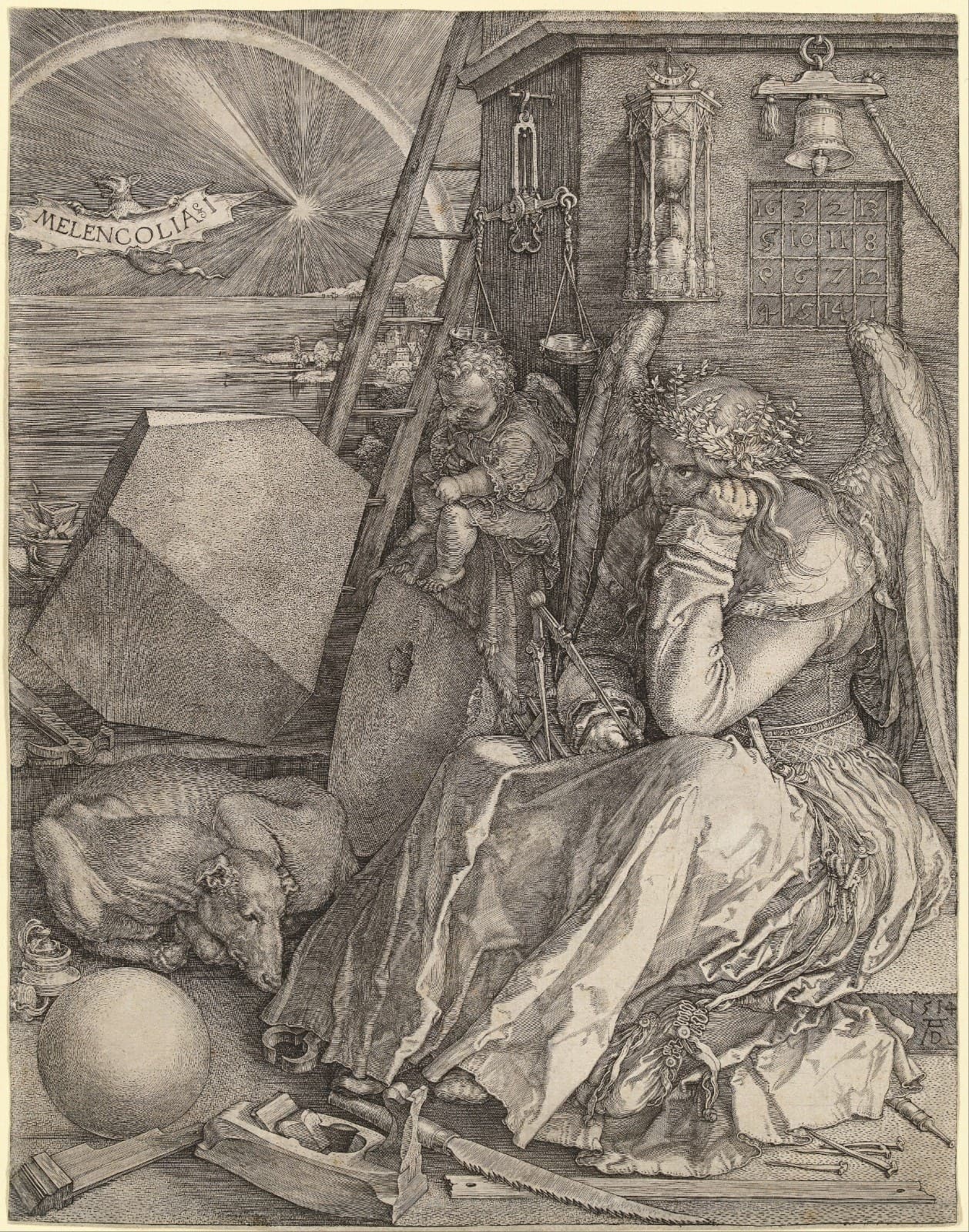
A winged figure sits with her compass idle among abandoned tools, and no print in history has drawn more scholarly argument.

Two men pose with globes, sundials and a lute with a broken string, and a smear on the floor turns into a skull from the side.
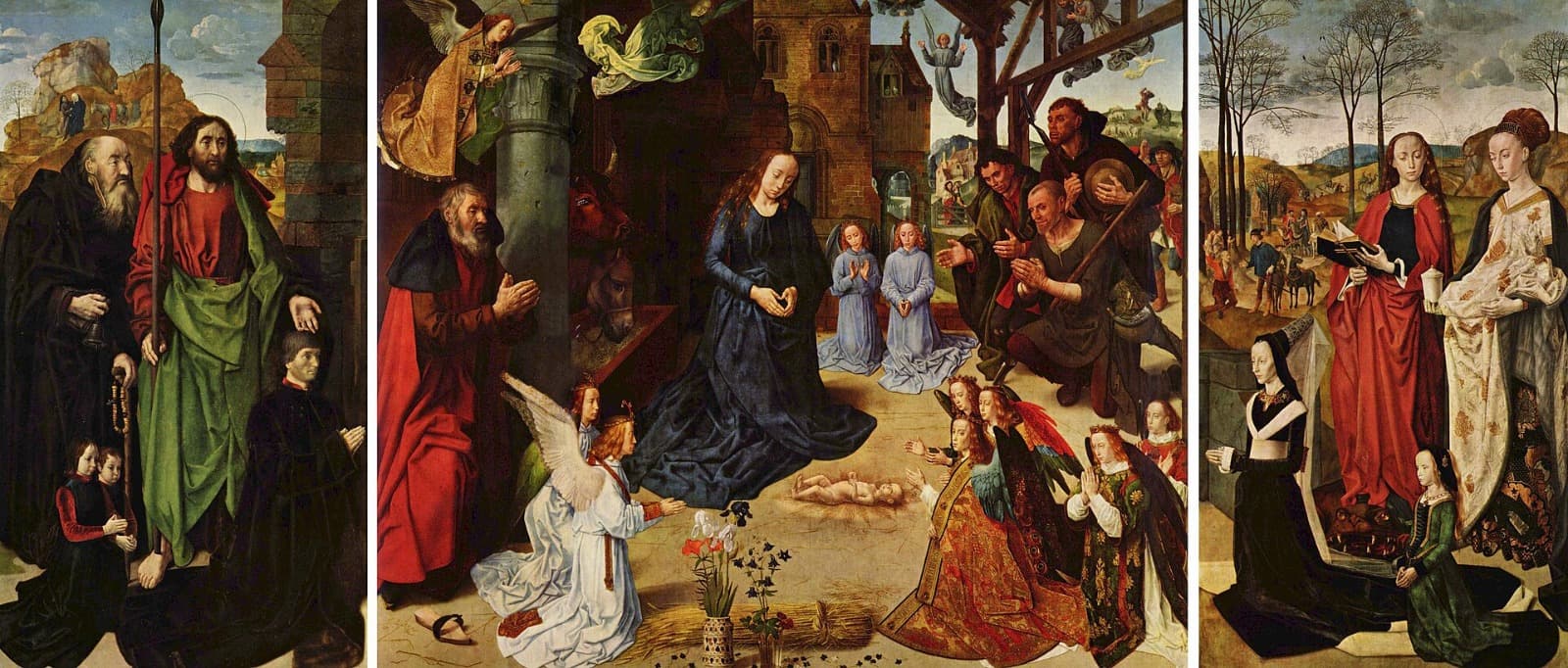
Three weathered shepherds crowd in to look at the newborn, and when the triptych reached Florence from Bruges the local painters took note.
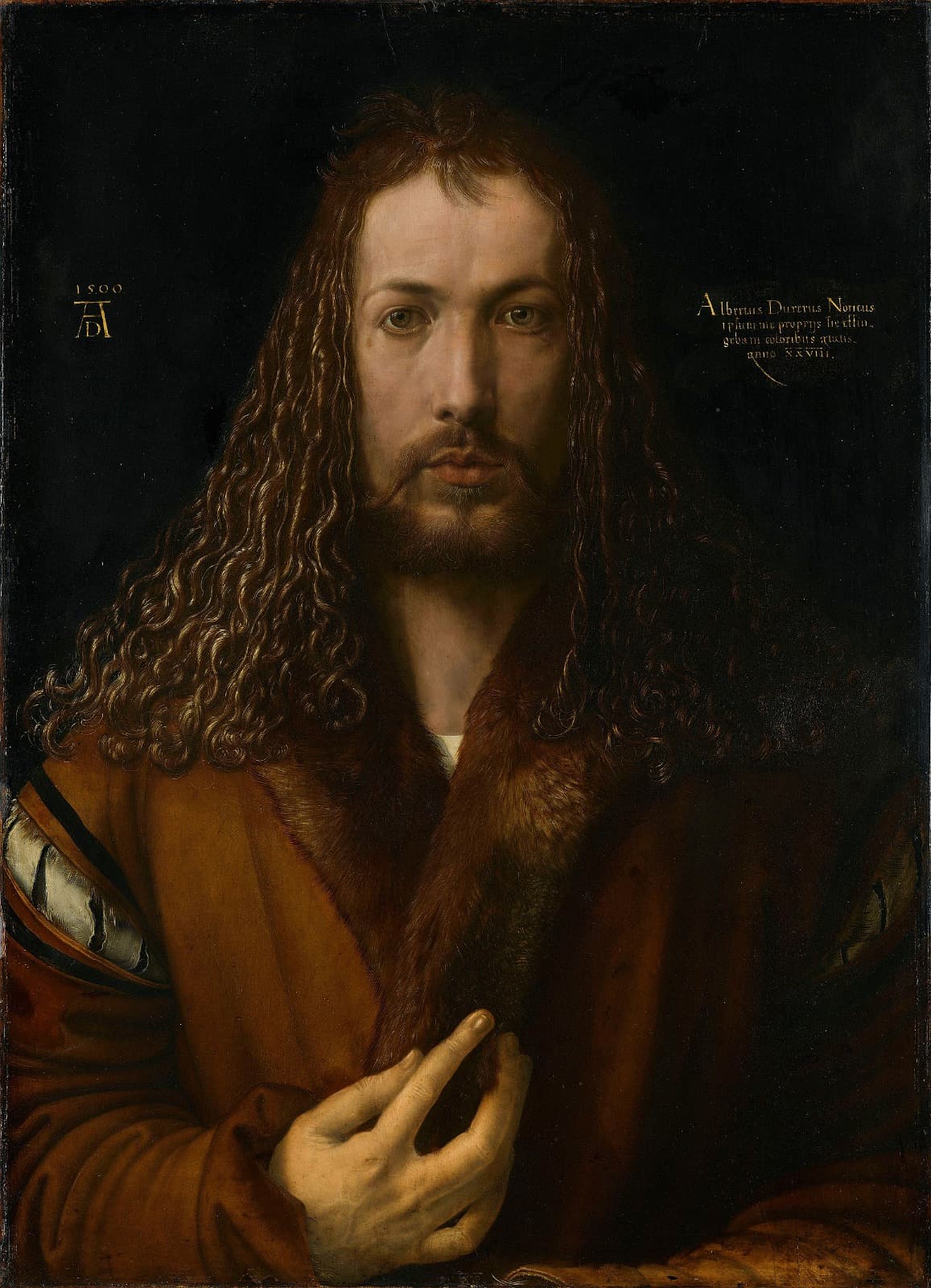
Dürer faced himself head-on in a pose reserved for images of Christ, and wrote across the panel that he had painted it at twenty-eight.

Tens of thousands of tiny soldiers fight under a sky that curves like the whole earth. Painted while the Ottomans were pressing on Vienna.

Skeletons herd the living into a coffin-trap while a king clutches his gold and two lovers play music at the corner, not yet looking up.

Van Eyck spared the old canon nothing: the stubble, the swollen hands, the spectacles. His armored saint mirrors the whole room in miniature.
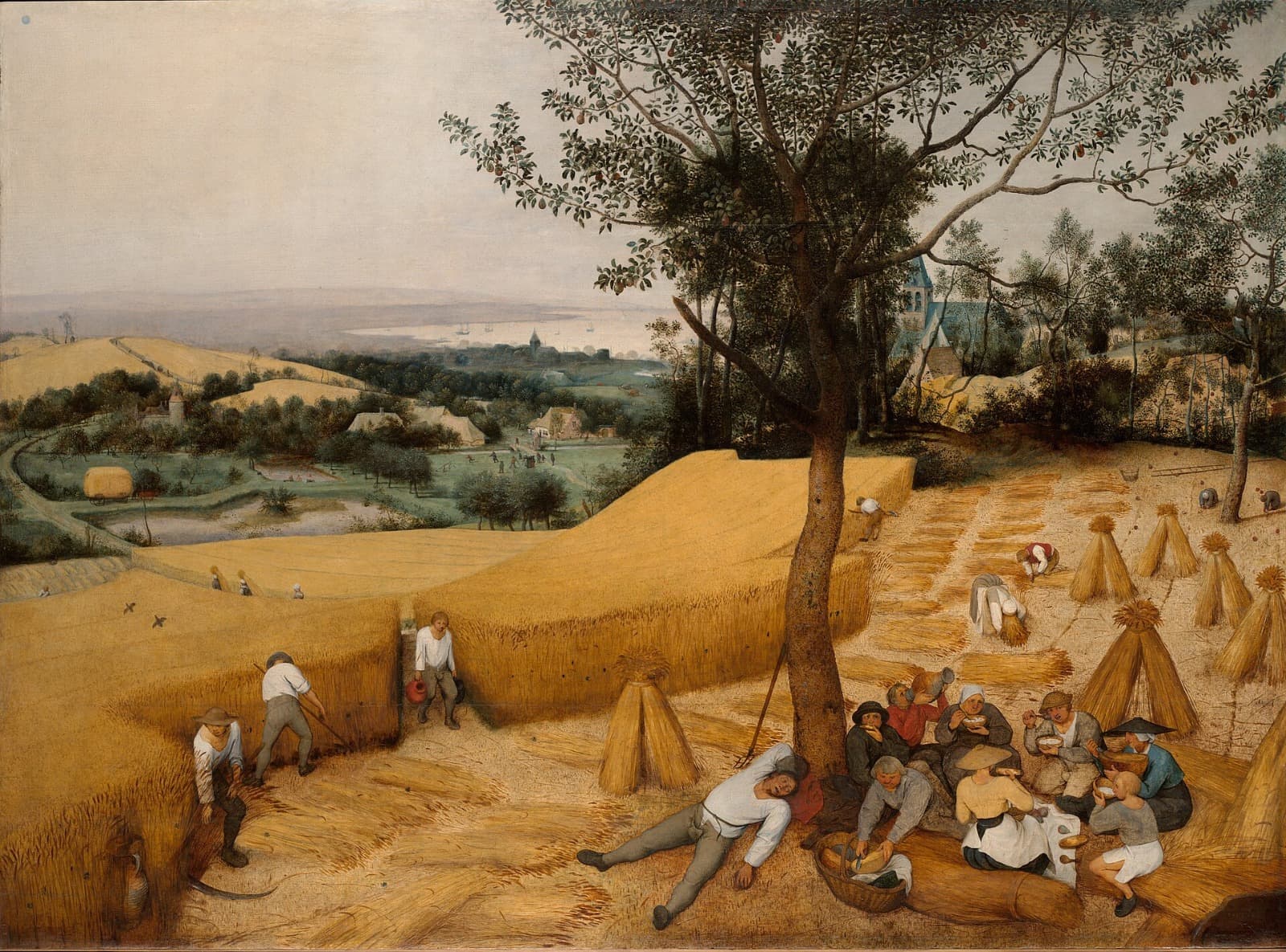
One man lies flat on his back with his mouth open while the others cut wheat. Late summer, from the same series of months.

The wary, straight-on gaze is what a painter sees in a mirror, which is why this is probably van Eyck looking at himself.

The tower is already leaning as it goes up, and Bruegel drew the cranes and ramps in enough detail that you could nearly build it.
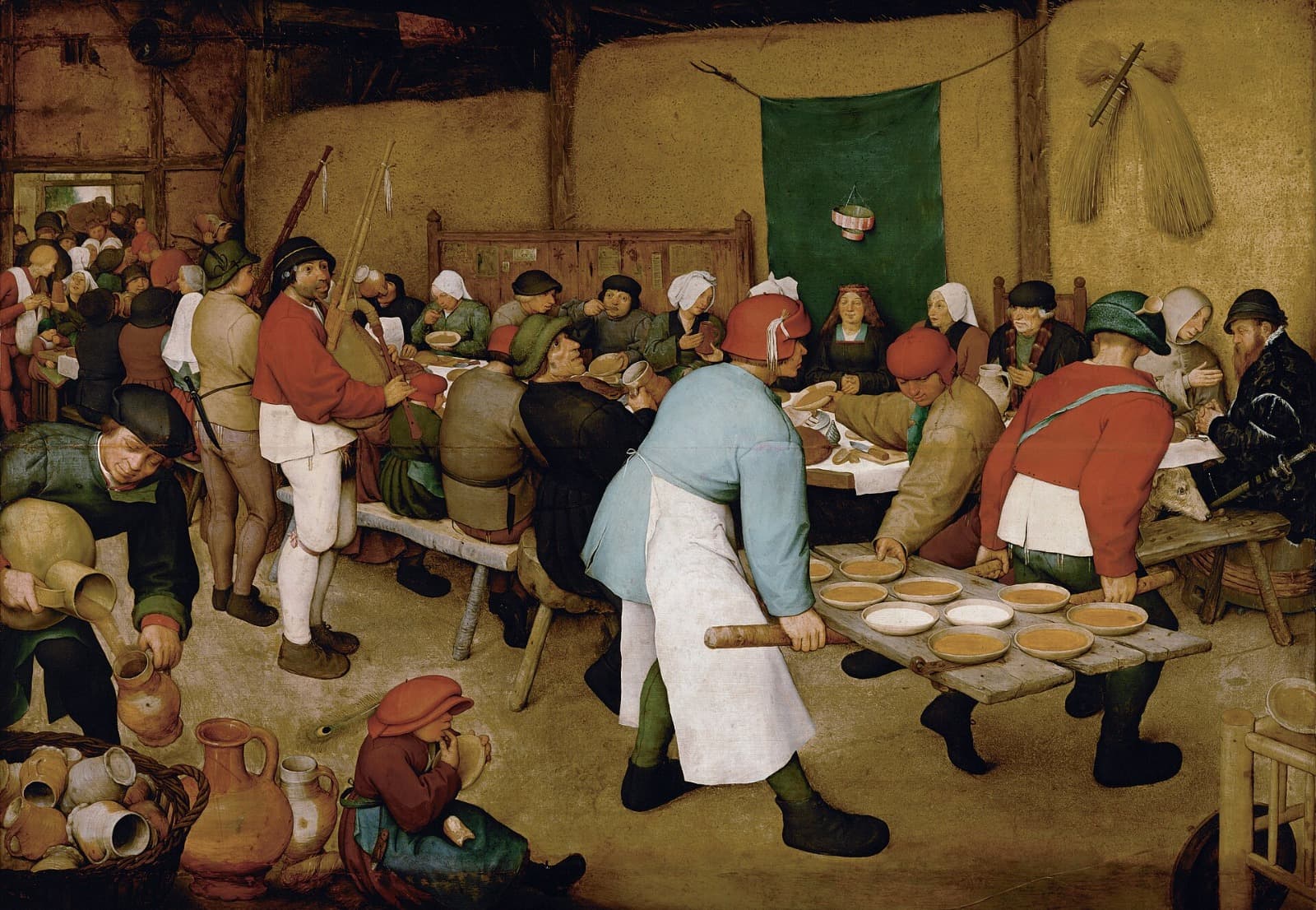
Two men carry the porridge in on an unhinged door, the bagpiper eyes it hungrily, and the bride sits idle under her paper crown.

A corpse in a box barely wider than itself, with no hint of resurrection. Dostoevsky saw it in Basel and said it could destroy faith.

Erasmus rests his hands on a book whose edge is inscribed The Labors of Hercules, his own joke about how much scholarship costs.
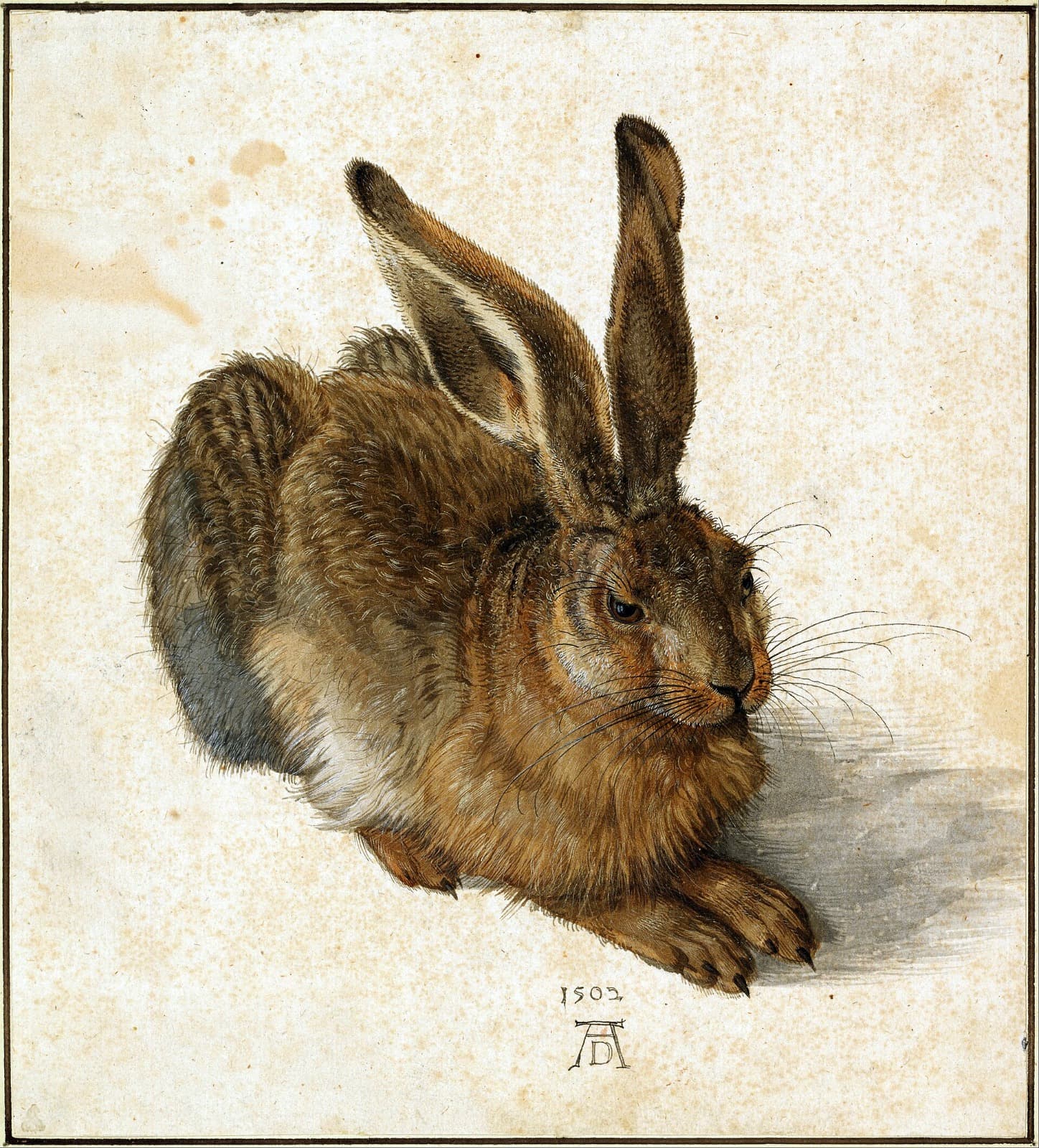
Every whisker set down separately, and in the dark eye a studio window is reflected. Dürer signed an animal study as a finished work.
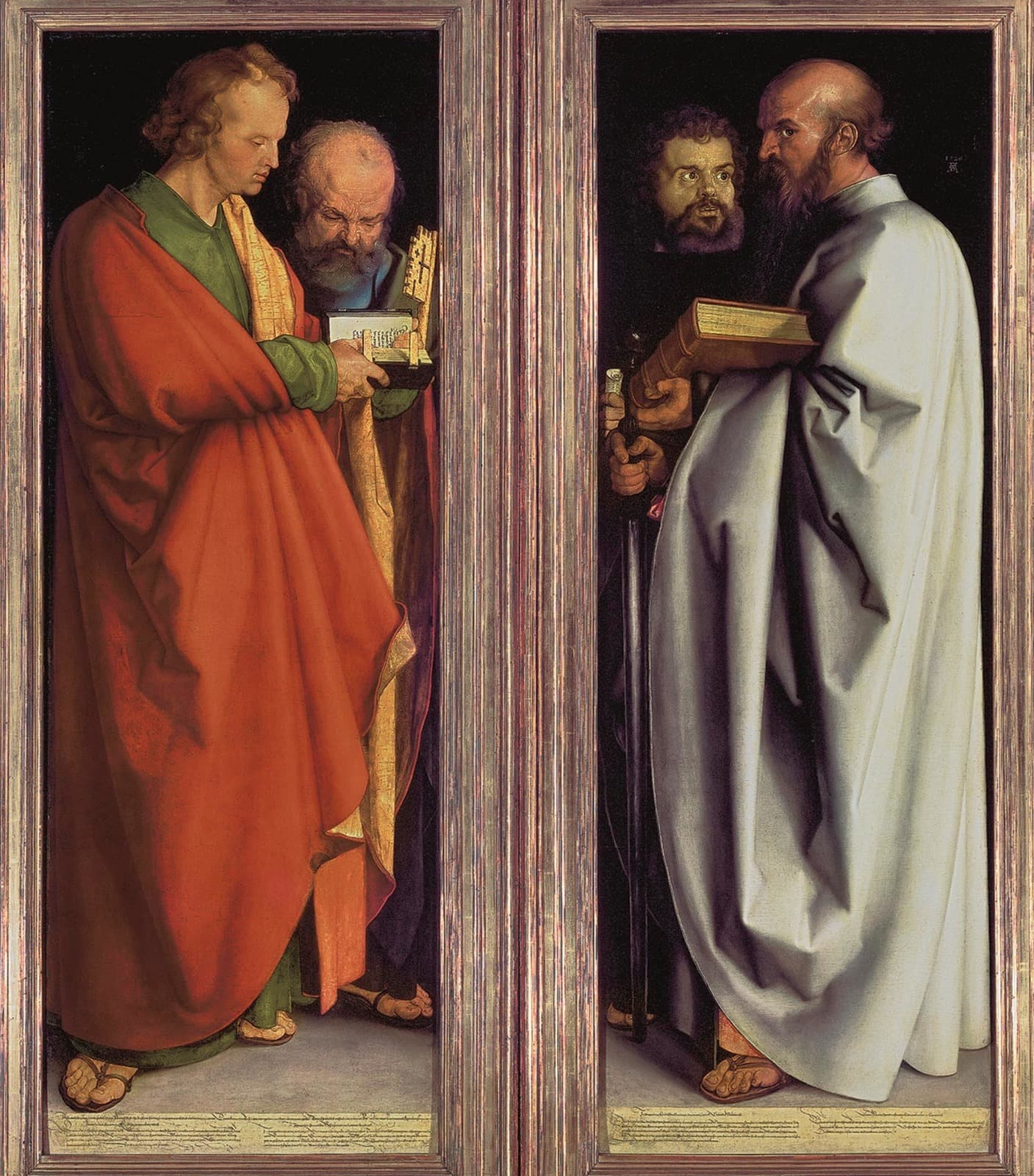
Dürer gave the panels to the Nuremberg council with Luther's words inscribed below, warning the city's rulers against false prophets. His last great work.

Not the betrayal but the blessing of the bread, staged in a Flemish hall on one of the earliest correct vanishing points in the north.

The Virgin is far too big for the cathedral because she stands for the Church itself, and real sunlight falls in patches across the floor.

Flying fish, reading toads and a burning village, and in the middle of it Anthony kneels and blesses a small Christ, entirely undistracted.

Erasmus is caught mid-sentence with the pen still moving. He sent portraits like this across Europe as a kind of intellectual calling card.

Holbein arrived in England on a letter from Erasmus and painted More at the height of his power. Within a few years More was executed.

Two pale legs disappear into the sea in the corner while the ploughman keeps ploughing. Auden wrote a poem about exactly that indifference.

A man bangs his head on a brick wall, another casts roses before swine, and over a hundred proverbs are acted out literally in one village.

All seven sacraments happen at once inside one Gothic church, with the Crucifixion looming over the nave to show where they get their power.
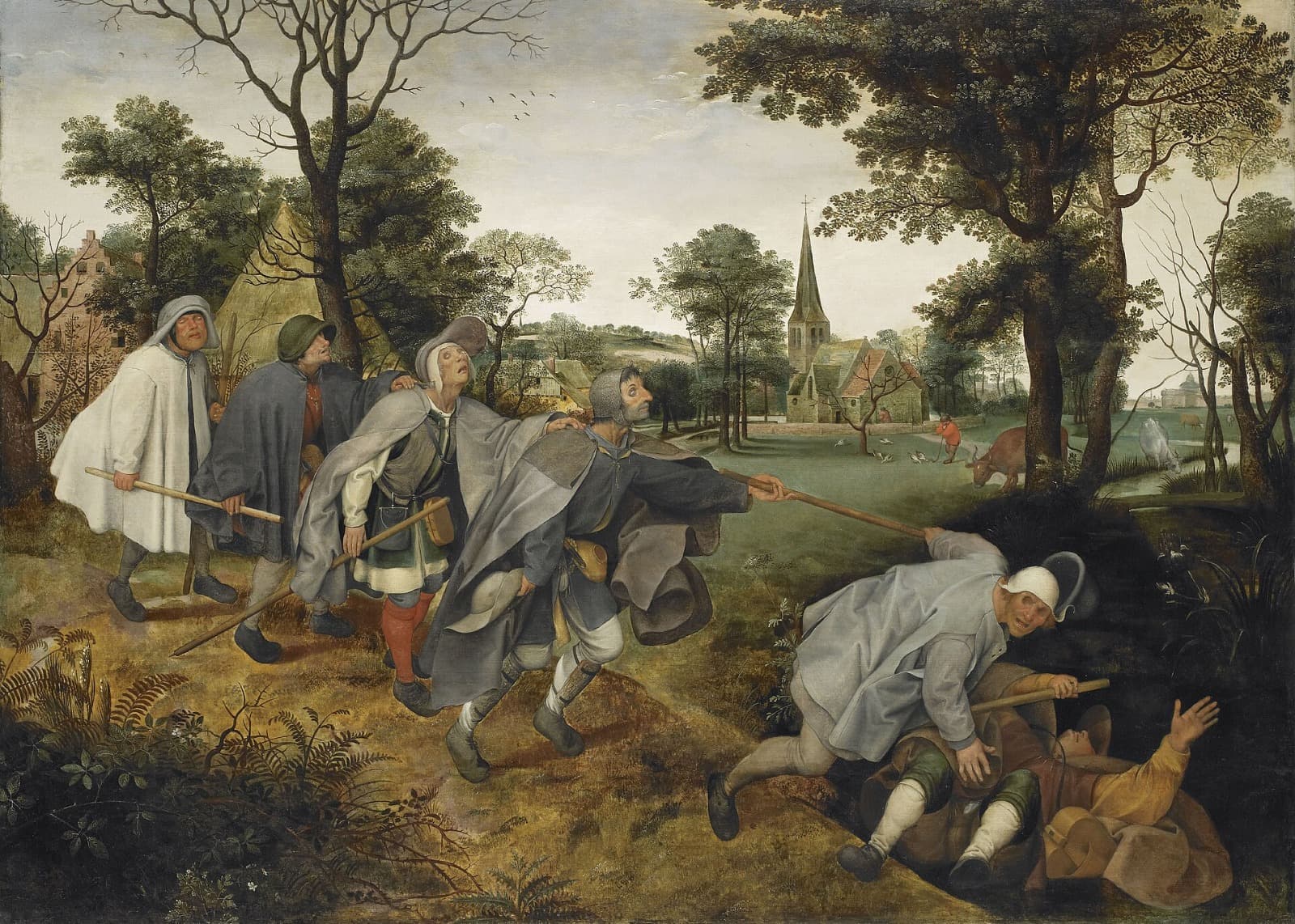
Six blind men go down one after another, and Bruegel painted their clouded eyes accurately enough for doctors to diagnose the conditions.
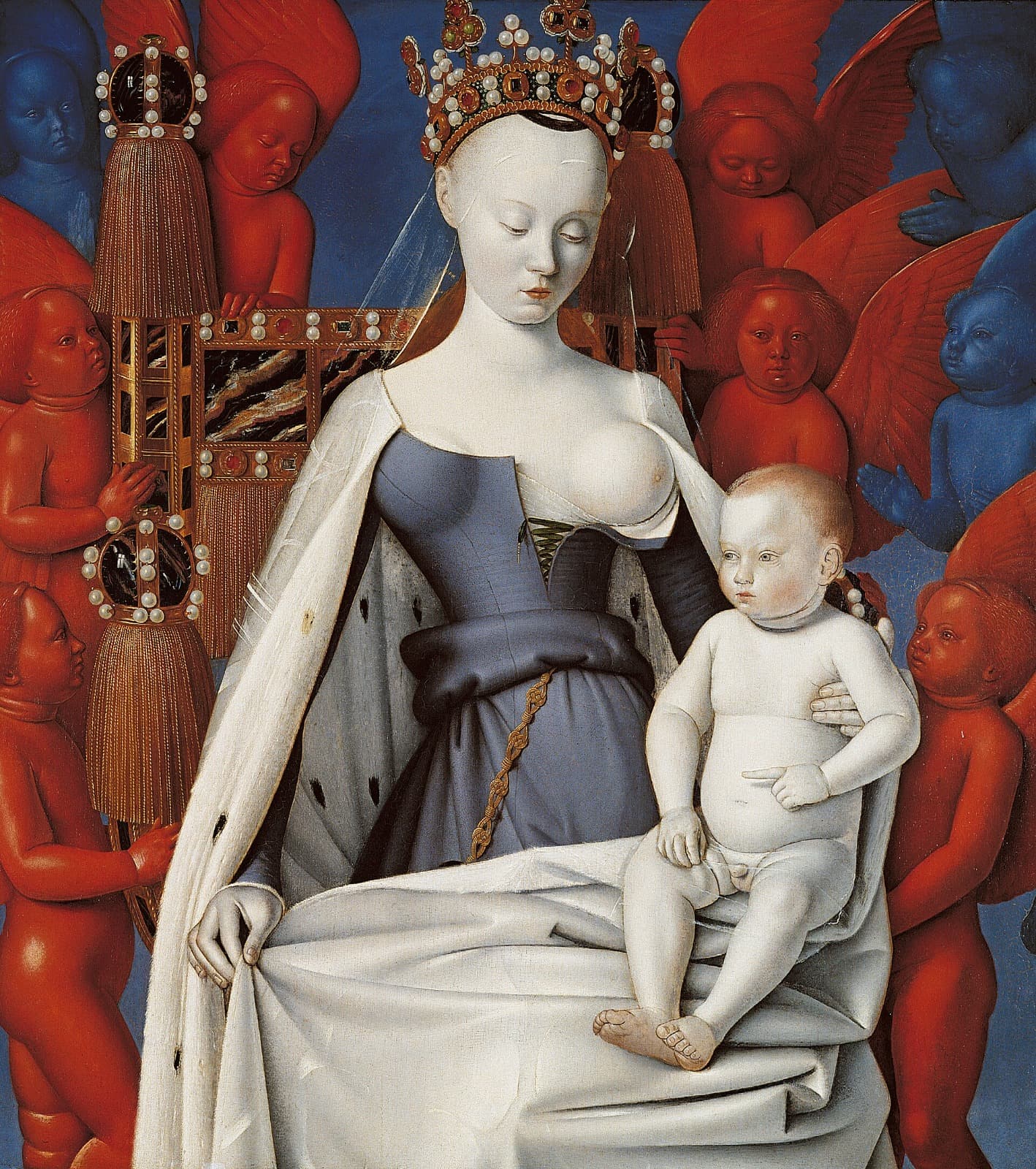
The Virgin is said to be the king's dead mistress, painted with a shaved forehead and one breast bared, ringed by red cherubim.

Cat, mouse, rabbit, ox and elk stand for the temperaments held in balance, and the cat is about to pounce.
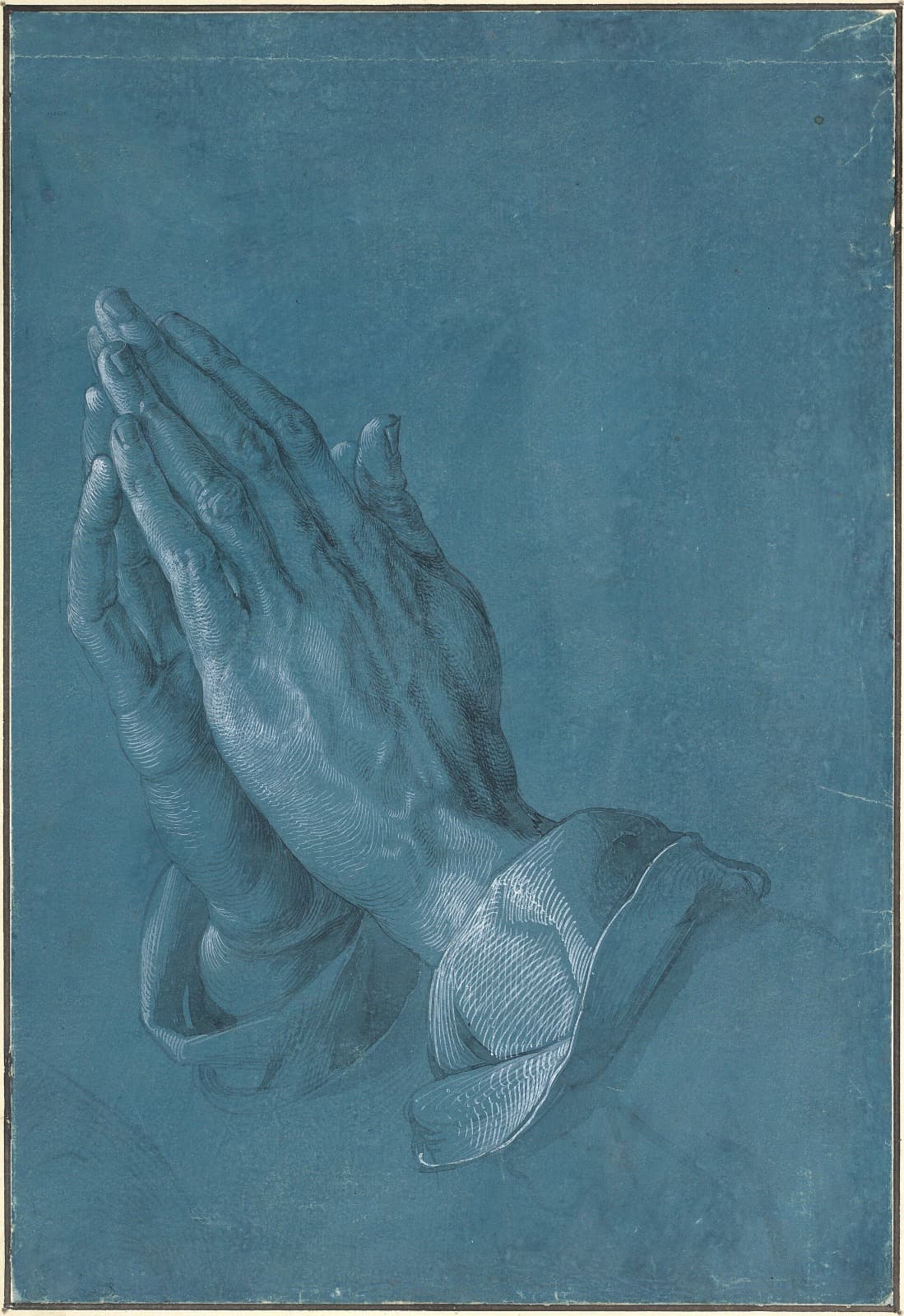
A study for an altarpiece that later burned, so the drawing has outlived the painting it was made to serve.

A crush of leering faces fills every inch, and Christ moves through the middle of it with his eyes shut.
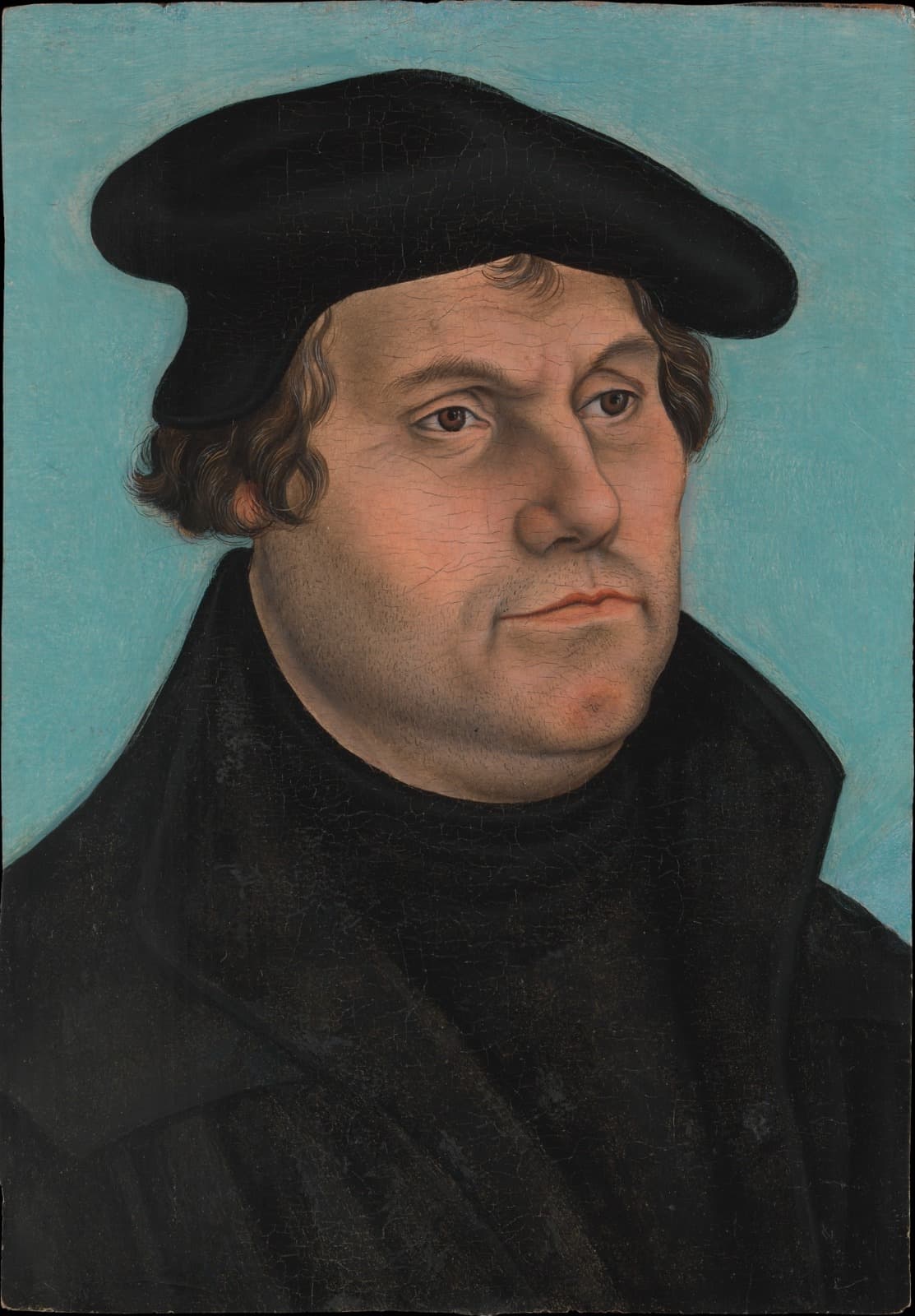
Cranach was Luther's friend and godfather to his children, and his workshop turned out this face by the score for Protestant Germany.

Luke was the patron saint of painters, and van der Weyden ran the Brussels painters' guild, so this is a tribute to the trade.

He weighs gold on a fine balance and her eyes drift off the prayer book toward the coins. A small mirror catches the room.
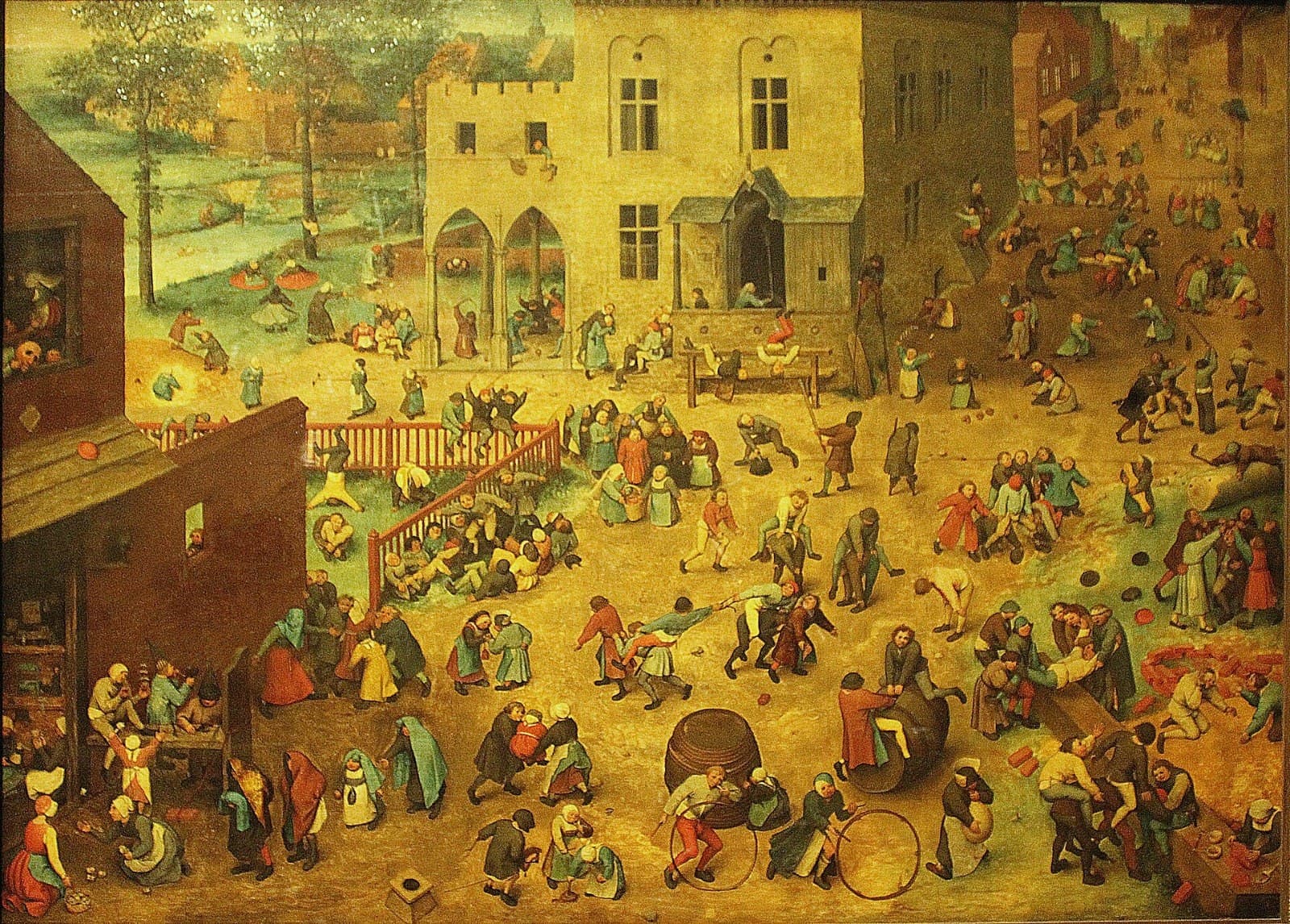
Around two hundred children playing some eighty different games, no adults anywhere, and no particular place for the eye to start.
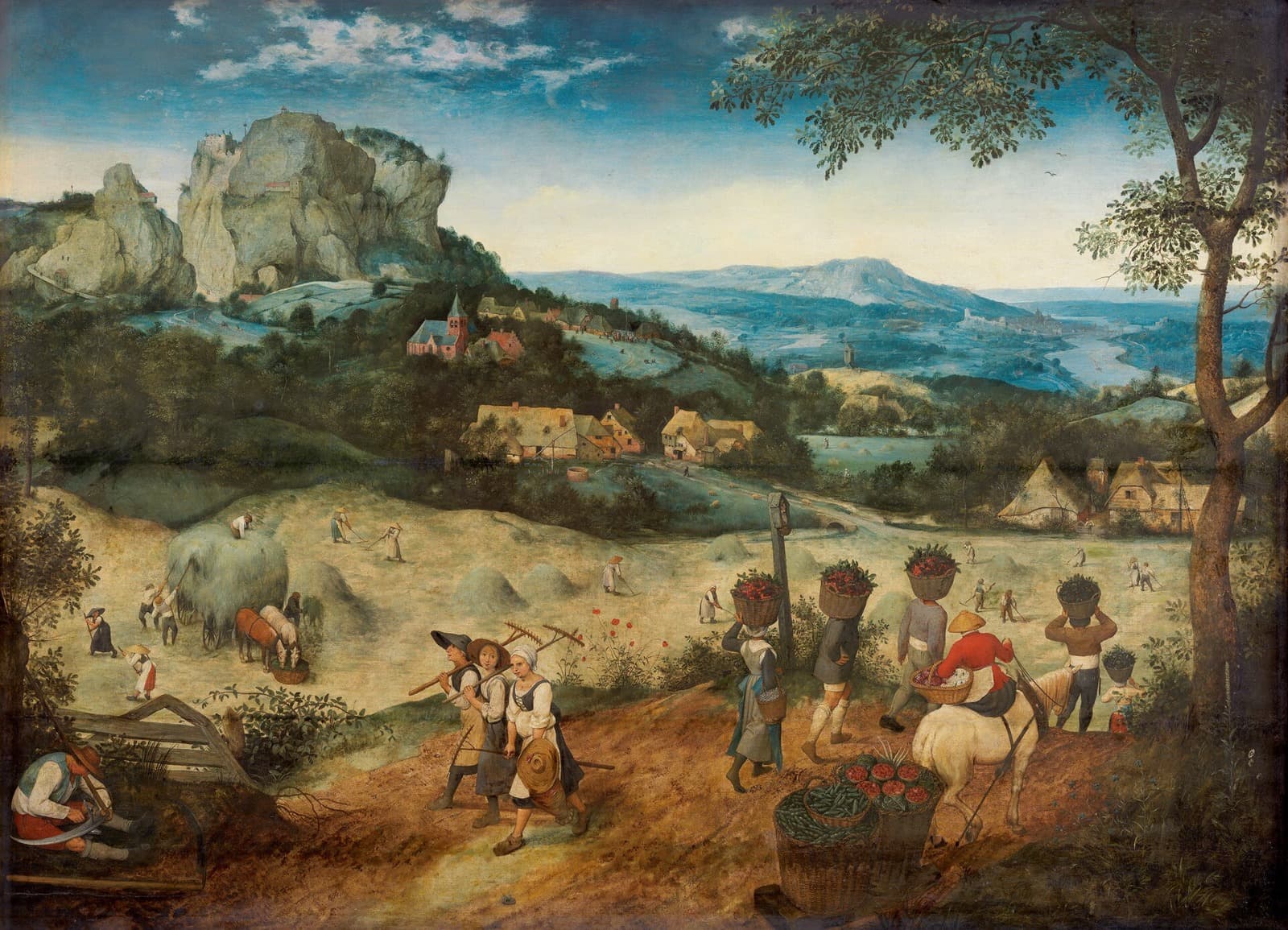
June or July from the same series of months, with rakes over shoulders and a girl carrying baskets of cherries toward us.

Dürer painted it in Venice to prove a German could beat the Venetians at color, and wrote on it that it took five months.