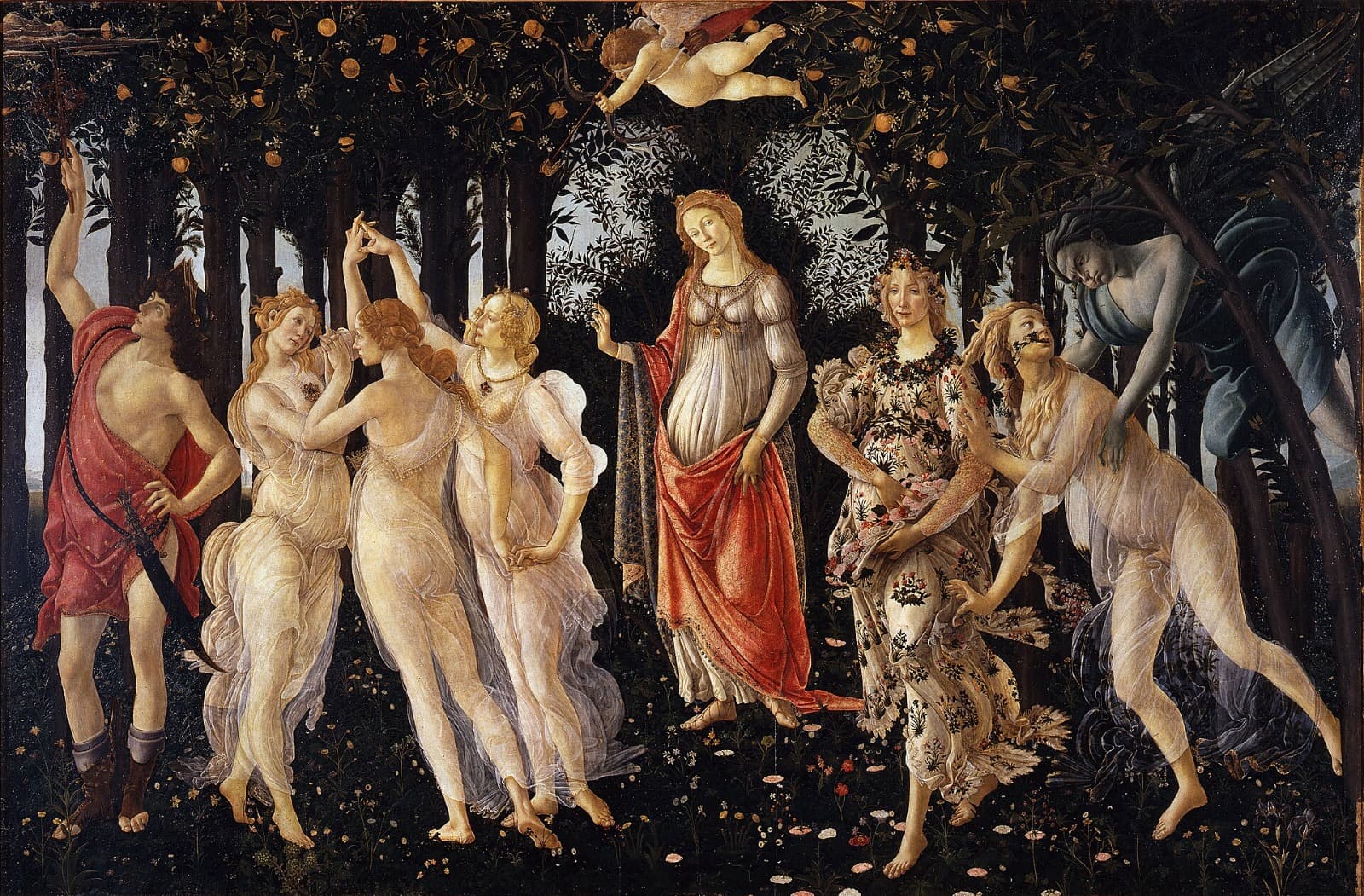
Primavera
1482 · Uffizi Gallery, Florence
Venus stands in an orange grove while the Graces dance and spring arrives at her right. The meadow holds hundreds of identifiable plants.
★ 9.8
 skopia
Venus stands in an orange grove while the Graces dance and spring arrives at her right. The meadow holds hundreds of identifiable plants.

Venus arrives on a scallop shell in a fall of roses, painted on canvas at a time when almost everyone still worked on panel.
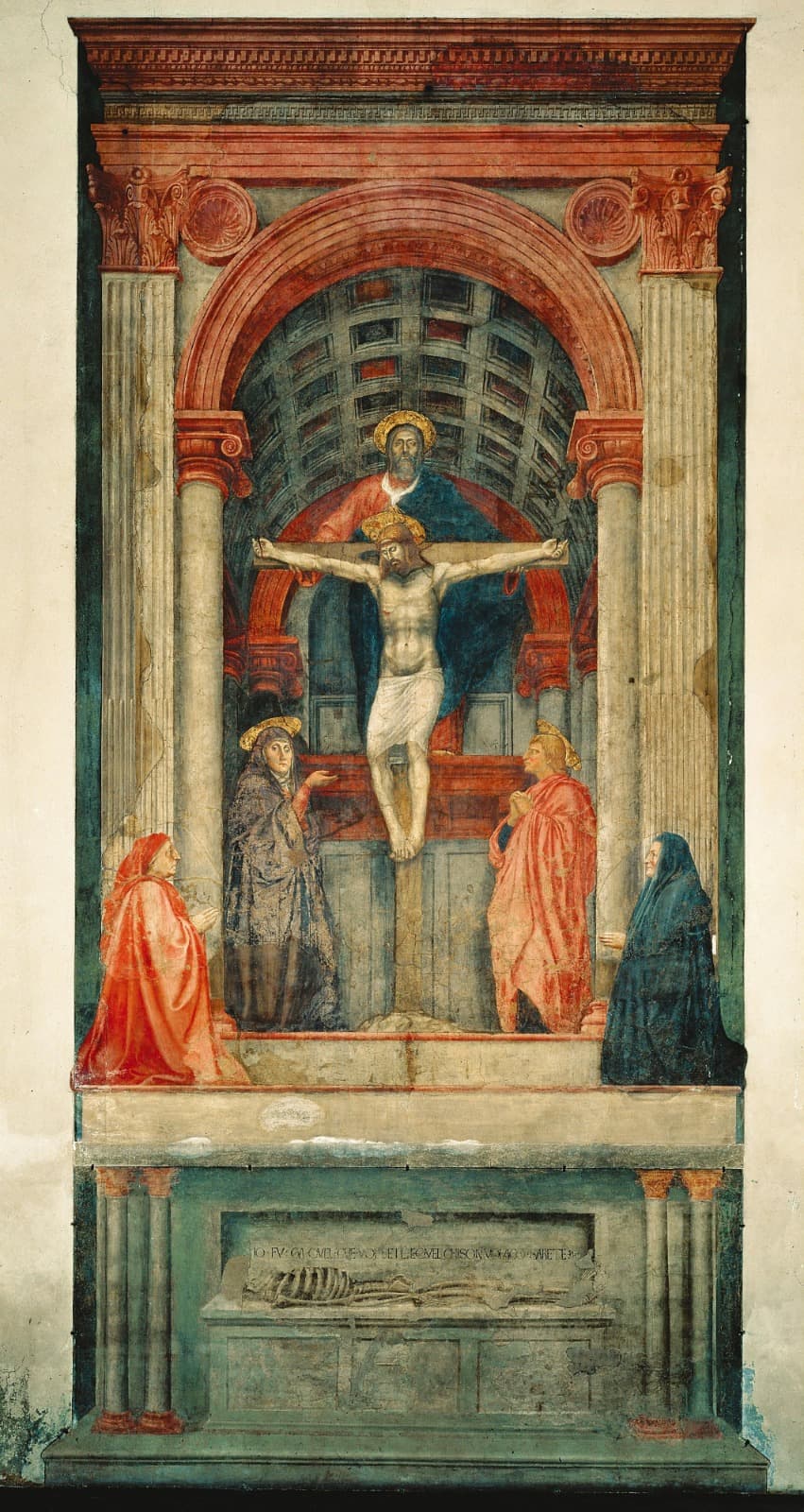
The earliest surviving painting built on a single vanishing point, worked out on a wall of Santa Maria Novella with Brunelleschi's help.
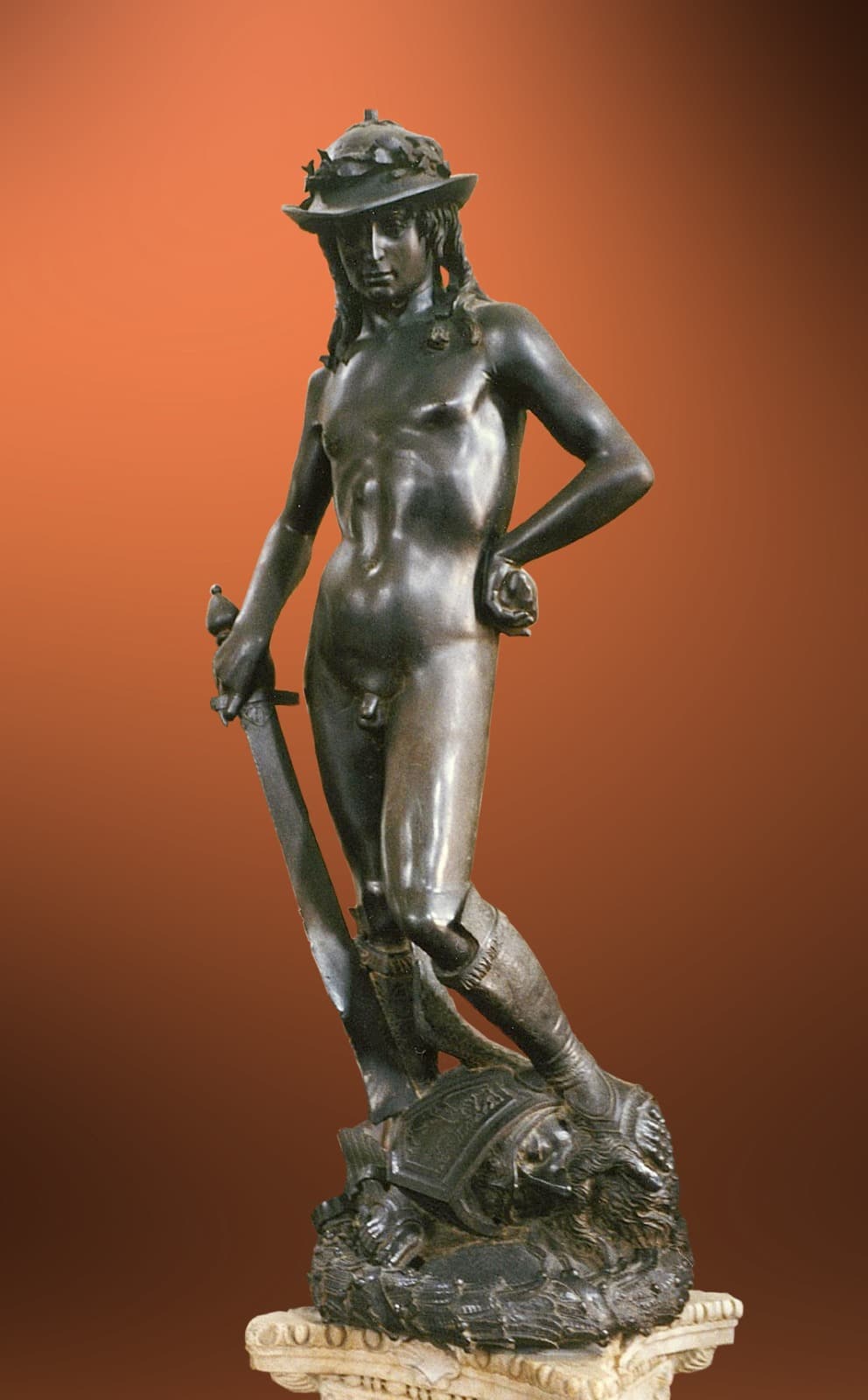
A naked boy in boots and a laurel hat rests one foot on Goliath's head, the first freestanding bronze nude since antiquity.
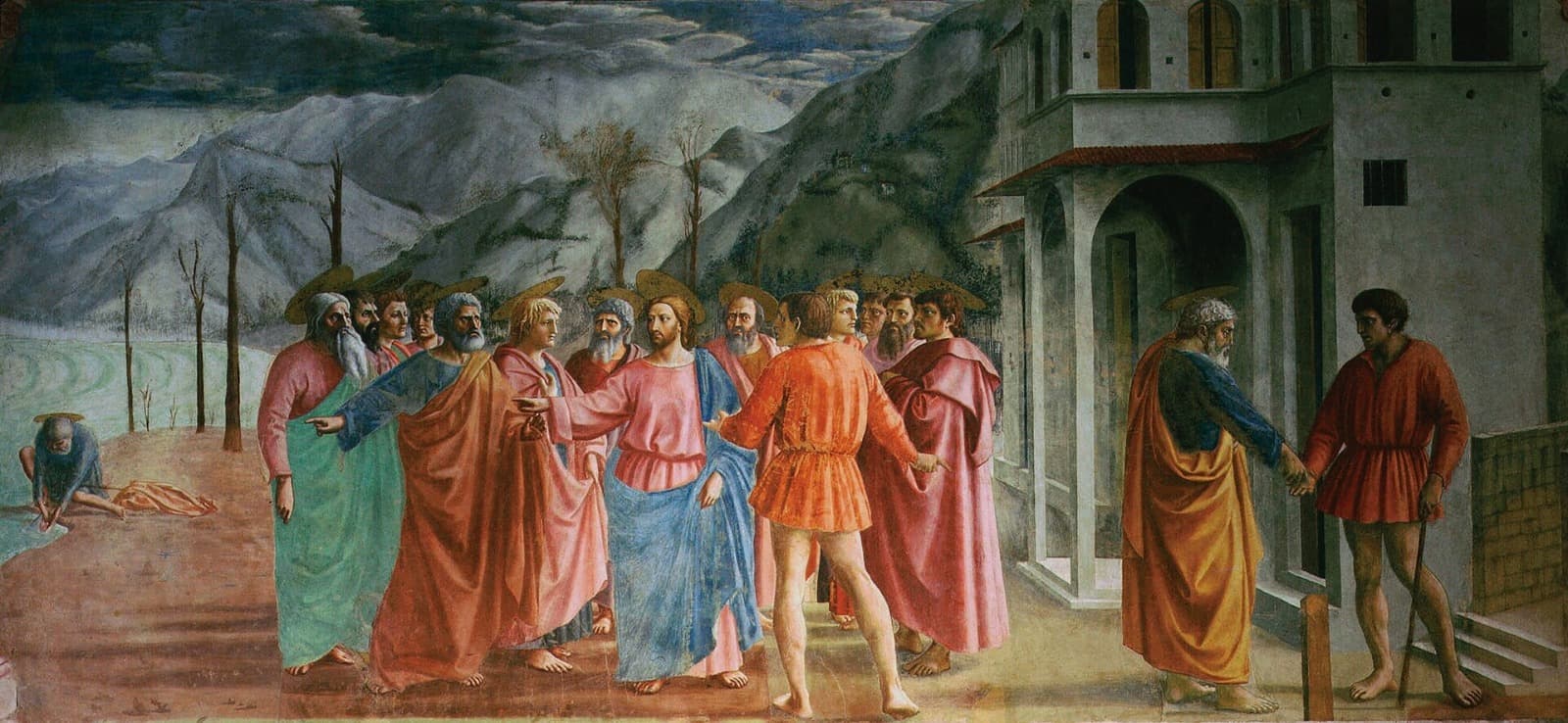
Three moments run in a single frame: the tax demanded, Peter pulling the coin from a fish, and Peter paying up at the right.
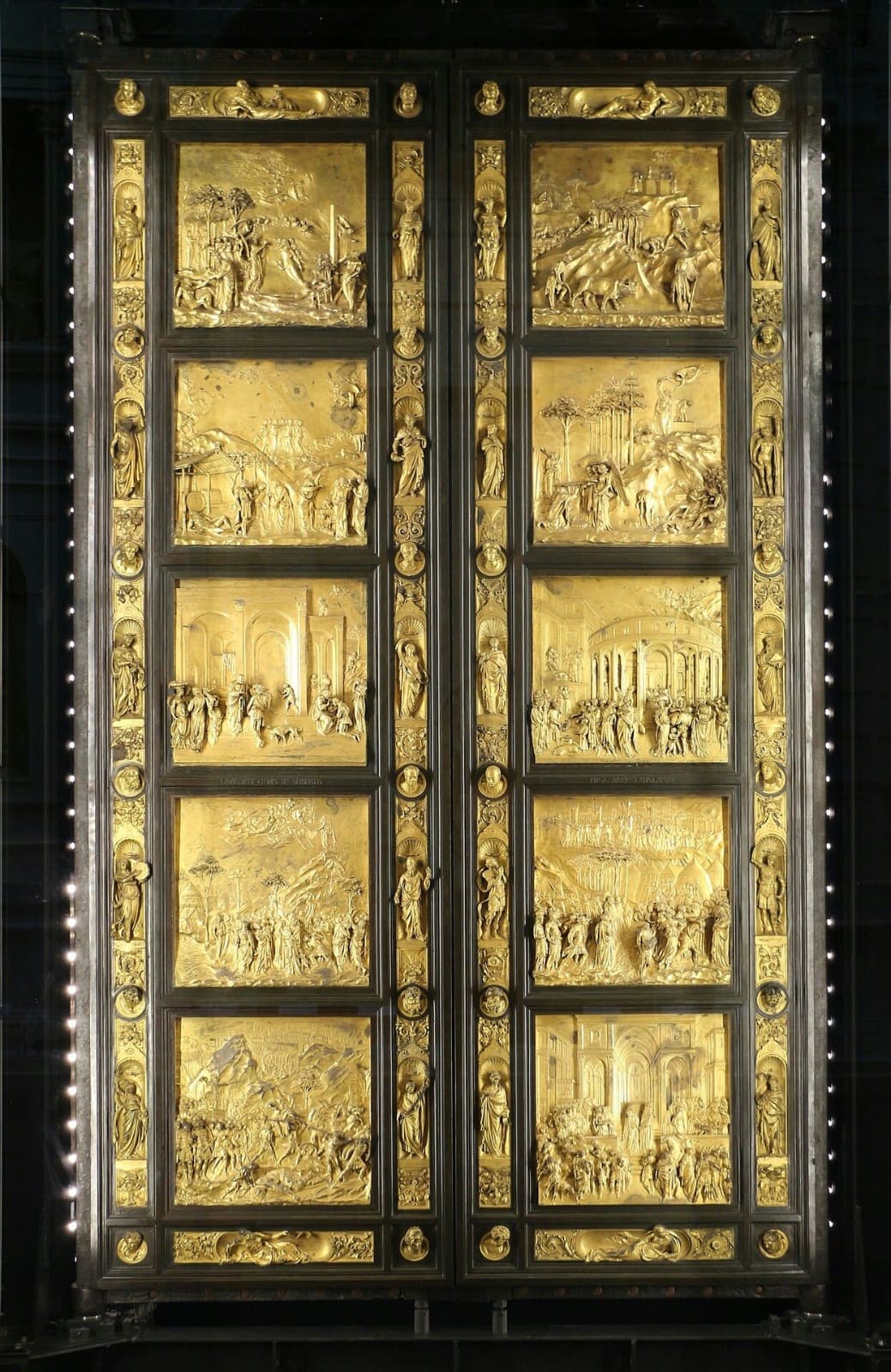
Ghiberti gave twenty-seven years to these doors, and the name comes from Michelangelo, who is supposed to have said they were fit for paradise.

Eve throws back her head and howls while Adam hides his face, the bodies heavy and casting real shadows. Michelangelo came to study it.

Cecilia Gallerani turns as if someone has come in, and the ermine turns with her. It was her patron's emblem and a pun on her name.

Christ is scourged in the middle distance while three men talk in the foreground, indifferent. Nobody has settled who they are or why.

The trees behind Christ turn from bare to leafing across the panel. In 1944 a British officer held his guns rather than shell the town.

Fra Angelico frescoed it at the top of the dormitory stairs, so the friars met it every time they climbed to their cells.

Francis steps barefoot from his hermitage into a light coming from the left, and Bellini gives him no seraph and barely any wounds.
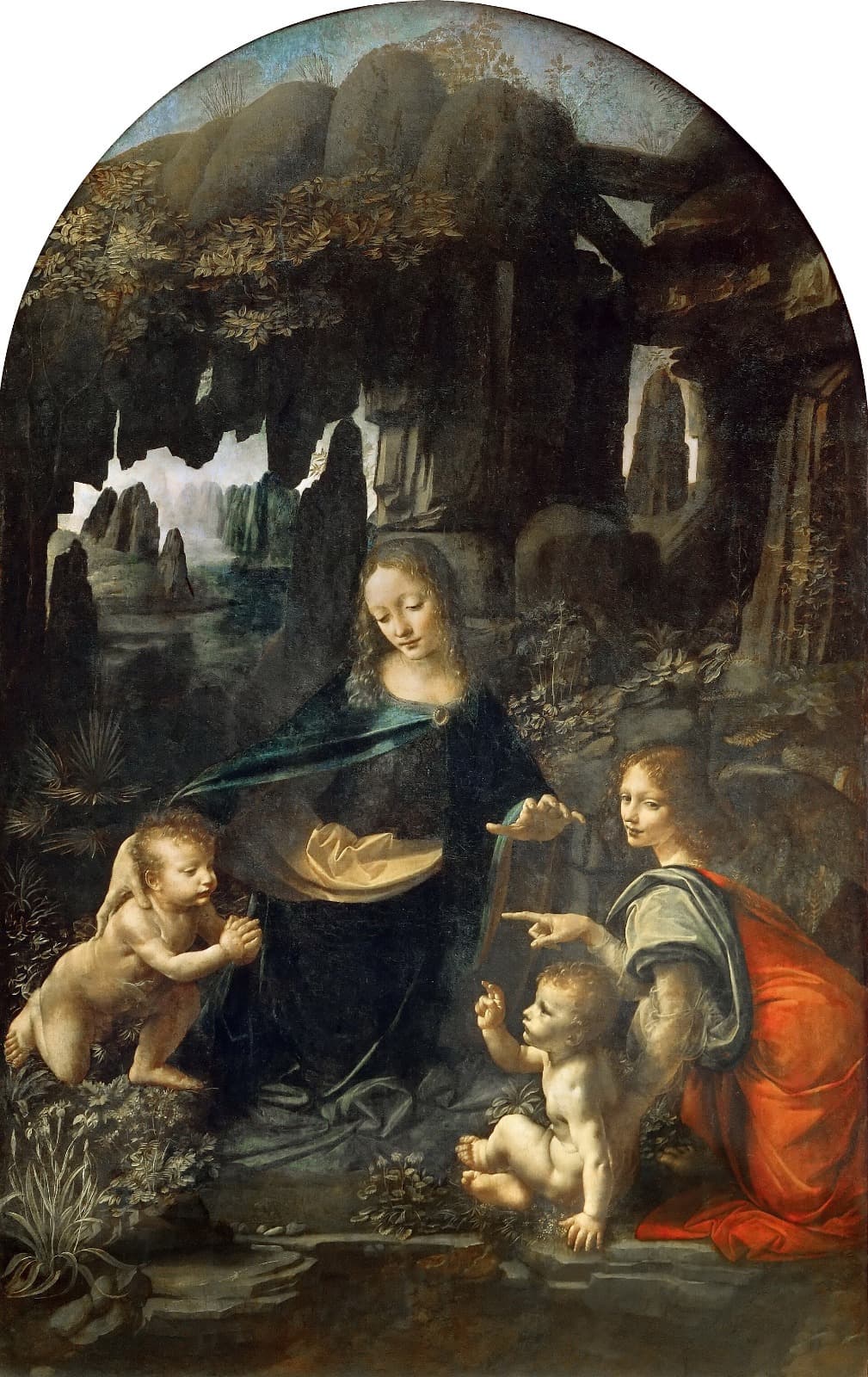
Leonardo painted this cave twice after falling out with the patrons. This is the earlier version, the one that stayed in France.

An ostrich egg hangs from the vault and pulls every sightline down. Federico is shown from the left because a tournament took his right eye.

Gabriel bows to Mary under the loggia while Adam and Eve are driven out of the garden at the left, the sin this undoes.

The saints share one continuous space instead of separate compartments, and the two kneeling physicians are the name-saints of the Medici who paid.

No angel, no dove, no lily. Mary looks up from her book straight at us, because we are standing where Gabriel ought to be.

The old man's nose is swollen and ruined by disease, and the boy looks up at him without noticing it at all.
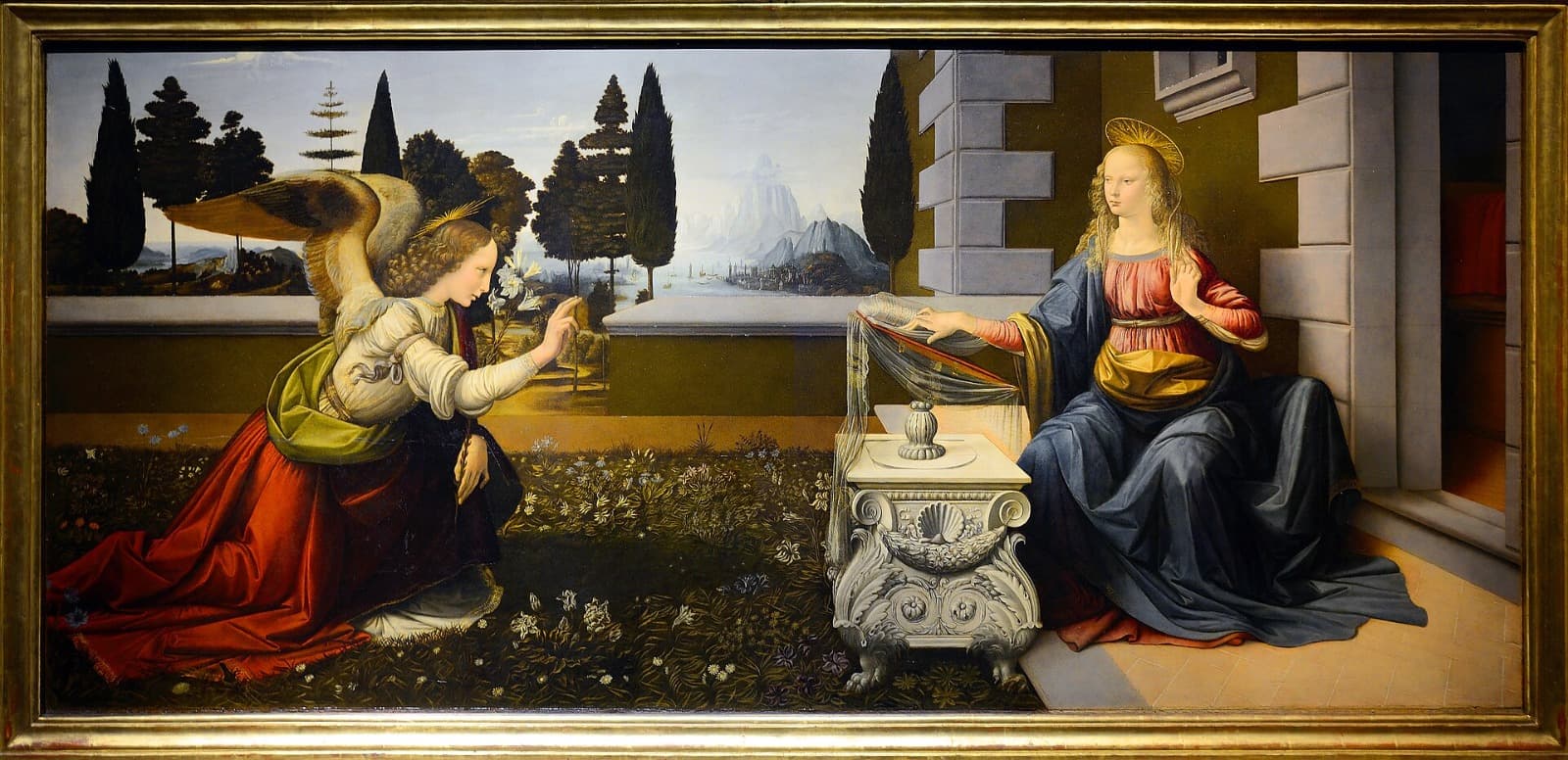
An early work, and Mary's right arm reaches further than an arm can. Gabriel's wings were studied from a real bird.

A juniper bush stands behind her as a pun on her name. The panel was later cut down at the bottom, taking her hands with it.

Broken lances lie along the receding lines of a perspective grid. Vasari said Uccello sat up all night muttering about how sweet it was.

The central panel of three, with the Florentine commander charging in a gold-and-scarlet hat on a horse turned like a carousel figure.

An angel drops steeply from the corner and its light is the only light in the tent. One of the first true night scenes in painting.

Red-clad hunters and dogs funnel into a black wood toward a single vanishing point. One of the earliest night scenes on an Italian panel.
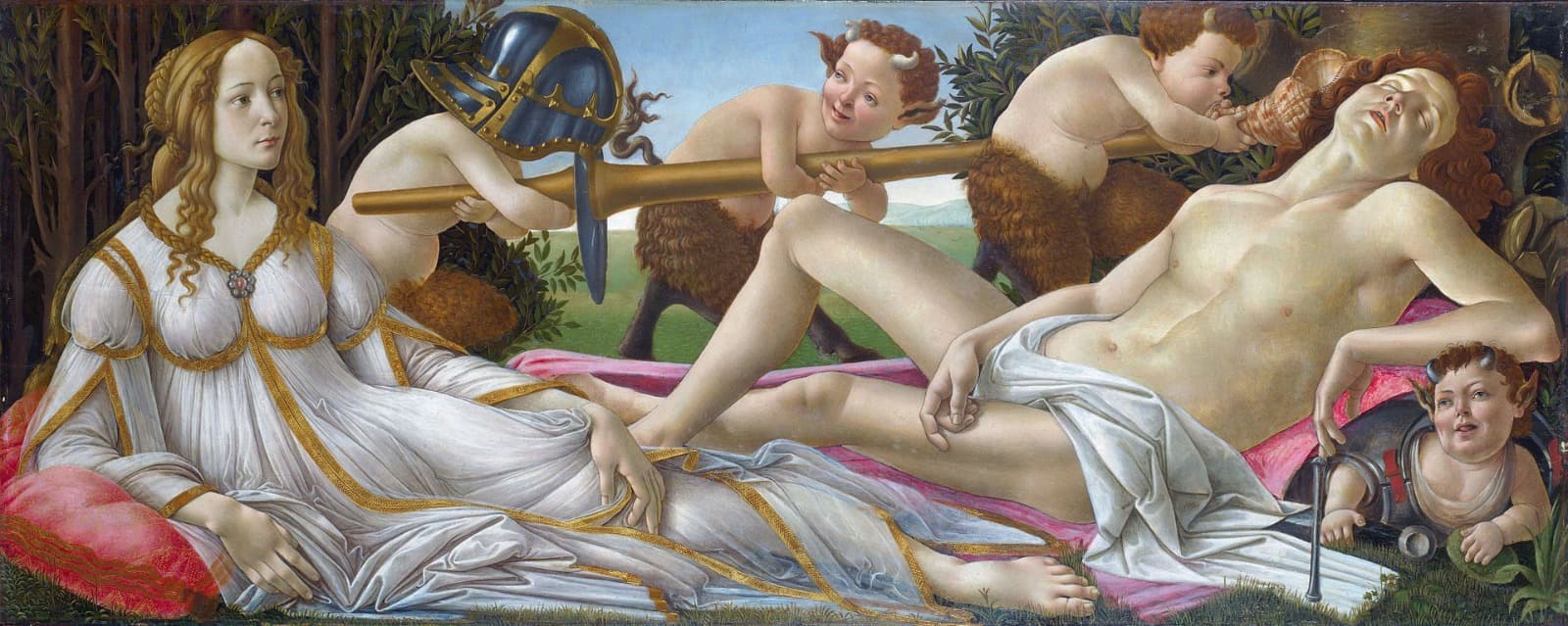
Mars sleeps the sleep of the spent lover while satyrs make off with his lance, one blowing a conch in his ear without waking him.

The three kings are Medici, and the young man in the saffron cloak at the right, looking straight out at us, is Botticelli.

The princess has the dragon on a leash made from her own belt, and a spiral storm cloud winds up behind the saint.

Mantegna carved the rock like an engraver while Judas already leads the soldiers down the road. His brother-in-law Bellini painted the same scene, softer.

A red cap, a parapet, and a gaze that meets yours. Antonello brought the Netherlandish portrait into Italy and killed off the profile.
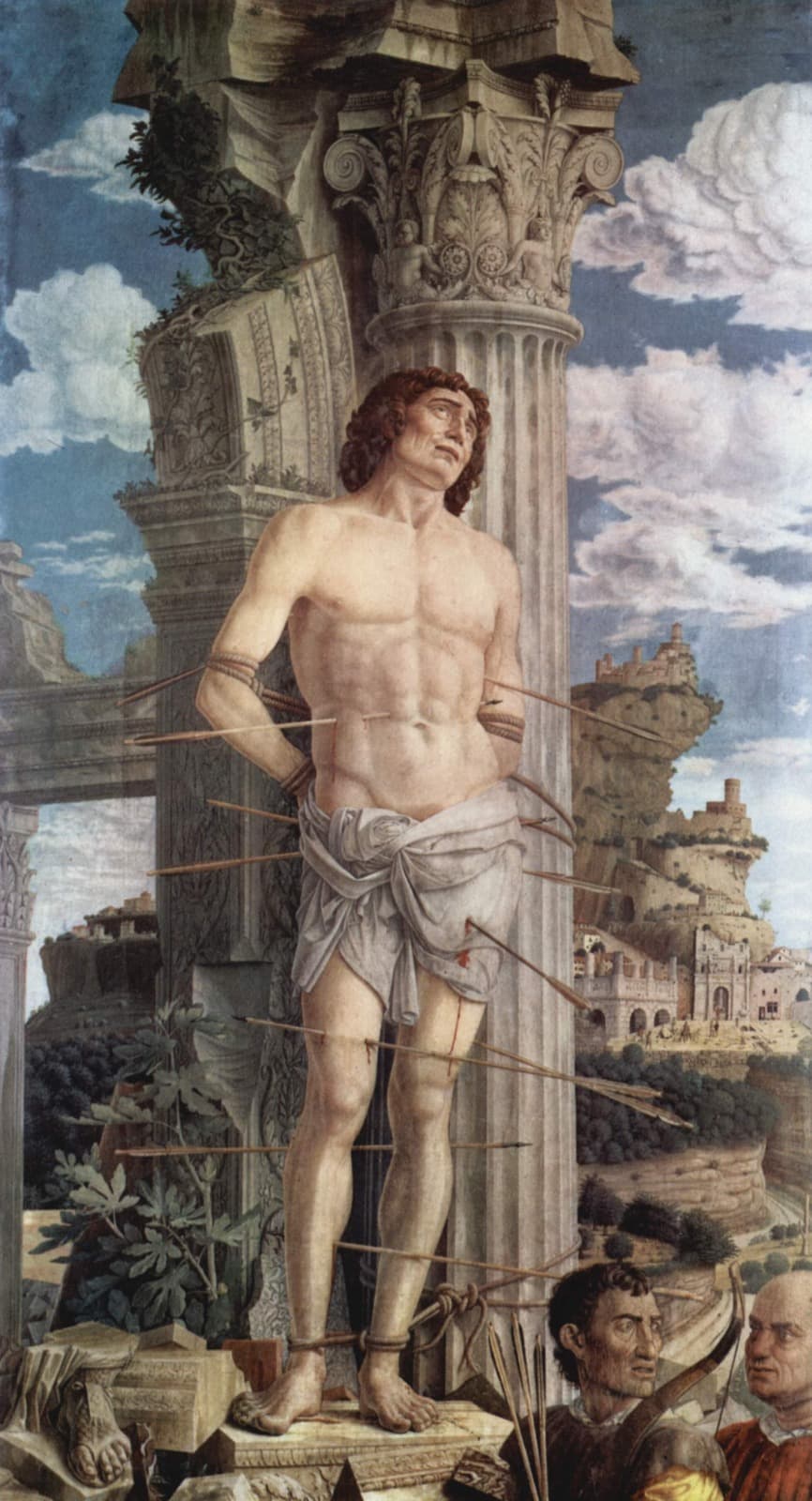
Sebastian takes his arrows with the composure of a statue, tied to a Roman column in a field of accurately ruined antiquity.

Christ crowns his mother at the top of a flight of steps that recede convincingly into depth, which is the new thing here.

She sits in profile against a hedge of carnations with butterflies going past, a sprig of juniper on her sleeve punning on her name.
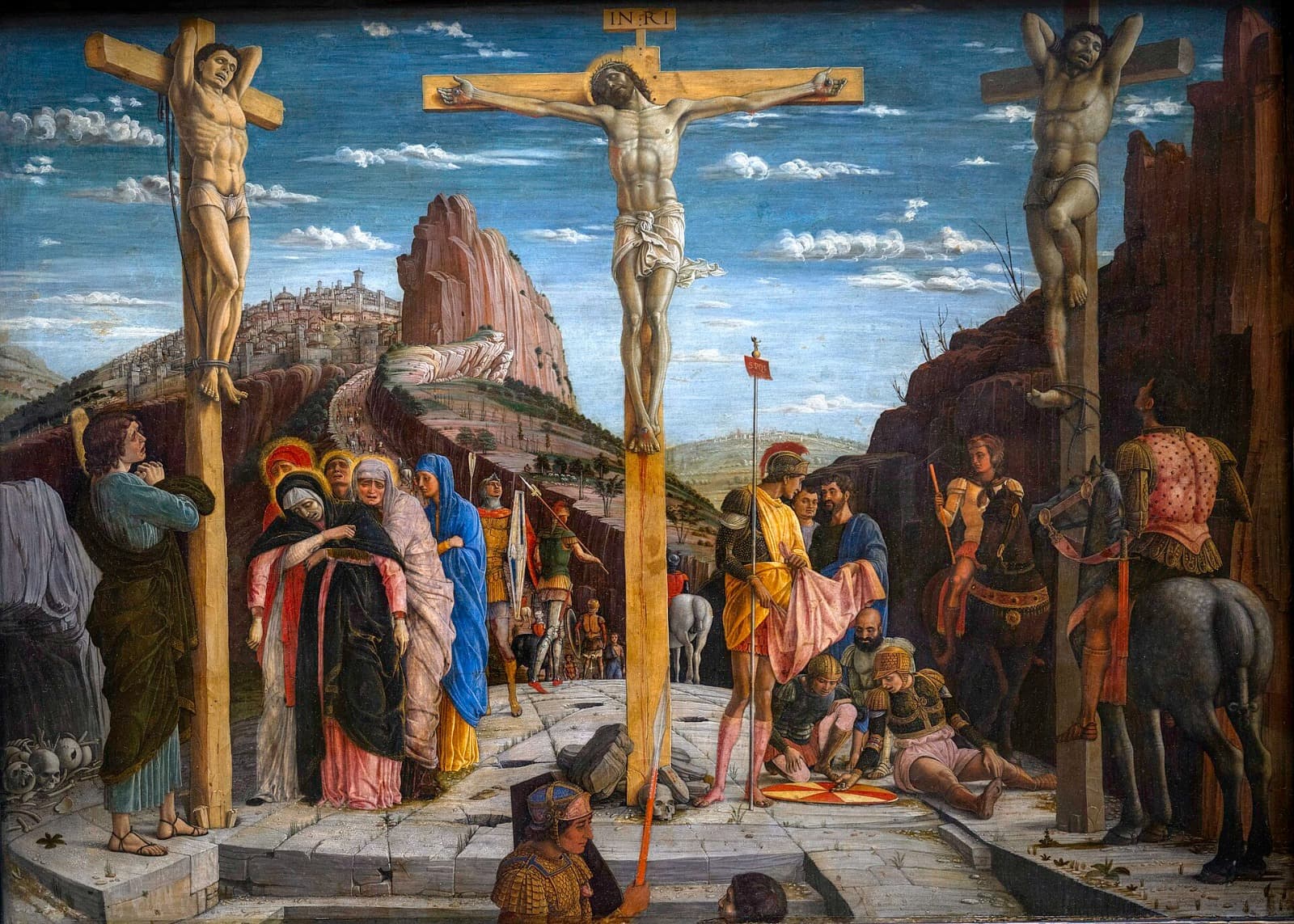
Soldiers throw dice for Christ's robe on a paved Golgotha. This panel was sawn off an altarpiece by Napoleon's looters and never returned.
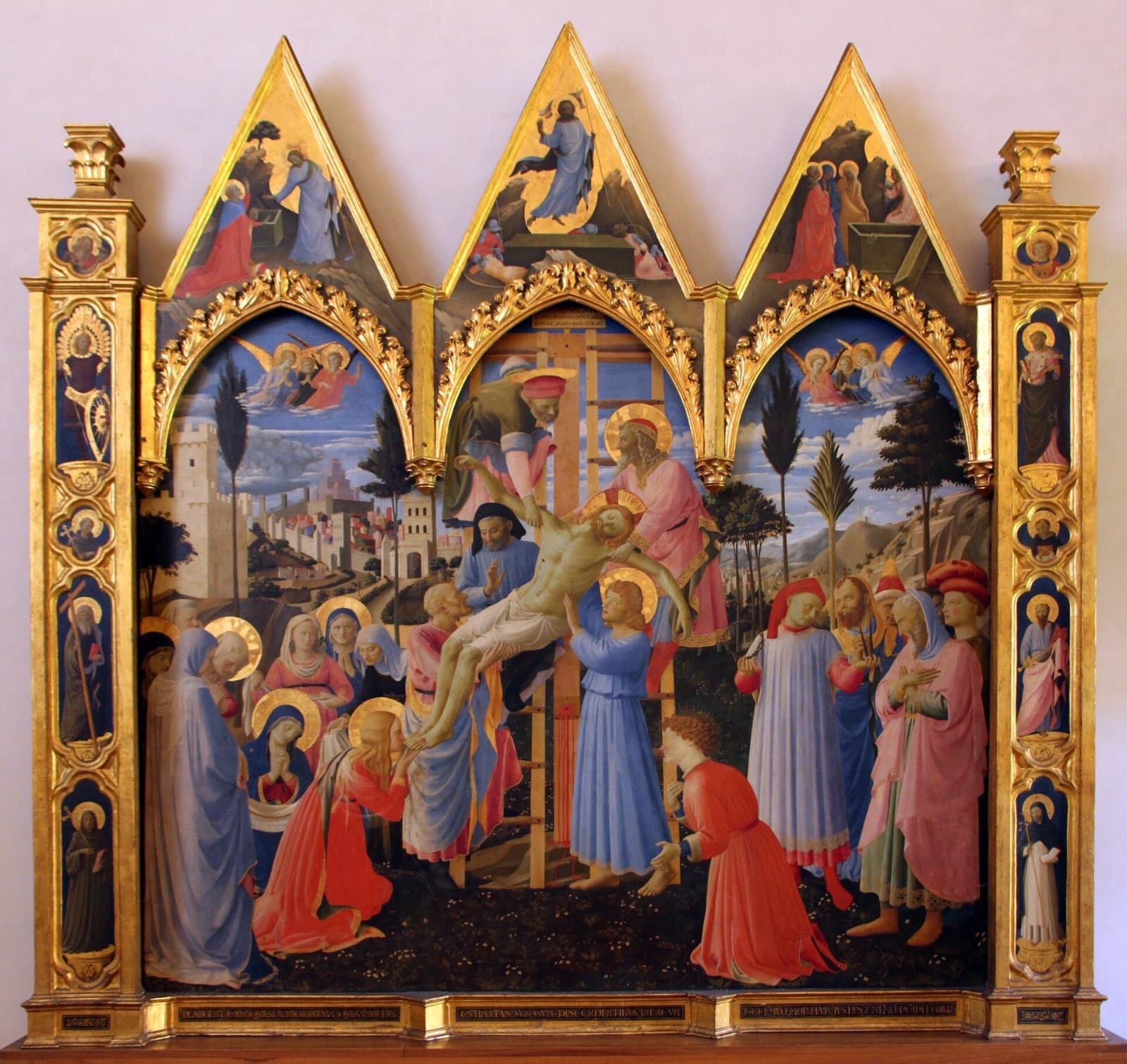
Fra Angelico inherited a Gothic frame begun years earlier and filled it with deep sunlit space instead of gold, which is the whole story.

The angels crowd in like inquisitive children. One of the first paintings to put the Virgin and saints in a single shared space.

Every hair, every glassy tear, every bead of blood, pushed hard against the front of the picture and made to carry feeling rather than skill.

A corridor of opened graves runs down the middle, the saved dancing into a garden on the left, the damned driven into fire on the right.

Antonello carried the Netherlandish oil technique south to Venice, and Giovanni Bellini responded with a Crucifixion almost identical to this one.

Serene, elegant nudes about to ruin everything. It faces Masaccio's Expulsion across the same chapel, calm before the Fall against anguish after.
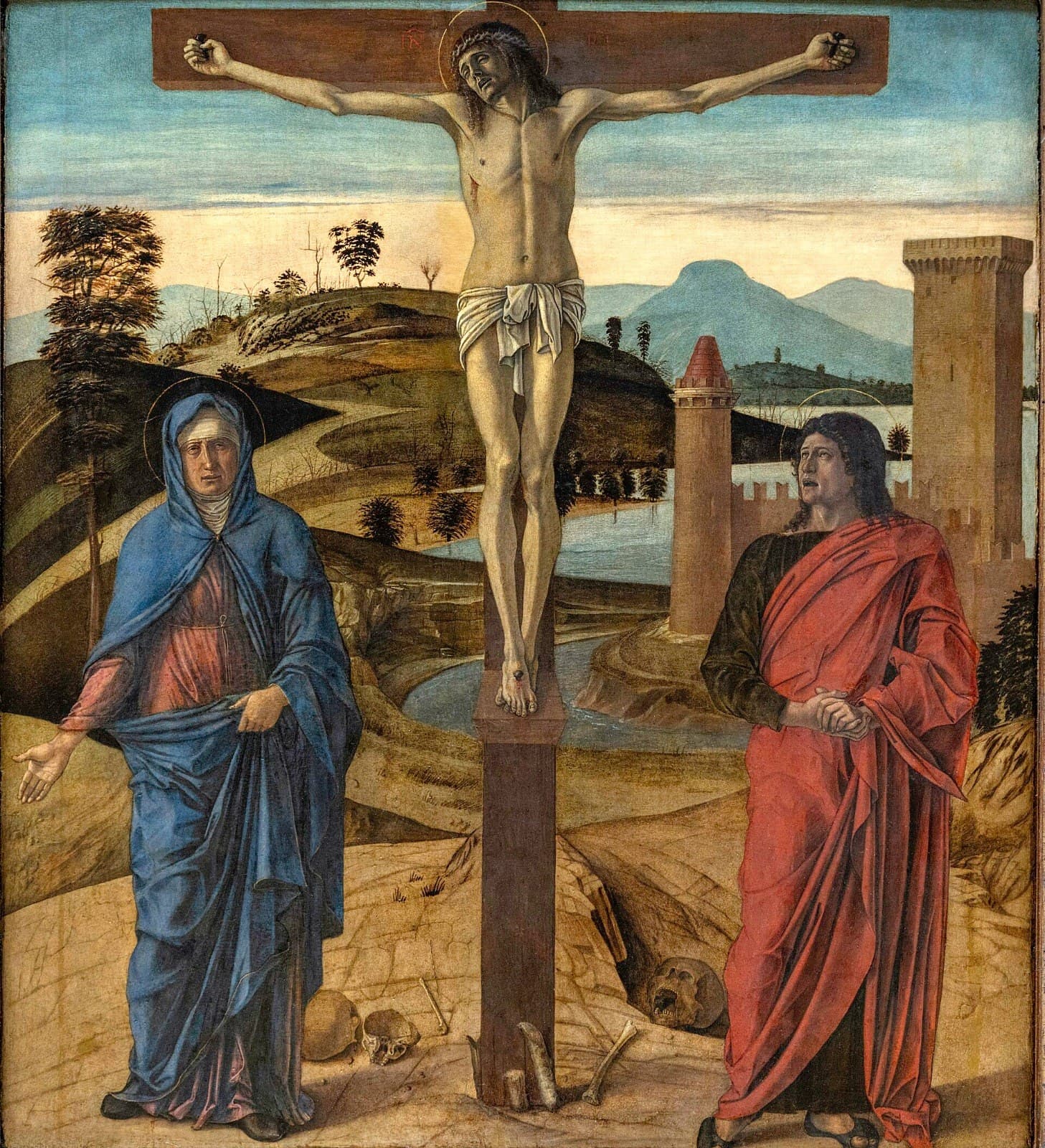
Only the Virgin and Saint John below the cross, and a river winding past a walled town. Early Bellini, carrying feeling in the light.