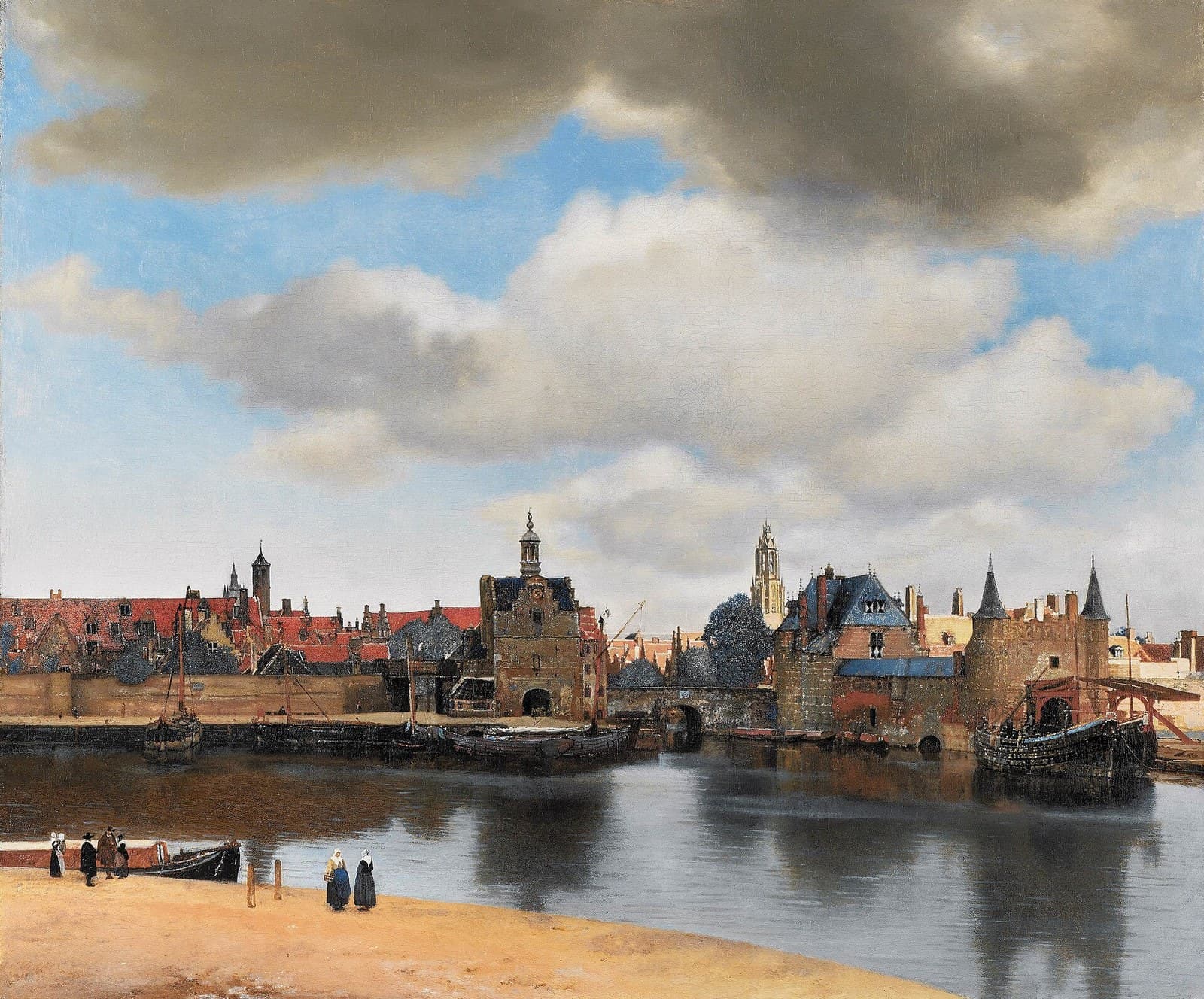
View of Delft
1660 · Mauritshuis, The Hague
Vermeer painted his own city from across the harbor, almost his only townscape. Proust called it the most beautiful painting in the world.
★ 9.3
 skopia
Vermeer painted his own city from across the harbor, almost his only townscape. Proust called it the most beautiful painting in the world.

A militia company surges out of the shadow with a dog barking and a girl glowing among the men. Varnish, not night, made it dark.

Rembrandt was twenty-five and new in Amsterdam when the surgeons' guild hired him, and he built every head in the room around one lifted tendon.

The son kneels with his shorn head against his father's chest and the old man's hands come down on his back. Rembrandt painted it near death.

Not a portrait of anyone in particular but a tronie, a study of a type, which somehow made her the most looked-at girl in art.
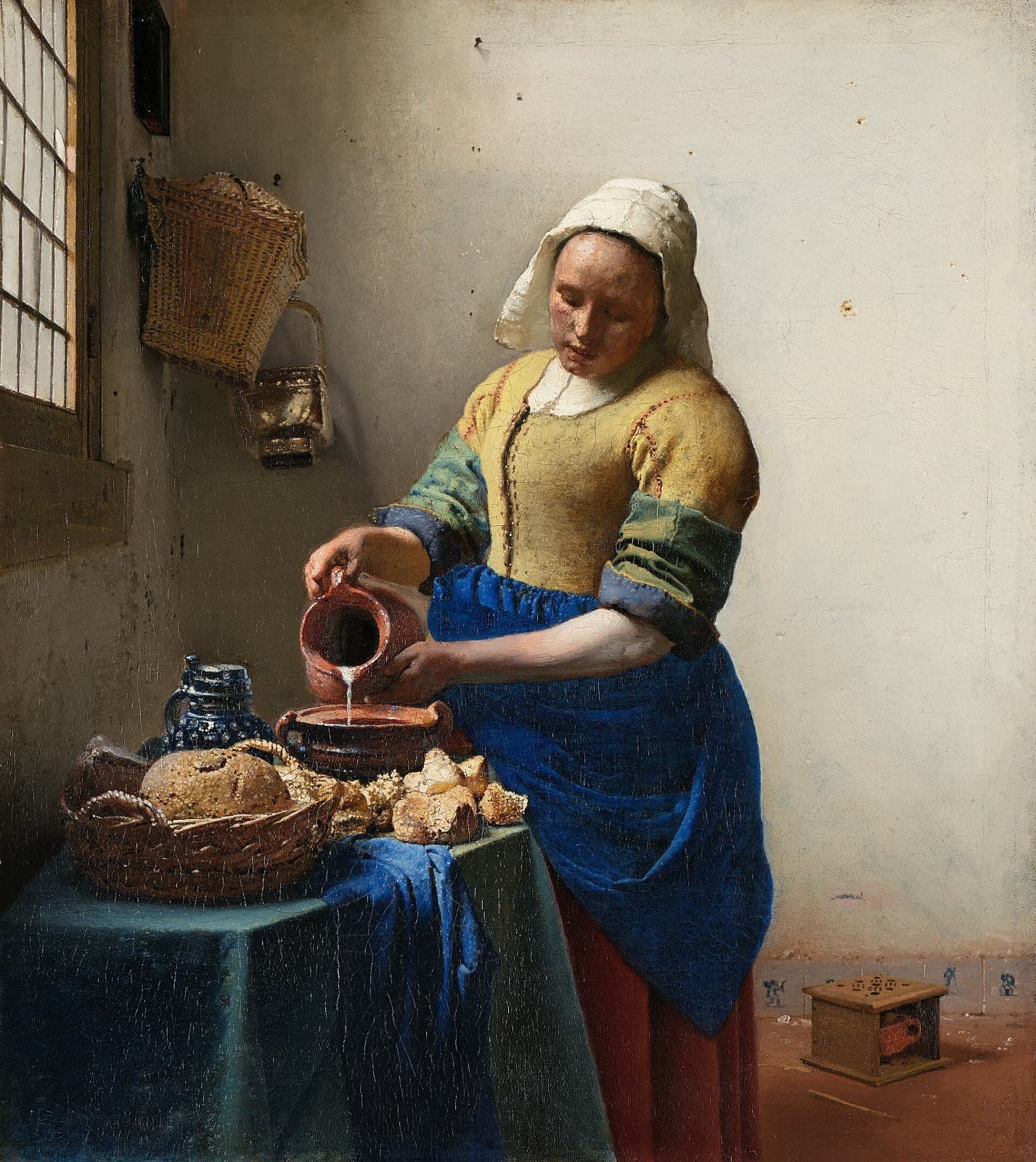
A kitchen maid pours a thin stream of milk in ordinary daylight, given the weight and stillness usually reserved for saints.

Vermeer never sold this one. The model poses as Clio, muse of history, with a great map of the Netherlands filling the wall behind.
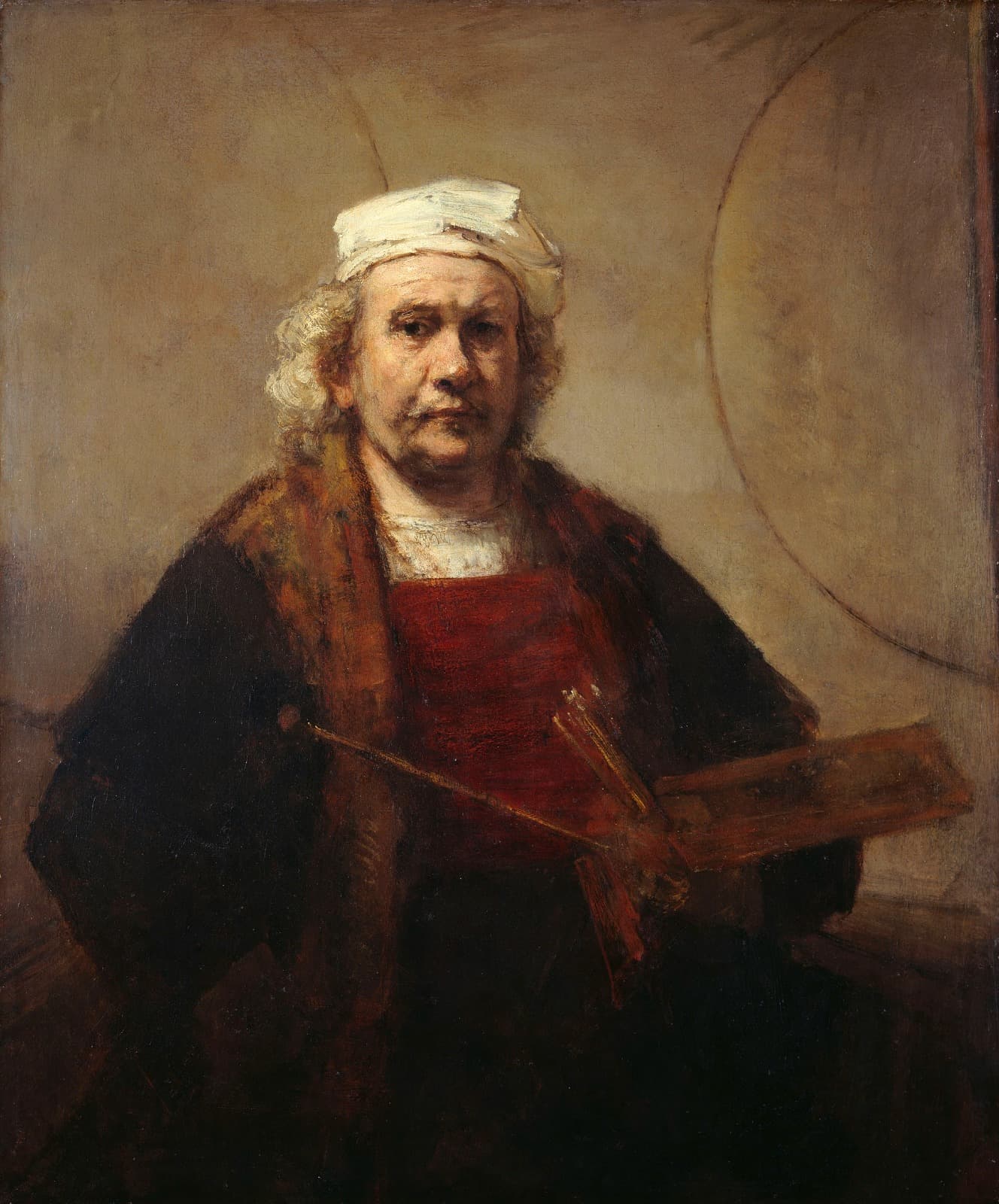
The old painter holds his brushes and palette, and behind him two large arcs are drawn on the wall that nobody has explained.
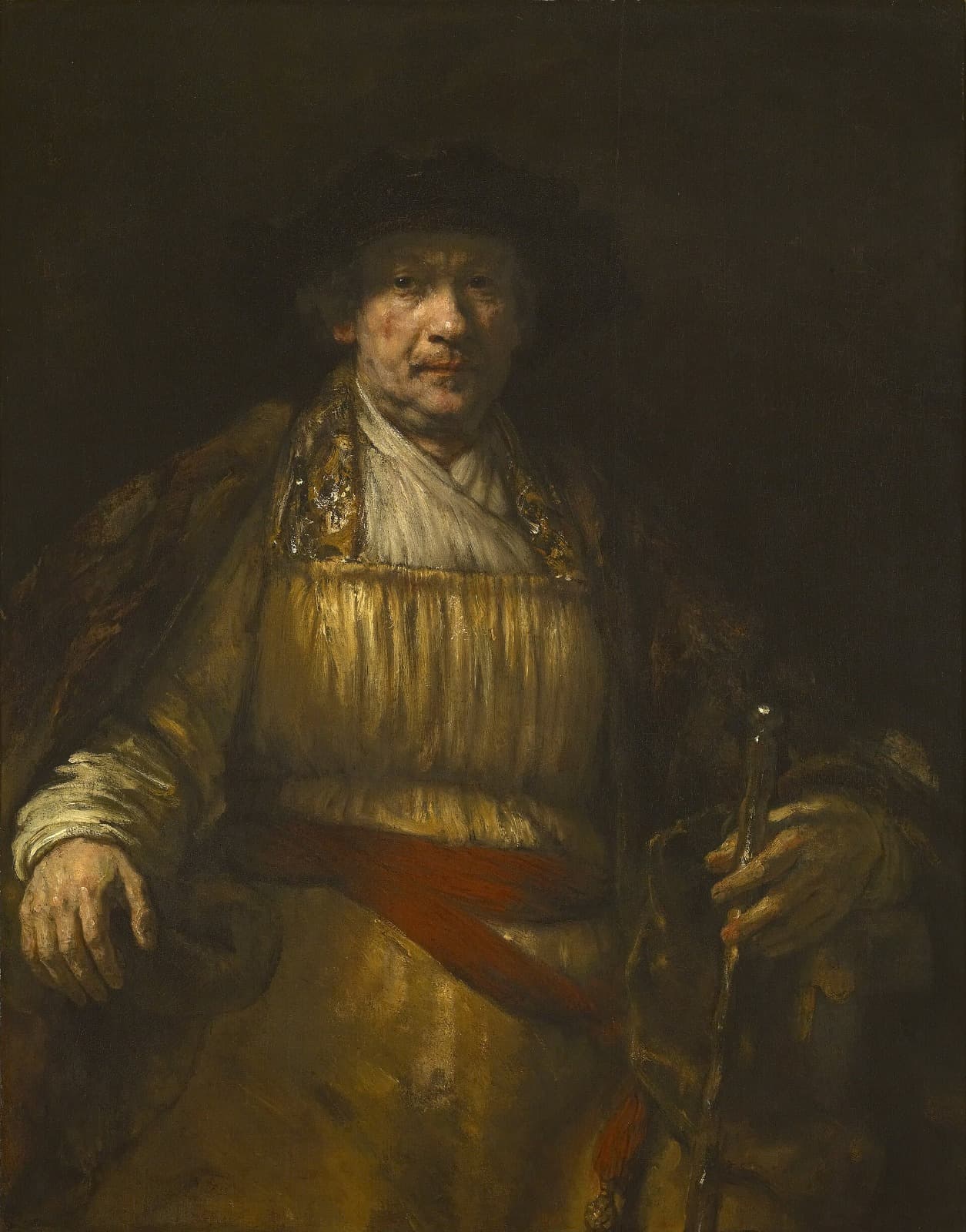
Rembrandt painted himself enthroned like a monarch, staff across his lap, in the same year bankruptcy took his house and everything in it.

A young horseman rides into the dusk armed and alert, and nobody has ever agreed who he is or where he is going.
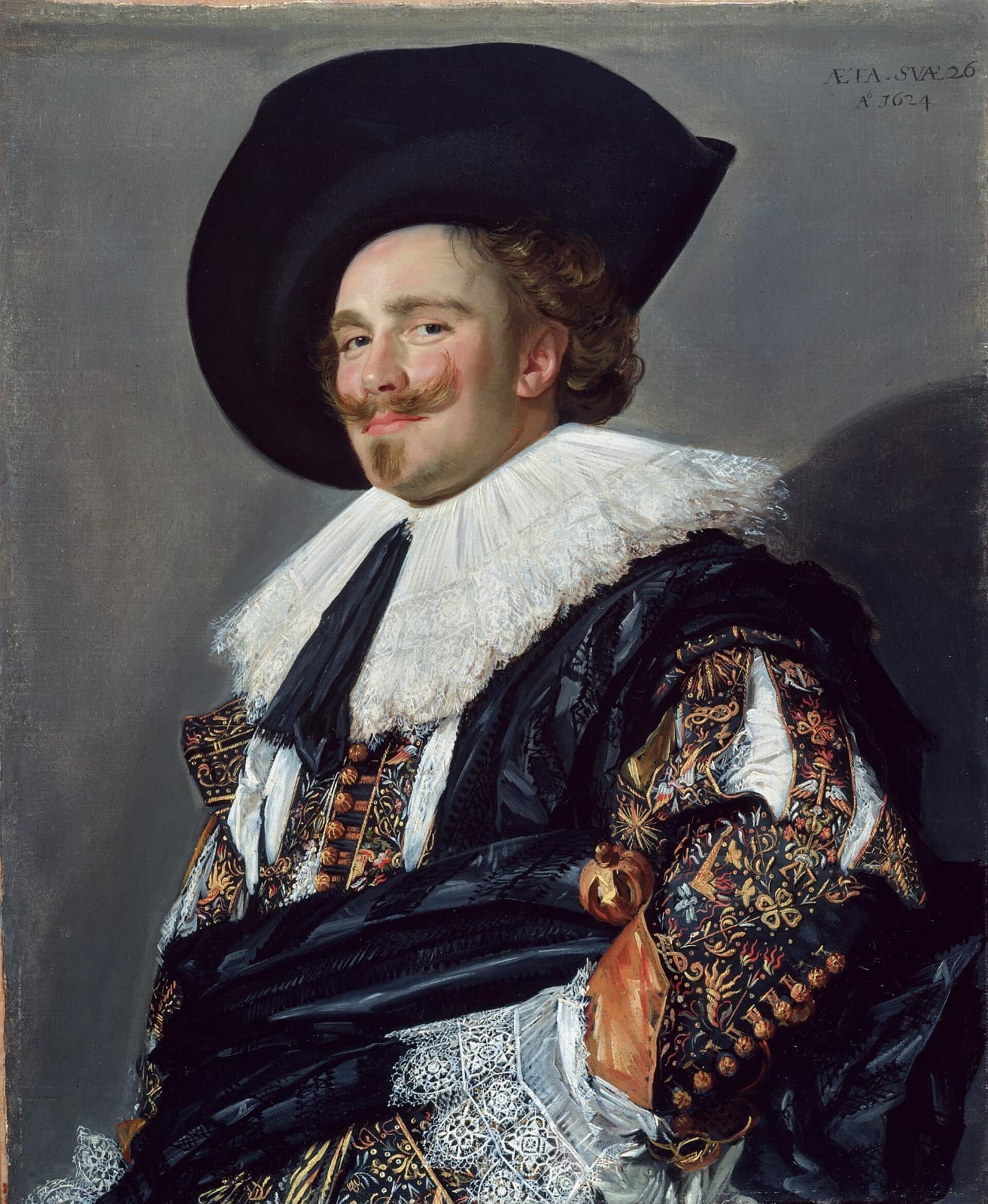
He is neither laughing nor a cavalier. The lace and gold thread on that sleeve were flicked on in a few confident strokes.

The scales in her hand are empty and perfectly level, and the painting on the wall behind her is a Last Judgment.

One hand on the pitcher, one on the window latch, and morning light coming through onto a white cap. Nothing happens, perfectly.

Rembrandt's only seascape, and one disciple is being sick over the side. Stolen from the Gardner Museum in 1990 and never recovered.

The officer's hat and back loom enormous in the foreground while the girl sits small and bright beyond, which is exactly how the eye works.
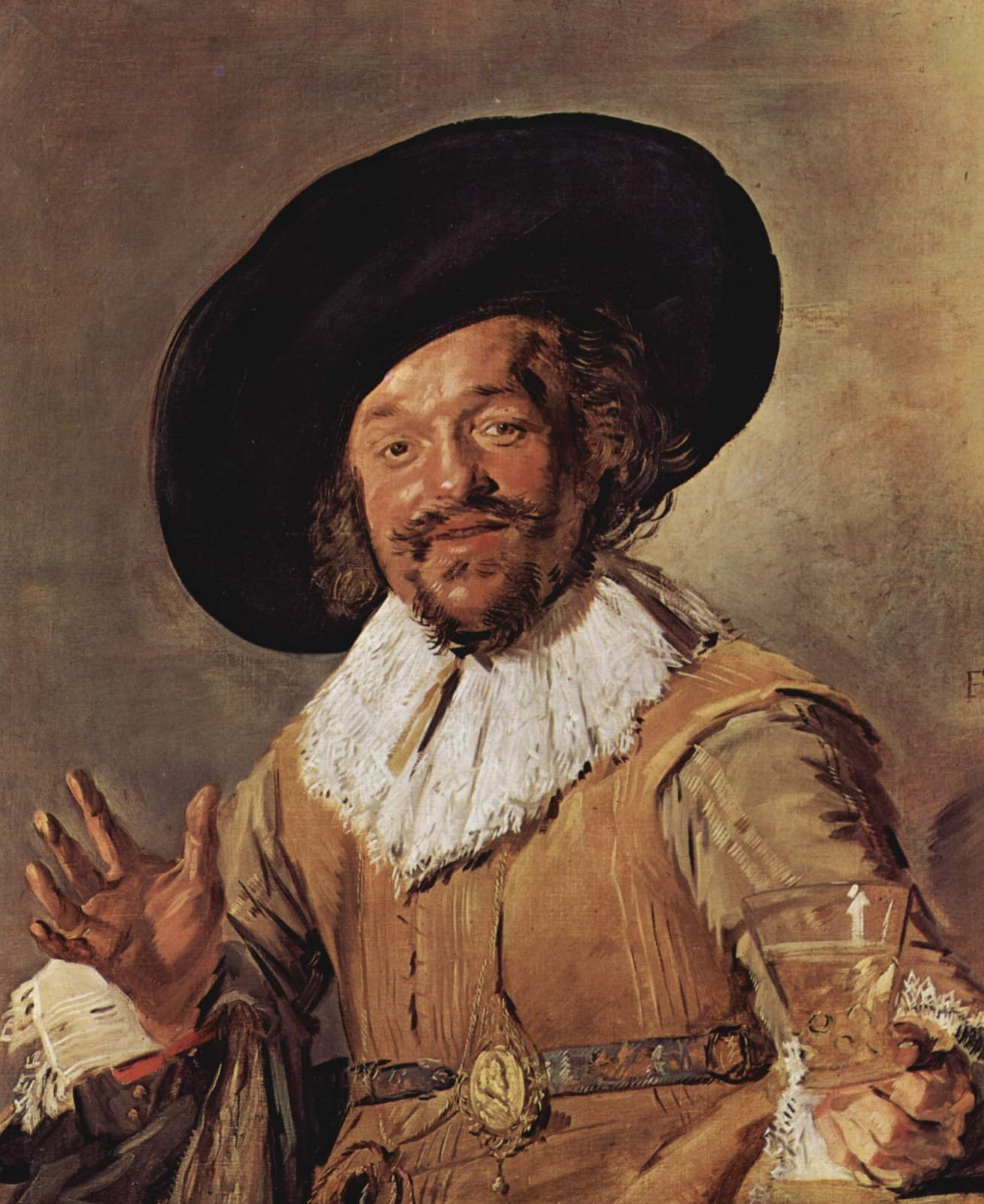
He raises his glass and talks straight at you, painted in slashing strokes laid down about as fast as the moment they catch.

Daylight from a window, firelight from a hearth, and a great spiral staircase winding up into the dark between them.

A married couple sitting on the grass, leaning into each other and visibly amused, which is not how marriage portraits were done.
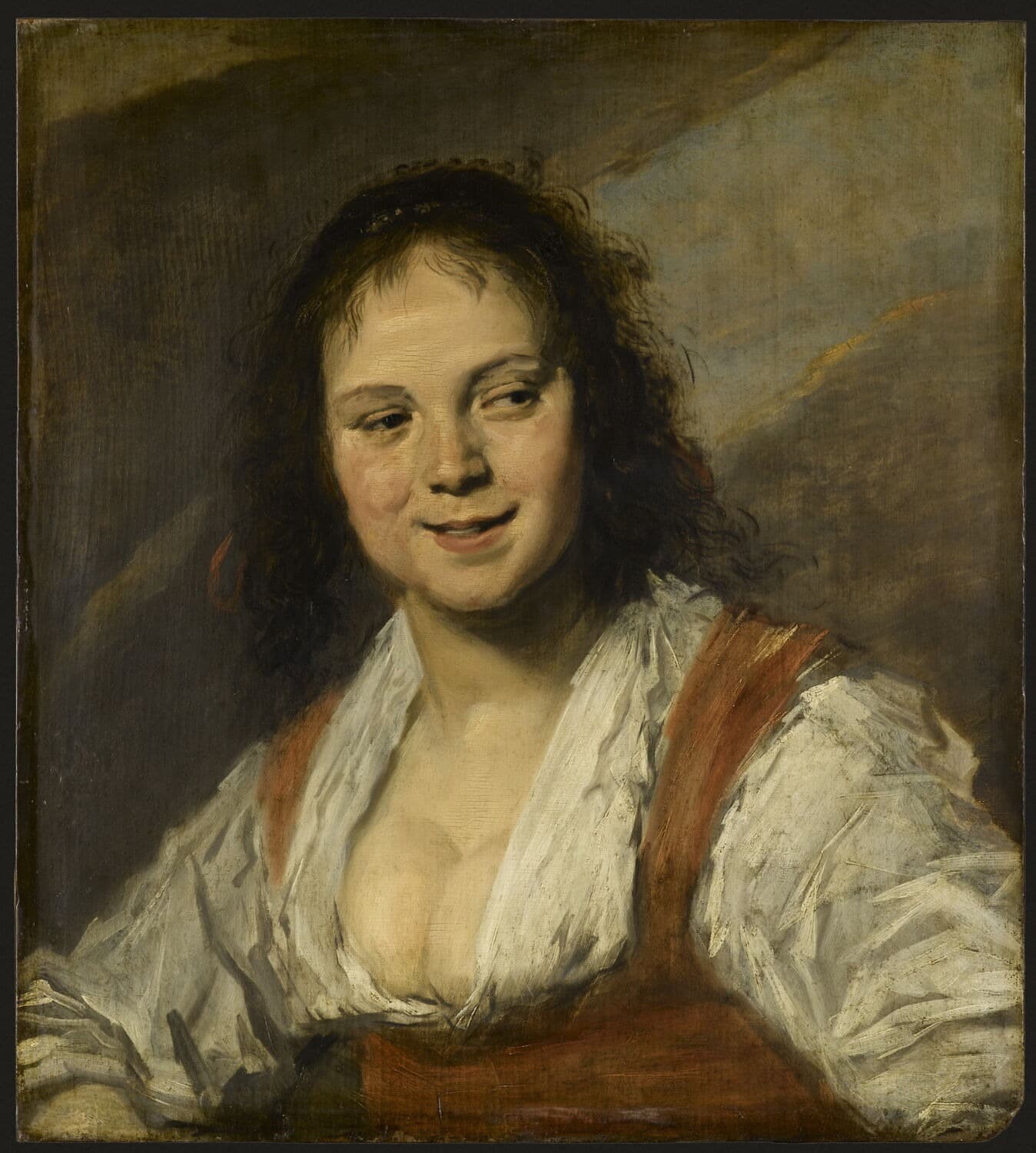
Not a commission but a tronie, a character study made to show off. Hals catches her half-laugh before it has finished.

One child hugs her presents while a boy howls because his shoe held nothing but a birch rod, and the grandmother beckons with a secret.

An angel grabs Abraham's wrist and the knife is still falling through the air, his hand clamped over the boy's face.

Two shepherds stop at a skull on a plinth and read the words carved there. Guercino used the motto first, decades before Poussin.
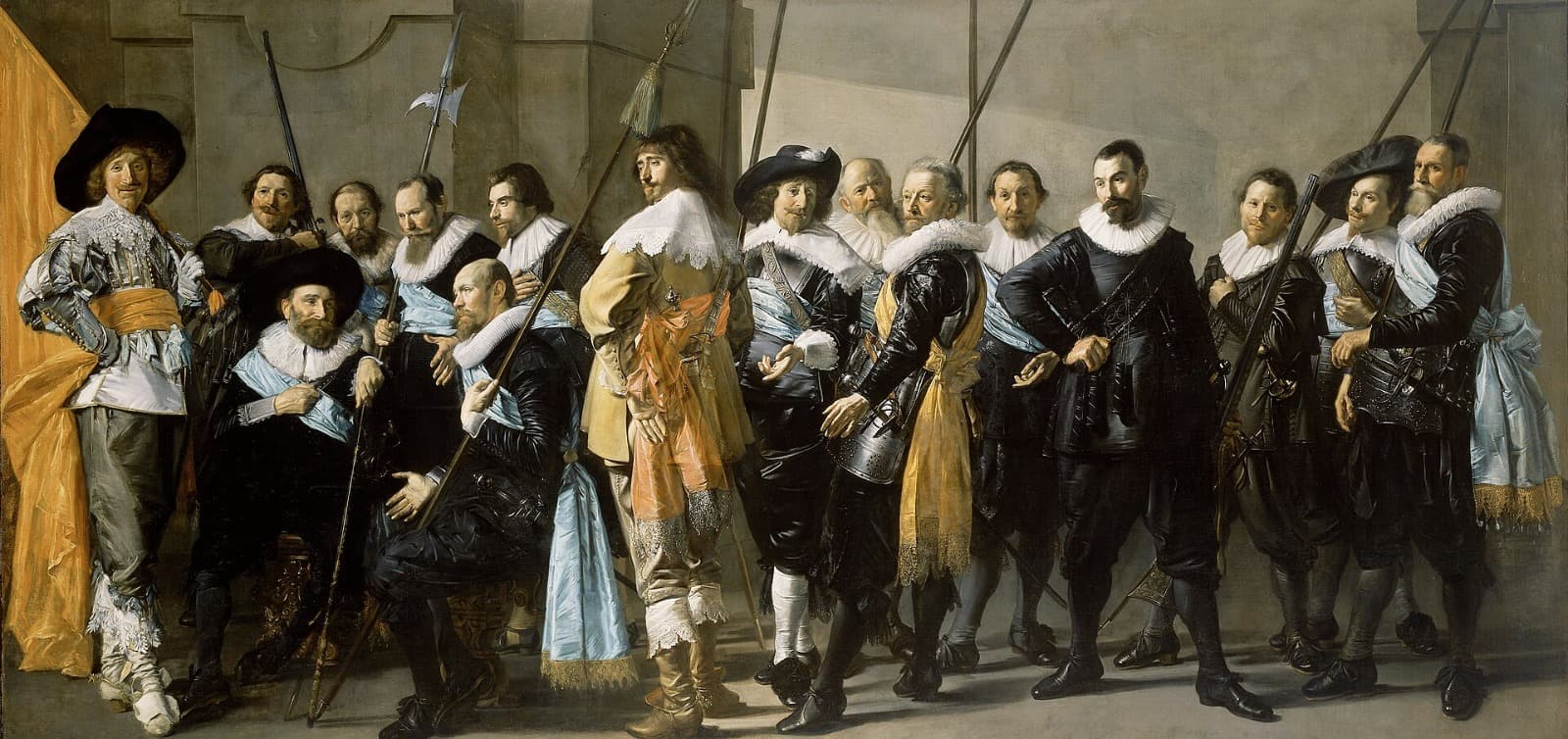
Hals left this militia portrait unfinished and another painter finished the right-hand figures, a join you can still see if you look.
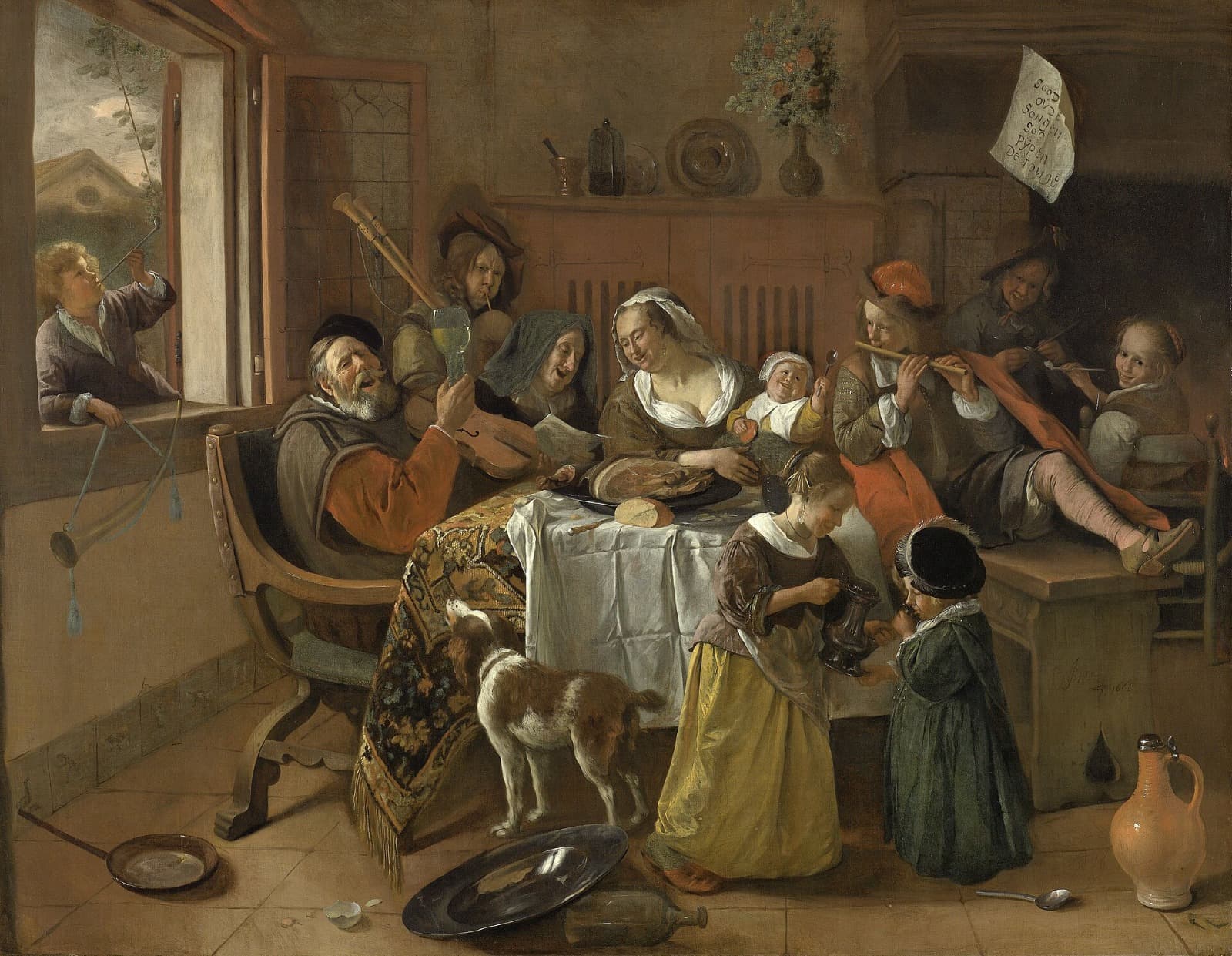
The parents sing and drink and a toddler is handed a pipe. A note in the picture reads: as the old sing, so the young pipe.

Hundreds of tiny figures skating, sledging and falling over on one frozen river. Avercamp was deaf and mute and known as the mute of Kampen.
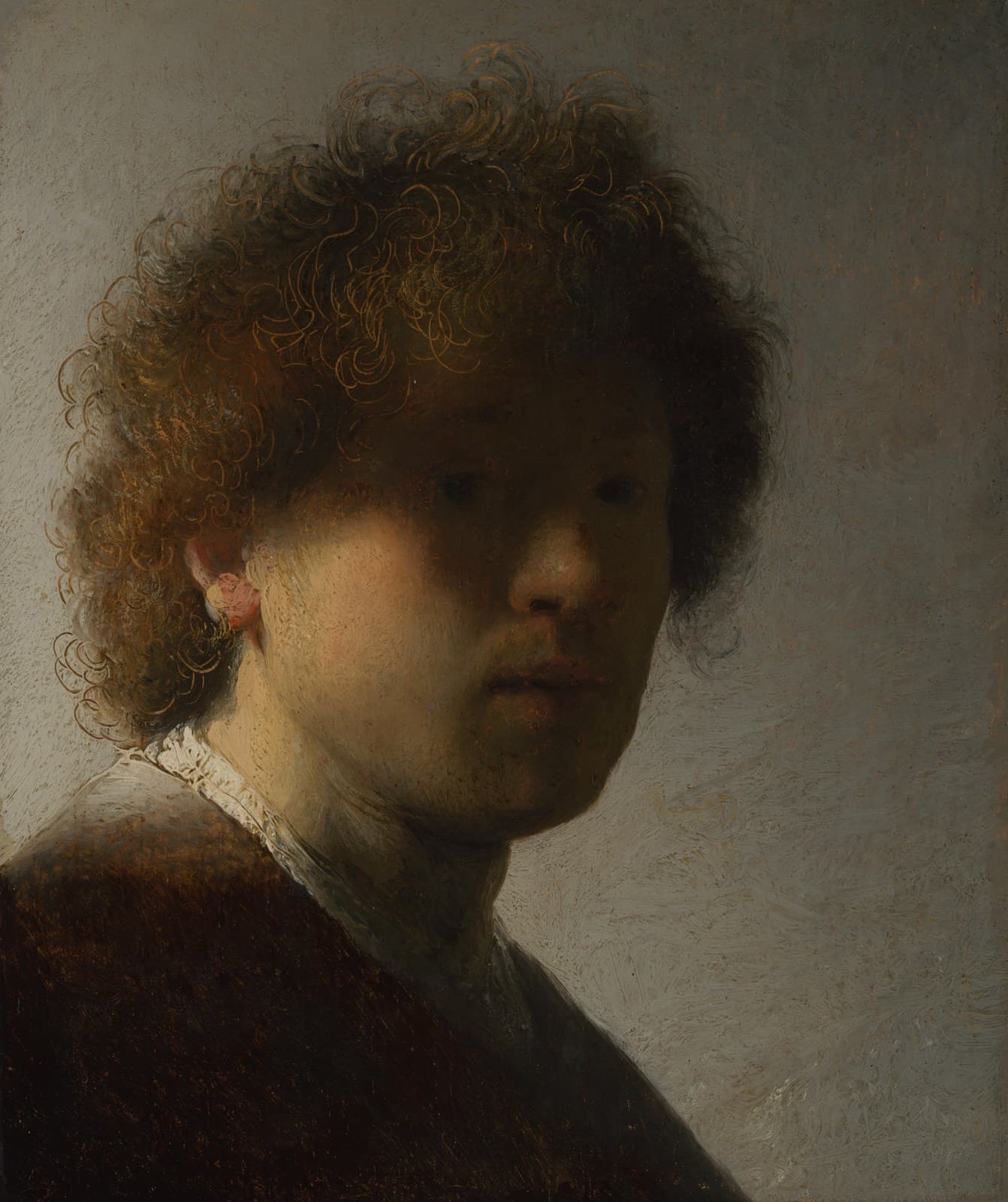
Rembrandt was barely in his twenties and using his own face as a laboratory for light. Dozens more would follow over forty years.
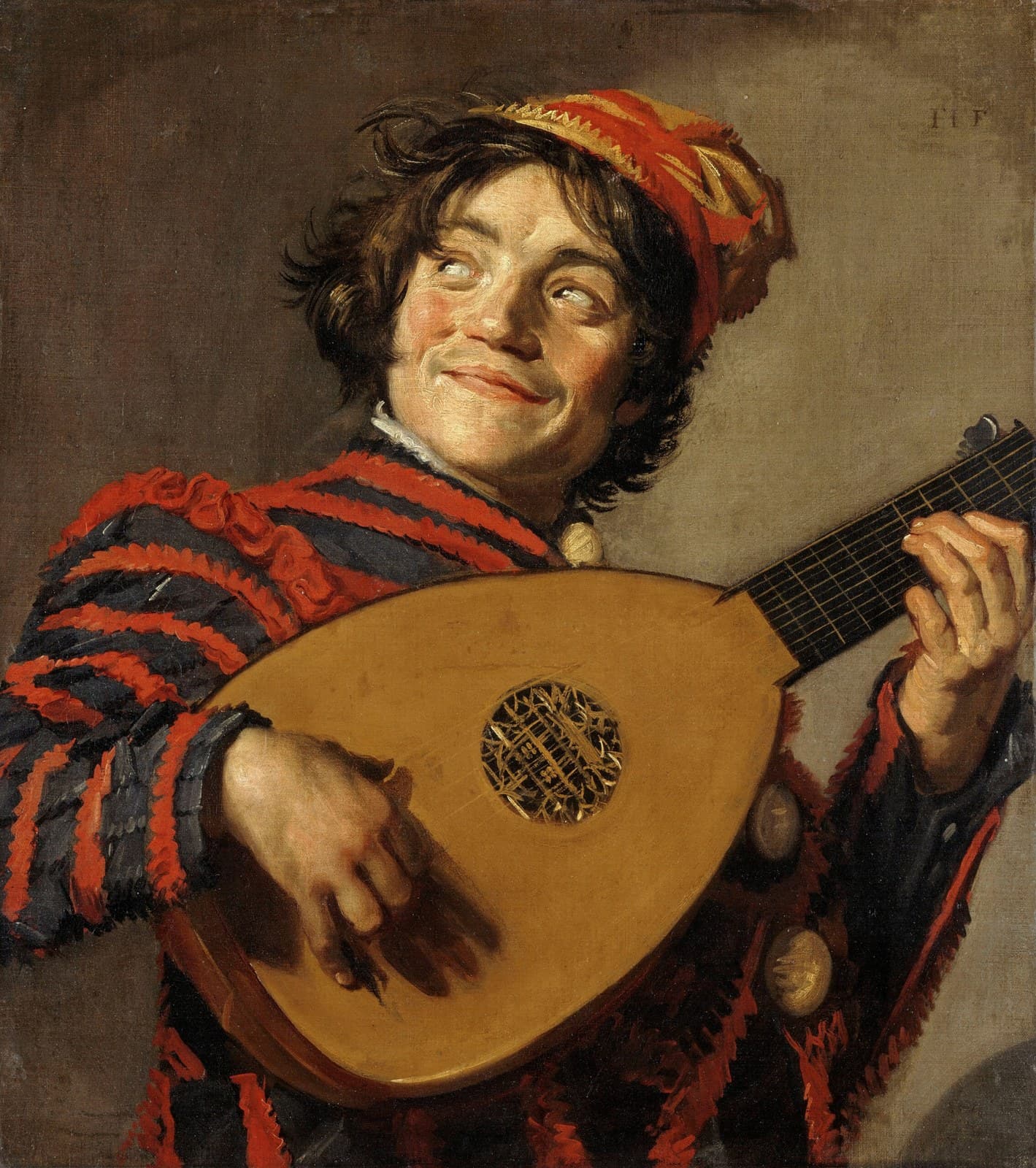
Caught mid-strum with his cap askew and his mouth open, painted so fast the brushstrokes still seem to be moving.

A few sweeps of brush and brown ink, most of the paper left bare, and the whole weight of a sleeping head is there.