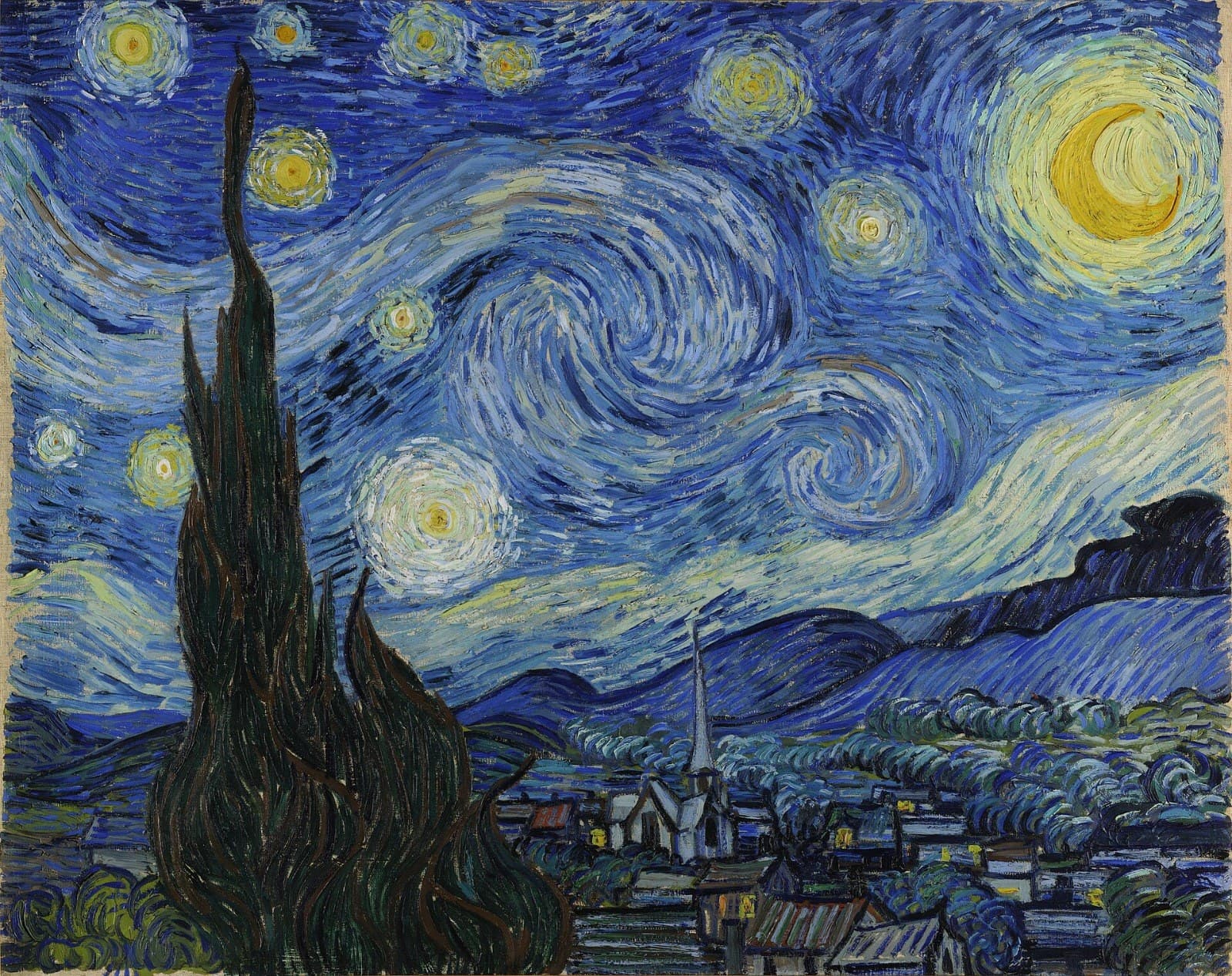
Starry Night
1889 · Museum of Modern Art, New York City
Van Gogh painted the churning sky and its eleven stars from a window of the asylum at Saint-Rémy, partly from memory.
★ 9.6
 skopia
Van Gogh painted the churning sky and its eleven stars from a window of the asylum at Saint-Rémy, partly from memory.
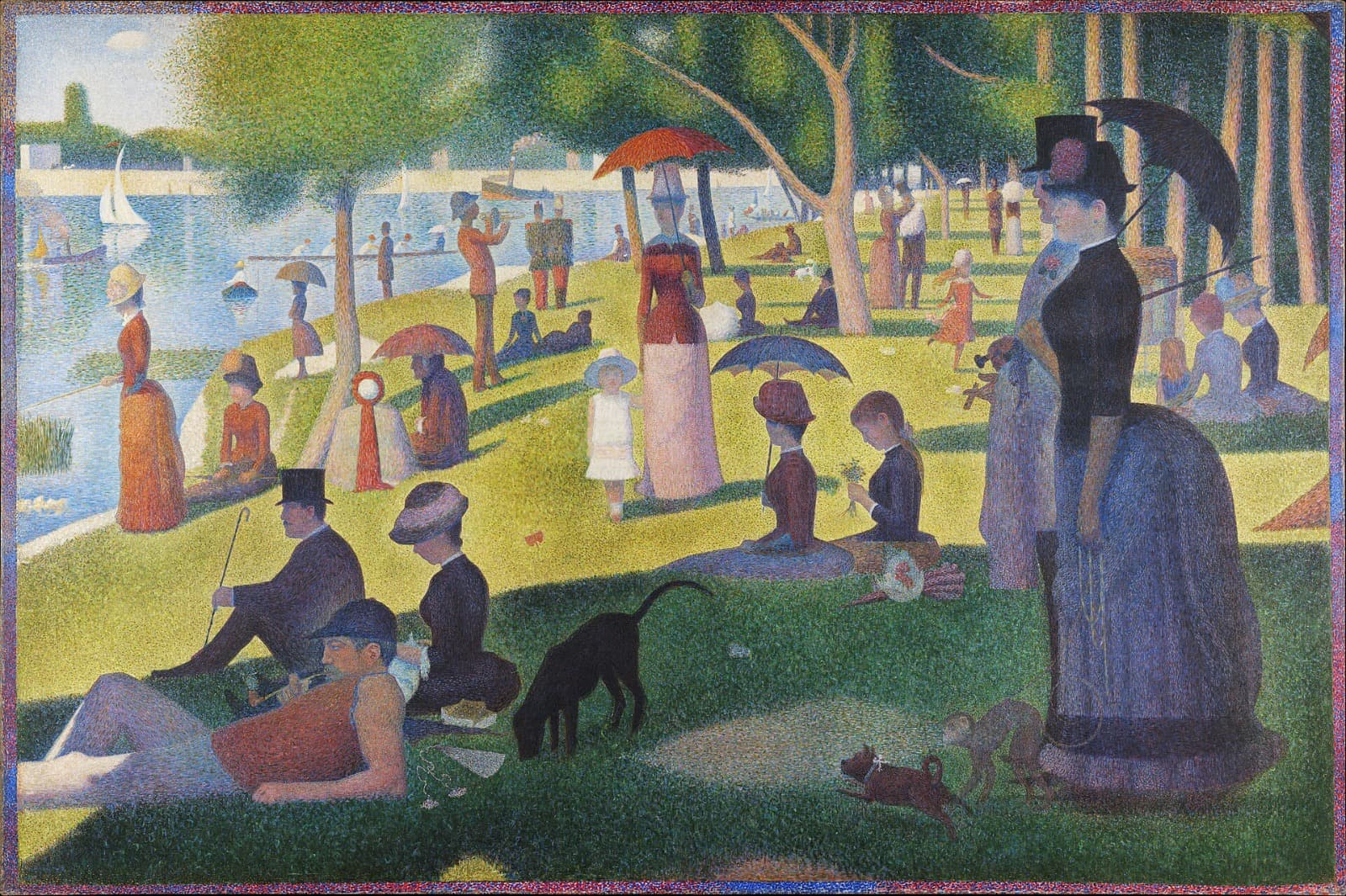
Seurat spent two years building this riverbank out of tiny dots of unmixed color, applying optical theory to a crowd standing oddly still.
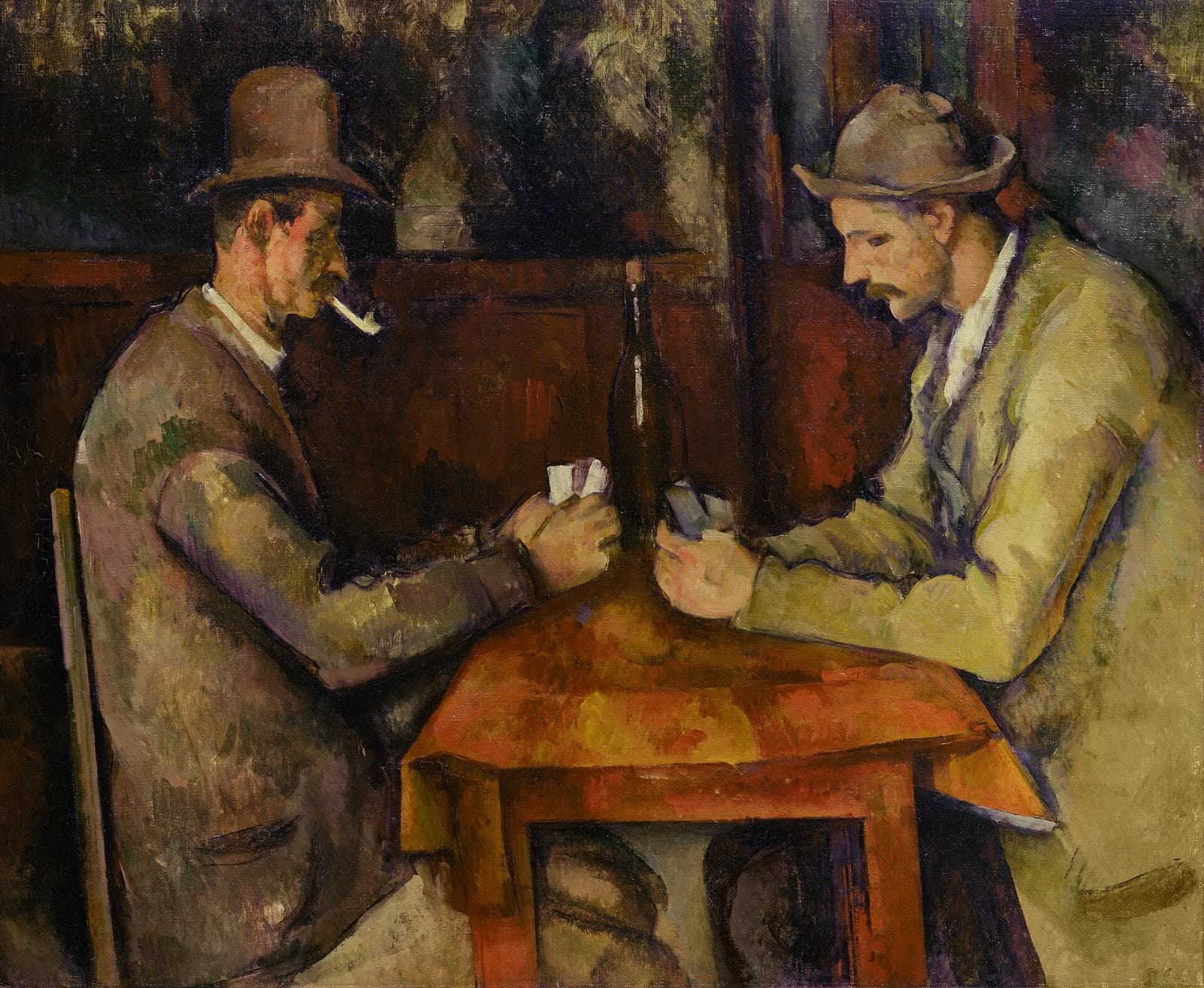
Cézanne used local farmhands as models and painted several versions, stripping the old tavern subject down until only two men and a bottle remain.

Gauguin thought he was dying and meant this to be his last work, reading right to left from a sleeping infant to an old woman.
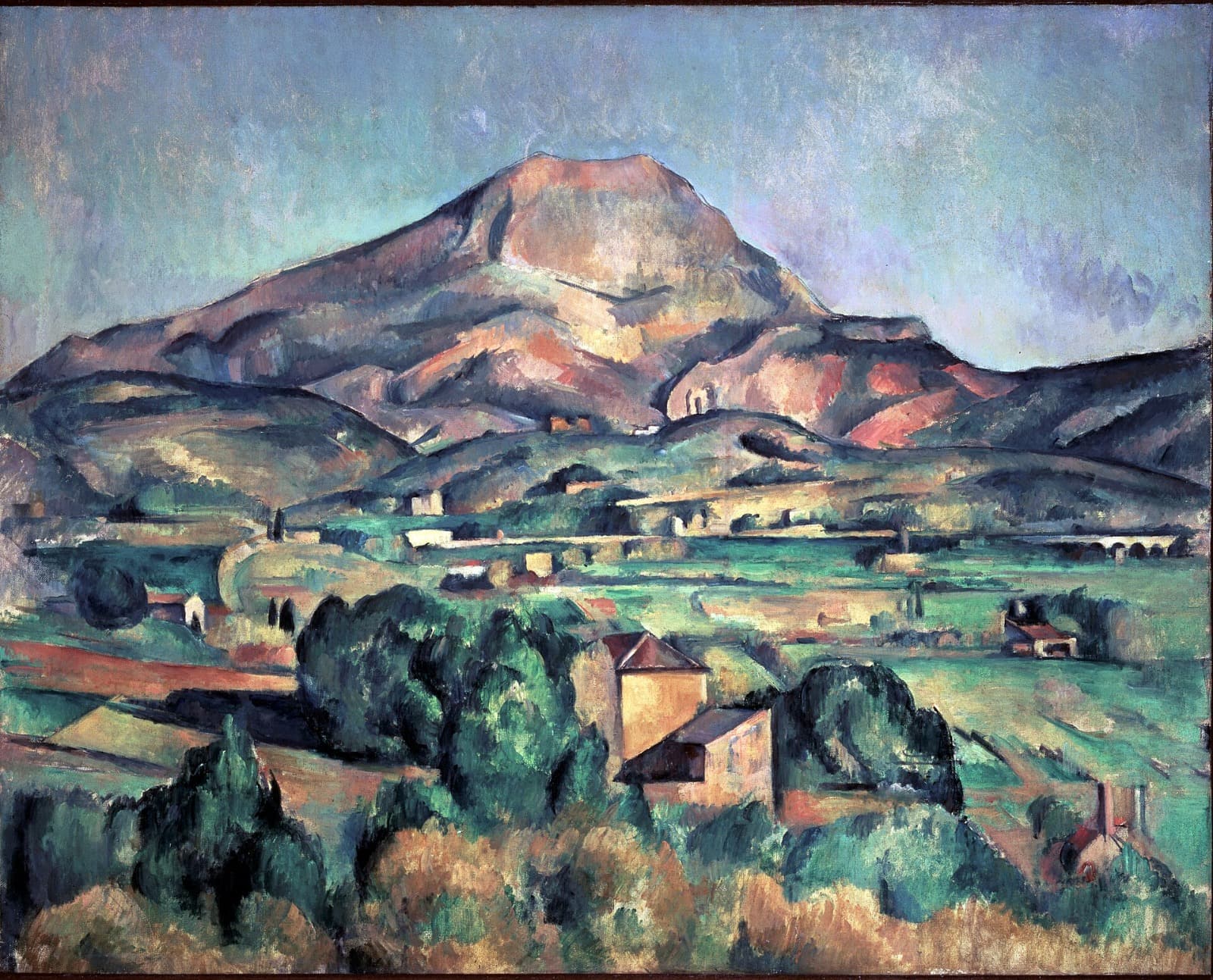
Cézanne painted his local mountain over and over, less to record it than to rebuild it out of flat patches of green, ochre and blue.
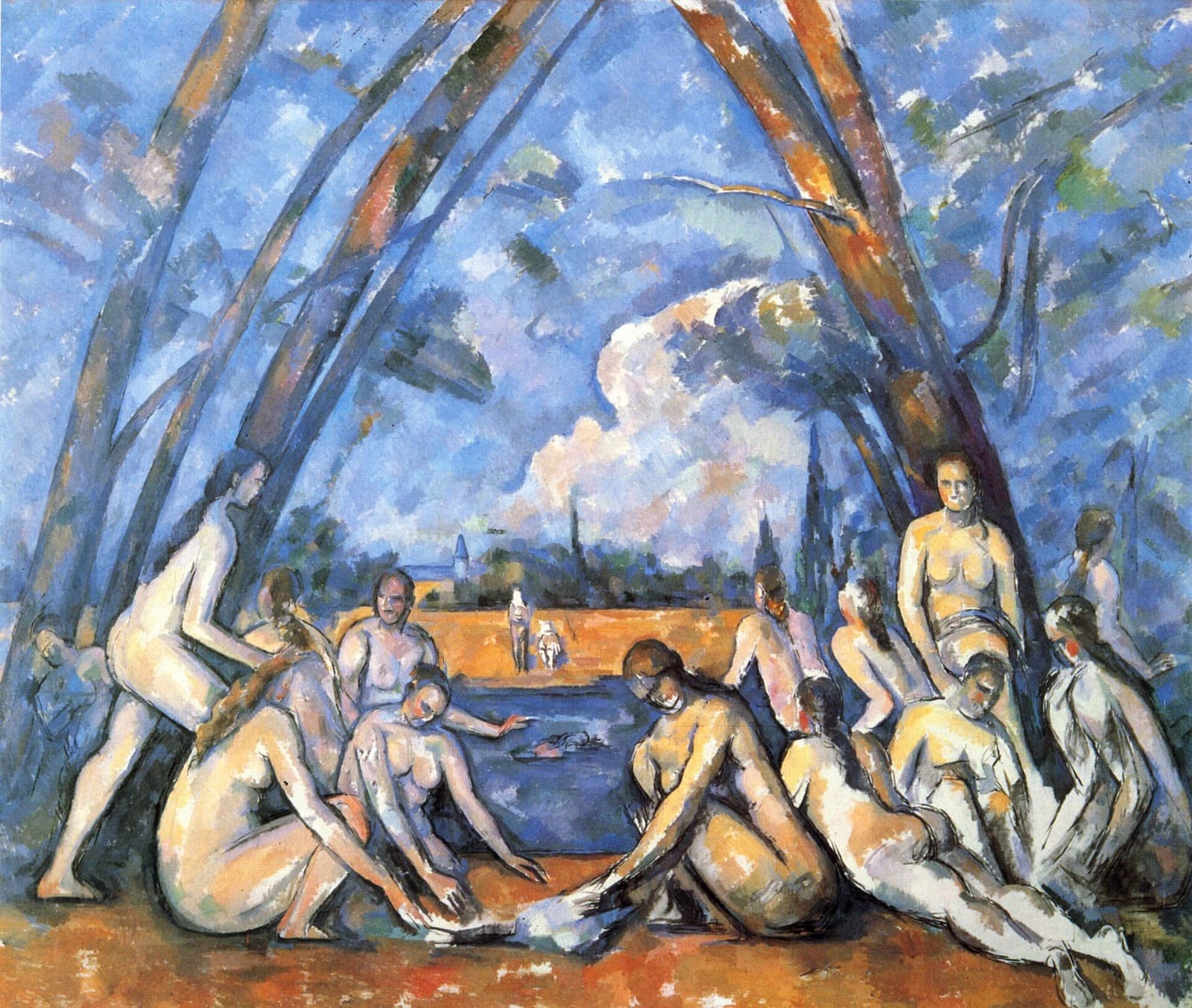
Cézanne worked on it for years and died before he finished, bending the trees inward so they rhyme with the bodies underneath.
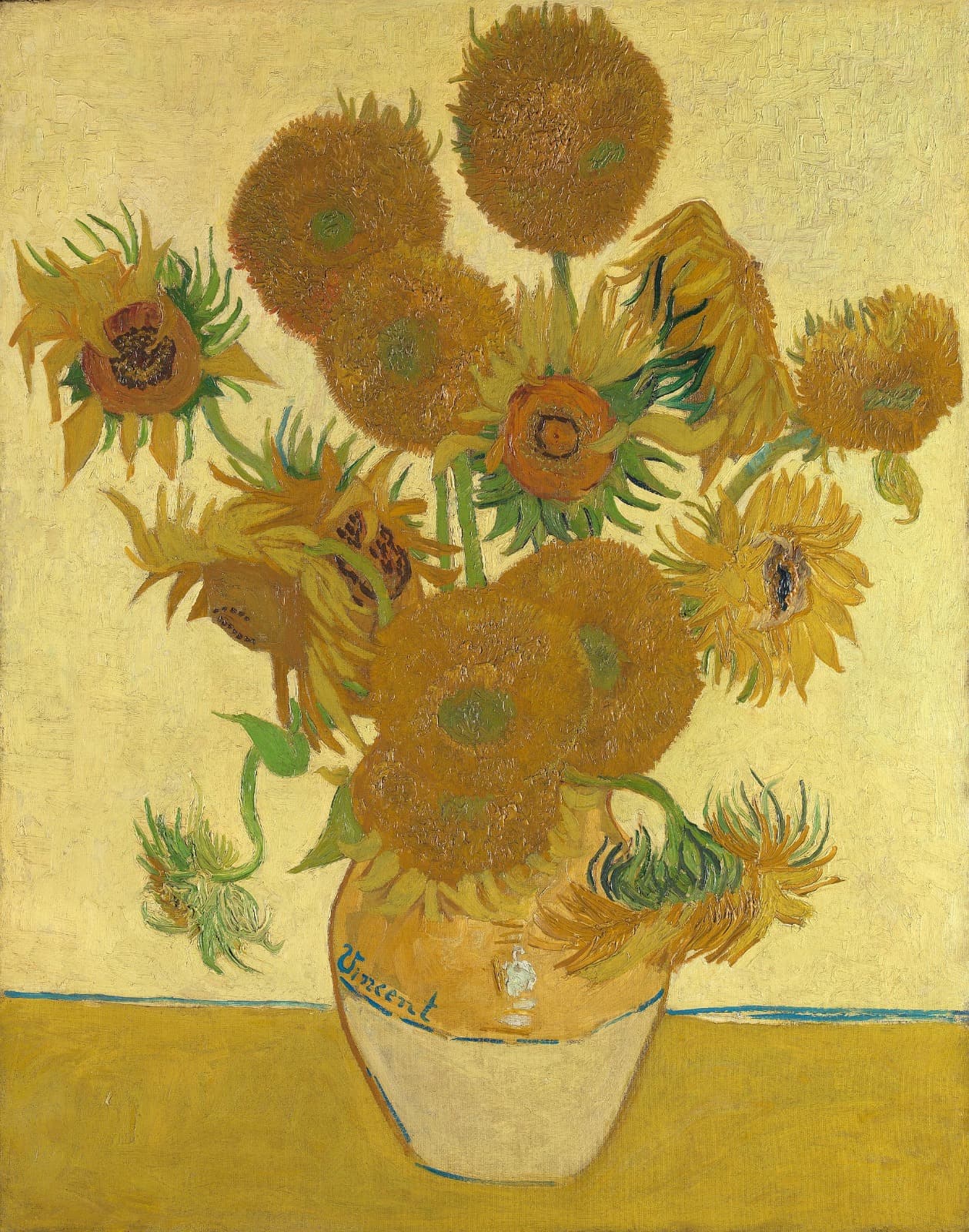
Some blooms burst with petals and others have gone to seed, all yellow on yellow, painted to decorate the house where Gauguin was to come.
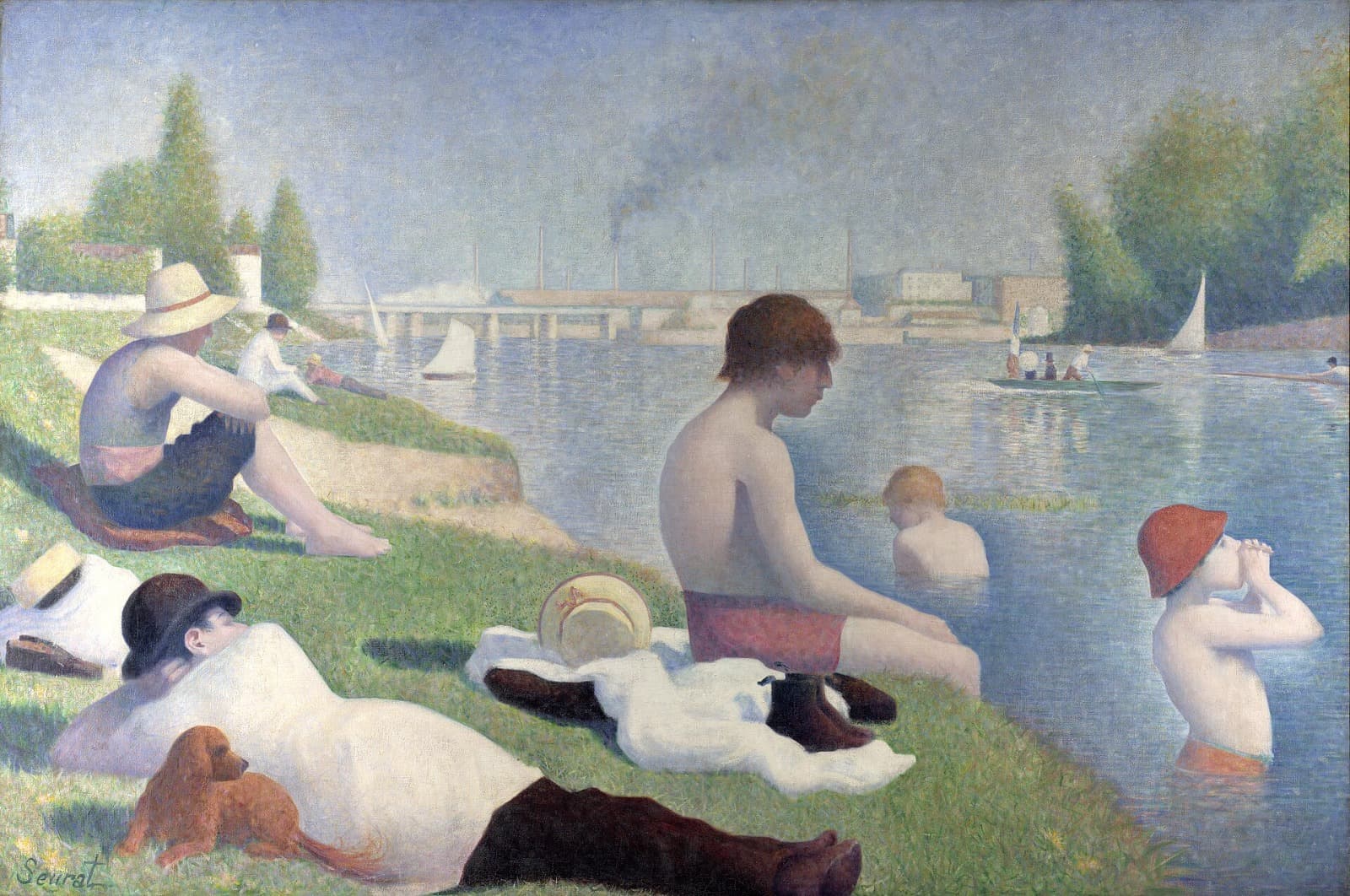
Working men bathe on the bank while factory chimneys smoke across the river, the figures given the weight of a classical frieze.

The background ripples around his head like a current in the same blue-green as his suit, and his beard burns red against it.
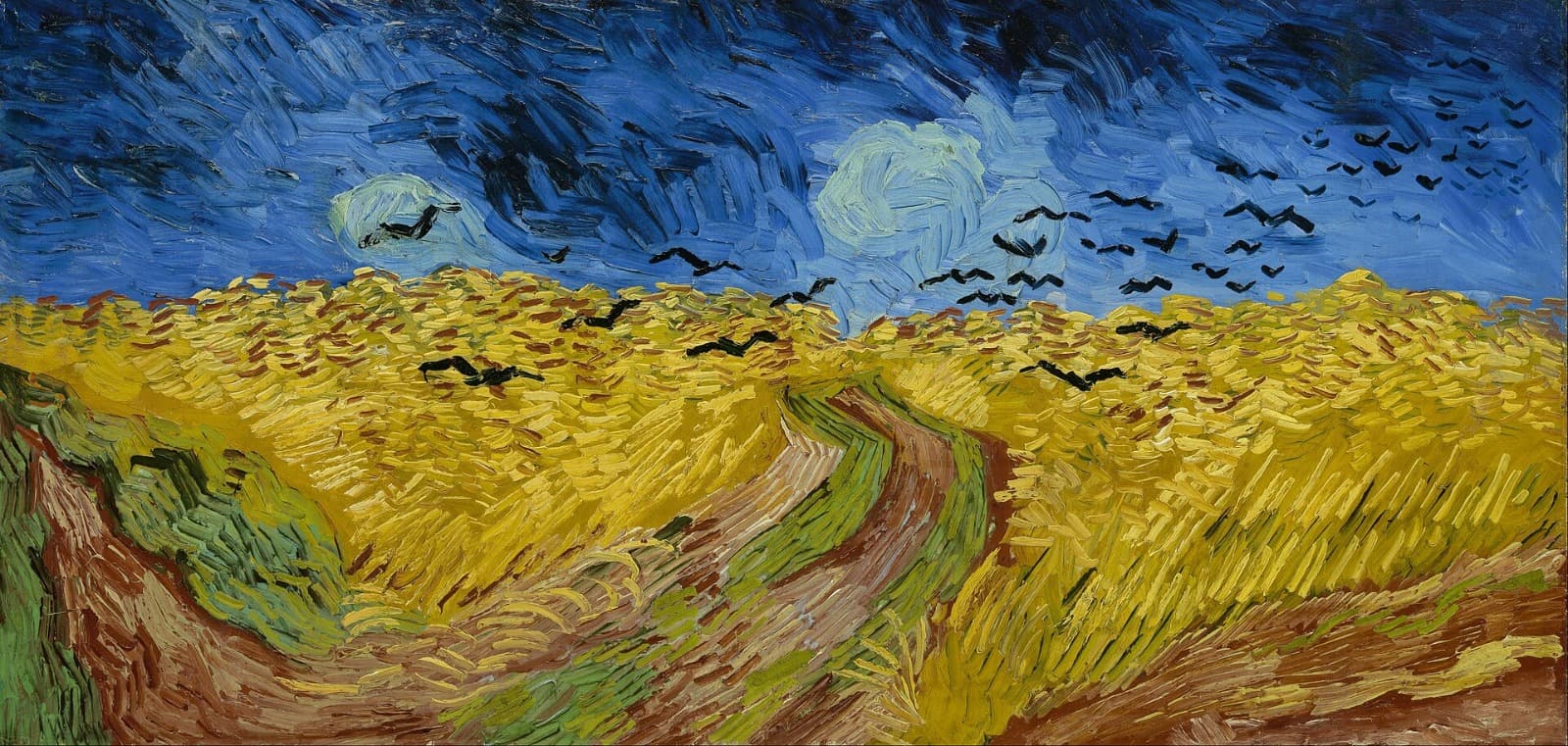
Three paths run into the wheat and none of them go anywhere. Painted at Auvers in his last weeks, and read too neatly ever since.

Van Gogh set up outside and painted the terrace on the spot after dark, pleased that he had used no black at all.

Van Gogh wanted a room where a man could ruin himself or go mad, and got it with red walls and a green ceiling.

Van Gogh loved the cypress and compared it to an Egyptian obelisk, then set one flaming up the right side of a Provençal field.

The doctor who was caring for him leans his head on one hand, a sprig of foxglove on the table, the background rippling blue.
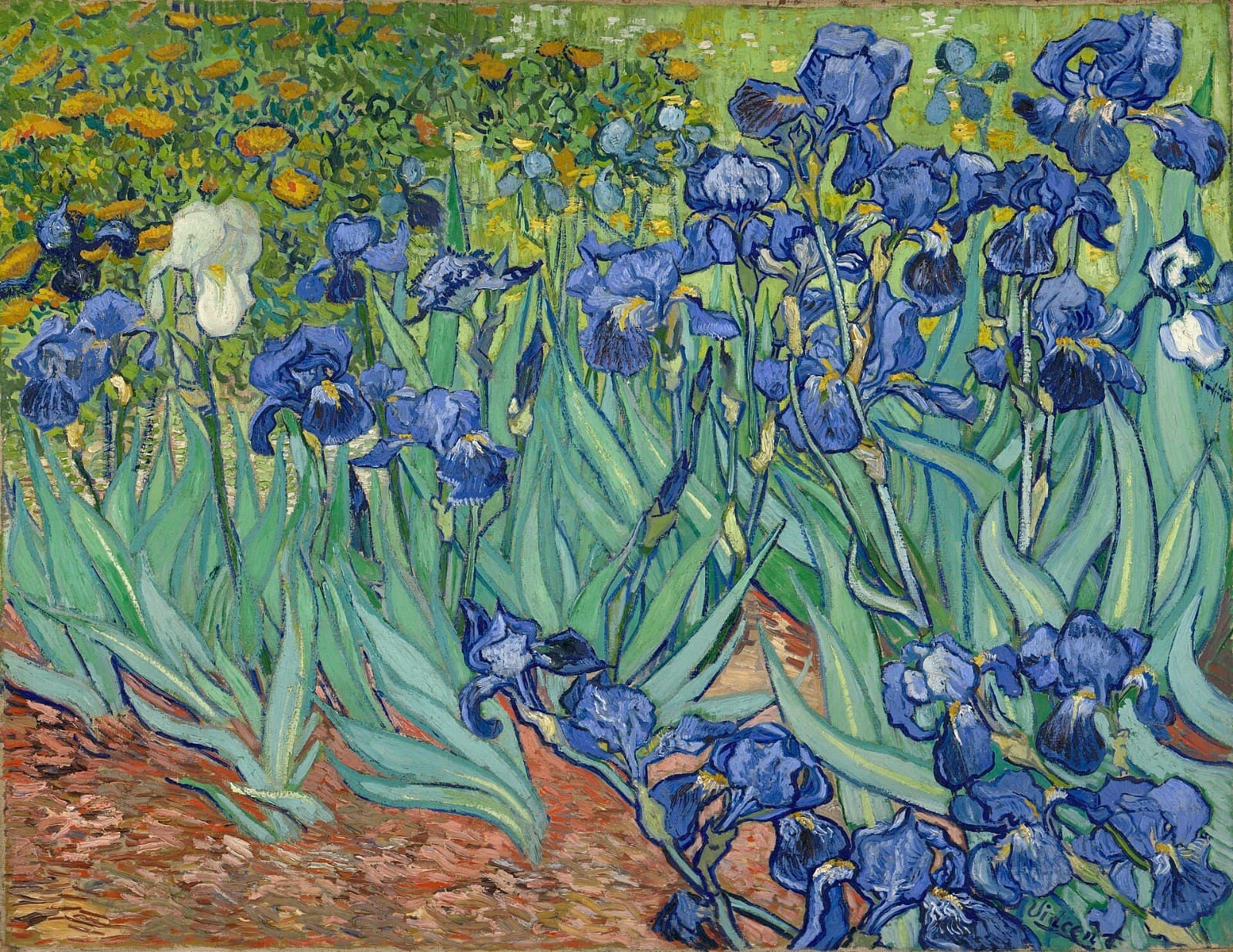
One white iris stands alone among a whole bed of blue-violet ones, the blades twisting and crowding right up to the edge of the canvas.
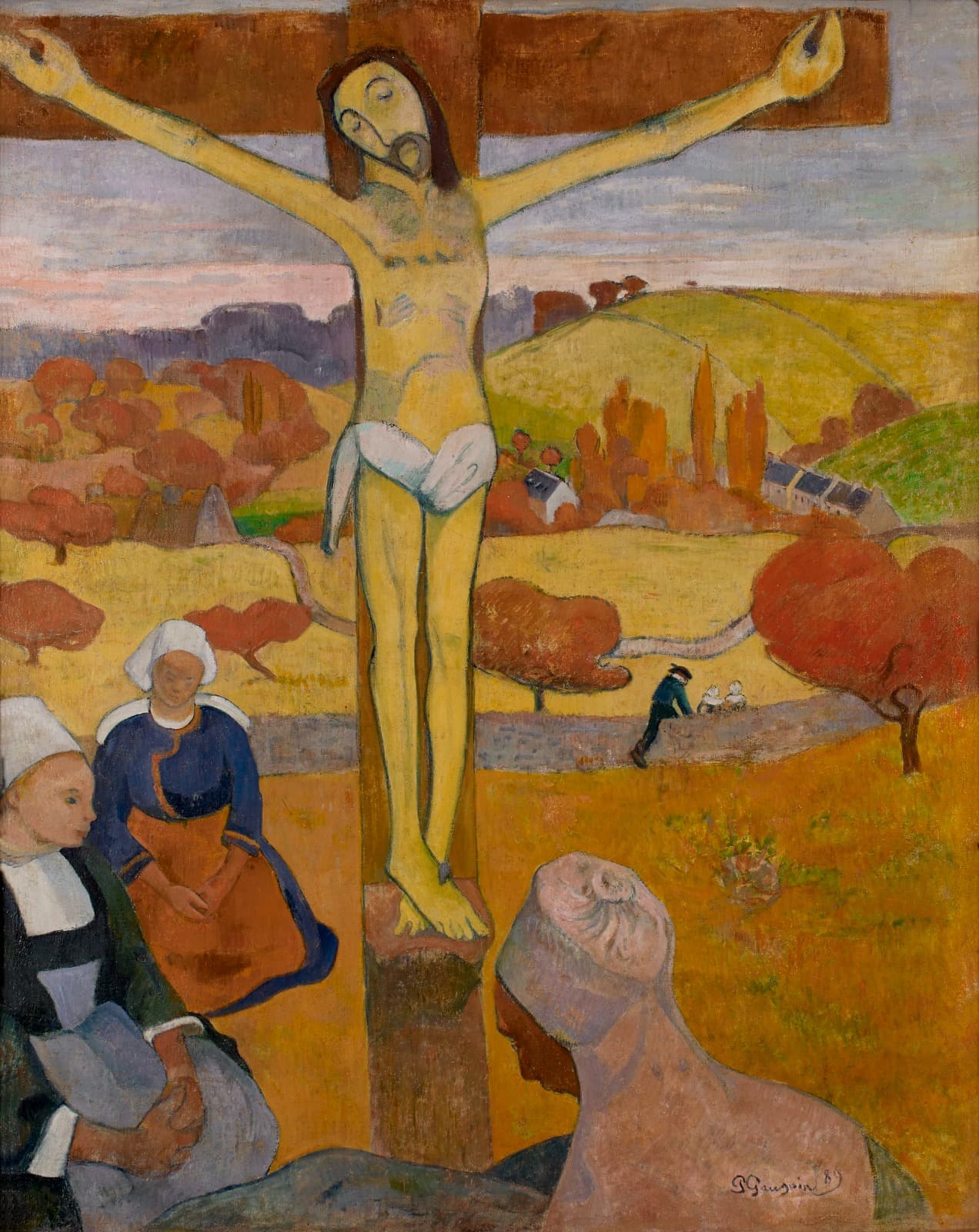
Three Breton women in white caps kneel at a wooden cross in an autumn field, everything flattened into blocks of color like stained glass.

Gaslights along the Arles quay drop long quivering reflections into the water, the Great Bear overhead, a couple walking arm in arm below.

Van Gogh made the faces deliberately coarse and the browns deliberately muddy, wanting it clear that these people had dug the meal themselves.
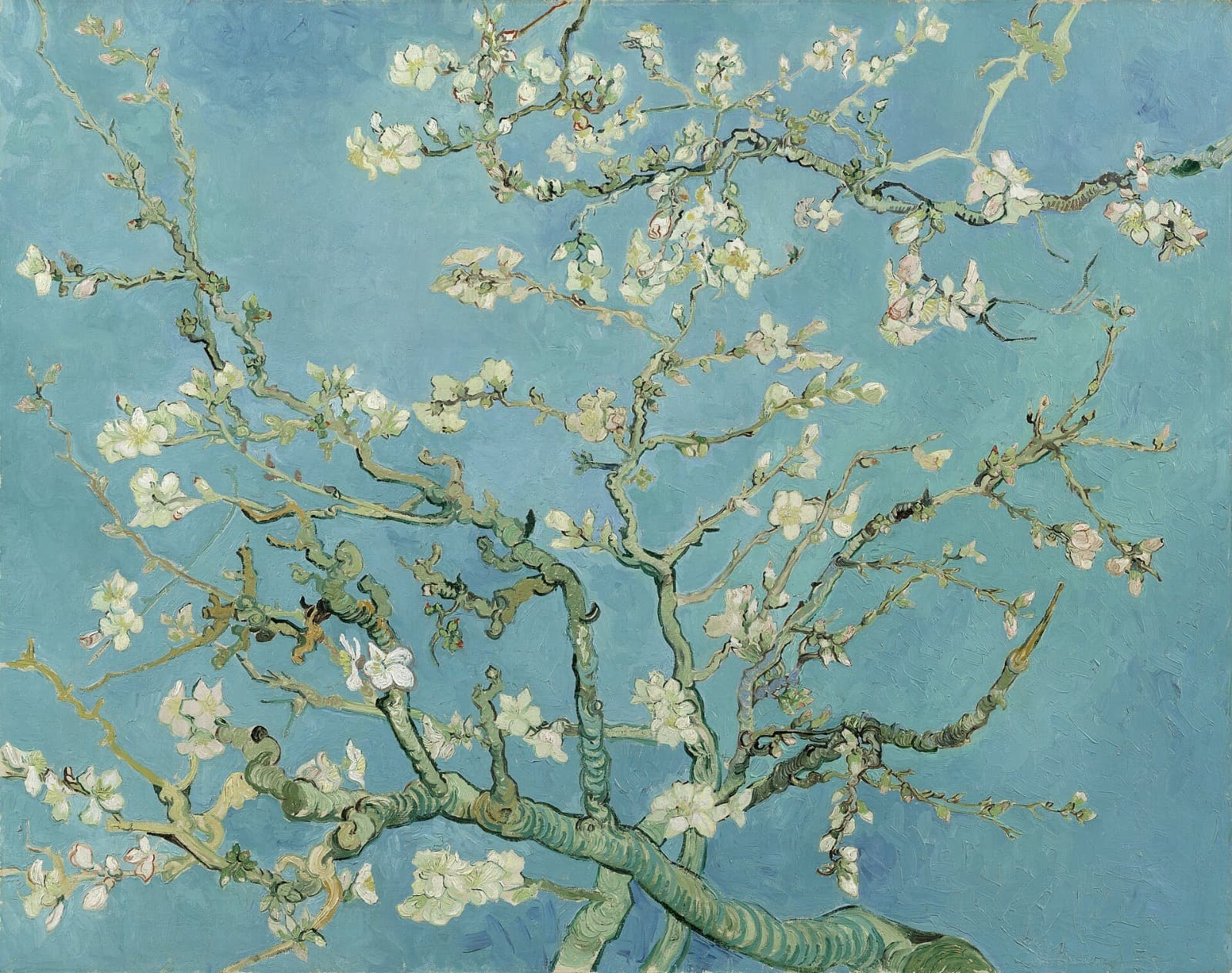
He painted it for his brother's newborn son, named Vincent after him, and cropped the boughs against the sky like a Japanese print.

A girl lies face down and frightened while a hooded figure sits behind her. Gauguin said his Tahitian companion was afraid of the dark.