
Water Lilies (Nympheas Cycle)
1926 · Musee de l'Orangerie, Paris
Monet painted these eight murals of his pond for two oval rooms in Paris while his eyesight failed. They opened months after he died.
★ 9.5
 skopia
Monet painted these eight murals of his pond for two oval rooms in Paris while his eyesight failed. They opened months after he died.

Manet worked from a real barmaid named Suzon and put her reflection in the wrong place, which people have been arguing about ever since.

Fourteen of Renoir's friends linger over the wreckage of lunch above the Seine, his future wife among them, cooing at a dog on the table.
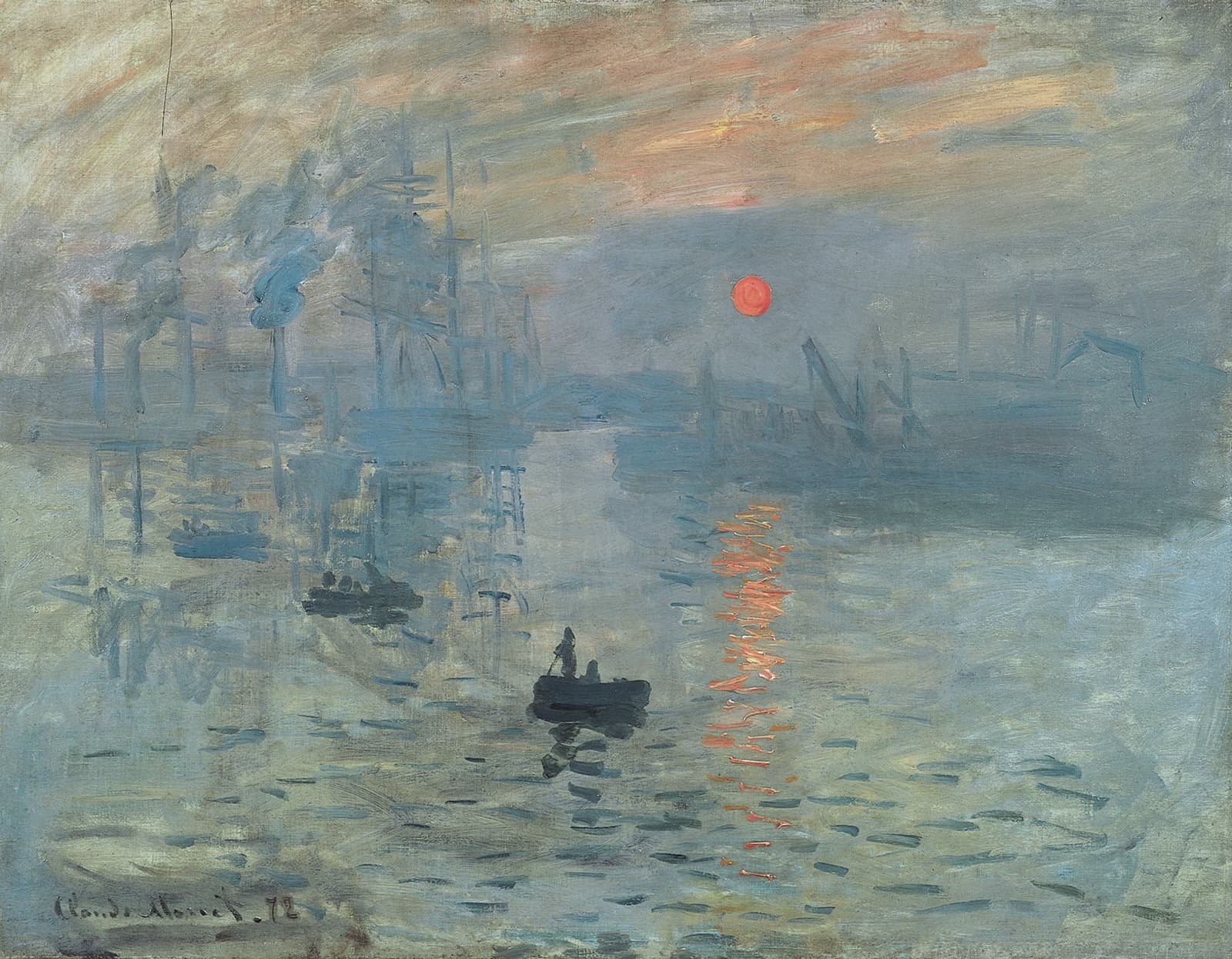
A critic seized on the word in the title to mock the whole group, and the insult ended up naming the movement.

Sunlight comes through the trees in patches over a Montmartre dance floor, a big ambitious canvas given over entirely to a Sunday afternoon.

Umbrellas cross the wet cobbles of Haussmann's new boulevards, composed with a photographic exactness his Impressionist friends had no use for.

Monet dug the pond himself at Giverny, built the Japanese bridge over it, and then painted the place for the rest of his life.

Monet and Renoir set up side by side at this riverside resort and worked out the quick broken stroke that became Impressionism.
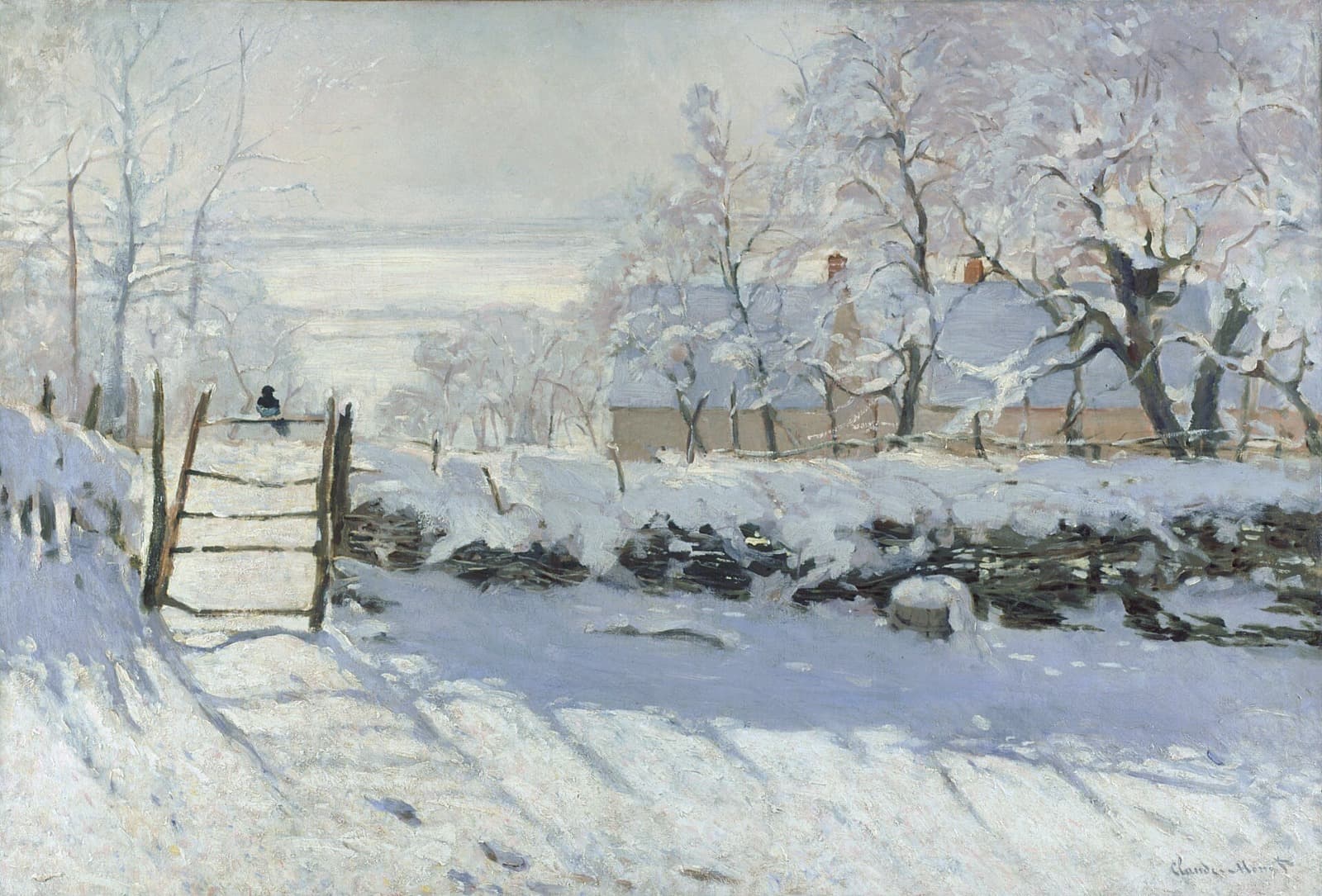
A single magpie on a gate in deep snow, the shadows tinged blue and violet rather than grey. The Salon turned it down.

Monet painted the same stacks near his house at every hour and season, so that what changes from canvas to canvas is only the light.
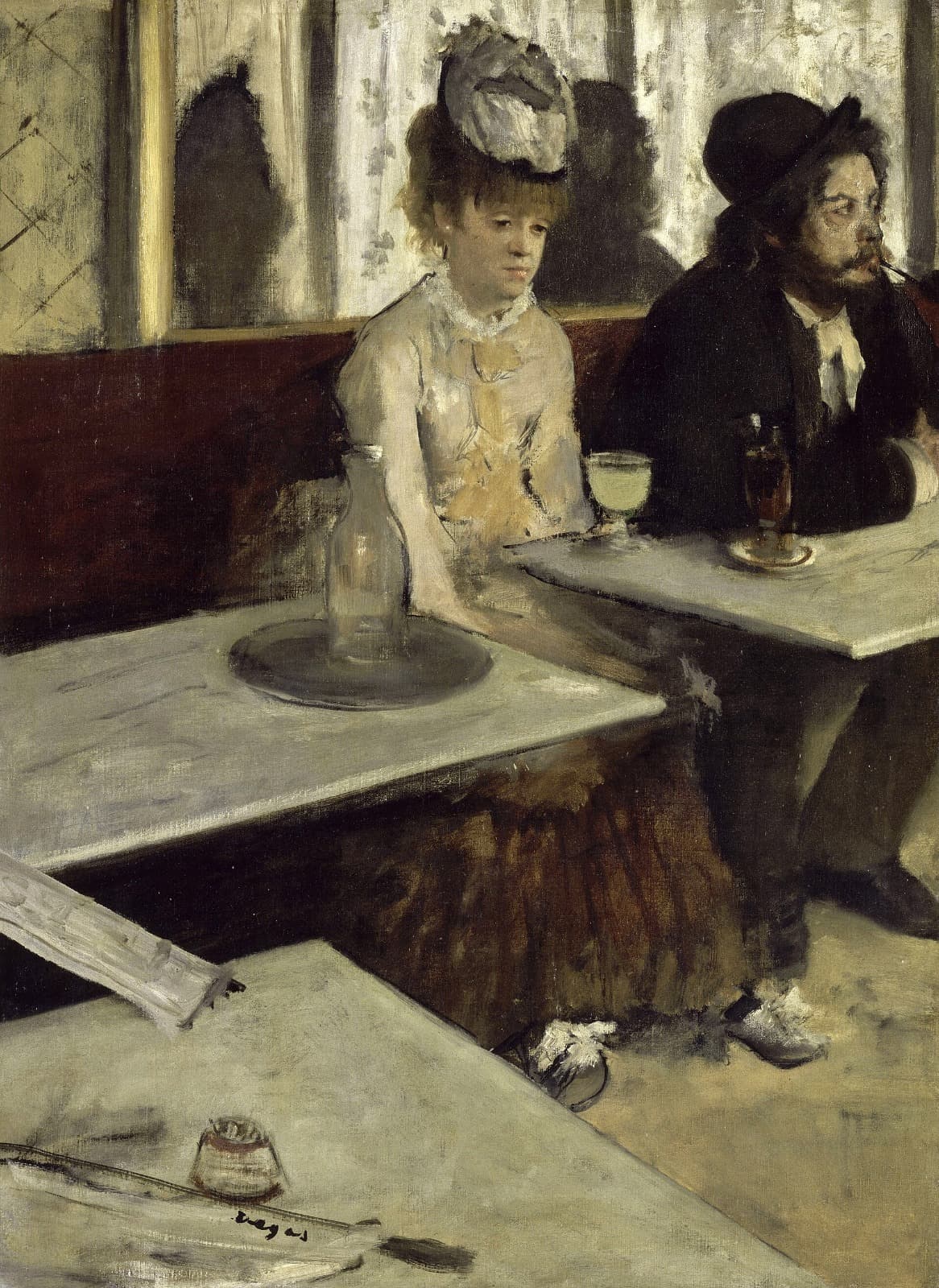
Two people sit shoulder to shoulder at a cafe table staring at nothing, pushed off to one side behind a run of empty tables.

A woman washes a child's feet in a basin, seen from above, the wallpaper and rug pushing everything flat as a Japanese print.

A basket of colored wool sits in the front, the Seine glitters behind, and the whole thing is about how good an afternoon can be.
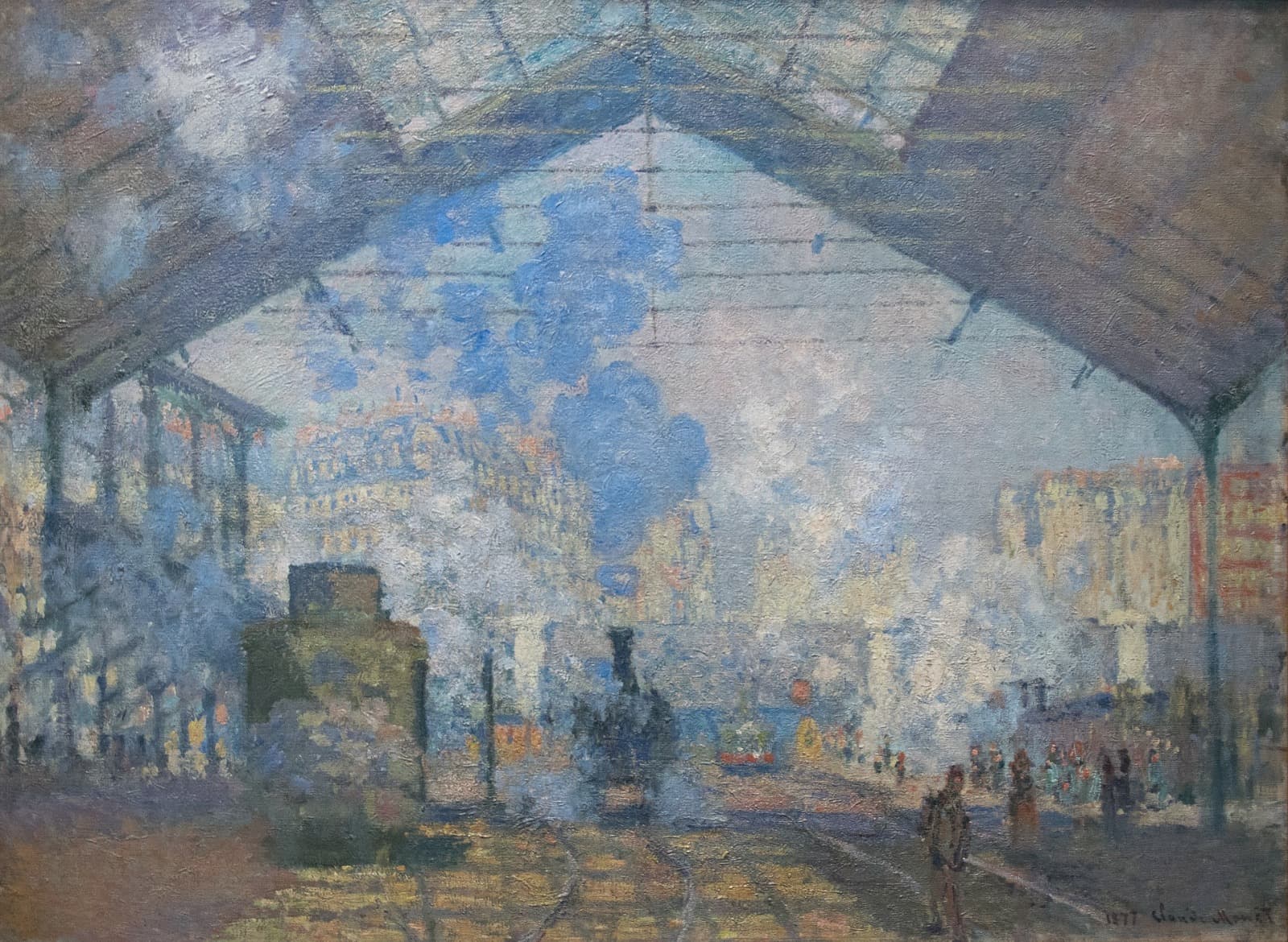
Monet set his easel up inside the station and painted the steam until the roof and the city beyond it had dissolved into it.

Pissarro painted these boulevards from a hotel window over and over, but only once after dark, the gaslight smeared across wet pavement.
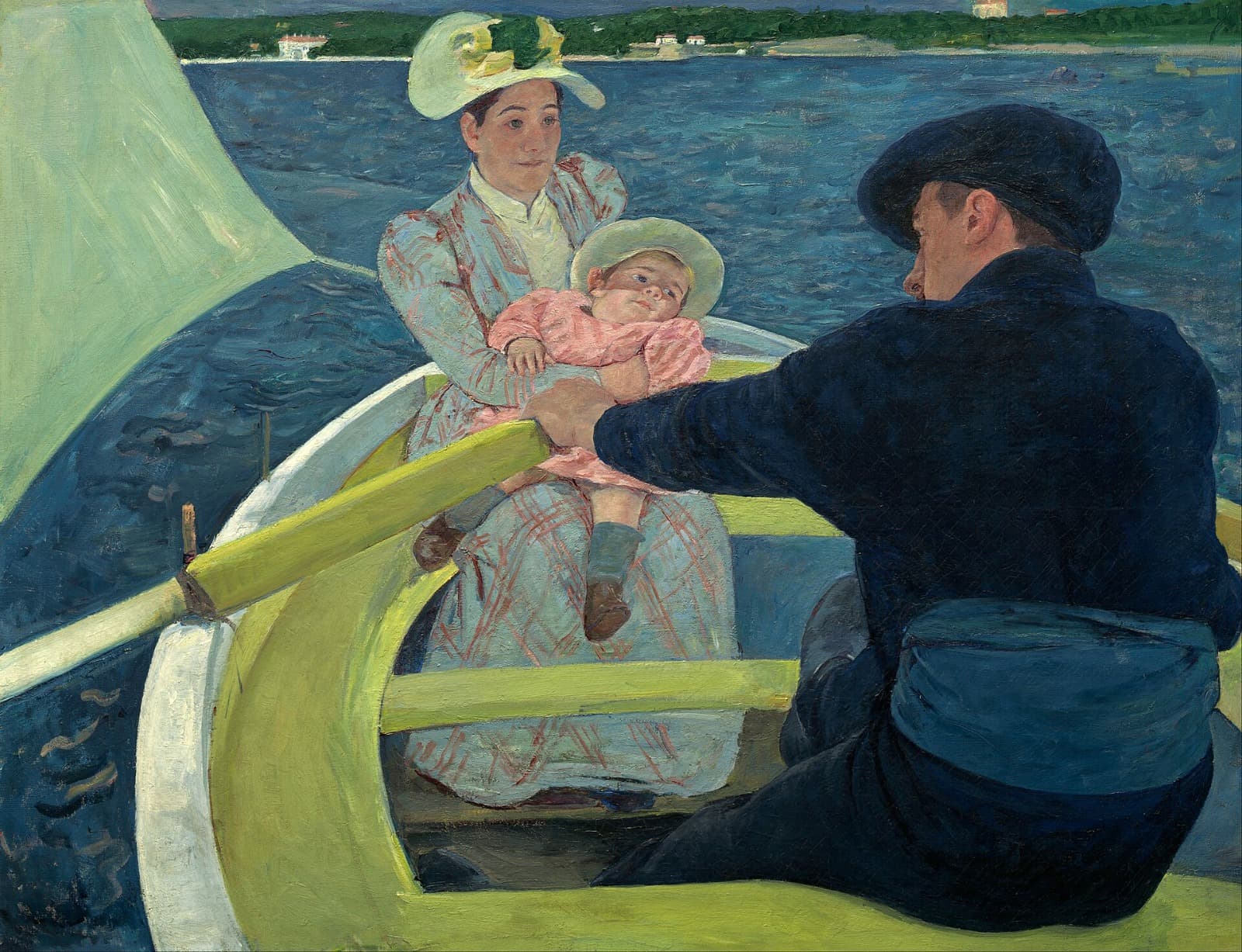
A dark-suited oarsman fills the foreground with his back while the water rises behind with no horizon, a design taken from Japanese prints.
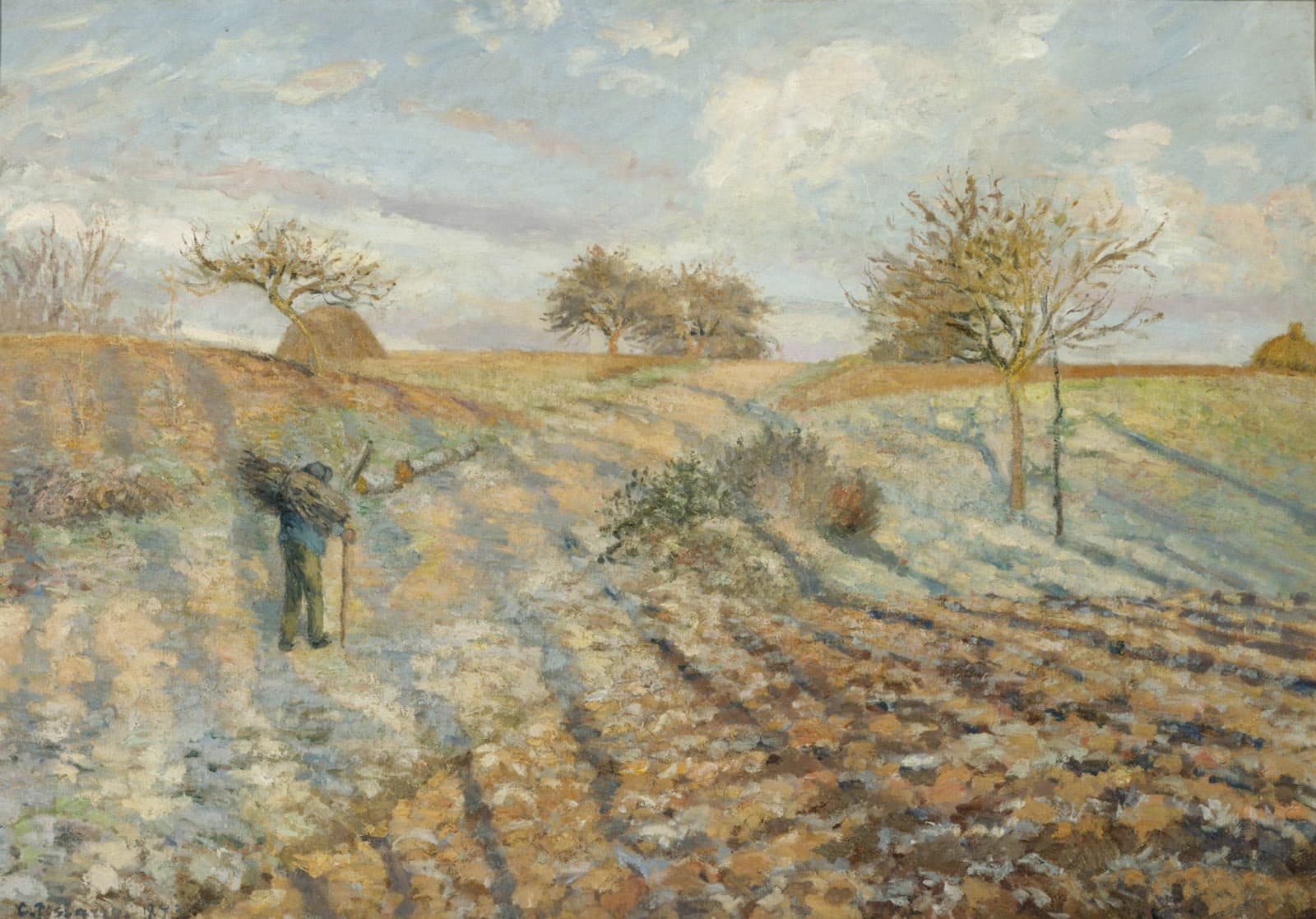
Critics at the first Impressionist show in 1874 said it looked like palette scrapings. The furrows are streaked with blue, violet and gold.

Monet's own father sits among the gladioli on a terrace, and the young painter tips the space up in flat bands like a Japanese print.

Two women with parasols on a clifftop in Normandy, the grass and their dresses going the same direction as the wind.

Monet painted Westminster across the river again and again because what he actually wanted was the fog, not the building.