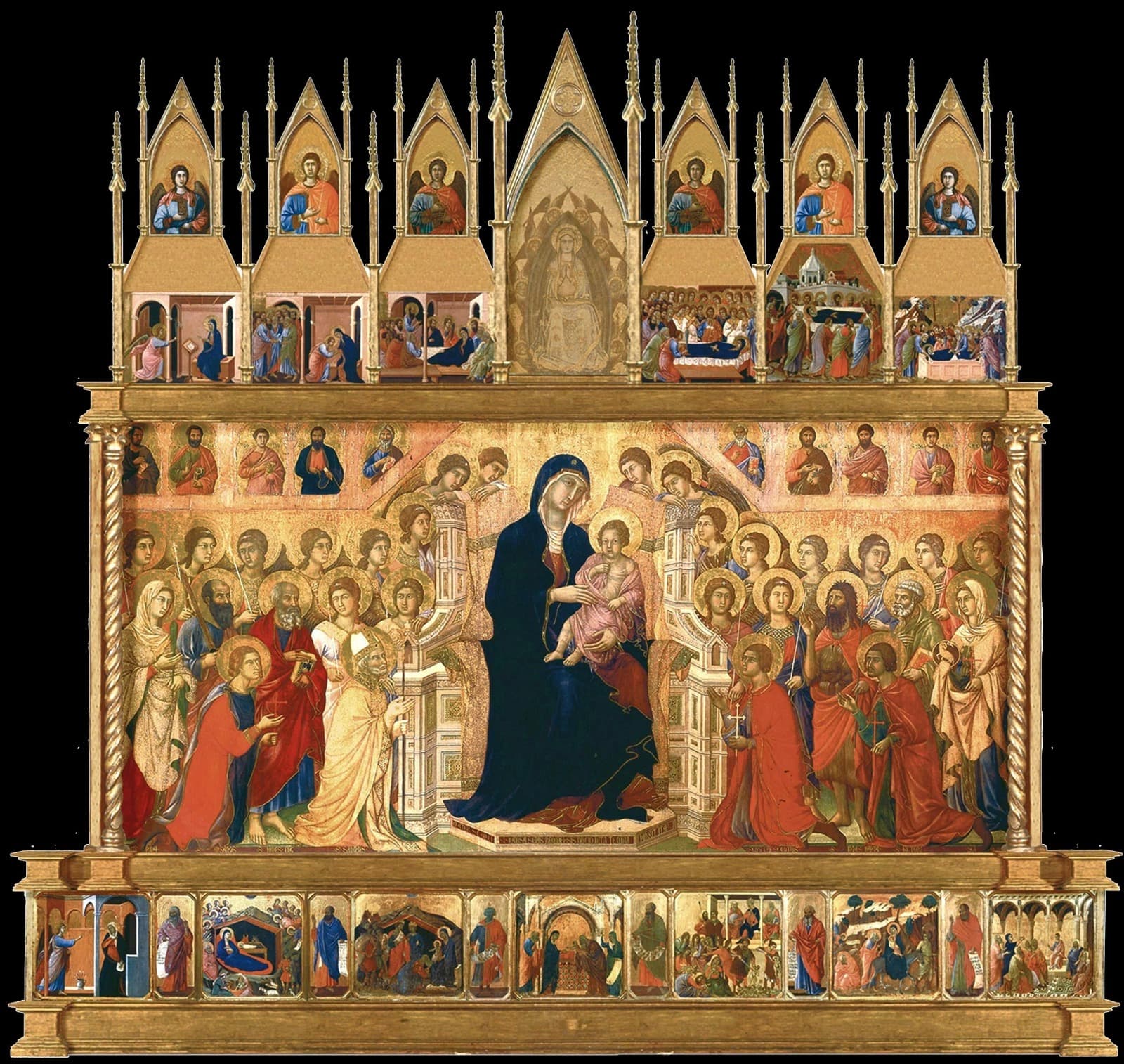
Maesta (Duccio)
1311 · Museo dell'Opera del Duomo (Siena), Siena
When Duccio finished it in 1311 the whole of Siena walked it to the cathedral in procession, with the bells going the entire way.
★ 8.8
 skopia
When Duccio finished it in 1311 the whole of Siena walked it to the cathedral in procession, with the bells going the entire way.

Not a calendar page but Anatomical Man, ringed by zodiac signs governing the body. All three brothers died in 1416, probably of plague.
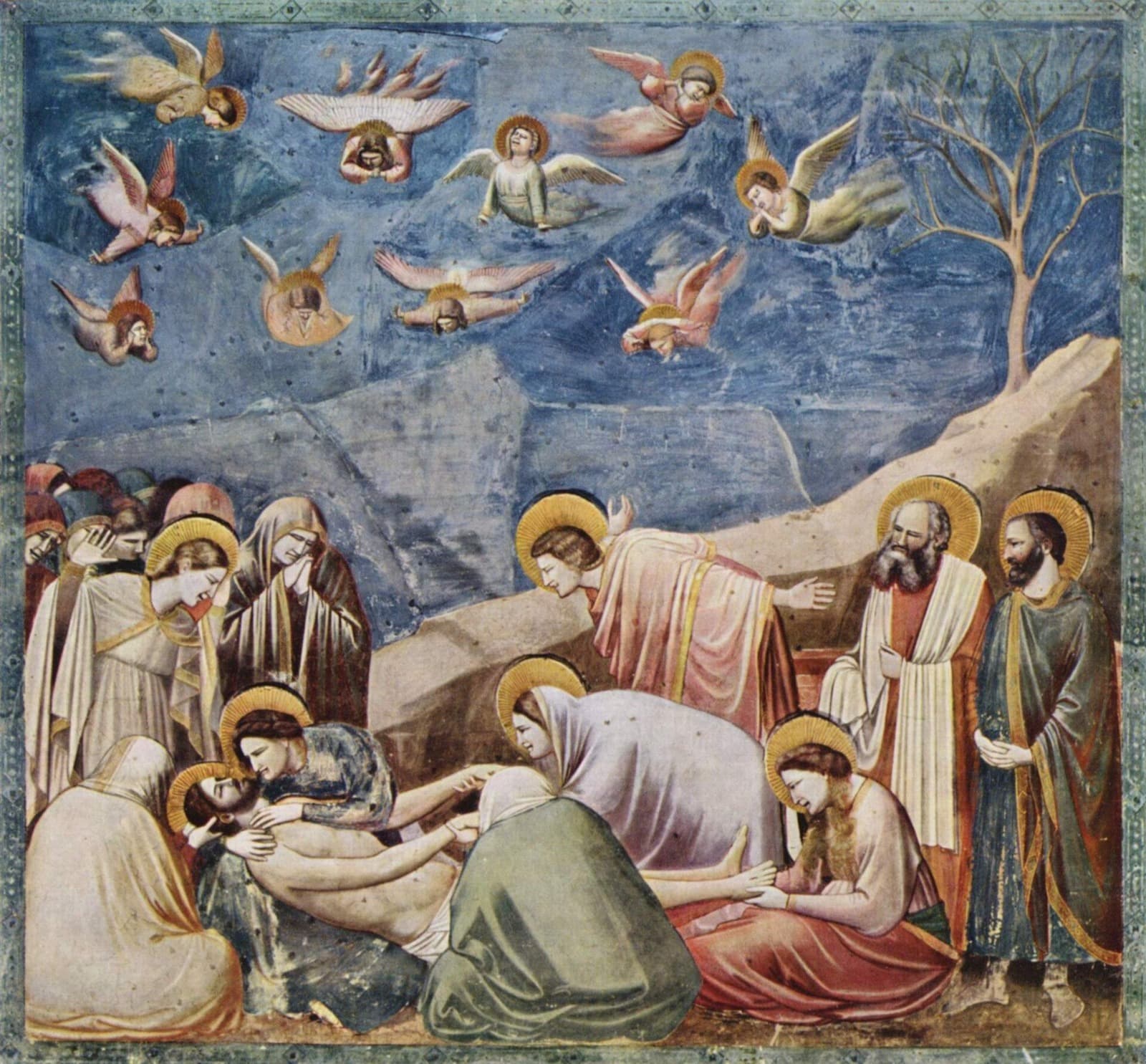
Two mourners sit with their backs turned to pull us in, and the angels overhead double over. Giotto frescoed it in the Arena Chapel at Padua.
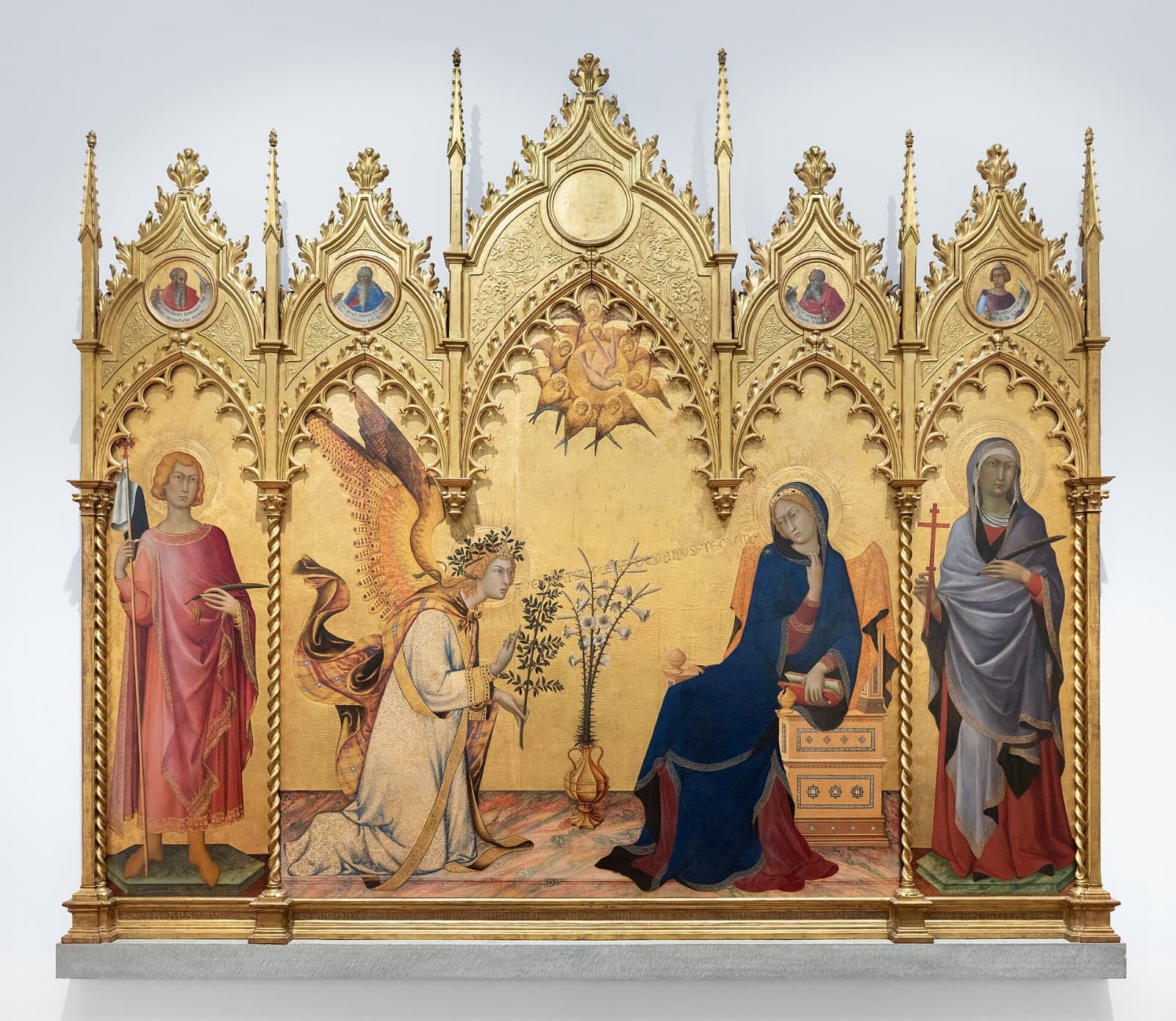
Gabriel's greeting runs toward Mary in raised gold letters and she twists away from it, her thumb still caught in her book.

The kings arrive with a retinue of horses, hounds and a leopard, every surface tooled in gold for one of Florence's richest families.

Torches and spears bristle against the sky, and at the still center Judas wraps Christ in his yellow cloak and meets his eye.
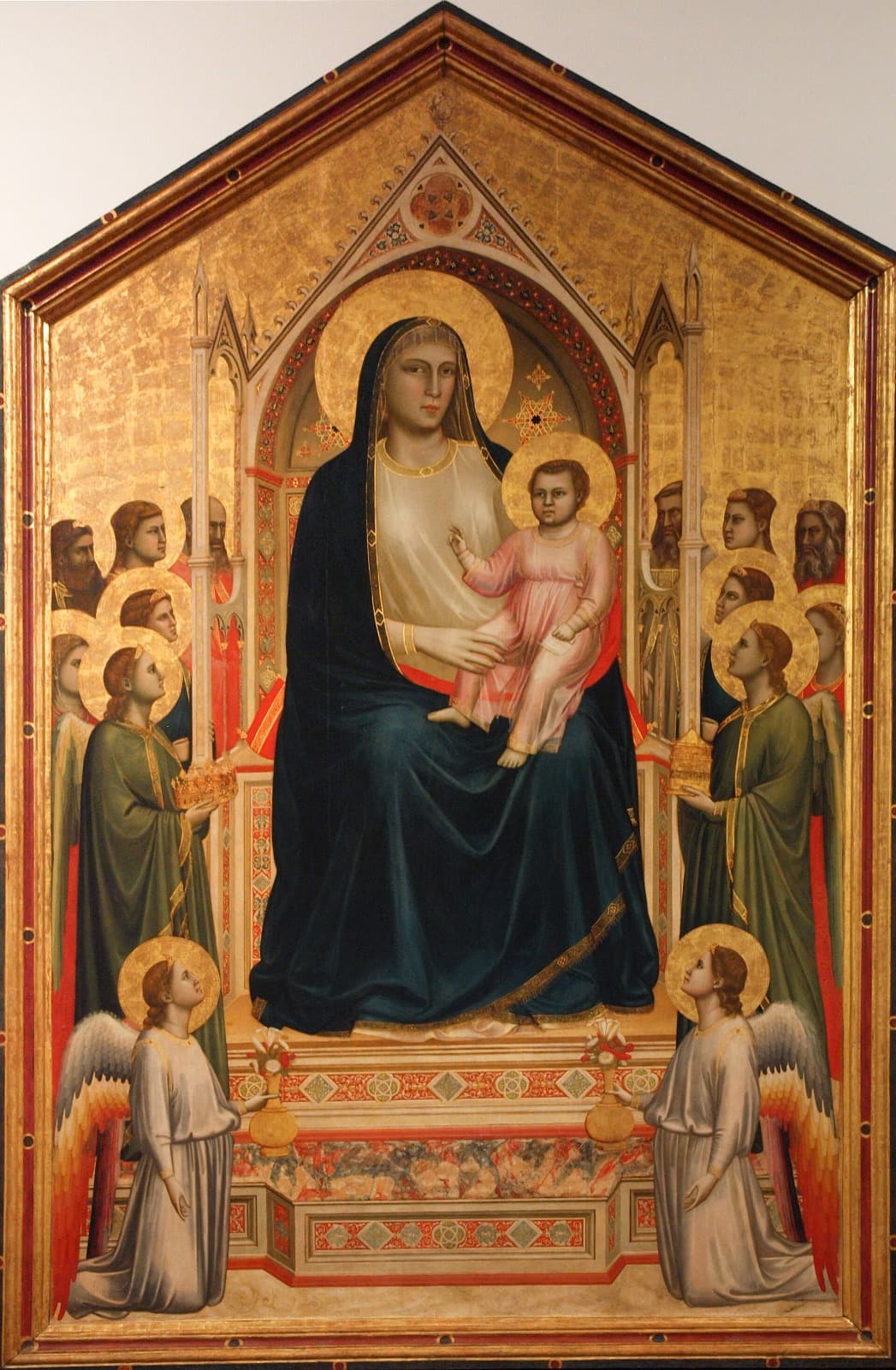
Where Cimabue and Duccio floated their Madonnas on gold, Giotto gave his weight, a real throne, and a body that presses through the cloth.
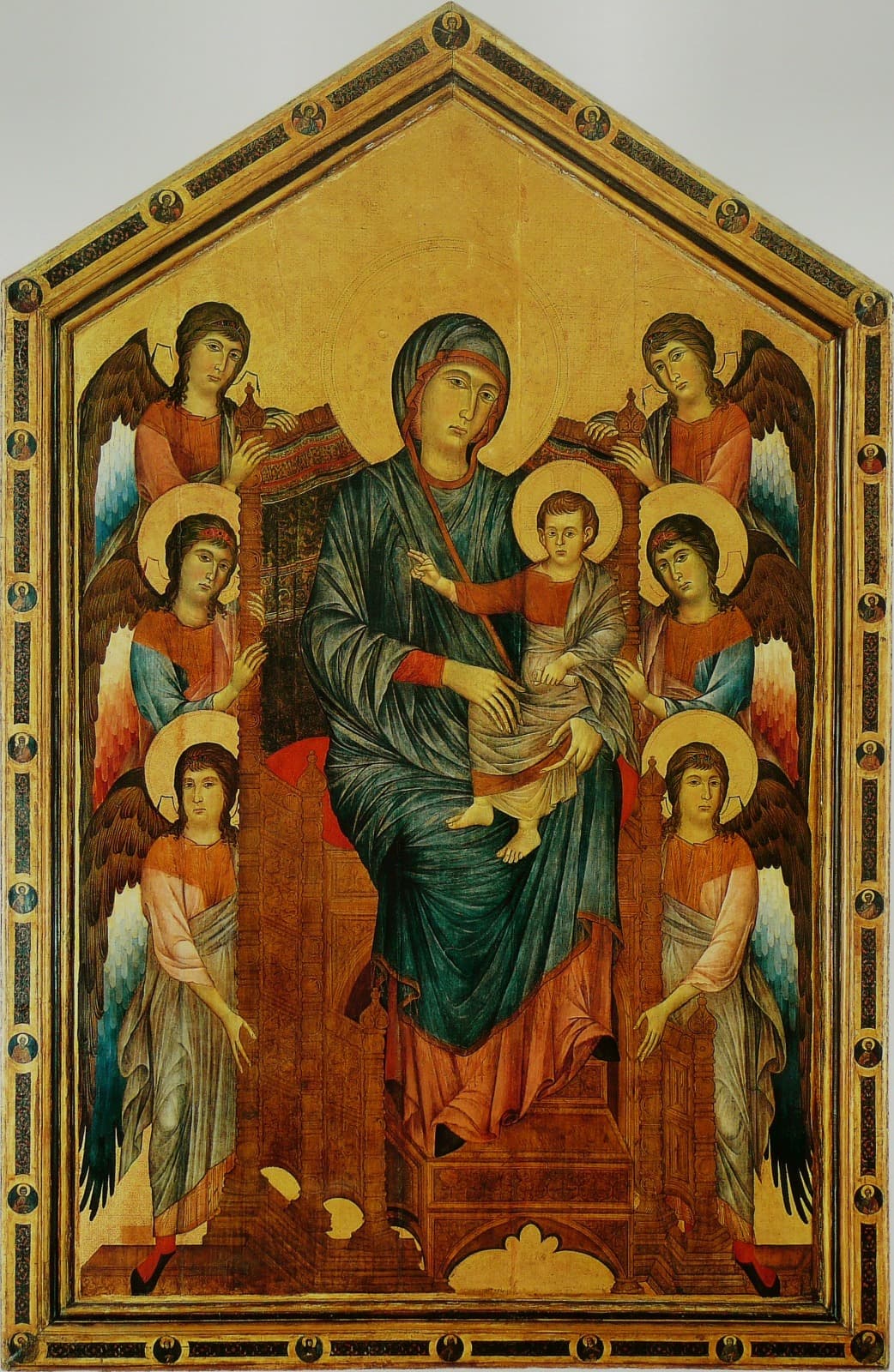
Six angels stack up the sides of the throne against gold. Cimabue taught Giotto, and the throne here is just beginning to recede into space.
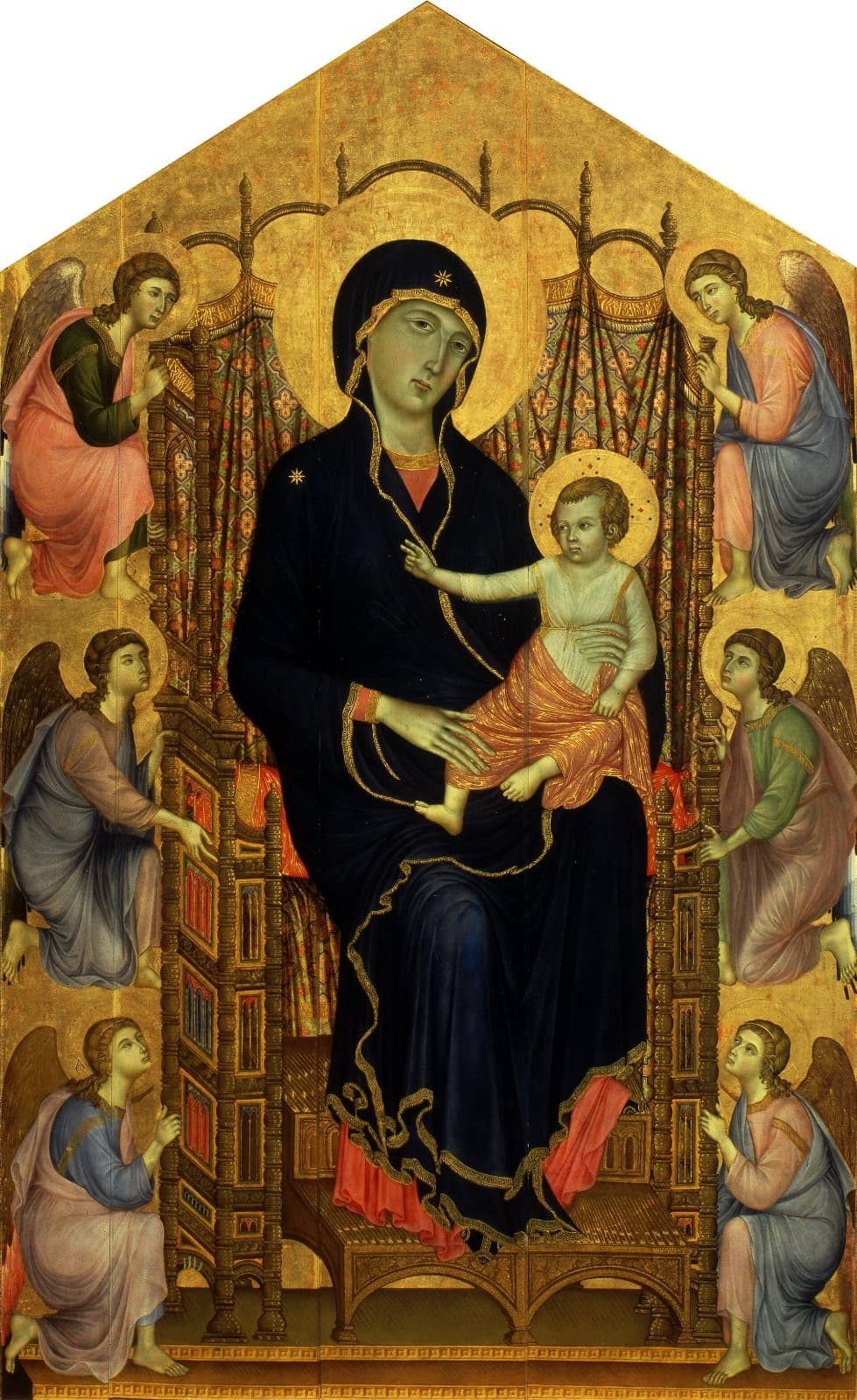
Four and a half meters tall, the largest panel painted in its century, with six angels kneeling to steady a throne that seems to float.
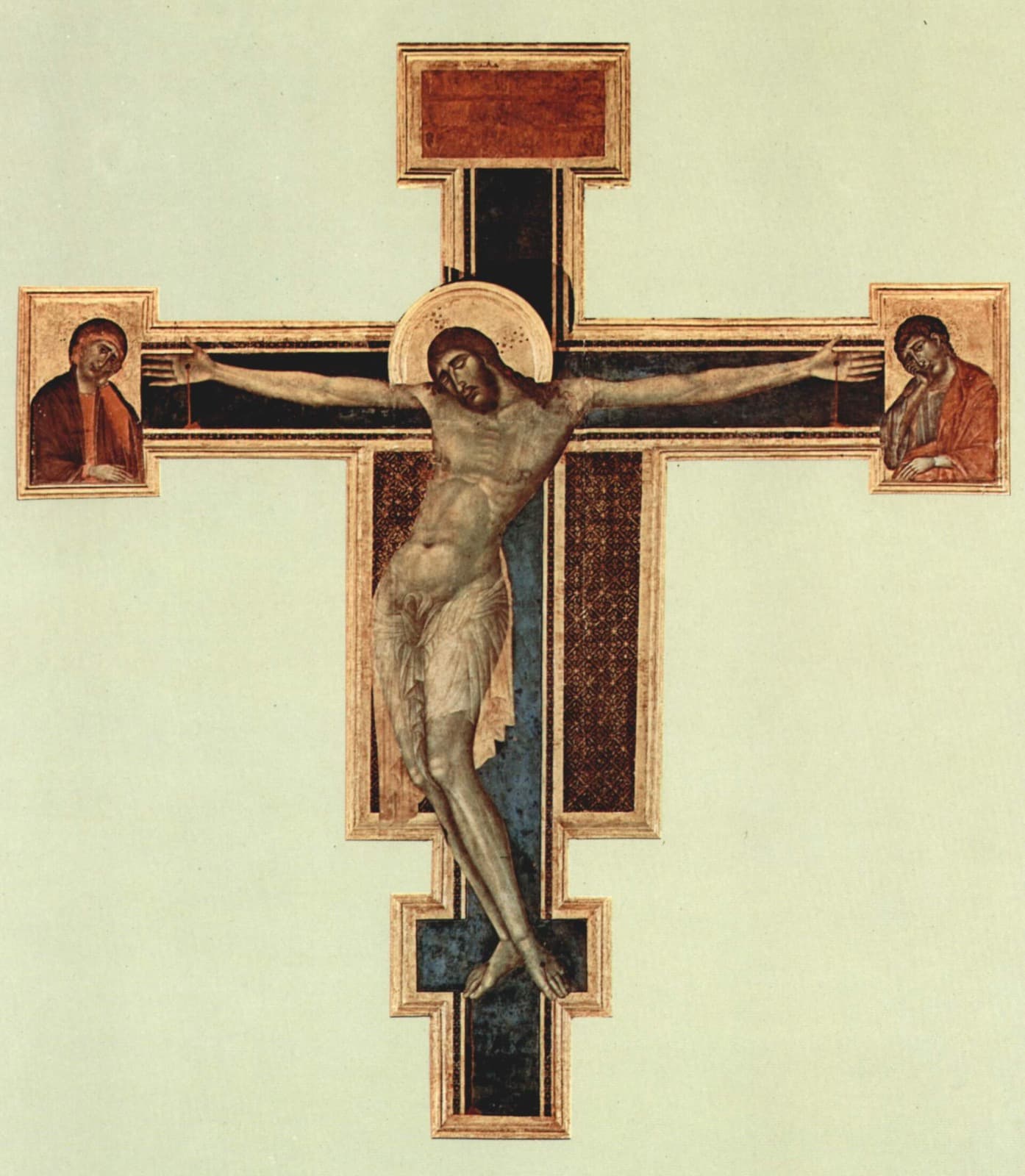
The Arno flood of 1966 stripped most of the paint off it, and the ruined cross became the emblem of the whole disaster.
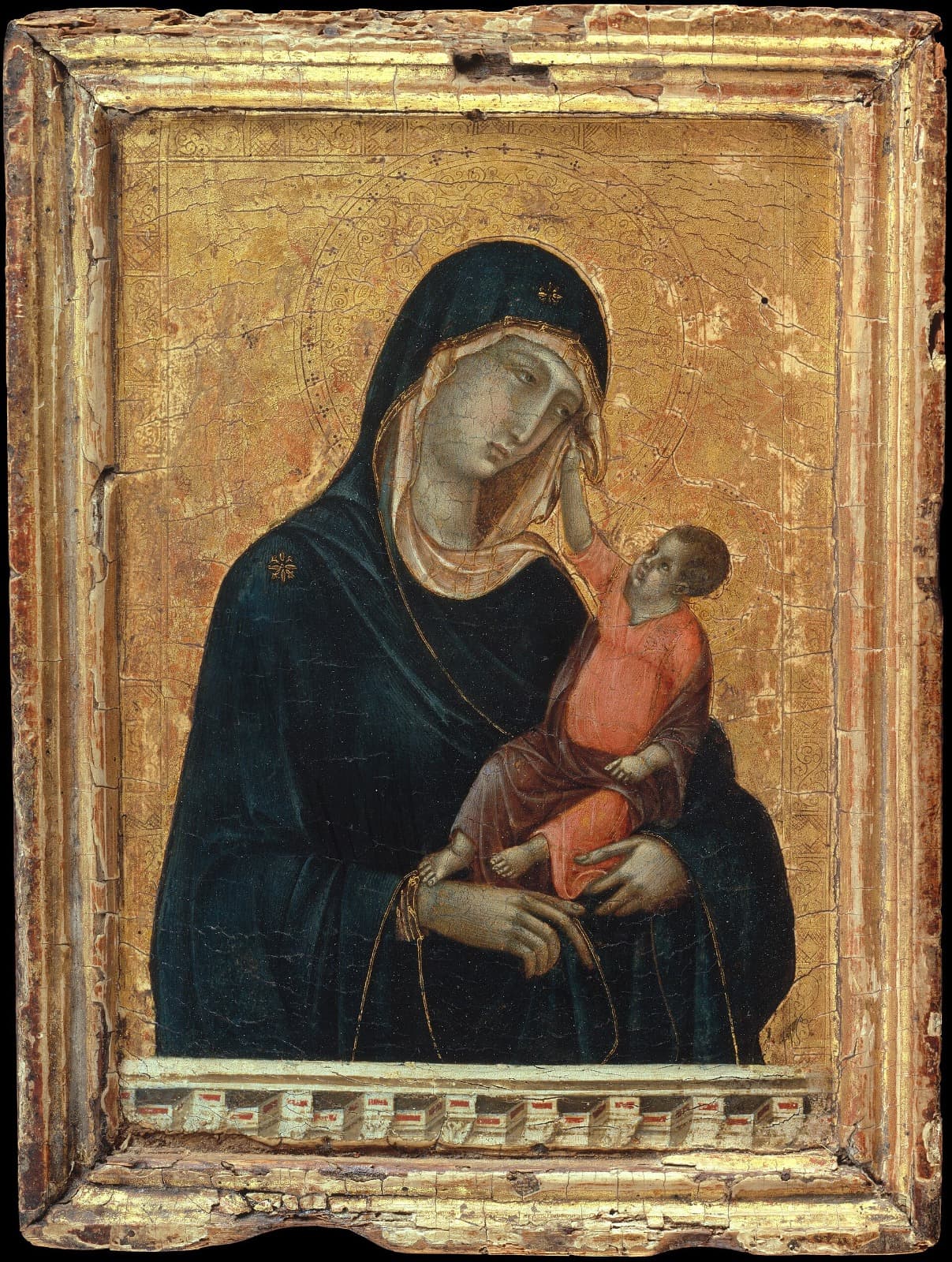
Christ reaches up to push his mother's veil aside. Scorch marks on the original frame record centuries of candles set before it.
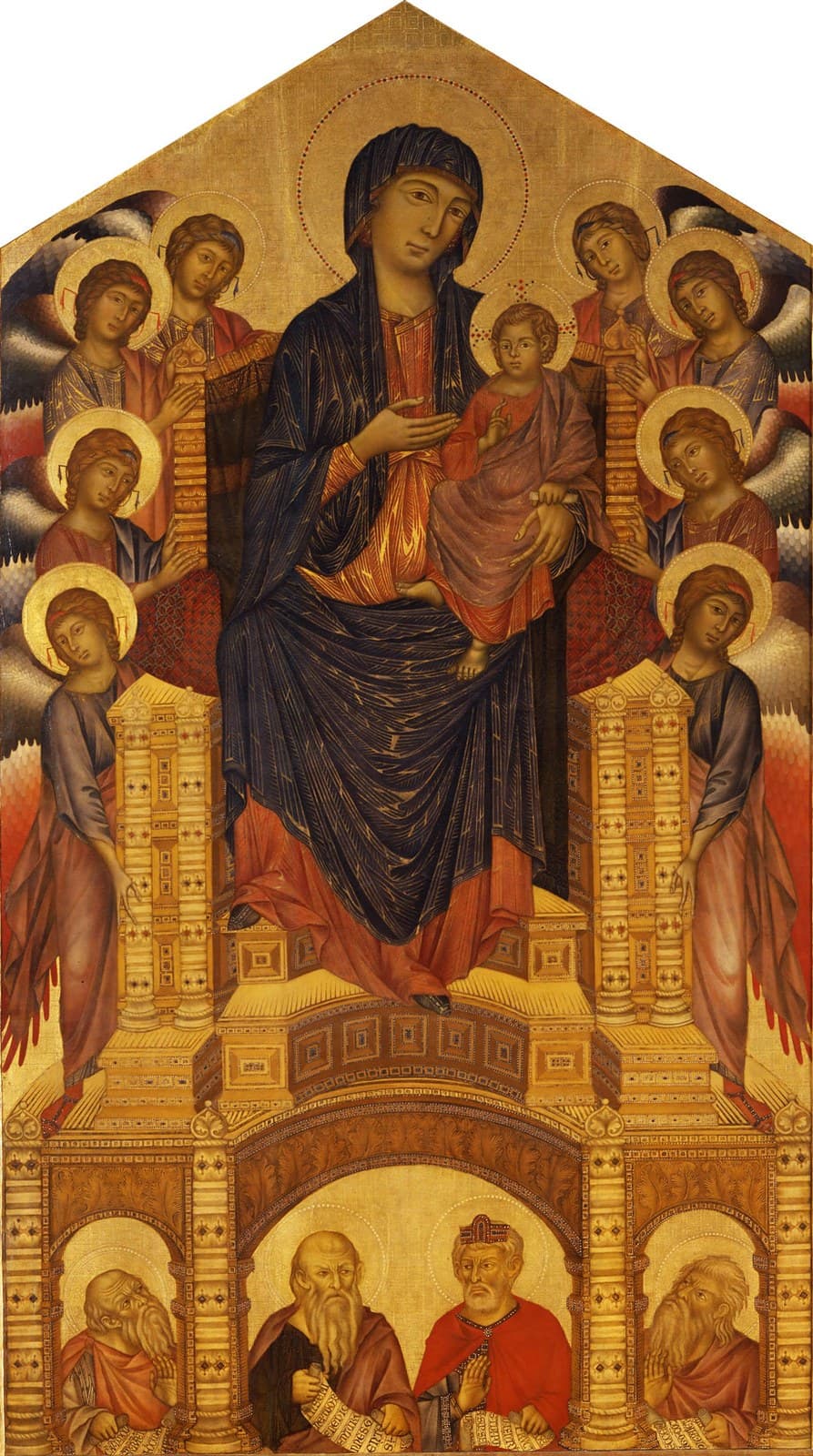
Four prophets peer from arches under the throne holding scrolls that foretell the Virgin Birth, and the throne is angled to suggest depth.
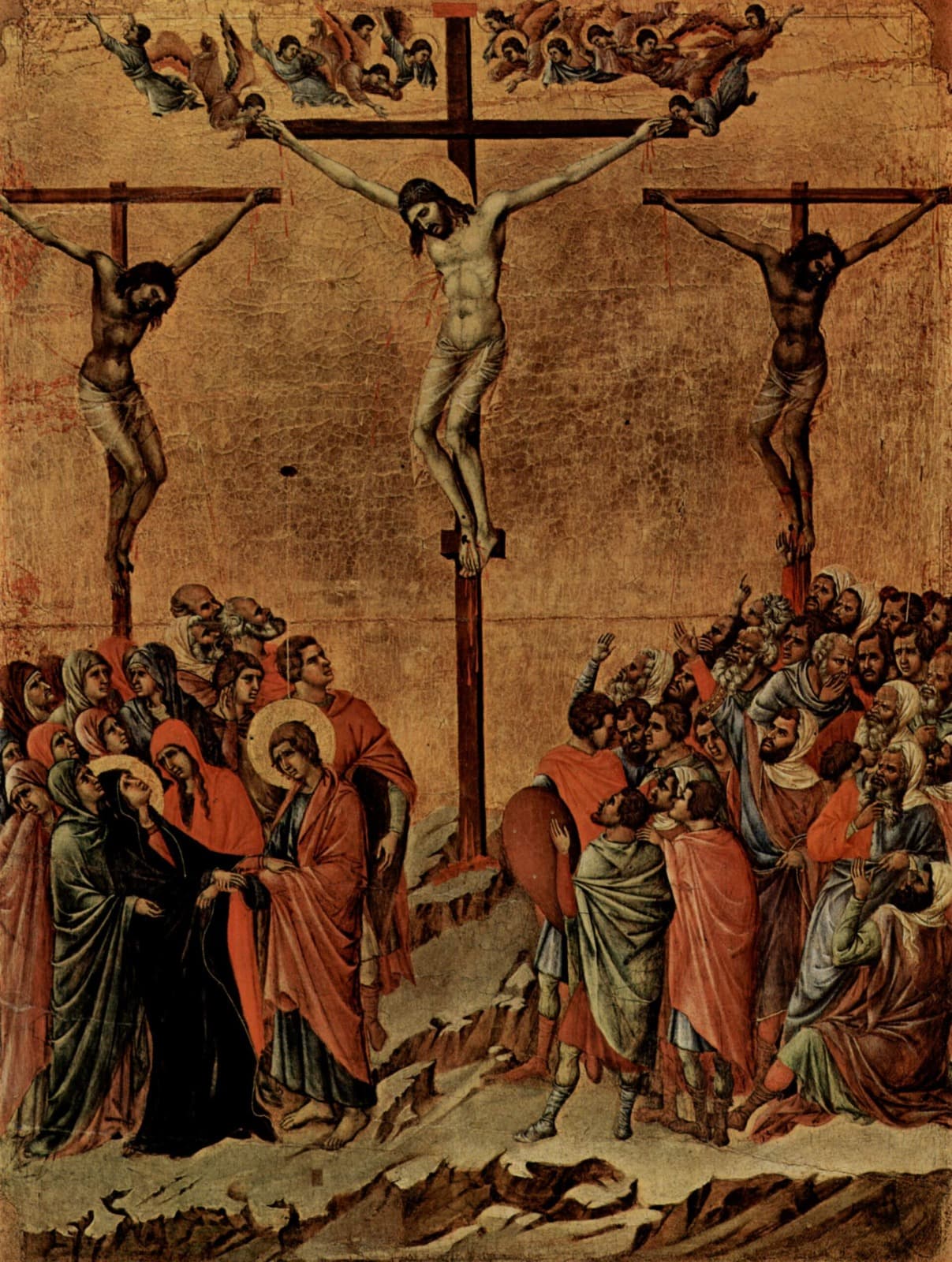
This is the largest scene on the back of the Maesta, the Virgin fainting on one side and the crowd arguing on the other.

Golden rays come off a winged crucified figure in the sky and strike Francis in the hands, feet and side. Giotto signed this one.

Martin cuts his soldier's cloak in half with his sword to give a beggar the other part, dressed by Simone in courtly gold.

Two trees, a strip of ground, and a flock that stays to listen. Giotto tells the miracle as though it simply happened.

Giotto had watched Halley's Comet in 1301 and painted the Star of Bethlehem as a comet, apparently the first artist to do it.
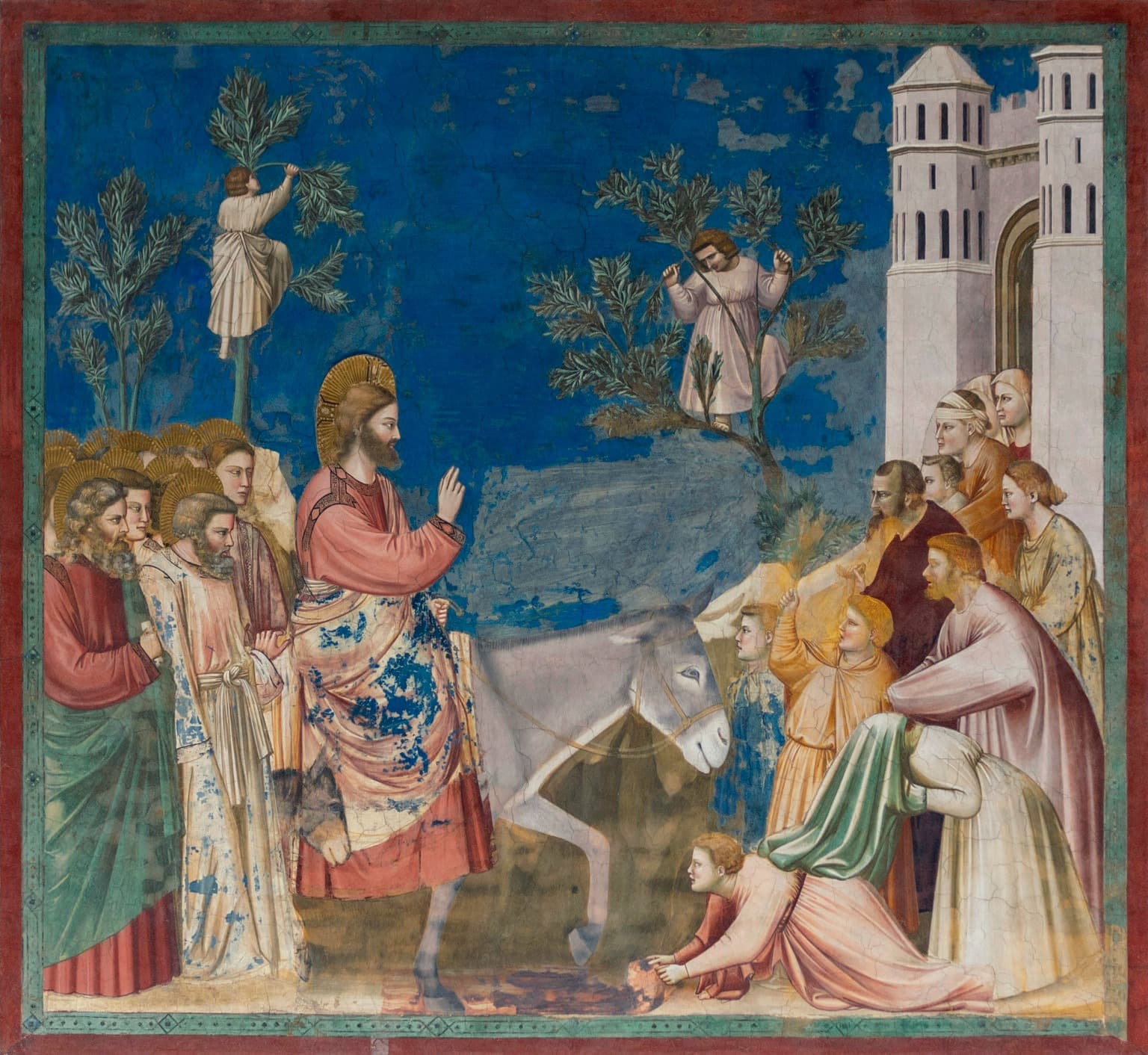
Boys climb the trees to break off palm branches while the procession moves along a stage-like ledge under deep blue. Padua, around 1305.

A white Gothic city, a horse shown daringly from behind, and two hanged men on a gallows in the corner of the fairy tale.

Duccio and Giotto painted this same entry within a year of each other. Duccio's is the crowded one, full of towers, incident and color.