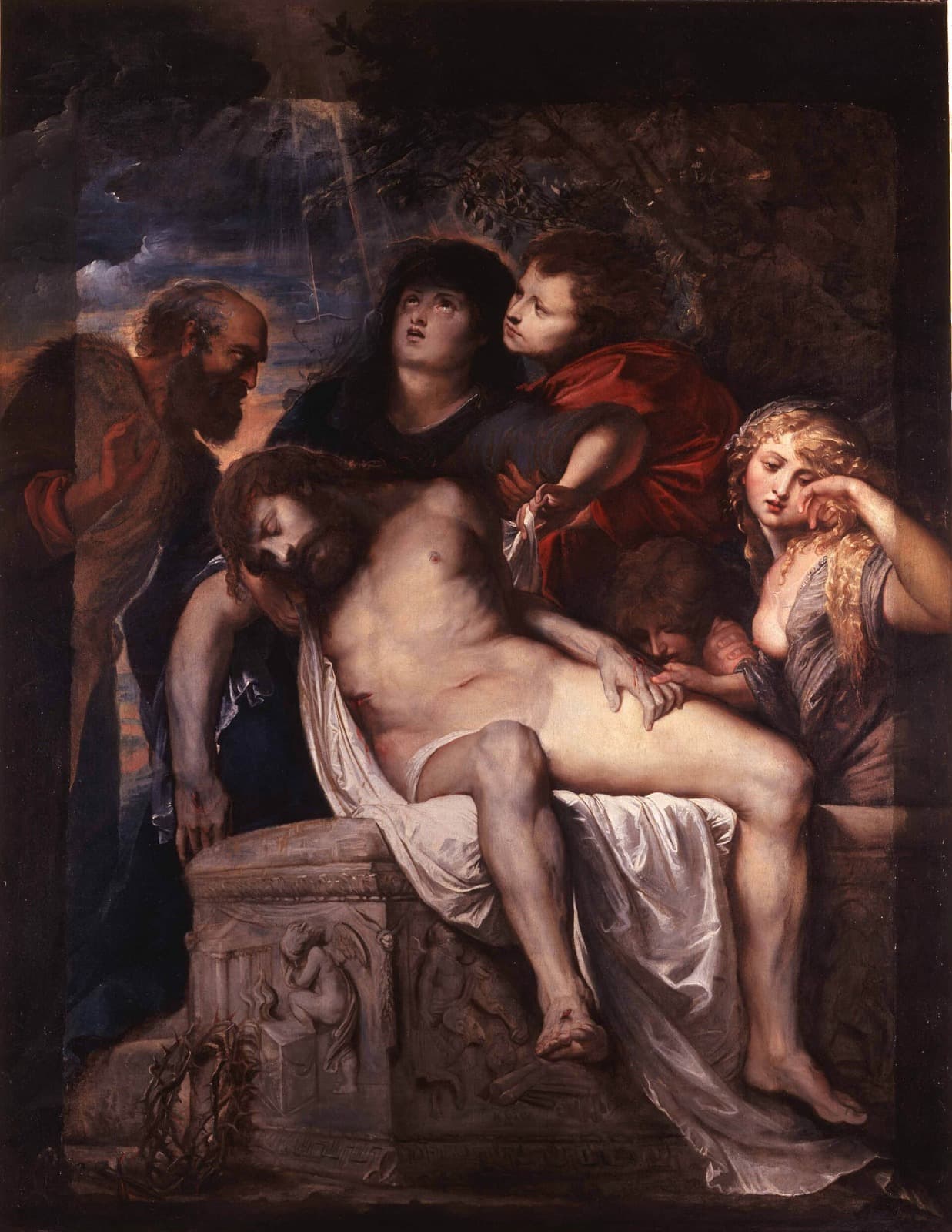
The Deposition
1602 · Galleria Borghese, Rome
Rubens worked this out in Rome while studying Caravaggio, a rehearsal for the great Descent he would paint back home in Antwerp.
★ 4.8
 skopia
Rubens worked this out in Rome while studying Caravaggio, a rehearsal for the great Descent he would paint back home in Antwerp.

Beckmann came out of the war traumatized and painted a Christ so emaciated and angular that no consolation survives the picture.

Where his teacher Pontormo made the subject swirl with anxiety, Bronzino polishes it: jewel-bright blues and pinks, grief made elegant.

Rubens painted this descent years after the Antwerp one, and the two together show him reworking the same falling body across a career.
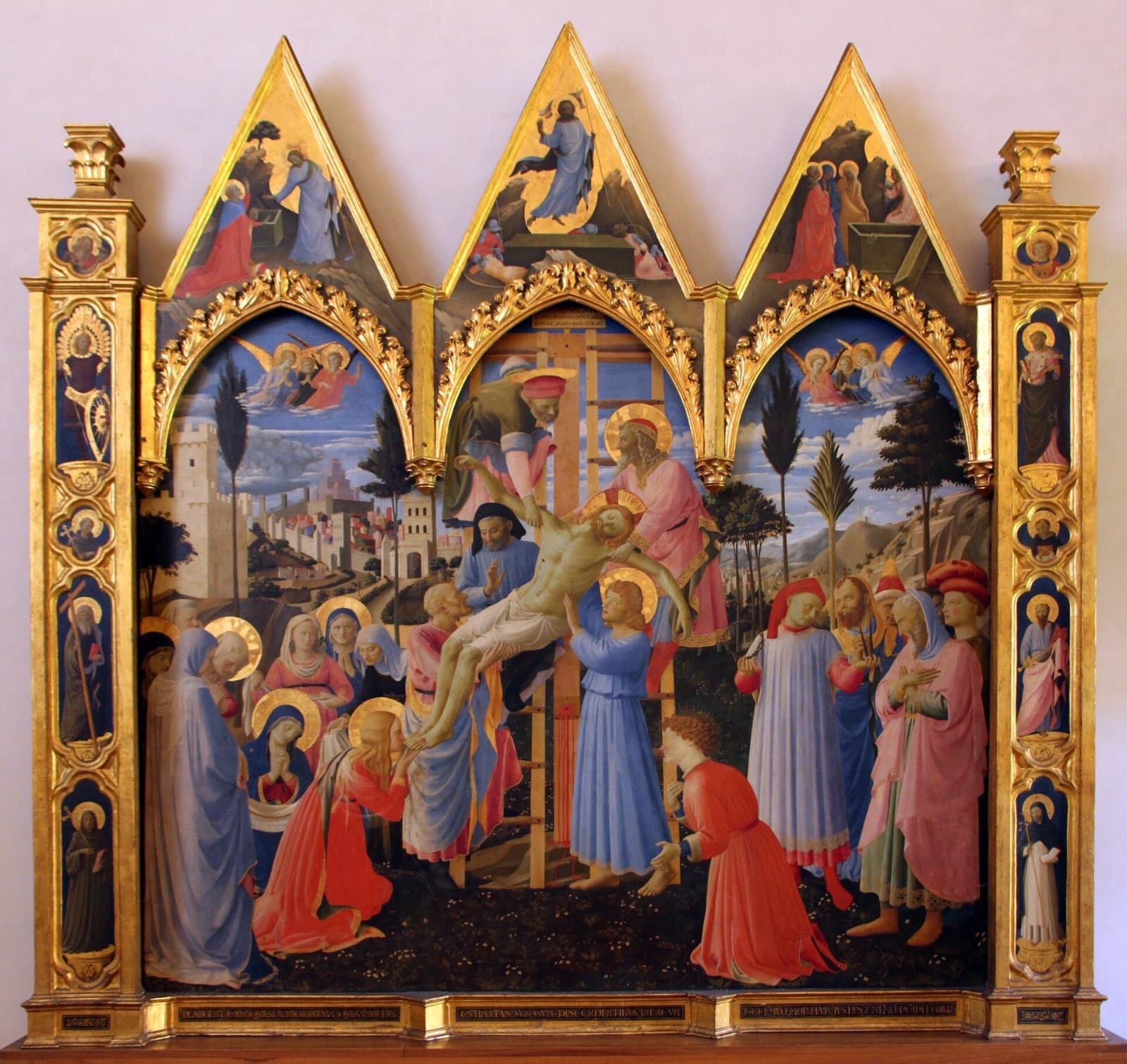
Fra Angelico inherited a Gothic frame begun years earlier and filled it with deep sunlit space instead of gold, which is the whole story.

Michelangelo carved it for his own tomb, gave Nicodemus his own face, then took a hammer to it and broke off Christ's leg.

No cross, no ground, no sky, just a spiral of mourners in acid pink and sea-green. Florentine Mannerism starts here.

Christ's body slides down one long diagonal onto a white shroud. It still stands on the altar in Antwerp Cathedral that Rubens painted it for.

The fainting Virgin curves in an exact echo of her dead son, the stroke that made van der Weyden the most copied painter in the north.