
The Last Supper (Bouveret)
1896 · Private collection
The light in the darkened room seems to be coming off Christ himself, painted when religious art had largely gone out of fashion.
★ 4.0
 skopia
The light in the darkened room seems to be coming off Christ himself, painted when religious art had largely gone out of fashion.

A woman in a white corset seen from behind, painted so loosely the picture seems to stop just before the image settles.
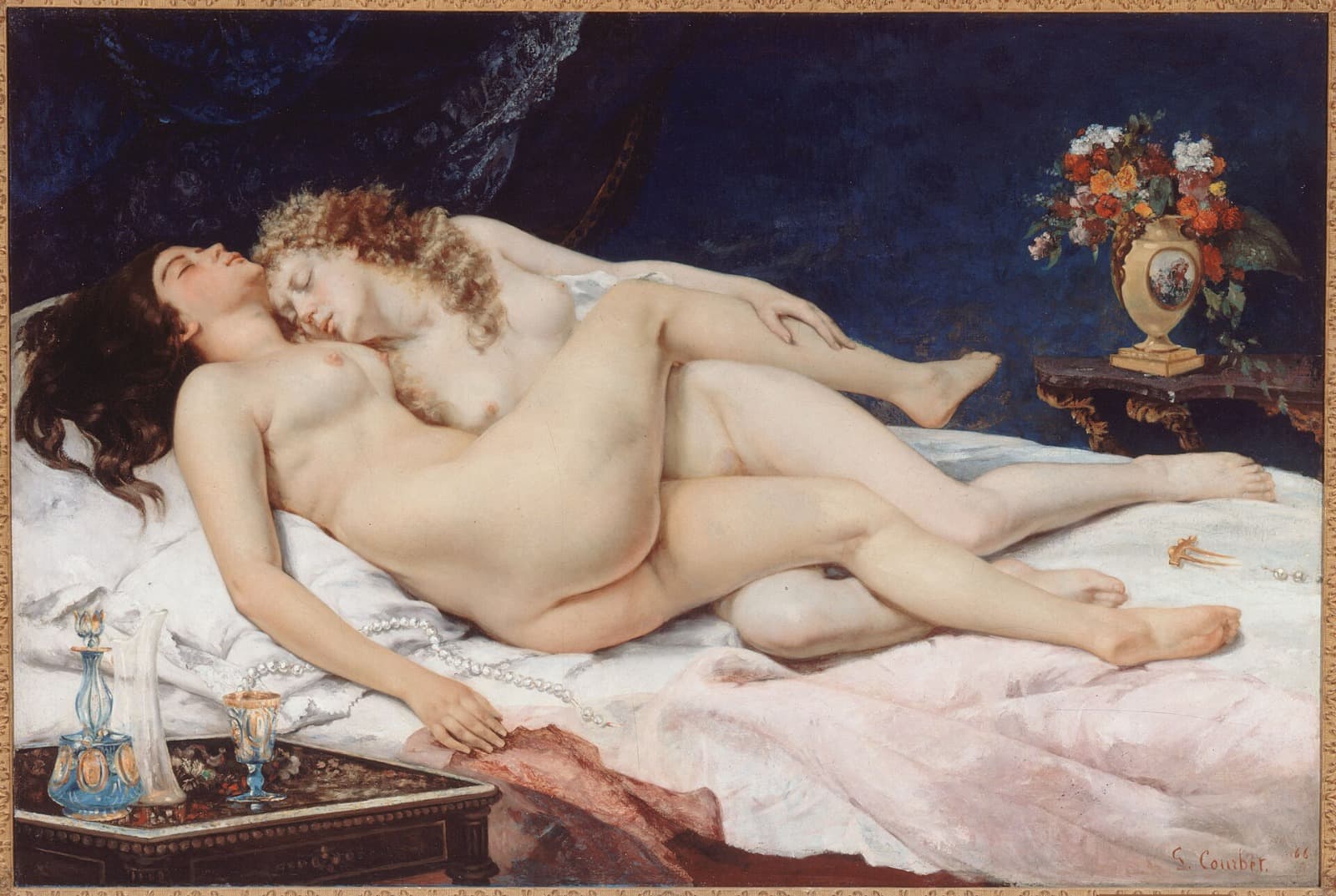
Two women asleep and entwined, painted on private commission and therefore out of reach of the Salon and its proprieties.

A Union officer faces three captured Confederates and the two halves of the country study each other. Homer had covered the war as an illustrator.

Courbet took the nude to the Salon with her hair loose, her body relaxed, and a parrot on her hand instead of a myth.
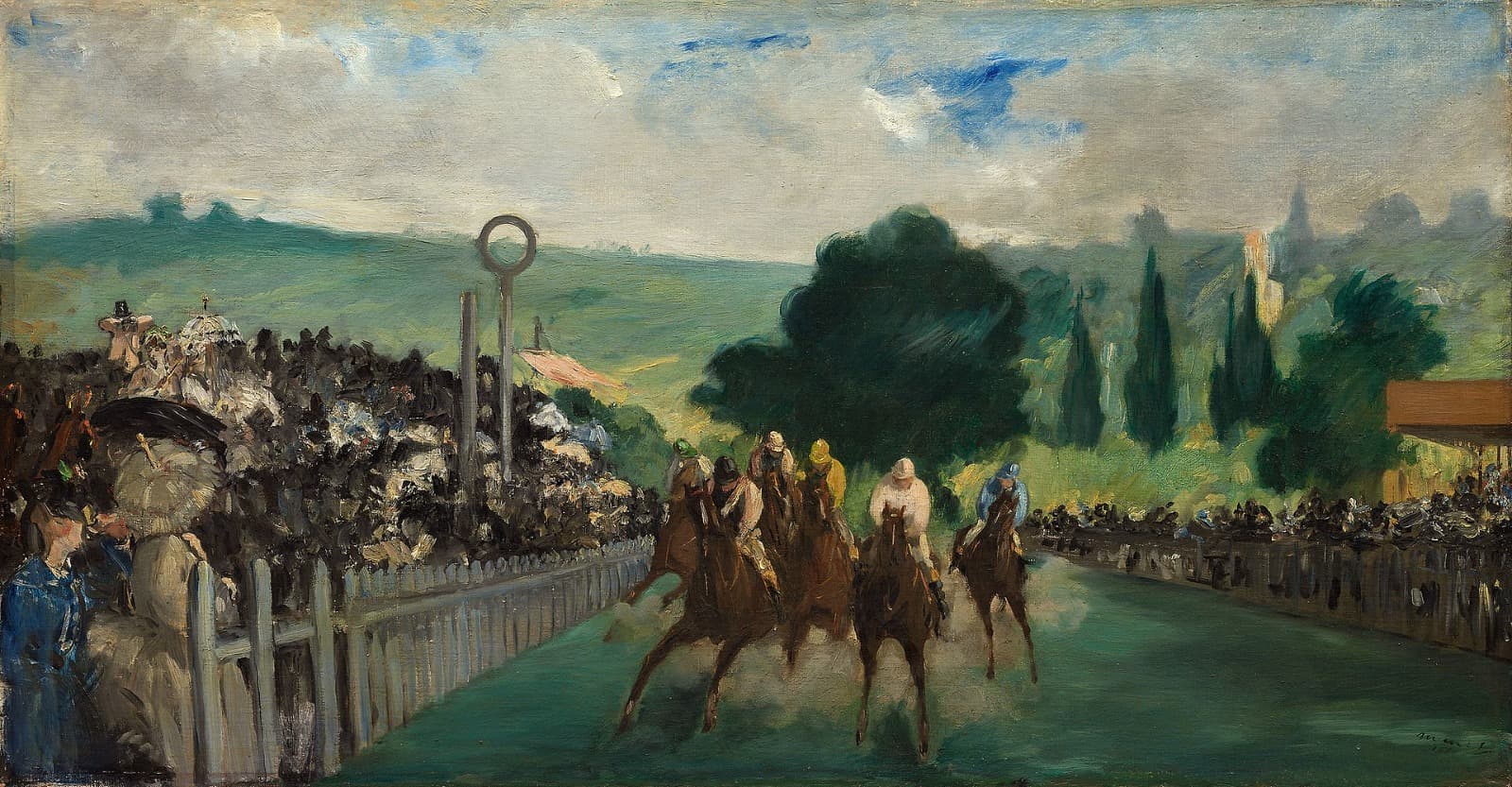
The horses come straight at you instead of across the frame, which nobody painting racehorses had bothered to try.
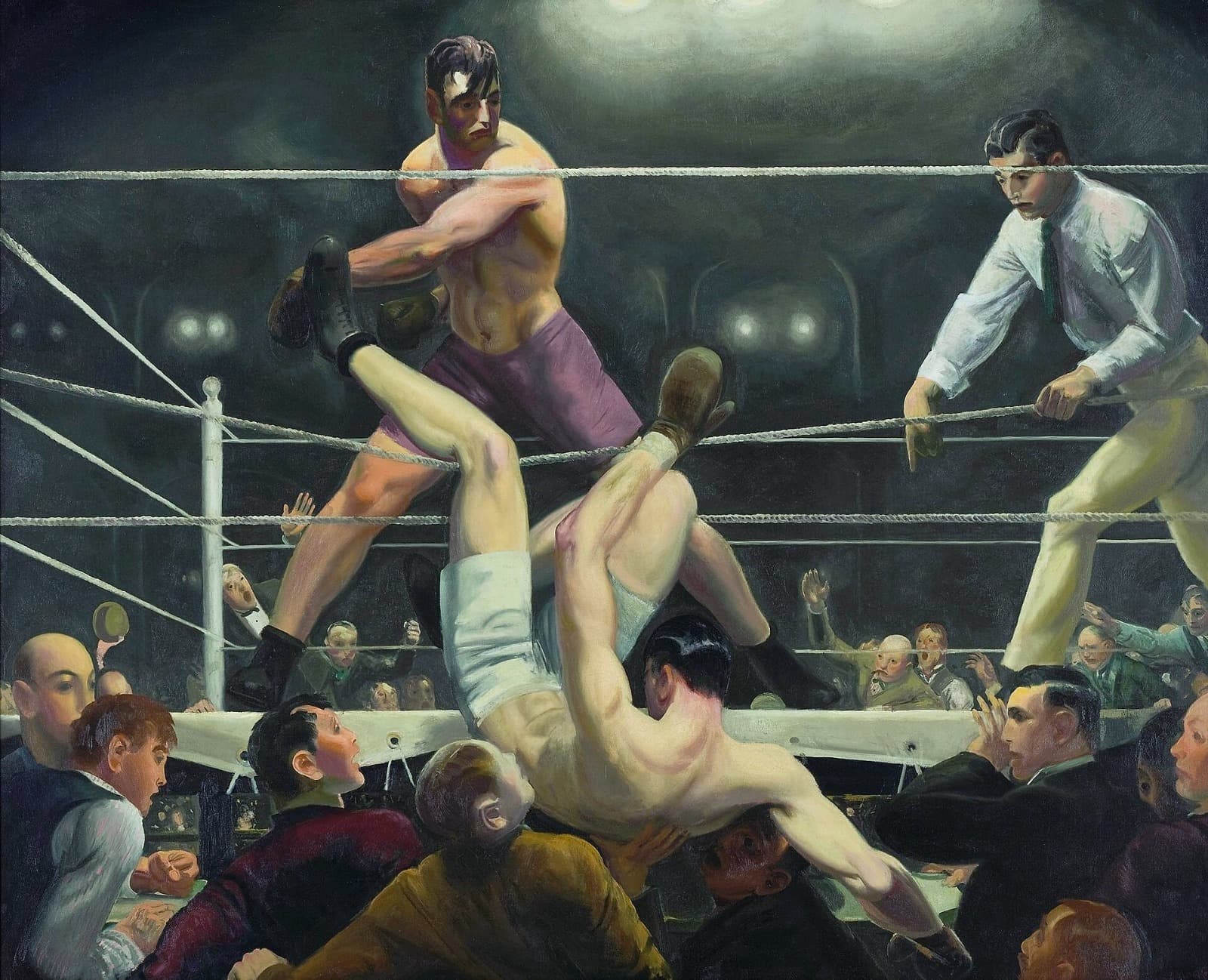
Firpo has just punched Dempsey clean out of the ring and into the laps of the reporters. Bellows painted the exact instant.
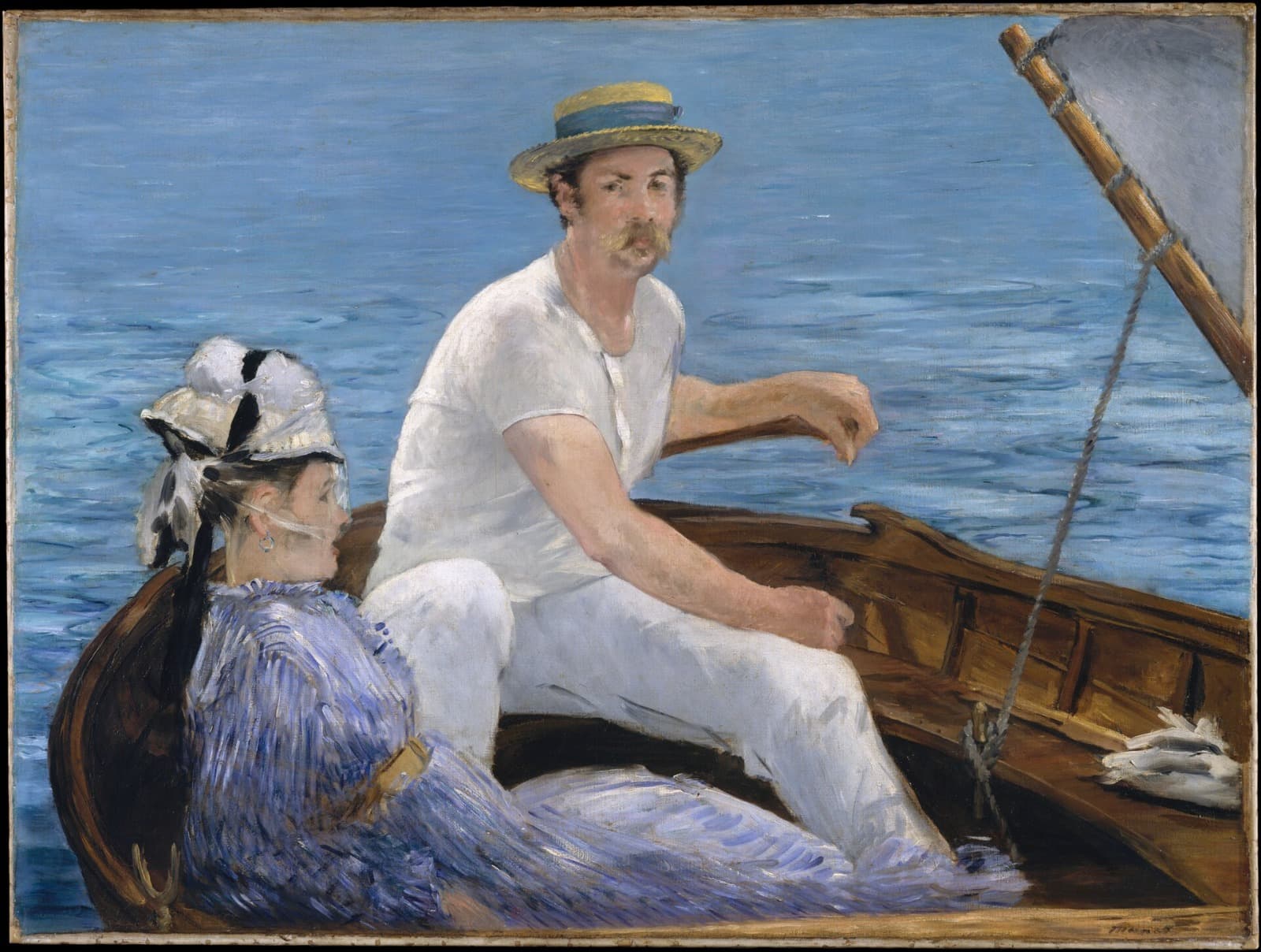
Manet painted this beside Monet at Argenteuil and let the blue water climb all the way to the top edge of the canvas.
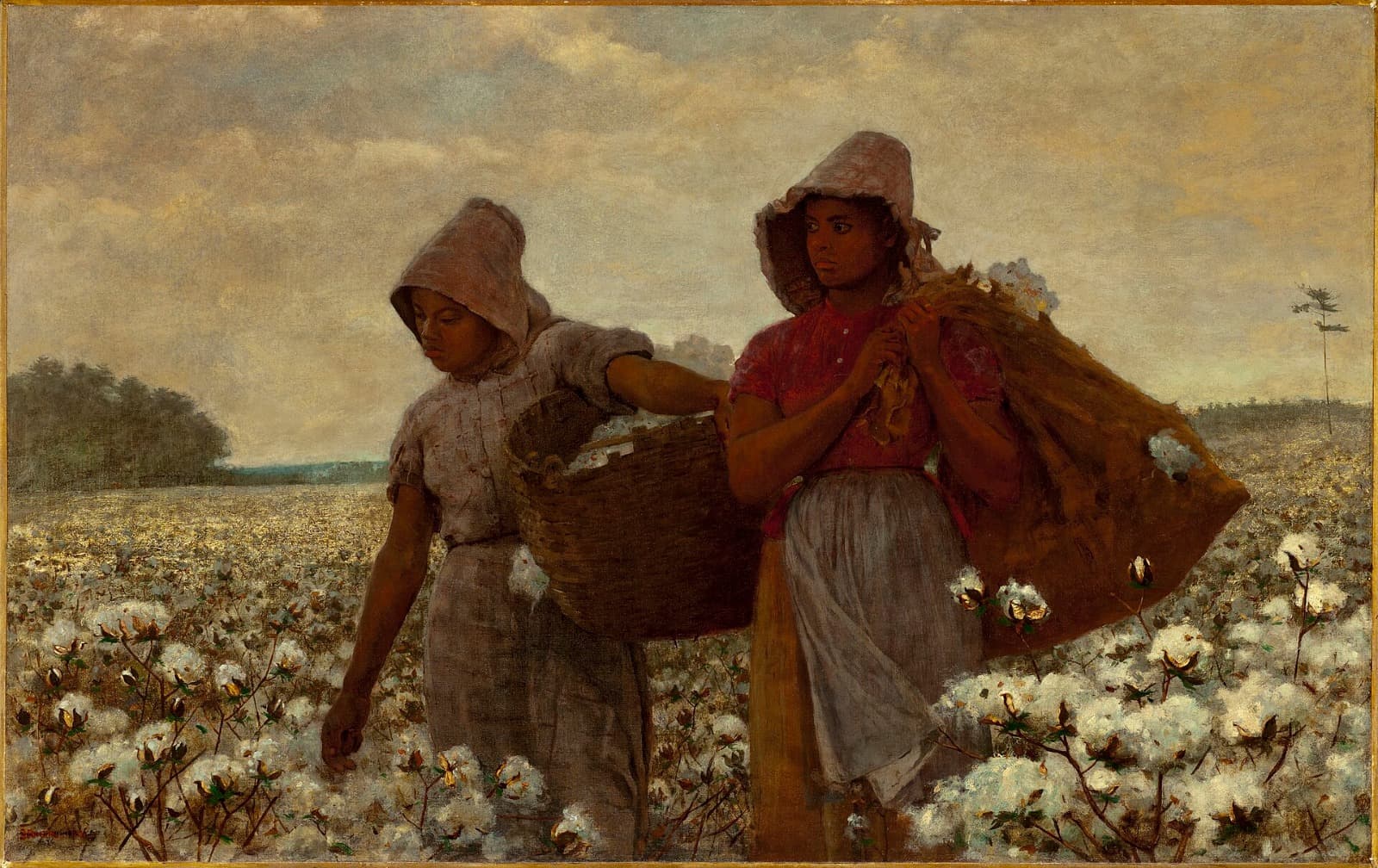
Two young Black women in a cotton field a decade after emancipation, given a gravity American painting had not extended to field labor.

A Union jacket lies discarded in the corner while the man who wore it swings a scythe through wheat, which is the whole point.
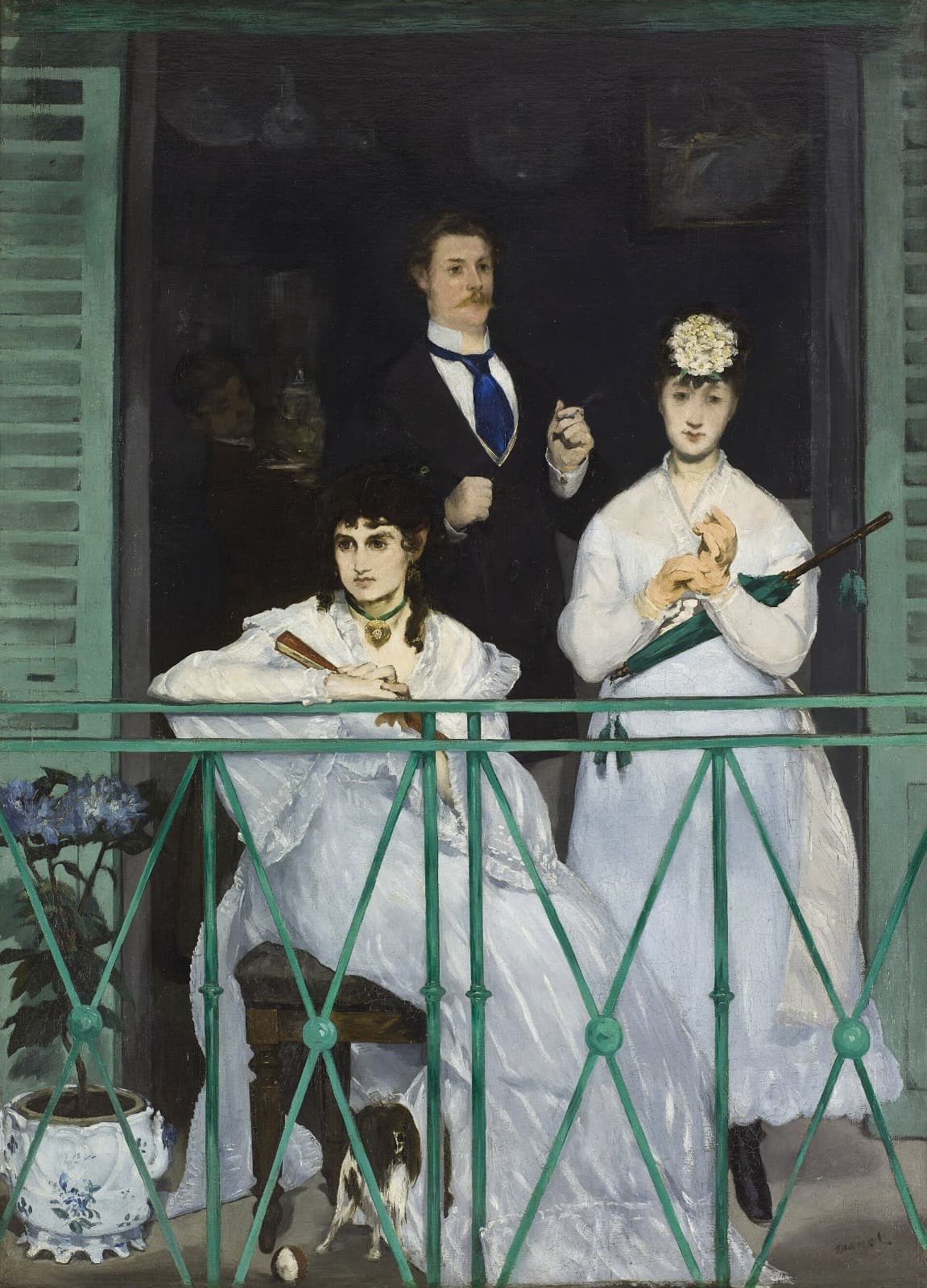
Three people at a green railing all looking different ways and none at each other. Berthe Morisot is the one seated and dreaming.
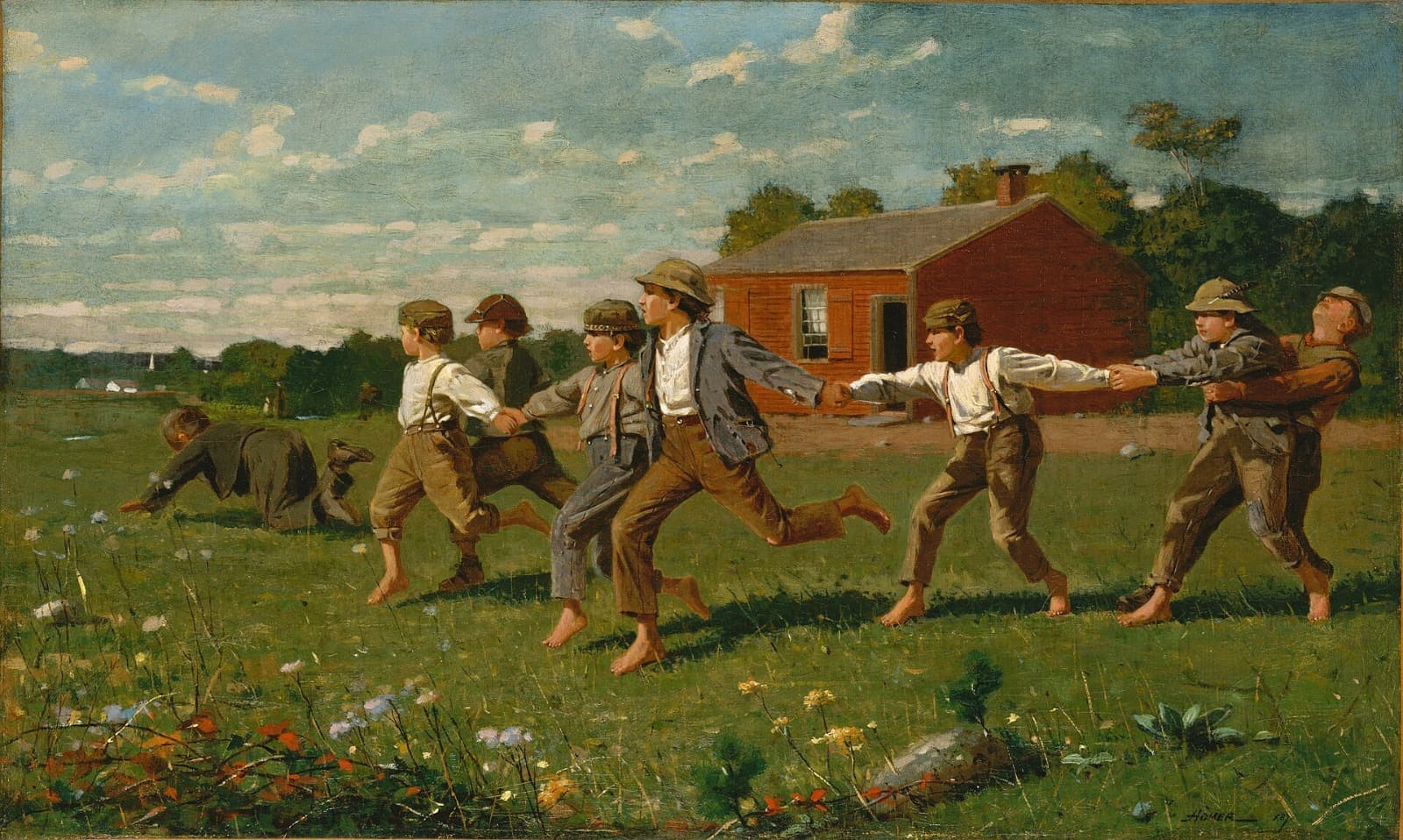
Barefoot boys crack the whip outside a red schoolhouse and the last one is already stumbling. Painted just after the Civil War.

Too explicit to exhibit for over a century, it stayed in private hands behind curtains and screens. No myth, no excuse, just the body.

A man and three boys heel a catboat over into open water, painted in the centennial year and read ever since as the country's optimism.
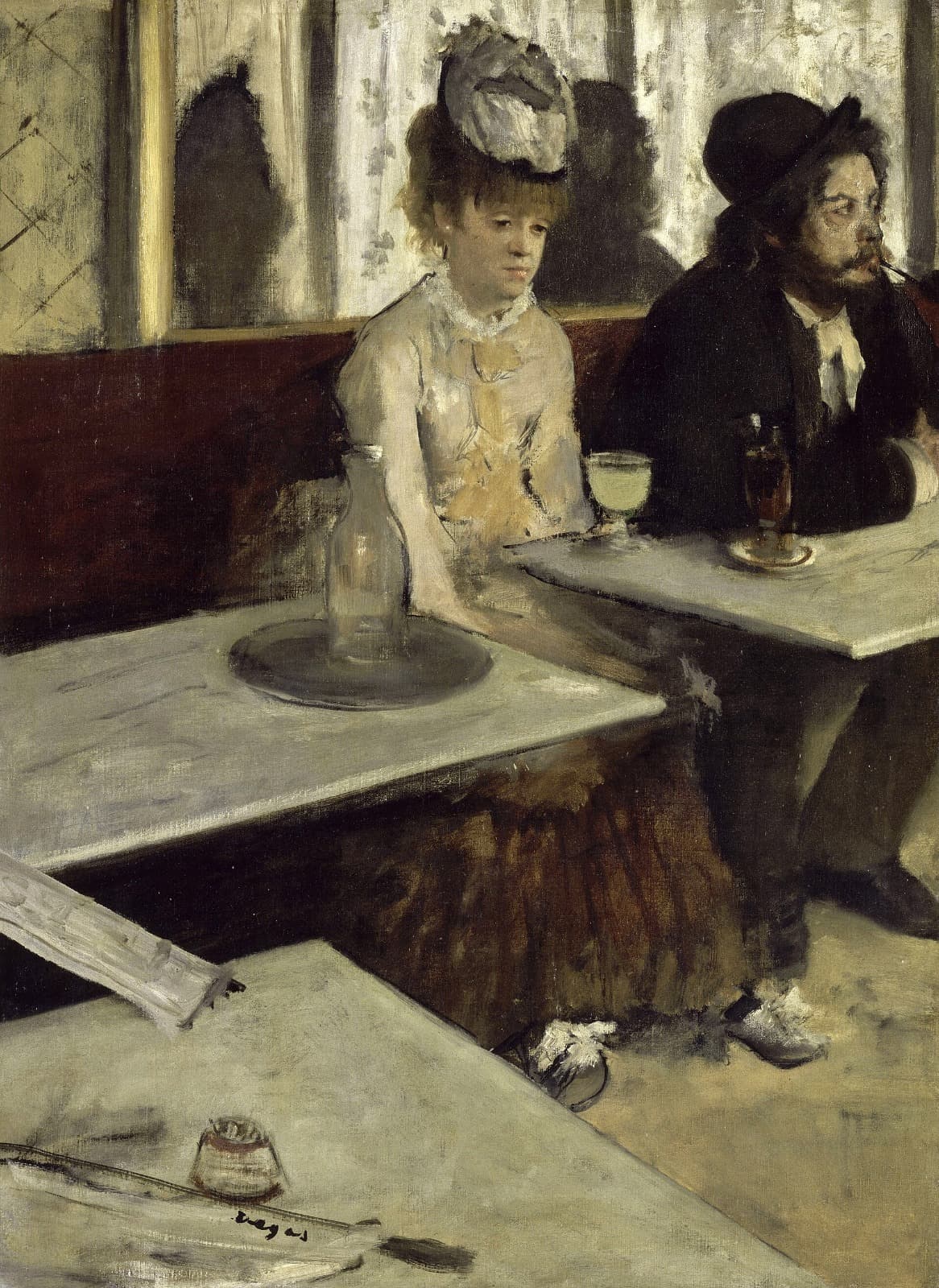
Two people sit shoulder to shoulder at a cafe table staring at nothing, pushed off to one side behind a run of empty tables.
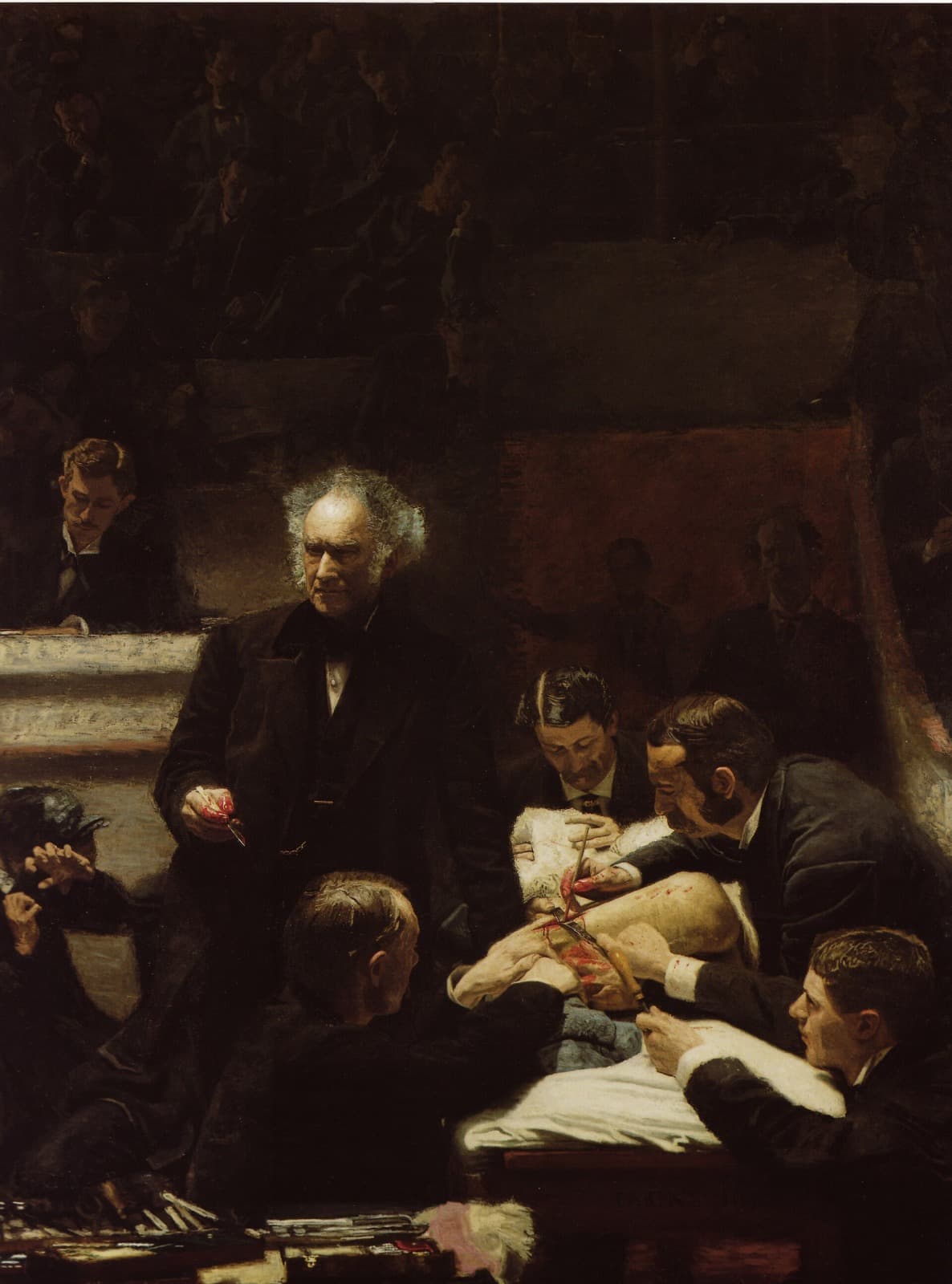
The surgeon turns from the open incision to lecture, scalpel still bloody, while a woman at the side covers her eyes. Philadelphia was appalled.
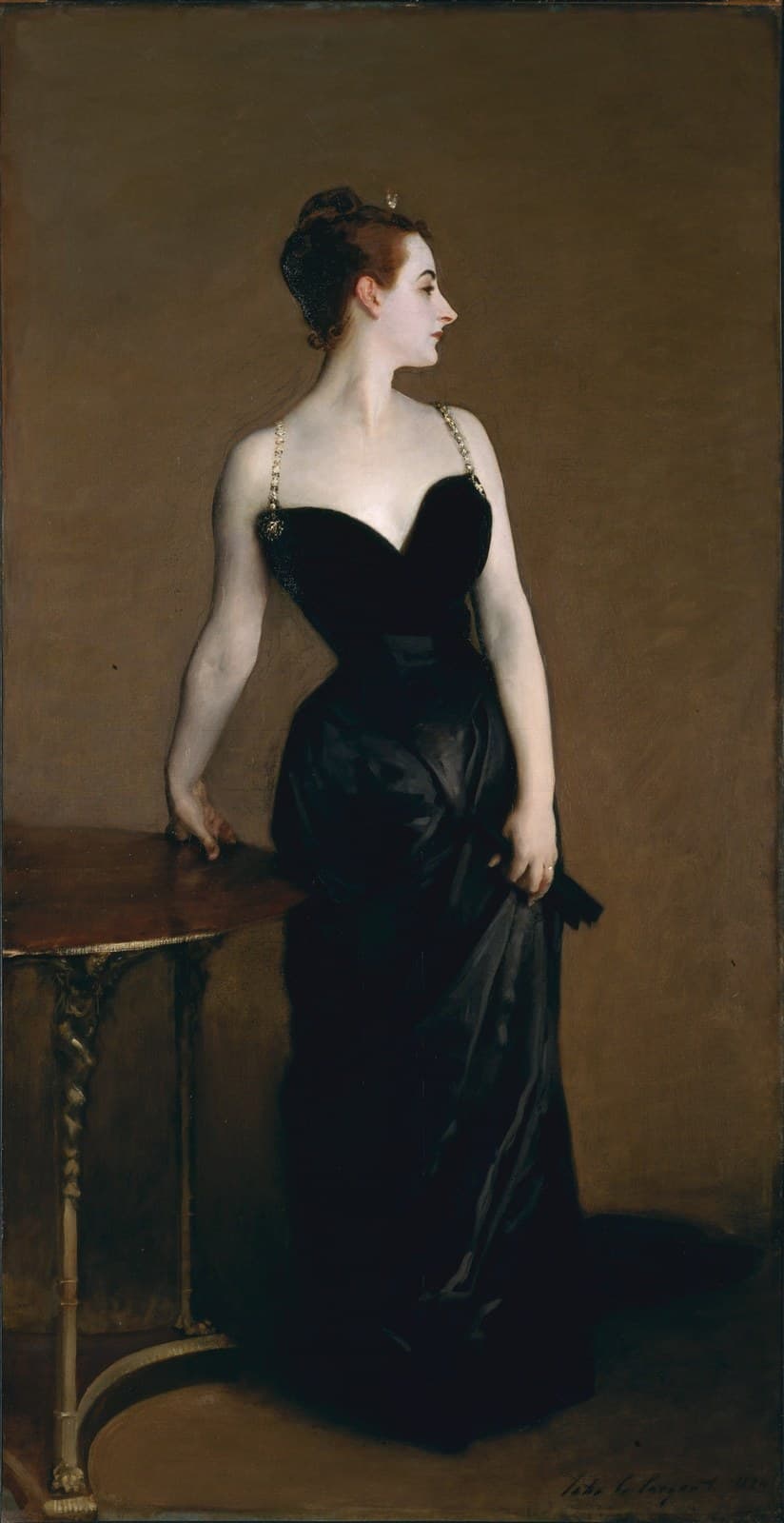
The strap fell off her shoulder in the 1884 version, Paris was scandalized, her family demanded it come down, and Sargent repainted the strap.

Whistler called it Arrangement in Grey and Black and insisted it was about tone, not feeling. The sitter was his mother, and nobody was fooled.
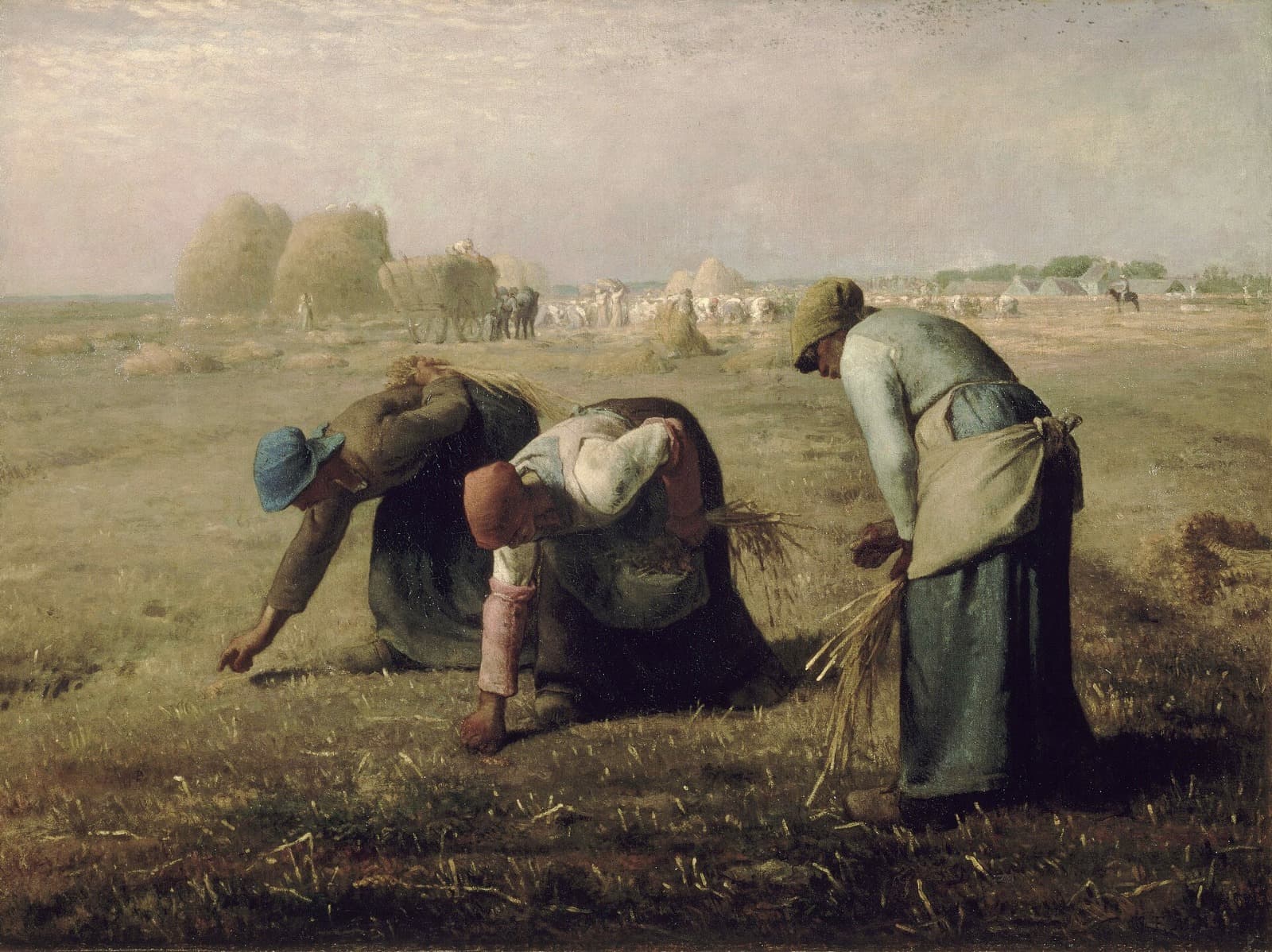
Three women bend for the stalks left after harvest while a full farm sits small in the distance, which unsettled the people buying paintings.

Courbet gave an ordinary village funeral the scale reserved for kings and saints, and the critics were furious about it.