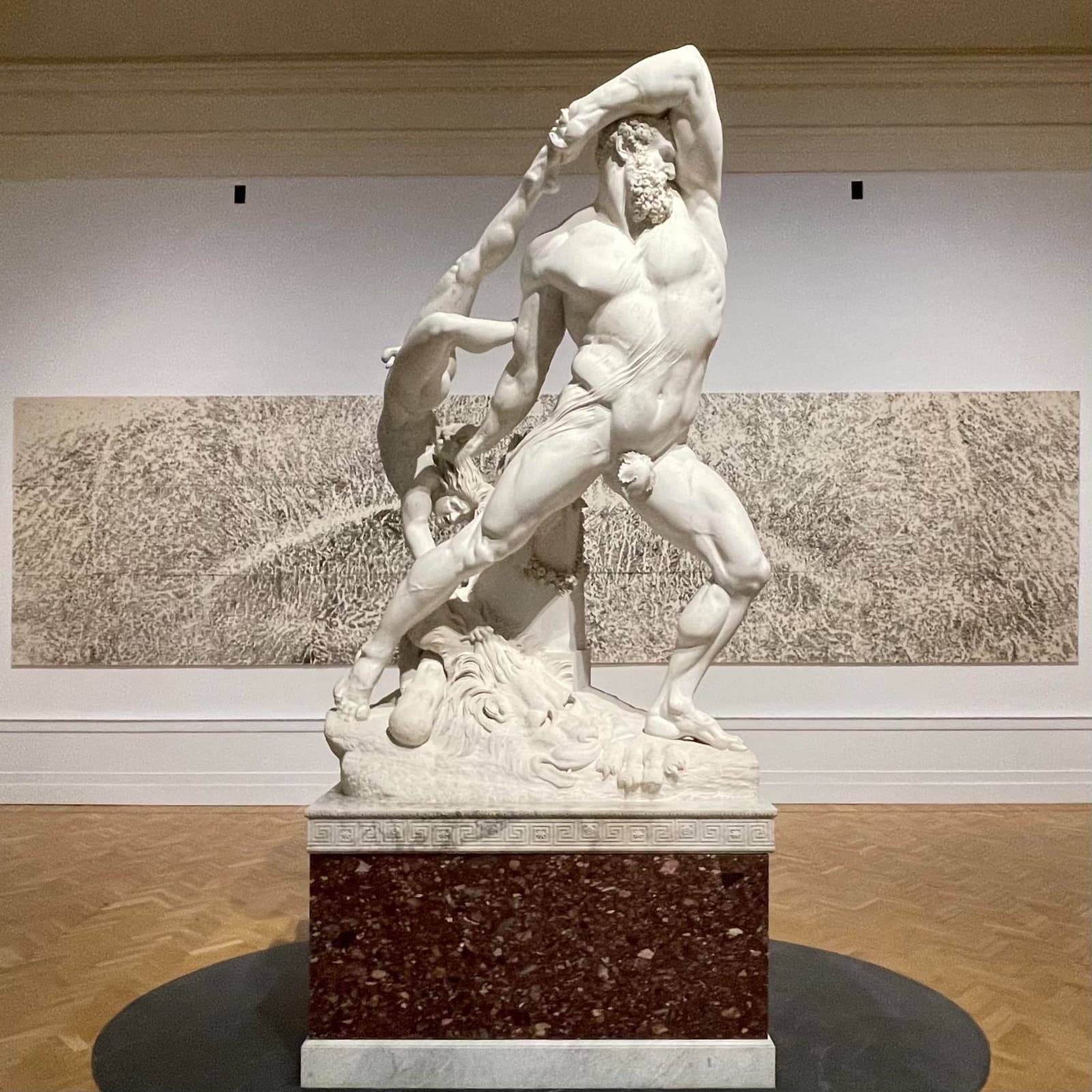
Hercules and Lichas
1802 · Galleria Nazionale d'Arte Moderna, Rome
Hercules, poisoned and raving, grabs the boy by the hair and one leg and throws him. Canova almost never carved anything this violent.
★ 5.2
 skopia
Hercules, poisoned and raving, grabs the boy by the hair and one leg and throws him. Canova almost never carved anything this violent.

When Napoleon carried off the Apollo Belvedere, the Vatican put this on the empty pedestal, a modern work judged fit for the company.

Oedipus leans in close to answer the riddle, and a previous contestant's foot is lying at the bottom edge as a warning.

Trumbull knew many of the men and painted their faces from life, which is why this version ended up on the two-dollar bill.

Hersilia throws herself between the two armies with her arms out. David painted it after the Terror, arguing for reconciliation instead of oaths.

Napoleon has already crowned himself and is now crowning Josephine, with the pope seated behind him and reduced to a spectator.

A bare back seen from behind under even light, with a striped turban wound round the head. Ingres returned to this view all his life.

The newspaper magnate leans forward gripping both knees, and the picture became the face of the commercial class that ran nineteenth-century France.

Socrates reaches for the hemlock without looking at it, still arguing with his other hand while his students fall apart around him.
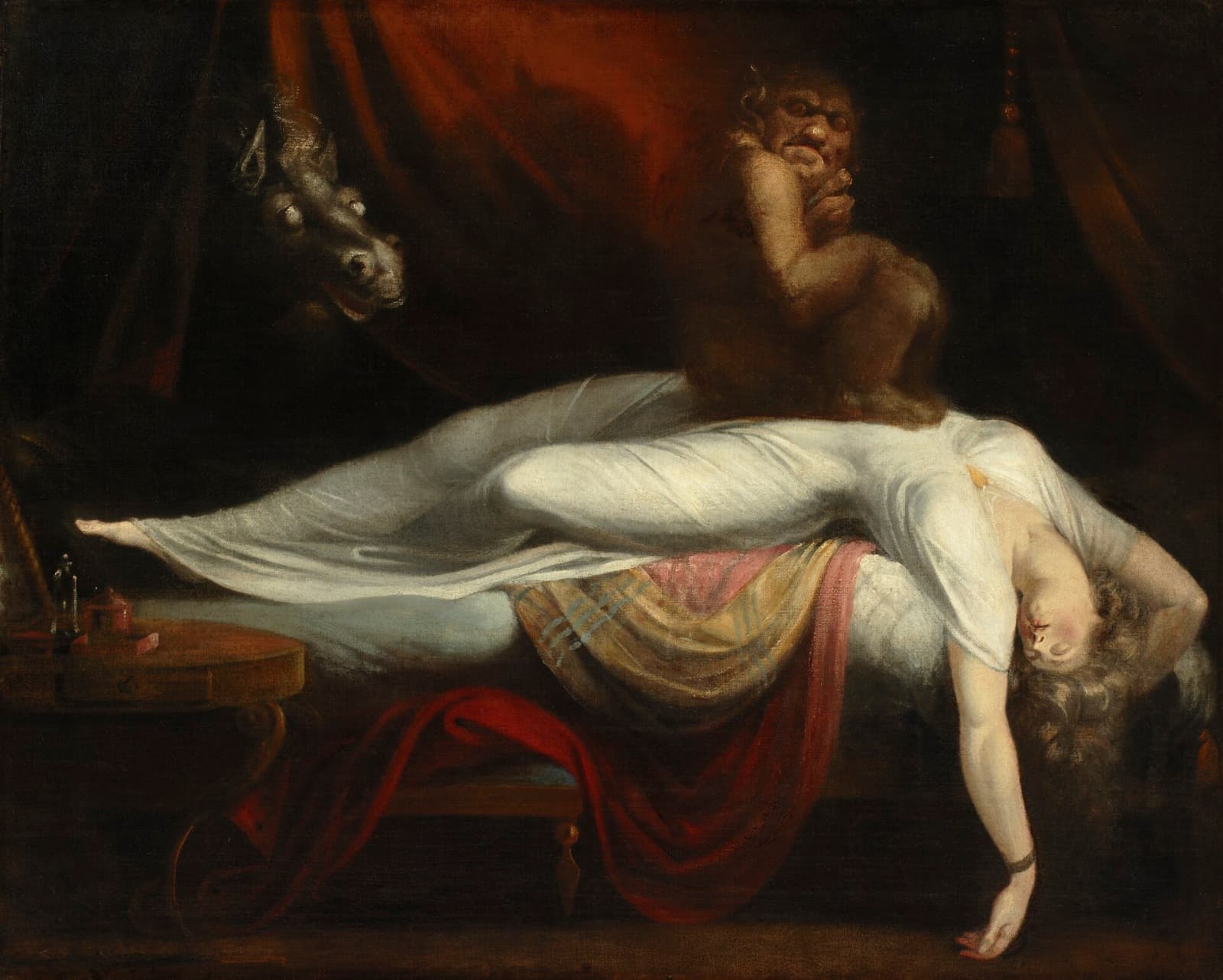
An incubus squats on a sleeping woman's chest while a wild-eyed horse pushes through the curtains. It made Fuseli famous immediately.

Cupid's wings stay up as the two bodies cross in a weightless X, cut so smooth the marble stops reading as stone.

Three brothers salute the swords their father holds up while the women of the house collapse at the right, four years before the Revolution.

David was Marat's friend and political ally, and he laid the murdered man out in his bath with the gravity of a religious lamentation.
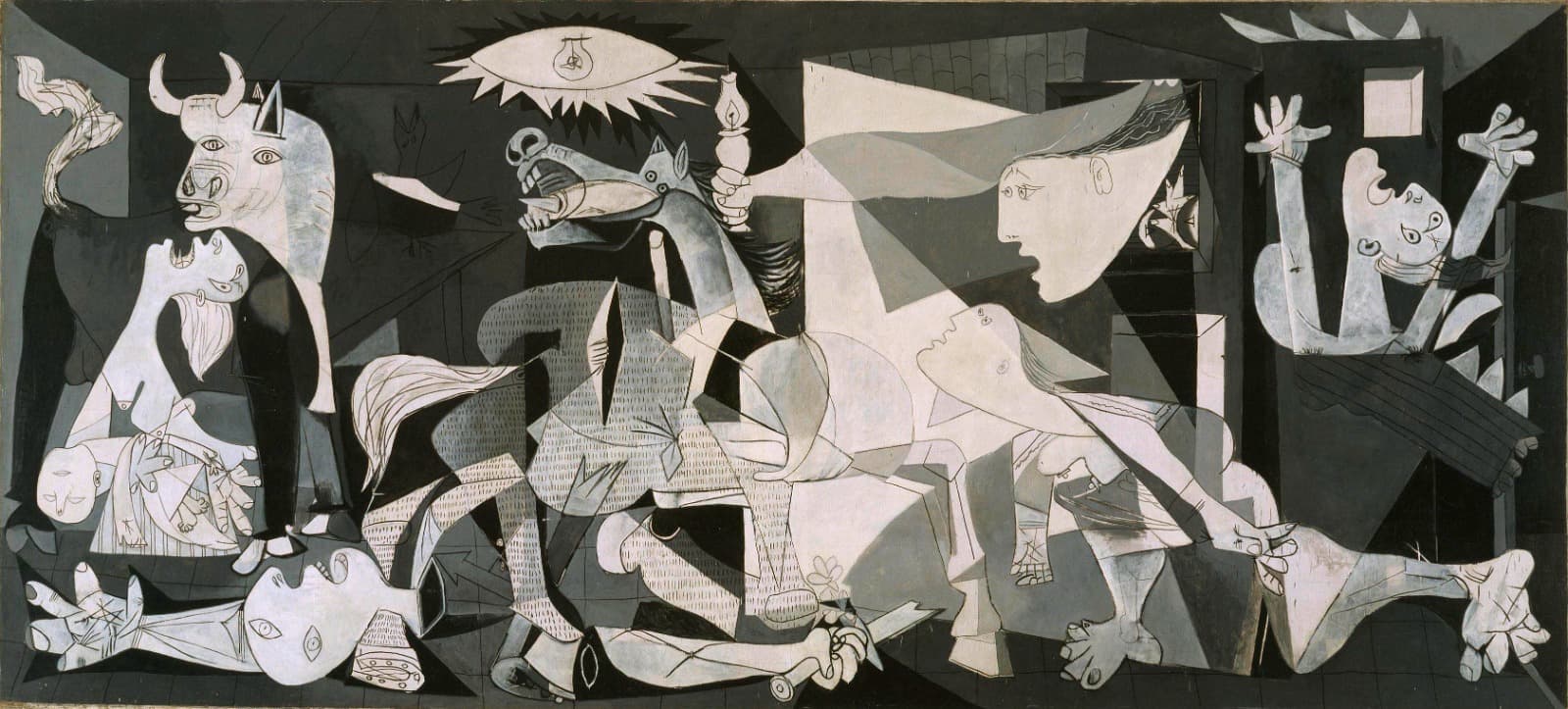
A screaming horse, a mother with her dead child, all in grey. Picasso painted it in weeks after German bombers leveled a Basque town.