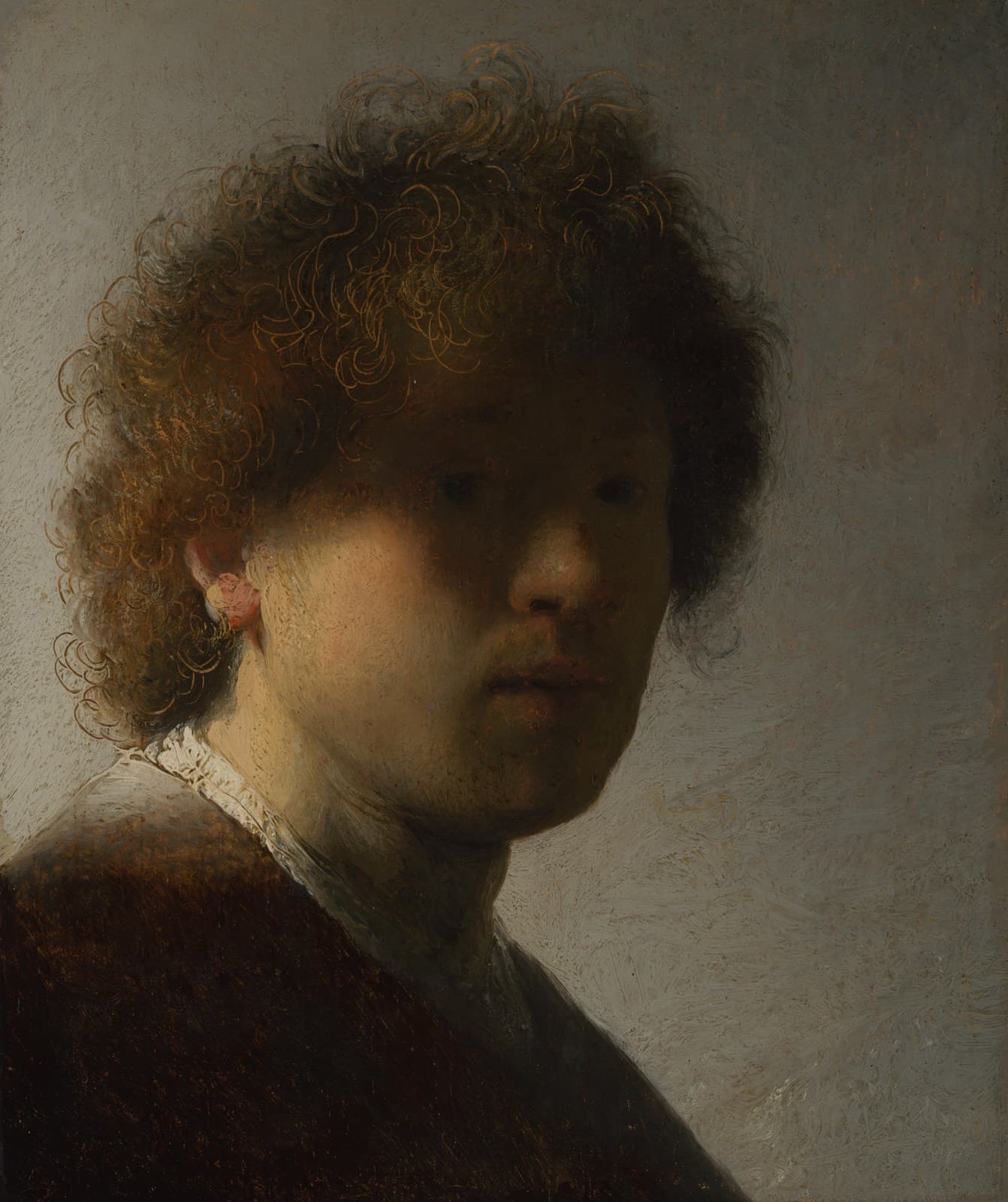
Self-Portrait (Rembrandt, 1629)
1629 · Rijksmuseum, Amsterdam
Rembrandt was barely in his twenties and using his own face as a laboratory for light. Dozens more would follow over forty years.
★ 6.1
 skopia
Rembrandt was barely in his twenties and using his own face as a laboratory for light. Dozens more would follow over forty years.

Hundreds of tiny figures skating, sledging and falling over on one frozen river. Avercamp was deaf and mute and known as the mute of Kampen.
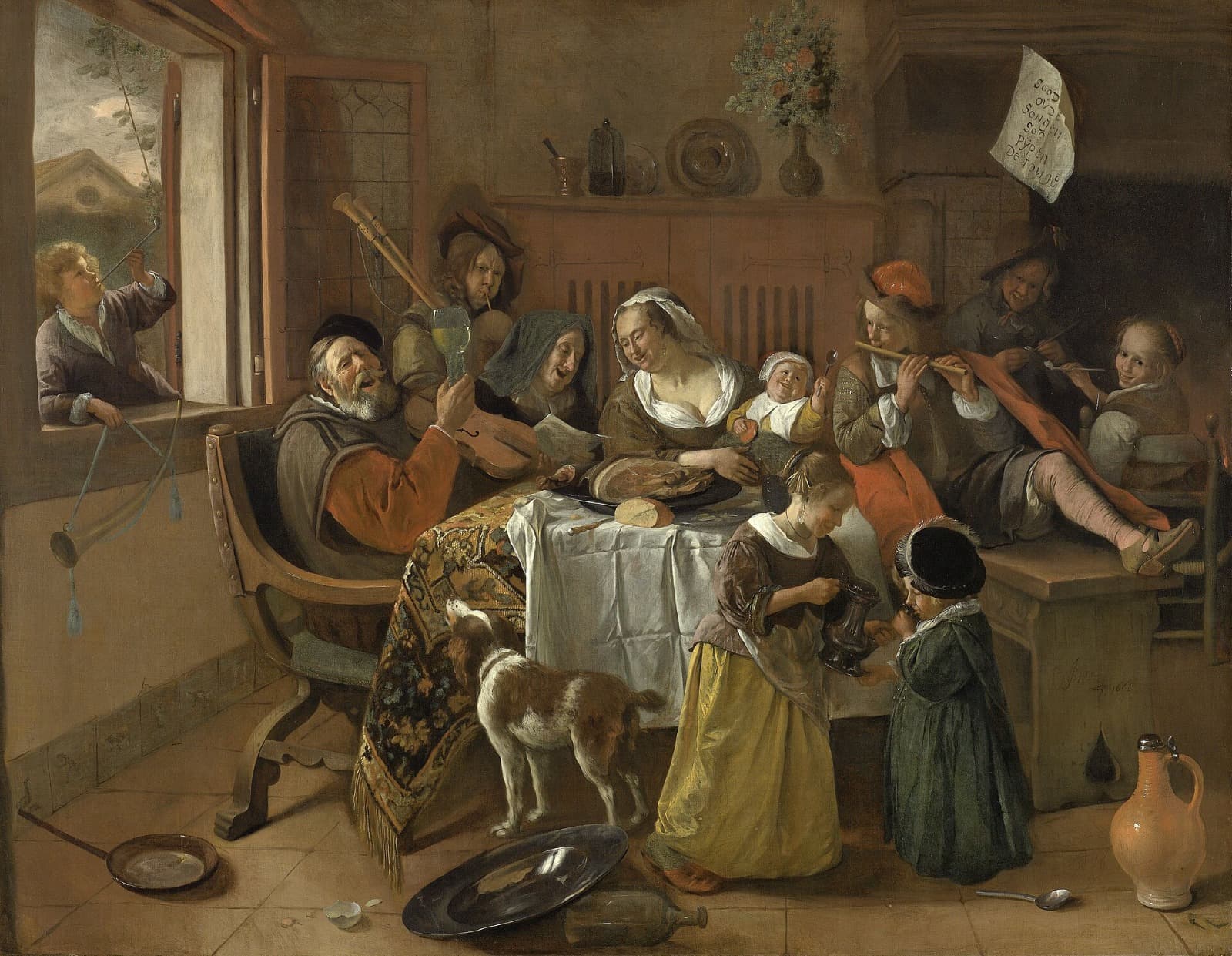
The parents sing and drink and a toddler is handed a pipe. A note in the picture reads: as the old sing, so the young pipe.
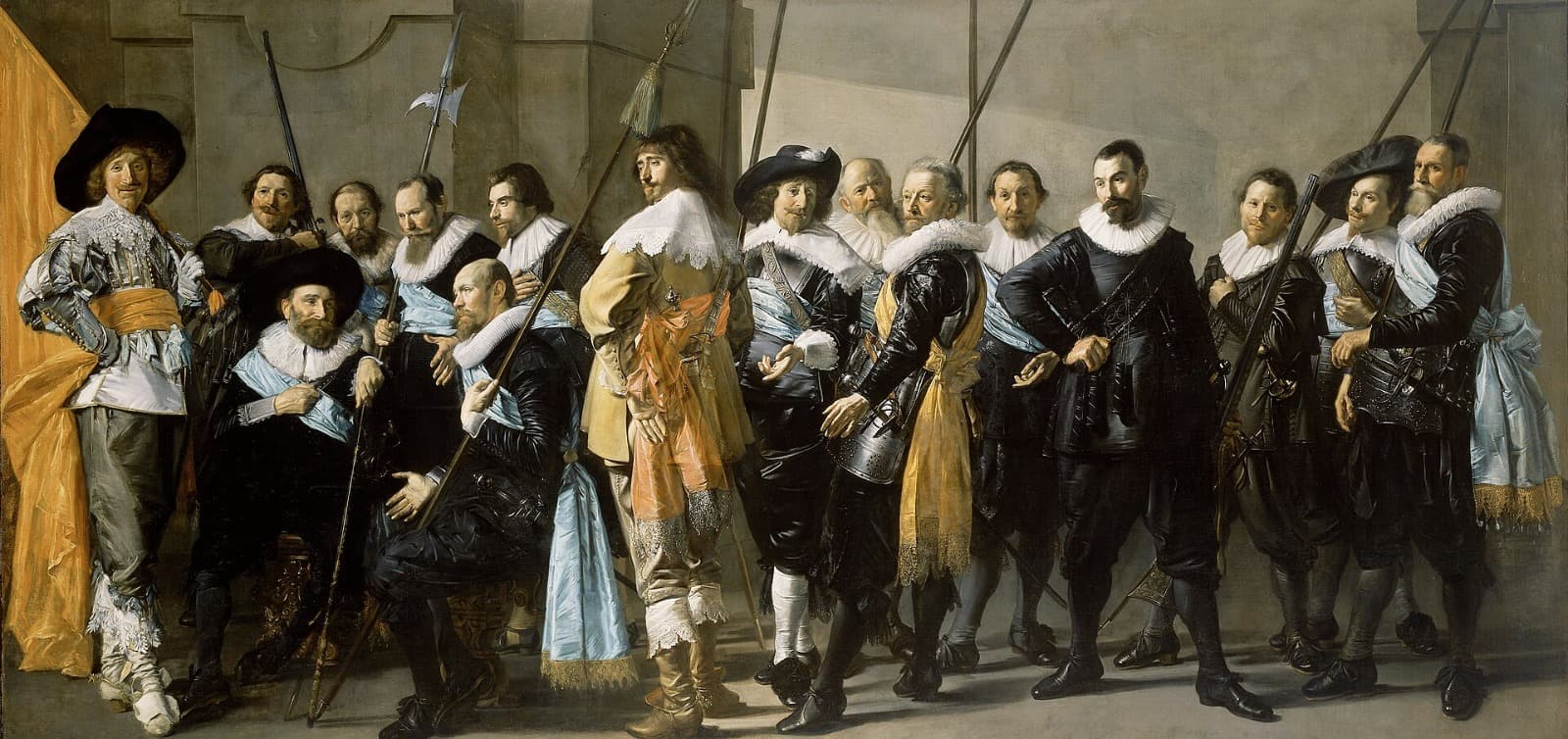
Hals left this militia portrait unfinished and another painter finished the right-hand figures, a join you can still see if you look.

One child hugs her presents while a boy howls because his shoe held nothing but a birch rod, and the grandmother beckons with a secret.

A married couple sitting on the grass, leaning into each other and visibly amused, which is not how marriage portraits were done.
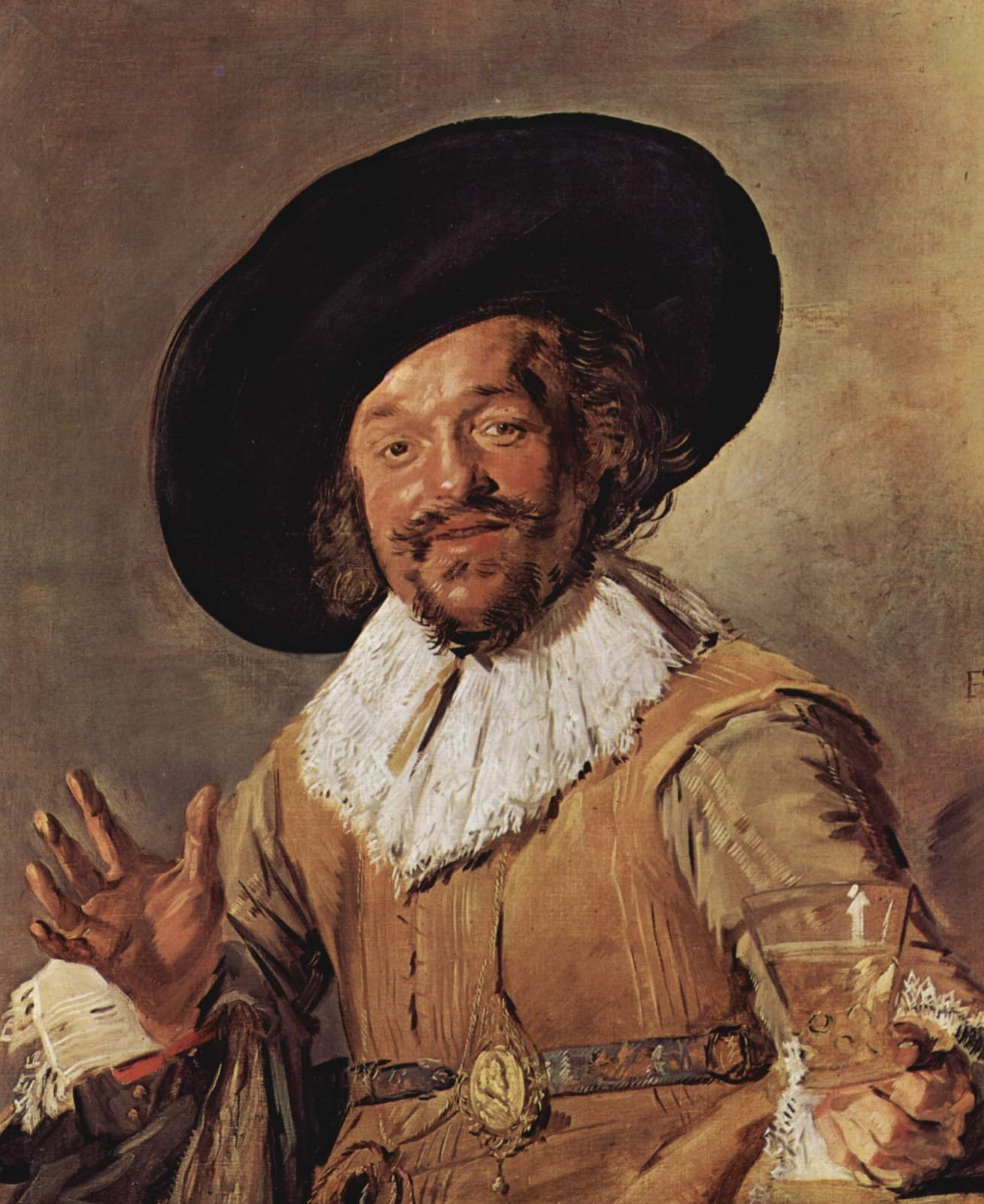
He raises his glass and talks straight at you, painted in slashing strokes laid down about as fast as the moment they catch.
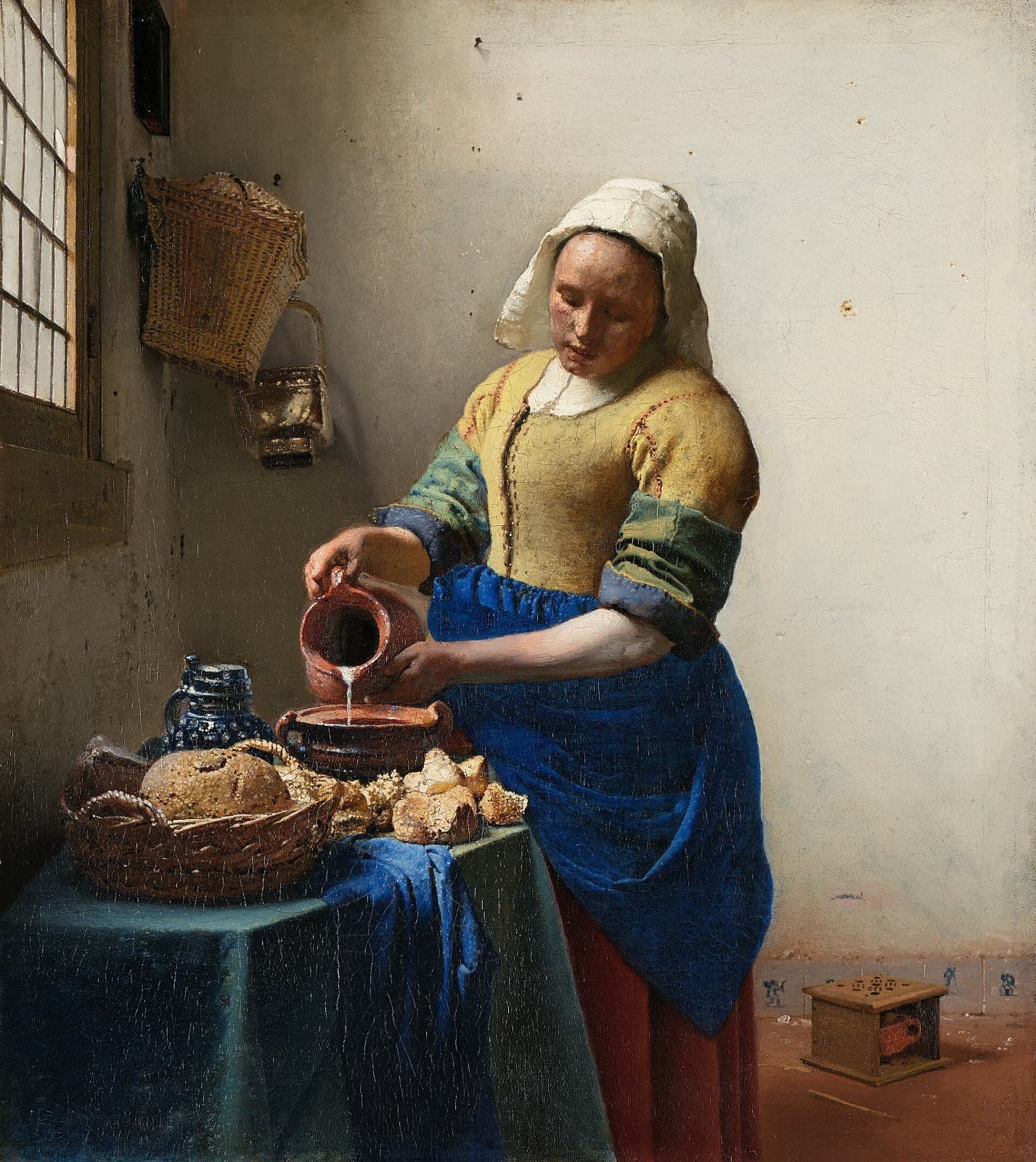
A kitchen maid pours a thin stream of milk in ordinary daylight, given the weight and stillness usually reserved for saints.

A militia company surges out of the shadow with a dog barking and a girl glowing among the men. Varnish, not night, made it dark.