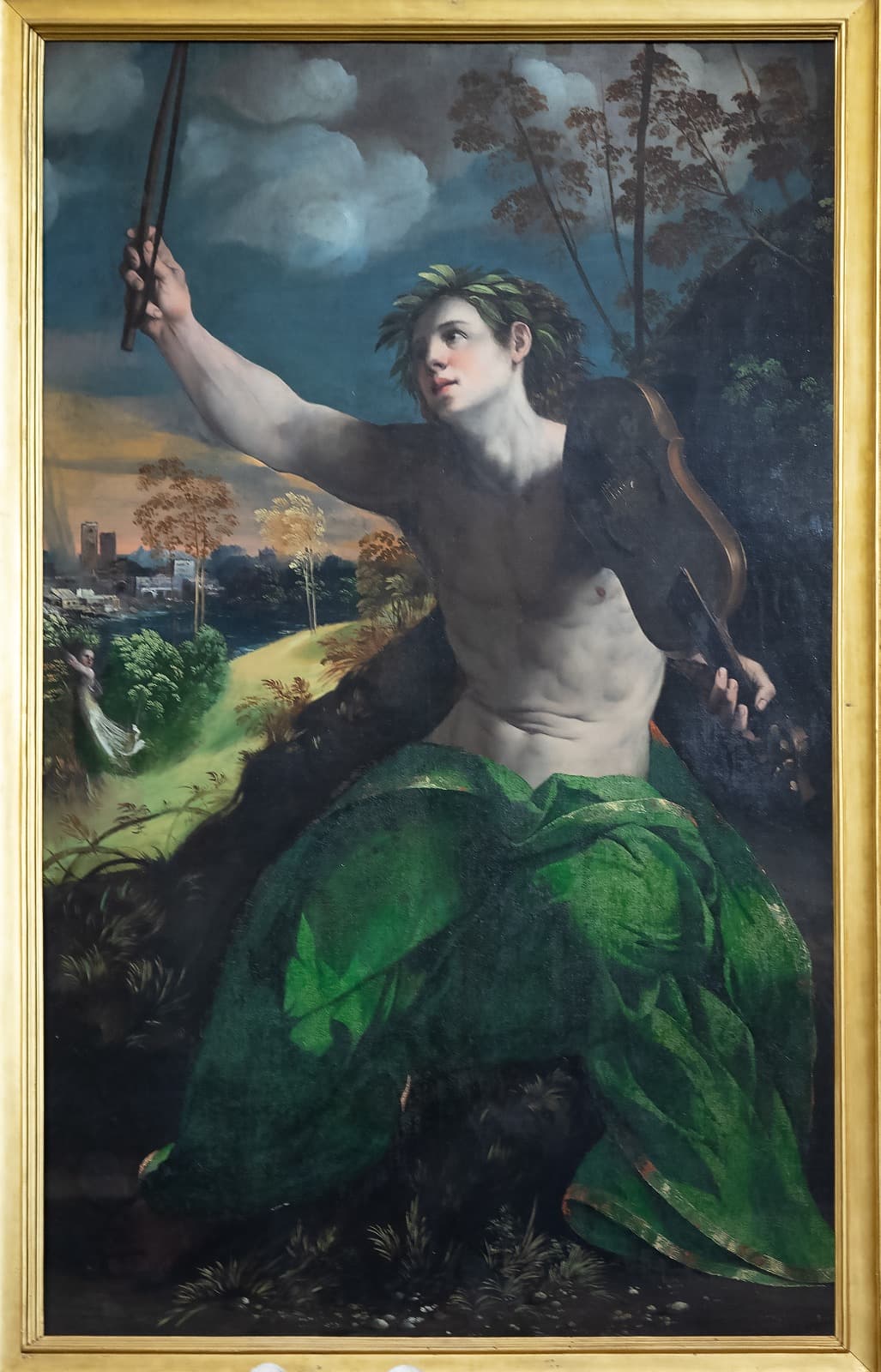
Apollo and Daphne
1525 · Galleria Borghese, Rome
Dossi swapped Apollo's ancient lyre for a modern viol, and Daphne is already sprouting into laurel in the far distance.
★ 4.8
 skopia
Dossi swapped Apollo's ancient lyre for a modern viol, and Daphne is already sprouting into laurel in the far distance.
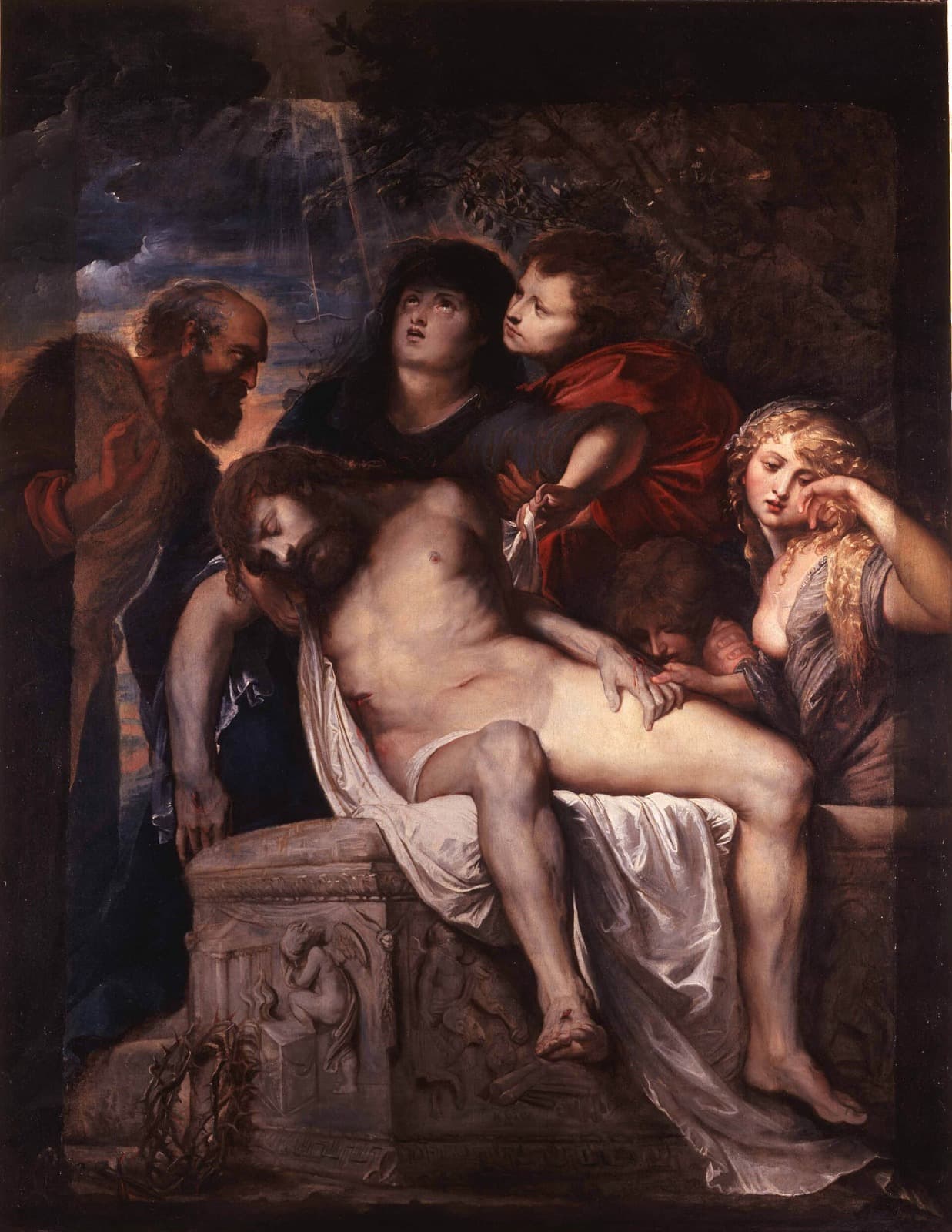
Rubens worked this out in Rome while studying Caravaggio, a rehearsal for the great Descent he would paint back home in Antwerp.
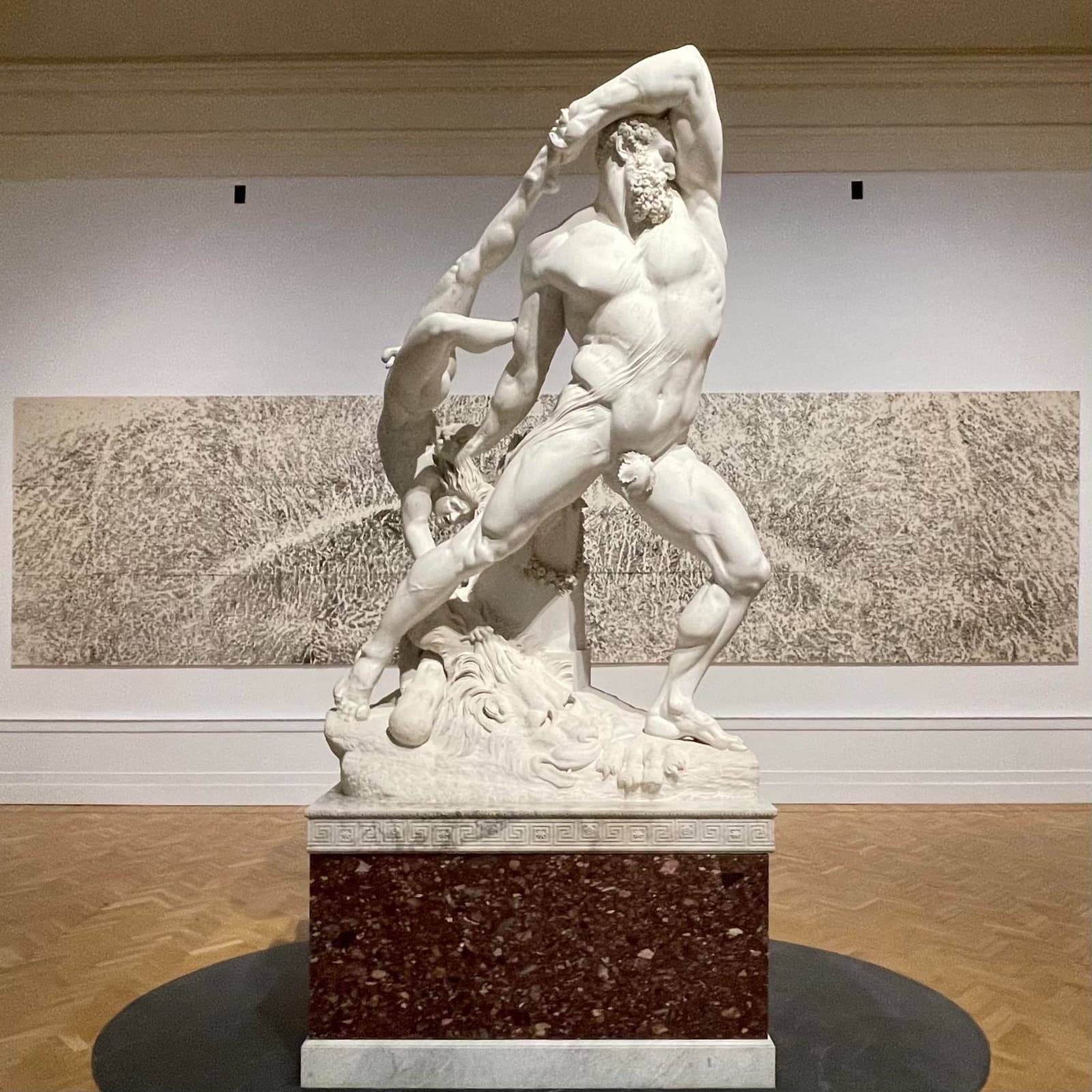
Hercules, poisoned and raving, grabs the boy by the hair and one leg and throws him. Canova almost never carved anything this violent.

The horse and the groom take up most of the canvas and neither notices anything. The miracle happens entirely inside the man on the ground.
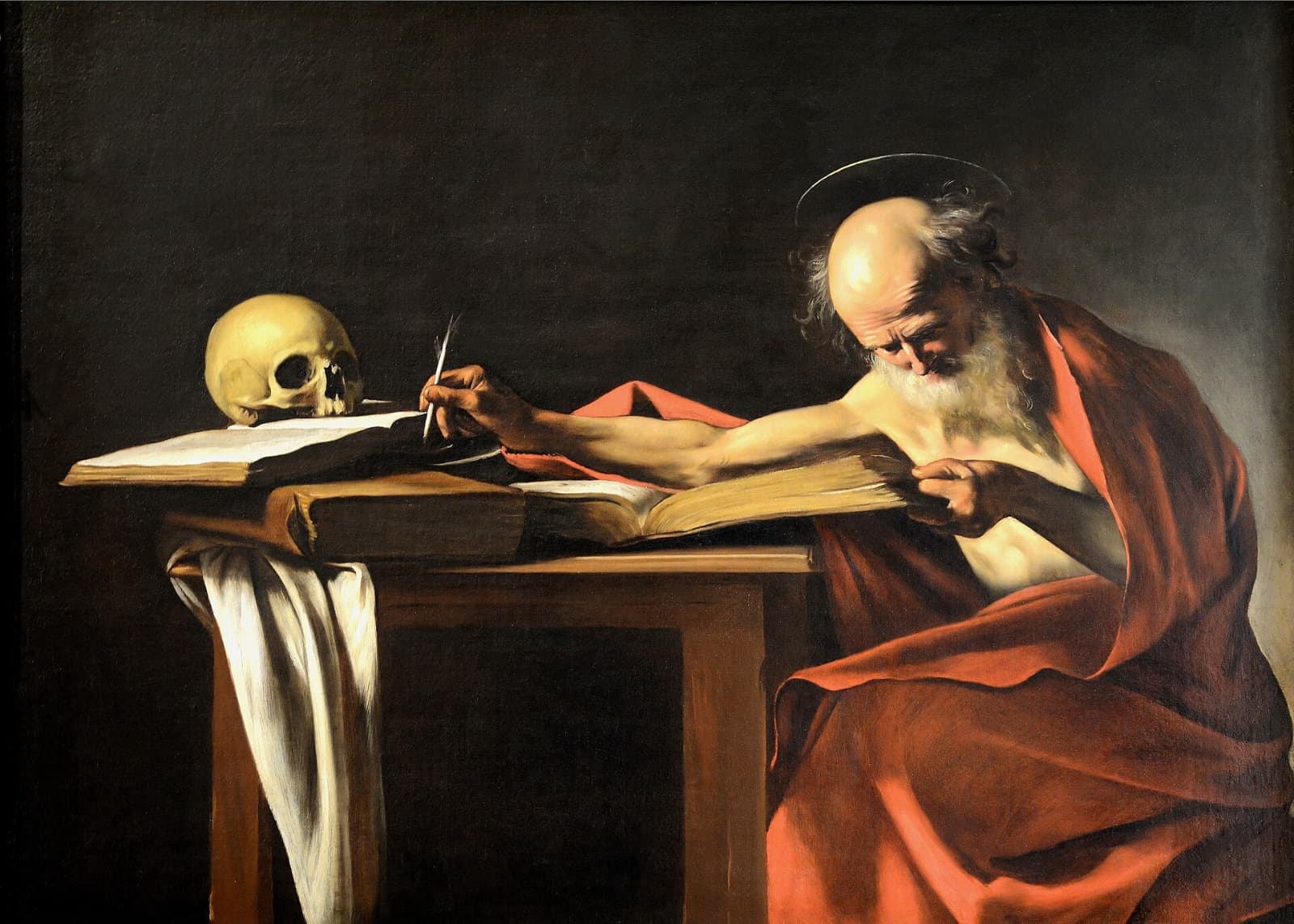
Jerome reaches across the table for the inkpot with a skull holding down his papers. Scholarship as physical labor, in a single hard light.
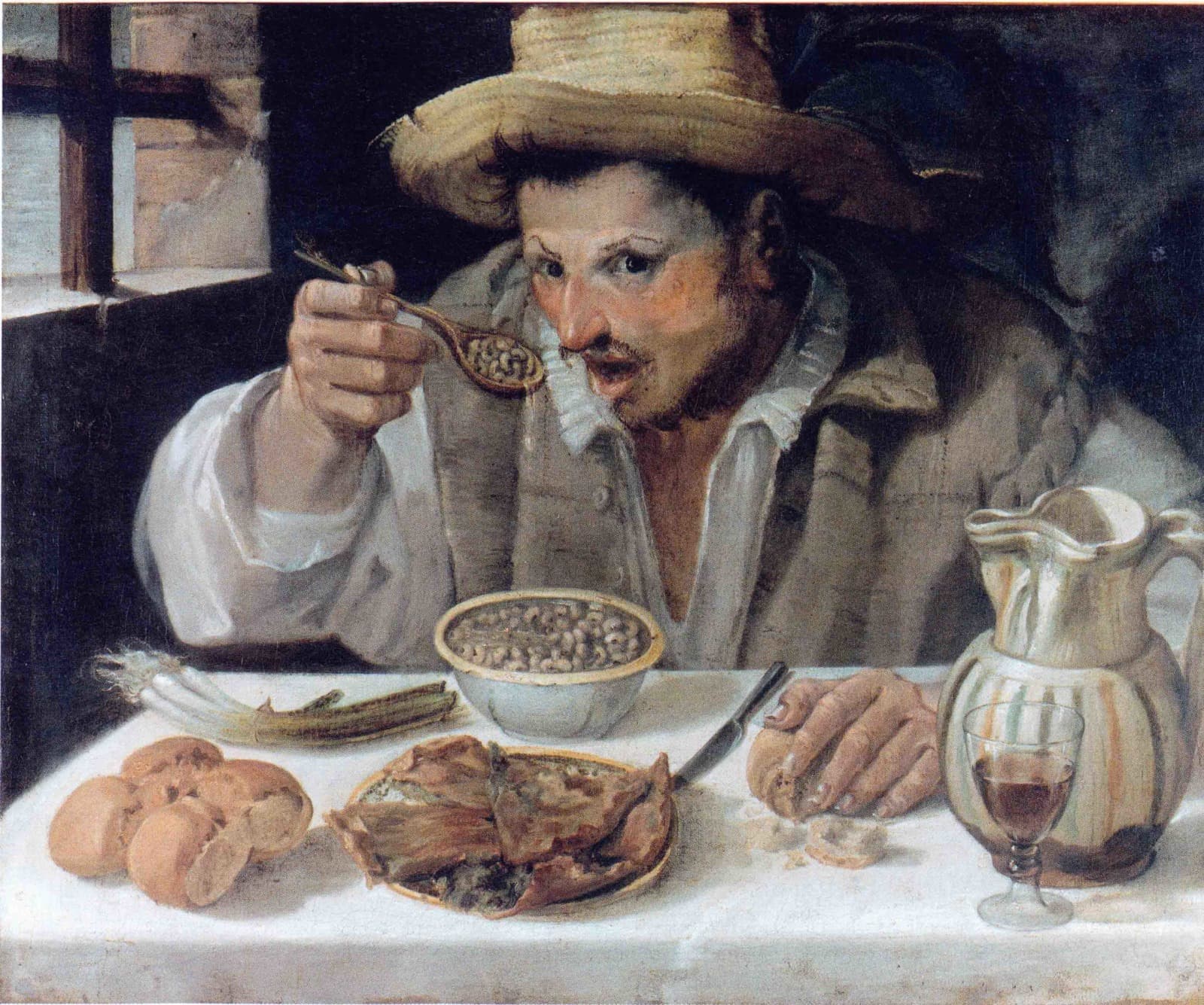
A peasant looks up from his beans as though caught, spoon halfway to his mouth. Painted decades before Caravaggio's followers made a career of this.

Two shepherds stop at a skull on a plinth and read the words carved there. Guercino used the motto first, decades before Poussin.
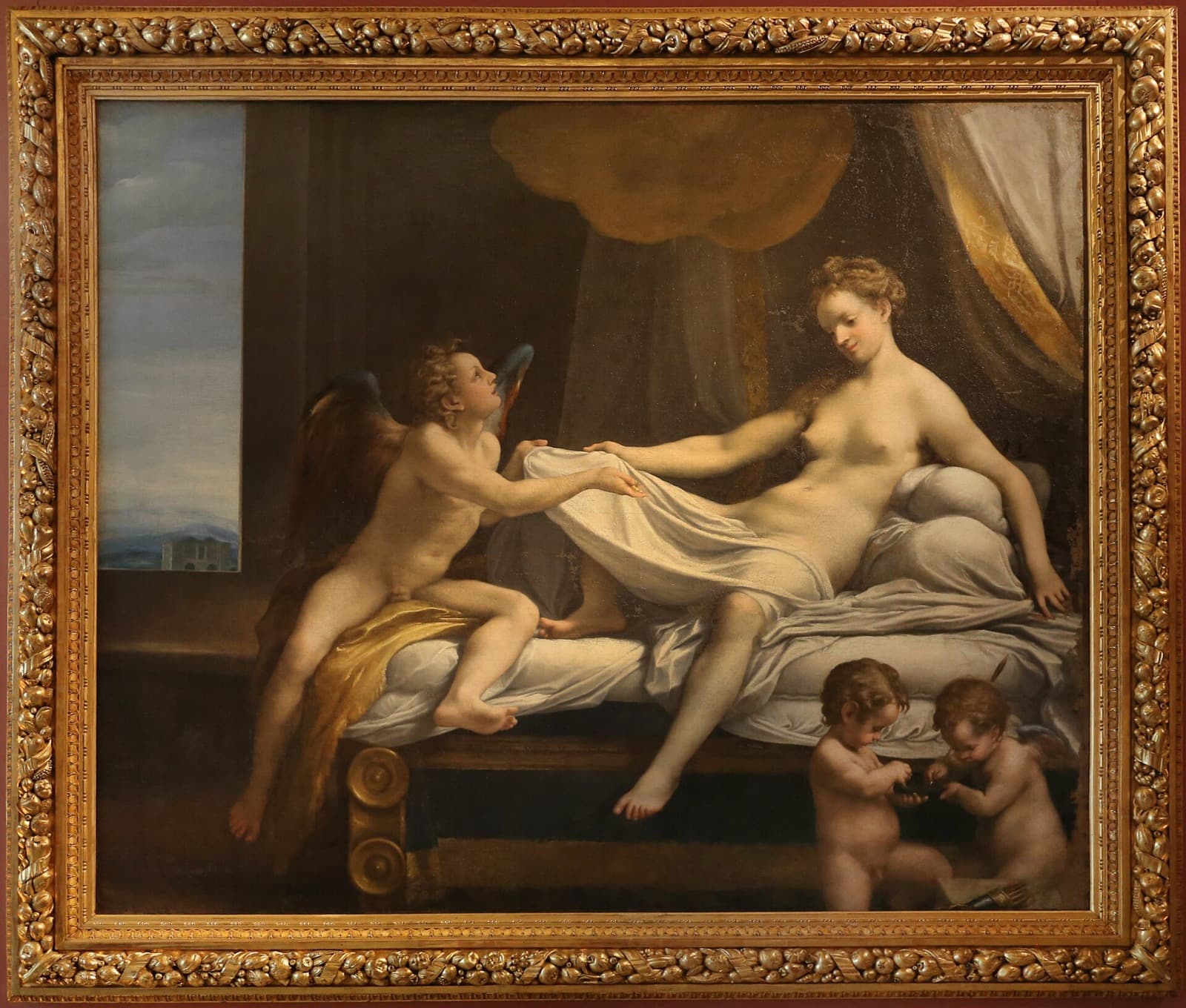
Cupid pulls back the sheet while two putti sharpen their arrows on a whetstone at the foot of the bed. Painted for the Duke of Mantua.
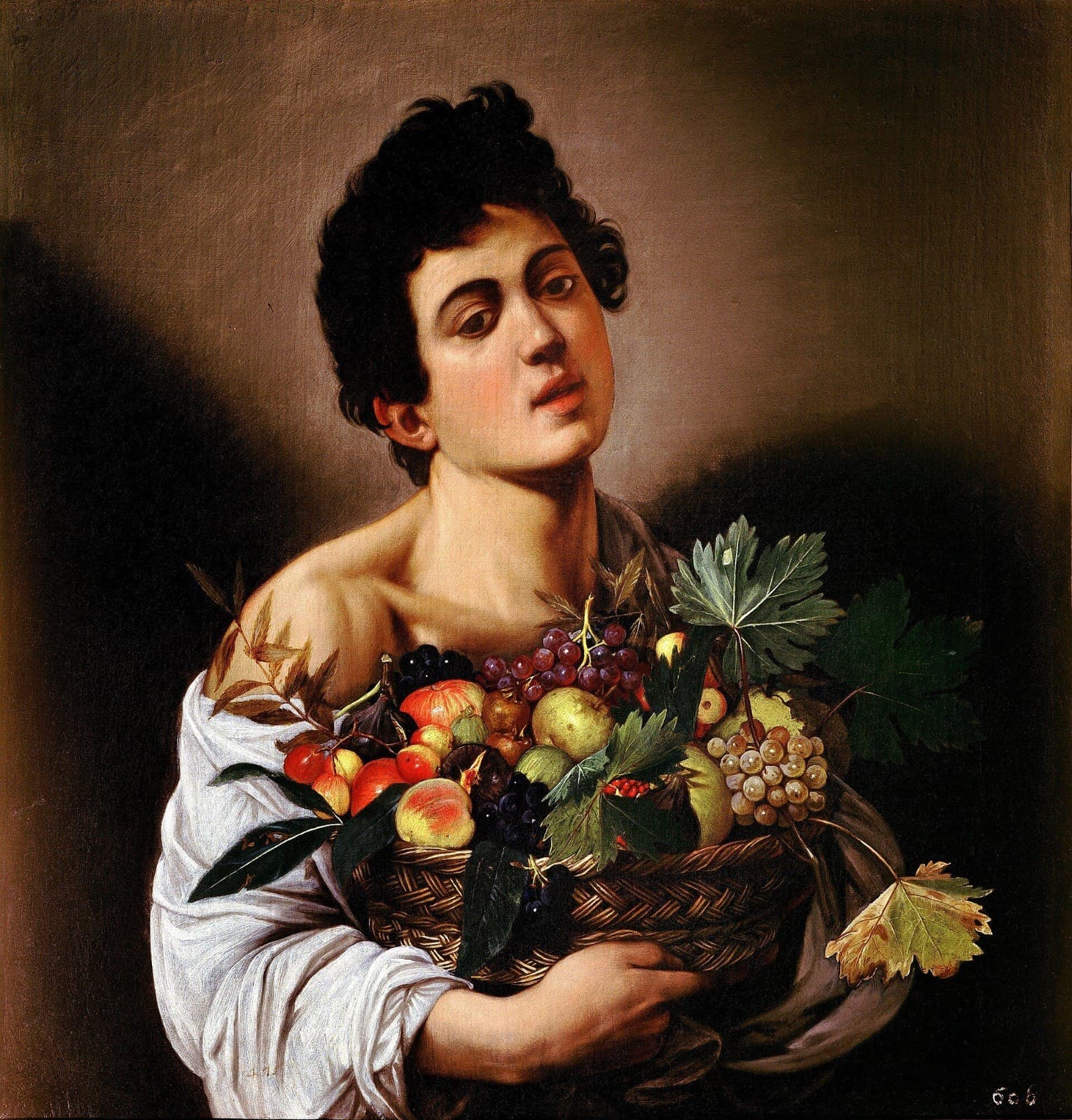
Fruit already spotting toward rot, painted with the same attention as the boy holding it. An early statement of what Caravaggio intended.
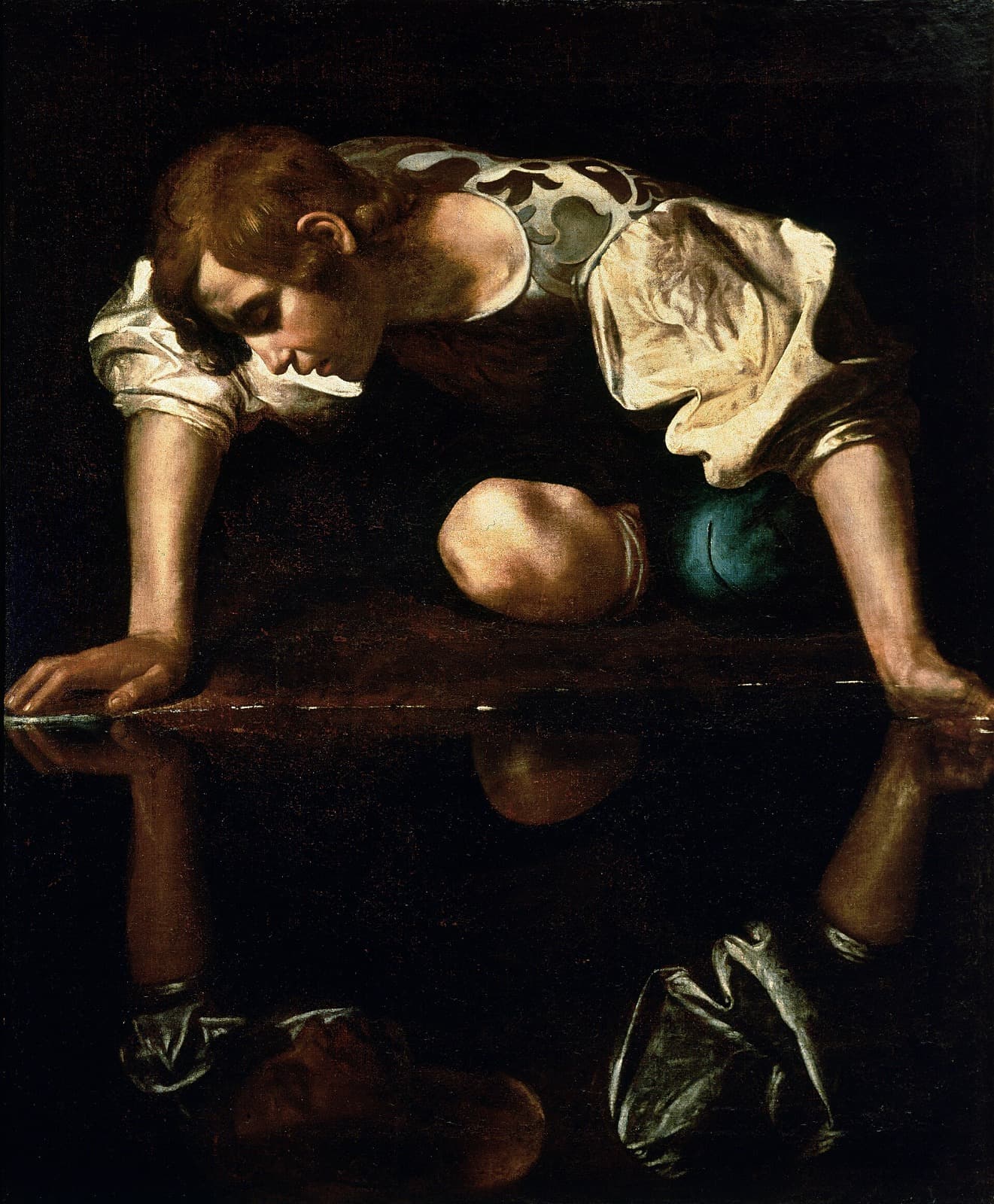
Narcissus and his reflection close into a circle around a band of black water, and nothing else exists in the picture.

The holy family is tiny and the landscape does everything, which is the arrangement Poussin and Claude would build whole careers on.
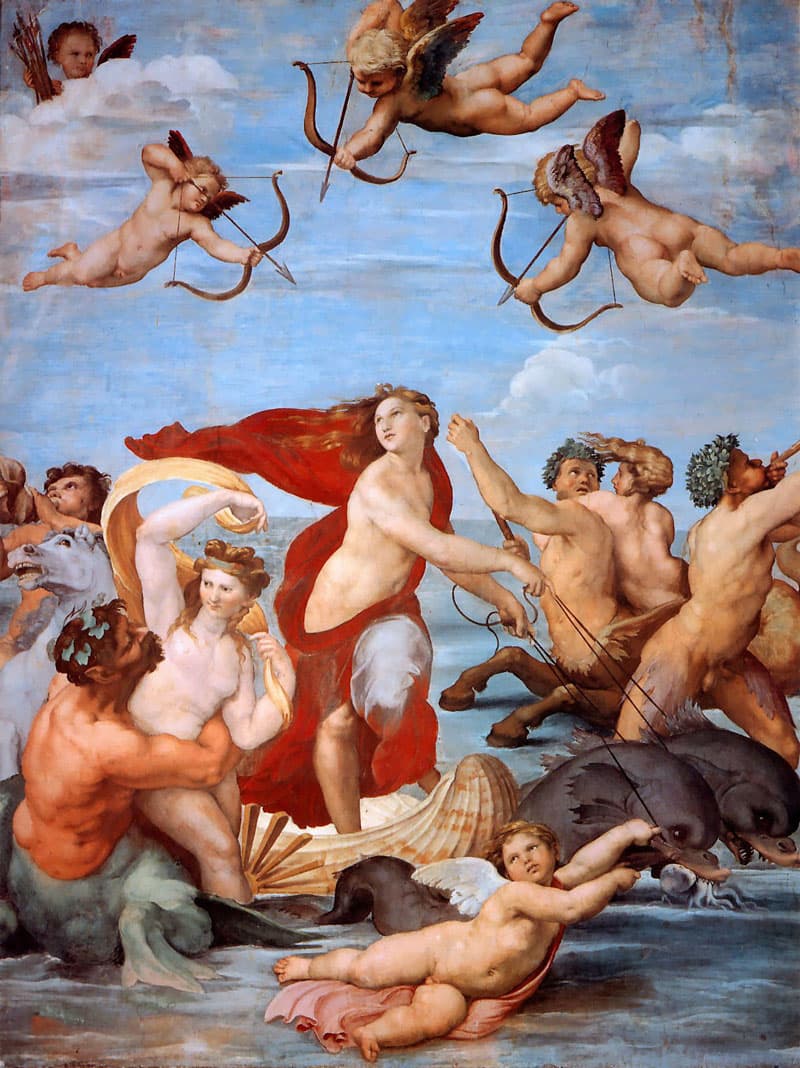
Asked where he found so beautiful a model, Raphael said he worked instead from a certain idea of beauty he carried in his head.
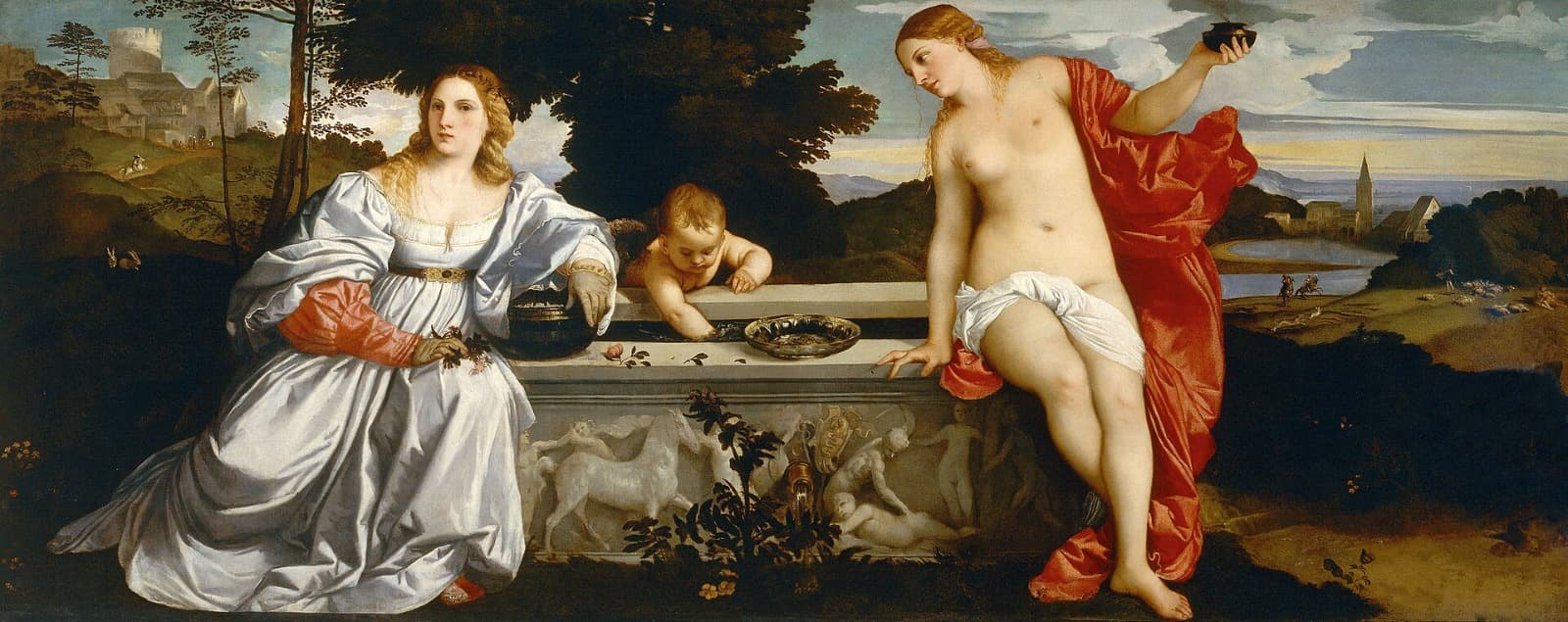
Two women sit at either end of a sarcophagus full of water, and it is the naked one who stands for sacred love.
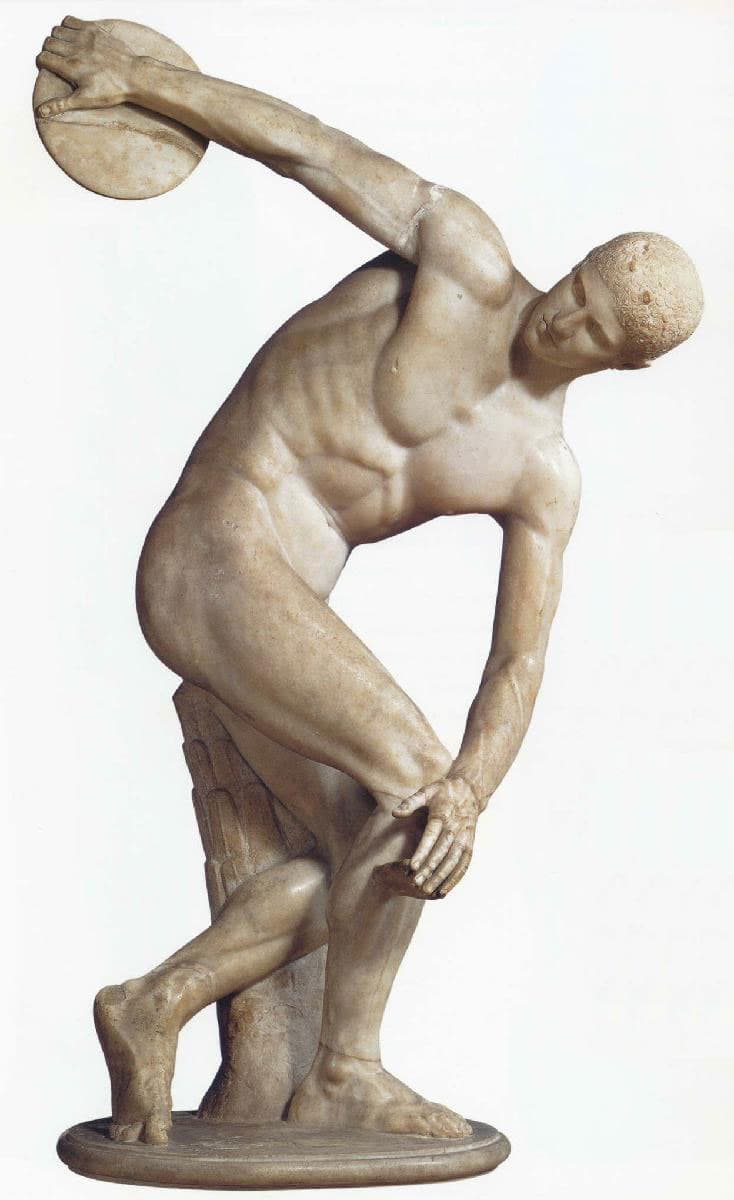
Myron's bronze is lost and this is a Roman marble copy, which is why a strut props the leg the original held up unaided.
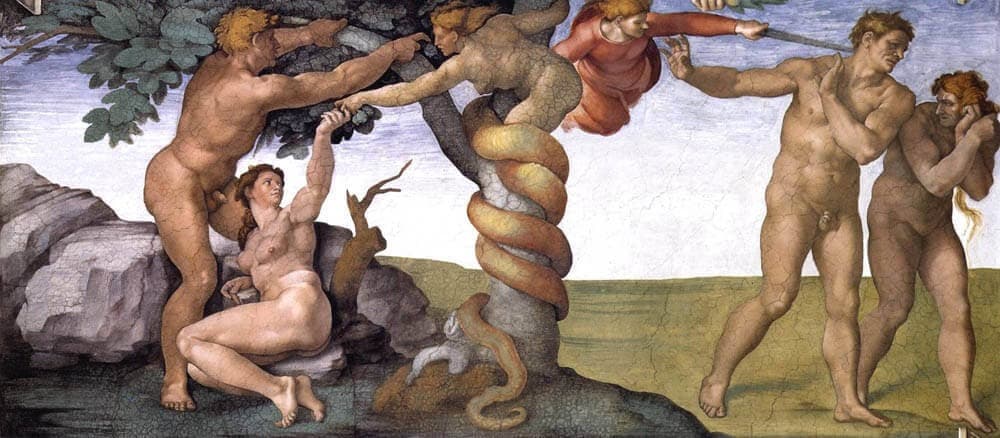
Two moments in one field: Adam and Eve reaching for the fruit, then driven out, suddenly old. The serpent has a woman's torso.
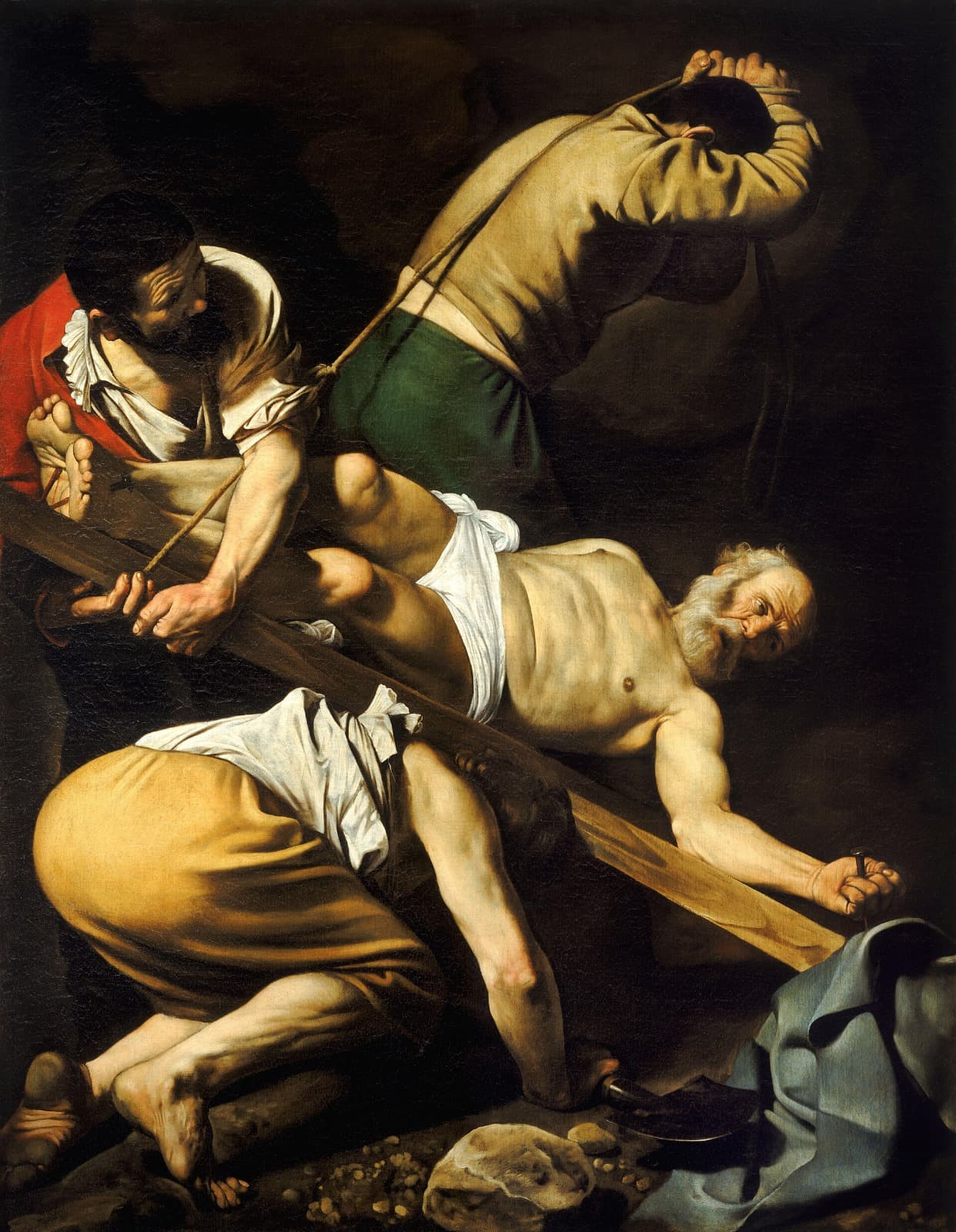
Three laborers strain to lever the cross upright with Peter nailed to it upside down. No crowd, no glory, just heavy work in the dark.

The corner of the stone slab juts out of the picture so the body looks about to be laid down in the room with you.
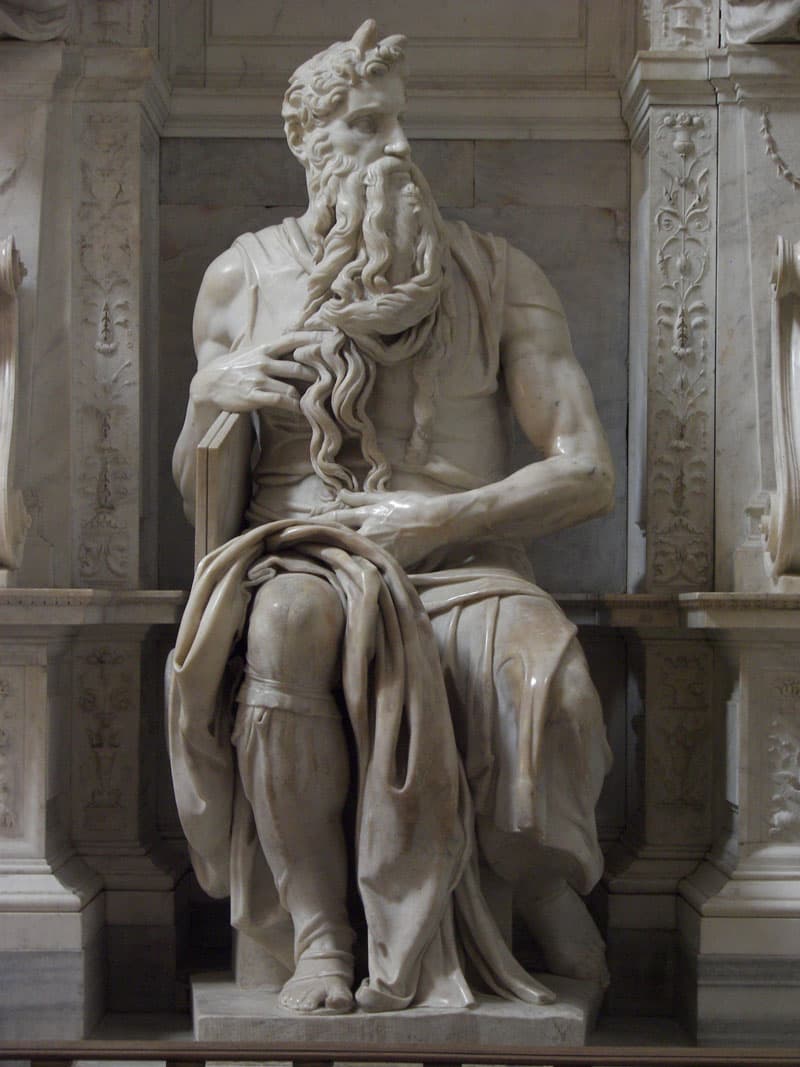
The horns come from an old mistranslation of the Hebrew for rays of light. He was meant as one figure among many on a papal tomb.

Caravaggio's first attempt at the subject, turned down by the patron, before he threw out the angels and left one man, one horse and the light.
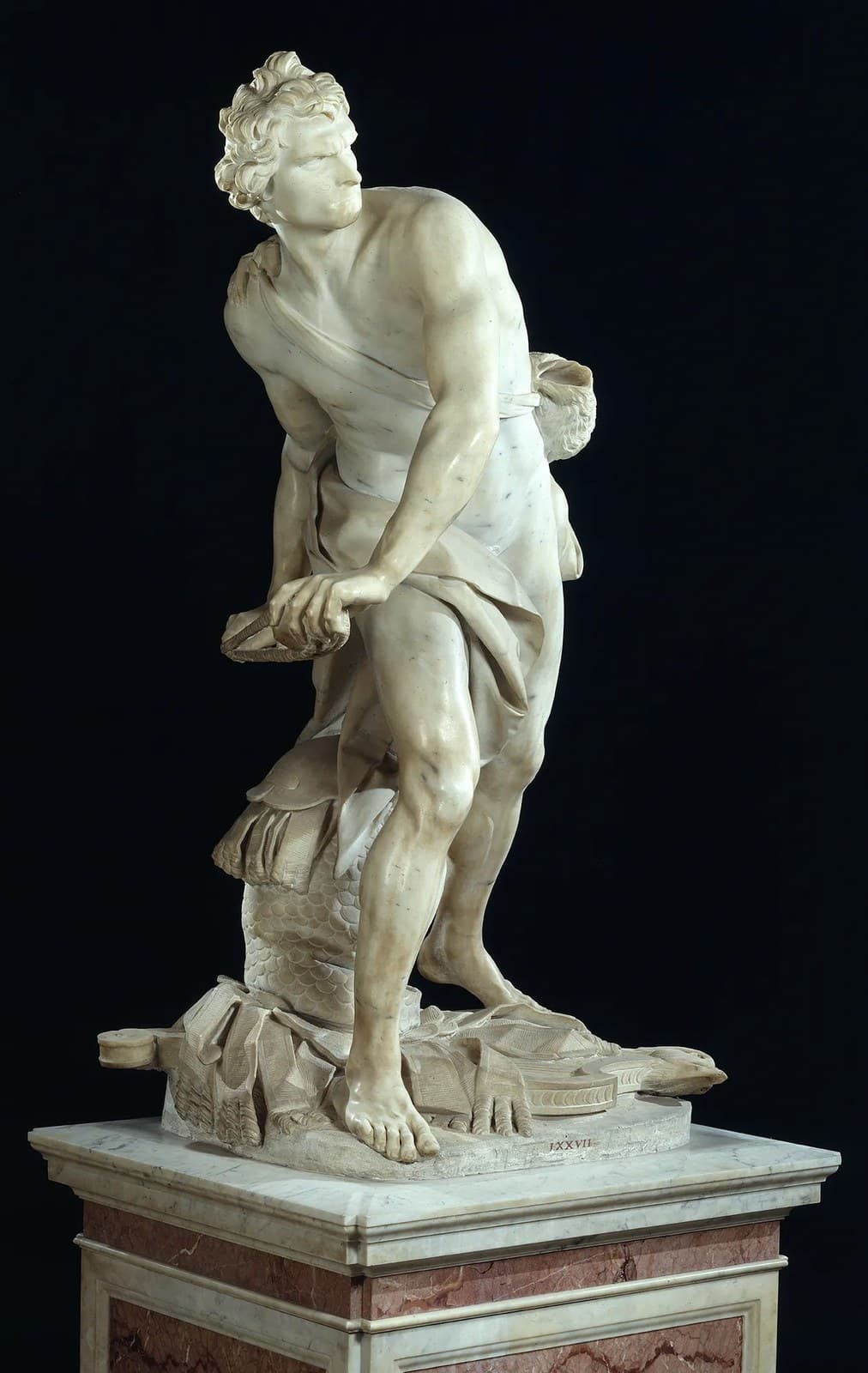
Bernini put the viewer where Goliath must be standing, so the sling is being wound up to throw straight past your head.