
Night View of a Ginza Store
1884 · Ota Memorial Museum of Art, Tokyo
Gaslight in the windows of a new brick storefront on an empty Tokyo street. Yasuji died at twenty-five and got there before Hopper.
★ 4.7
 skopia
Gaslight in the windows of a new brick storefront on an empty Tokyo street. Yasuji died at twenty-five and got there before Hopper.

Signac moved to Saint-Tropez and pulled the rest of the Neo-Impressionists south. Seurat's tight dots have loosened into bigger, brighter tiles.

Oi was Hokusai's daughter and studio collaborator, and her handling of lantern light against darkness beats anything else in the ukiyo-e of her time.

Instead of copying idealized Chinese scenery, Jeong Seon walked out and painted a real hill above Seoul with the rain just lifting off it.
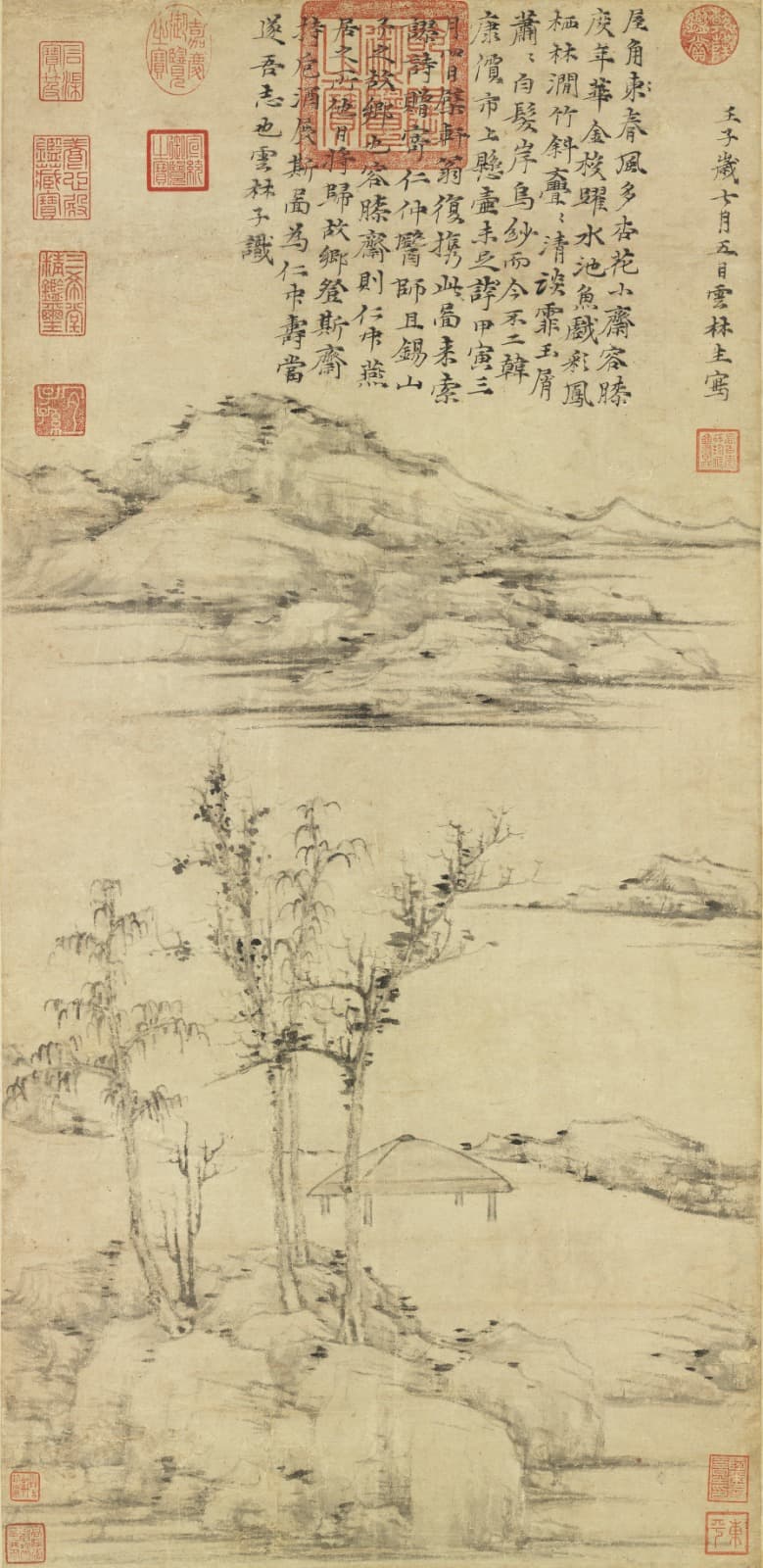
An empty pavilion, a few dry trees, no people at all. Ni Zan gave away his estate and spent his last years on a houseboat.

They called him One-Corner Ma. A scholar and a willow occupy one corner and the rest of the silk is left as air.
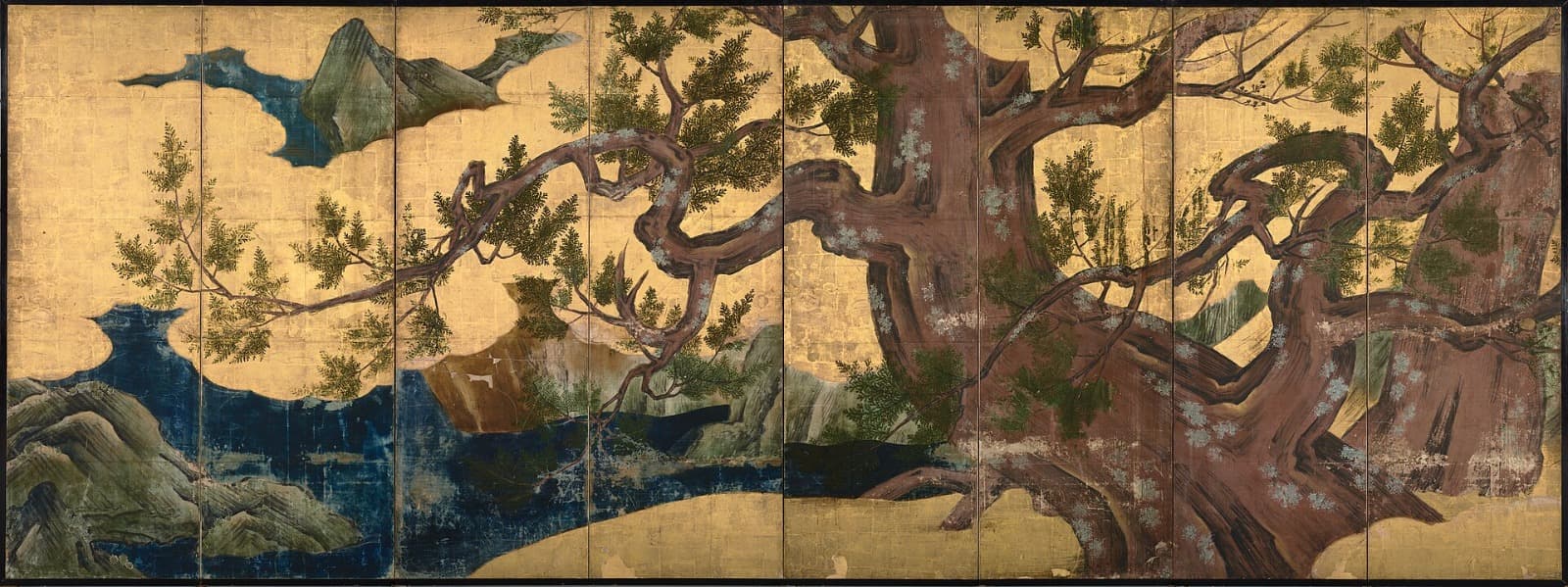
One ancient cypress sprawls across the screen against solid gold, painted by the man who decorated the castles of Nobunaga and Hideyoshi.

A collector loved the scroll so much he tried to have it burned with him at death. It was pulled from the fire in two pieces.

The two gods hurtle in from opposite edges and Sotatsu leaves the whole middle empty, so the bare gold reads as sky.

A mountain, a wineshop flag and a boatman conjured from a few wet blots. Sesshu made it as a parting gift for a departing pupil.
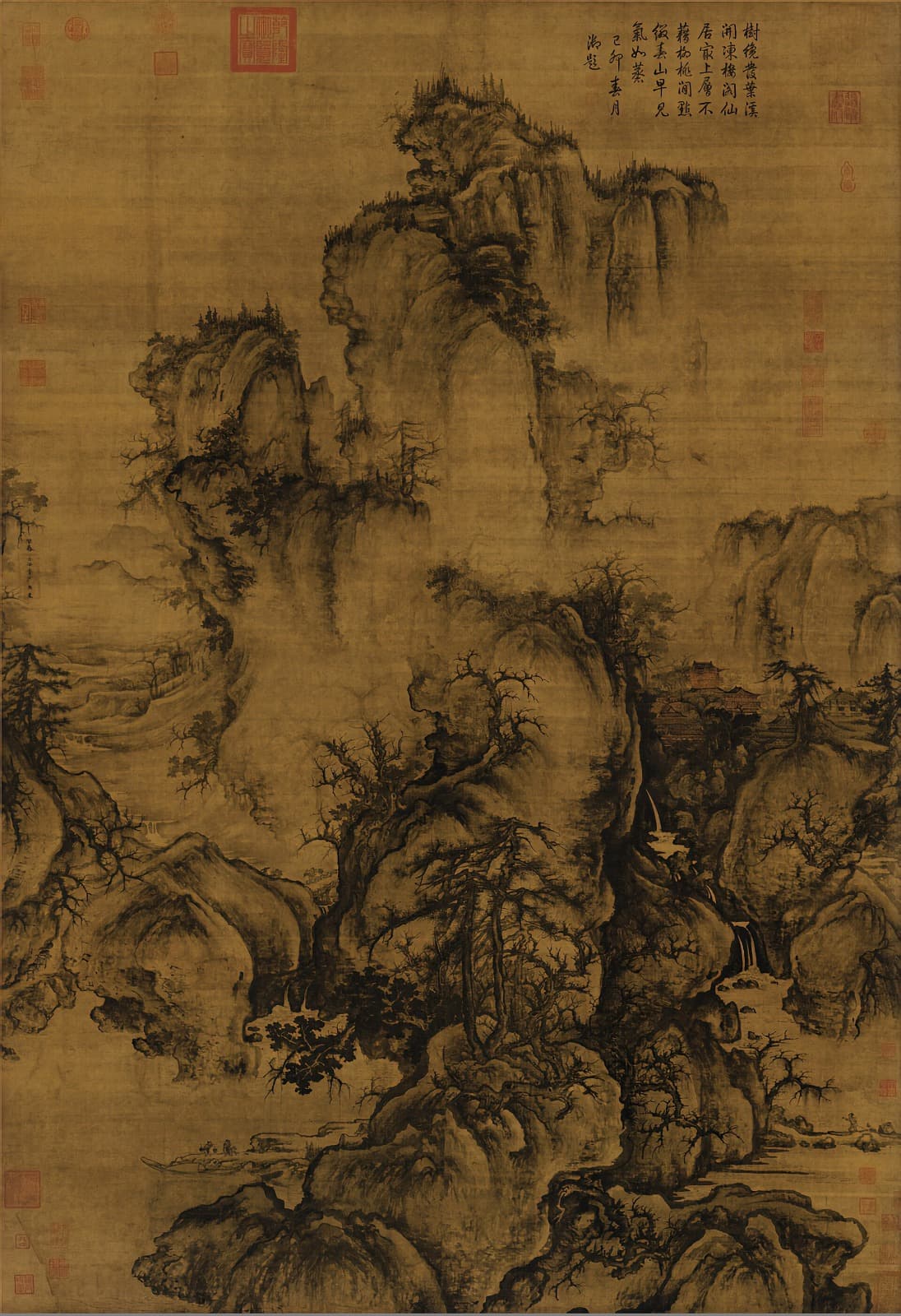
Guo Xi was court painter to the Song emperor and worked from a theory of three distances, shifting the eye between peak, valley and horizon.

A wall of rock fills two-thirds of the picture and shrinks the mule train below to nothing. Fan Kuan hid his signature in the leaves.

A stylized river runs down the gold between two plum trees, one young and white, the other old and red, leaning toward each other.

A few pines loom and dissolve on two screens where the bare paper does the work of mist. Japan's finest ink painting, by most accounts.

More than eight hundred figures crowd five meters of scroll, and Chinese painters have been copying and forging it for nine hundred years.

Twelve meters of blue and green mountains, ground from azurite and malachite by a court prodigy said to have died before he was twenty.
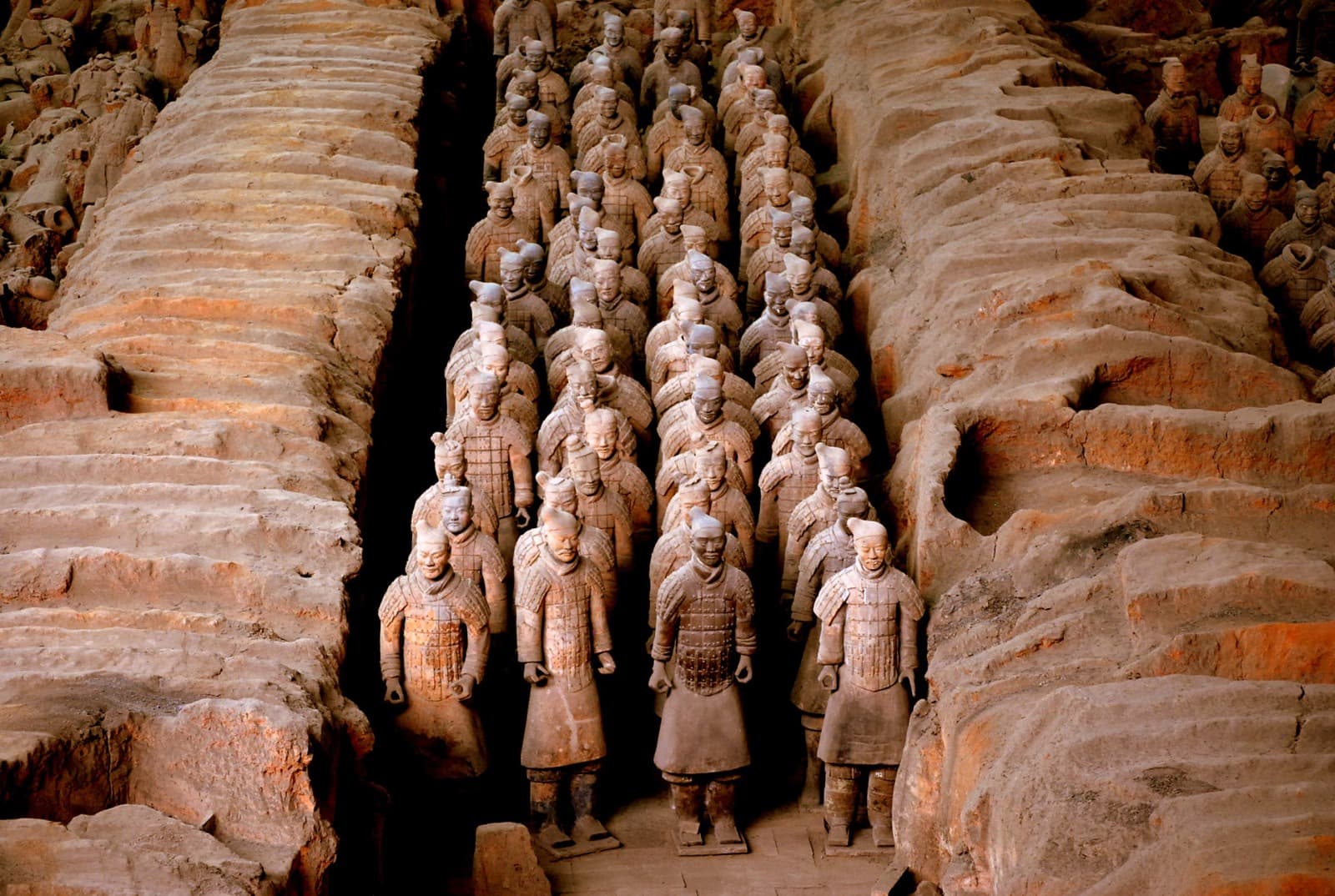
Thousands of life-size clay soldiers in battle formation, no two faces alike, guarding an emperor's tomb since 210 BC.