
Madonna and Child with St. John the Baptist
1495 · Palazzo Pitti, Florence
Late Botticelli, with the early lightness gone tense. He had fallen under Savonarola's spell and his religious pictures never relaxed again.
★ 4.7
 skopia
Late Botticelli, with the early lightness gone tense. He had fallen under Savonarola's spell and his religious pictures never relaxed again.

Elizabeth sinks down and clasps the pregnant Mary. Ghirlandaio ran the busiest workshop in Florence, and a boy named Michelangelo apprenticed there.

Six angels lean in along the throne with their heads tilted, which turns a rigid Byzantine formula into something nearly intimate.

Gilded hems, fluttering wings, a walled garden behind. Lippi was a friar with a worldly streak and it shows in the ornament.
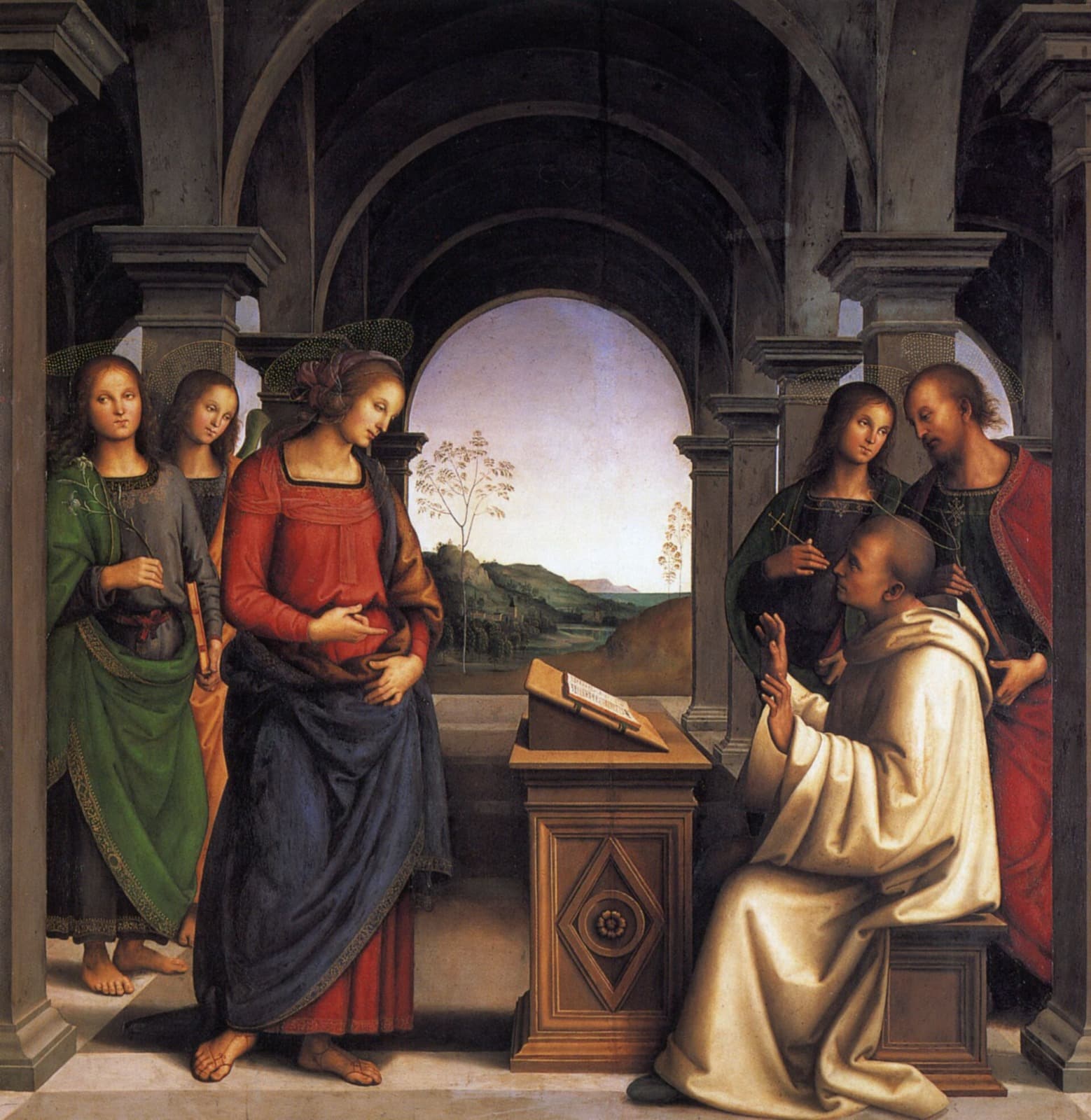
Perugino taught Raphael, and the poise, the airy arcade and the soft Umbrian valley here pass almost unchanged into the pupil's work.

Gabriel kneels at the right and points across at a Virgin drawing back in surprise, with a stretch of classical ruin between them.

Joseph reaches up to pull down dates from a palm while Saint Francis kneels at the side, added for the chapel that ordered it.

The episode appears in no Gospel at all, and Altdorfer nearly buries the figures under a forest of enormous trees and luminous sky.
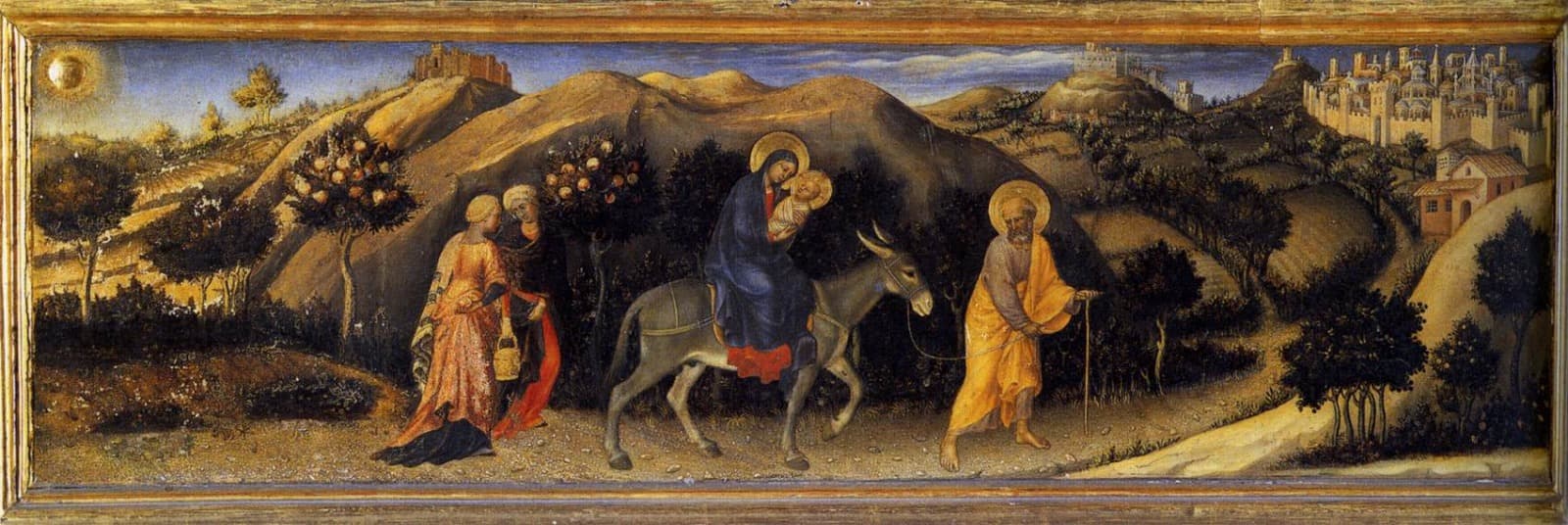
A gilded low sun hangs over the road and the orange trees are heavy with fruit, an early attempt at real morning light across a landscape.

The Virgin offers the Child a bunch of grapes, which stand for the wine of his death, in an exactly observed Flemish wood.

The angels crowd in like inquisitive children. One of the first paintings to put the Virgin and saints in a single shared space.

Father and Son lower the crown together while the group curves into a soft heart shape. Painted for the Spanish queen's private oratory.

Christ crowns his mother at the top of a flight of steps that recede convincingly into depth, which is the new thing here.
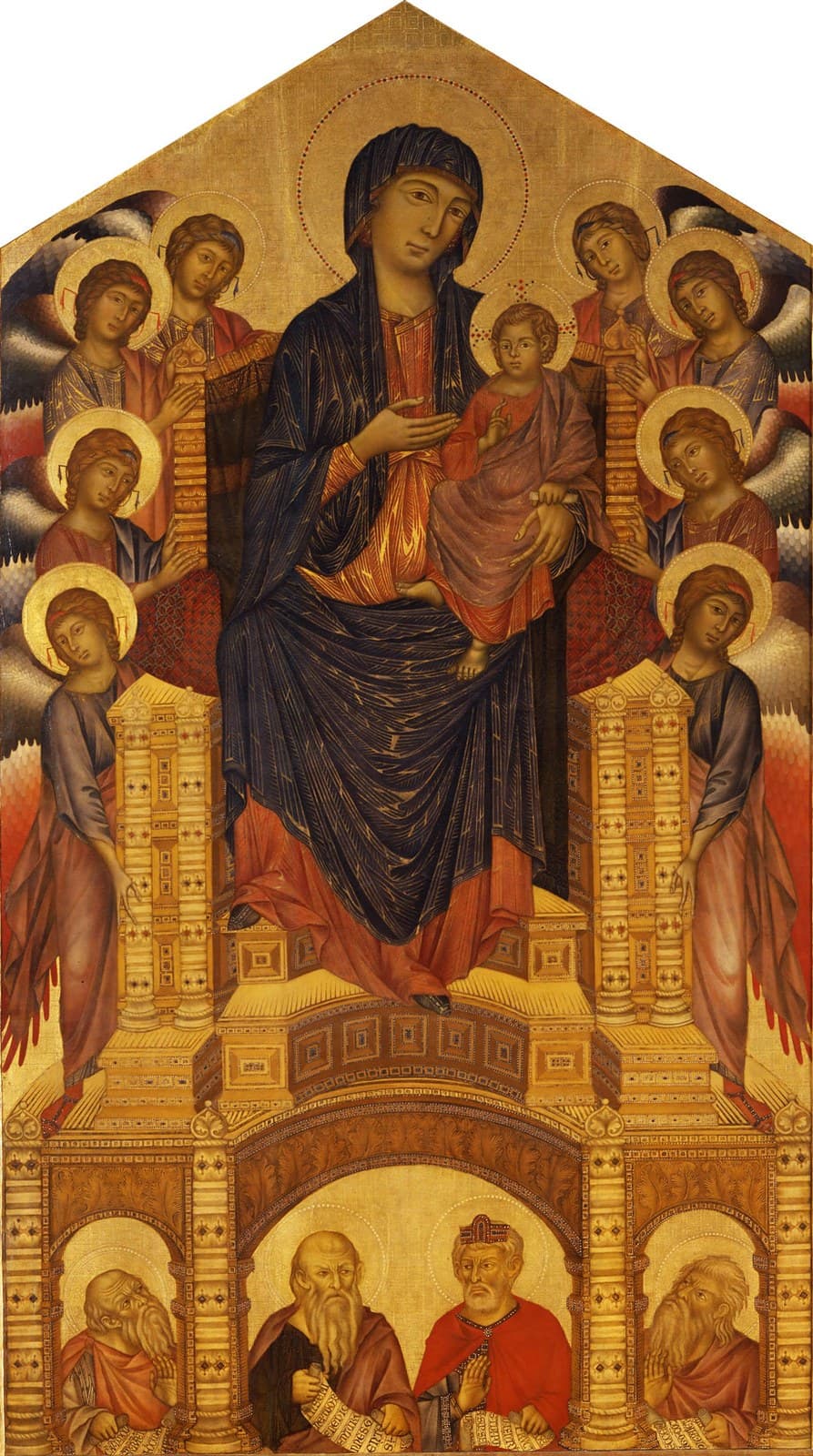
Four prophets peer from arches under the throne holding scrolls that foretell the Virgin Birth, and the throne is angled to suggest depth.

Dürer painted it in Venice to prove a German could beat the Venetians at color, and wrote on it that it took five months.
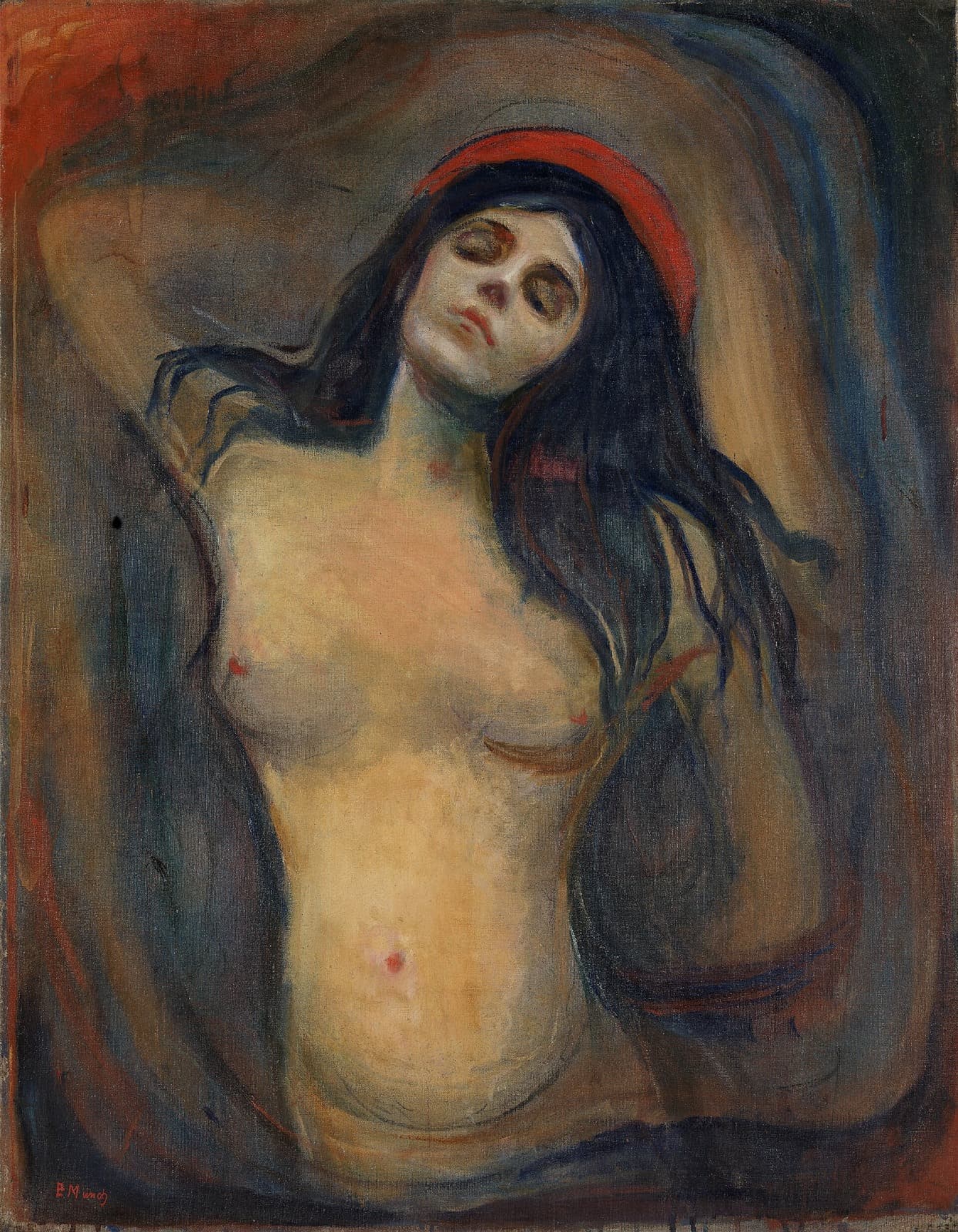
Munch gave the Madonna a red halo, closed eyes and parted lips, and made desire and death the same subject.
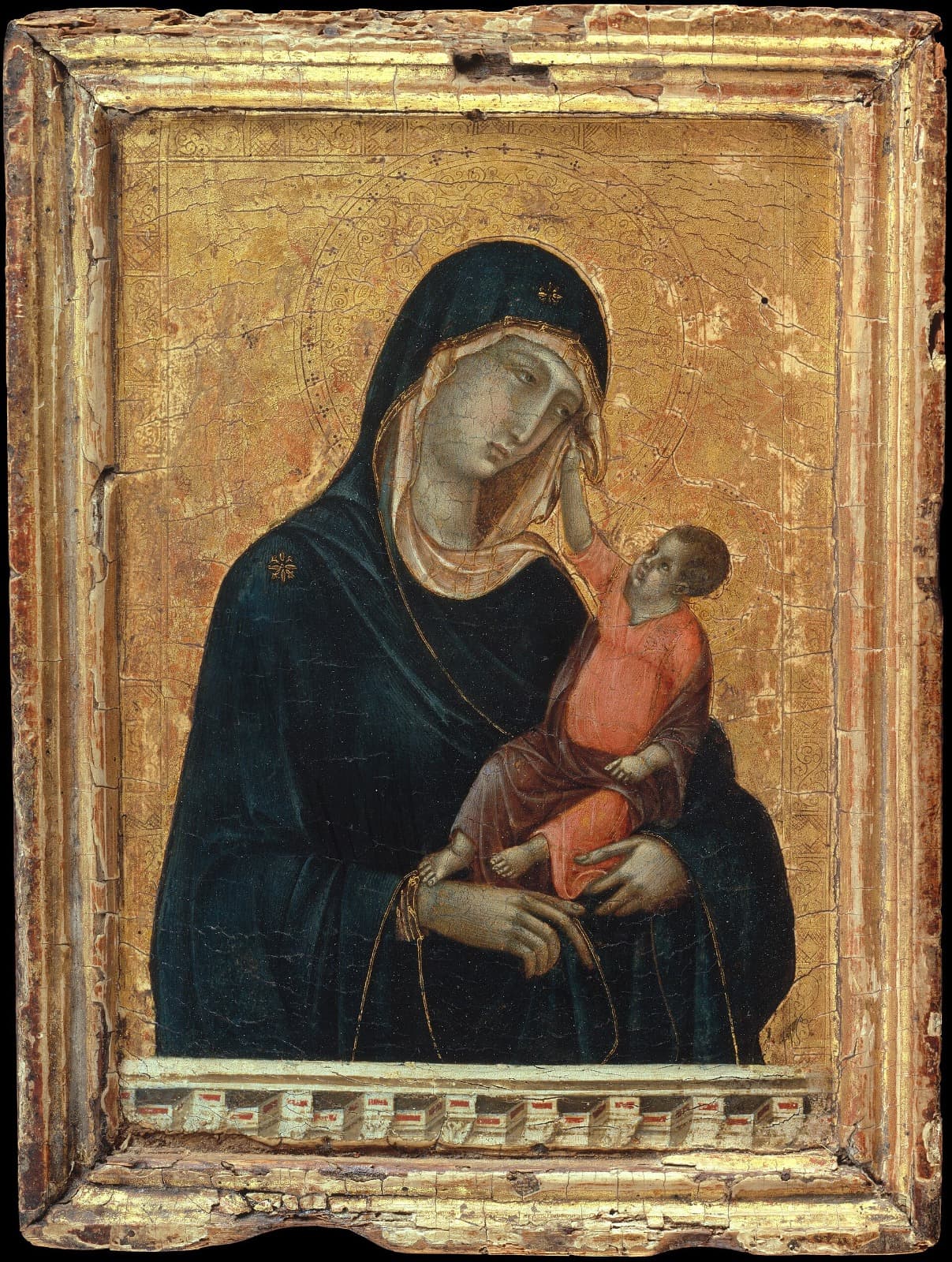
Christ reaches up to push his mother's veil aside. Scorch marks on the original frame record centuries of candles set before it.

The little demons carved on the pedestal were taken for harpies and gave the picture its name. Del Sarto was called the faultless painter.
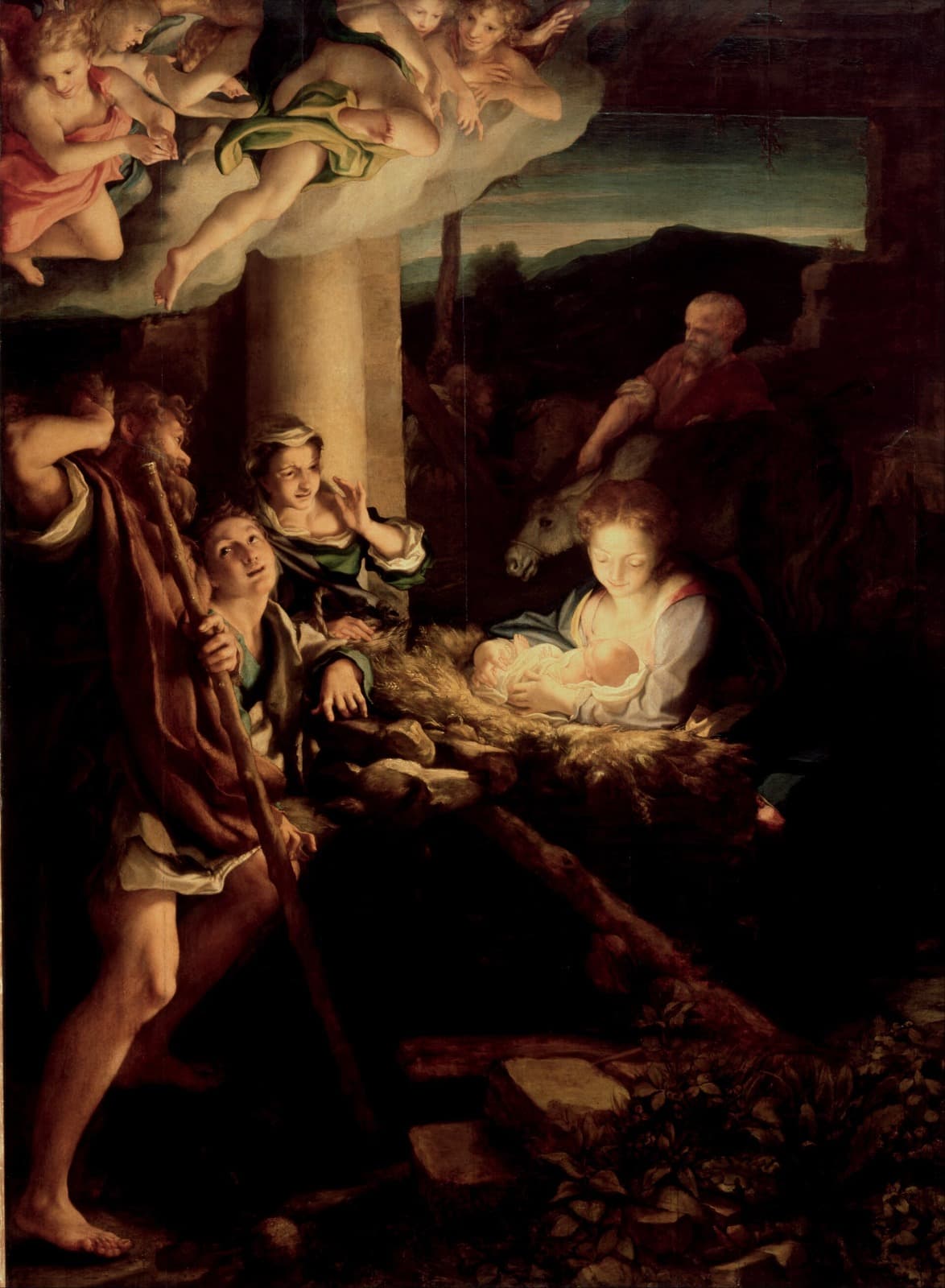
All the light in the picture comes off the newborn child, and one shepherd throws up a hand against the glare.

The holy family is tiny and the landscape does everything, which is the arrangement Poussin and Claude would build whole careers on.