
Christ Bearing the Cross, with a Dominican Friar
1360 · The Frick Collection, New York City
Christ looks back over the cross at a tiny Dominican friar kneeling in the corner, the patron drawn into the road to Calvary.
★ 3.2
 skopia
Christ looks back over the cross at a tiny Dominican friar kneeling in the corner, the patron drawn into the road to Calvary.

No bigger than a page, and one of very few works securely given to Cimabue, whom Dante named the best painter of his day.
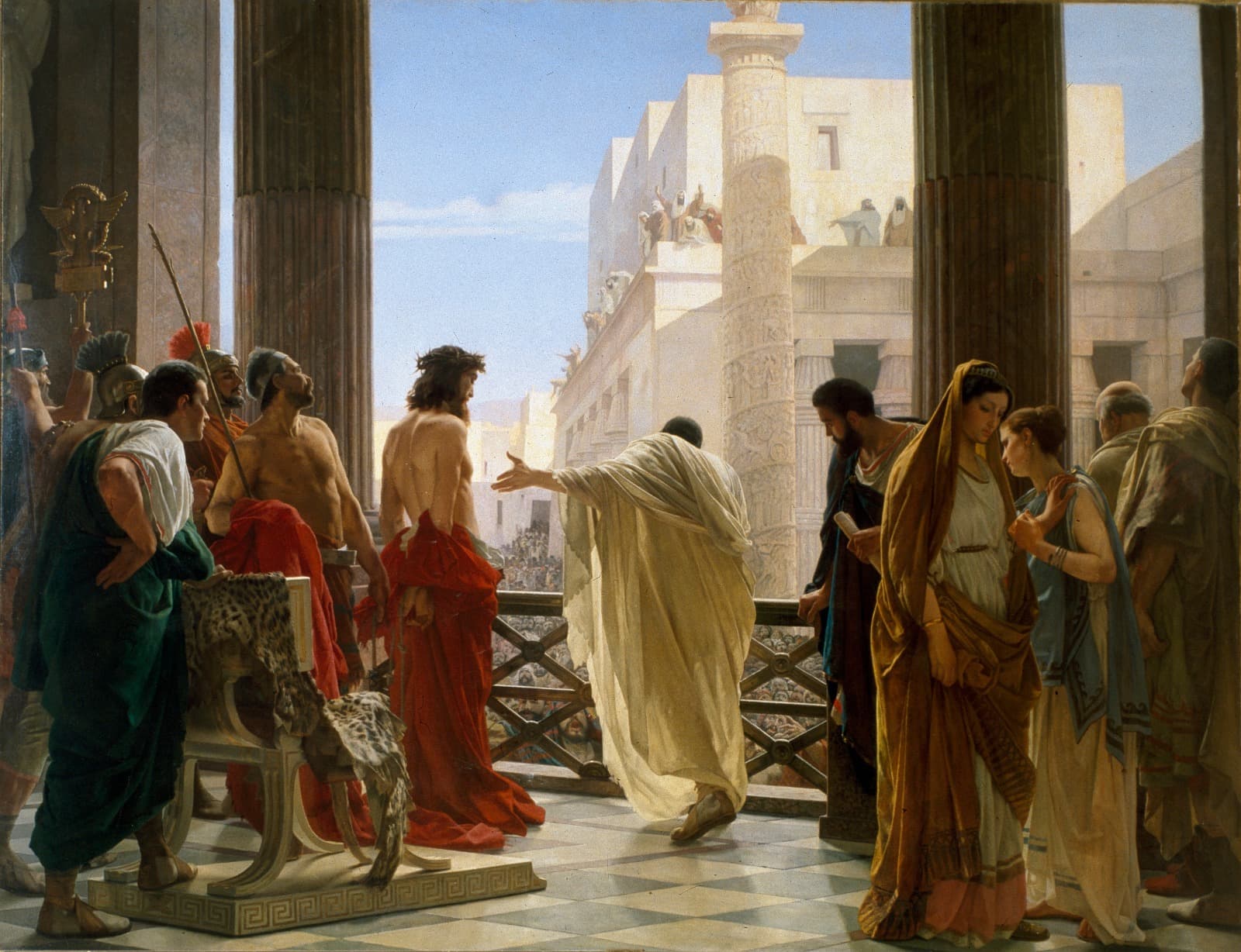
We are standing behind Pilate, looking out over his shoulder at the crowd, which puts us among the officials rather than the mob.
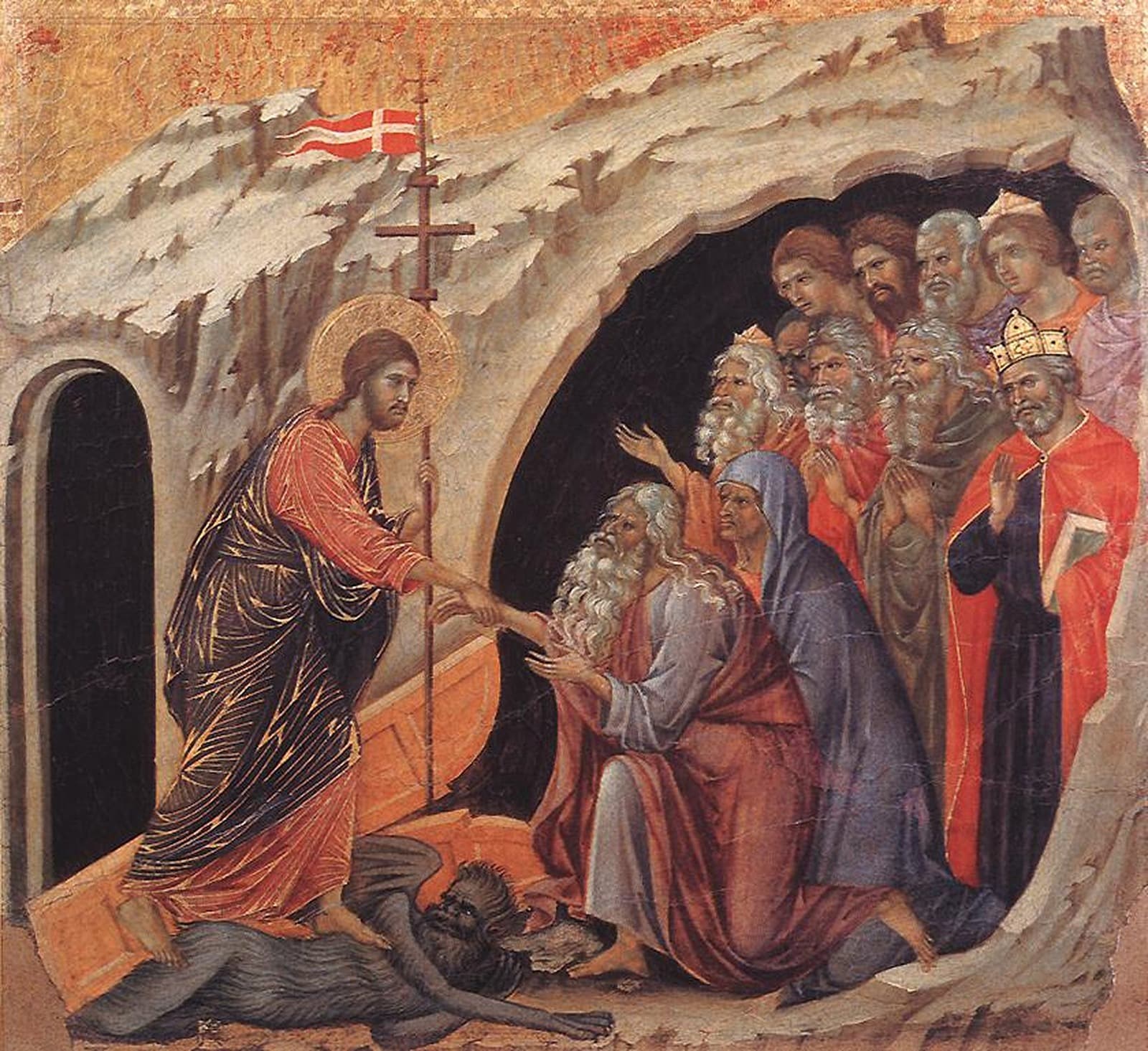
Christ strides into the cave to pull Adam out by the hand, treading on a chained Satan as he goes.

The tiny kneeling figures in the corners are the Nuremberg family who paid for it, inserted so they could share in the grief.
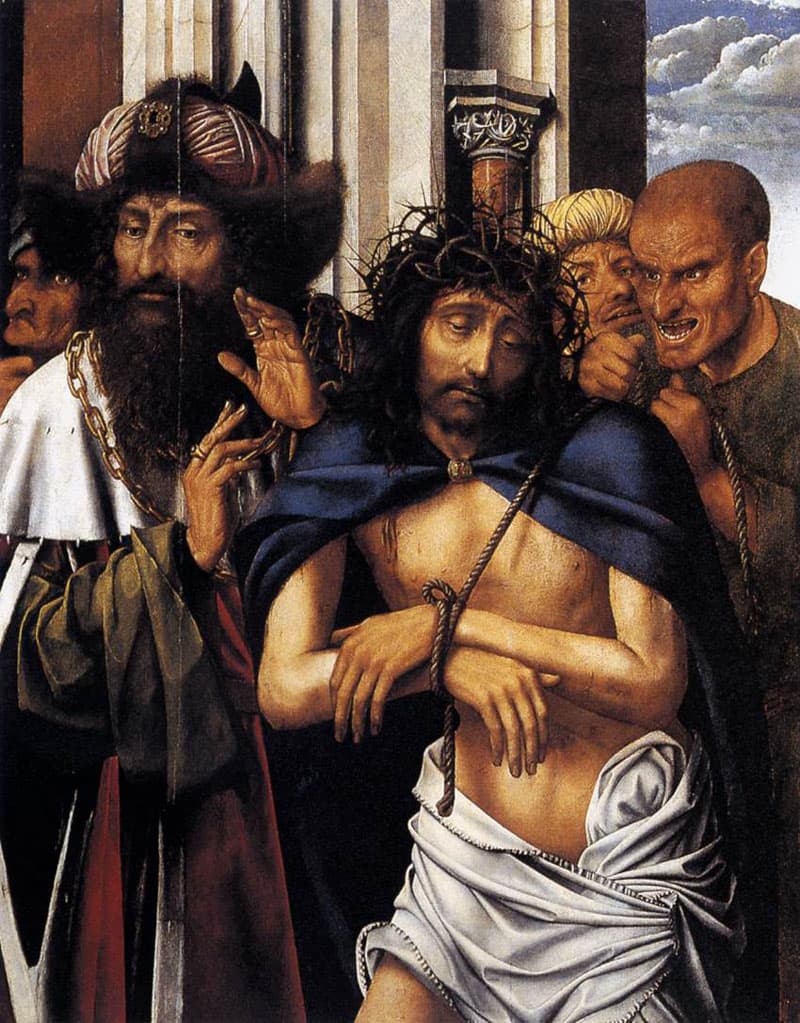
Christ stands with his eyes lowered while the faces around him are twisted into snarls. Matsys made ugliness do the moral work.

Christ in vivid red is hauled by a rope through the gate of a white, many-towered Jerusalem while children scamper at the edge.

A soldier drags Christ out through the city gate by his robe, the diagonal of the cross cutting against a bristling line of lances.
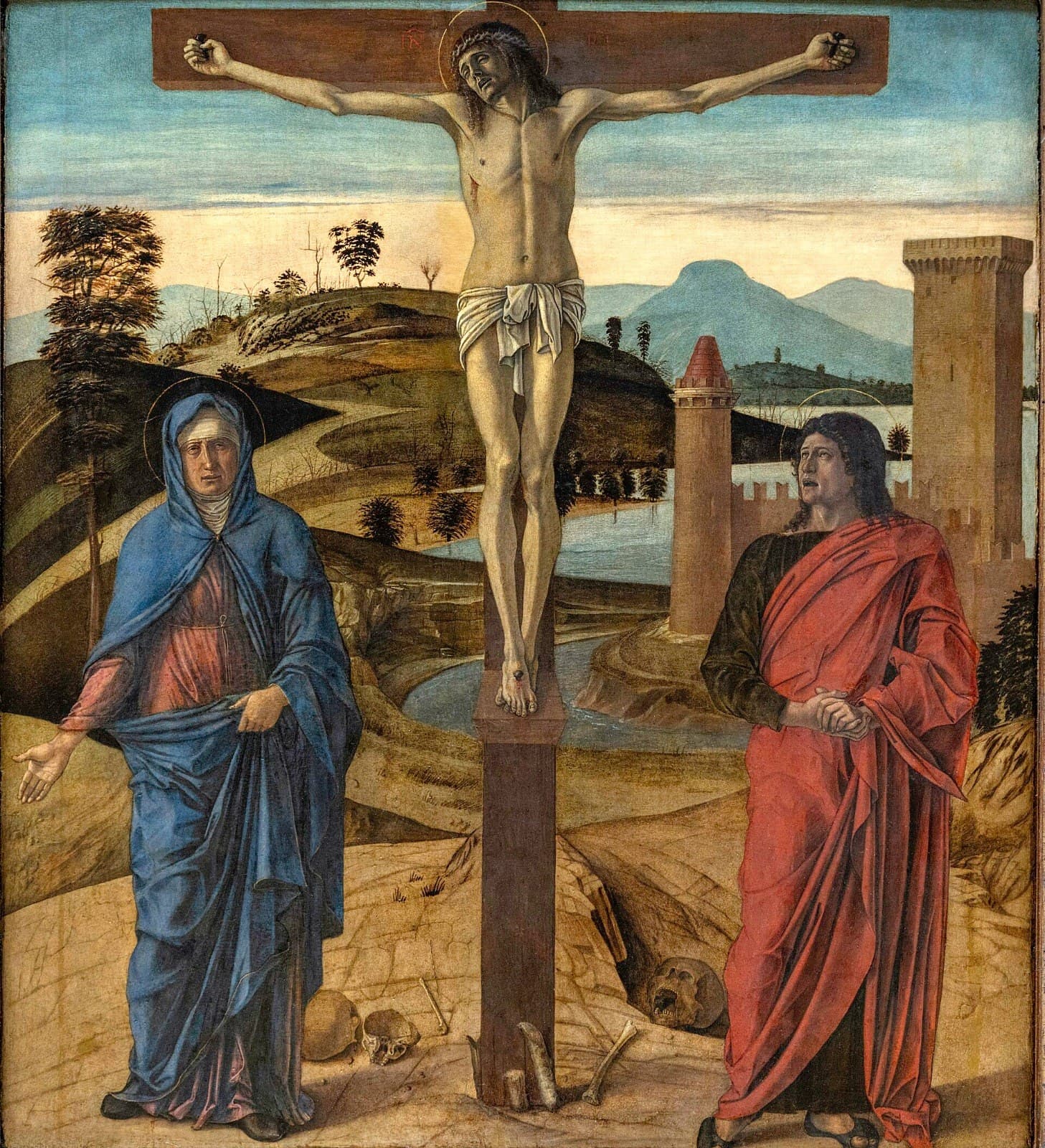
Only the Virgin and Saint John below the cross, and a river winding past a walled town. Early Bellini, carrying feeling in the light.

Lotto crops the Passion down to one tear-streaked head at the surface, with soldiers' hands coming in from the edges of the frame.
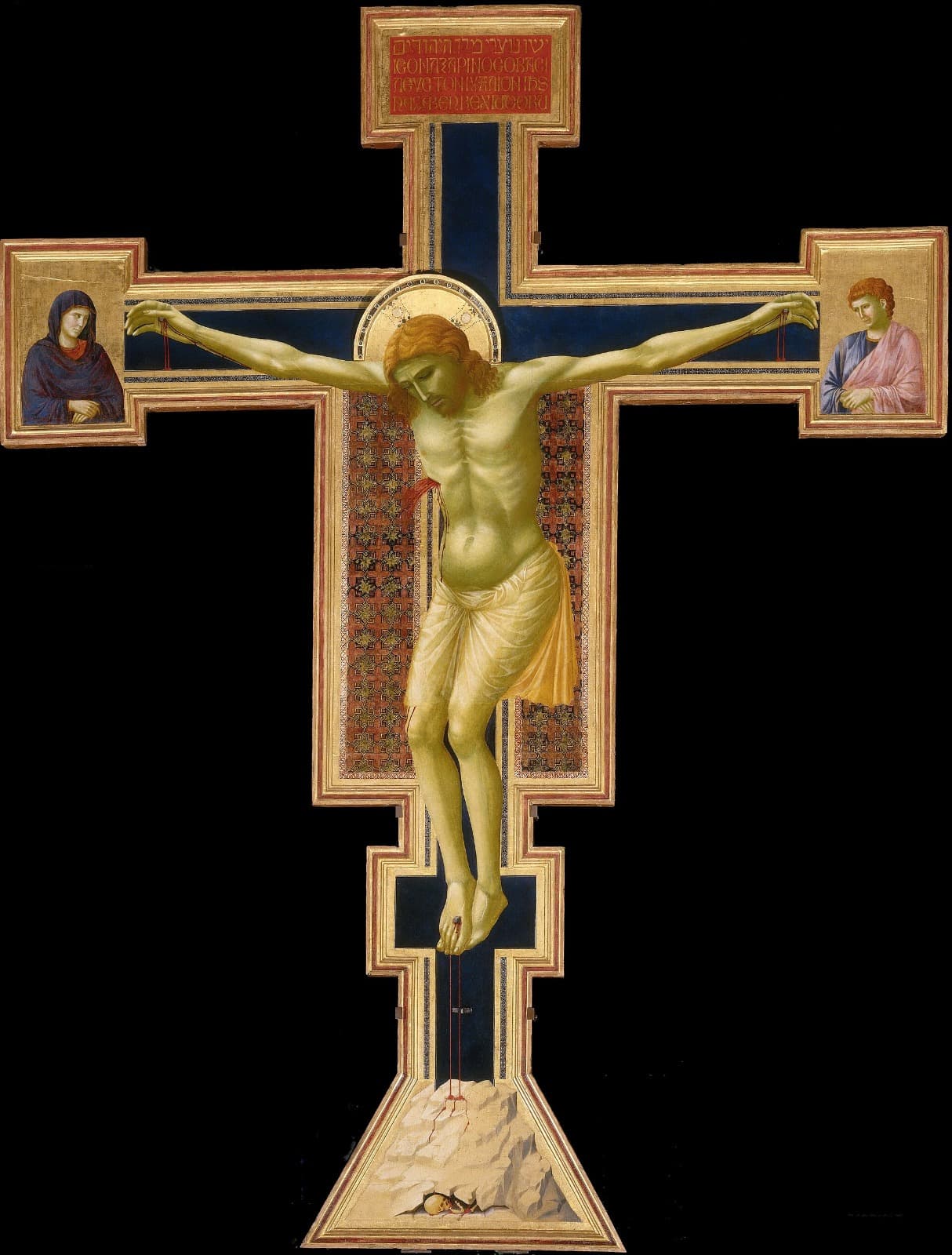
Where Cimabue's Christ swings in an elegant curve, Giotto's hangs straight down under his own weight, belly sagging, head on his chest.
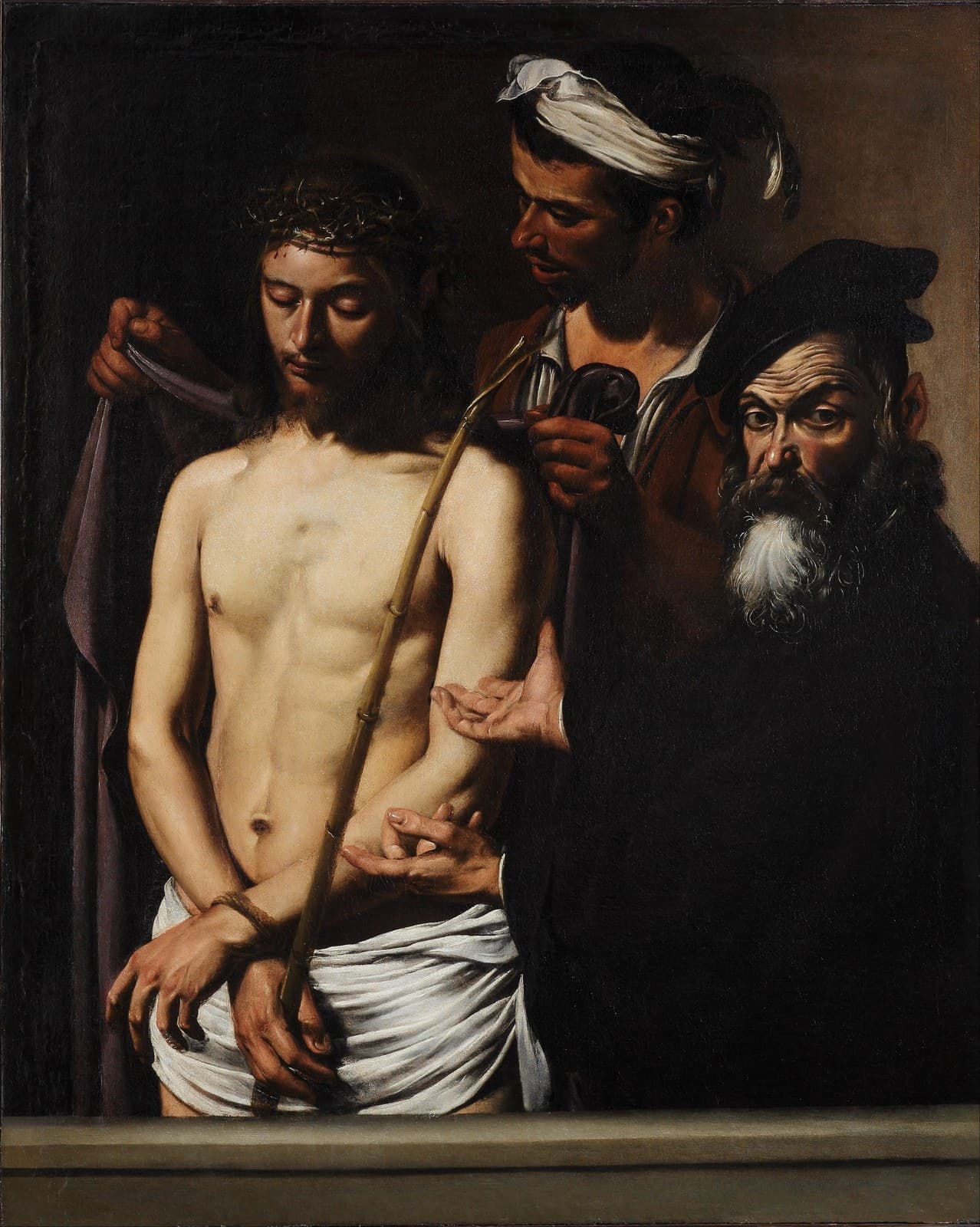
Three figures in a shallow dark box, and Caravaggio puts you where the crowd stood, having to decide what to do with him.
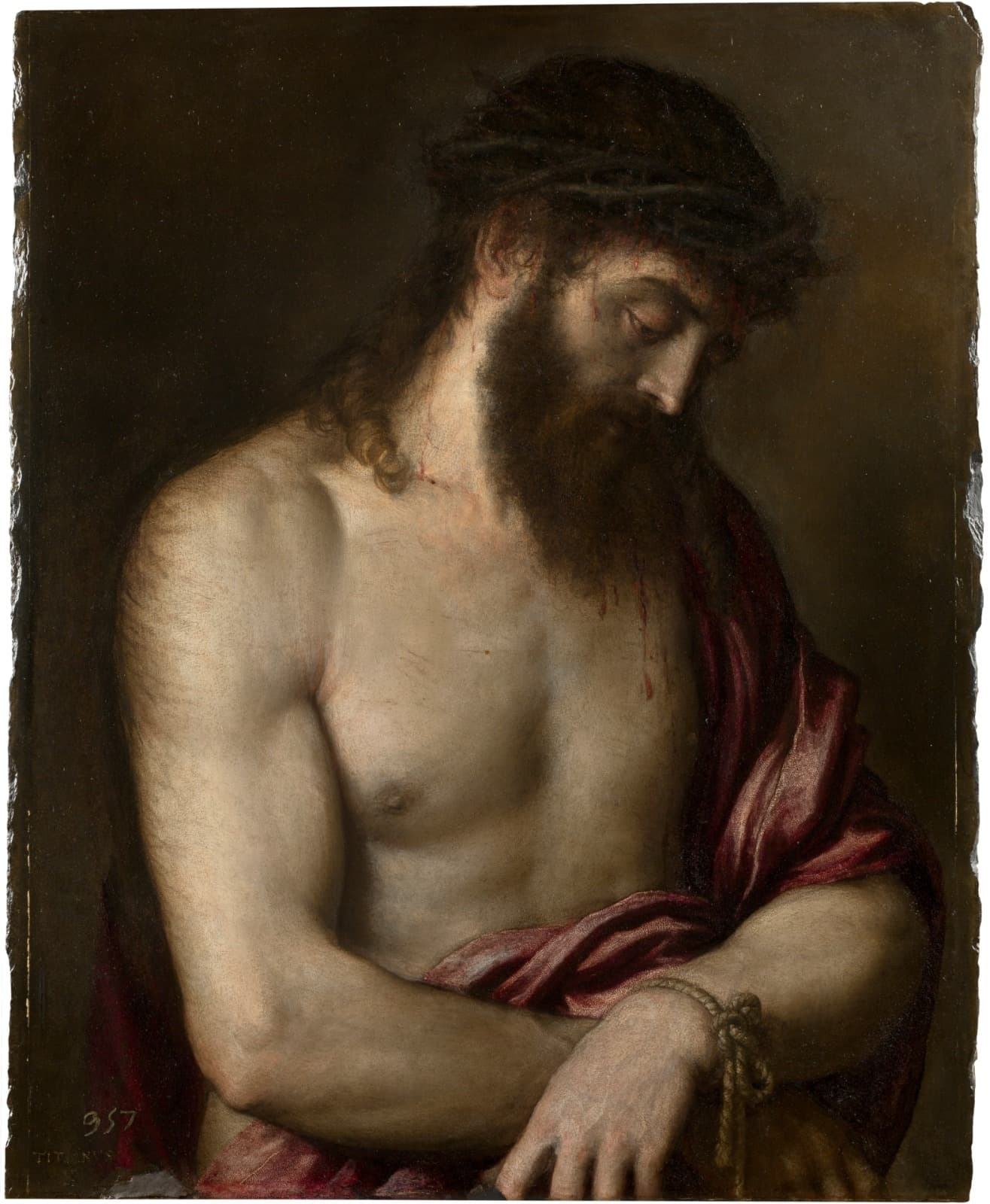
Behold the man, said Pilate. Titian strips out the crowd and leaves the scourged Christ half-length, close enough to pray to.
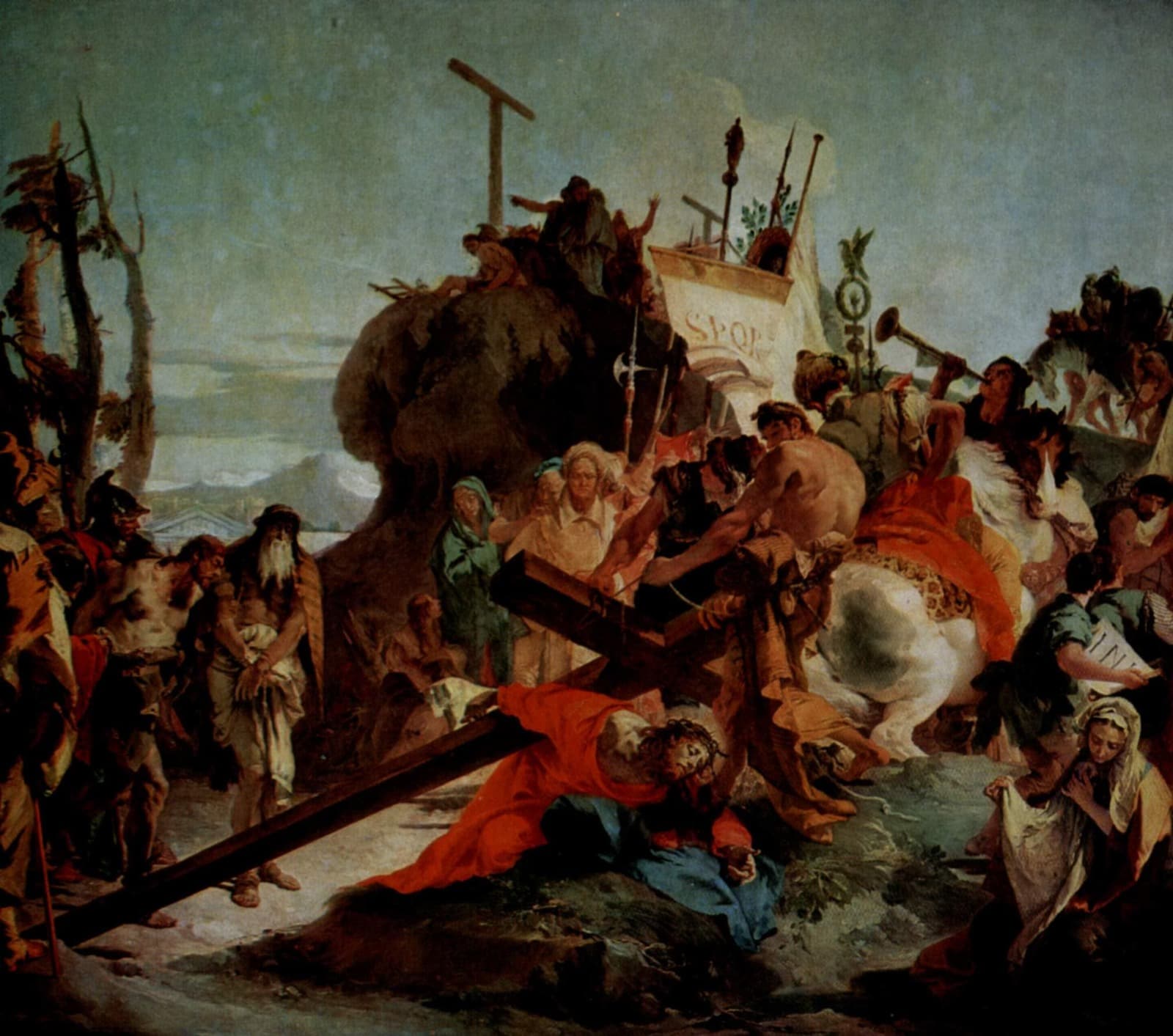
Even the Passion gets Tiepolo's airy color and snapping banners, the whole shoving procession swept upward toward Golgotha as theater.

El Greco stripped out the crowd and the road and left the face and the embraced wood, a formula he repeated many times for Toledo.

Christ turns back toward his mother as she swoons, and legend has it the painting was nearly lost in a shipwreck on its way to Palermo.
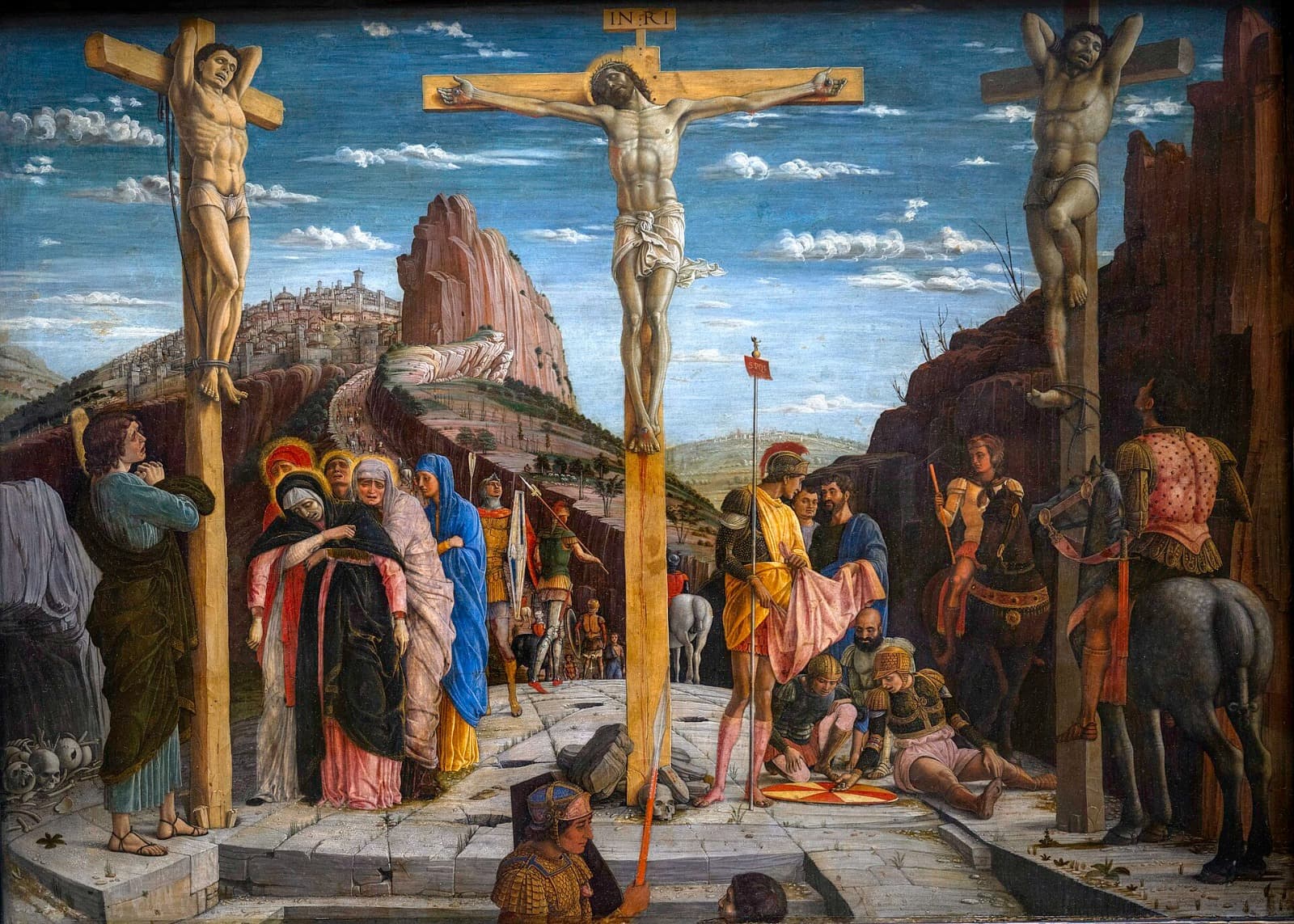
Soldiers throw dice for Christ's robe on a paved Golgotha. This panel was sawn off an altarpiece by Napoleon's looters and never returned.
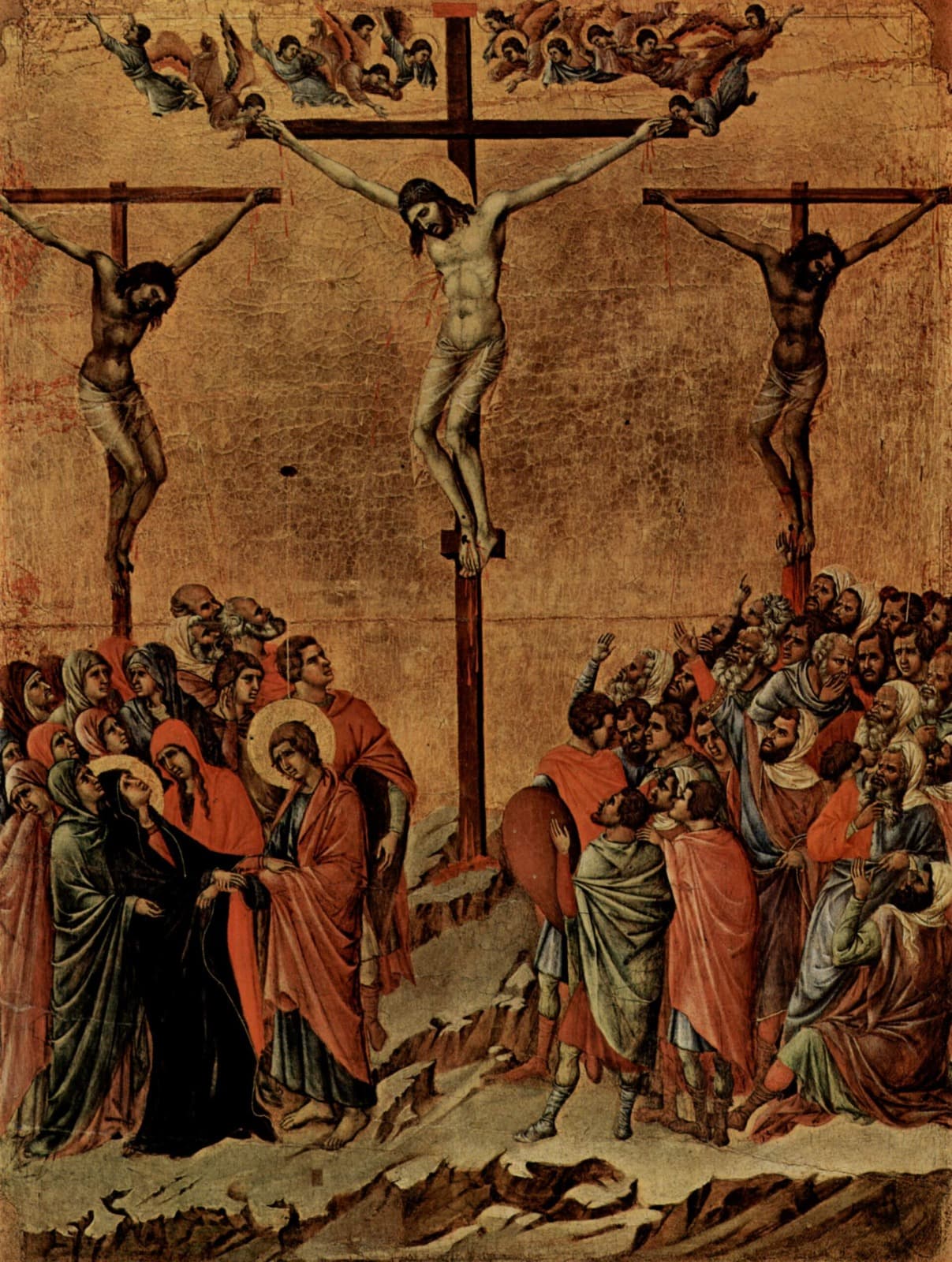
This is the largest scene on the back of the Maesta, the Virgin fainting on one side and the crowd arguing on the other.

A crush of leering faces fills every inch, and Christ moves through the middle of it with his eyes shut.
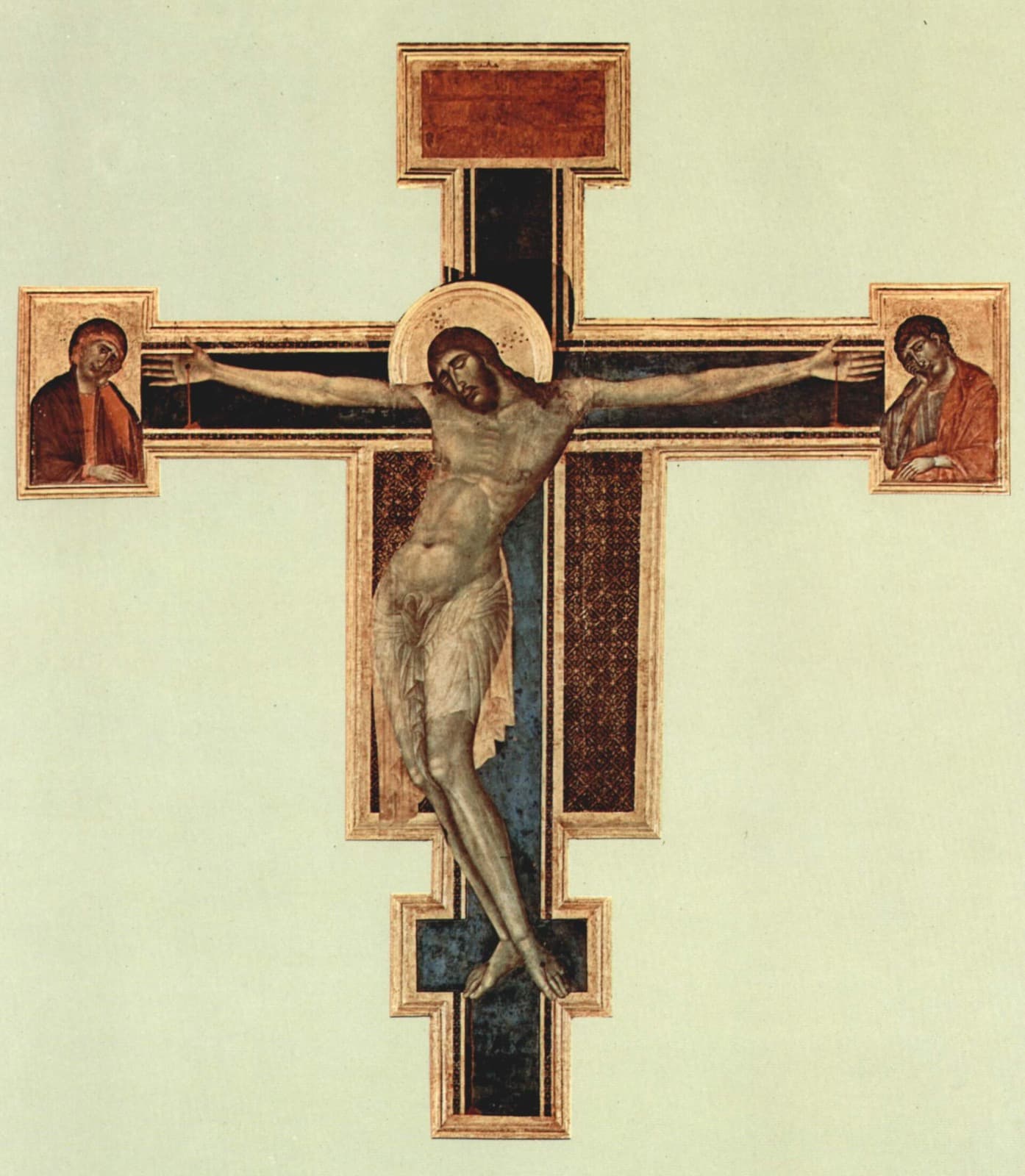
The Arno flood of 1966 stripped most of the paint off it, and the ruined cross became the emblem of the whole disaster.