
The Virgin and Child (Ugolino)
1312 · Louvre, Paris
The Child reaches up to grasp the edge of his mother's veil. Ugolino followed Duccio more closely than anyone else did.
★ 3.6
 skopia
The Child reaches up to grasp the edge of his mother's veil. Ugolino followed Duccio more closely than anyone else did.

Late Botticelli, with the early lightness gone tense. He had fallen under Savonarola's spell and his religious pictures never relaxed again.
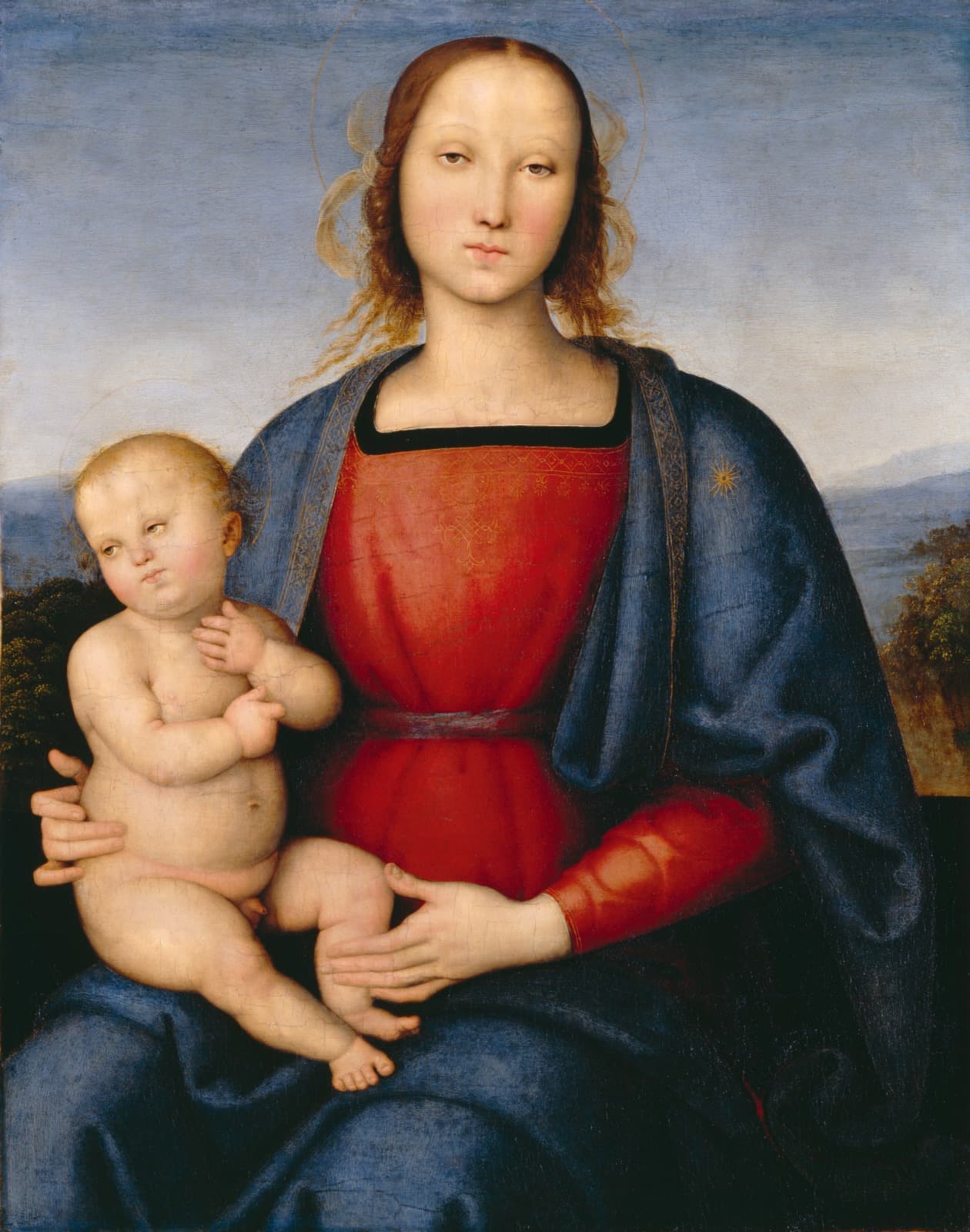
The oval face, the lowered eyes, the Umbrian distance melting into air. Raphael took all of it and then went past it.

Six angels lean in along the throne with their heads tilted, which turns a rigid Byzantine formula into something nearly intimate.

The angels crowd in like inquisitive children. One of the first paintings to put the Virgin and saints in a single shared space.

In the middle panel the Child slips a ring onto Saint Catherine's finger, and on the right wing the Apocalypse breaks over Patmos.
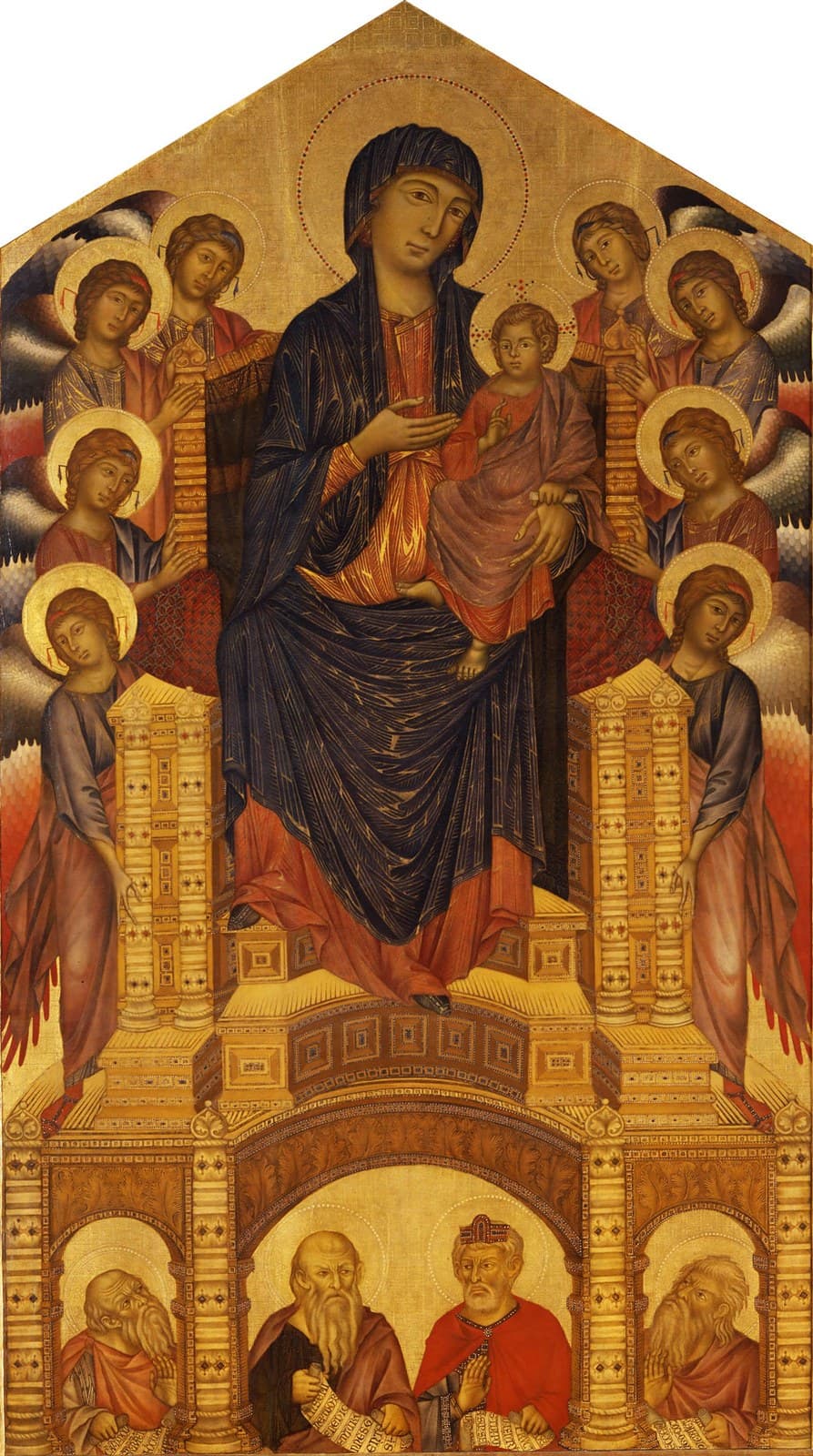
Four prophets peer from arches under the throne holding scrolls that foretell the Virgin Birth, and the throne is angled to suggest depth.

Dürer painted it in Venice to prove a German could beat the Venetians at color, and wrote on it that it took five months.

Luke was the patron saint of painters, and van der Weyden ran the Brussels painters' guild, so this is a tribute to the trade.
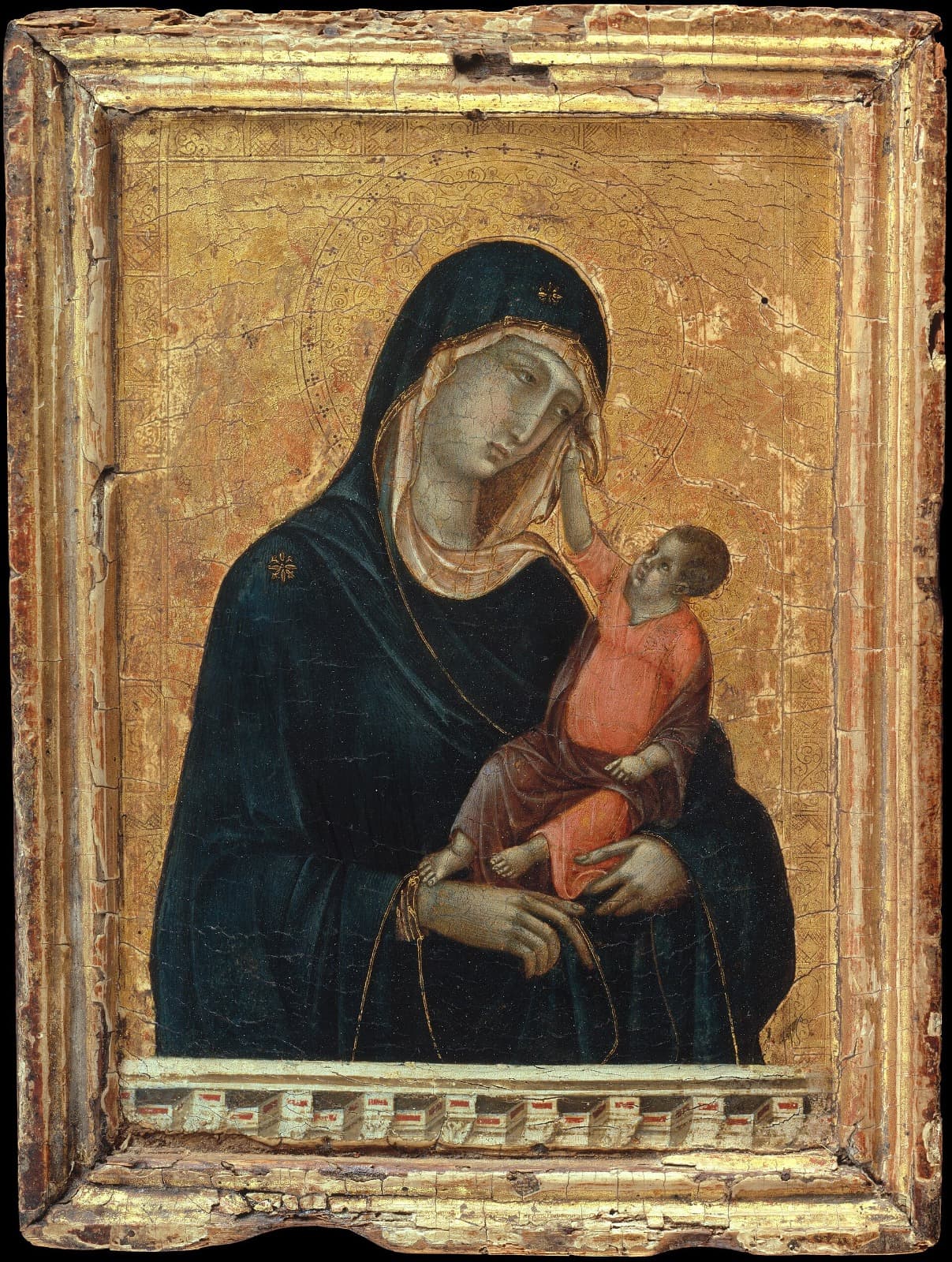
Christ reaches up to push his mother's veil aside. Scorch marks on the original frame record centuries of candles set before it.
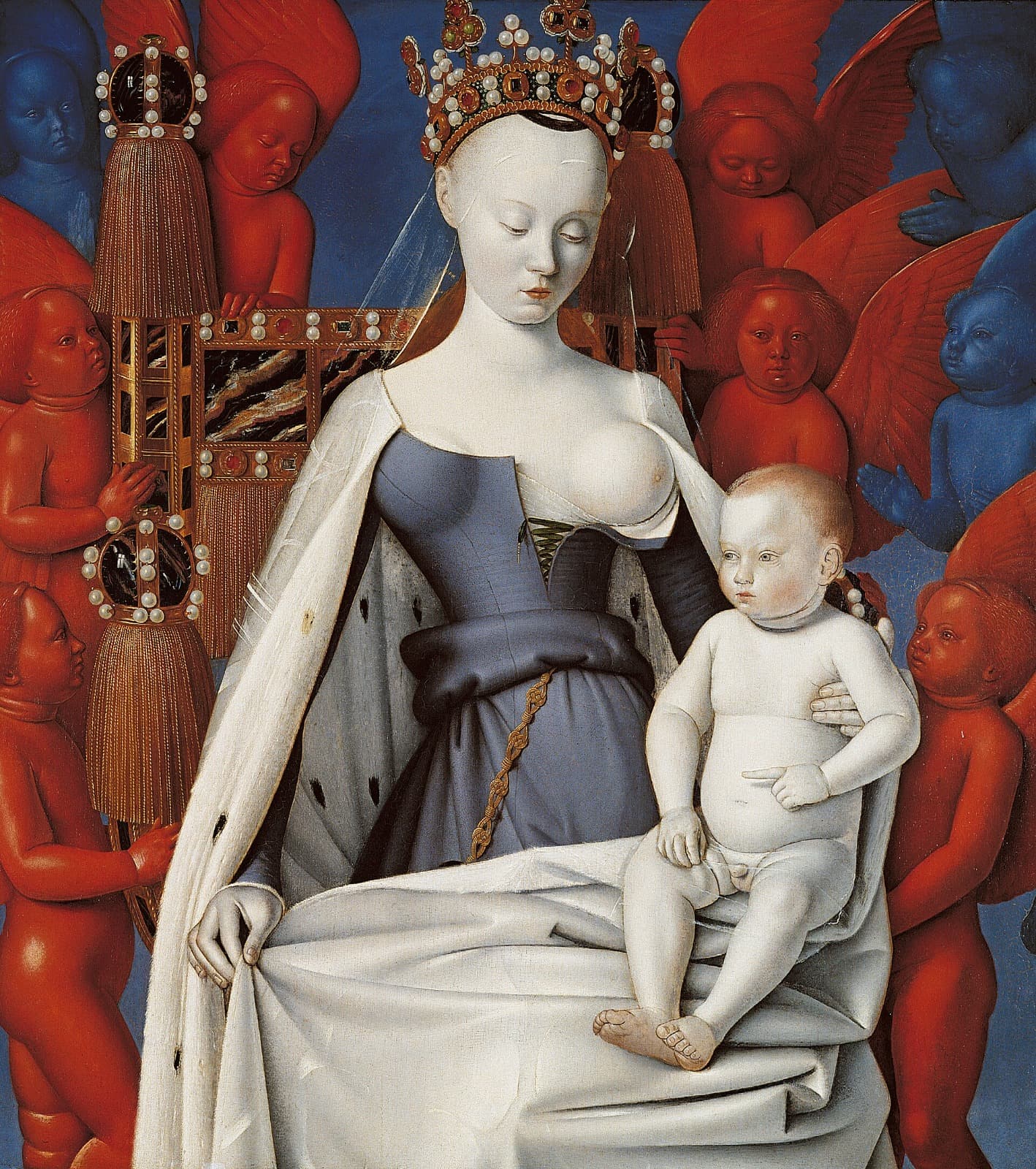
The Virgin is said to be the king's dead mistress, painted with a shaved forehead and one breast bared, ringed by red cherubim.

The little demons carved on the pedestal were taken for harpies and gave the picture its name. Del Sarto was called the faultless painter.

The Virgin is far too big for the cathedral because she stands for the Church itself, and real sunlight falls in patches across the floor.
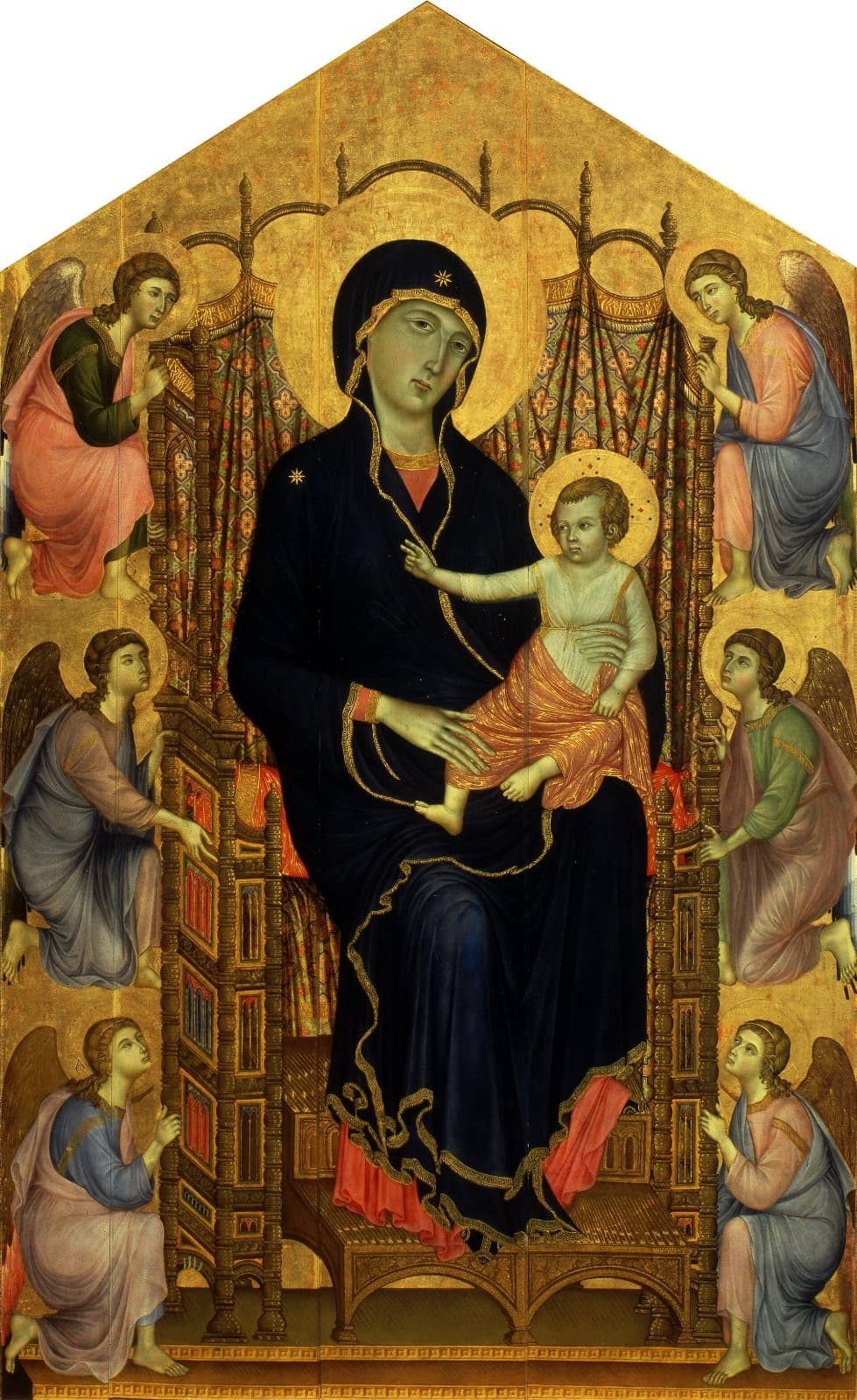
Four and a half meters tall, the largest panel painted in its century, with six angels kneeling to steady a throne that seems to float.
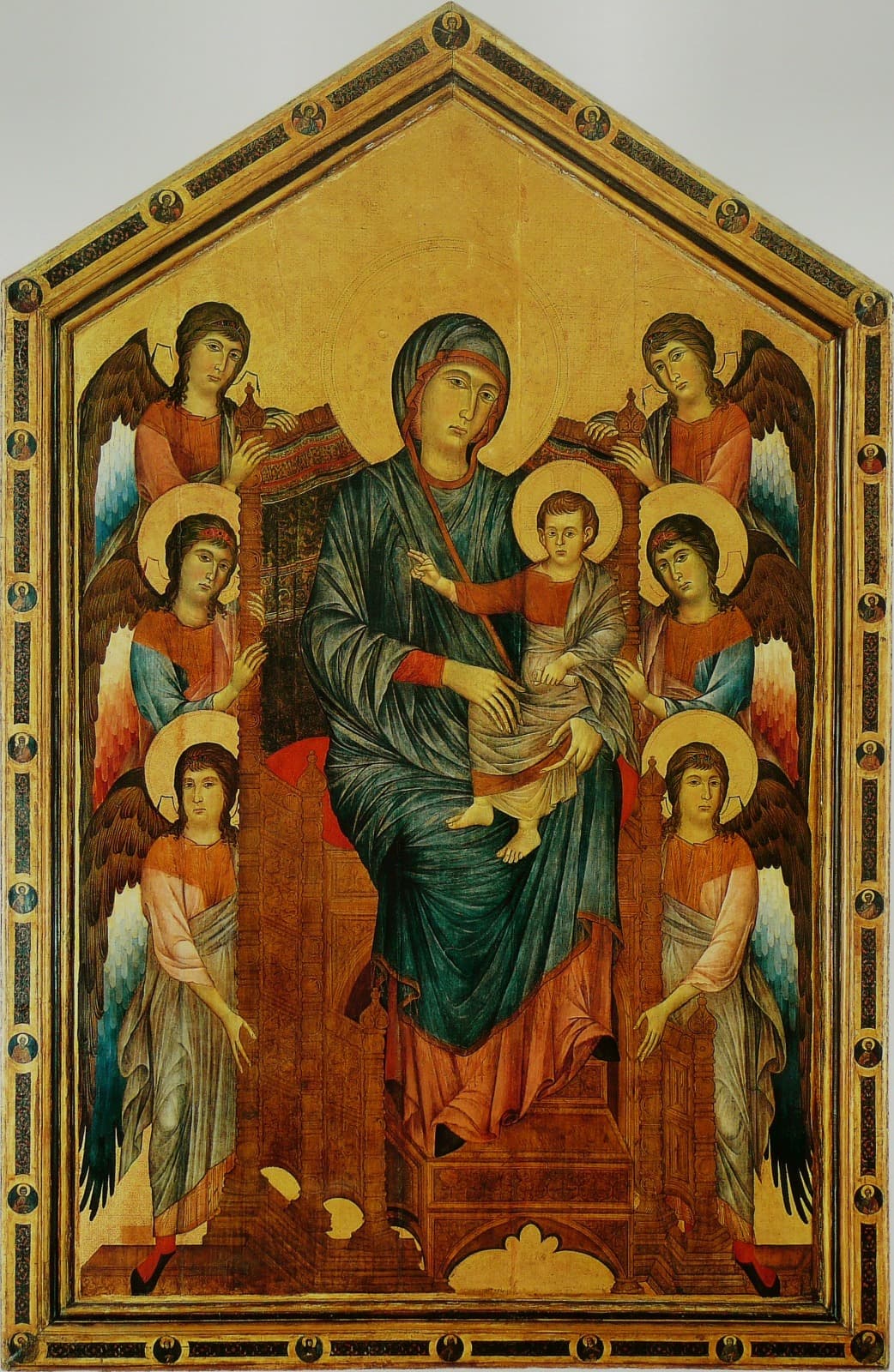
Six angels stack up the sides of the throne against gold. Cimabue taught Giotto, and the throne here is just beginning to recede into space.
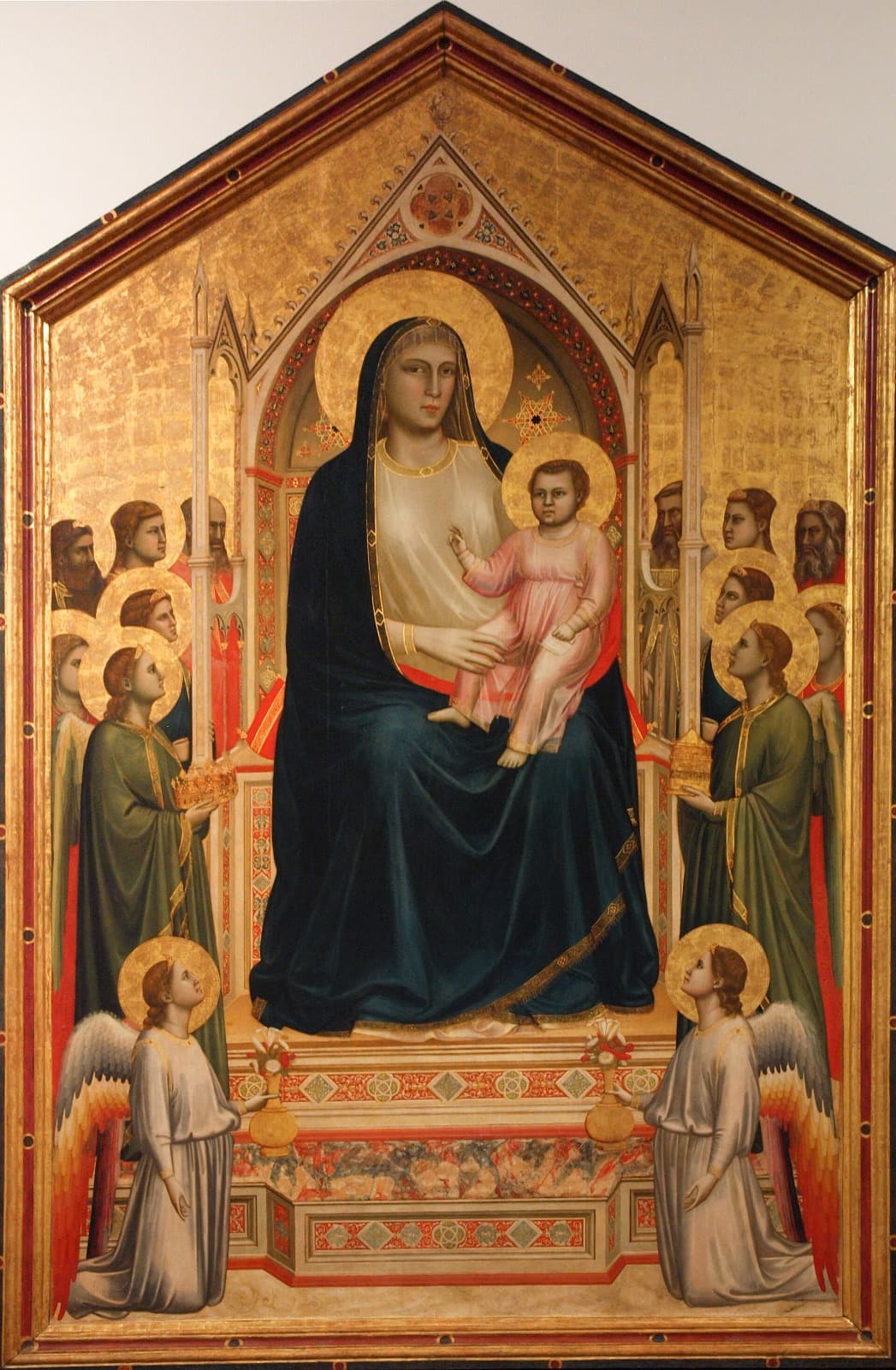
Where Cimabue and Duccio floated their Madonnas on gold, Giotto gave his weight, a real throne, and a body that presses through the cloth.

The saints share one continuous space instead of separate compartments, and the two kneeling physicians are the name-saints of the Medici who paid.

An ostrich egg hangs from the vault and pulls every sightline down. Federico is shown from the left because a tournament took his right eye.
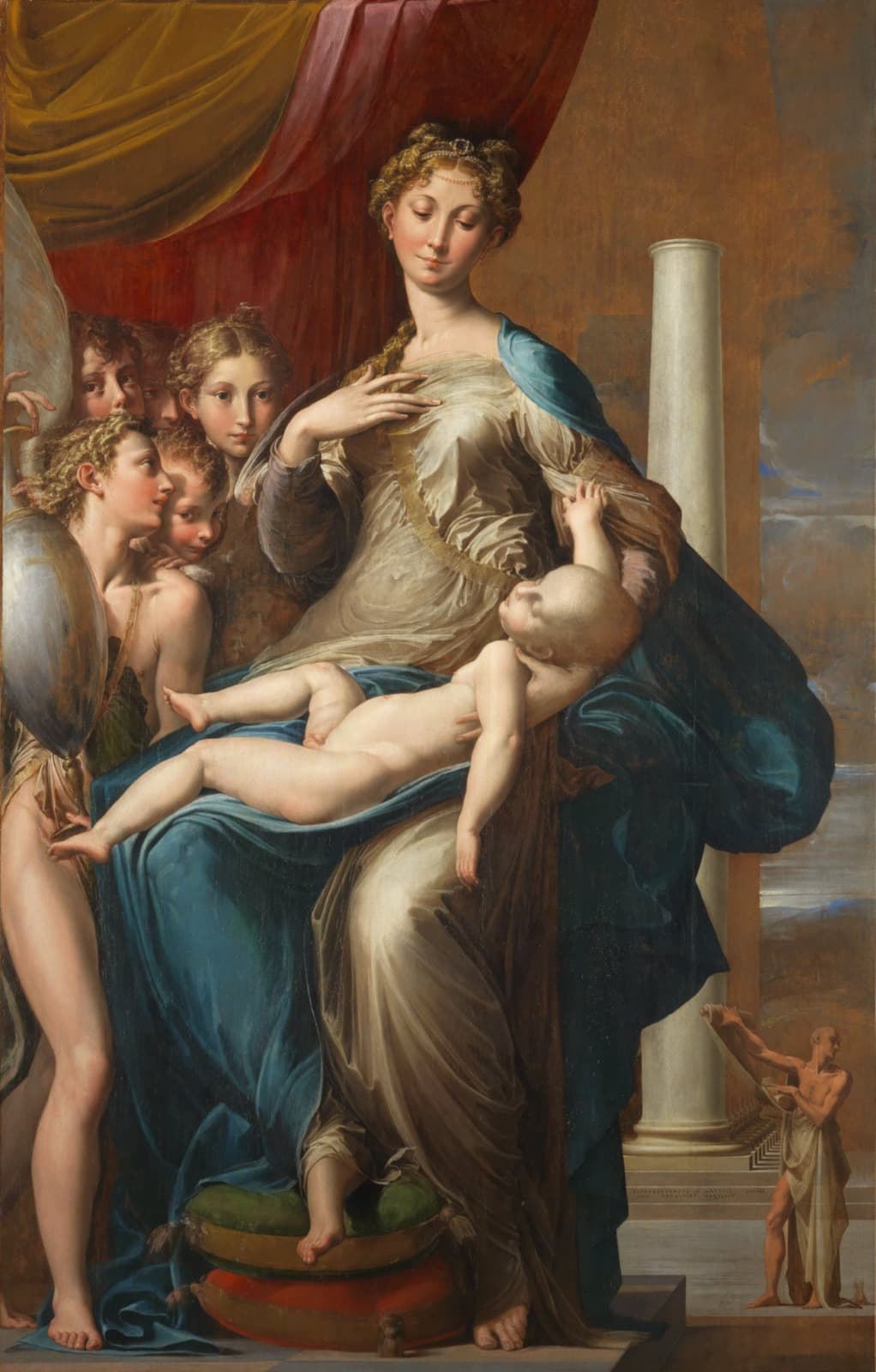
Every proportion is wrong on purpose, and a single outsized column rises behind for no reason. Parmigianino died before finishing it.
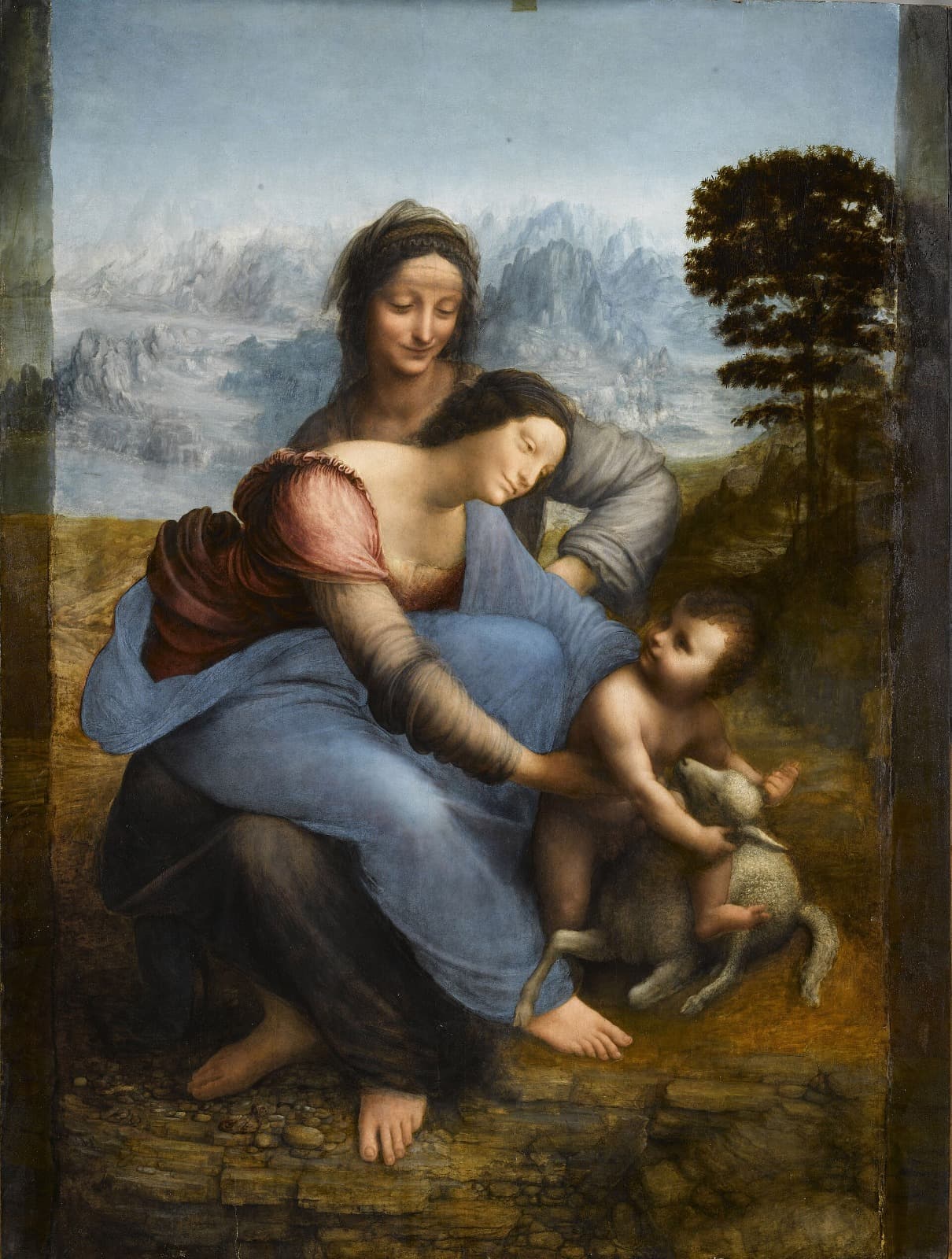
Three generations nest into one shifting pyramid, and Leonardo kept reworking it for years without ever calling it finished.

Van Eyck spared the old canon nothing: the stubble, the swollen hands, the spectacles. His armored saint mirrors the whole room in miniature.
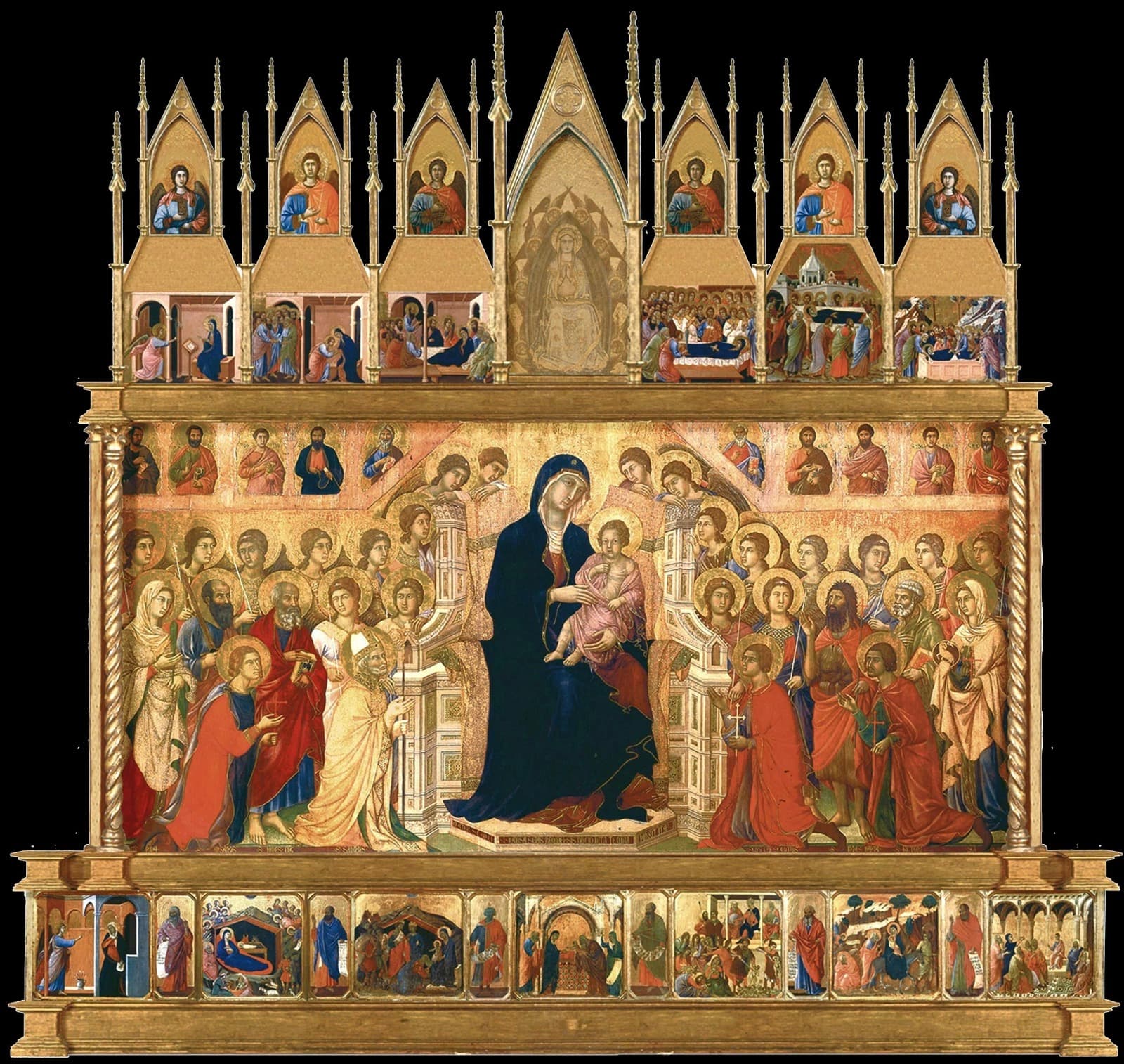
When Duccio finished it in 1311 the whole of Siena walked it to the cathedral in procession, with the bells going the entire way.