
Christ Bearing the Cross, with a Dominican Friar
1360 · The Frick Collection, New York City
Christ looks back over the cross at a tiny Dominican friar kneeling in the corner, the patron drawn into the road to Calvary.
★ 3.2
 skopia
Christ looks back over the cross at a tiny Dominican friar kneeling in the corner, the patron drawn into the road to Calvary.

No bigger than a page, and one of very few works securely given to Cimabue, whom Dante named the best painter of his day.

The light in the darkened room seems to be coming off Christ himself, painted when religious art had largely gone out of fashion.
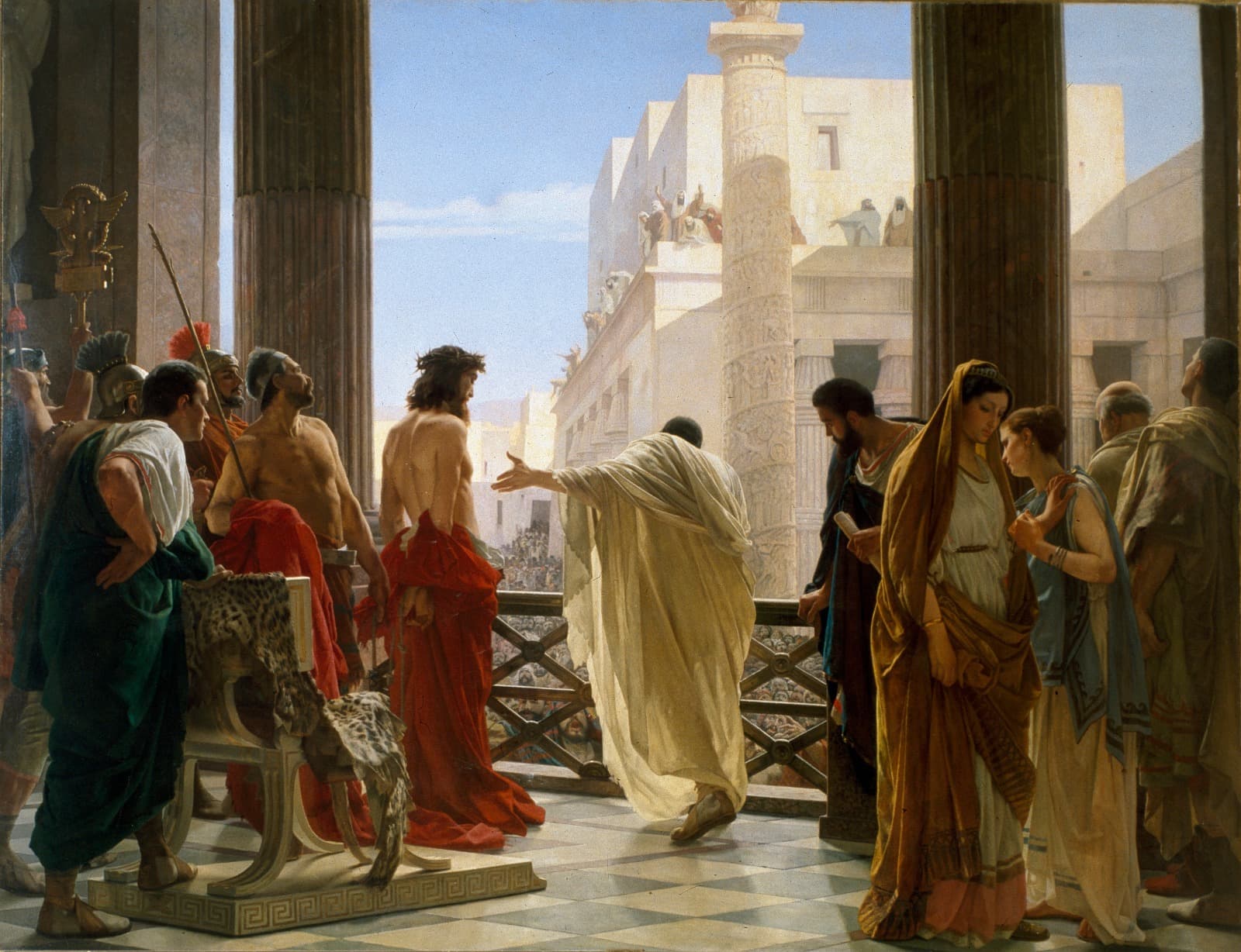
We are standing behind Pilate, looking out over his shoulder at the crowd, which puts us among the officials rather than the mob.
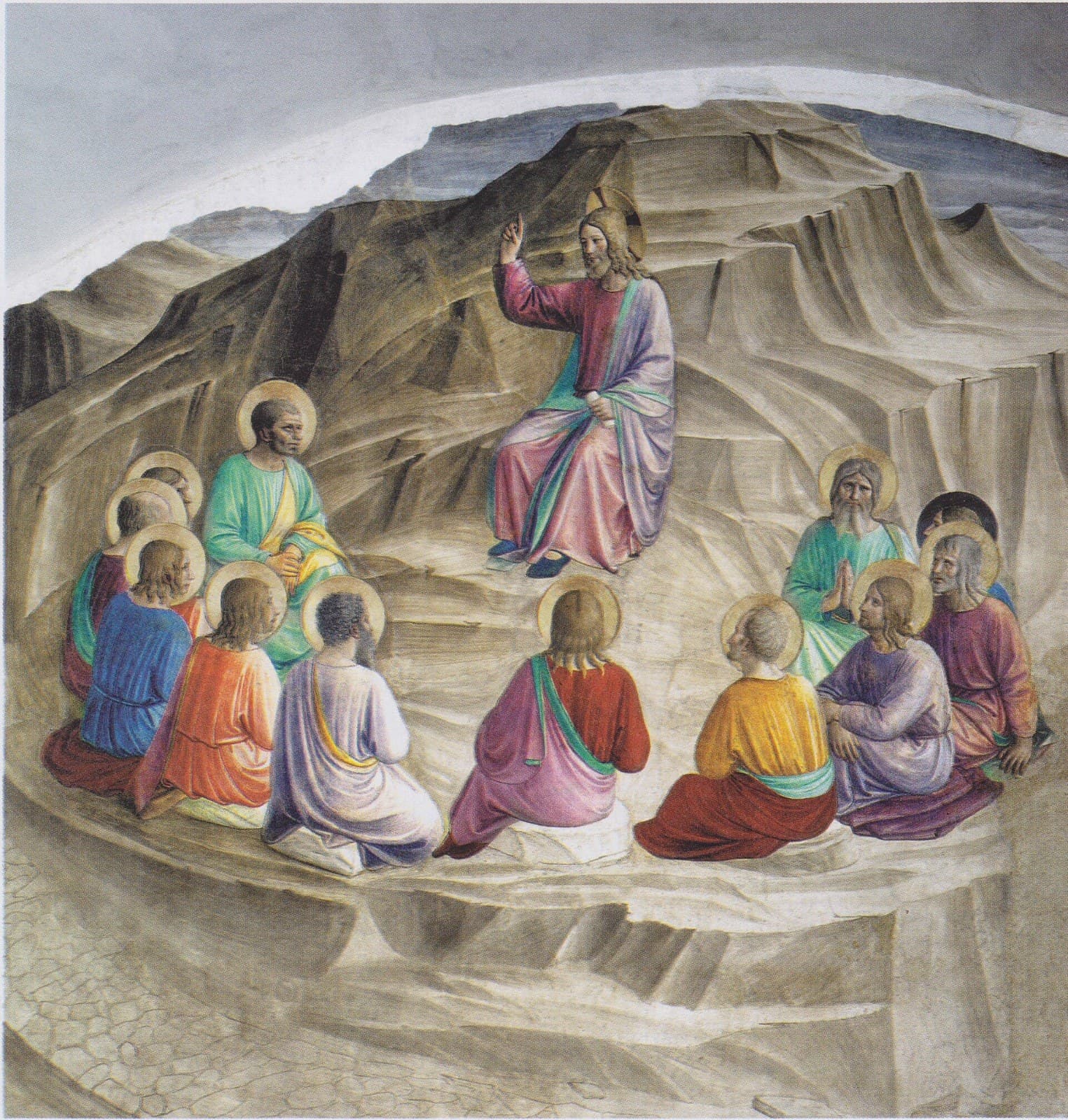
Painted on the wall of a friar's cell at San Marco, stripped of gold and ornament so that it settles the mind rather than dazzles.
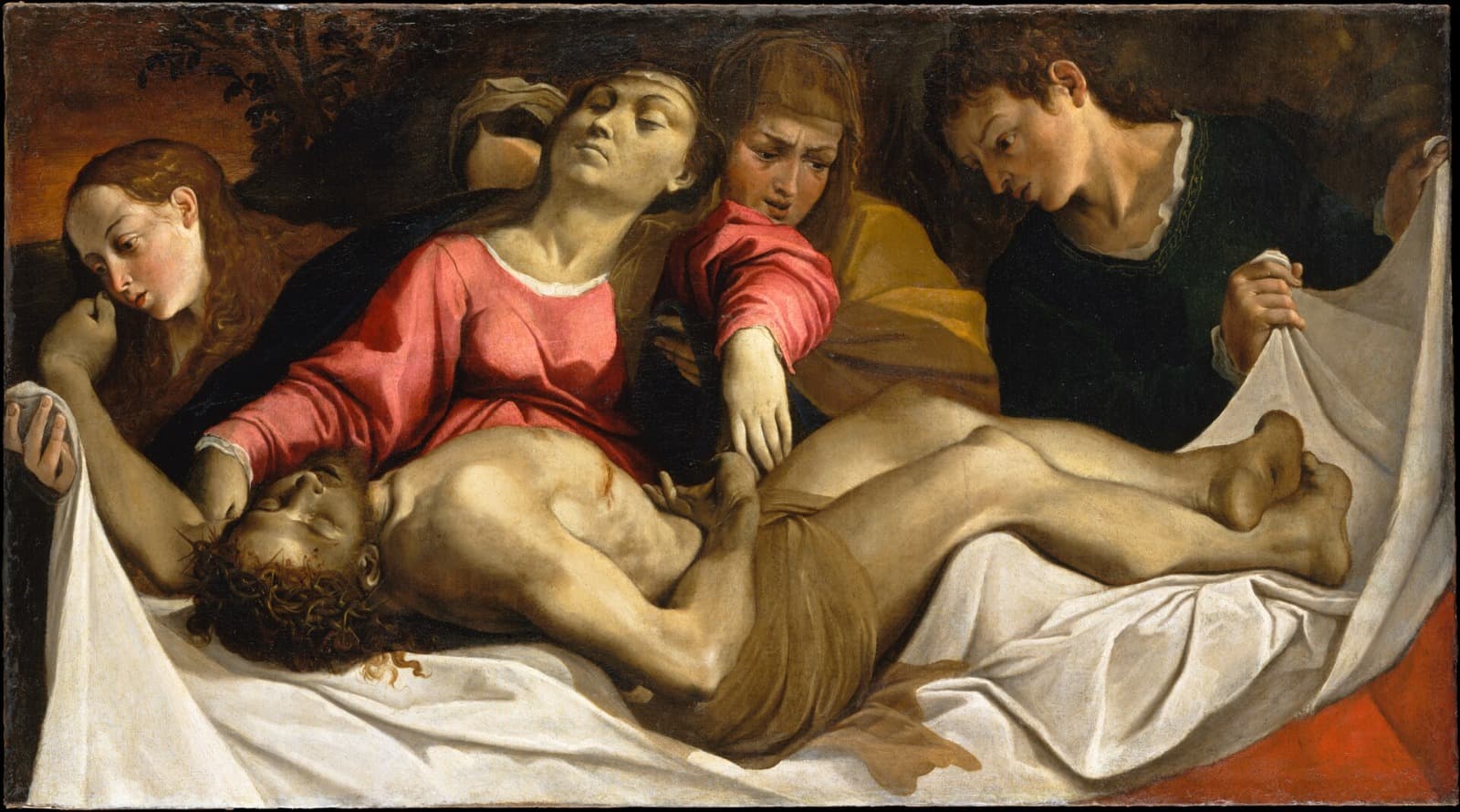
The body pushed close to the viewer and lit in sharp pools. The Carracci taught a generation to weld grandeur to direct feeling.
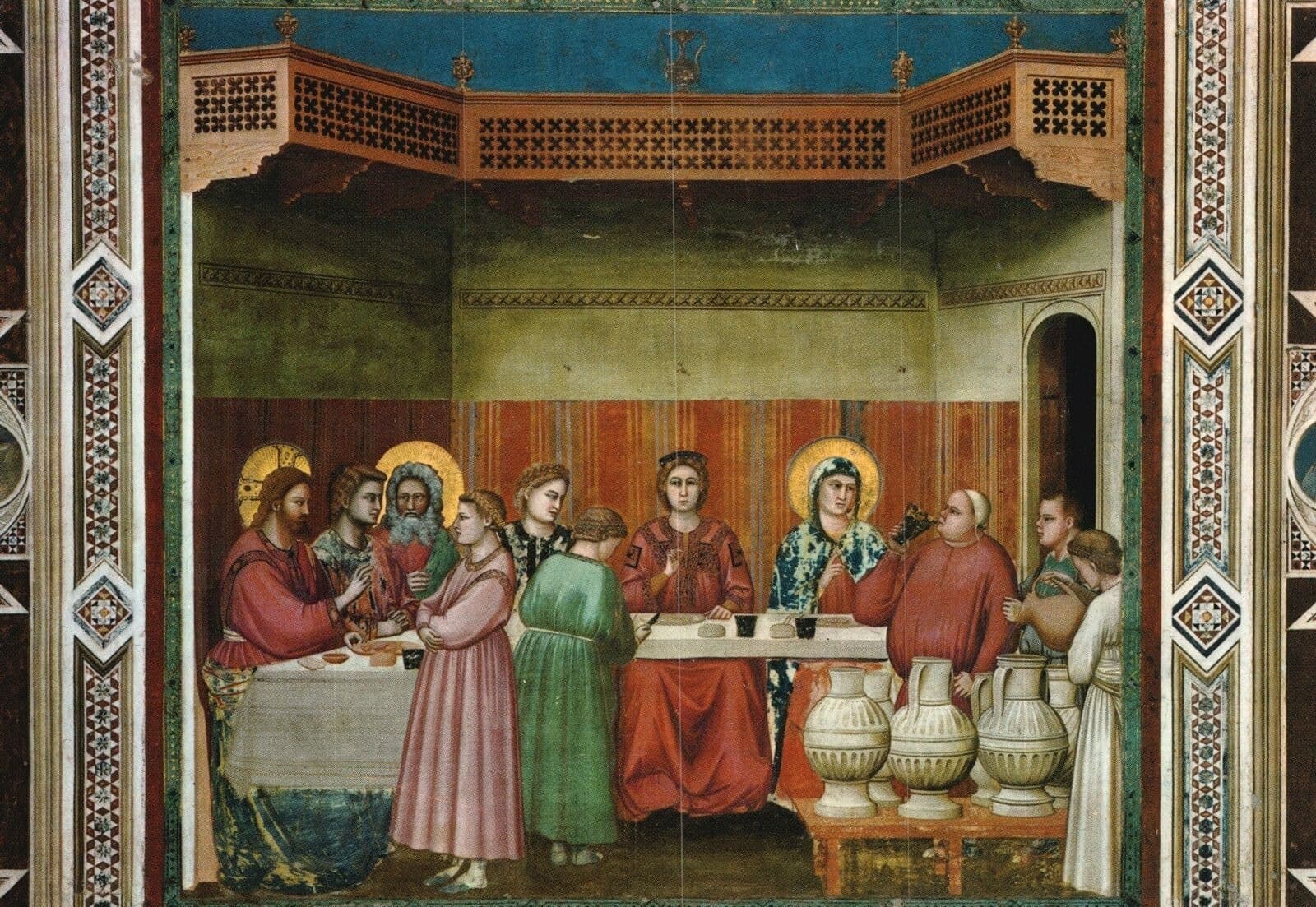
A steward tastes from a bowl and a portly servant tends the jars, and the miracle goes by almost without anyone noticing.
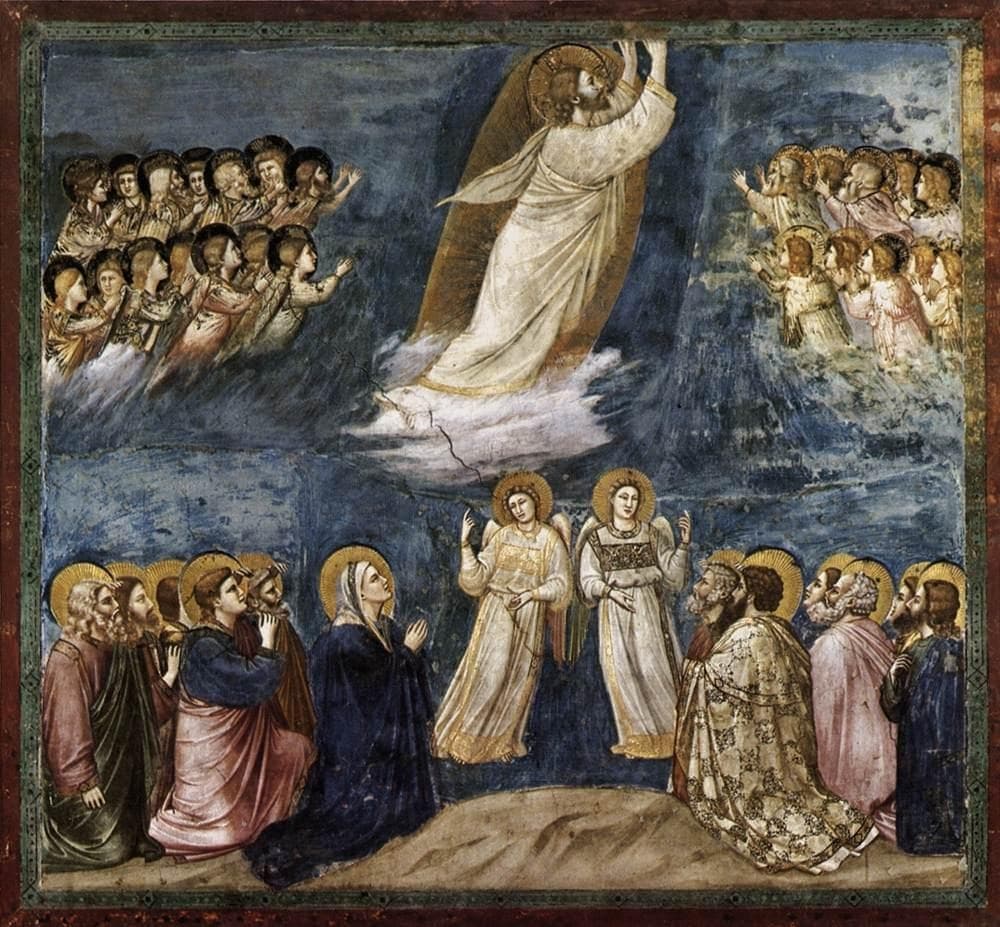
Christ's fingertips cross out of the human part of the picture and blur into light, which is the whole event in one detail.

Christ turns up dressed as a pilgrim with a staff and a traveler's pouch, and the two disciples still have no idea who he is.

Christ stands to place the host on each tongue exactly as a priest does at Mass, in a bare cell-like room with stools.
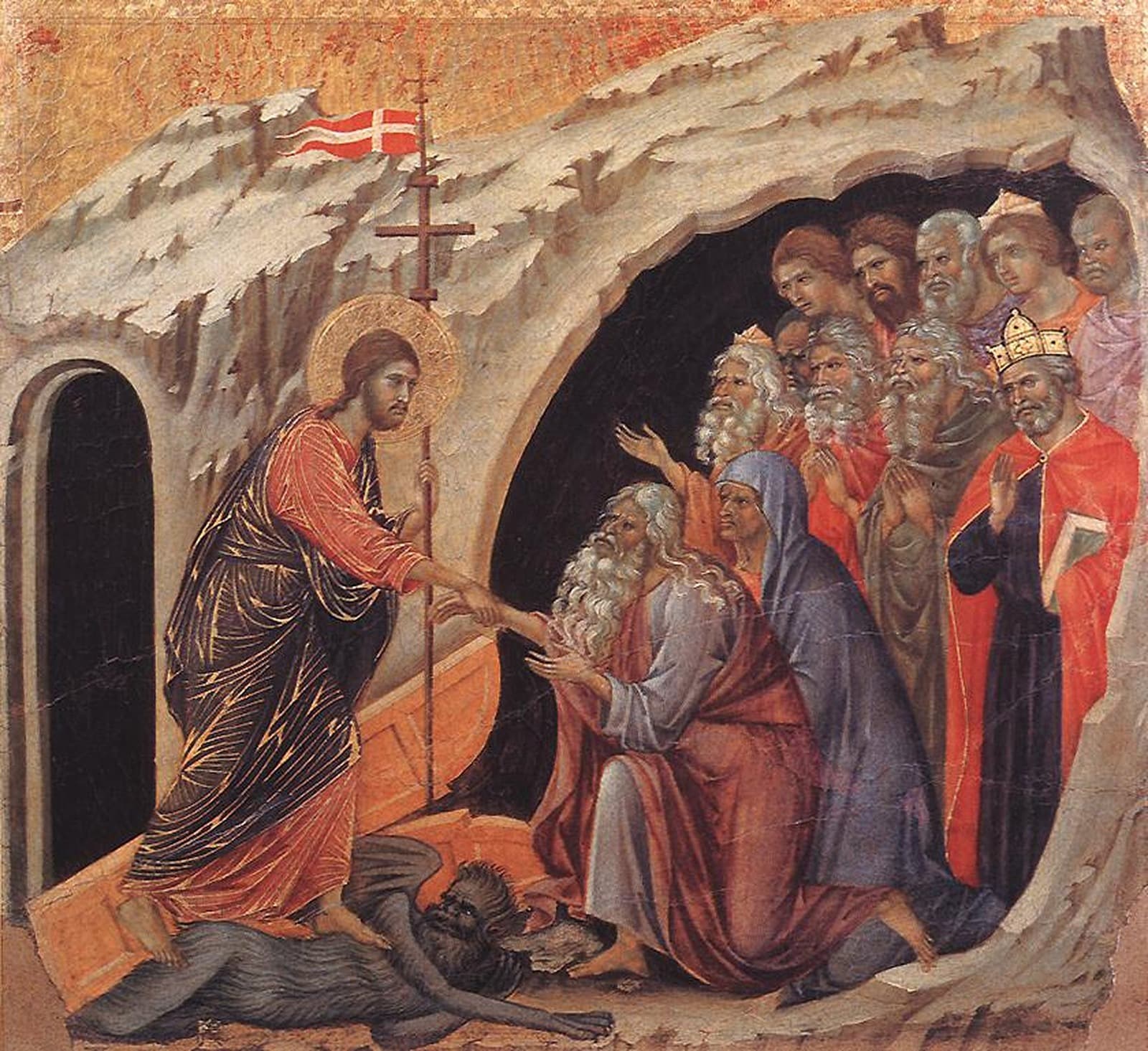
Christ strides into the cave to pull Adam out by the hand, treading on a chained Satan as he goes.
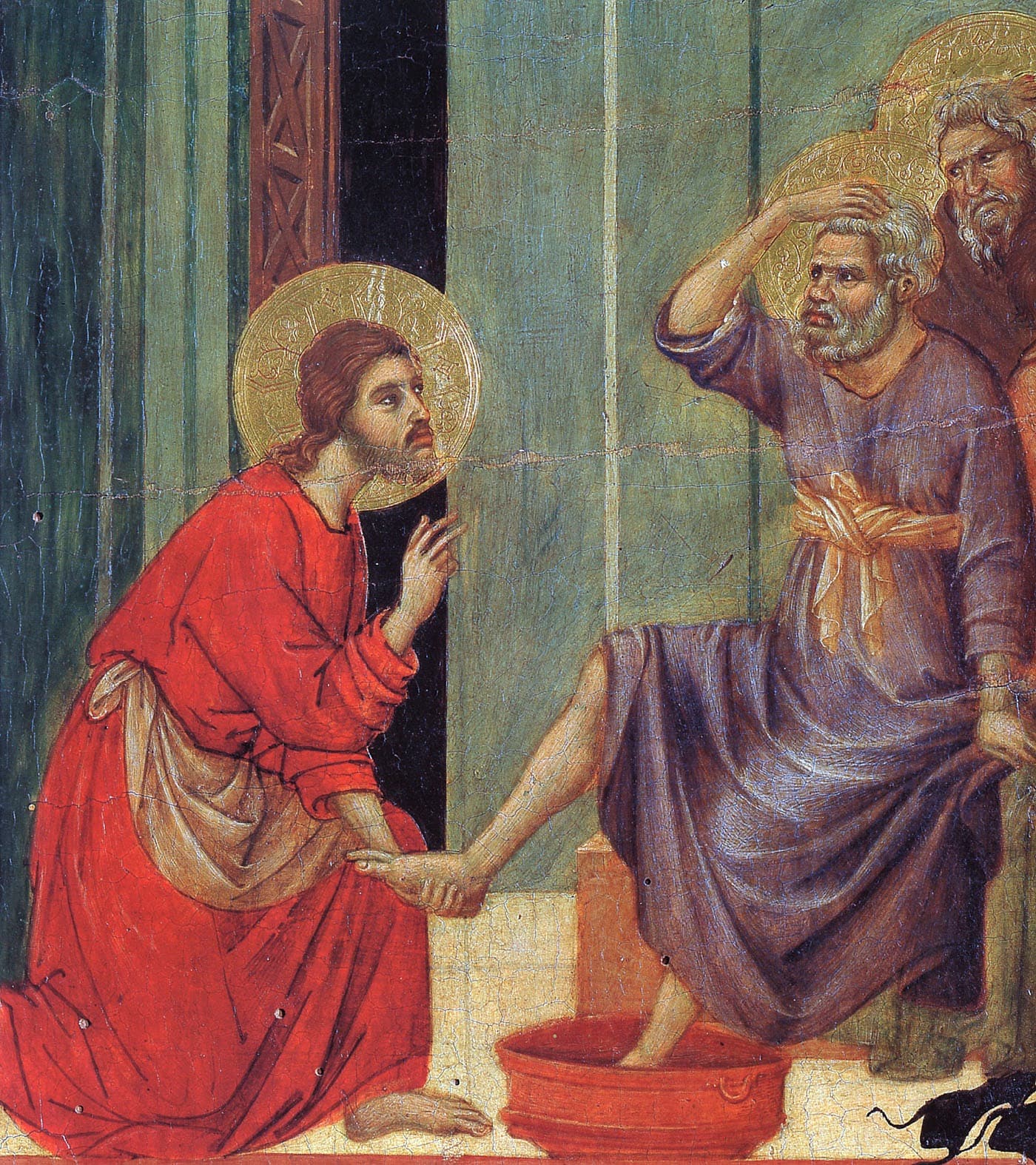
Christ kneels with the basin and Peter, flustered, raises a hand to his own head. Some of the others are already loosening their sandals.
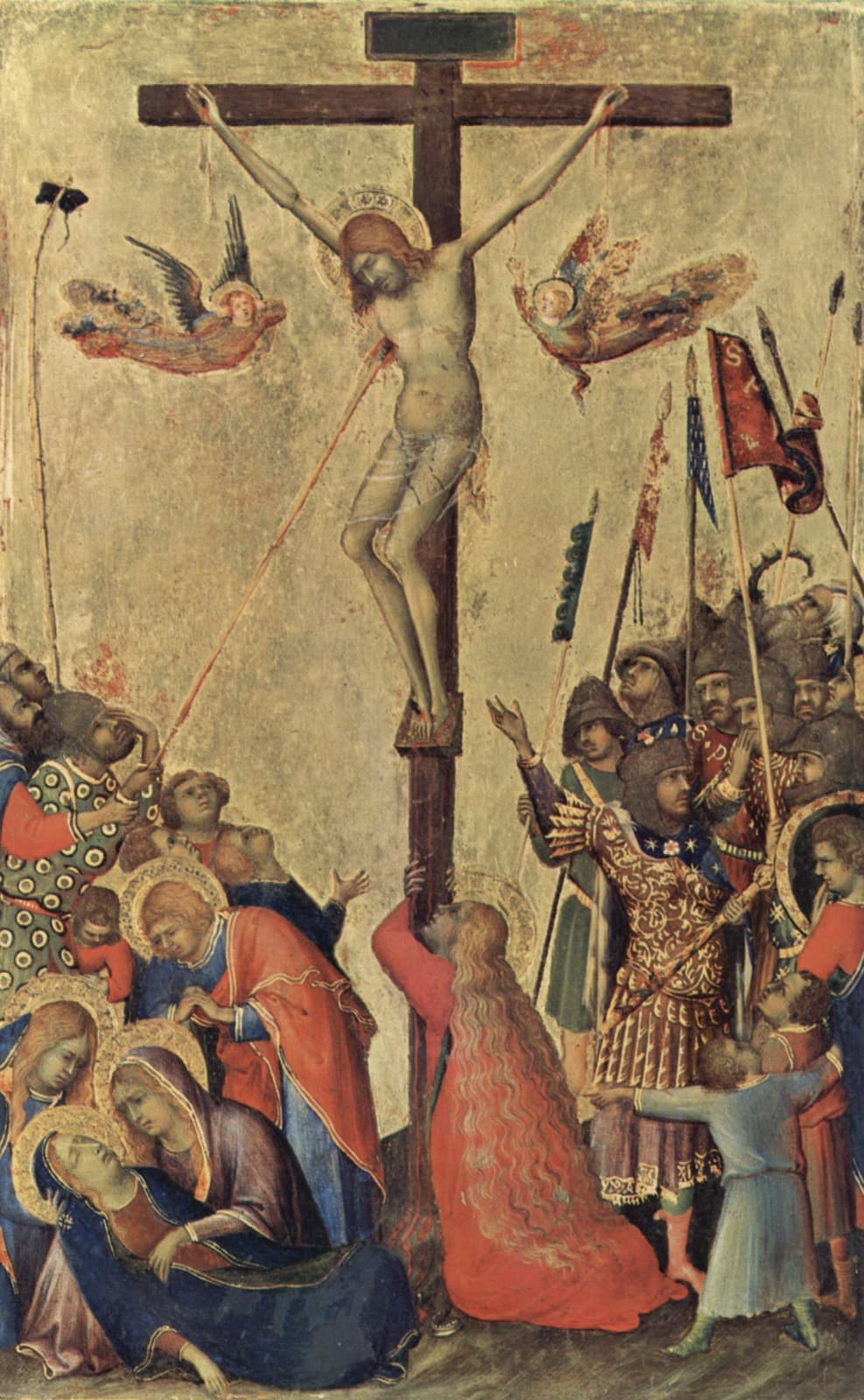
Angels dart and grieve around the cross while the Magdalene, hair loose, kneels to embrace its foot. A leaf from a travelling altarpiece.

The tiny kneeling figures in the corners are the Nuremberg family who paid for it, inserted so they could share in the grief.
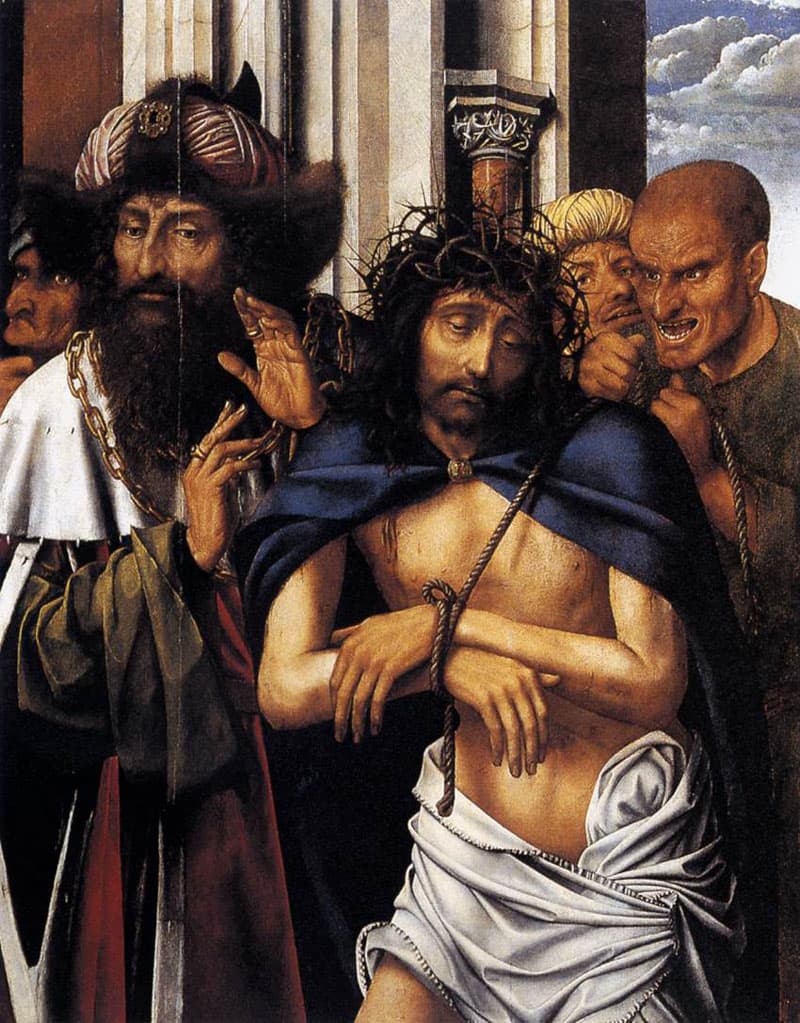
Christ stands with his eyes lowered while the faces around him are twisted into snarls. Matsys made ugliness do the moral work.

Every apostle is named in gold and Judas sits apart with a darkened halo, which makes the panel a teaching aid as much as a picture.
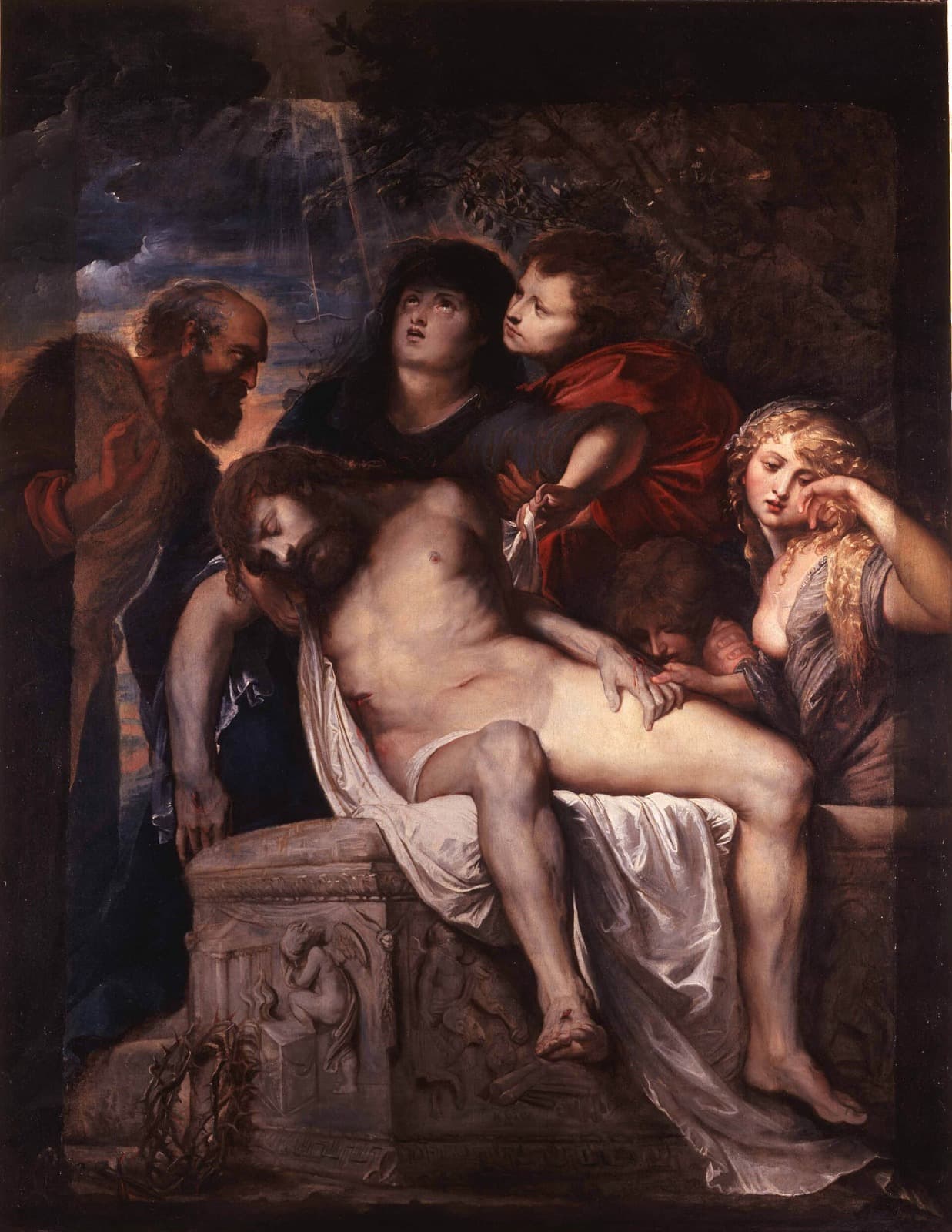
Rubens worked this out in Rome while studying Caravaggio, a rehearsal for the great Descent he would paint back home in Antwerp.
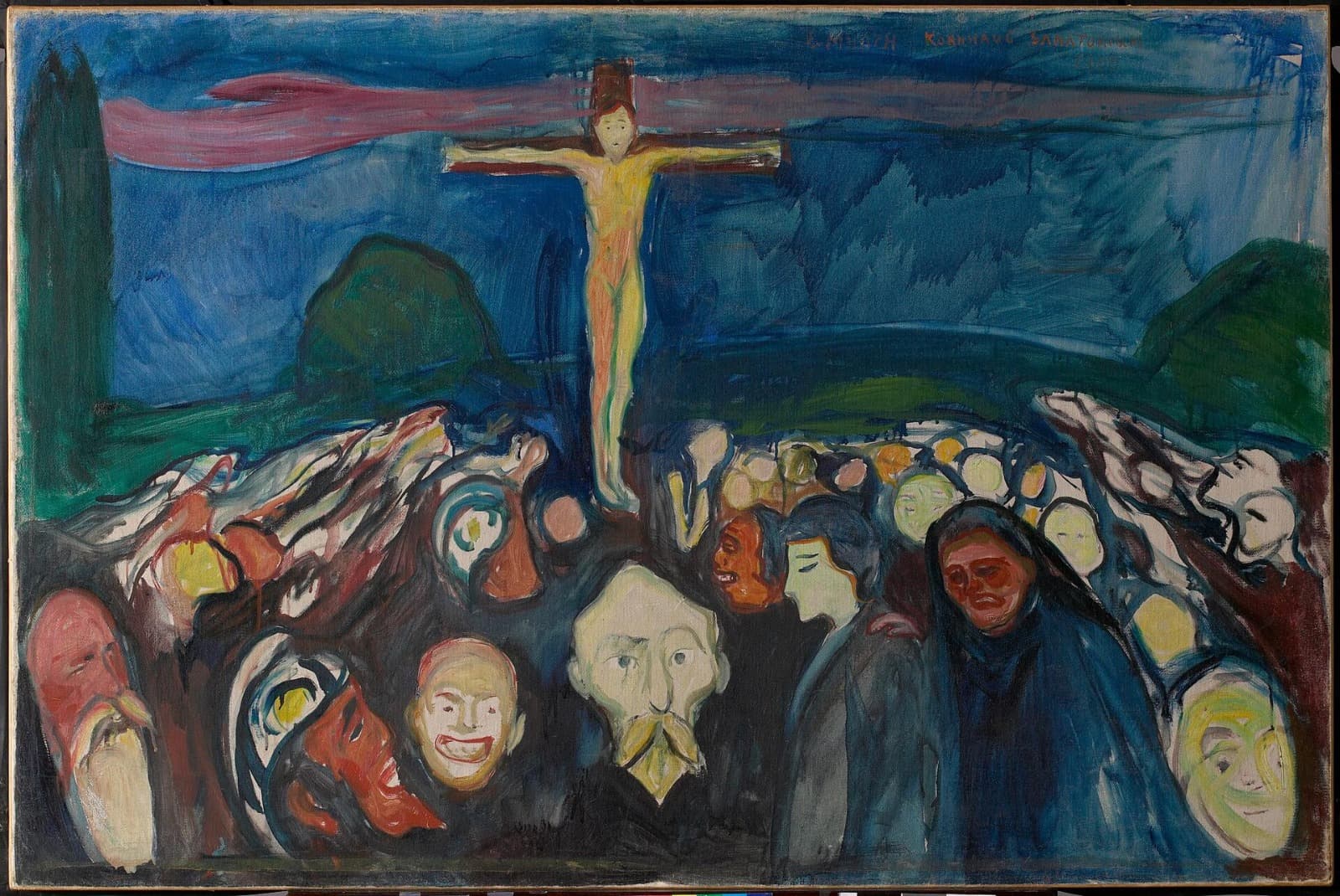
Munch painted this while under treatment in a clinic, and the crucified figure hemmed in by leering faces is not hard to read.

Christ in vivid red is hauled by a rope through the gate of a white, many-towered Jerusalem while children scamper at the edge.
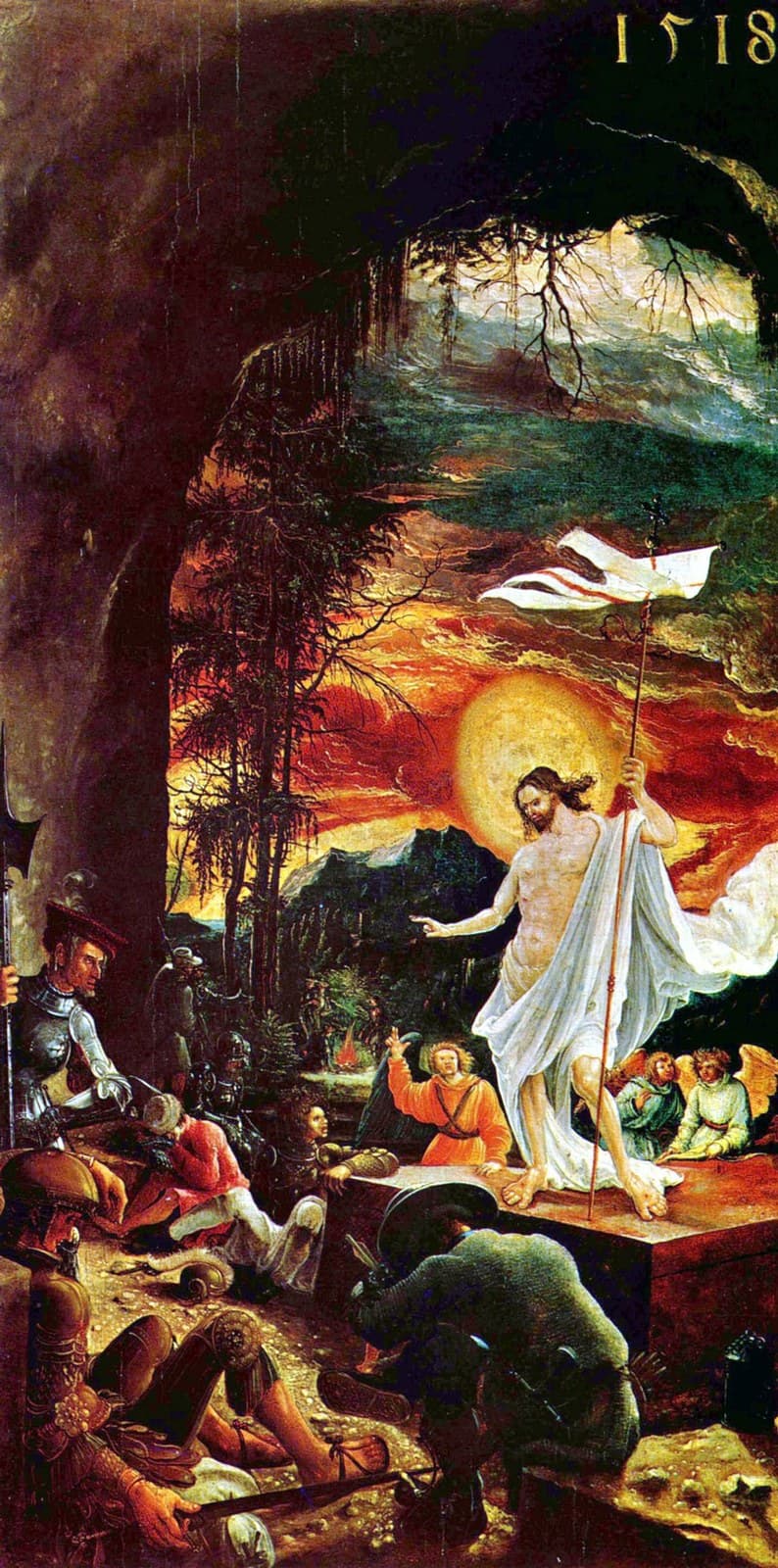
Christ rises with his banner while an unearthly dawn detonates behind him in bands of orange and scarlet over black crags.

Servants stoop over the great stone jars in the foreground to draw out wine that was water a moment ago.

A soldier drags Christ out through the city gate by his robe, the diagonal of the cross cutting against a bristling line of lances.
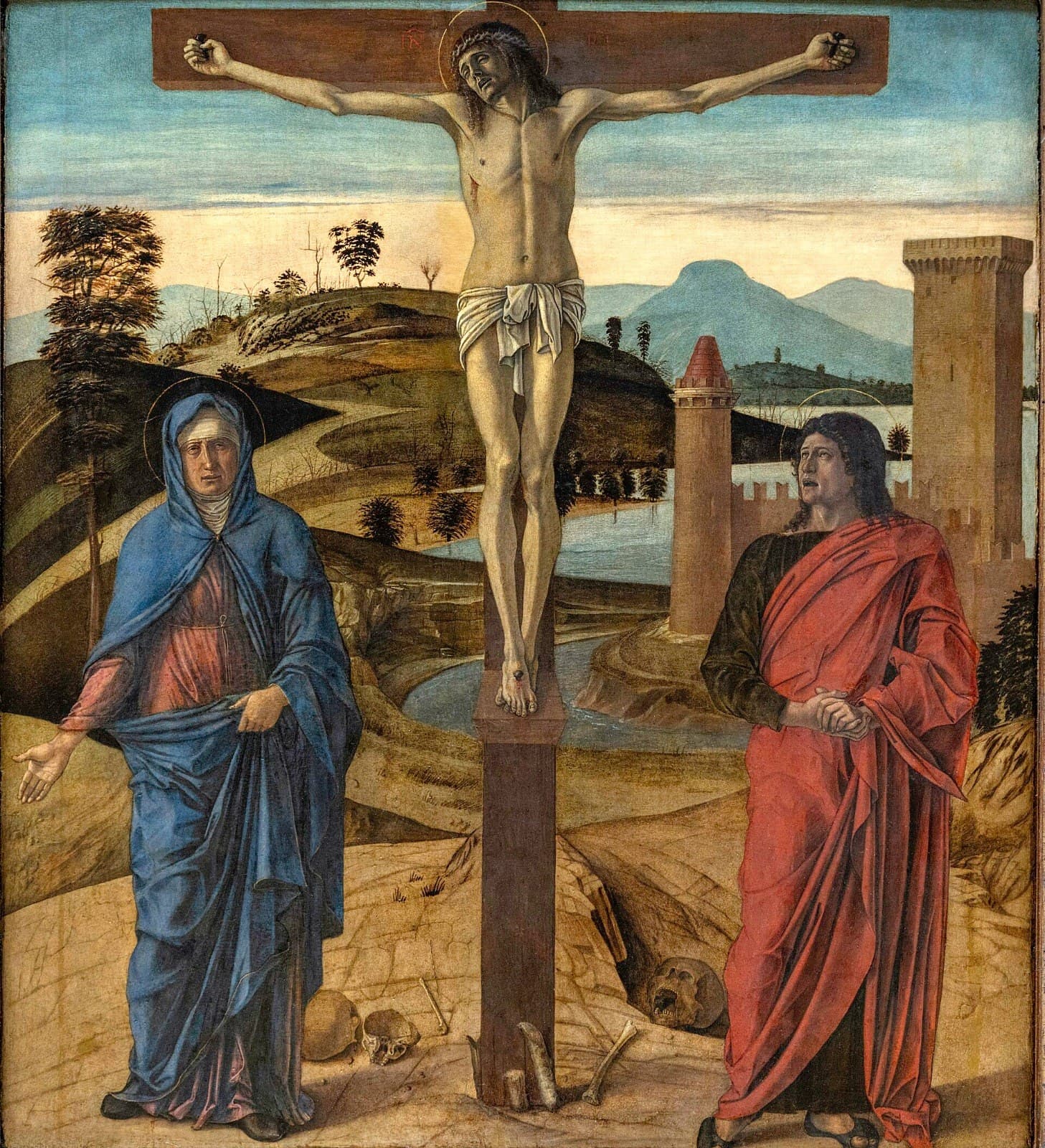
Only the Virgin and Saint John below the cross, and a river winding past a walled town. Early Bellini, carrying feeling in the light.

Painted on a refectory wall so the monks dined at the end of the same table. Leonardo would blow the arrangement apart a few years later.
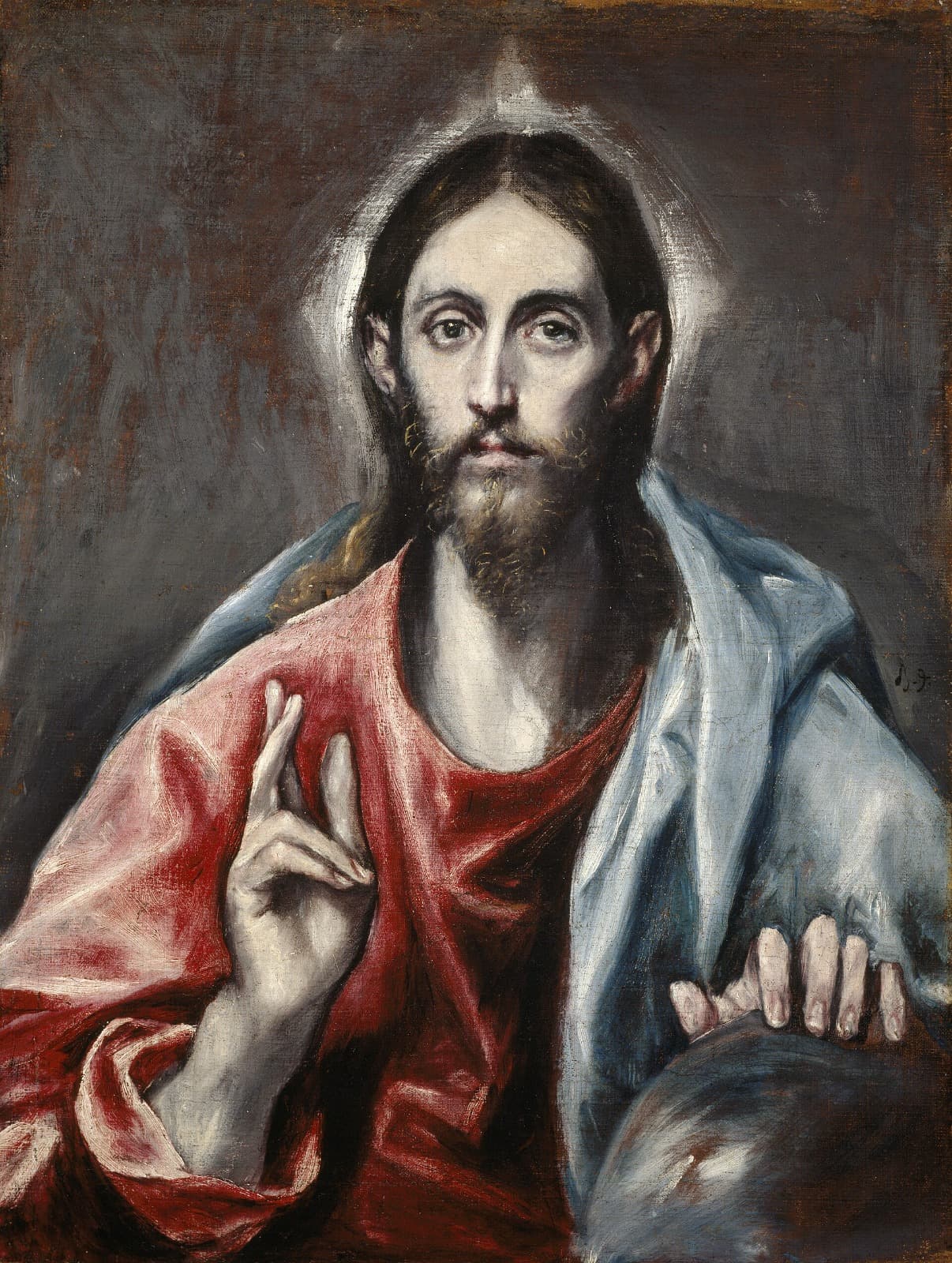
Two fingers raised in a gesture reaching back to Byzantium, one hand on a crystal orb, the face long and sorrowful and unmistakably his.

Beckmann came out of the war traumatized and painted a Christ so emaciated and angular that no consolation survives the picture.

The episode appears in no Gospel at all, and Altdorfer nearly buries the figures under a forest of enormous trees and luminous sky.

Lotto crops the Passion down to one tear-streaked head at the surface, with soldiers' hands coming in from the edges of the frame.

The Devil offers all the kingdoms of the world, rendered as tiny gold-edged walled towns scattered down the slopes, and is refused.

Antonello carried the Netherlandish oil technique south to Venice, and Giovanni Bellini responded with a Crucifixion almost identical to this one.

Where his teacher Pontormo made the subject swirl with anxiety, Bronzino polishes it: jewel-bright blues and pinks, grief made elegant.

One woman flings both arms over her head, others press their faces to the body. Simone drops all restraint against a sky streaked red.

Bare priming still shows where the Virgin was meant to sit. Michelangelo probably set it aside to go back to Florence and carve the David.

Rubens painted this descent years after the Antwerp one, and the two together show him reworking the same falling body across a career.
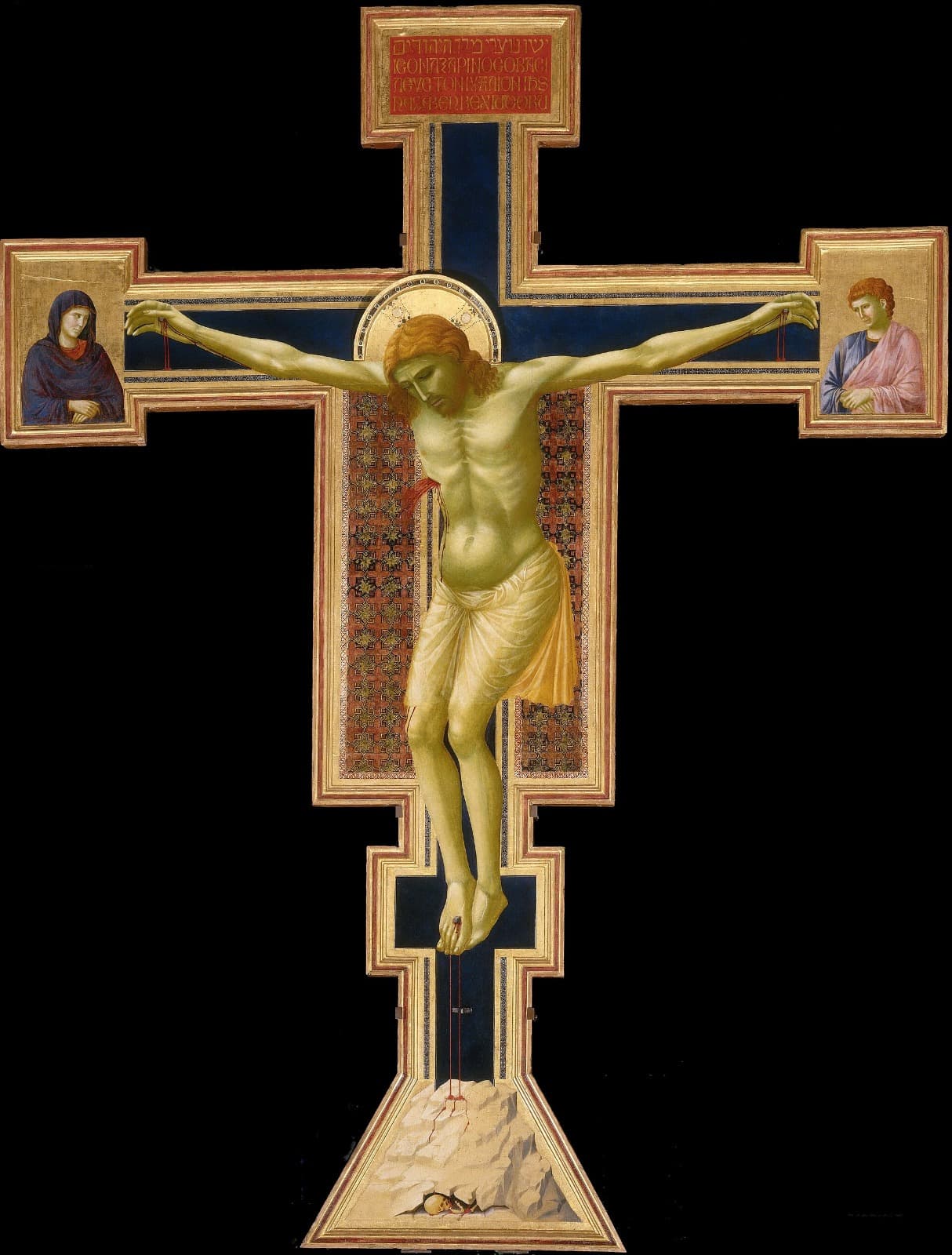
Where Cimabue's Christ swings in an elegant curve, Giotto's hangs straight down under his own weight, belly sagging, head on his chest.

Duccio and Giotto painted this same entry within a year of each other. Duccio's is the crowded one, full of towers, incident and color.
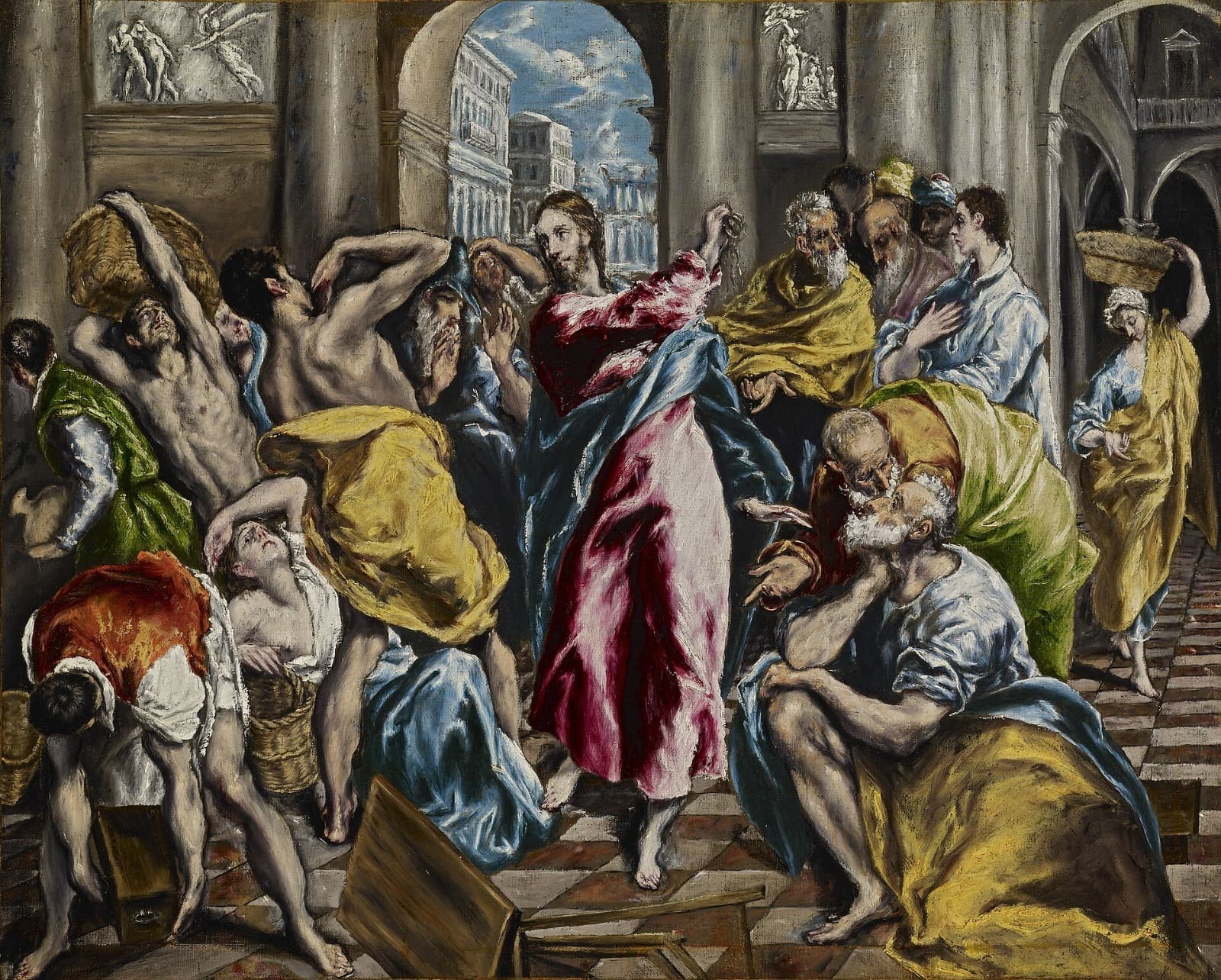
El Greco split the canvas down the middle: the traders tumbling out on the left, the disciples watching calmly on the right.
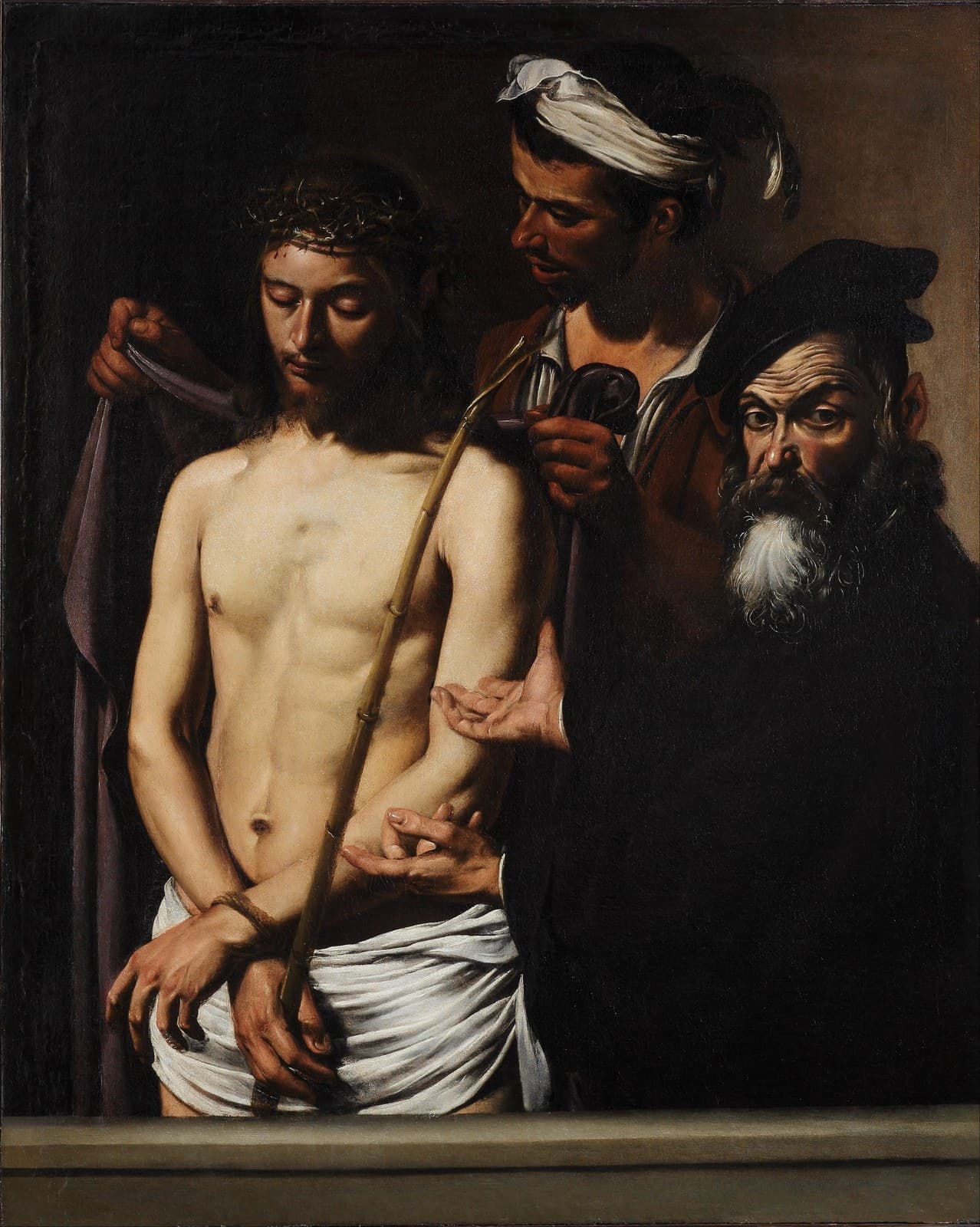
Three figures in a shallow dark box, and Caravaggio puts you where the crowd stood, having to decide what to do with him.

Every hair, every glassy tear, every bead of blood, pushed hard against the front of the picture and made to carry feeling rather than skill.
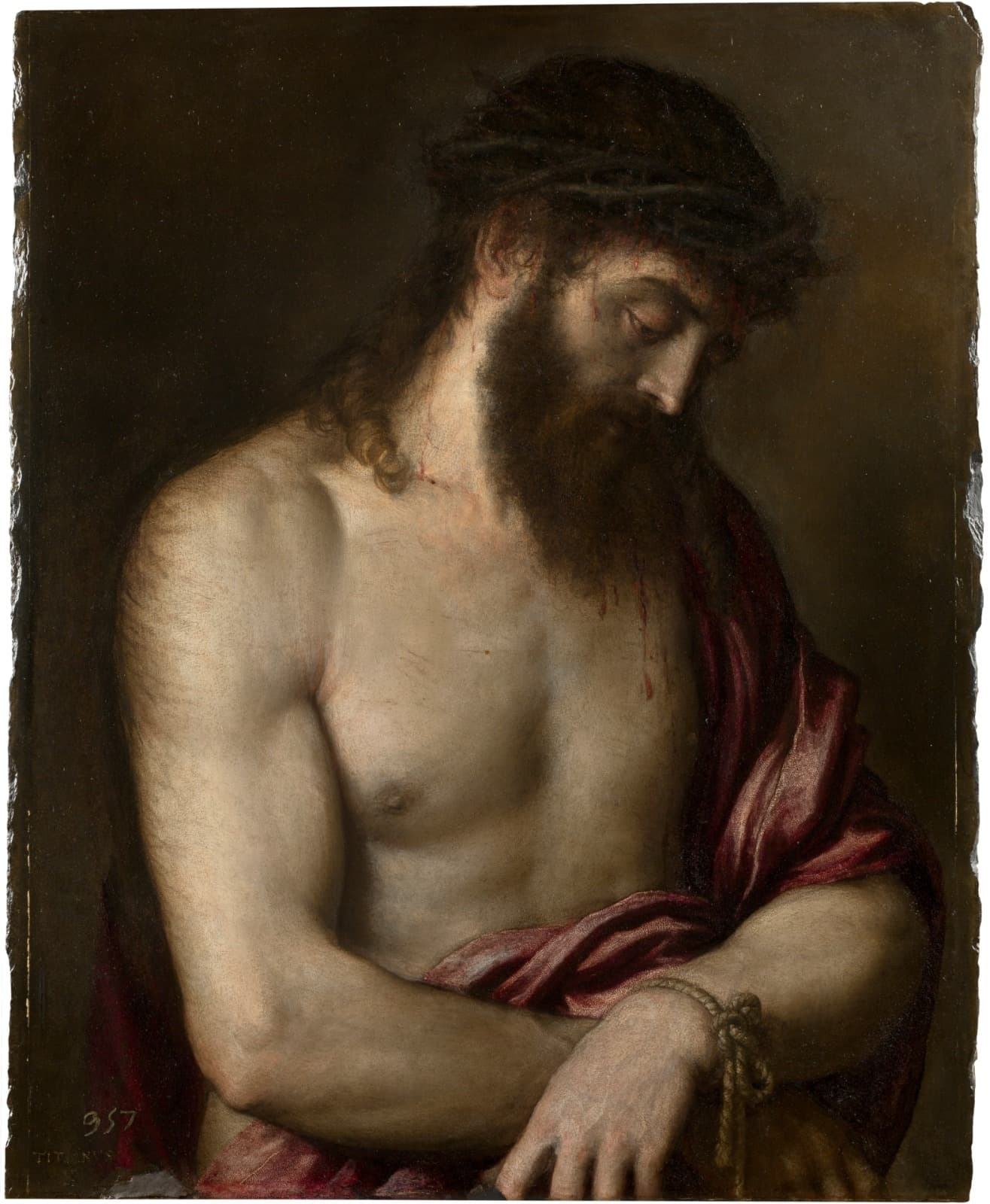
Behold the man, said Pilate. Titian strips out the crowd and leaves the scourged Christ half-length, close enough to pray to.