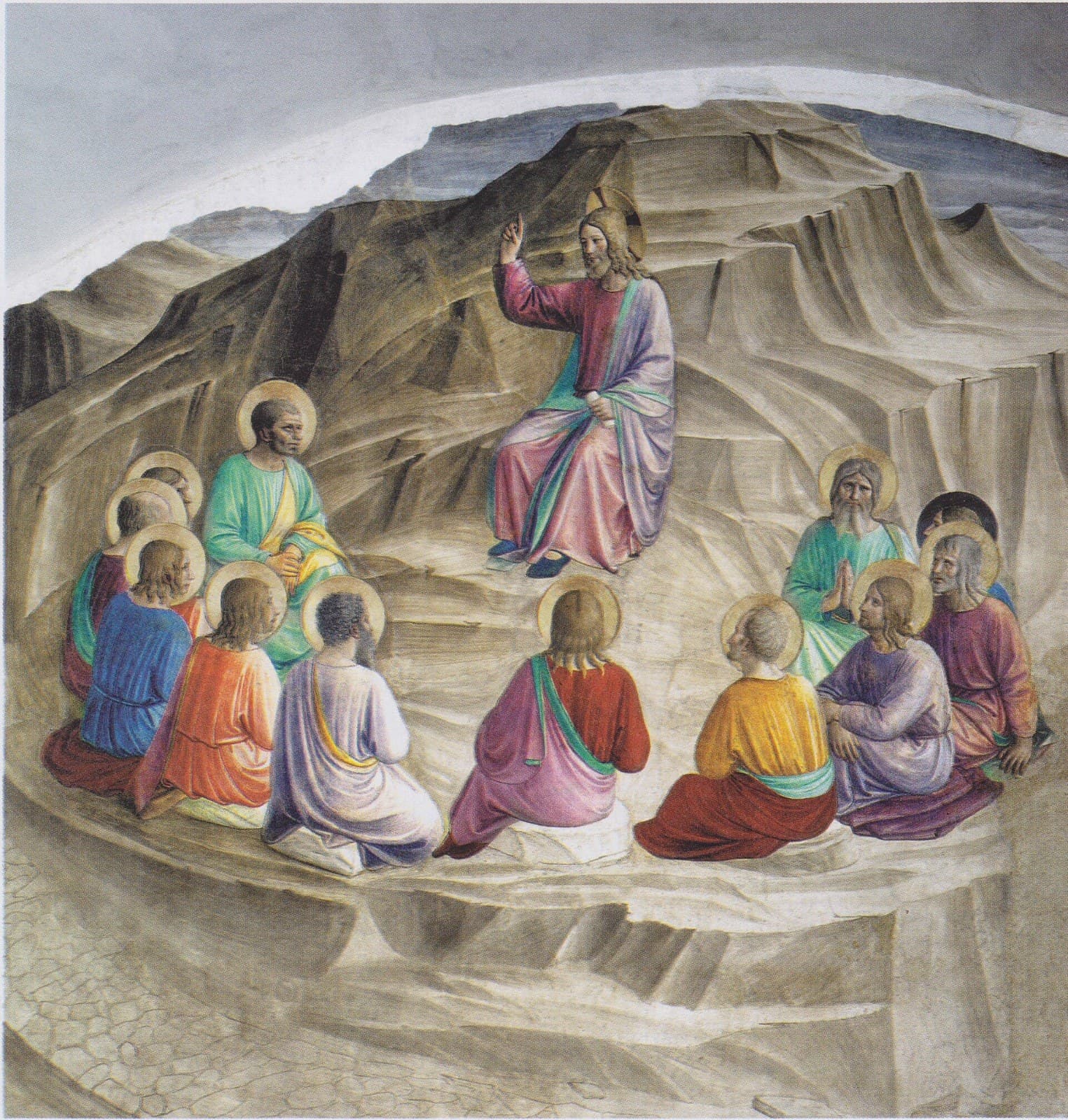
The Sermon on the Mount
1442 · San Marco Museum, Florence
Painted on the wall of a friar's cell at San Marco, stripped of gold and ornament so that it settles the mind rather than dazzles.
★ 4.4
 skopia
Painted on the wall of a friar's cell at San Marco, stripped of gold and ornament so that it settles the mind rather than dazzles.

John stands lost in his book, wrapped in red cloth massed like masonry. One wing of an altarpiece now scattered across five cities.

Christ stands to place the host on each tongue exactly as a priest does at Mass, in a bare cell-like room with stools.
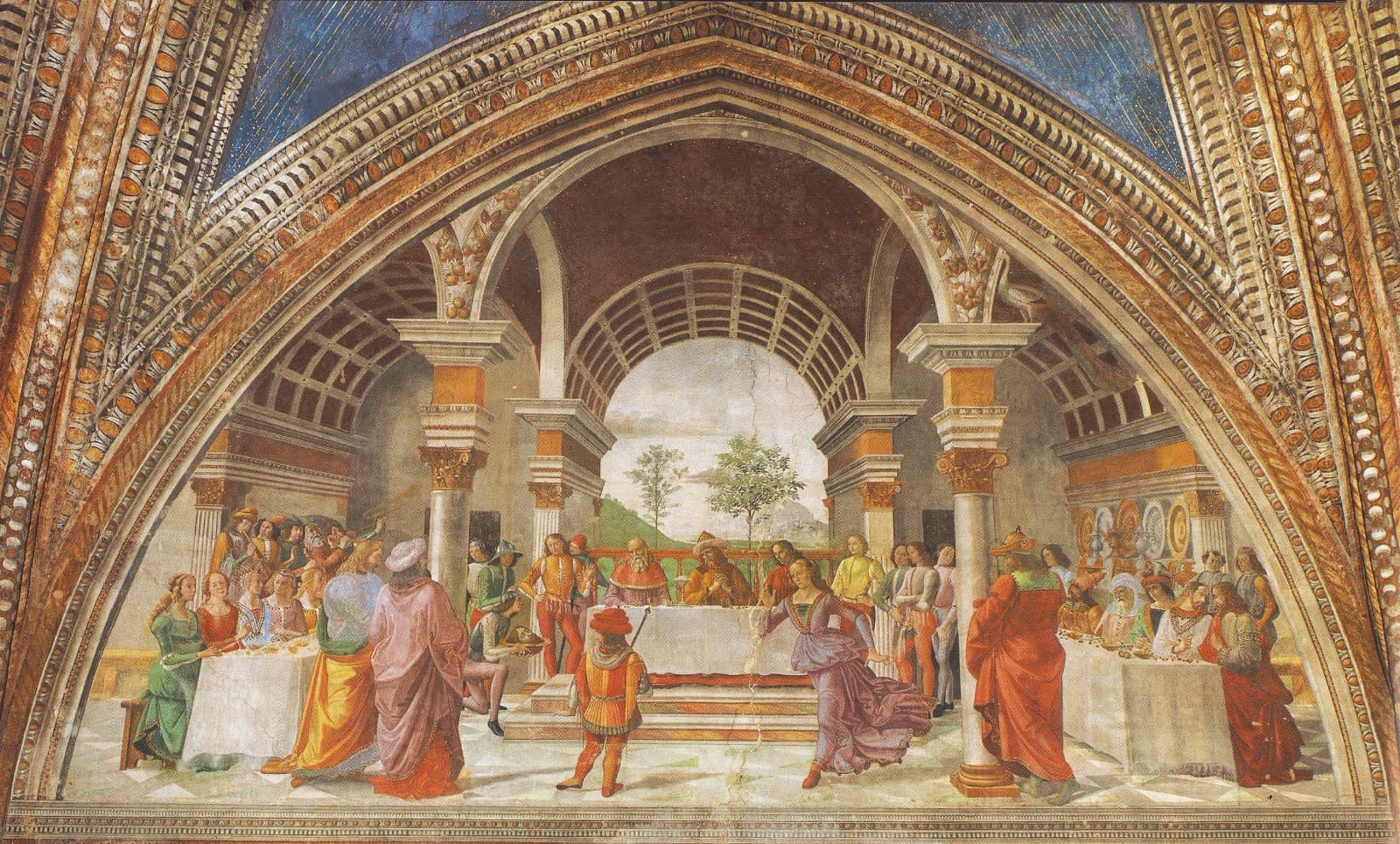
The head arrives on a platter inside a serene sunlit loggia full of well-dressed Florentines, many of them the family who paid.

Late Botticelli, with the early lightness gone tense. He had fallen under Savonarola's spell and his religious pictures never relaxed again.
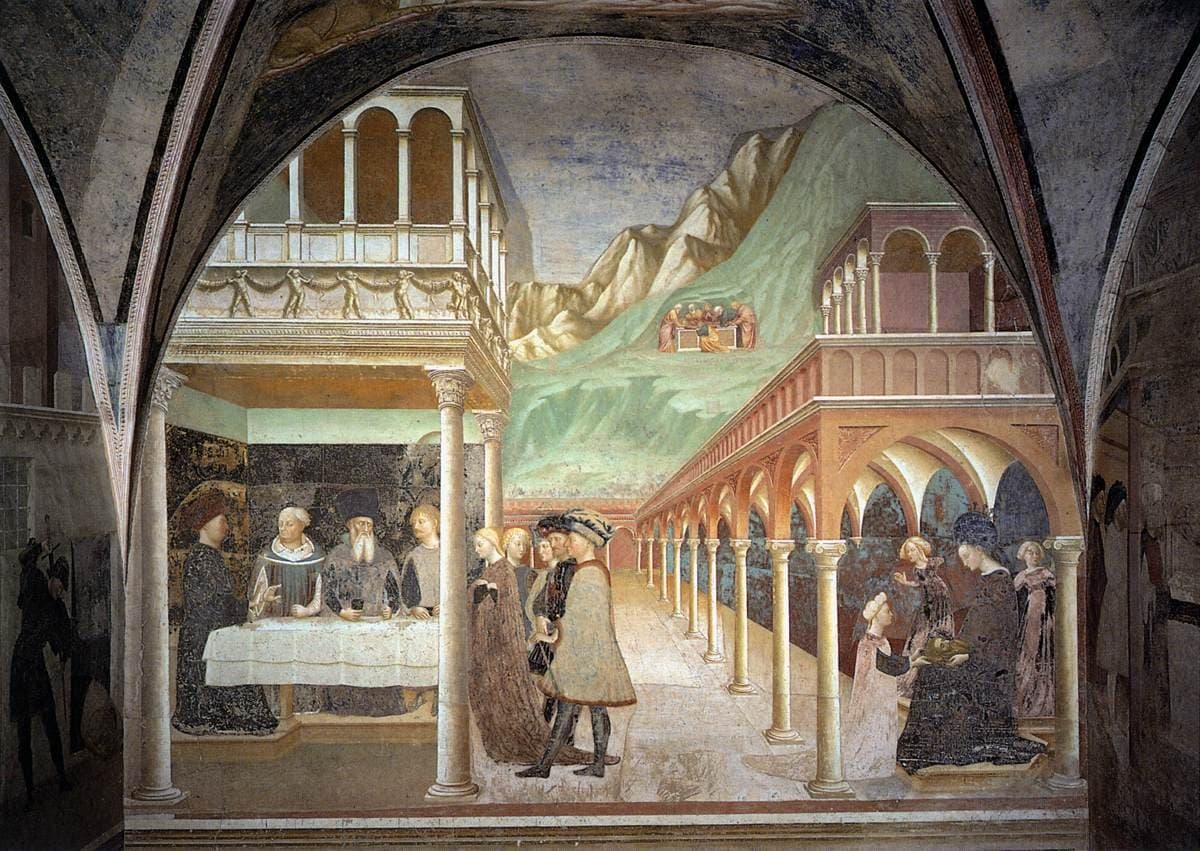
The feast on the left, the severed head delivered on the right, both staged in a colonnade built with Masaccio's new perspective.

Elizabeth sinks down and clasps the pregnant Mary. Ghirlandaio ran the busiest workshop in Florence, and a boy named Michelangelo apprenticed there.
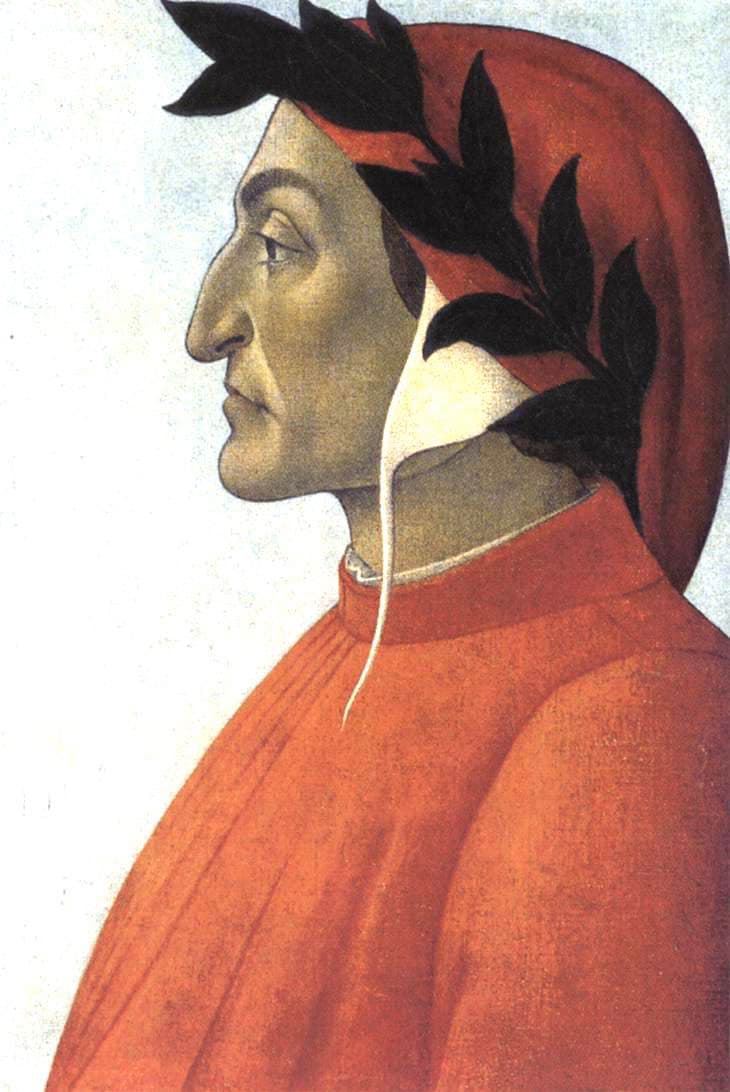
Dante had been dead nearly two centuries, so this is not a likeness but a verdict, struck in profile like a coin.

The tiny kneeling figures in the corners are the Nuremberg family who paid for it, inserted so they could share in the grief.
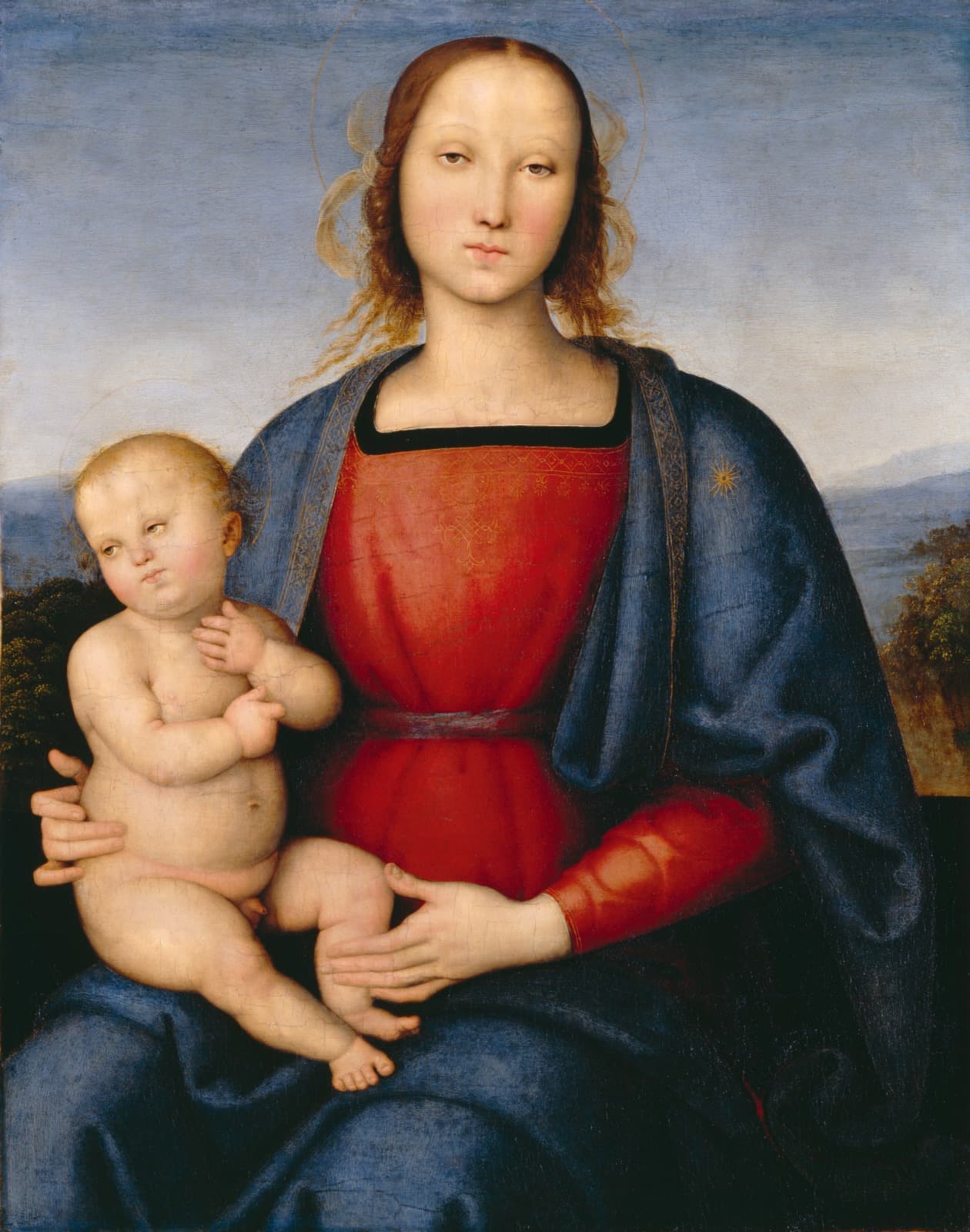
The oval face, the lowered eyes, the Umbrian distance melting into air. Raphael took all of it and then went past it.
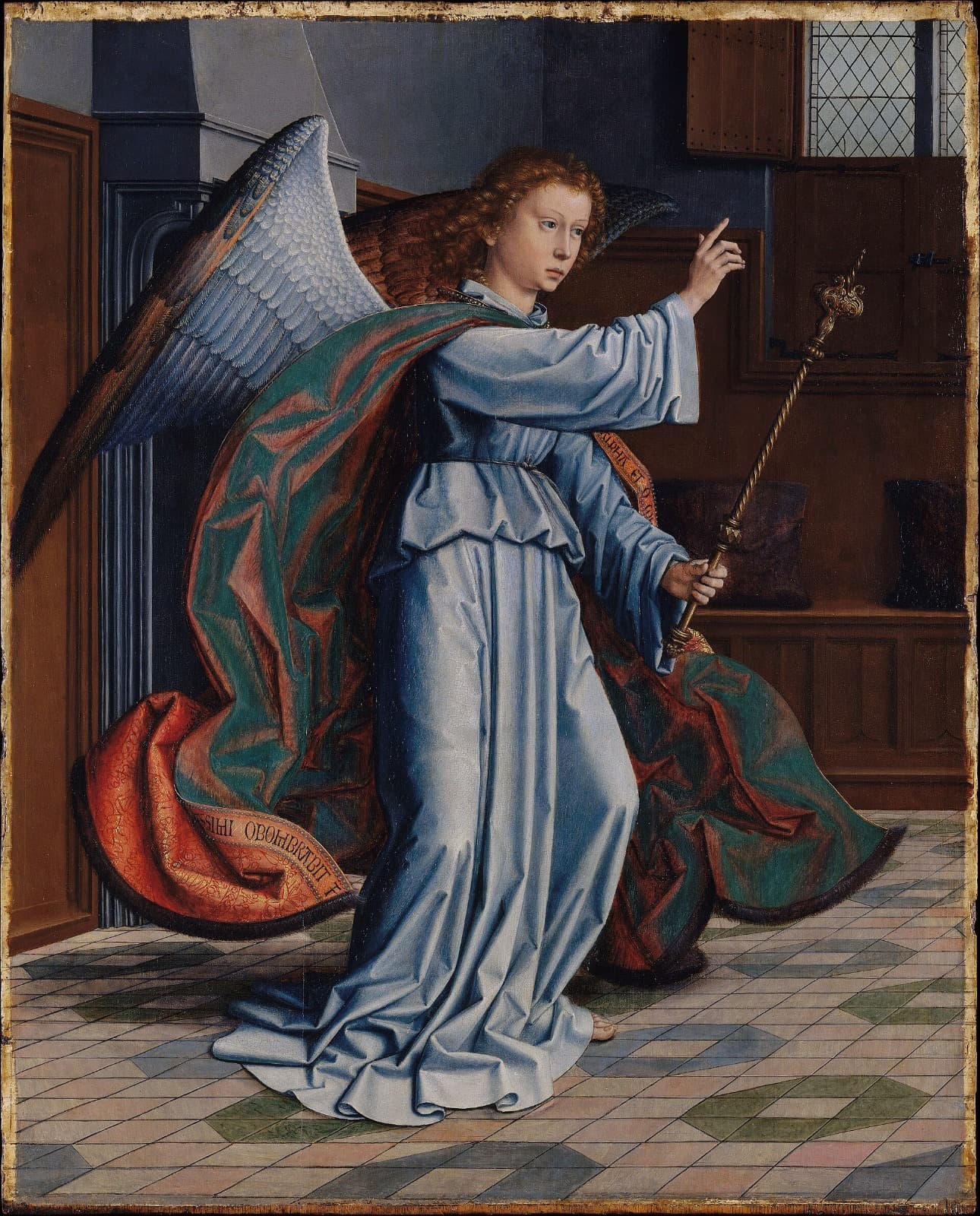
This is only the angel. Mary received the message on a companion panel, and the two now hang together as a pair.

Coins and cards on the table and a great deal of sidelong glancing. Somebody is being cheated, and the intrigue may not be financial.

An inscription gives his age as ninety-three. Dürer drew him in Antwerp and used the head soon after for a Saint Jerome.
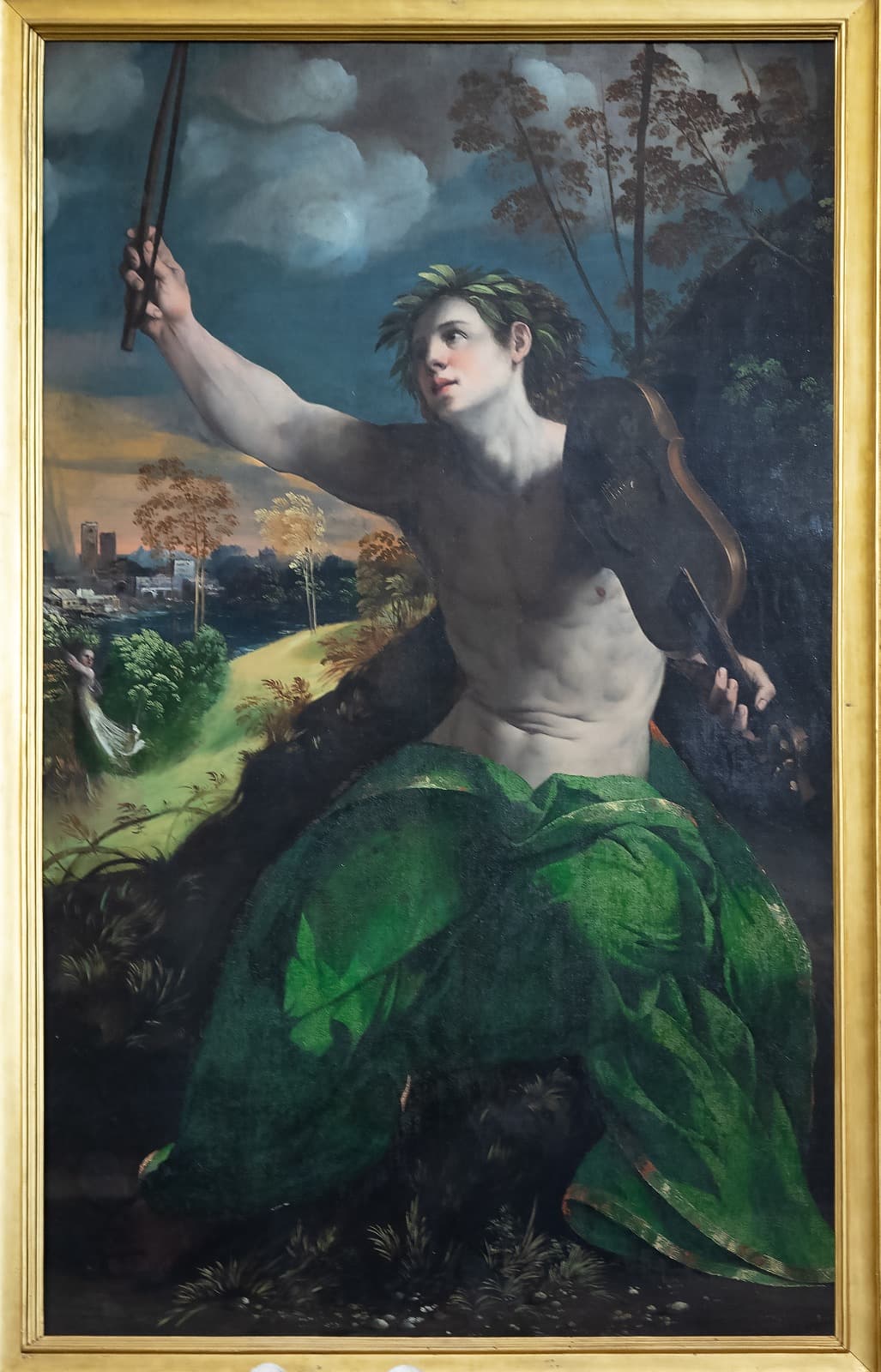
Dossi swapped Apollo's ancient lyre for a modern viol, and Daphne is already sprouting into laurel in the far distance.
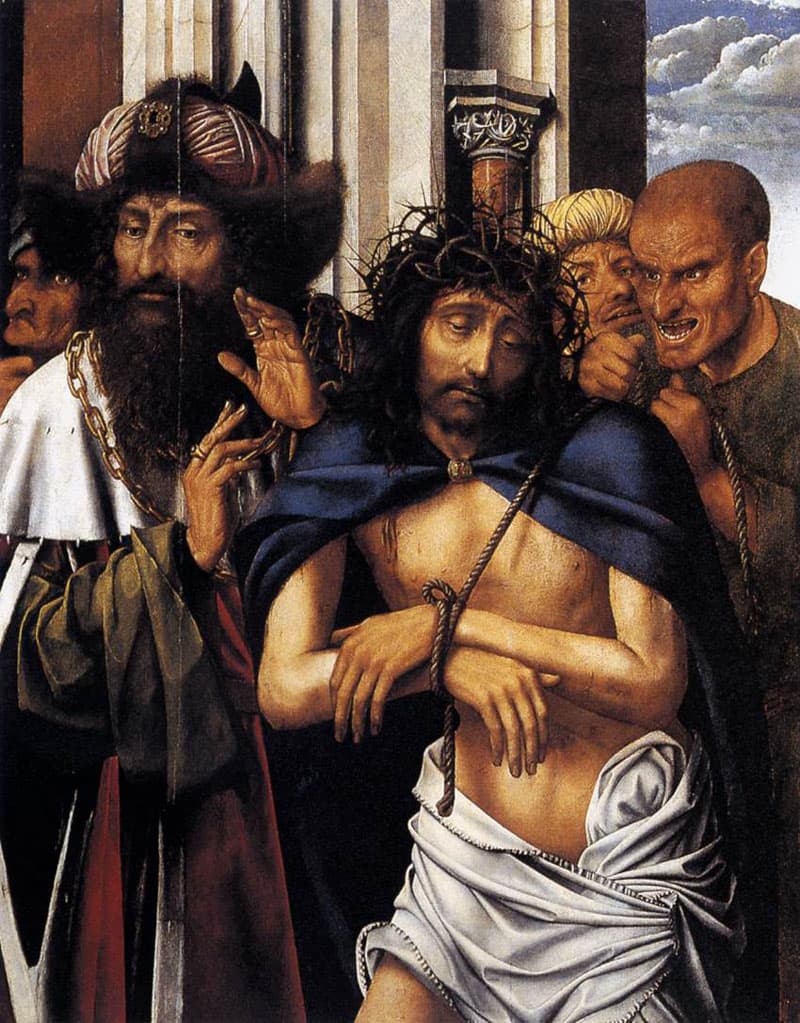
Christ stands with his eyes lowered while the faces around him are twisted into snarls. Matsys made ugliness do the moral work.

Every apostle is named in gold and Judas sits apart with a darkened halo, which makes the panel a teaching aid as much as a picture.
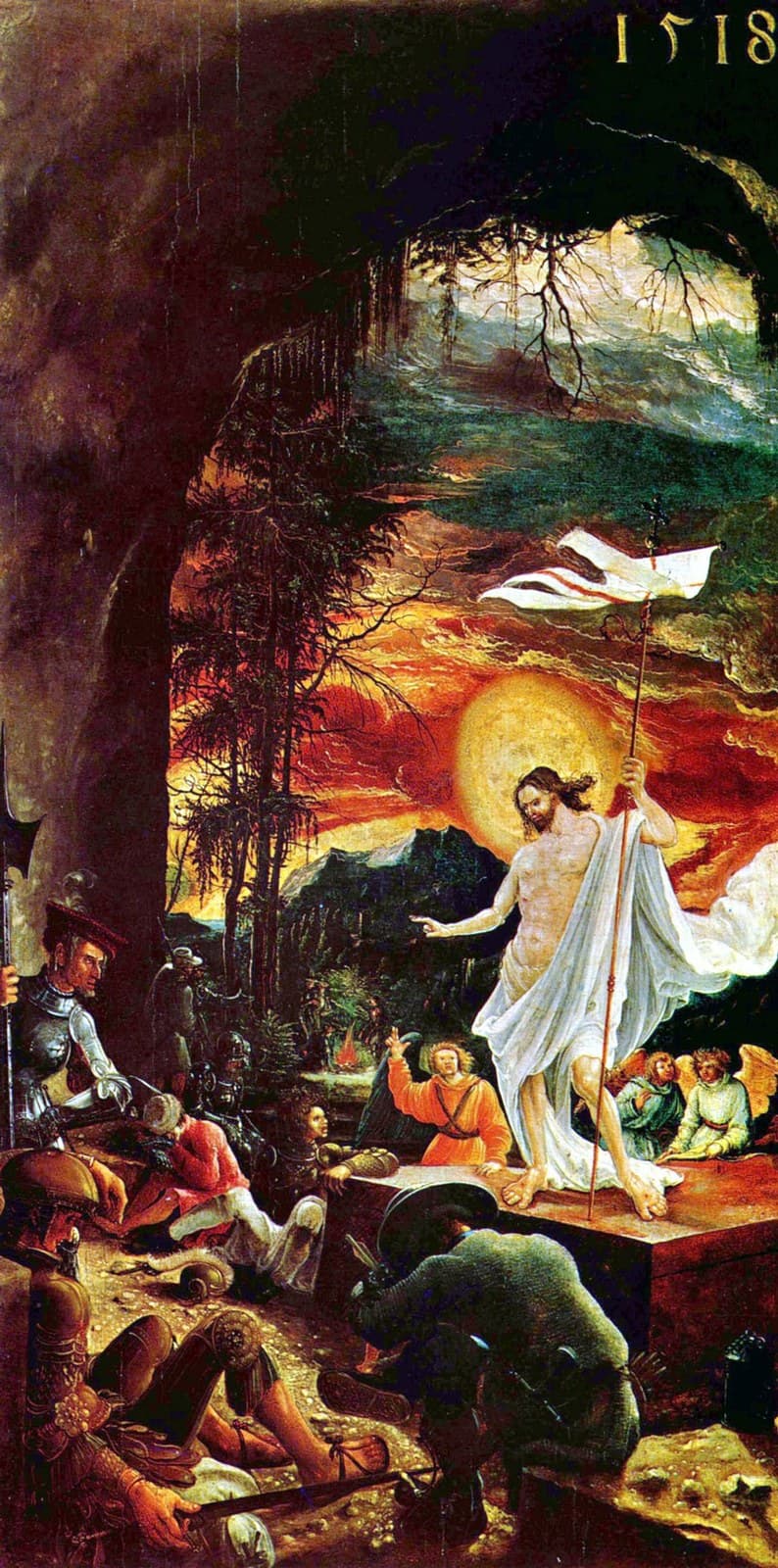
Christ rises with his banner while an unearthly dawn detonates behind him in bands of orange and scarlet over black crags.

Serene, elegant nudes about to ruin everything. It faces Masaccio's Expulsion across the same chapel, calm before the Fall against anguish after.

Gilded hems, fluttering wings, a walled garden behind. Lippi was a friar with a worldly streak and it shows in the ornament.
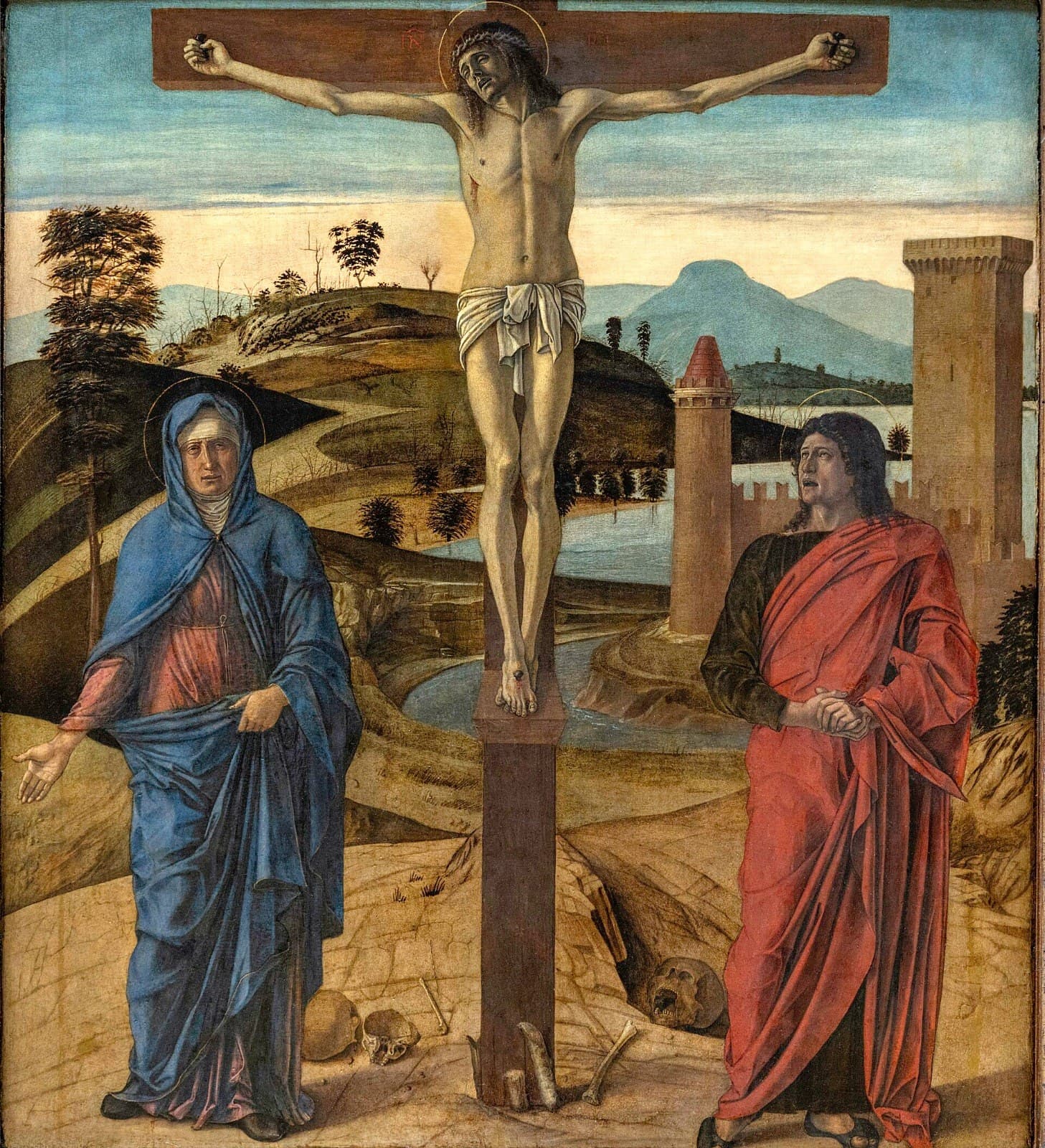
Only the Virgin and Saint John below the cross, and a river winding past a walled town. Early Bellini, carrying feeling in the light.

Painted on a refectory wall so the monks dined at the end of the same table. Leonardo would blow the arrangement apart a few years later.
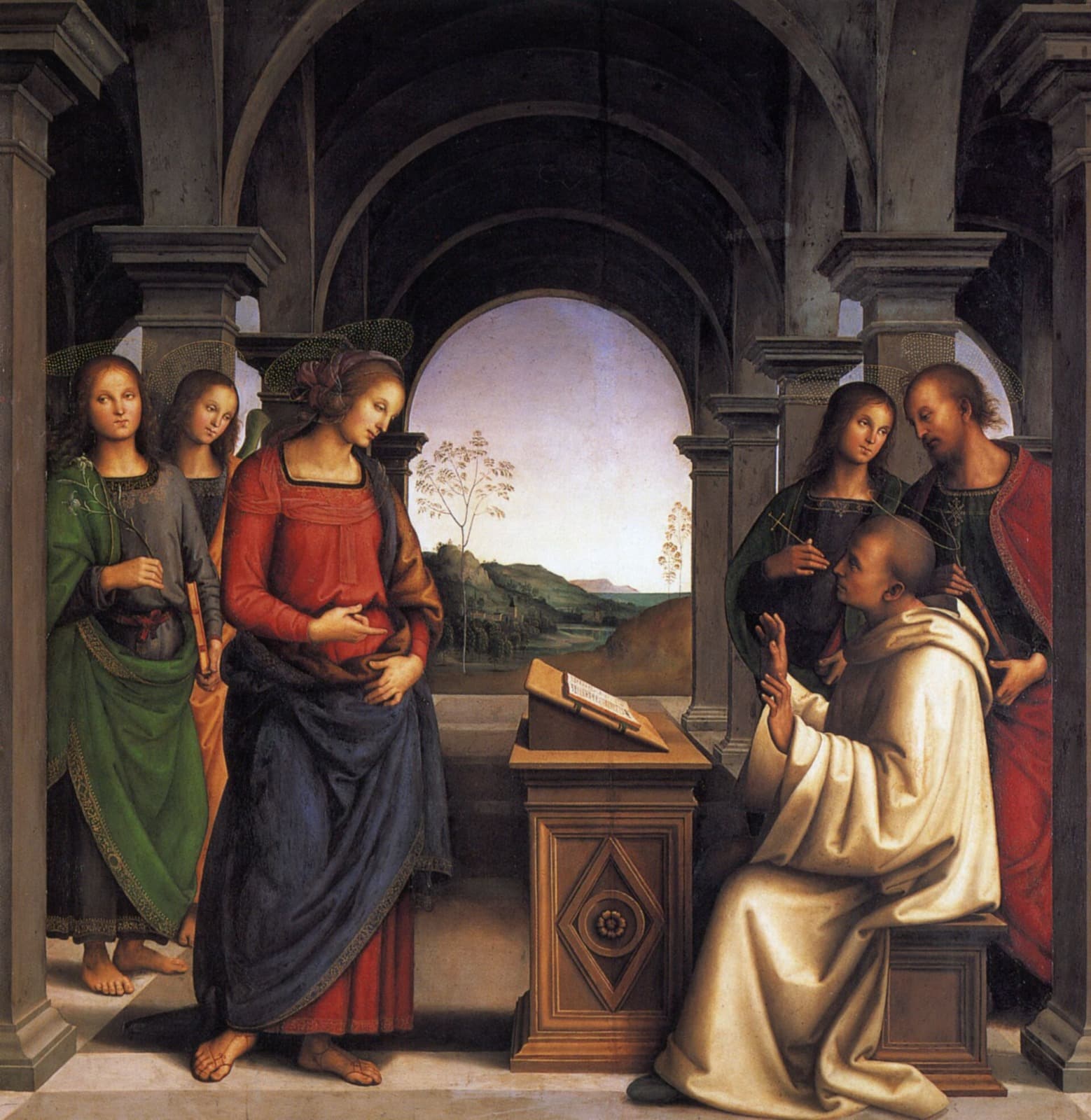
Perugino taught Raphael, and the poise, the airy arcade and the soft Umbrian valley here pass almost unchanged into the pupil's work.

A man rides a wine barrel while swimmers chase a floating pie. It was sawn off the bottom of the Ship of Fools.
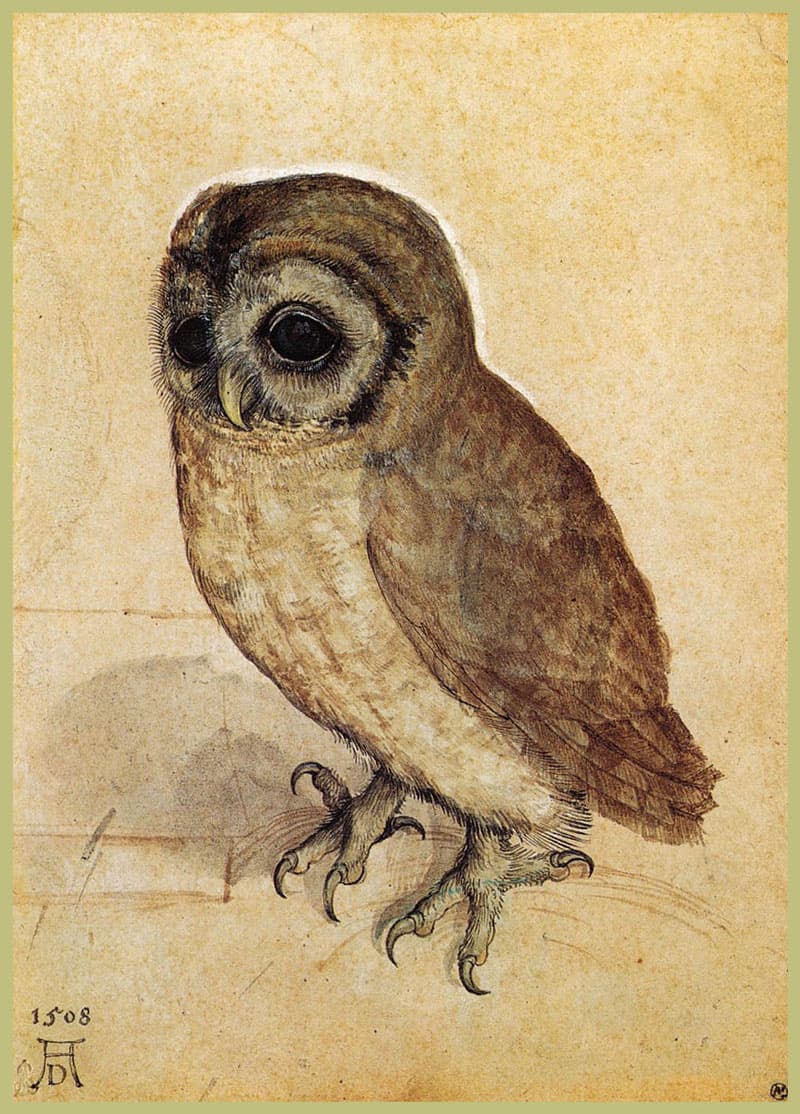
Owls carried centuries of symbolism in the north, but Dürer's is mostly just an owl, looking back at you with its talons over a ledge.

Thousands are clubbed and thrown off cliffs, and Dürer paints himself walking calmly through the middle of it holding a banner with his name.
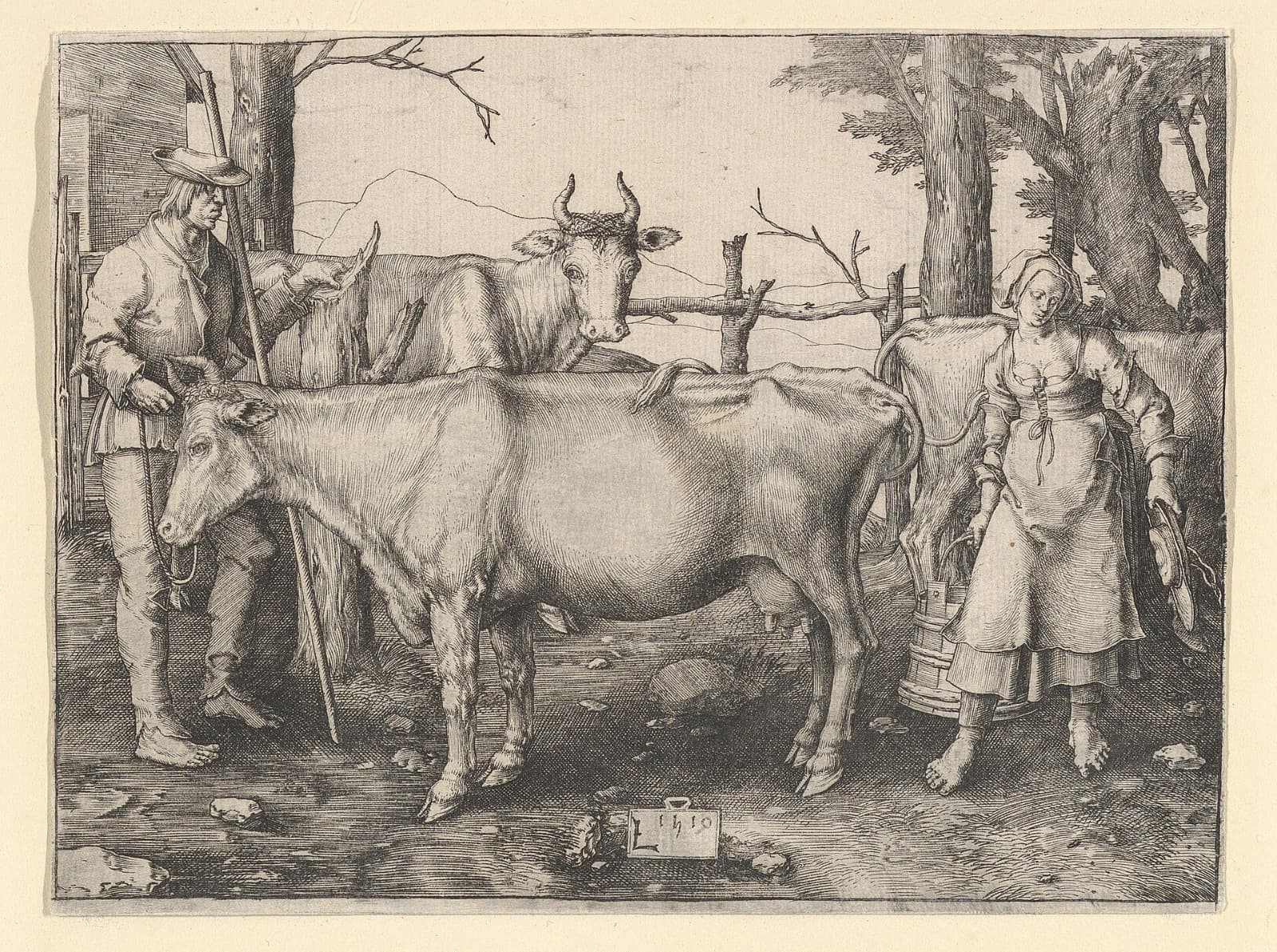
A milkmaid, a herdsman and two cows, and almost nothing happening. One of the first prints to take peasants as a subject worth the burin.

Gabriel kneels at the right and points across at a Virgin drawing back in surprise, with a stretch of classical ruin between them.

Joseph reaches up to pull down dates from a palm while Saint Francis kneels at the side, added for the chapel that ordered it.

You take in the whole river valley before you notice the sower at the bottom corner, or Christ preaching from a boat behind him.
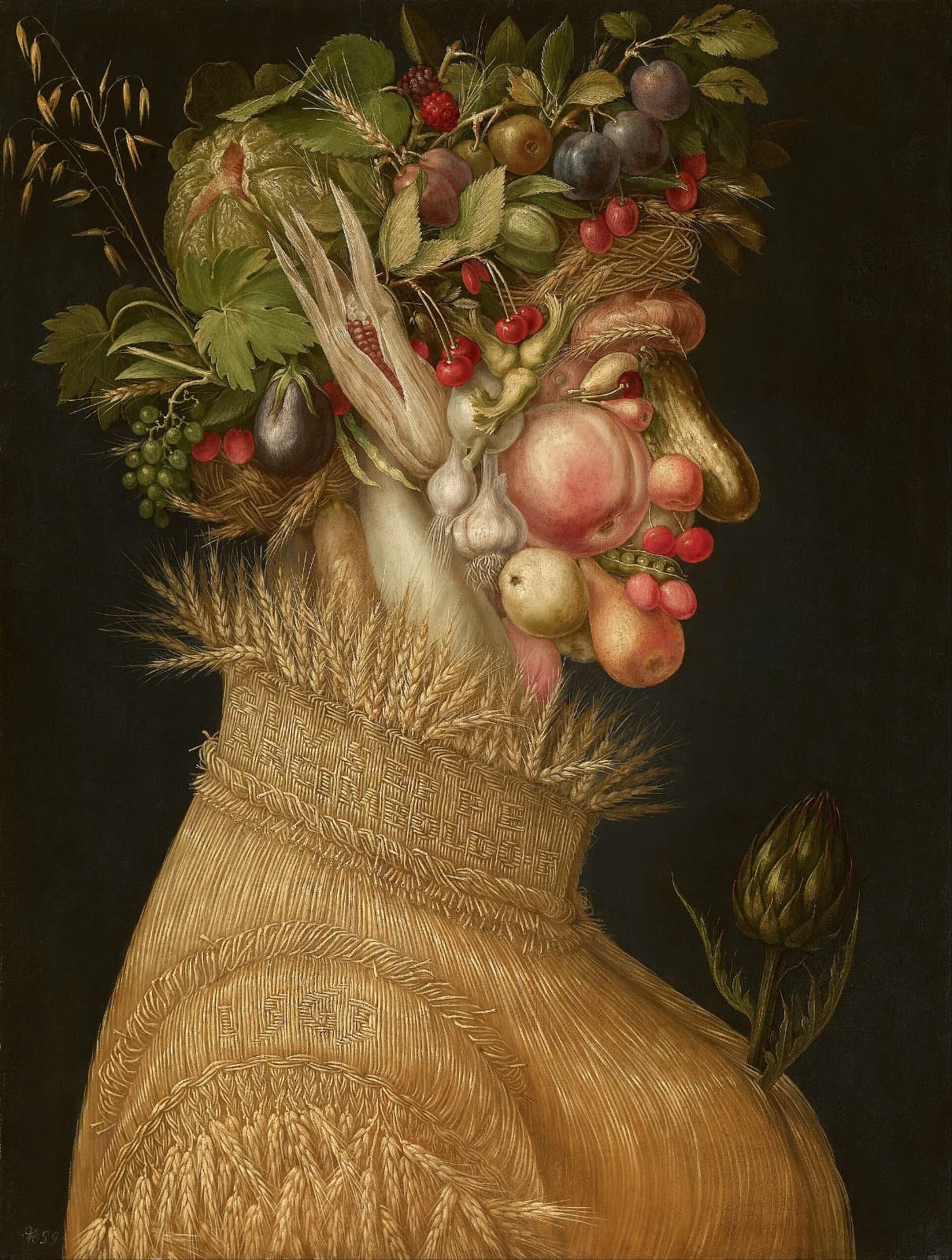
A cucumber nose, a peach cheek, a garlic-clove ear, and Arcimboldo's own name woven into the collar of plaited straw.
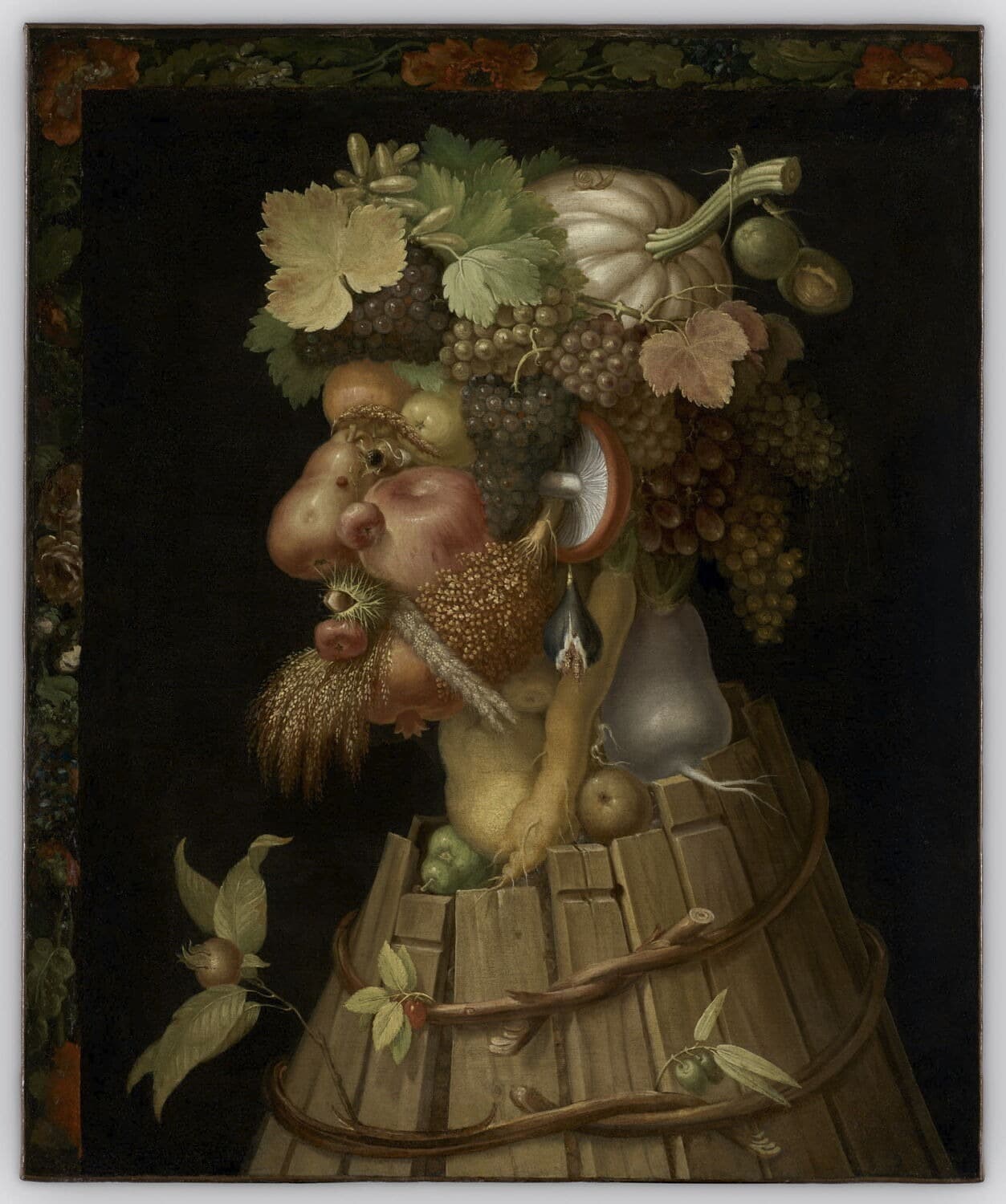
A head of pears and pomegranates crowned with grapes, sitting in a split wooden barrel bound with willow hoops. The season of the wine harvest.
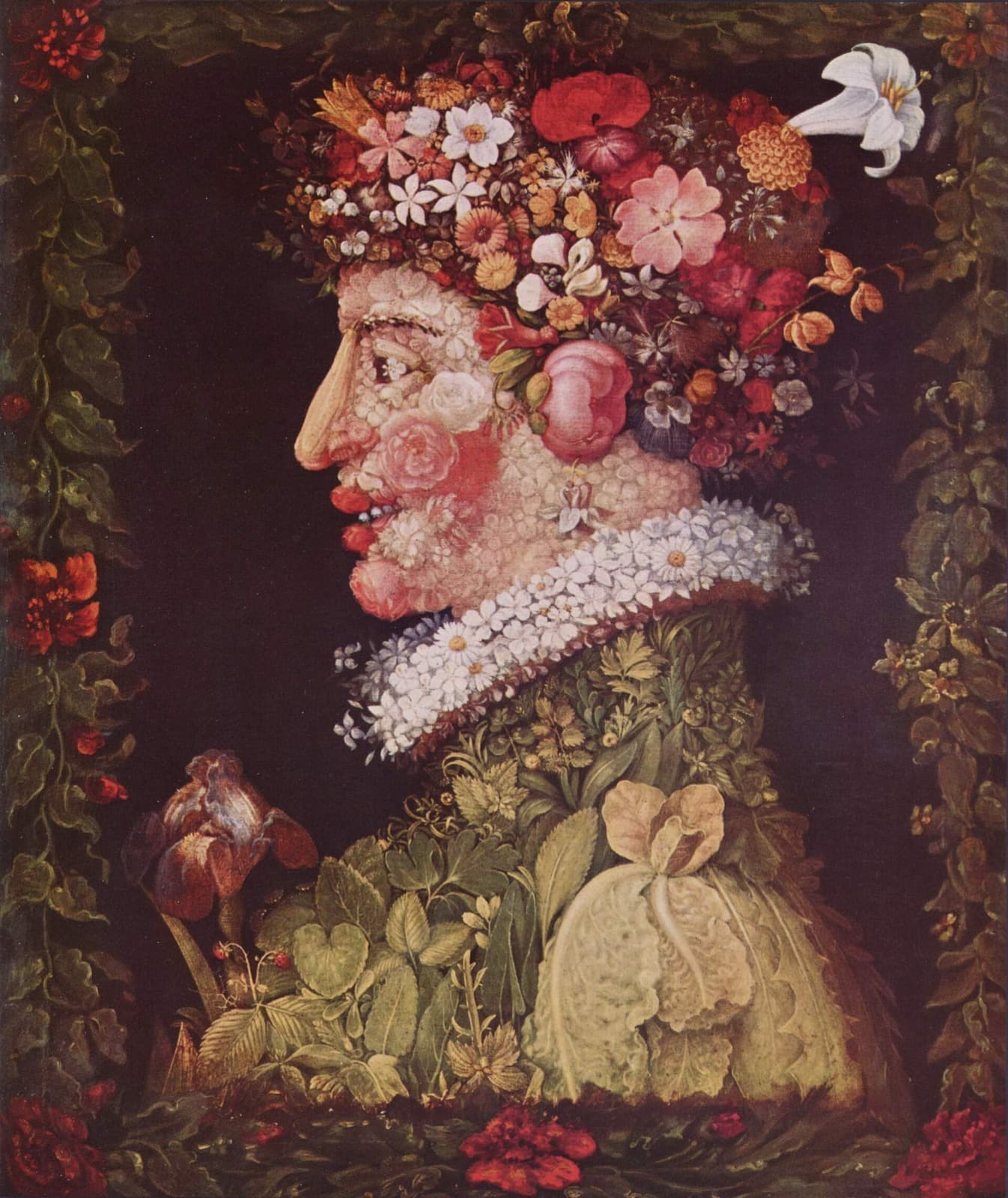
Rosebud lips, a lily for a nose, and hair made of tulips and peonies. The freshest and most delicate of the four seasons.
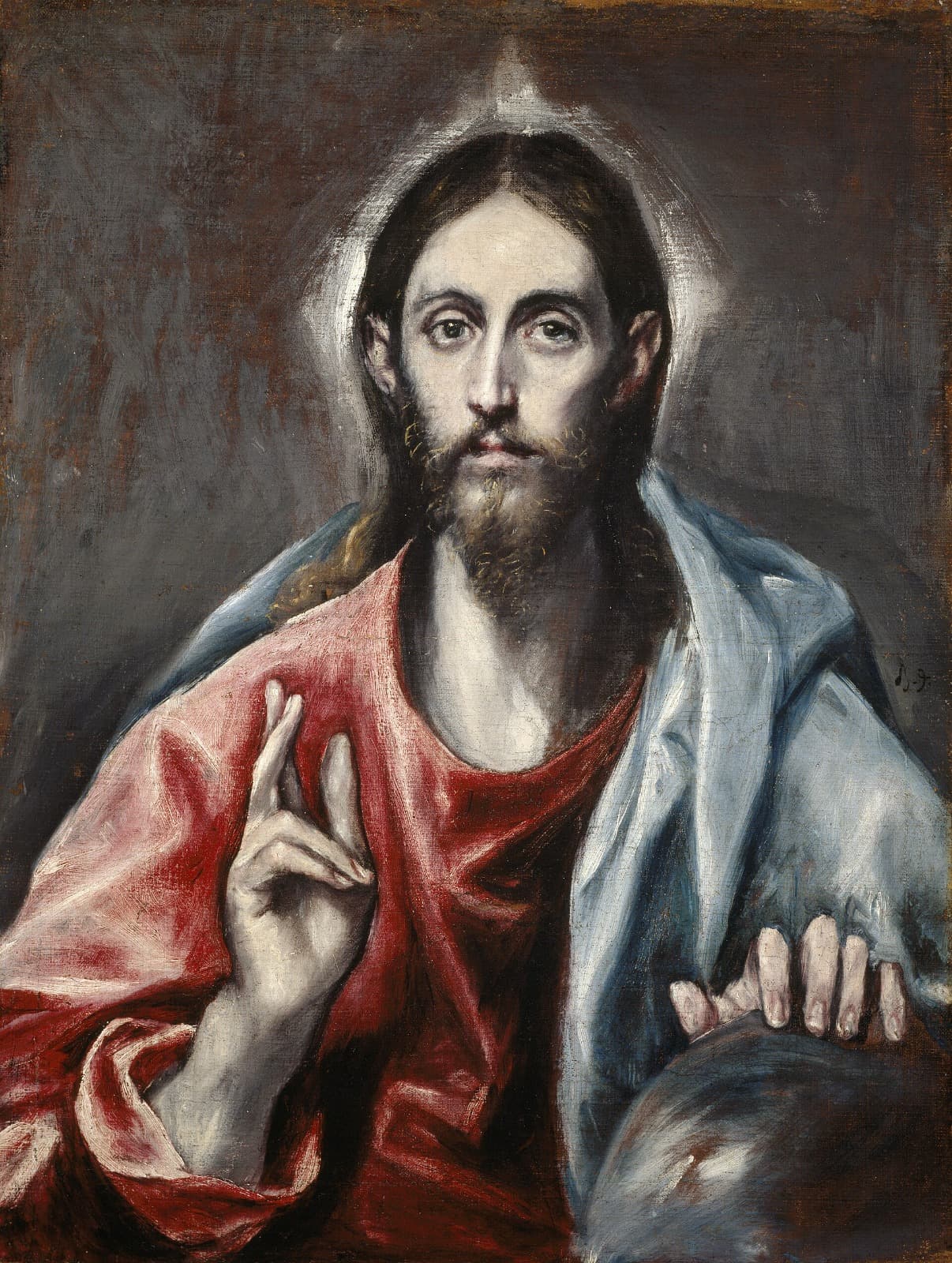
Two fingers raised in a gesture reaching back to Byzantium, one hand on a crystal orb, the face long and sorrowful and unmistakably his.

The episode appears in no Gospel at all, and Altdorfer nearly buries the figures under a forest of enormous trees and luminous sky.

The lyrical Bosch, all calm light and wide landscape, except for the small insect-demon with a human face tending a fire in the corner.

Lotto crops the Passion down to one tear-streaked head at the surface, with soldiers' hands coming in from the edges of the frame.
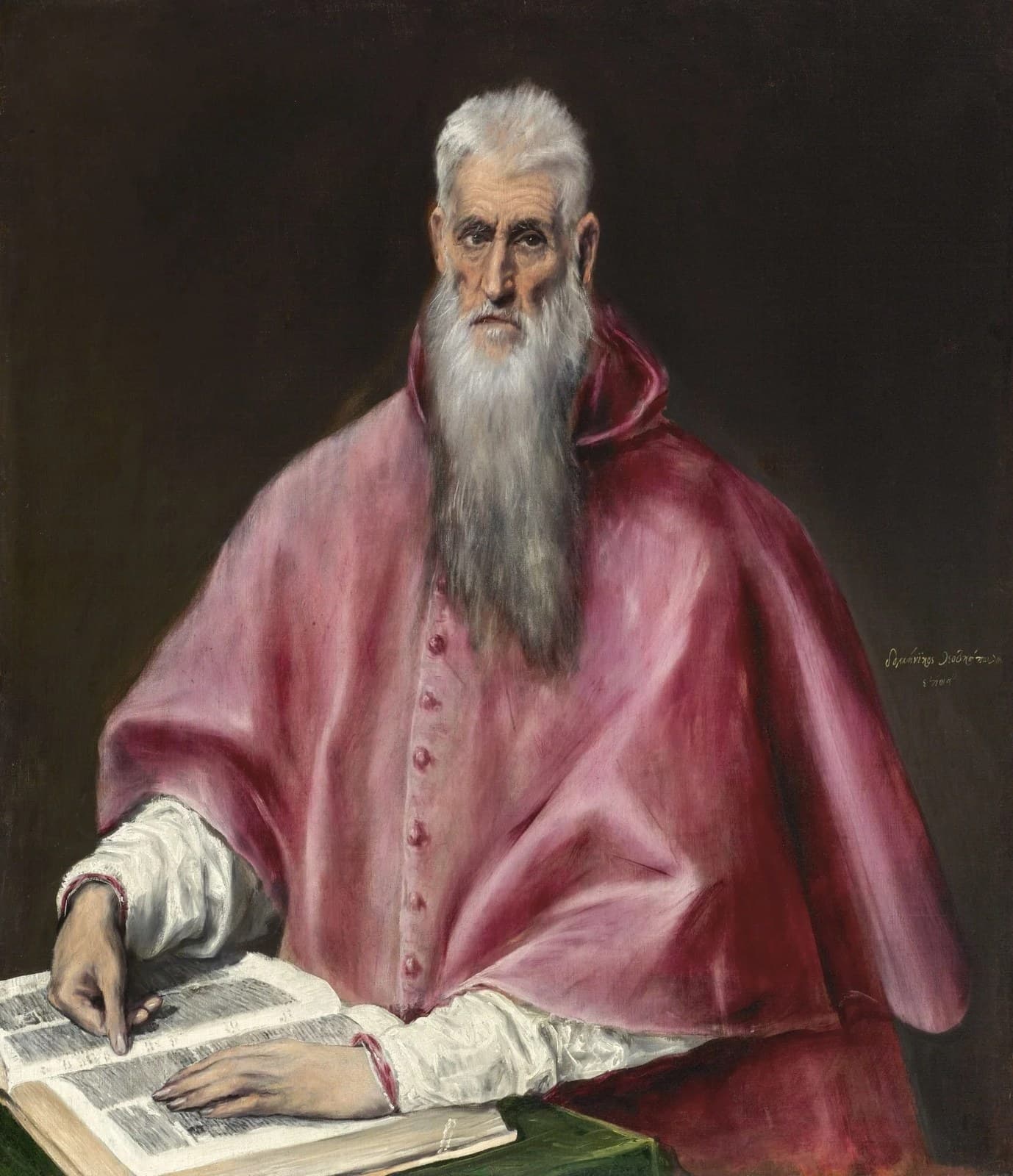
Not the desert hermit but the Doctor of the Church, in cardinal's red with one long hand resting on his own translation of the Bible.

Antonello carried the Netherlandish oil technique south to Venice, and Giovanni Bellini responded with a Crucifixion almost identical to this one.

Where his teacher Pontormo made the subject swirl with anxiety, Bronzino polishes it: jewel-bright blues and pinks, grief made elegant.

The Child sits astride a lamb, which is the sacrifice, and Raphael took the interlocking group straight out of Leonardo.