
Christ Bearing the Cross, with a Dominican Friar
1360 · The Frick Collection, New York City
Christ looks back over the cross at a tiny Dominican friar kneeling in the corner, the patron drawn into the road to Calvary.
★ 3.2
 skopia
Christ looks back over the cross at a tiny Dominican friar kneeling in the corner, the patron drawn into the road to Calvary.
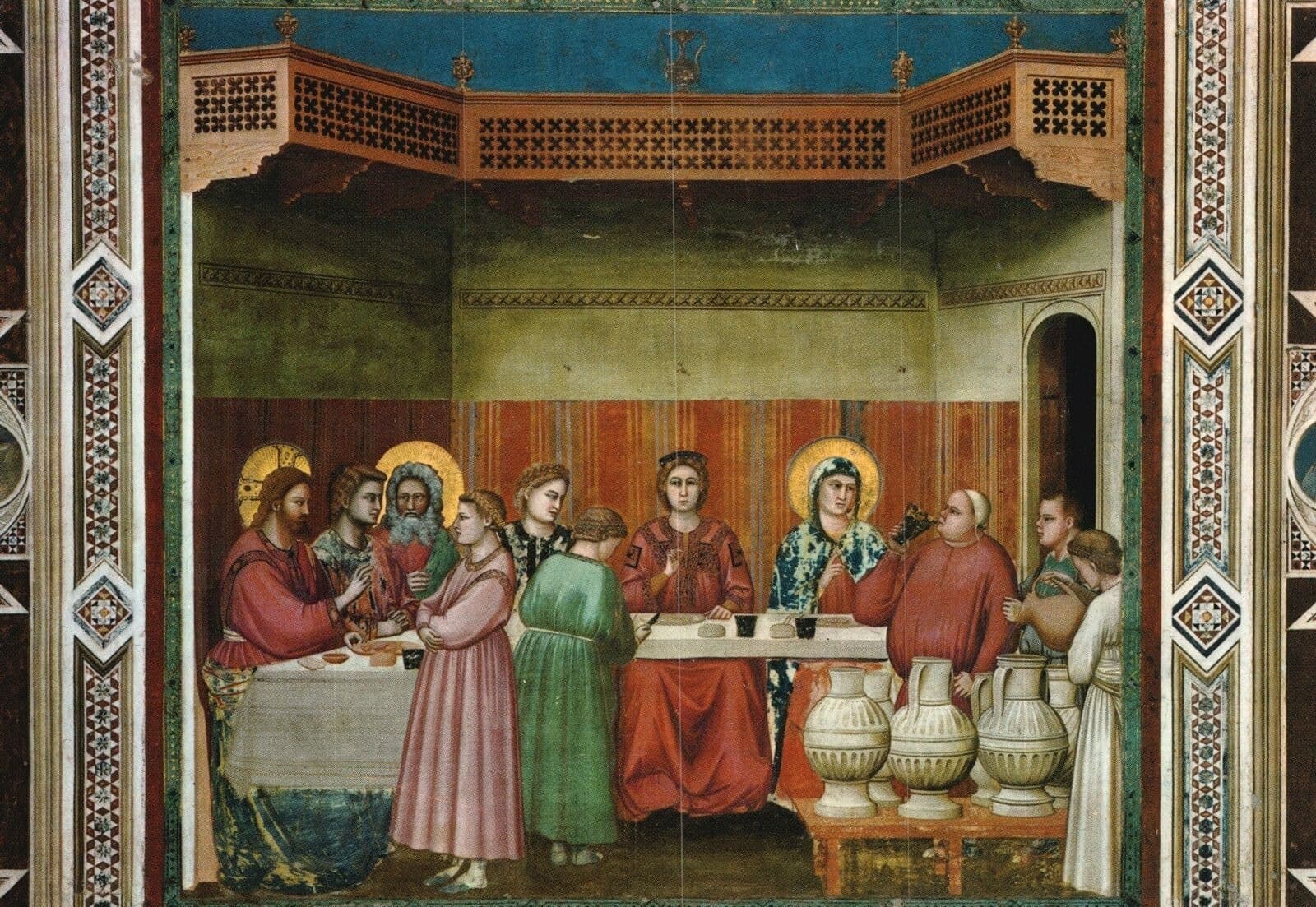
A steward tastes from a bowl and a portly servant tends the jars, and the miracle goes by almost without anyone noticing.
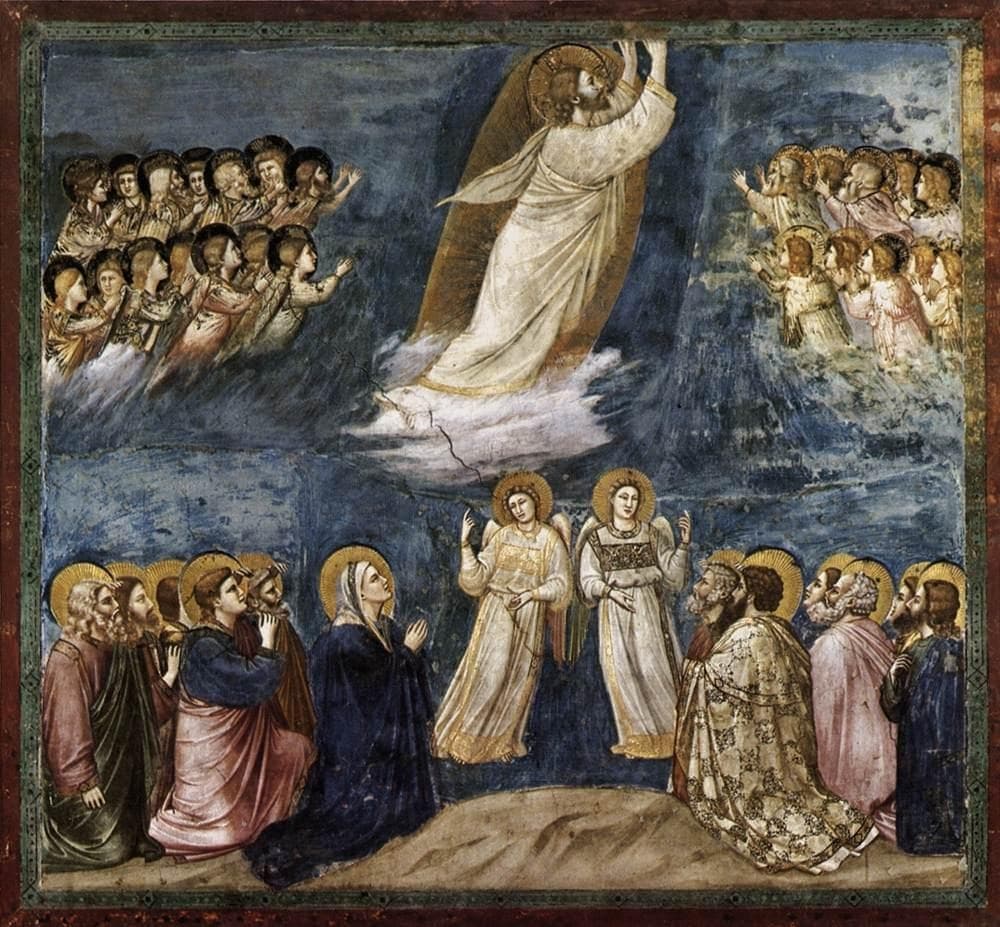
Christ's fingertips cross out of the human part of the picture and blur into light, which is the whole event in one detail.
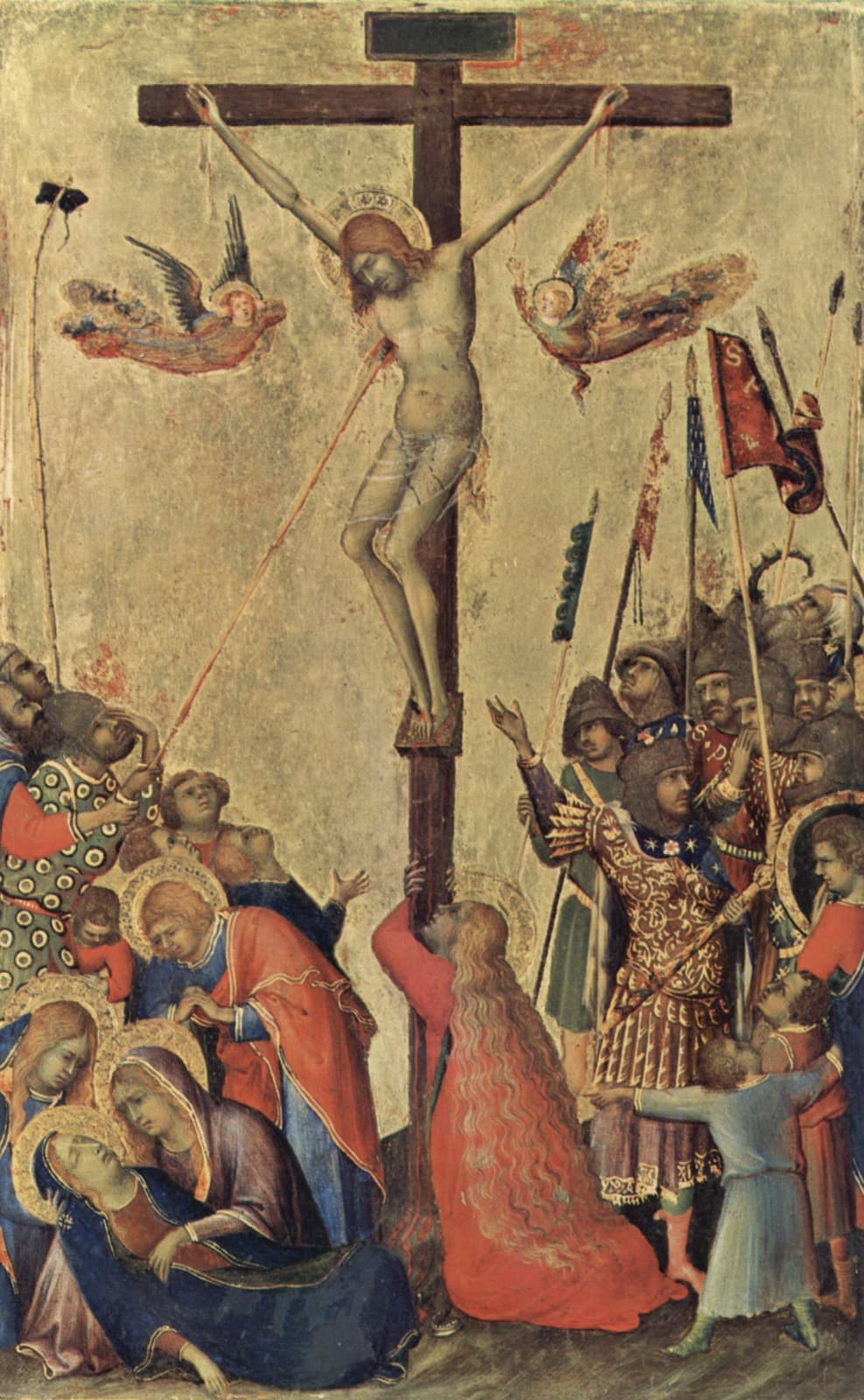
Angels dart and grieve around the cross while the Magdalene, hair loose, kneels to embrace its foot. A leaf from a travelling altarpiece.

Christ in vivid red is hauled by a rope through the gate of a white, many-towered Jerusalem while children scamper at the edge.
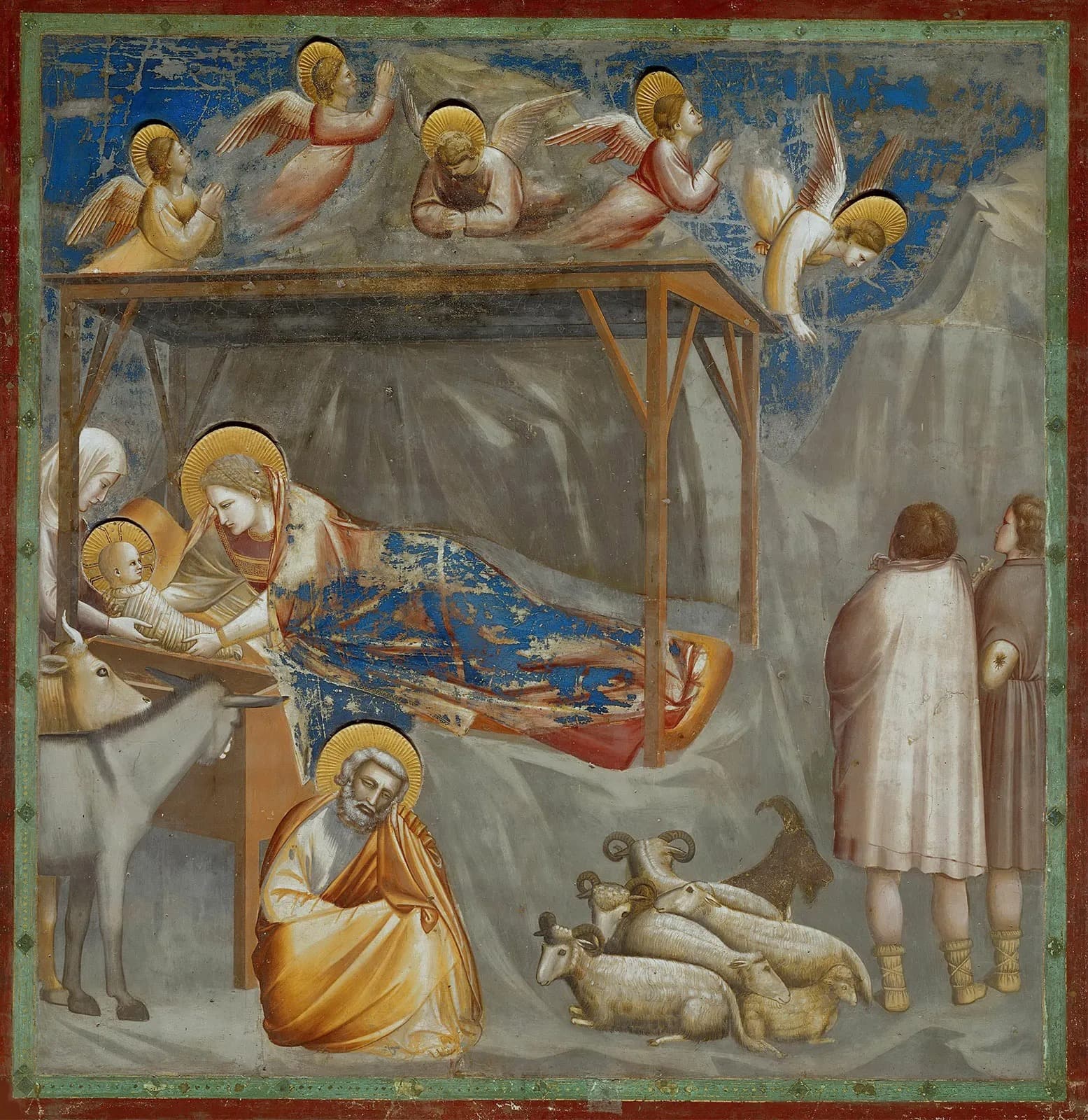
The Virgin lies on the hillside and turns to lay her son in the manger, looking at his face. No gold, just a cold blue sky.

The Child lies on the ground giving off his own light across the straw and his mother's face. One of the first paintings lit from inside.

Herod gestures from a balcony while soldiers pull babies out of their mothers' arms. Giotto carries the horror on the mothers' faces alone.

One woman flings both arms over her head, others press their faces to the body. Simone drops all restraint against a sky streaked red.
The same story at miniature scale, squeezed into a predella panel, and Giotto loses none of the plainness that made it convincing.
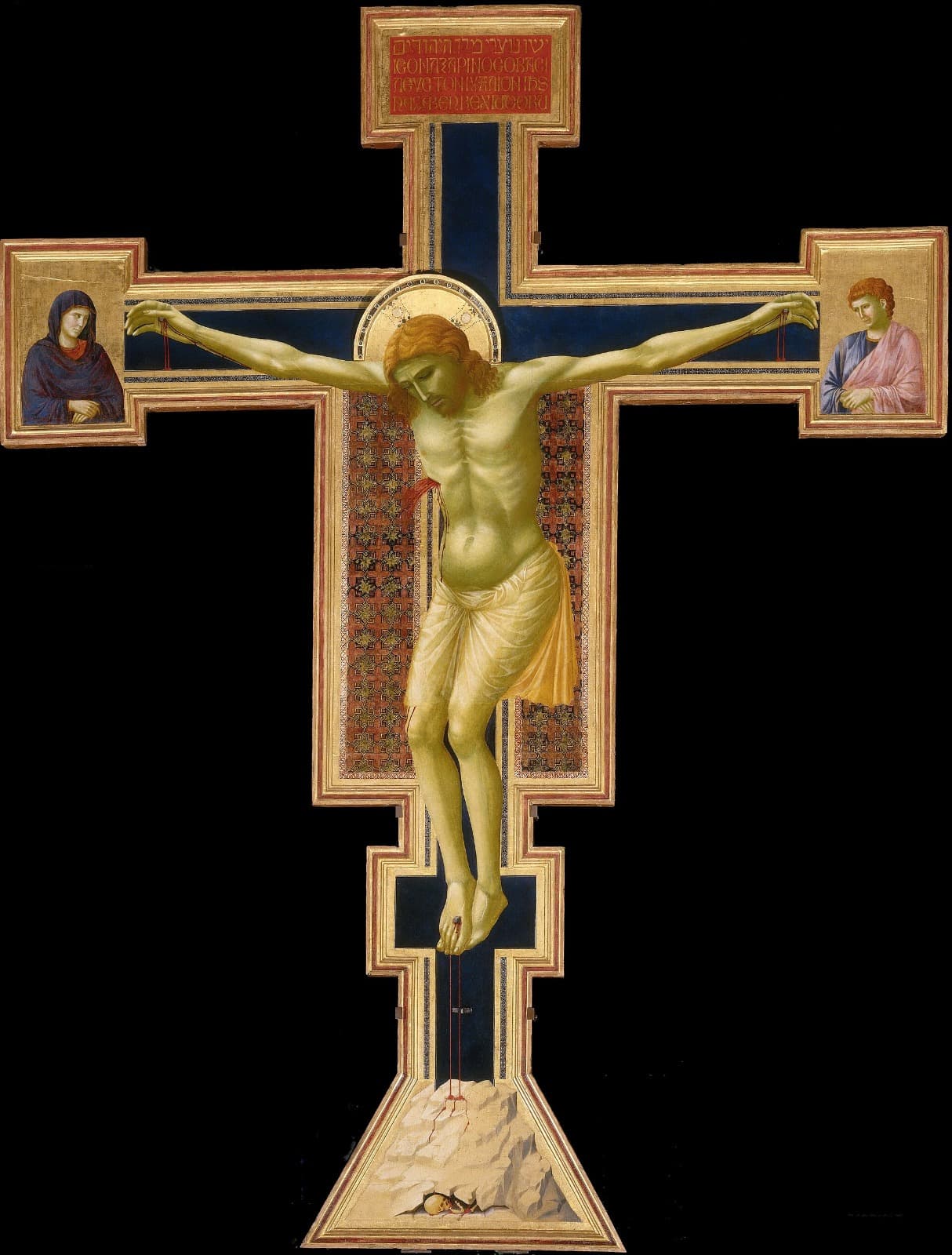
Where Cimabue's Christ swings in an elegant curve, Giotto's hangs straight down under his own weight, belly sagging, head on his chest.
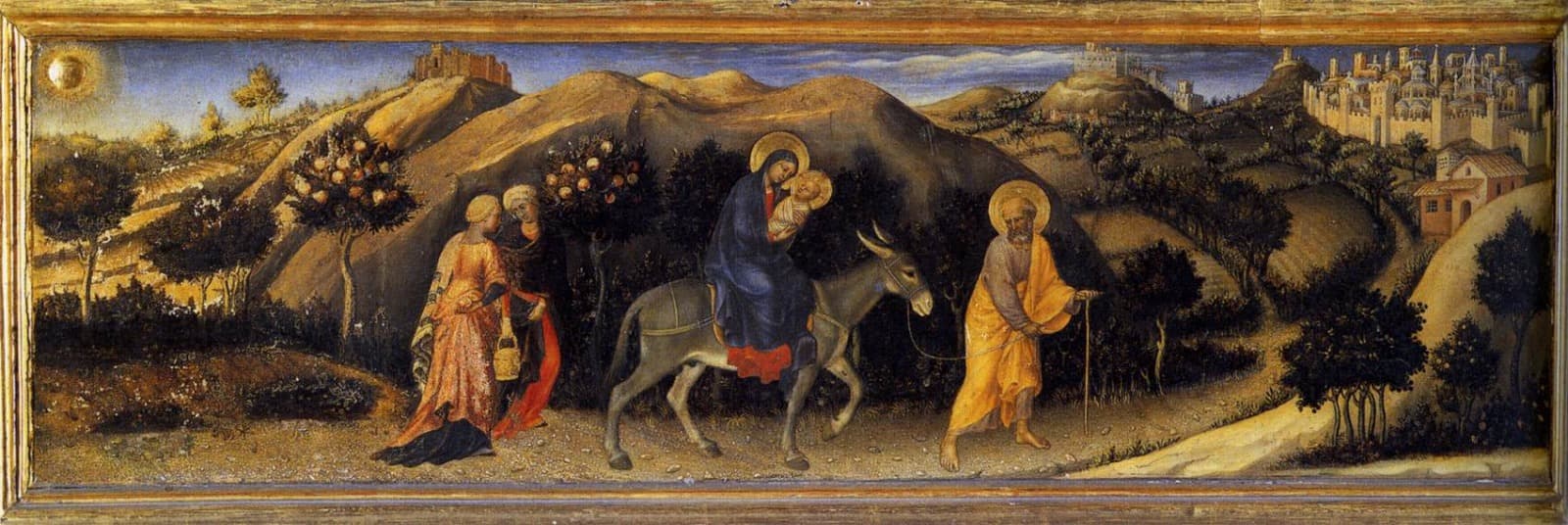
A gilded low sun hangs over the road and the orange trees are heavy with fruit, an early attempt at real morning light across a landscape.

A shepherd twists onto his back and throws up a hand against the glare. One of the first real night scenes in Western art.
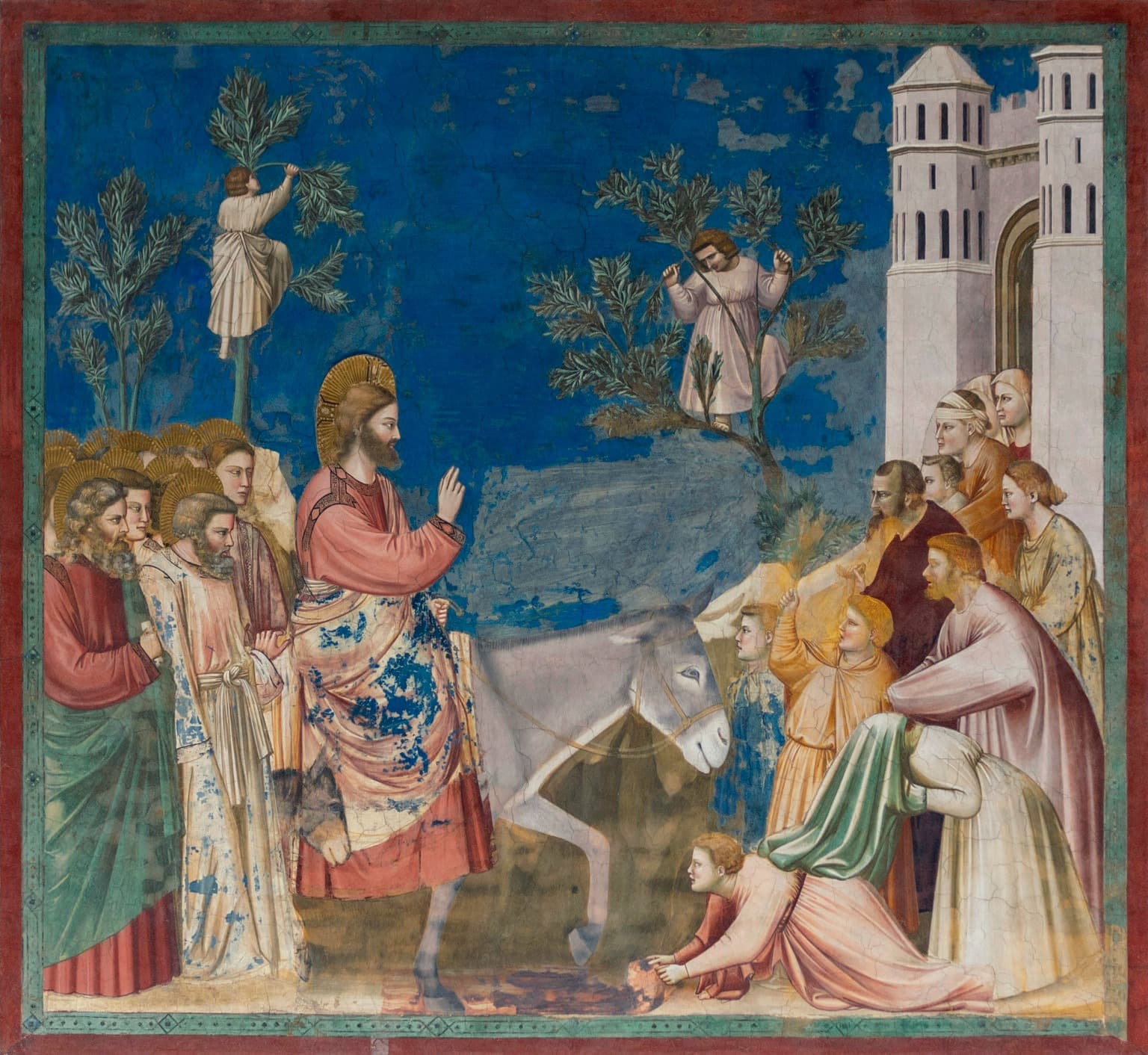
Boys climb the trees to break off palm branches while the procession moves along a stage-like ledge under deep blue. Padua, around 1305.

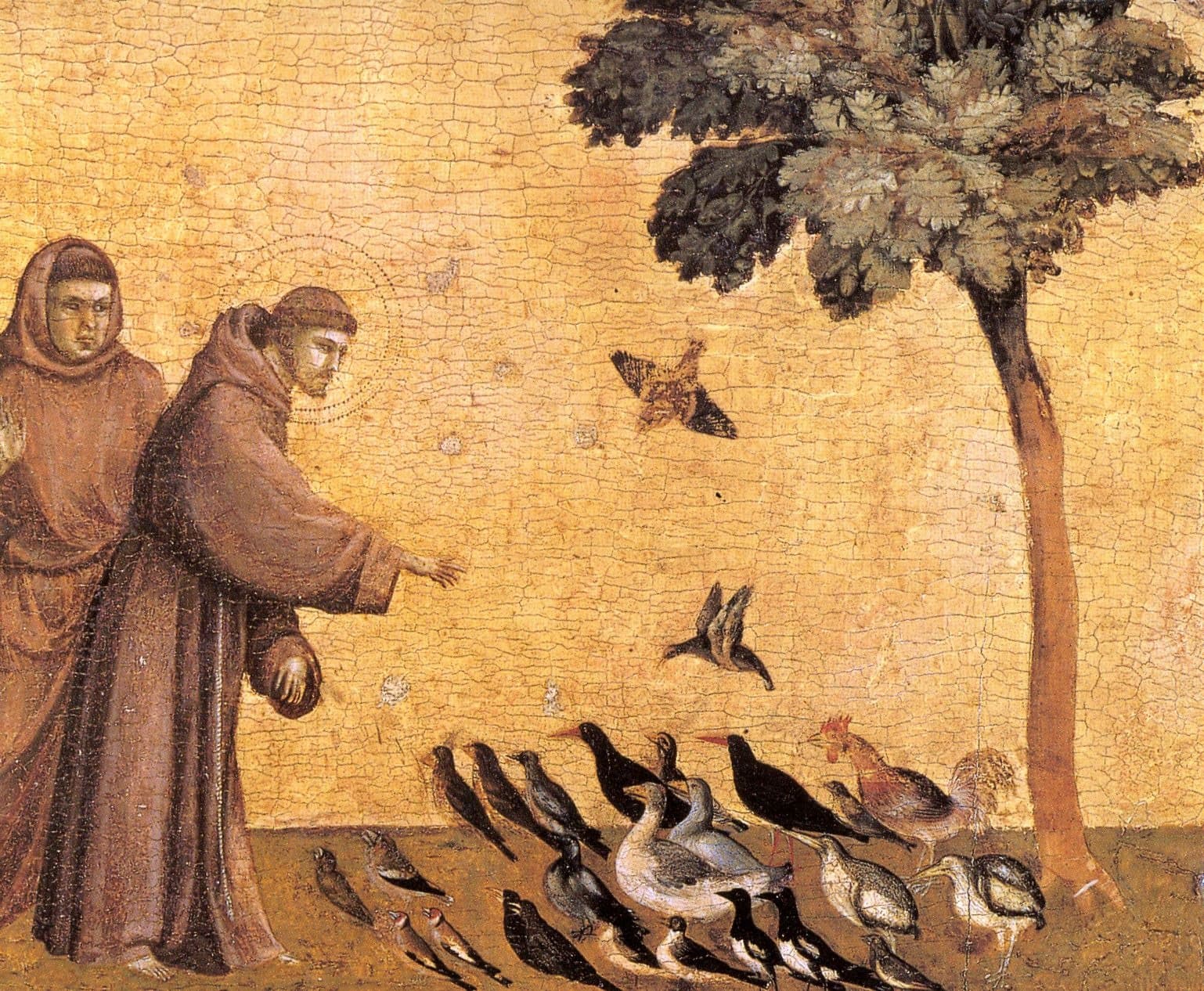
Two trees, a strip of ground, and a flock that stays to listen. Giotto tells the miracle as though it simply happened.

Giotto had watched Halley's Comet in 1301 and painted the Star of Bethlehem as a comet, apparently the first artist to do it.

Martin cuts his soldier's cloak in half with his sword to give a beggar the other part, dressed by Simone in courtly gold.

Golden rays come off a winged crucified figure in the sky and strike Francis in the hands, feet and side. Giotto signed this one.

Torches and spears bristle against the sky, and at the still center Judas wraps Christ in his yellow cloak and meets his eye.
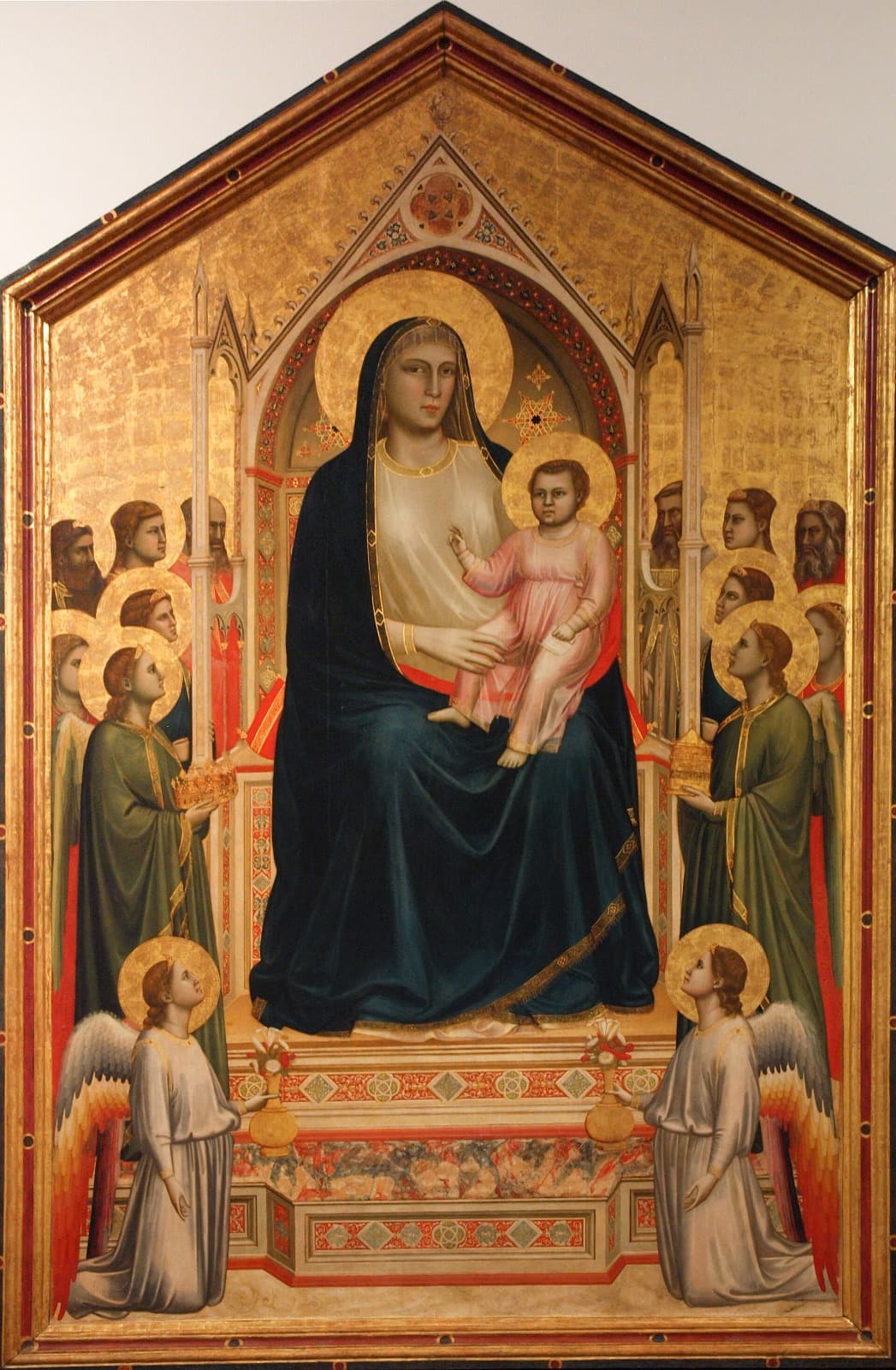
Where Cimabue and Duccio floated their Madonnas on gold, Giotto gave his weight, a real throne, and a body that presses through the cloth.

The kings arrive with a retinue of horses, hounds and a leopard, every surface tooled in gold for one of Florence's richest families.
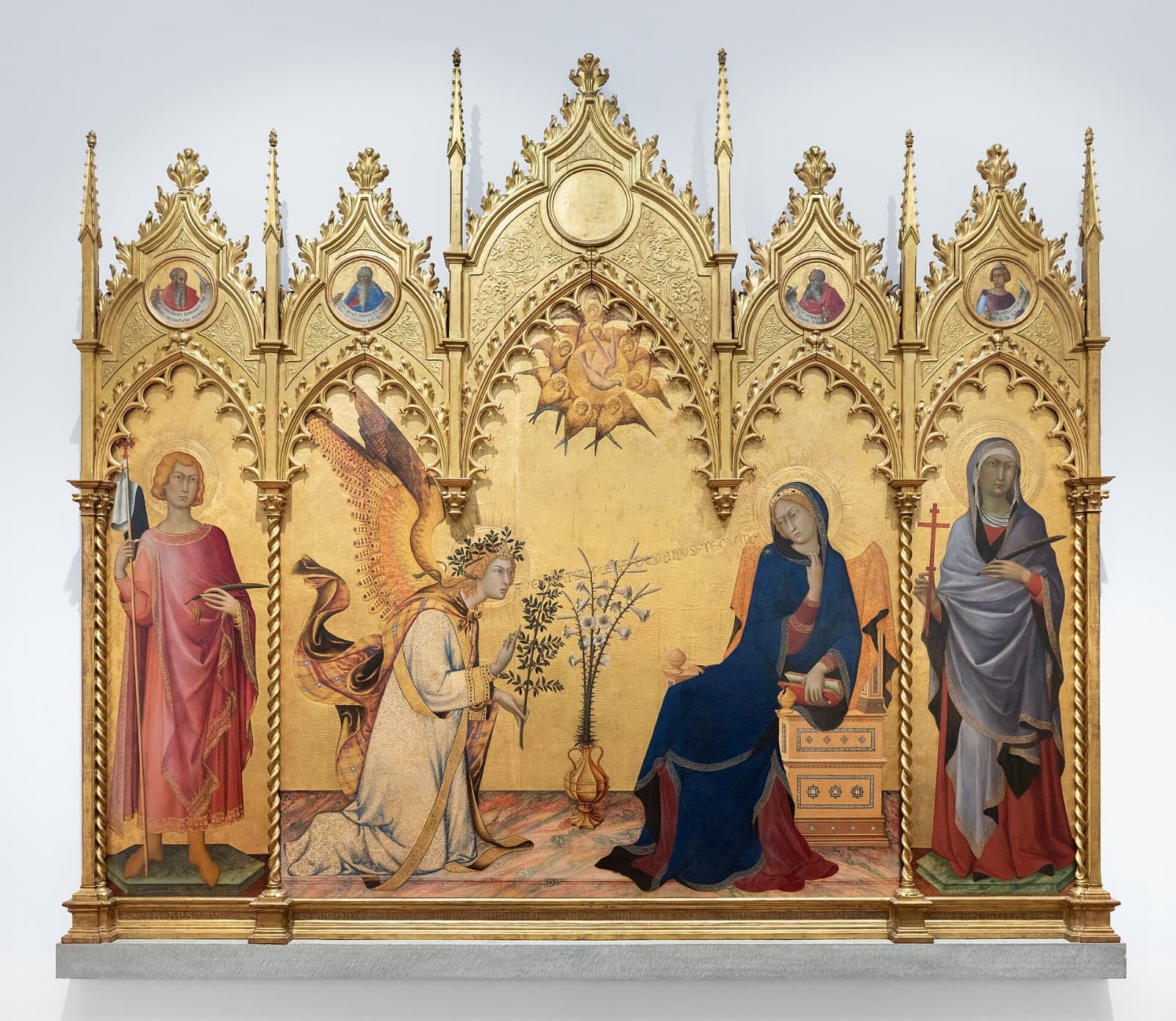
Gabriel's greeting runs toward Mary in raised gold letters and she twists away from it, her thumb still caught in her book.
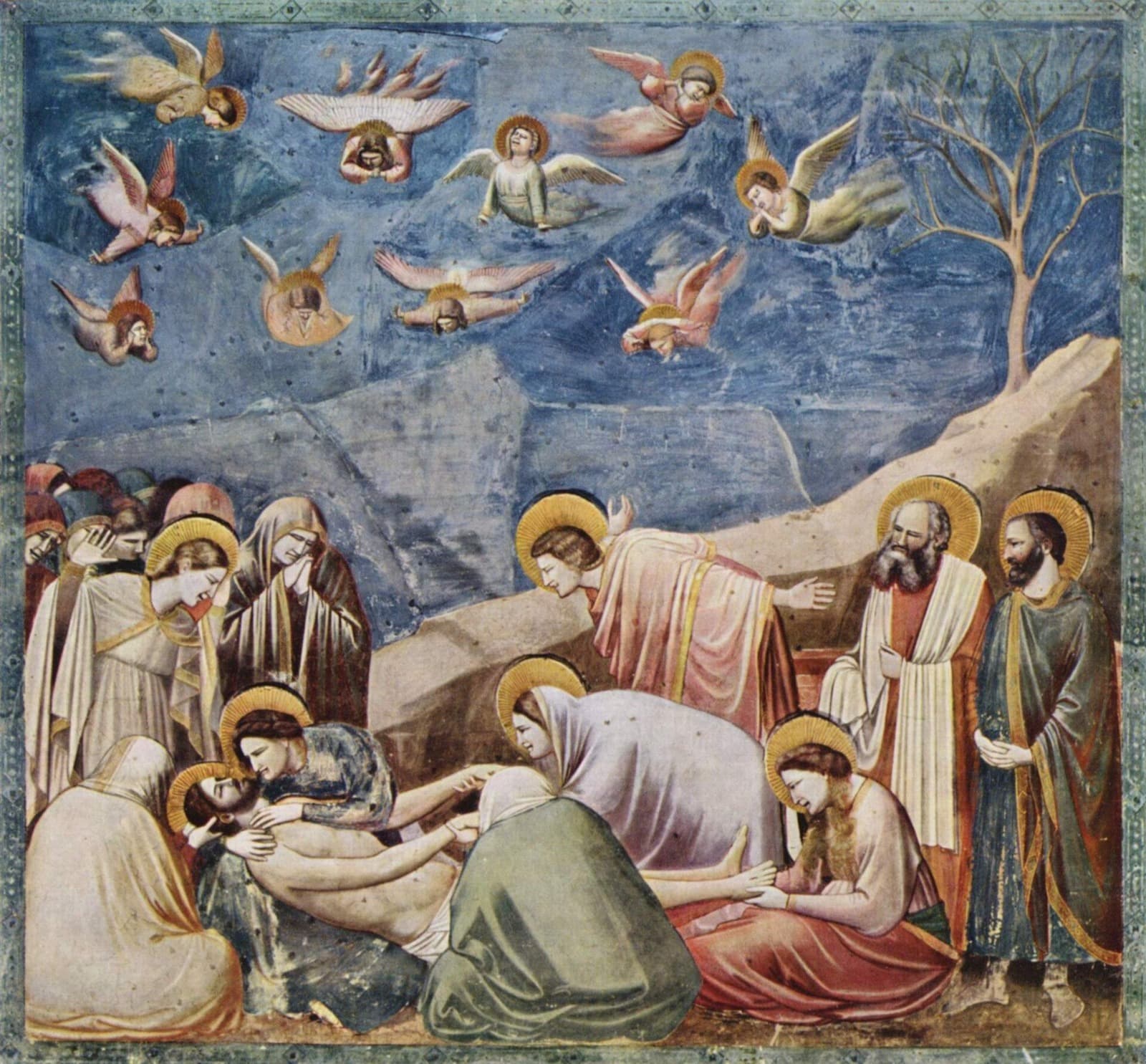
Two mourners sit with their backs turned to pull us in, and the angels overhead double over. Giotto frescoed it in the Arena Chapel at Padua.