
Lamentation of Christ (Durer)
1500 · Alte Pinakothek, Munich
The tiny kneeling figures in the corners are the Nuremberg family who paid for it, inserted so they could share in the grief.
★ 4.8
 skopia
The tiny kneeling figures in the corners are the Nuremberg family who paid for it, inserted so they could share in the grief.
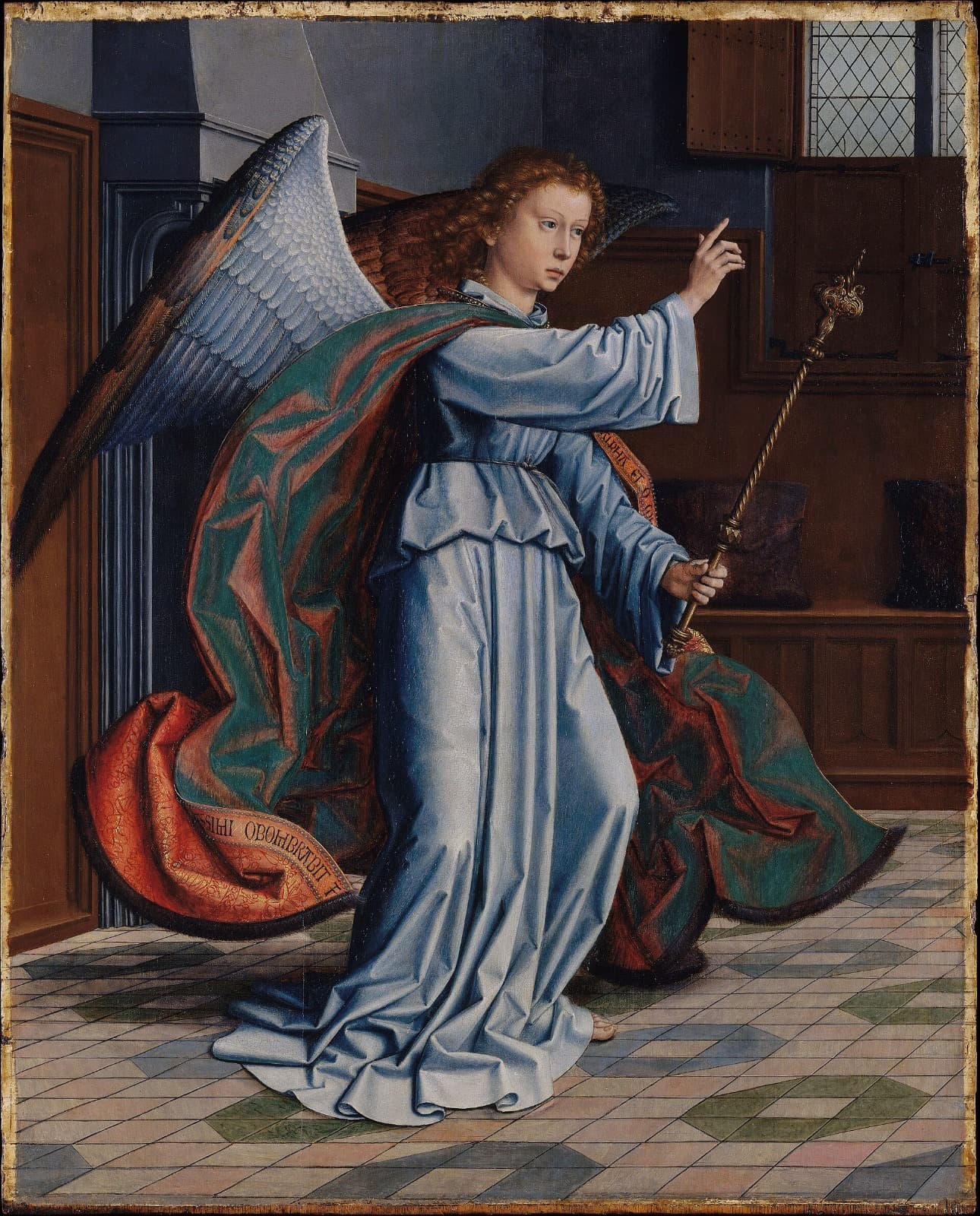
This is only the angel. Mary received the message on a companion panel, and the two now hang together as a pair.

Coins and cards on the table and a great deal of sidelong glancing. Somebody is being cheated, and the intrigue may not be financial.

An inscription gives his age as ninety-three. Dürer drew him in Antwerp and used the head soon after for a Saint Jerome.
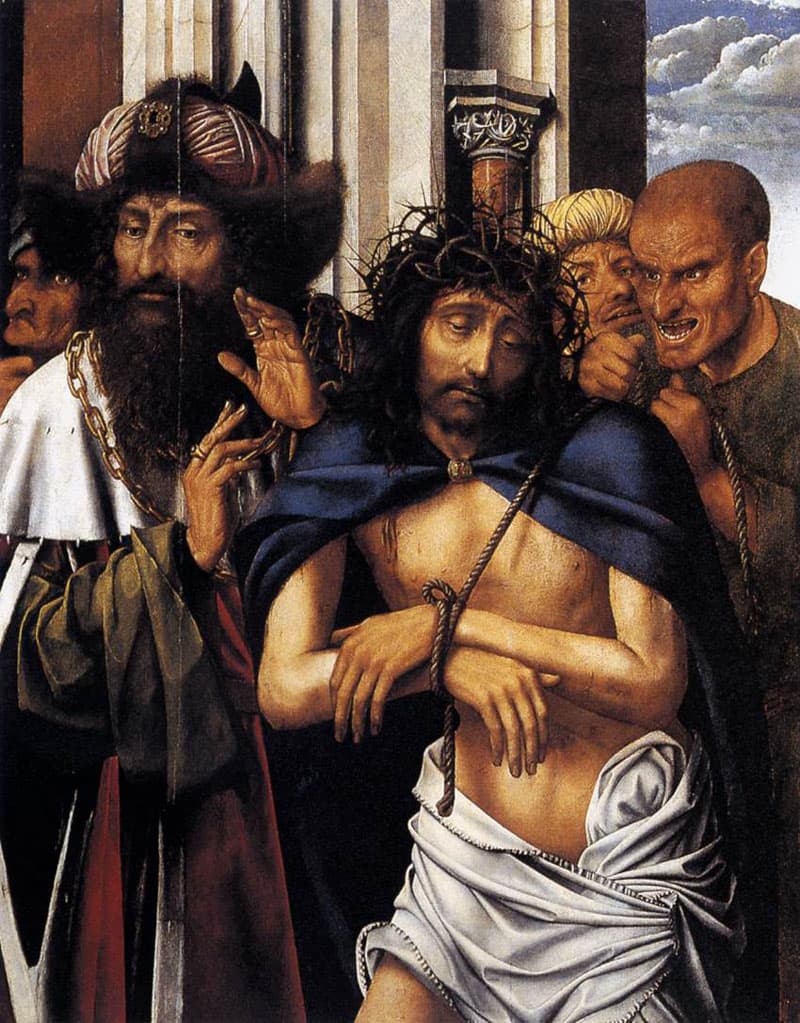
Christ stands with his eyes lowered while the faces around him are twisted into snarls. Matsys made ugliness do the moral work.
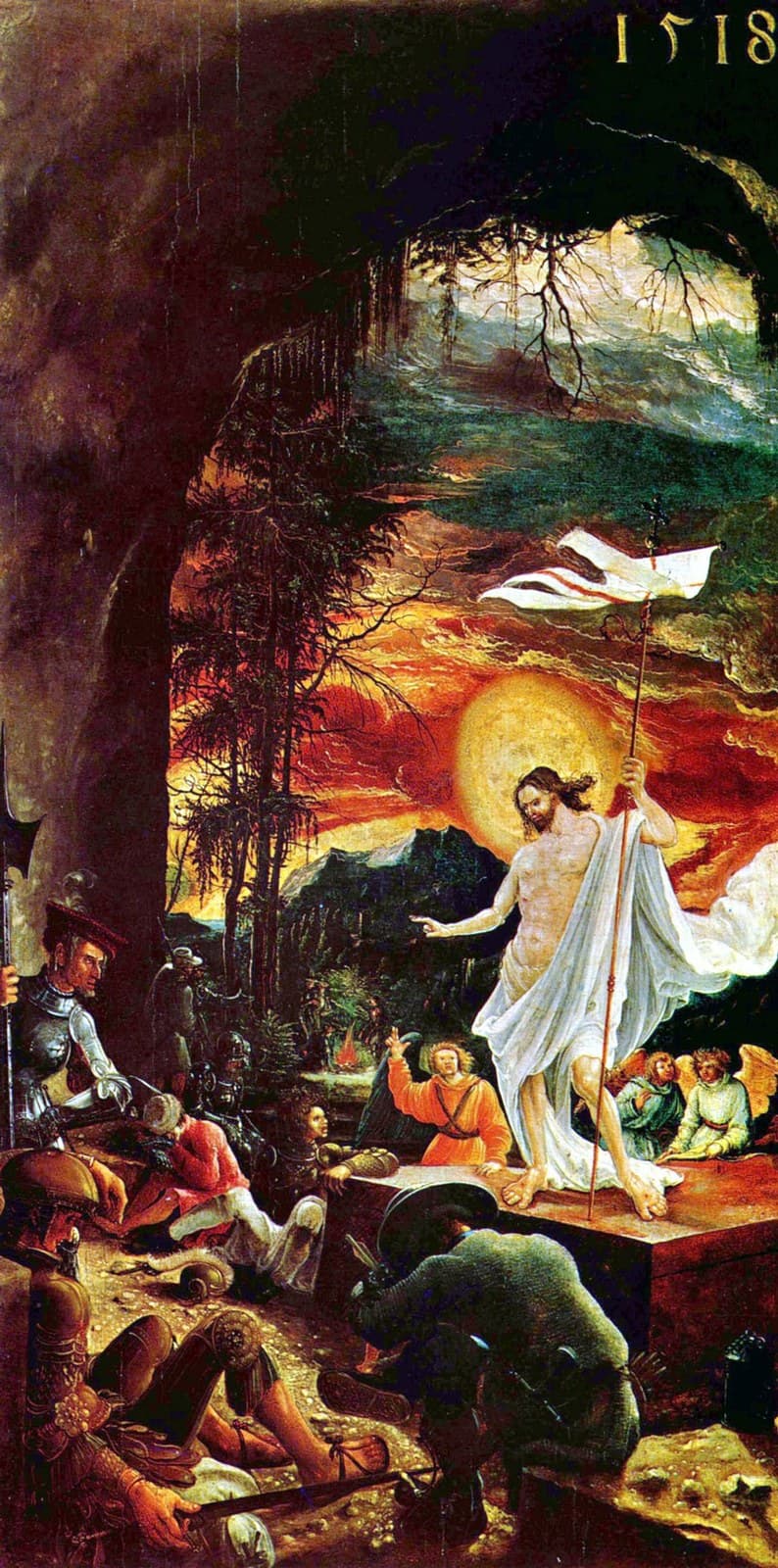
Christ rises with his banner while an unearthly dawn detonates behind him in bands of orange and scarlet over black crags.

A man rides a wine barrel while swimmers chase a floating pie. It was sawn off the bottom of the Ship of Fools.
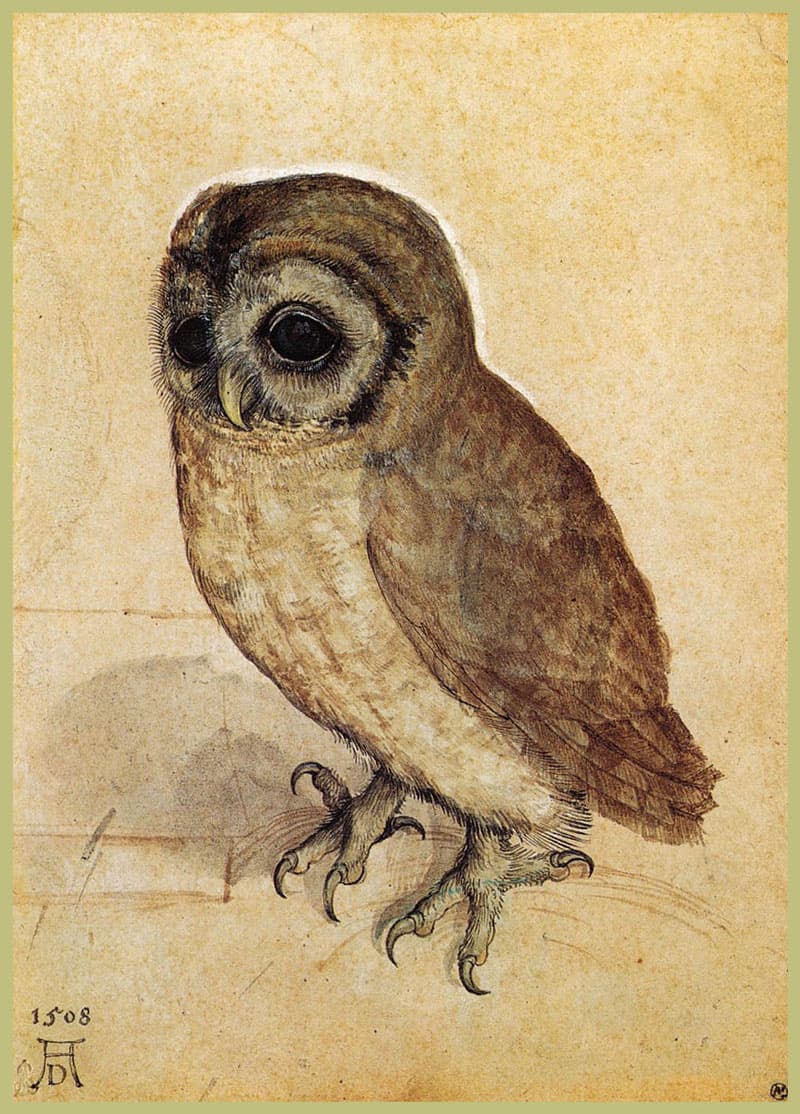
Owls carried centuries of symbolism in the north, but Dürer's is mostly just an owl, looking back at you with its talons over a ledge.

Thousands are clubbed and thrown off cliffs, and Dürer paints himself walking calmly through the middle of it holding a banner with his name.
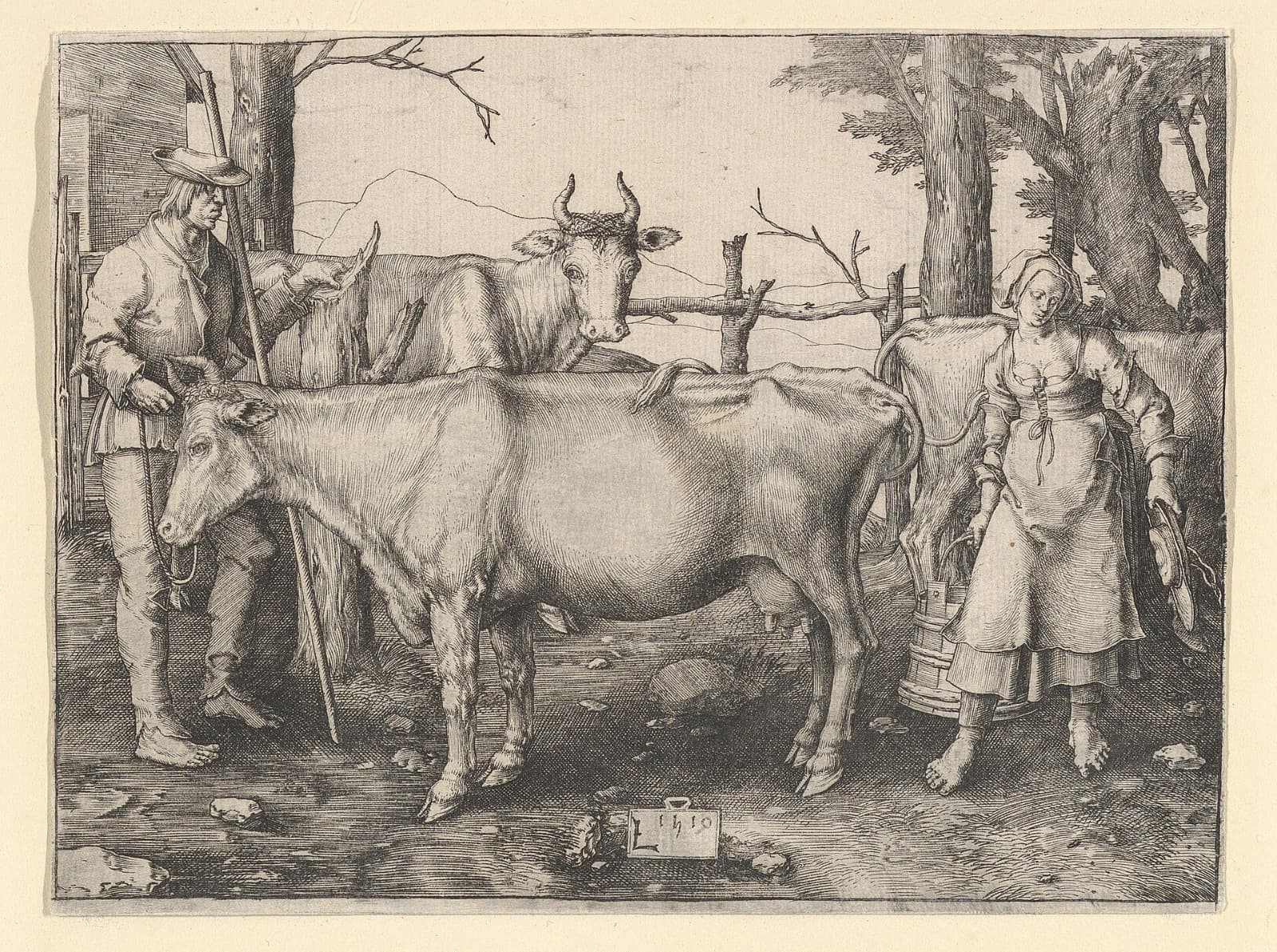
A milkmaid, a herdsman and two cows, and almost nothing happening. One of the first prints to take peasants as a subject worth the burin.

You take in the whole river valley before you notice the sower at the bottom corner, or Christ preaching from a boat behind him.

The episode appears in no Gospel at all, and Altdorfer nearly buries the figures under a forest of enormous trees and luminous sky.

The lyrical Bosch, all calm light and wide landscape, except for the small insect-demon with a human face tending a fire in the corner.
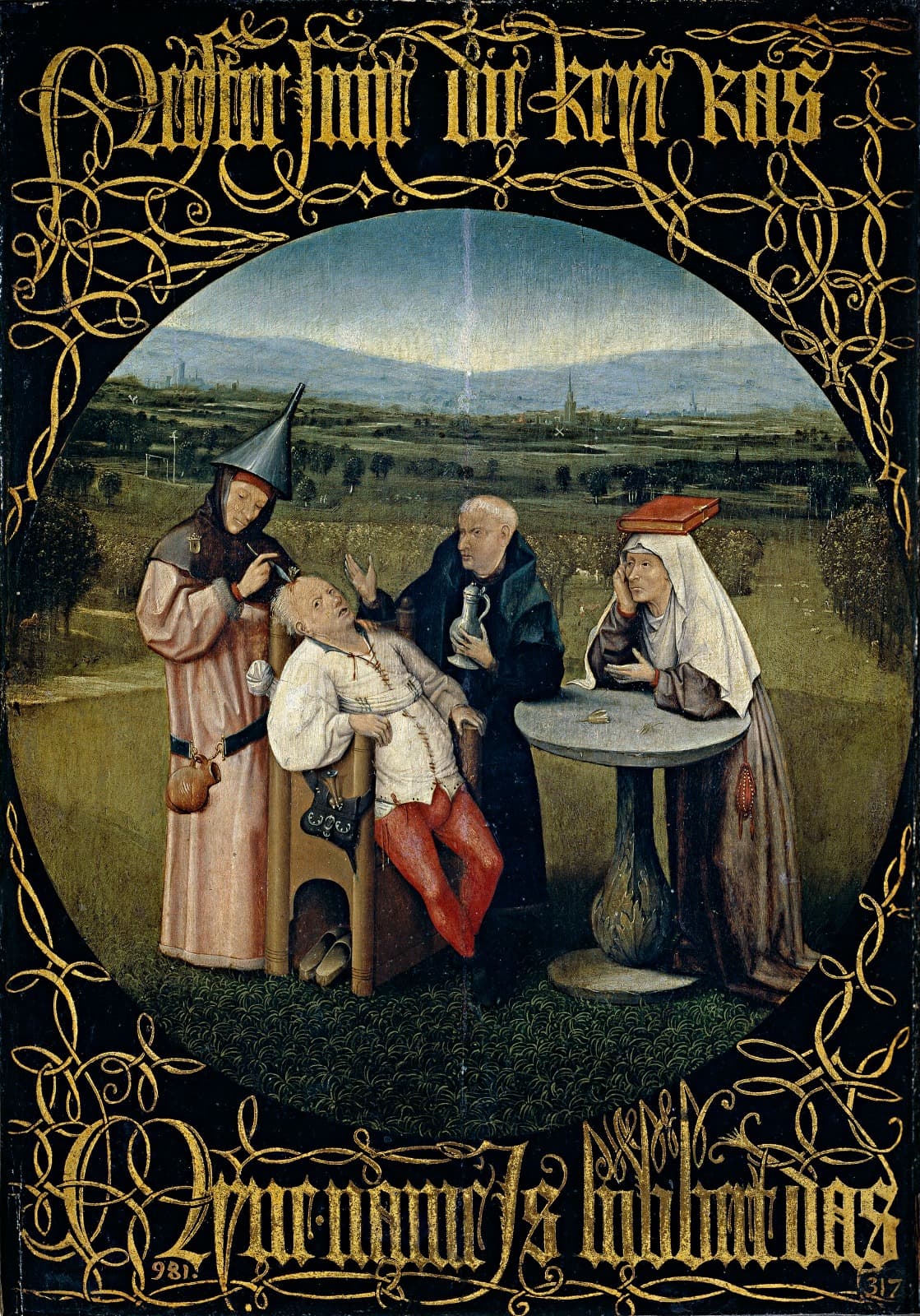
A quack in a funnel hat cuts the stone of madness out of a man's head, and what comes out is a flower.
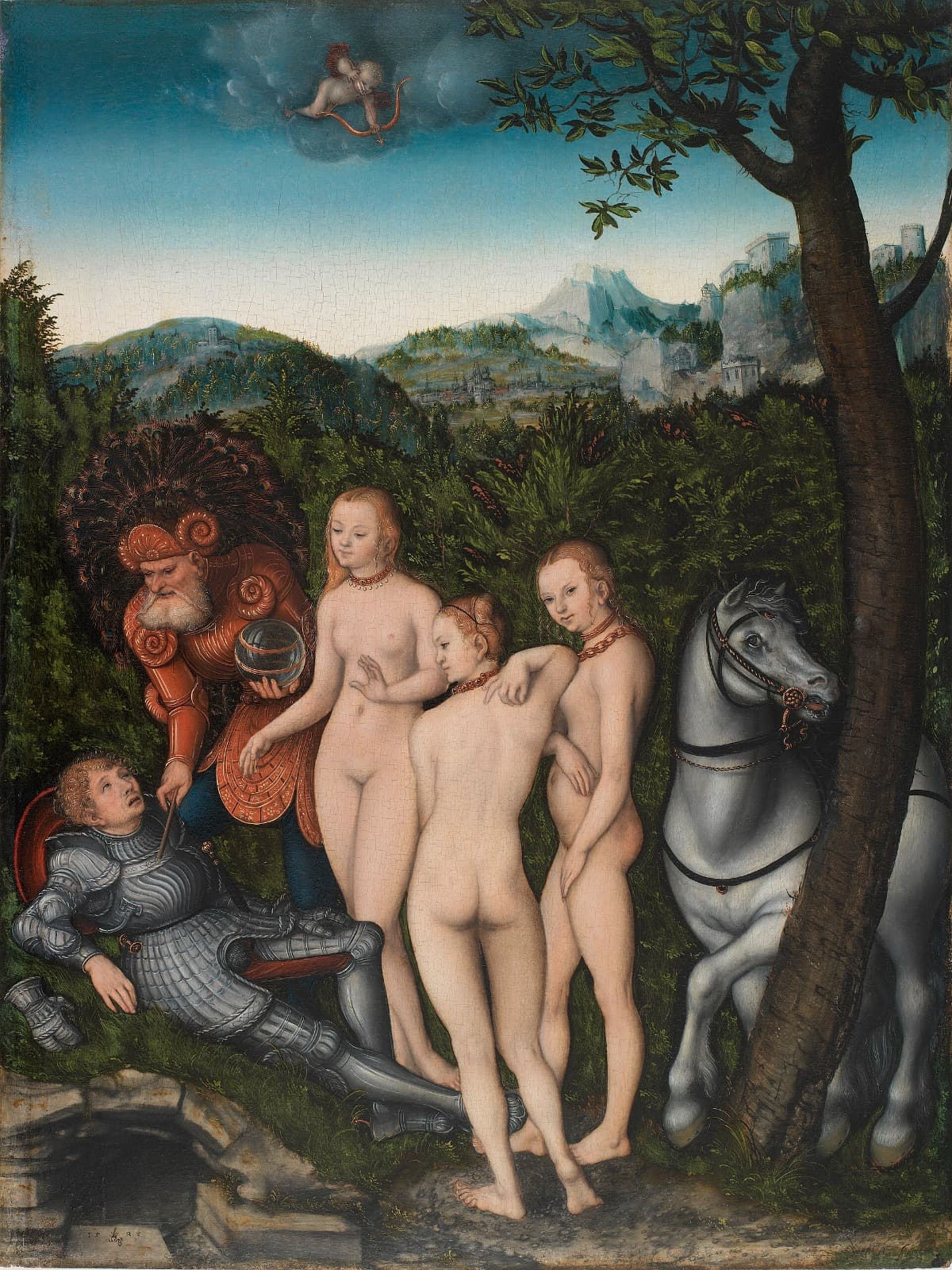
Paris turns up as a German knight in plate armor and the three goddesses wear nothing but jewels and improbable hats.

The widow grips a red-hot iron bar unharmed to prove her husband was innocent after he had already been beheaded. Painted for a courtroom.
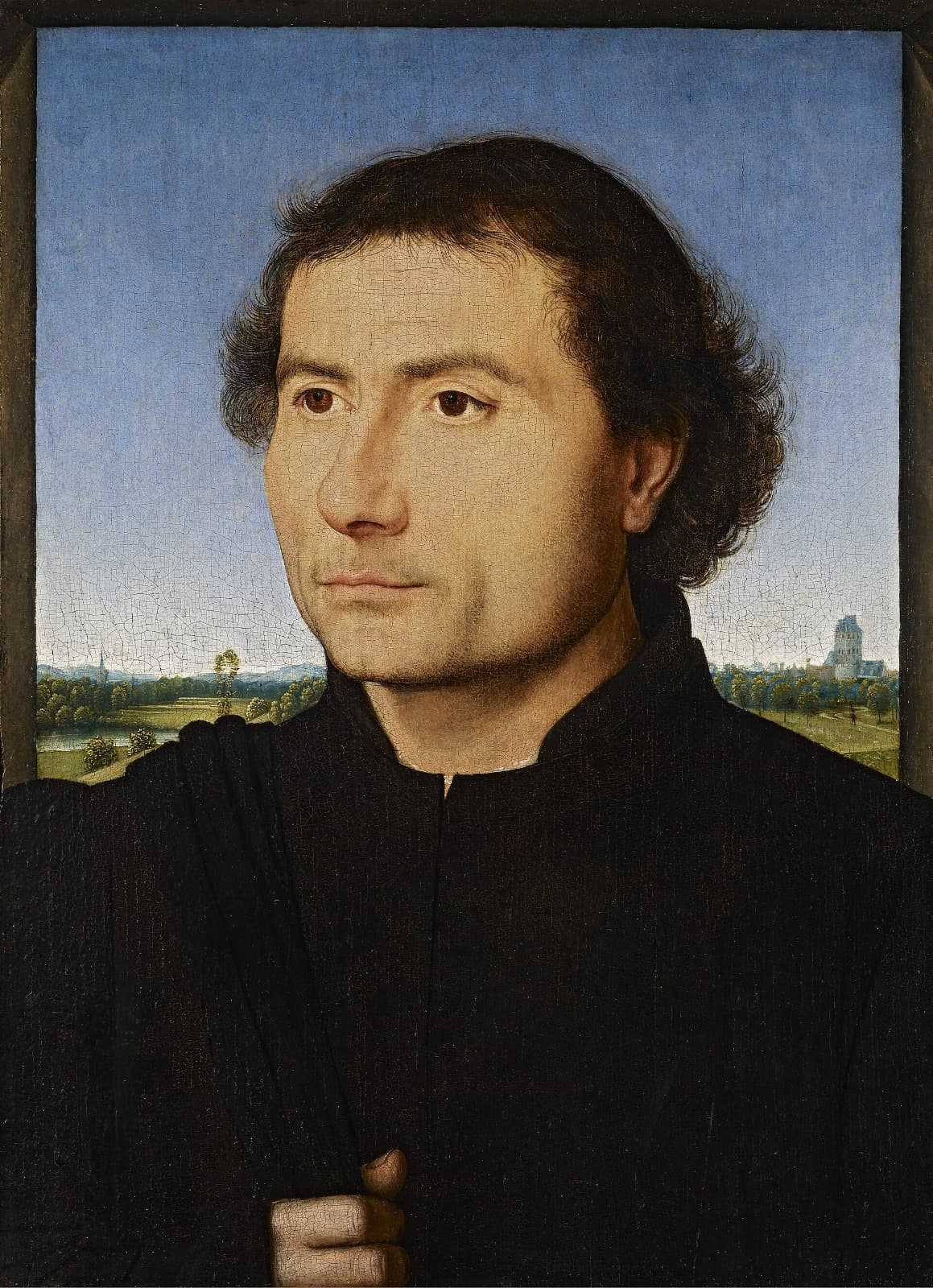
Memling put his sitters in front of open countryside instead of a dark ground, an idea that traveled to Italy and came back changed.

Death comes through the door while an angel points to the crucifix and a demon offers one more bag of gold. The man has not chosen.

Blindfolded and beaten while pipers play to make a show of it. Everything Italy was perfecting at that moment, Grünewald wanted none of.

A single thread of gauze links the baby, the beauty, the crone and Death holding an hourglass. Baldung was Dürer's pupil, with darker interests.

The Virgin offers the Child a bunch of grapes, which stand for the wine of his death, in an exactly observed Flemish wood.
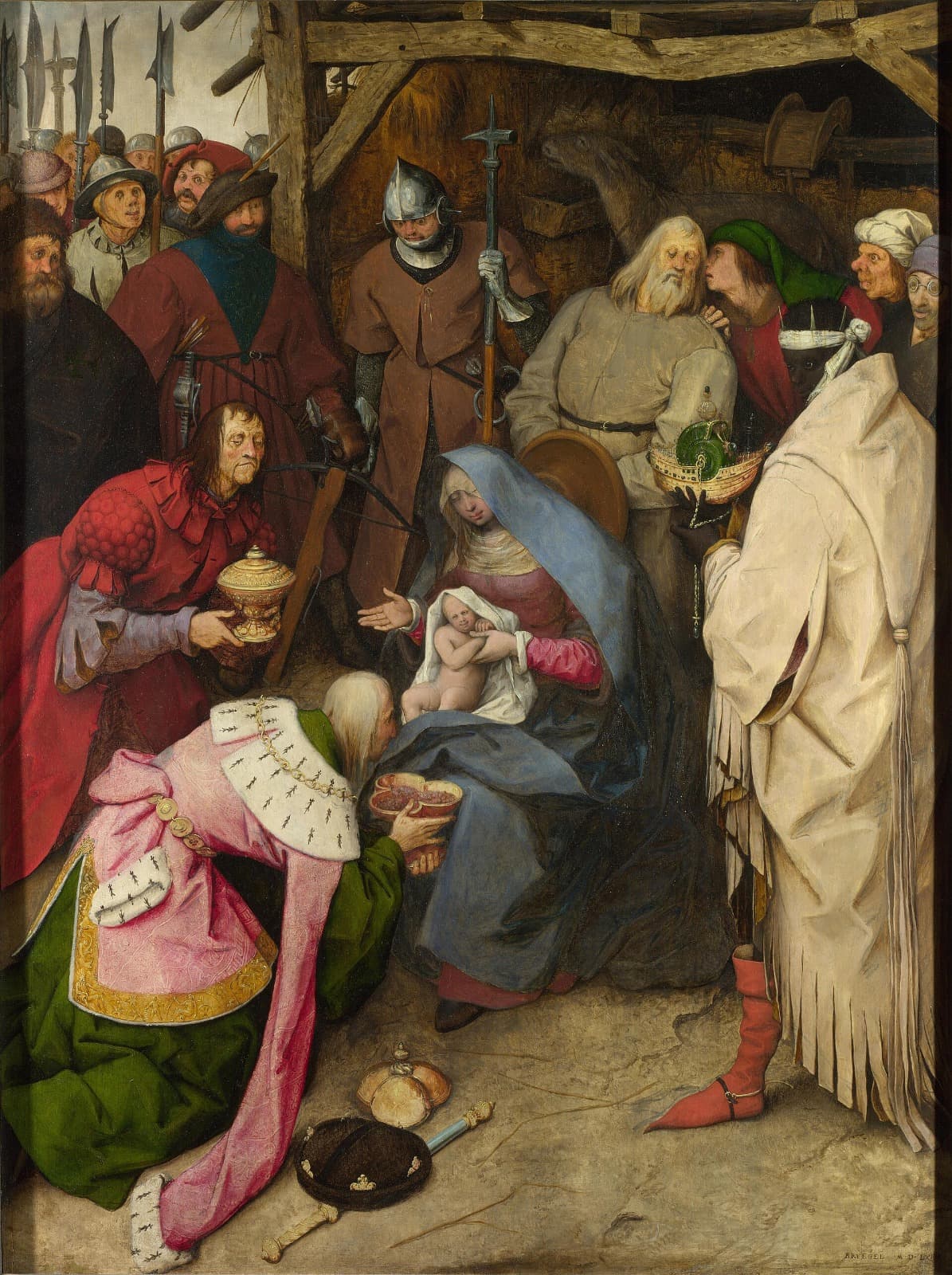
Bruegel gives the holy figures plain faces and surrounds them with gawkers and whisperers, which makes reverence hard to come by.
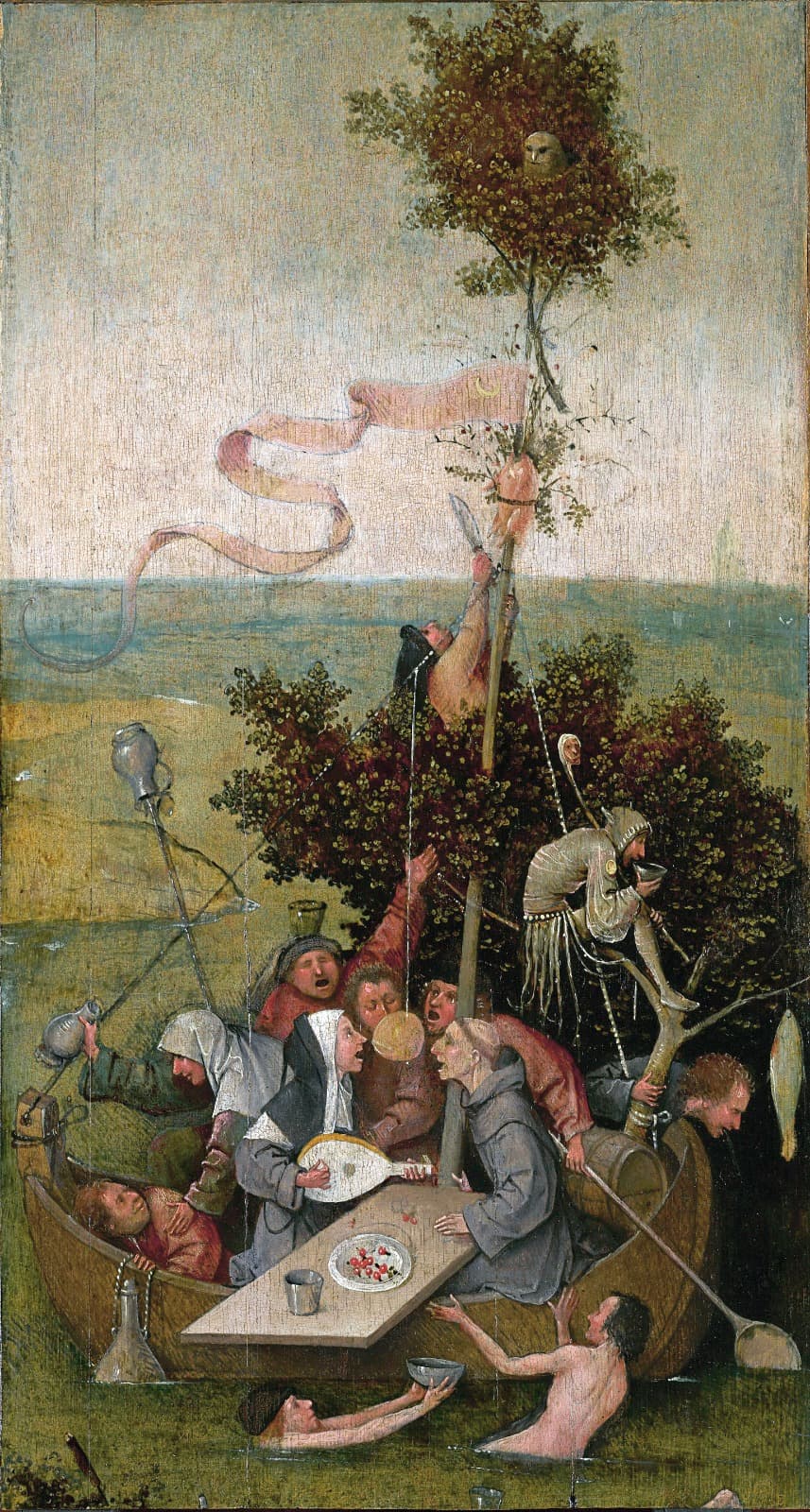
A monk and a nun bawl a song over a lute while somebody vomits over the side. The boat has no rudder, which is the point.
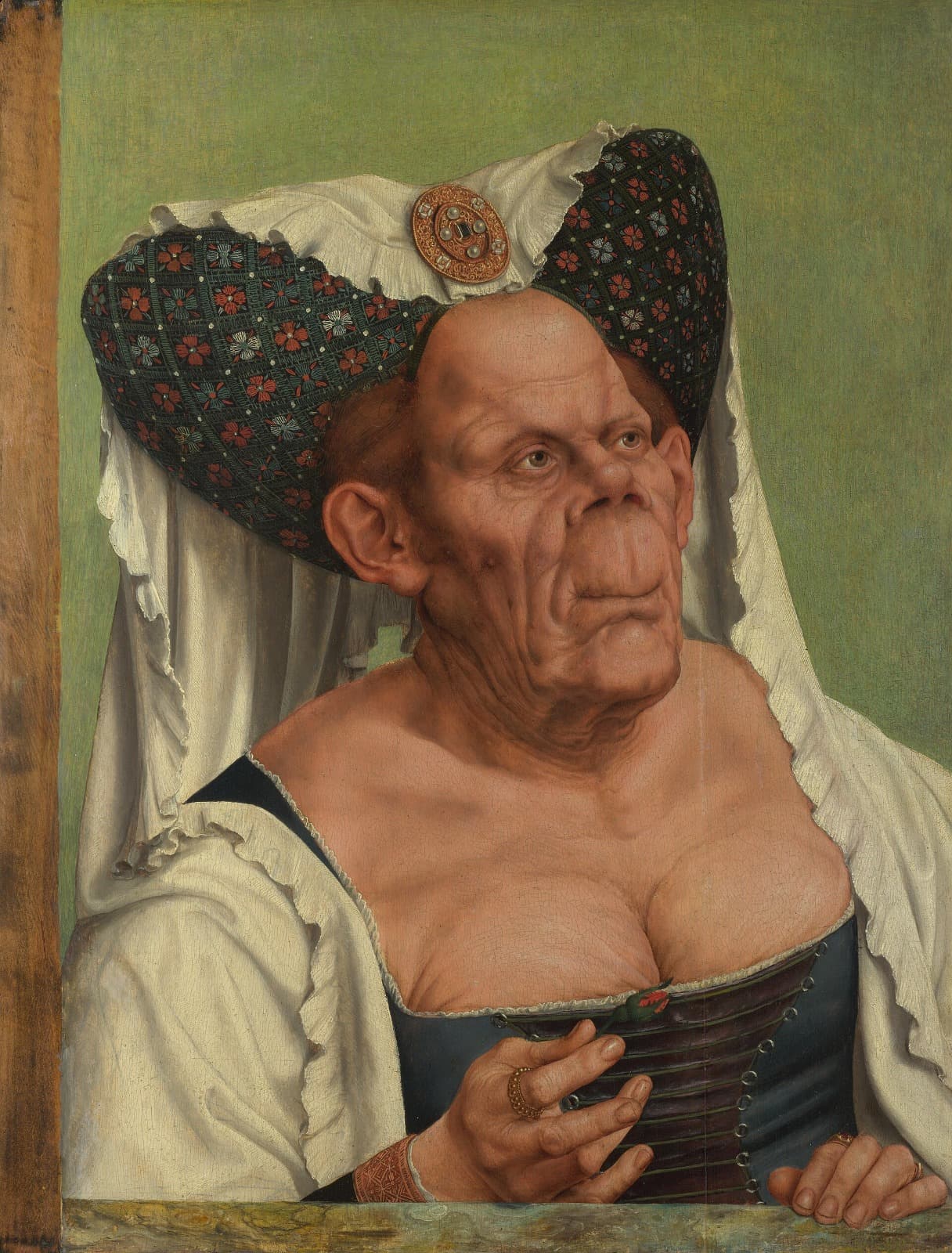
Satire on old age aping youth, in a headdress two generations out of date. Tenniel used her for the Duchess in Alice in Wonderland.

The serpent stands upright against the tree with a near-human face, and every leaf in the garden is catalogued one by one.

In the middle panel the Child slips a ring onto Saint Catherine's finger, and on the right wing the Apocalypse breaks over Patmos.

The whole panel is a giant eye, with Christ in the pupil and the words Beware, beware, God sees. It was made for a tabletop.

Cold competence and nothing else. Holbein painted him as a near-pendant to Thomas More, whom Cromwell helped send to the scaffold.

Dürer painted it in Venice to prove a German could beat the Venetians at color, and wrote on it that it took five months.

Luke was the patron saint of painters, and van der Weyden ran the Brussels painters' guild, so this is a tribute to the trade.

He weighs gold on a fine balance and her eyes drift off the prayer book toward the coins. A small mirror catches the room.
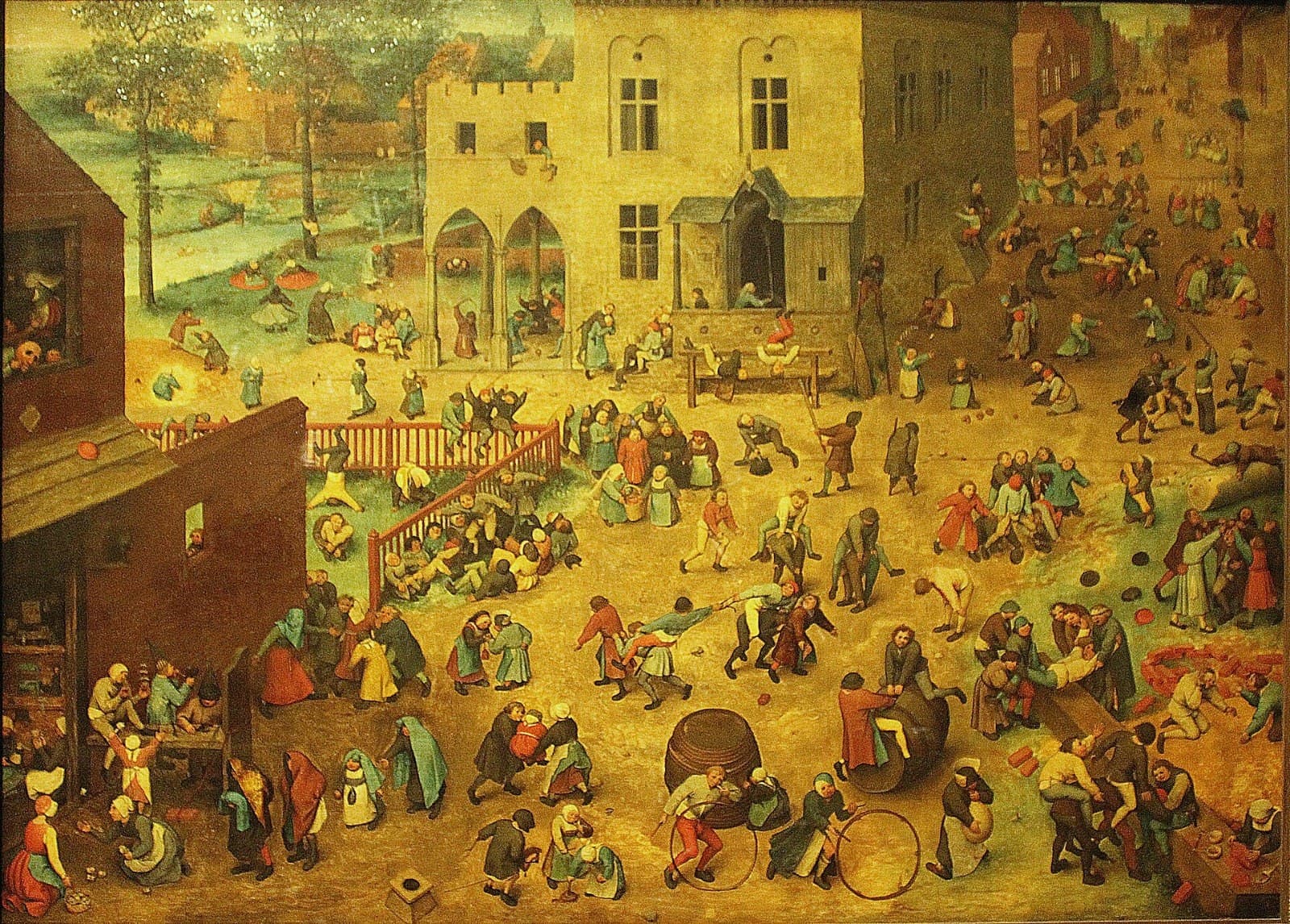
Around two hundred children playing some eighty different games, no adults anywhere, and no particular place for the eye to start.
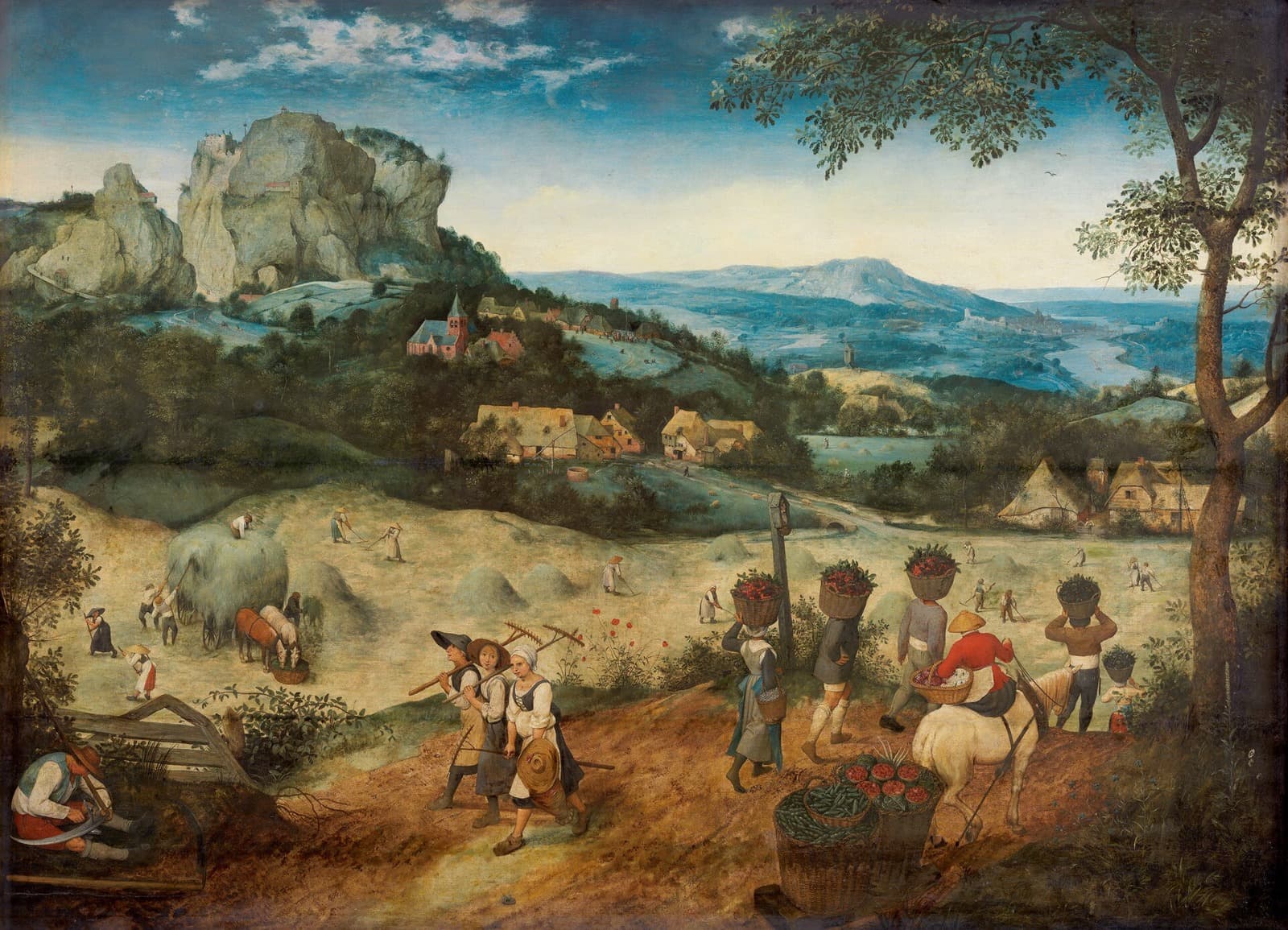
June or July from the same series of months, with rakes over shoulders and a girl carrying baskets of cherries toward us.
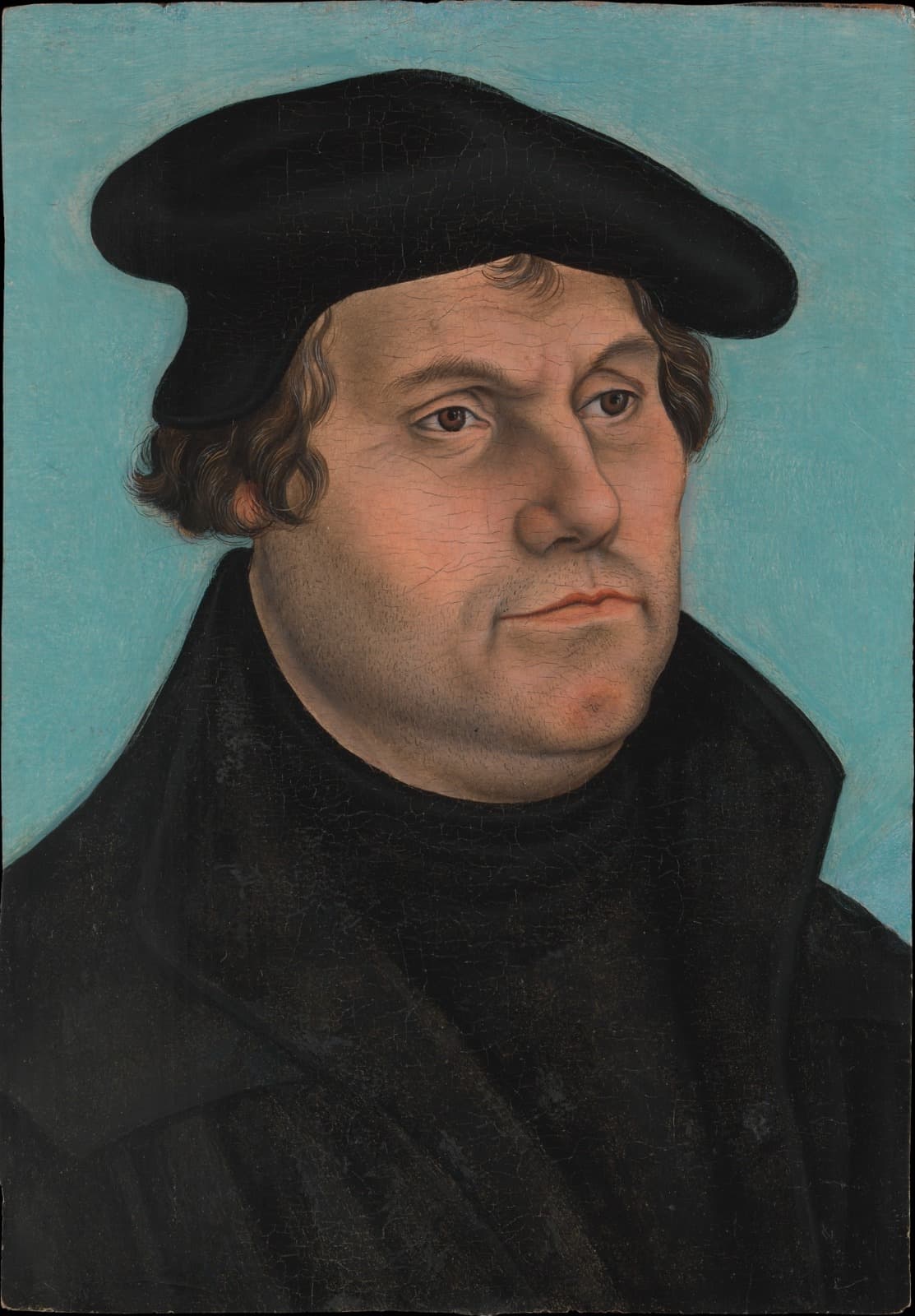
Cranach was Luther's friend and godfather to his children, and his workshop turned out this face by the score for Protestant Germany.

A crush of leering faces fills every inch, and Christ moves through the middle of it with his eyes shut.

Cat, mouse, rabbit, ox and elk stand for the temperaments held in balance, and the cat is about to pounce.
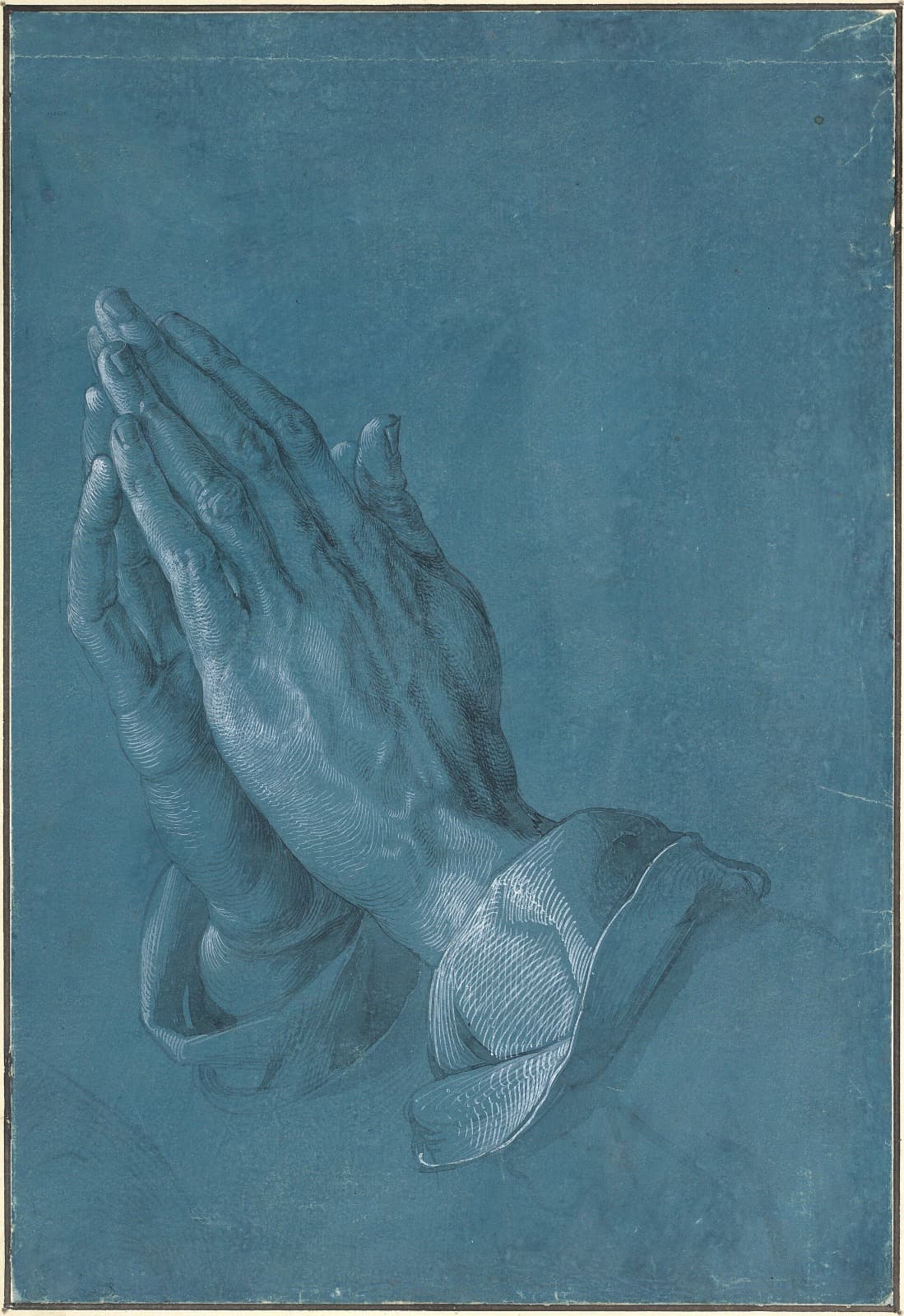
A study for an altarpiece that later burned, so the drawing has outlived the painting it was made to serve.
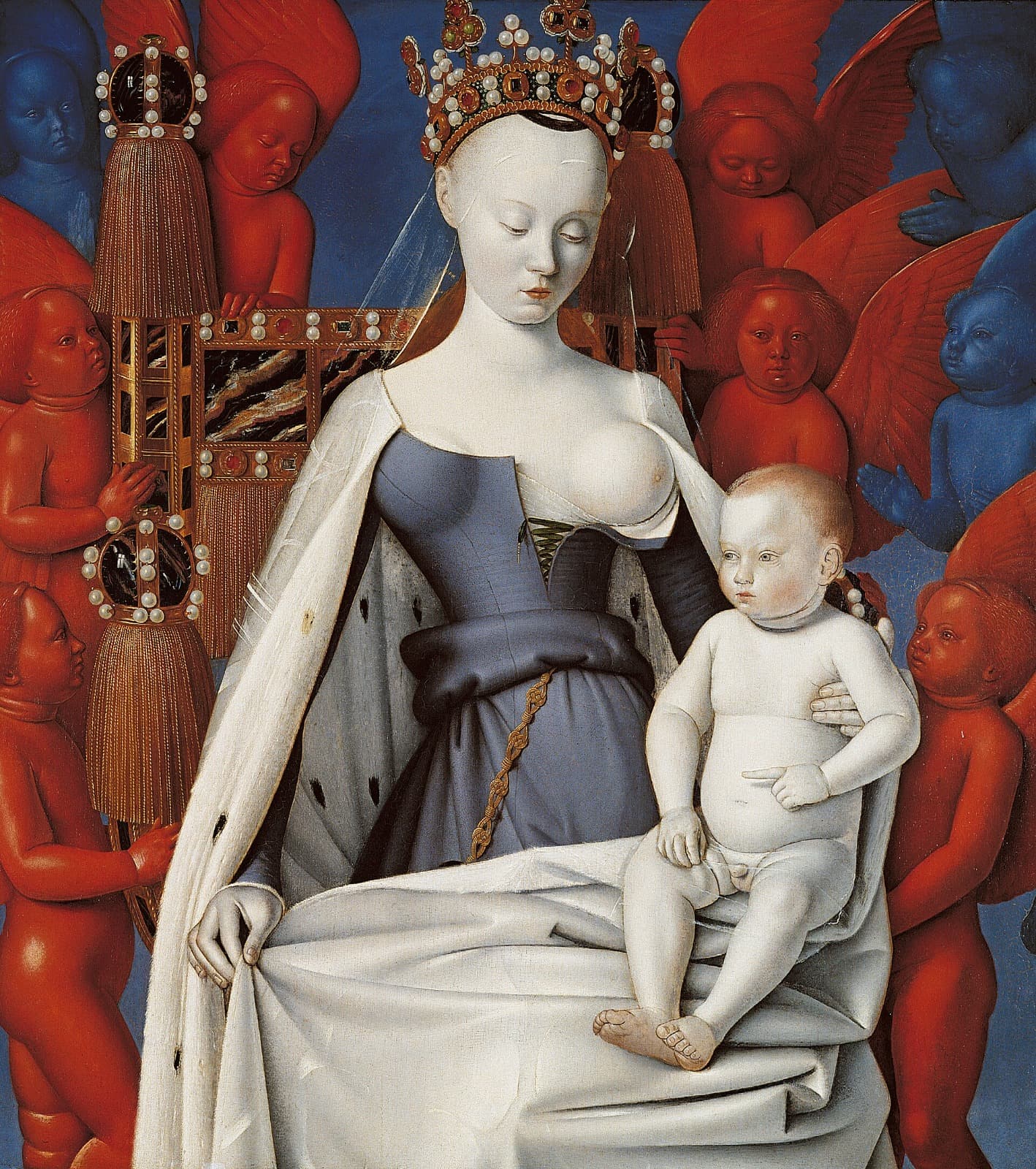
The Virgin is said to be the king's dead mistress, painted with a shaved forehead and one breast bared, ringed by red cherubim.

All seven sacraments happen at once inside one Gothic church, with the Crucifixion looming over the nave to show where they get their power.
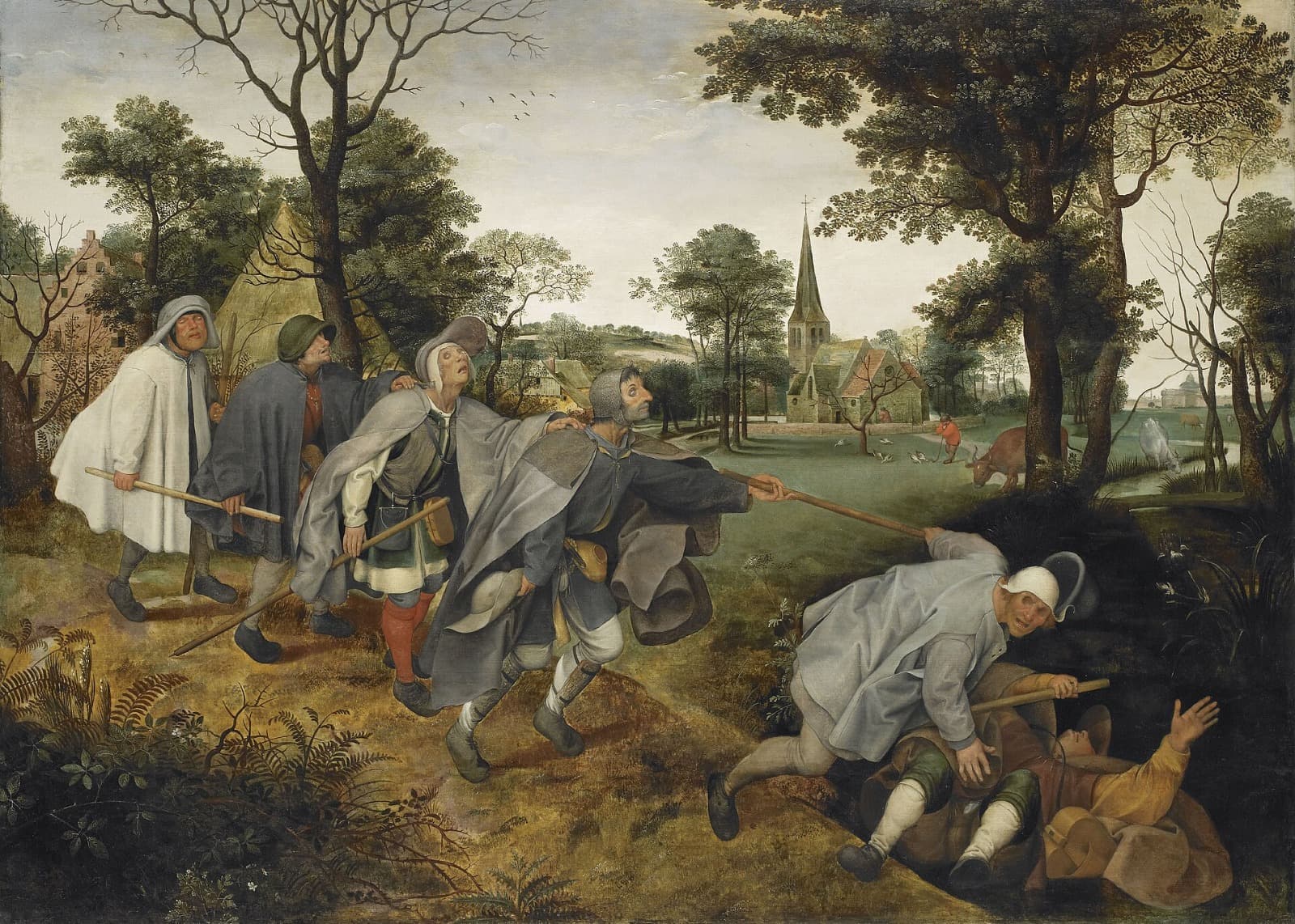
Six blind men go down one after another, and Bruegel painted their clouded eyes accurately enough for doctors to diagnose the conditions.